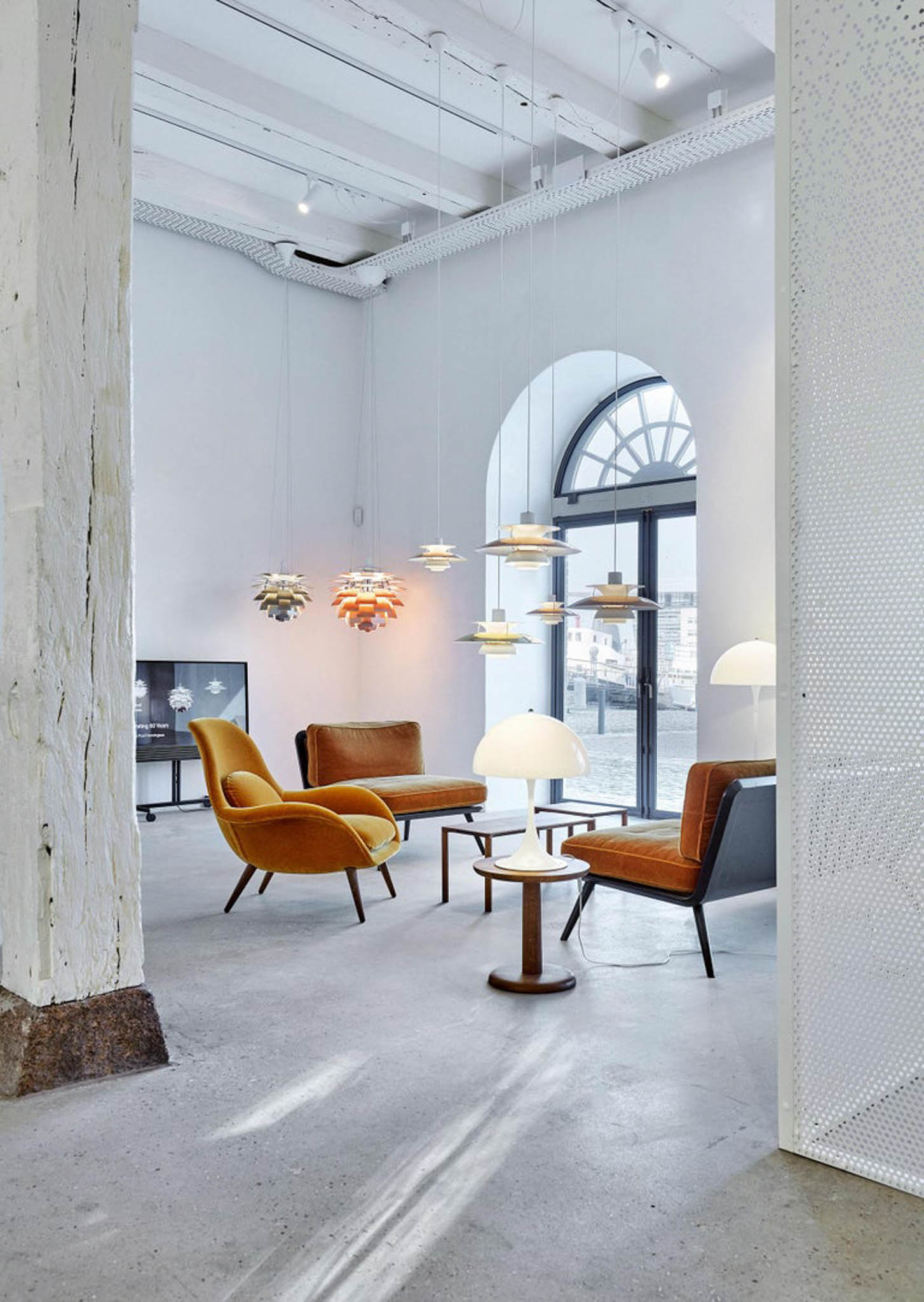
Celebrating a century and a half of iconic designs, Louis Poulsen remains at the forefront of timeless and innovative lighting solutions. True to their commitment to excellence and sustainability, they evolve through enhancing product details and color selections, and collaborating with renowned designers. Each beloved piece embodies their homegrown designers’ legacy to push design boundaries. Along with their newest anniversary lamp collection, these particular lamps defined the lighting brand’s stature and influence in interior design.
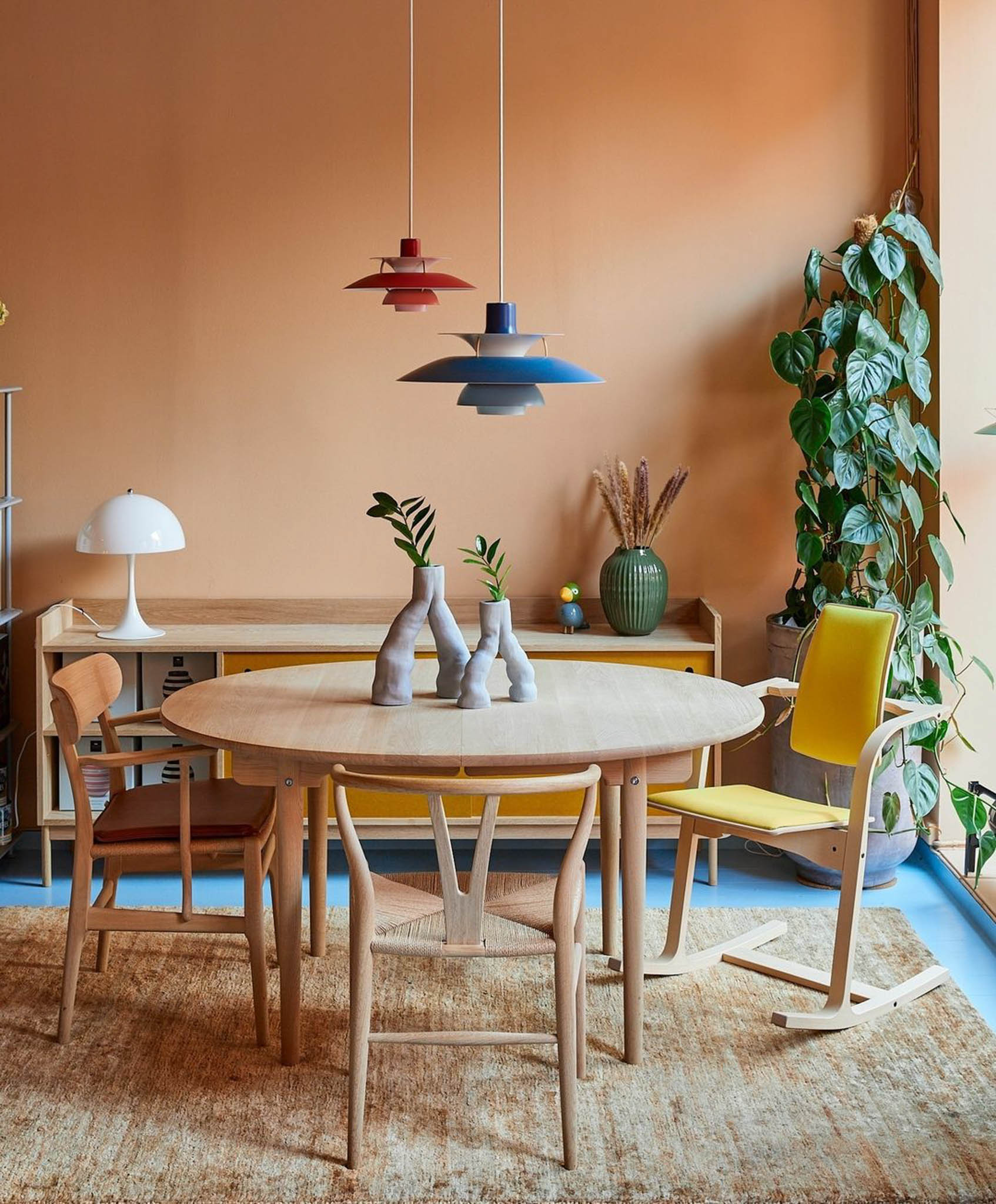
The PH 5 Pendant by Poul Henningsen
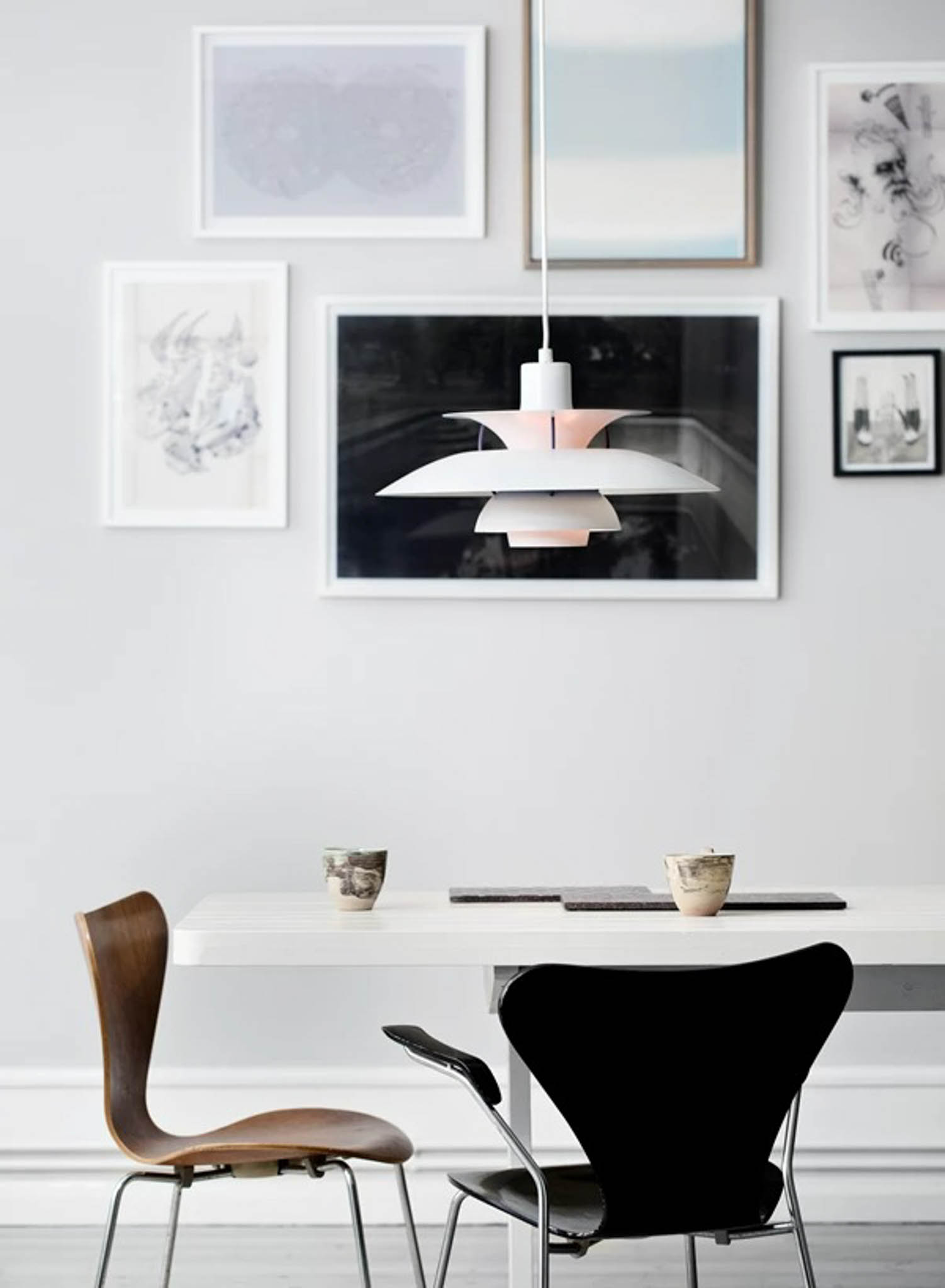
Writer, designer, and architect Poul Henningsen created this home staple pendant lamp to adapt to the changing dimensions of incandescent bulbs in the 1950s. With the goal to mimic a glare-free golden hour glow, Henningsen aligned it with his famous three-shade system.
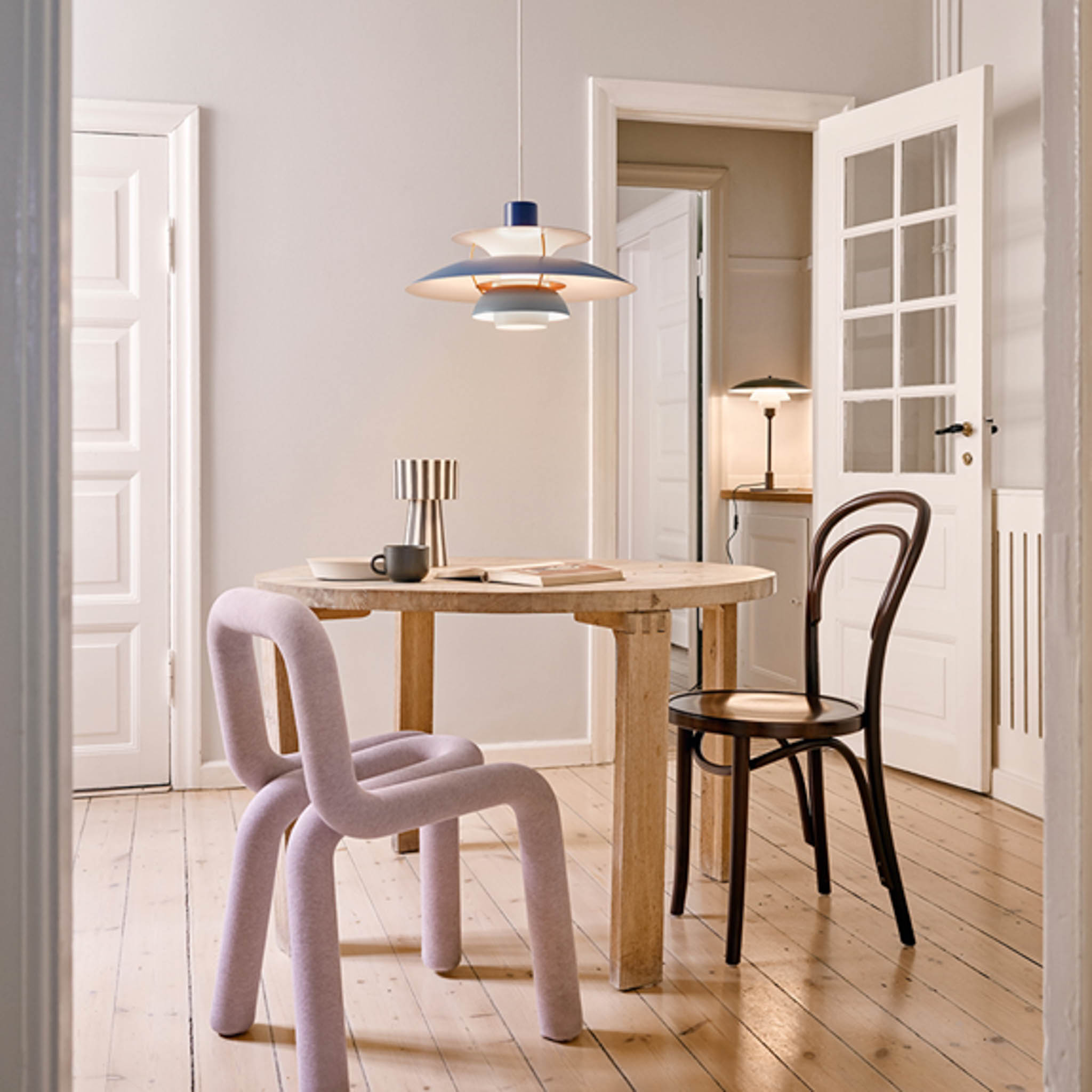
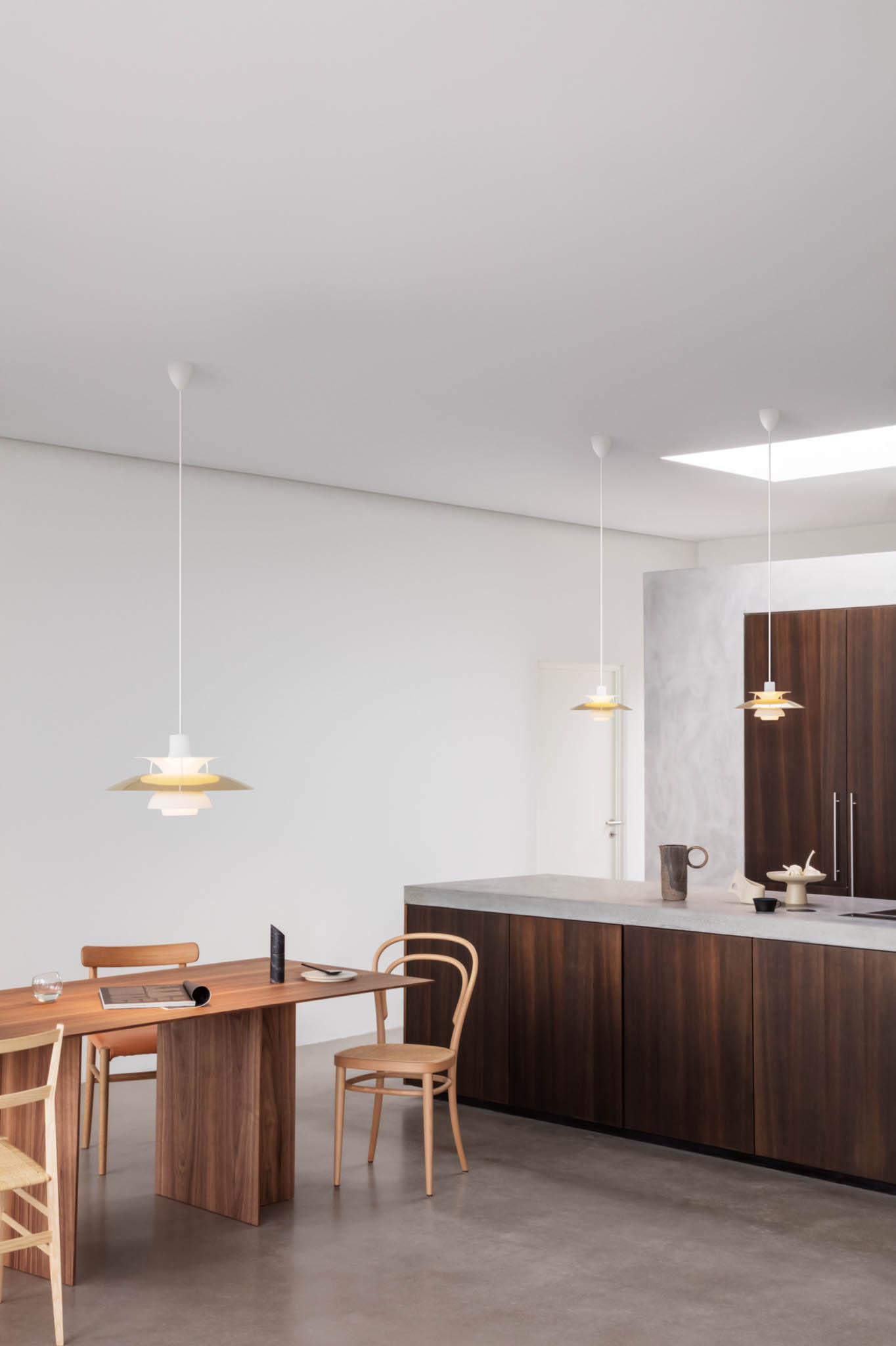
From the classic red and blue shades, Louis Poulsen expanded the color options for its iconic PH 5 lamp. Now offering 22 hues of its matte lacquered aluminum shade, this pyramid-like lamp is more versatile than ever. Whether you’re looking for solid colors or a mix of pastels, there’s a PH 5 shade to suit your style. But to further emphasize its significance in Louis Poulsen’s design history, the brand introduced a special matte white/pale rose hue.
Advertisement
This anniversary edition has a white wet-painted exterior and a pale rose powder coat interior for a soft, warm illumination. The brand also made the struts brass metalised to complement the lighting fixture’s dominant light tones. While PH 5 is a Louis Poulsen mainstay item, its anniversary edition is a limited-time offering available exclusively in 2024.
The PH Artichoke
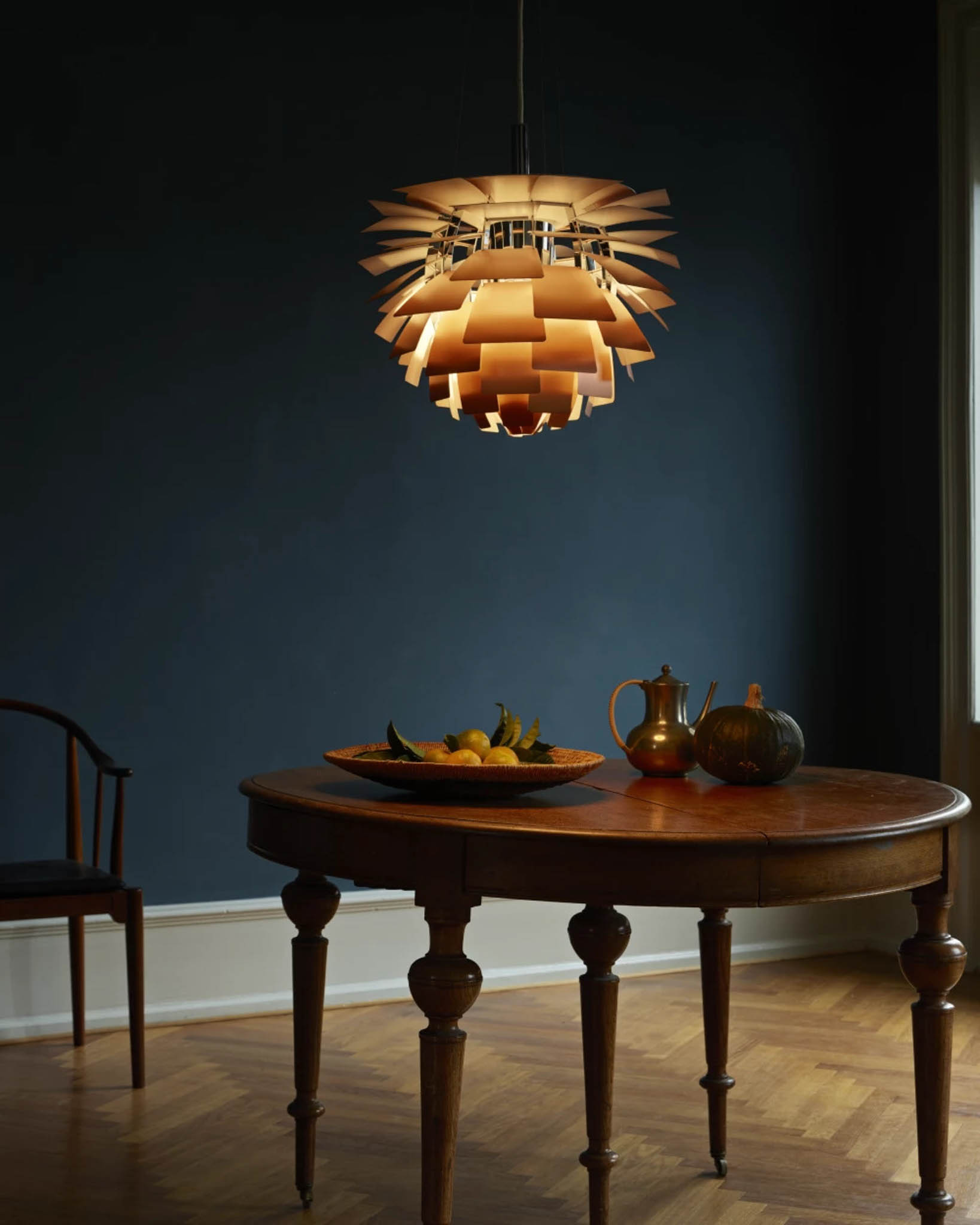
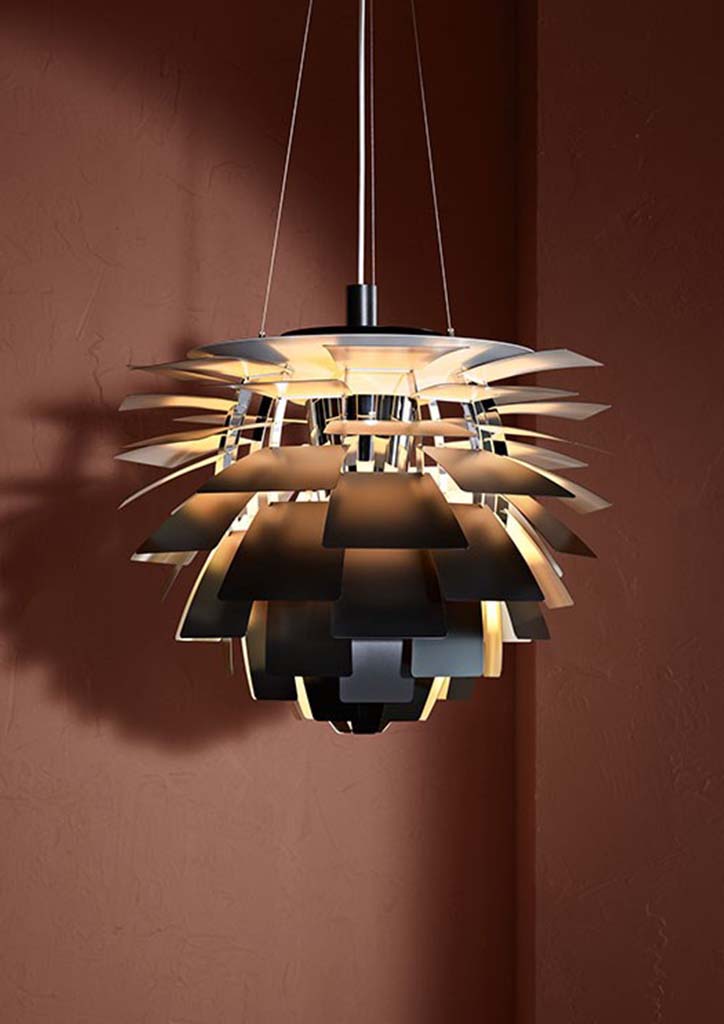
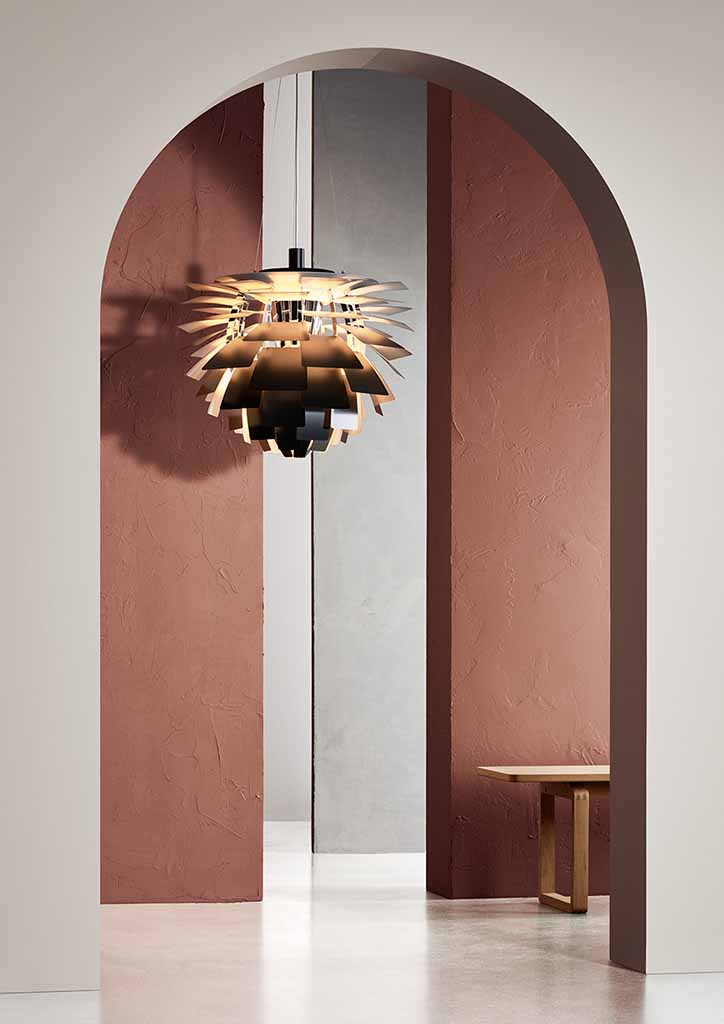
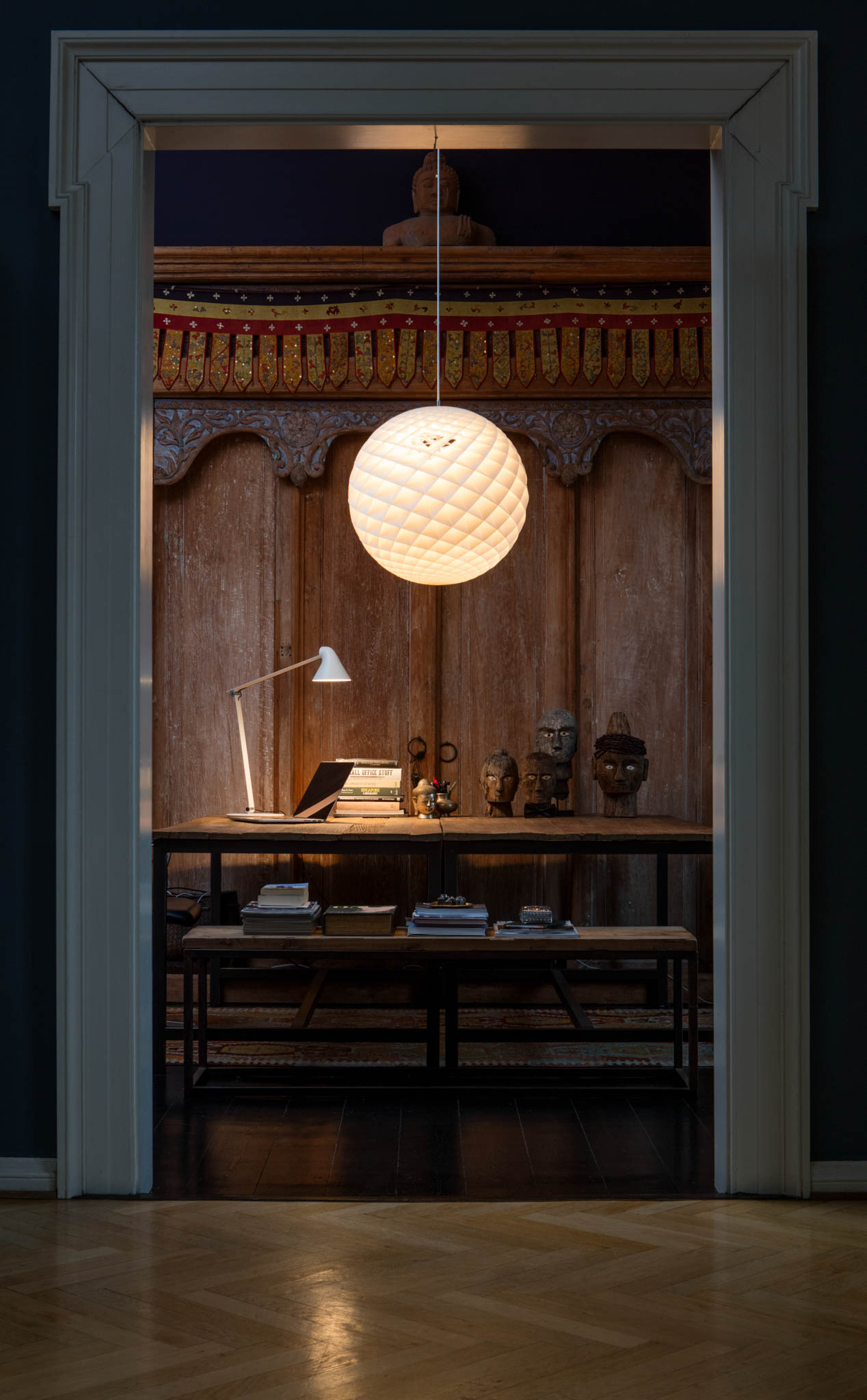
Known for its unique handmade structural design, the PH Artichoke continues to be one of Poul Hennignsen’s show-stealing inventions to date. Initially available in five metallic and neutral colors, this piece consists of 72 leaves arranged in 12 rows. Such an intricate pattern allows it to emit glare-free light in all directions even if viewed from any vantage point.
Henningsen based this remarkable lighting fixture on his earlier work—the PH Septima Glass Light. Following the same silhouette, the PH Artichoke only took three months to complete. The lamp helped define the interior of the Langelinie Pavilion and remains the restaurant’s iconic centerpiece.
Advertisement
To keep its visually impressive legacy, Louis Poulsen also made it in matte white/pale rose color for their anniversary lamp collection. This serves as a tribute to the first Henningsen’s design with copper and pale rose style. Each item additionally carries a distinct ID number and comes with their anniversary book entitled First House of Light.
Aside from giving a glimpse of its origins, the brand collaborated with the luxury home label FENDI Casa to create two more exceptional designs. The glass yellow and pequin stripes are a perfect reflection of Danish design tradition and Italian luxurious excellence.
Verner Panton’s Panthella
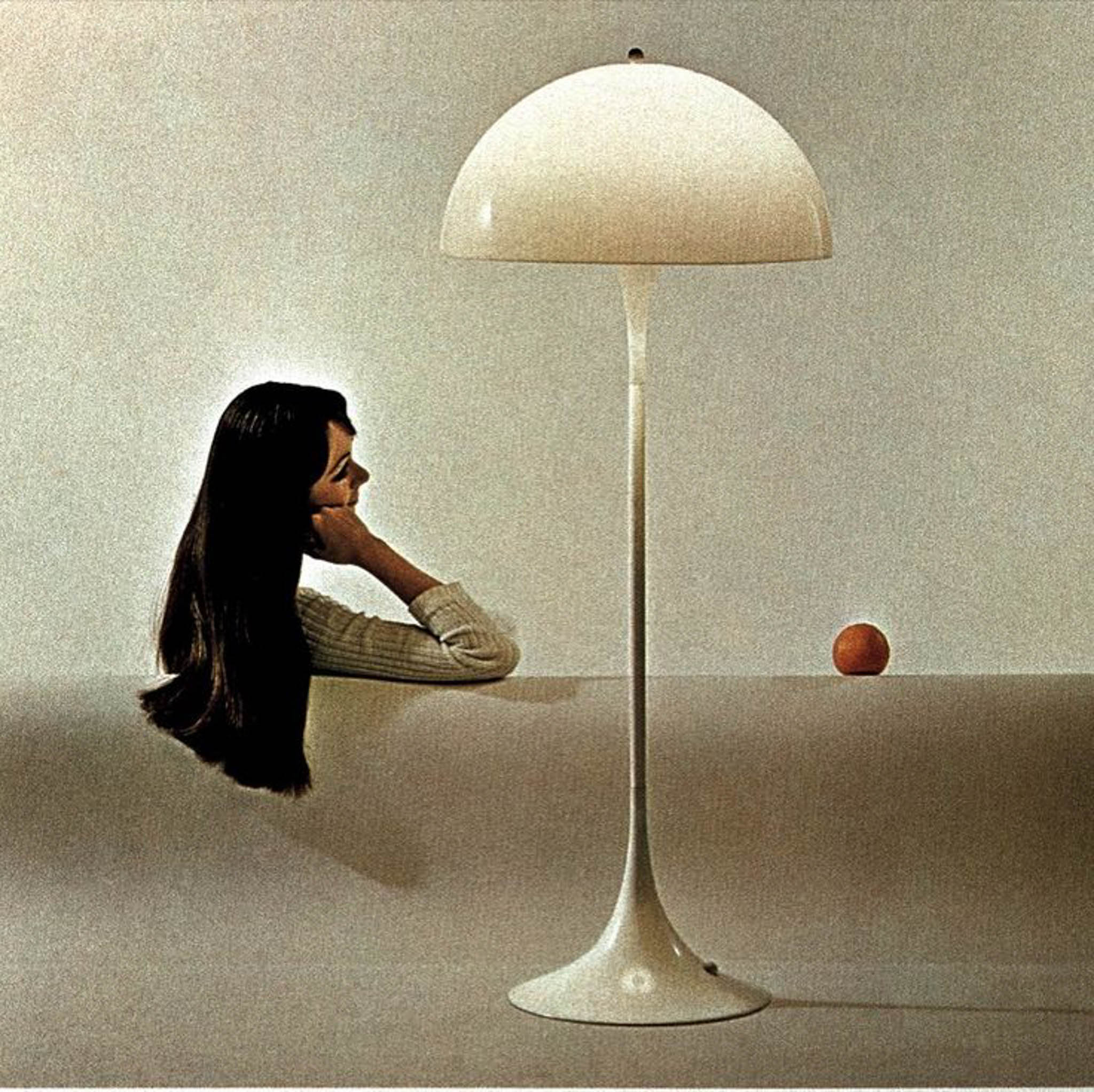
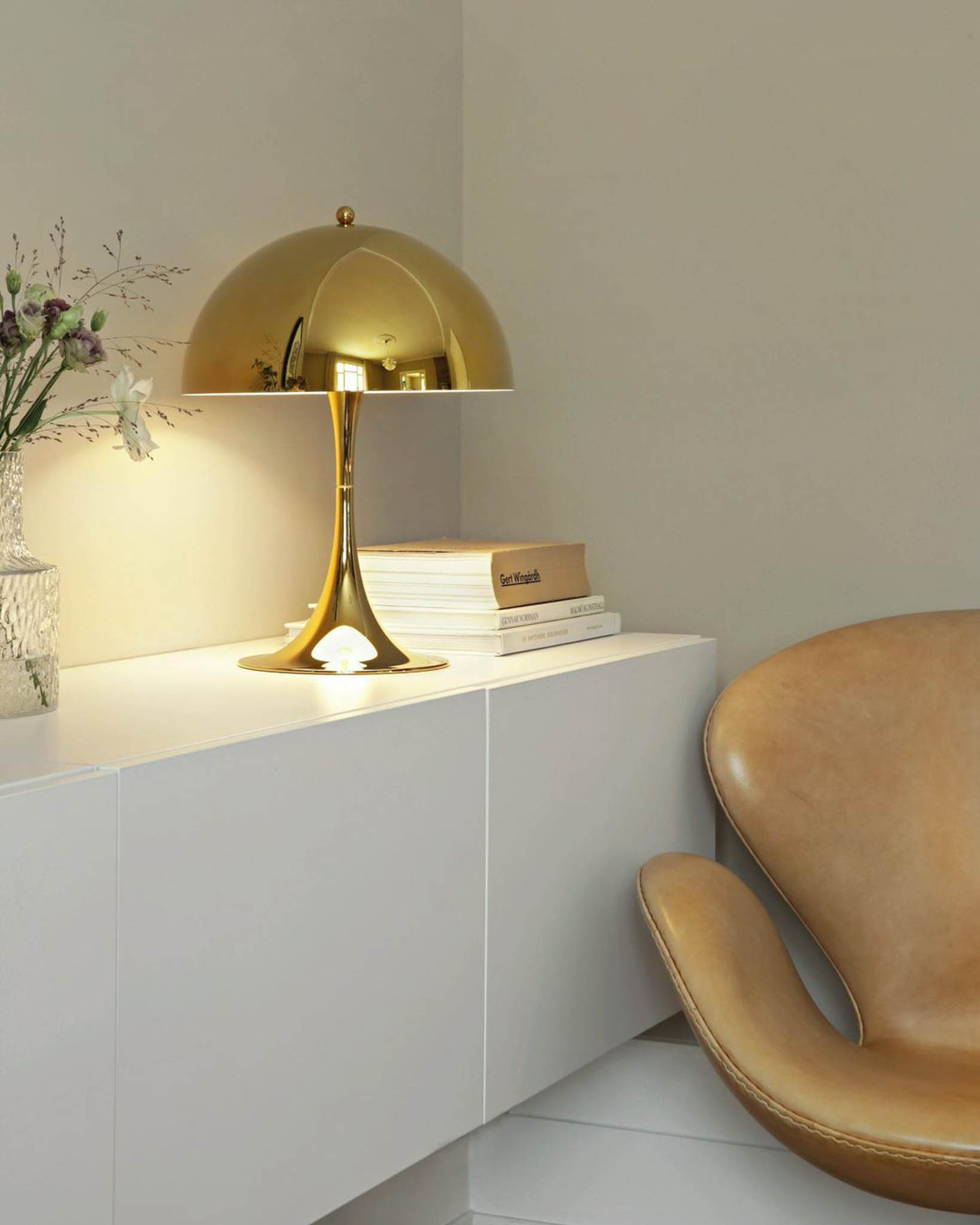
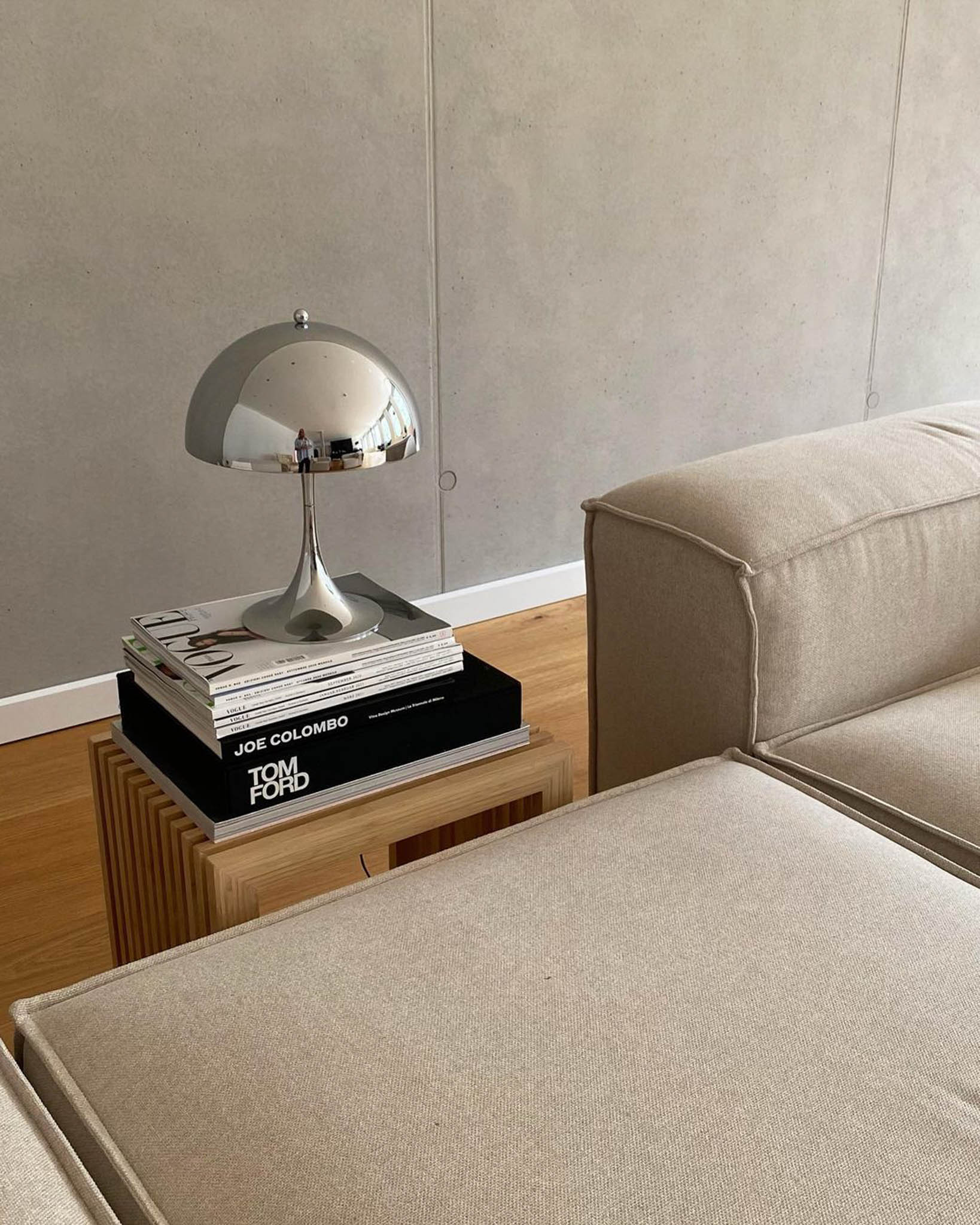
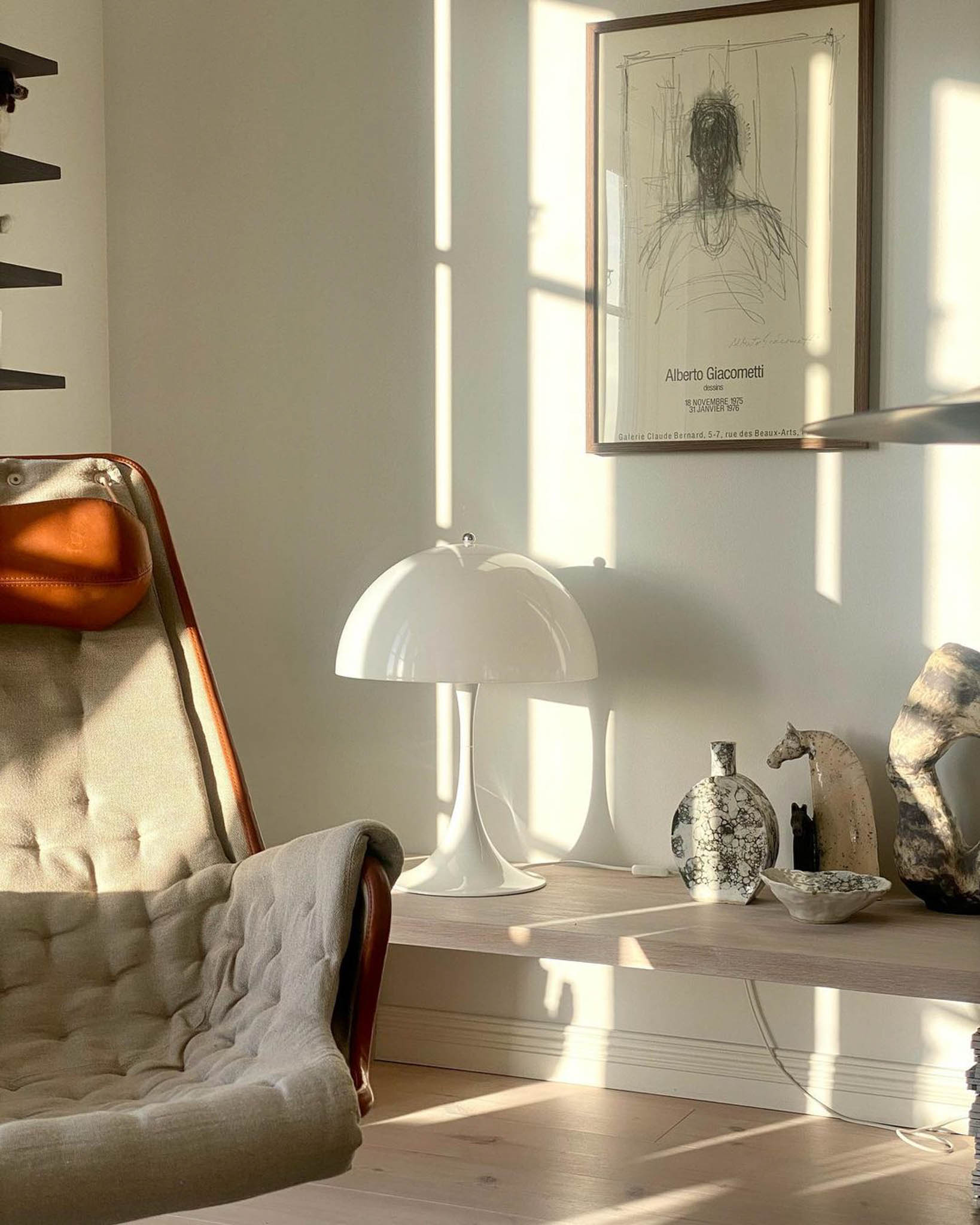
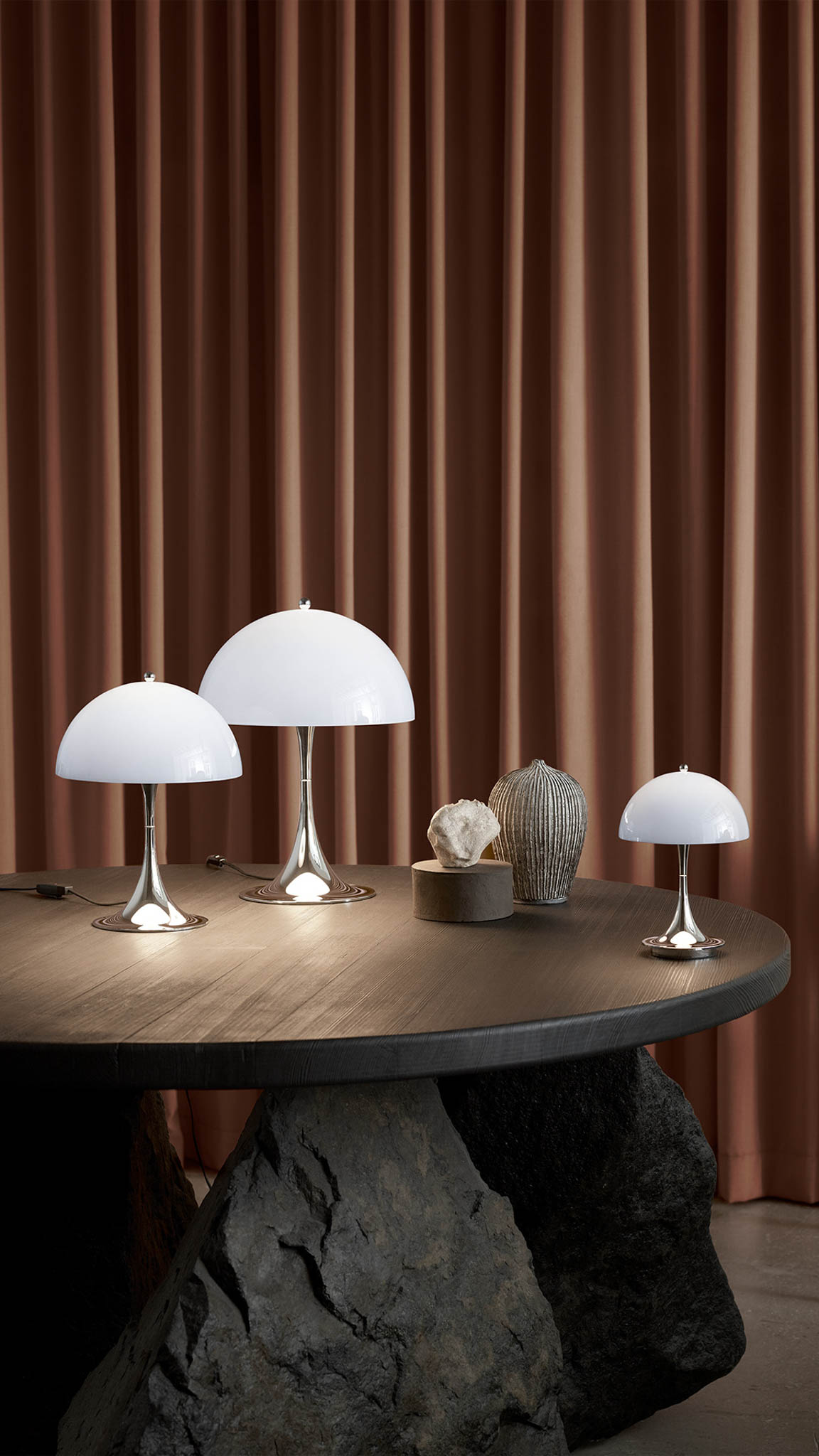
Another product of a harmonious collaboration with Louis Poulsen is the Panthella lamp family. Designer and architect Verner Panton began making table lamps in 1971 and reintroduced them in various dimensions and styles using different materials.
Advertisement
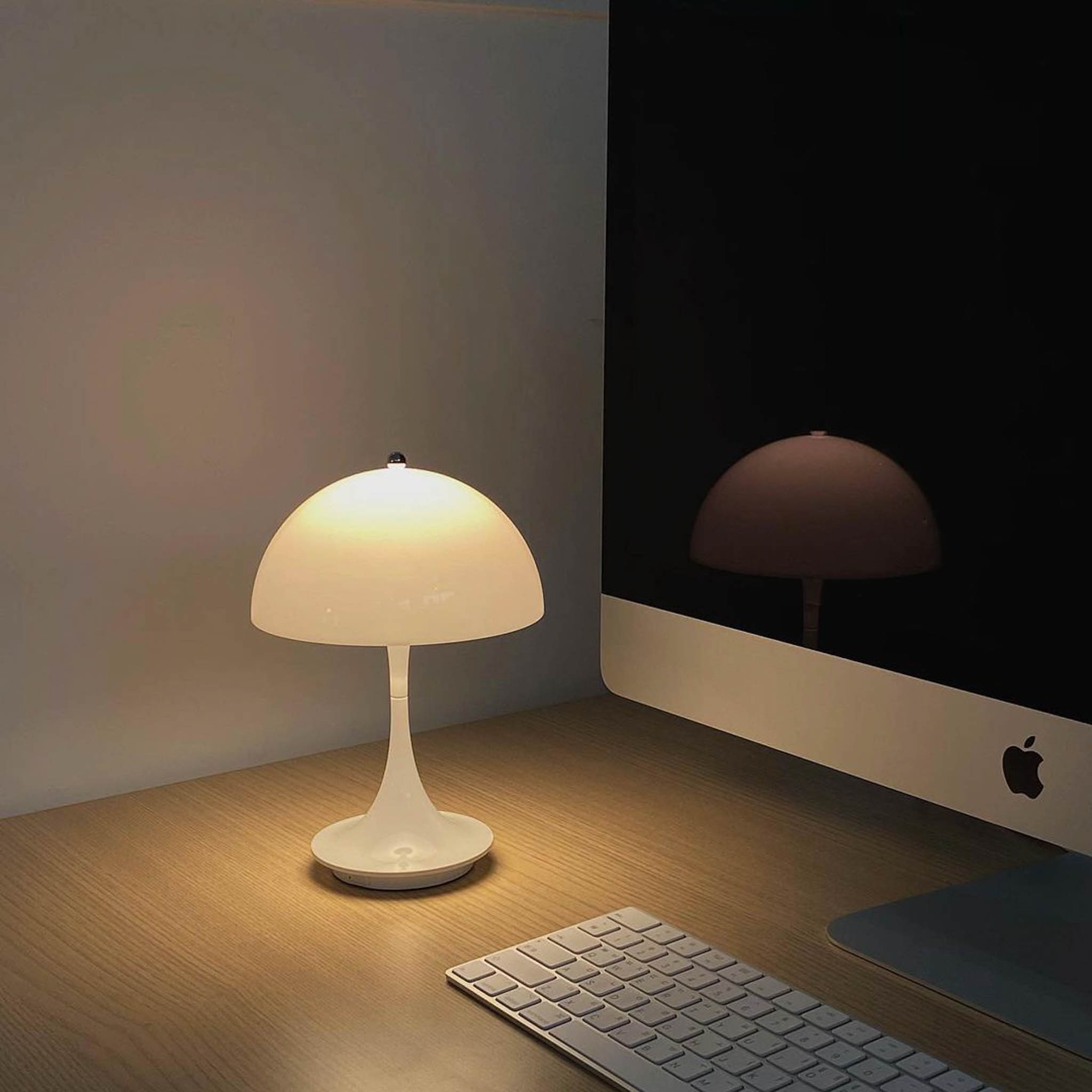
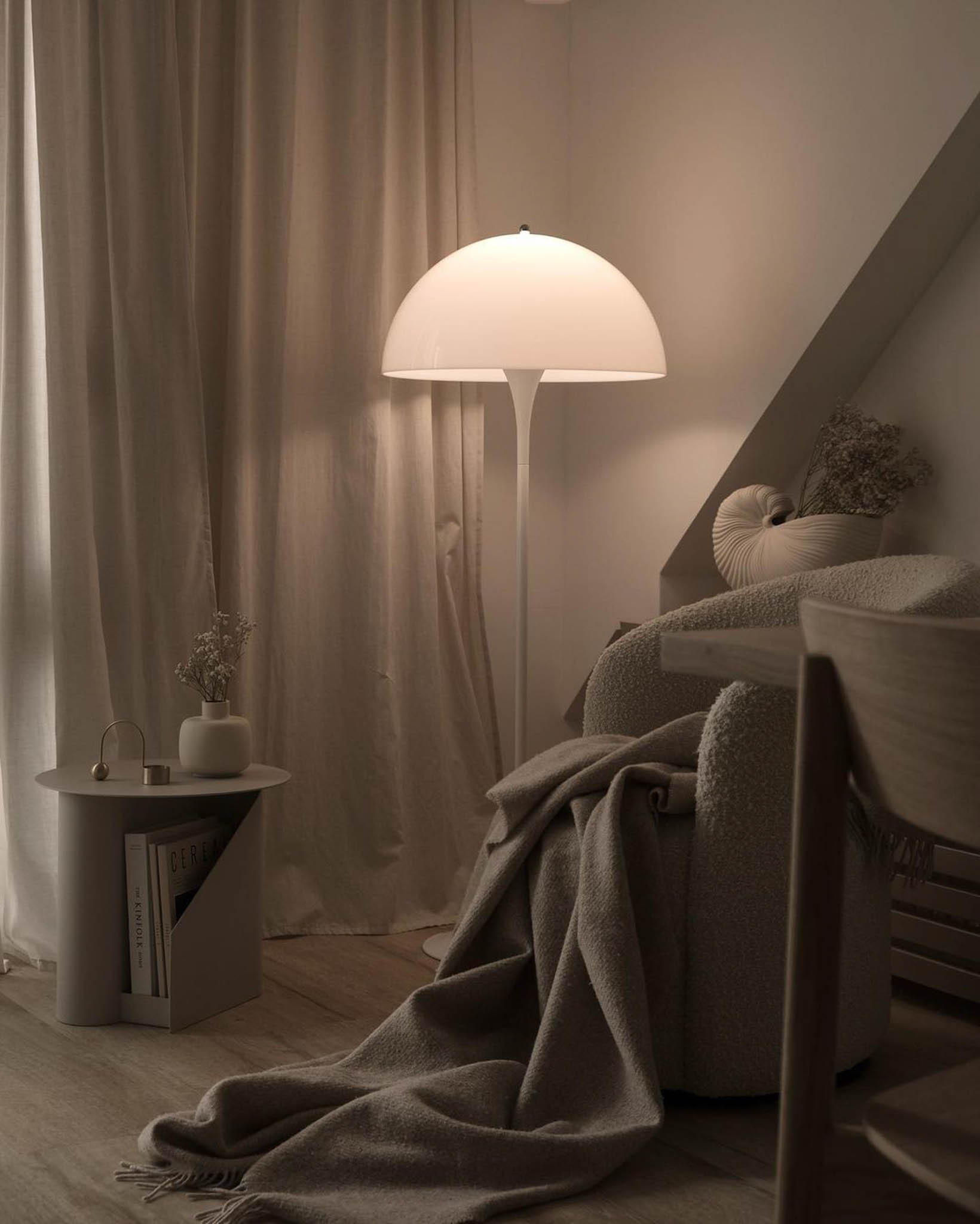
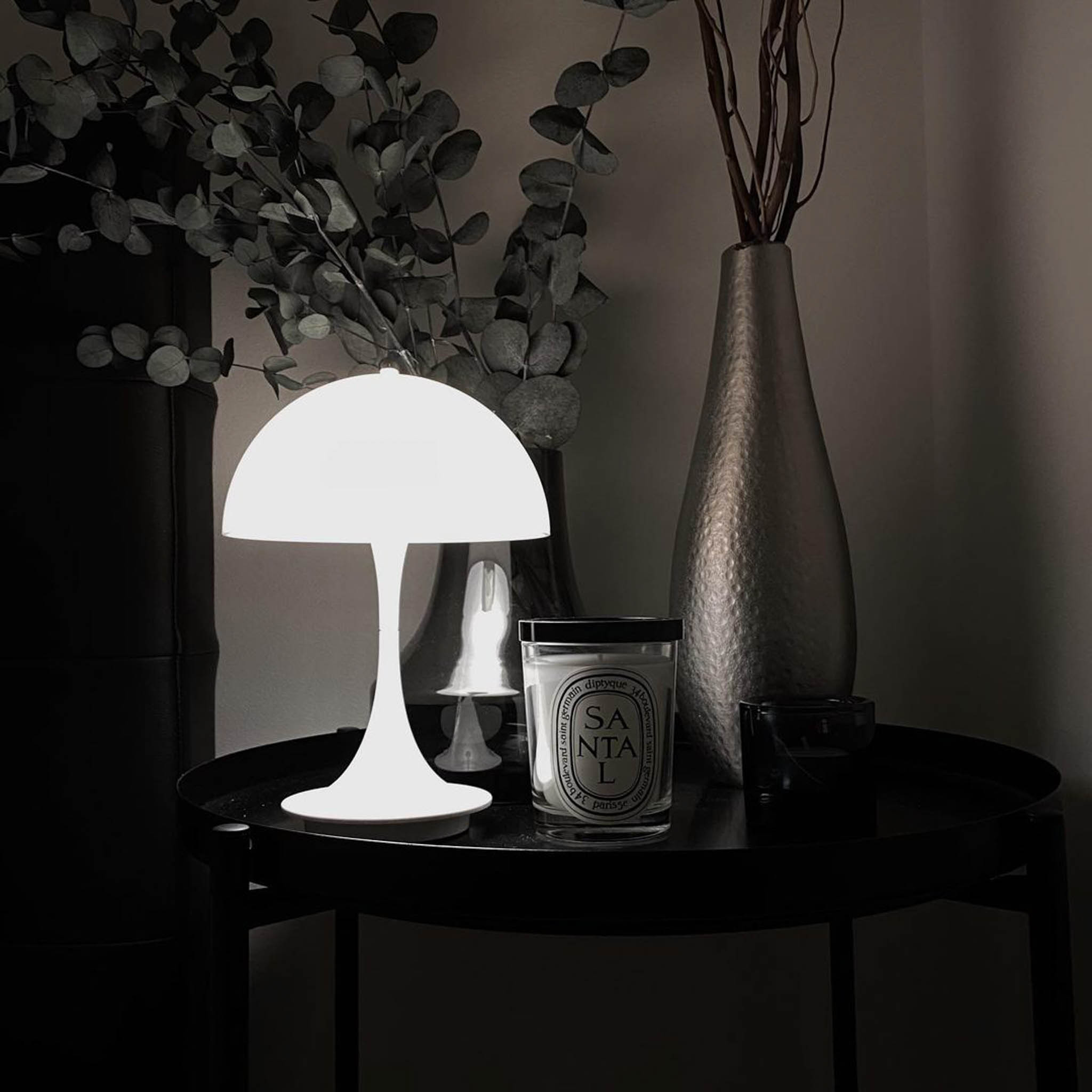
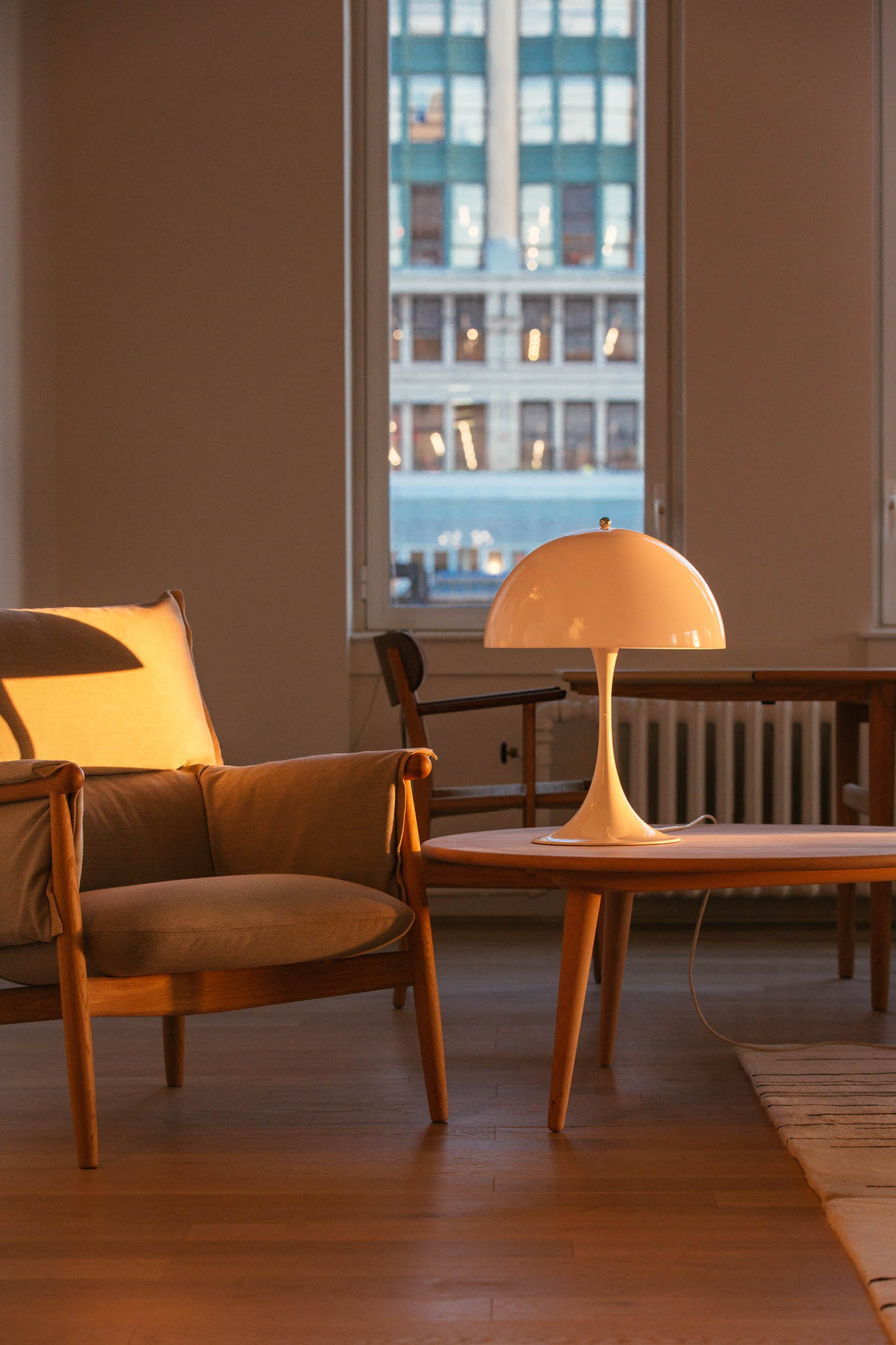
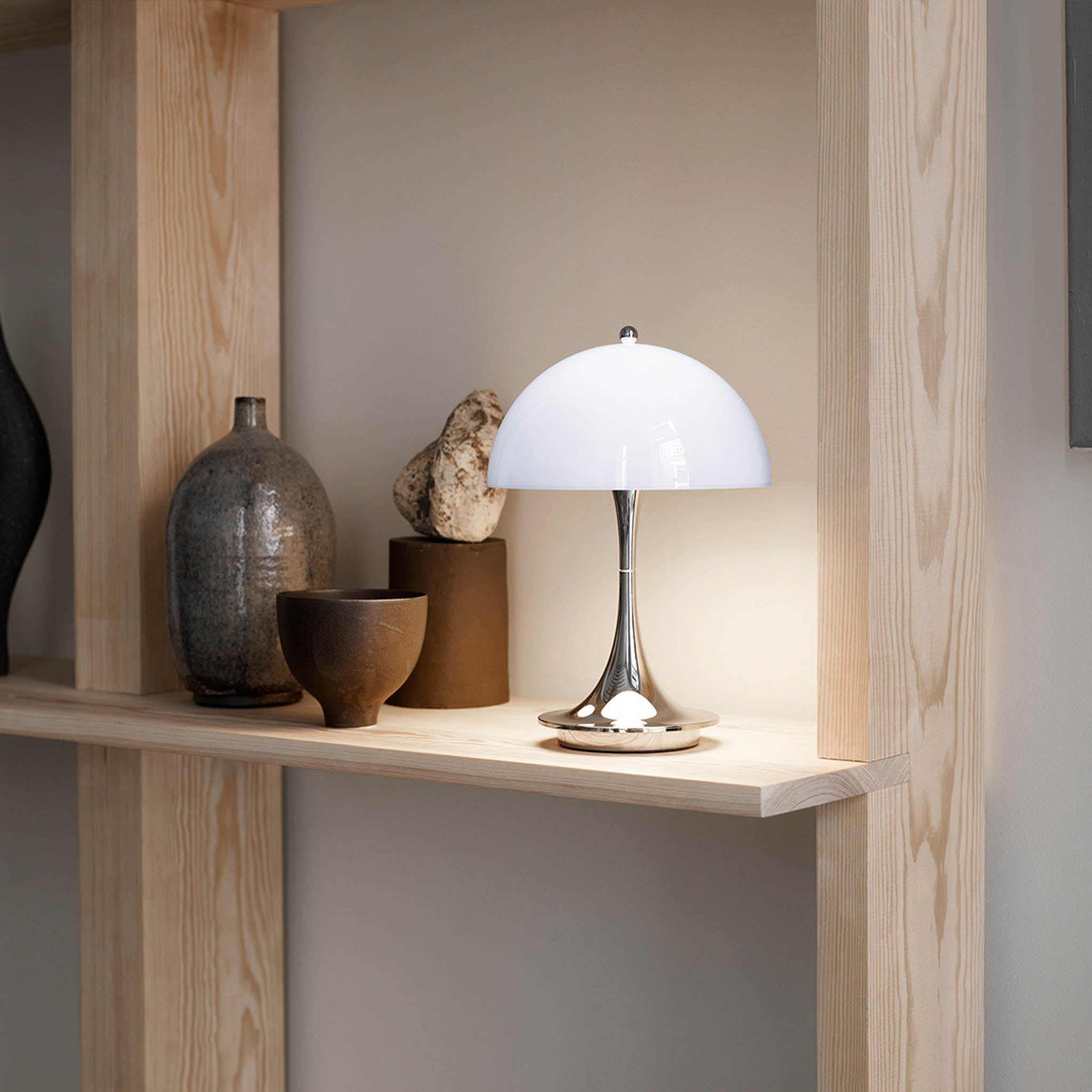
The Panthella line includes table and floor lamps of different dimensions in metallic finishes, opal acryl, and solid colors. These lighting fixtures feature soft organic shape and opal white color capable of reflecting the faintest light. As its hemispherical shade casts the light downwards, their base also acts as a reflector, making the lamp glow all over.
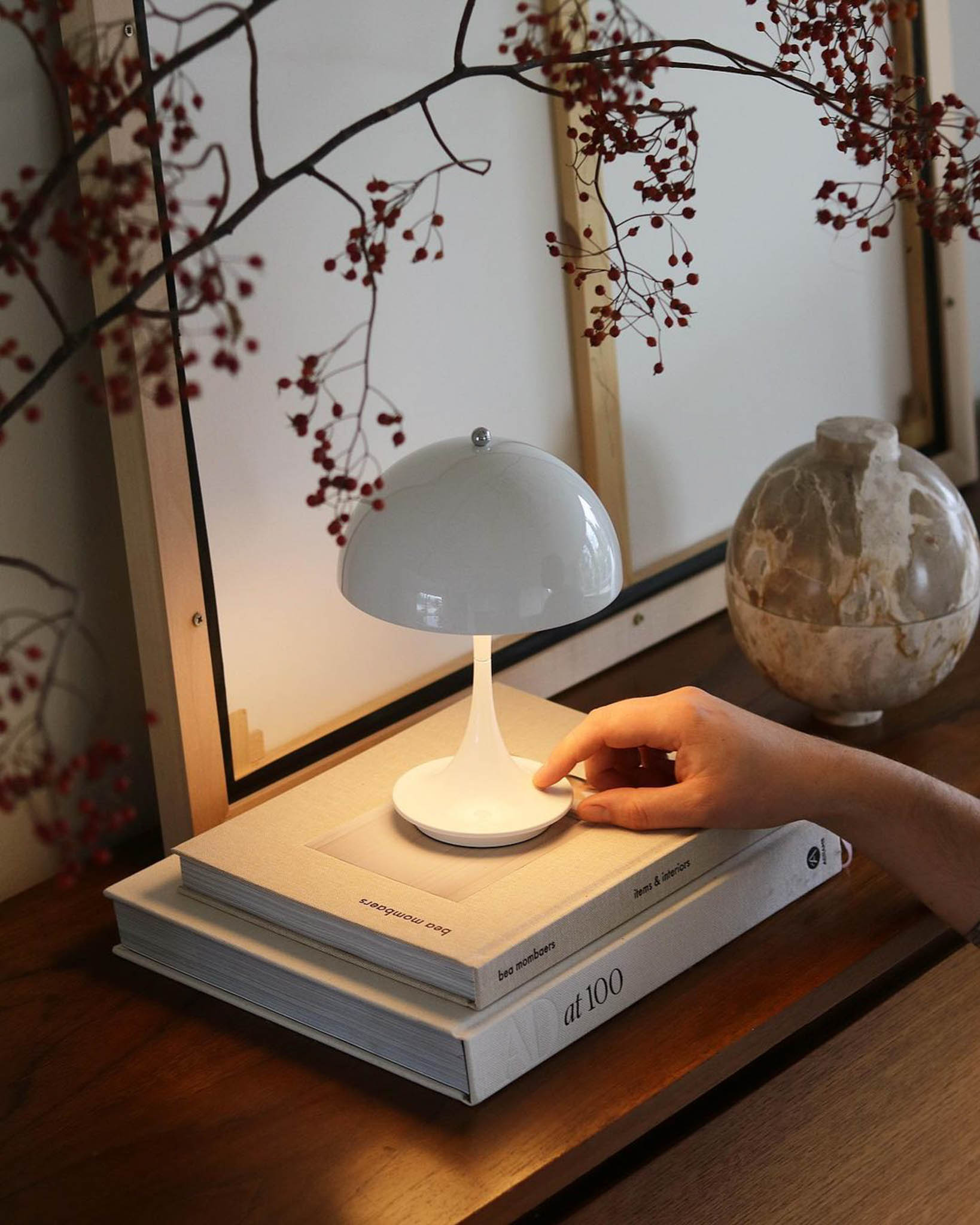
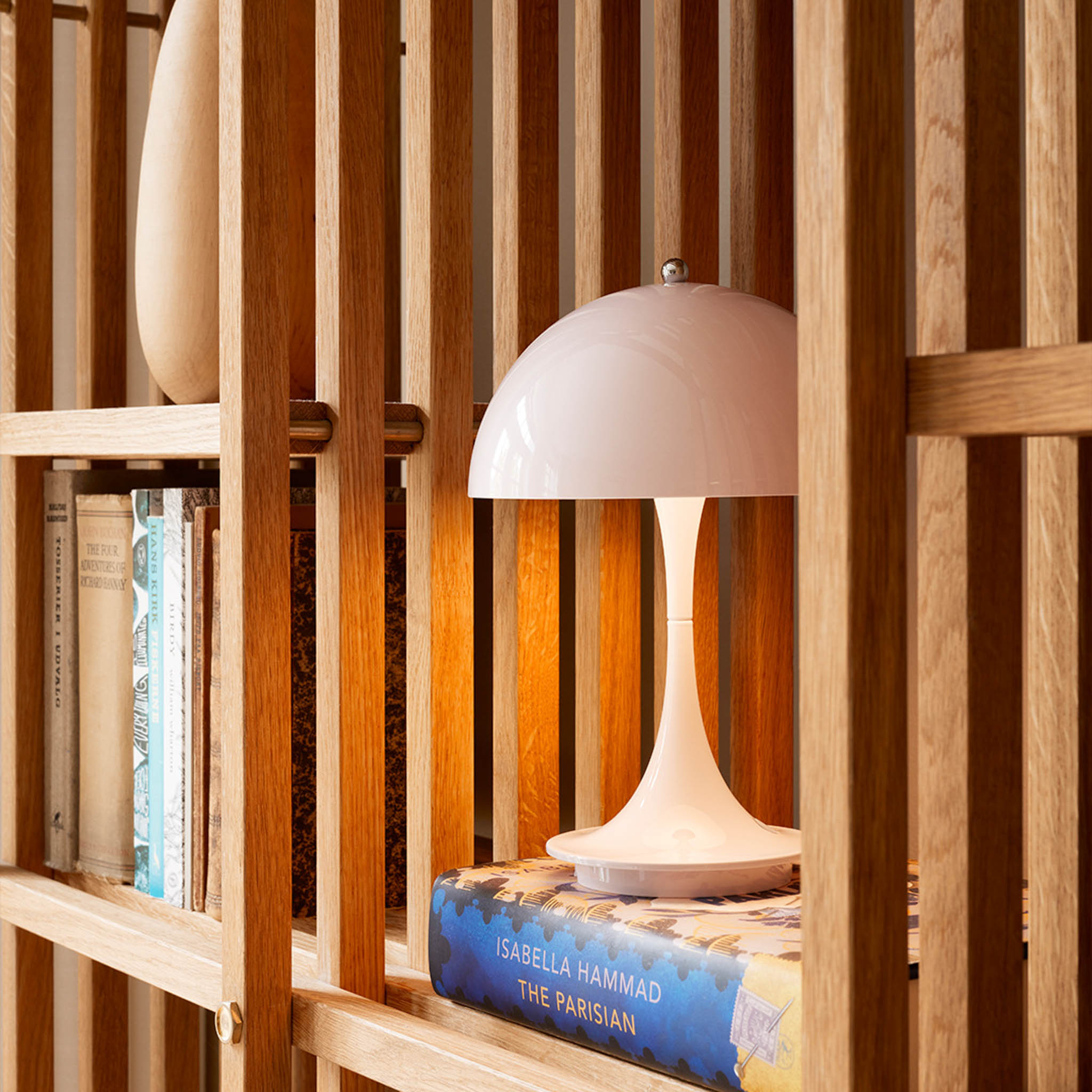
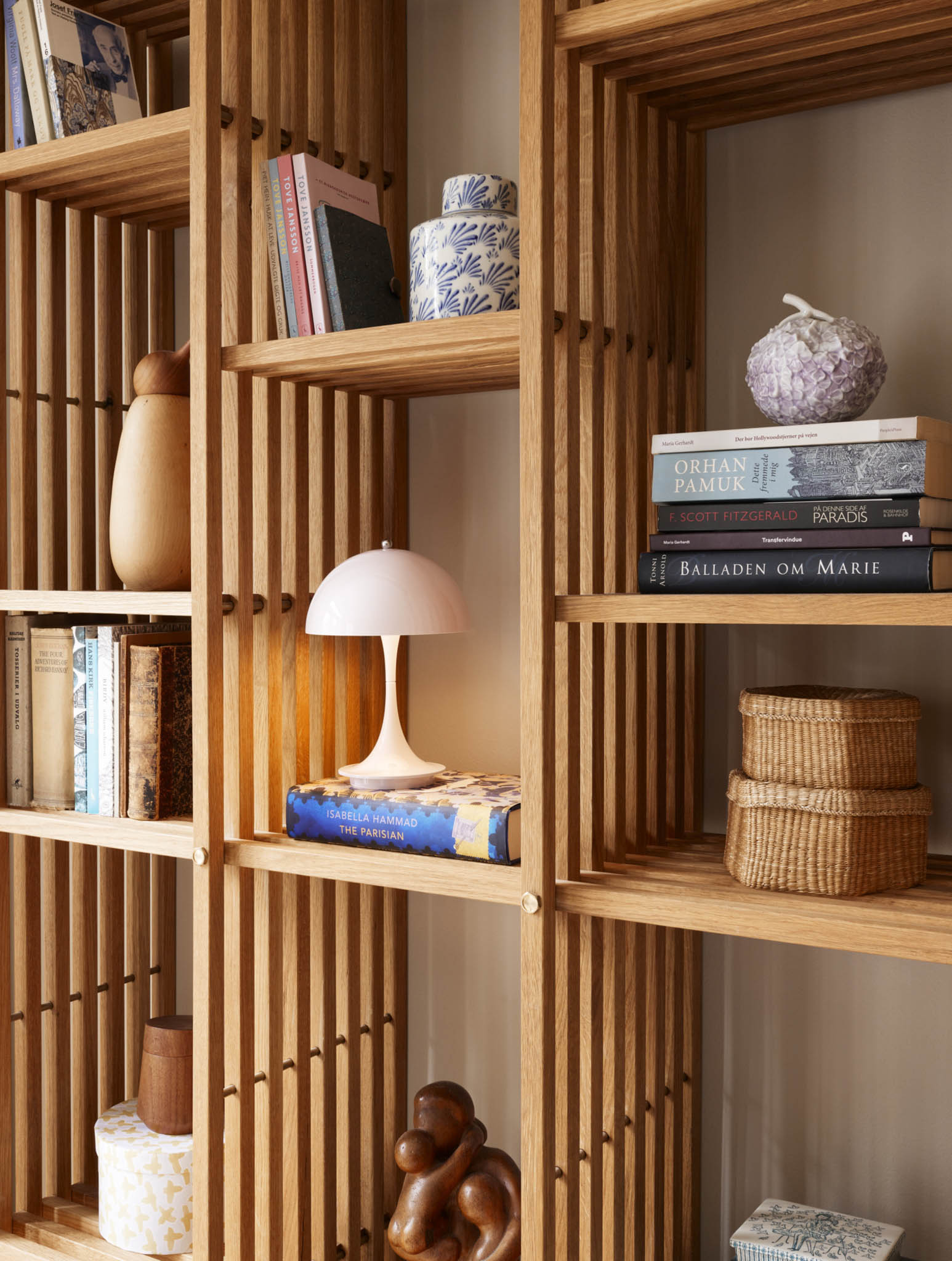
In honor of its long design history, the brand included a portable version in their anniversary lamp collection. The Panthella 160 is a miniature version of the original opal white design, measuring only 6.3 inches wide and 9.4 inches tall. It’s also battery powered and rechargeable, which means you can place or bring it wherever inside your home.
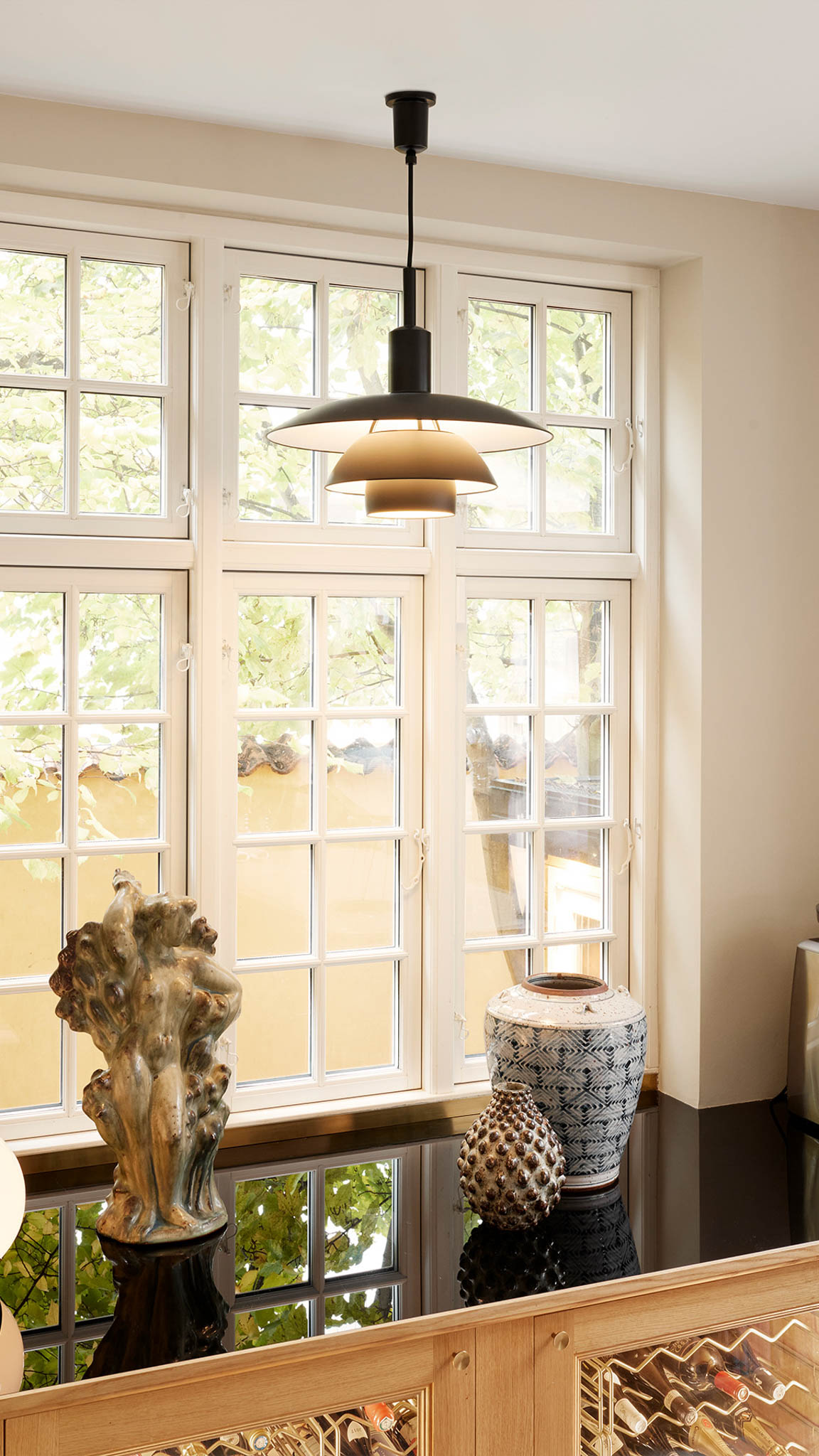
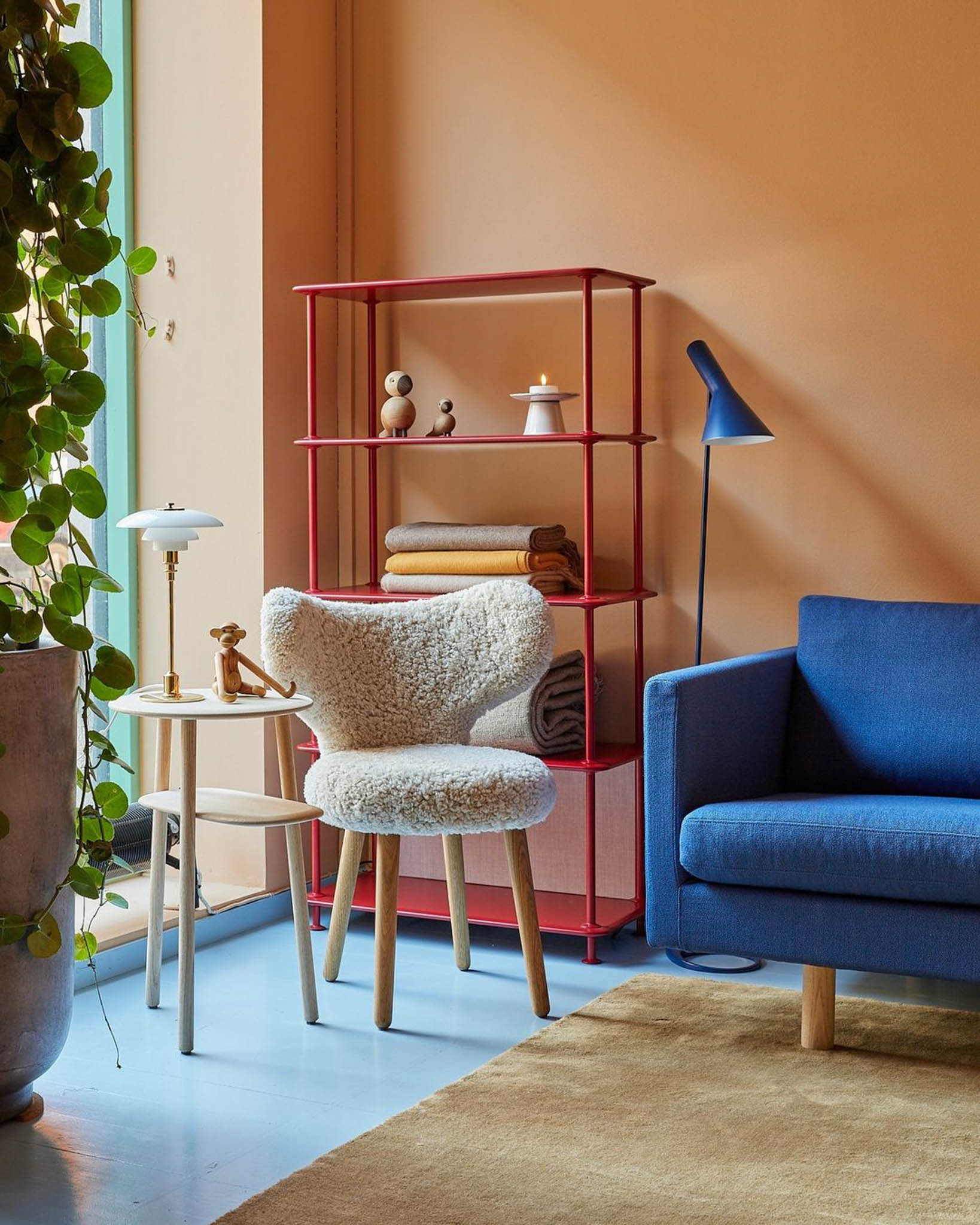
PH 2/1 Table Lamp: Reinventing a Louis Poulsen Trademark
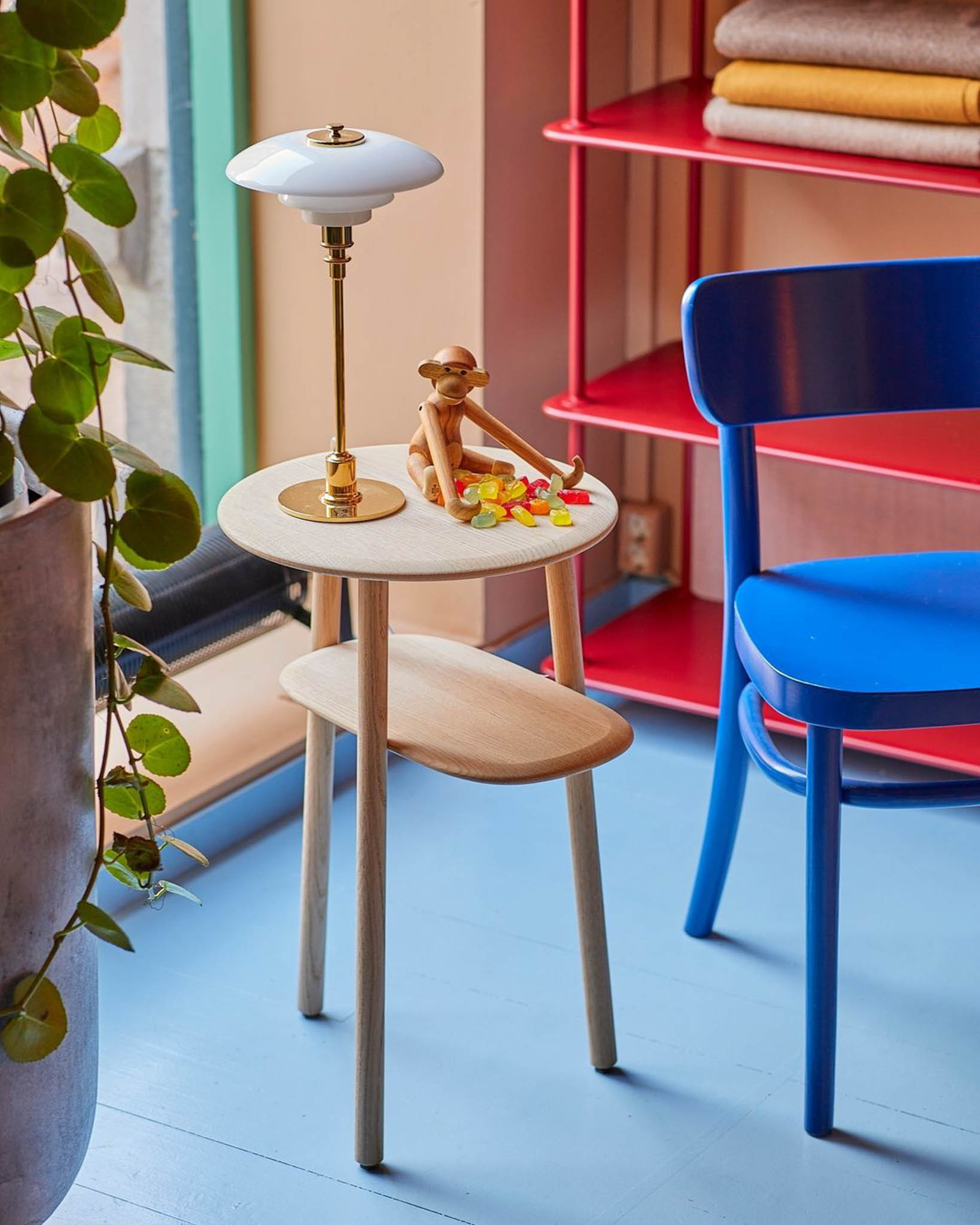
Among Henningsen’s works, the PH table lamps are the perfect embodiment of his three-shade system. Evident in its design are the mouth-blown layers of glass, working together to achieve even light distribution and reduced glare. This led to the invention of more Louis Poulsen models inspired by the science behind this pivotal piece.
Advertisement
With continuous modifications, they’ve become iconic fixtures in homes and offices around the world. To ensure it’s still attached to its roots, the brand found a way to reinvent this Louis Poulsen trademark.
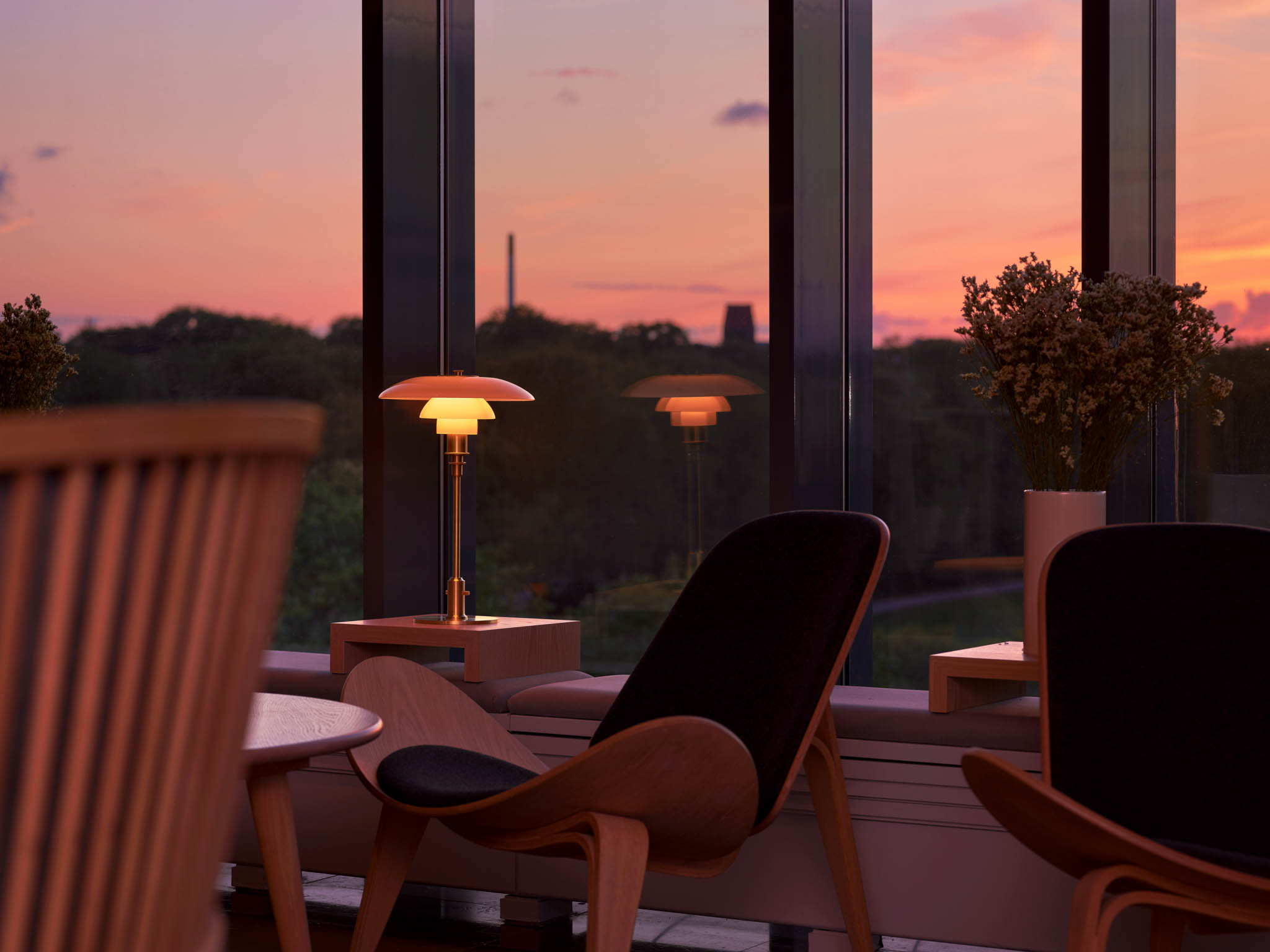
The PH 2/1 table lamp is a smaller scale model of the typical PH table lamps, which came in chrome plated, brass metalised, and black metalised bases. But Louis Poulsen released a new limited edition, dusty terracotta variety with a lacquered aged brass stem and base. This adds a vintage touch to this classic lamp, exuding a warm, sophisticated, and timeless look.
In addition, the brand also introduced PH 2/1 aged brass table lamps in partnership with FENDI Casa. Its yellow-colored glass and lacquered aged brass with striped design give a bold, luxurious twist to this lighting fixture.
Advertisement
The AJ Lamp by Arne Jacobsen
Originally made for SAS Royal Hotel in 1957, architect Arne Jacobsen aligned AJ lamps’ design with the modernist interior style. From the regular and mini table lamps to the floor and wall fixture, these products filled the building after its inauguration in 1960.
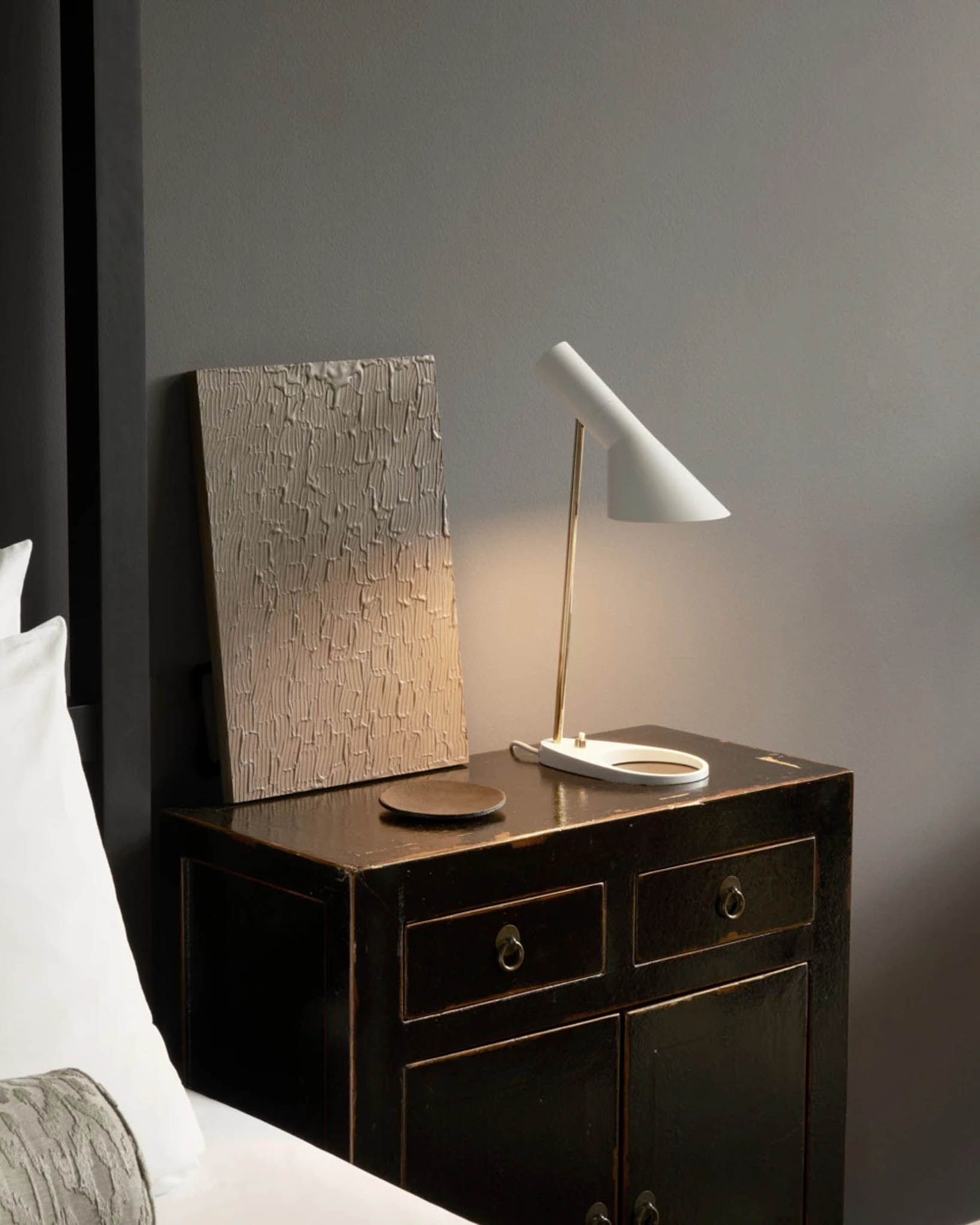
The AJ Lamps are known for their clean geometric contours. This lighting fixture has a tiltable downslope shade and slender stem. The circular base with a curved, upward-facing edge not only gives it a contemporary look, but also provides stability.
In honor of his works, Louis Poulsen created a new color variation to the AJ mini table lamps. From its usual neutral, earthy, and bright tones, they added a matte white/pale rose color to the product family. Although the exterior is painted white and the stem is polished brass, the subtle pop of color is found on the inside of the shade. This produces a warm, soft, inviting light, perfect for any space where a cozy and relaxing atmosphere is desired.
Advertisement
Moreover, the glossy paint finish further emphasizes the corners of the AJ mini table lamp’s shade. This prominent geometric feature is one of the reasons why it fits with modern interior styles. And with a new color included, it offers a wider range of options to suit different tastes and preferences.
Patera: Channeling Fibonacci
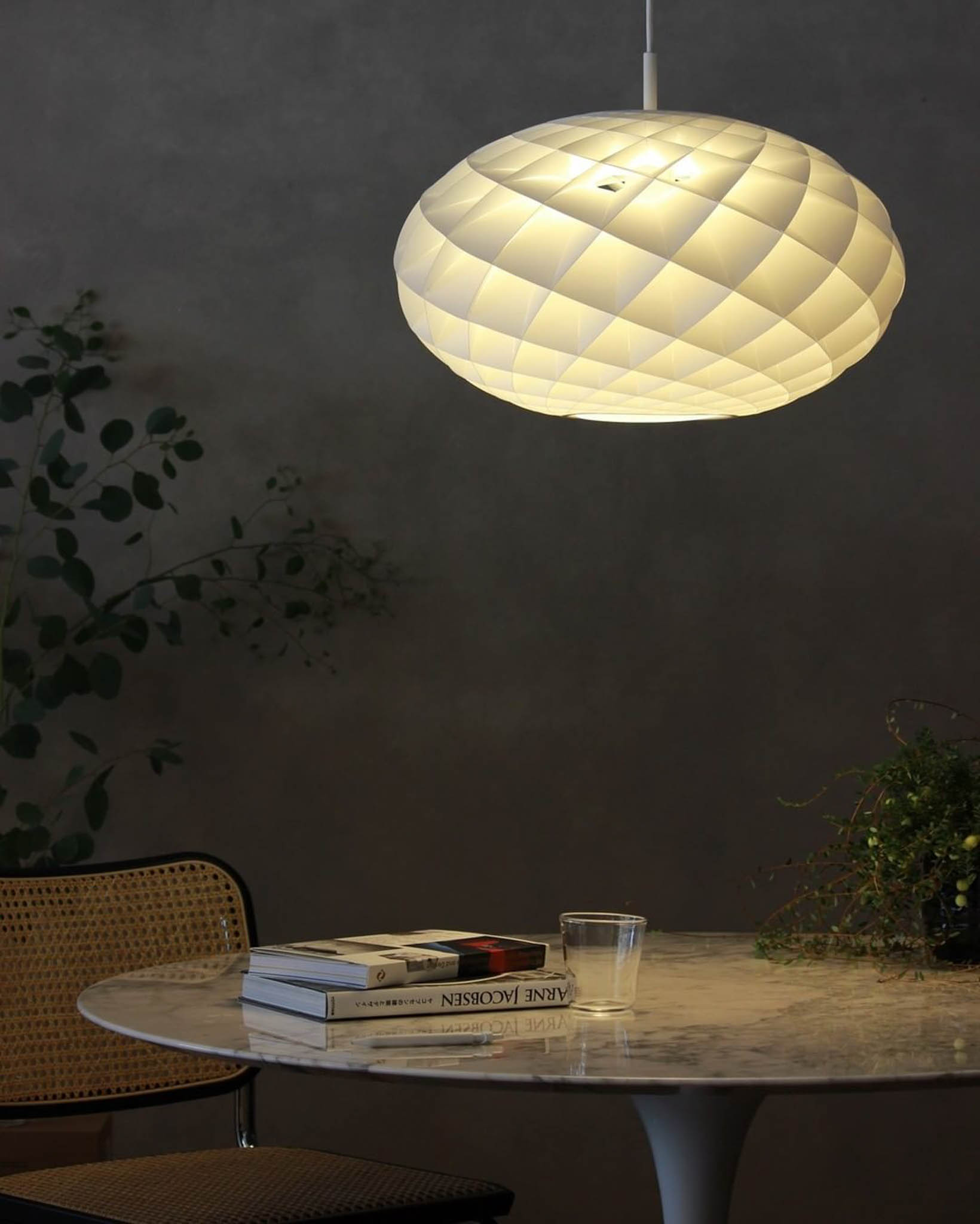
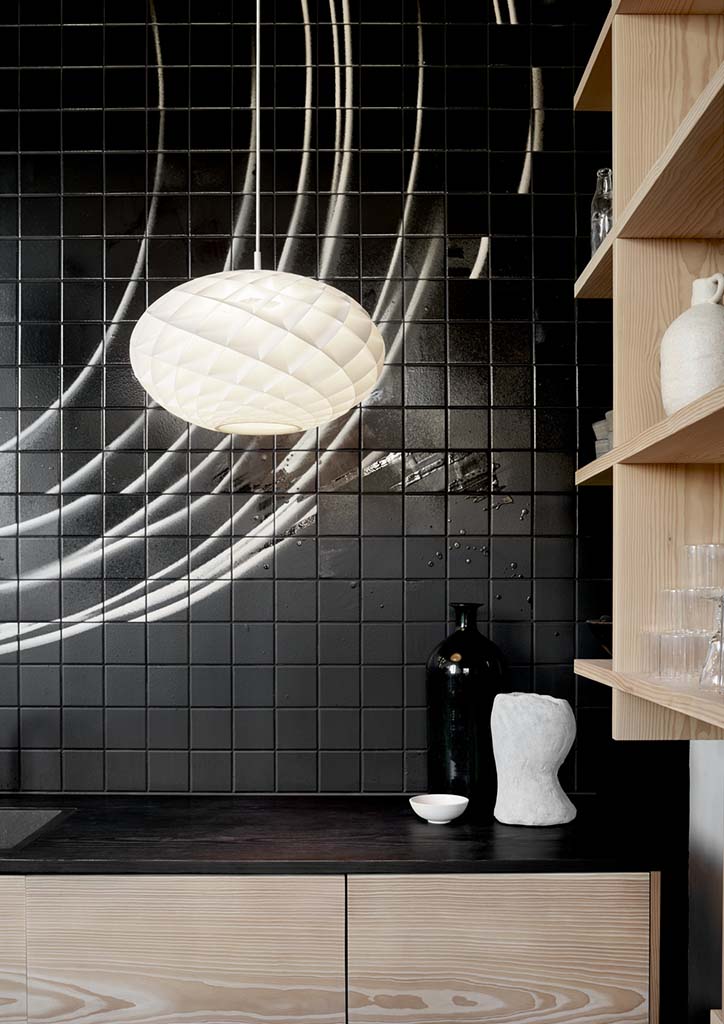
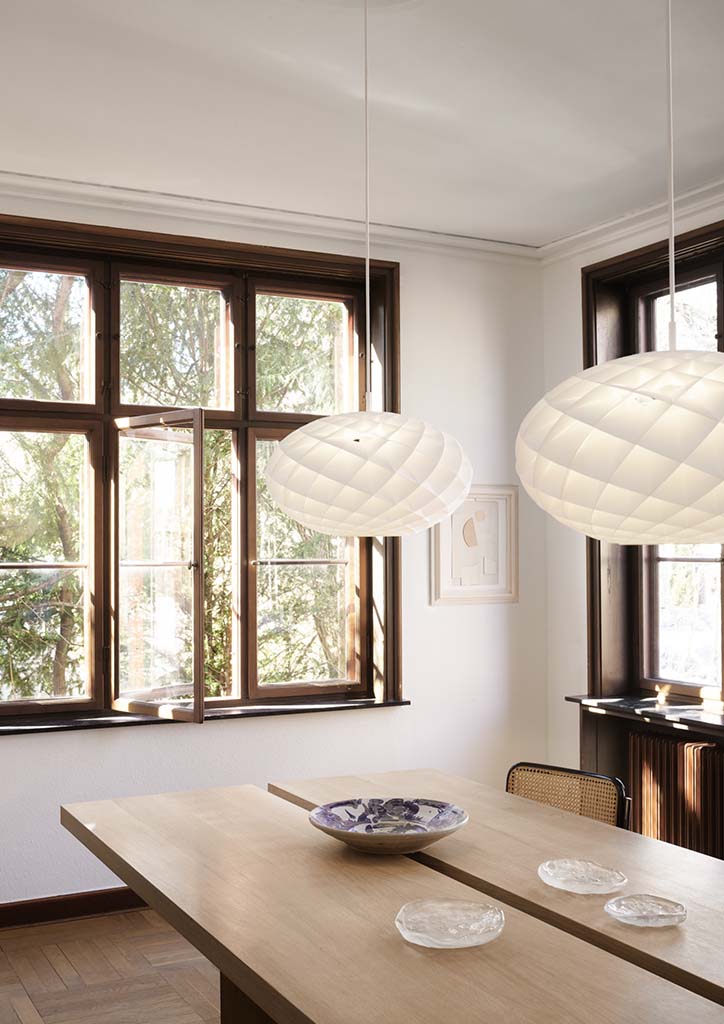
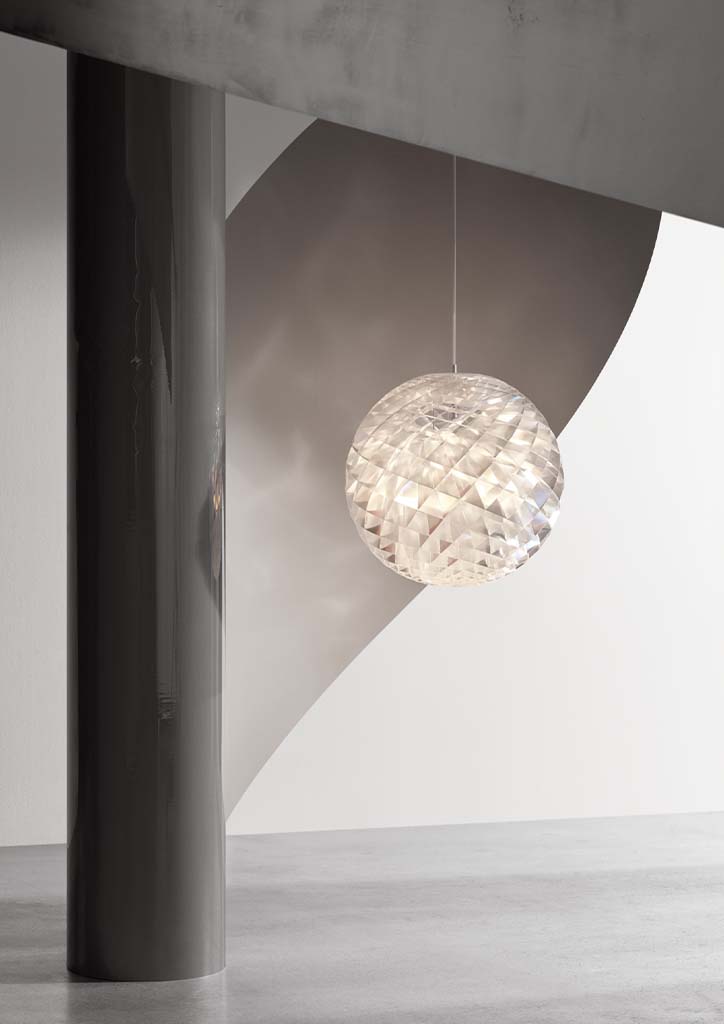
According to its designer Øivind Slaatto, he envisioned Patera to be a three-dimensional sudoku and regarded it as his “extremely mathematical assignment.” Regardless of its intricate details, the lamps’ soft emitted light offers calmness to the overall design.
Available in circular and oval variations, the Patera pendant lamps incorporate complex mathematical principles in their design. Dubbed as a modern take on classic crystal chandeliers, these lighting fixtures boast Fibonacci sequence-based diamond-shaped cells surrounding its exterior. This provides a glare-free 360-degree glow, giving off a different look and feel when viewed from various angles.
Advertisement
Furthermore, Louis Poulsen explained that a single Patera is capable of elevating a space alone. But a magical visual display, mimicking a starry sky, happens when you involve a series of them.
The VL 56 Pendant by Vilhelm Lauritzen
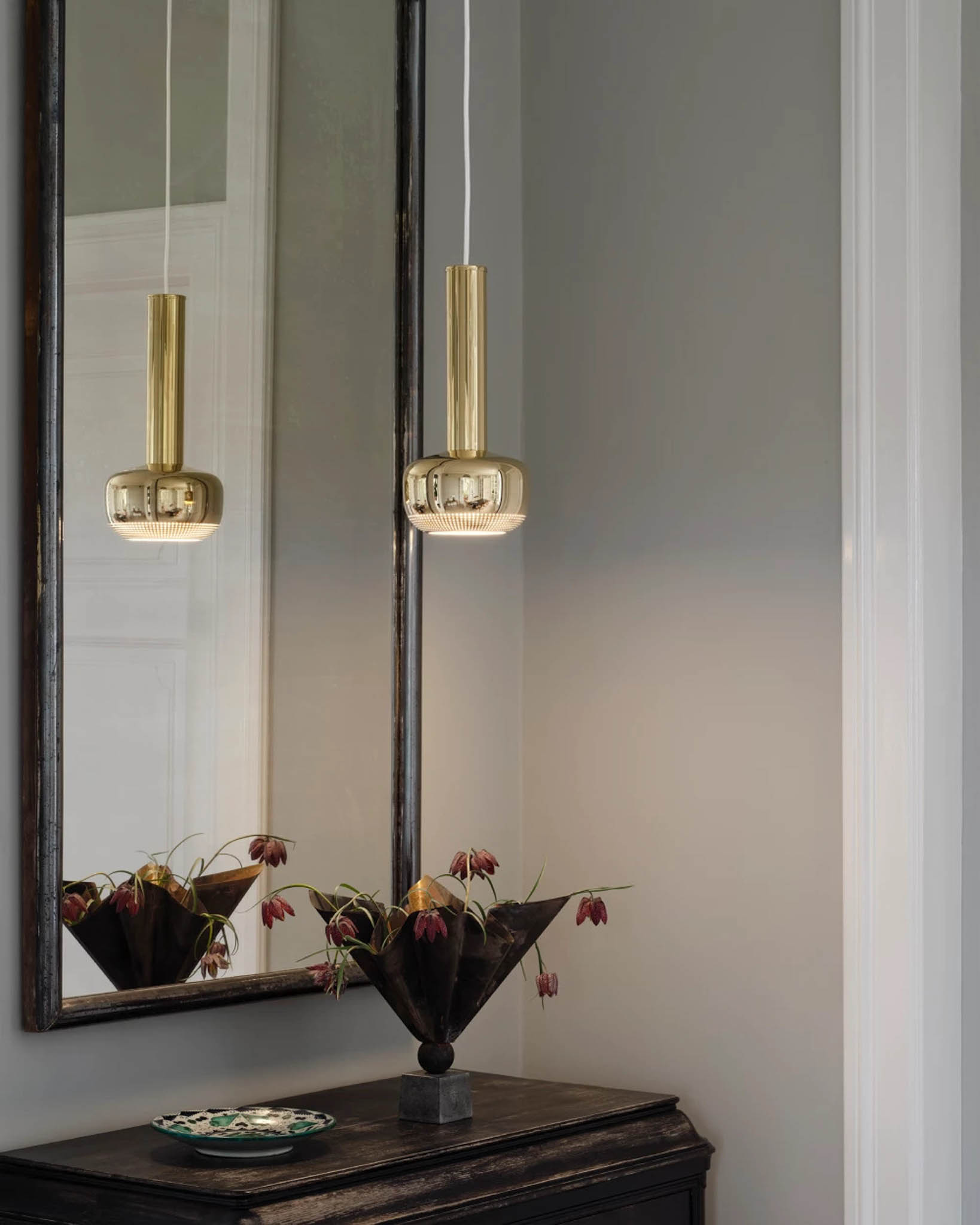
Characterized by its metallic finish, the VL 56 pendant features a radial perforated shade. Such a unique design allows it to give off a downward glow while creating a soft light pattern and transition.
This pendant lamp’s inception began when functionalist architect Vilhelm Lauritzen designed and built the Folkets Huts during the Danish Labor Movement. Managing the entire design and construction process, the architect had the freedom to choose and create elements perfectly suited for the building. The VL 56 pendant lamps, as one of his original works, become one of the historical site’s trademark details. Even when the building was converted into the Vega concert hall, these lighting fixtures still adorn and illuminate the space.
Advertisement
To keep up with evolving interior designs, Louis Poulsen recently introduced the pendant lamps in polished brass and chrome plated styles.
Louis Poulsen’s lamp collection is beyond a tangible representation of its design legacy. These prized creations are timeless pieces of art that illuminate spaces with more than just light. They are symbols of innovation, quality, and enduring style that every interior space deserves to have.
Modern bathrooms are no longer purely functional spaces. Increasingly, they are being designed as environments that support cleanliness, ease, and quiet restoration within the home. As daily life becomes more demanding and health awareness continues to rise, homeowners are beginning to expect more from the spaces where daily rituals begin and end. For architects and […]
From the moment a diner steps through the door, each detail shapes how a meal is experienced. Restaurant design has evolved, with architects and culinary professionals collaborating to create built spaces that are as intentional as the menu itself. The spatial atmosphere acts as an additional ingredient that can define the culinary experience. Taupe and […]
With climate change and global warming, the Philippine climate is in constant evolution. Consequently, it is important for Filipinos to have living spaces that respond to the local environment. In this article, BluPrint lists down Filipino architects who are reimagining the tropical house, aligning the built and natural environment. BAAD Studio Principal architects Benjee Mendoza […]
Ventilation involves the introduction of outdoor air into a room, providing occupants with their needs. Proper ventilation allows for the moderation of internal temperatures, the creation of better airflow, the dilution of carbon dioxide to acceptable levels, and the removal of contaminants. This addresses health risks associated with indoor air pollution, such as respiratory problems […]
WORLDBEX 2026, running from March 12 to 15, 2026, proves itself as the Philippines’ leading construction and design expo as it wrapped its 29th edition. It drew together 1,000 local and international exhibitors under one theme, “Building Opportunities: Sustaining Lives.” Organized by Worldbex Services International (WSI), in support of the ABS-CBN Foundation Inc., the event […]
Located near the equator, factors such as heat and humidity are the norm in the Philippines. This tropical climate has shaped the development of architecture in the country. As Leandro V. Locsin stated: “The first consideration of the Filipino builder and certainly the most evident in his architecture, which is after all an outgrowth of […]