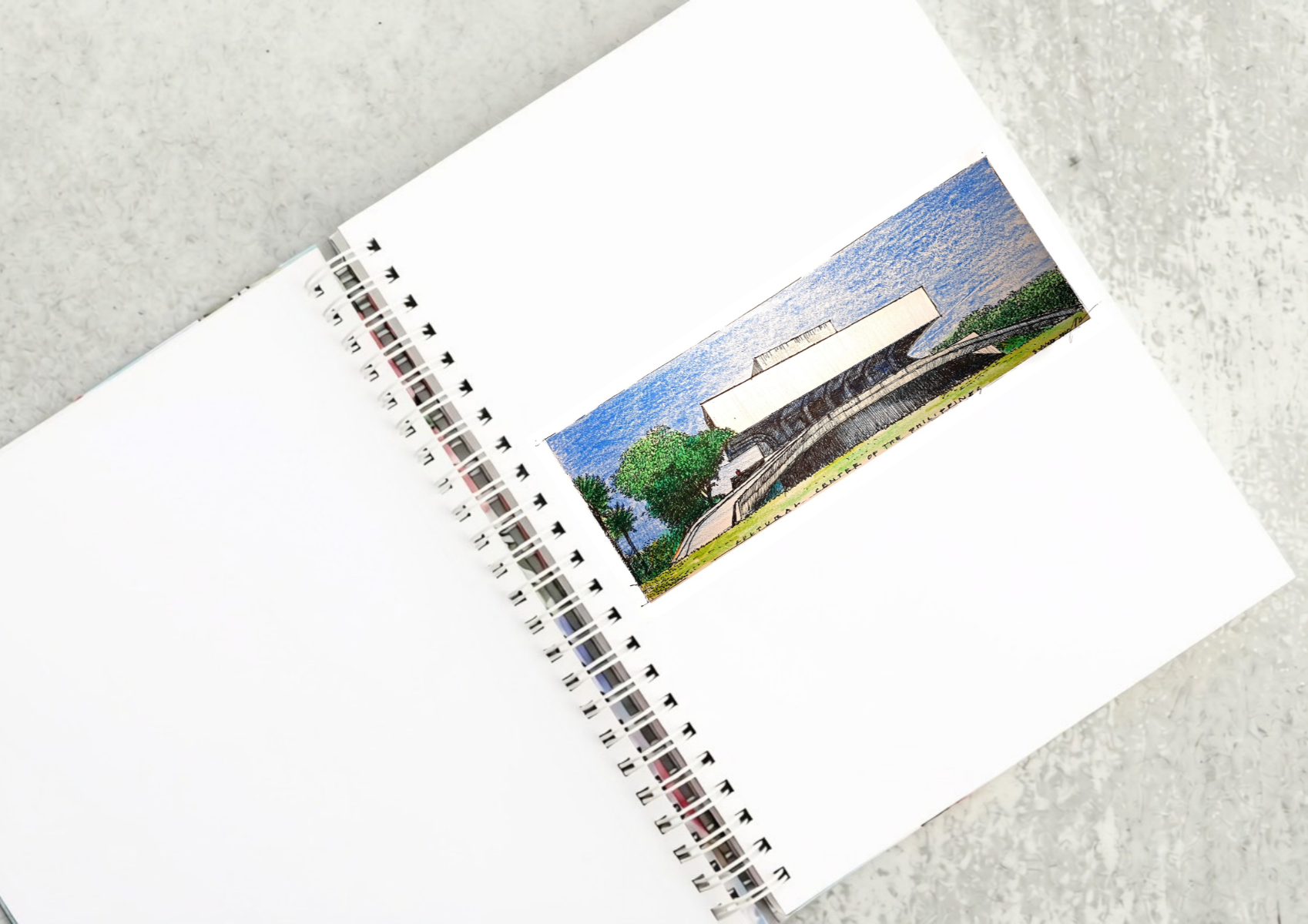
The CCP Main Theater as an Icon of Philippine Modernism The CCP main theater by National Artist for ArchitectureArchitectureThe art and science of designing and constructing buildings, structures, and spaces that are functional, safe, and aesthetically pleasing. It encompasses the planning, design, materials, and techniques used to createGo to Architecture Glossary Leandro V. Locsin is […]
Leo Valledor’s ‘At First Sight’ Plays with Perspective



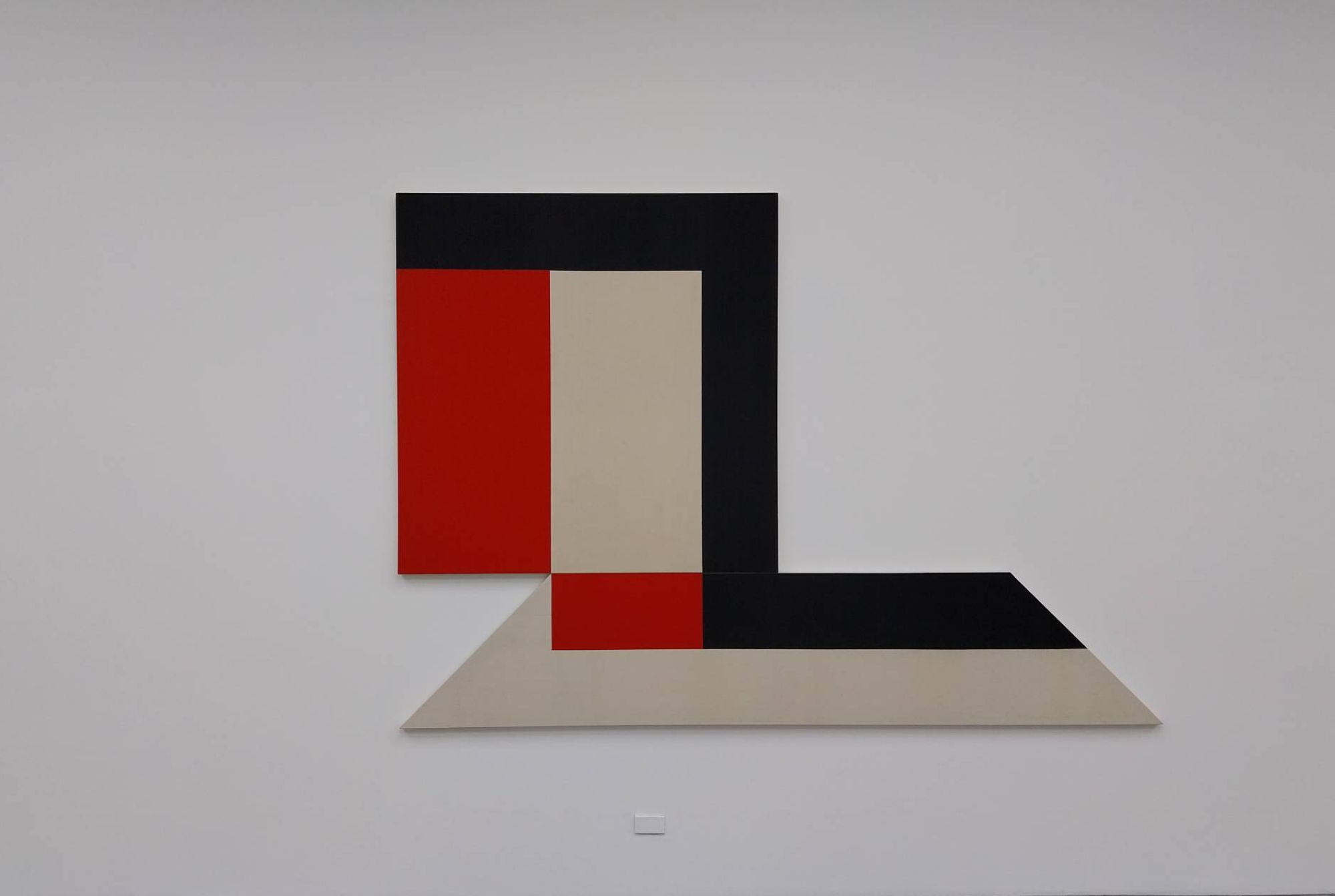
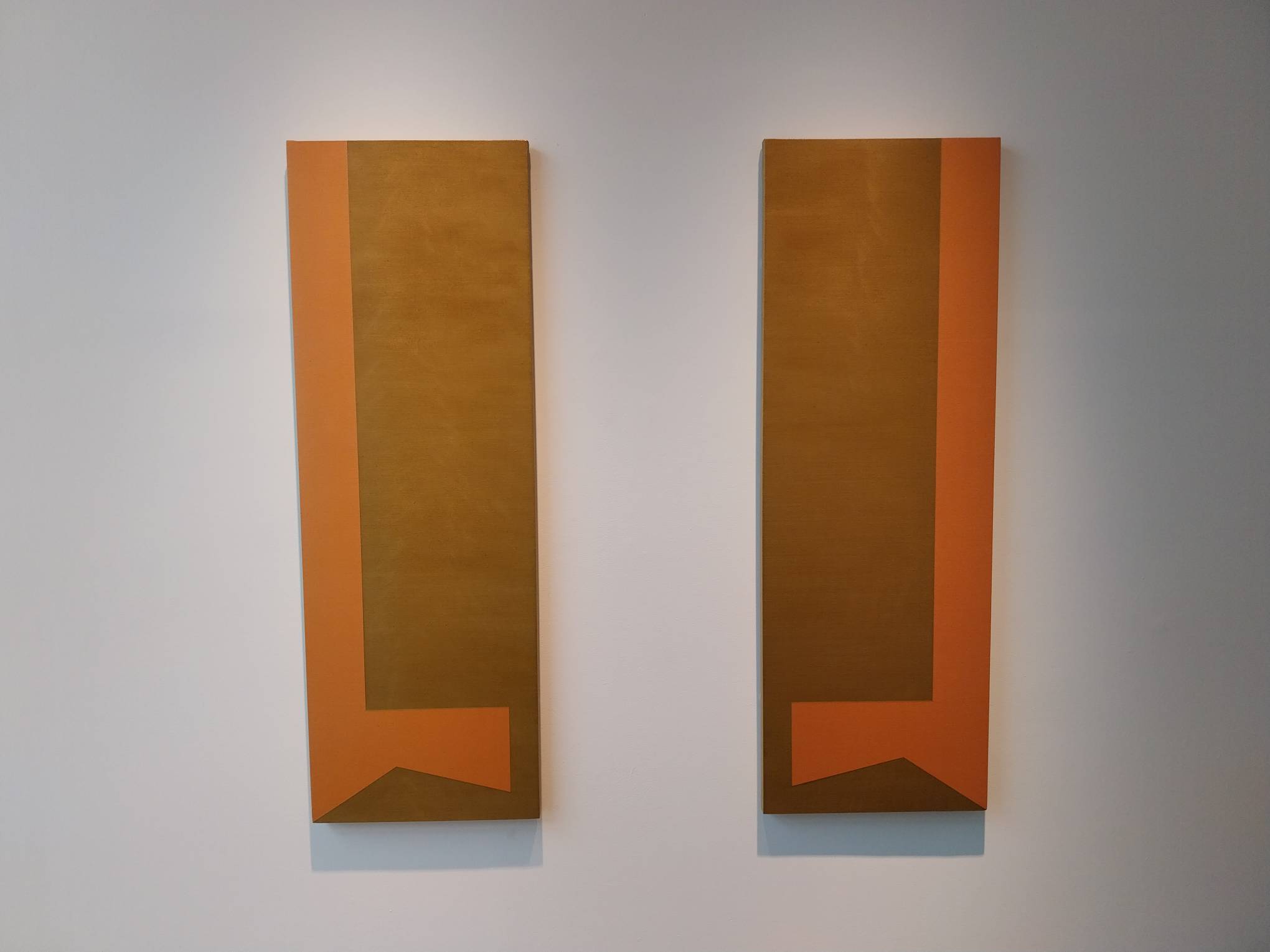
At First Sight, the late Leo Valledor’s exhibit at Silverlens Manila, combines artistic precision, geometry, and color theory to bring these meticulous works that comes alive beyond its two-dimensional shape.
Valledor, a Filipino-American who was based in the United States, pushed the boundaries of art with his trailblazing minimalist art. A member of the modernist art group Park Place Gallery, his works focus on form as he crafted engaging, inventive illusions within his minimalist oeuvre.
The works appear simple and oblique at the beginning. But as one stays with the paintings for a longer period of time, the works lodge themselves in your head as it bends itself into different perceptions depending on the lighting and the angles one uses to view them.
“These edges are delicate and severe,” Patrick Flores wrote for the exhibit. “[But] they mark the suture, or the facture, of painterliness, at the same time that they enable the continuum, too, of abstraction, as a possible infinity or, at the very least, an instinct for the expansive. These edges are intervals as if they were for breathing, or meant to disrupt formalism, or to hold out an opportunity to improvise as in jazz or beat poetry.”
Dimensional Space
This exhibition at Silverlens marks Valledor’s first show in the country, albeit a posthumous one. The artist died in 1989, with most of his working years spent in New York and San Francisco. Many of the finished works featured here date between 1970 and 1986. Sketches by the artists between 1980 and 1988 are also presented here for the exhibit.
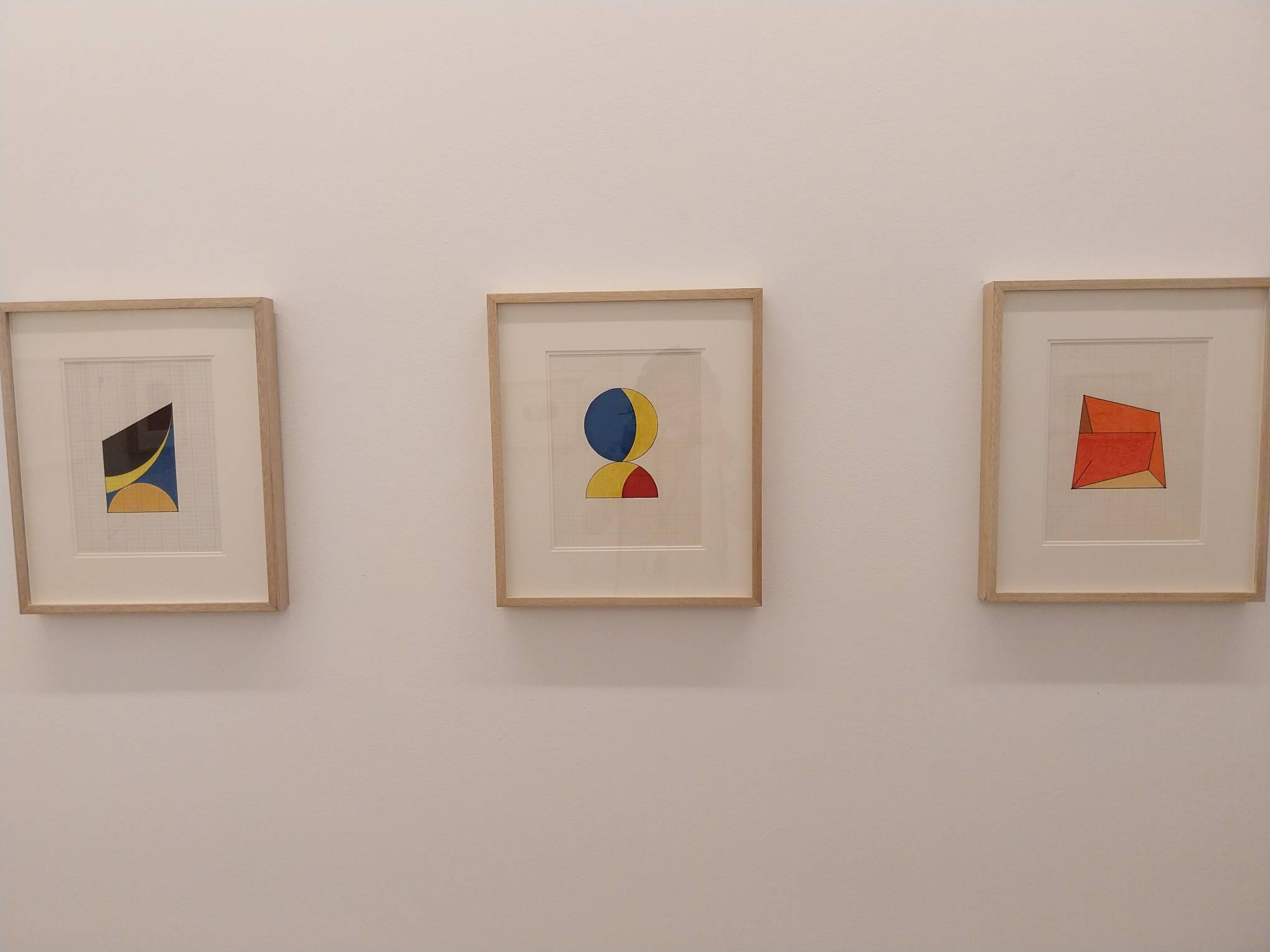
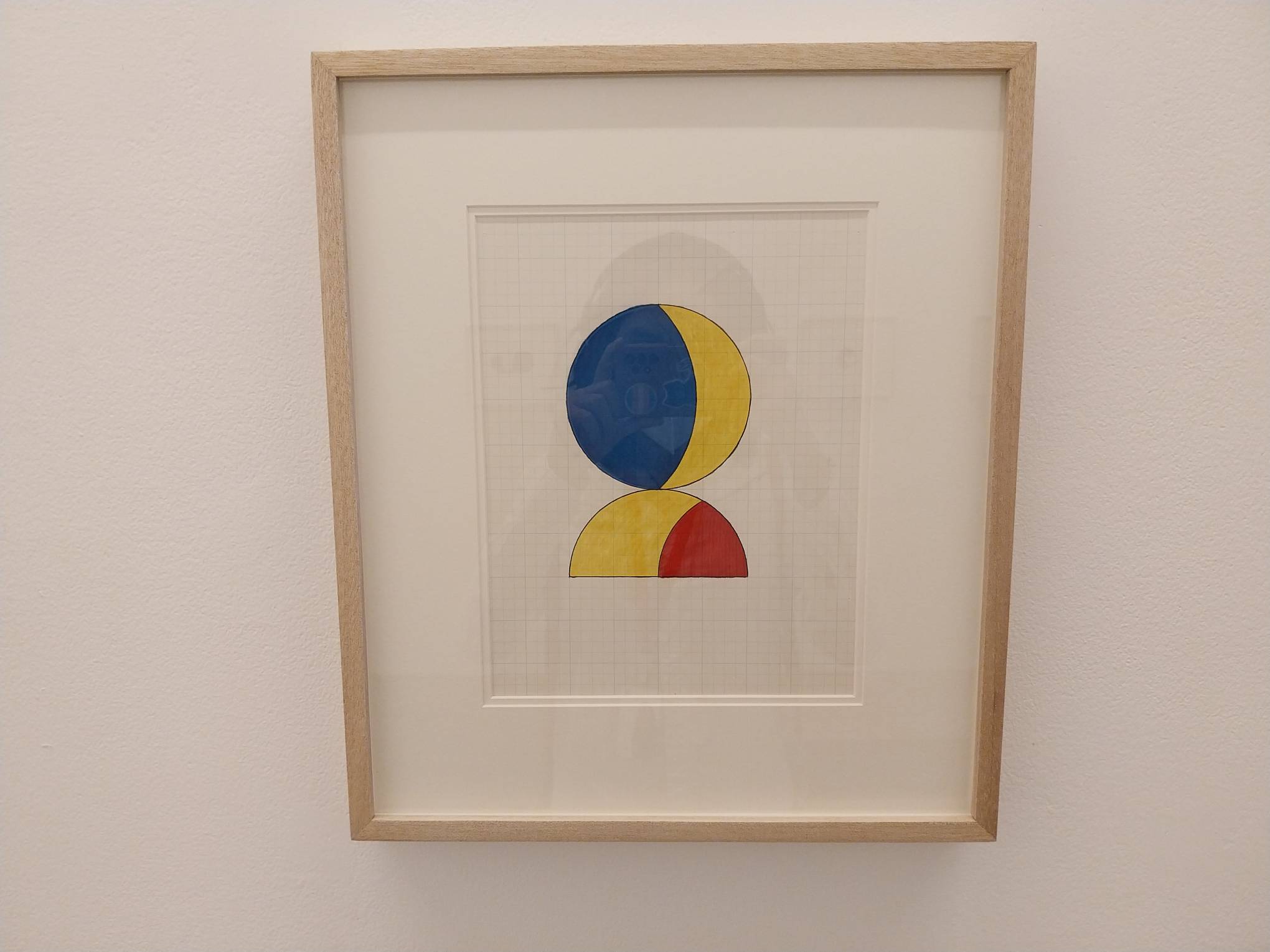
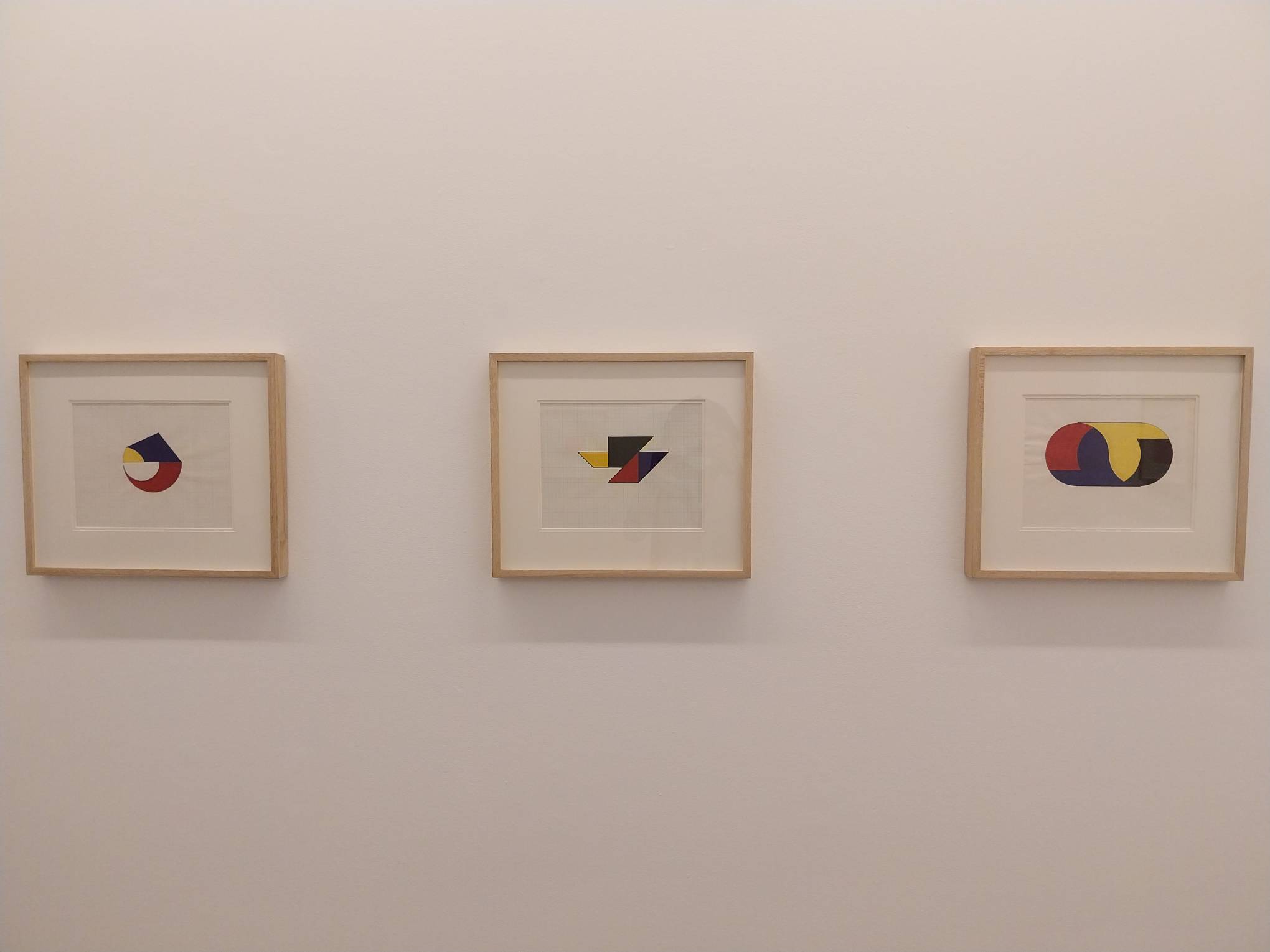
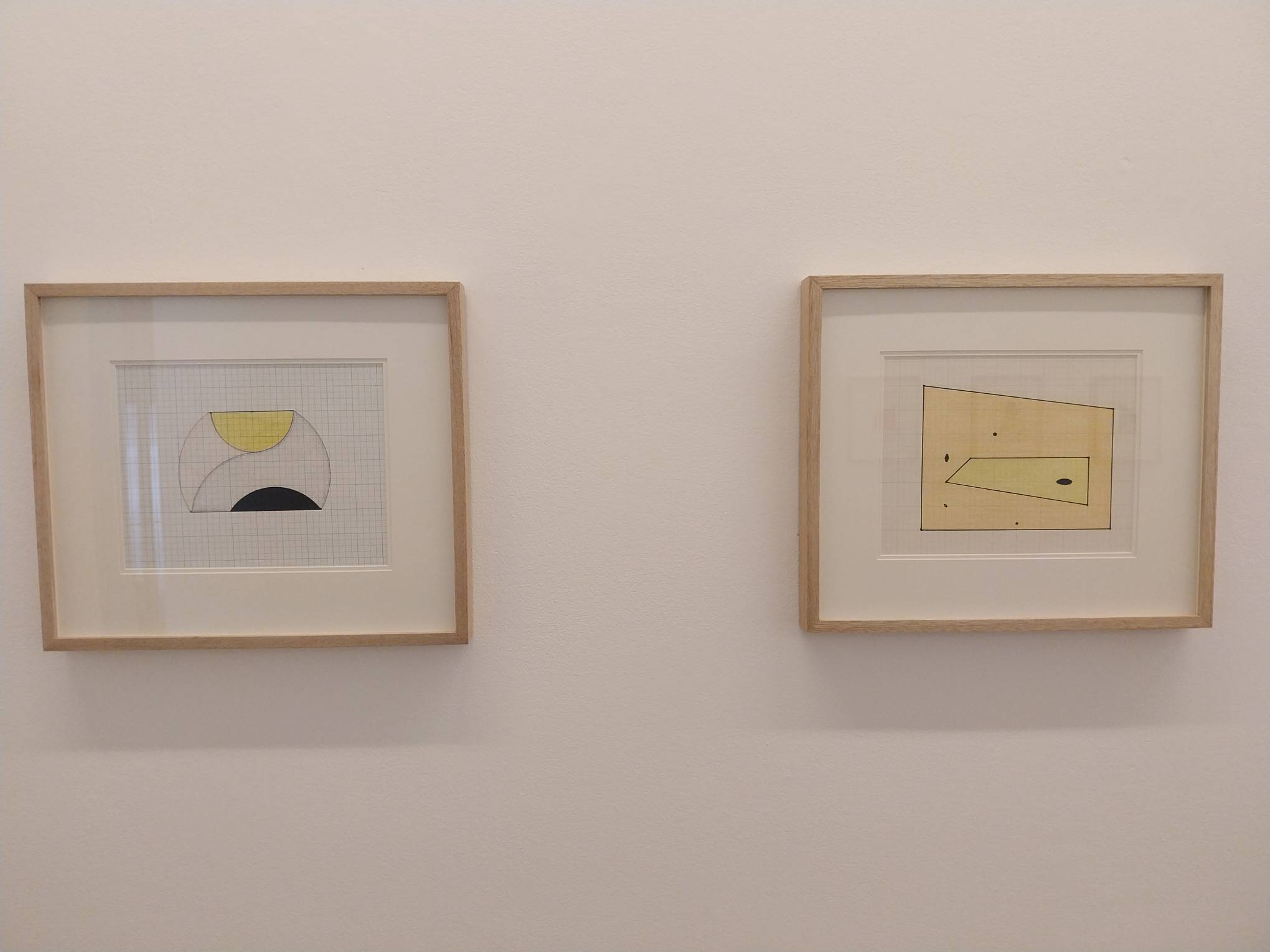
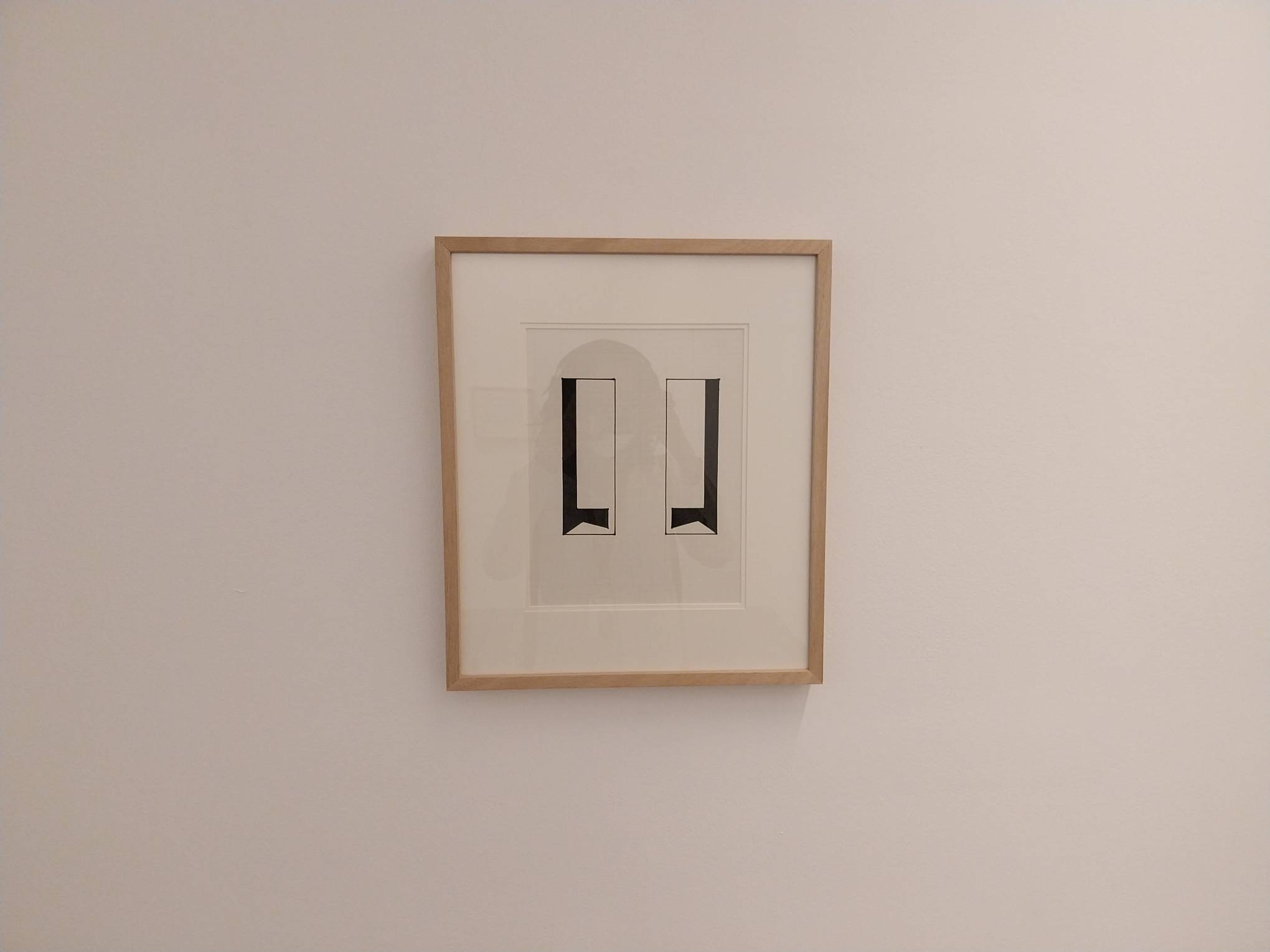
The sketches showcase the most interesting part of Valledor’s work, which is the precision his minimalist works contained. Drawn on graphing paper and colored with markers, it outlines the careful and meticulous ideas that came about through his work.
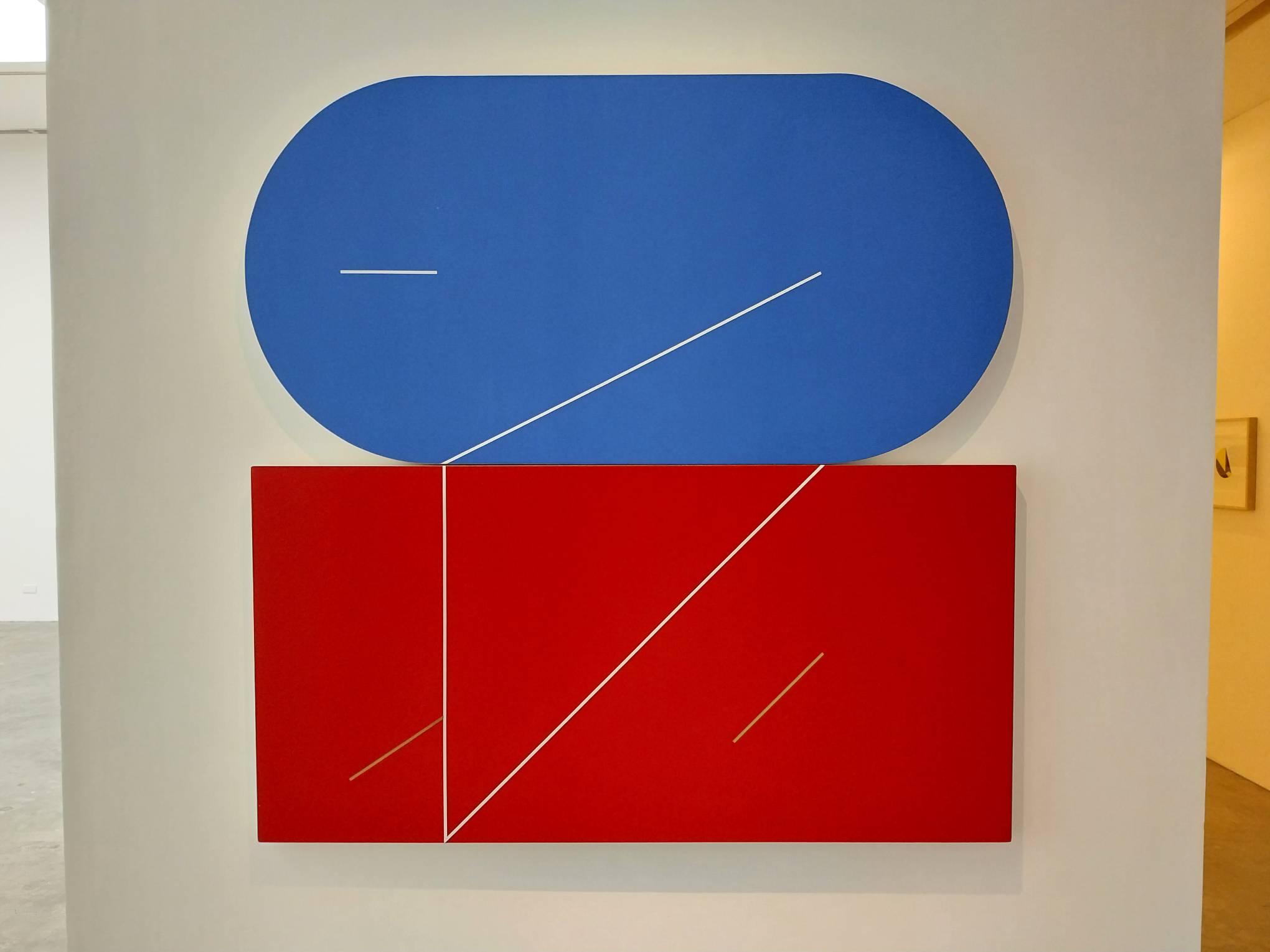
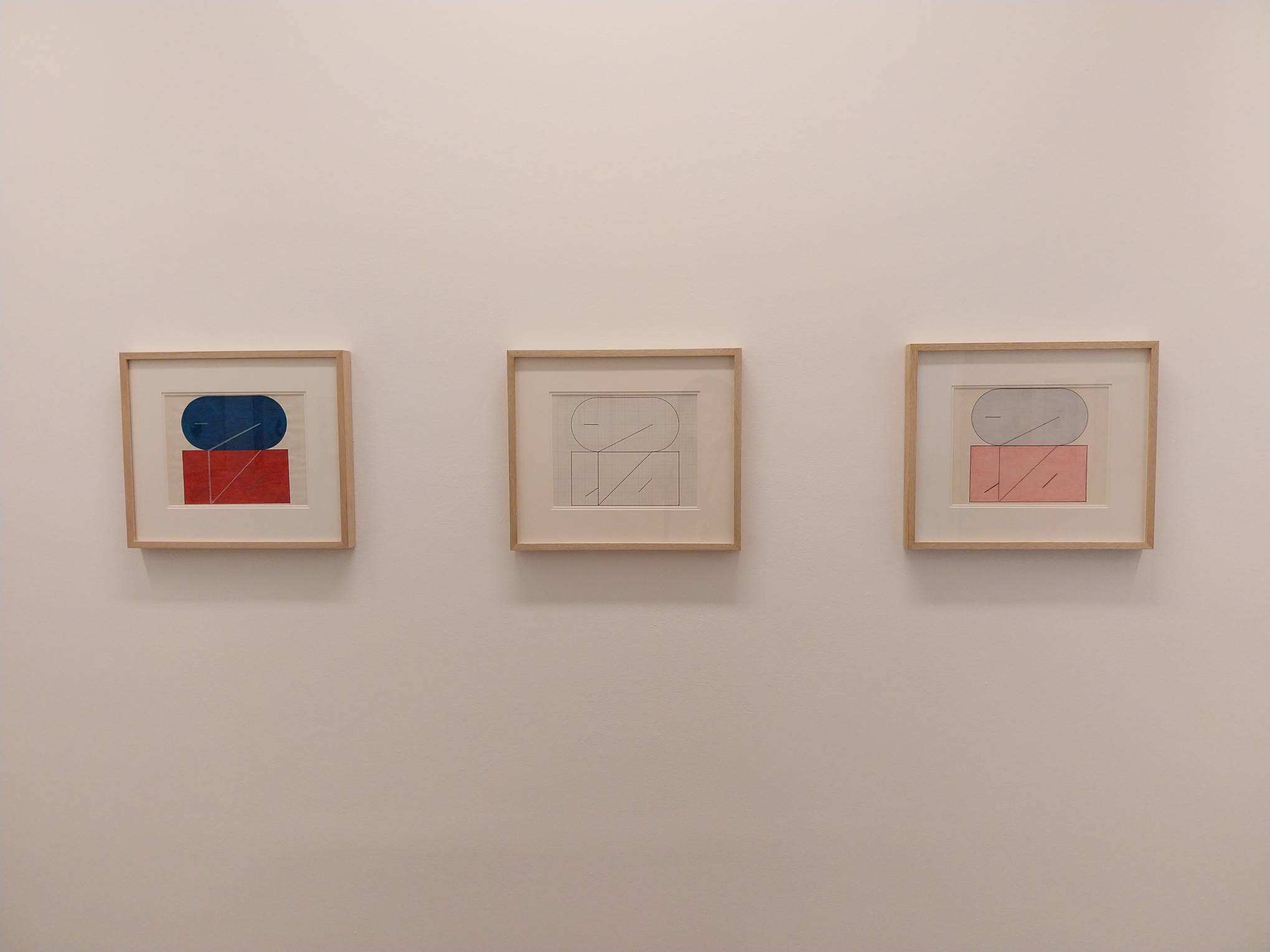
One of the finished works, “Supriolism,” features three sketches that get more and more detailed as they undergo different drafts and ideas. It gives viewers a look into the process of the artist—and possibly at how minimalismMinimalismA design philosophy centered on simplicity, restraint, and the idea that less is more. Minimalist spaces reduce ornament and clutter, favoring clean lines, open space, limited palettes, and carefully chosenGo to Minimalism Glossary isn’t just the absence of elements, but understanding how to use the elements that are there to the fullest.
Precision in Construction
The finished works hold this authoritative presence that makes them feel monumental to behold.
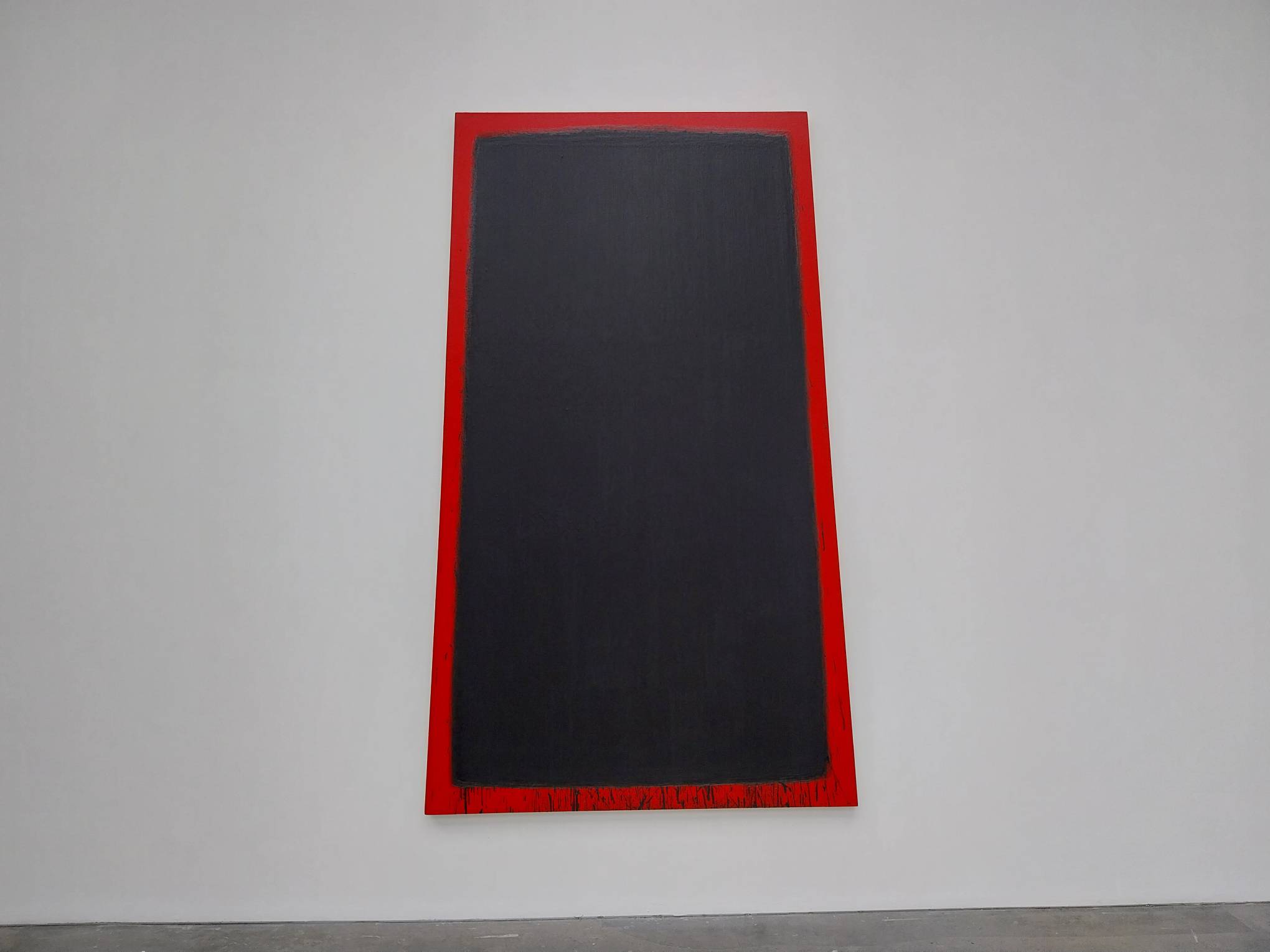
Among the standouts of the exhibit is “Desire,” a 1971 painting with a trapezoid red frame and a black center. The painting looms in one’s eyesight, whether looking at it directly or not. It feels like a portal, as its composition allows it to seem like it’s expanding outward to the viewer—an effective illusion and use of canvas space all-in-all.
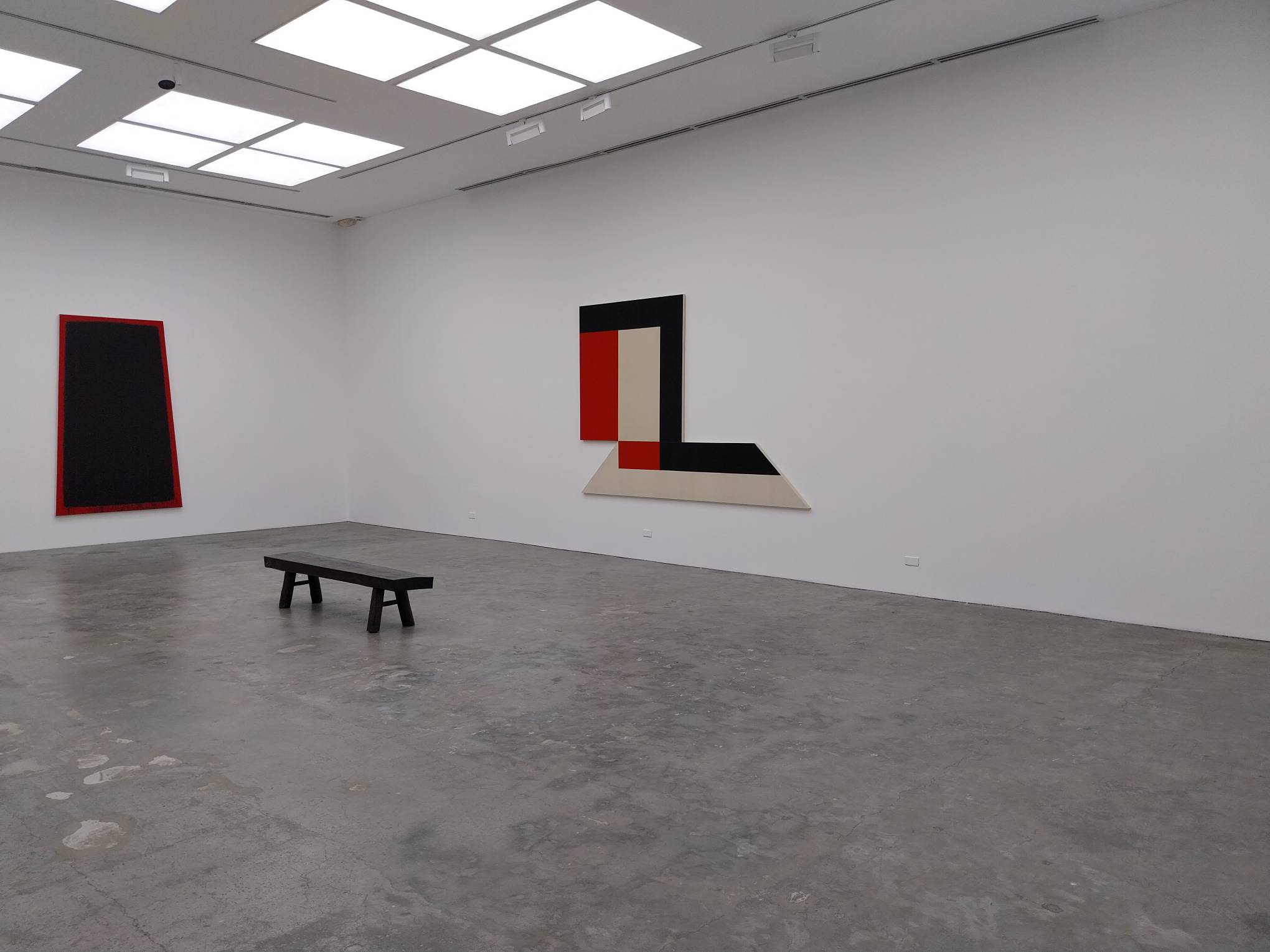
Silverlens’ presentation of Valledor’s work allows the audience to let the pieces sink in. Spacious white walls force the eye toward the works, and it does create a disorienting effect where the eyes keep adjusting and finding new corners and edges on what is essentially a flat drawing. Something like “Last Tangle,” for example, seems to bend and expand as you focus your eyes on it.
In Between Lines
It’s really riveting to look at, and it seems well in-line with the artist’s intent. A Valledor quote featured in the exhibit clarifies the artist’s intent to explore perspectives and the vagueness within his defined lines.
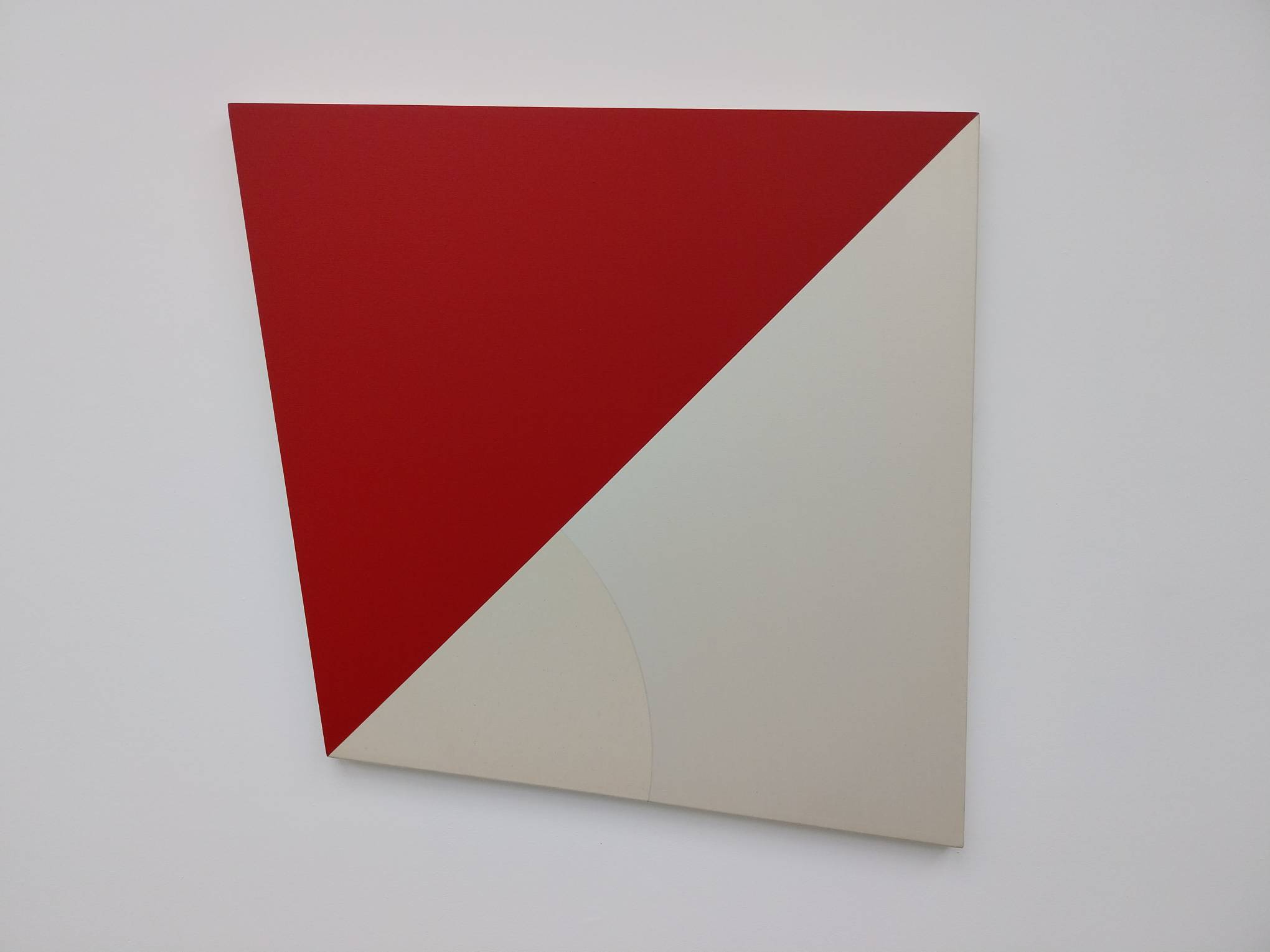
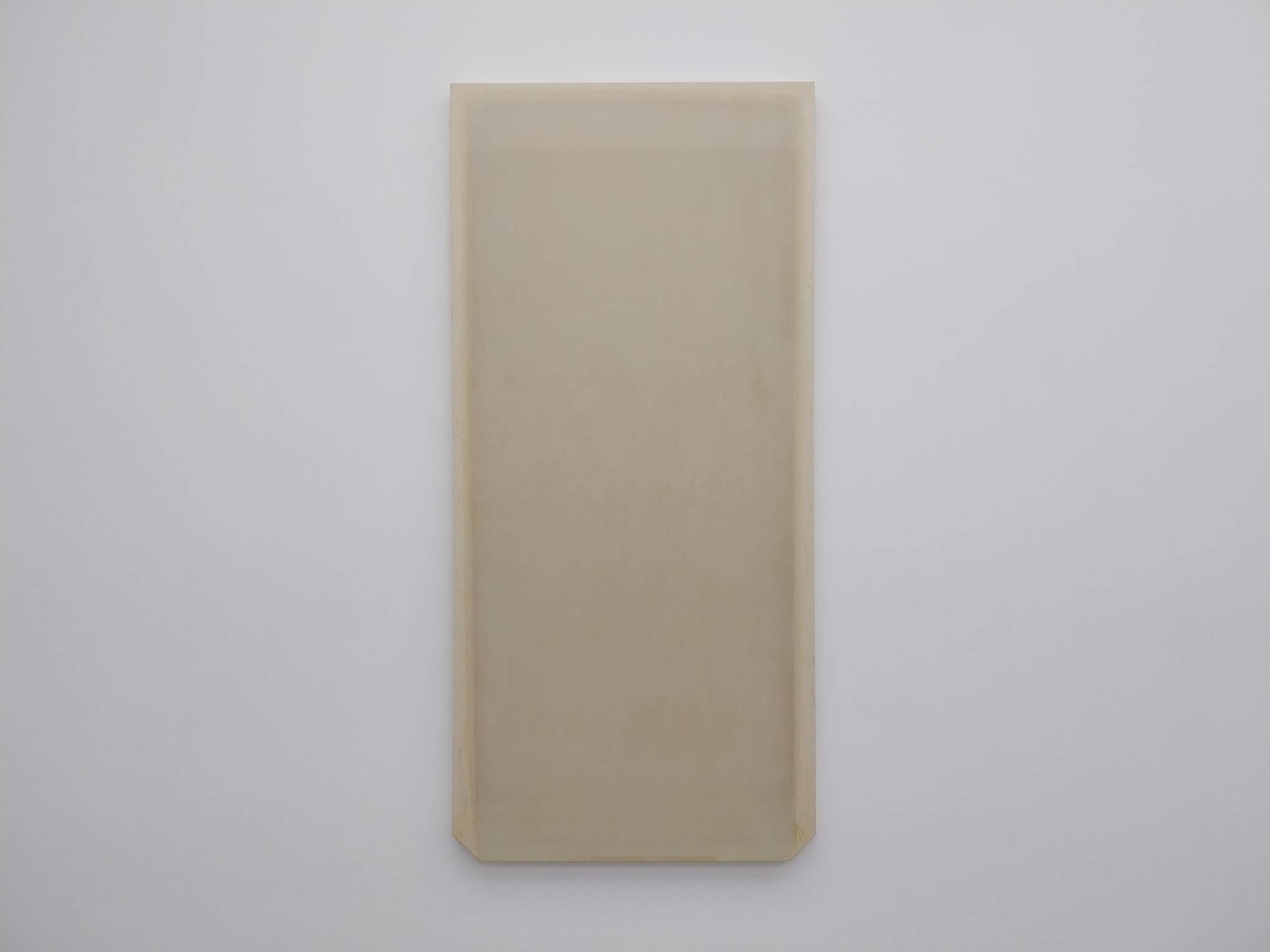
“By four-dimensional color I mean the notion that it exists within time,” Valledor said. “And I have this idea about time being part of all these ambiguities that we see in dimensions, like the idea that you read a line two-dimensionally and the difference in [if] that line [were] coming straight toward you as a point. I feel that the difference in that is time.”
His work, as presented here, illustrates the bendability of art even in two-dimensional flatness. Especially in this quote, he shows, over time, that even the way people see color and lines can change depending on context, the person, and the environment. In his playful use of flatness and ambiguity to create dimension, there’s additional richness and beauty that affects us temporally.
At First Sight gives audiences a view at the methodology and appeal of an important Filipino-American artist. But beyond that, it allows viewers to gain broader insights on where art can go. Art doesn’t need to even represent concrete ideas; as Valledor shows us, if you can think it, no matter how abstract, you can represent it visually.
The exhibit will be available for viewing at Silverlens Manila until August 17.
Related reading: Silverlens @ 20: For the Love of Art and Exhibition
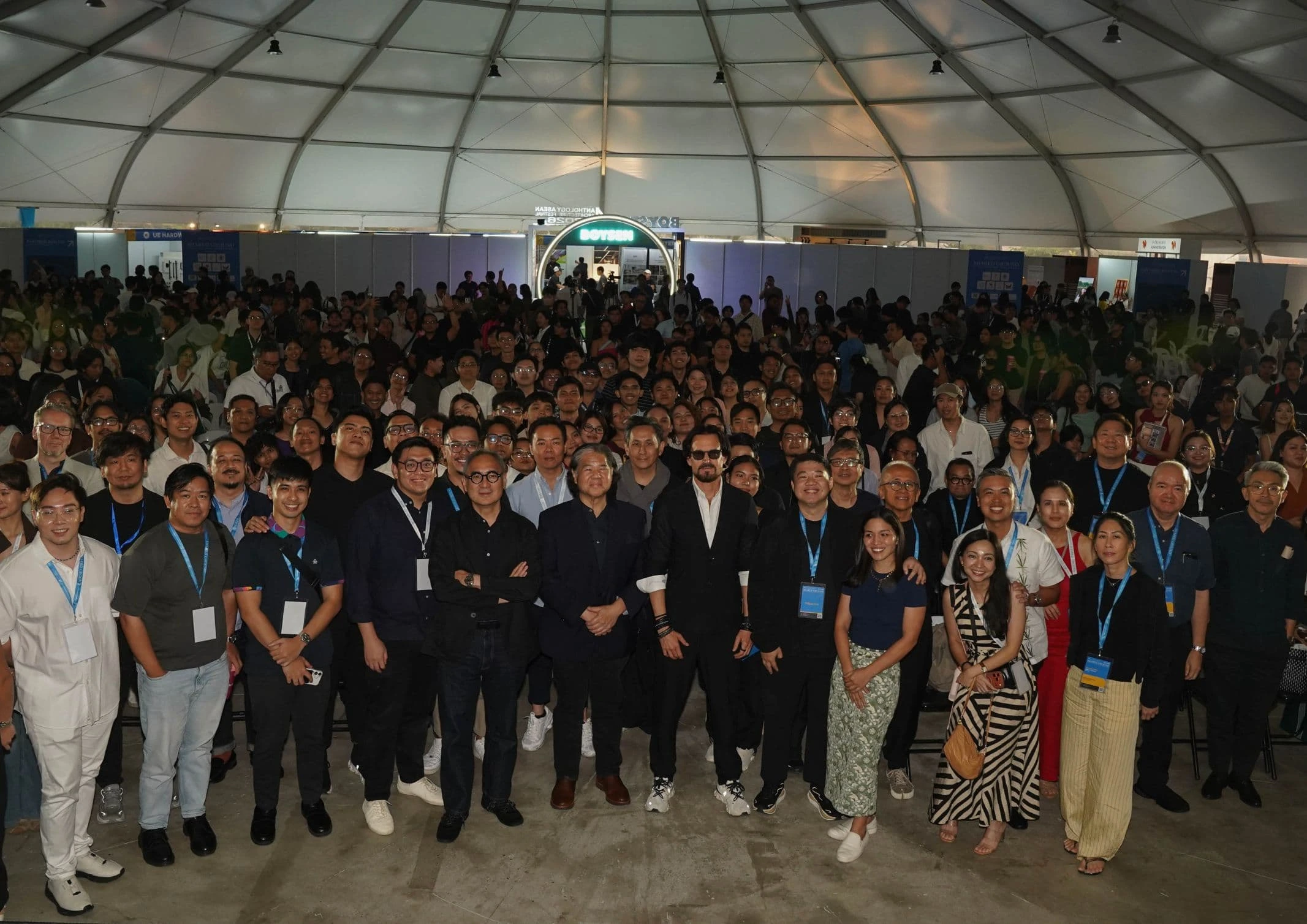
The seventh edition of the Anthology ASEAN ArchitectureArchitectureThe art and science of designing and constructing buildings, structures, and spaces that are functional, safe, and aesthetically pleasing. It encompasses the planning, design, materials, and techniques used to createGo to Architecture Glossary Festival brought together over 4,000 delegates from across the Philippines and Southeast Asia for three […]
Bigkis is the act of binding. In Tagalog, the word can refer to something used to bind or encircle, as well as a bundle formed by tying several separate elements together. Figuratively, it can also mean a bond, union, or unity. The meanings move from the physical act of joining things together to the connection […]
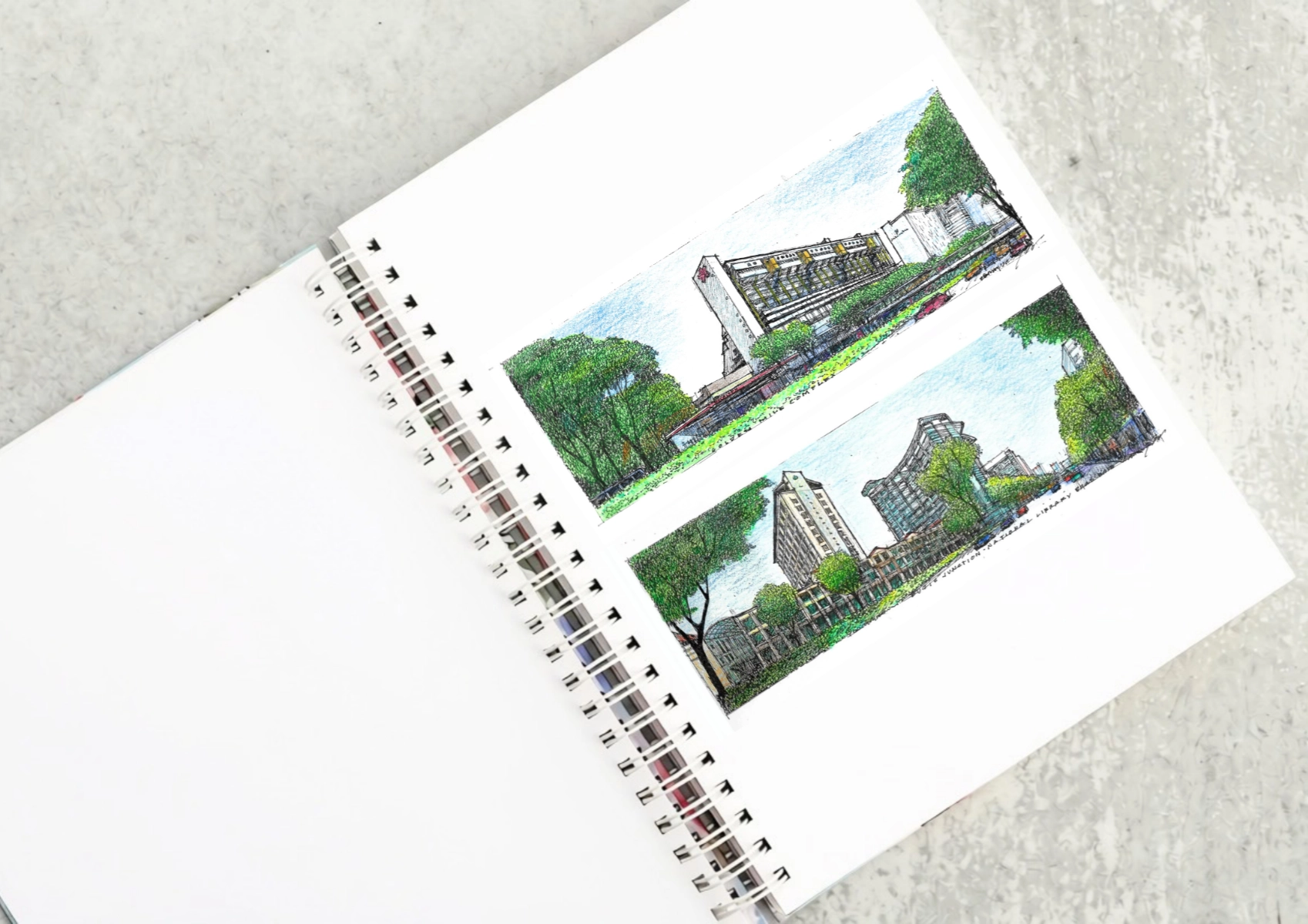
Two sketches of Singapore connect BluPrint Editor in Chief Paulo G. Alcazaren’s personal and professional history with Shared Ground: ArchitectureArchitectureThe art and science of designing and constructing buildings, structures, and spaces that are functional, safe, and aesthetically pleasing. It encompasses the planning, design, materials, and techniques used to createGo to Architecture Glossary of Care, Culture, […]
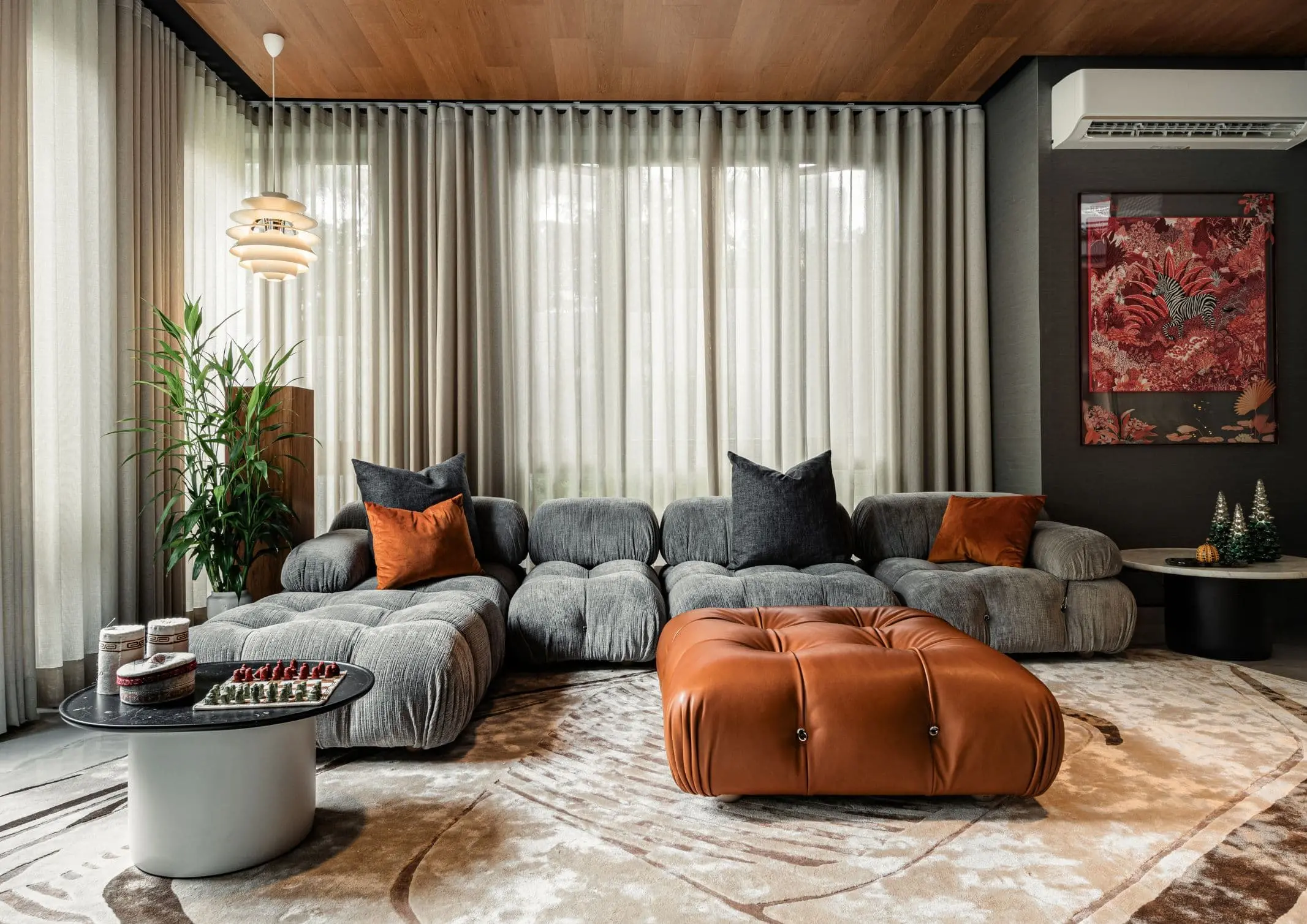
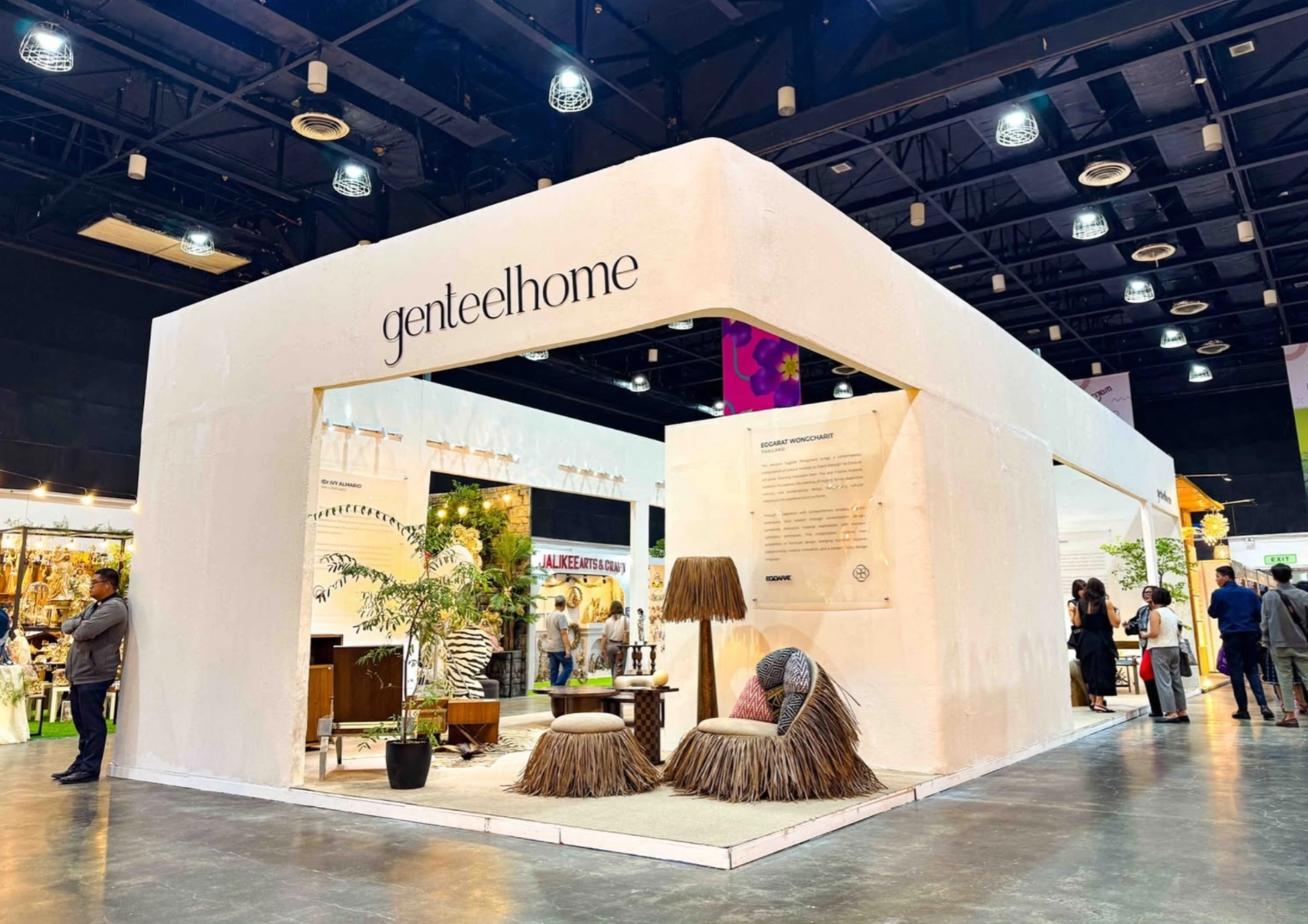
Some have become household names – Coleman, Oster, and KitchenAid – products that have found their way into Filipino kitchens, homes and family routines. In home furnishings, brands such as B&B Italia, Ethan Allen, Sub-Zero, Miele, SieMatic, Louis Poulsen, Hunter Douglas, Tempur, and Technogym, have helped shape the way Filipinos live. From everyday essentials to […]
Read the issues.

Collect the volumes.

Recommended Video
Tap to Unmute
Unmute
0:00
0:00