Located near the equator, factors such as heat and humidity are the norm in the Philippines. This tropical climate has shaped the development of architecture in the country. As Leandro V. Locsin stated: “The first consideration of the Filipino builder and certainly the most evident in his architecture, which is after all an outgrowth of […]
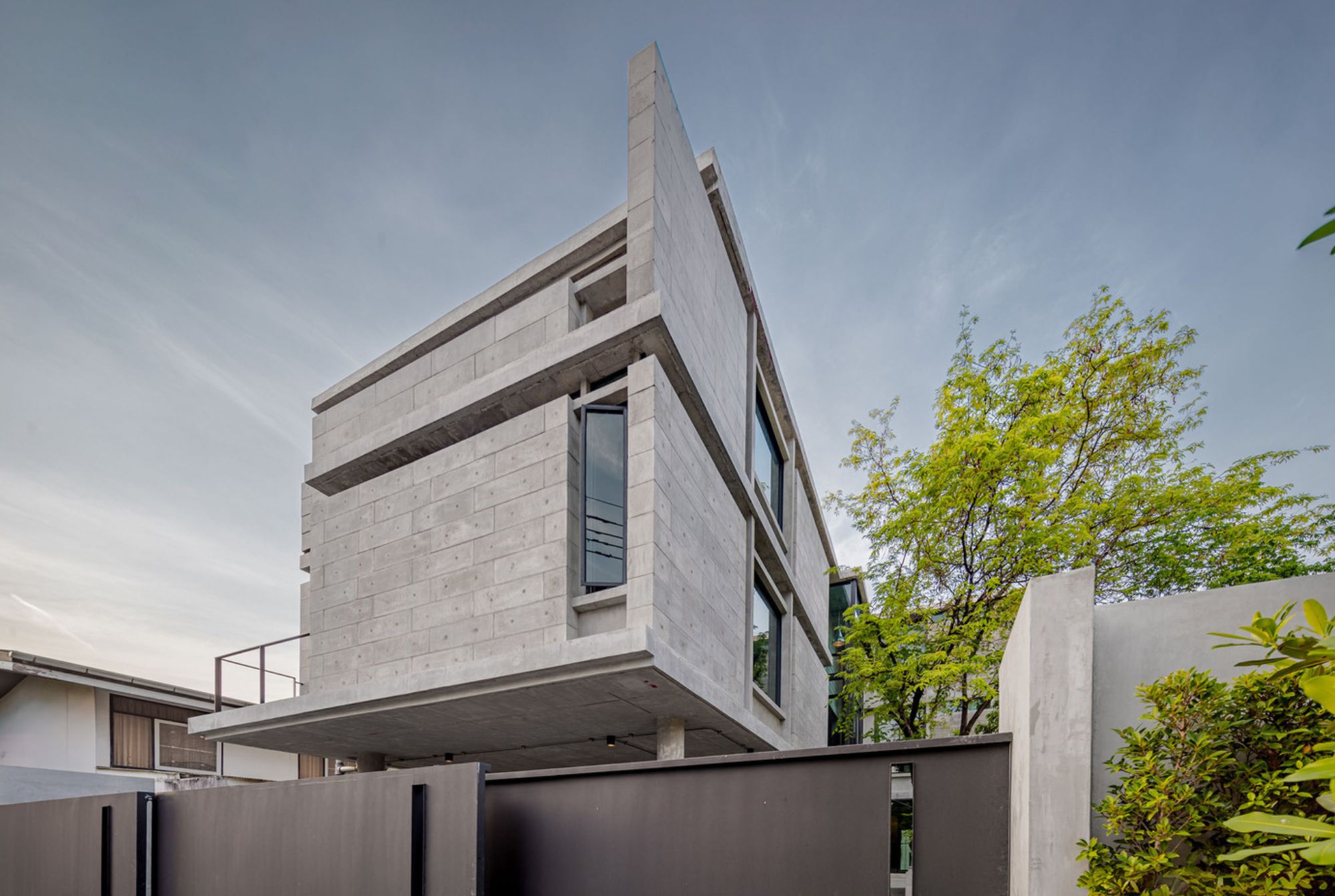
Concrete Collage Office: A Minimalist Space Designed for Efficiency



The Concrete Collage Office, designed to be the headquarters of Collage Design Studio in Thailand, exemplifies how architects can create exceptional projects despite limitations. Working with a small plot of land and a modest budget, the company constructed a robust three-story structure using repurposed concrete blocks, perfectly aligning with their vision of showcasing the purity of concrete structures.
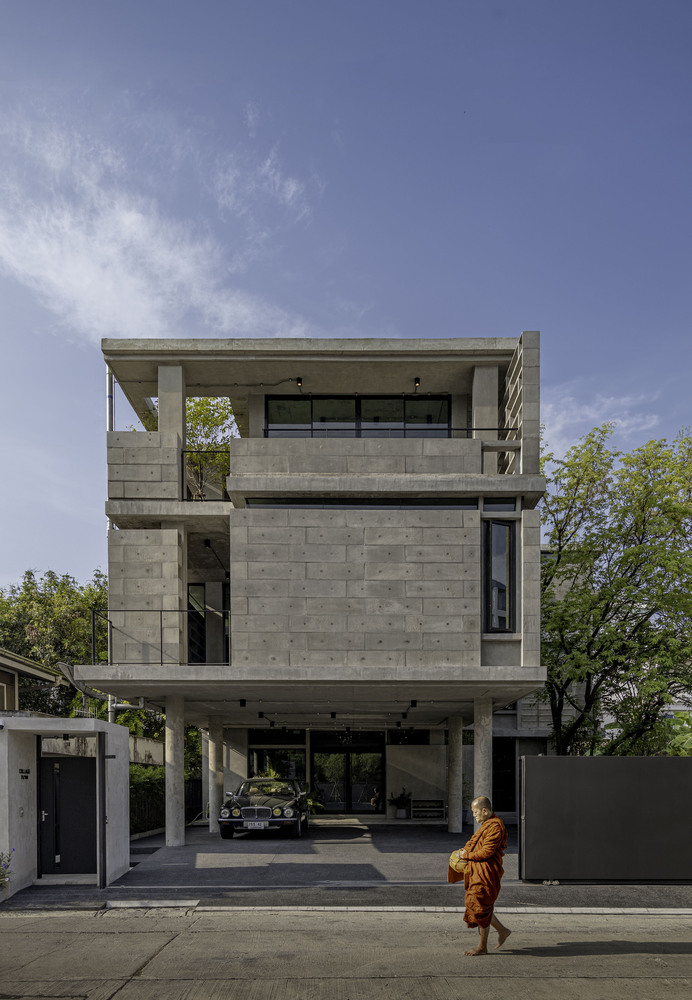
Located in Khet Din Daeng, Thailand, lead architects Cherdsak Soisuwan and Puttichart Wanichtat guided the project’s objectives and designs. Their pragmatic approach allowed them to problem-solve various challenges while staying true to their vision.
“Our methodology resonates with the essence of a ‘collage,’ synthesizing disparate elements into a coherent and meaningful architectural composition. Our office thus stands as a demonstration of inventive problem-solving and an unwavering dedication to our craft, reflecting a commitment to both contextual responsiveness and tectonic expression.” they said.
Advertisement
Building Within Constraints
For the Concrete Collage Office, the firm envisioned a practical three-storey building within a small 82-square-meter plot of land. Efficiency of design was a must to make the most of the space while reducing costs.
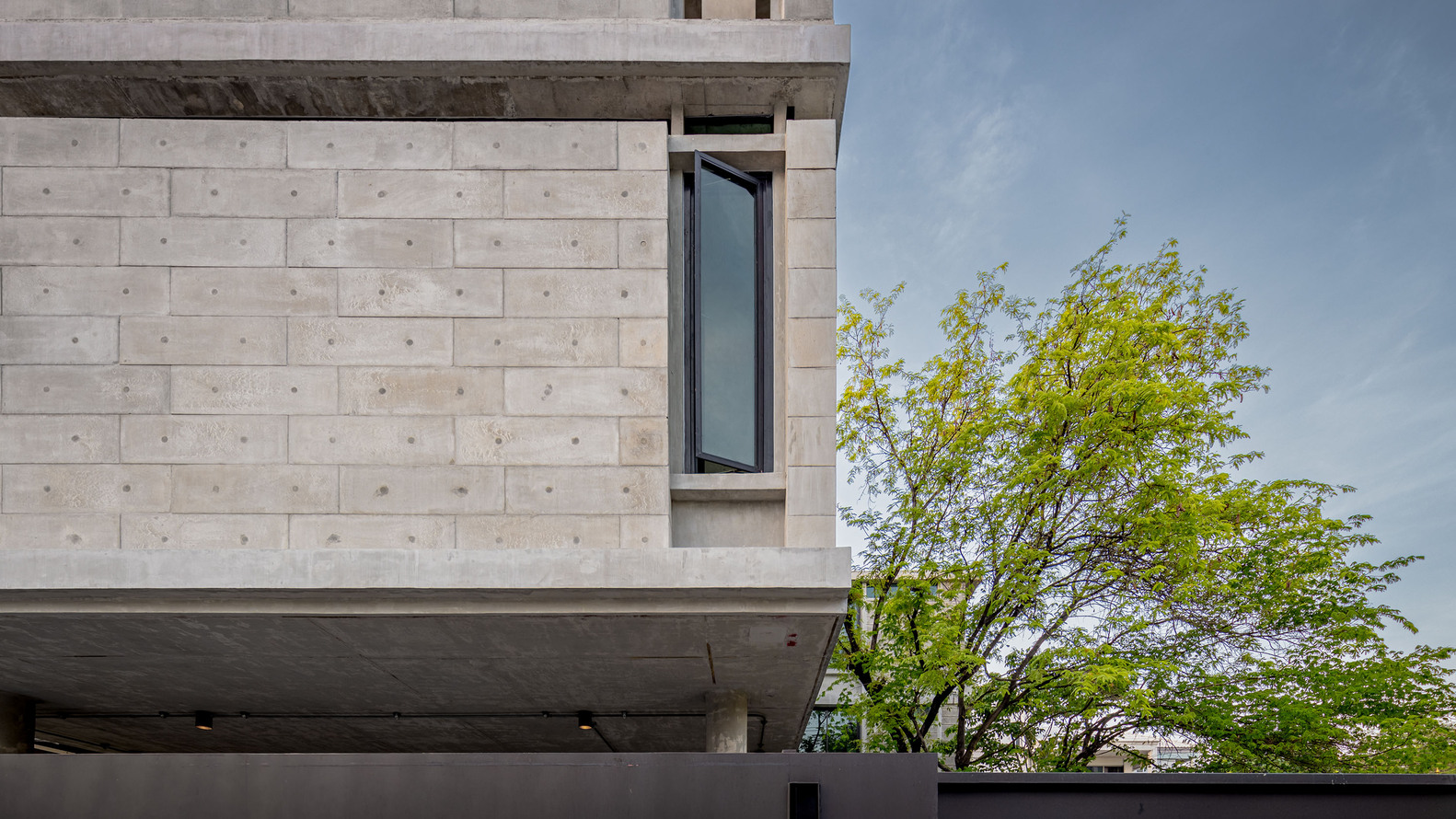
The company’s intent was to use the building to showcase the “purity of concrete,” using repurposed unpolished concrete blocks from the city of Ayutthaya. This reflects their architectural principles while allowing them to stay within budget.
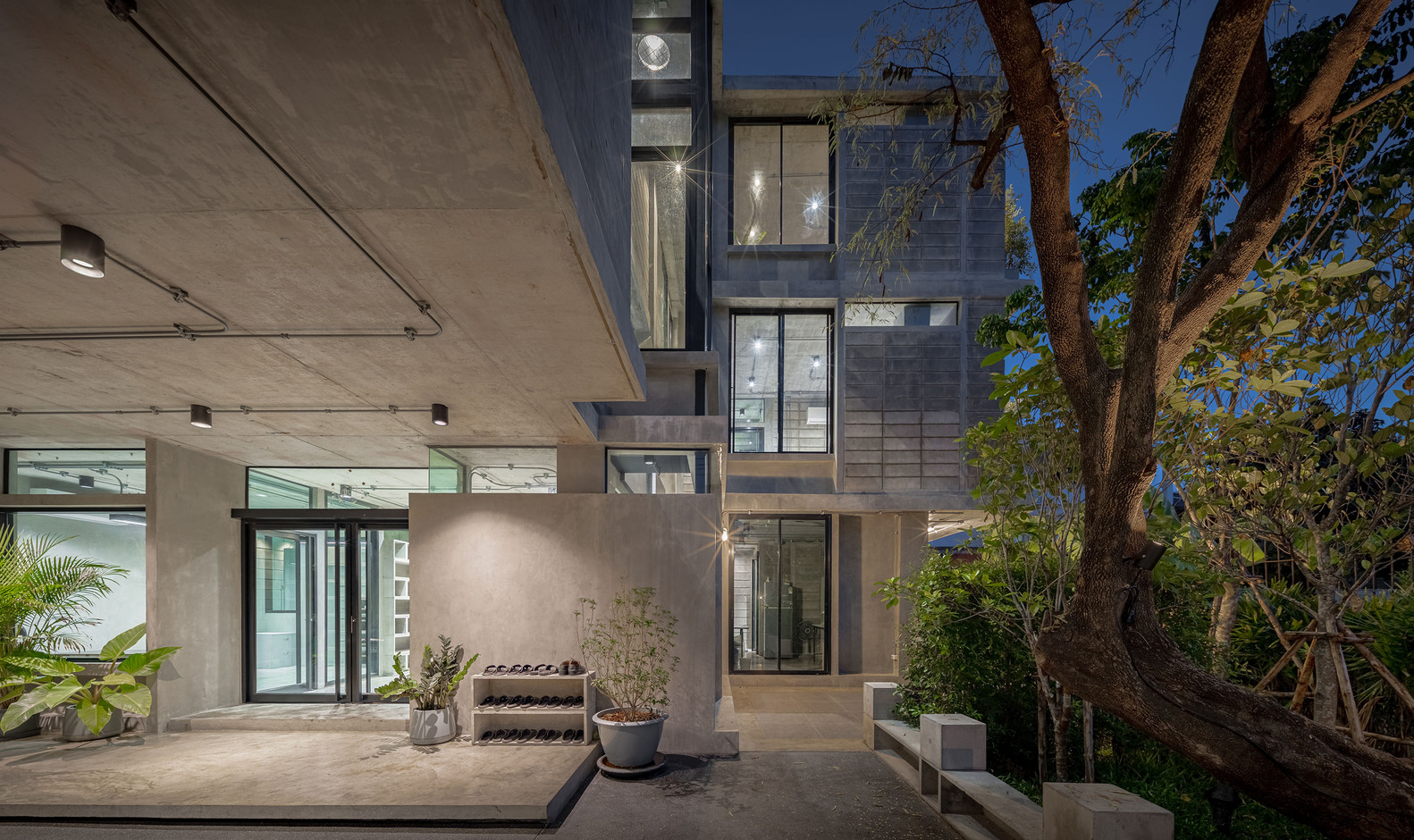
“Through experimental architecture, we explore new possibilities of materials, using them innovatively. This design approach culminates in a building that epitomizes the purity of concrete, articulating a language of material honesty and simplicity,” they wrote.
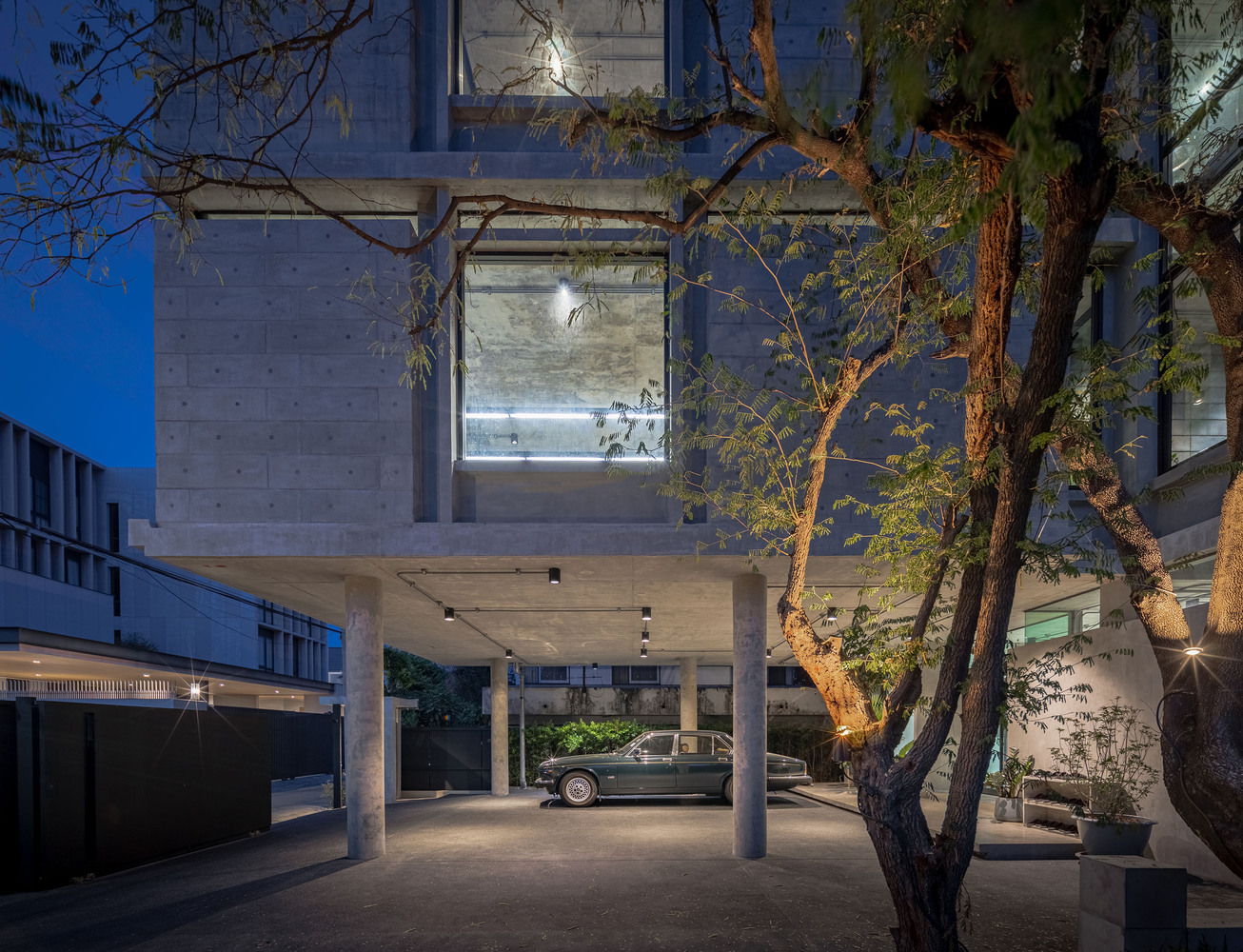
While the brutalist-esque style dominates its exterior look, the architects made sure to build around a tamarind tree in the small compound to keep a link to nature in the structure. Because of this, the building ends up being L-shaped, with a narrow staircase connecting the two parts of the building to each other.
Advertisement
Efficient, Harmonious Structure
The office has conference rooms on the ground floor and third floor, the main office space in the second, a coworking space on the top floor. The first two floors also have a kitchen and pantry, with toilets on and all three floors.
The building’s interior design utilizes the same unpolished look as the outside. The walls and ceiling, made of raw, unpolished concrete, highlight the industrial aesthetic. Black flooring contrasts with the concrete walls, enhancing the sleek and contemporary look of the space.
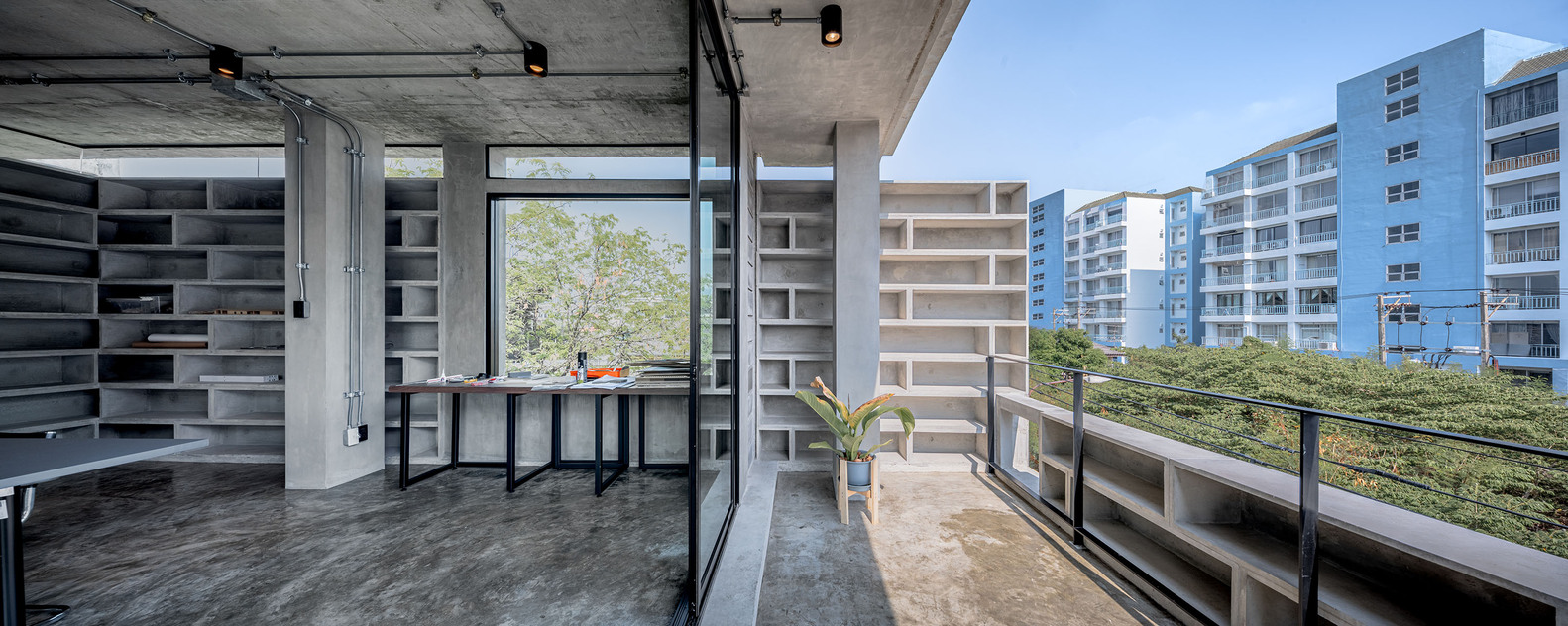
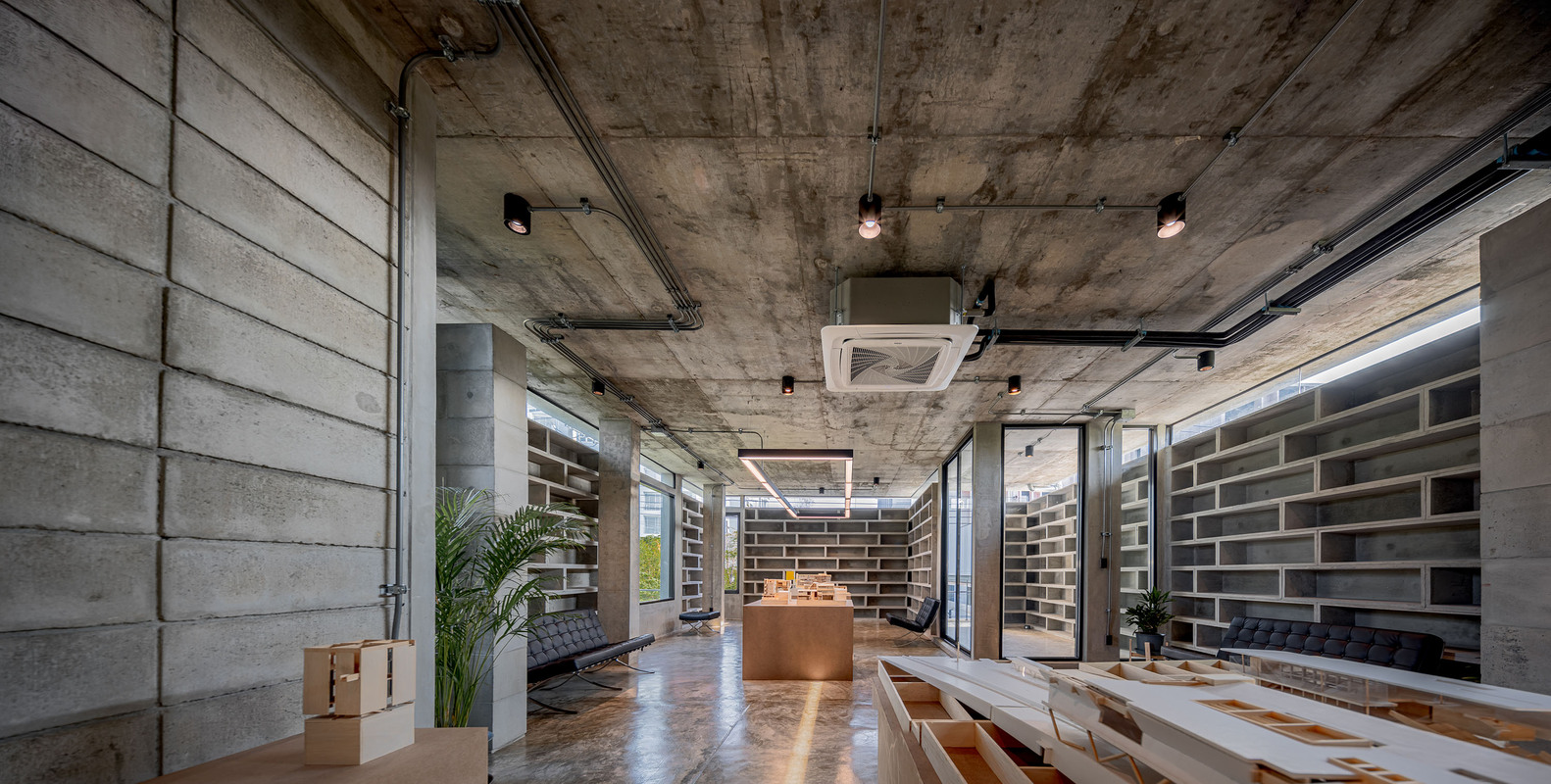
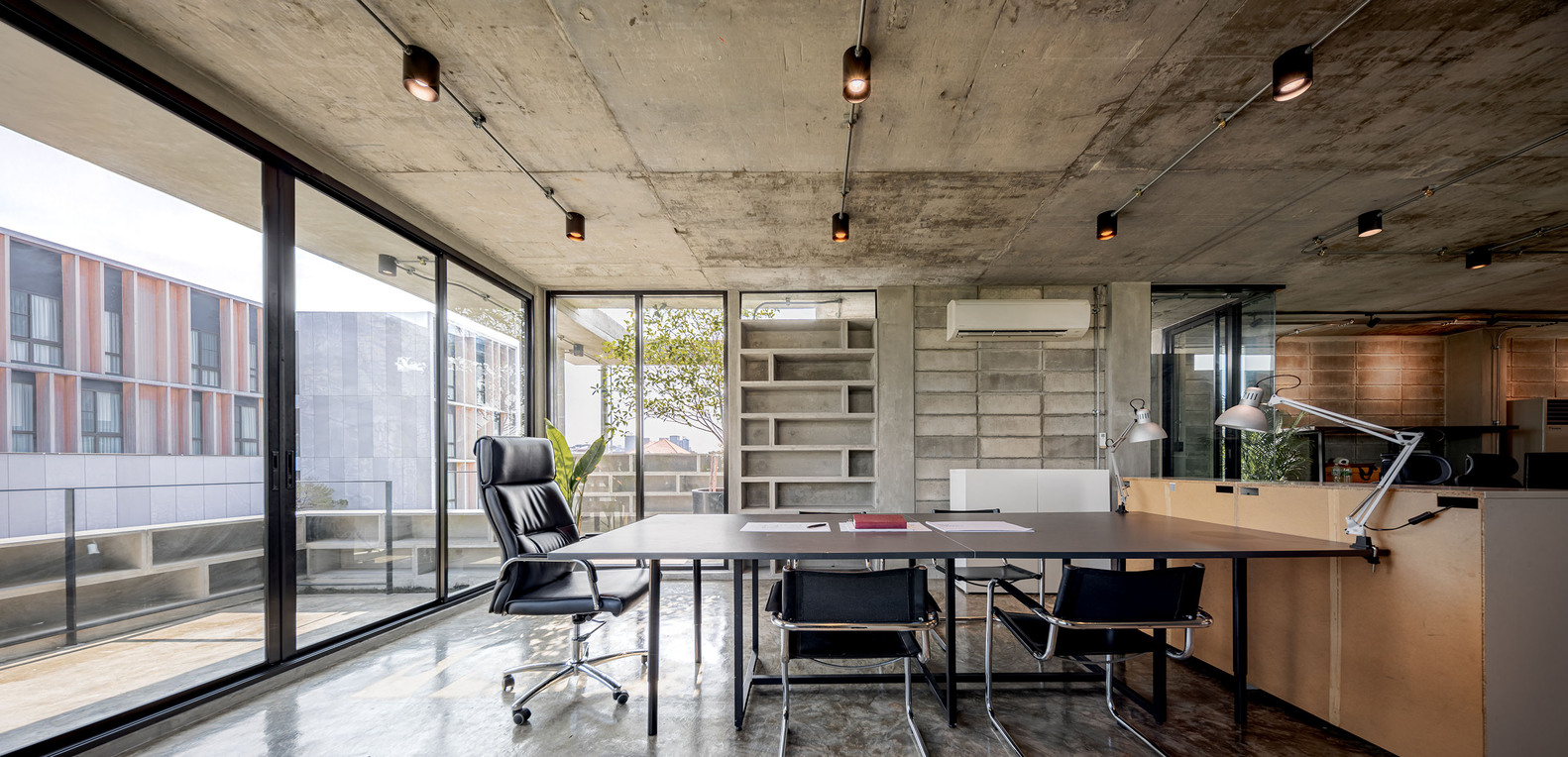
The concrete shelving system throughout the space serves as a key architectural feature in line with the firm’s overall vision.
Advertisement
Connecting the floors is the stairwell with large floor-to-ceiling windows, allowing ample natural light to flood the space. They reveal lush green trees, creating a harmonious blend of nature and architecture.
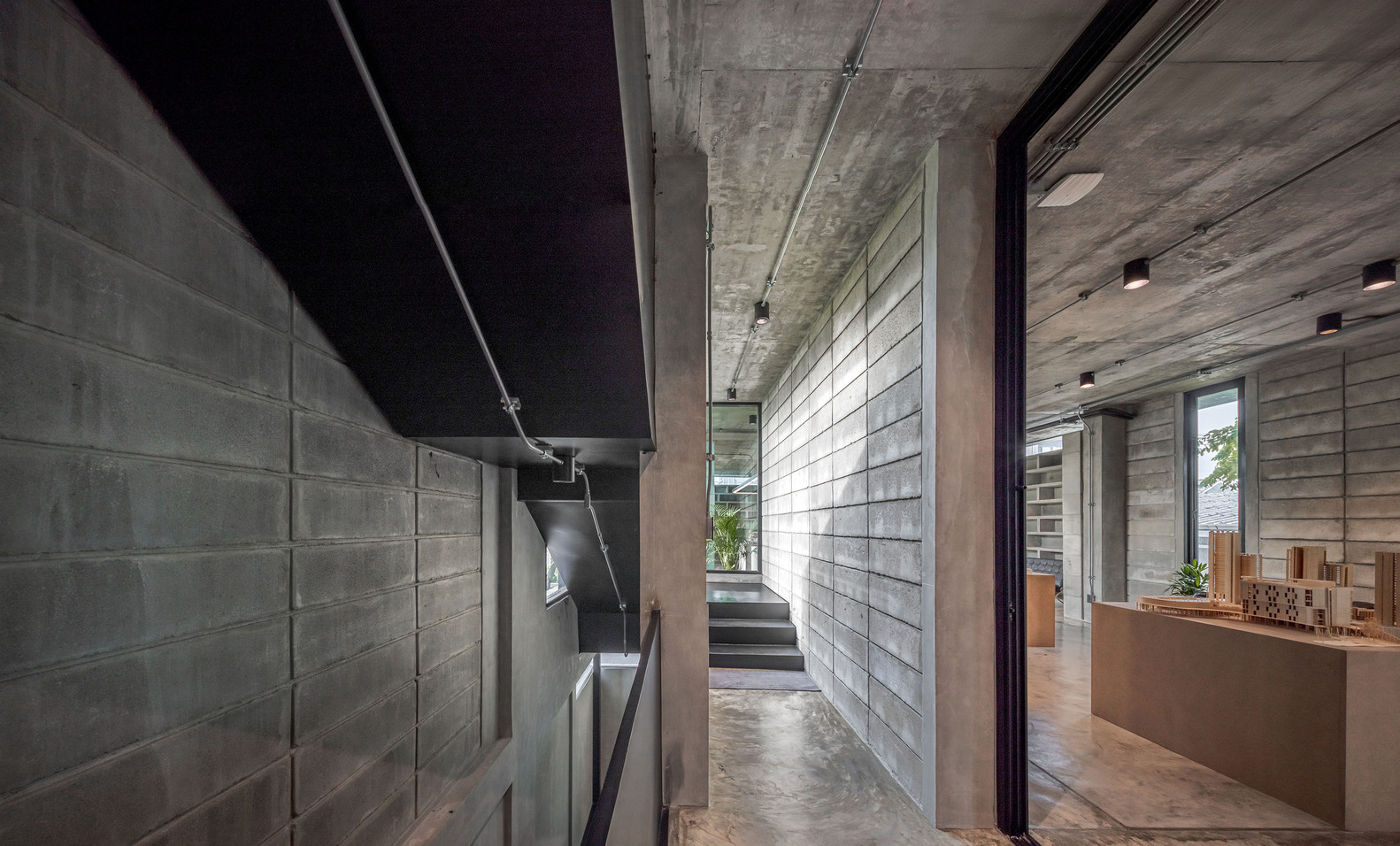
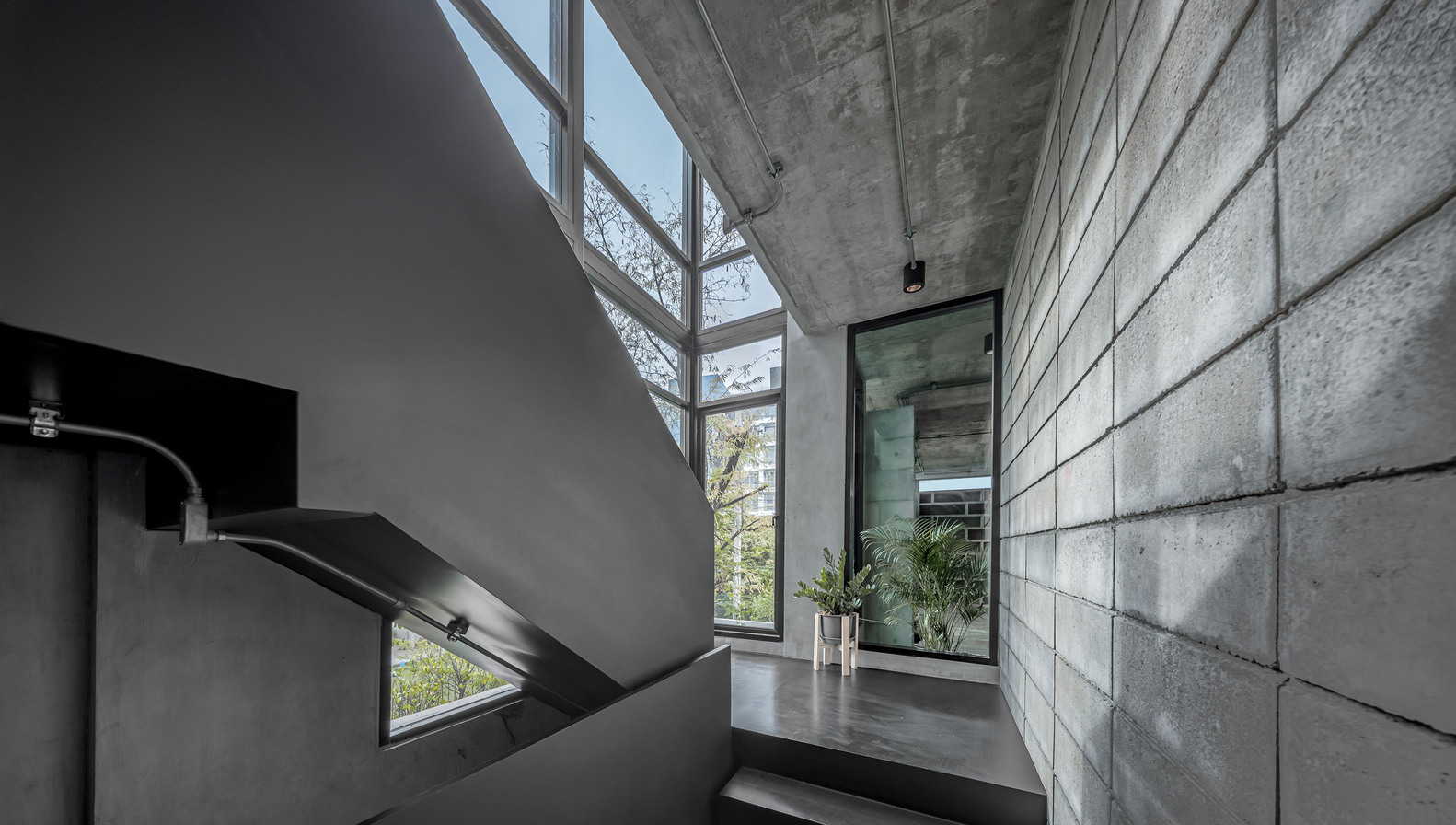
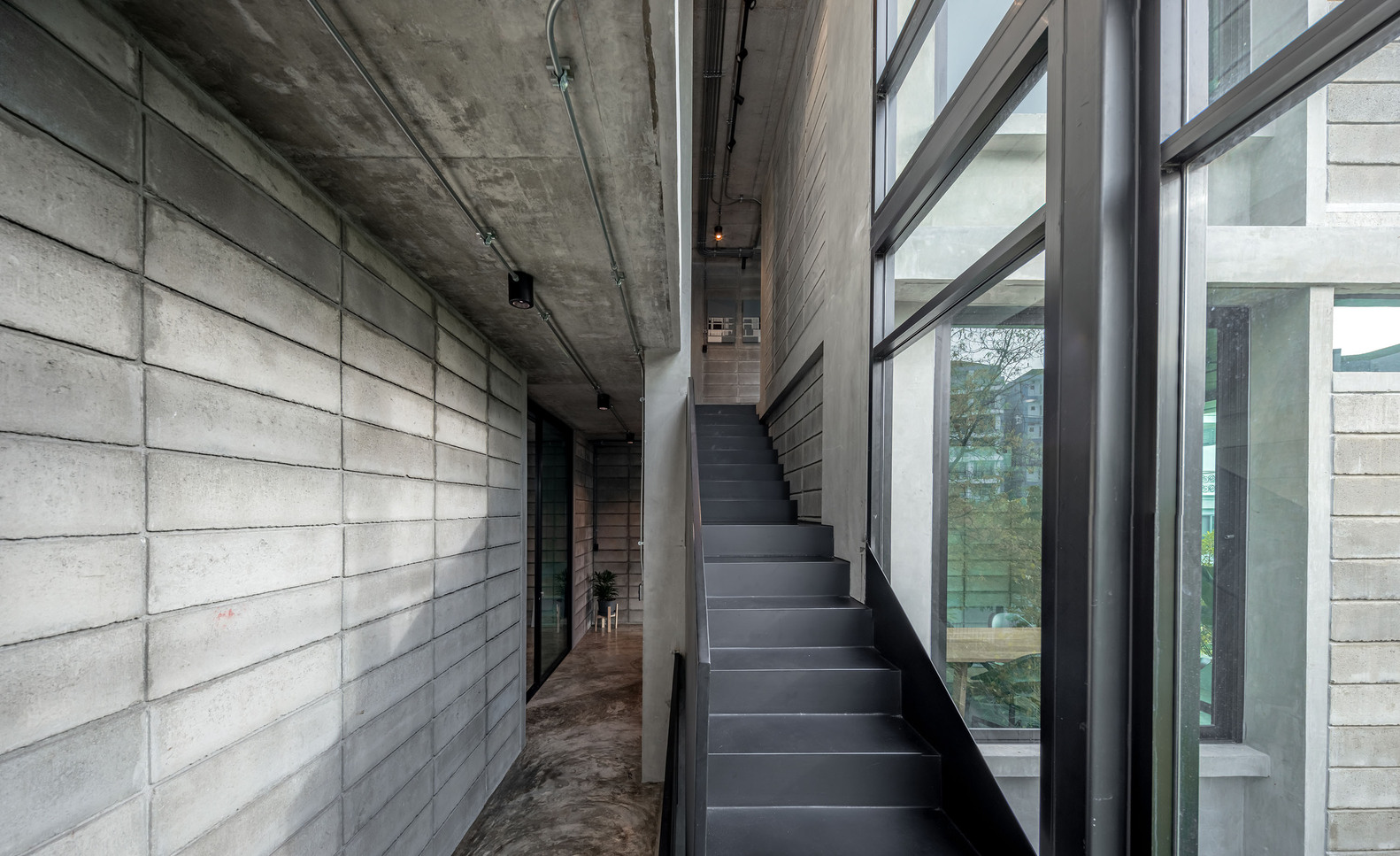
Beyond that, balconies were also built into the design of the second and third floors. The architects built the two balconies next to the office and coworking spaces, ensuring that employees got their daily fill of sunlight in their day-to-day work.
Small Touches in Office Space
Windows and glass proliferate throughout the rest of the building. These allow for natural lighting to enter the office spaces, and provide generous views of the outside. Meanwhile, the use of sliding glass doors allows for an open coworking atmosphere between employees.
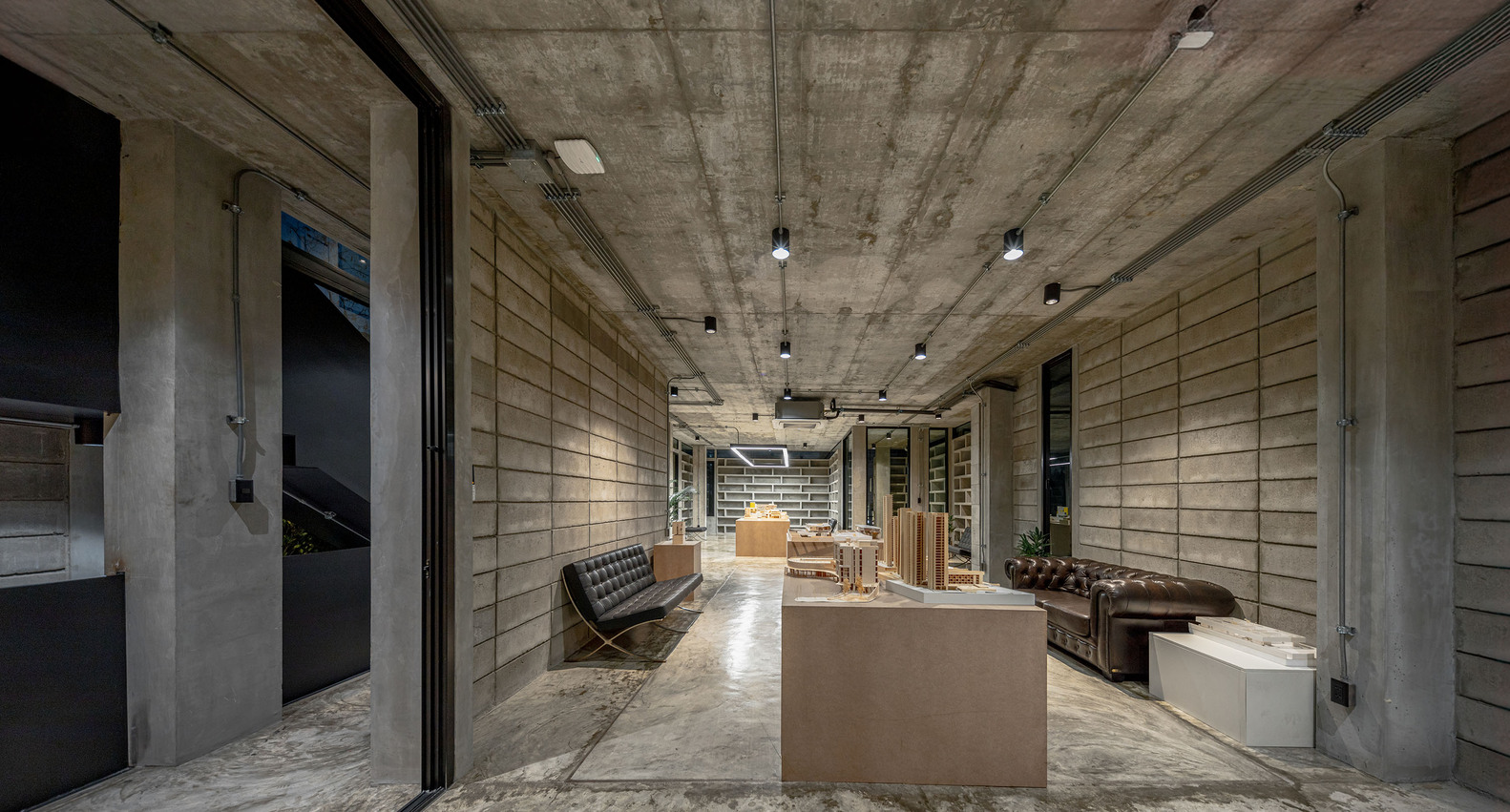
The main office space combines industrial elements with modern design to create a functional and aesthetically pleasing environment, ideal for creative work and presentations. Large warm-toned concrete blocks serve as work areas that also help soften the predominantly grey interior. Black Barcelona sofas further reinforce its modern look. Built-in shelving units line the walls, offering ample storage. Fixtures suspended from the ceiling provide task and ambient lighting.
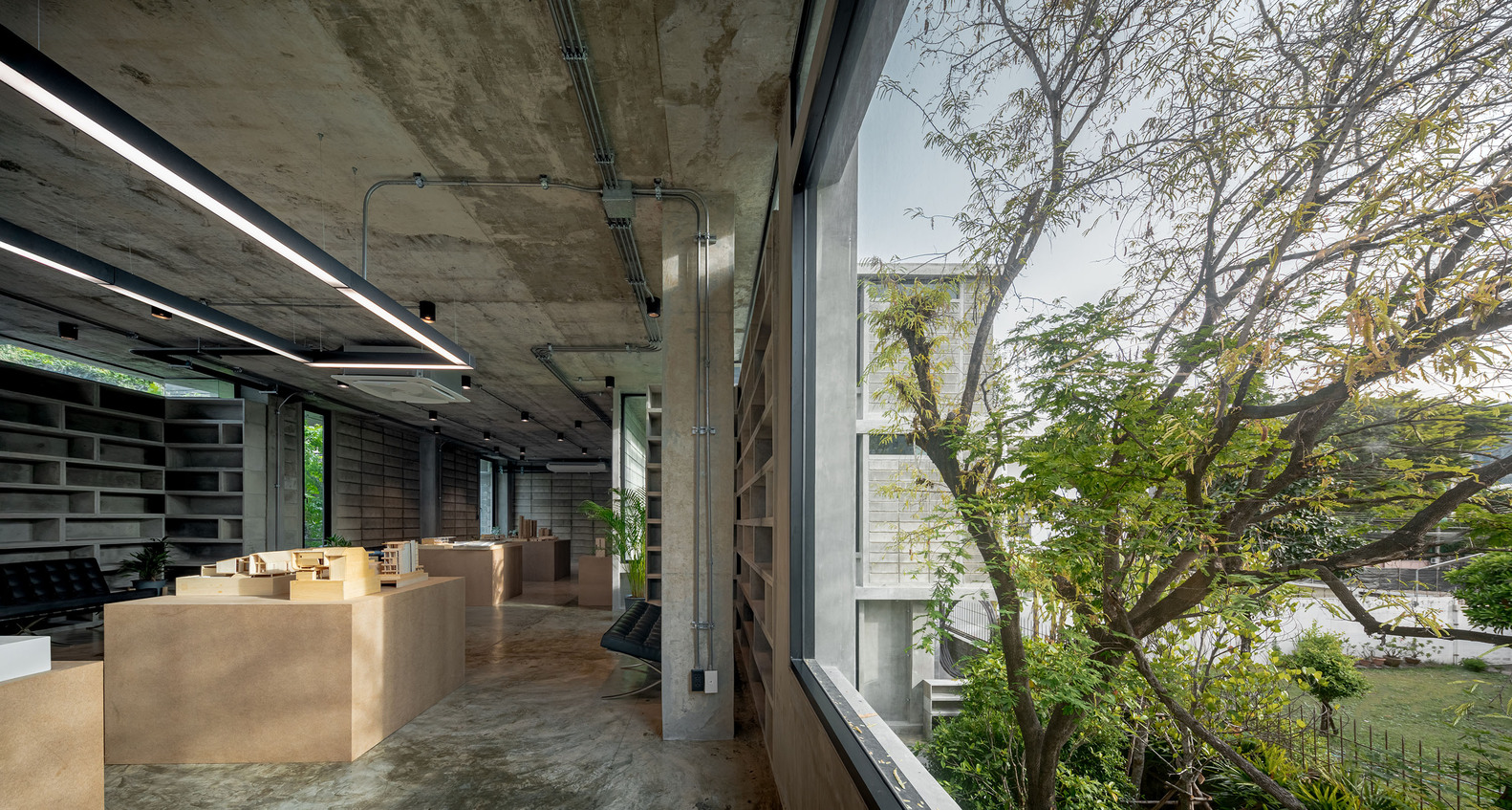
The Concrete Collage Office demonstrates how creativity comes with limitations. Even with a limited budget and the necessity of changes in its construction, the architecture firms were still able to stick with their vision and create a practical office space that still fell within their vision of the project.
Advertisement
Related reading: Future Comfort: Home Solutions For Sustainable Living
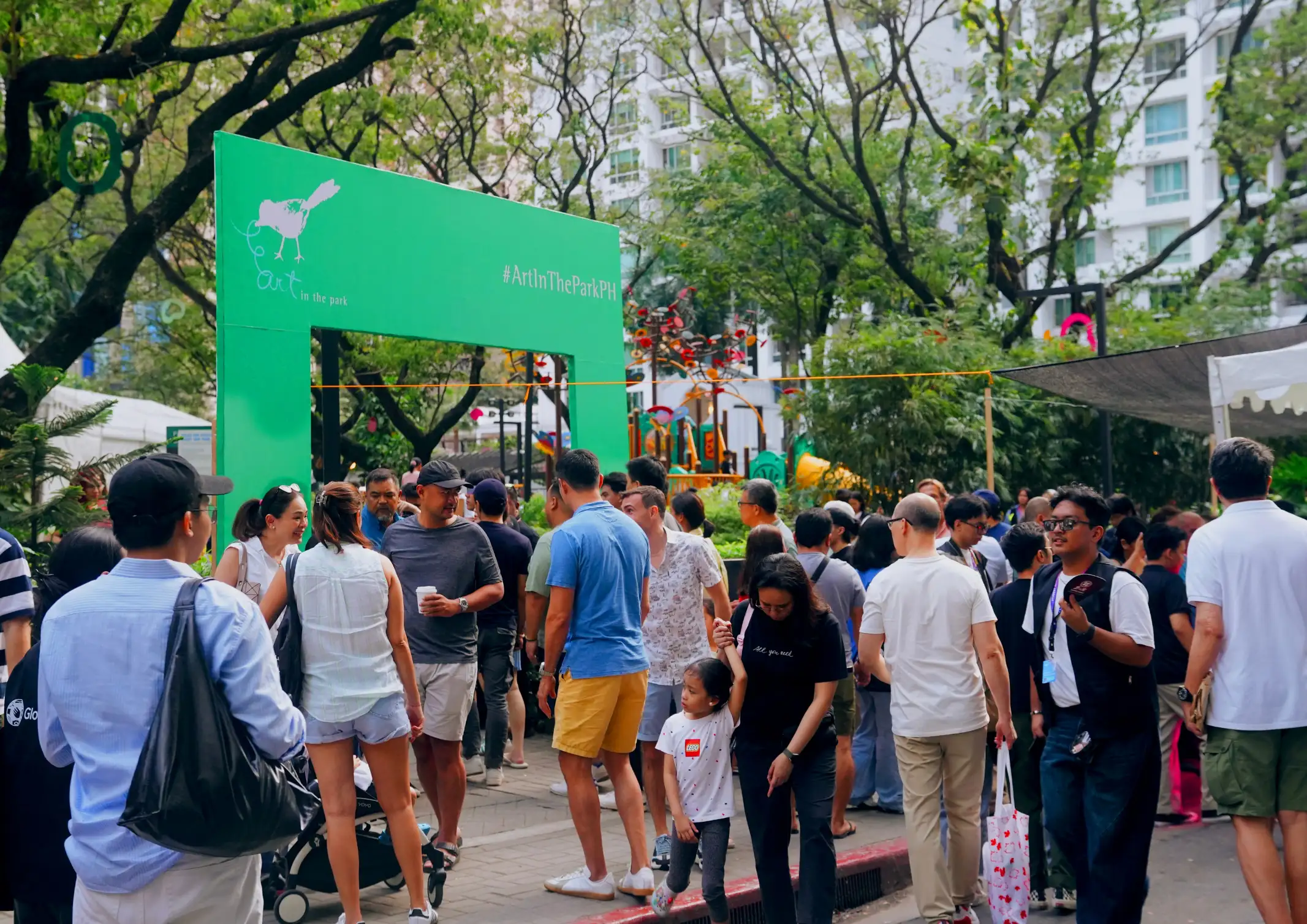
Art in the Park returned this year to Jaime Velasquez Park in Salcedo Village, Makati City, to celebrate its 20th anniversary. This year’s edition featured a curated selection of works from 55 exhibitors representing galleries, art collectives, independent art spaces, and student groups. With all artworks capped at Php 70,000, the fair continued its mission […]
Advertisement
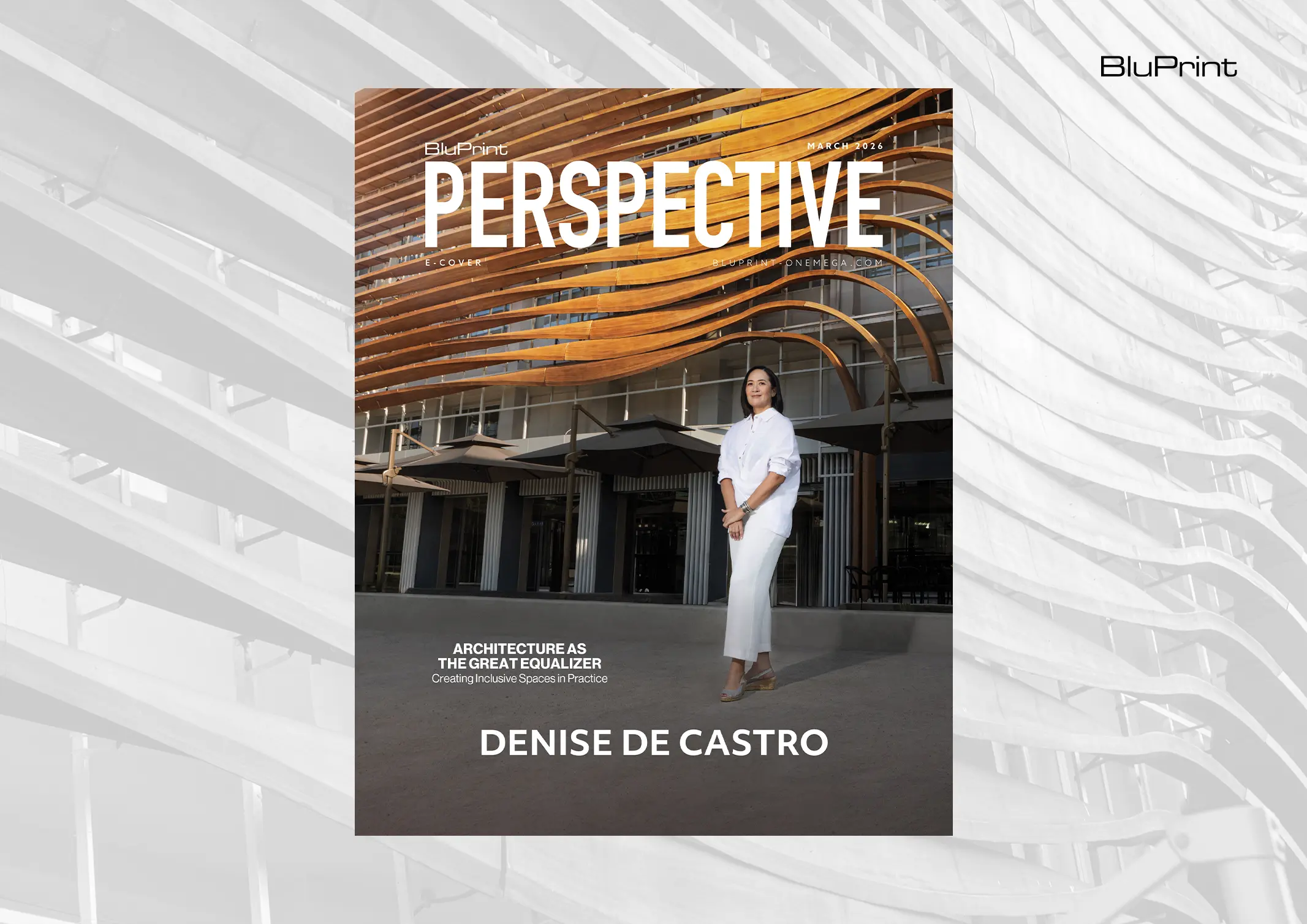
Denise de Castro, Principal Architect of DEQA Design Collaborative, believes that designing with equity in mind means starting at the workplace. Values and practices that your studio or office espouse inevitably filter down to the work that you do. Equitable design ensures that people with different needs and different backgrounds are supported through fair access, […]
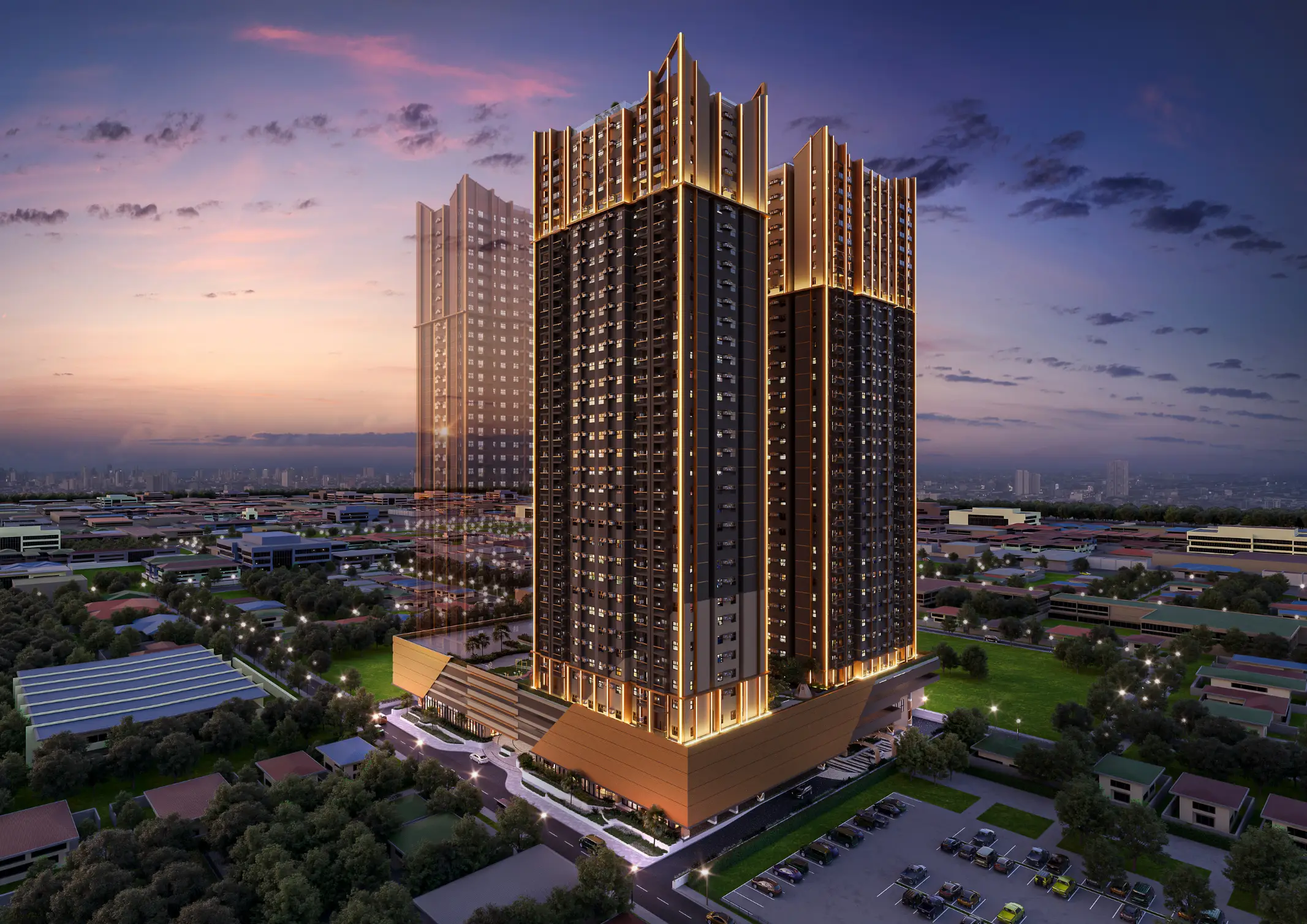
Across Metro Manila, residential developments are increasingly designed around proximity. As cities grow denser and mobility becomes more complex, new housing is often positioned near transport nodes, commercial districts, and educational institutions. This approach reflects a broader shift in urban planning. Mixed-use environments allow residents to live closer to daily necessities—reducing commute times while supporting […]
Luxury in design is undergoing a quiet shift. Where once luxury was measured primarily through visual opulence, today it is increasingly defined by responsibility—through the way spaces are built, the materials selected, and the impact those decisions leave behind. At the Philippine World Building and Construction Expo (WORLDBEX) 2026, this evolving definition of luxury takes […]
Advertisement
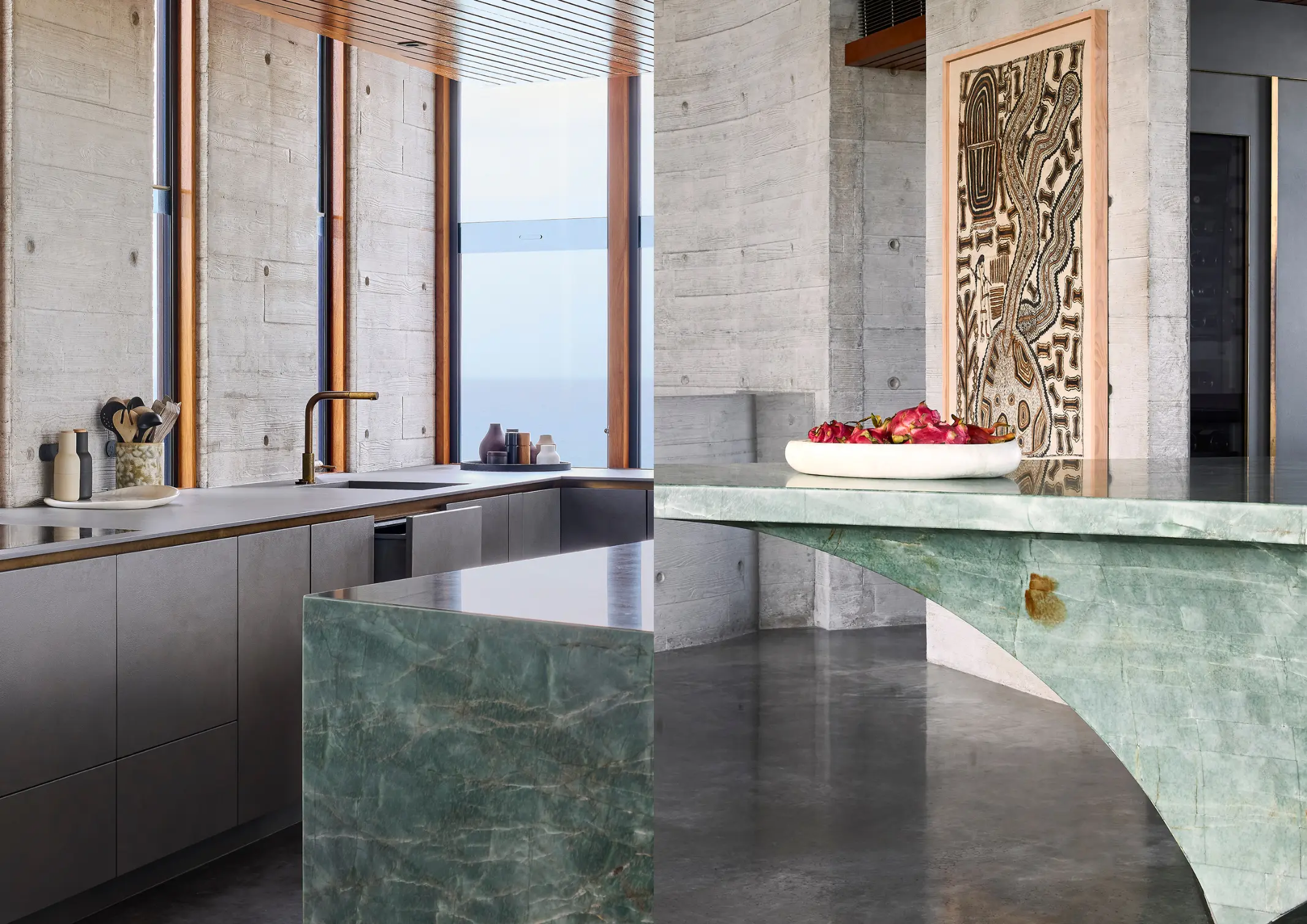
For more than nine decades, Fisher & Paykel has approached design with a simple but exacting belief: that the best living environments are those shaped by people, place, and purpose. Rooted in New Zealand and deeply attuned to island and coastal living, the brand’s philosophy centres on quiet performance, material honesty, and appliances that integrate […]
Download this month's BLUPRINT magazine digital copy from:



Subscribe via [email protected]