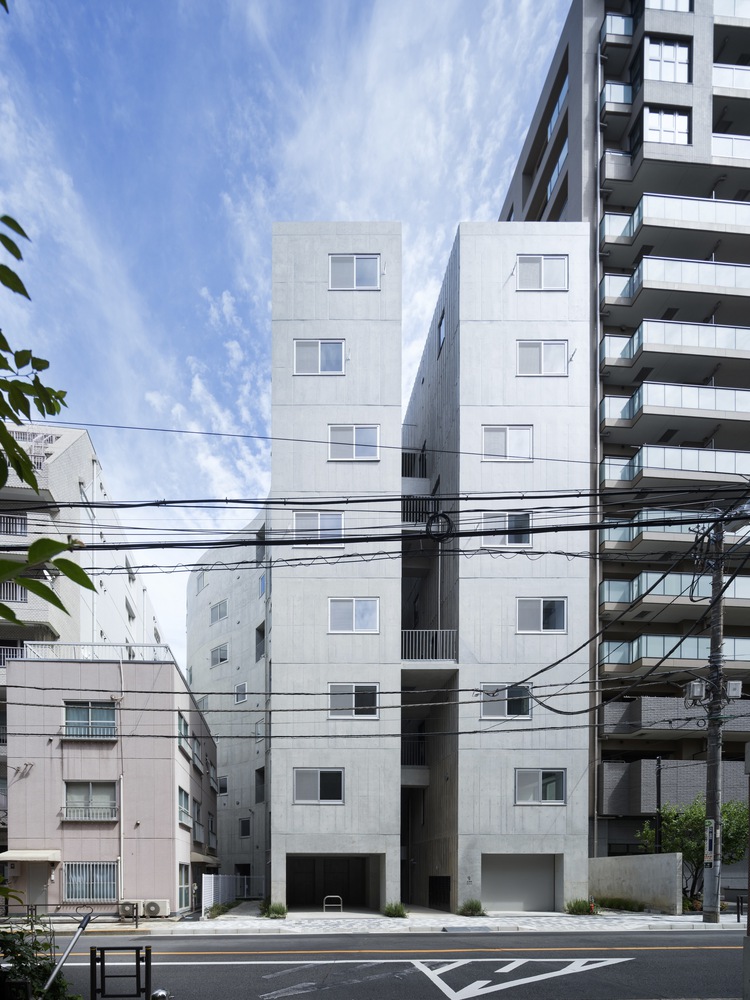
Tenjincho Place Apartment Complex is a Japanese residential building built in Yushima, Tokyo. Designed by Hiroyuki Ito Architects, the building sits in a rapidly urbanized area flanked in multiple directions by high-rise buildings. This effectively blocks the project from much needed natural light and minimizes space to build.
Front view of Tenjincho Place. Photo by Masao Nishikawa.
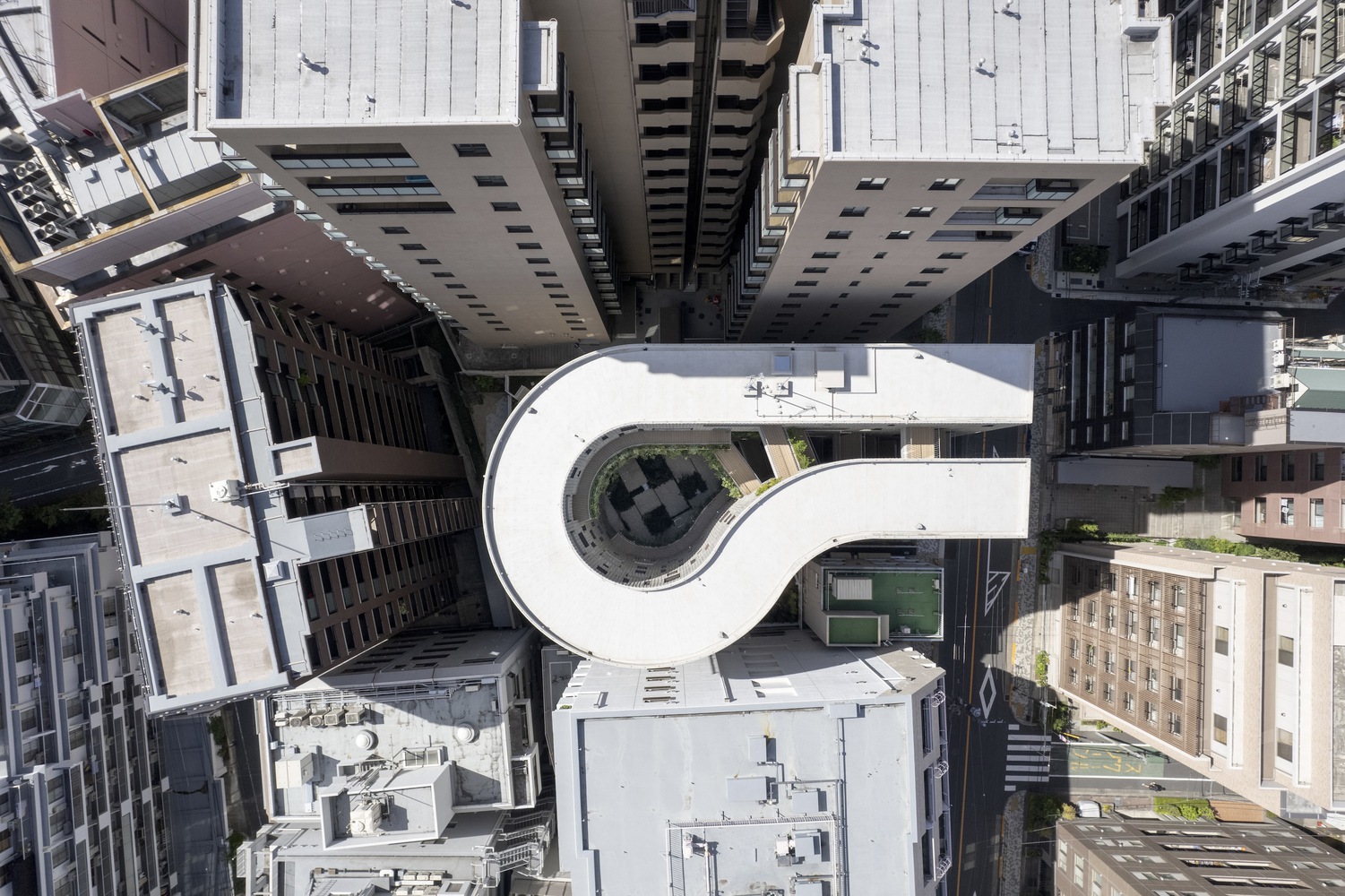
And yet, they find a clever solution to this problem by curving the building and turning it inward. In the words of the architect, “by wrapping a curved volume around a central void, each residential unit obtains light, wind, and views.”
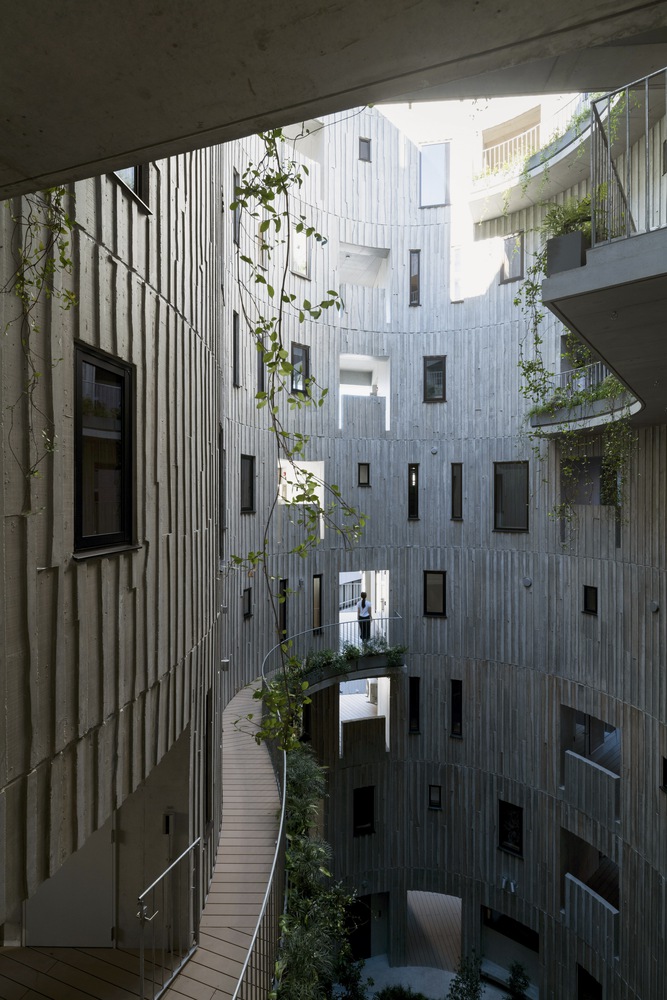
Tenjincho Place from above with a view of the curving courtyard. Photo by Masao Nishikawa.
How Small Can an Apartment Complex Be?
Tenjincho Place Apartment Complex’s environment necessitated more nonlinear solutions than the typical building. For example, because of the high-rises around it, the courtyard in the middle of the building can feel dark and tightly-spaced. This problem shows up in a lot of packed places, like Kowloon Walled City, and it’s something that the architects kept in mind in their design of the building.
Advertisement
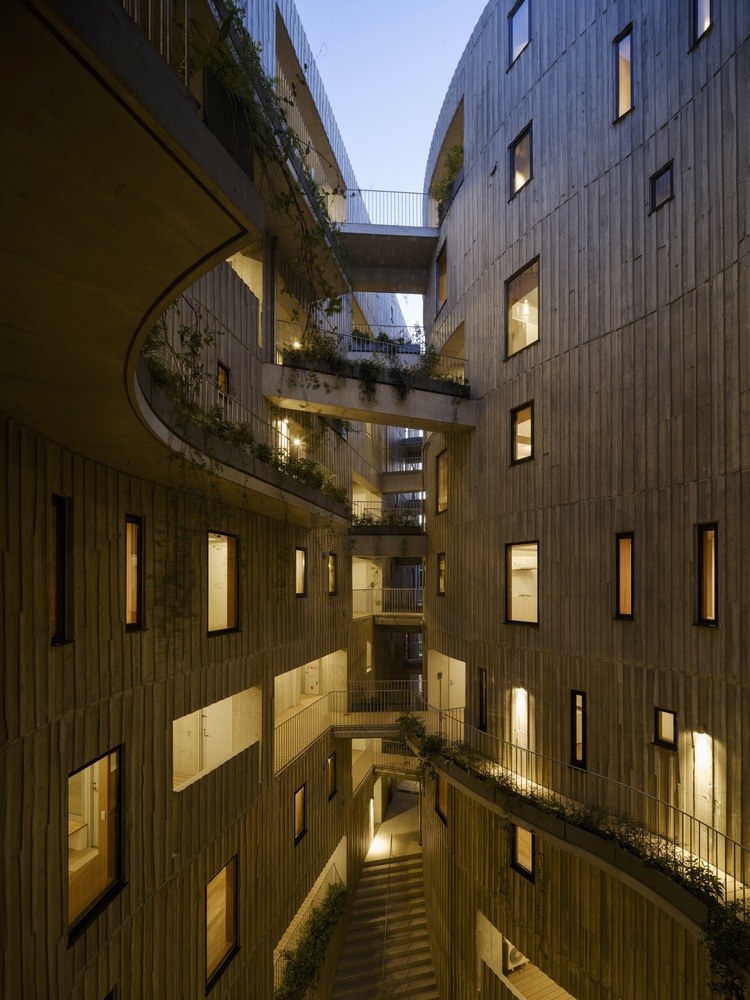
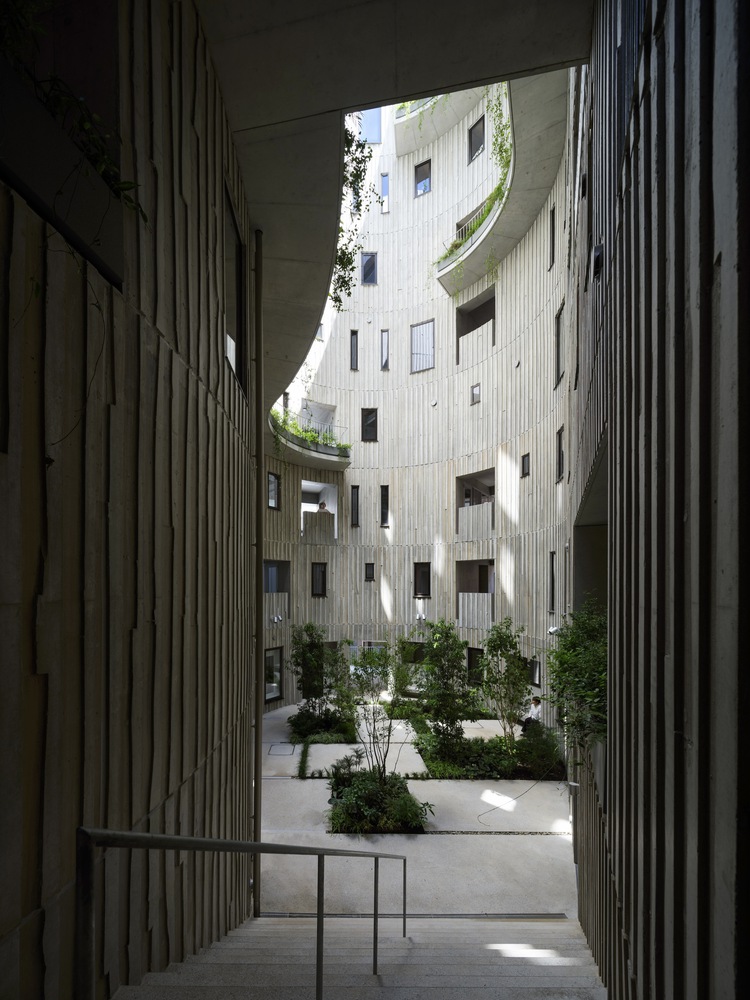
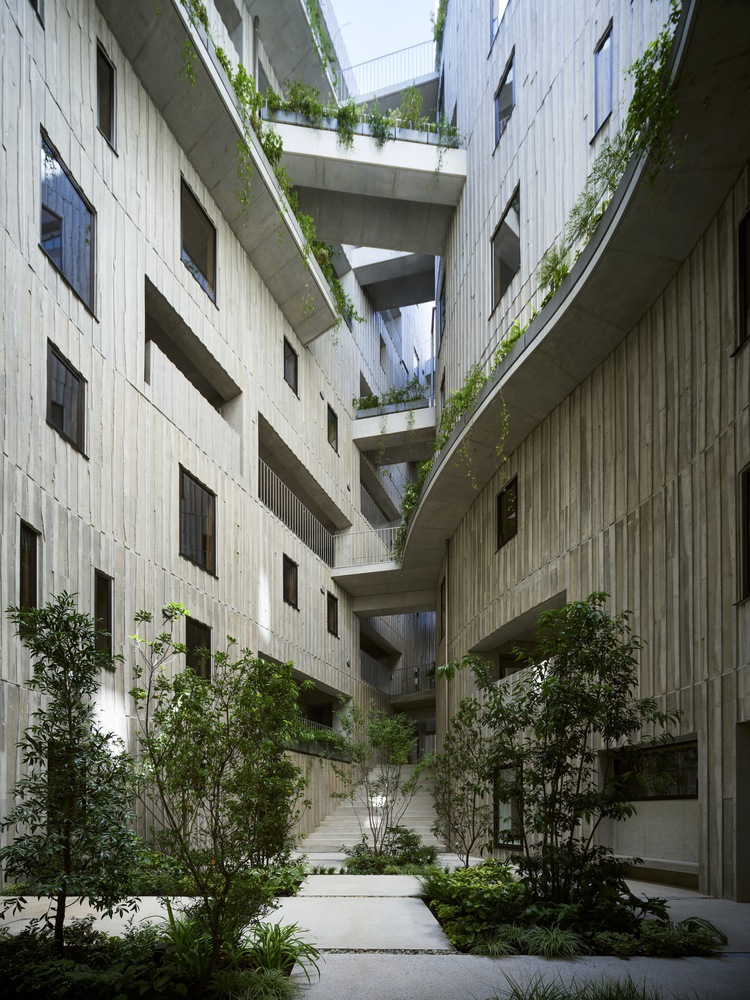
The current design uses sawn wood with bark texture to line the open areas in the courtyard. The walls have a ridged look, with wood lining the valleys of the ridges while the hills contain a painted plywood texture.
Courtyard hallways at night. Photo by Masao Nishikawa.
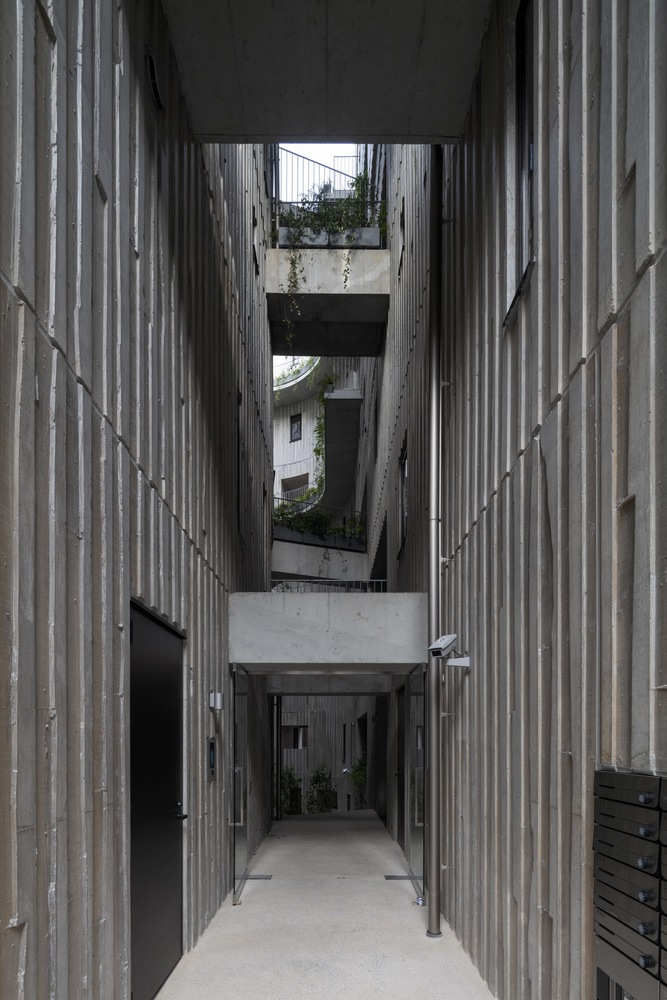
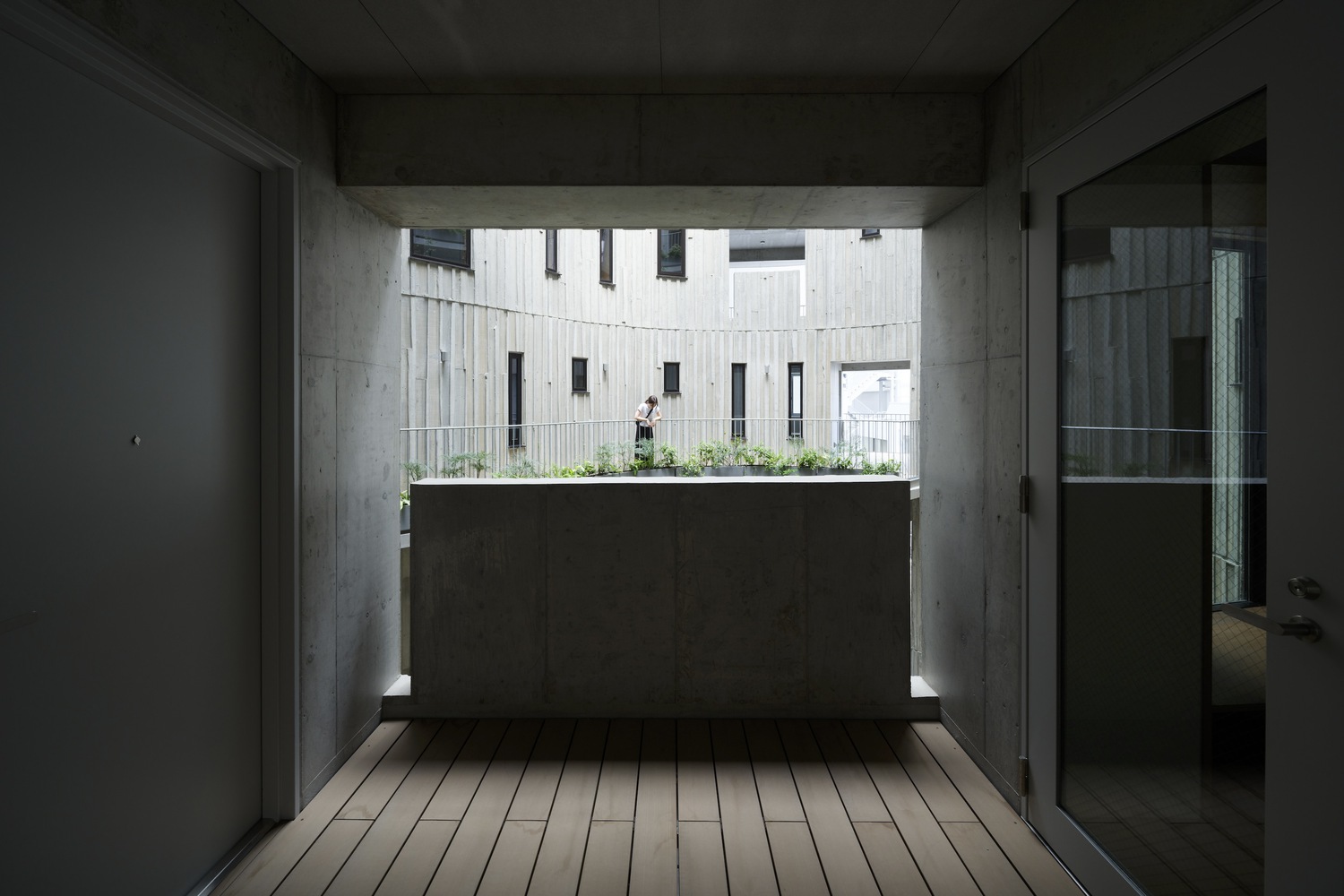
Entranceway to the courtyard. Photo by Masao Nishikawa.
A look at the courtyard from the bottom. Photo by Masao Nishikawa.
A look at the courtyard from the bottom. Photo by Masao Nishikawa.
Courtyard hallways. Photo by Masao Nishikawa.
The architect said that the courtyard was created with Japanese cedar logs. “The formwork of the courtyard was made from Japanese cedar logs sourced from the ‘Wooden Station Project’ in Sammu City, Chiba. This initiative aims to sustain healthy forests by acquiring thinned wood and forest residue from forest owners at a collation point known as the ‘Wooden Station.’”
The design of corridors in the apartment does not follow the courtyard’s contours, with hallways alternating on which side they appear at by floor. These methods reduce shadows and increase the amount of sunlight coming into the building.
Advertisement
To give a sense of comfort and space, the apartment complex contains plant life hanging in the corridors and windows of many units and within the courtyard itself. In the future, the architects expect the courtyard to be utilized as a public space, with cafes and stores in the area.
Adapting to Small Spaces
The building itself uses concrete and steel to reinforce its curved structure. The roof uses a waterproof sheet and insulation board to control the structure’s temperature. Among the different rooms in the building are a soundproof room and storeroom on the ground floor.
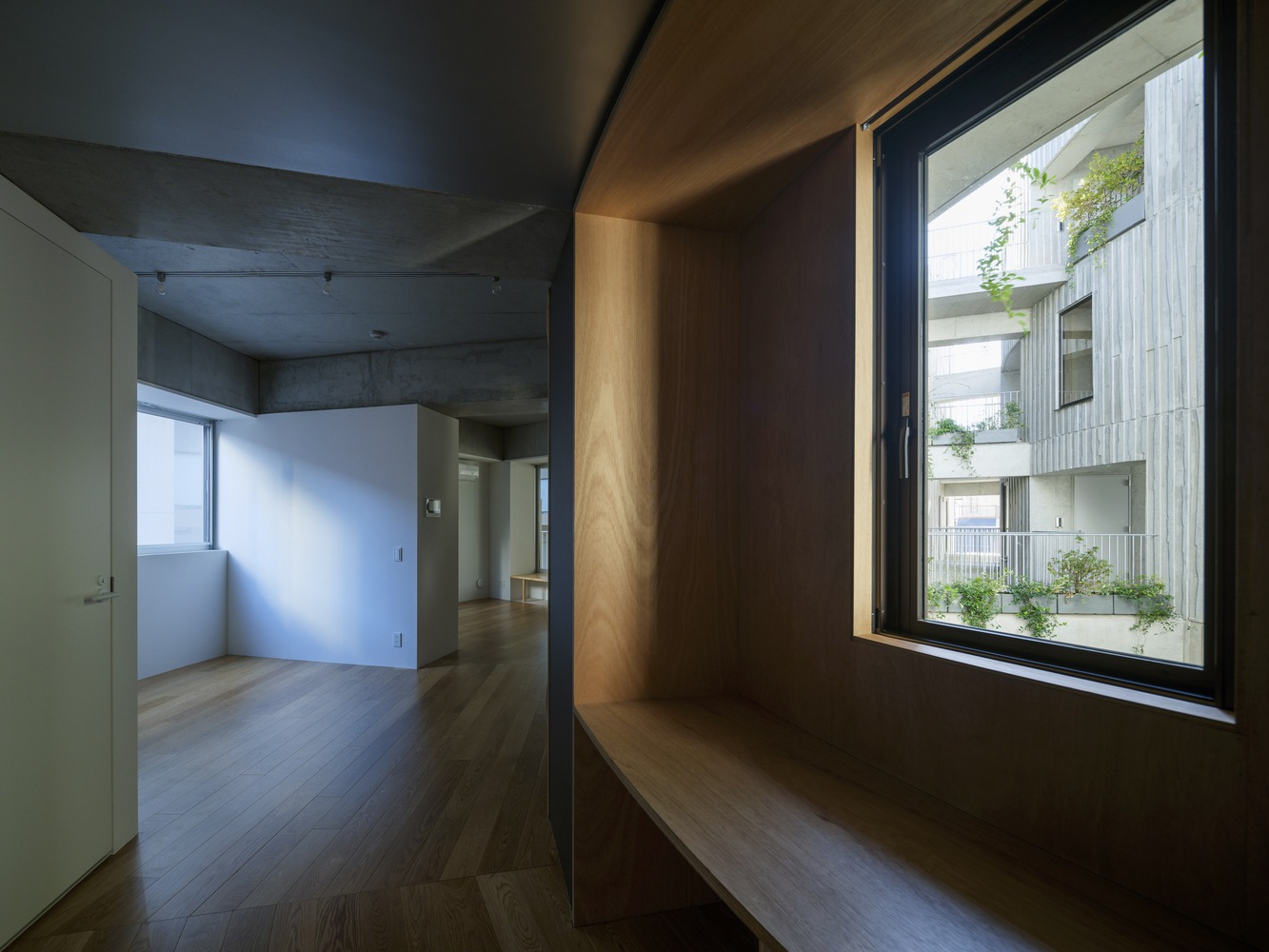
The apartments inside benefit from this nonlinear organization of the courtyard. Both sides of the units have windows to maintain the flow of fresh air.
Advertisement
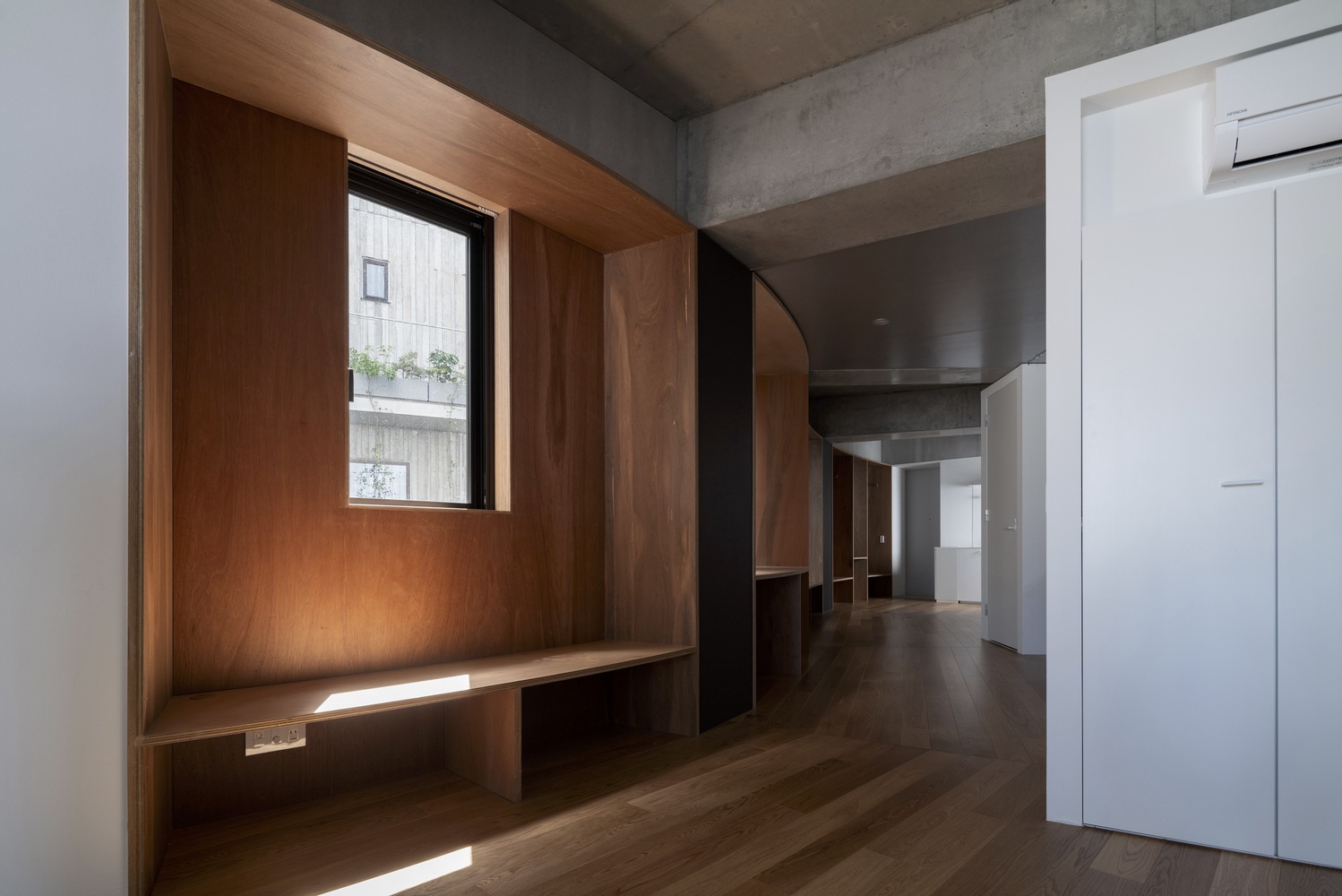
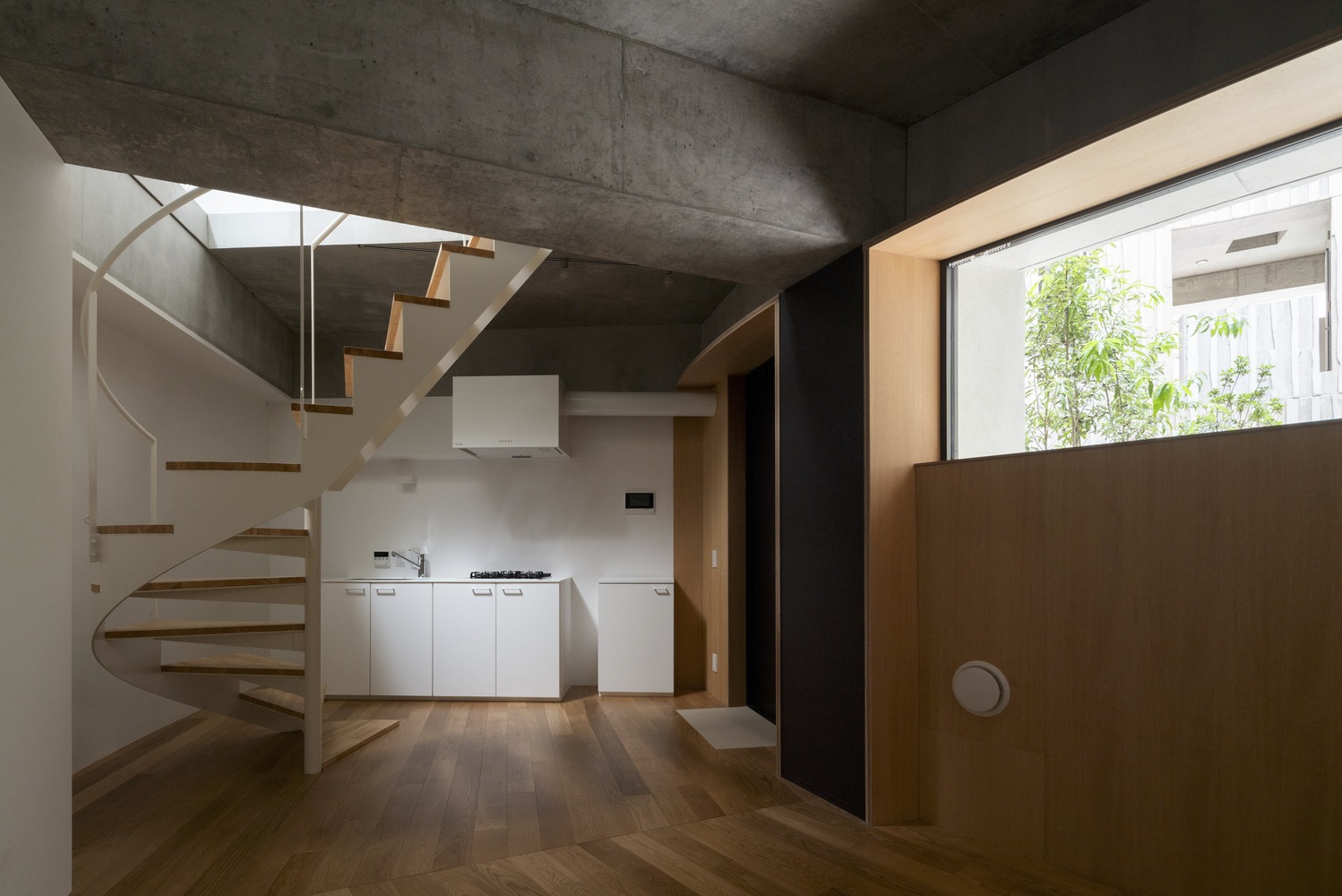
The windows facing the courtyard allow the light and scenery to enter the homes. The inside of the apartments uses oak and artificial wood for their floors and walls, giving a comforting natural look in contrast to the concrete reinforcements.
A hallway in the Tenjincho Place with windows. Photo by Masao Nishikawa.
A kitchen in Tenjincho Place with windows. Photo by Masao Nishikawa.
Windows in the Tenjincho Place facing the courtyard. Photo by Masao Nishikawa.
Terraces in the apartment complex that faces the courtyard. Photo by Masao Nishikawa.
With less and less space available in urban areas, creativity and nonlinear thinking becomes an essential part of being an architect. Tenjincho Place Apartment Complex shows urbanization as it adapts to its surroundings. More importantly, it shows how unorthodox visions, like a curved courtyard, can be executed well—and gives space for that kind of thinking to occur.
Contemporary design refers to the constantly evolving design trends of today. With the power to design our built environments, architects have been experimenting with various architectural approaches. Whether that is through unconventional forms or the integration of smart technologies, BluPrint lists down Filipino architects who are defining contemporary architecture. Deo Alam Architect Deo Alrashid Alam […]
In the Philippines, adaptive reuse gained traction during the 1970s with the rise of conservation and environmental preservation movements. It offered an architectural solution that reuses existing spaces to fit modern needs. Across the country, several projects demonstrate how this approach is being applied—transforming heritage structures into active spaces for culture, hospitality, and community life. […]
From residential spaces to civic structures, lighting dictates the mood of a space. It controls the visual dynamics of an interior, serving as a guiding tool that highlights key design elements, including materials and textures. Related Reading: Lampscaping: How to Light up Your Home like a Pro Regulating the Mood: Natural and Artificial Light in […]
More and more Filipinos are flocking to condominium communities. Often tucked within busy city centers, condo living acts as a small respite from urban chaos. Faced with the challenge of transforming a cramped condominium into a warm living space, BluPrint lists condo interior design ideas that can maximize each square foot of small spaces. Purposeful […]
Modern bathrooms are no longer purely functional spaces. Increasingly, they are being designed as environments that support cleanliness, ease, and quiet restoration within the home. As daily life becomes more demanding and health awareness continues to rise, homeowners are beginning to expect more from the spaces where daily rituals begin and end. For architects and […]
From the moment a diner steps through the door, each detail shapes how a meal is experienced. Restaurant design has evolved, with architects and culinary professionals collaborating to create built spaces that are as intentional as the menu itself. The spatial atmosphere acts as an additional ingredient that can define the culinary experience. Taupe and […]