Contemporary design refers to the constantly evolving design trends of today. With the power to design our built environments, architects have been experimenting with various architectural approaches. Whether that is through unconventional forms or the integration of smart technologies, BluPrint lists down Filipino architects who are defining contemporary architecture. Deo Alam Architect Deo Alrashid Alam […]
‘NO ALGORITHM, NO ENTROPY’: Re-engaging the World Beyond Our Screens



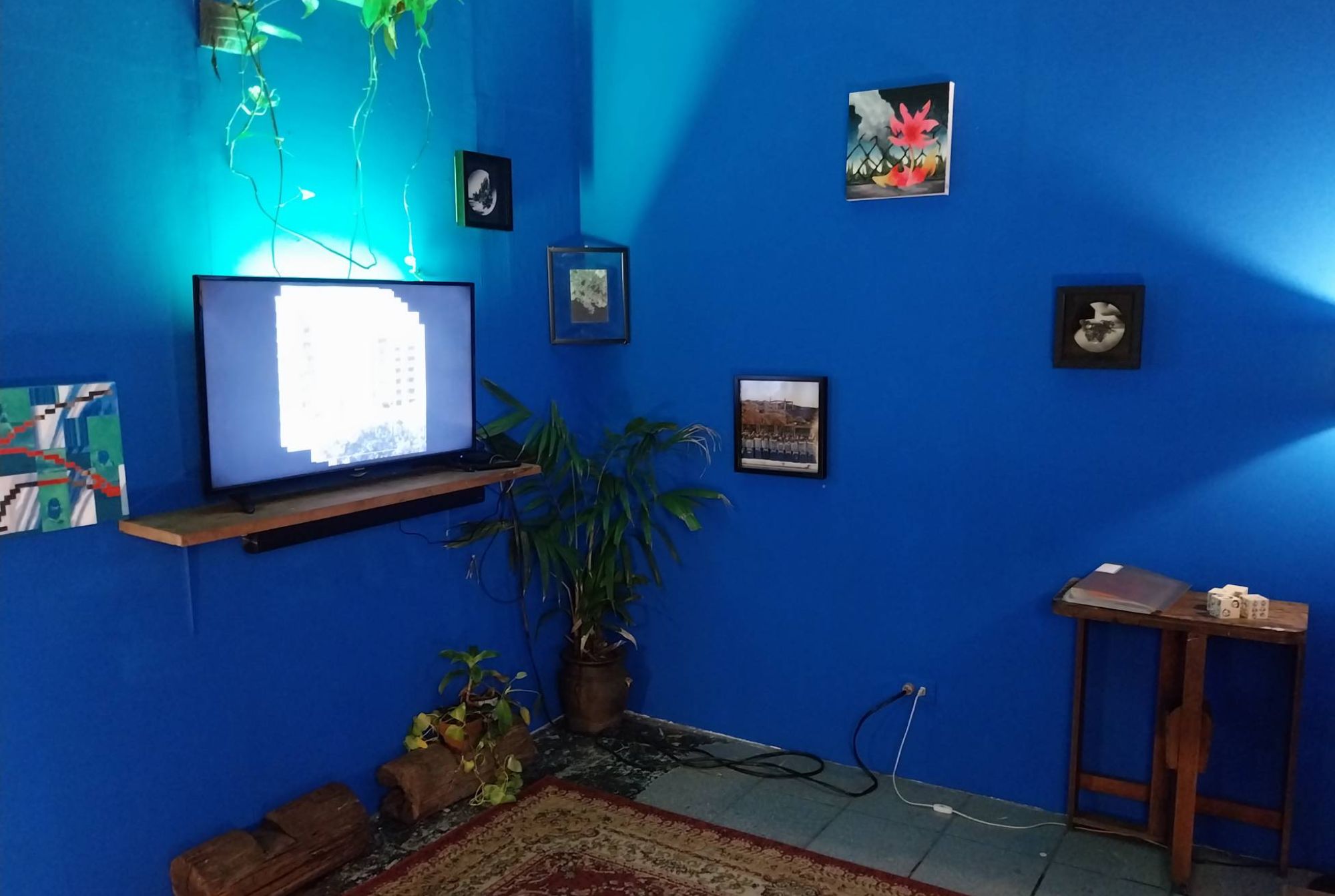
NO ALGORITHM, NO ENTROPY exhibited in NO Community-run Space at Teacher’s Village in Quezon City. Curated by Jose Olarte and James Fowler, the group exhibit involves a host of local artists contributing paintings, videos, and mixed media pieces. The works engage with the central thesis of the project: how are we seeing our world today?
It’s an oft-asked question. As digital spaces become the norm, we tend to interact with the world around us through our devices even outside. But the wrinkle of exploration for the exhibit centers on how standardized our feelings tend to become as social media removes the uniqueness of our individual experiences.
“This is your room. Whose voices get to dictate how the world can become? You wake up and realize that so long as this city bends to monopolies of power, every day is a feed that wastes away our time,” the exhibit write-up by Jo Almanzor said.
Advertisement
Shadows of Reality
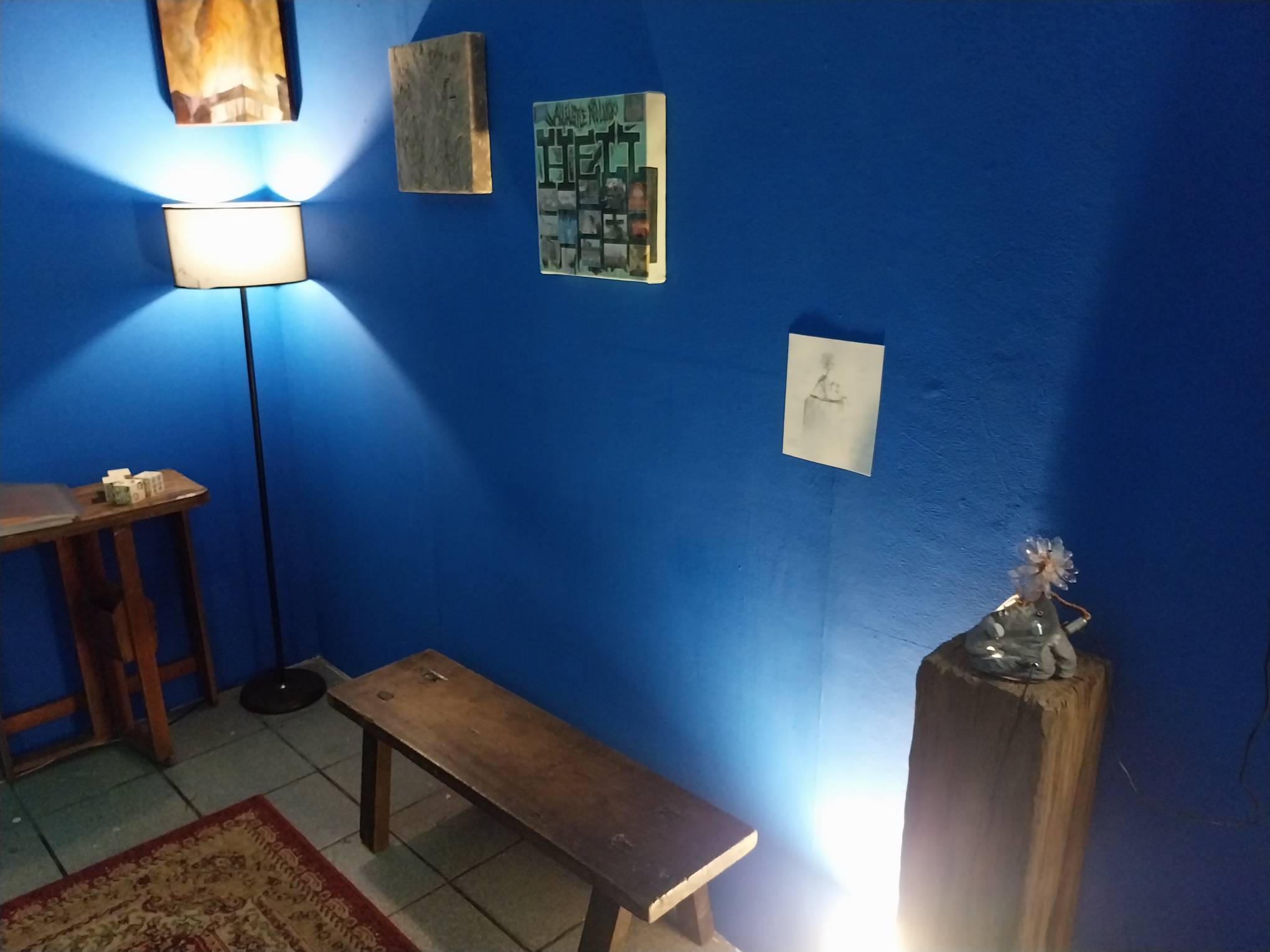
NO ALGORITHM, NO ENTROPY situates its audience inside a small, blue room. It contains small tables, some plants, a lamp, and a wooden bench to sit on. Artwork litters the walls as endless footage plays on a TV parallel to the bench. It’s the average urban room, representing the cramped milieu in which the average person today exists in.
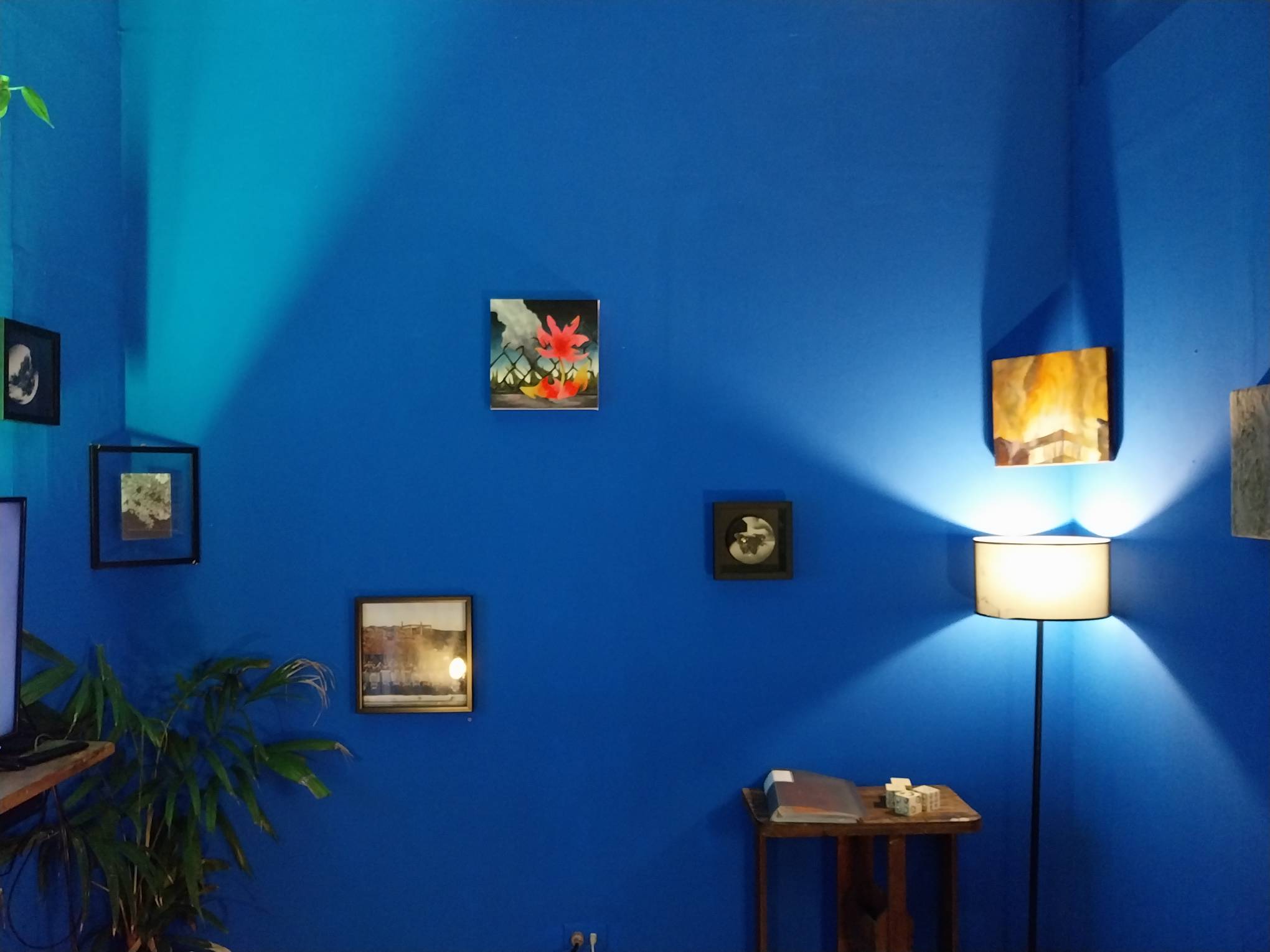
“Who needs windows when the world is just a swipe away anyway? You get through the grind to these four walls, curl up in the corner, and go back into the world again. What is sleep but a simultaneous mindless consumption of memories? Tomorrow, it shall be the same again,” Almanzor wrote.
How do we define reality today when everything is filtered through a screen? We see photographs of protests, videos of atrocities, and yet we experience them with a sense of detachment. We see it while eating lunch, or lying down in the dark of our bed, and it only reinforces what we believe. Is it really living or is it the death of the self?
Advertisement
Living Out Life in a Screen
The exhibit riffs on the idea of the allegory of the cave and questions the way we see our world today in a passive sense. Its centerpiece is the television showing video clips made by the artists as they attempt to define what their world is.
One of the clips shows a seductive dance in black-and-white. Another literally is just fire alarms ringing on top of each other. One compares police officers watching protestors to a garbage dump, another compares the wilderness to our urban city. Noise, cutaways, social media screenshots: the online experience becomes the only way to experience life in the city.
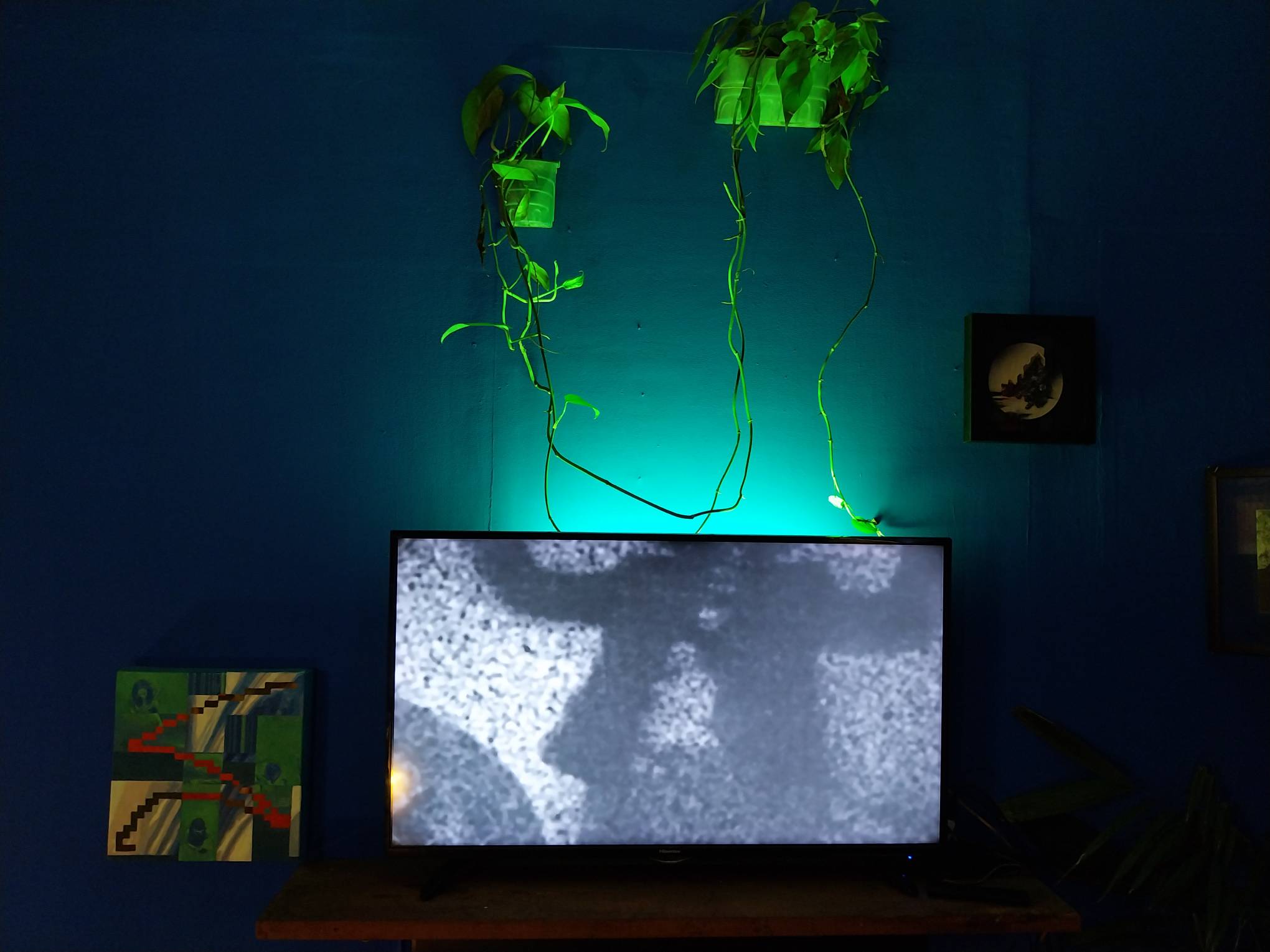
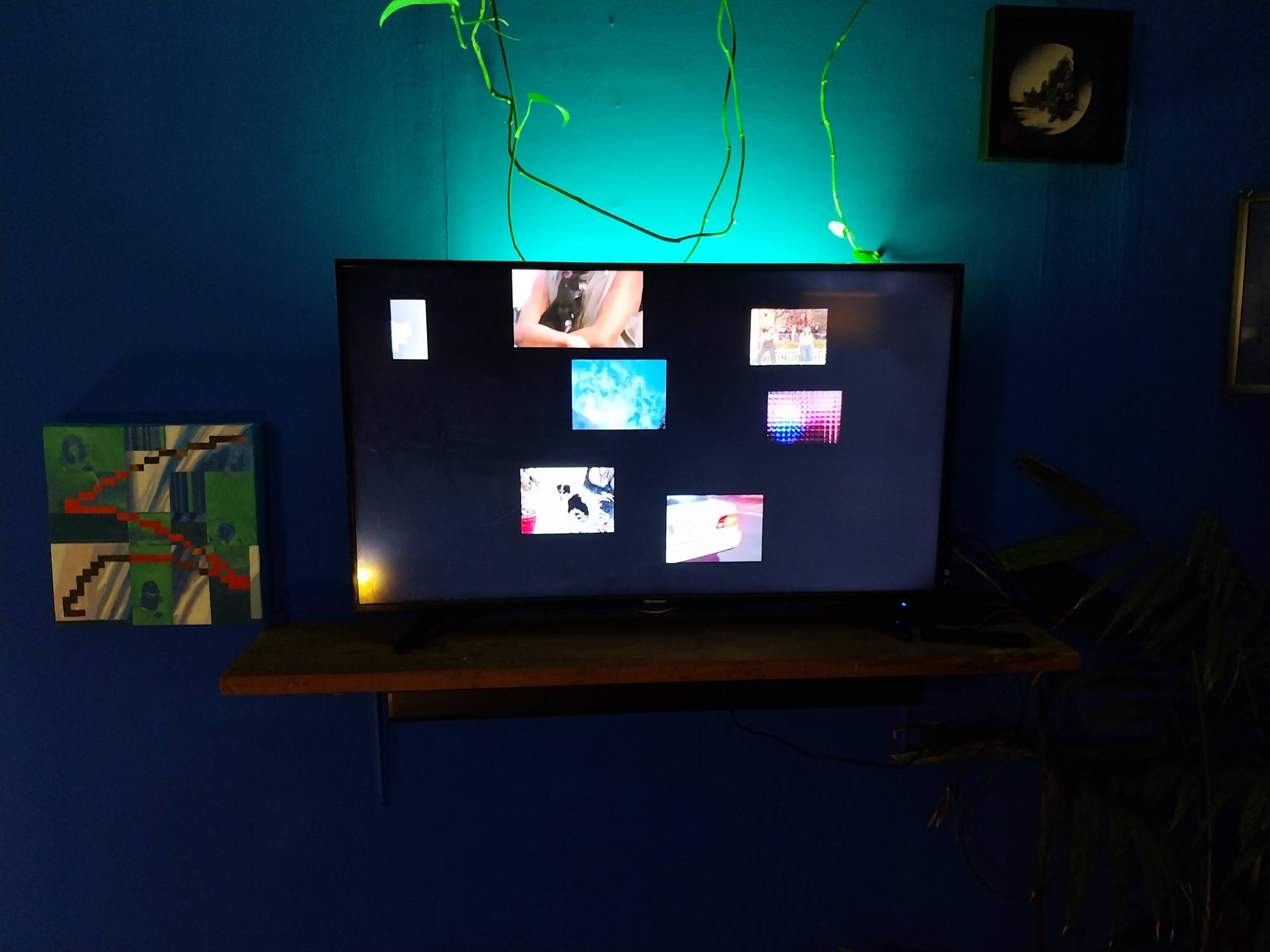
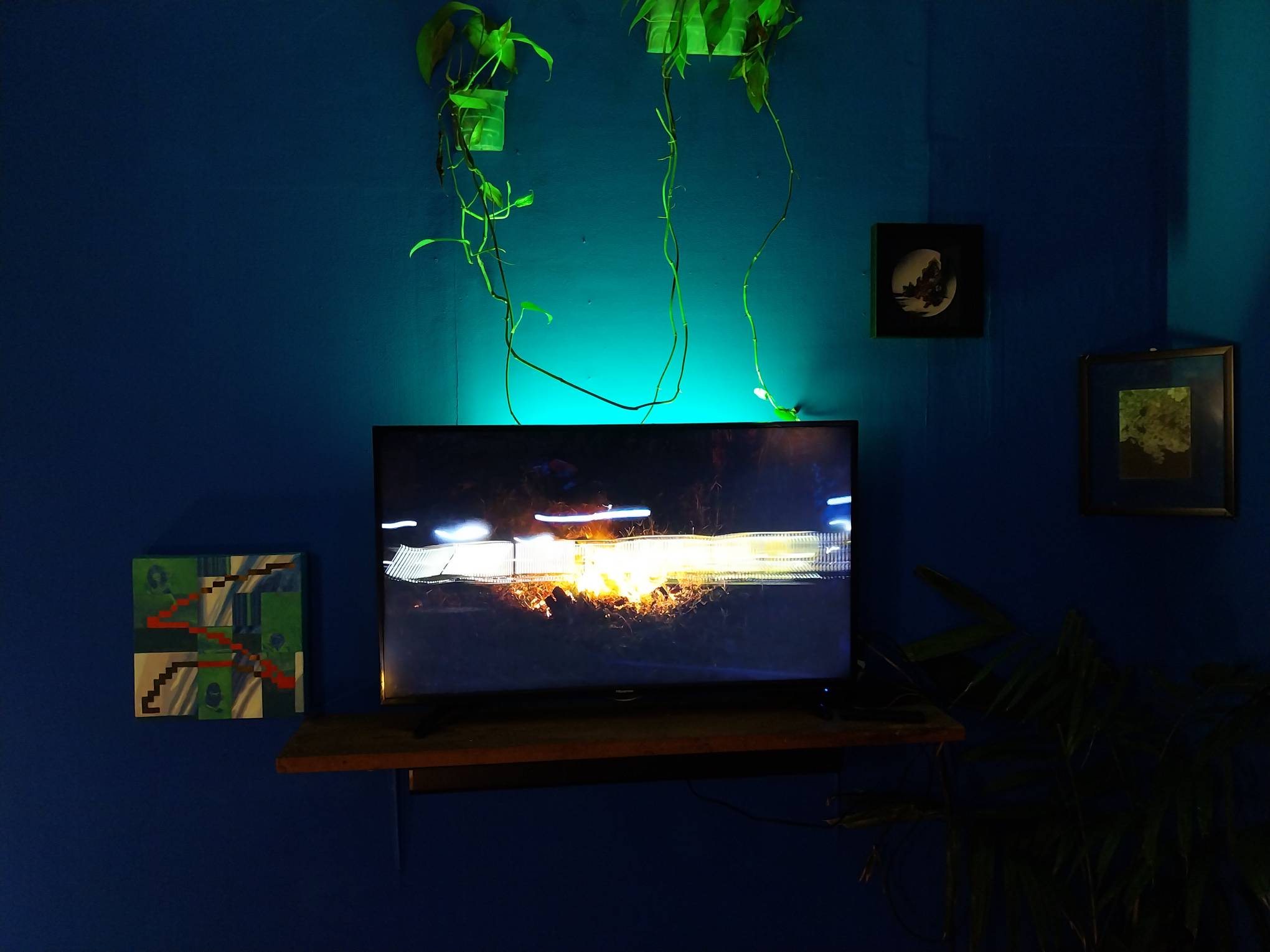
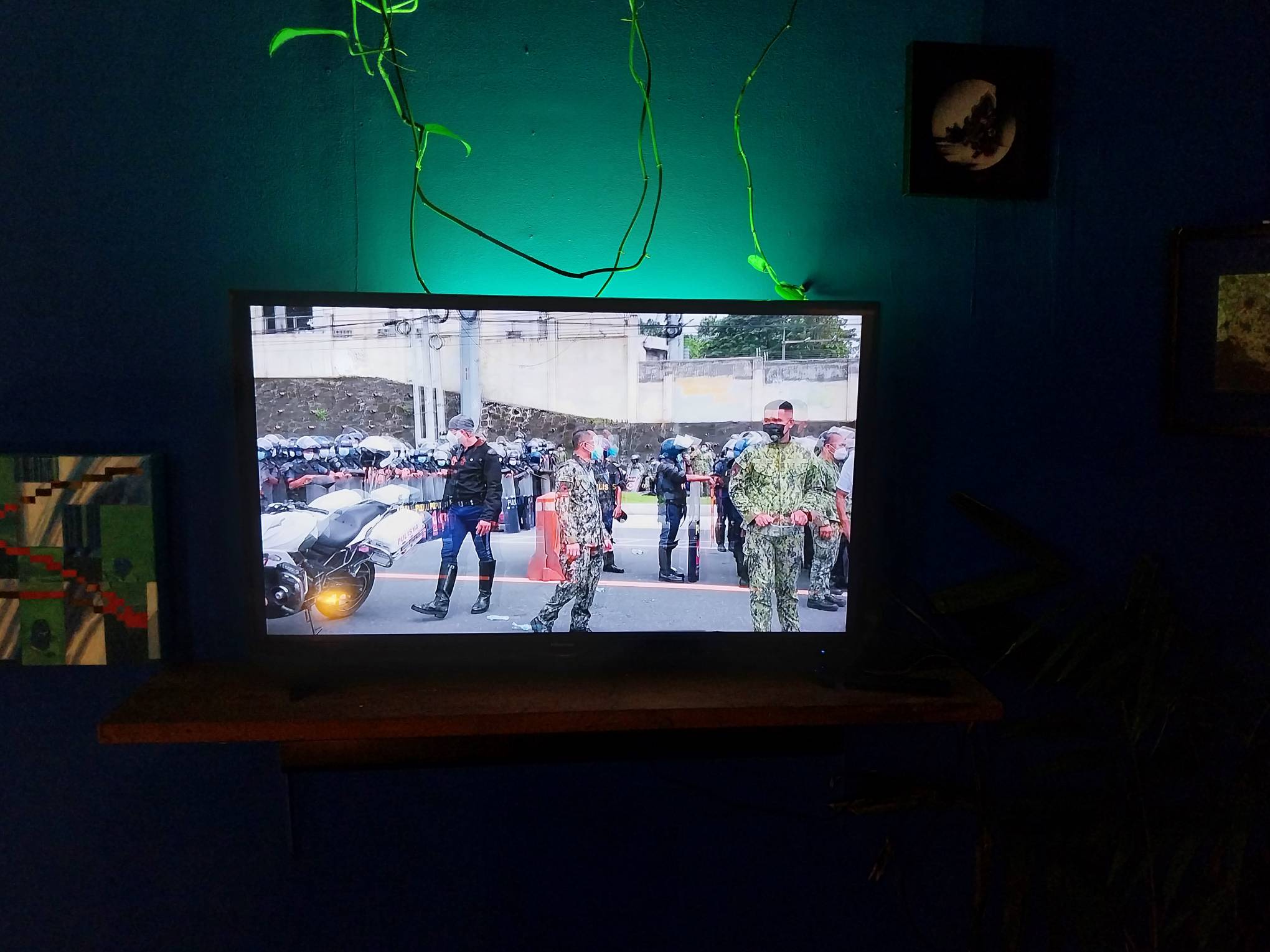
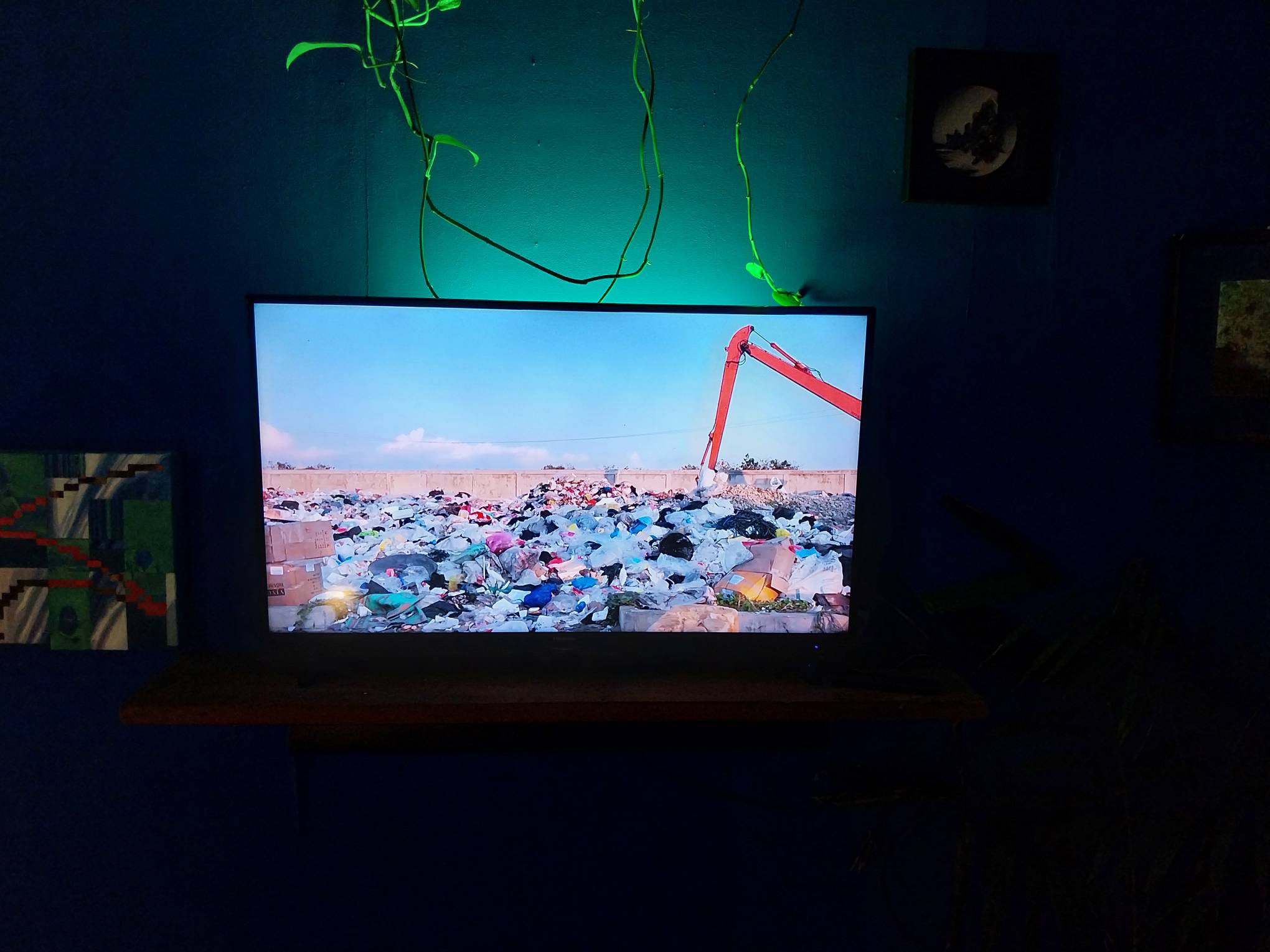
On and on, these clips illustrate our lived experience with a significant separation between them. These cops will abuse you, this person will seduce you, the world is ending—and yet you are still in this room, watching passively as you absorb this information, unable to do anything but watch.
Advertisement
The Digital Embedded in Us
The artworks framed inside the room reflects that tired passivity. Ramon Afable’s “First Contact” shows a building burning down helplessly. Rhex Dacaymat’s “Transmutation” gives us the shadow of a tree, whittled down into a post-apocalyptic monochrome image.
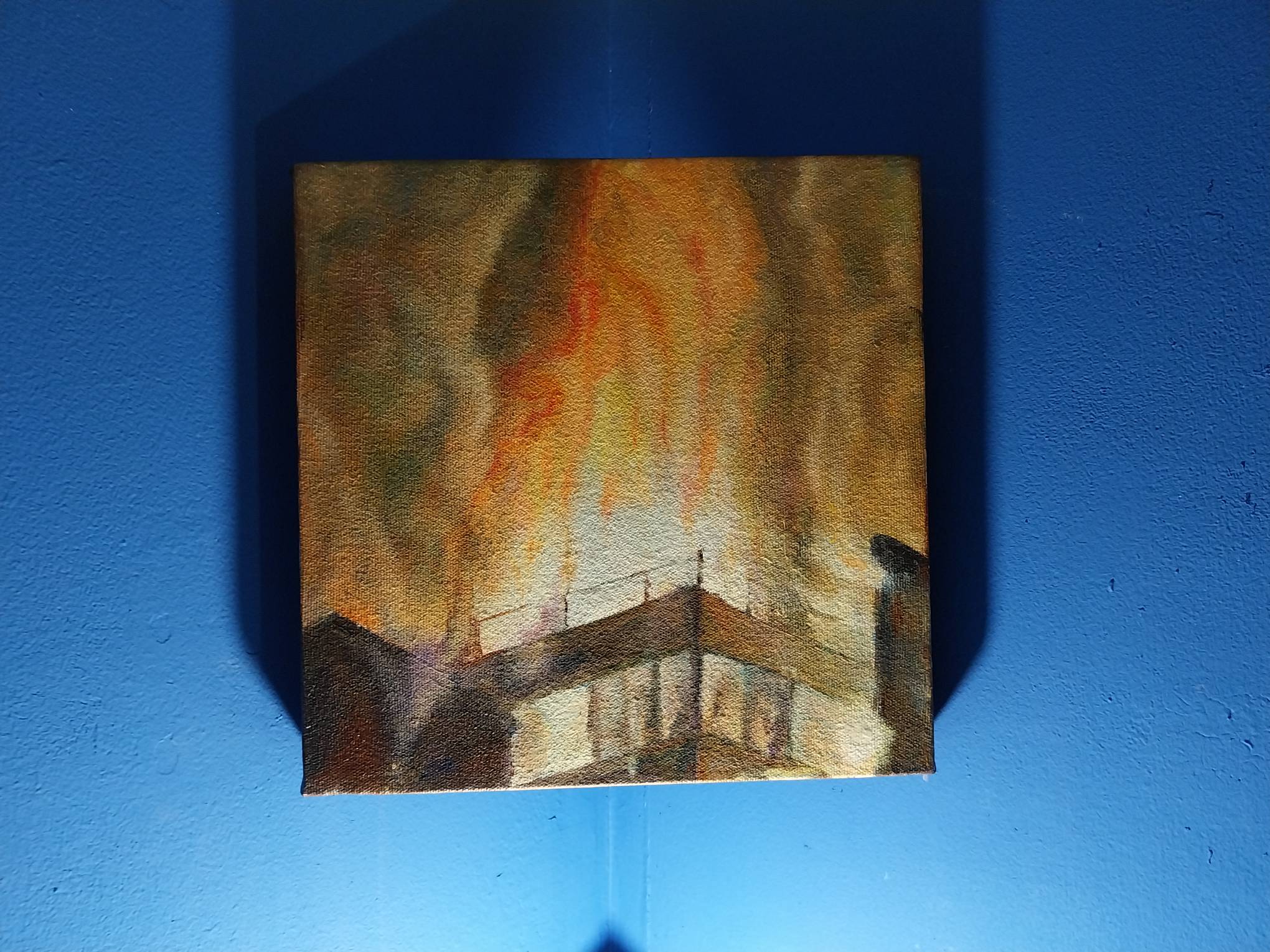
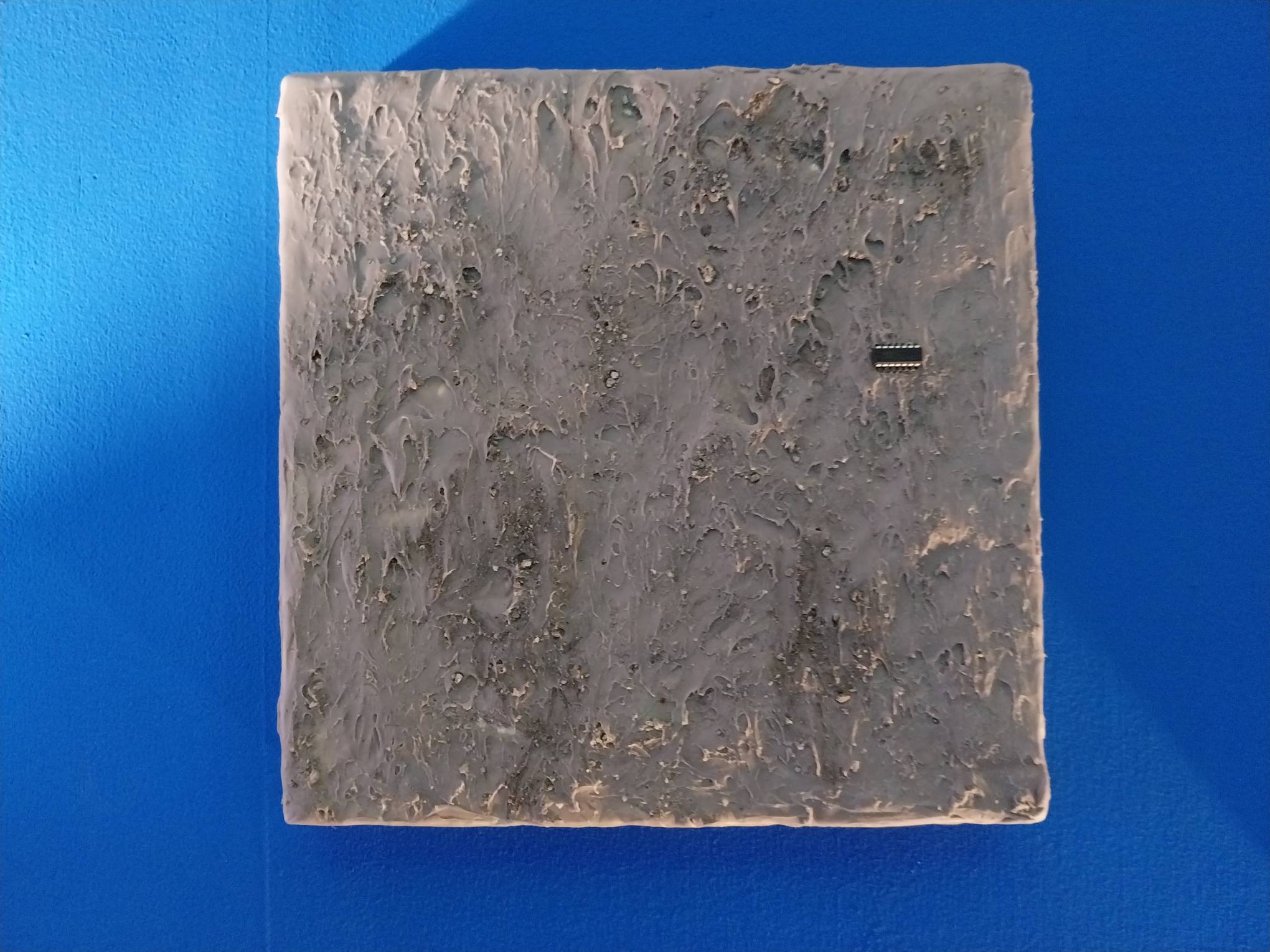
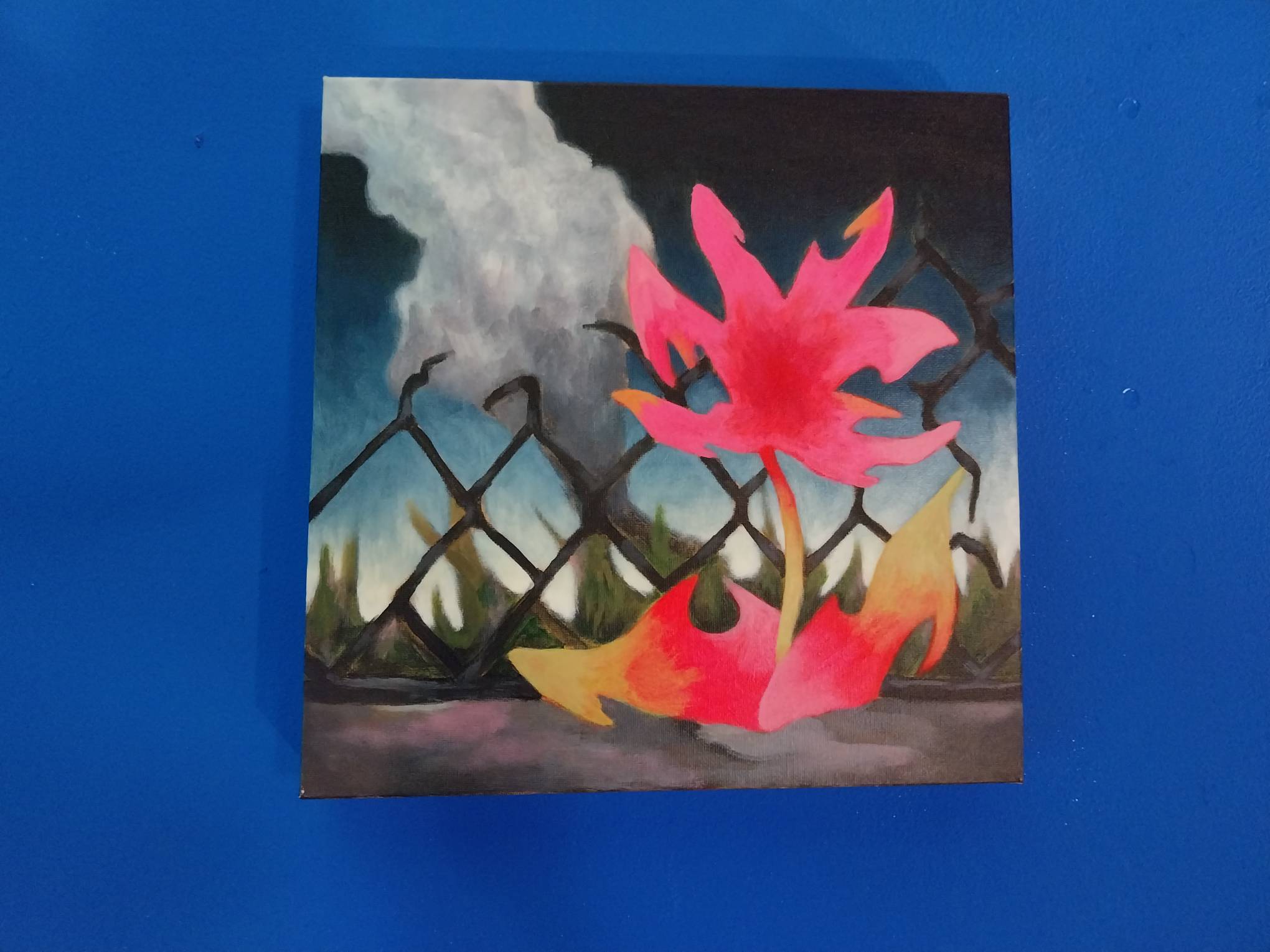
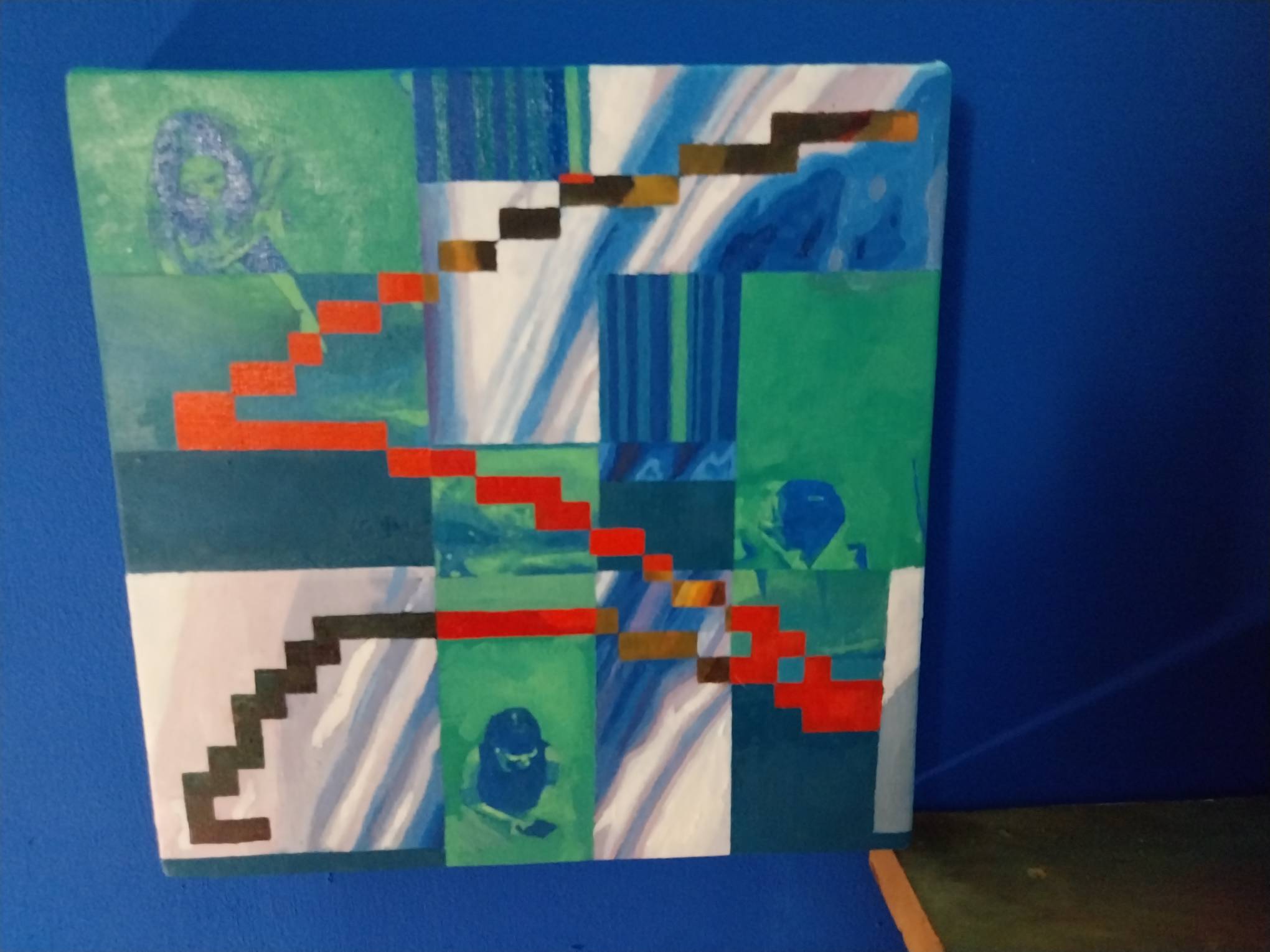
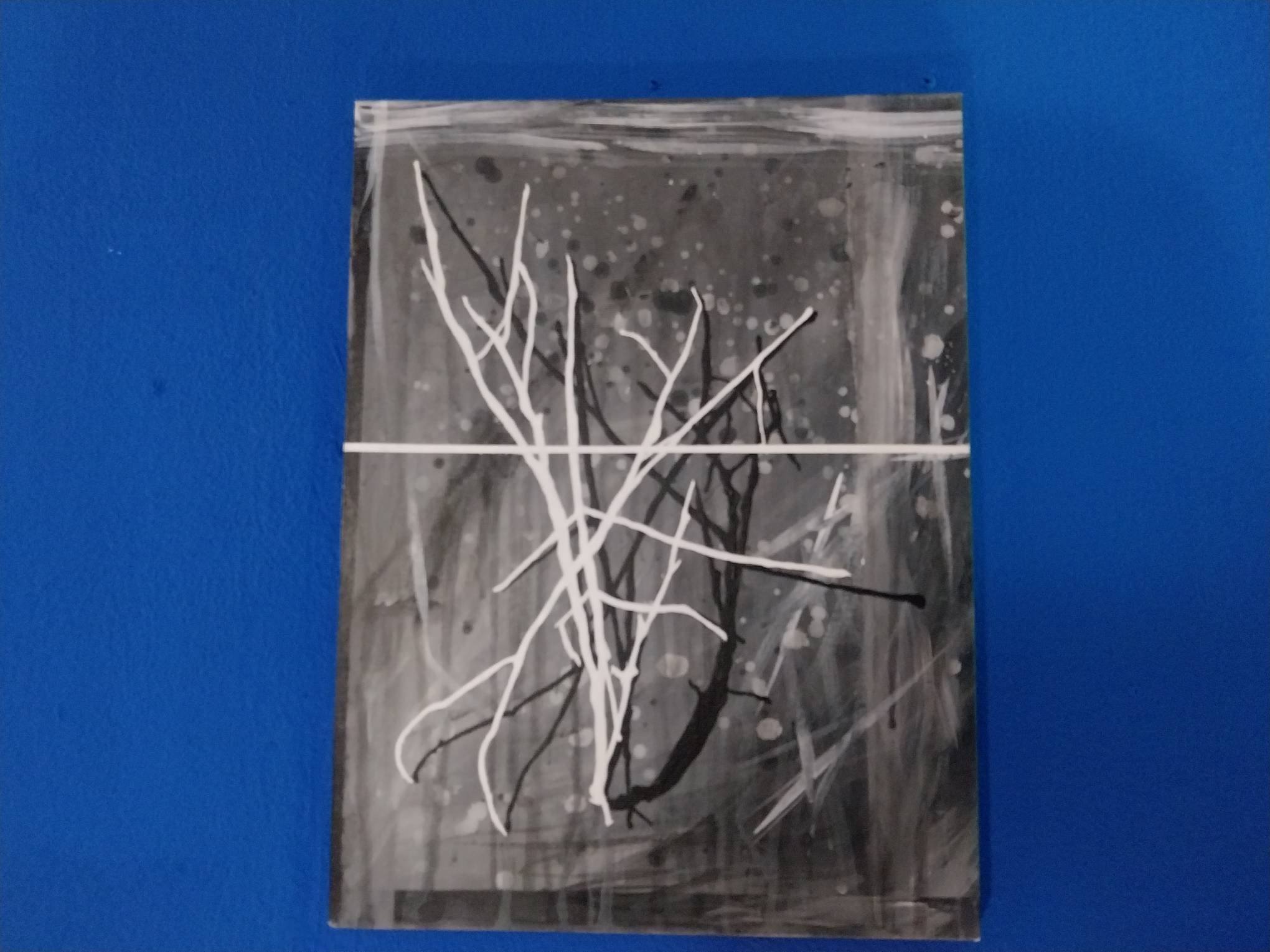
Frankie Lalunio’s “Membrane” uses the image of splattered grey matter and a transistor chip to portray the irrevocable links of technology with the mind of a person. Meanwhile, fragmented staircases leading to fuzzy images of people define Shara Francisco’s “Saan Kausap Mo,” as it reinterprets the idea of connectivity between people.
These paintings and images build on the idea of passivity of consumption, suggesting not just a lack of control, but also a lack of ability to truly understand how much of themselves have been lost.
Advertisement
Why do you feel outraged (and exhausted) by the news? Why do you feel the need to be privy to the private lives of others? The bevy of images from the television and the walls suggest a collapse of the self, defined only by popular trends and what’s in front of us.
NO ALGORITHM, NO ENTROPY aims to question how much of ourselves we have given away—our privacy, our beliefs, our inner selves—to technology that sees no ethical qualms to lead us to a life of dull simplicity. And it asks us to look beyond this, to find existence beyond the walls of our rooms. Because, of course, there is more to life than the world we see on our screens.
Related reading: Dissecting Our Use of Technology in Art with Comilang and Speiser
Advertisement
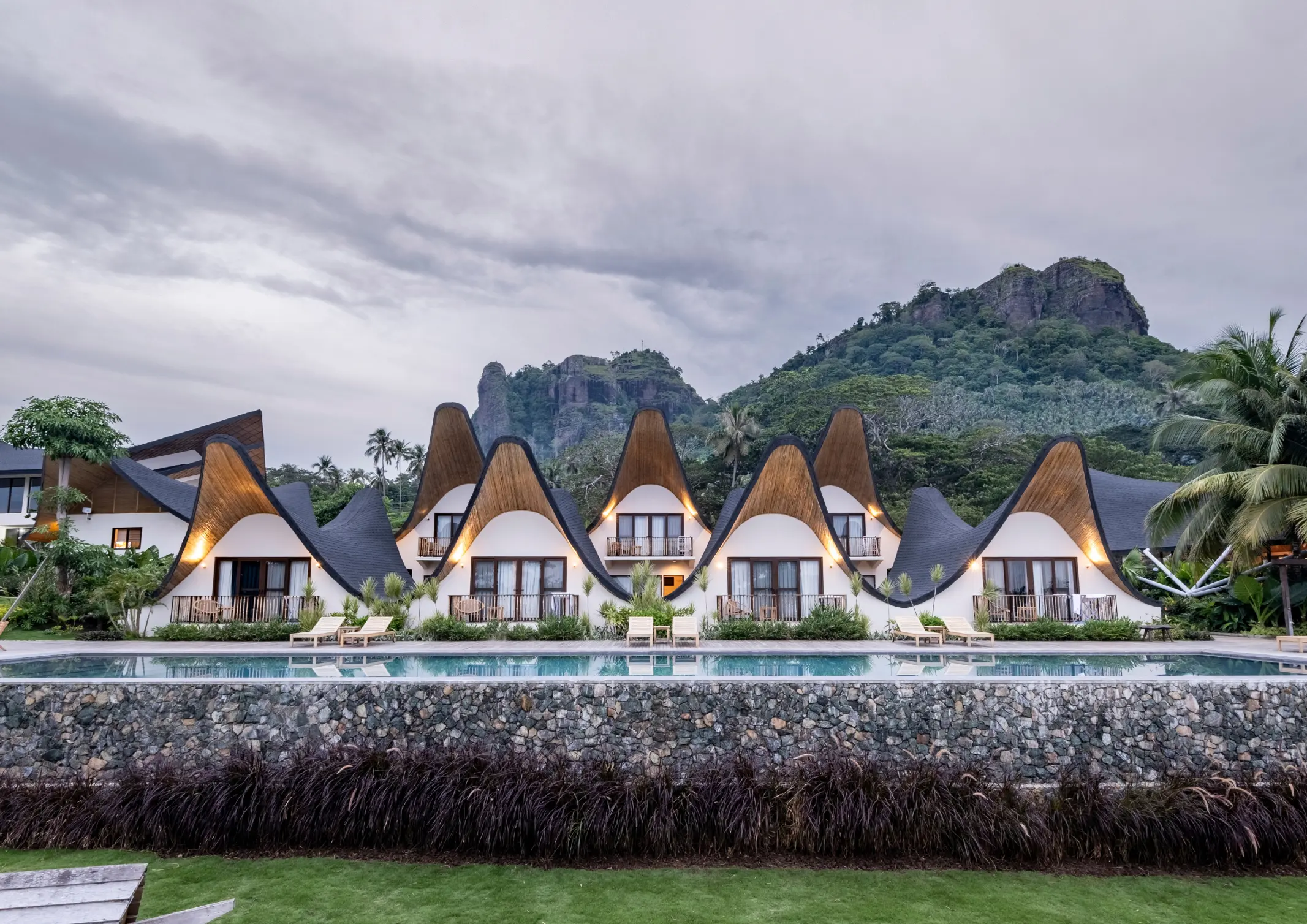
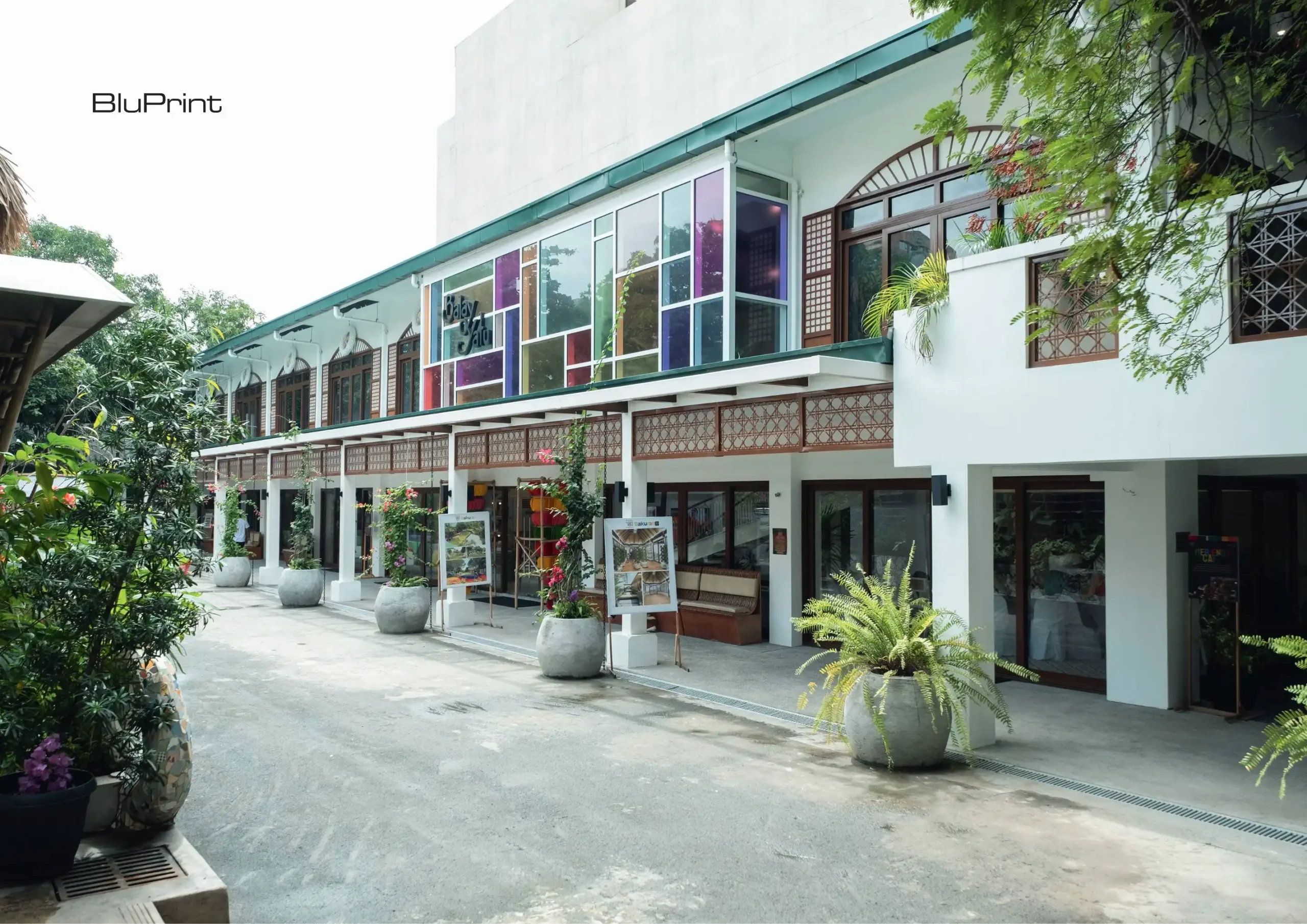
In the Philippines, adaptive reuse gained traction during the 1970s with the rise of conservation and environmental preservation movements. It offered an architectural solution that reuses existing spaces to fit modern needs. Across the country, several projects demonstrate how this approach is being applied—transforming heritage structures into active spaces for culture, hospitality, and community life. […]
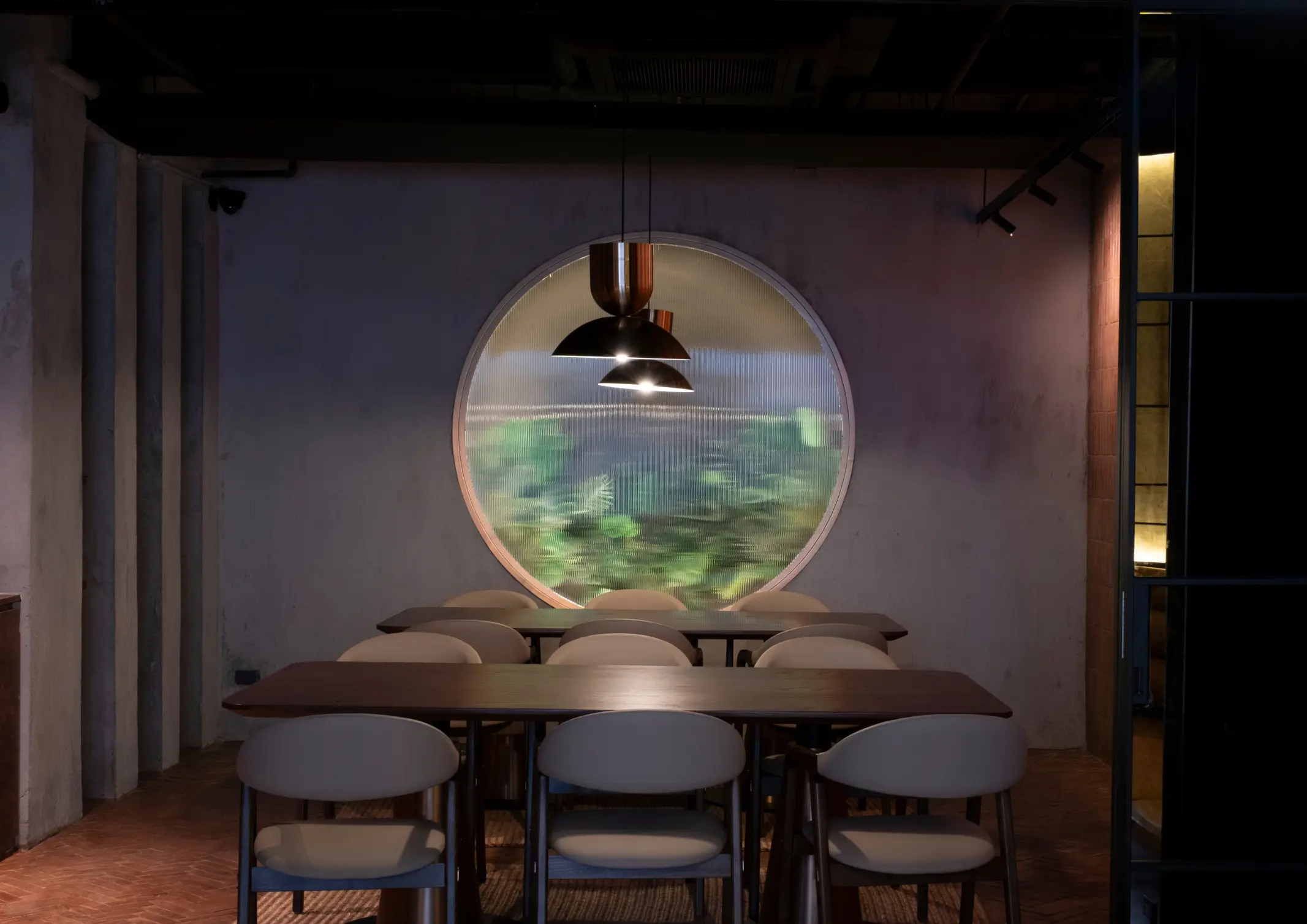
From residential spaces to civic structures, lighting dictates the mood of a space. It controls the visual dynamics of an interior, serving as a guiding tool that highlights key design elements, including materials and textures. Related Reading: Lampscaping: How to Light up Your Home like a Pro Regulating the Mood: Natural and Artificial Light in […]
Advertisement
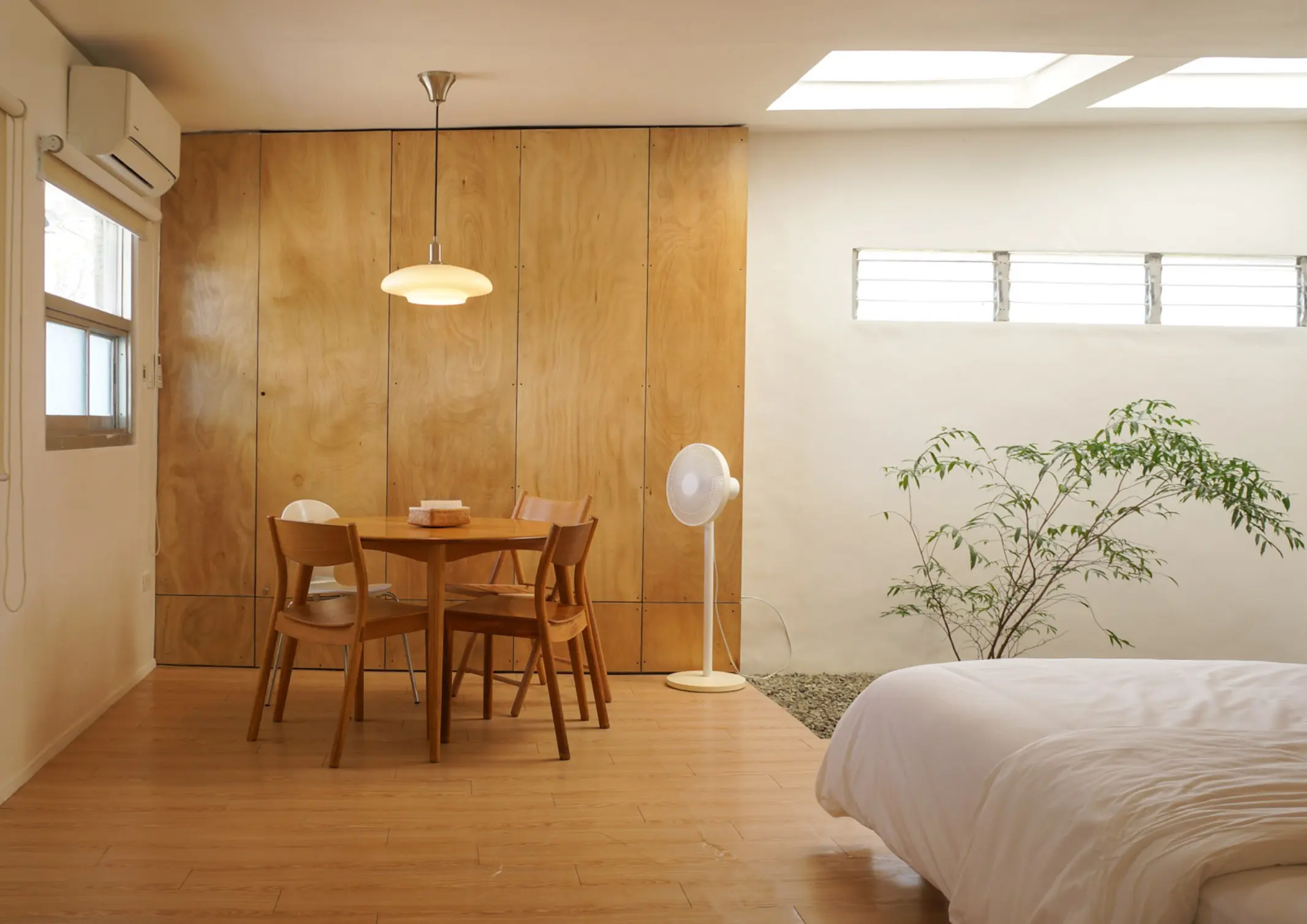
More and more Filipinos are flocking to condominium communities. Often tucked within busy city centers, condo living acts as a small respite from urban chaos. Faced with the challenge of transforming a cramped condominium into a warm living space, BluPrint lists condo interior design ideas that can maximize each square foot of small spaces. Purposeful […]
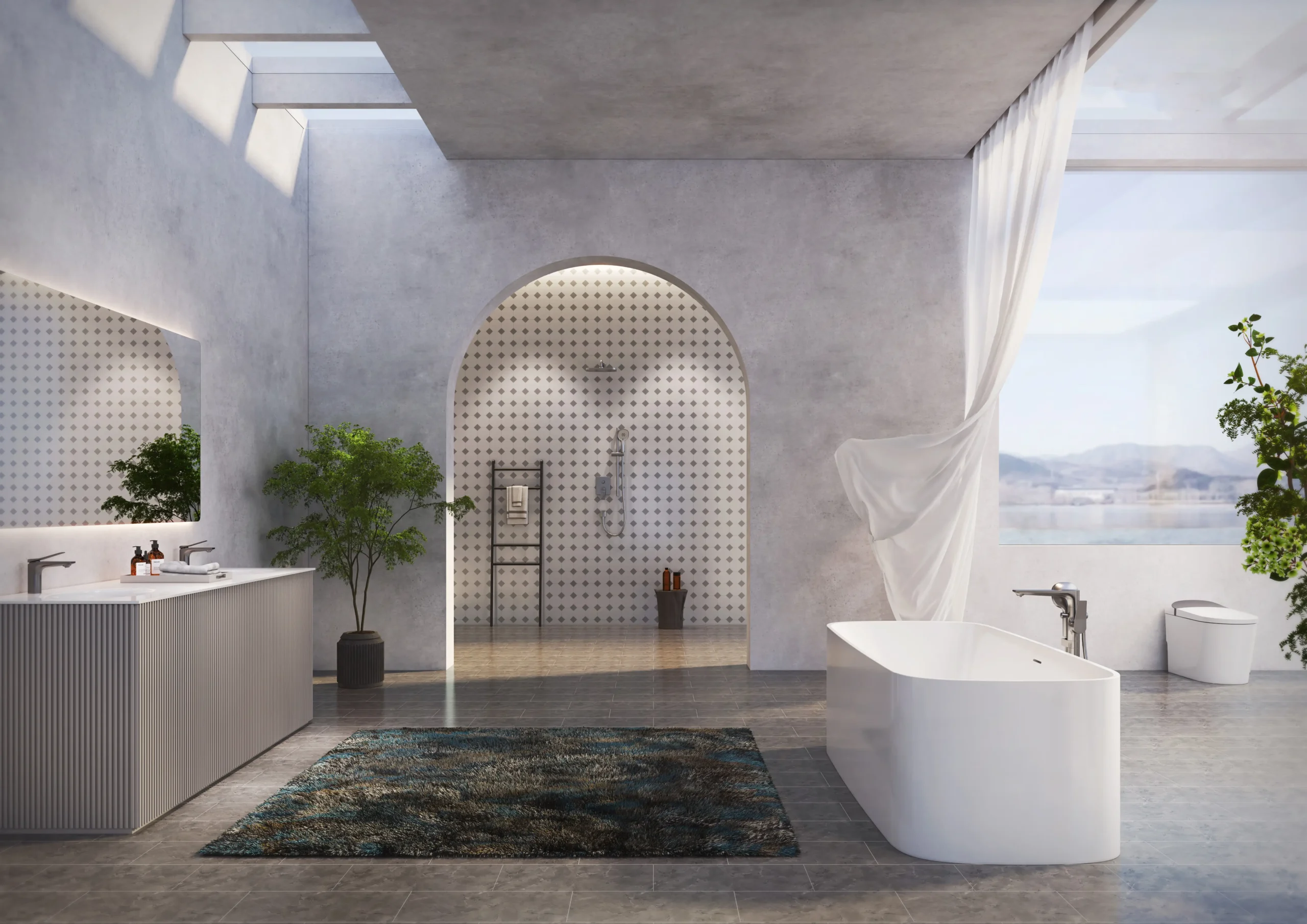
Modern bathrooms are no longer purely functional spaces. Increasingly, they are being designed as environments that support cleanliness, ease, and quiet restoration within the home. As daily life becomes more demanding and health awareness continues to rise, homeowners are beginning to expect more from the spaces where daily rituals begin and end. For architects and […]
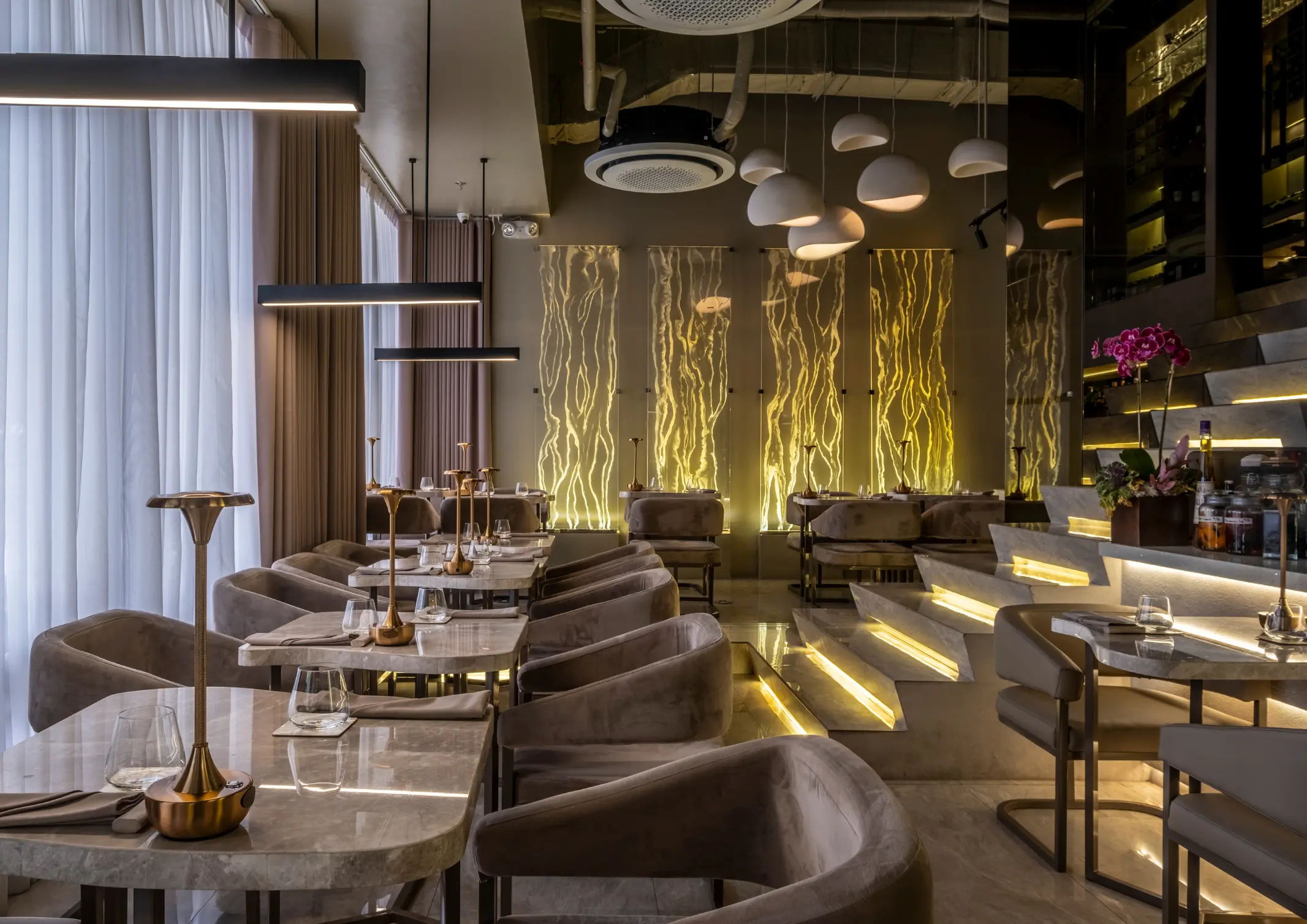
From the moment a diner steps through the door, each detail shapes how a meal is experienced. Restaurant design has evolved, with architects and culinary professionals collaborating to create built spaces that are as intentional as the menu itself. The spatial atmosphere acts as an additional ingredient that can define the culinary experience. Taupe and […]
Advertisement

Download this month's BLUPRINT magazine digital copy from:



Subscribe via [email protected]