Bigkis is the act of binding. In Tagalog, the word can refer to something used to bind or encircle, as well as a bundle formed by tying several separate elements together. Figuratively, it can also mean a bond, union, or unity. The meanings move from the physical act of joining things together to the connection […]
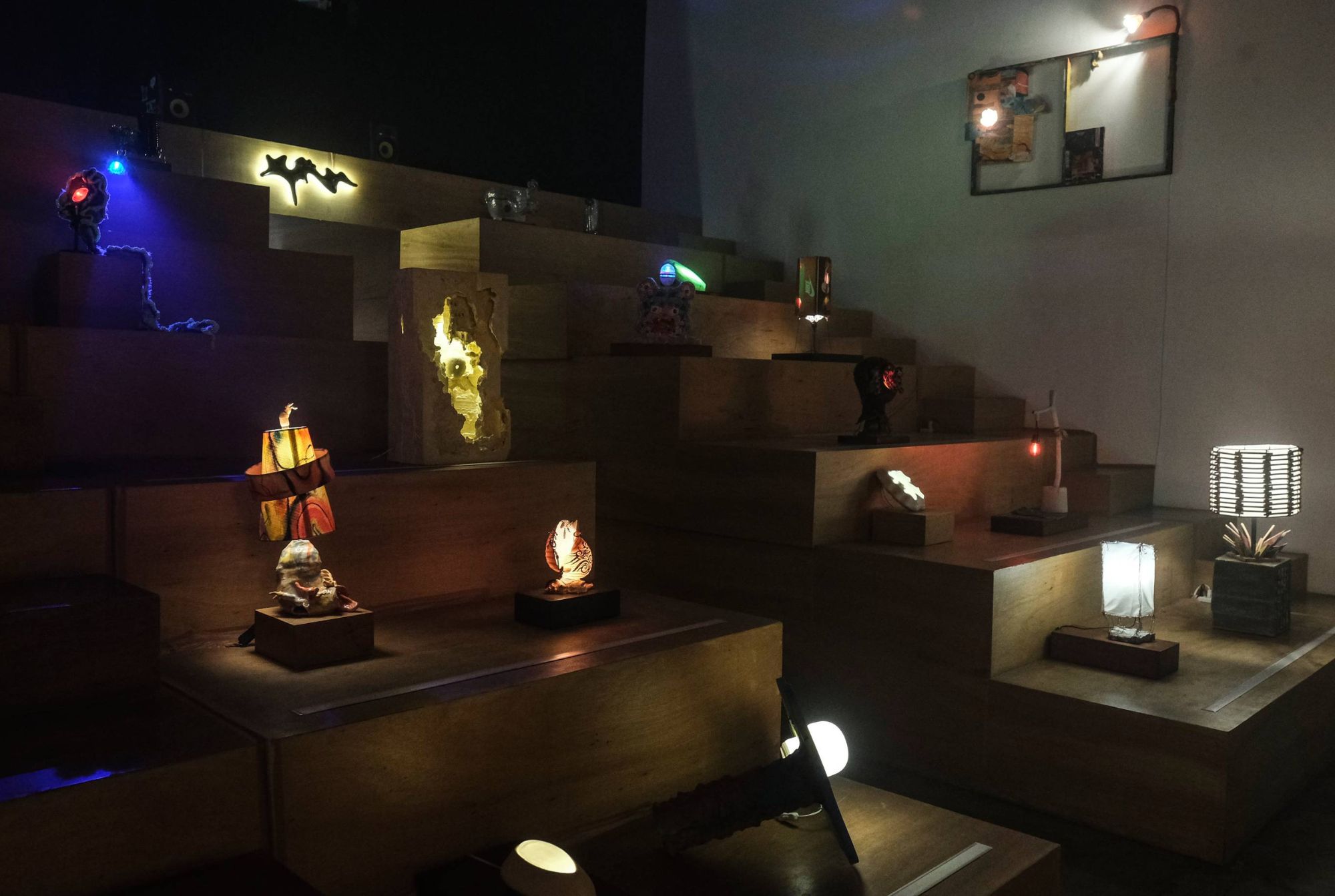
New Exhibit Recontextualizes Lamps and Light at Karrivin Plaza



To Cast A Shadow, There Must First Be Light, curated by The 5th House’s Brisa Amir and Jose Olarte, strives towards an atmosphere where audience members are invited to re-examine light’s role in art. This exhibit at Aphro in The Alley at Karrivin Plaza reinterprets our perception of lights, lamps, and the artistry within it.
How does one perceive light in regards to art? It is essential to most works of art, affecting the way we see and comprehend different works. From sculptures to paintings, light plays a pivotal role in defining artistry as a whole.
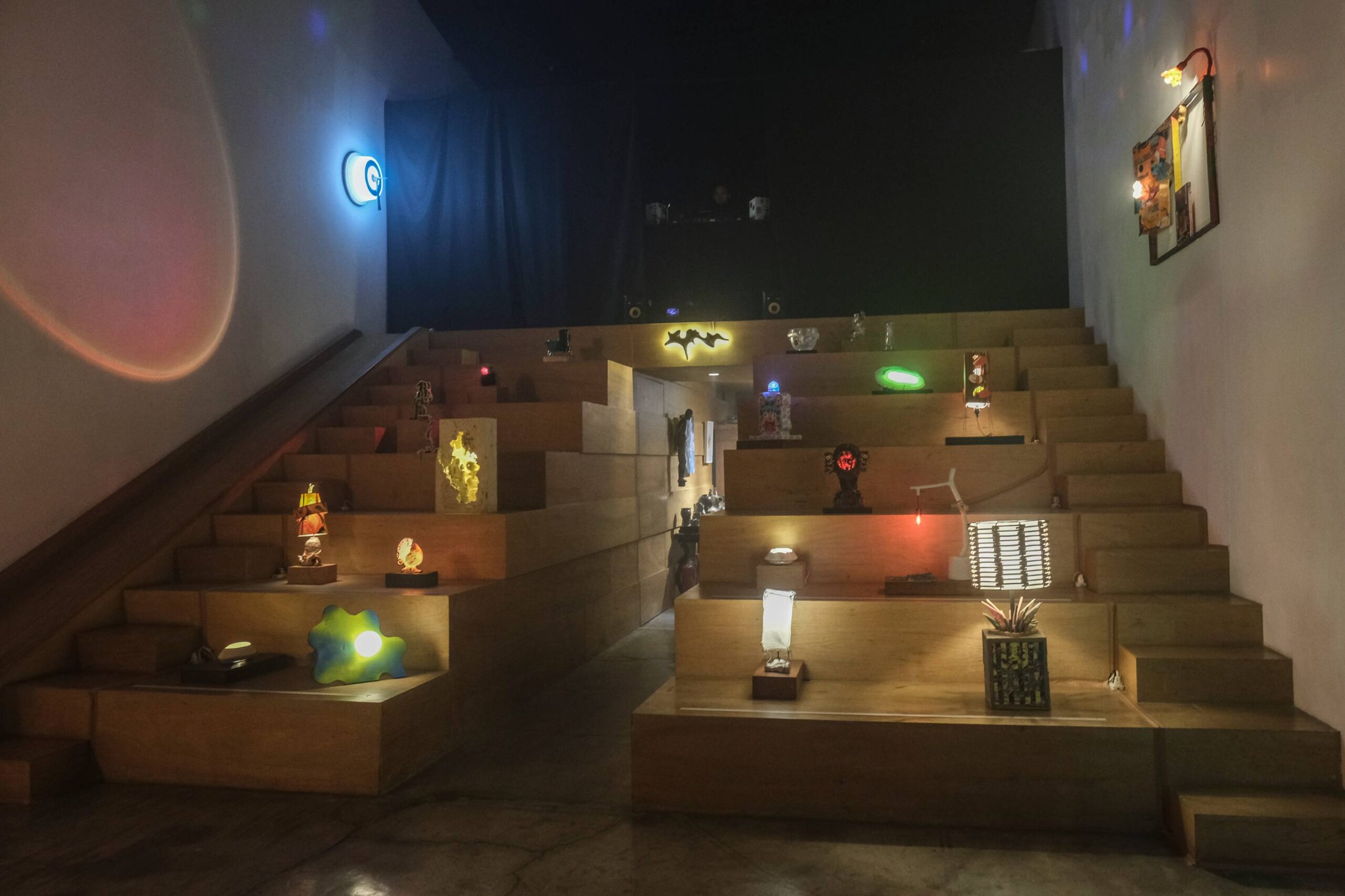
With this exhibit, twenty-one artists play with light directly, as they design works that bend towards the light rather than bending the light towards the art. The curators said that many were chosen because of their lack of experience making lamp designs.
“Gumagawa kami ng mga makeshift lamps kapag may house party kami,” Amir said. “And then, na-realize namin, baka pwede tayo mag-invite ng mga artists na pwede rin na may potential. Pwede na may old work na sila na lamp; pwede rin yung work nila ay may potential na maging lamp. Yun na lang ang i-gather natin.”
(We make our own makeshift for our house parties. And then we realized that maybe we can invite artists with potential for lamp works. They can use their old works for the lamps, or works that have potential to become lamps. That’s who we gathered for the exhibit.)
Showcasing Personal Tastes
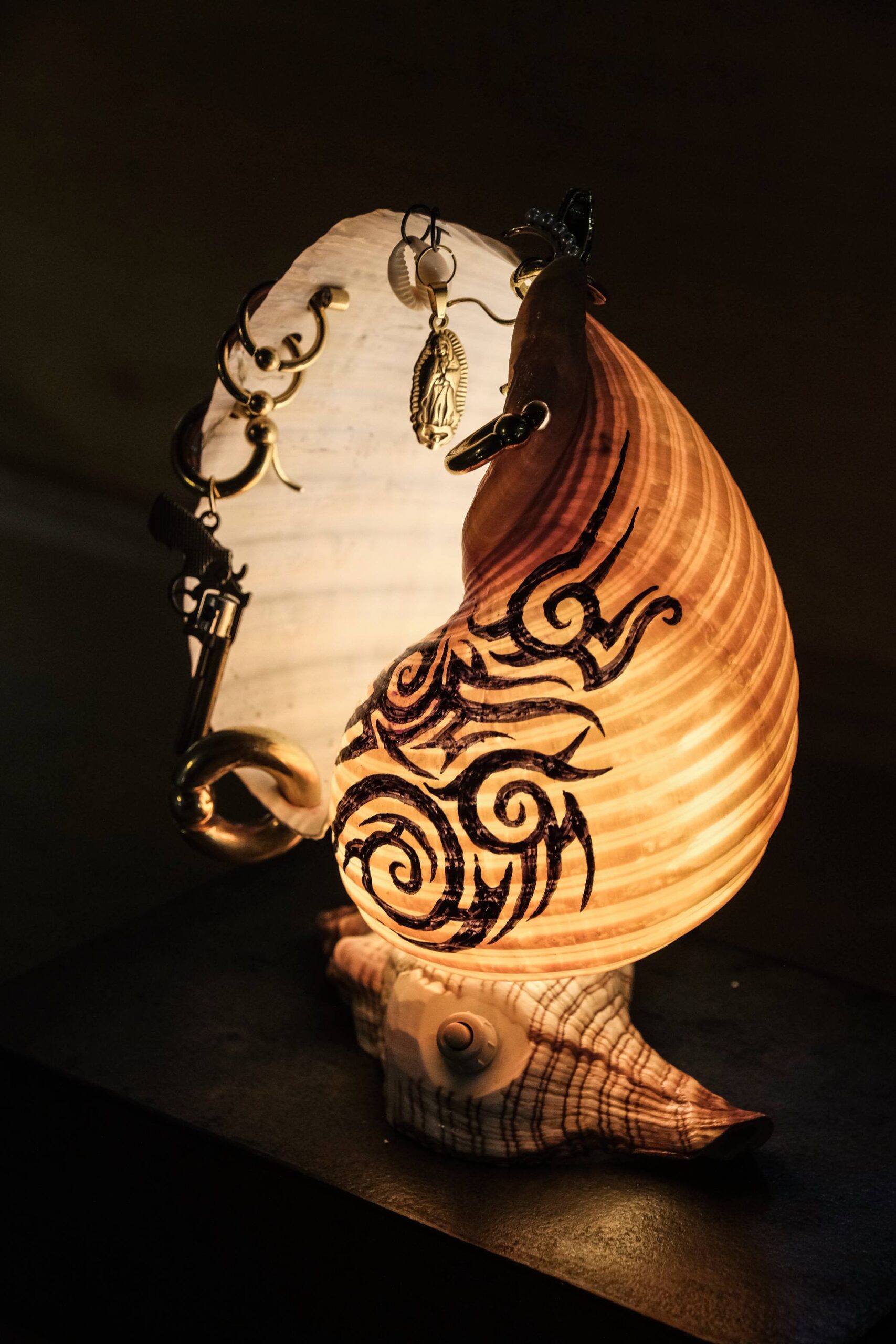
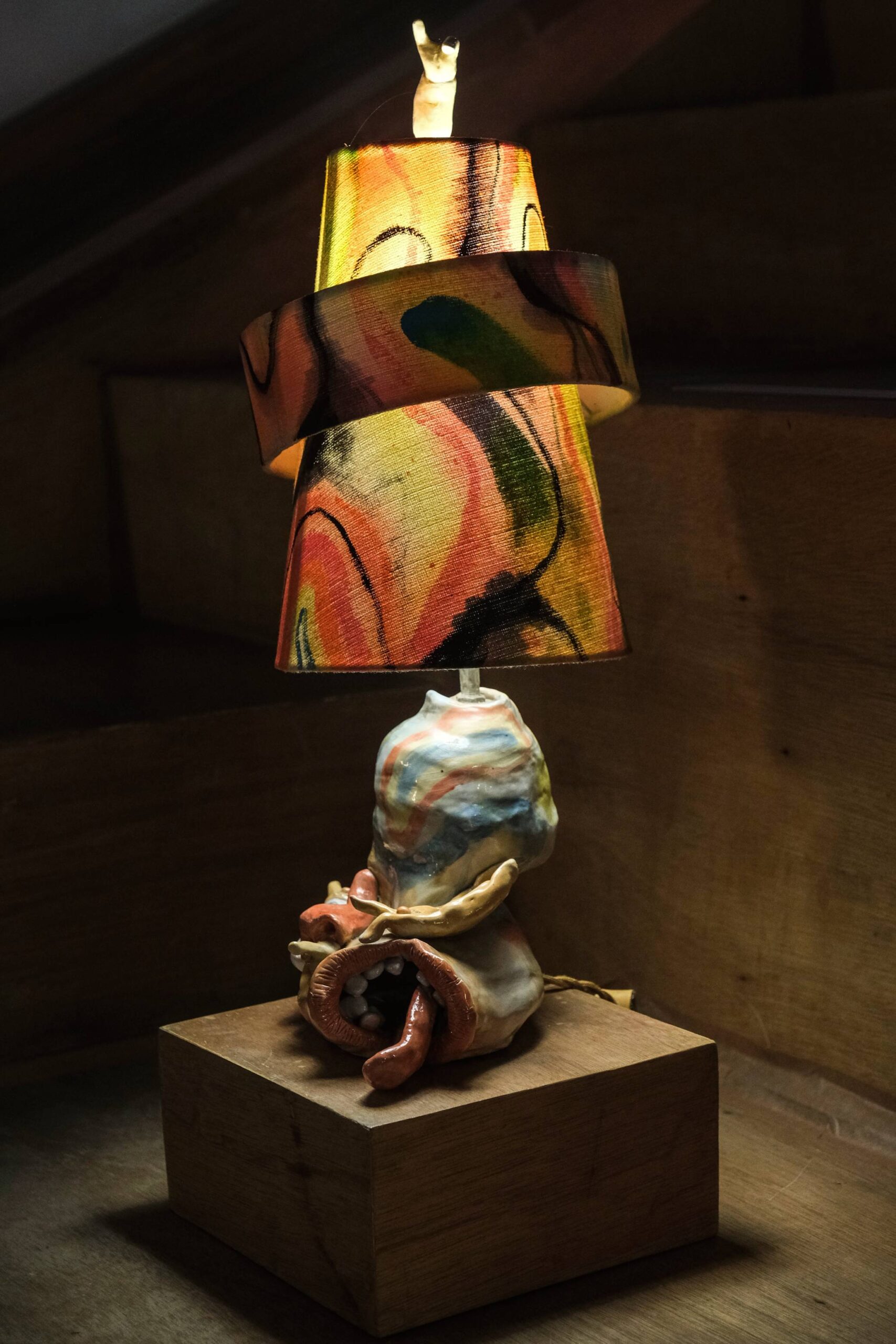
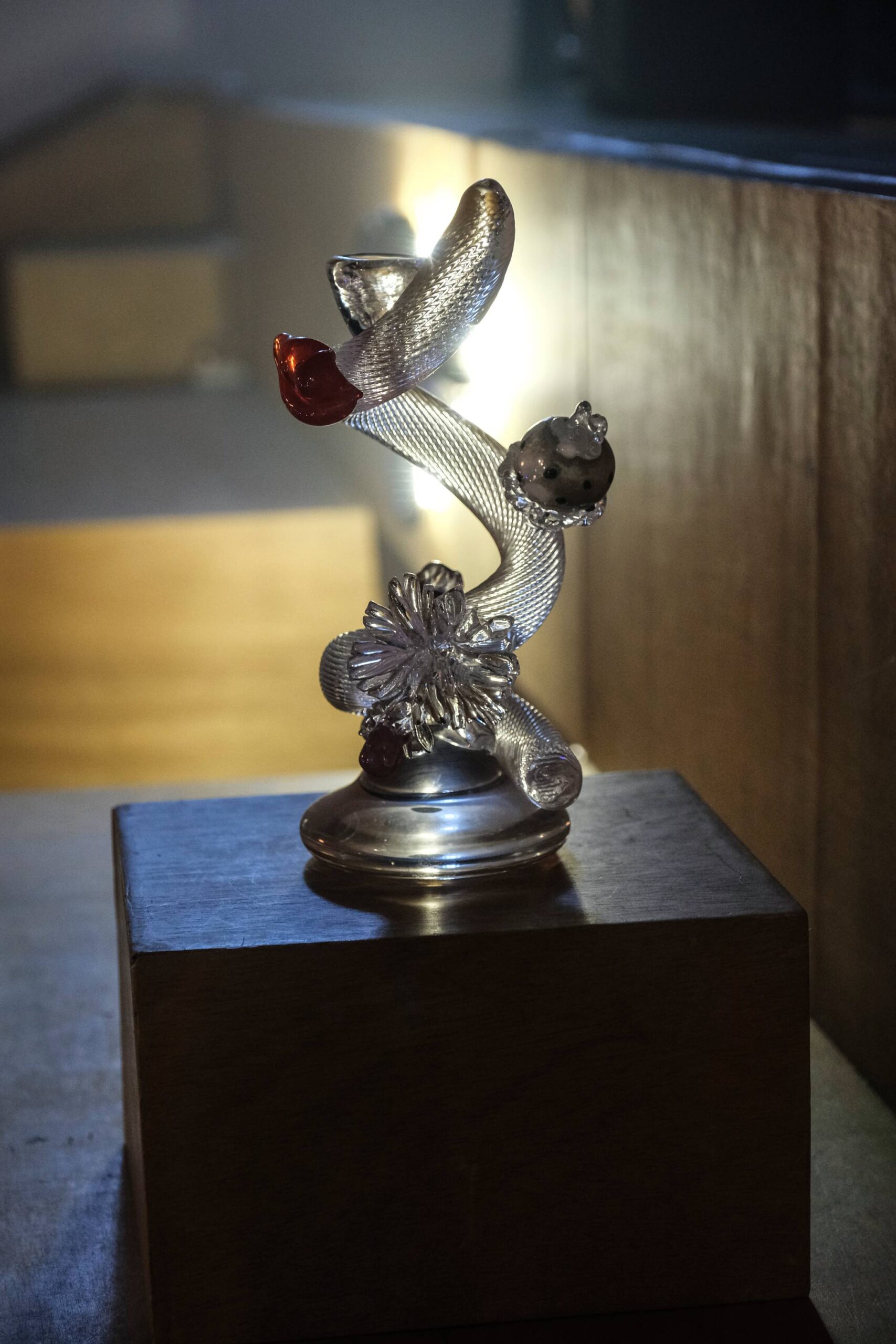
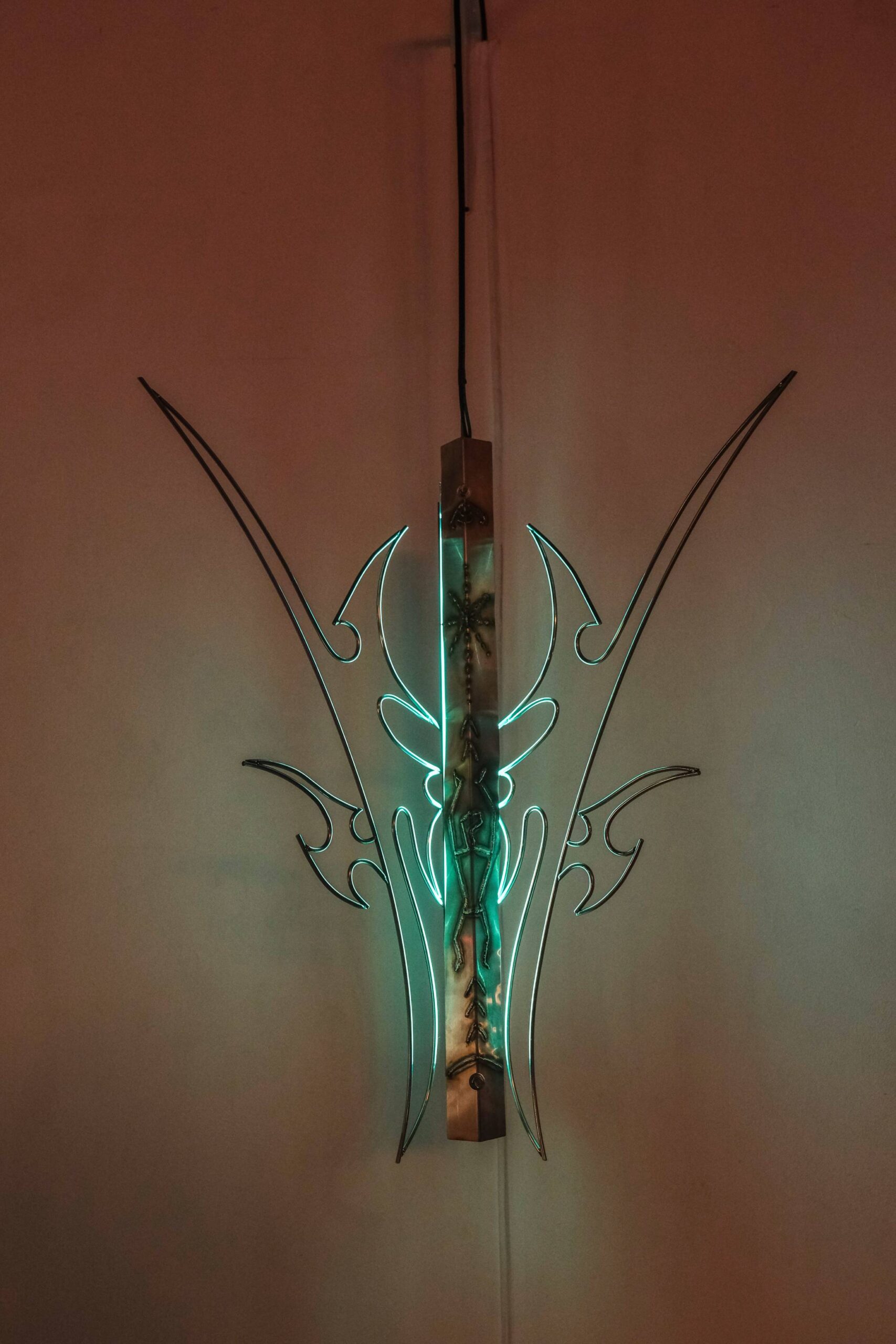
The exhibit contains a large collection of lamps with varying degrees of brightness and interactivity. It traverses different designs and stylistic choices that shade and show light in different degrees, ranging from works harkening to Classical Grecian art to more nativist/indigenous influences.
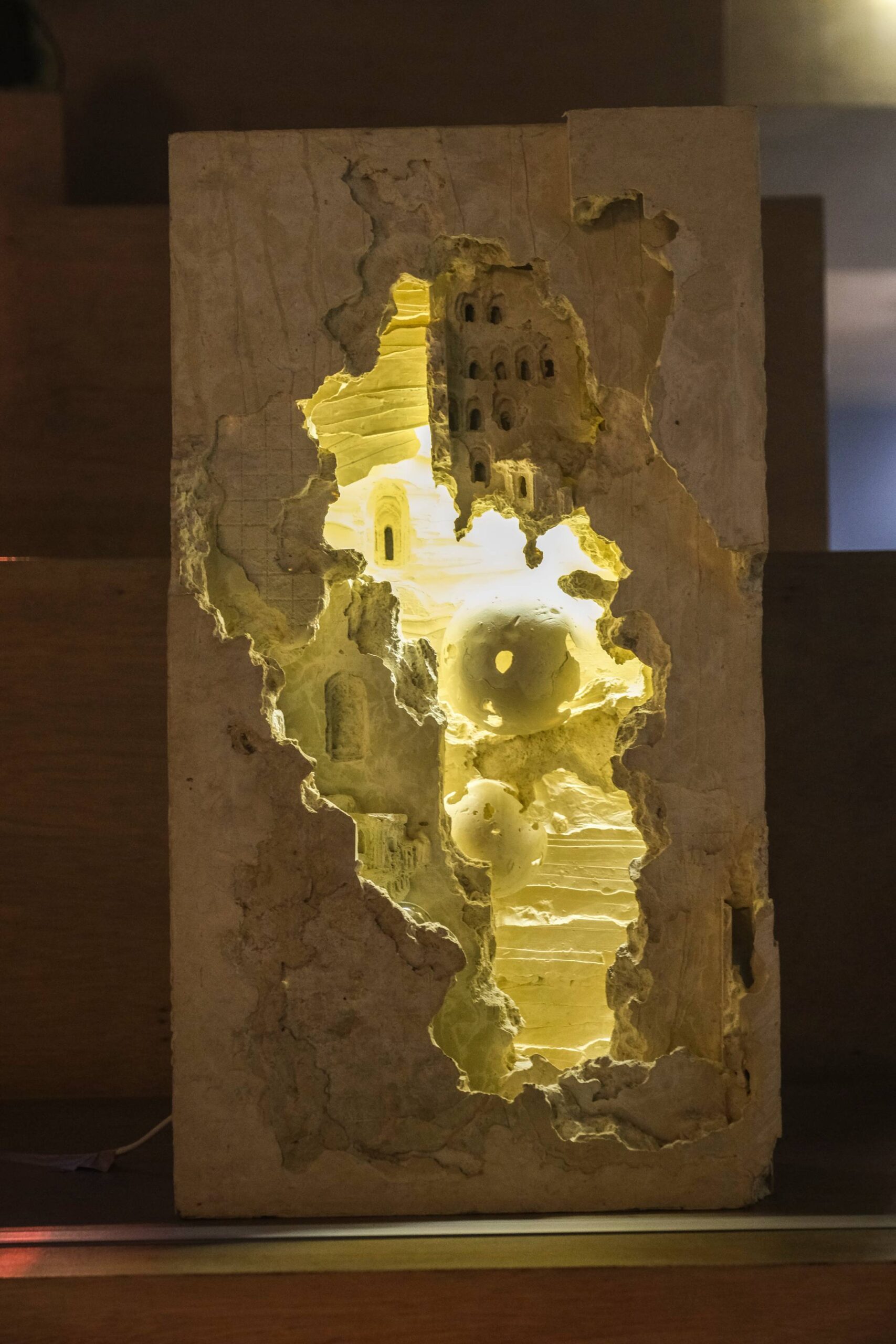
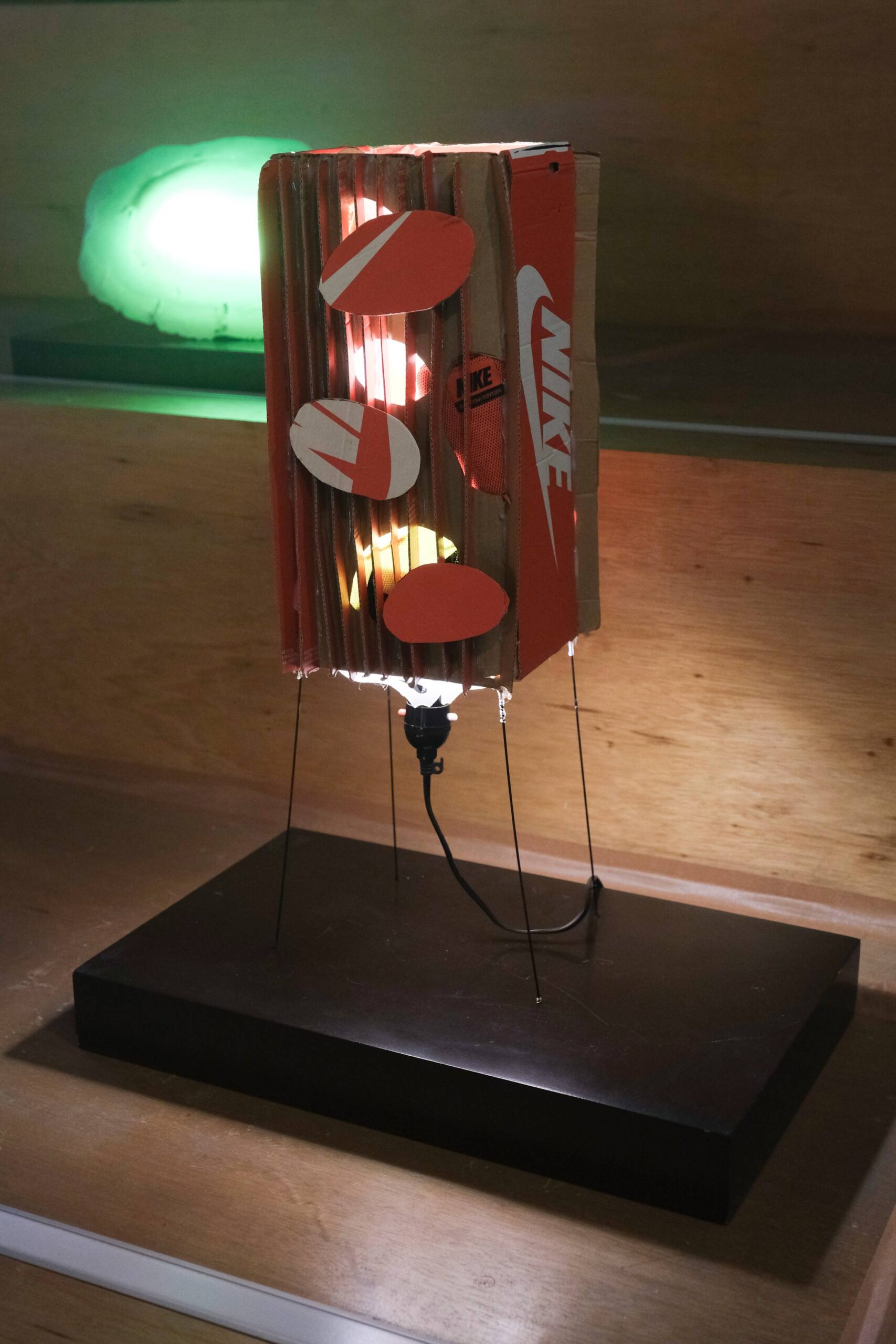
Goran Fernando’s “Illuminate,” for example, repurposes a Nike box as a lamp shade. Ioannis Sicuya’s “Between the Cracks,” meanwhile, creates a city of ruins underneath what looks like a cave. Jan Sunday’s “Central Sun” uses acrylic and tapestry to make a head bust lamp shade that opens and closes at the front.
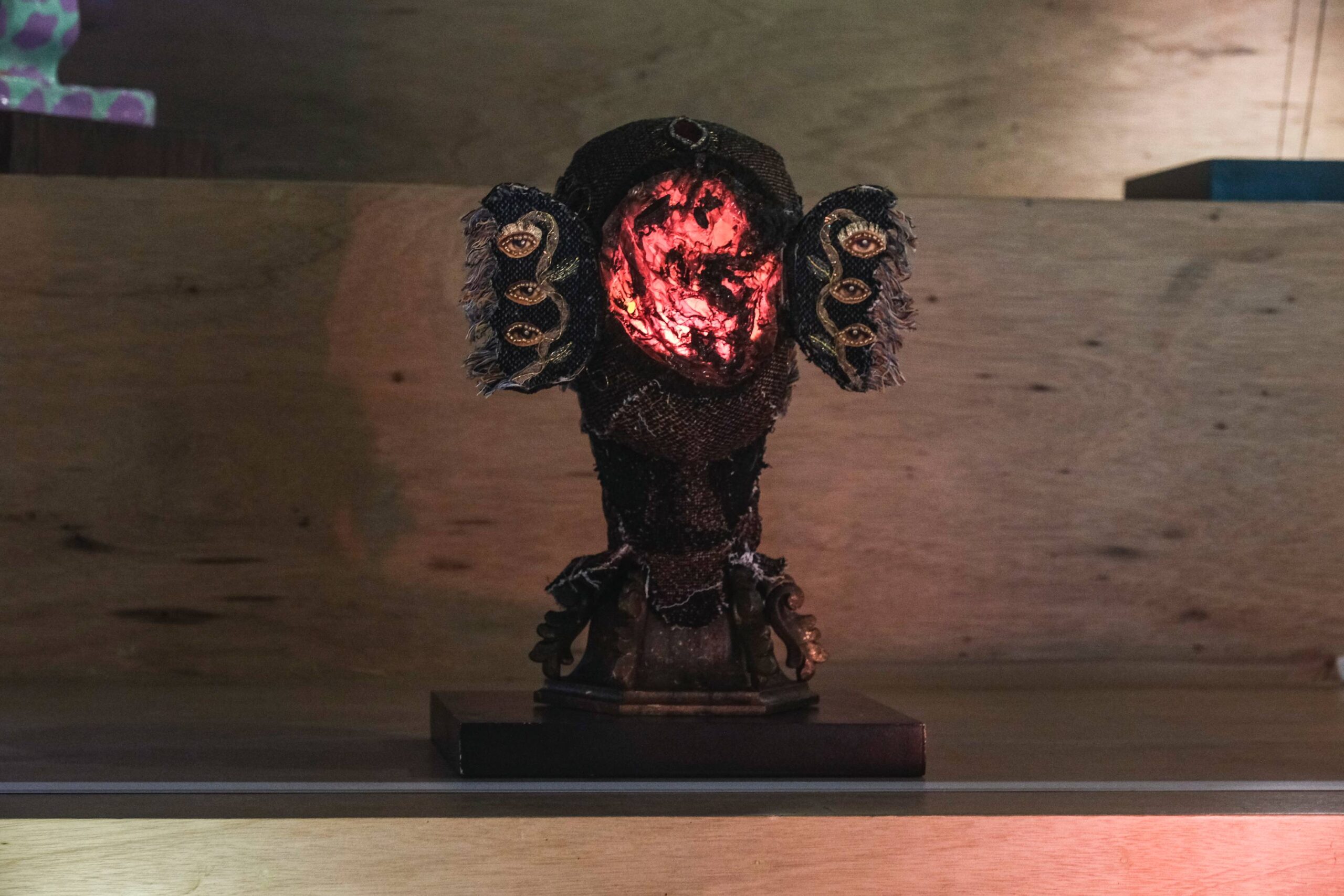
These works center around the Filipino experience, illustrating these different perspectives of light. The use of wooden twine, fabric, glass, resin, and other materials encompasses the artistic impulses and approaches of every individual working on the project.
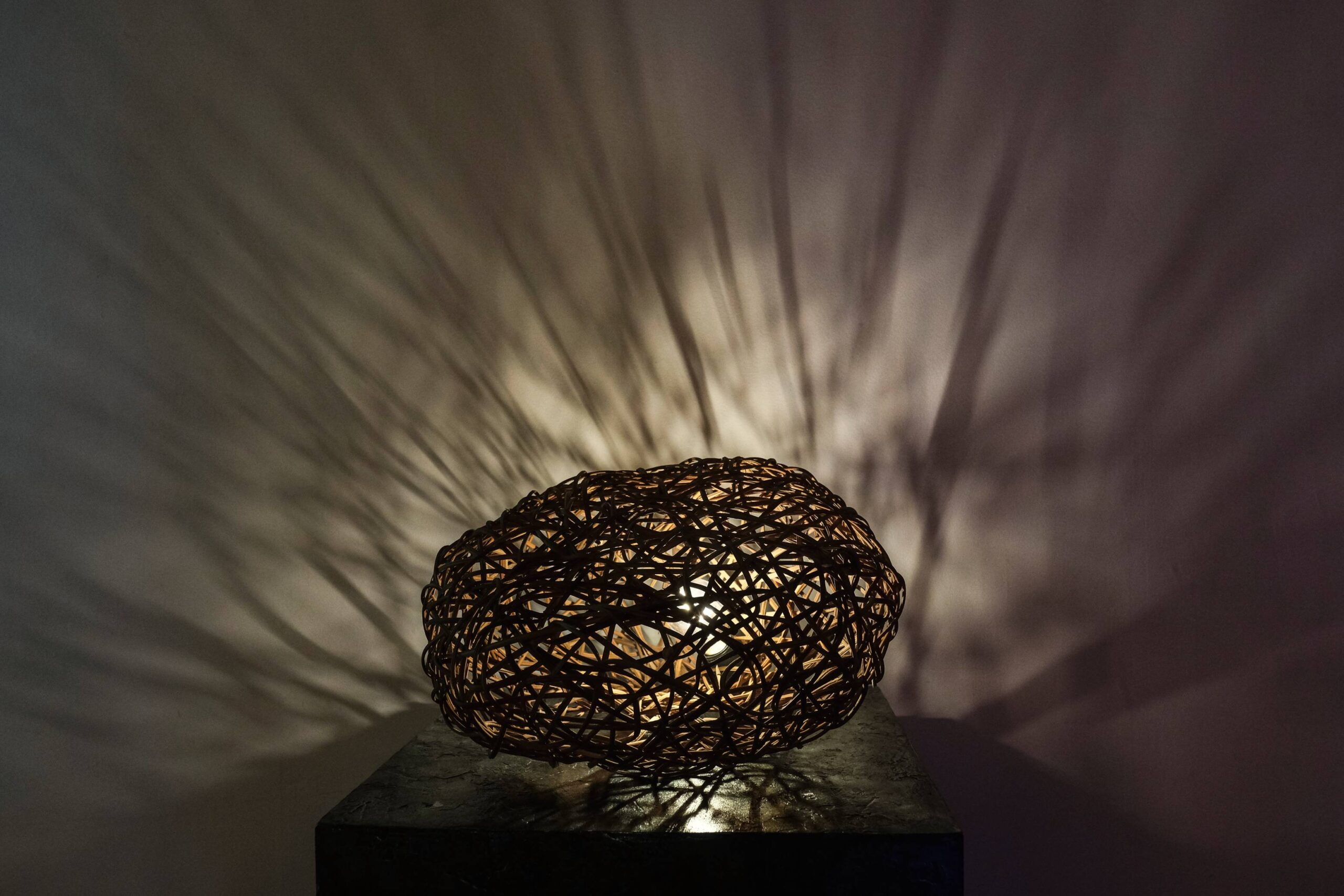
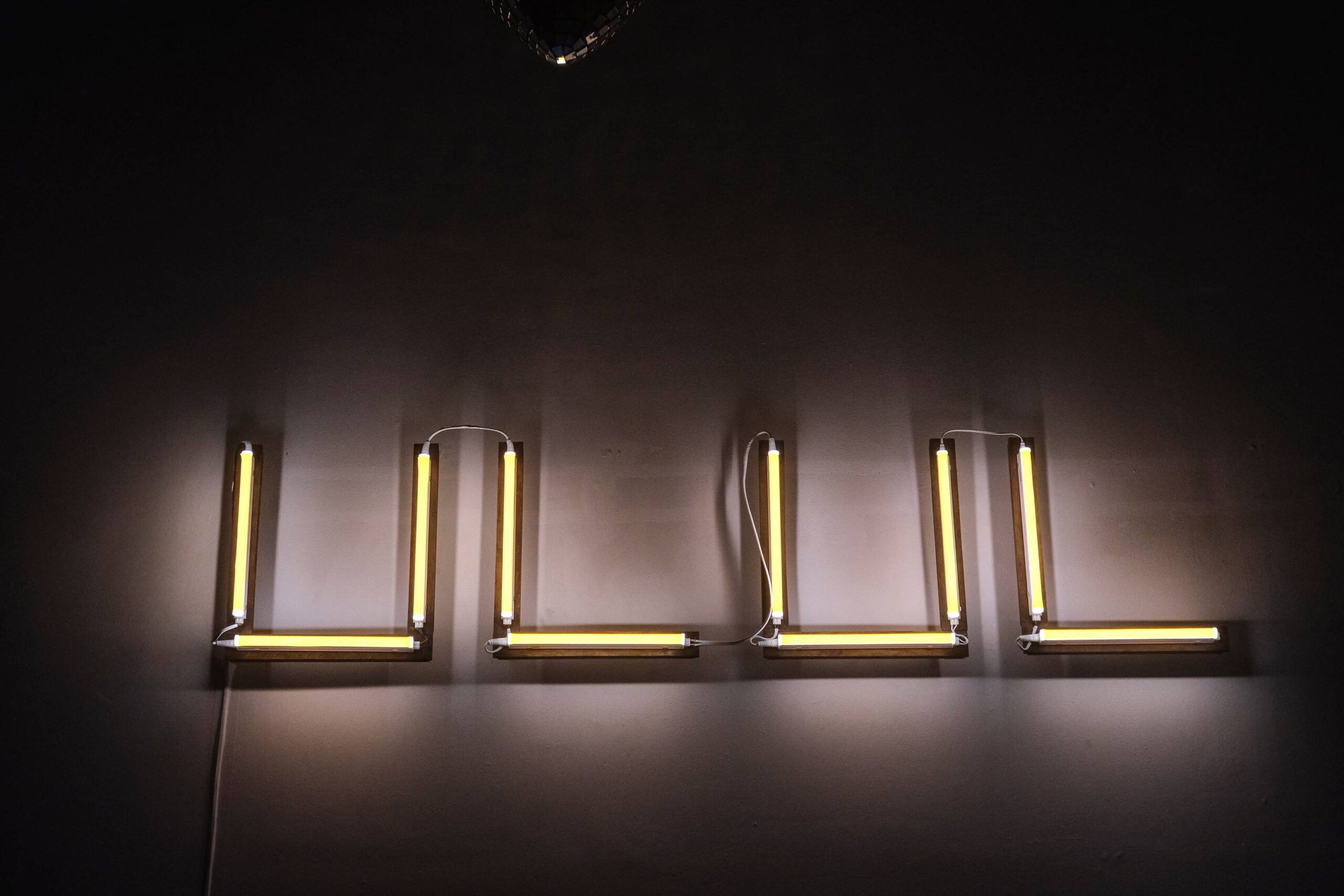
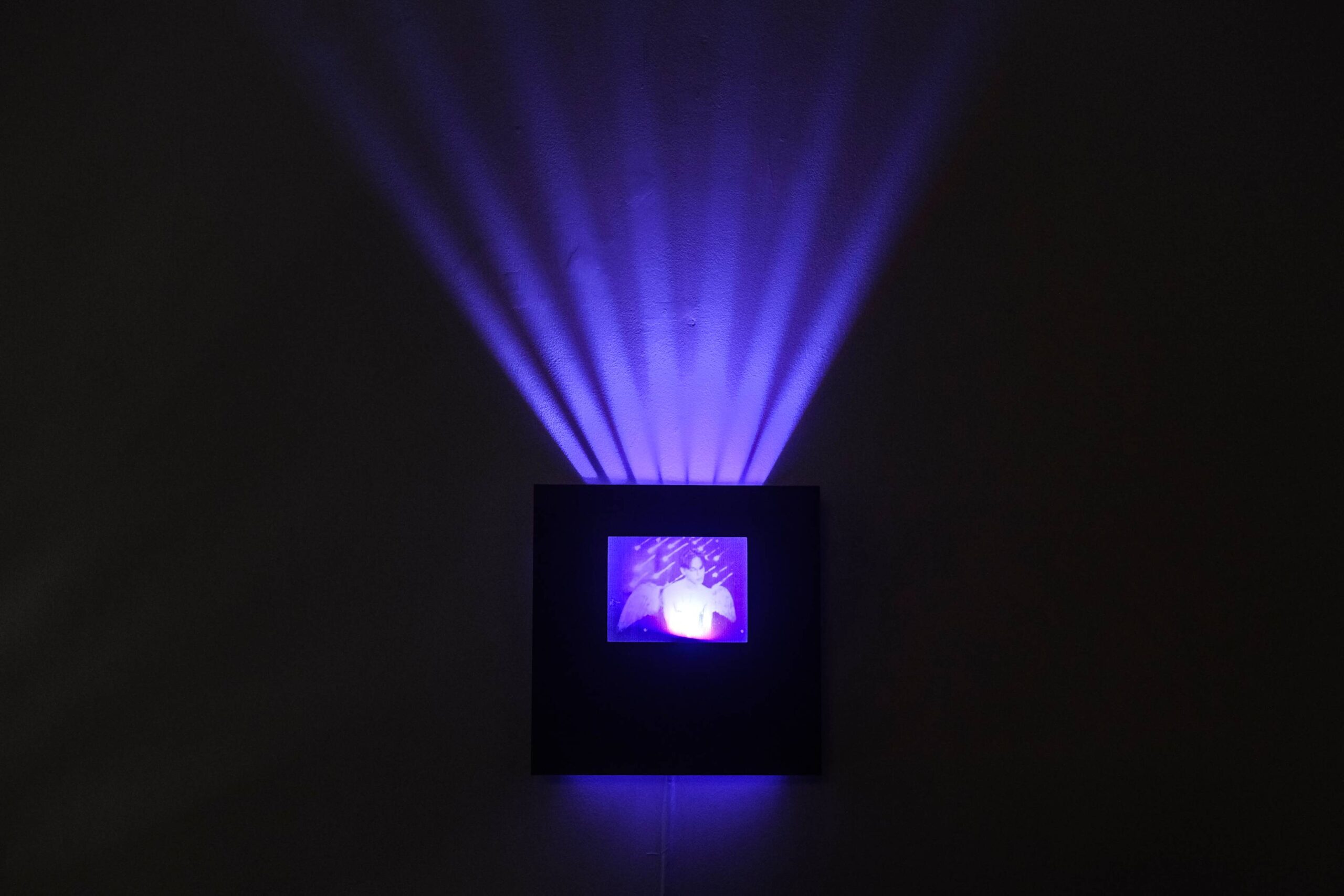
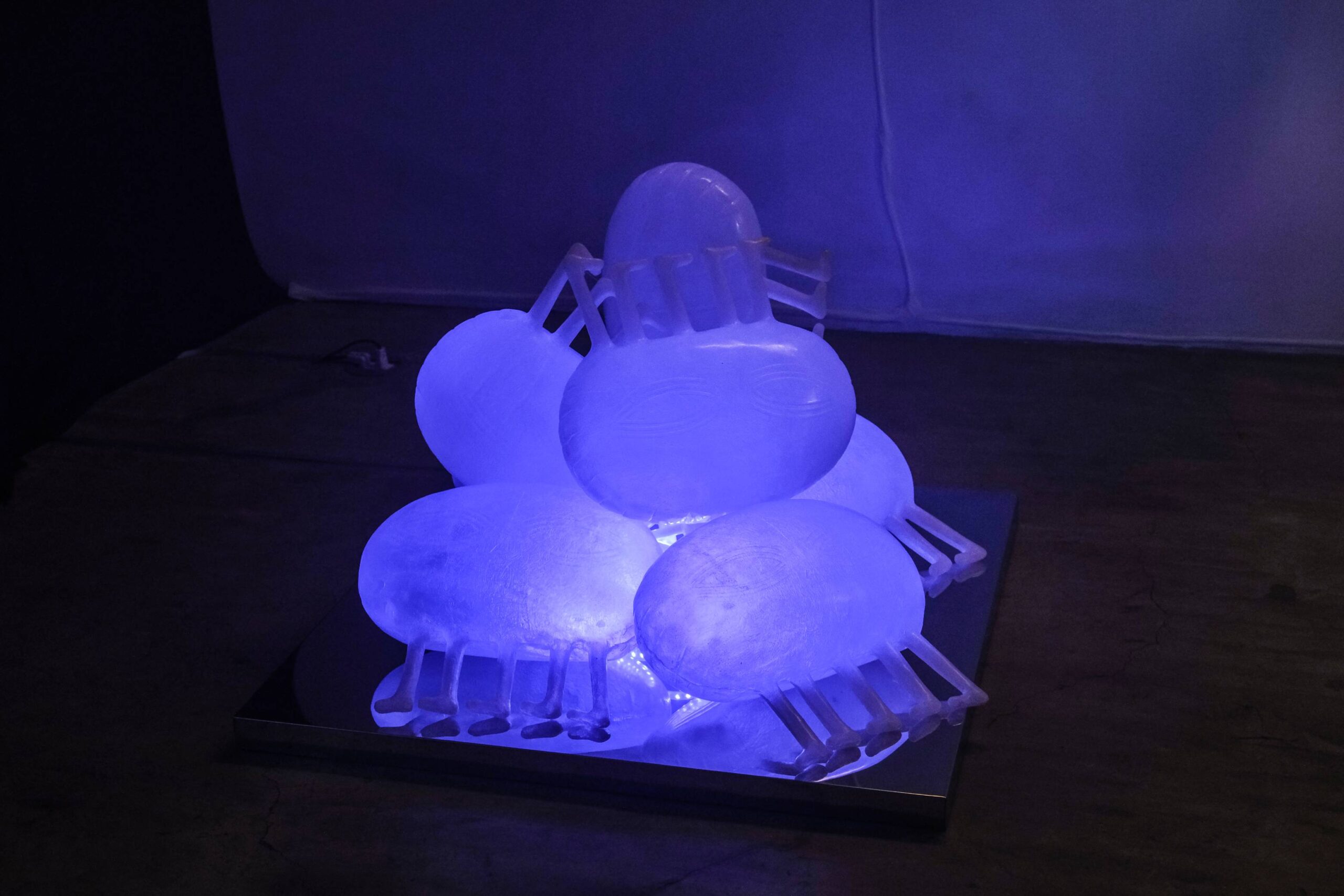
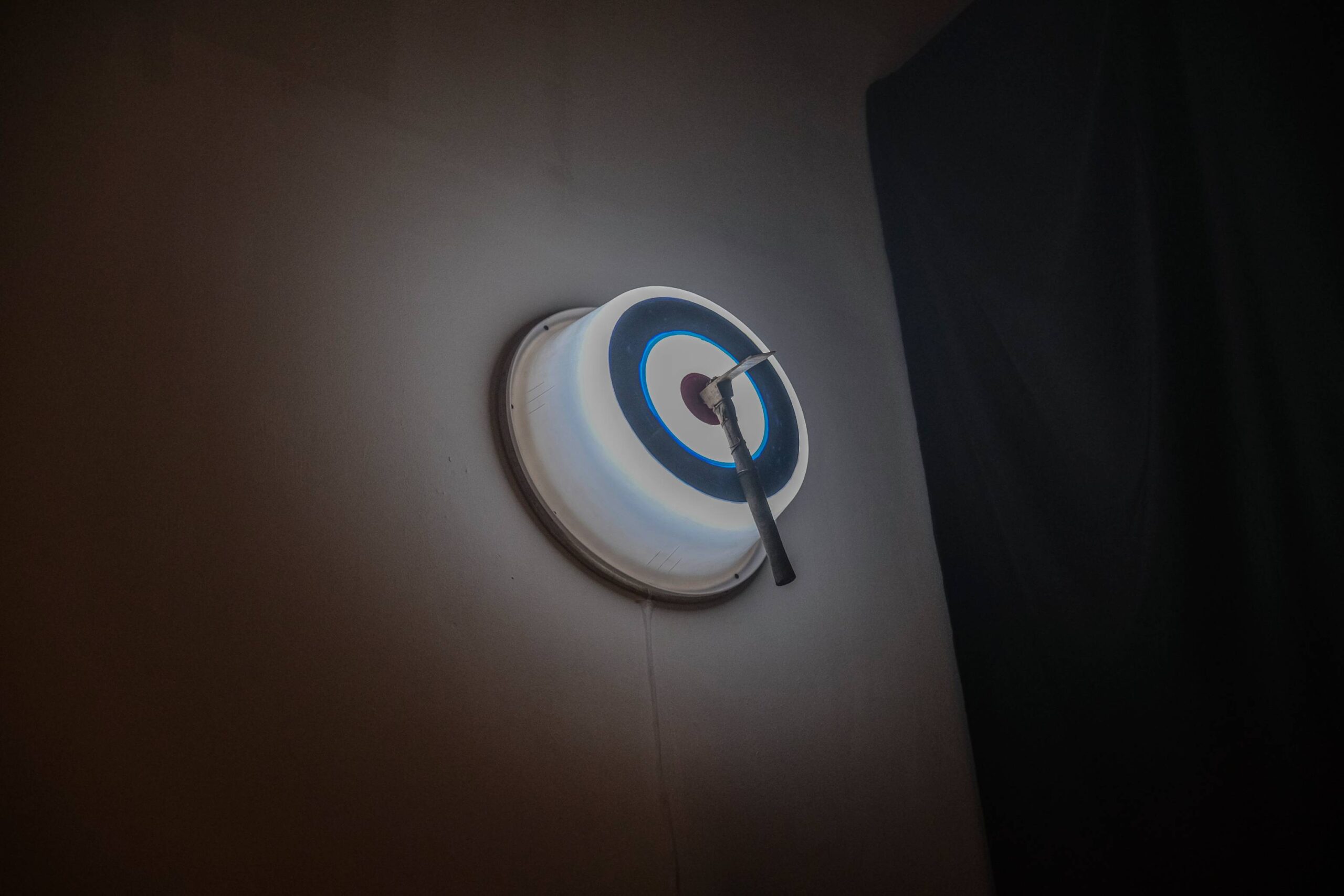
“With the light that transcends through the transparency of their layered exteriors, one is able to look inward to understand their essence, their identity, and their individuality,” Arvi Fetalvero said in their write-up.
Making Lamps Filipino
Olarte said that the works mixed the typical lamp makers with people new to the craft. He saw the potential of creating a challenging yet integrated experience that speaks to the experiences of the everyday Filipino. On a curatorial note, he and Amir centered around the idea of the parol, and how to decolonize it from our troubled Spaniard past.
While the end product of the exhibit didn’t necessarily circle around the theme of decolonization, Olarte believes that the art of creation itself becomes its own form of reclamation. The personalization of each lamp, he said, works as a tool of making lamps more Filipino.
![Curators Jose Olarte [left] and Brisa Amir. Photo by Ed Simon.](https://assets.bluprint-onemega.com/wp-content/uploads/2024/09/DSF5675-scaled.jpg "Curators-Karrivin-Plaza-Exhibit - BluPrint")
“I think, in general, the fact that people make their own lamps is already a way of decolonizing. Not specifically the parol, but also lamps in general,” he said.
“Parang yung sinabi ko rin kanina na ni-re-reclaim din namin yung idea ng lamp, ng light. Kasi kino-colonize kasi yung light na sila ang pag-asa, yung mga colonizers ang pag-asa, tapos laging nasa shadows ang mag indigenous. In a way, ito yung way of reclaiming spaces,” Amir added.
(This is like what I said about reclaiming the idea of the lamp, of light. Because the symbol of light has been colonized to make the colonizers the hope of the people while the indigenous remains in shadows. In a way, this is a way of reclaiming spaces.)
Seeing Beyond the Shadows
In the end, the exhibit works to reclaim not just lamps in general, but the symbolism of light itself. Fetalvero said that the works come together not as a way of decolonizing the past, but of representing light in the context of creating a community around us.
“Rather than decolonization, it’s more on darkness [that subjugates or dominates or conquers],” they said.
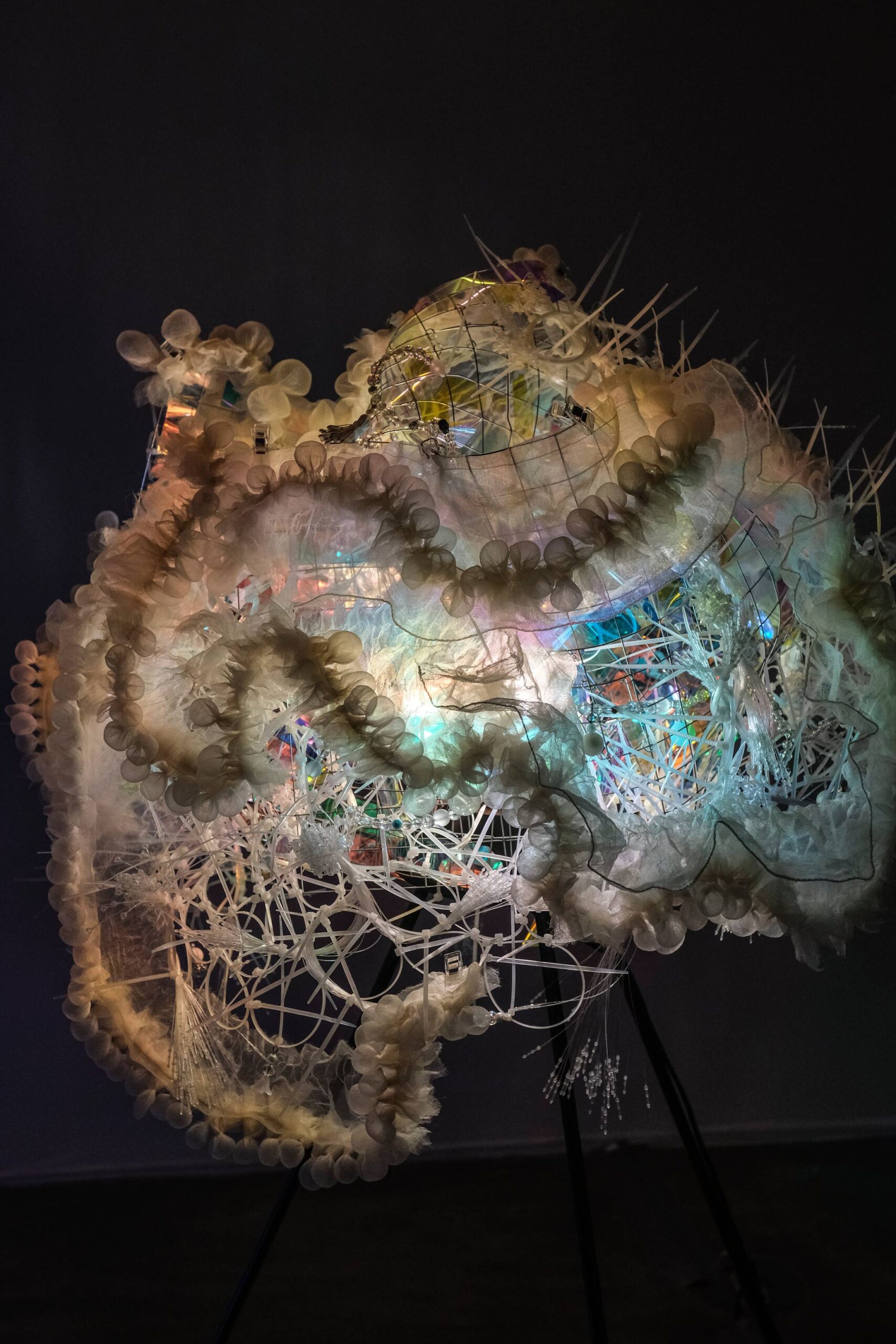
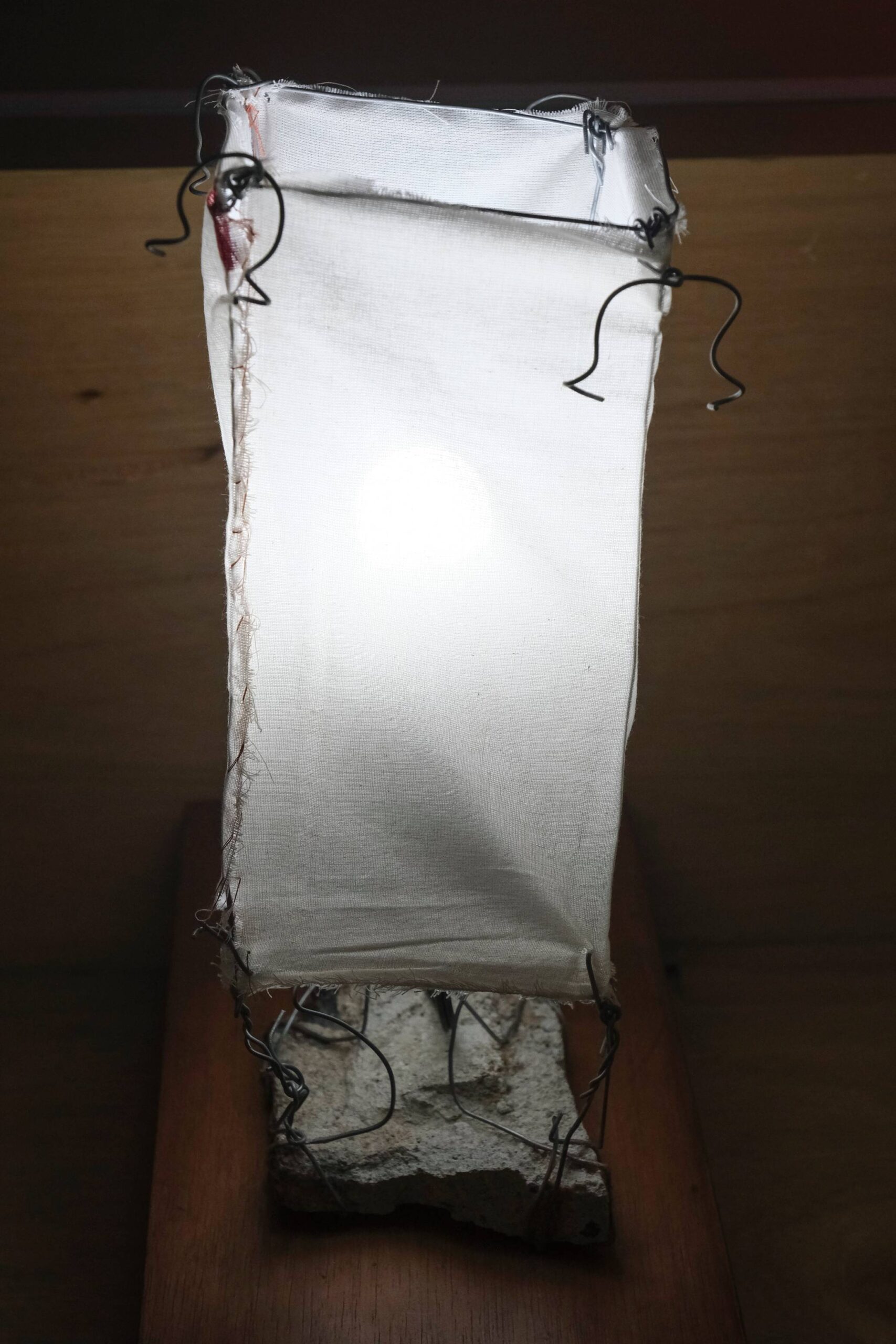
“Sa panahon dati, kung saan may maliwanag doon na nag-ga-gather yung mga resistance, yung mga nakikibaka, mga ganon. Sabay ganon na lang din naging parallel na yung idea na, in a general sense, diba, kung saan may ilaw, doon mag-ga-gather yung mga tao.”
(In previous times, where the light can be found is where people gather for resistance or struggle. That’s the parallel of the idea in a general sense: where there’s light, the people will gather.)
To Cast A Shadow, There Must First Be Light harvests the ambition of redefining lamps and light for the Filipino. In gathering a collection of artists that personalize light to their perspective, it gives us a grand idea of how we choose how symbols represent us to the broader people. Filipino artists need not be shackled to colonizer tropes; they create new tropes that speak to their experiences instead.
Related reading: Brisa Amir’s New Exhibit Showcases Her Explosive Collages
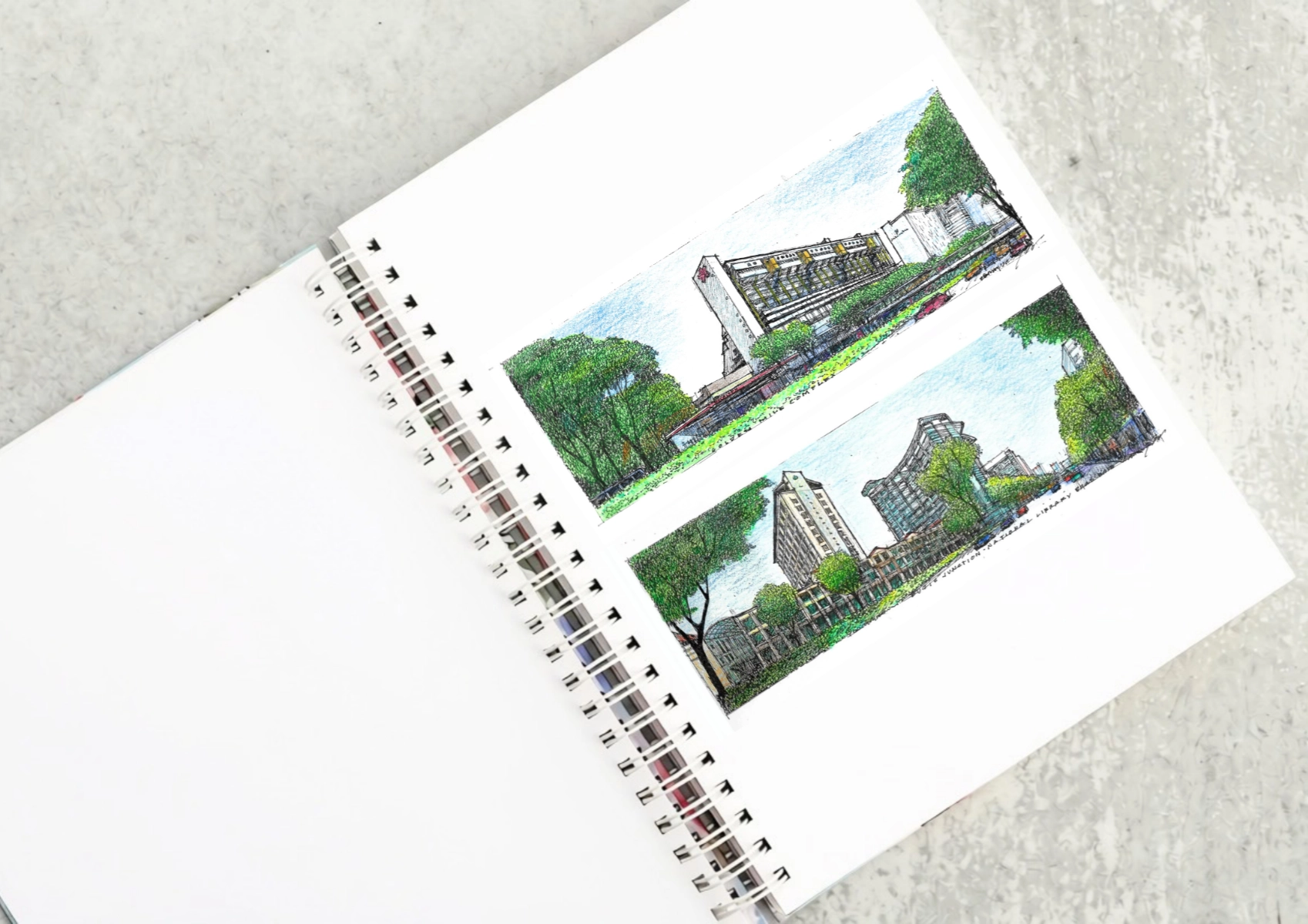
Two sketches of Singapore connect BluPrint Editor in Chief Paulo G. Alcazaren’s personal and professional history with Shared Ground: ArchitectureArchitectureThe art and science of designing and constructing buildings, structures, and spaces that are functional, safe, and aesthetically pleasing. It encompasses the planning, design, materials, and techniques used to createGo to Architecture Glossary of Care, Culture, […]
In a way, designers are the modern-day soothsayers and prophets. They design for the future, predicting how a room, a house, a building or a whole city will be used by people. They foresee how users will interact with a space, conjure exact shades of colors to elicit specific behavior and arrange furniture to build […]
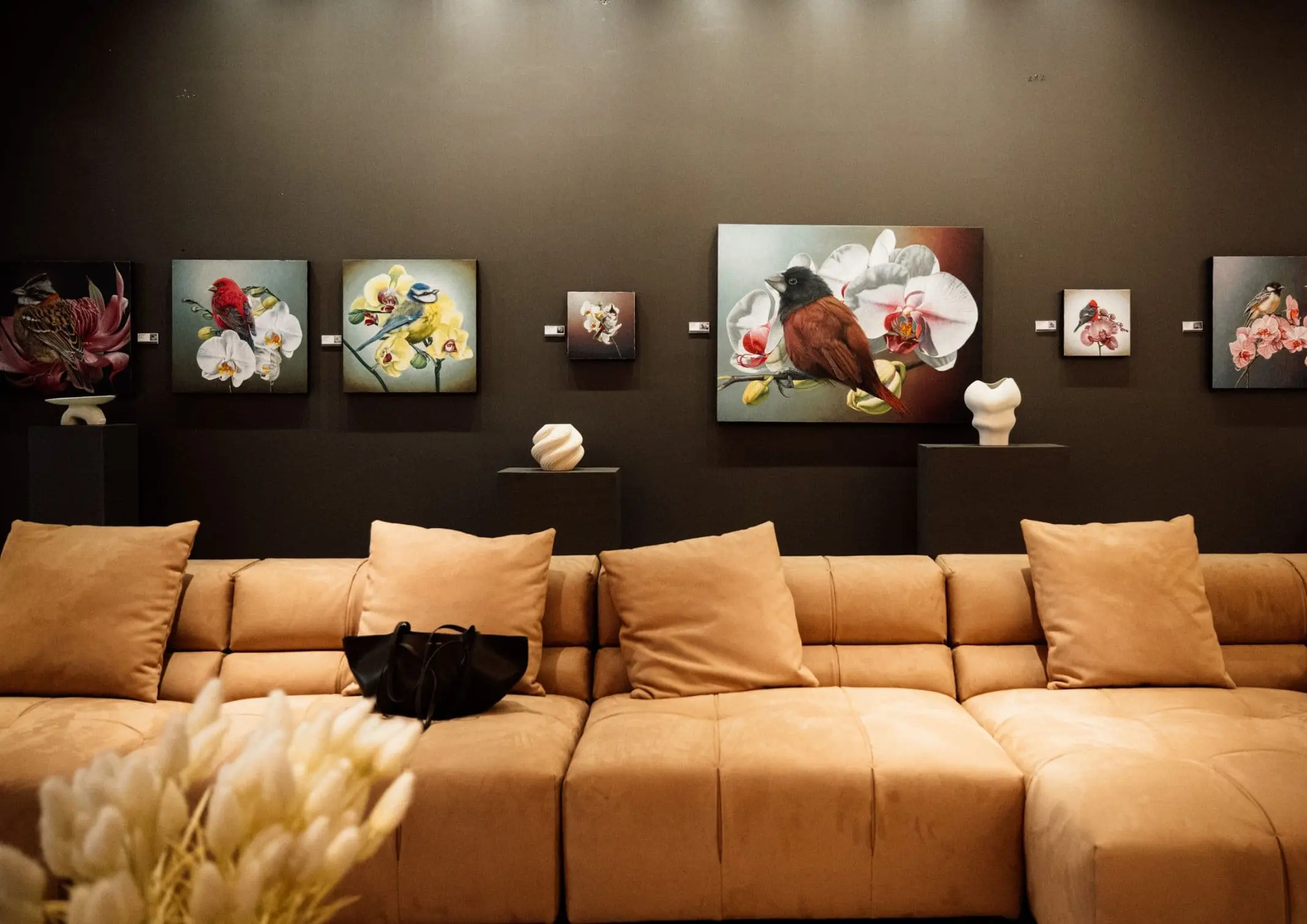
Art and furniture are often selected separately, yet their relationship can shape how a room looks and feels. The collaboration between Hooga and Galerie Joaquin explores how these elements can work together, bringing contemporary artworks into furnished residential settings at Hooga’s showroom in Uptown Mall, Bonifacio Global City. For Hooga, which curates furniture, lighting, and […]
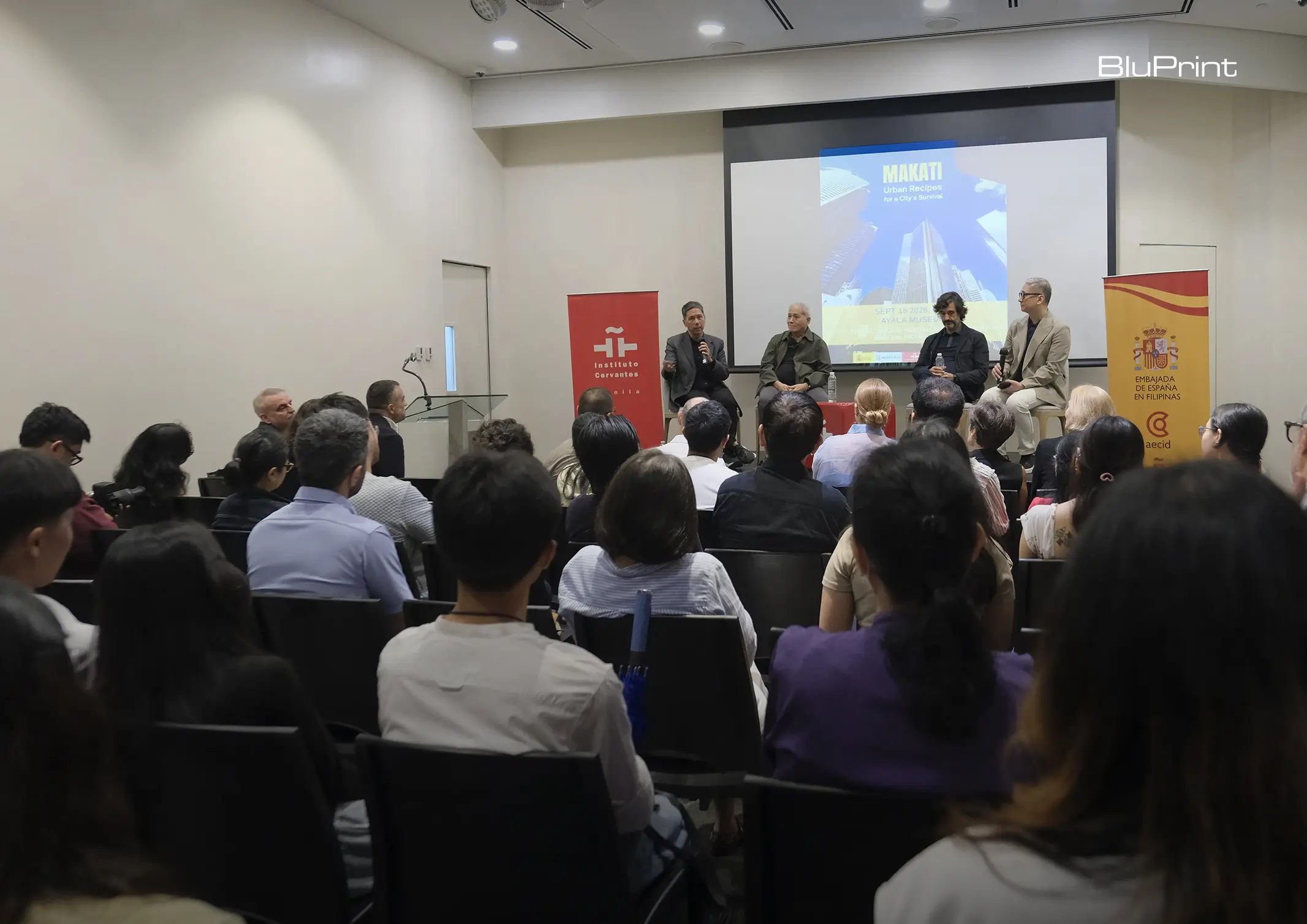
How can better-planned cities create the conditions for more creative, livable, and resilient urban environments? “Makati Urban Recipes for a City’s Survival,” a colloquium held at the Ayala Museum on September 15, brought together architects and practitioners from the fields of urbanism and the creative economy to discuss how design, planning, and collaboration can address […]
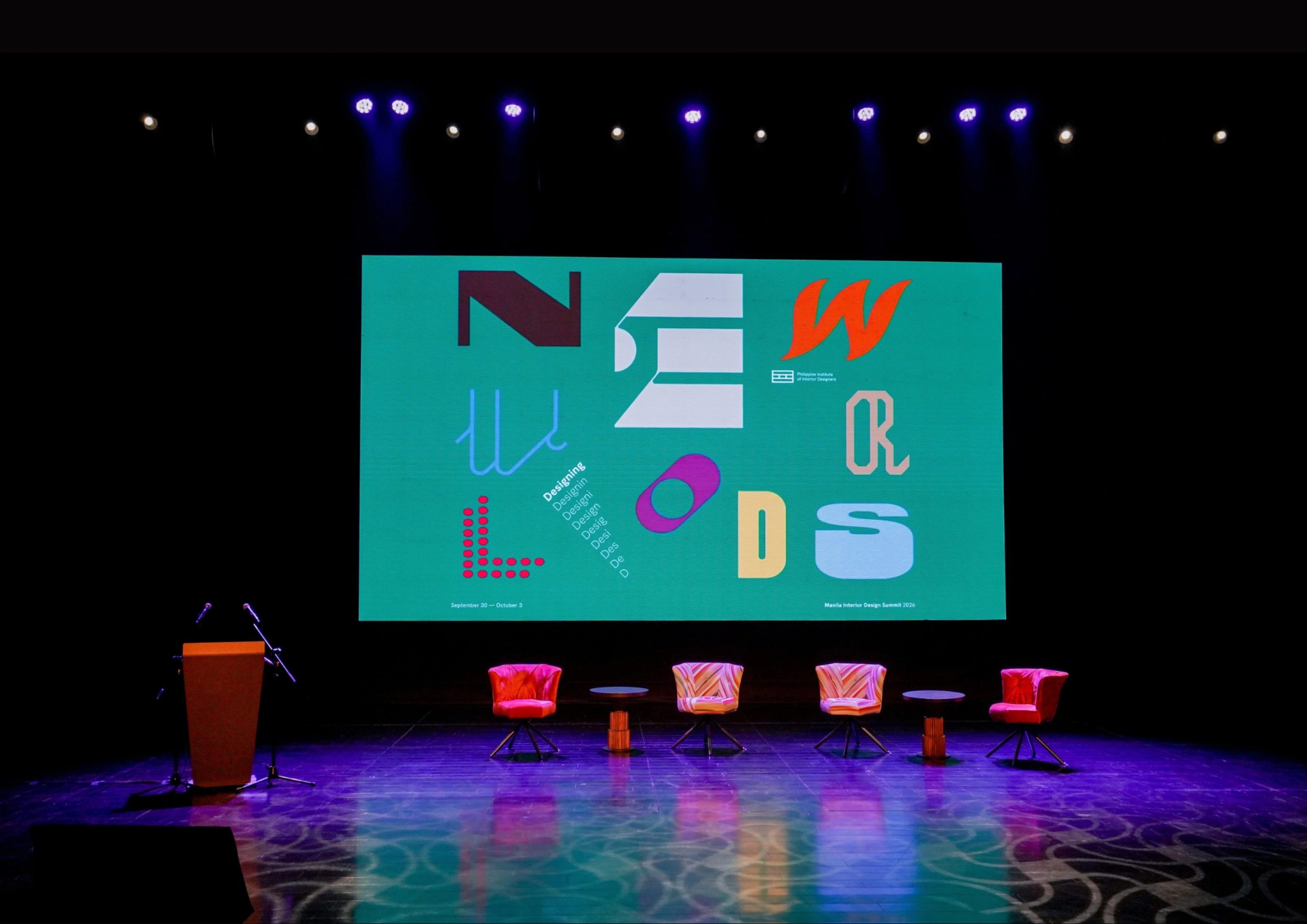
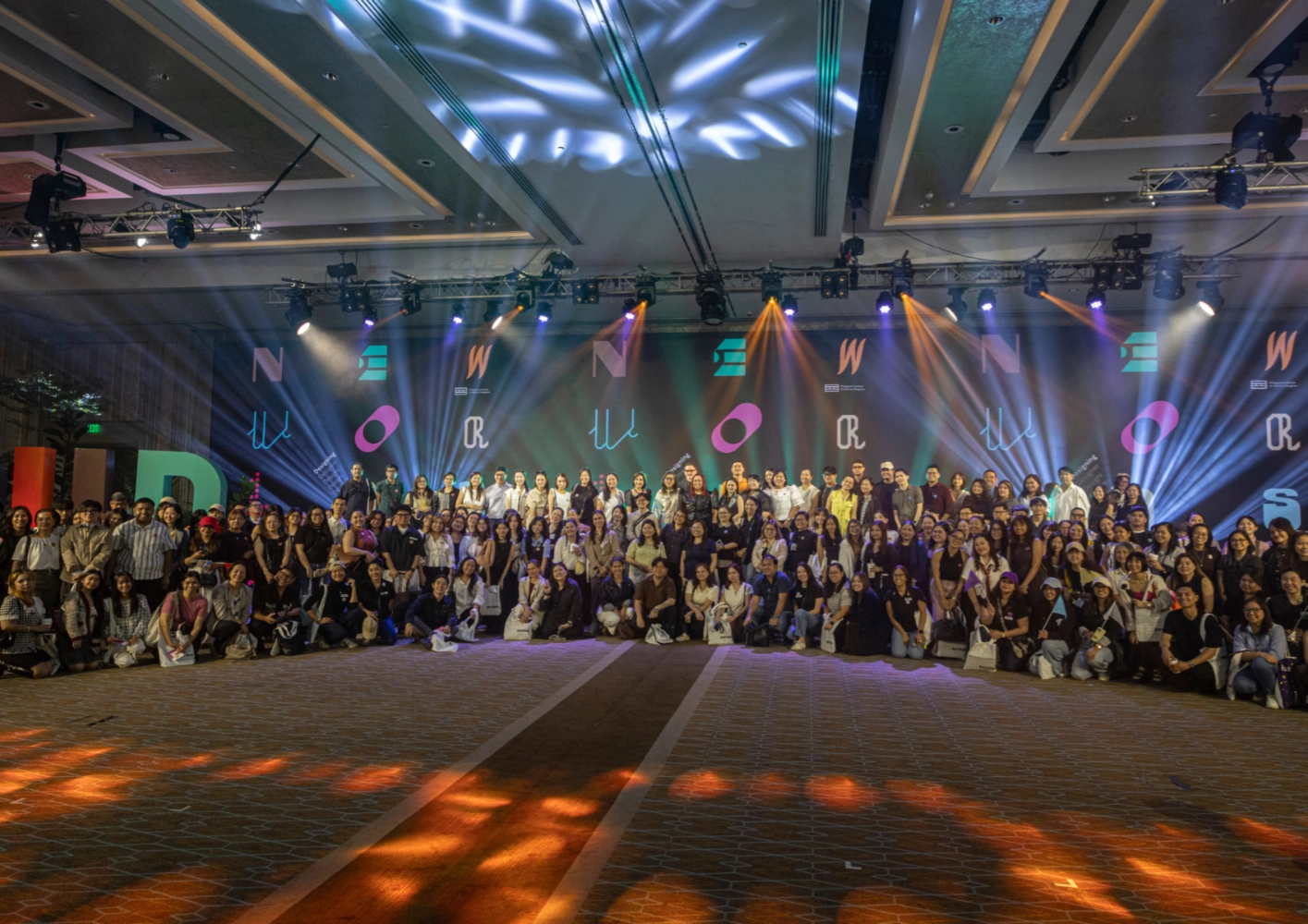
The fourth Manila Interior DesignInterior DesignThe discipline of planning and shaping interior spaces for function, comfort, safety, and beauty. It covers layout, lighting, materials, finishes, furniture, and color, and in the Philippines is a licensedGo to Interior Design Glossary Summit (MIDS) brought together more than 300 delegates for four days of conversations, exhibitions, and design […]
Frequently Asked Questions
It was an exhibit curated by Brisa Amir and Jose Olarte of The 5th House at Aphro in The Alley at Karrivin Plaza. Twenty-one artists designed works that bent toward the light, inviting audiences to re-examine light’s role in art.
Amir said the idea came from making makeshift lamps for house parties and realizing artists could contribute old works with potential to become lamps. Olarte said the show mixed typical lamp makers with newcomers to speak to everyday Filipino experiences.
Works included Goran Fernando’s Illuminate, which repurposes a Nike box as a lampshade; Ioannis Sicuya’s Between the Cracks, which creates a city of ruins under a cave; and Jan Sunday’s Central Sun, an acrylic and tapestry head bust lampshade that opens and closes at the front.
The curators centered the show on the parol and how to decolonize it, though Olarte said the finished exhibit did not circle on that theme. He believes people making their own lamps is already a form of reclamation, and Amir spoke of reclaiming light’s symbolism.
Artists used wooden twine, fabric, glass, resin, and other materials, in designs ranging from works recalling Classical Grecian art to more nativist and indigenous influences. The article says the works center on the Filipino experience and reflect each artist’s own approach.
Read the issues.

Collect the volumes.

Recommended Video
Tap to Unmute
Unmute
0:00
0:00