Bigkis is the act of binding. In Tagalog, the word can refer to something used to bind or encircle, as well as a bundle formed by tying several separate elements together. Figuratively, it can also mean a bond, union, or unity. The meanings move from the physical act of joining things together to the connection […]
‘Revirescence’: Jill Paz Deconstructs Environmental Wonders in New Exhibit



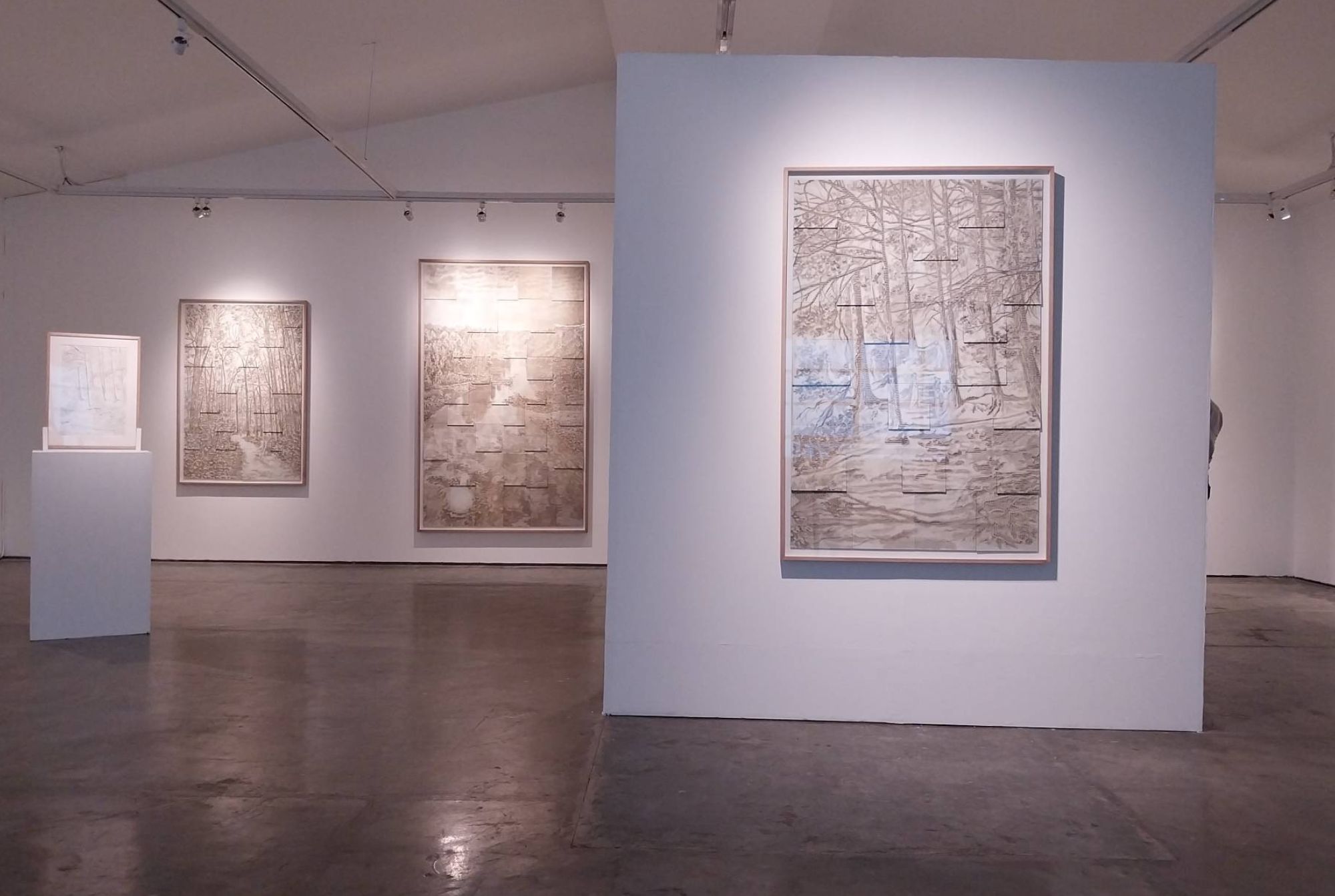
Revirescence, the new exhibit at Artinformal Gallery by artist Jill Paz, exudes a modern-day spin of pastoral paintings that borders on worshipful. It doesn’t just showcase the trees and the flowers, but casts them in a light that transcends the physicality of nature.
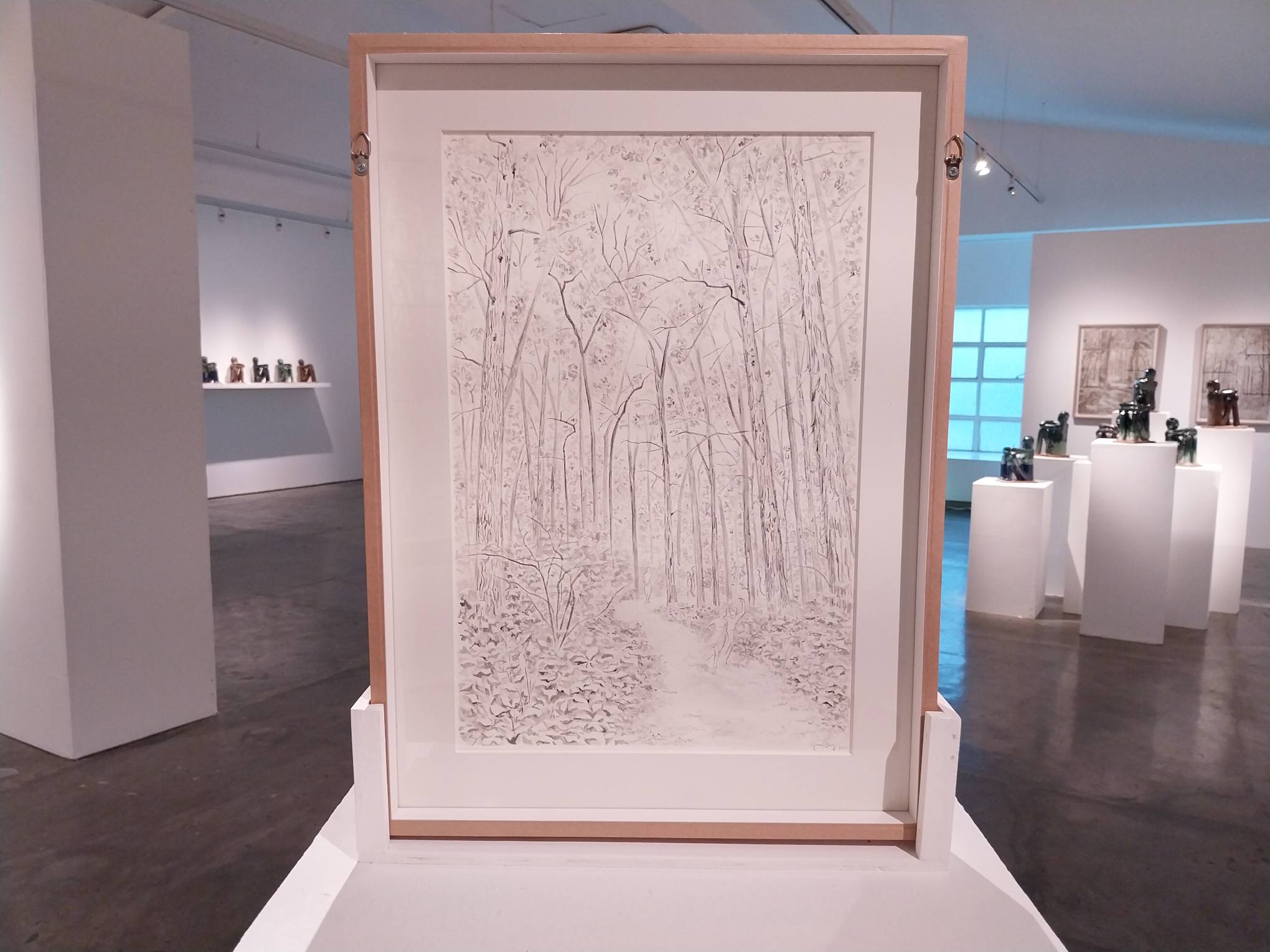
Paz said that her studies at the Virginia Center for Creative Arts influenced some of the imagery she used. Located in the Blue Ridge Mountains in the Eastern United States, she said that these surroundings grounded some of the work in the exhibit.
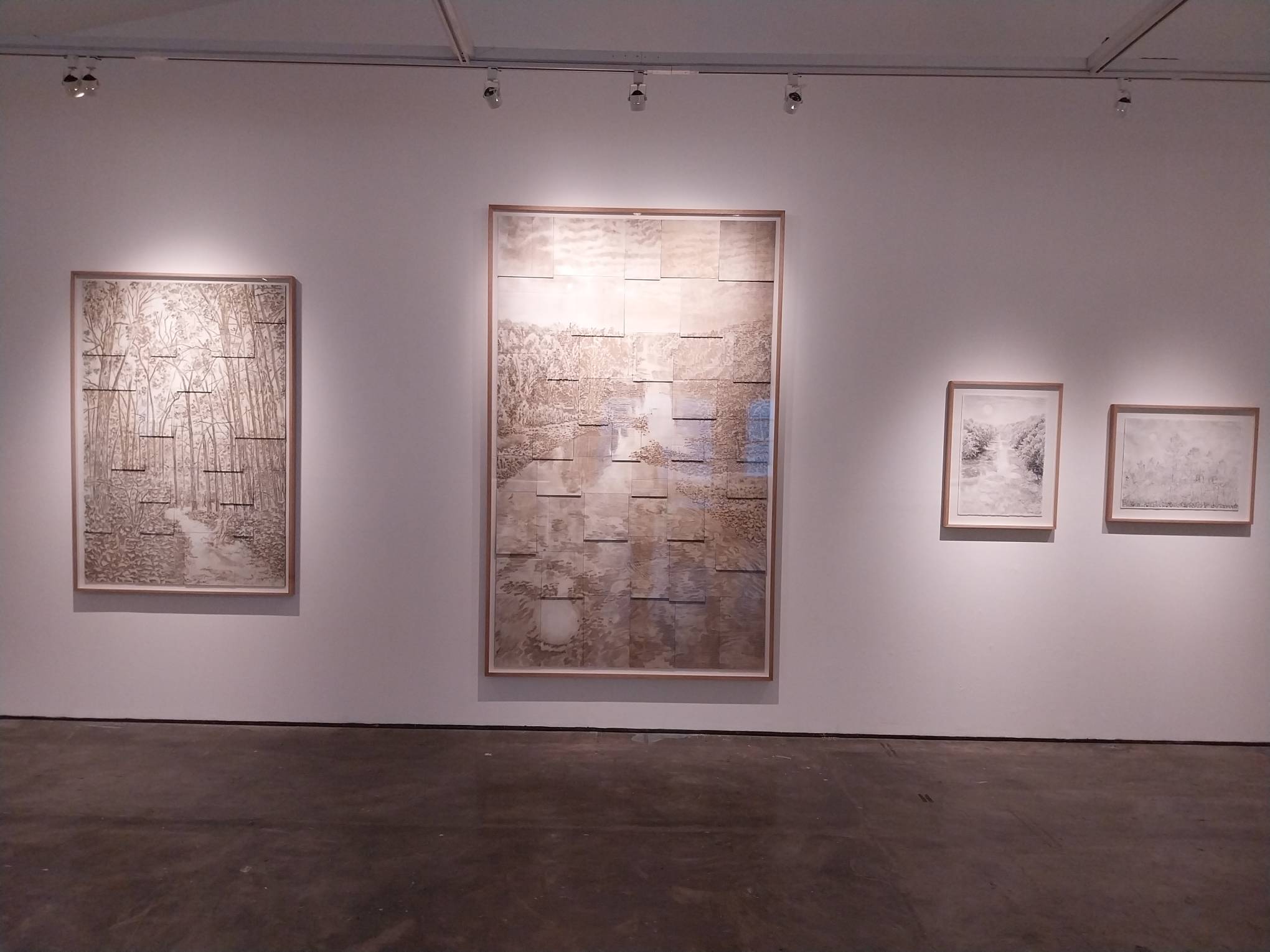
“That’s where I started to draw en plein air with some of my fellow artists,” she said. “And I think most of the works, because they started from there, a lot of the landscapes have that feel from Appalachia and the Blue Ridge Mountains.
“So you see more of these evergreens and waterfalls that evoke nature from that part of the world, which is also where I grew up, being Canadian, American, and Filipina.”
Mixing Modern Methods and Traditional Influences
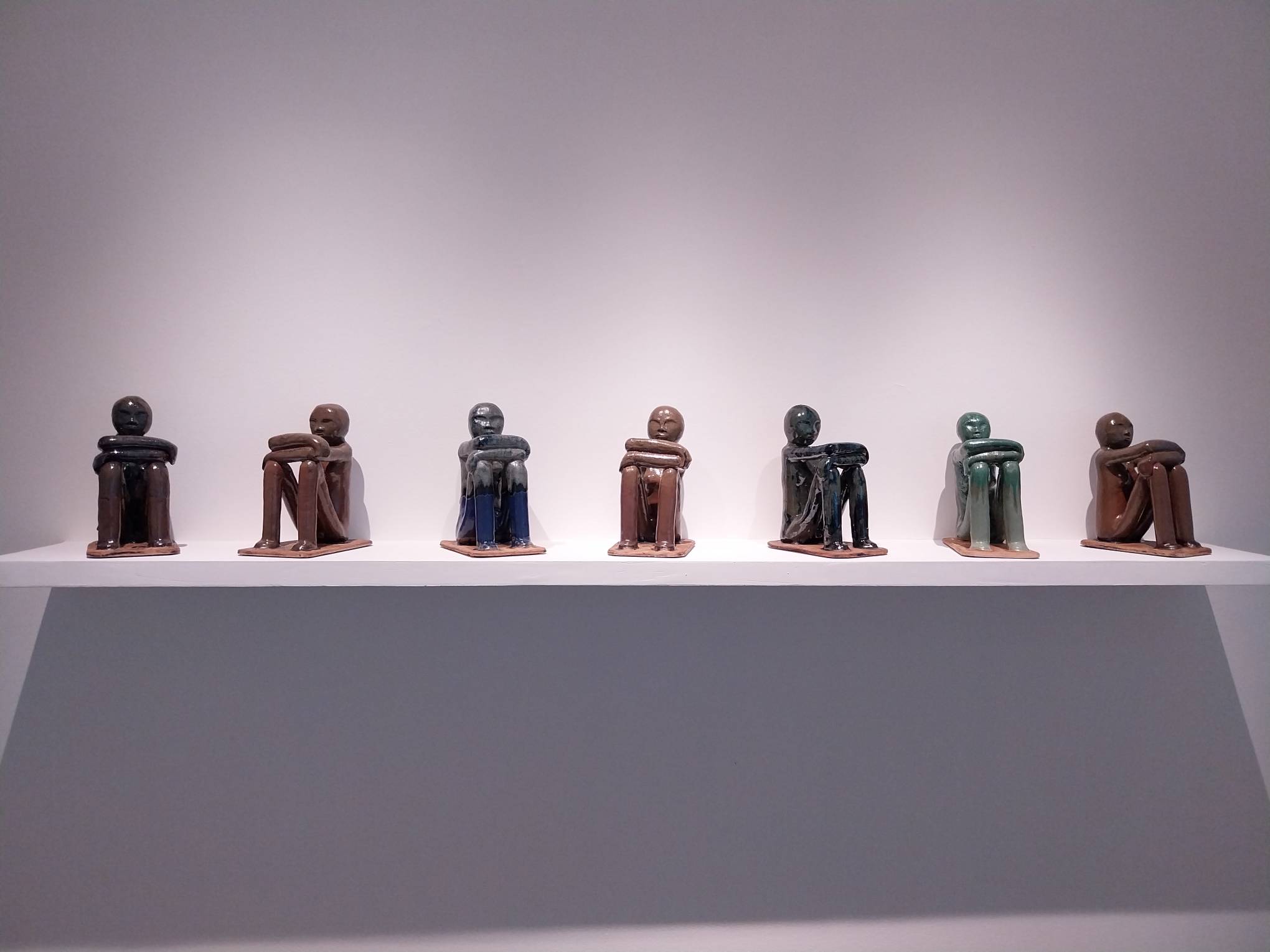
For Revirescence, the exhibition contains a mix of sketches, watercolor paintings, sculptures, and cardboard paintings. She showcases new types of artworks that she finds herself working with. The glazed stoneware sculptures are the newest, which she said she learned over the past three years from a family of ceramics artists at their studio in the United States.
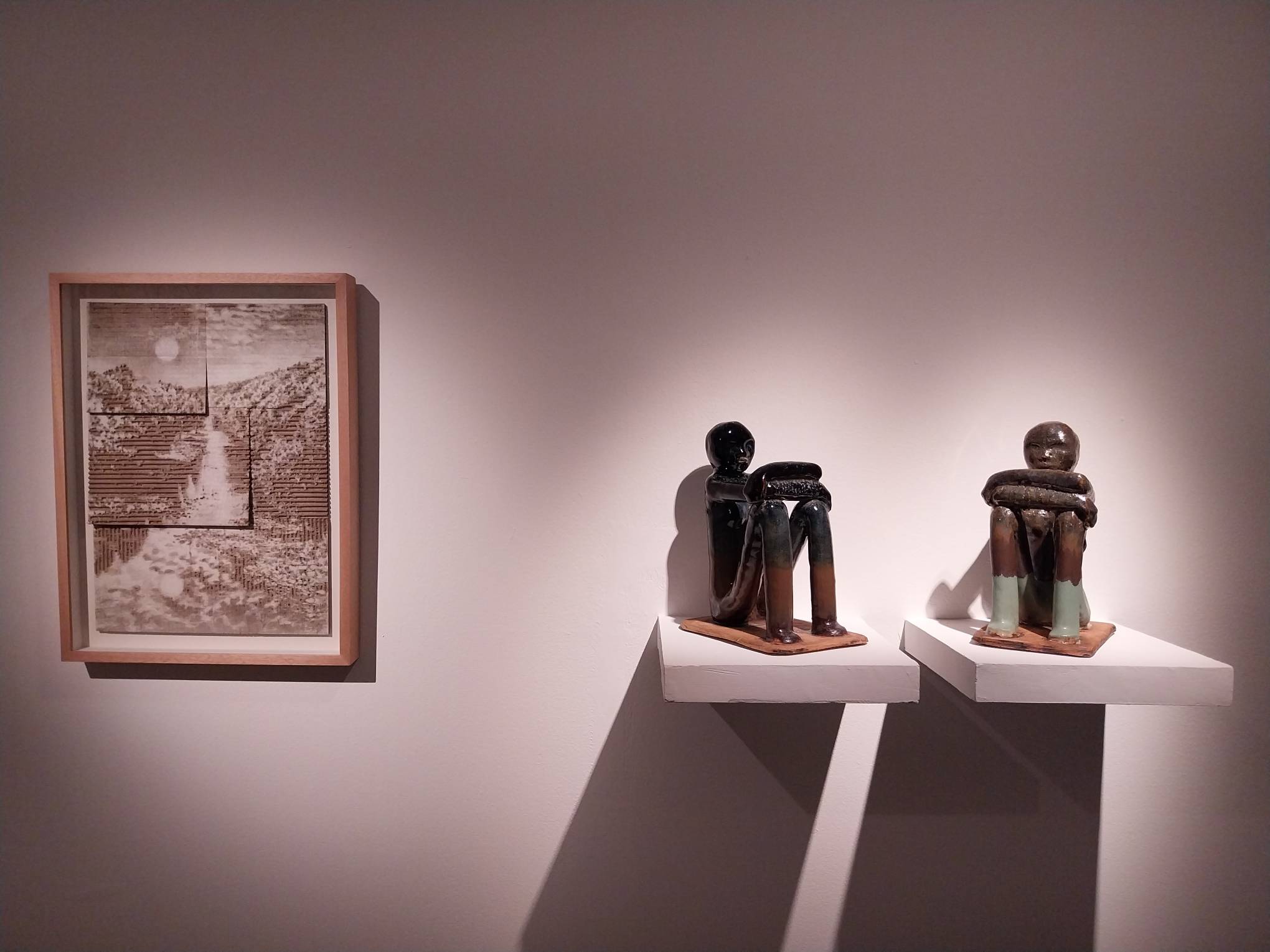
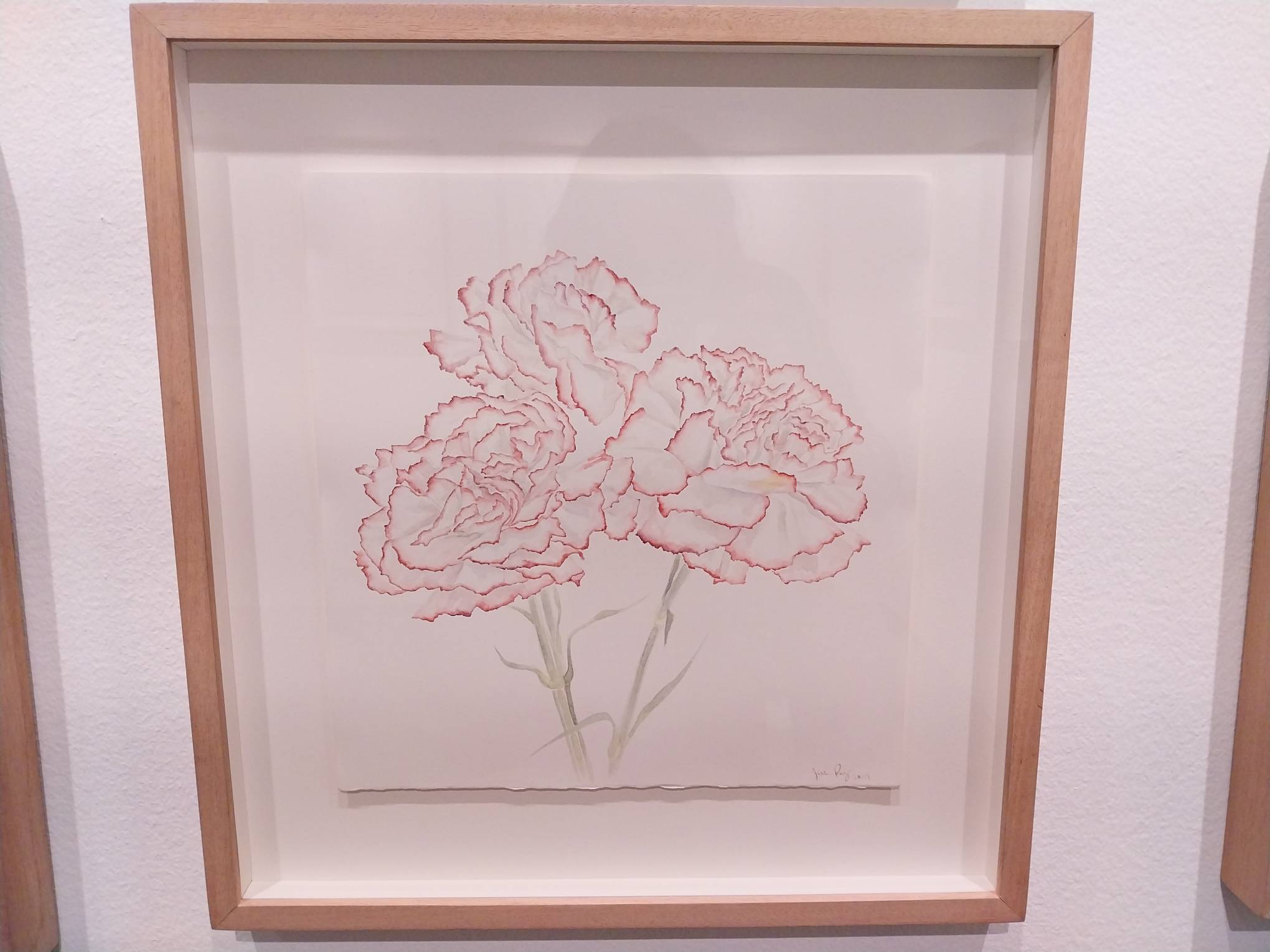
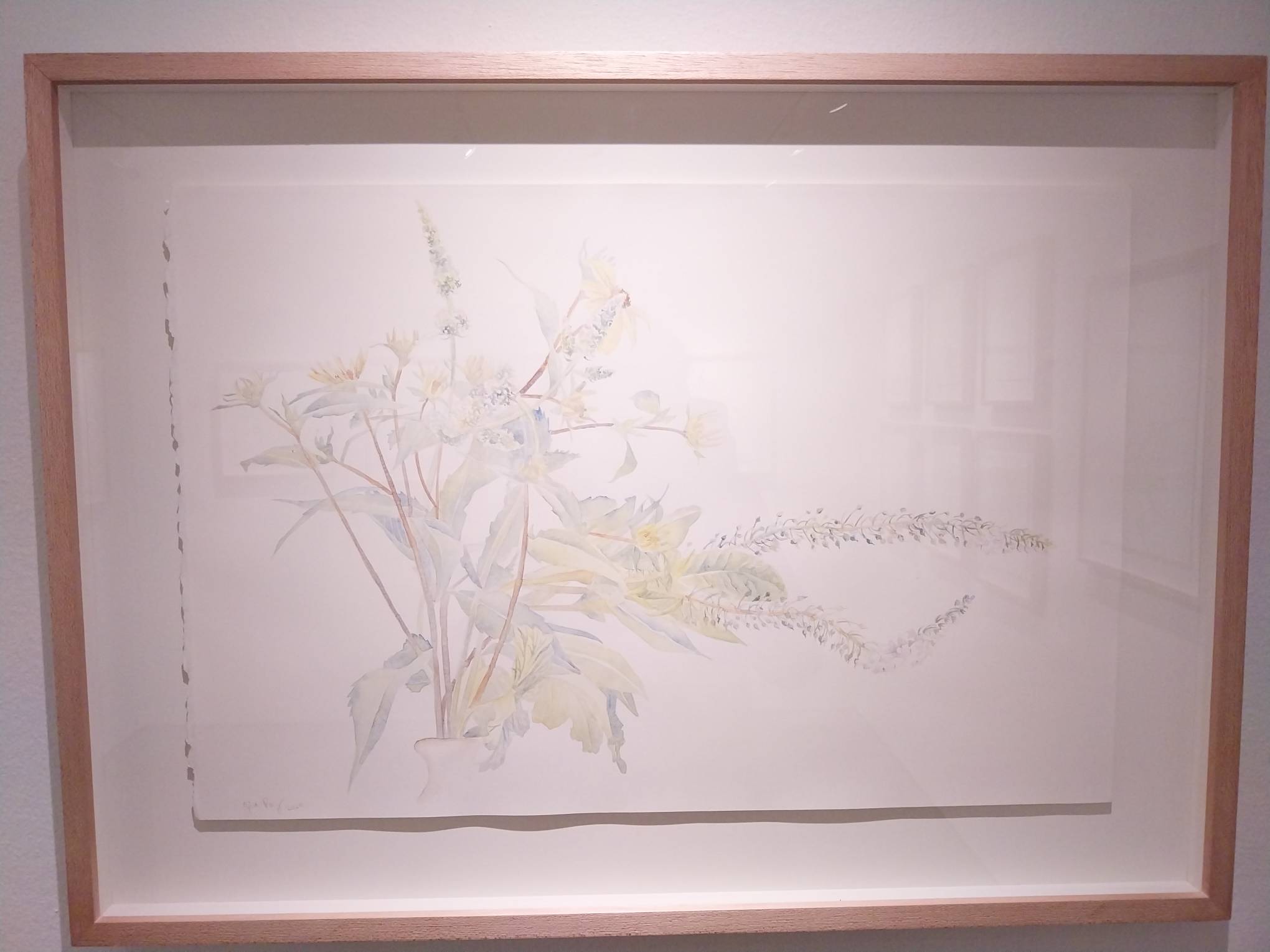
The most eye-popping of these are the cardboard paintings, which are mostly enlarged versions of some of the sketches and paintings displayed in the exhibit.
These cardboard paintings utilize a mix of laser engraving and cardboard from Balikbayan boxes that produce a specific texture. Paz layers different sections of cardboard on top of each other, creating a collage-like effect that resembles fragments of various photographs coming together to form a cohesive whole.
Methodology and Reasoning
Jill Paz’s process for enlarging images involves a meticulous methodology she developed for over more than a decade. First, she scans the image into a computer, then uses Photoshop and other software to enlarge it. She then executes her vision onto the cardboard with “a sort of Ben Day dot pattern” to bring the images to life.
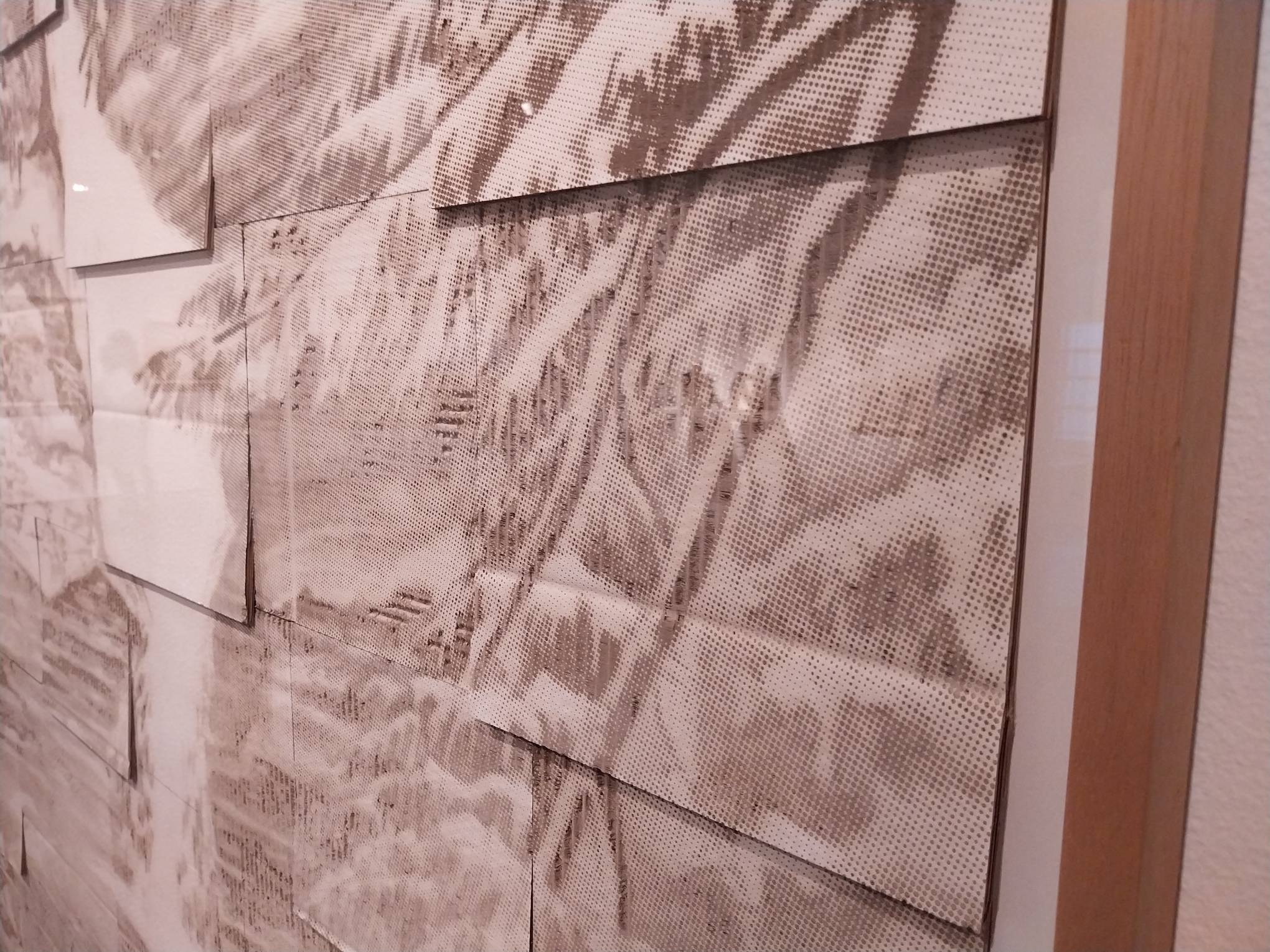
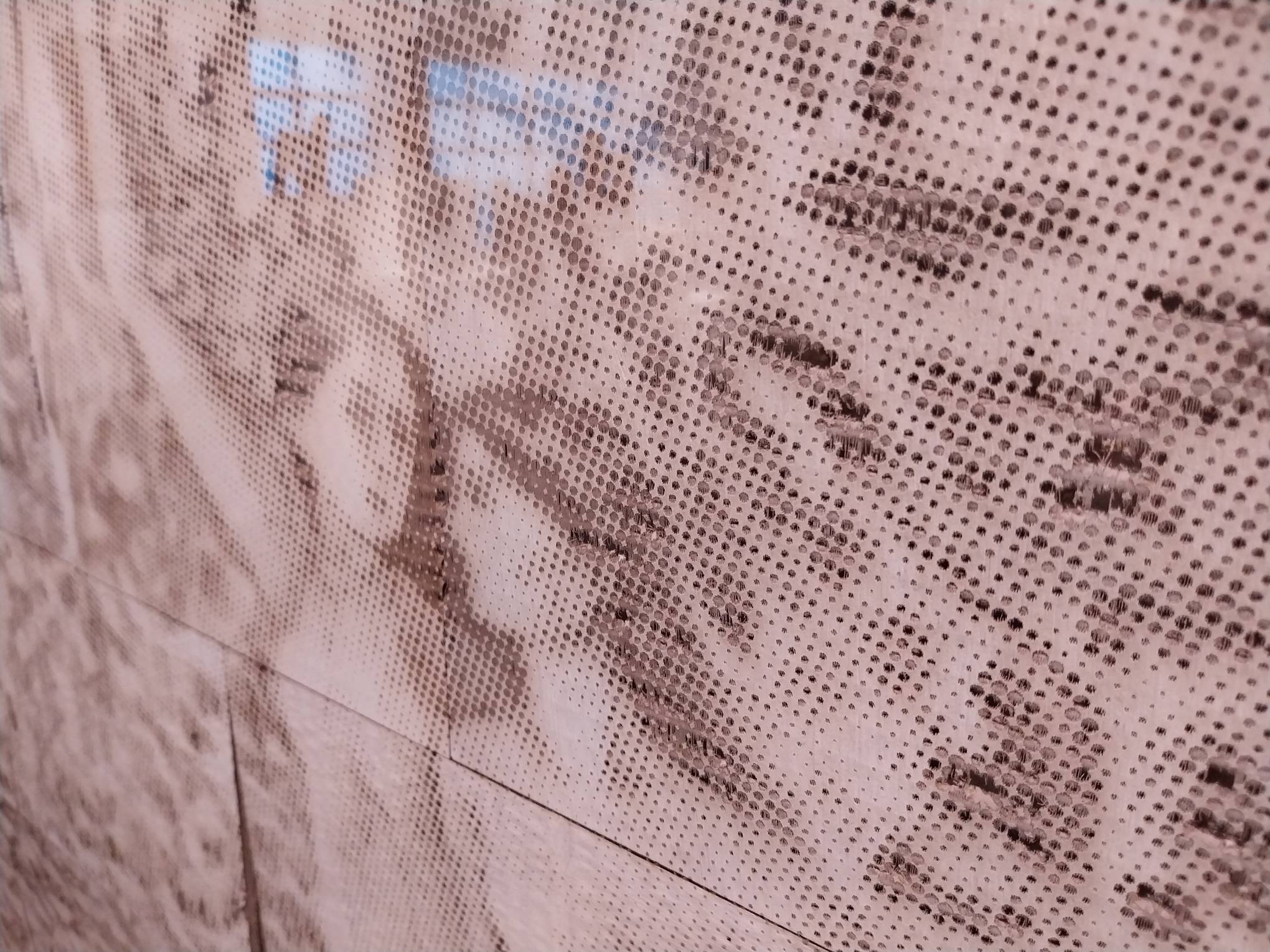
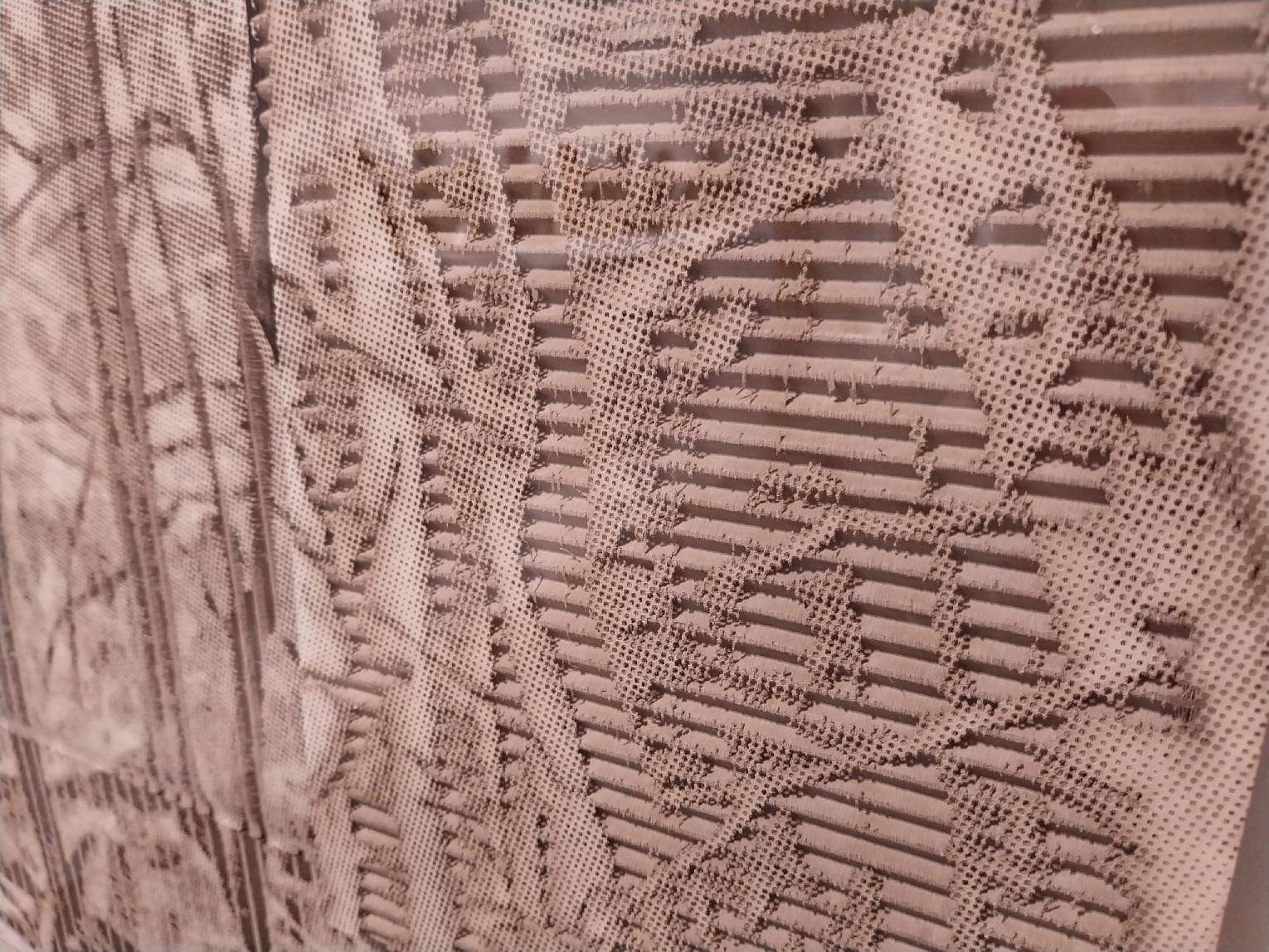
“I was using my ancestors’ destroyed paintings—so paintings that were no longer in existence. And that’s why I started using this sort of Ben Day dot pattern because I was using photographs of destroyed works, photographs that are [of] a low or bad jpeg quality. A way for me to make it into a more visible composition was to use the Ben Day dot pattern,” she explained.
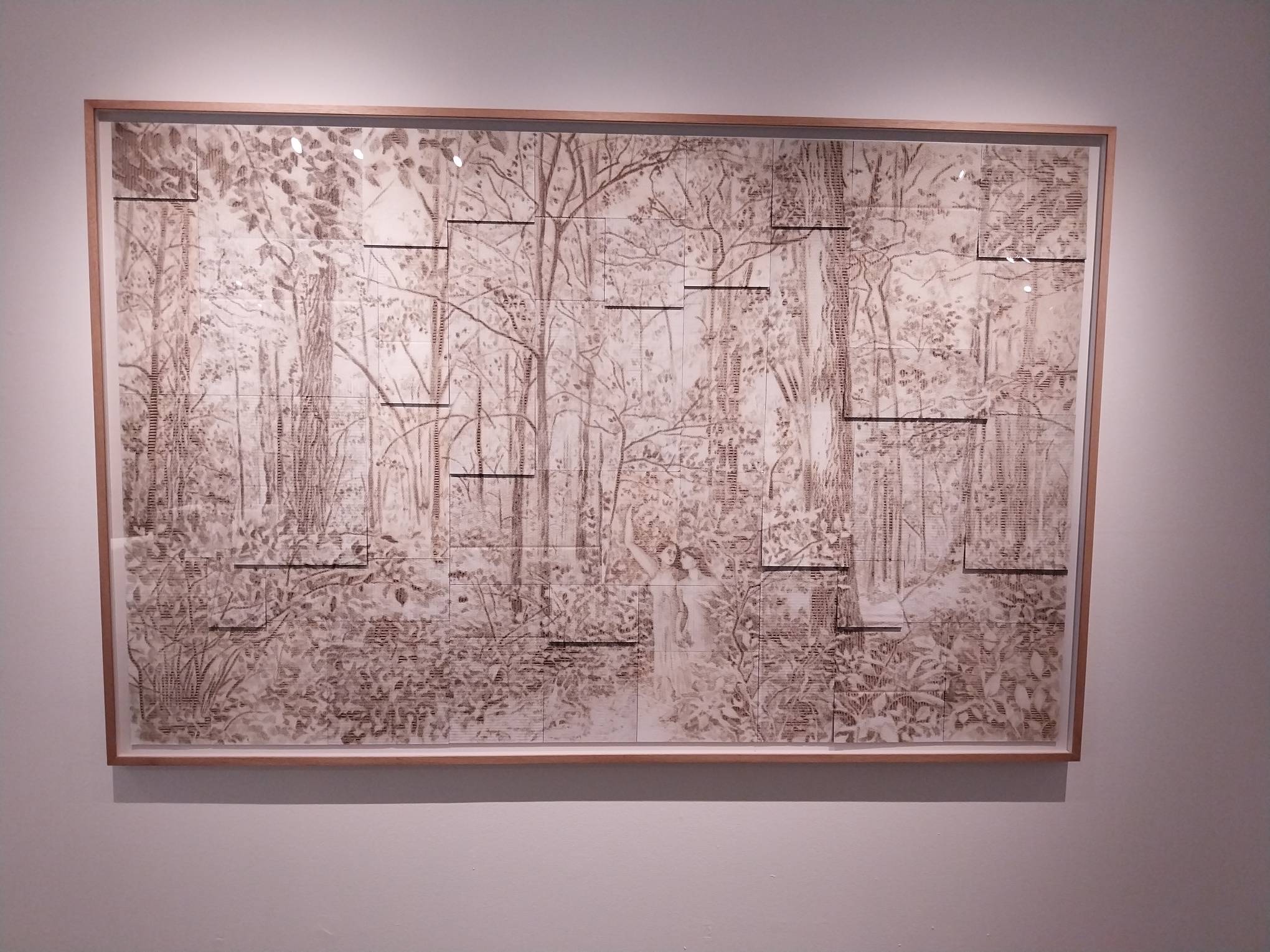
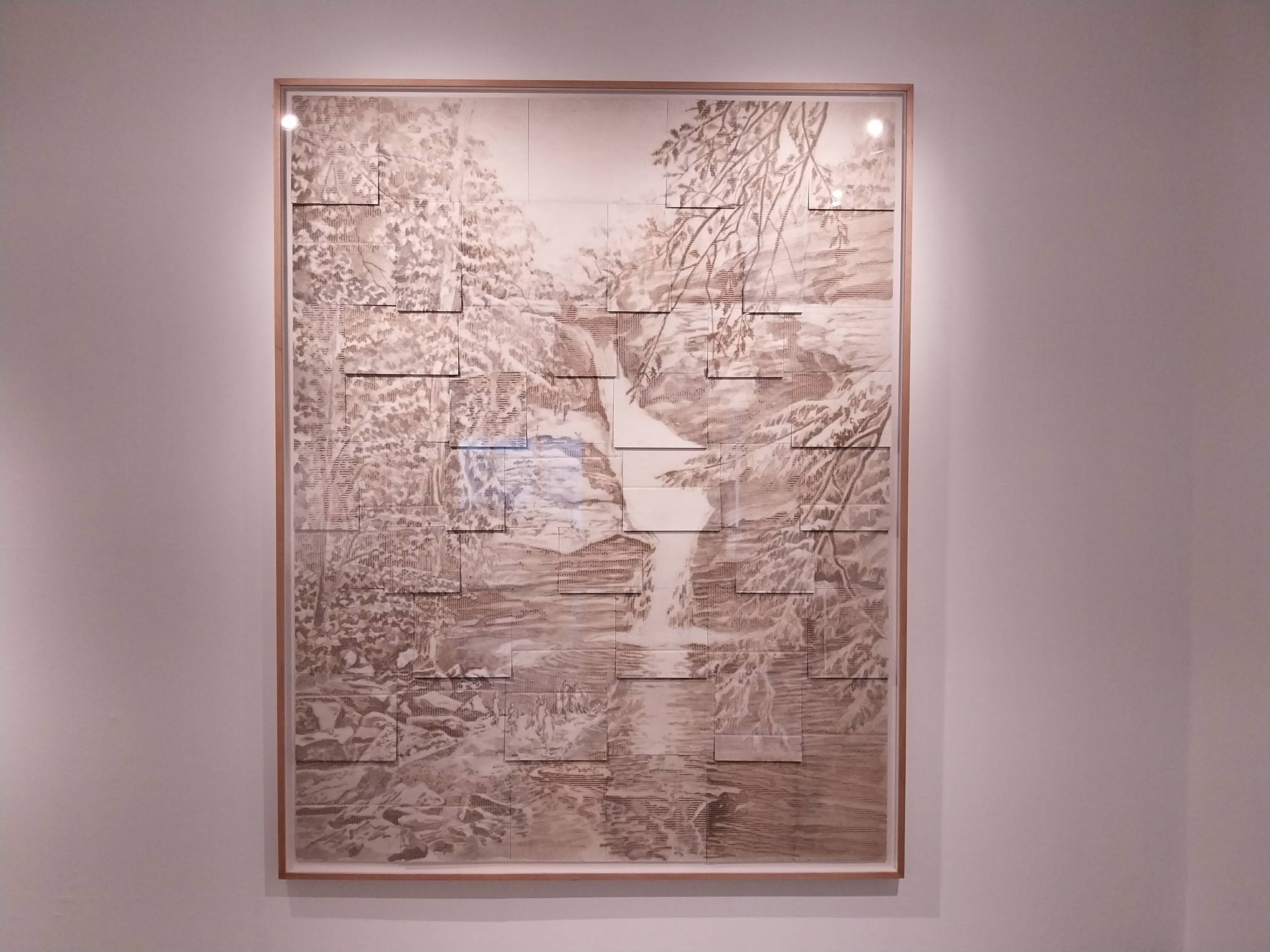
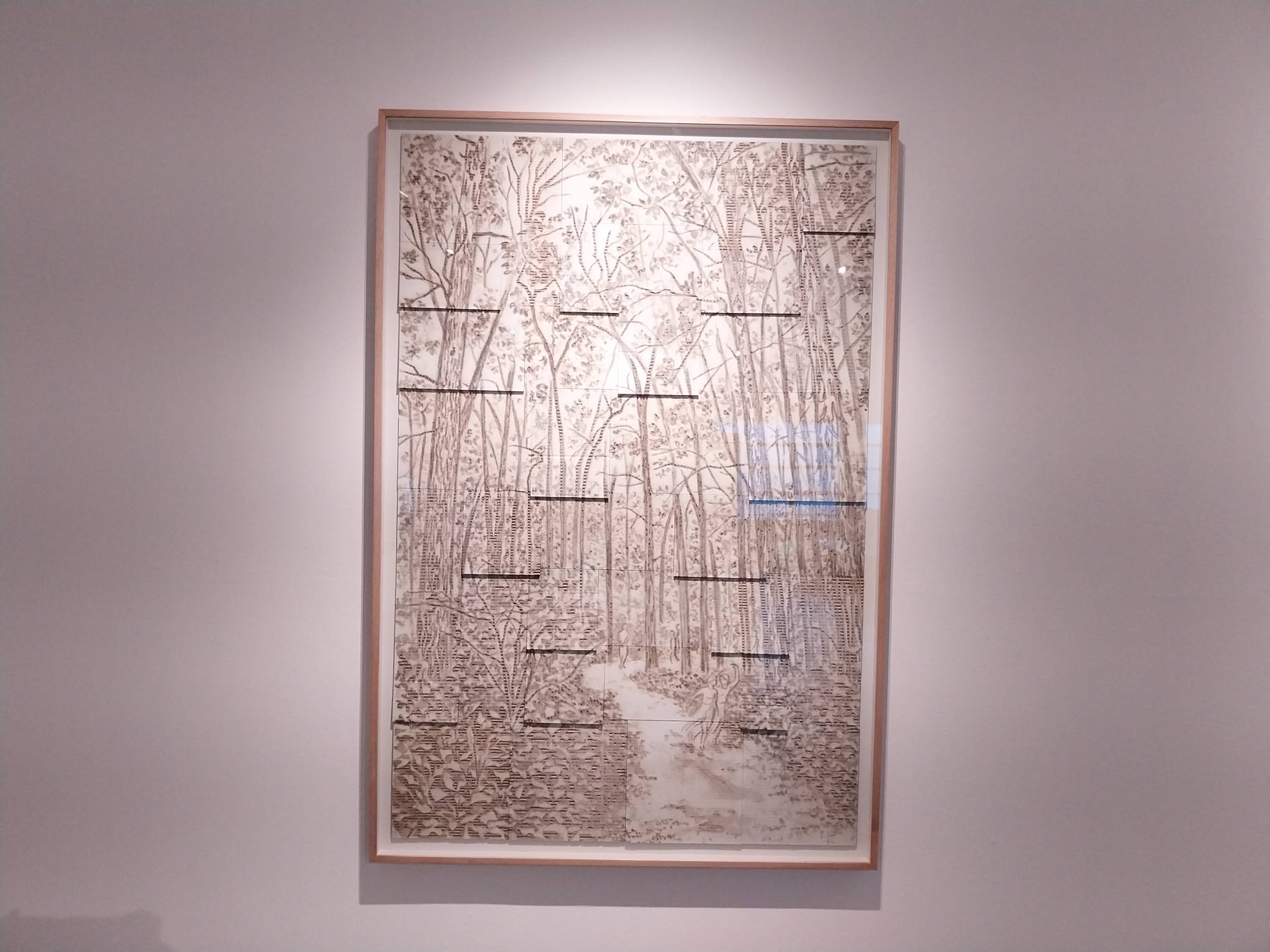
The end product crafts a modern twist to picturesque images of nature. From a personal perspective, it gives off a very tangible and yet very unreal image—three-dimensional in flavor while still looking like a battered frame of a Filipino comic book. It’s a very unique combination, one that transposes nature without removing the artifice of art.
Nature in the Present and the Past
The work of Jill Paz for Revirescence concerns itself with the beauty of nature. She said that she was largely inspired by past movements like post-impressionism and romanticism in her subject matter and approach.
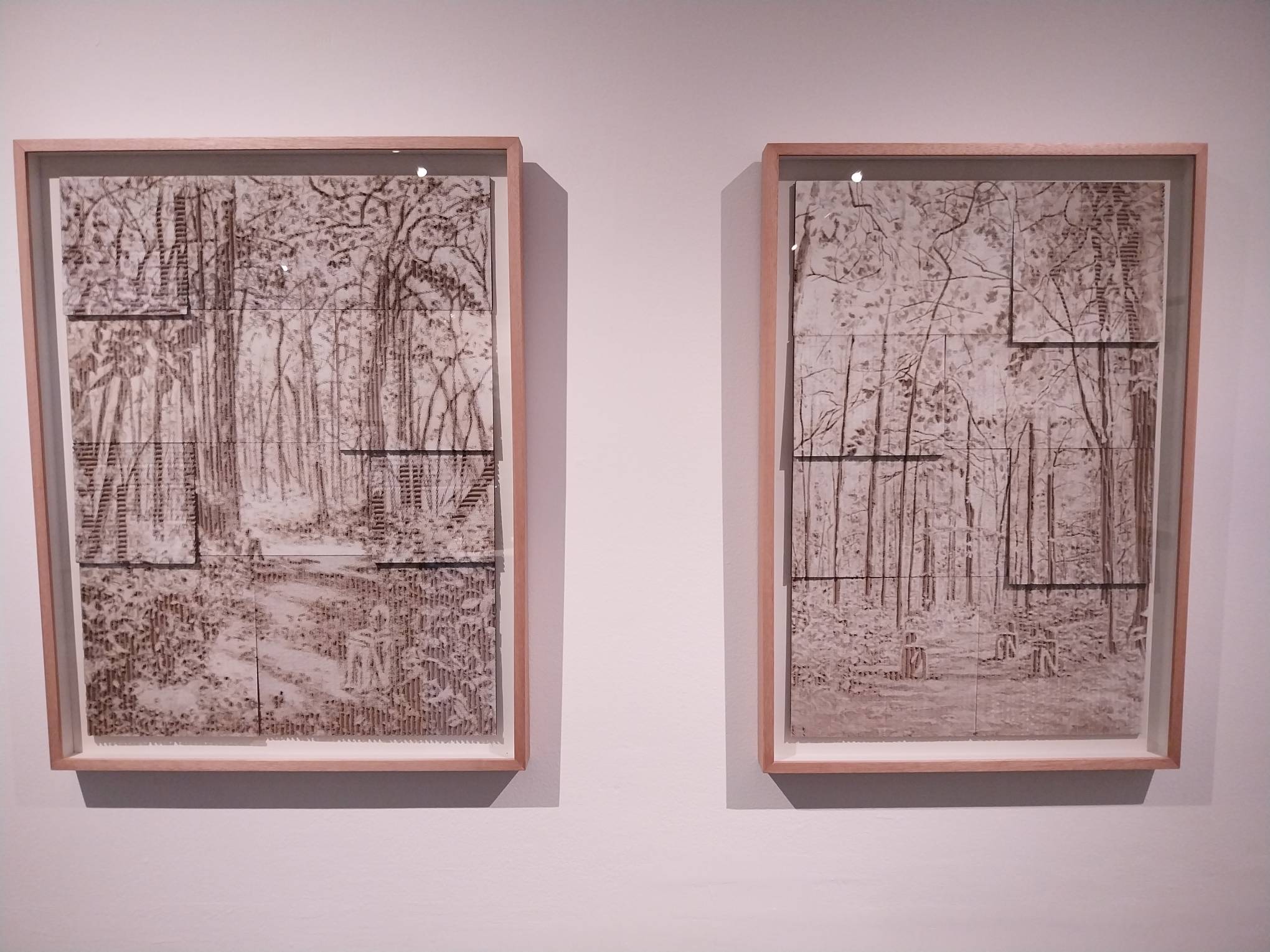
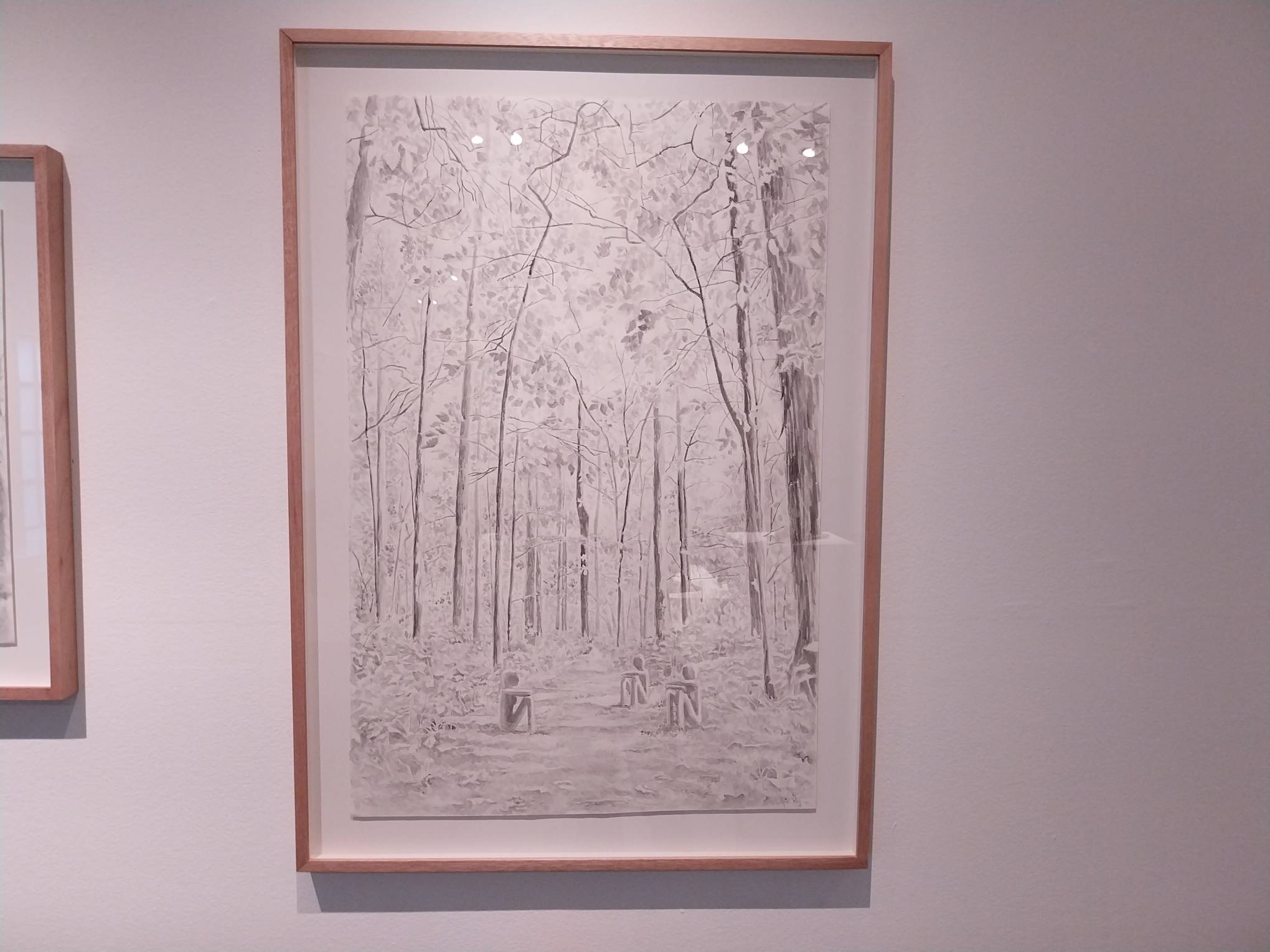
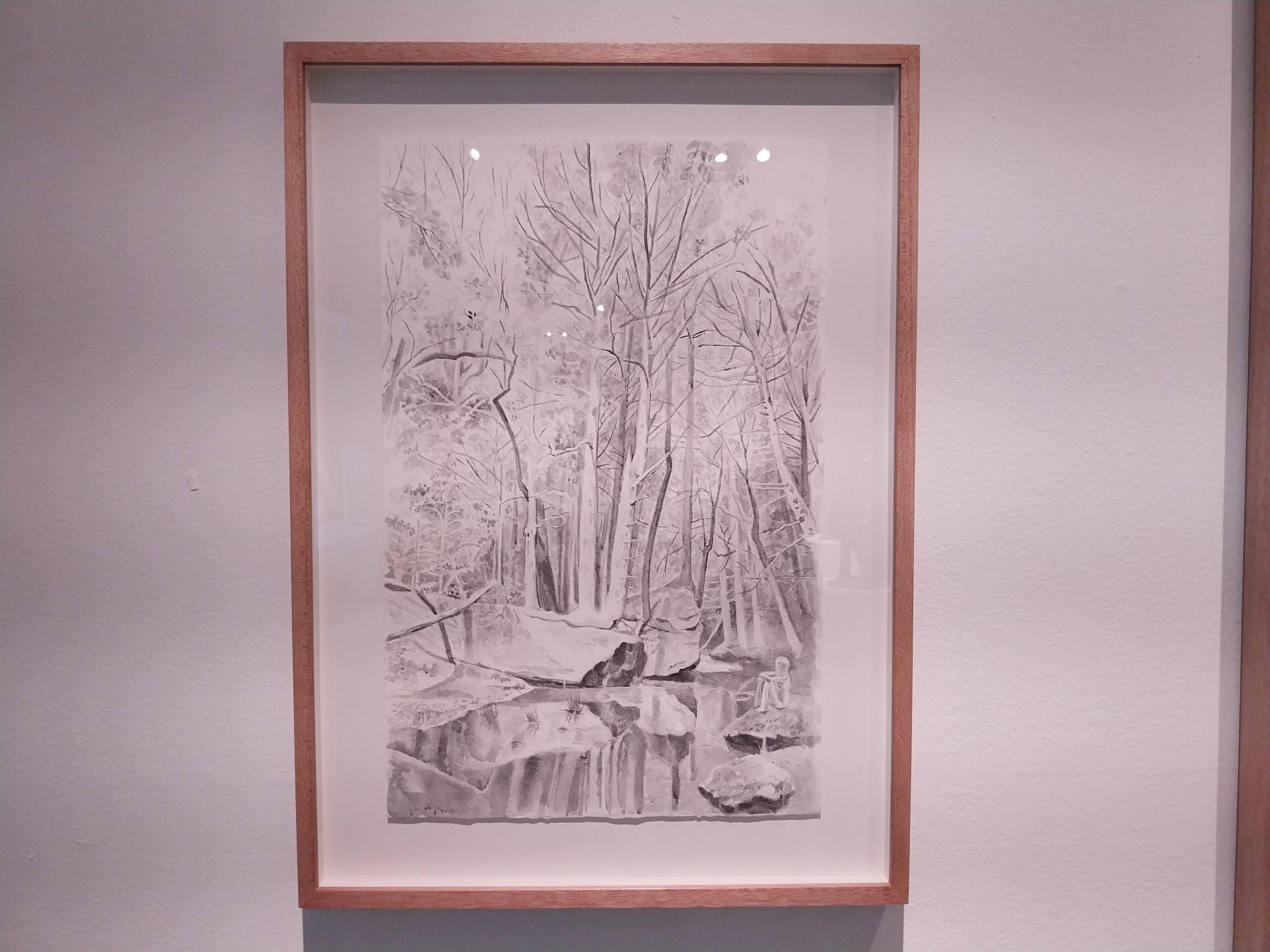
“Those art movements, they really evoke emotion in a painting or a sculpture, and they also have a sense of mysticism and spirituality,” she said. “And so those are, these are the subject matter, the sort of topics that I was approaching.”
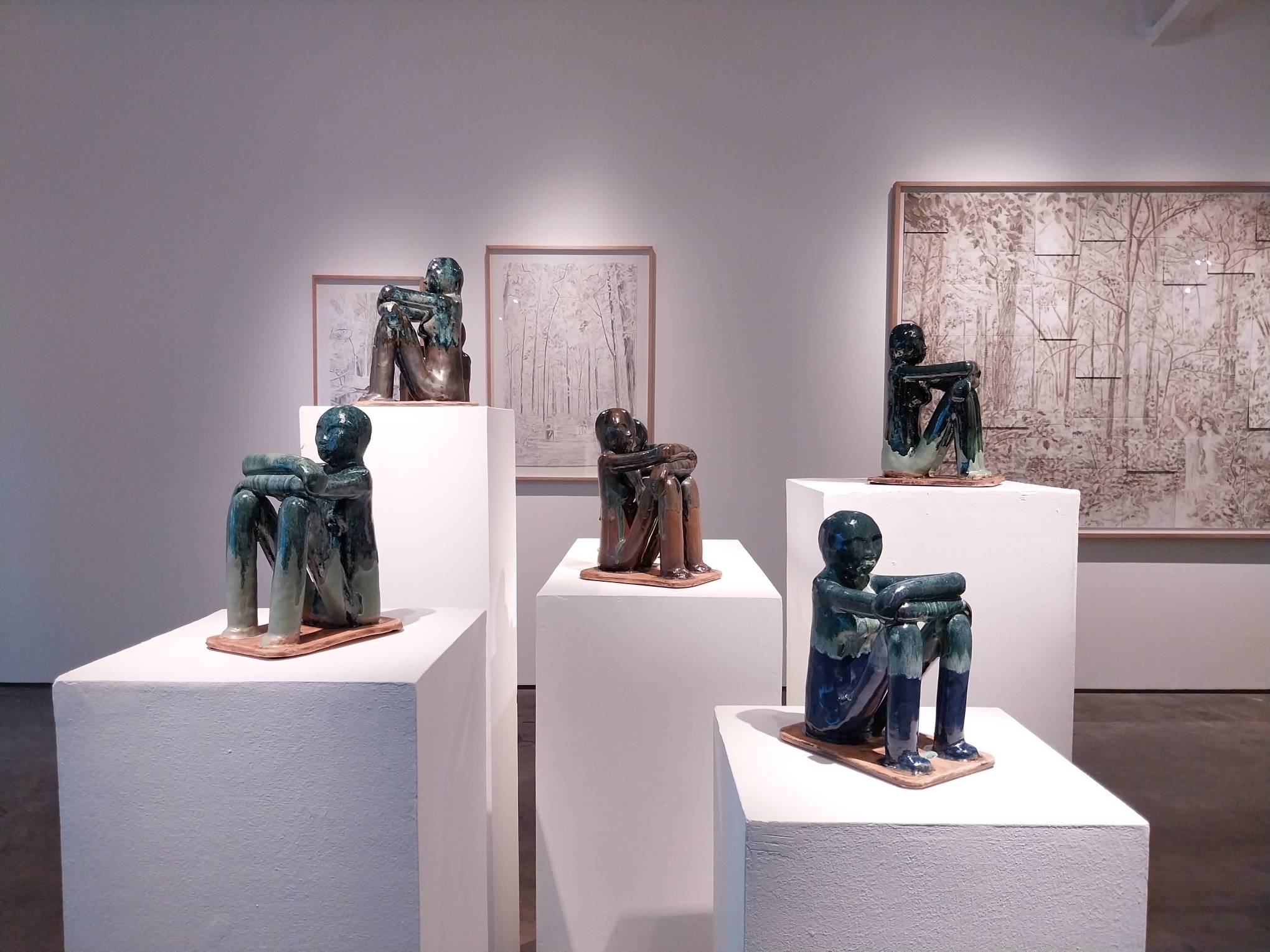
That desire to depict the mystical divinity of the world around us extends beyond nature. The glazed stoneware sculptures showcase a person sitting down, their knees on level with their chest as they put their arms over it. It looks akin to indigenous statue designs, which Paz said she was inspired by.
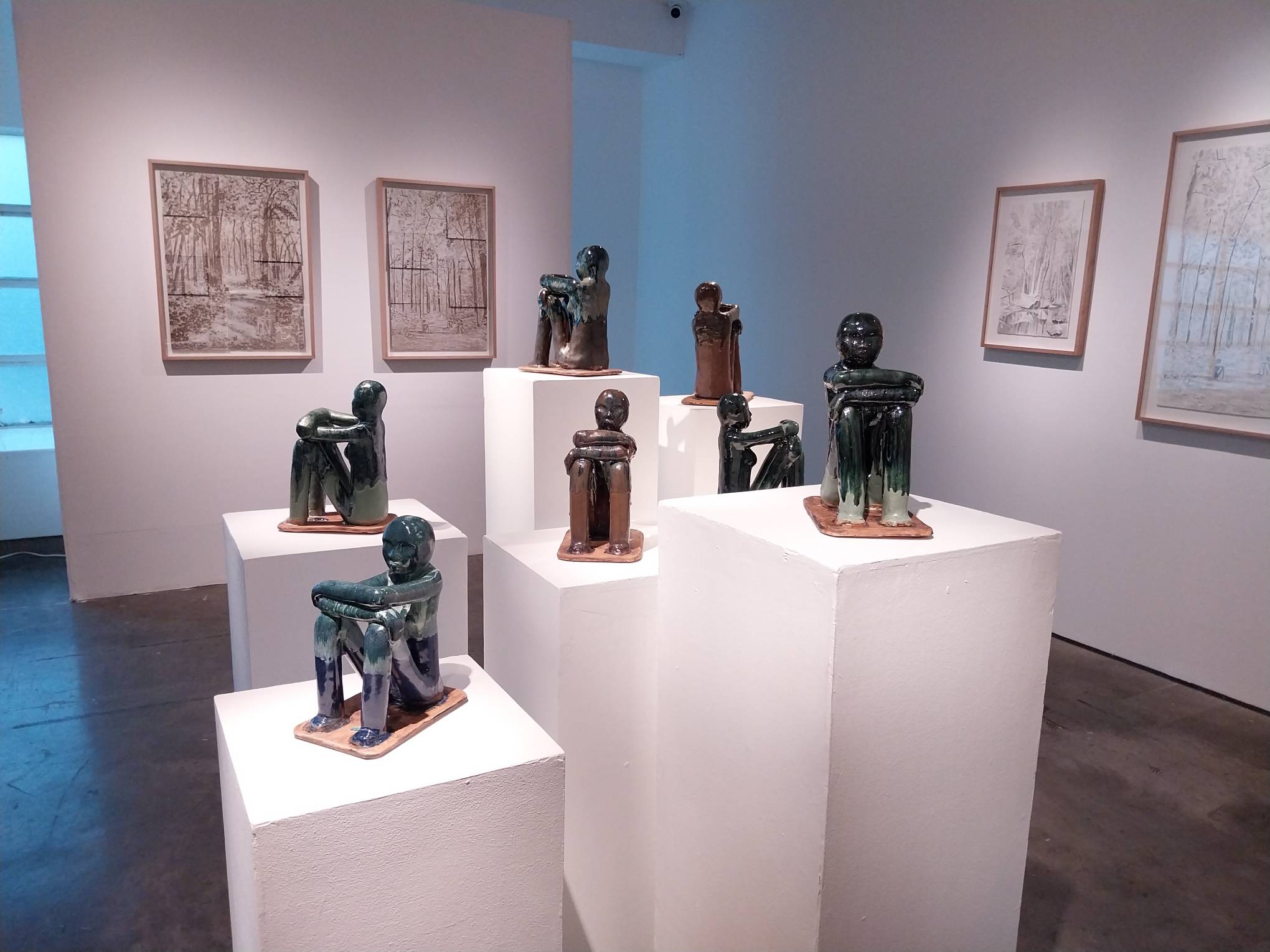
“I was really interested in how anitu figures have this pose, this gesture, that’s both empowering and also at rest, and that’s what I was really interested in,” she explained. “The glazes for all the sculptures, which are hand modeled, [they’re] all homemade glazes.”
In the end, Revirescence provides viewers with a deconstruction of our relationship with the glories of nature. Jill Paz adds touches like indigenous symbols or the use of the Balikbayan box as an additional dimension to how the ordinary Filipino experiences separation from nature, the artifice of the art explicit.
Photos by Elle Yap.
Related reading: ‘Nawawalang Paraiso’ Utilizes Concrete Works to Examine Modern Landscapes
Frequently Asked Questions
The exhibition presents a modern spin on pastoral landscape paintings, blending Appalachian imagery with a sense of mysticism and spirituality. Through a mix of media, Paz explores the beauty of the natural world and the “mystical divinity” of the environment, drawing heavily from movements like Post-Impressionism and Romanticism.
Paz creates large-scale “cardboard paintings” by repurposing cardboard from Balikbayan boxes, using laser engraving to etch detailed landscapes onto the surface. She layers different sections of the cardboard to create a collage-like, three-dimensional effect that reflects the Filipino experience of separation and connection to home.
Inspired by low-quality digital images and lost ancestral paintings, Paz uses a Ben Day dot pattern—similar to the printing style in old comic books—to reconstruct low-resolution photographs into visible compositions. This technique allows her to enlarge small sketches or scans into massive artworks without losing the artifice and texture of the original image.
The sculptures are inspired by the gestures of indigenous anitu figures, specifically the empowering yet restful pose of sitting with knees tucked toward the chest. Paz hand-models these figures and finishes them with homemade glazes, merging traditional Filipino symbolism with contemporary ceramic techniques learned from a family of artists.
Much of the imagery, including evergreens and waterfalls, is rooted in the Blue Ridge Mountains and Appalachia in the Eastern United States. These landscapes were drawn en plein air during Paz’s residency at the Virginia Center for Creative Arts, grounding the exhibit in her multi-layered identity as Canadian, American, and Filipina.
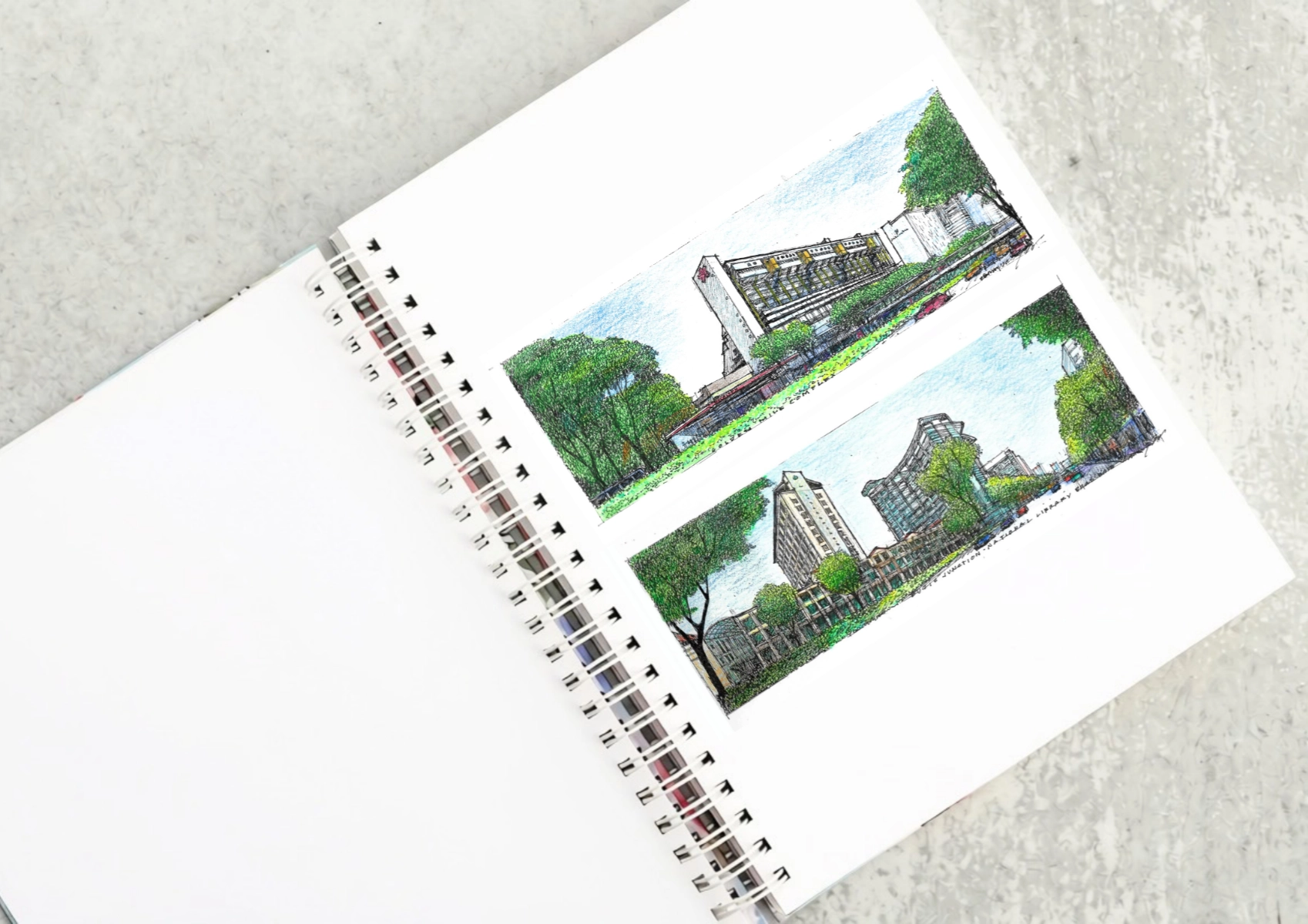
Two sketches of Singapore connect BluPrint Editor in Chief Paulo G. Alcazaren’s personal and professional history with Shared Ground: ArchitectureArchitectureThe art and science of designing and constructing buildings, structures, and spaces that are functional, safe, and aesthetically pleasing. It encompasses the planning, design, materials, and techniques used to createGo to Architecture Glossary of Care, Culture, […]
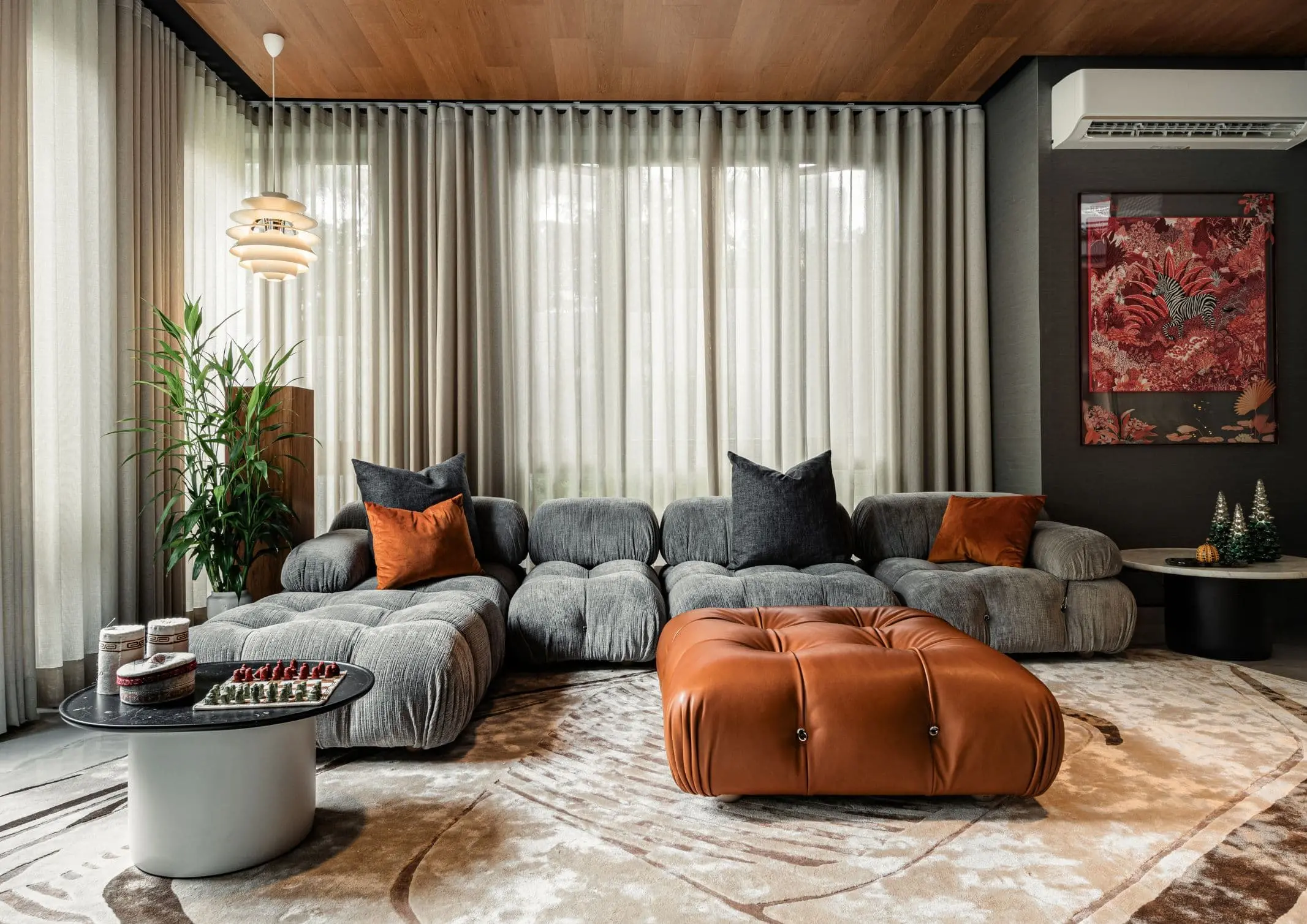
Some have become household names – Coleman, Oster, and KitchenAid – products that have found their way into Filipino kitchens, homes and family routines. In home furnishings, brands such as B&B Italia, Ethan Allen, Sub-Zero, Miele, SieMatic, Louis Poulsen, Hunter Douglas, Tempur, and Technogym, have helped shape the way Filipinos live. From everyday essentials to […]
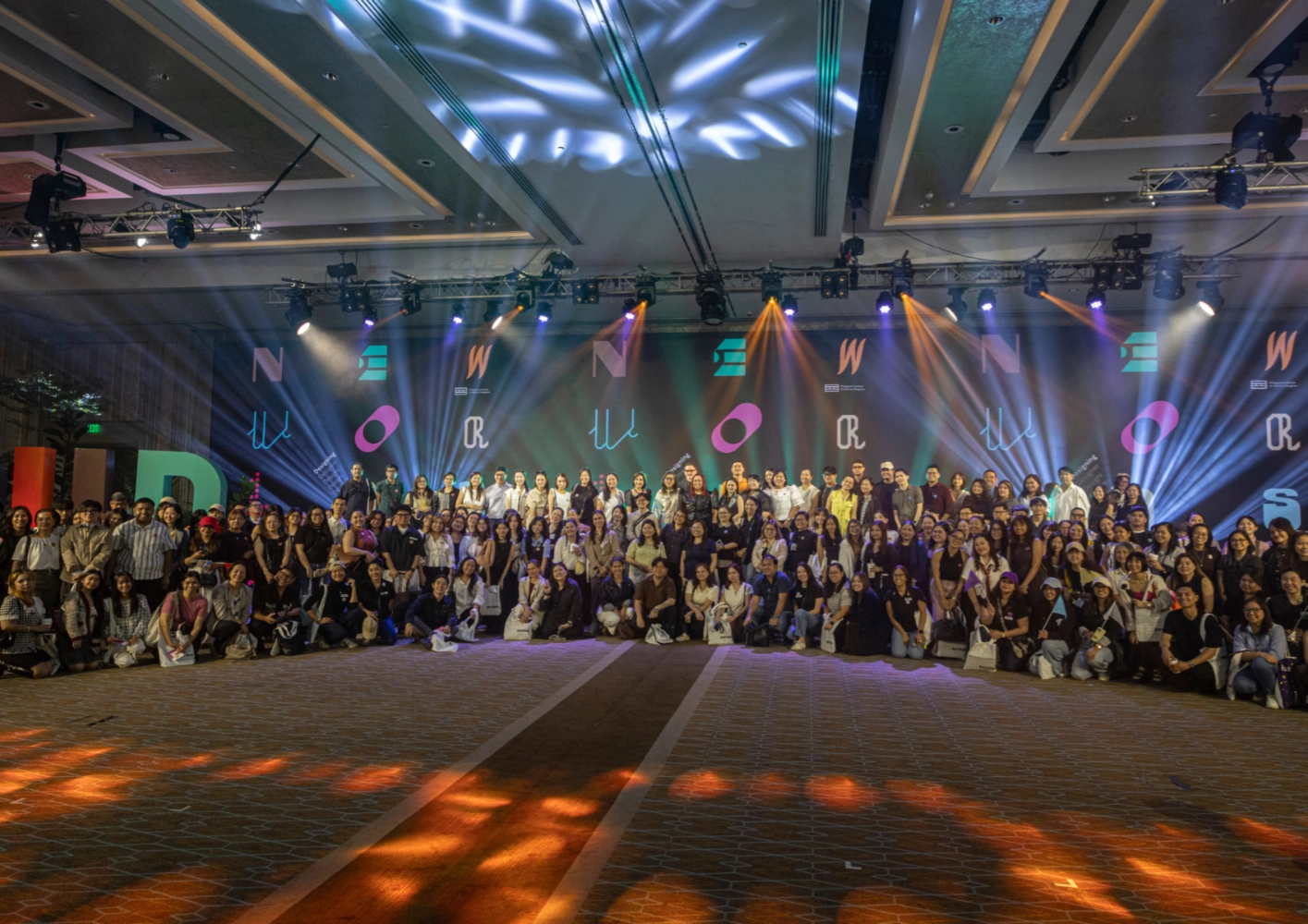
In a way, designers are the modern-day soothsayers and prophets. They design for the future, predicting how a room, a house, a building or a whole city will be used by people. They foresee how users will interact with a space, conjure exact shades of colors to elicit specific behavior and arrange furniture to build […]
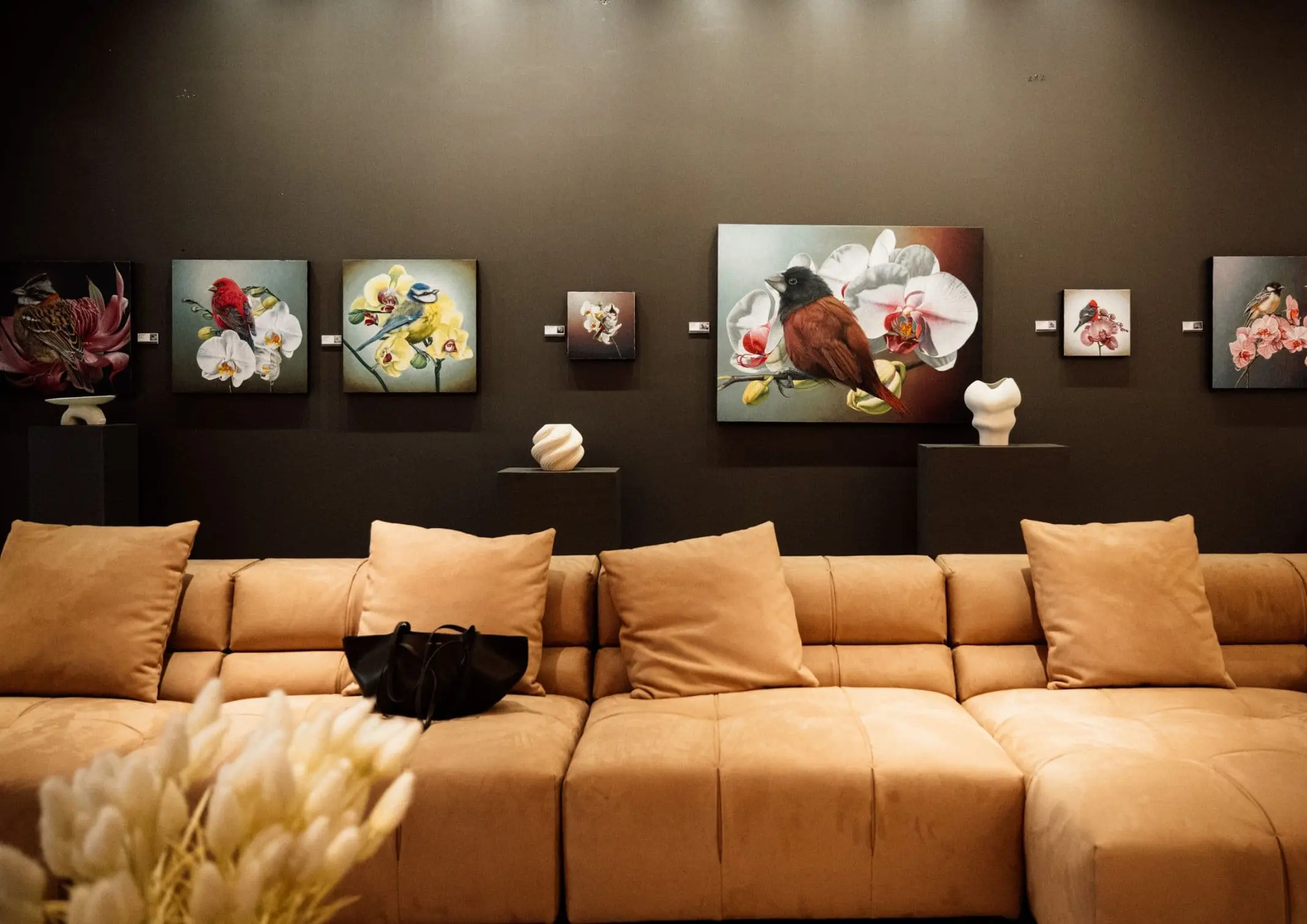
Art and furniture are often selected separately, yet their relationship can shape how a room looks and feels. The collaboration between Hooga and Galerie Joaquin explores how these elements can work together, bringing contemporary artworks into furnished residential settings at Hooga’s showroom in Uptown Mall, Bonifacio Global City. For Hooga, which curates furniture, lighting, and […]
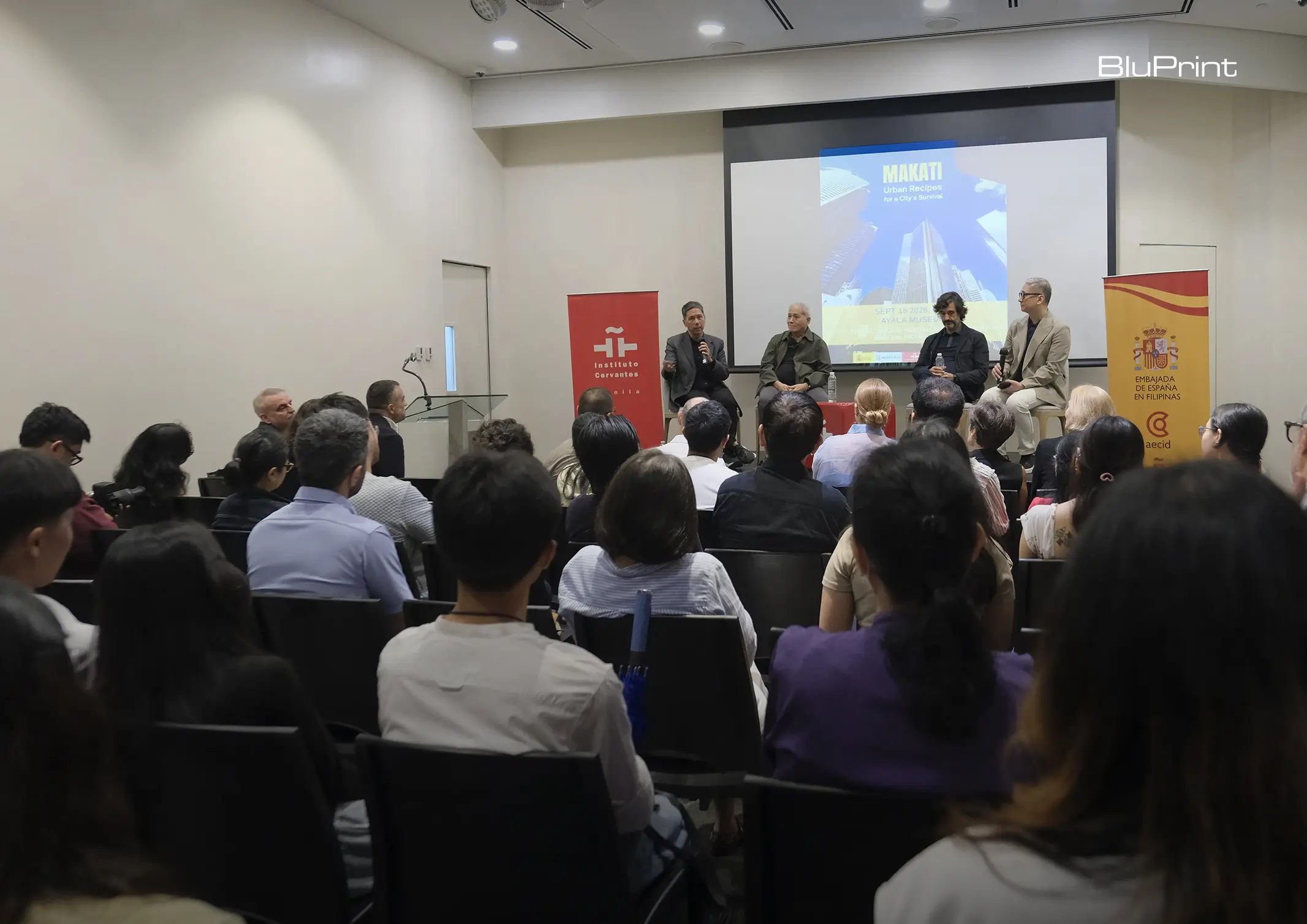
How can better-planned cities create the conditions for more creative, livable, and resilient urban environments? “Makati Urban Recipes for a City’s Survival,” a colloquium held at the Ayala Museum on September 15, brought together architects and practitioners from the fields of urbanism and the creative economy to discuss how design, planning, and collaboration can address […]
Read the issues.

Collect the volumes.

Recommended Video
Tap to Unmute
Unmute
0:00
0:00