Bigkis is the act of binding. In Tagalog, the word can refer to something used to bind or encircle, as well as a bundle formed by tying several separate elements together. Figuratively, it can also mean a bond, union, or unity. The meanings move from the physical act of joining things together to the connection […]
Erwin Canlas Expands Limits of Art Photography in New Exhibit



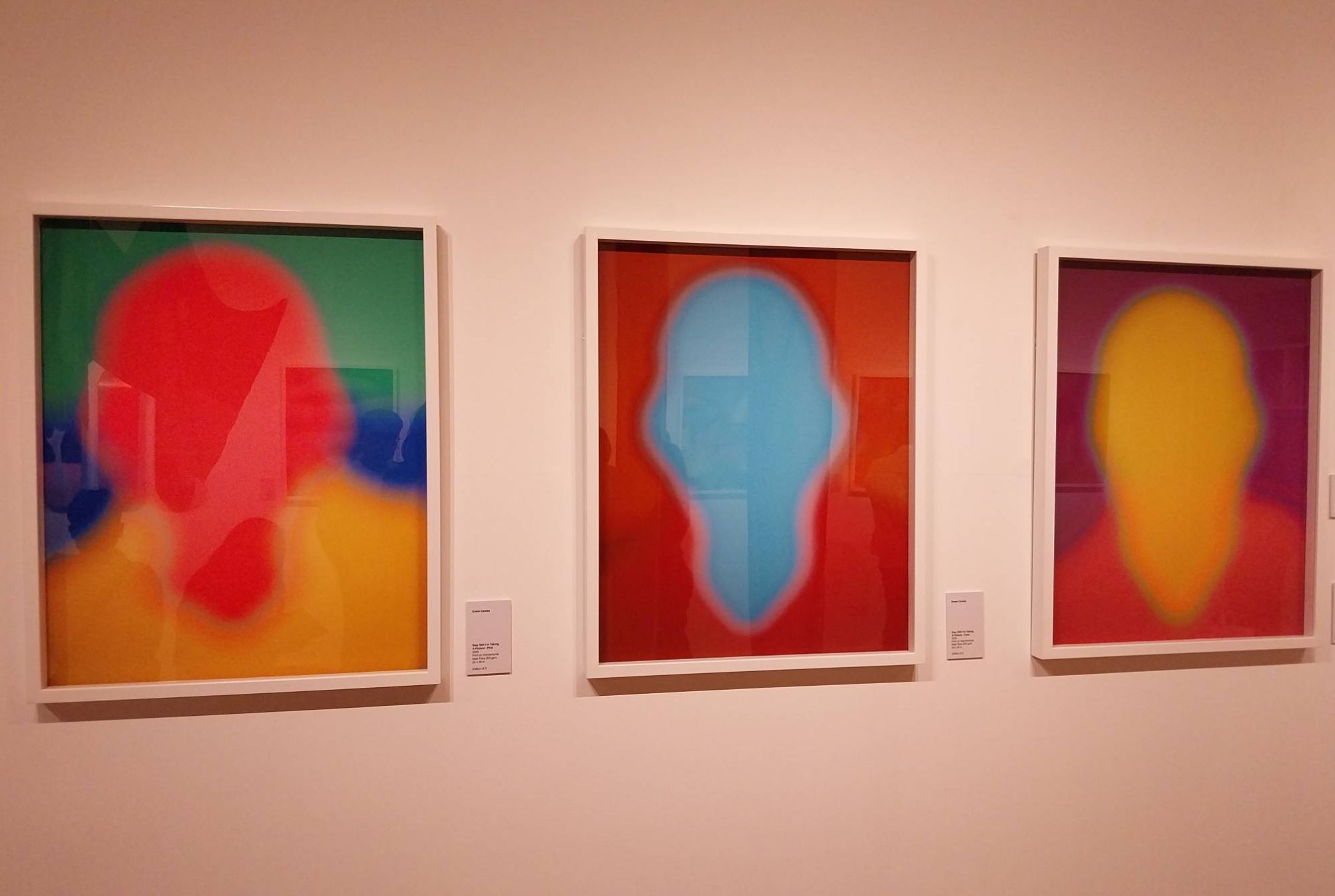
For I Think I Need New Glasses, artist and photographer Erwin Canlas sought to recreate abstract art through on-camera methods. He aims to create a facsimile of traditional abstract paintings through the common features of the camera and real-life objects. The end product emerges as something that straddles the line between the two worlds.
“I wanted to do this kind of thing kasi I really wanted [to see how] photography, how [it] would fit in the fine art scene of the traditional mediums, like acrylic, oil, [and] watercolor. I wanted it to fit in such a way that I can create photographs out of paper, out of floral textures, and such,” Canlas said.
That expansionary mindset resulted in this RiseSpace Gallery exhibit, showcasing unique artworks that play with form and substance. In mixing-and-matching methodology, Canlas finds new ways to express different personal emotional truths that ring true to him and his values.
Expanding Abstraction Through Photography
Erwin Canlas is primarily known for his fashion and commercial photography. His work has been featured in places like Vogue Philippines and MEGA Magazine. While he continues to be proud of his work in general, Canlas said that he desires to expand his horizons towards something that speaks more to his personal artistry.
“As an artist, I believe [that the] editorial and commercial, […] it’s really for the wallet, [while] the art is for the soul. My art is for myself. Ganun ko siya iniisip,” he said.
Coming from a family of artists, Canlas took it upon himself to define what his artistry is in general. How does he differentiate his artistic photography from his more commercial work? His answer came in abstraction, and using the techniques he’s honed through years of practice to create something that works towards the opposite direction.
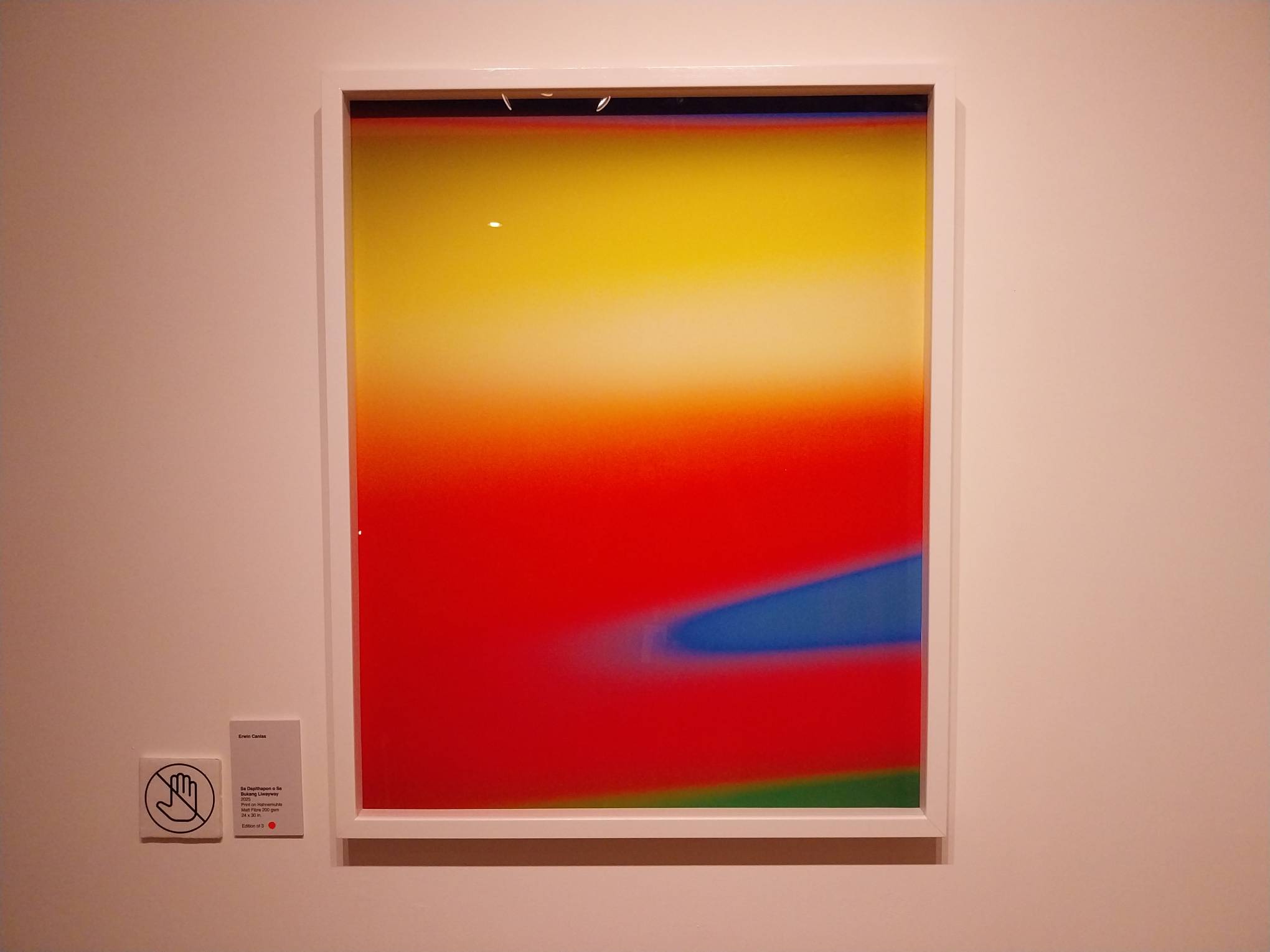
“It’s the antithesis of my work as a fashion and editorial photographer,” he said. “As to that, I don’t usually use [vivid] colors, it’s very sharp, it’s very crisp, clean imagery. So, antithesis: it’s all colors this time, all blurred out. You can’t really recognize figures, so it’s abstract.”
Playing With Colors and Textures
I Think I Need New Glasses utilizes practical methods to get its look. For the “How I Feel Today” series, which mainly shows hazily circular shapes together, Erwin Canlas used paper cutouts that he stacked on top of each other. He then blurred the focus on the camera to achieve the effect he wanted.
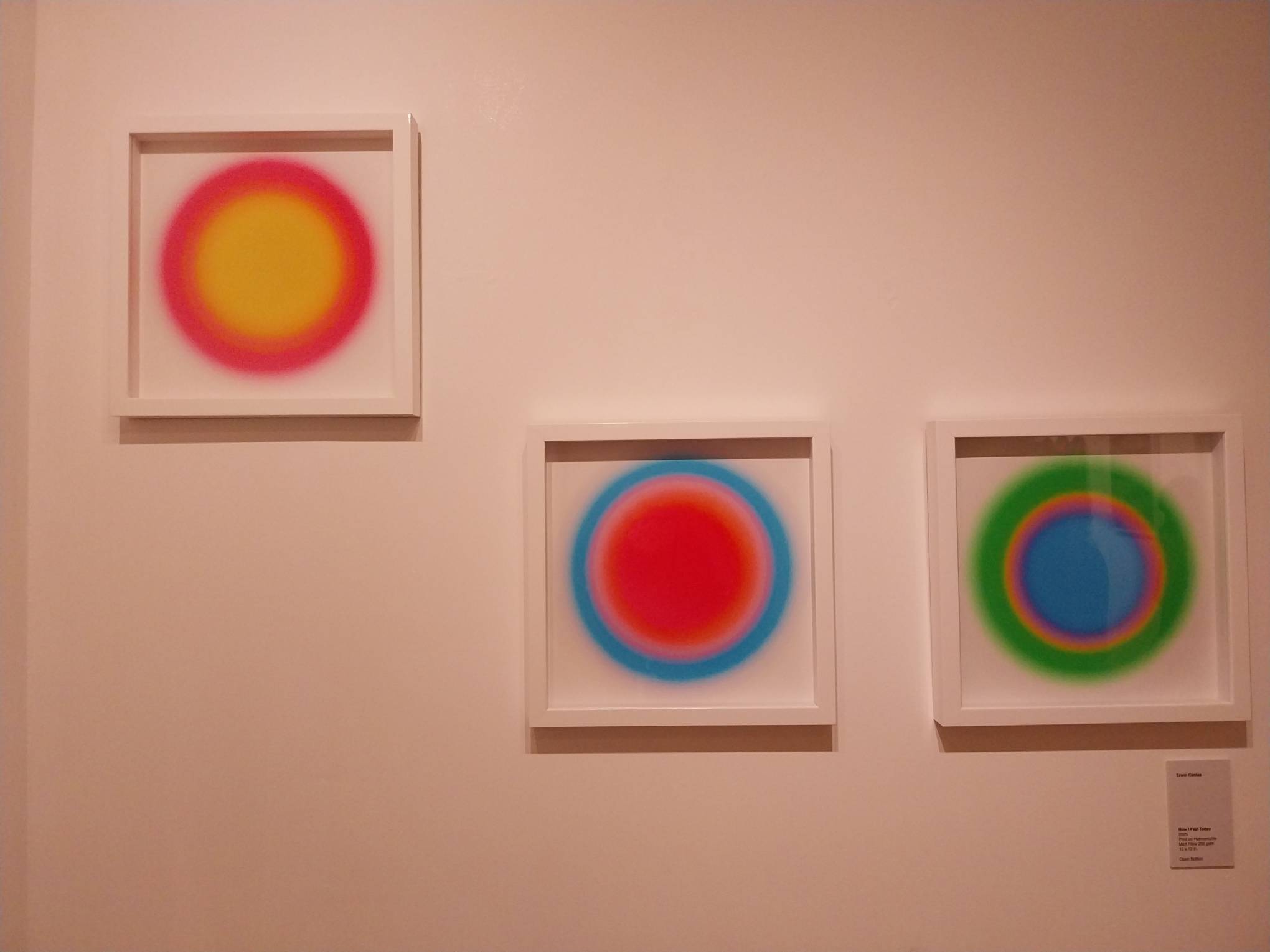
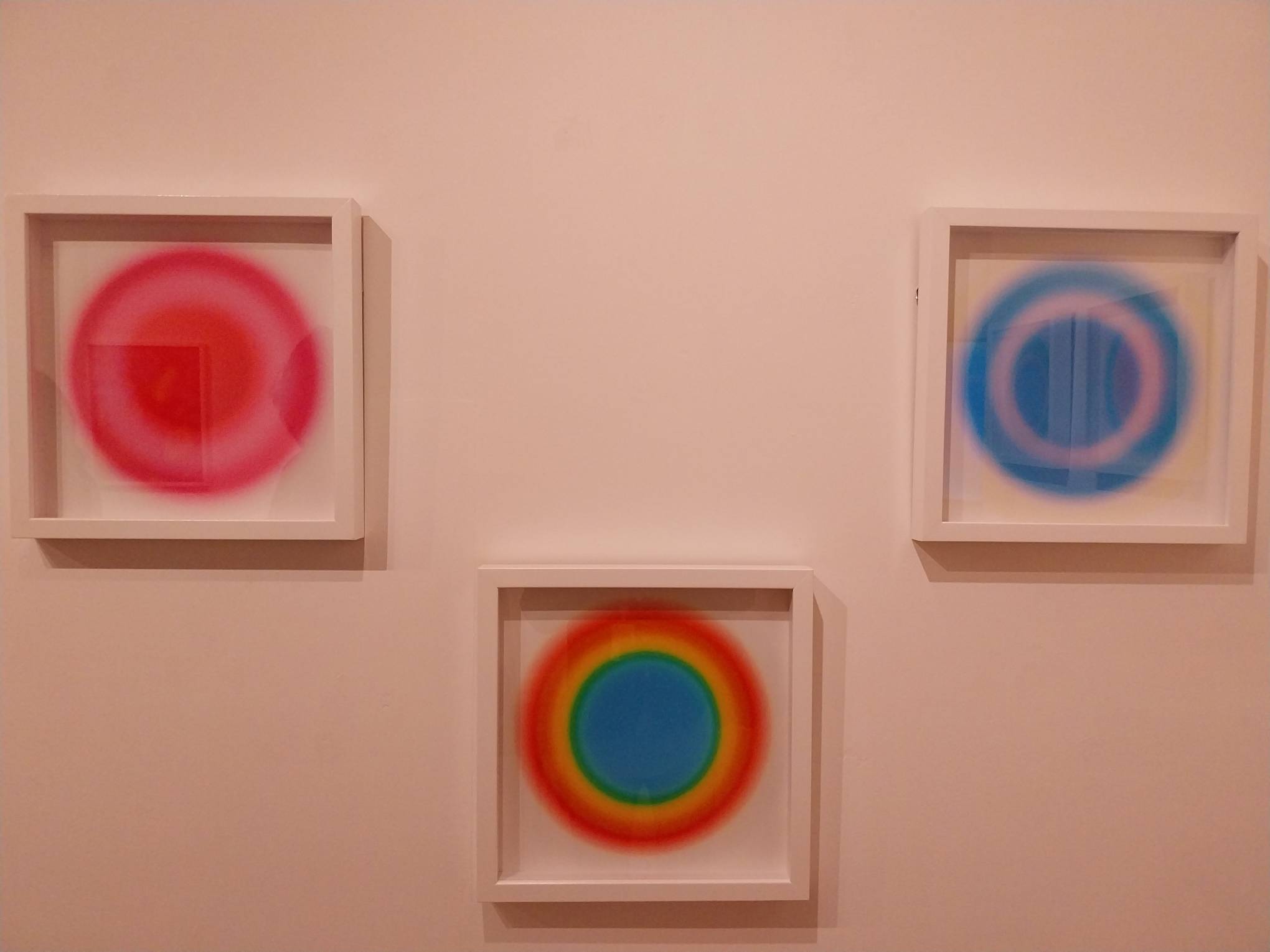
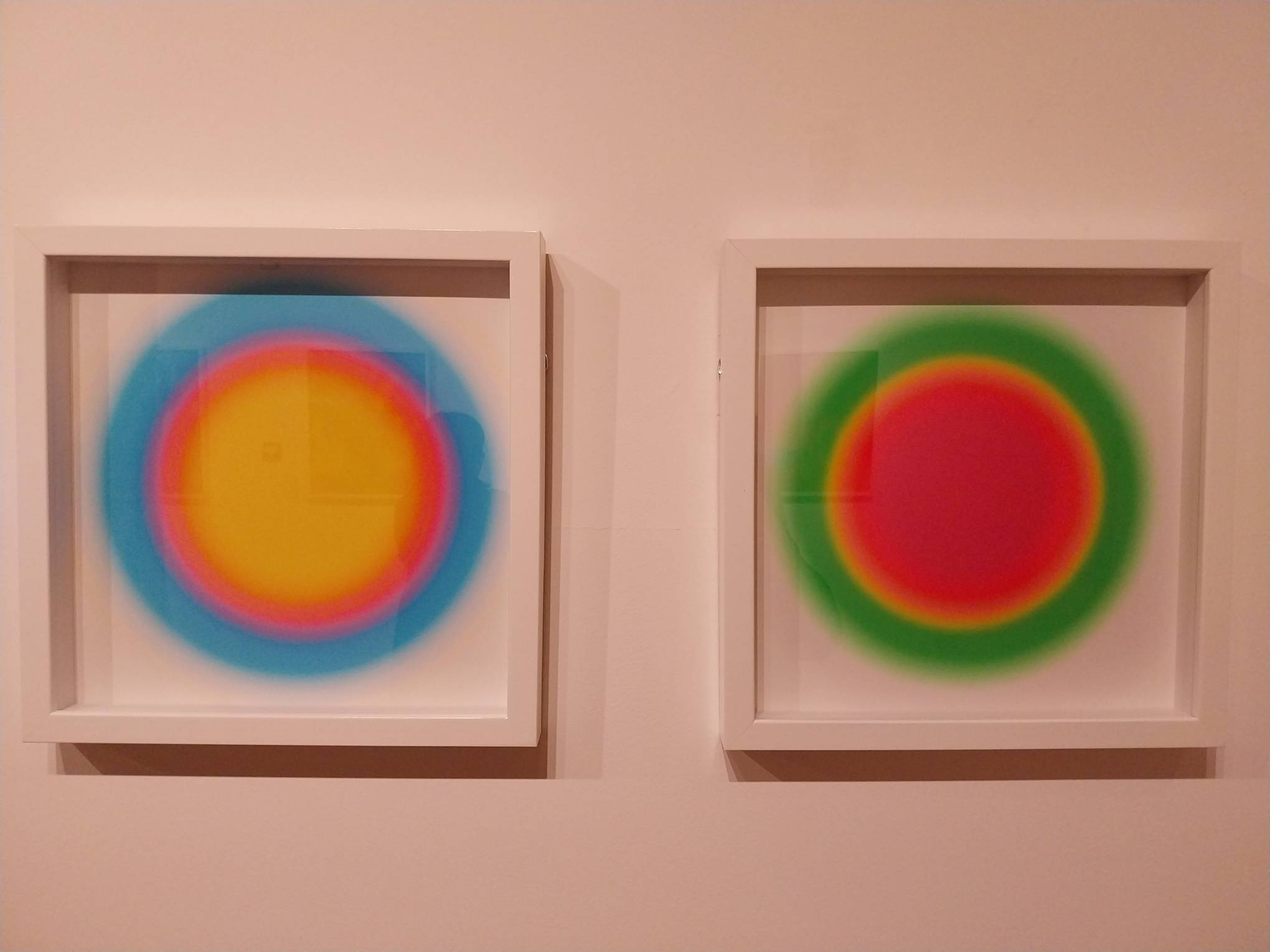
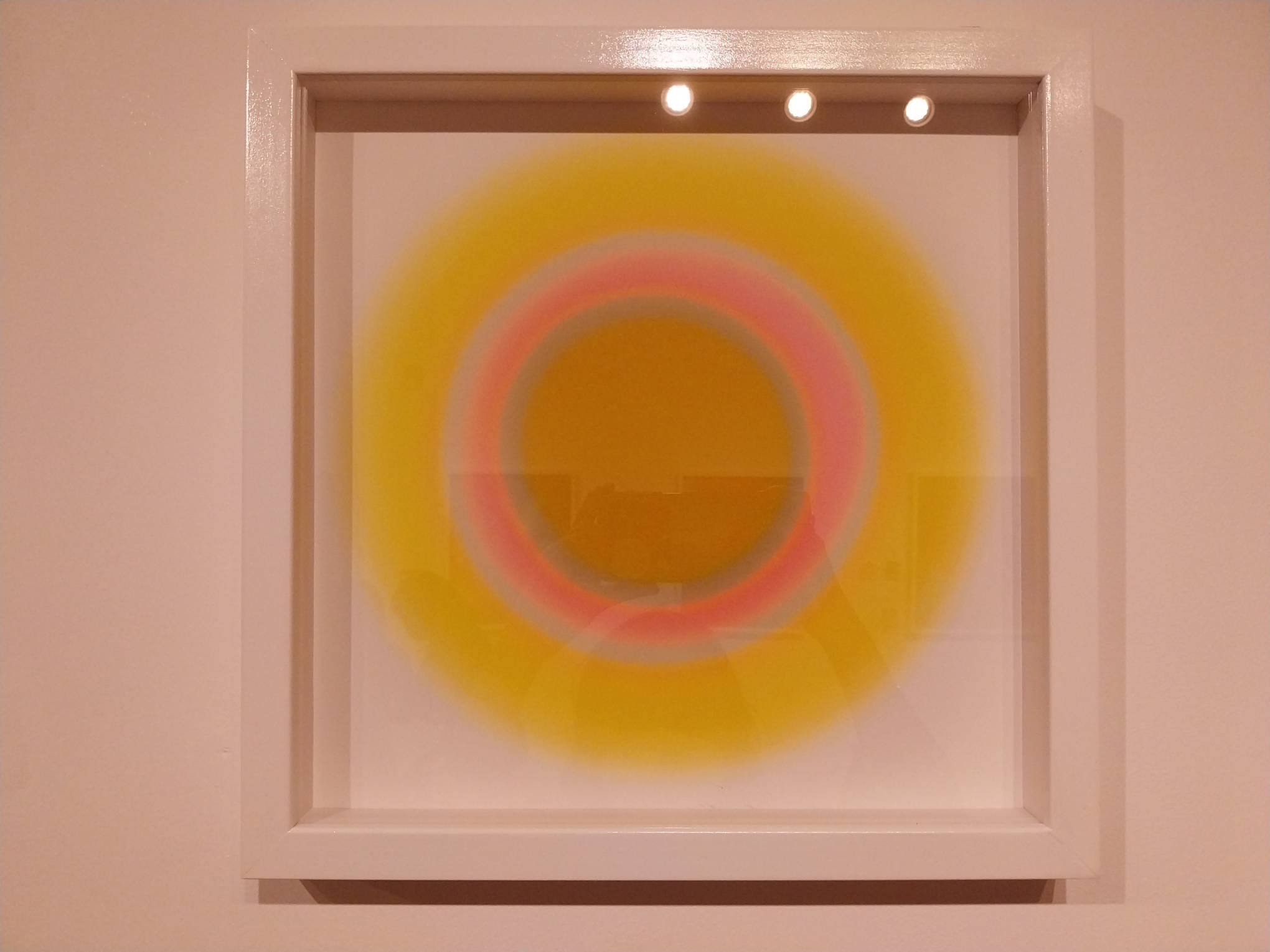
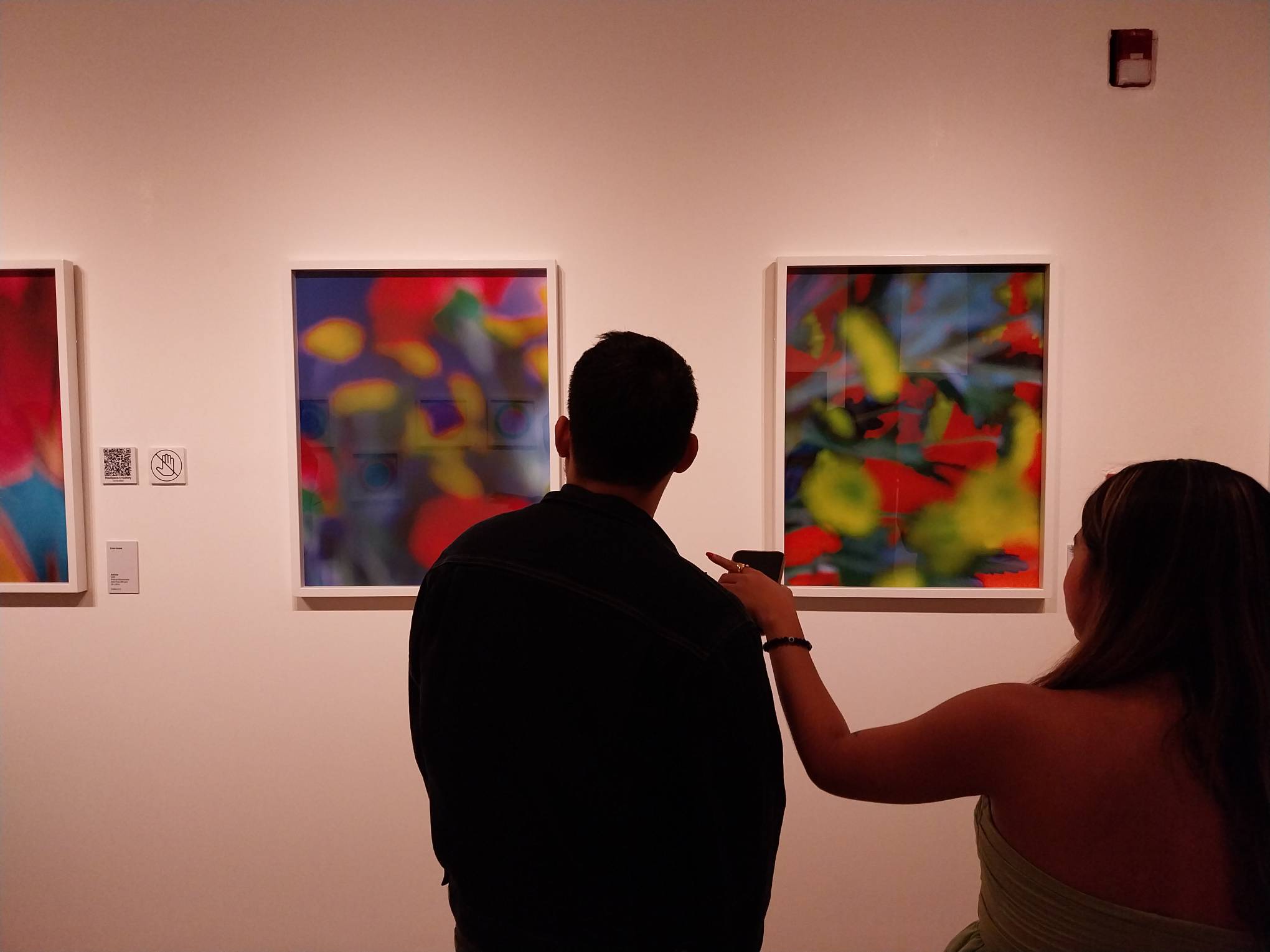
“The theme of the exhibit [is] more of color [and] vibrancy: how I can use the photographic medium to make art,” he said. “I used […] paper cutouts, I used floral arrangements. I love using texture as a way that I can turn it into paint strokes, brush strokes, mga ganyan.”
For some of the works in the exhibit like “In The Haze,” “Auroras,” or “Bloom,” Canlas worked with floral arrangements that he then blurred and saturated to create a fuzzy yet vibrant obfuscation of the original objects. Those paintings also had the added effect of creating unintentional color patterns in the final product that Canlas found interesting.
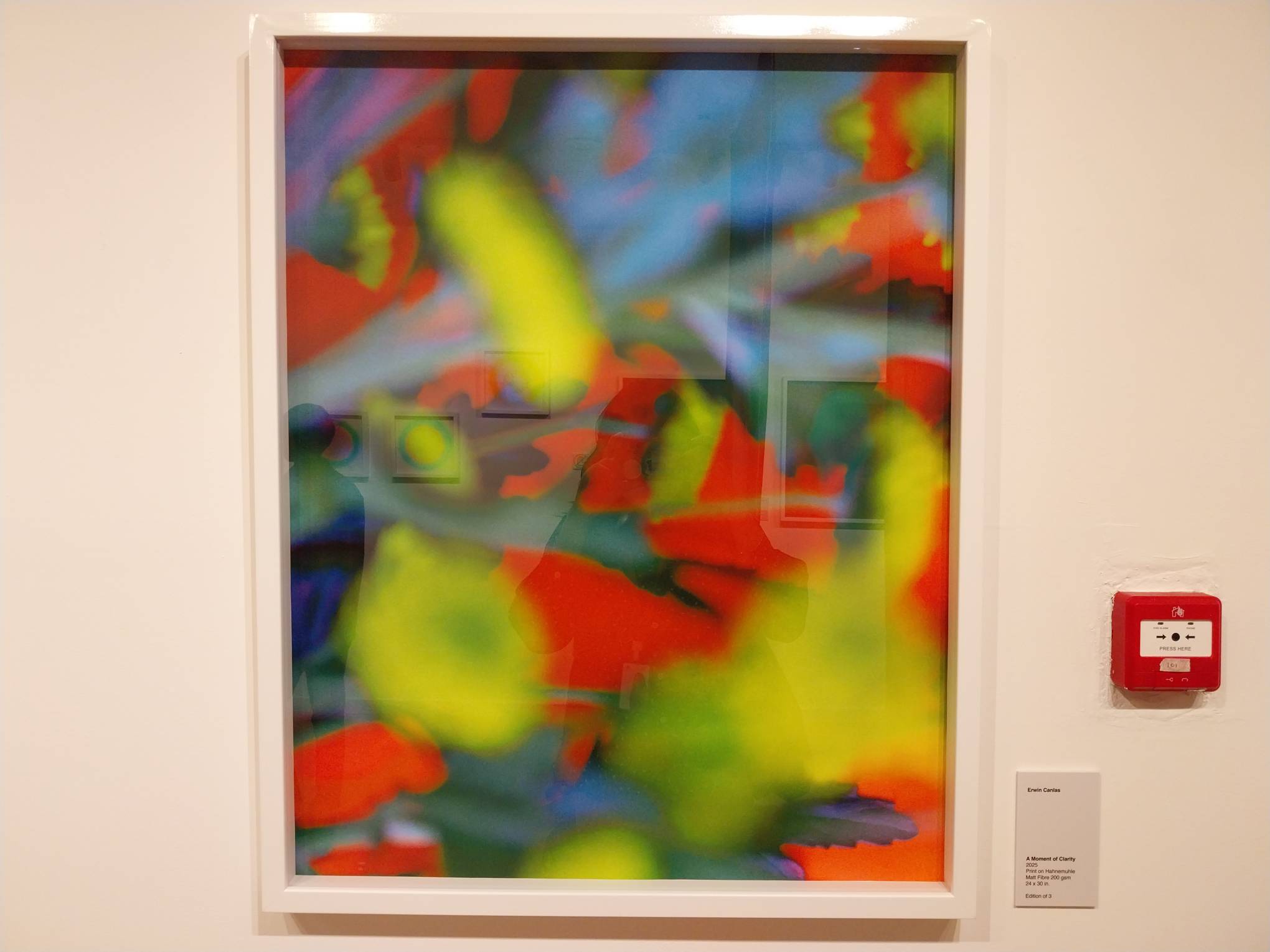
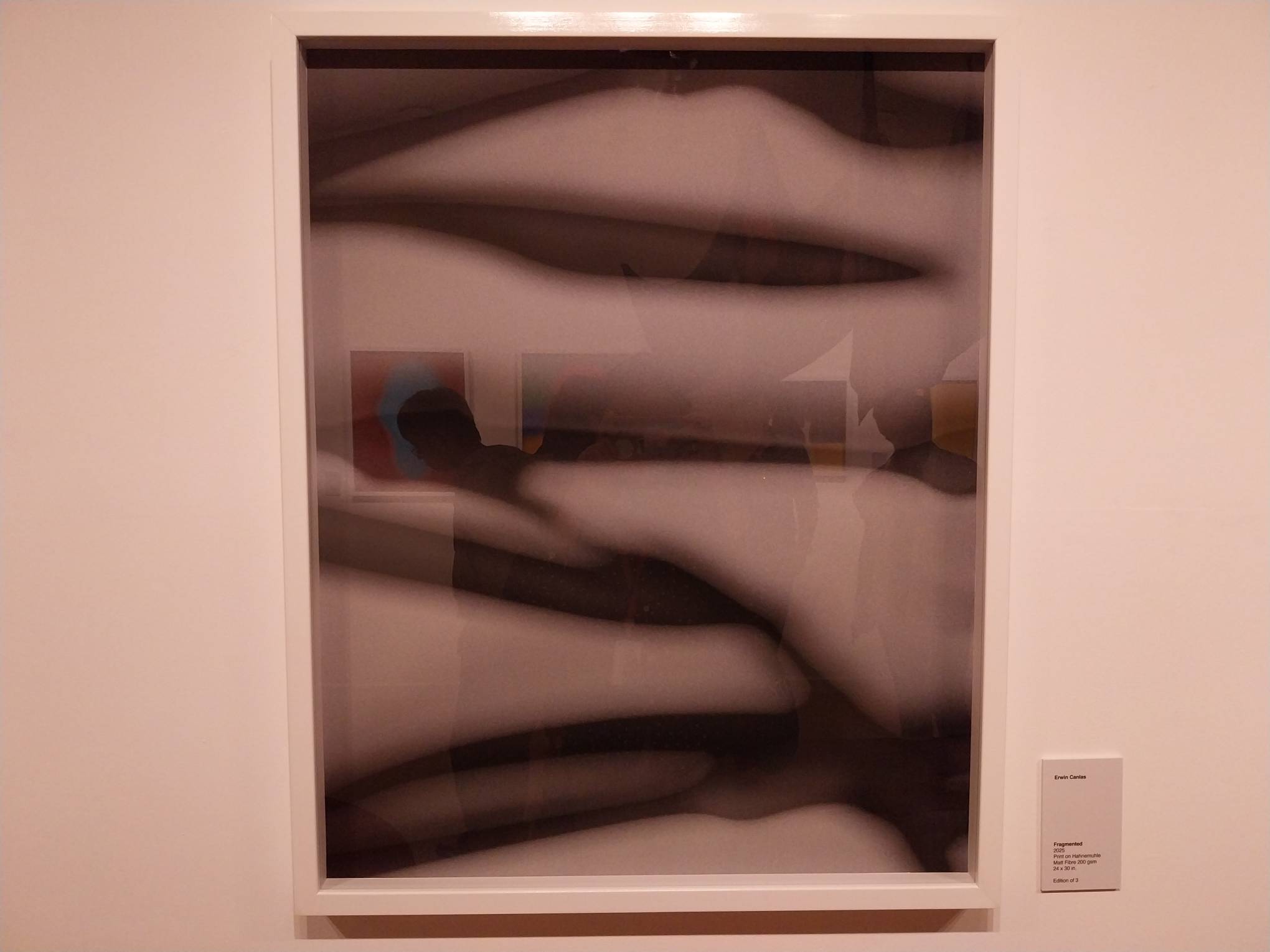
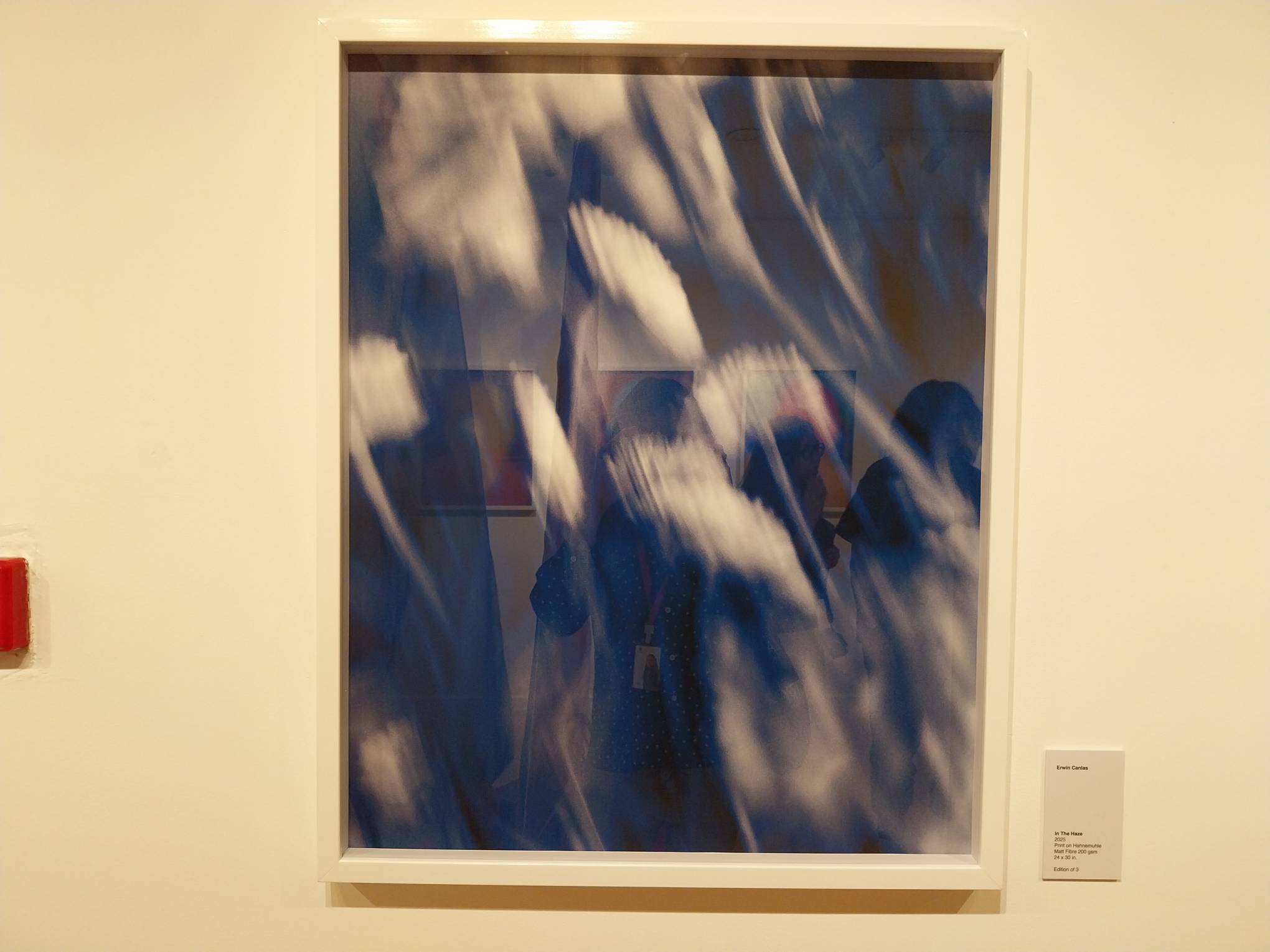
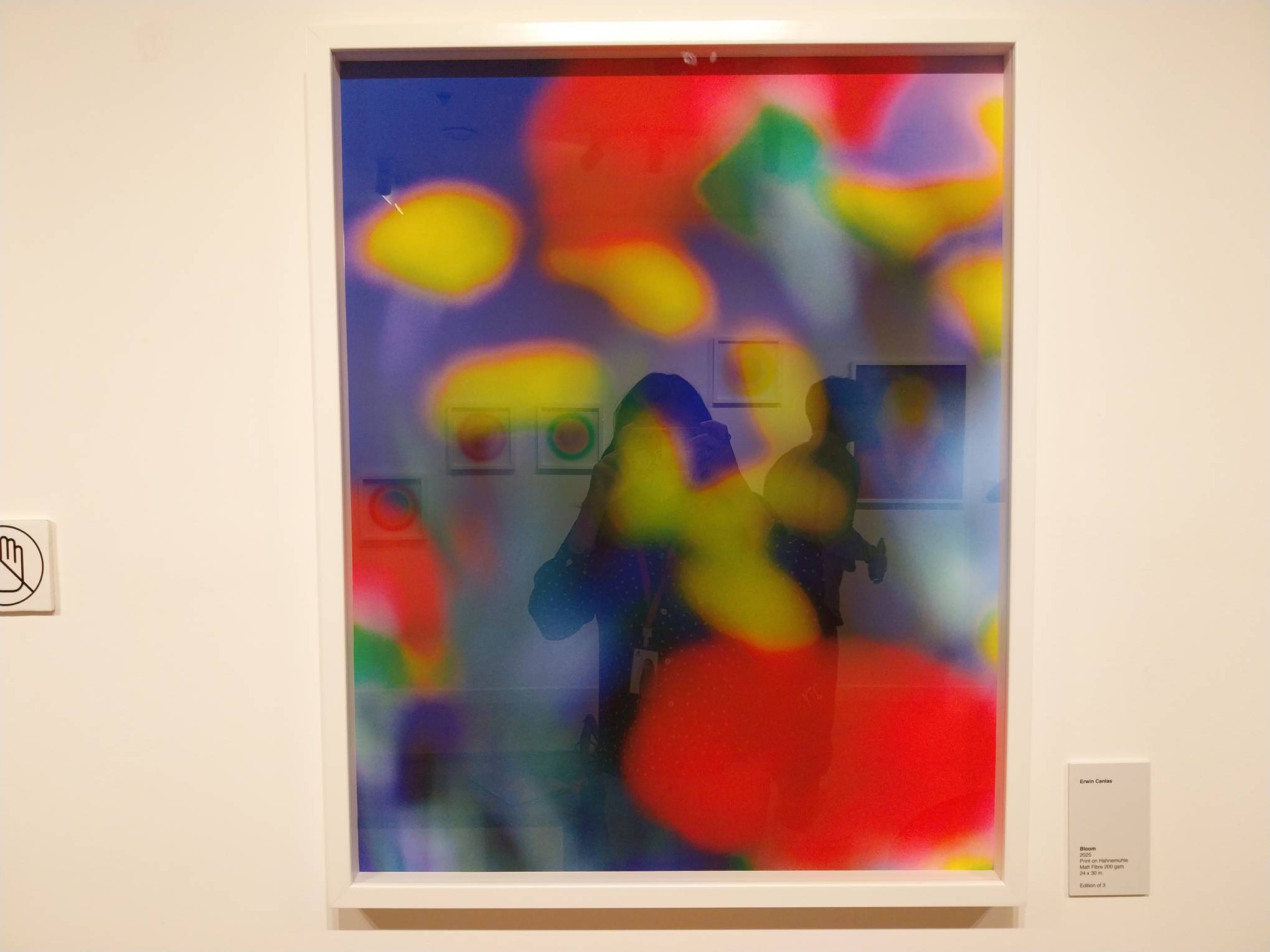
“They’re blurred out so that—actually, hindi sadya yung parang, when you see it up-close, pag pinagtabi mo yung ibang colors, in between the colors, may nag-a-appear,” he said. “I didn’t really notice that when I was producing. It just dawned on me like, oh, nagkakaroon siya ng common denominator, which is like actual colors that appear na hindi ko sinasadya siya.”
The Personal and the Textural
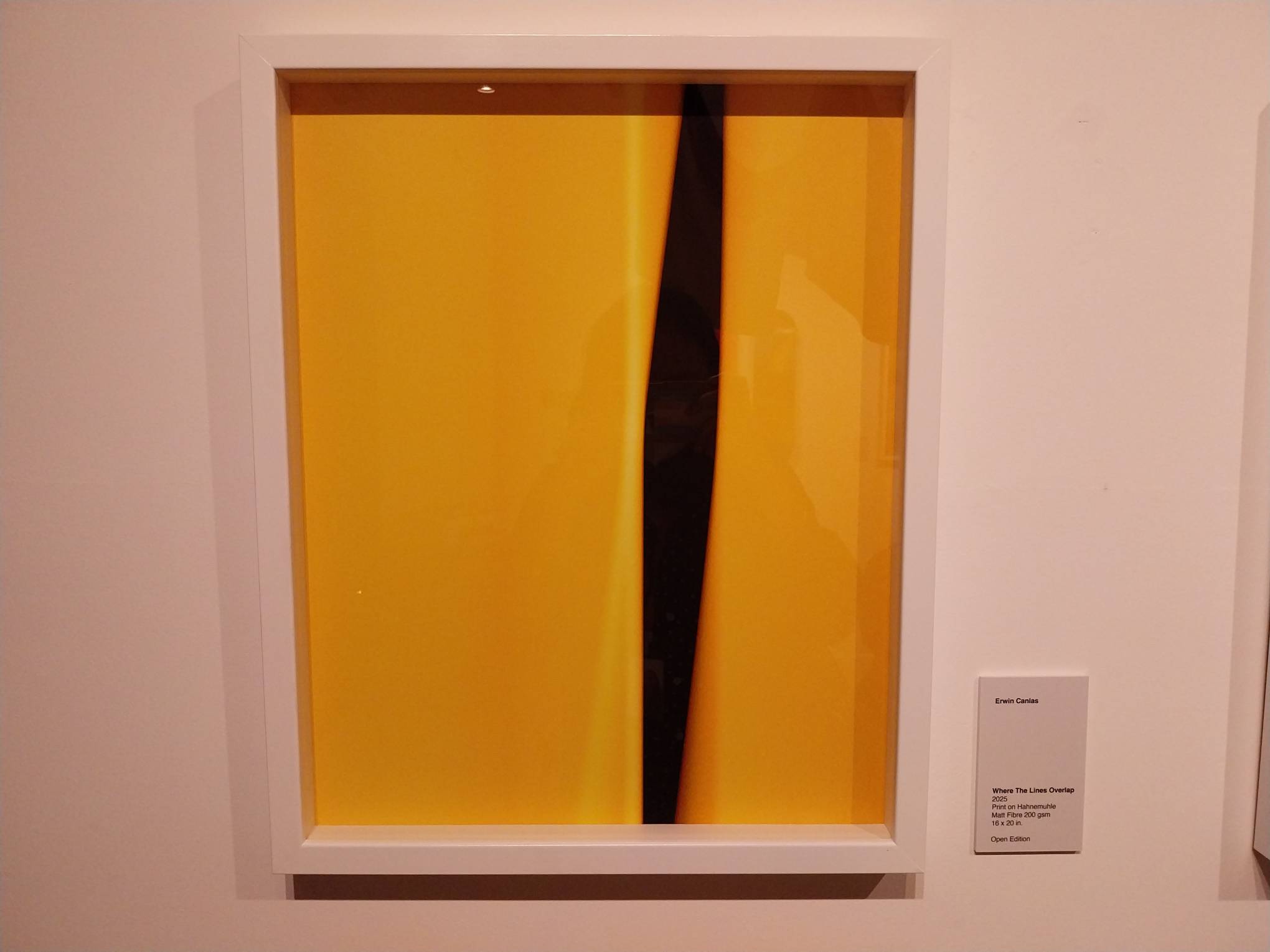
Some of the paintings in the exhibit tackle more personal topics, like “Not Waving But Drowning.” Based on a poem by Stevie Smith that Canlas first heard in the album of the same name by Loyle Carner, it depicts a hand that’s seemingly drowning in an ocean of yellows and blacks.
“With that, you’d see, instead of the color blue na dapat water, it’s yellow,” he said. It’s actually the vibrance of people’s energies being lost in that. Like, where should I fit in in this crowd? Am I really asking for help? Would you know that I’m asking for help?”
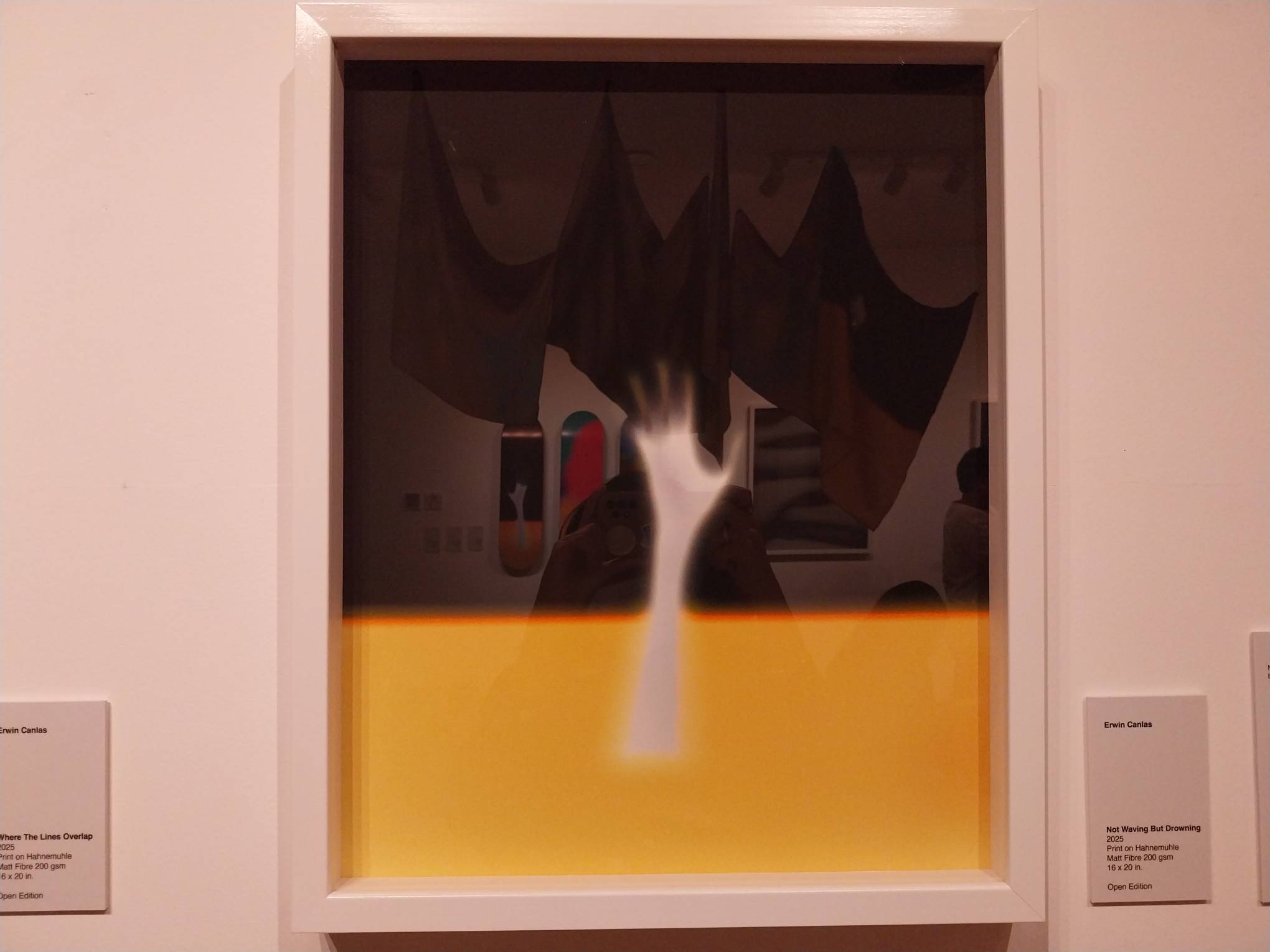
The combination of yellows and blacks indicate how he felt like the darkness would eat a person up into nothingness. And yet, the whiteness of the hand seemingly reaching out of the ocean of colors signifies hope for a better future.
The artist said that the painting represents that sense of hopelessness when you don’t know how to ask for help from others. It came from a period of his life, he said, where he was “lost” and looking for advice.
“I was trying to look for help, pero I [didn’t] know how,” he said. “I think people would, when I ask [questions] like “where should I go? What direction should I [go]?” I think they’re more of me just making [it] na parang it’s just a casual conversation, but it’s really me asking for help because I’m really lost.
Making Art Accessible
Another intriguing thing about the exhibition is the different merchandise of the artworks that RiseSpace Gallery had: from handkerchiefs to skateboard decks, there seems to be a diversity of objects that collectors can take home beyond the work itself. When asked about it, Erwin Canlas saw it as a bid for accessibility in his artworks for newer collectors.
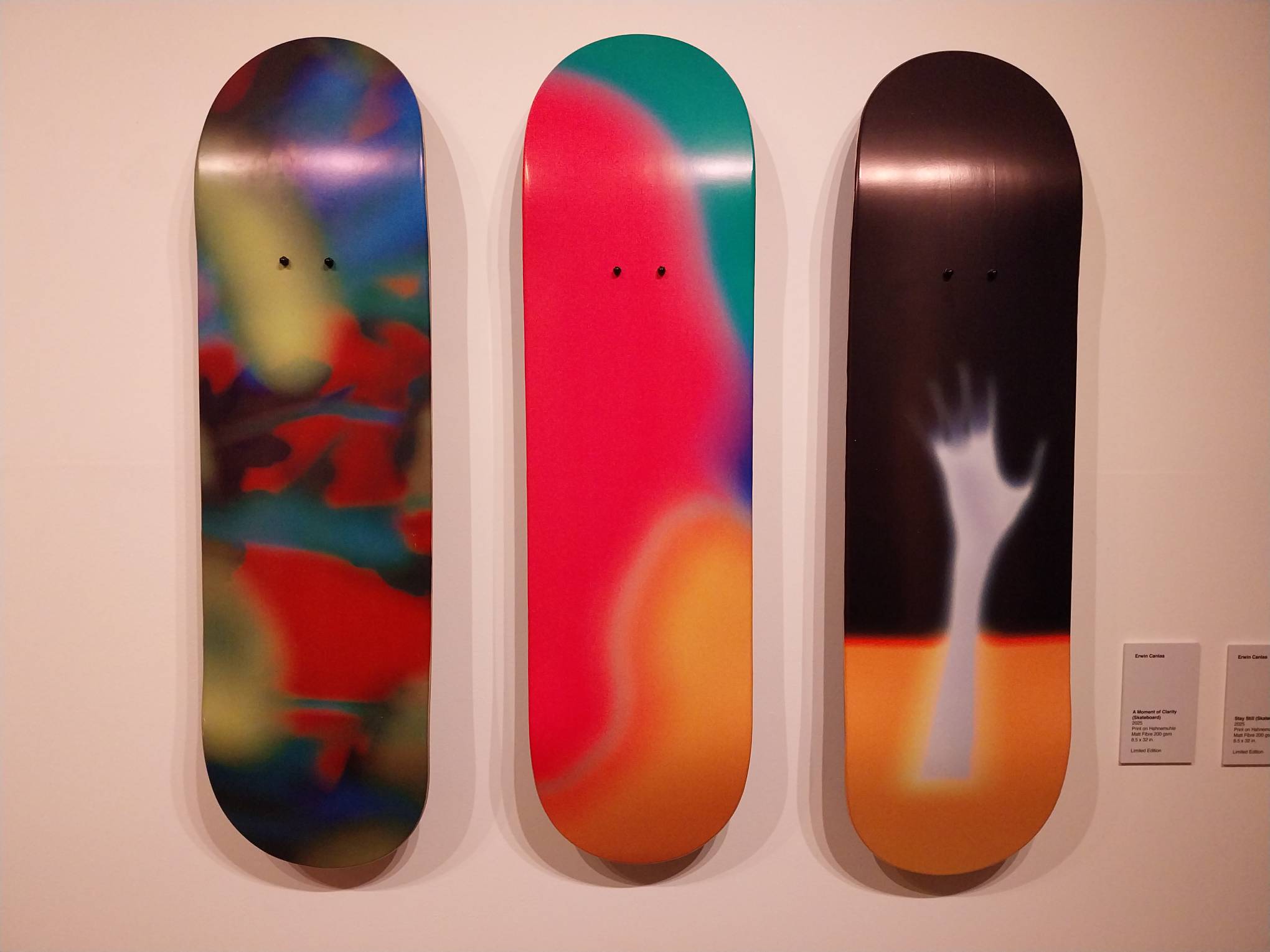
“When you go to the different galleries abroad, especially to the gift shops, you can see a lot of things that are artistically possible to own,” he started. “Parang there’s this Yayoi Kusama skateboard in MoMA, or a Basquiat skateboard, and I was thinking na parang, I think I would be able to introduce myself more if I do this, na parang if I print it on a skateboard, it’s a tangible piece of art na you can literally skate on or you can just hang on your wall.
“Parang it makes me more approachable and relatable in a sense. That’s what I was trying to portray with that. Souvenirs can also be art. [It’s] an art form in itself na parang at least hindi siya intimidating than the bigger pieces. If you’re like a collector that’s starting out, that’s also a way.”
Art Creation Through Photography
![The artist [far right] explaining the hanging fabric prints for"I Think I Need New Glasses."](https://assets.bluprint-onemega.com/wp-content/uploads/2025/02/20250206_180543.jpg "20250206_180543 - BluPrint")
I Think I Need New Glasses certainly functions as an interesting step towards seeing photography as a tool in art creation and not just art documentation. Artists can and should wield the camera like a paintbrush, moving away from fidelity with reality to explore the emotional core of themselves.
“I would want my photography to be known as […] taking photography [and] making it into art: abstract, brush strokes, even if it’s not the traditional sense,” he said.
Photos by Elle Yap.
Related reading: Architectural photographs (or the remains of our buildings)
Frequently Asked Questions
In his exhibit I Think I Need New Glasses, Erwin Canlas utilizes on-camera methods to recreate the look of traditional abstract paintings without relying on digital manipulation. By using physical paper cutouts, floral arrangements, and stacking textures, he adjusts the camera’s focus to blur these objects into vibrant, hazy forms. This process allows him to treat the lens like a paintbrush, capturing “brush strokes” and “paint layers” through practical, real-world light and shadow.
Erwin Canlas defines his commercial and editorial work for titles like Vogue Philippines as being “for the wallet,” characterized by crisp, sharp, and highly defined imagery. In contrast, his fine art photography serves as the “antithesis” to that precision, focusing on the soul through abstraction and blurred figures. While commercial work demands clarity, his personal art prioritizes emotional truth and the exploration of form and color over representational fidelity.
Several works in the collection, such as Not Waving But Drowning, translate deep emotional struggles into visual metaphors using color theory. In this specific piece, Canlas uses an ocean of yellow to represent the overwhelming energy of a crowd and black to symbolize the darkness of feeling lost. The inclusion of a white hand reaching out signifies the silent plea for help and the hope for a better future during periods of personal uncertainty.
Canlas achieves complex textures by experimenting with physical materials placed directly in front of the lens. For the How I Feel Today series, he stacked layers of paper cutouts and used floral arrangements to create organic, saturated patterns that mimic oil or watercolor effects. These physical objects, when blurred through the camera’s focus, produce unintentional color interactions where new hues appear at the borders of different shapes, adding a layer of depth to the final print.
To break down the intimidation often associated with fine art galleries, Canlas and RiseSpace Gallery produced a range of art-themed merchandise, including handkerchiefs and skateboard decks. Inspired by global institutions like MoMA, Canlas views these items as tangible, functional pieces of art that allow new collectors to own his work at a more approachable price point. By offering “souvenirs” as art forms themselves, he aims to make his creative vision more relatable and less intimidating to the general public.
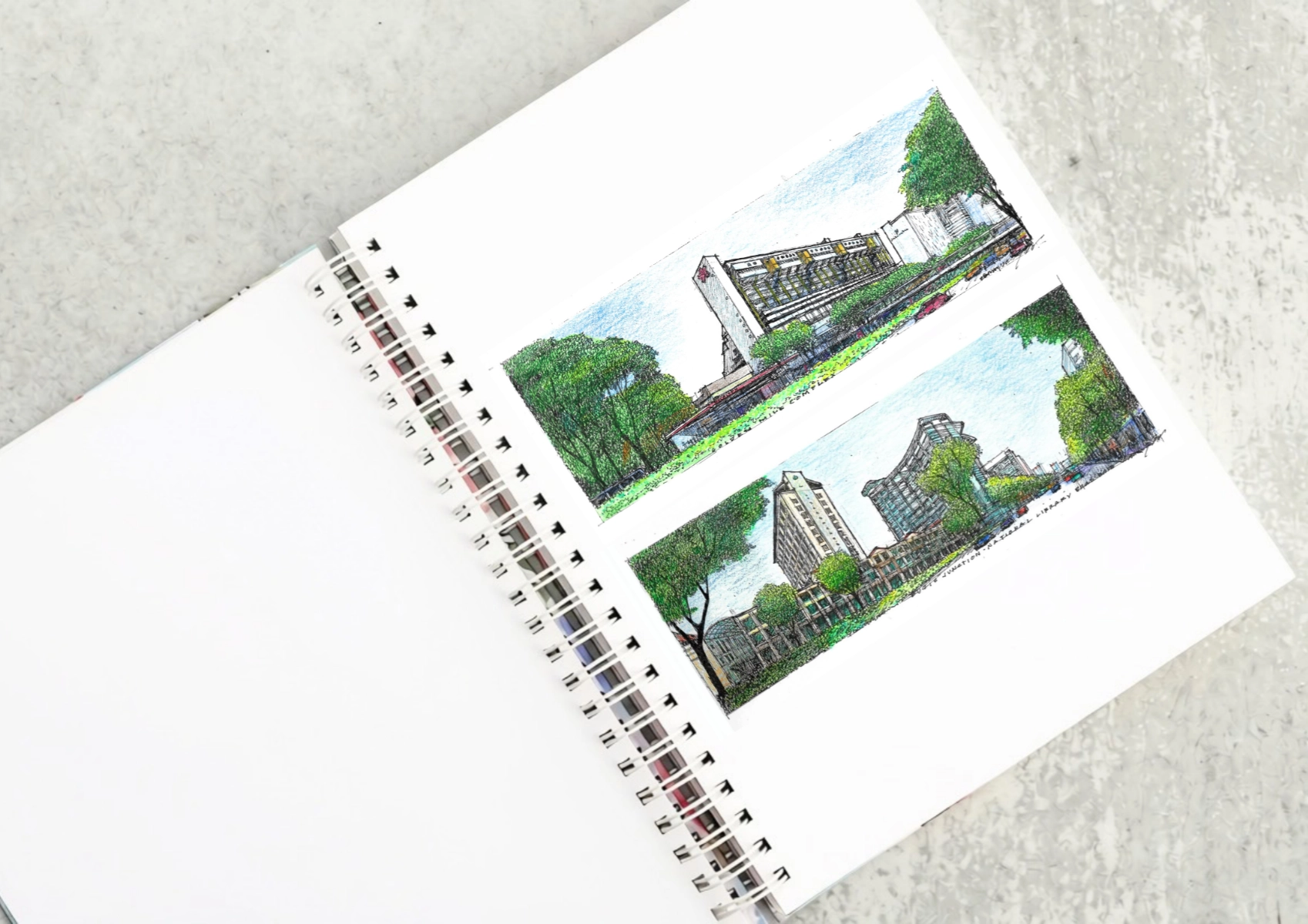
Two sketches of Singapore connect BluPrint Editor in Chief Paulo G. Alcazaren’s personal and professional history with Shared Ground: ArchitectureArchitectureThe art and science of designing and constructing buildings, structures, and spaces that are functional, safe, and aesthetically pleasing. It encompasses the planning, design, materials, and techniques used to createGo to Architecture Glossary of Care, Culture, […]
In a way, designers are the modern-day soothsayers and prophets. They design for the future, predicting how a room, a house, a building or a whole city will be used by people. They foresee how users will interact with a space, conjure exact shades of colors to elicit specific behavior and arrange furniture to build […]
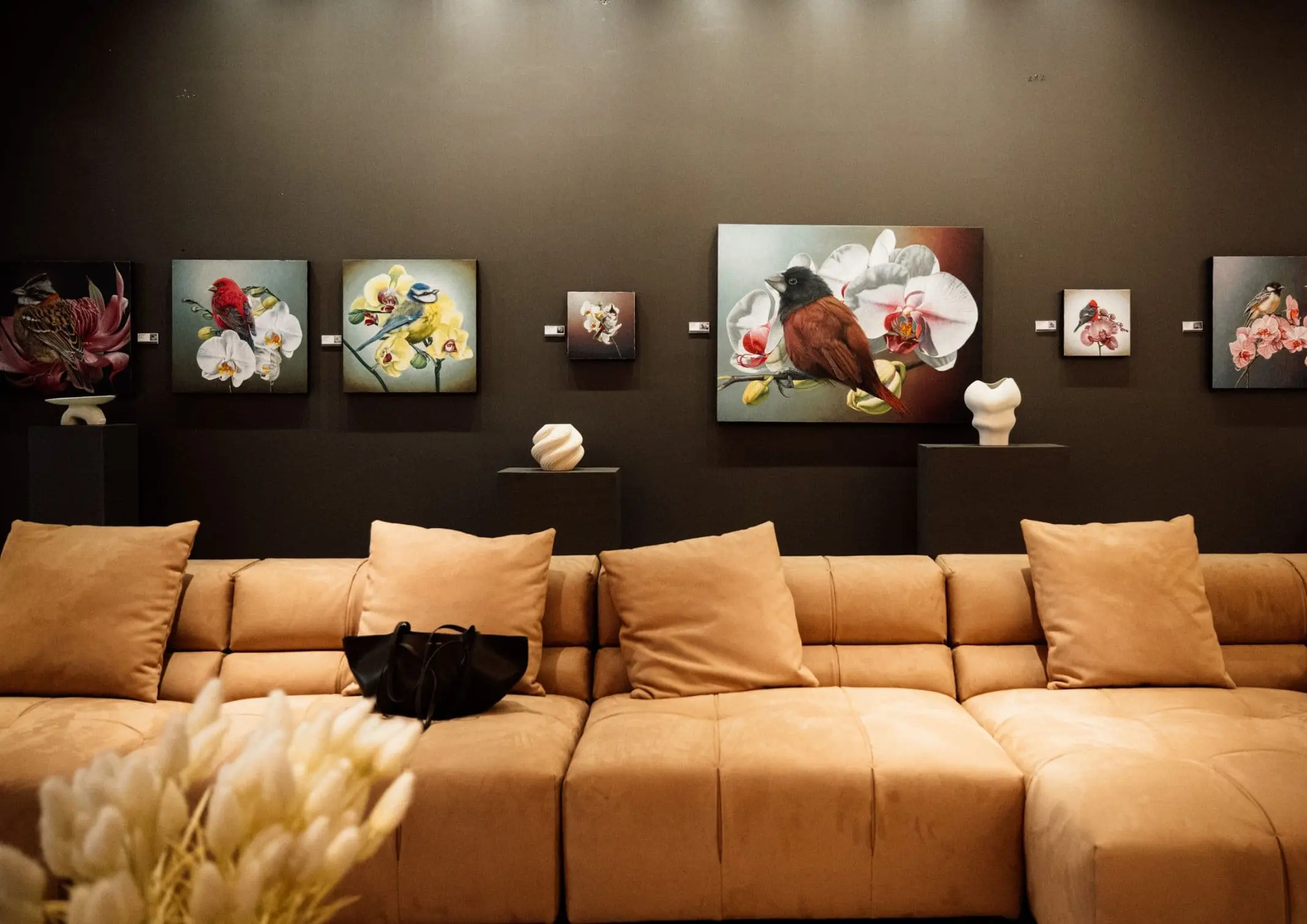
Art and furniture are often selected separately, yet their relationship can shape how a room looks and feels. The collaboration between Hooga and Galerie Joaquin explores how these elements can work together, bringing contemporary artworks into furnished residential settings at Hooga’s showroom in Uptown Mall, Bonifacio Global City. For Hooga, which curates furniture, lighting, and […]
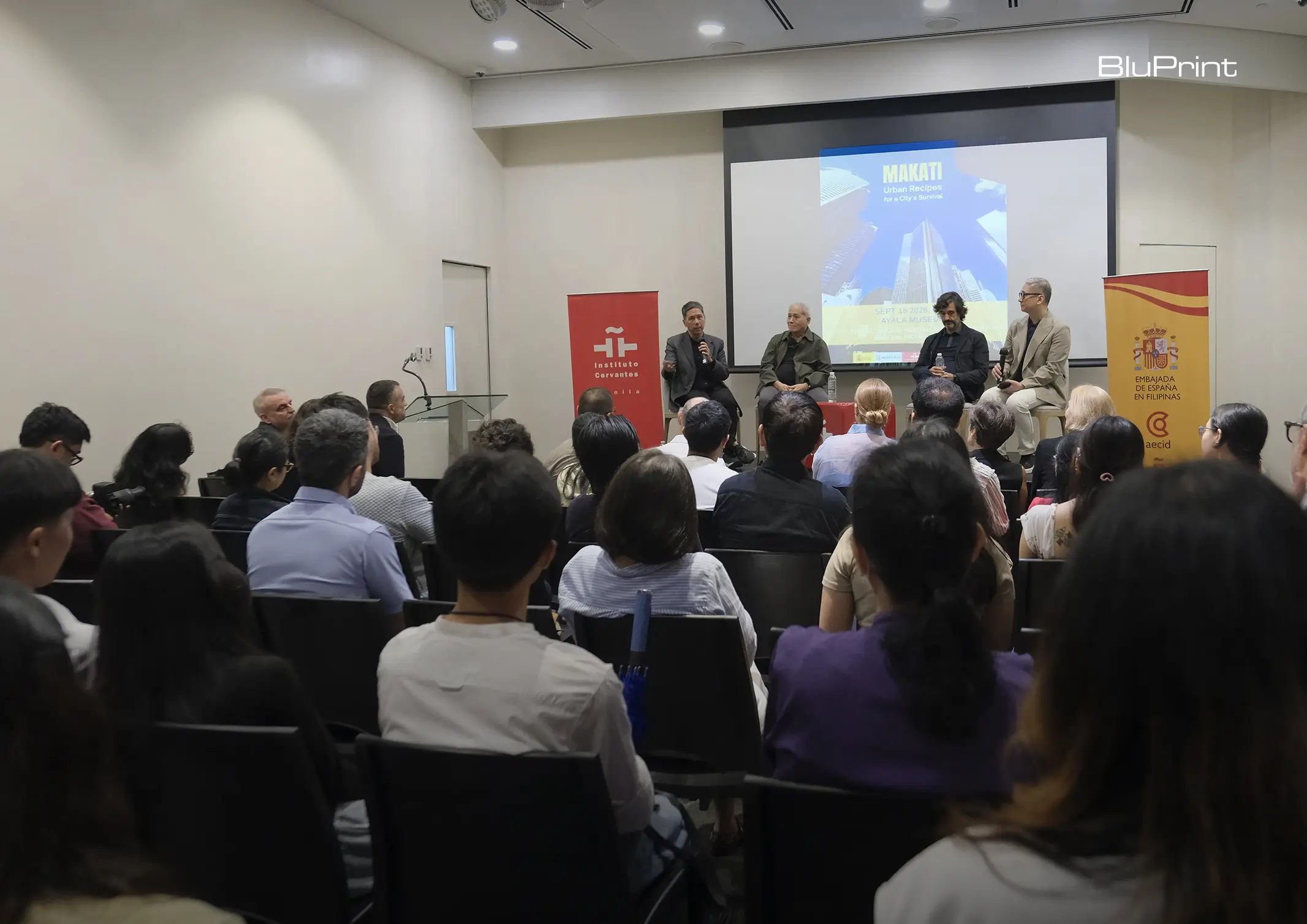
How can better-planned cities create the conditions for more creative, livable, and resilient urban environments? “Makati Urban Recipes for a City’s Survival,” a colloquium held at the Ayala Museum on September 15, brought together architects and practitioners from the fields of urbanism and the creative economy to discuss how design, planning, and collaboration can address […]
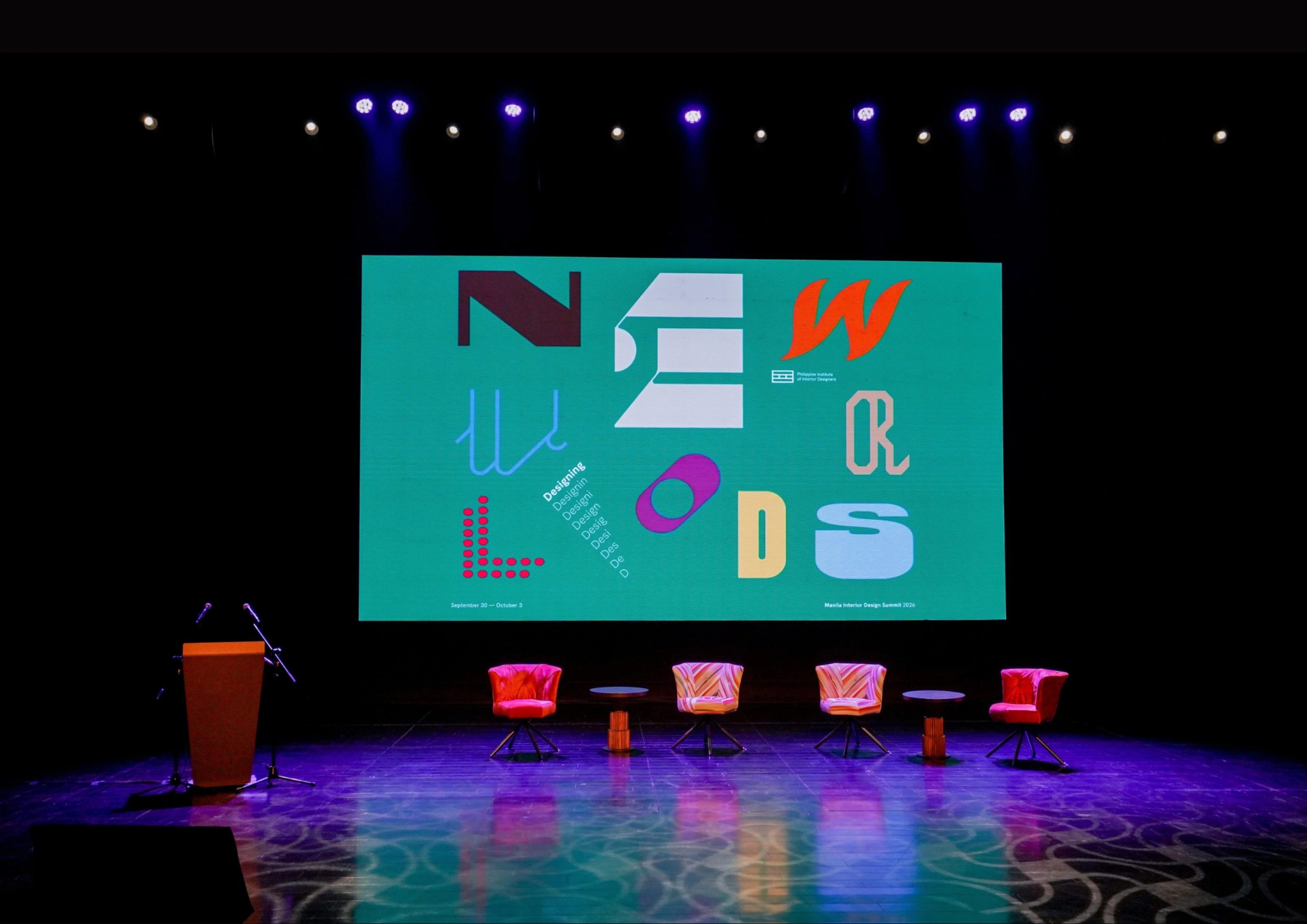
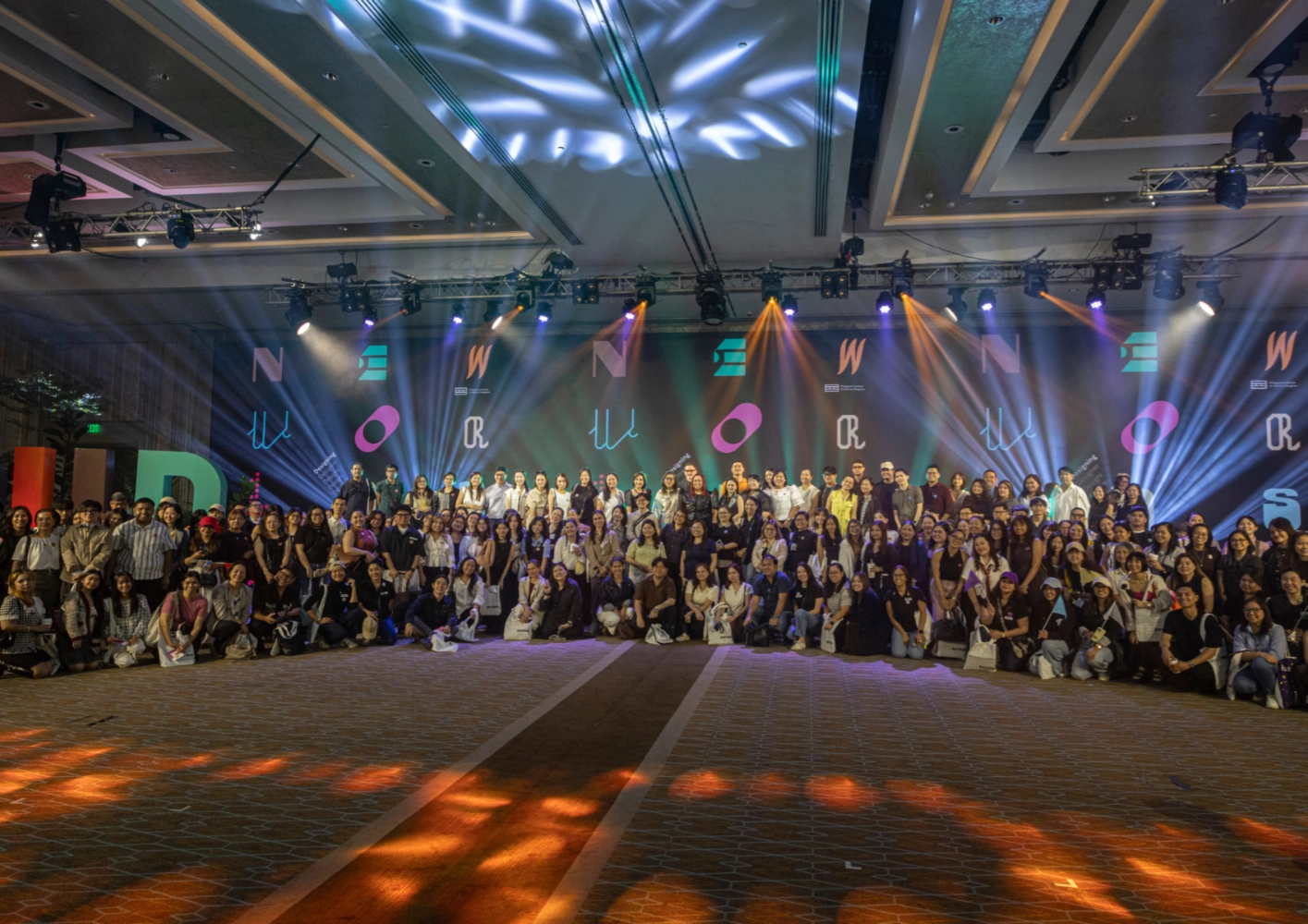
The fourth Manila Interior DesignInterior DesignThe discipline of planning and shaping interior spaces for function, comfort, safety, and beauty. It covers layout, lighting, materials, finishes, furniture, and color, and in the Philippines is a licensedGo to Interior Design Glossary Summit (MIDS) brought together more than 300 delegates for four days of conversations, exhibitions, and design […]
Read the issues.

Collect the volumes.

Recommended Video
Tap to Unmute
Unmute
0:00
0:00