Bigkis is the act of binding. In Tagalog, the word can refer to something used to bind or encircle, as well as a bundle formed by tying several separate elements together. Figuratively, it can also mean a bond, union, or unity. The meanings move from the physical act of joining things together to the connection […]
‘A Knife Sharpens Itself’ Slices Through Gender Norms in Art



A Knife Sharpens Itself, the new group exhibition at Cartellino Art, convened twenty-two artists for a show celebrating International Women’s Month. This line-up was assembled by The 5th House, a curatorial project of artists Brisa Amir and Jose Olarte.
Amir centered the exhibit around the idea of degendering art. It works towards an abolitionist perspective: a defiance against norms to instead encourage someone to move towards a journey of self-discovery. Because of this, she unified this thematic focus with the symbolism of the knife—its power as an object towards “transformation, building, destroying, and [dismantling].”
“In their hands, a gash opens up a potential for self-discovery, a celebration of one’s constitution, or a defiance against conventions,” the exhibit write-up said. “A knife must wound before it heals, before it clears the space for regrowth and transformation.”
Redefining Ambition as Gender Neutral
A Knife Sharpens Itself was explicitly inspired by the gender abolitionist movement of xenofeminism, which aims for degendering through the advent of technology. Amir said that she was influenced by novelist Clarice Lispector in her approach on the subject, specifically quoting one of her works: “I haven’t been human for a long time. They wanted me to be an object. But I don’t totally obey: if I have to be an object, let me be an object that screams.”
Amir talked about how the existence of gender norms tends to create inequality in the systems that we have today.
“I like that xenofeminism is an advocate for a future where humans are not defined by their gender,” she said. “Gusto ko yung idea na kailangan mawala ang future na yung male ay linked with power and privilege while yung female, nonbinary, cis, trans, queer, bi, result in less access to power.
(“I like the idea of a future where we remove the links of power and privilege with the male gender while the female, nonbinary, cis, trans, queer, and bi people result in less access to power.”)
“I like how it dismantles rigid gender categories and it’s generating a future that is not patriarchal,” she continued.
Knives and Power
The metaphor at the center of the exhibit connotes violent transformation, an understanding that society’s changes towards equality entails a fight and reckoning upon the old systems. Thus, with A Knife Sharpens Itself, Brisa Amir and the artists that she chose envision that transformative quality, and how, in a patriarchal society, any attempts to attain it is never easy or fully peaceful.
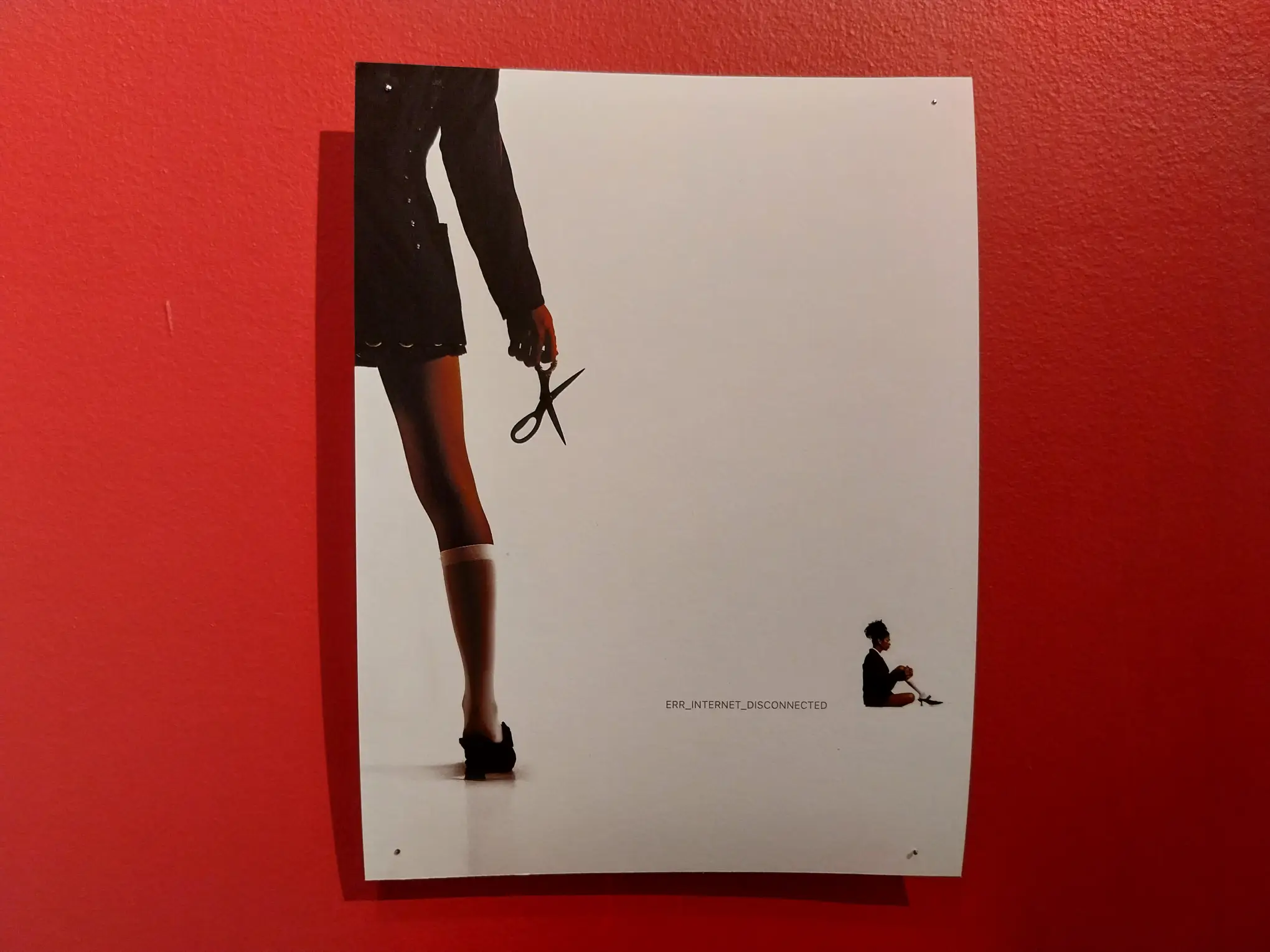
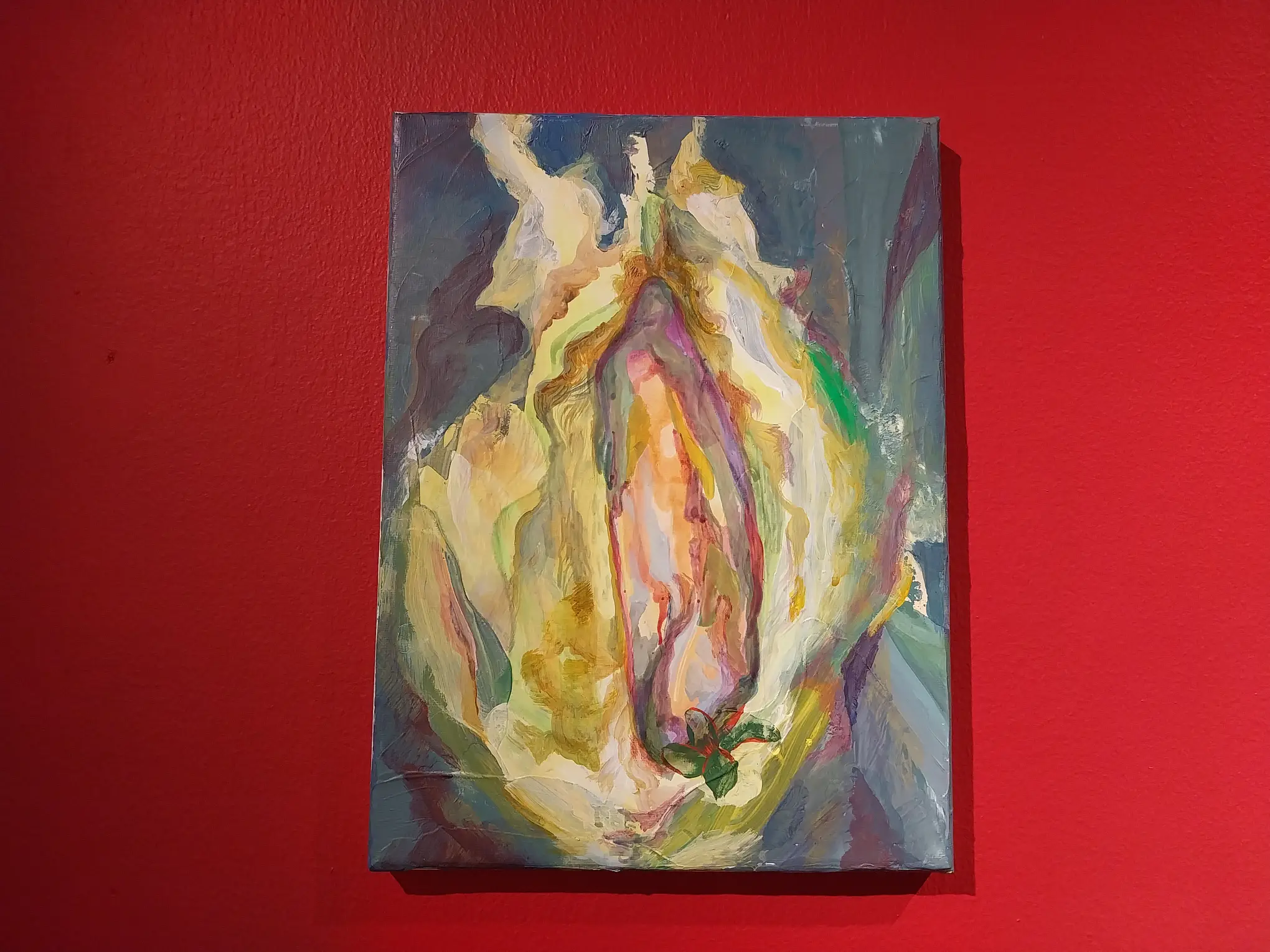
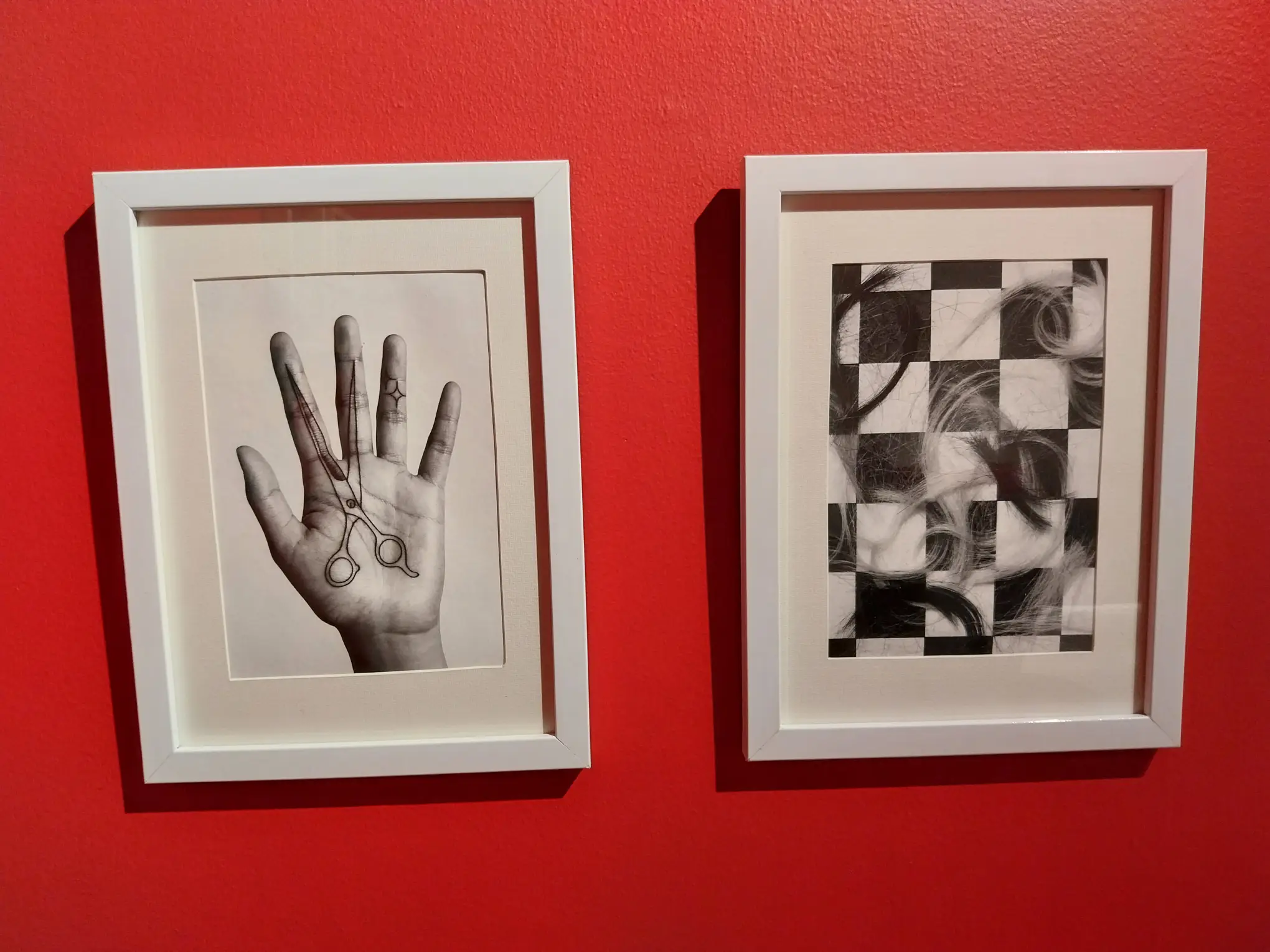
“With the metaphor ‘knife,’ artists are given space to share or mag-bahagi ng karanasan kaugnay sa salita na ‘kapangyarihan,’ ‘pagbabagong anyo,’ and ‘paglaban.’ (Artists are given space to share their experiences with the words ‘power,’ ‘changing forms,’ and ‘fighting.’).
“It’s a form of resistance.”
Imagining Transformation
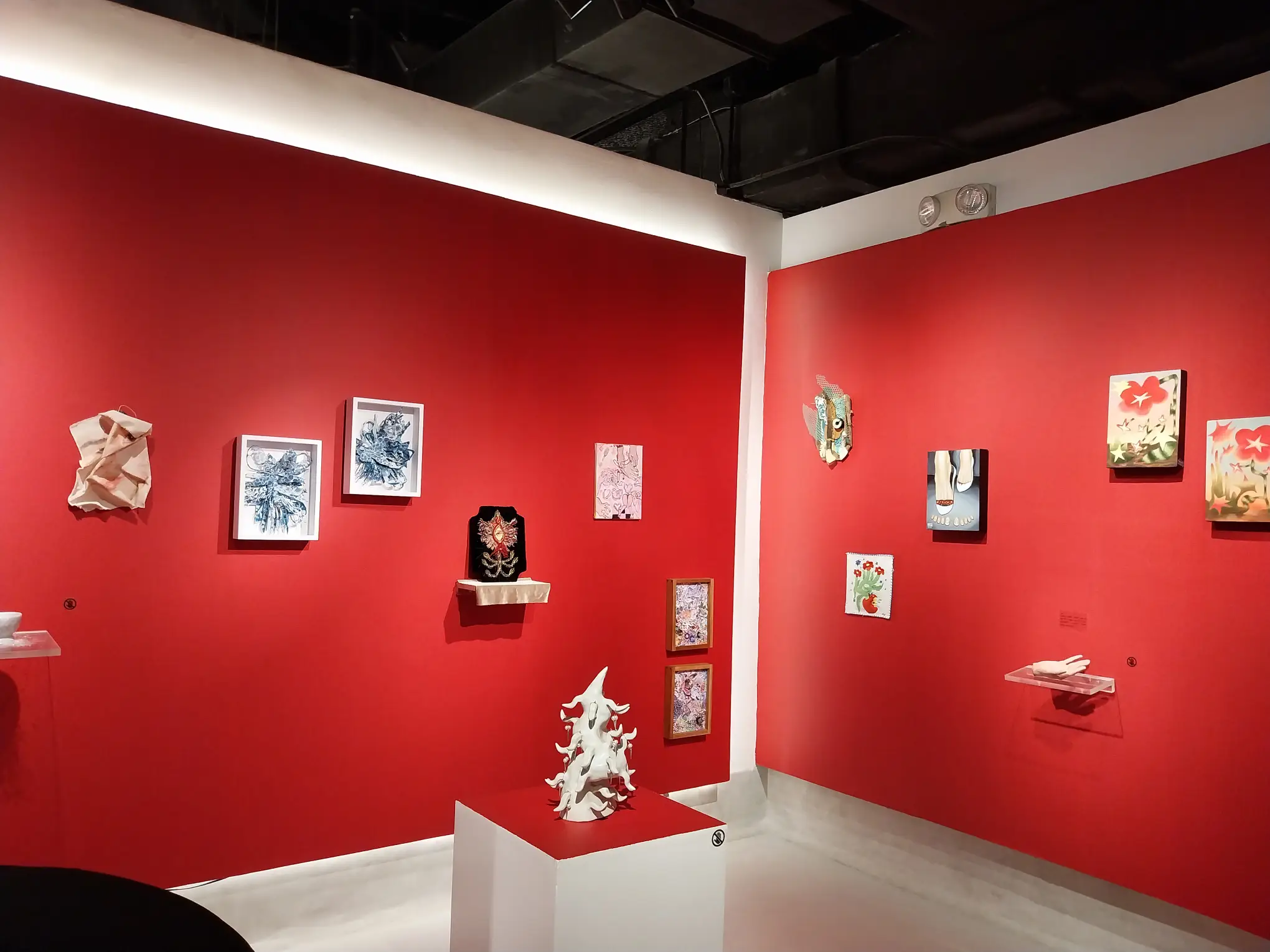
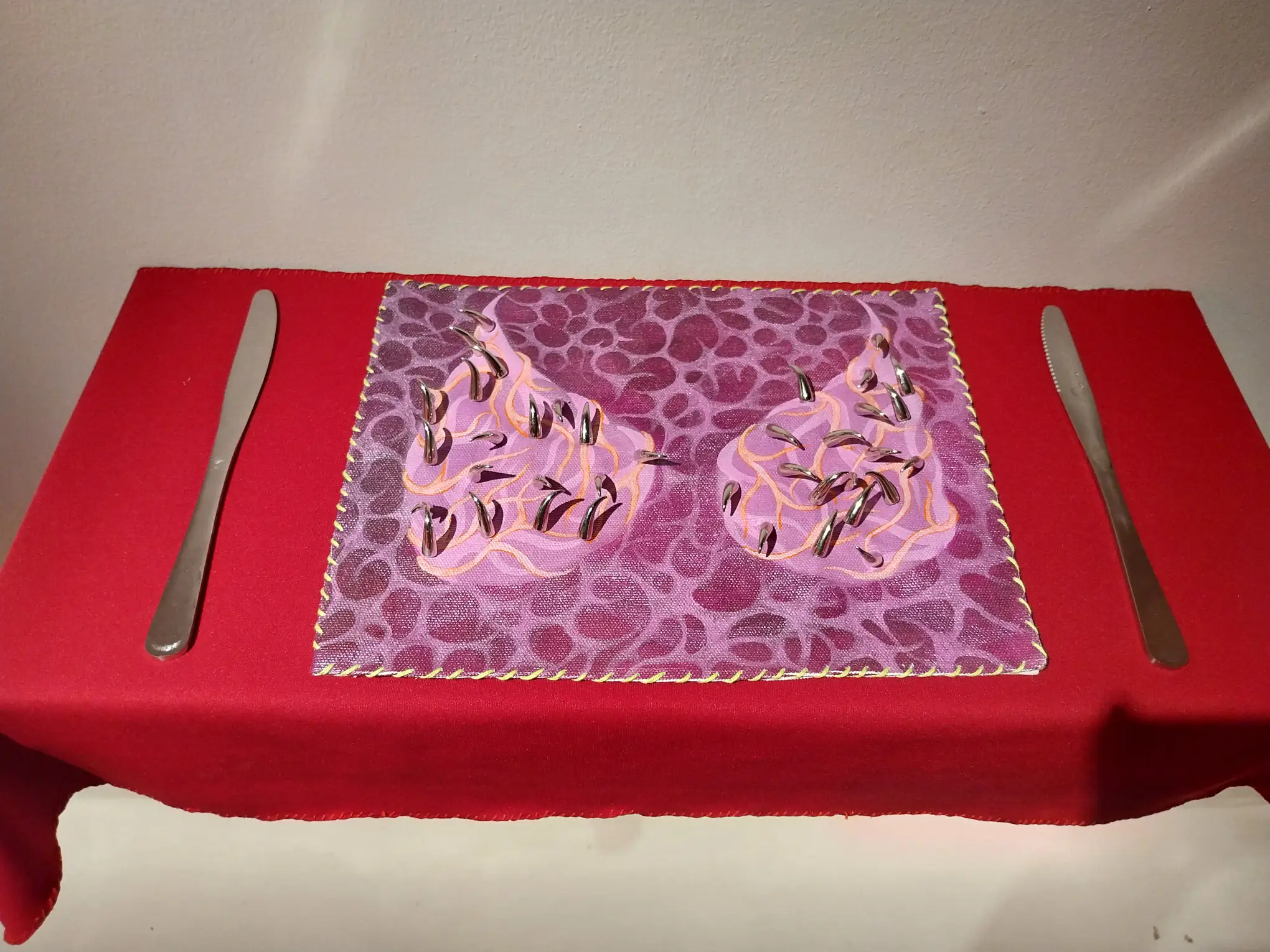
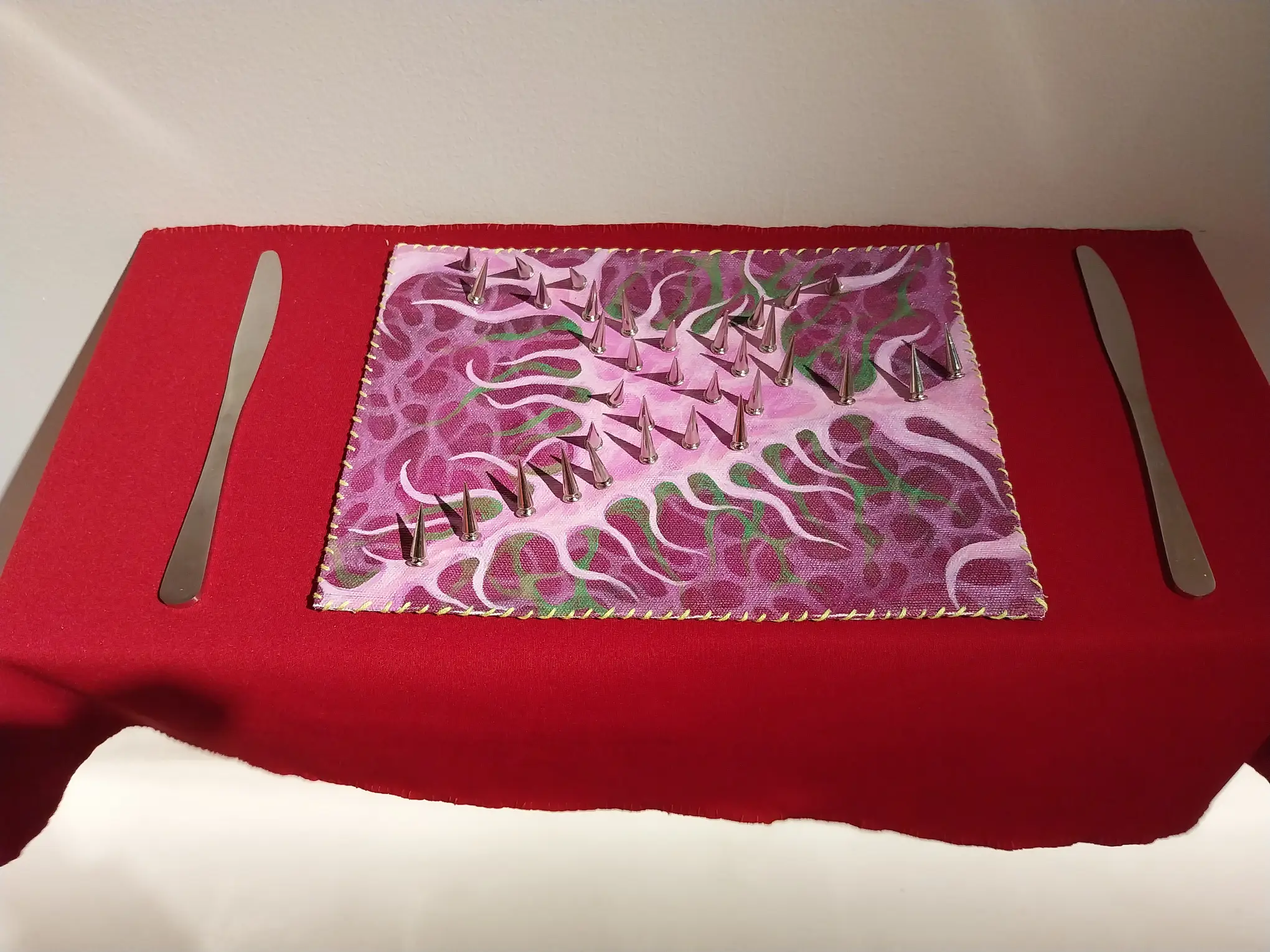
Several artists used depictions of severed body parts to challenge the societal idea that a person’s body dictates their social standing or future. For instance, Len-Len’s “Your Resistance is Ready to Slice” features a fabric representation of a spiked woman’s body part presented on a platter with cutlery, subverting expectations of how bodies are typically viewed.
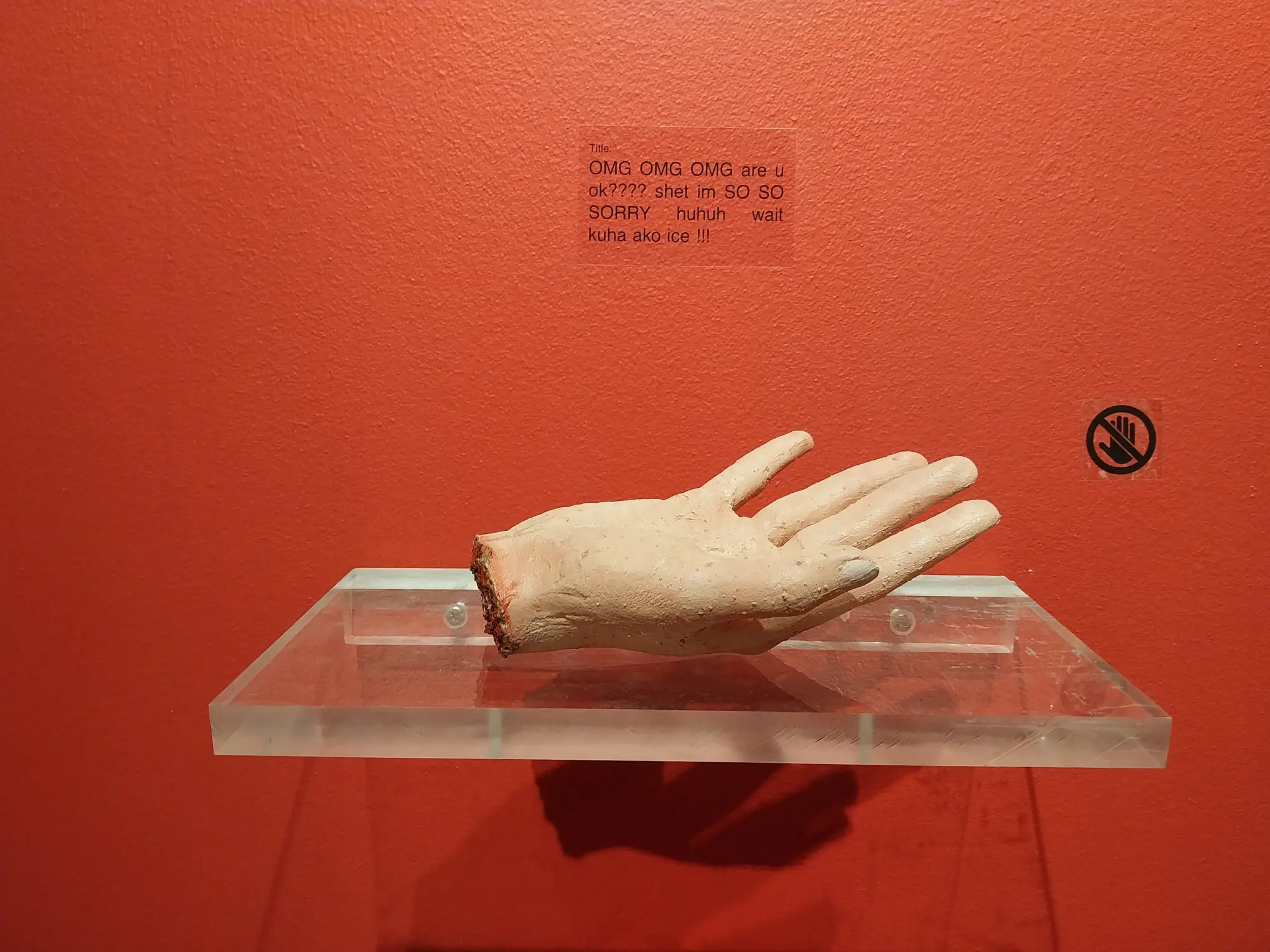
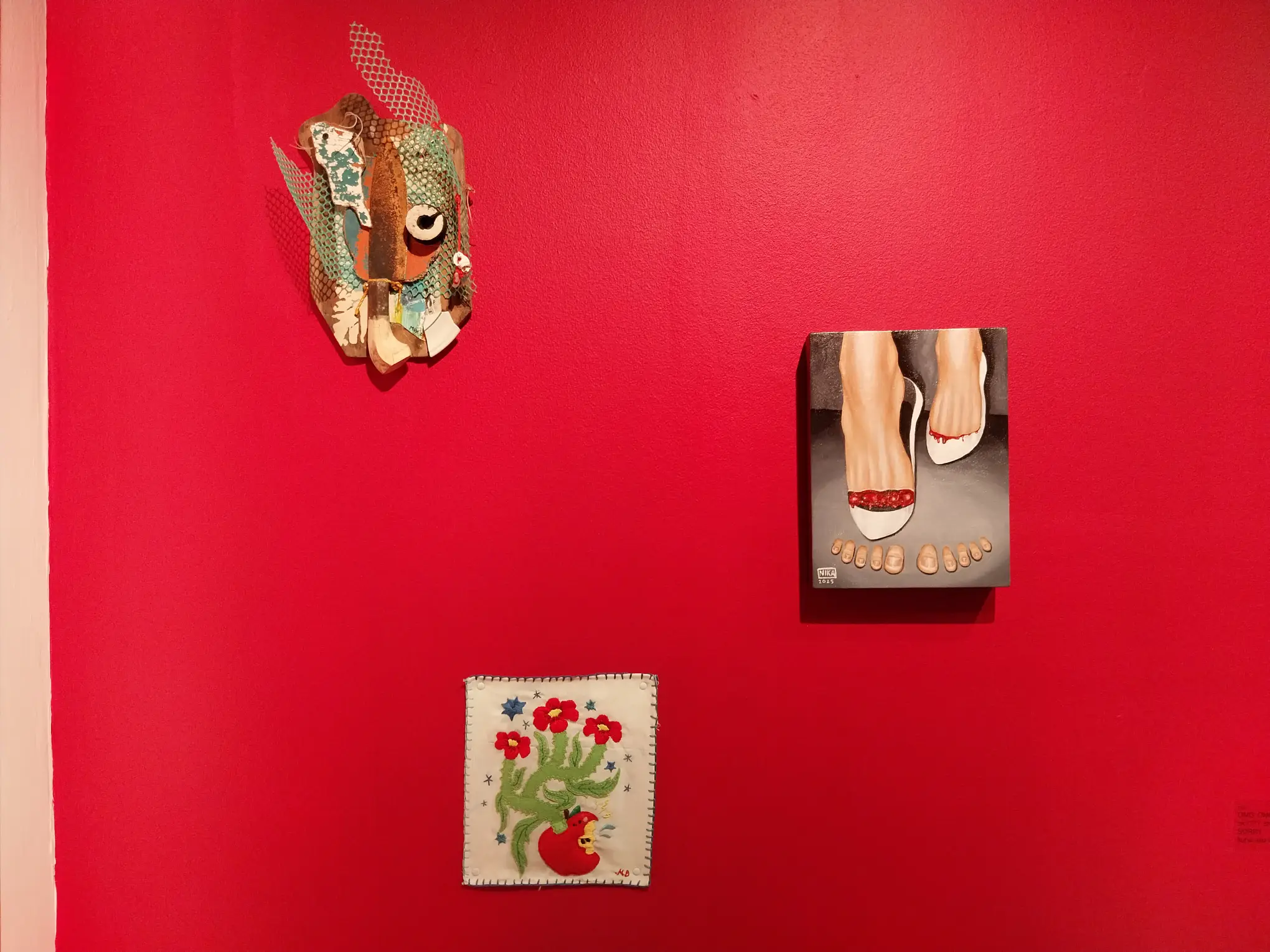
Arvi Fetalvero created two textile sculptures that meld together the penis and the vagina, transforming it into an unrecognizable shape. Nika Dizon’s “The Perfect Cinderella Girl” shows a painting of a woman with her toes cut off to fit into stiletto shoes, while Celeste Lapida’s silicon sculpture is a severed hand with its palms open.
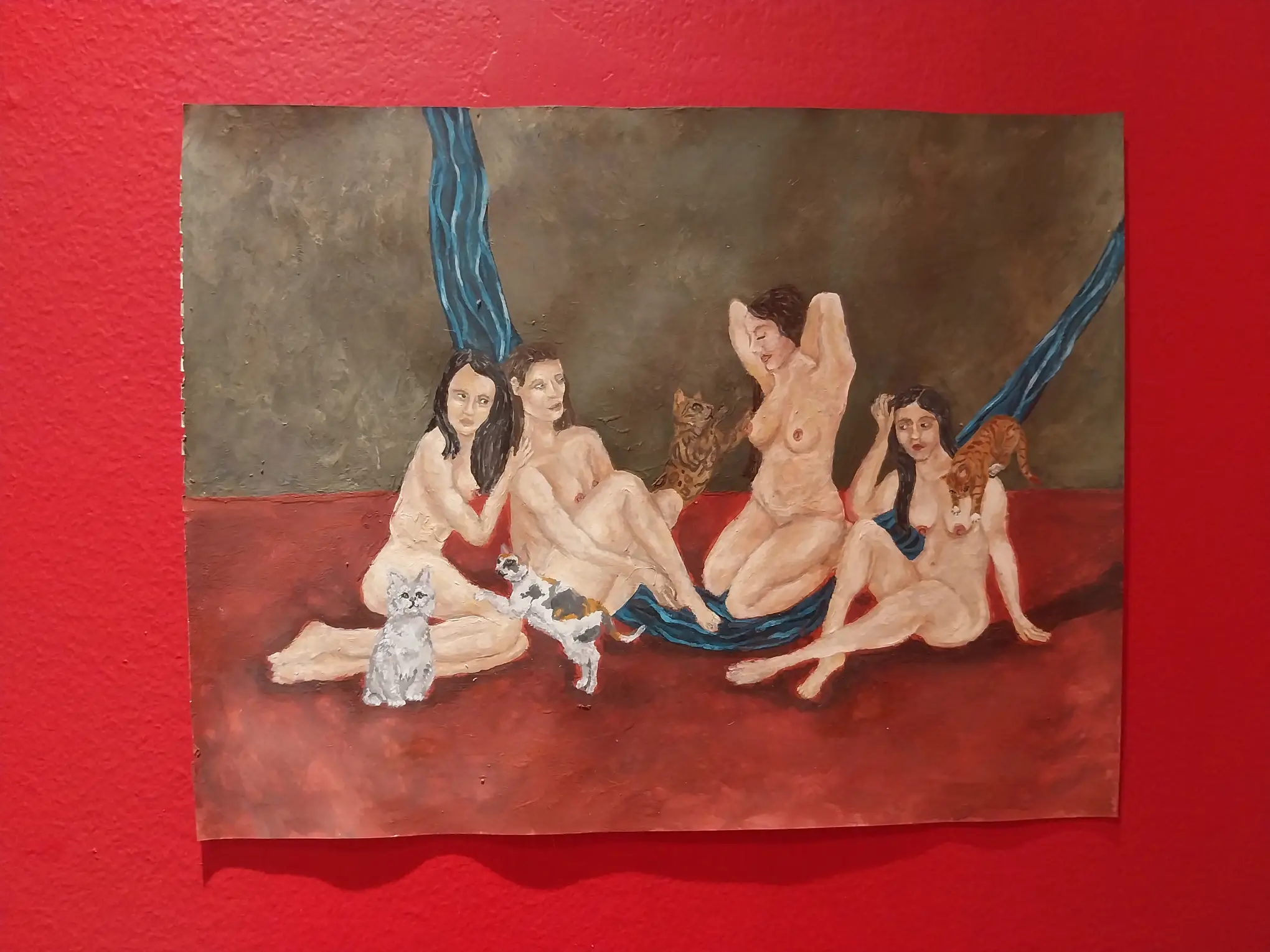
These works specifically function as commentary on how success and existence in our world requires us to remove parts of ourselves behind to become more palatable. This, of course, comes doubly for women, expected to be beautiful while balancing work with family life and running a household.
It’s an impossible standard, and these works point towards that impossibility and how women sacrifice themselves for the image of being put together and successful.
Female Artistry in a Hostile World
Many of the artworks utilize metaphors to illustrate the current struggles of women in a patriarchal system. Chesca Co’s “Lethal Glitter,” for example, combines pulverized glass and a mortar and pestle to subvert the idea that “fragility is weakness.”
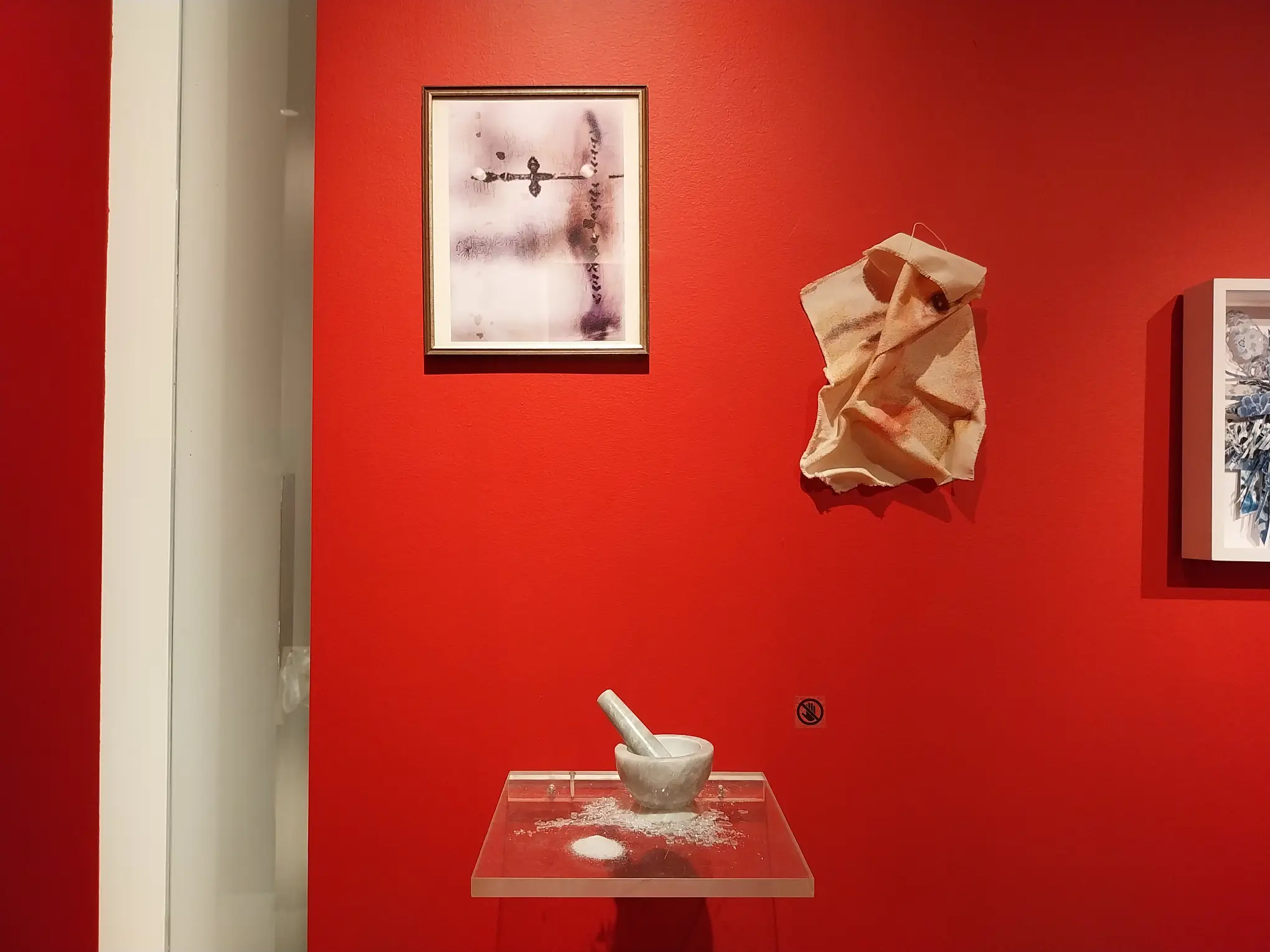
“The problem isn’t fragility itself but the expectation to remain harmless, to sparkle without revealing complexity,” Co said about their work. “This piece exposes the tension between perception and reality, questioning norms that confine identity and urging viewers to reconsider their assumptions about strength and vulnerability.”
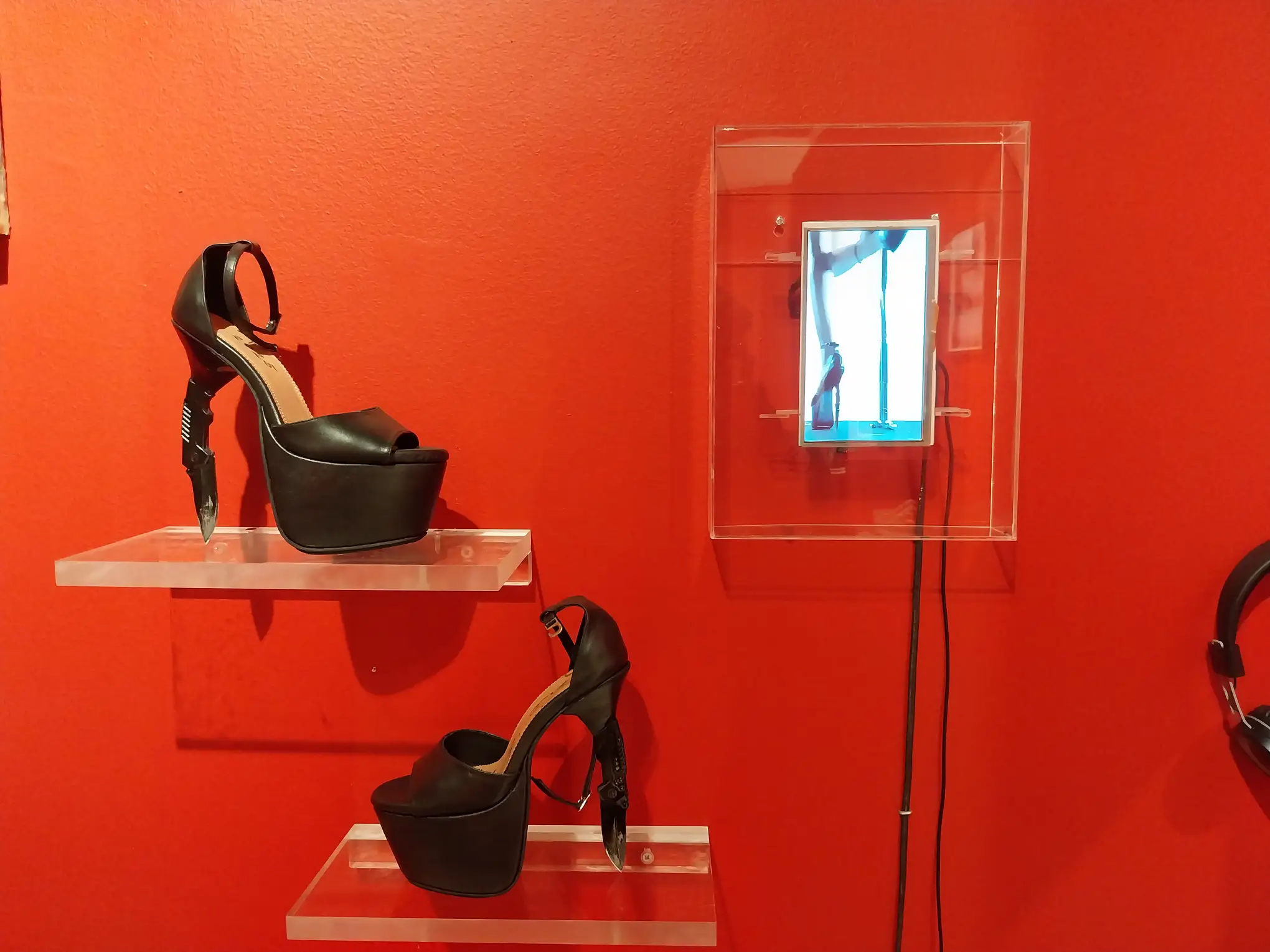
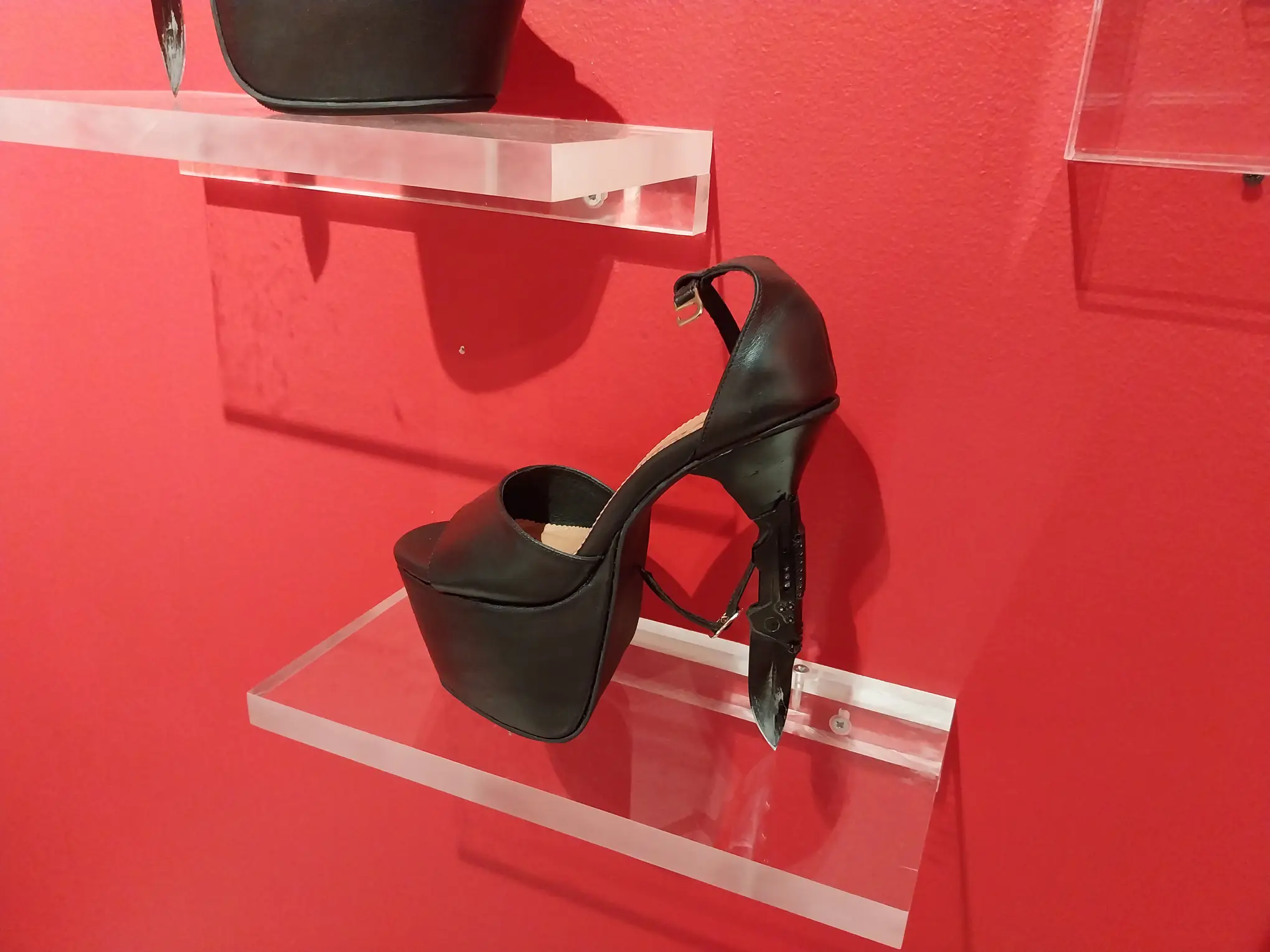
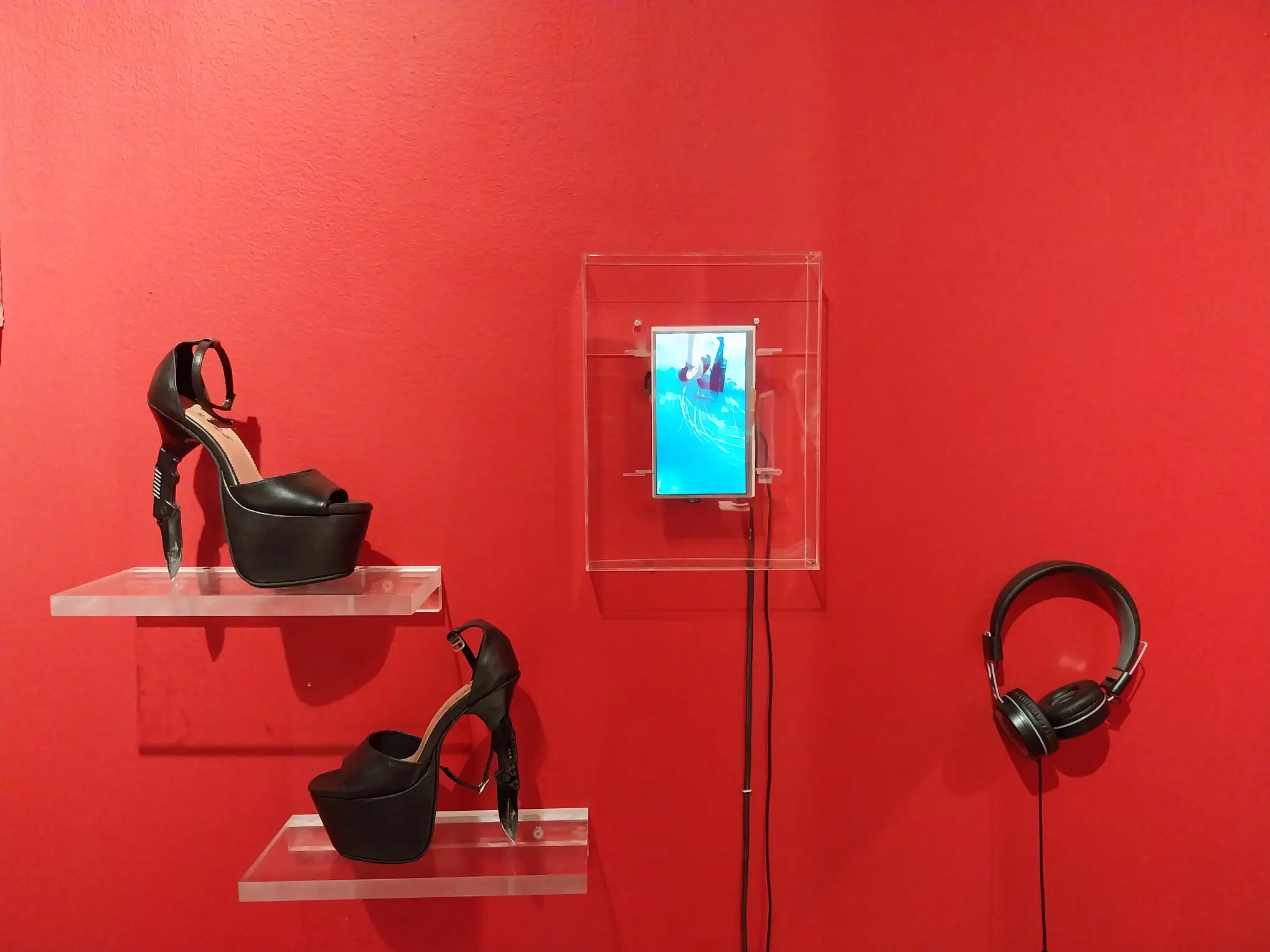
Christina Dy, artist and founder of Polecats Manila, created black stilettos with literal blades for heels. She also presented a video of her dancing with the shoes on, as the scraping of the blades echoes across the room.
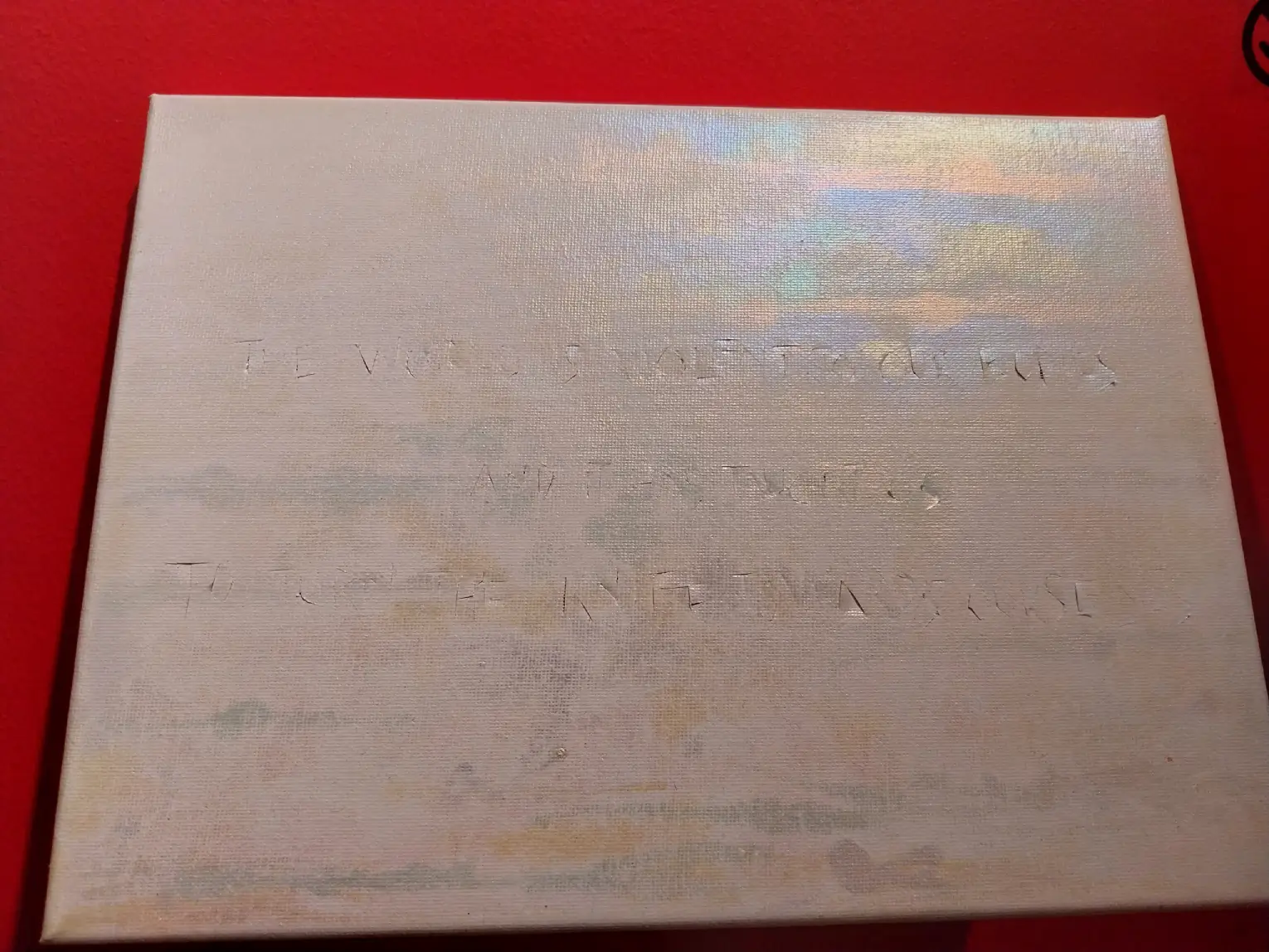
One artist, Pam Quinto, created “Self-Inflicted” by painting a canvas in seemingly neutral colors before slashing a message on its work with a knife: “THE WORLD IS VIOLENT TO OUR BODIES AND IT HAS TAUGHT US TO TURN THE KNIFE TOWARDS OURSELVES.”
Meanwhile, Ashley Gimpayan’s “Guard’s Veil” shows a pillowcase with make-up on it crumpled and nailed into a smaller shape. Inspired by the Veil of Veronica, the artist said that it captures the vulnerability of existence and the sacrifices that come with trying to achieve one’s goals.
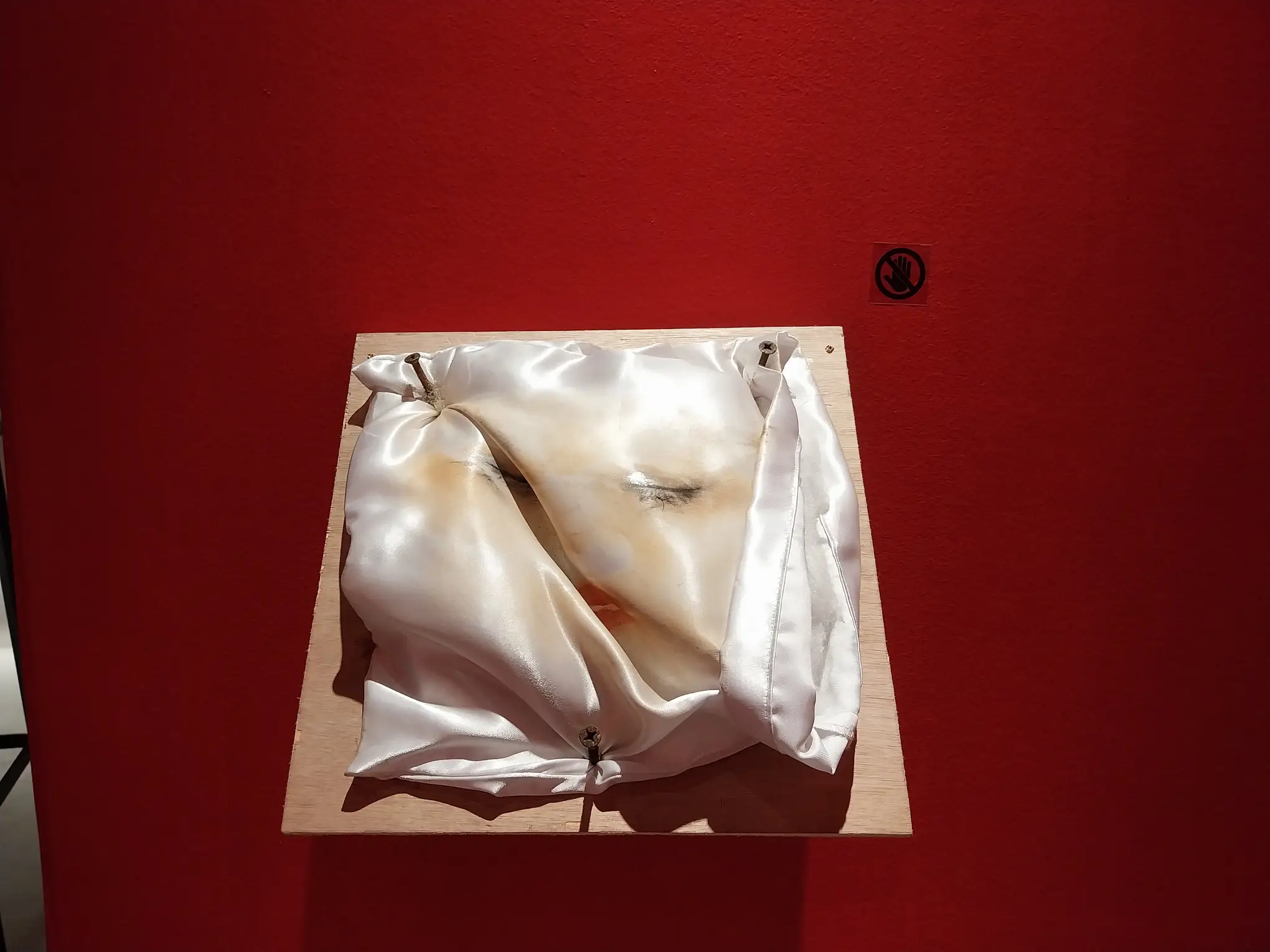
“It reflects my personal experience of navigating identity, where strength and softness are not opposites, but inseparable,” Gimpayan said.
Sharpening Ourselves in the Face of A Discriminatory World
A Knife Sharpens Itself is multifaceted in its attempt to discuss the complexity of achieving gender equality in society. The exhibit showcases how society hampers women from their ambitions, forcing them to work towards conformity towards a specific gender box and enact violence onto their own identities to fit in.
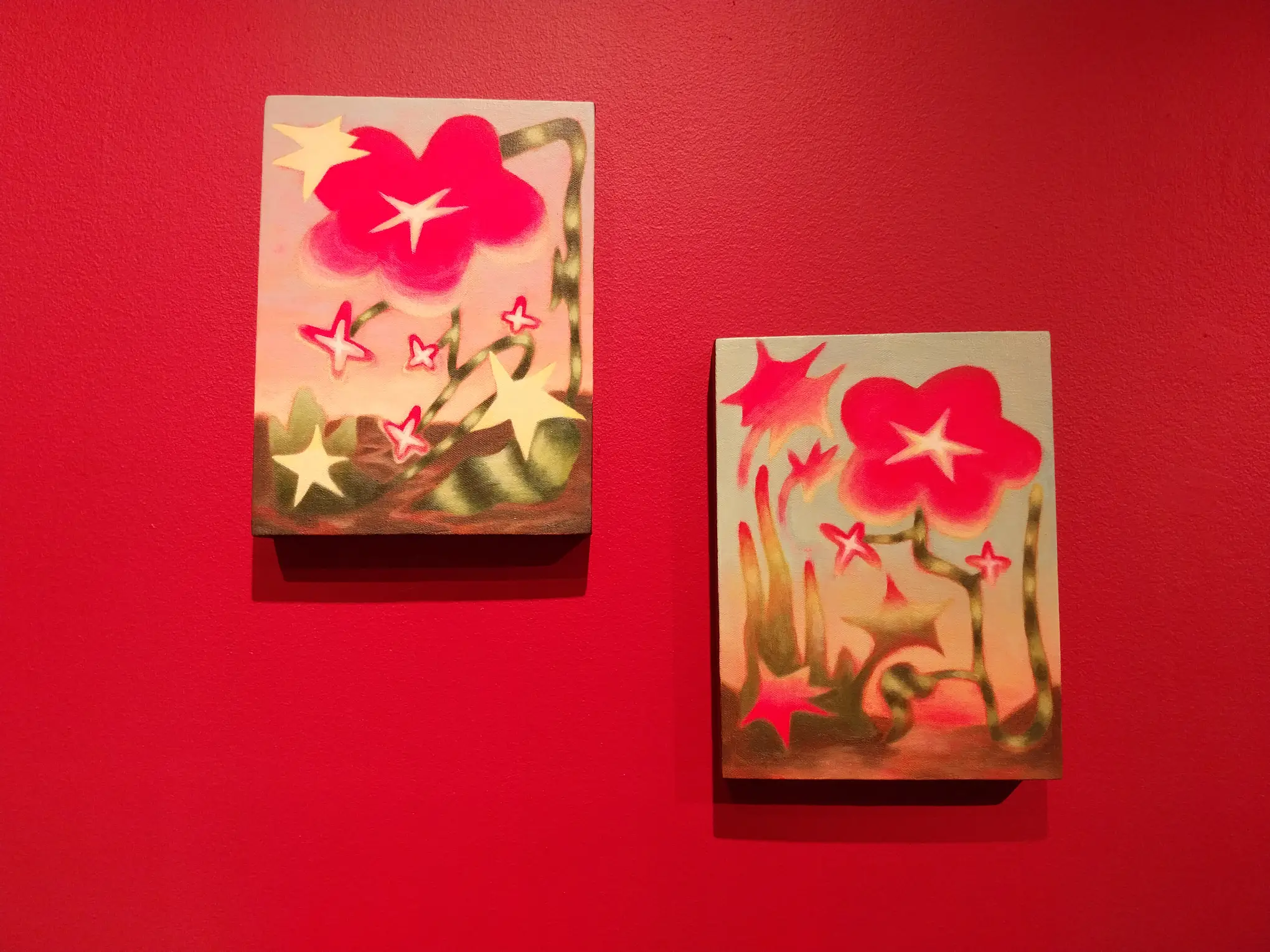
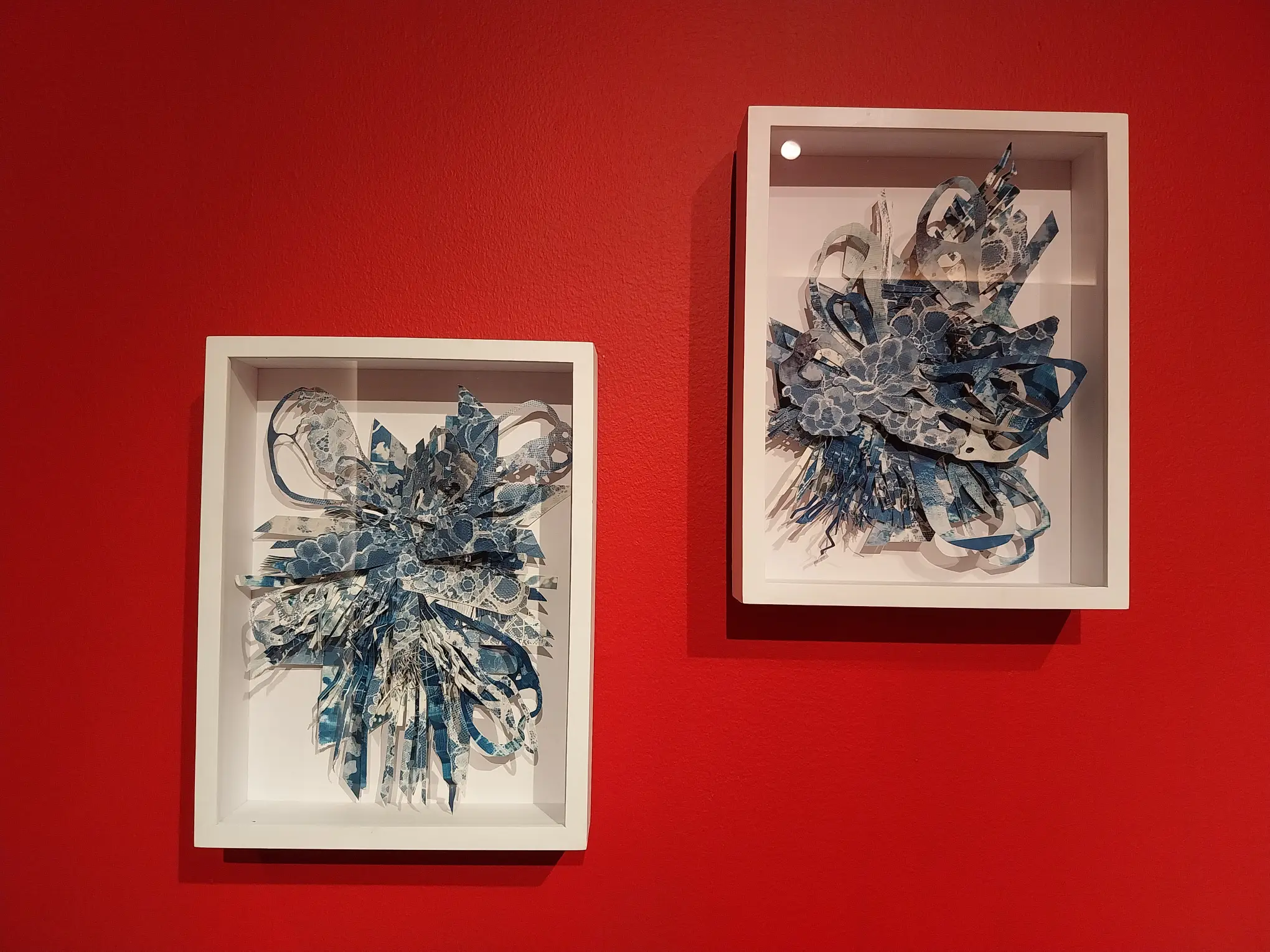
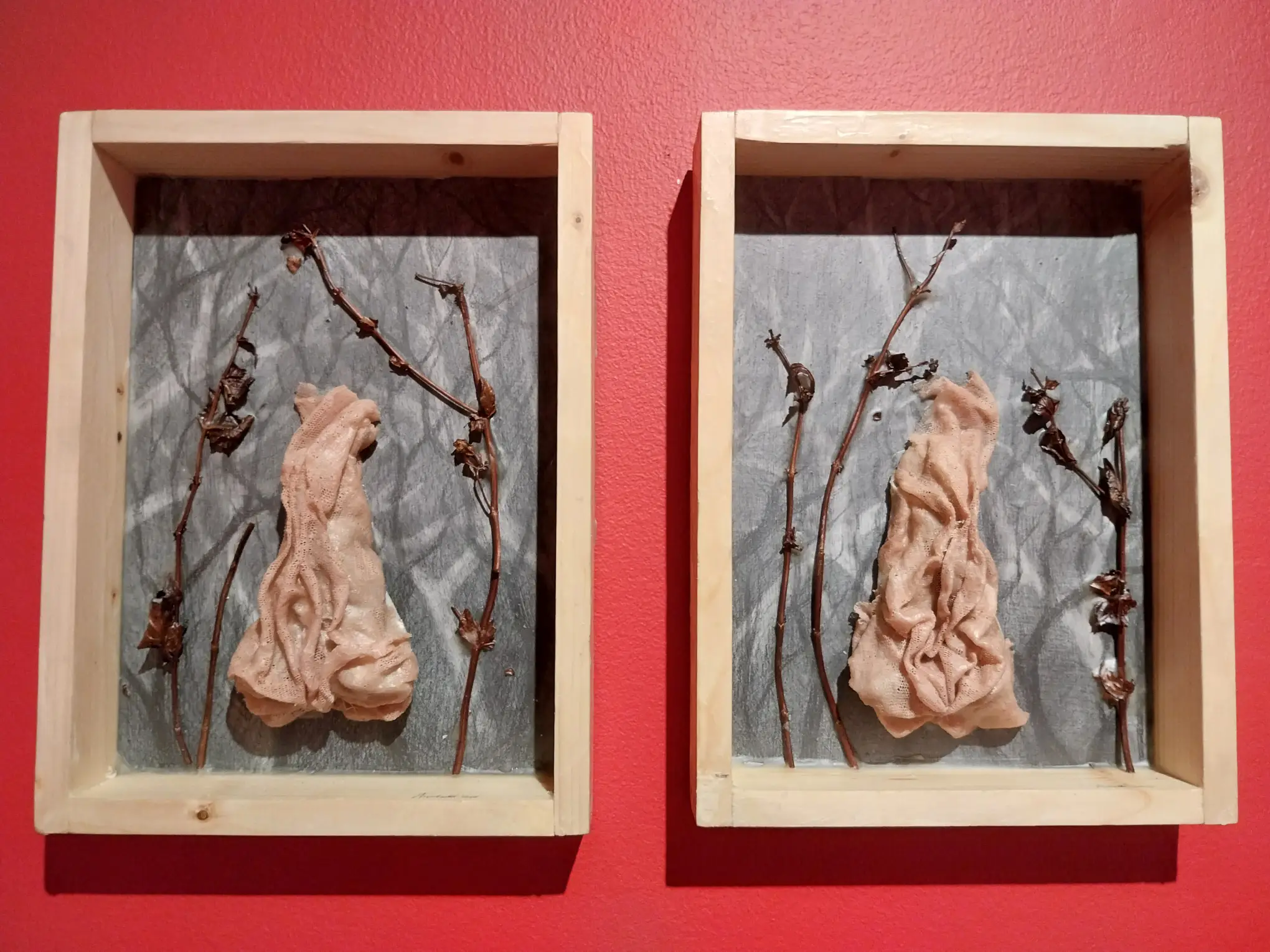
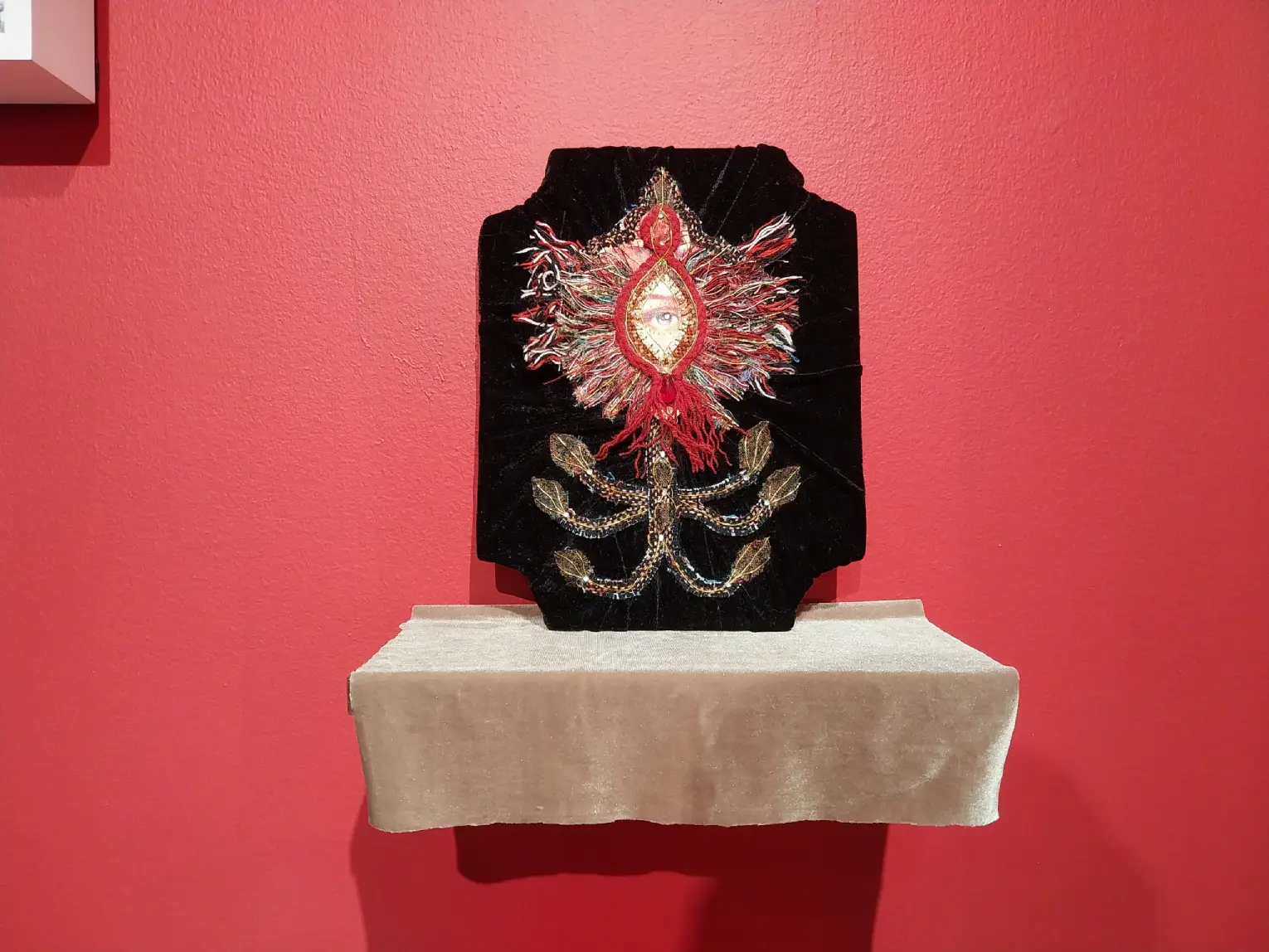
These works reckon with the effects that this kind of violence can have with the psyche. But in the end, it also tries to see a future in all that violence where women can be freed from such gender norms to pursue their own ambitions as they see fit, unhampered by such norms.
Photos by Elle Yap.
Related reading: New Exhibit Recontextualizes Lamps and Light at Karrivin Plaza
Frequently Asked Questions
The exhibition explores the intersection of power, self-discovery, and gender abolition through the lens of xenofeminism. Curated by Brisa Amir and Jose Olarte of The 5th House, the show aims to degender art and challenge the link between the male gender and societal privilege. By using the knife as a central symbol, the collection explores how transformation and regrowth often require dismantling rigid patriarchal structures and traditional gender norms.
The knife serves as a metaphor for “transformation, building, destroying, and dismantling” within the context of a journey toward self-discovery. It represents the “double-edged” nature of resistance, suggesting that progress requires a metaphorical wounding of old systems before healing and regrowth can occur. This symbolism encourages artists to share experiences of power and fighting, framing art as a form of resistance against a world that seeks to categorize and confine individuals based on gender.
Xenofeminism is a gender abolitionist movement that advocates for a future where technology and social change remove the rigid categories of male and female. In the exhibit, this philosophy inspires artists to imagine a future where access to power is not dictated by gender identity, whether cis, trans, or nonbinary. This influence is seen in works that subvert the human form, moving away from human-centric gender roles toward a more fluid and inclusive understanding of identity.
Artists like Arvi Fetalvero, Nika Dizon, and Celeste Lapida use depictions of severed or modified body parts to critique the “impossible standards” forced upon women. These works, such as the painting of feet modified to fit stilettos, serve as a commentary on how society demands that individuals remove parts of their true selves to become palatable or successful. This visceral imagery highlights the physical and psychological violence inherent in conforming to beauty and domestic expectations in a patriarchal world.
Metaphors in pieces like Chesca Co’s “Lethal Glitter” challenge the assumption that fragility is weakness by combining pulverized glass with traditional tools. Pam Quinto’s “Self-Inflicted” further illustrates how systemic violence teaches individuals to turn a knife toward their own identities. These works collectively explore the tension between perception and reality, urging viewers to reconsider their assumptions about strength, vulnerability, and the sacrifices made while navigating a discriminatory world.
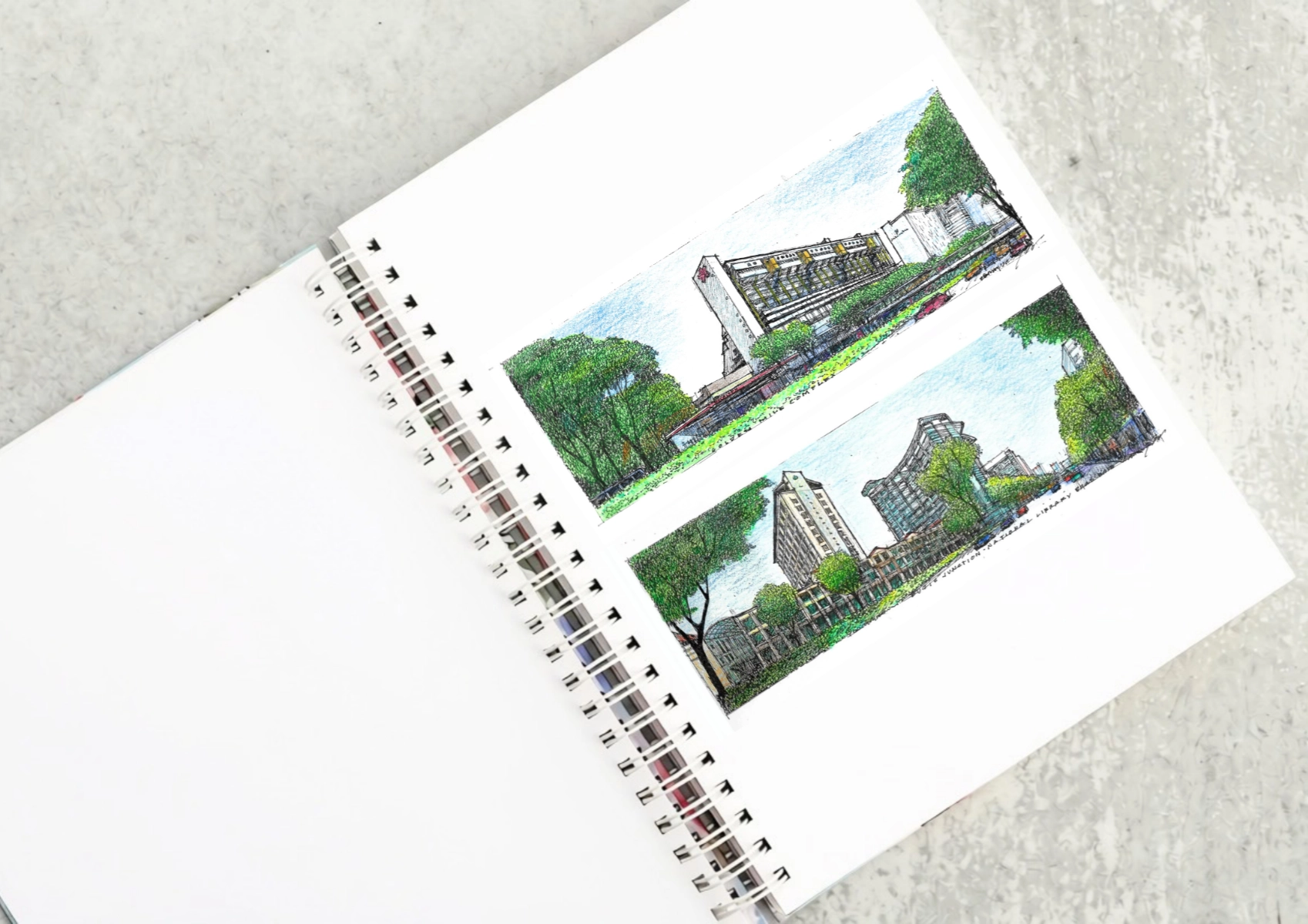
Two sketches of Singapore connect BluPrint Editor in Chief Paulo G. Alcazaren’s personal and professional history with Shared Ground: ArchitectureArchitectureThe art and science of designing and constructing buildings, structures, and spaces that are functional, safe, and aesthetically pleasing. It encompasses the planning, design, materials, and techniques used to createGo to Architecture Glossary of Care, Culture, […]
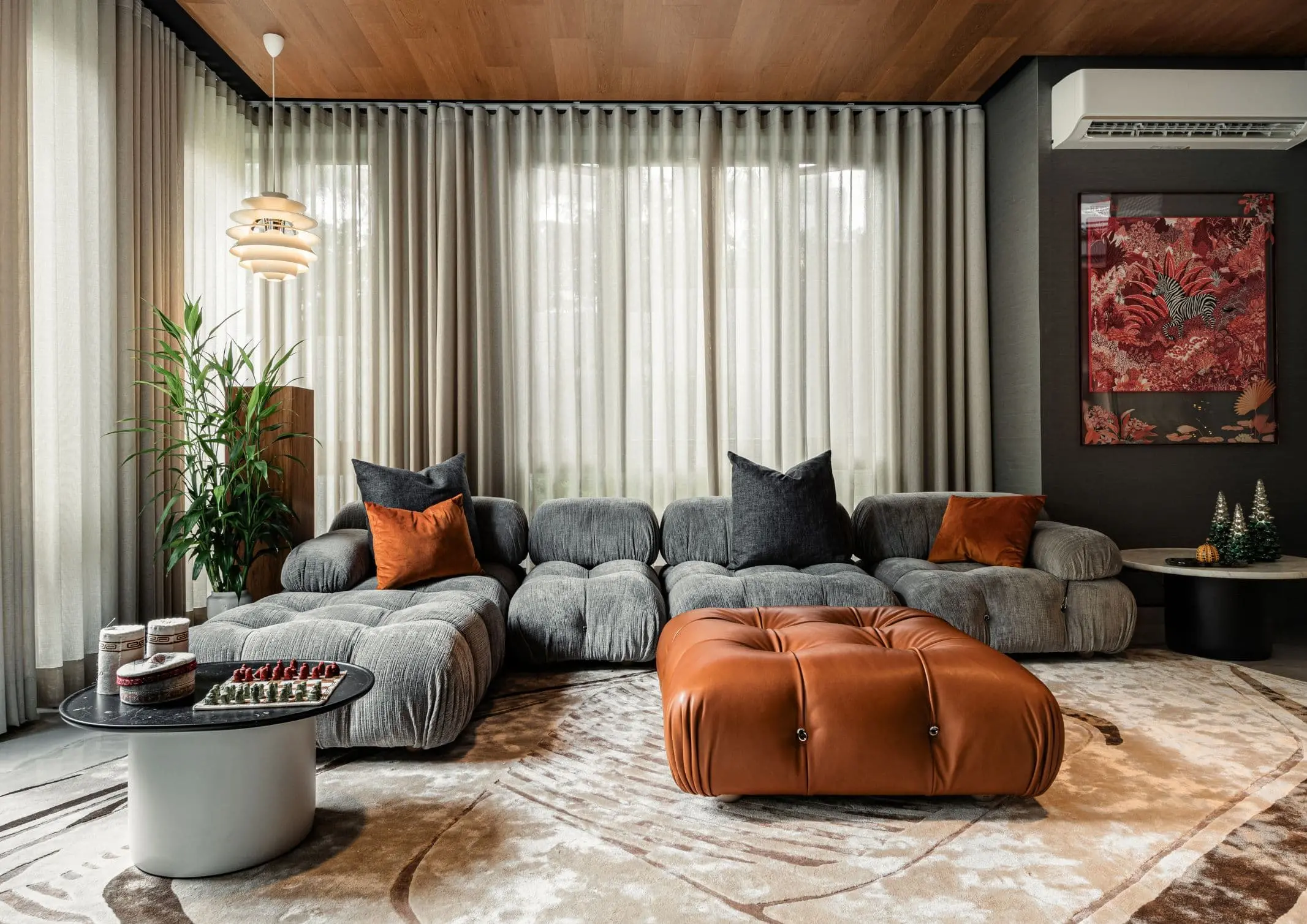
Some have become household names – Coleman, Oster, and KitchenAid – products that have found their way into Filipino kitchens, homes and family routines. In home furnishings, brands such as B&B Italia, Ethan Allen, Sub-Zero, Miele, SieMatic, Louis Poulsen, Hunter Douglas, Tempur, and Technogym, have helped shape the way Filipinos live. From everyday essentials to […]
In a way, designers are the modern-day soothsayers and prophets. They design for the future, predicting how a room, a house, a building or a whole city will be used by people. They foresee how users will interact with a space, conjure exact shades of colors to elicit specific behavior and arrange furniture to build […]
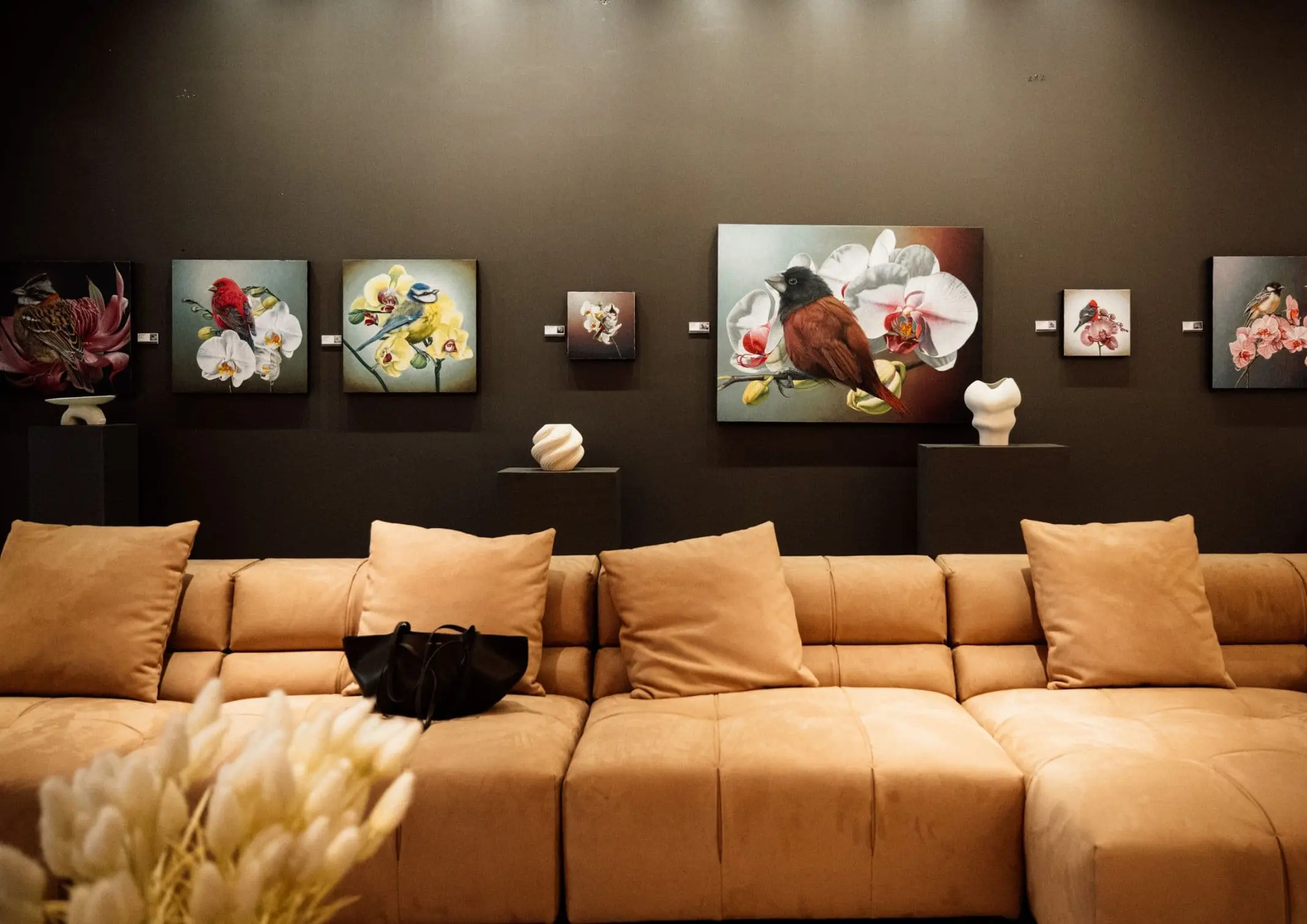
Art and furniture are often selected separately, yet their relationship can shape how a room looks and feels. The collaboration between Hooga and Galerie Joaquin explores how these elements can work together, bringing contemporary artworks into furnished residential settings at Hooga’s showroom in Uptown Mall, Bonifacio Global City. For Hooga, which curates furniture, lighting, and […]
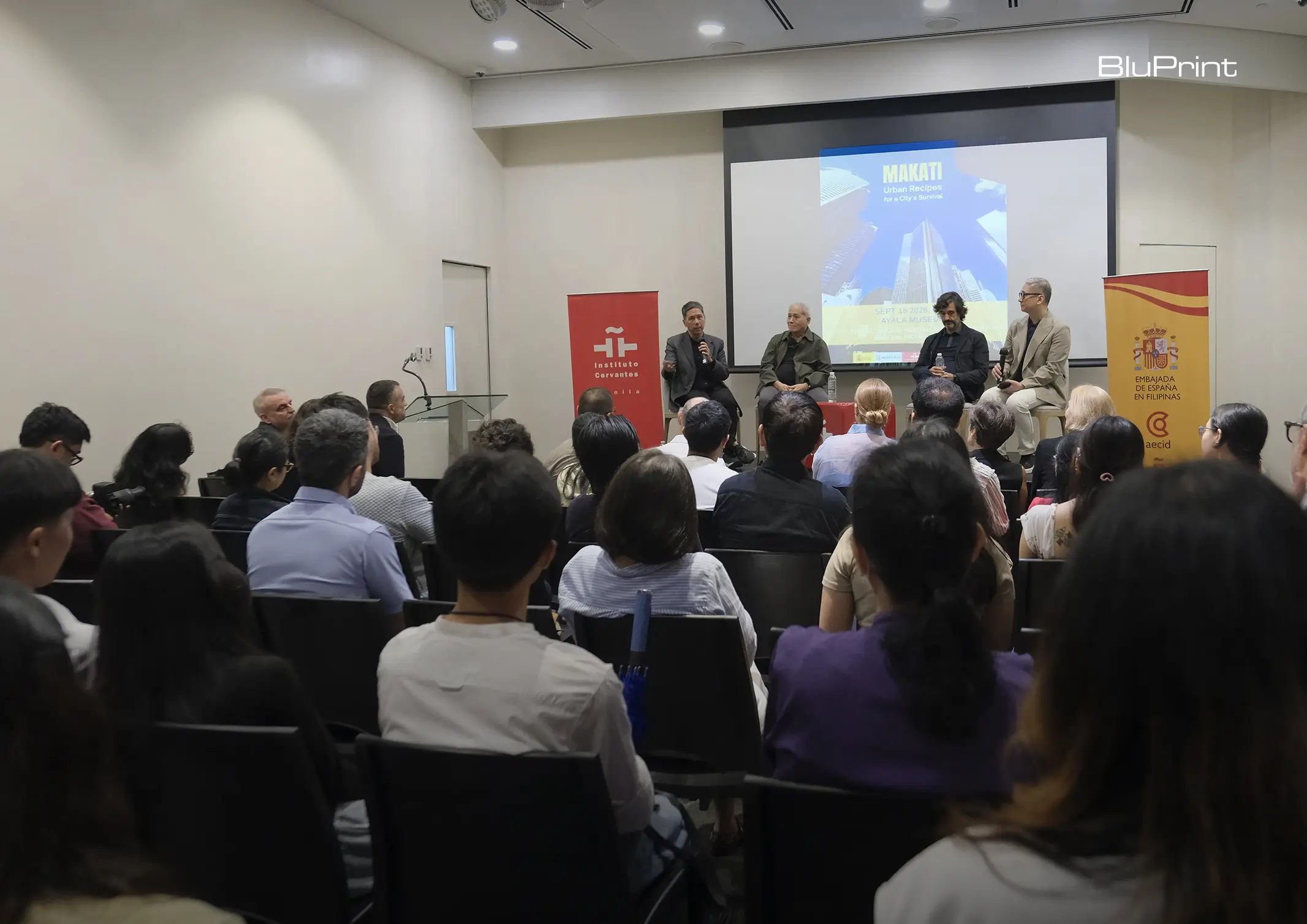
How can better-planned cities create the conditions for more creative, livable, and resilient urban environments? “Makati Urban Recipes for a City’s Survival,” a colloquium held at the Ayala Museum on September 15, brought together architects and practitioners from the fields of urbanism and the creative economy to discuss how design, planning, and collaboration can address […]
Read the issues.

Collect the volumes.

Recommended Video
Tap to Unmute
Unmute
0:00
0:00