Bigkis is the act of binding. In Tagalog, the word can refer to something used to bind or encircle, as well as a bundle formed by tying several separate elements together. Figuratively, it can also mean a bond, union, or unity. The meanings move from the physical act of joining things together to the connection […]
Laki Mata Reinterprets a Greek Myth with ‘The Flower Eaters’



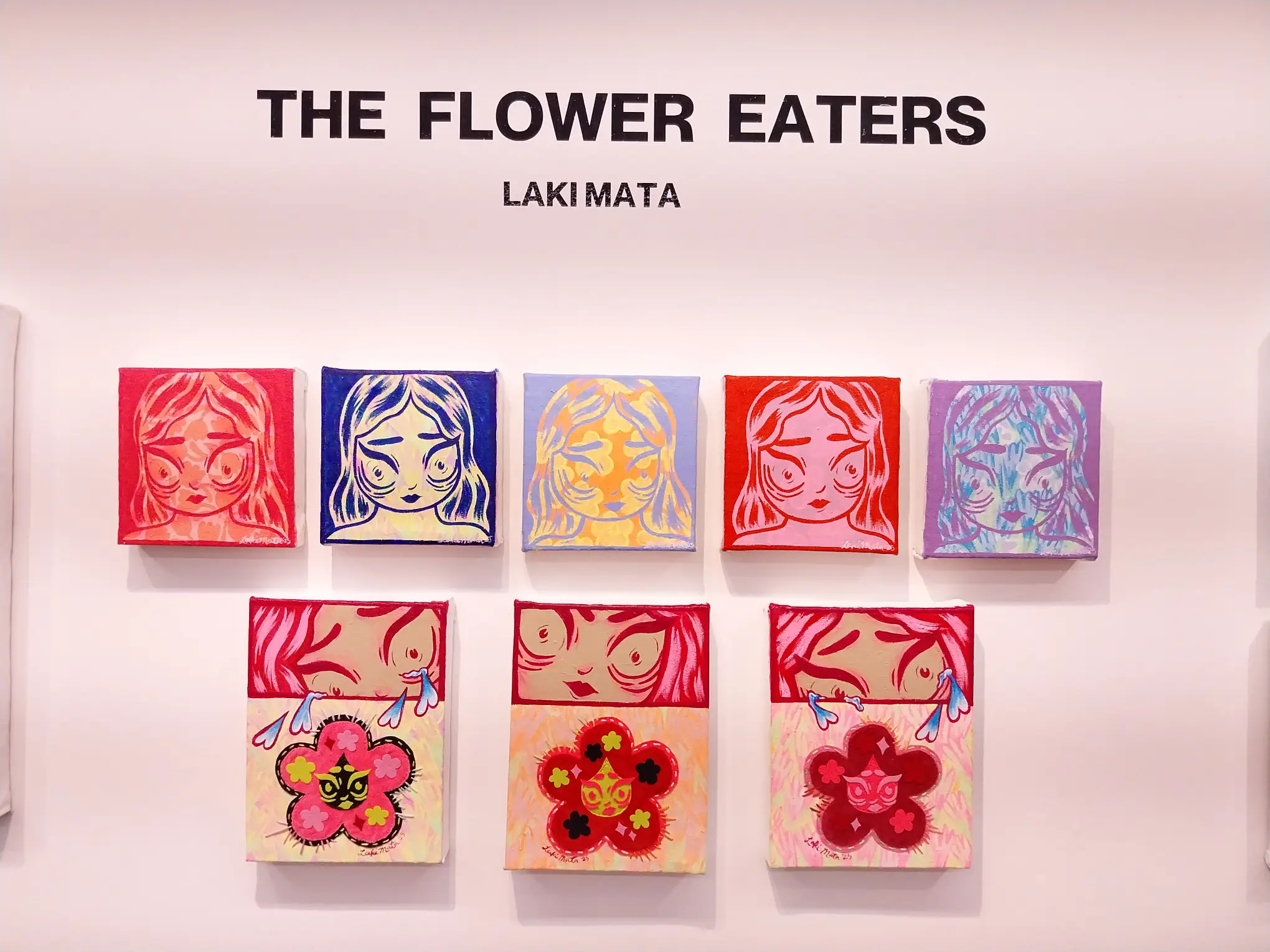
The Flower Eaters, an exhibition by Laki Mata at Space Encounters Gallery, performs a fascinating spin of an ancient story to make it fit in modern times. This new exhibit pinned its concept on the myth of the Lotus Eaters from Homer’s The Odyssey, with the artist utilizing it as both social commentary and as an expansion on their own artistic lore.
The Lotus Eaters, as a myth, exist as a cautionary tale of allowing pleasure to take over one’s life. Odysseus and his crew find an island where its population is constantly in a drugged-out state of bliss by constantly consuming this lotus flower.
His crew also end up addicted to the flower, forgetting their plans and desires to journey back to their homeland. Odysseus had to drag them back to their ship as they left the island, worried that they would forget their goals and ambitions due to the flower.
For this exhibition, Laki Mata takes the basic conceptualization of the Lotus Eaters and applies it to our modern society and its treatment of women. She saw the way society tends to suppress women’s ambitions and agency, exchanging that with a false sense of security within the patriarchal structure, and connected it with the story from The Odyssey.
“In her world, the flowers are not just distractions—they’re societal expectations, sweetened with performative affection and beauty,” the exhibit write-up said. “They are the metaphors we’re handed: gifts of admiration that also pacify, tame, and control.”
The Confinements of Society
The Flower Eaters is loosely-connected to the previous two exhibits that Laki Mata had created. All of them center around a character named Liwayway, a celestial being who inhabits a mortal woman’s body to experience life as a human.
Laki Mata’s first exhibit, Soft Pink Feelings, revolved around learning about the messiness of human emotions. The second exhibition, She Rage, is about the discovery of the oppression of women in the world and the anger that this creates in her. For The Flower Eaters, the storyline continues as the character finds herself trapped in an island, force-fed the flowers to remove her anger and ambition.
“Noong nagagalit na siya and ito na, kinontain siya in this island,” she explained. “And they make her eat flowers, tapos yung flowers na iyon, i-co-conceal yung emotion mo. Or ma-fe-feel mo siya pero makakalimutan mo kung ano ba ang purpose mo, ano ba yung gusto mo talaga. Magiging kung ano ang gusto noong Liwayway.”
(“When she got angry, she was sent and contained on this island. And they make her eat the flowers to conceal her emotion. Or you can still feel it, but you forget your purpose and what you really want. What Liwayway desires will be whatever they dictate.”)
Imprisonment to Social Conventions
The social commentary presented works with the idea that even adherence to the social conventions bring no escape or happiness to the people’s life, only dullness and apathy. Even as Liwayway participates in this community as she consumes and produces the flowers, she becomes a non-entity as her independence and personhood is taken away from her.
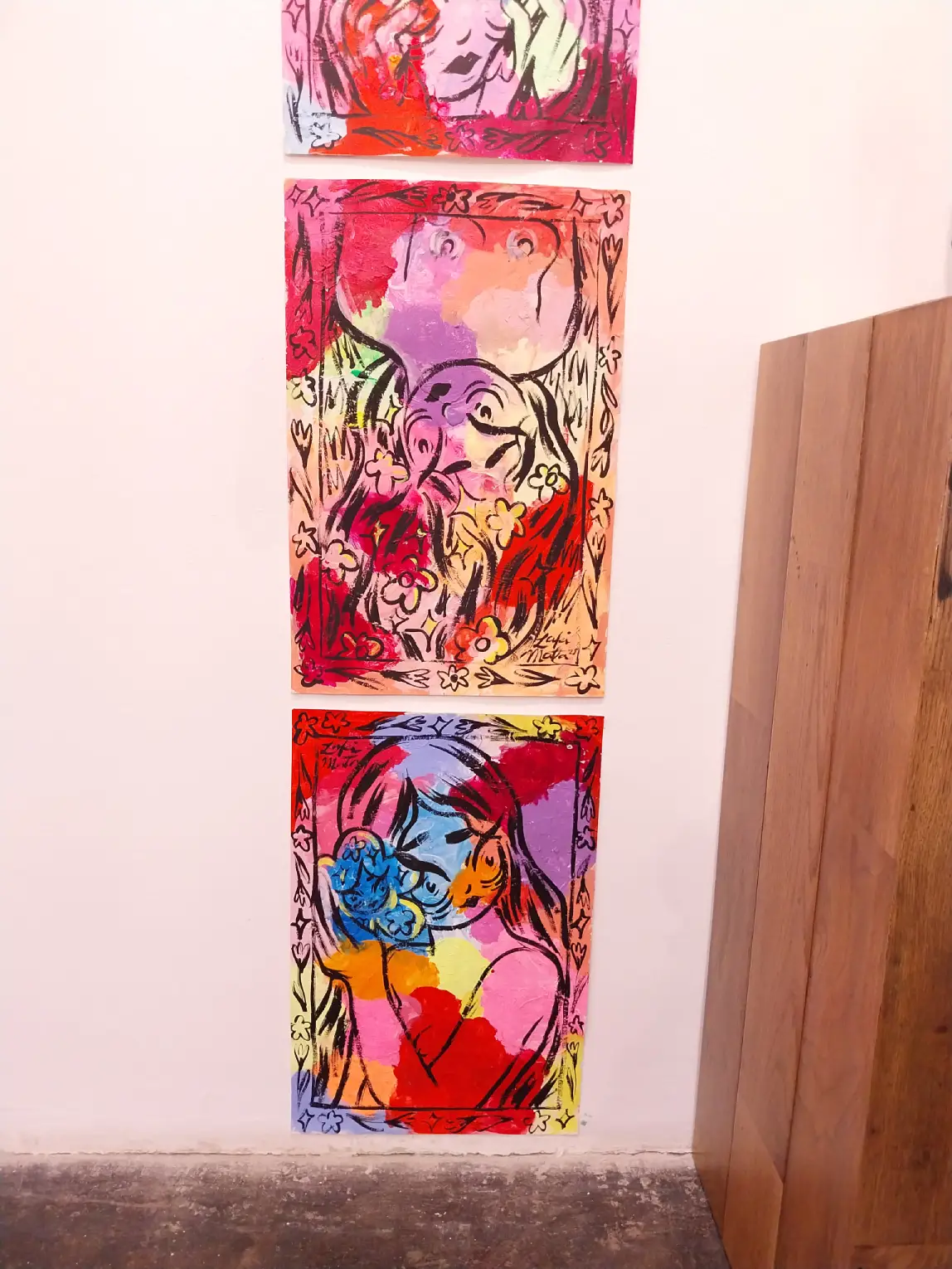
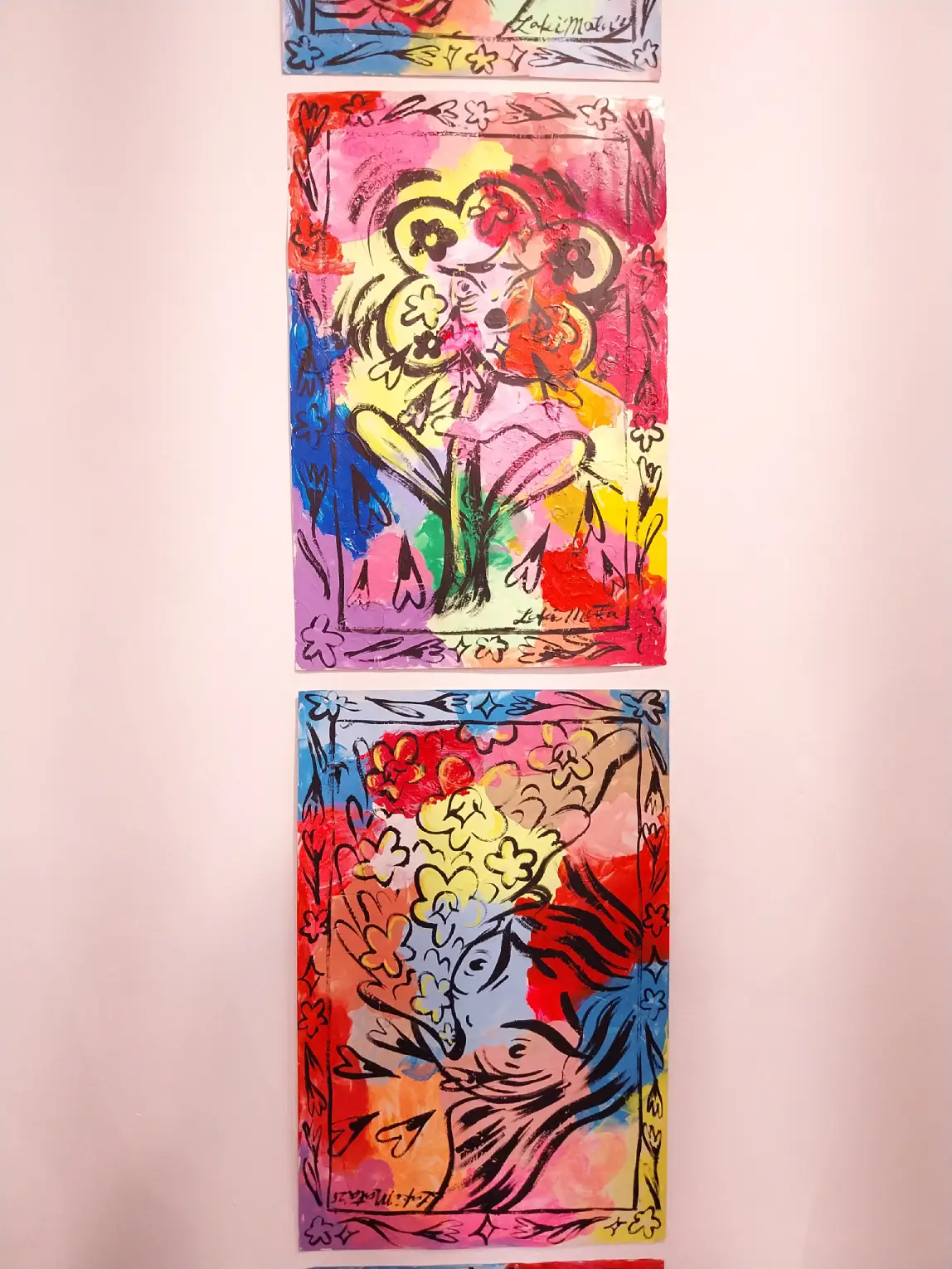
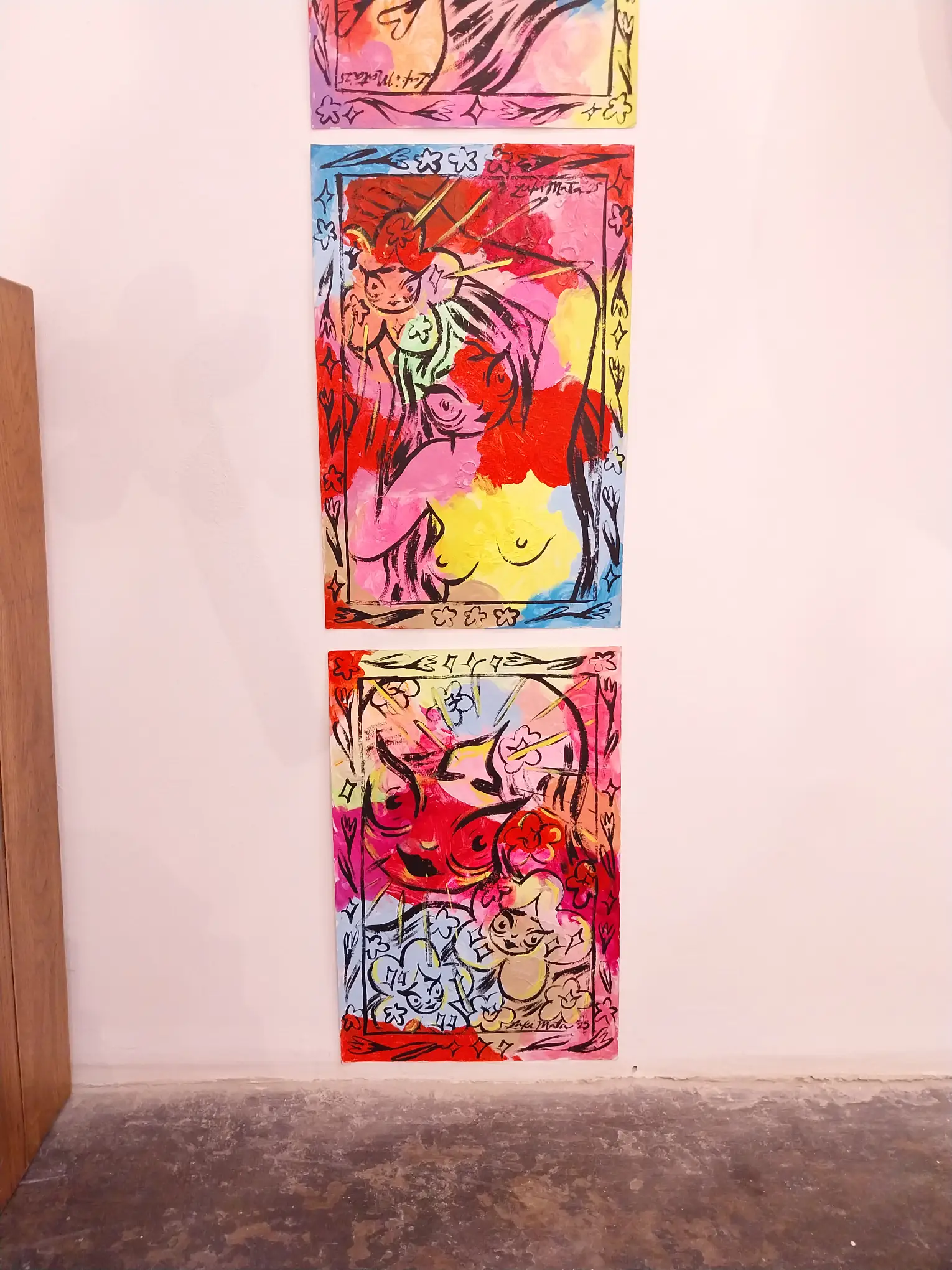
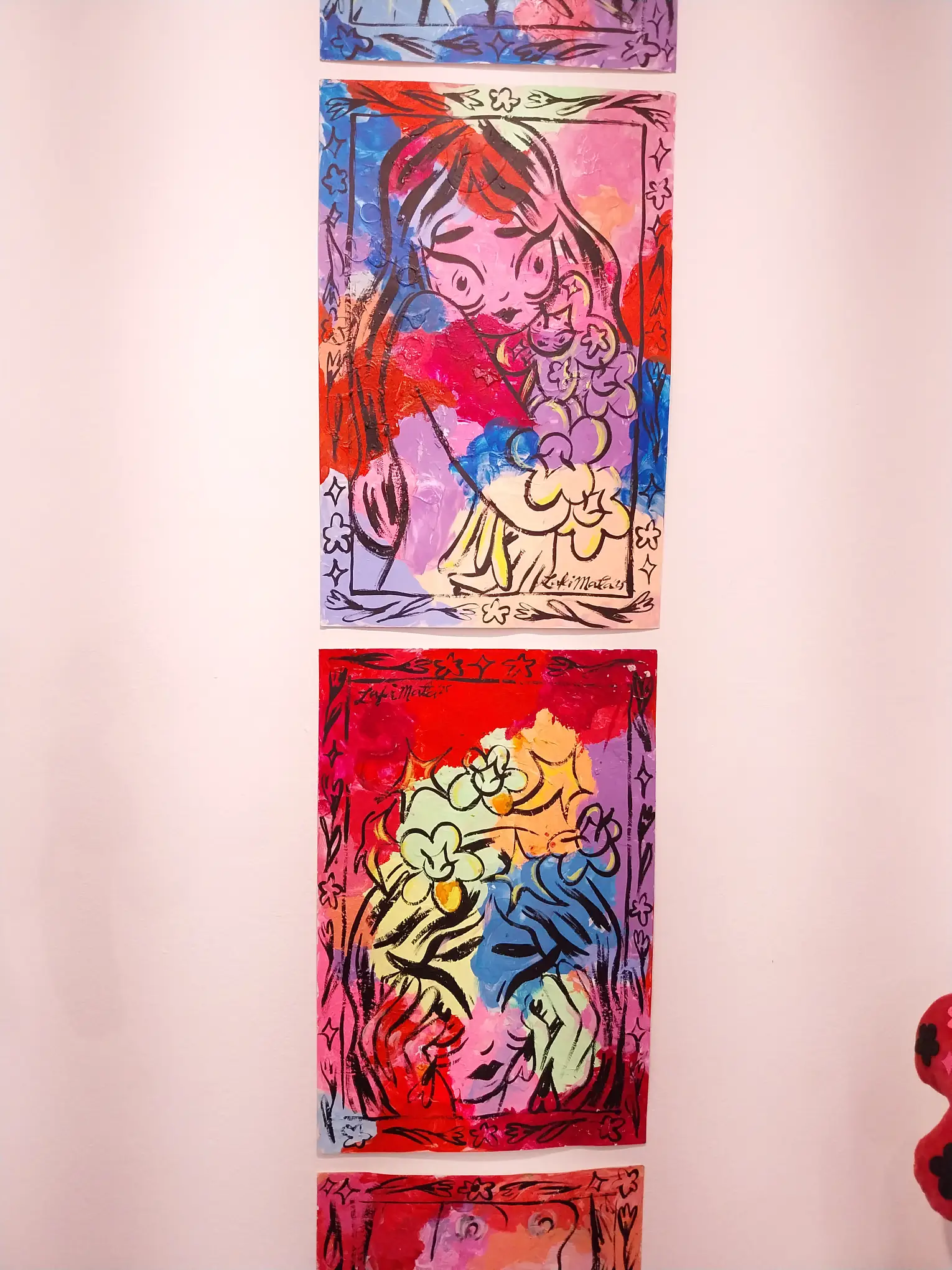
“Ang take ko naman doon ay about societal standards. Ito yung parang, sa paningin ko, ang ginagawa sa atin ng society,” she said. “Ito tayo, na malayang species, tapos papakainin tayo ng something na para ma-put in place tayo na, ‘ah, itong women, ganto lang: must be seen but not heard, or kailangang i-conceal yung emotions mo.’”
(“My take on this is about societal standards. This is, from my perspective, what society does to us. Here we are, a free species, and then they feed us something that puts us in our place: ‘women must be like this, must be seen but not heard, or they need to conceal their emotions.’”)
Mixed Media, Paintings and Fabrics
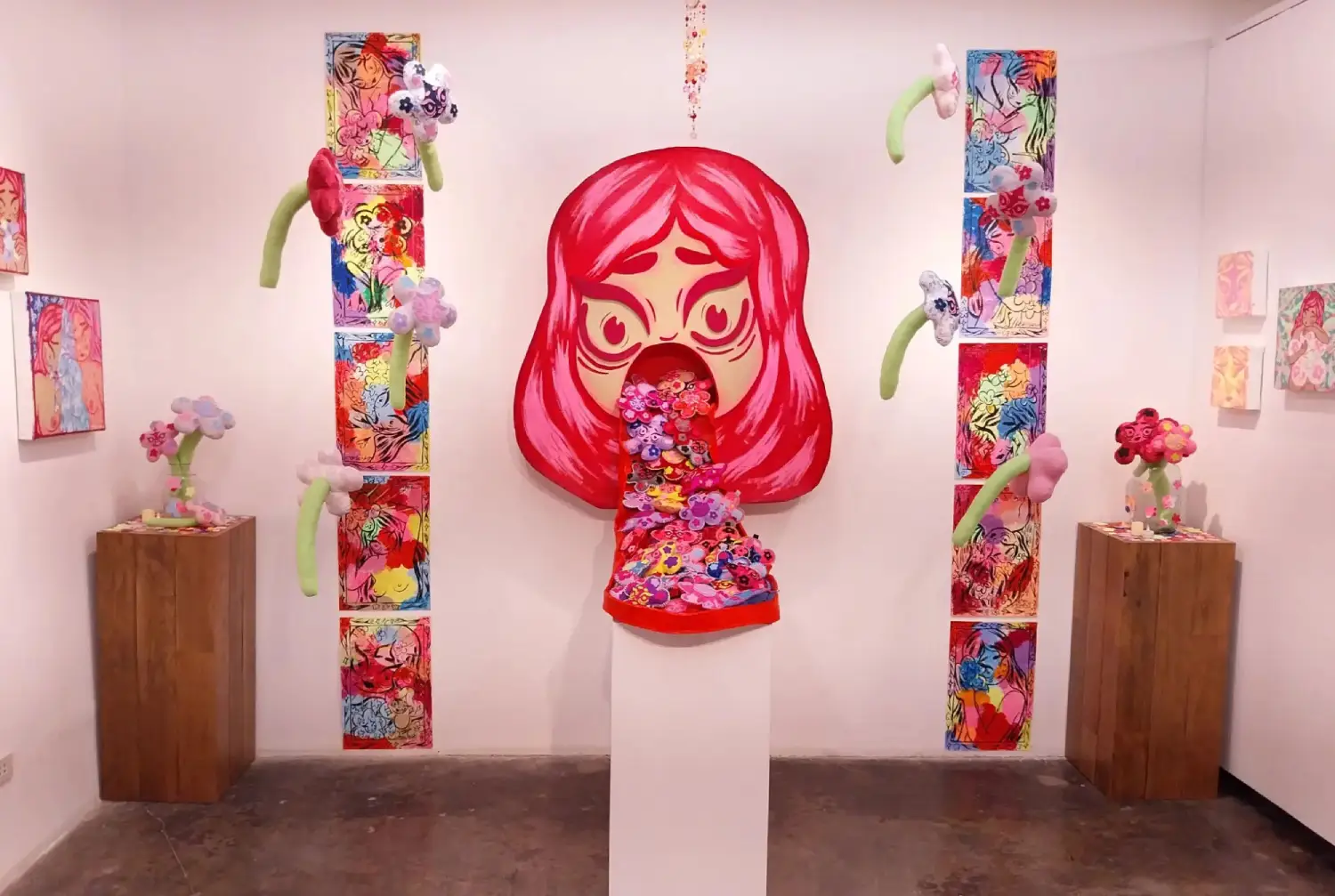
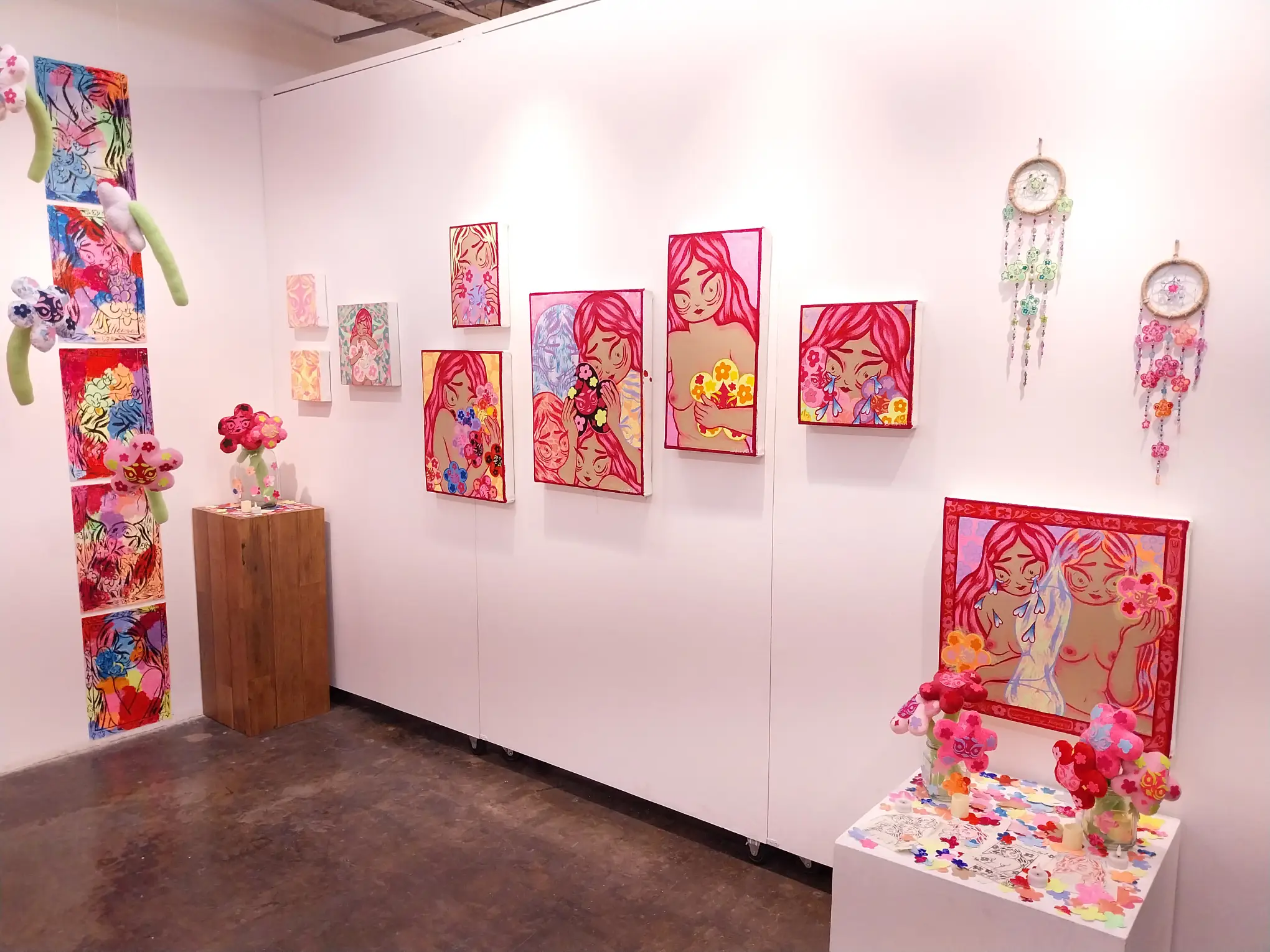
The Flower Eaters bring this idea to life with a mix of different mediums. Laki Mata utilizes the same art style and characters from the previous exhibit, which are “big-eyed” women with emotional facial expressions whose openness and vulnerability are presented as a strength and not a weakness.
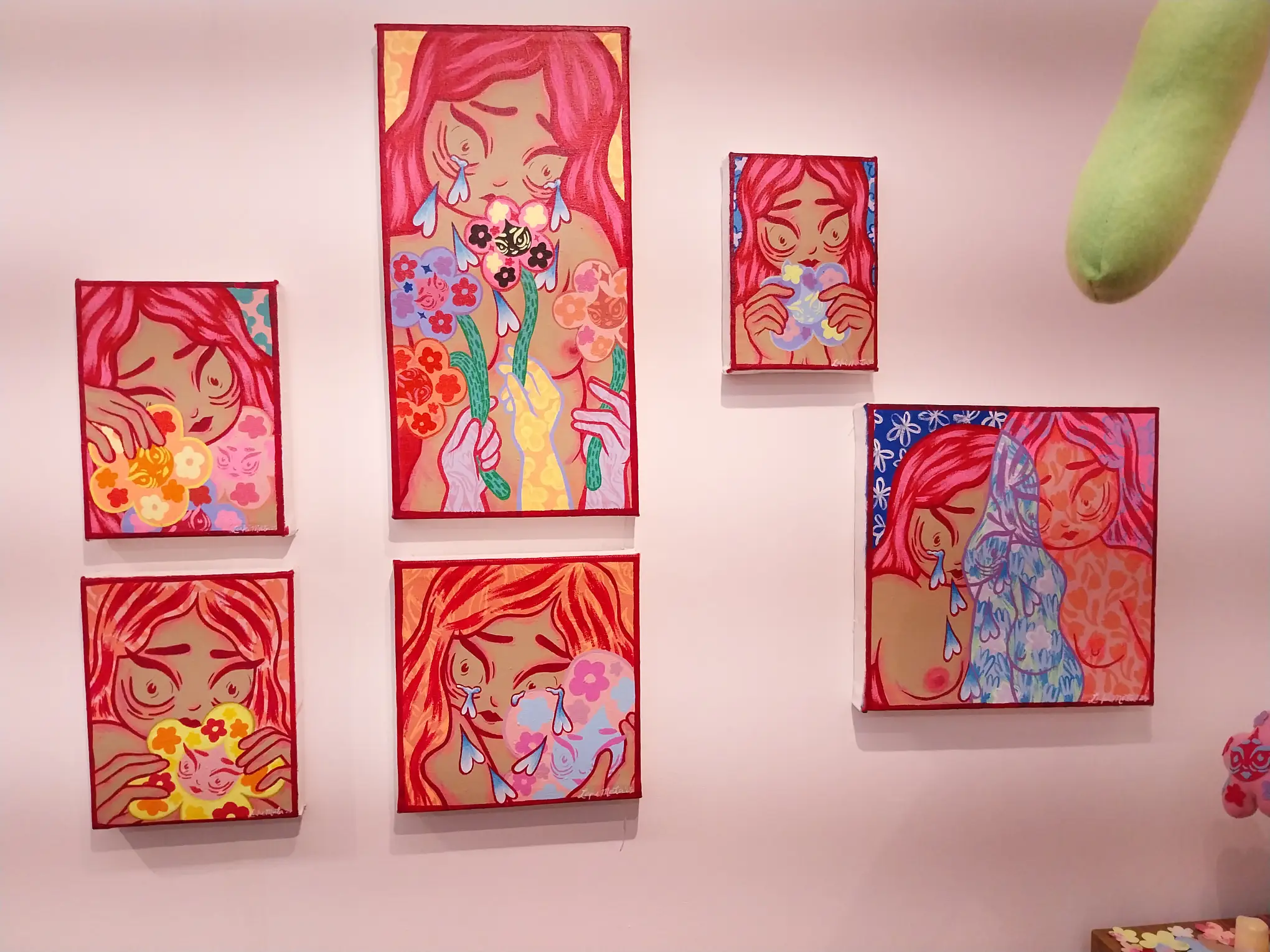
“Traditionally seen as passive symbols of fragility, these feminine crying figures are reclaimed as powerful archetypes,” the exhibit write-up said. “Their tears aren’t weakness; they are weathered resistance. In a society that demands silence, smiles, and softness from women, these Flower Eaters weep—loudly, vividly—to remember their agency.”
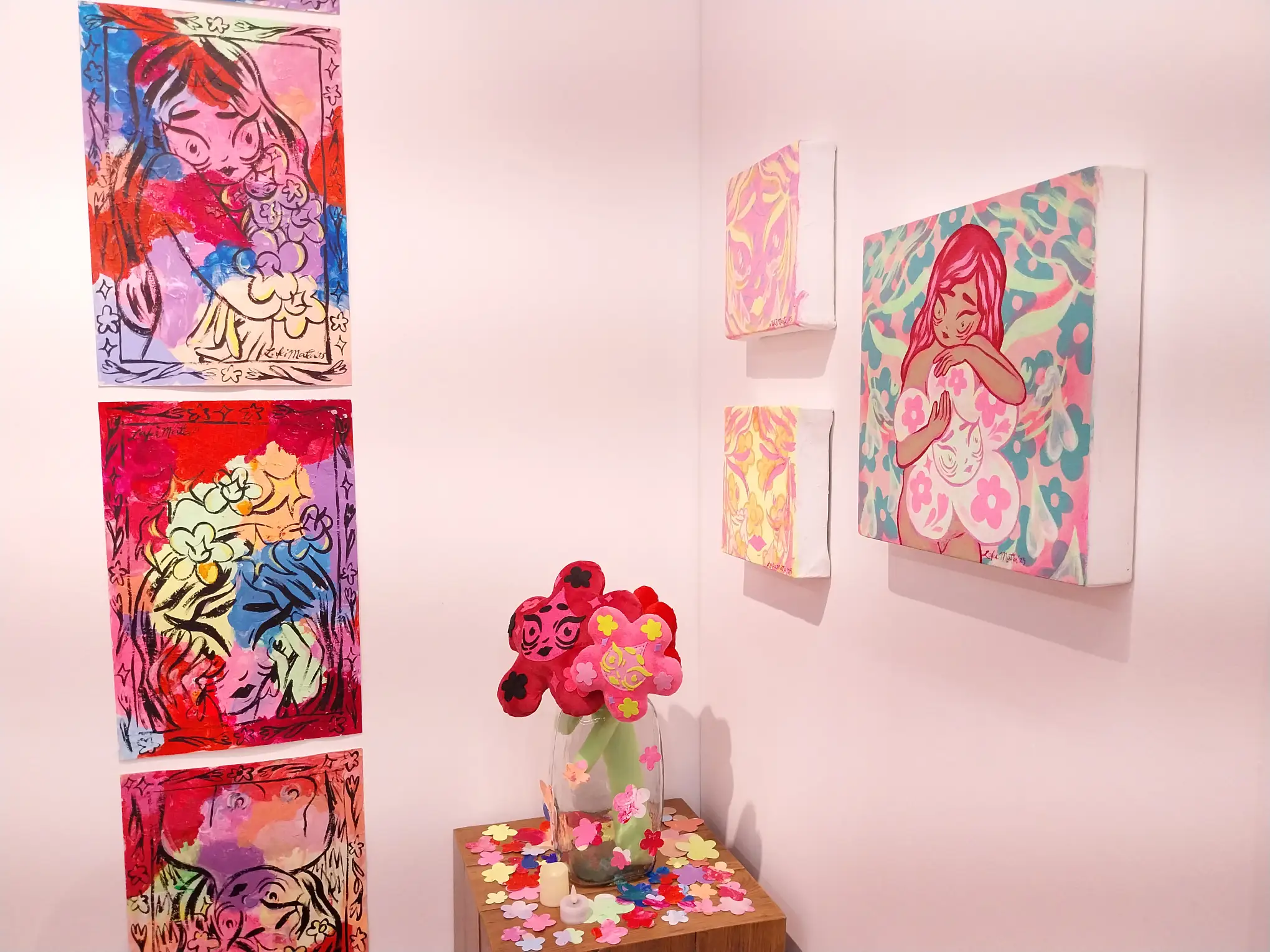
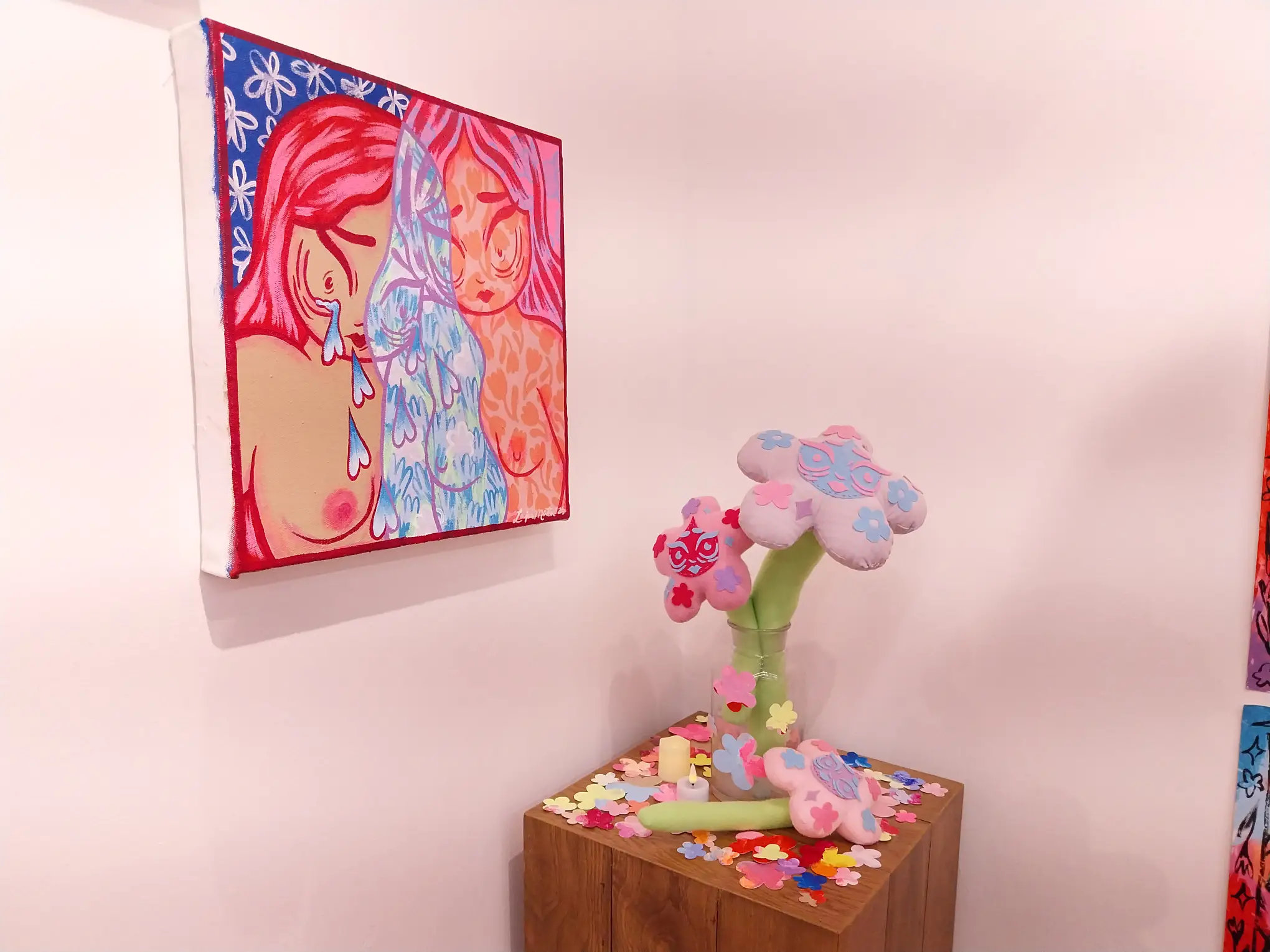
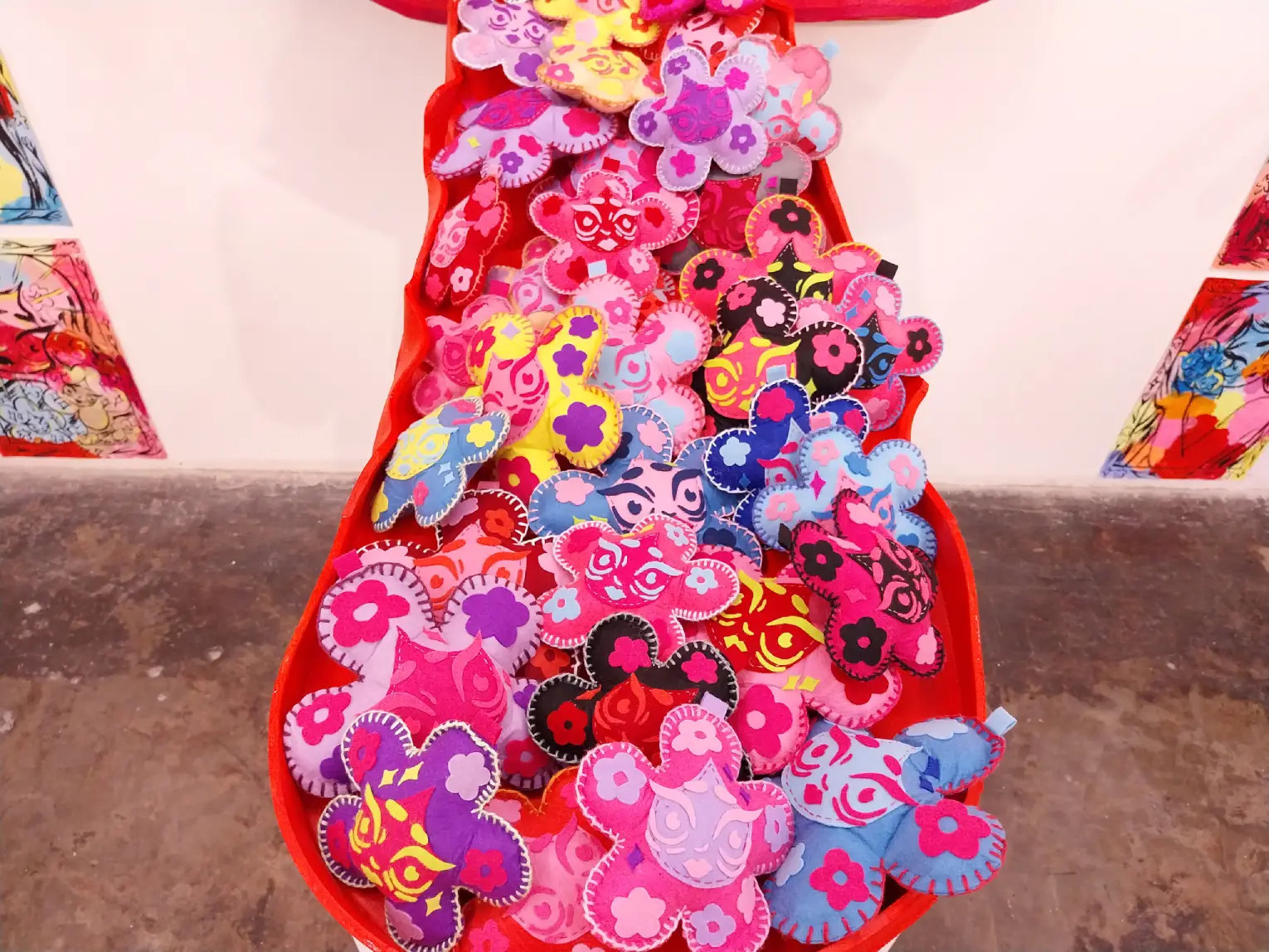
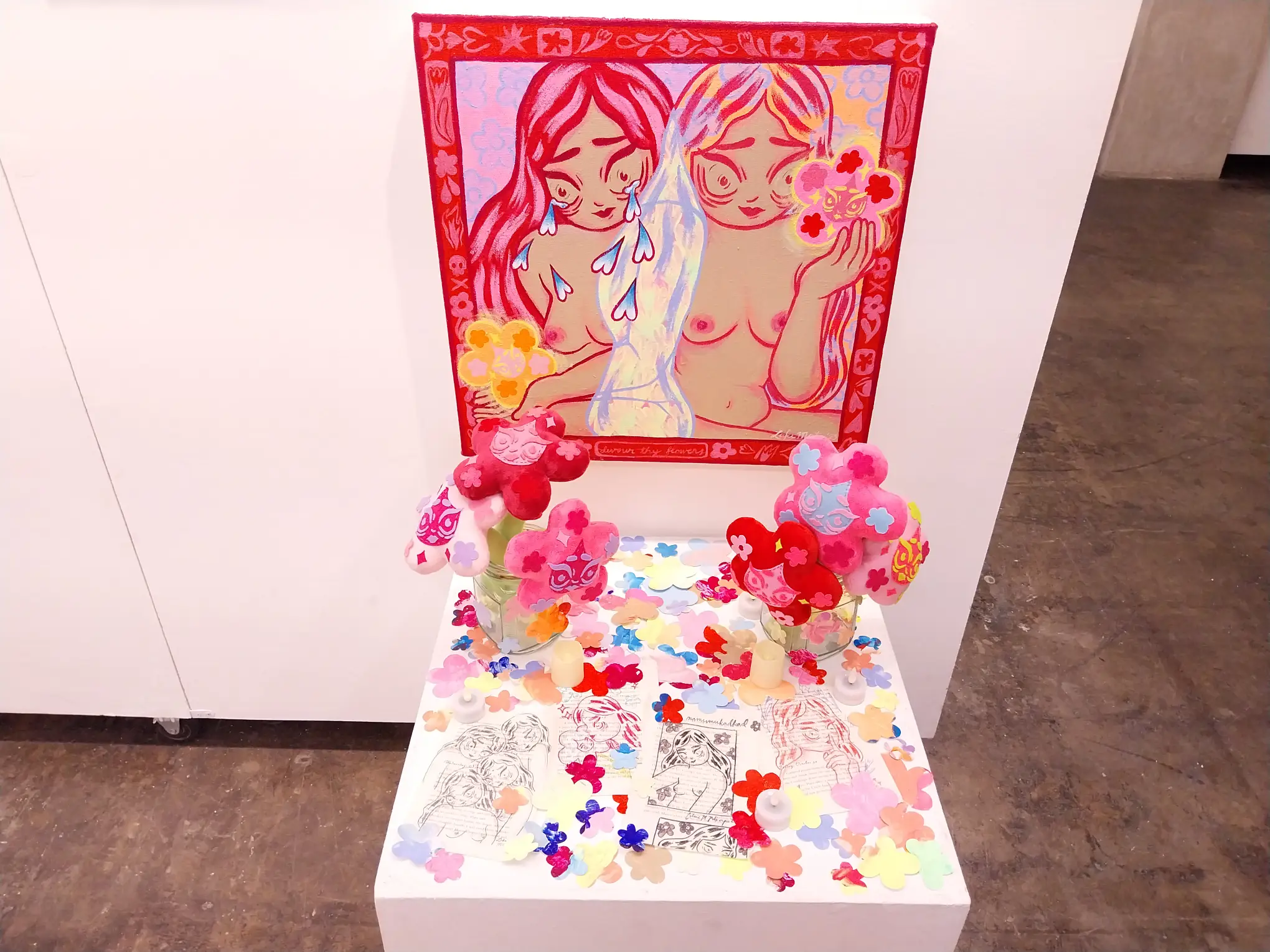
Beyond those characters, different extensions of the art style abound, from mixed media paintings combining acrylic painting and textile, to full-on fabric plushies of the flowers being eaten. The exhibition itself highlights this, arranged in such a way that it showcases the character Liwayway with their tongue open as it overflows with flowers coming out of her.
The Art of a Busy Person
Laki Mata shared that she’s always wanted to explore fabric artworks in her exhibitions. She never found an opportunity with her previous exhibits, however, as she couldn’t figure out how she wanted to utilize the medium.
She uses fabric in The Flower Eaters as an expansion of the idea that dulling yourself for society can give one an illusion of comfort. And yet, what ended up pushing her to start integrating it with her work was largely due to the busy schedule that she had as she raised her son, and the lack of accessibility that painting had for her lifestyle.
“Palaging kaming nasa school, so yung painting, hindi ko madala,” she said. “Parang nag-sto-stop din yung art ko kapag nasa labas kami. Ito ang pagbabalik ng [fabric dahil] nadadala ko; kasi pwedeng cut-out siya, diba? Pwedeng nag-gugupit lang ako sa labas, or nag-tatahi ng konti, ganon. And then saka ko ilalapat sa canvas pag-uwi ko na.”
(“We’re always at school, so I can’t bring my paintings. It’s like my art stops sometimes when we’re outside. This is where fabric comes in, because I can bring it around; because it can also be a cut-out, right? I can cut it outside, or stitch a bit, and then I can put it on the canvas when I get home.”)
The Escape of Liwayway?
Though there’s a sort of loose storyline to the exhibitions of Laki Mata, she said that she had no plans yet for what happens to the character Liwayway in the next exhibition.
“Actually yung process ko, once I’m making an exhibit, hindi ko rin alam kung saan papunta yung story,” she said. “Kapag inisip ko kasi na, ‘ay, ito ang gusto ko, gusto ko matapang ang thema, gusto ko ganito,’ nakukulong naman ako doon na, ‘ay, hindi sapat ang i-ski-ne-sketch ko, parang hindi bagay sa [idea].’ Habang ginagawa ko siya, saka siya nagkakaroon ng story.”
(“Actually, my process is that once I’m making an exhibit, I also don’t know where the story goes. Because, when I think, ‘oh, I want this, I want this strong theme, I want it like this,’ I get caged until it’s ‘oh, what I’m sketching is not enough, it doesn’t fit the idea.’ While I work on it is when the story comes out.”)
Finding Freedom for Ourselves
The Flower Eaters convey a different sense of spiritedness and rebellion from what we typically see in society. It seeks strength and agency through an outpouring of feelings and building a community from like-minded people rather than repressing emotions and enduring it all alone.
Liwayway can only escape if she rejects the easy comfort of the flowers and expresses her feelings, and that’s something that the artist feels people need to do to get out of the constraining standards society imposes on us.
“Suspended above, a singular acrylic chime echoes like a call to wakefulness-a shimmer of resistance in a world dulled by compliance,” the exhibit write-up said. “Here, in the land of the Flower Eaters, beauty is not an escape. It is a battle cry.”
Photos by Elle Yap.
Related reading: ‘Territorial’: Artists Discuss the West Philippine Sea Dispute in New Exhibit
Frequently Asked Questions
In The Odyssey, the lotus flower represents a drug that makes sailors forget their homes; however, Laki Mata reinterprets these flowers as societal expectations and performative beauty used to pacify women. In this exhibit, “eating the flowers” acts as a metaphor for conforming to patriarchal standards that dull a woman’s ambition and individual agency. By consuming these expectations, the character Liwayway forgets her purpose, mirroring how modern society often demands that women be seen but not heard.
Liwayway is a celestial being inhabiting a mortal woman’s body, a recurring character in Laki Mata’s artistic lore across three exhibitions. After discovering the “messiness” of emotions in Soft Pink Feelings and experiencing “oppressive rage” in She Rage, she is now trapped on an island in The Flower Eaters. Here, she is force-fed flowers to conceal her anger and ambition, representing a stage of forced compliance where her independence is threatened by social conventions.
The “big-eyed” crying figures are reclaimed as powerful archetypes of resistance rather than symbols of fragility or weakness. In a society that pressures women to hide their true feelings behind smiles and softness, these figures weep vividly and loudly to remember their own personhood. Their tears represent a refusal to be silenced, suggesting that vulnerability and the open expression of emotion are essential tools for reclaiming one’s independence from restrictive standards.
Laki Mata integrated fabric and textiles to symbolize the “illusion of comfort” that social compliance provides, while also reflecting the practical realities of her life as a busy mother. Because she could not easily transport large paintings while at her son’s school, she began cutting and stitching fabric pieces on the go. This “portable” medium allowed her art to continue outside the studio, eventually evolving into the mixed-media canvases and flower plushies seen in the gallery.
The exhibit serves as a “battle cry” against the dullness and apathy caused by blind adherence to social norms. It suggests that true freedom for women can only be found by rejecting the “sweetened” distractions of performative affection and embracing raw, spirited rebellion. By building a community based on shared feelings rather than repressed silence, the exhibit encourages individuals to wake up from the drugged state of compliance and fight for their inherent agency.
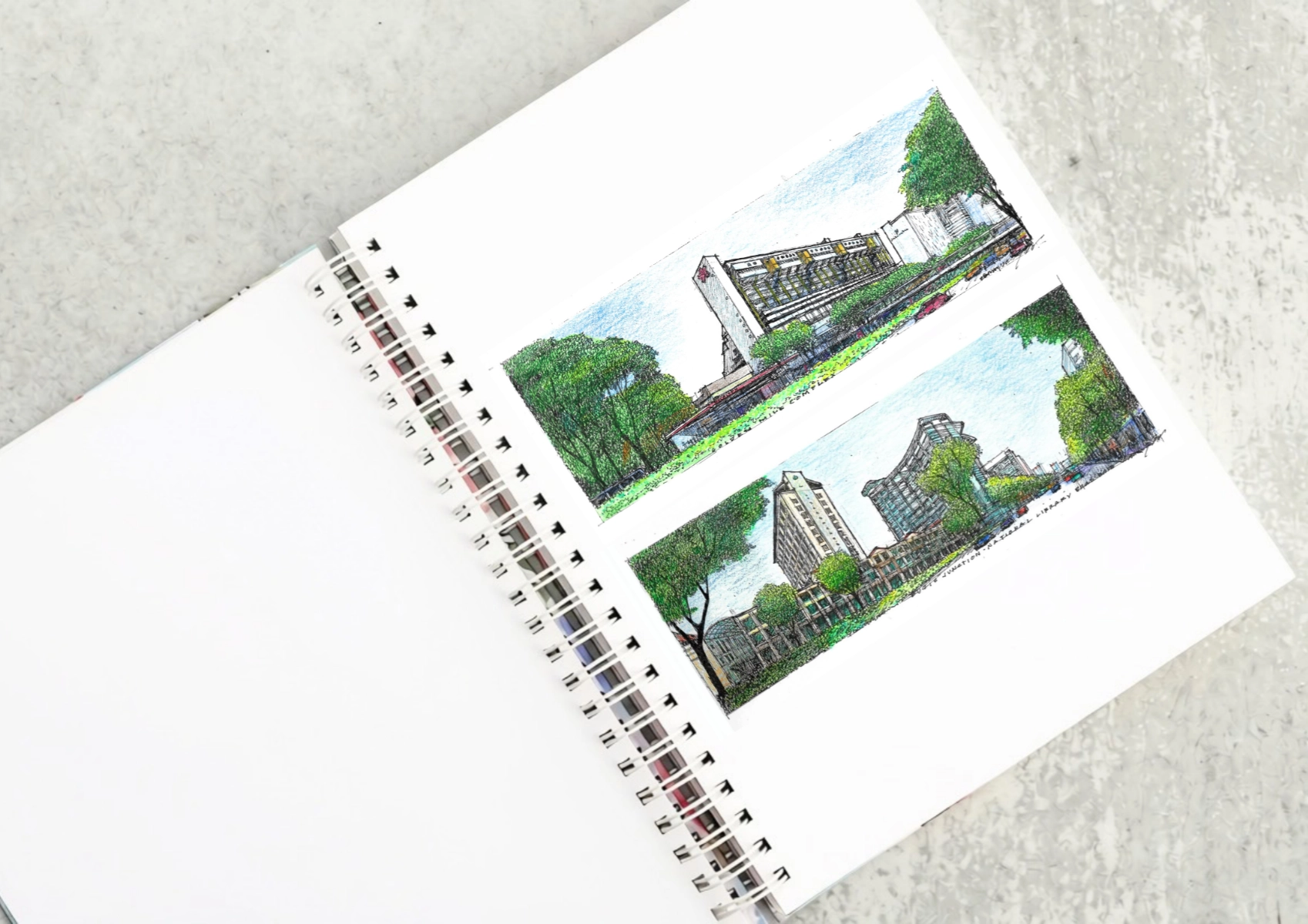
Two sketches of Singapore connect BluPrint Editor in Chief Paulo G. Alcazaren’s personal and professional history with Shared Ground: ArchitectureArchitectureThe art and science of designing and constructing buildings, structures, and spaces that are functional, safe, and aesthetically pleasing. It encompasses the planning, design, materials, and techniques used to createGo to Architecture Glossary of Care, Culture, […]
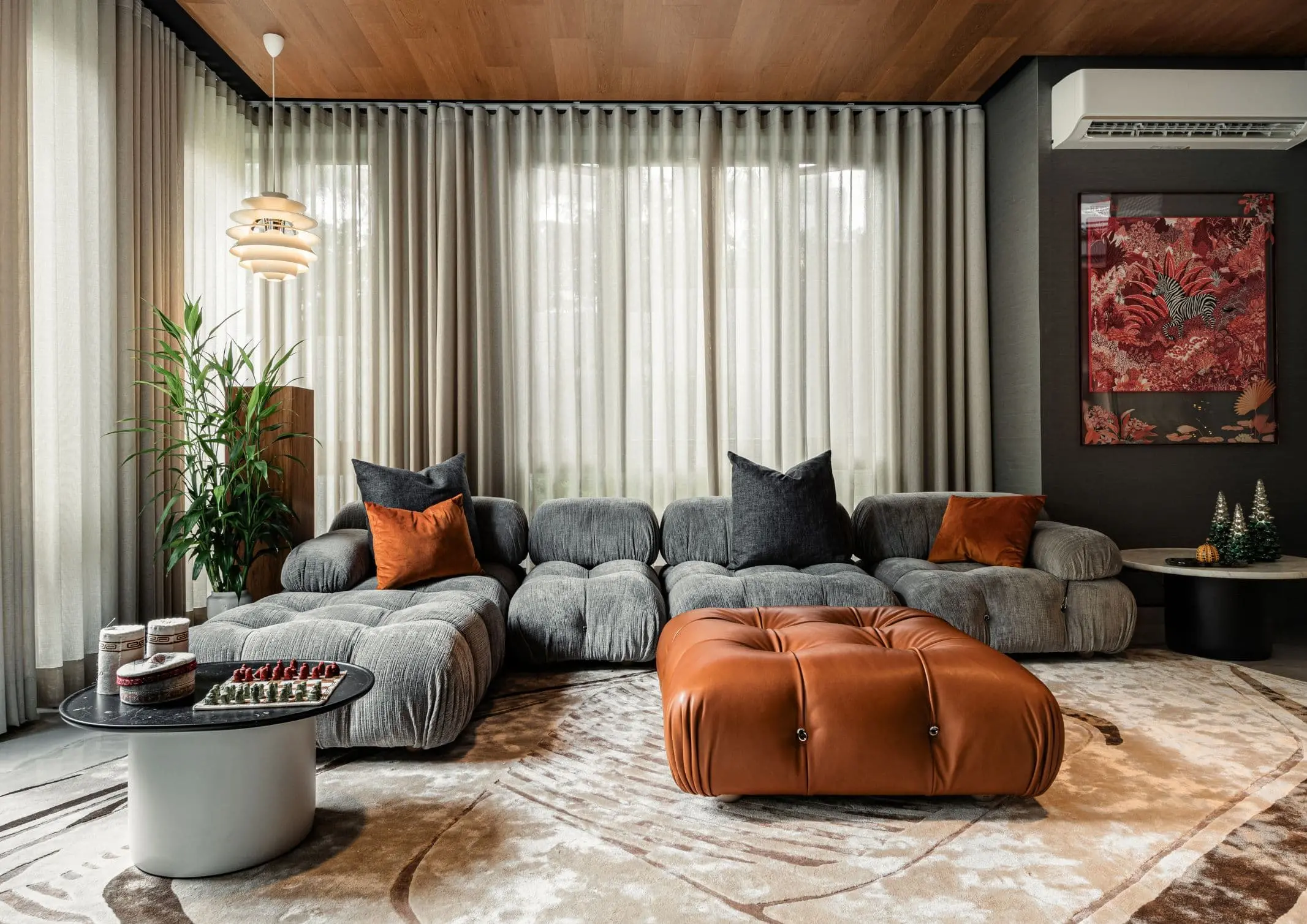
Some have become household names – Coleman, Oster, and KitchenAid – products that have found their way into Filipino kitchens, homes and family routines. In home furnishings, brands such as B&B Italia, Ethan Allen, Sub-Zero, Miele, SieMatic, Louis Poulsen, Hunter Douglas, Tempur, and Technogym, have helped shape the way Filipinos live. From everyday essentials to […]
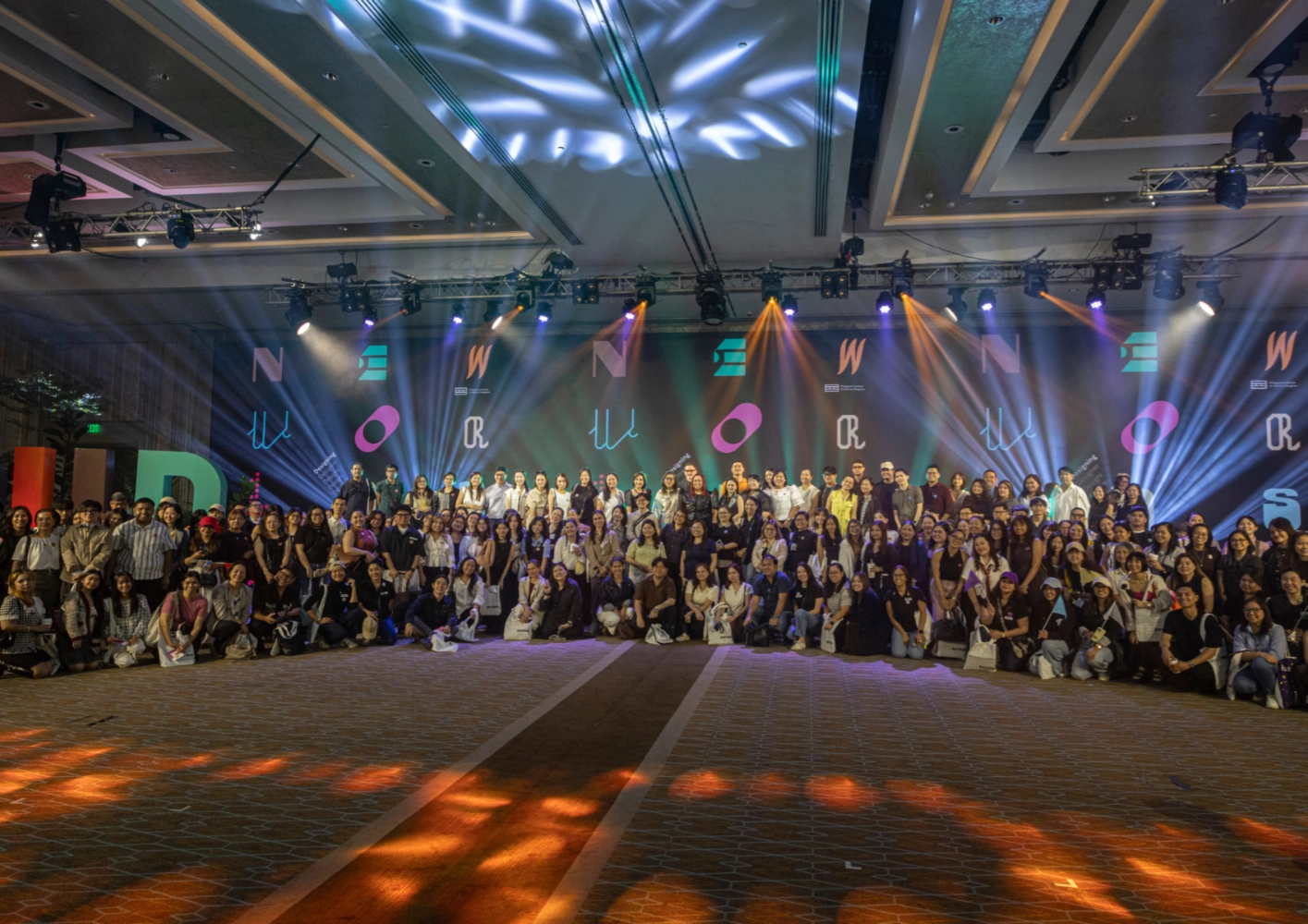
In a way, designers are the modern-day soothsayers and prophets. They design for the future, predicting how a room, a house, a building or a whole city will be used by people. They foresee how users will interact with a space, conjure exact shades of colors to elicit specific behavior and arrange furniture to build […]
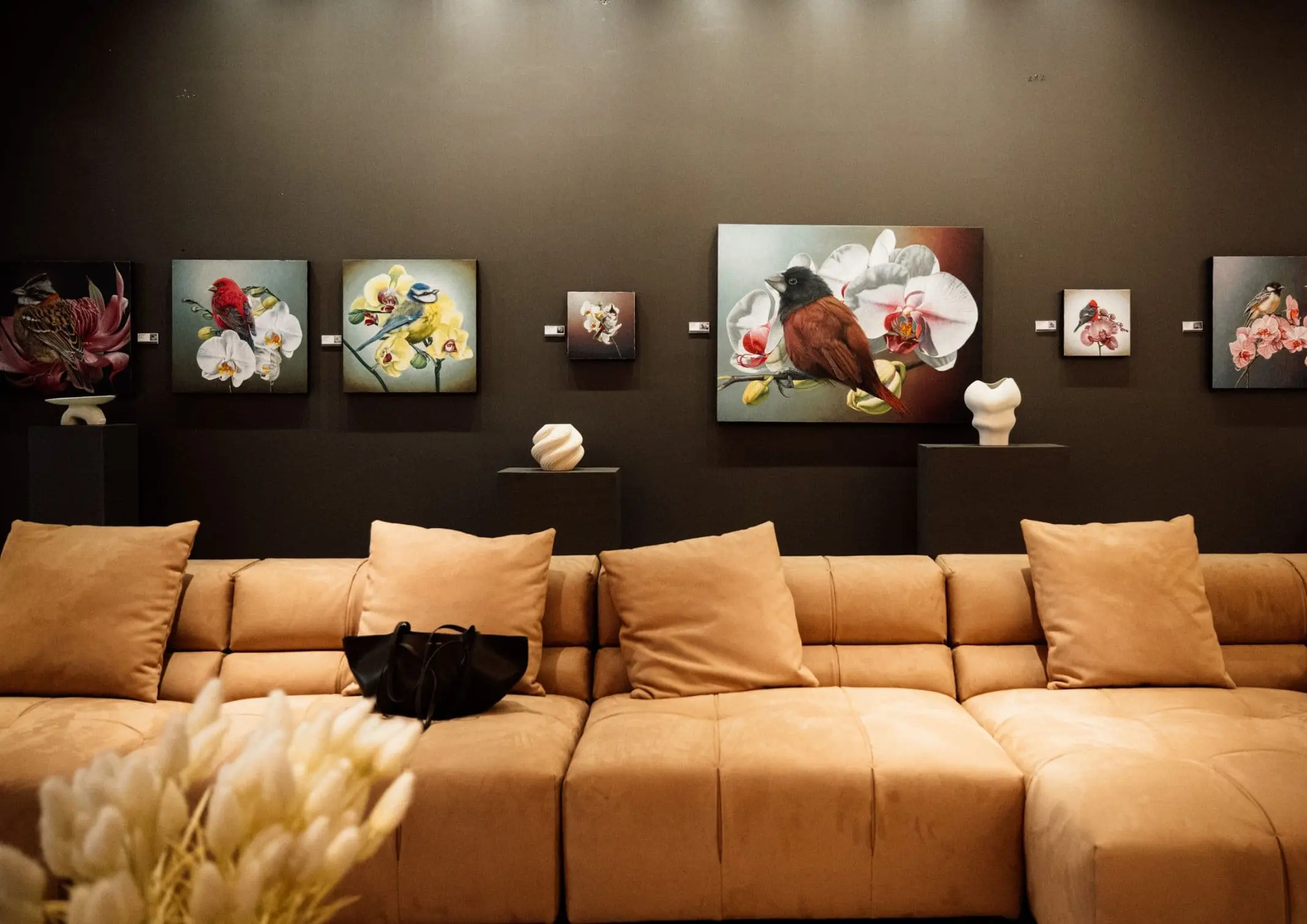
Art and furniture are often selected separately, yet their relationship can shape how a room looks and feels. The collaboration between Hooga and Galerie Joaquin explores how these elements can work together, bringing contemporary artworks into furnished residential settings at Hooga’s showroom in Uptown Mall, Bonifacio Global City. For Hooga, which curates furniture, lighting, and […]
Read the issues.

Collect the volumes.

Recommended Video
Tap to Unmute
Unmute
0:00
0:00