Bigkis is the act of binding. In Tagalog, the word can refer to something used to bind or encircle, as well as a bundle formed by tying several separate elements together. Figuratively, it can also mean a bond, union, or unity. The meanings move from the physical act of joining things together to the connection […]
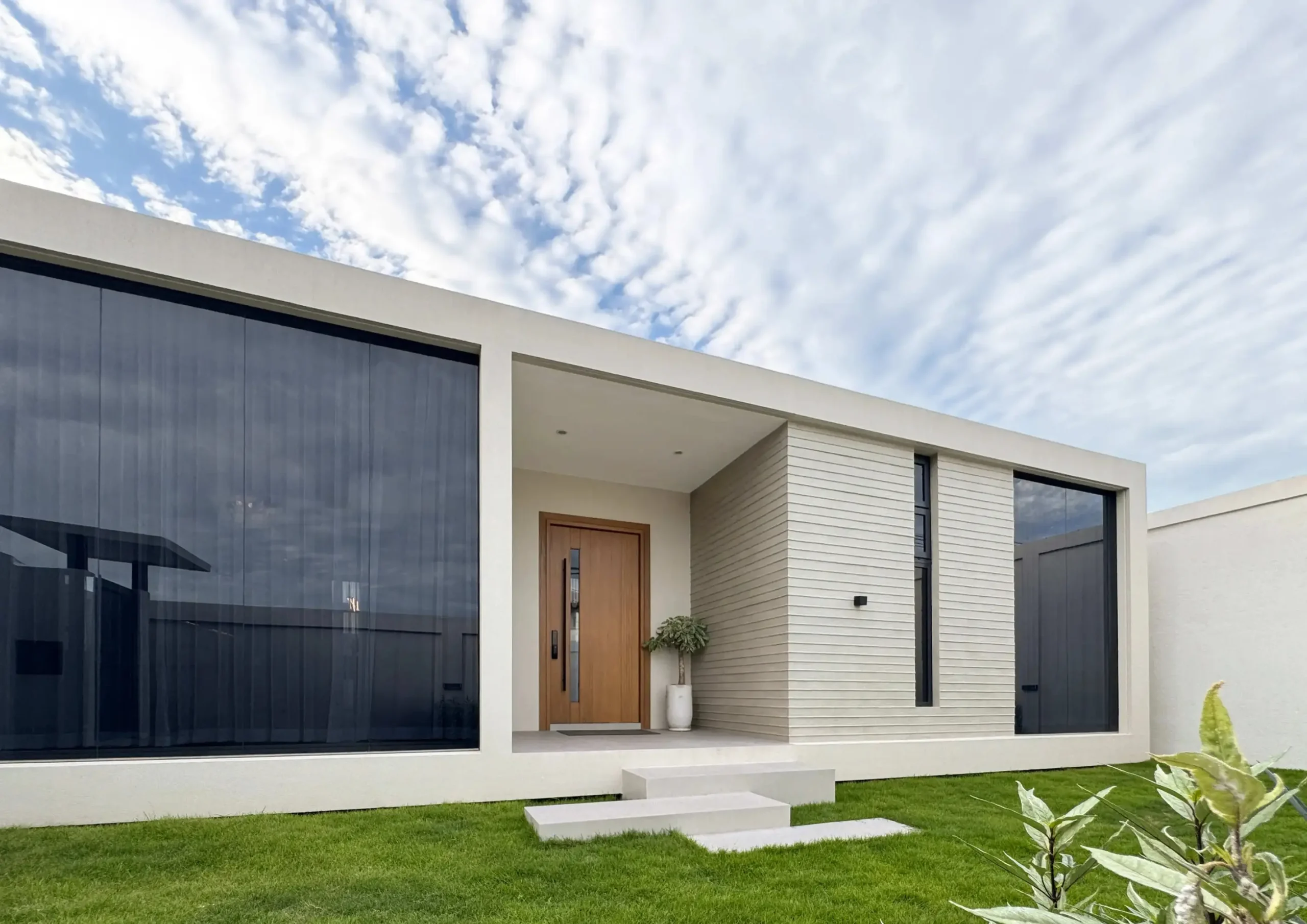
The Aeris: A Floating Cube House Made for the Millennial Aesthetic



For most homeowners, picturing a life in a new home means moving to a finished structure with all necessary furnishings already laid-out. But InnovArc helped a millennial couple by designing the Aeries: a single level starter home that spotlights their minimalist style while retaining the flexibility to curate their living spaces thoughtfully over time.
A Prototype for Modern Millennial Living
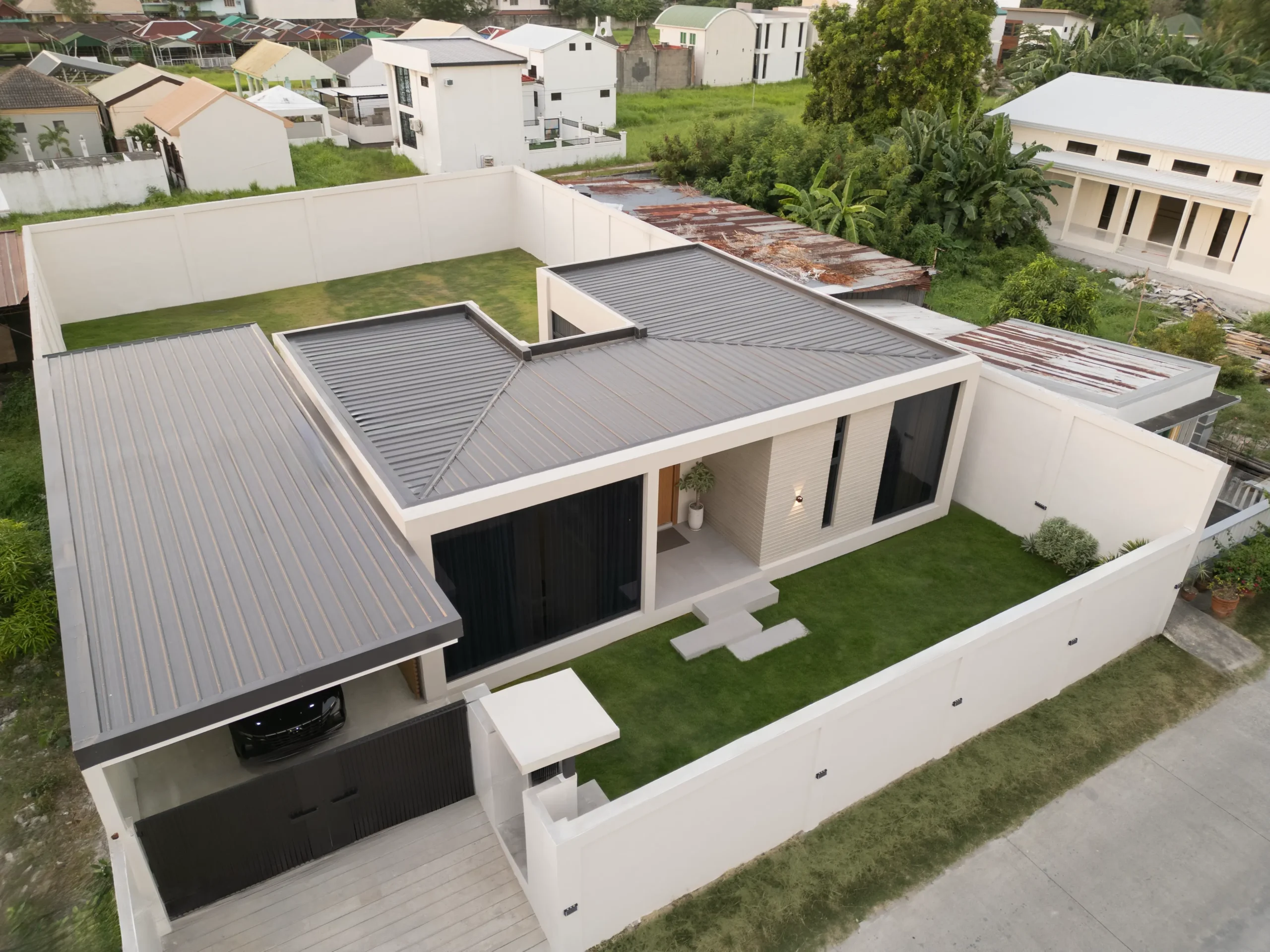
Seeking a straightforward lifestyle, the clients found a less cluttered, modern home to be the ideal match. It was a design that perfectly balanced their early years as a married couple with a forward-thinking approach, allowing for future expansions as their needs evolve.
Meanwhile, the Pampanga-based architecture firm, InnovArc, saw this as an opportunity to create “a prototype project” suited for millennial homeowners.
“We’re breaking away from the usual design,” Innovarc’s Chief Operating Architect Paul Soliman asserts. Despite the clients’ sizable lot, they opted for a bungalow, recognizing its affordability and convenience as a starter home. But to truly separate the space from the conventional notion of bungalows being small-scale and unassuming, the architectureArchitectureThe art and science of designing and constructing buildings, structures, and spaces that are functional, safe, and aesthetically pleasing. It encompasses the planning, design, materials, and techniques used to createGo to Architecture Glossary firm transformed it into a striking “floating cube house.”
The building of the 120 square-meter structure named “The Aeris” began in 2024 and now occupies the front portion of the lot. The rear part, on the other hand, is a space reserved for the construction of a much larger, main residence in the future.
With the vision to make the starter home appear floating, InnovArc took advantage of The Aeris’s elevated landscape. Along with enhancing its exterior appeal, this topographical feature also provides crucial protection against the house’s flood-prone location.
Soliman also shared that they consulted several structural engineers to ensure that the structural integrity could support the floating house design concept. But what contributed most to the illusion of floating was the unadorned frontage.
This gives an unobstructed view of the plinth beam, where the light installed underneath casts an upward glow. Such illumination further highlights the lift and separation of the main structure from the ground.
Defining the Form of the Cube House

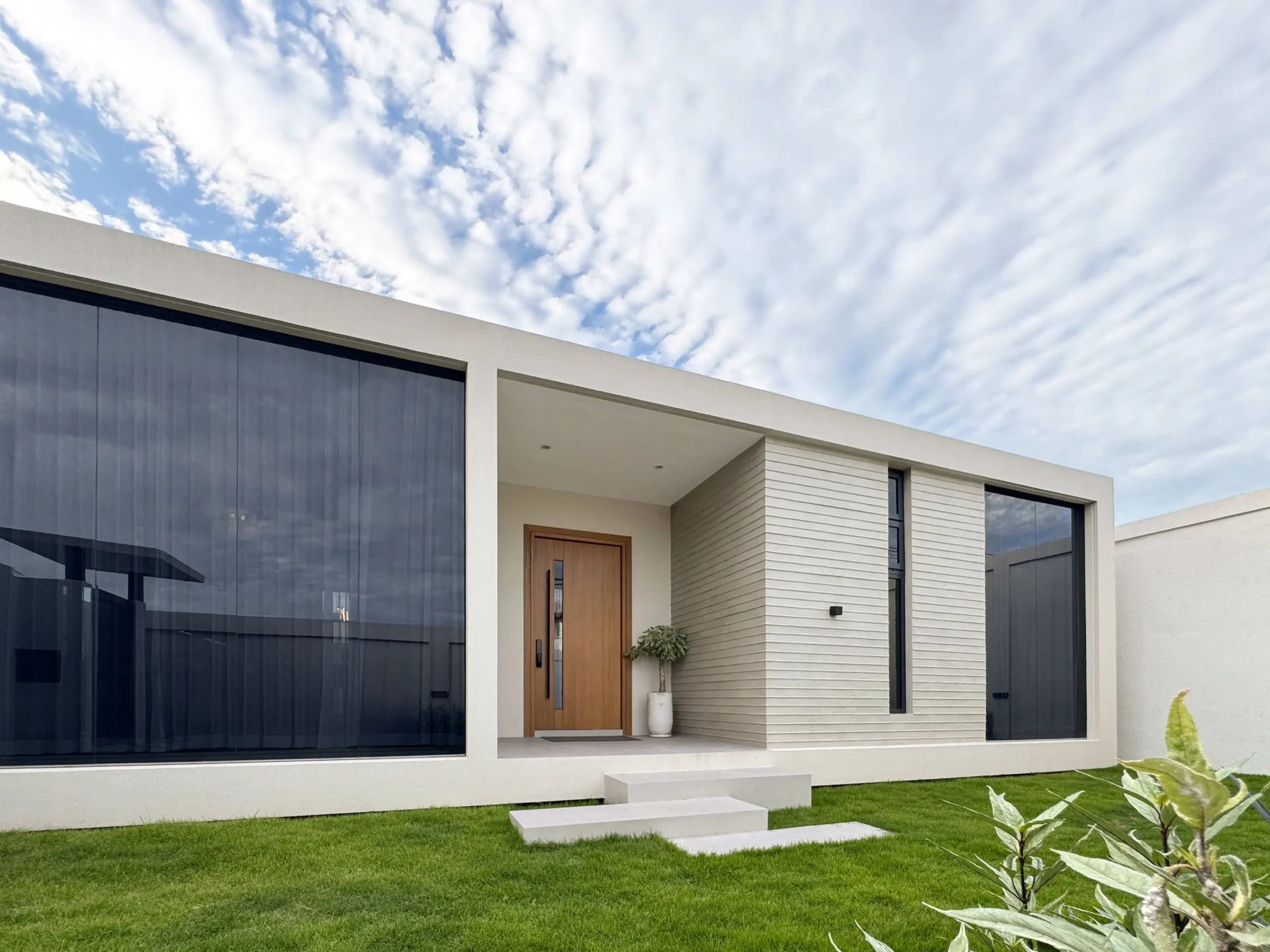
Aligned with the millennial couple’s minimalist style and foresight, The Aeris presents a balance of form and function. From the exterior, the clean, geometric facade exhibits the pure lines of a floating cube.
One of the facade’s distinguishing elements is the use of board-formed concrete to form the horizontal line region near the foyer. Soliman explained that this construction technique is a cost-effective option that brings personality to the exterior’s straightforward style.
He states, “Board-formed concrete is a good alternative for using natural stones kasi [we use the same] wood na ginamit natin from the start na na-build ‘yong house. Ito ‘yong mga formworks, bracing. At the same time sustainable siya, less cost, and it makes a character na parang nagspi-speak siya to itself.”
Both sides of the facade also include full-length windows, with varied widths that subtly give a glimpse of the interior. And to further emphasize the cube house design, the architecture firm opted for a flat roof to make it appear invisible when viewed from the outside.
The chief operating architect revealed that this was achieved by concealing the gutter system within the perimeter of the house. With strategically sloped downspouts further solidified by skilled welding, The Aeris is secured from any potential overflow or leaks.
To give depth to the simple cube house design, Innovarc recessed the main entrance instead of aligning it flush with the rest of the facade. Given the house’s west-facing orientation, this serves as a practical measure against monsoon rains and intense, afternoon sun exposure. The recess also created space for a porch, allowing for decorative elements like plants to compensate for the facade’s unadorned form.
Divided Zones, Unified Experience
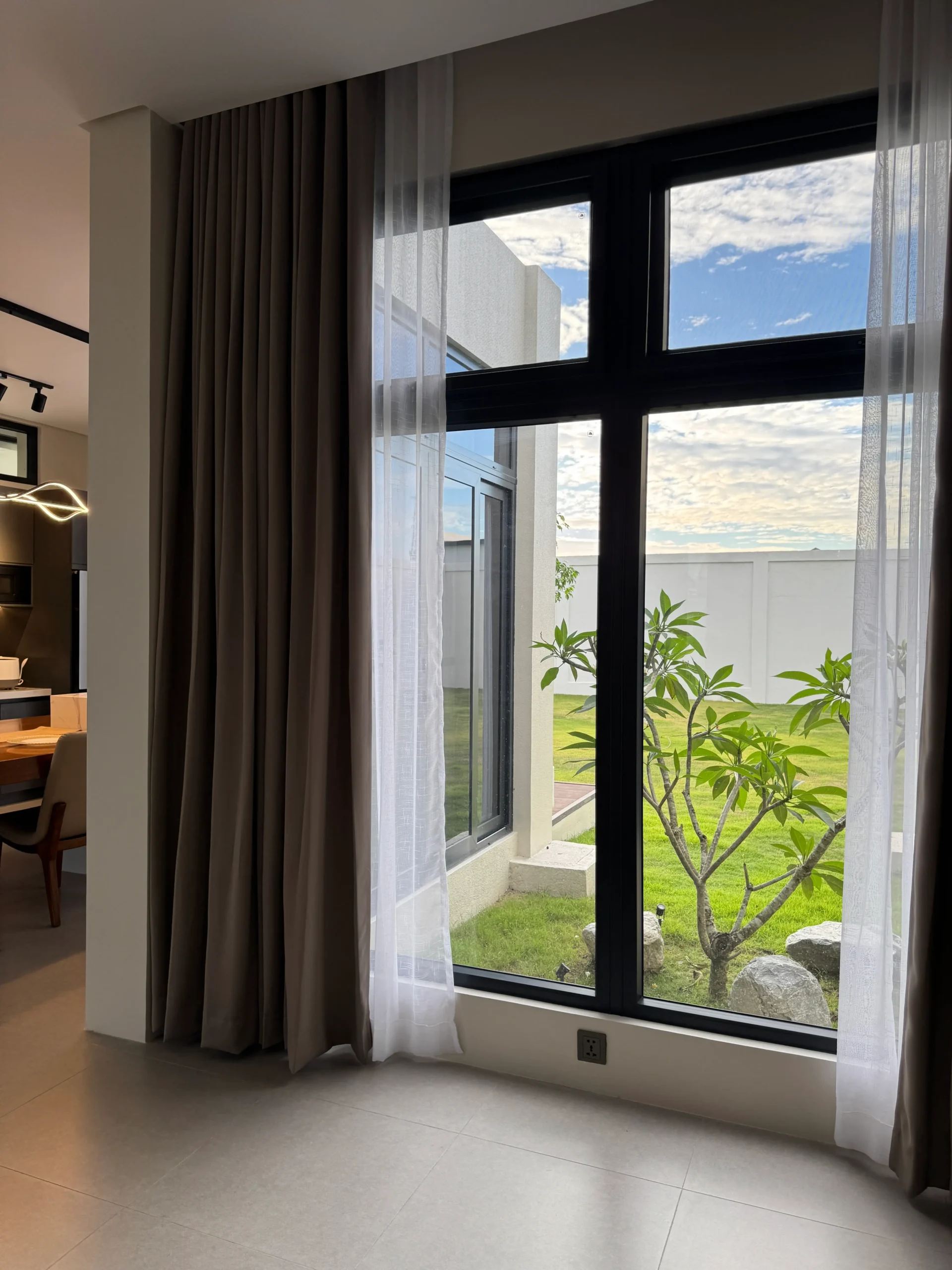
The cube house’s thoughtful exterior planning extends to its minimalist interior designInterior DesignThe discipline of planning and shaping interior spaces for function, comfort, safety, and beauty. It covers layout, lighting, materials, finishes, furniture, and color, and in the Philippines is a licensedGo to Interior Design Glossary, where a clear division of spaces was a primary objective. “The Aeris’s layout speaks for itself,” Soliman states. “This is a U-shaped [floor plan] mainly because we want to separate the private spaces from public spaces.”
From the tanguile front door, the foyer serves as a central divider for the two distinct zones. But the immediate focal point is straight ahead, which is a clear view of the courtyard serving as the heart of the U-shaped design.
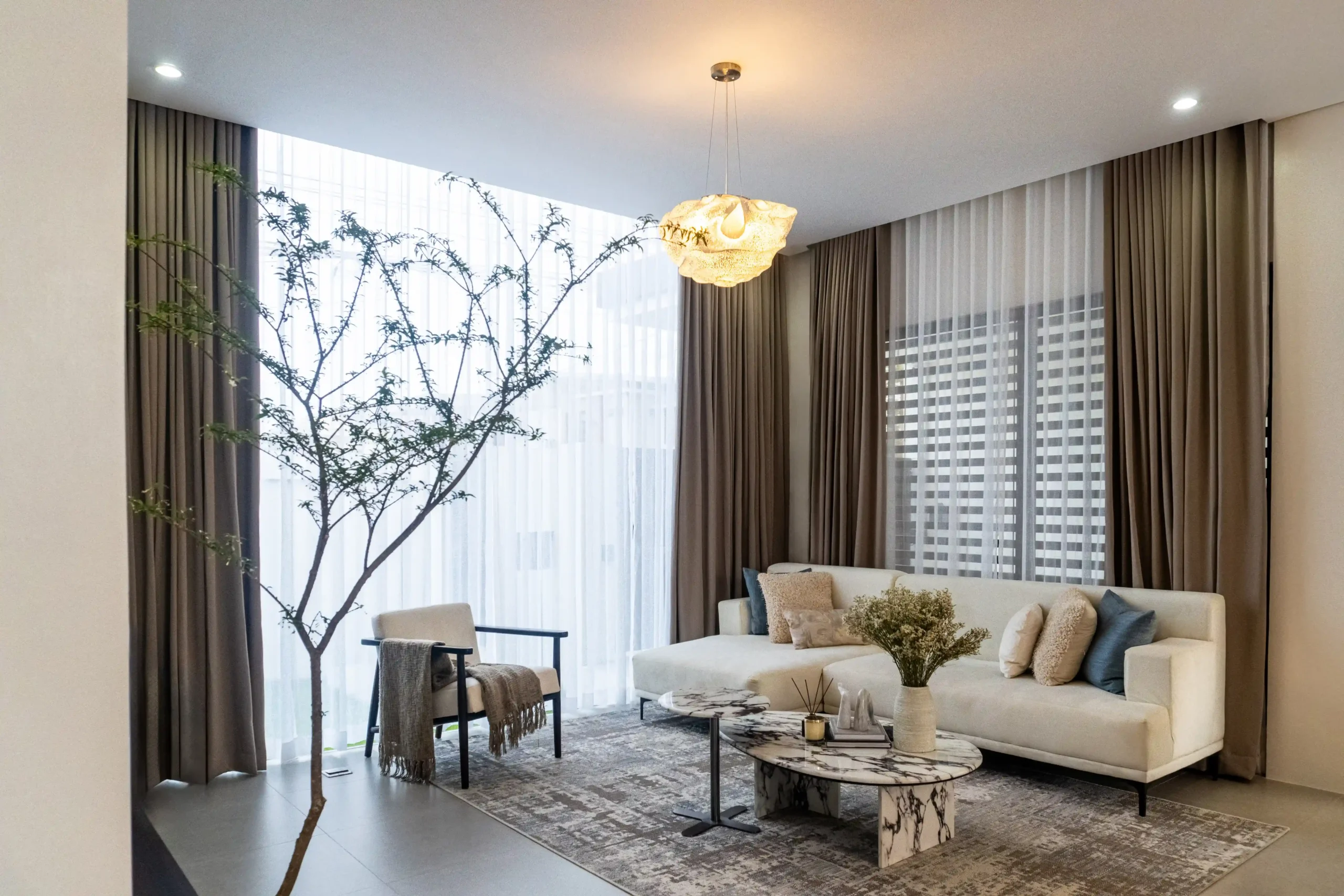
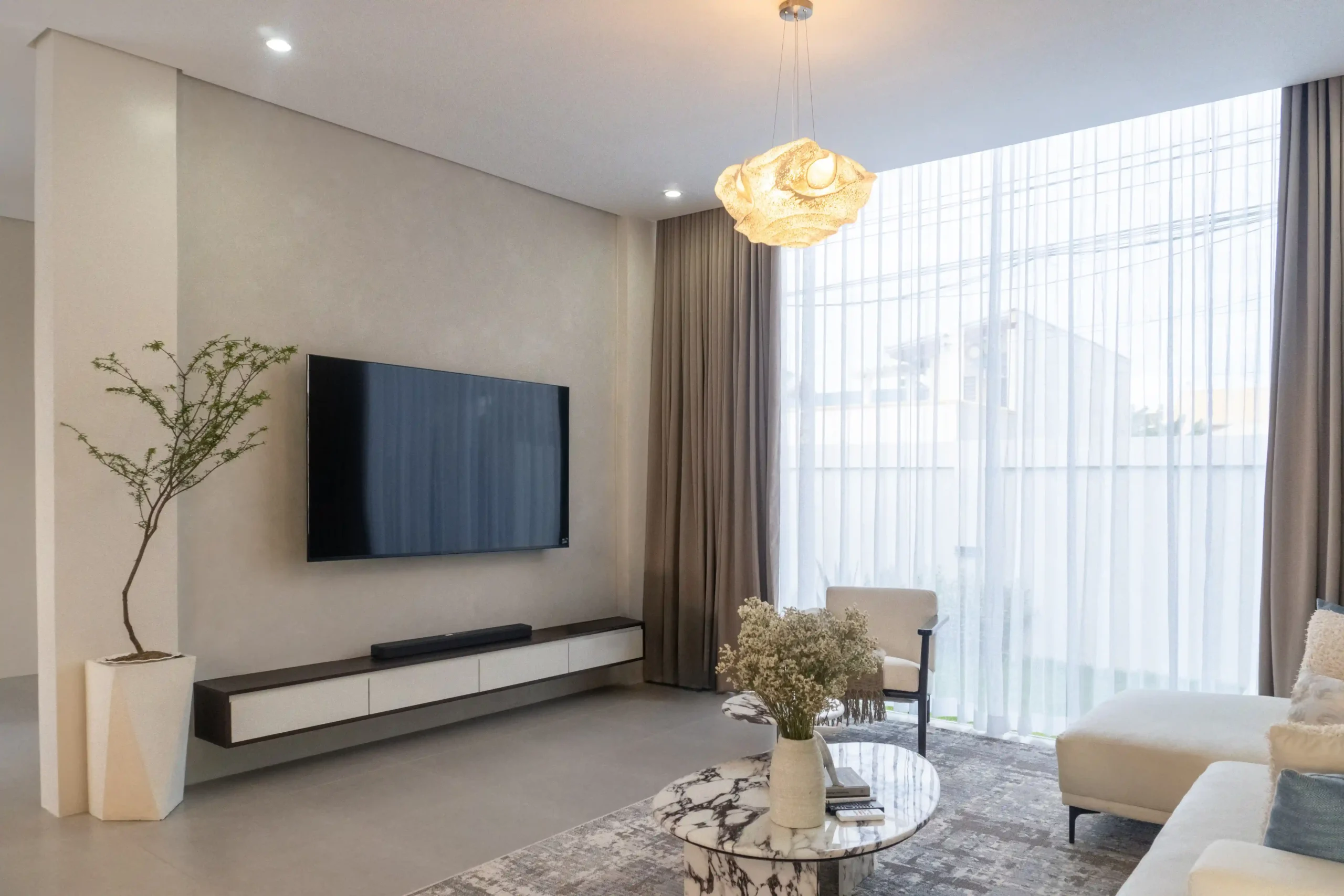
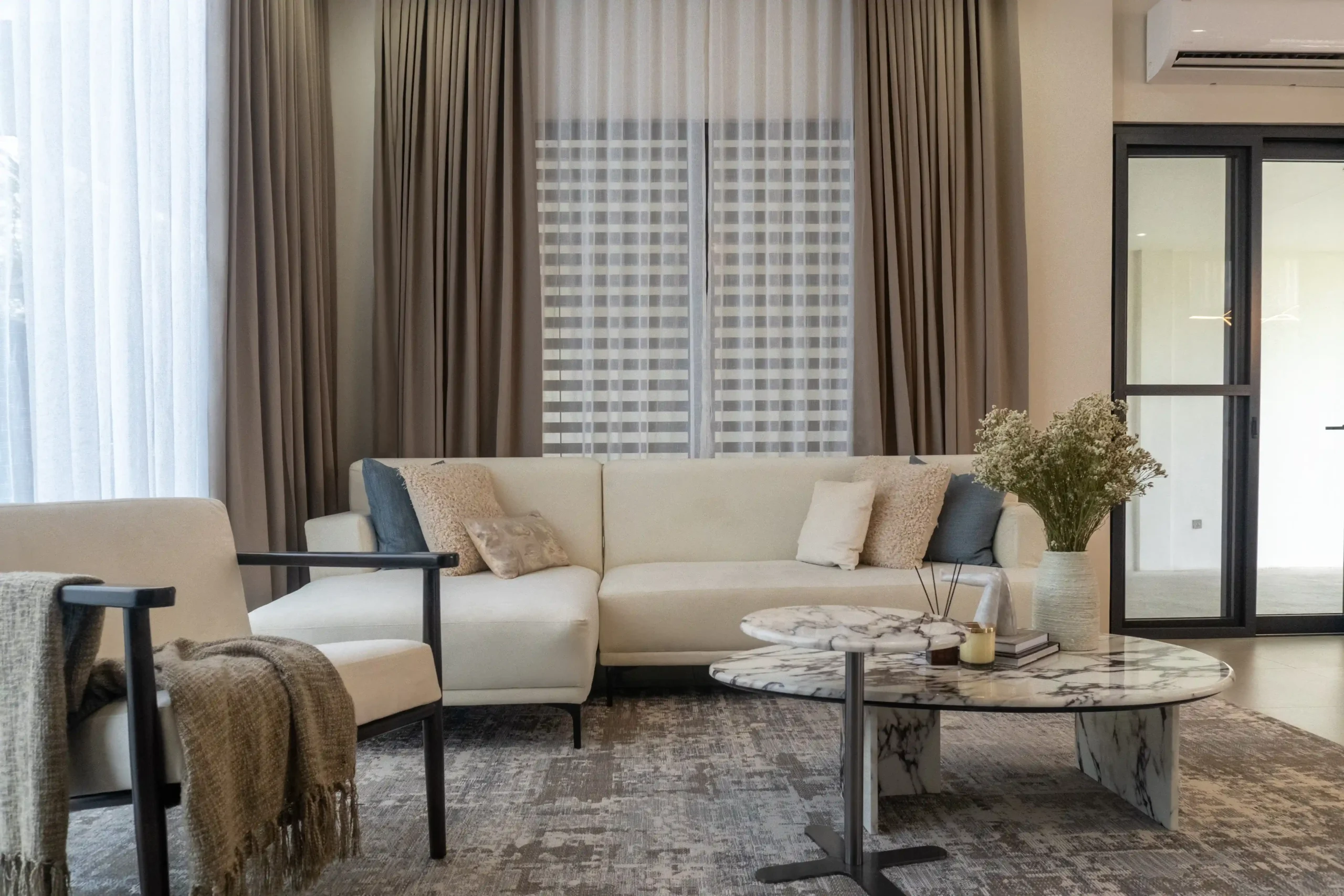
To the left are the public spaces comprising open-plan living, dining, and kitchen areas. Here, the living area breaks the monotony of the minimalist interior design through a dynamic play of textures. This is evident in the coffee table’s marble veining, the area rug’s abstract design, the varied pillow covers, and the textured steel mesh chandelier.
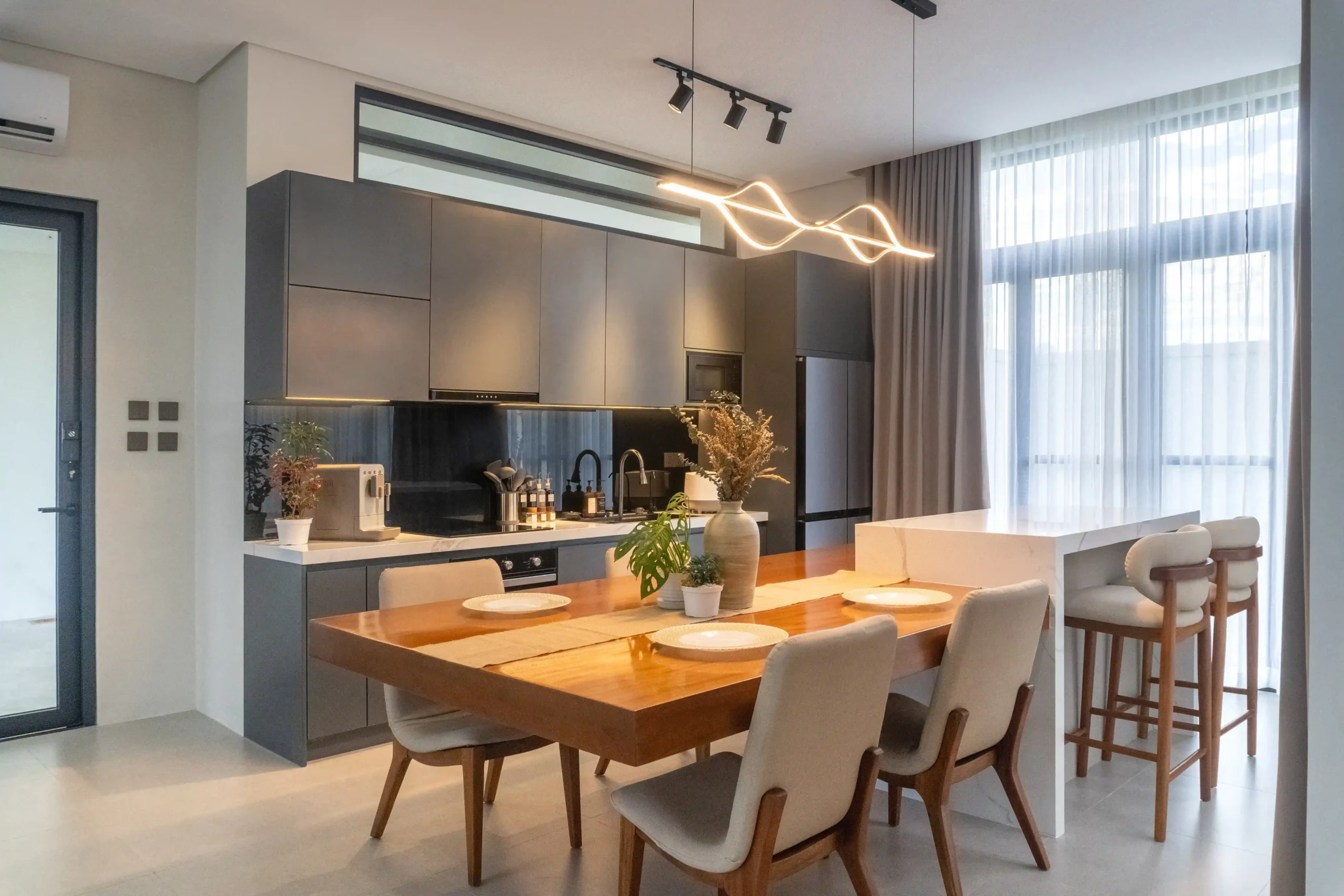
For the dining and kitchen areas, the combined quartzQuartzAn engineered stone made from crushed natural quartz bound with resins and pigments. Hard, non-porous, and stain-resistant, it is a popular choice for kitchen countertops, bathroom vanities, and wall cladding,Go to Quartz Glossary island counter and wooden dining table becomes its defining feature. Anchored on the counter, the dining table is completely suspended, adding another floating element in the starter home. Soliman described this ingenious integration as a space-saving solution to allow for more seating than putting a separate dining table.
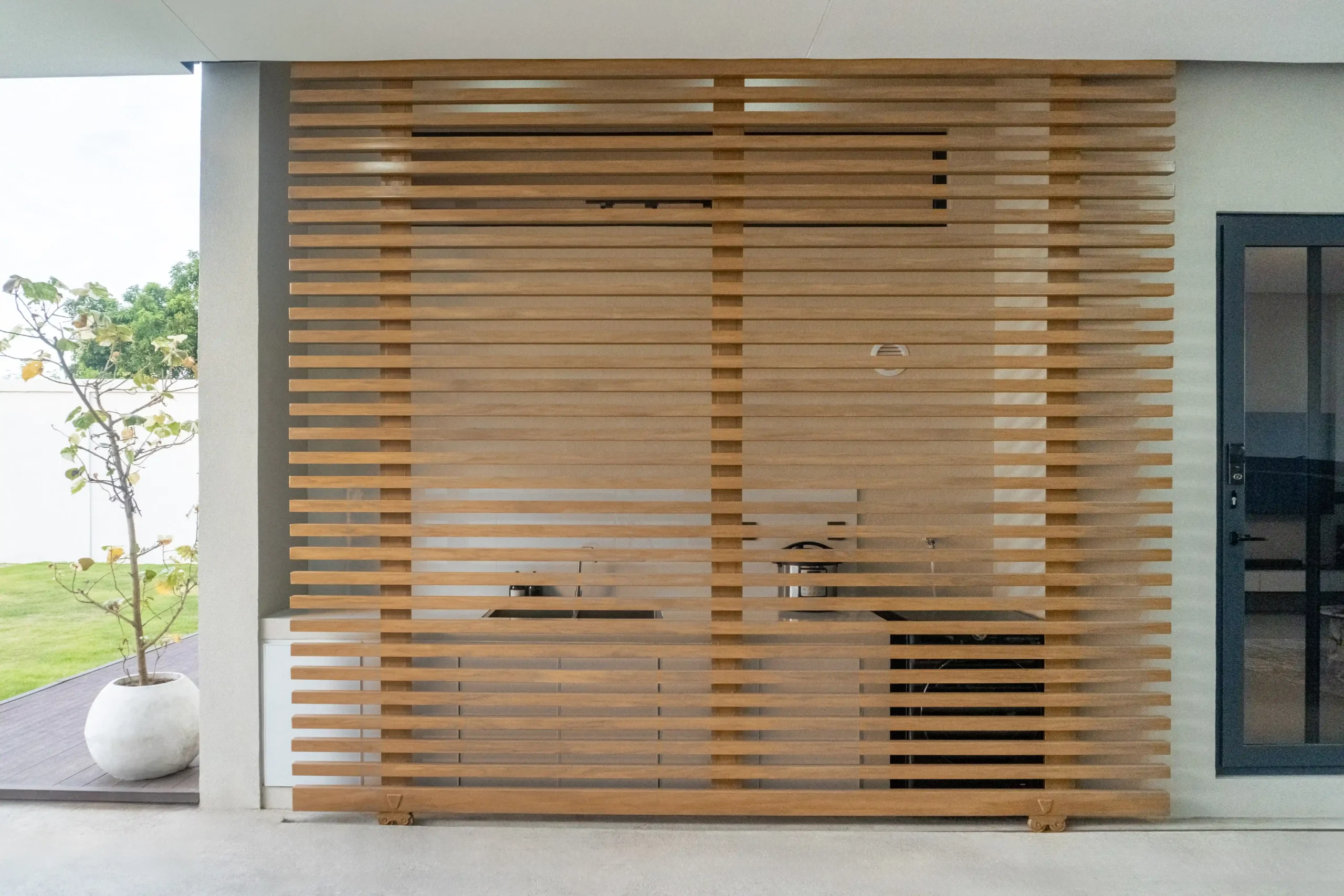
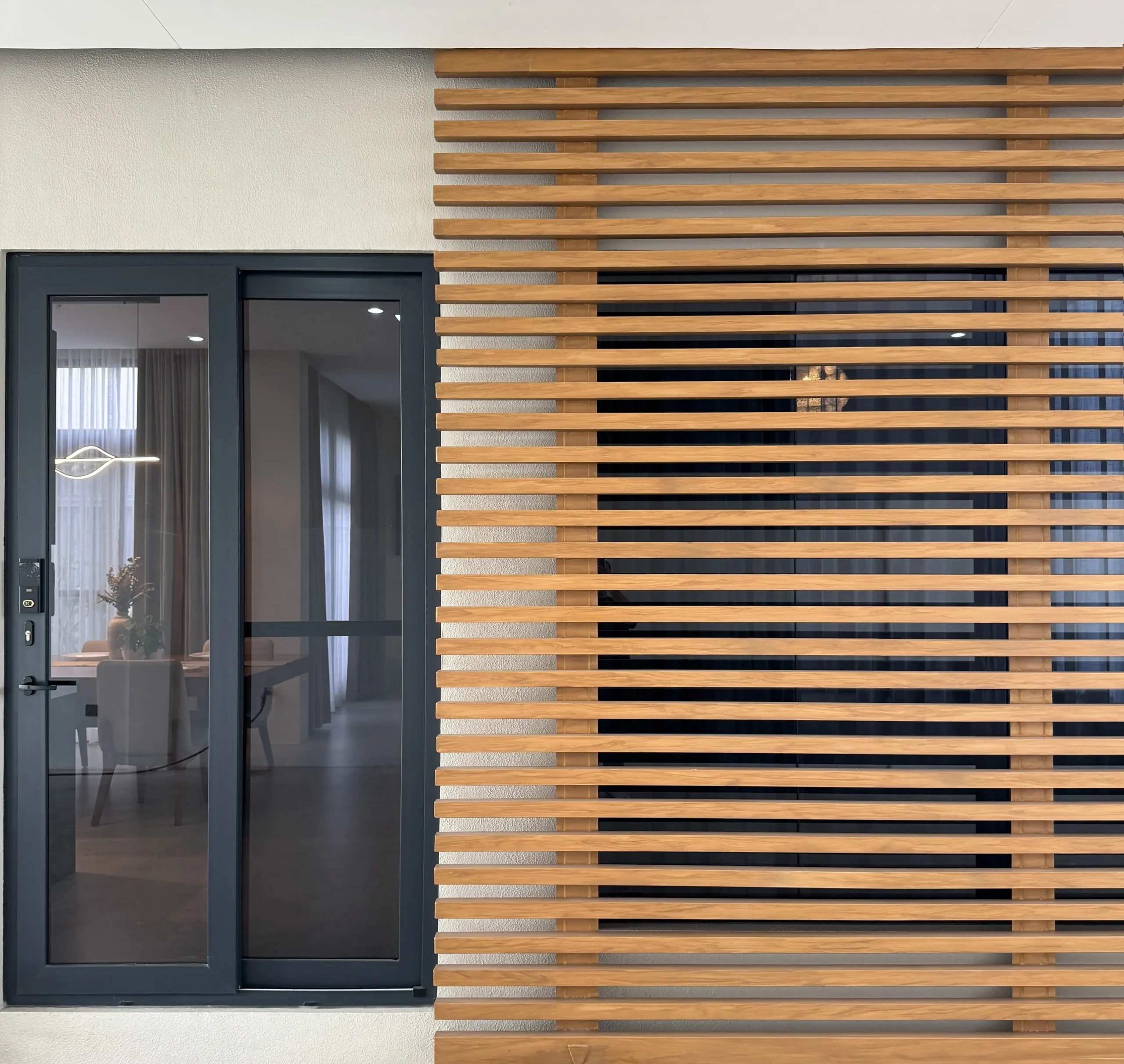
This entire open public area connects to the outdoor space, which encompasses the carport, dirty kitchen, and laundry area. Notably, the dirty kitchen and laundry area are fitted with sliding wood-like metal louversLouversAngled horizontal or vertical slats of wood, metal, or glass fitted over openings or façades. They allow air and filtered light to pass through while blocking direct sun, rain, andGo to Louvers Glossary, offering the option to neatly conceal them when not in use. These louvers also cleverly tie into the prominent wooden elements found within the dining and kitchen areas.
Adding further variation to The Aeris’s generally neutral palette are the feather stone walls and the cool gray ceramic tiles. Their textures are even enhanced by the abundant natural light streaming in from expansive windows.
Warm Ambiance in the Private Wing
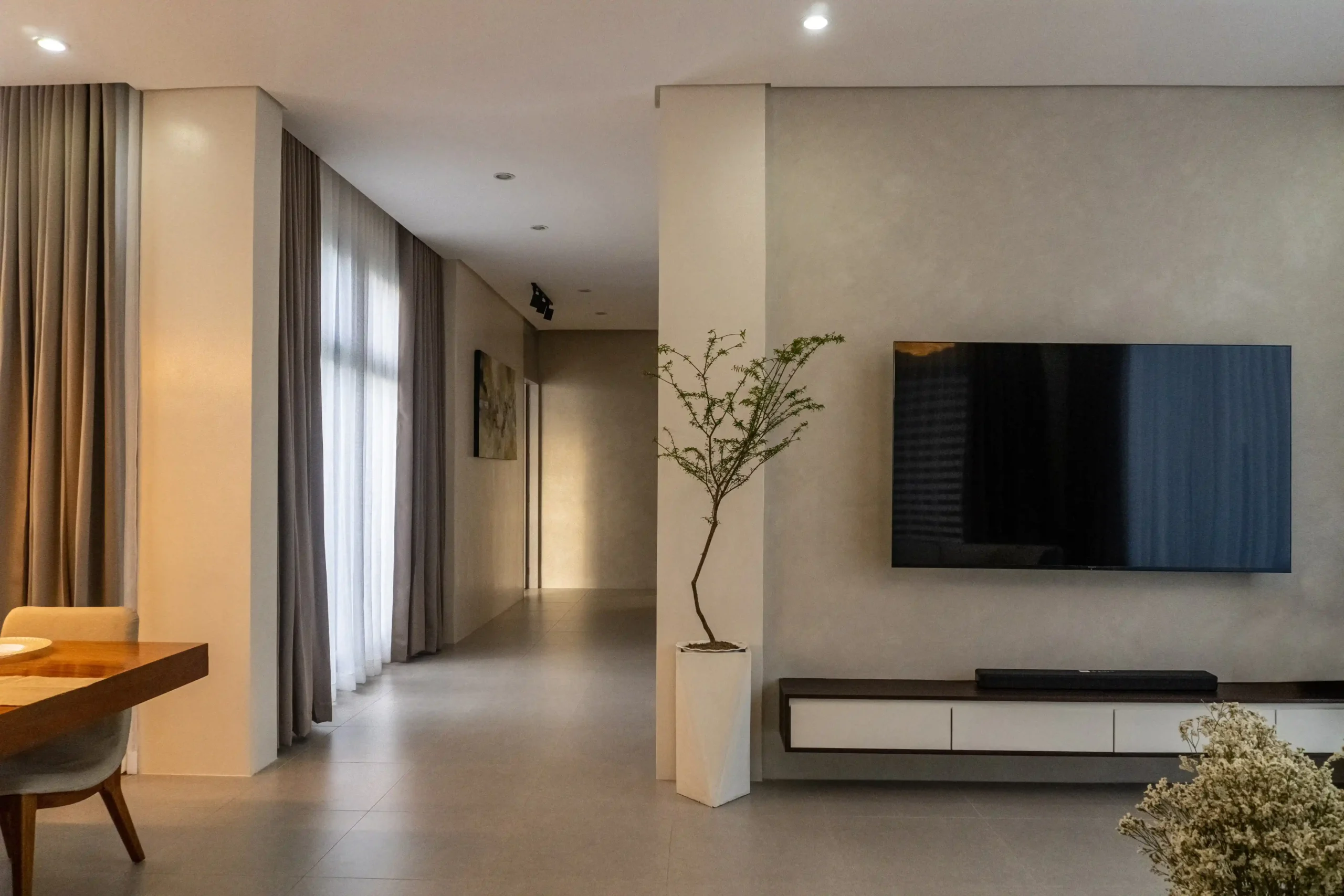
Turning to the right wing of The Aeris, you’ll find the powder room, a secondary bedroom, and the master’s bedroom. The latter, which is the most private part of the floating cube house, showcases warmth and richness with an abundance of wooden elements.
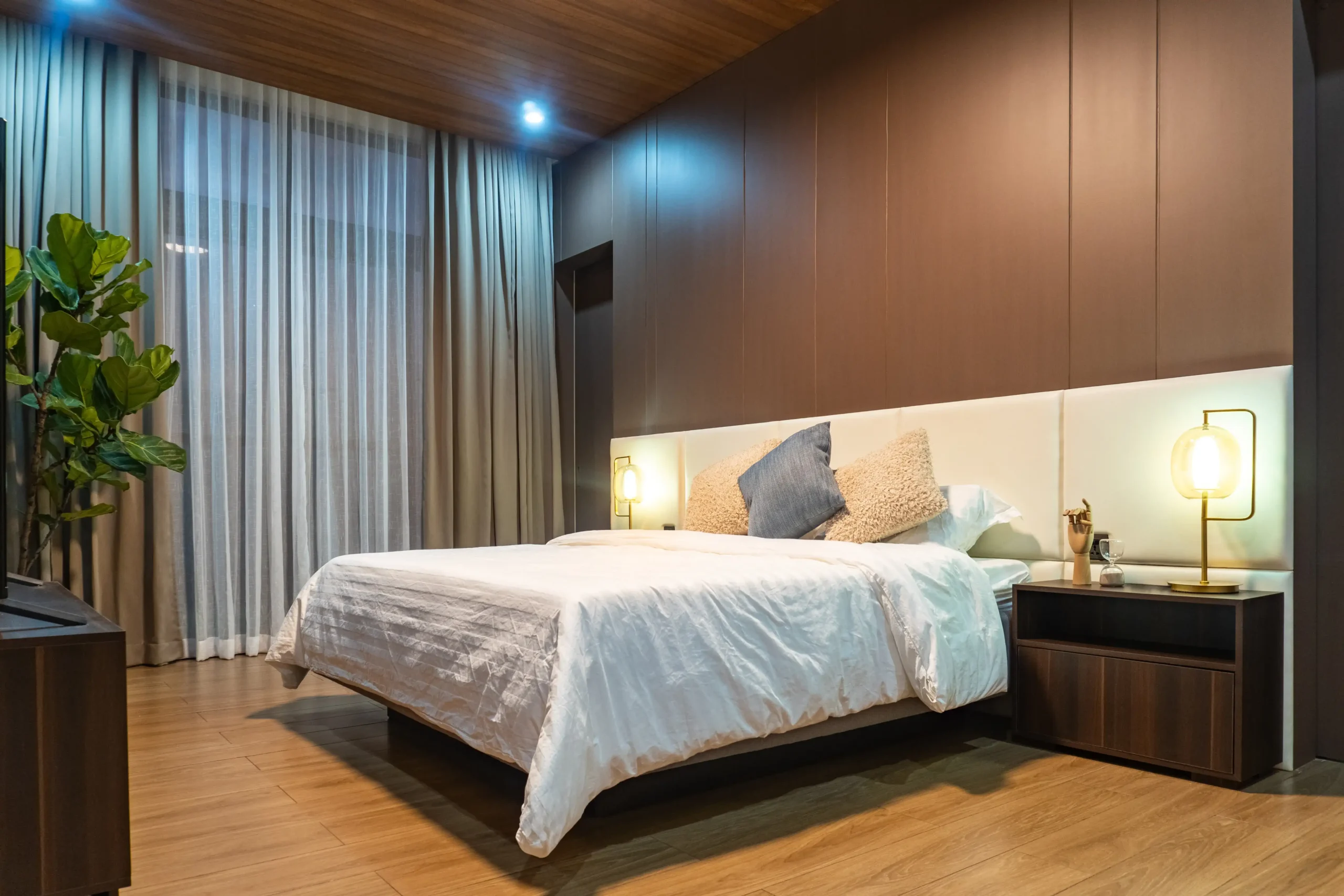
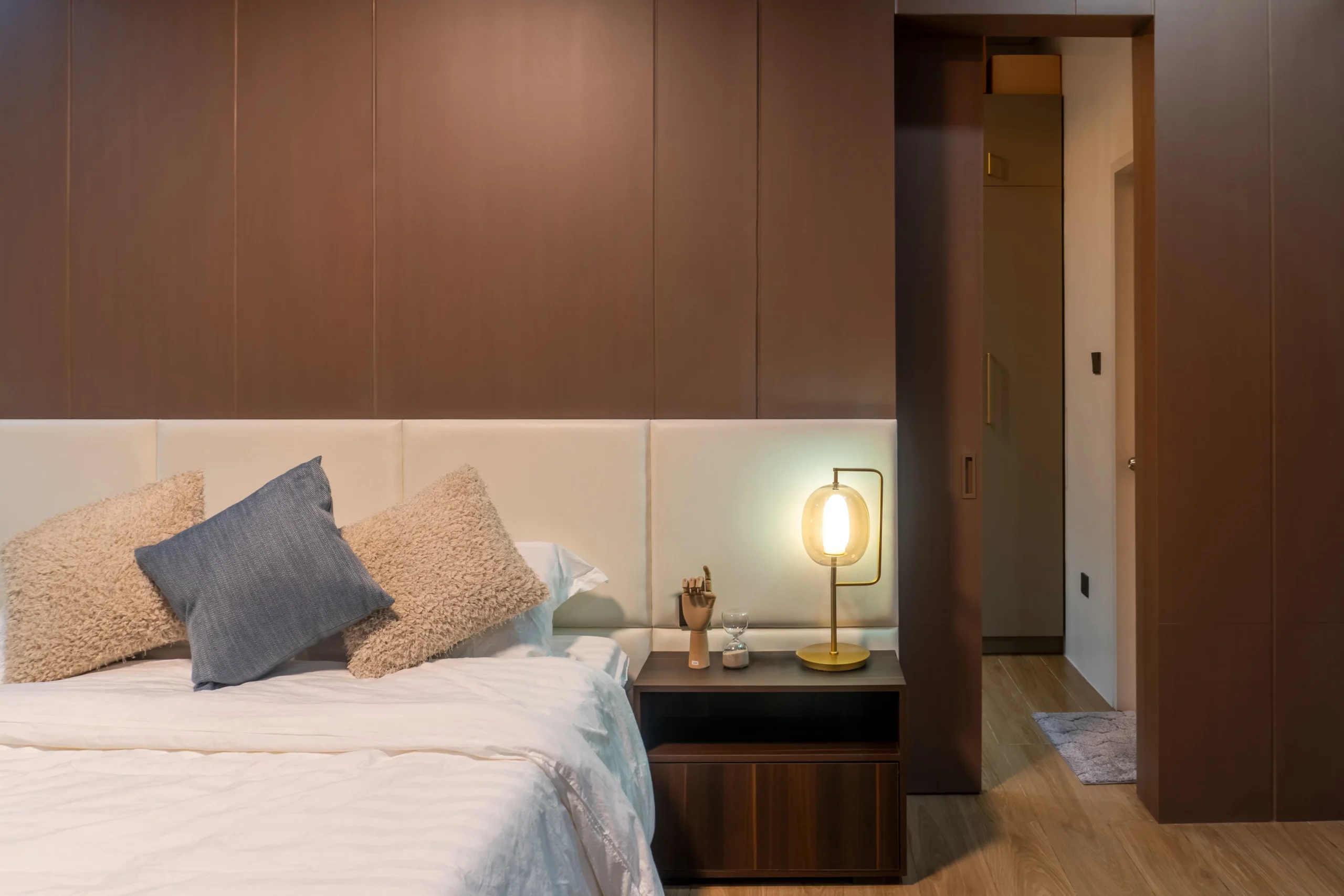
The ceiling is crafted from tongue and groove tanguile while the headboard is made of laminated wood board. On the other hand, the bedside tables utilize durable heat-pressed boards.
Flanking the headboard, two discreet doors offer further privacy and functionality. The left leads to a dedicated home office, while the right opens into a spacious walk-in closet and private toilet and bath.
The Aeris as Innovarc’s Vision
For a young architectureArchitectureThe art and science of designing and constructing buildings, structures, and spaces that are functional, safe, and aesthetically pleasing. It encompasses the planning, design, materials, and techniques used to createGo to Architecture Glossary firm established in 2017, Innovarc regards The Aeris as a profound reflection of their dedication to translate their clients’ visions. This thereby shapes their distinct identity as a firm.
“The [Aeris] project does not totally focus on the design, but also how it impacts society,” Soliman notes. “[This could be the house] they can always relate to, for every millennial who wants to build their dream house.”
By building what they consider a prototype for millennial living, they aim to inspire their peers in the design industry to prioritize more than just aesthetics.
“This project is close to our hearts since this is a prototype that we have built from scratch,” Soliman furthers. “Definitely, us architects are prime movers of the society and we just want our co-architects and colleagues and those who are planning or aspiring to be architects that design is really limitless.”
Photos provided by InnovArc Design & Constuction
Read more: PK House: A Home That Floats Over the Hill
Frequently Asked Questions
The Aeris achieves its “floating” appearance by utilizing an elevated topographical landscape and a visible plinth beam. To enhance the illusion, InnovArc installed upward-glowing lights underneath the structure, which separates the main 120-square-meter cube from the ground at night. This architectural choice serves a dual purpose: creating a striking modern aesthetic and providing a practical defense against flooding in the home’s specific location in Pampanga.
Board-formed concrete was used for the horizontal regions of the facade as a cost-effective and sustainable alternative to natural stone. By reusing the same wood from the house’s initial formworks and bracing to create the concrete’s texture, the firm minimized material waste. This technique adds a distinct “personality” to the minimalist exterior, allowing the building to possess a raw, organic character that speaks to its own construction process.
The U-shaped layout was strategically designed to create a clear division between public and private zones while centering the home around an outdoor courtyard. Upon entering the foyer, the public wing (living, dining, and kitchen) is situated to the left, while the private wing (bedrooms and home office) is to the right. This configuration ensures privacy for the homeowners while allowing every major room to have a direct visual connection to the central heart of the house.
The Aeris avoids monotony through a dynamic “play of textures” and ingenious space-saving features. In the living area, marble veining and steel mesh chandeliers provide visual interest against a neutral palette, while the kitchen features a suspended wooden dining table anchored to a quartz island counter. These elements, combined with sliding wood-like metal louvers and feather stone walls, create a sophisticated environment that feels warm and curated rather than empty.
As a single-level bungalow, The Aeris serves as an affordable and functional prototype that prioritizes a “less is blossomed” minimalist lifestyle for young couples. It is designed with future expansion in mind, occupying only the front portion of the lot to leave room for a larger main residence later. By focusing on simplicity, openness, and structural honesty, InnovArc aims to show that a starter home can be both an architectural statement and a flexible long-term investment.
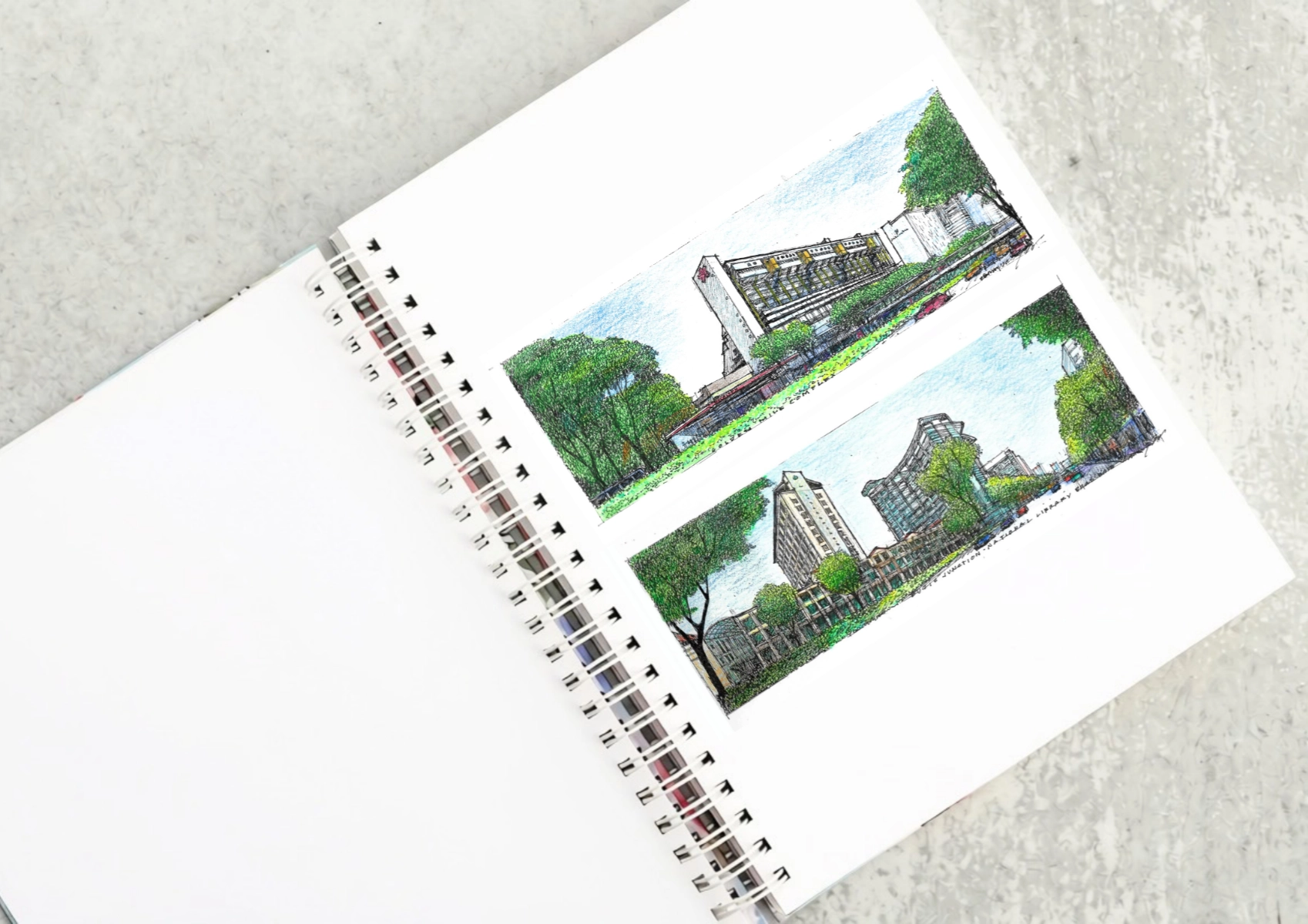
Two sketches of Singapore connect BluPrint Editor in Chief Paulo G. Alcazaren’s personal and professional history with Shared Ground: ArchitectureArchitectureThe art and science of designing and constructing buildings, structures, and spaces that are functional, safe, and aesthetically pleasing. It encompasses the planning, design, materials, and techniques used to createGo to Architecture Glossary of Care, Culture, […]
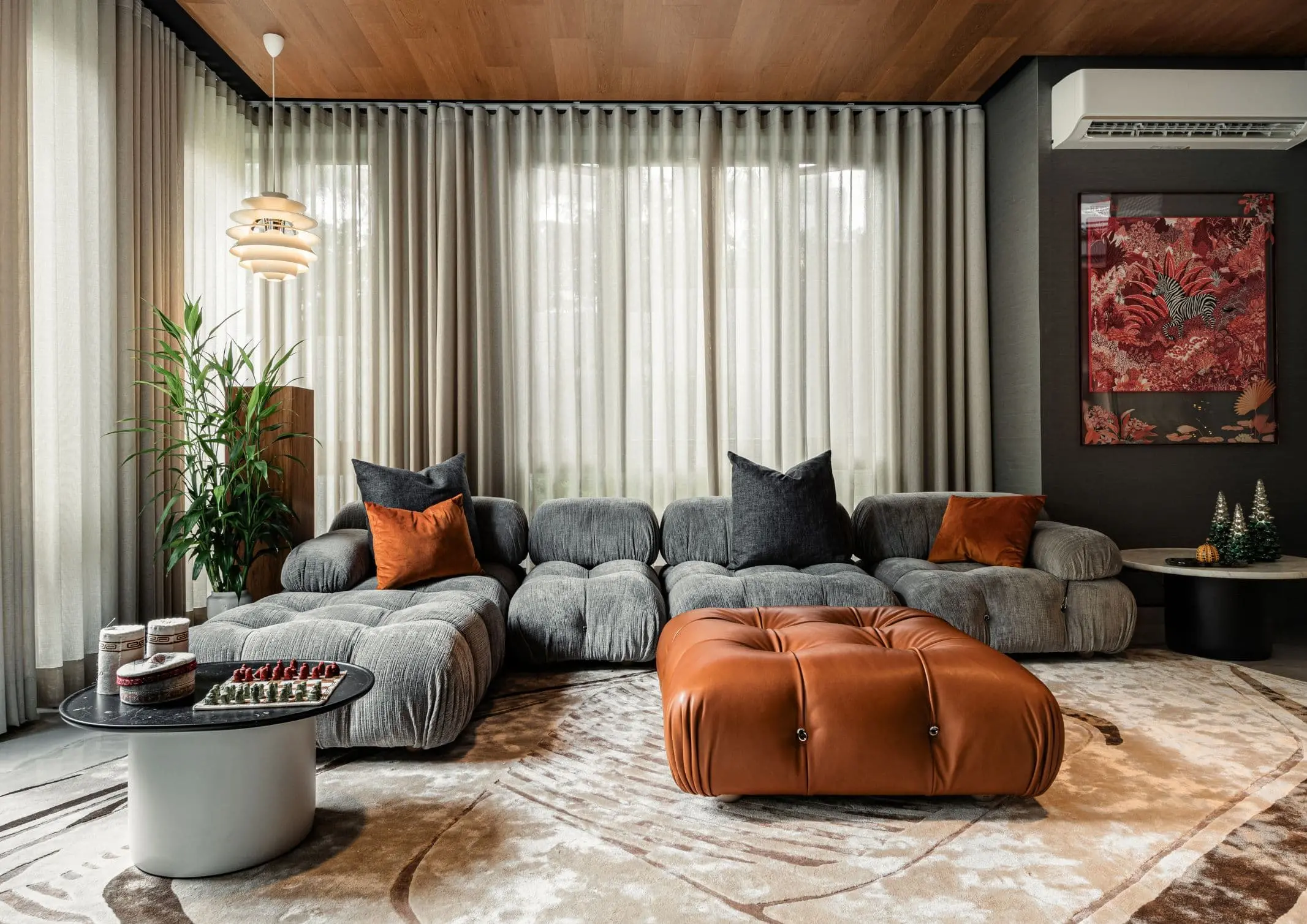
Some have become household names – Coleman, Oster, and KitchenAid – products that have found their way into Filipino kitchens, homes and family routines. In home furnishings, brands such as B&B Italia, Ethan Allen, Sub-Zero, Miele, SieMatic, Louis Poulsen, Hunter Douglas, Tempur, and Technogym, have helped shape the way Filipinos live. From everyday essentials to […]
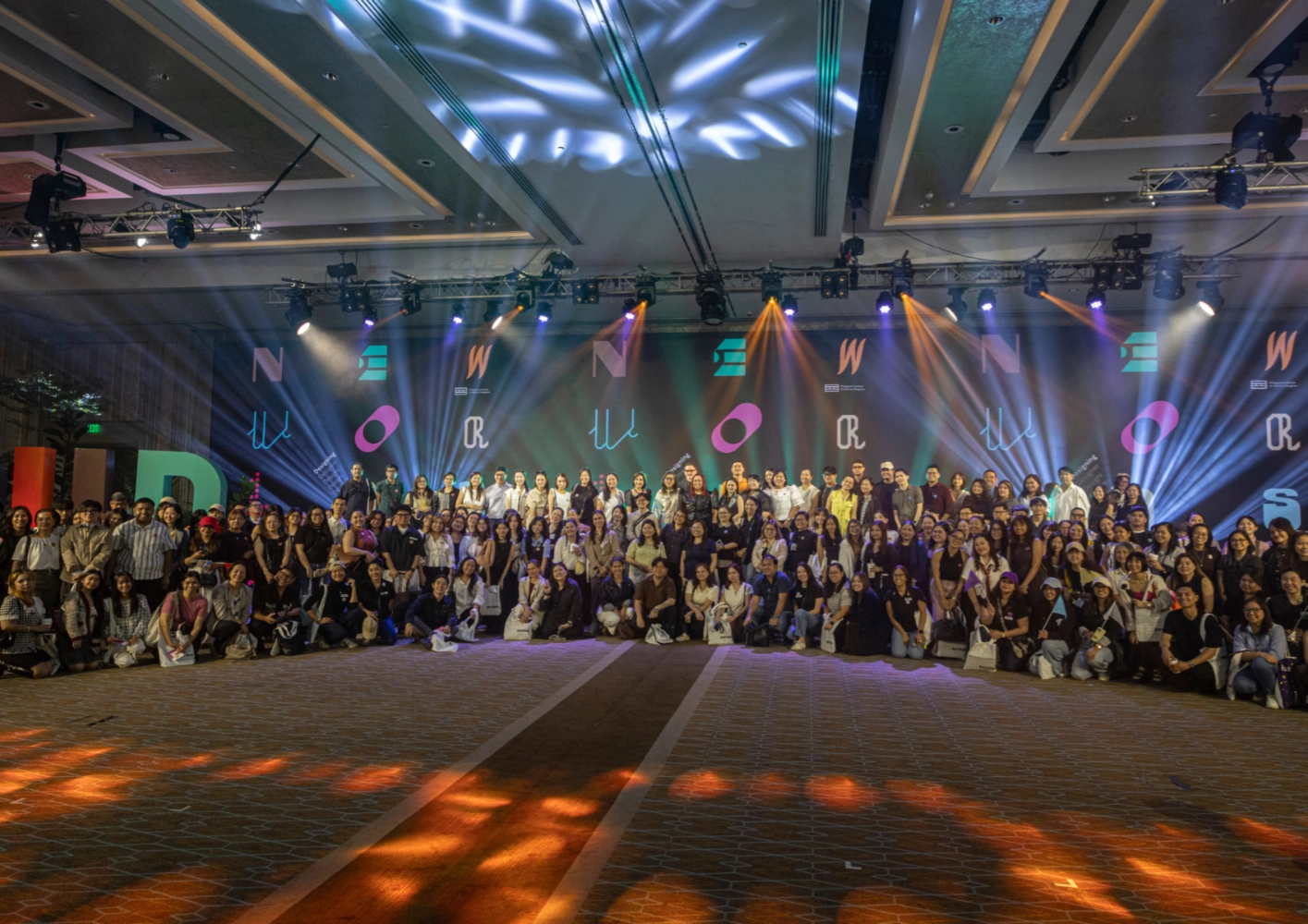
In a way, designers are the modern-day soothsayers and prophets. They design for the future, predicting how a room, a house, a building or a whole city will be used by people. They foresee how users will interact with a space, conjure exact shades of colors to elicit specific behavior and arrange furniture to build […]
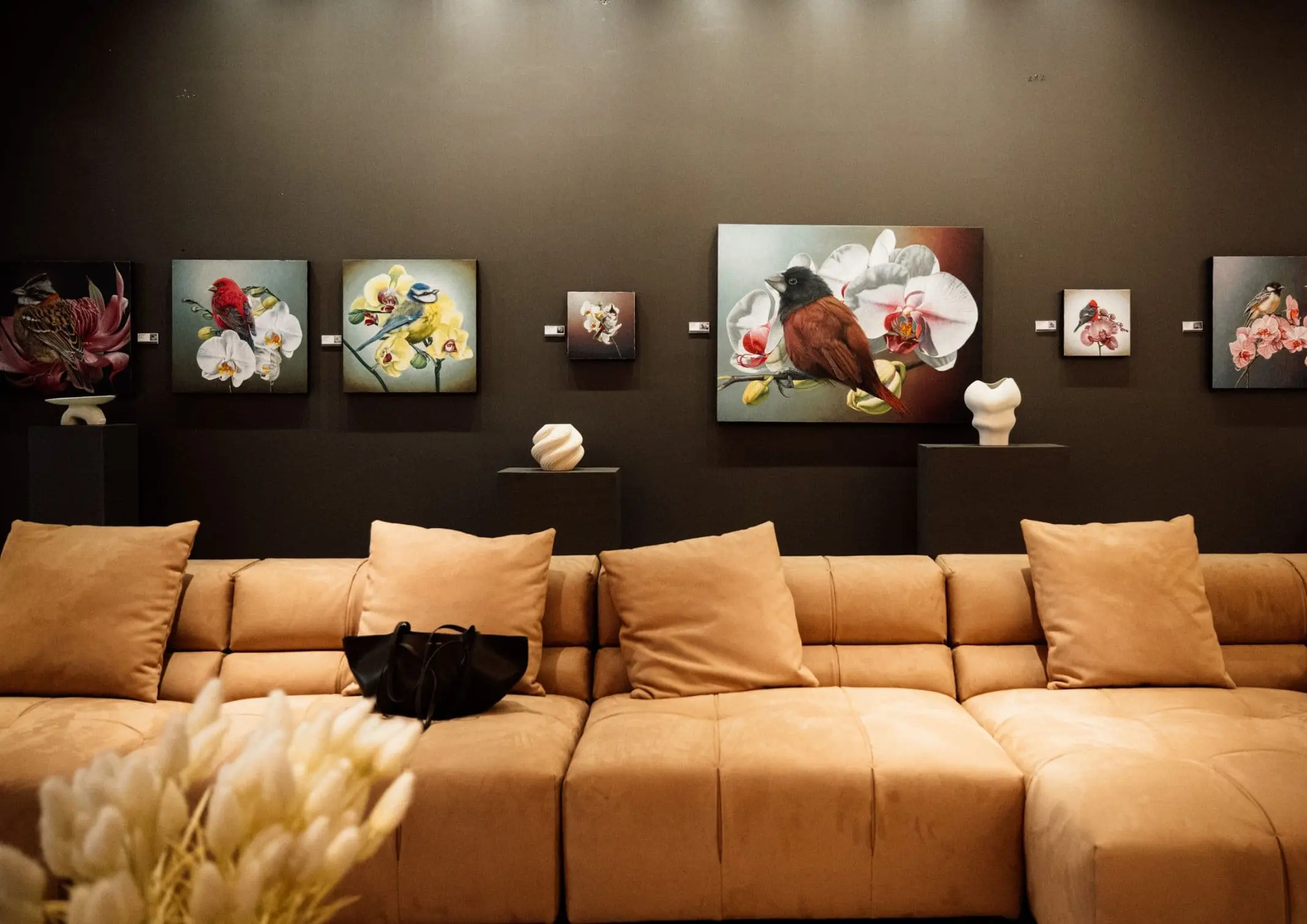
Art and furniture are often selected separately, yet their relationship can shape how a room looks and feels. The collaboration between Hooga and Galerie Joaquin explores how these elements can work together, bringing contemporary artworks into furnished residential settings at Hooga’s showroom in Uptown Mall, Bonifacio Global City. For Hooga, which curates furniture, lighting, and […]
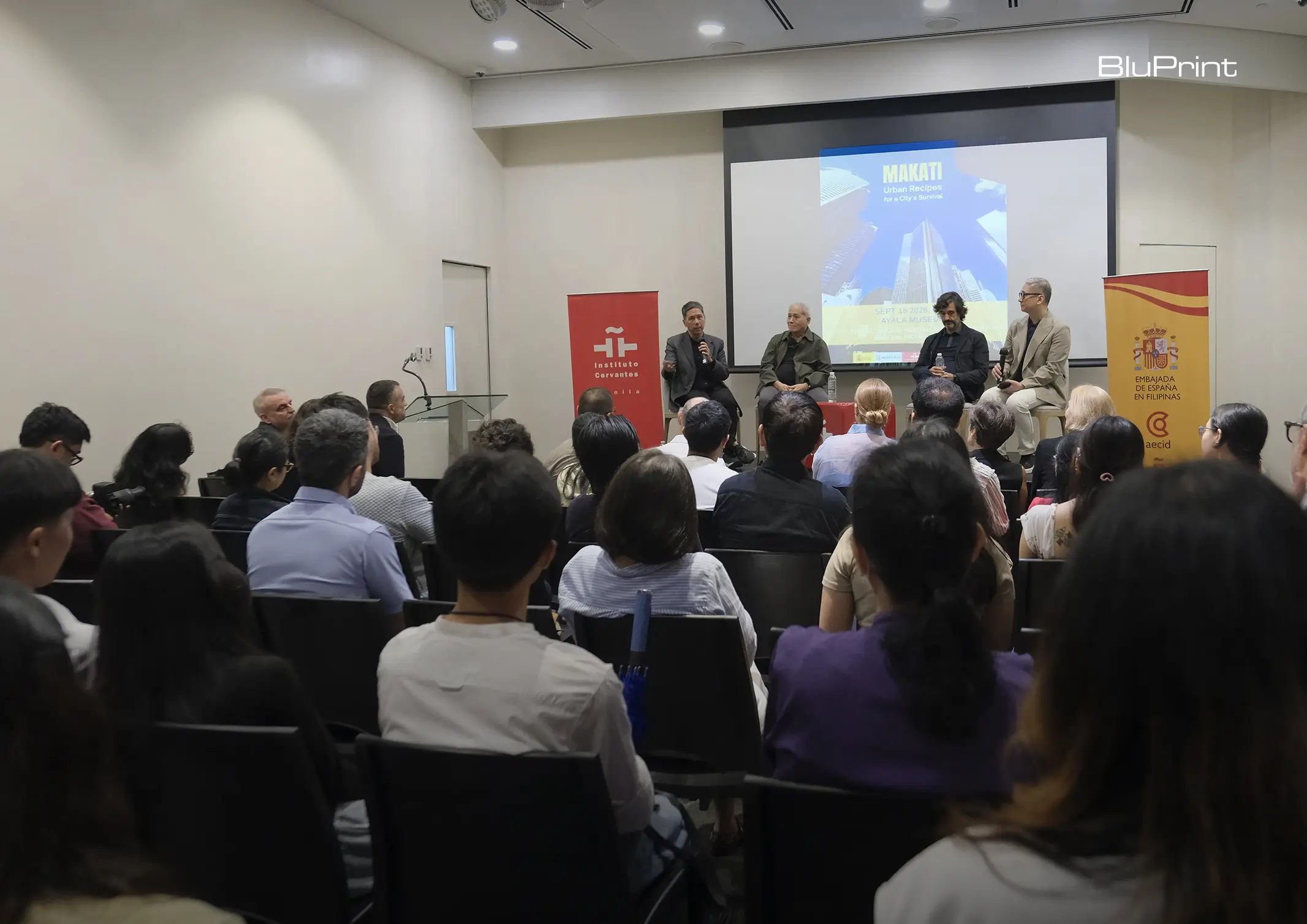
How can better-planned cities create the conditions for more creative, livable, and resilient urban environments? “Makati Urban Recipes for a City’s Survival,” a colloquium held at the Ayala Museum on September 15, brought together architects and practitioners from the fields of urbanism and the creative economy to discuss how design, planning, and collaboration can address […]
Read the issues.

Collect the volumes.

Recommended Video
Tap to Unmute
Unmute
0:00
0:00