The DBP Building as a Landmark of the International Style At the corner of Sen. Gil Puyat Avenue and Makati Avenue stands a landmark of the Makati Central Business District. It is one of the last still standing that were built in the first wave of construction in district fifty years ago. The Development Bank […]
8 Steps to Creating Compelling Design Narratives from Enderun CAD Fiesta



Enderun Colleges brought together aspiring and established architects, interior designers, and multimedia artists in its annual College of ArchitectureArchitectureThe art and science of designing and constructing buildings, structures, and spaces that are functional, safe, and aesthetically pleasing. It encompasses the planning, design, materials, and techniques used to createGo to Architecture Glossary and Design (CAD) Fiesta, held on May 19 at the Enderun Tent. In partnership with BluPrint, the symposium featured three renowned creatives to highlight the theme “Behind the Scenes: The Art of Space & Storytelling.” IDr. Cyndi Fernandez-Beltran, Industrial Designer Kenneth Cobonpue, and Director Mark Meily, through their collective insights and experiences, demonstrated how design narratives meticulously form the backbone of every space and design.
Dissecting Design Narratives
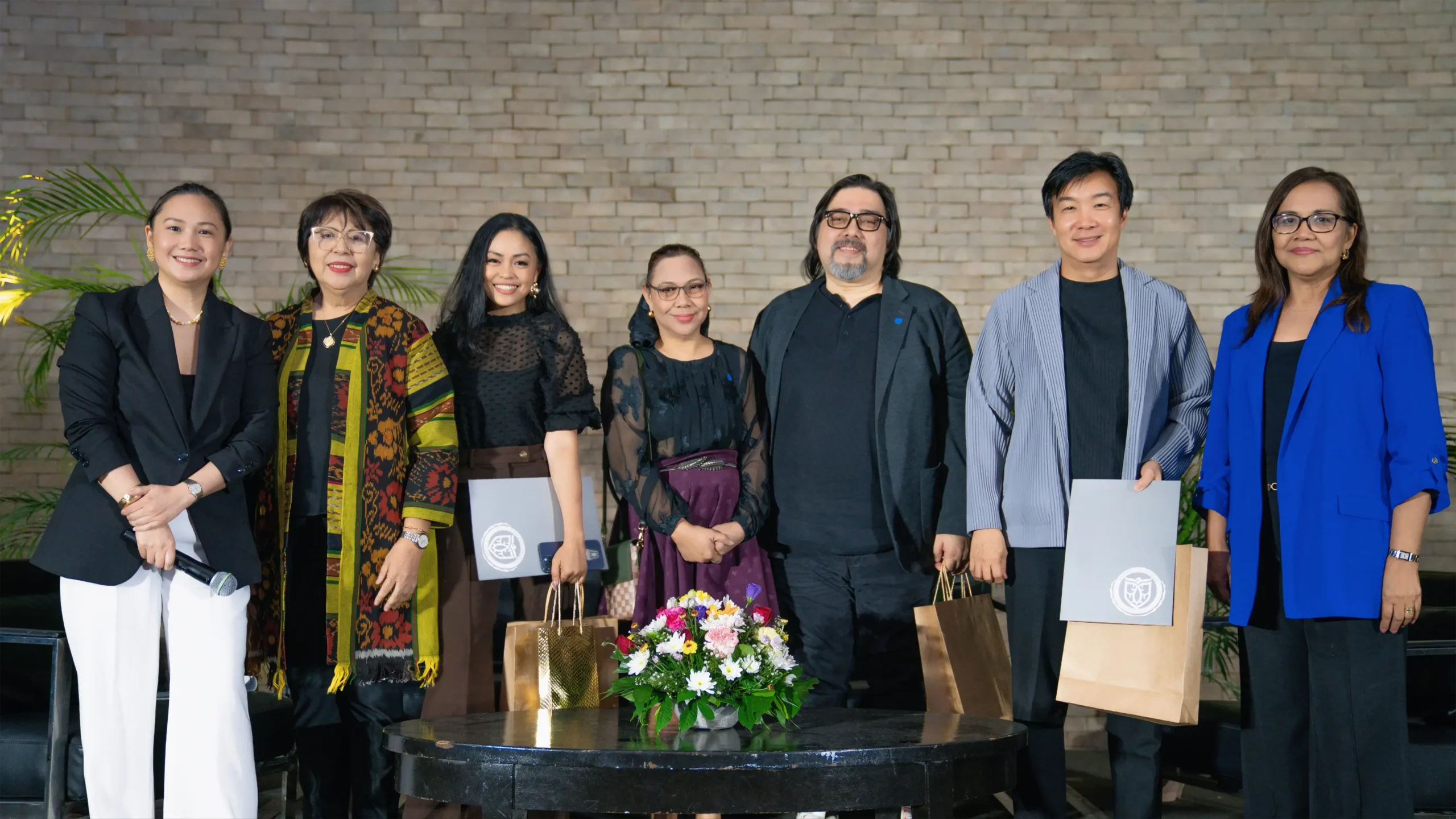
The symposium commenced with an incisive discourse, expertly guided by Enderun Colleges’ CAD Dean Architect Nikki Escalona-Tayag. Together with the invited speakers, they tackled eight key points exploring the interplay of designs, spaces, and storytelling.
1. How Storytelling Shapes a Project’s Success
Tayag opened the discussion by asking the creative professionals about their specific project that used storytelling to create something impactful.
Beltran, as the current National Vice President of the Philippine Institute of Interior Designers (PIID), then recounted the organization’s collaboration with the Office of the First Lady to transform the Centro de Turismo Intramuros.
“We mapped out the space much more like how a story of a book unfolds,” Beltran shared. The Moss Design House Principal Designer detailed how the museum’s lobby acts as the introduction while the rooms serve as its chapters and epilogue. This visual storytelling aims to have visitors “experience what it perhaps would be like living in Intramuros at that time.”
For Meily, the project that best exemplifies a successful storytelling would be his Metro Manila Film Festival Best Picture film Baler. He revealed that prior to the film’s release in 2008, a lot of Filipinos were unaware of the town’s geography. But by putting the place’s history on the big screen, the film improved Baler’s tourism and transformed the lives of its residents.
Cobonpue, on the other hand, confessed that design narrative is “very limited” and “dangerous” in product design. He described stories created through form can sometimes come out too literal. Since most of the world-renowned industrial designer’s works are “prima donnas,” successfully integrating a story into them actually tends to make them less commercial.
2. Ensuring Design Communicates Emotion and Identity
In terms of imparting emotion while remaining consistent to design’s identity, Beltran first listens to the brand or client’s intent. As emotions make spaces memorable, one should not confine creating a compelling design narrative to a space alone. By knowing the purpose, audience, and persona, one can layer different design aspects to make the whole spatial experience.
A key part of these design aspects are furnishings, which Cobonpue regards as “the supporting actors” in a space’s story. To effectively convey emotion and identity, he advised to begin with inspiration that fits the right context.
Along with the significance of identifying the intent and inspiration, Meily underscored that the process of the creation brings out the design’s feel and distinctiveness. For him, any artist or designer could feel empowered during this process because it is the time they feel purposeful.
3. When to Stop
Staying abreast of new demands is essential in the ever-changing architecture and design industry. But Beltran believes that knowing when to stop is a skill every creative person should adopt. She said that recognizing where to draw the line is a matter of “taste level,” which will differentiate a good designer from the rest. The interior designer further added that a clear sign to stop is when an element or item no longer serves a distinct purpose within the design.
In line with Beltran’s view, Meily iterated that growing older brings a deeper sense of self. This authenticity often translates into a discerning eye, allowing one to avoid the common pitfall of filling spaces unnecessarily.
Cobonpue agreed to this by citing a simple old quote, “You stop not when there’s something left to add, but when there’s nothing left to take away.”
4. Choosing the Elements of Design Narratives
Different from the typical, pre-determined story elements, identifying the components of design narratives offers no such fixed formulas according to Cobonpue. He sighed, “I wish it was that easy [and] linear. [Because] sometimes it starts with an inspiration. Sometimes it starts with a material, a purpose, a function, a client. It can really be anything.” The industrial designer additionally mentioned that the real challenge lies in turning an idea into a tangible final piece but still convey its initial inspiration.
Meanwhile, Beltran considers the space as the story’s canvas. And similar to Cobonpue, the materials and objects are the characters. But apart from the physical aspects, the elements of a design narrative also involve selecting components that appeal to the olfactory and auditory senses, such as scents and music.
On a different note, Meily brought back the weight of integrating emotions in selecting the elements of a creative work. “Every person in the world will follow stories but not necessarily data. So, if you could design something na hindi siya logical, rather be emotional.”
5. Empathy in Design
The re-emphasis on the importance of emotion naturally led the conversation to discuss empathy in design. Cobonpue observed that the creative field now largely prioritizes function and practicality, where every creation is expected to solve a problem. In his defense of the designer’s role, however, he countered that they are fundamentally called to give form before function.
“As a designer, it’s not about function. Your primary responsibility to the world is form and then the function comes to you,” Cobonpue argued.
Contrarily, Beltran shows empathy in design by balancing form and function. To her, making an emotional connection from form to function to whatever creative work is a 360-degree role that every creative person should always embody.
“We’re hired to make things beautiful, essentially, and that is form. But also, a big chunk of responsibility at the end of the day is making sure that it’s actually livable and we’ve actually changed the way people live because of the beauty that we do,” Beltran stated.
In terms of multimedia arts, Meily noted how some motion pictures with strong form but minimal narrative can still convey deep emotion. He then drew a parallel to the local context, observing that most Filipino films and TV dramas often appear templated. Not wanting to limit himself to such conventions, he circled back to showcasing deep-rooted values to effectively show empathy. “You try to find something different, something unique, na hindi nakikita ng ibang tao. But still, it is inherent in your culture, in your identity.”
6. Compliance vs. Creativity
Given the increasing commercialization of architectureArchitectureThe art and science of designing and constructing buildings, structures, and spaces that are functional, safe, and aesthetically pleasing. It encompasses the planning, design, materials, and techniques used to createGo to Architecture Glossary and design, creatives are now compelled to follow established standards and rules. The constant negotiation between creative freedom and adherence to regulations presents a significant challenge, one that Cobonpue openly admitted is “a daily struggle”, especially when manufacturing his products.
The industrial designer revealed that manufacturing costs in the Philippines are expensive. And this is compounded by the persistent stigma that locally made products are substandard. So, he continually finds himself in the position of needing to prove that Filipino quality, design, and craftsmanship are second to none.
For Beltran, working with numerous brands and clients means facing a triple effort to prove her team’s capabilities and meet diverse standards. Yet, they consistently find ways to merge their core concepts with local adaptation.
7. The Role of Collaboration in Visual Storytelling
Unlike writing a story, which can often be a solitary endeavor, crafting compelling design narratives integrated within design and space demands a collaborative effort. Meily stressed that there should be clear goals before starting a film. While disagreements are inevitable, the key is finding small strategies and creative ways to make everything coalesce and work effectively.
For Cobonpue, what is even more important than the product is the team that markets it. He emphasized that the marketing team should deeply understand and effectively convey the product’s inherent story to genuinely appeal to customers. So, a collaborative process—from initial conceptualization to its public release—makes the storytelling in design effective and impactful.
Beltran also sees collaboration as “a gift” because it’s an opportunity to absorb ideas and information. She pointed out that engaging with varied perspectives not only allows you to articulate your own vision but also to truly understand others’ viewpoints. This then enables the group to discover effective common ground and mix ideas to achieve a more successful outcome.
8. Cultural Authenticity and Global Appeal
In today’s highly competitive architecture and design industry, one common strategy for leverage is to venture into the international scene.
However, Meily cautioned that attracting the global market has become increasingly challenging due to constantly shifting tastes. He warned that if one attempts to incessantly keep pace with these trends, they risk losing their own identity and creative joy. So, his advice was simple yet profound: “Make yourself happy first.”
Echoing this sentiment, Cobonpue shared that he “wouldn’t worry too much about being a Filipino,” especially when navigating the international market. He acknowledged that while cultural identity is important, it can sometimes even become a “handicap” when selling products abroad. For him, the priority lies in being true to the product itself first then the essence of being Filipino will then naturally emerge.
Aligned with Cobonpue, Beltran also doesn’t force her designs to carry a Filipino identity. Instead, she stressed that the client’s brief acts as the “hero” of her designs, underscoring the vital importance of building a strong client relationship. However, she pointed out that Filipino identity naturally surfaces through their work ethic. It’s a distinct Filipino characteristic, she noted, “to go beyond what’s written in your contract, to take that step further, do that extra mile.”

Following the symposium, seasoned architect and urban planner Felino “Jun” Palafox shared the Philippines 2050 campaign. This long-term blueprint for the nation presents a detailed narrative about a sustainable, inclusive, and future-ready Philippines he aims to bring vibrantly to life.
A Celebration of Stories That Come to Life
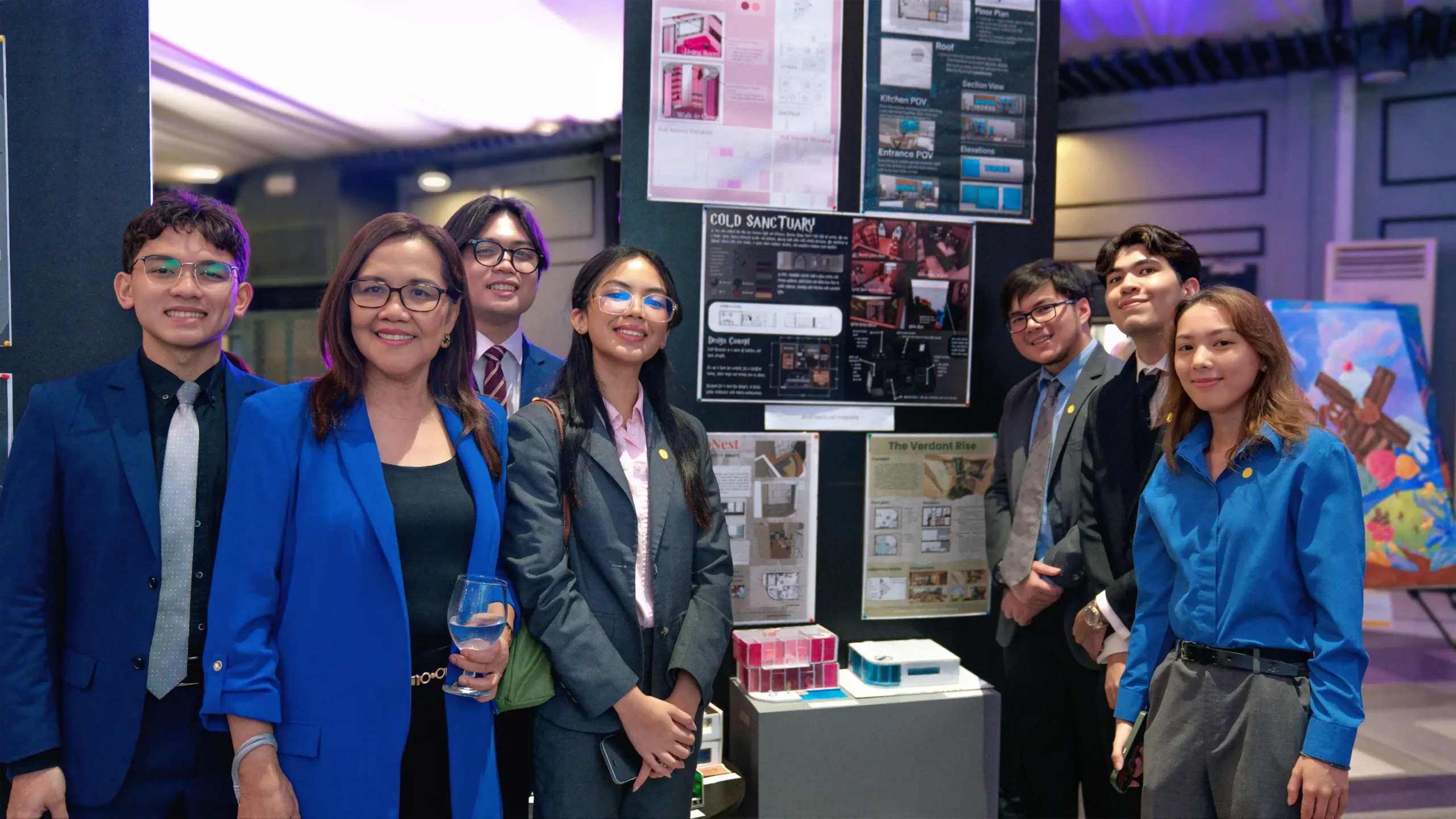
Afterwards, attendees explored the interactive installations and student-led presentation that decorated the Enderun Tent. At the center of the venue was a dining area vignette, which formed the core of the immersive exhibit.
Surrounding the table were the different architectural and interior design renderings of various residential, commercial, and conceptual projects. The space also featured paintings alongside a collection of movie poster mock-ups made by architecture undergraduates.
The students also leveraged this opportunity to engage in valuable dialogues and receive mentorship from industry professionals. This allowed them to acquire practical insights into how their skills translate into real-world applications.
Tayag aimed to steer the conversation in a fresh direction and go beyond conventional themes concerning architecture and design.
“We wanted to go deeper. Something that would be relevant across all three programs,” Enderun Colleges’ CAD Dean expressed. “We really wanted to dive into how important it is to become a multidisciplinary designer. And when you become a multidisciplinary designer, it’s important for you to be able to tell a story using different angles and having different sources of inspiration. So I think that was really the root of it all. At the end of the day, whether we’re serving a client or a brand or we’re putting together a film or we’re writing a script or creating a product, there needs to be a rationale behind it. And normally or usually, that starts with a simple story.”
Photos provided by Enderun Colleges’ College of Architecture and Design
Read more: A Unique Opportunity to Ask the Experts at Enderun CAD
Frequently Asked Questions
Storytelling acts as the functional backbone of a project by transforming a physical space into a chronological experience for the user. Much like a book, a well-designed space uses a lobby as an introduction and individual rooms as chapters to immerse visitors in a specific narrative or era. This approach ensures the design is impactful and memorable, moving beyond aesthetics to create a meaningful journey that resonates with the audience’s emotions and history.
Knowing when to stop is a critical skill that separates expert designers from novices, often defined by the “taste level” and the ability to avoid unnecessary clutter. The rule suggests that a design is truly complete not when there is nothing left to add, but when every element serves a distinct purpose and nothing else can be removed. This discipline ensures the core narrative remains clear and authentic, preventing the primary message from being diluted by decorative excess.
While traditional design often emphasizes utility, a compelling narrative requires a delicate balance where form often takes the lead to establish an immediate emotional connection. A designer’s primary responsibility is to give a project a soul through its “form,” which is then made livable through “function” to improve the quality of daily life. This holistic 360-degree approach ensures that a space or product is not only beautiful and evocative but also serves its intended practical purpose.
Achieving global appeal is most successful when creatives focus on personal joy and the inherent integrity of the product rather than forced cultural markers or shifting international trends. Authentic Filipino identity often surfaces naturally through work ethic—such as the dedication to go the “extra mile”—rather than through literal or stereotypical design elements. By staying true to the project’s unique rationale first, the designer ensures the result is globally competitive without losing its underlying cultural soul.
Unlike solo creative endeavors, crafting design narratives for spaces and products requires a multidisciplinary effort where marketing, manufacturing, and design teams align on a single vision. Collaboration is a “gift” that allows professionals to absorb varied perspectives, ensuring the final output is a successful mix of ideas that a single mind could not produce. Effective storytelling depends on every team member understanding the product’s inherent story to communicate it genuinely to the end user.
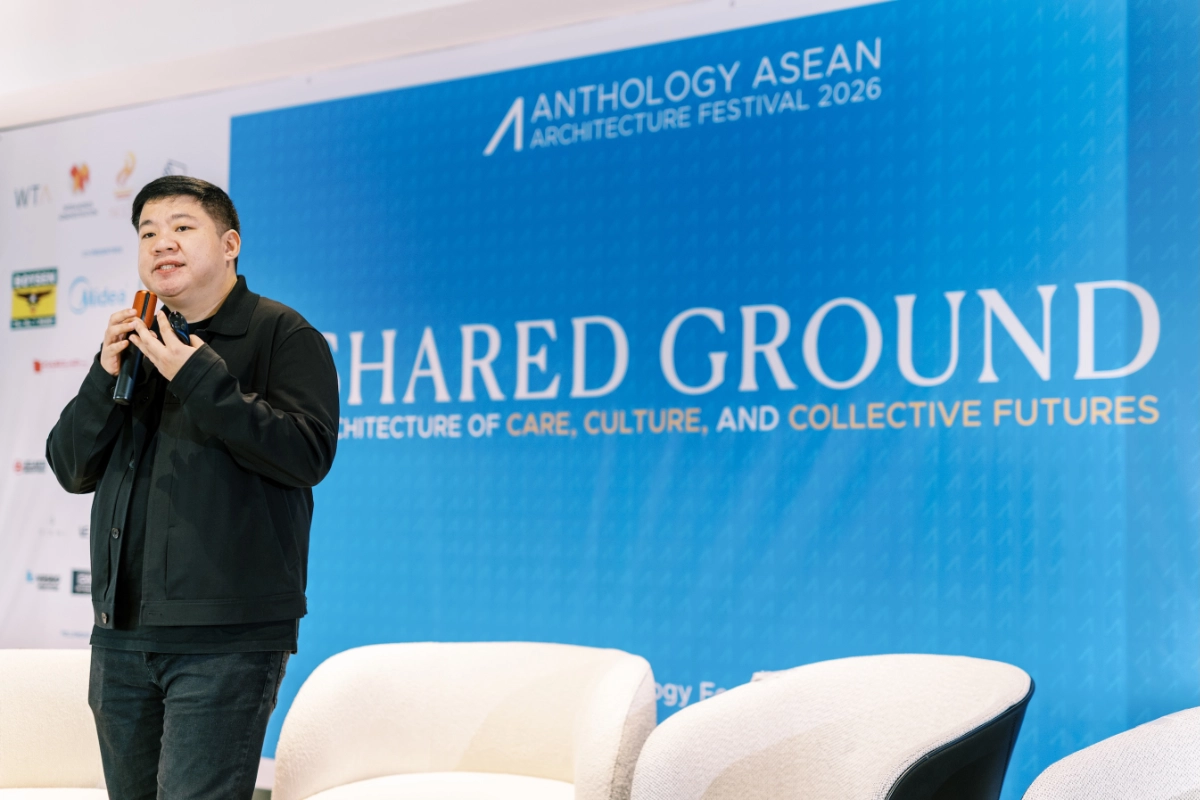
“Buildings only become architectureArchitectureThe art and science of designing and constructing buildings, structures, and spaces that are functional, safe, and aesthetically pleasing. It encompasses the planning, design, materials, and techniques used to createGo to Architecture Glossary when they are shared,” said William Ti Jr., founder of the Anthology Festival and WTA Architecture and Design Studio, […]
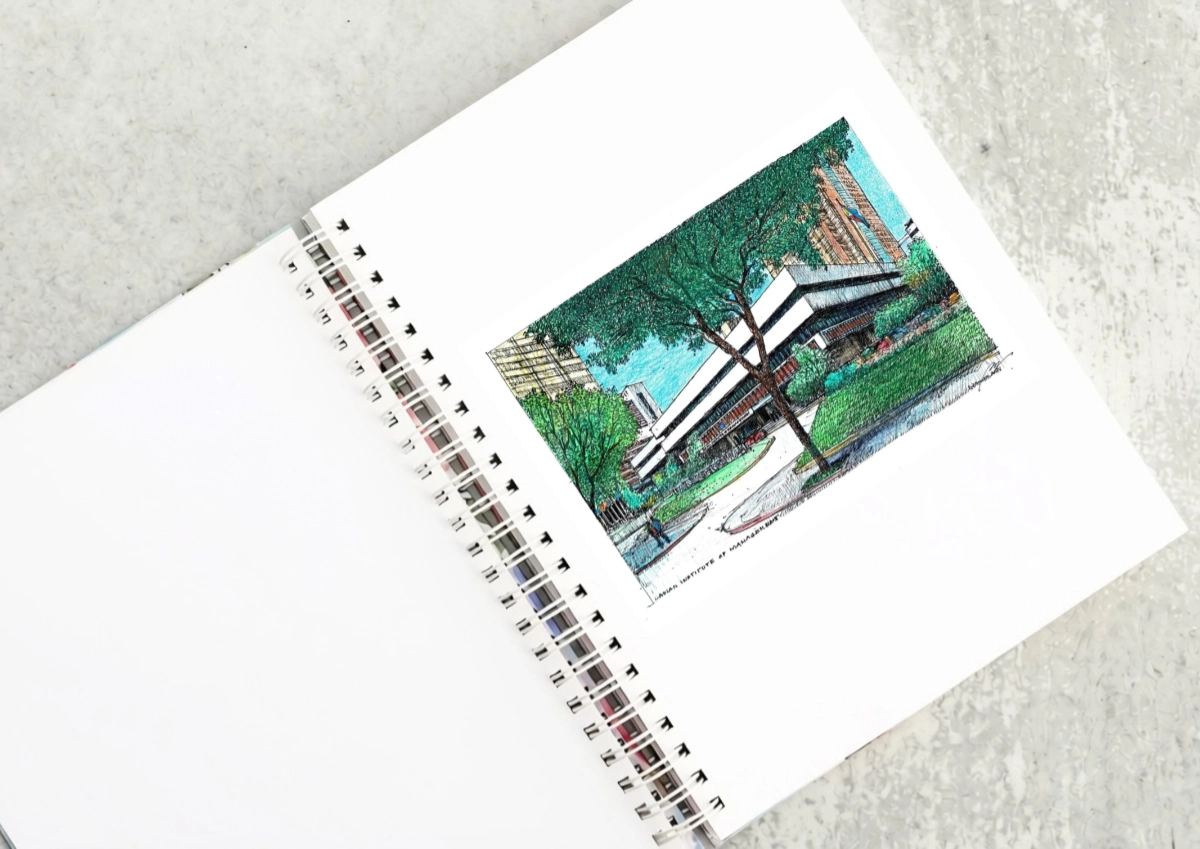
A Filipino Interpretation of Modernist Architecture Unlike the rest of Makati today, the northern end of Paseo de Roxas in Makati is anchored by a low complex rather than a tall skyscraper. This is the elegant Asian Institute of Management, designed by architect Gabriel Formoso and completed in 1971. In my opinion, the building is […]
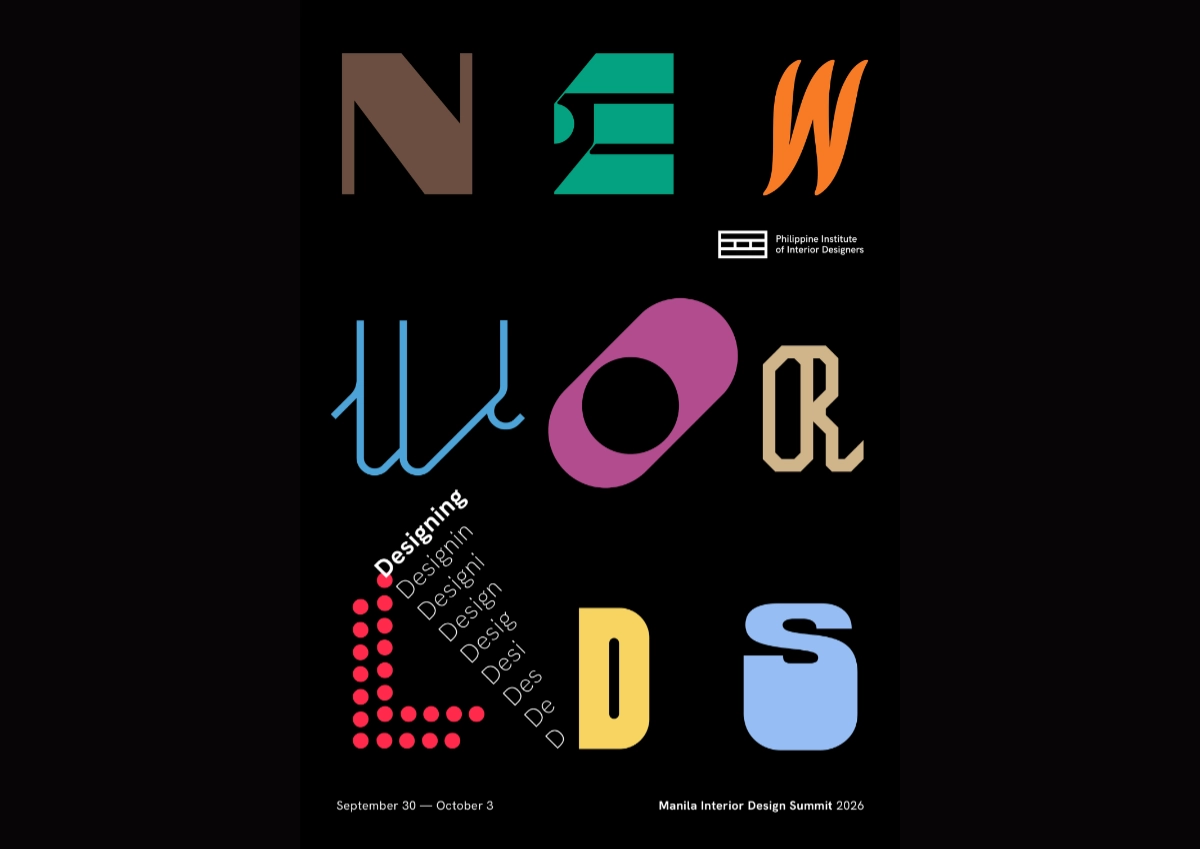
“Thailand has claimed urban creativity and livability. Singapore has institutional design leadership. Indonesia is emerging as a design hub. Vietnam is moving into design innovation. And the Philippines? Its position is not weak. It is simply unclaimed.” For IDr. Cecil Ravelas, National President of the Philippine Institute of Interior Designers (PIID), the challenge is not […]
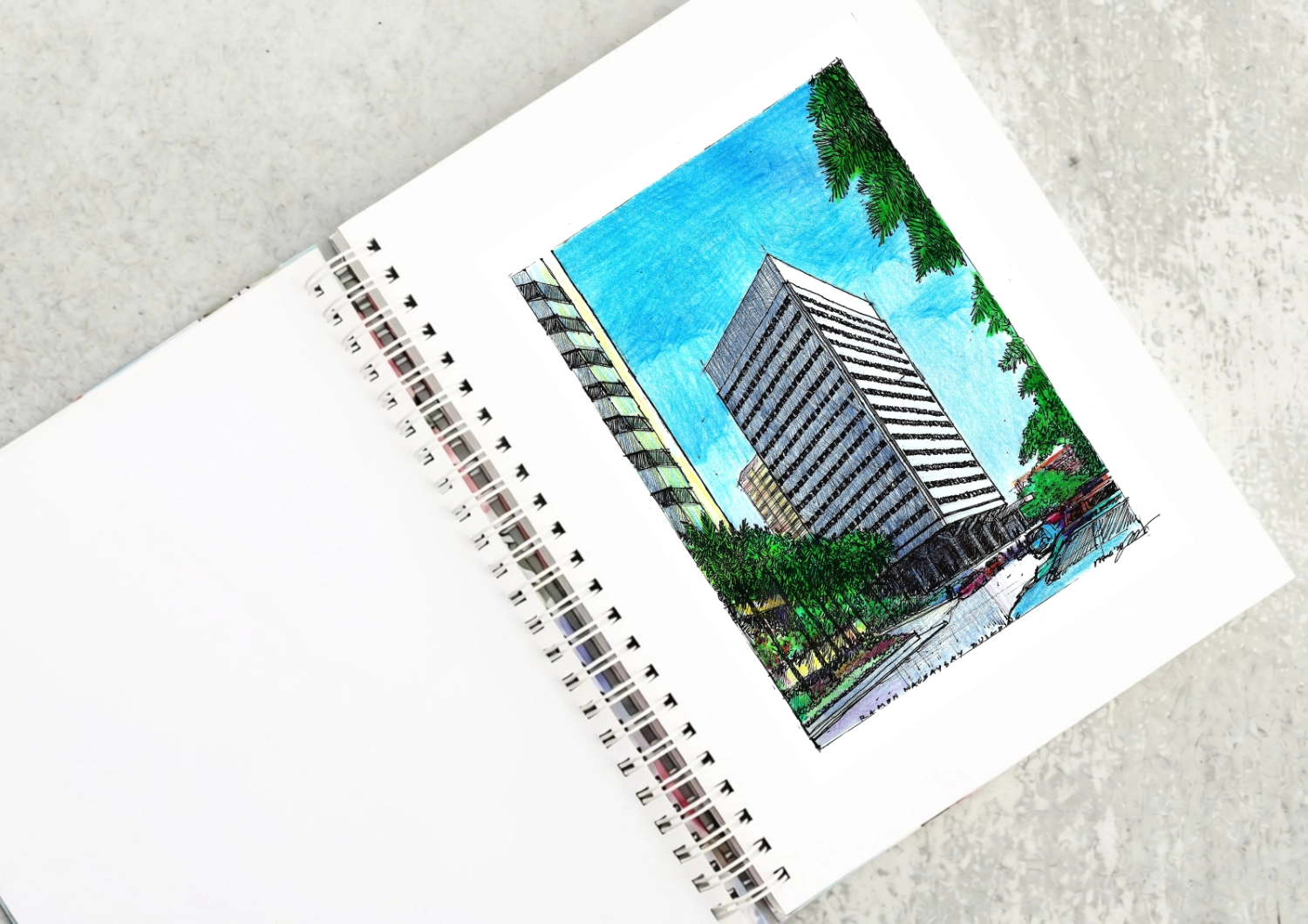
The Ramon Magsaysay Center as a Modernist Landmark Driving down Roxas boulevard from Rizal Park, what will catch your eye is the most elegant modernist structure in the country, the Ramon Magsaysay Center. Most established Filipino architects put it in their top ten lists of favorite buildings. It was designed by Alfredo J. Luz, who […]

Rinna Soriano’s favorite part of her work is sanding. At her workbench, she stays focused, following the grain, adjusting to changes in its direction. NarraNarraThe national tree of the Philippines, Pterocarpus indicus, prized for its durable, reddish-gold hardwood and handsome grain. Traditionally used for furniture, flooring, and carved panels, narra is now protected fromGo to […]
Read the issues.

Collect the volumes.

Recommended Video
Tap to Unmute
Unmute
0:00
0:00