Bigkis is the act of binding. In Tagalog, the word can refer to something used to bind or encircle, as well as a bundle formed by tying several separate elements together. Figuratively, it can also mean a bond, union, or unity. The meanings move from the physical act of joining things together to the connection […]
Queer Artists Speak Out: Their Experiences Making Art in the Philippines



This year’s Pride Month comes after a year of different triumphs and failures for the LGBTQIA+ community around the world. With such an ever-evolving situation, the importance of queer artists in the country discussing their experiences has become more essential than before.
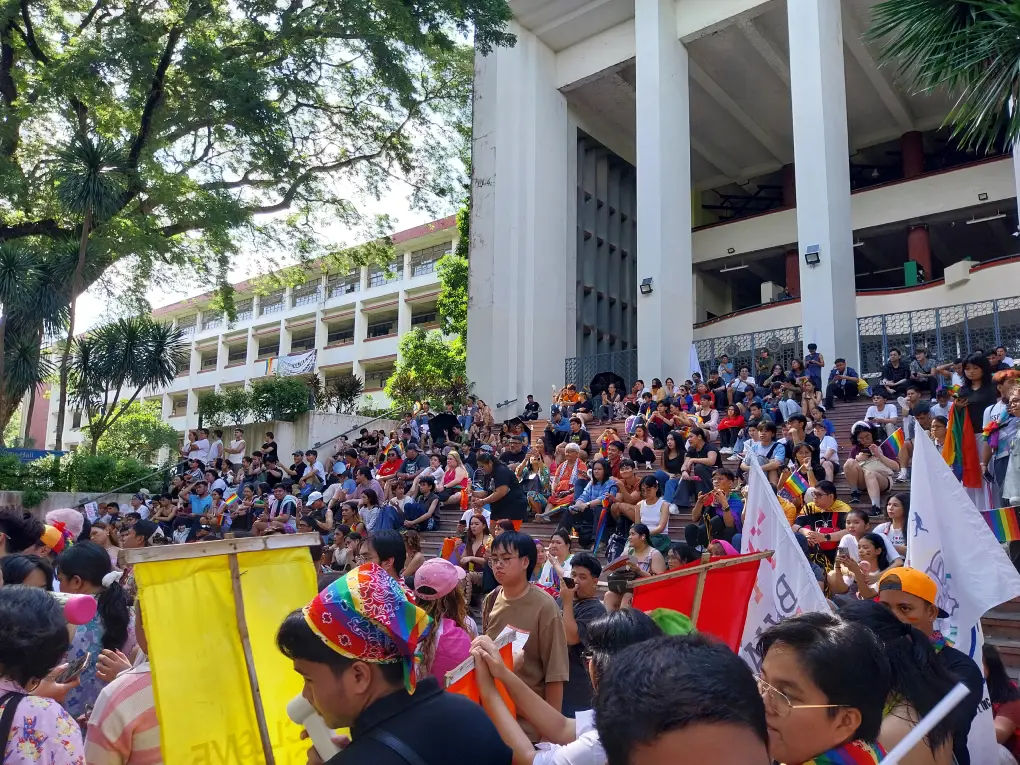
The Philippines is constantly touted as one of the most tolerant countries in the world when it comes to the LGBTQIA+ community. Yet that reputation does not extend to any rights for queer people: same-sex marriage is still illegal, transgender people are still unrecognized within our legal paradigm, and Congress continues to refuse to pass a long-languishing SOGIE anti-discrimination bill for one reason or another.
With that in mind, BluPrint continues its profile on the ten queer artists from across the country. This second part dissects their experiences living and working as queer people, and what more needs to be done for better treatment of LGBTQIA+ artists within society.
The Instability of Making Art in the Philippines
In general, most artists can attest to others that, regardless of the amount of success or recognition they’ve had, art is not something that can be done sustainably on its own. An artist’s lack of wealth prevents them from being able to focus on making the kind of art that they want to create.
For many, it’s more of a side gig—extra income to make their lives just a little more comfortable than normal. Some of them, like multimedia artist Riley (he/him), usually just sell merchandisable prints of their art in markets like Patron of the Arts or Komiket.
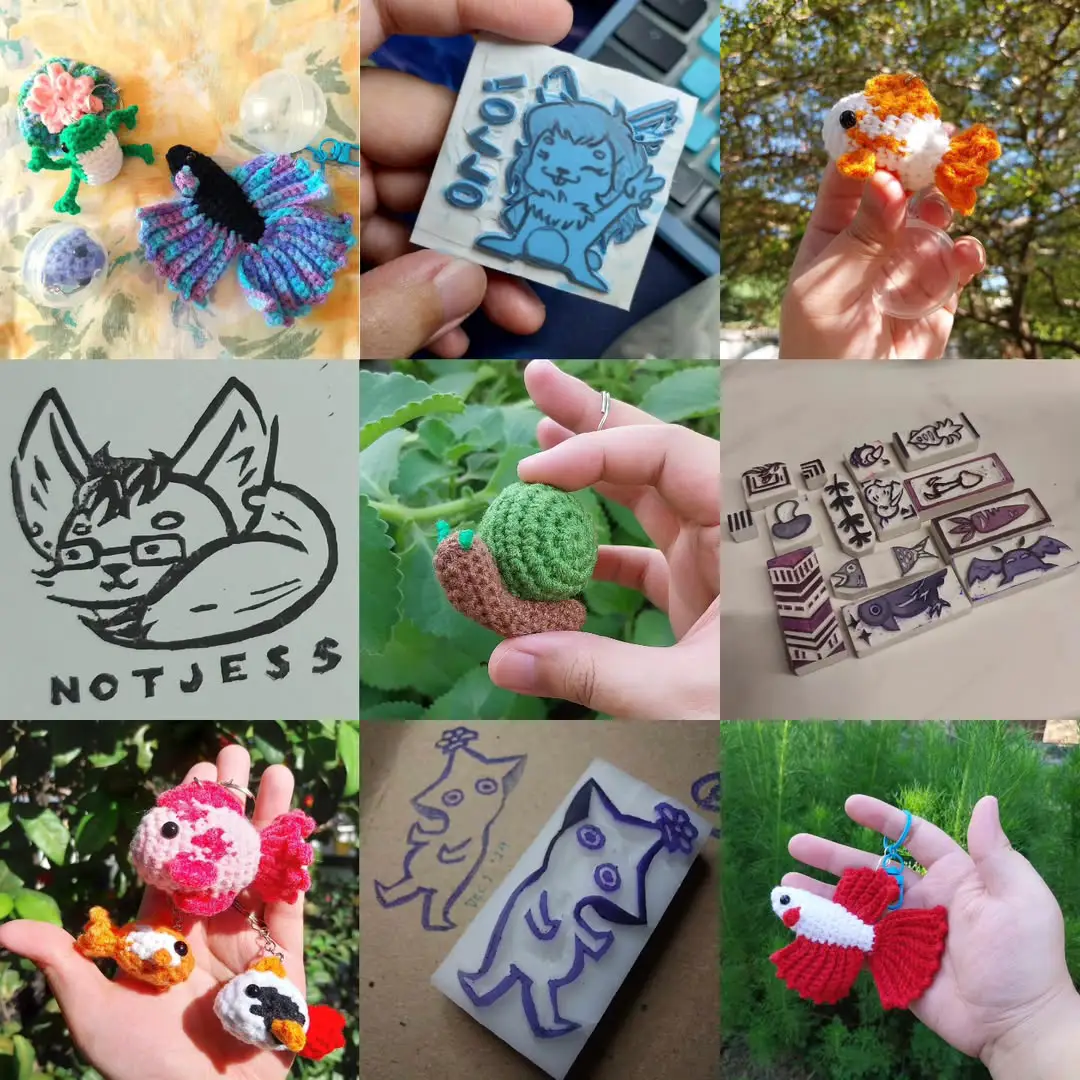
“I do have a degree in Fine Arts, but it hasn’t really been something I get stable income from,” he shared. Elaborating on that point, he added: “If anything, making art is the supplemental income stream, when I table at events or take small commissions.”
A lot of the artists interviewed shared that they had to pivot towards design work instead of following their creative muses. This includes freelancing gigs, commissions, and other forms of art-adjacent work to maintain their income.
“I work as a graphic designer but in my experience it hasn’t been paying well, so I rely on my other skills to maintain financial stability,” digital artist Sam Sumpay (he/him) said. “It helps to be multi-faceted, at least, as it allows me access to different kinds of knowledge I could use for other things.”
“I’ve taken on freelance gigs, design work, and remote work opportunities that still let me stay creative. It’s a balance, sometimes messy, but I’m still here making [art],” multimedia artist AJ Cu (any pronouns) added.
Photographer Lee Morale (she/they) shared that while they had been able to find sustainable work through the projects she received, at the end of the day, it’s still a perilous risk to be a freelancer in the country.
“Photography seems like a glamorous career but at the end of the day, you don’t have benefits, you don’t have a safety net, you live for the next big project without the certainty of it ever coming,” she shared. “At a young age, I didn’t know the importance of having and processing my own labor rights, benefits and insurance. And even after knowing all of these, it’s not a walk in the park to process these things. We need comprehensive and institutionalized law and frameworks that could aid creatives; most especially freelance and independent artist.”
How Inaccessibility Hurts Artists
These financial instabilities create environments for queer artists where they just don’t have any ability to pursue their art to the fullest degree that they can. DJ Amago (he/him), for example, said that he uses watercolor as a primary medium partially because it’s something that’s easily accessible to him.
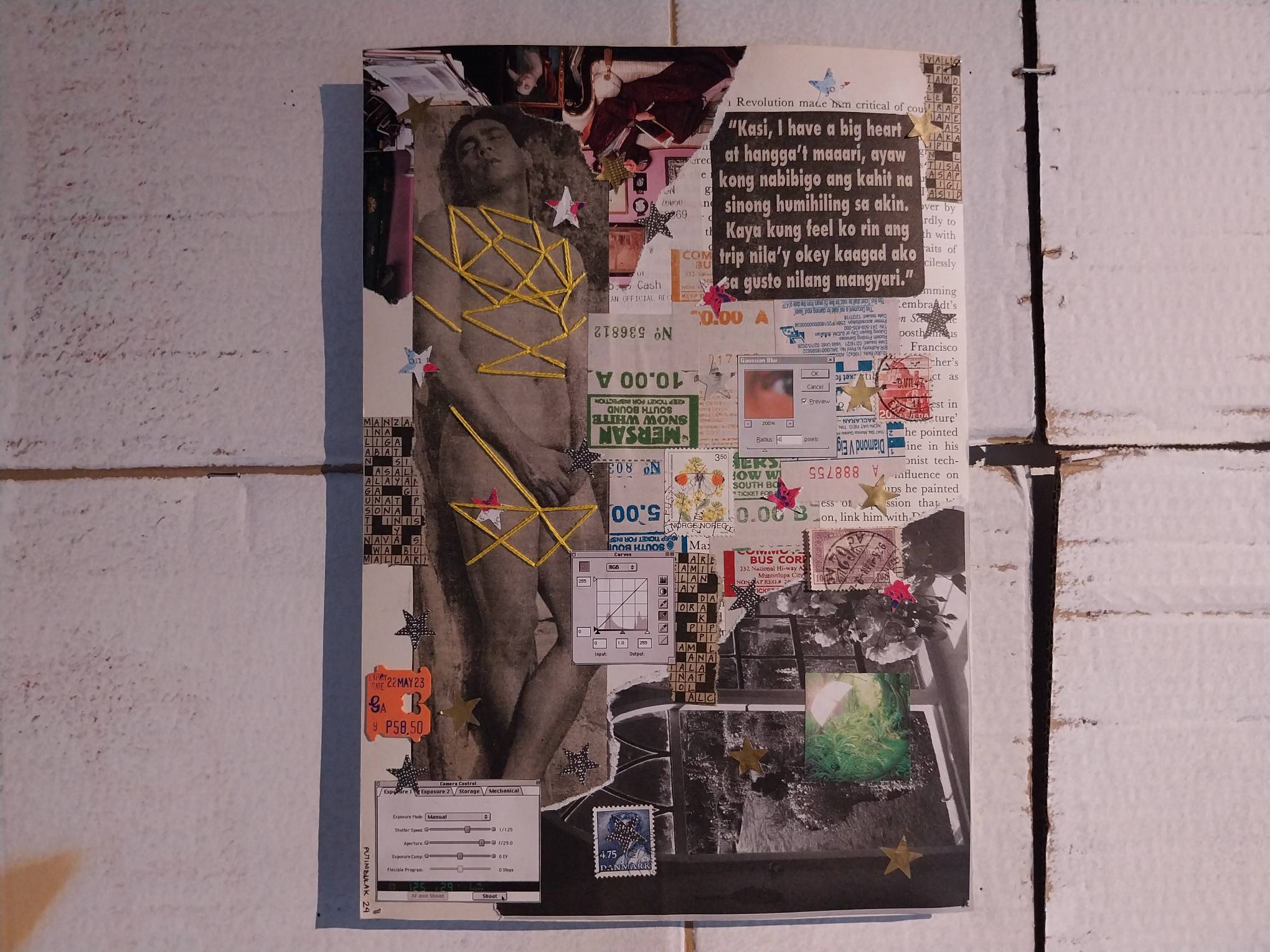
Collage artist Putimbulak (he/him) shared that his incisive and provocative collage work is partially a response to a lack of space for larger works like painting or sculpture. He dabbled in film photography and other mediums in the past, but in the end, the constraints of his finances made him work on collages instead.
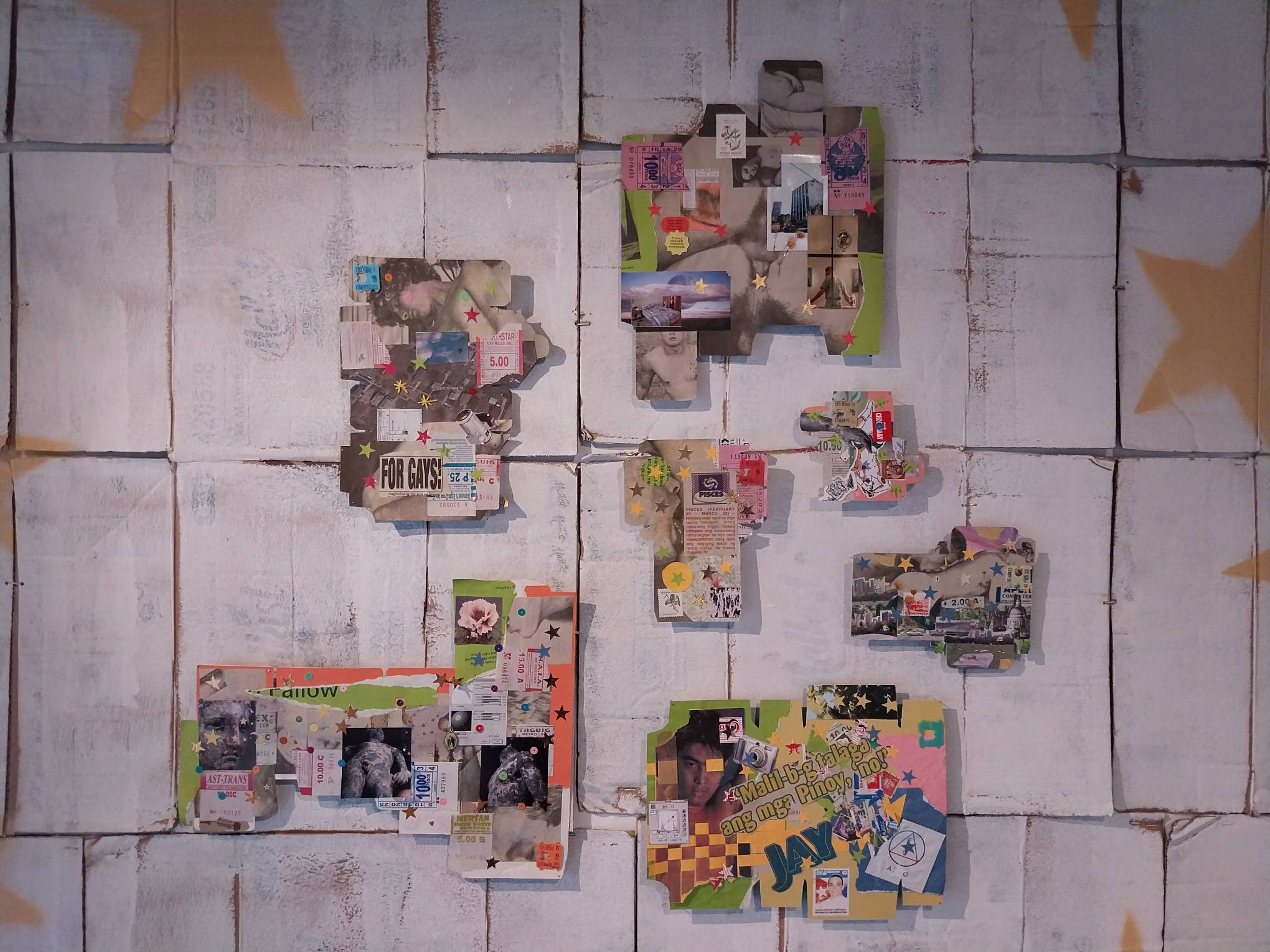
“How I look at my art is it’s very accessible,” he said. “If you have scissors or glue, you can do collage, you can rip something, you can piece out something, you can slice, you can cut something.”
“I think that [in my] economic hardships, I was able to translate it into my work, but the reality is I was frustrated because of it,” he elaborated. “ If I have the chance to, if I have the money to do art, maybe I would’ve been able to actually paint or do some bigger works. Maybe try to focus on more traditional works that I can offer. But because of this restraint that I have, economically, financially, I tried my best to do with what I have during that time.
“Sometimes I would always wonder, what would I be able to do if I had a massive house or a place or a studio? Probably a lot more.”
An Unequal Field for Queer Artists
Income inequality preventing more opportunities for artists is basically an industry-wide problem, preventing artists of a certain class status from being able to make money with their art. But for queer artists, it’s not just about the integrity of their artwork; it’s also whether they can be freely queer in the workplace or not.
Research from the United Nations Development Programme showed that 21% of LGBTQIA+ workers in the Philippines believe that they were denied a job due to their SOGIE. Many queer people, especially transgender people, tend to do informal or freelance work instead due to a discriminatory workplace.
For a lot of queer individuals, it’s a matter of being forced to stay in the closet regarding their SOGIEs to get more opportunities for work or being open about their queerness and being shut out from high-income activities entirely.
Some of the artists interviewed have ruminated on the continued discriminations of the workplace. The lack of an anti-discrimination bill has made it perilous at times to be openly-gay or openly-trans in a workplace, as Putimbulak shared.
“ I’m working in a school, so of course it’s very heteronormative, but they’re not policing any queerness,” he said. “As long as you are presenting as your gender, they don’t have a problem with it.

“But that’s the problem. I am not sure if they would accept a trans teacher. I don’t think a professional setting in the Philippines would accept queerness yet and I think that is a big problem that we have to change, that I hope could be changed. […] The school setting here in the Philippines most of the time is also very strict when it comes to clothing, when it comes to presenting yourself.”
How Art Institutions Exacerbate the Problem
Beyond the actual discriminatory practices in a typical workplace, queer artists find themselves with not many avenues to exhibit their works in general. Even as a supposed home for liberal-minded ideas, galleries, museums, and other art institutions still have a problem when it comes to exhibiting the works of queer artists.
Very few of the artists mentioned have been able to have their works exhibited professionally in galleries, though some, like DJ Amago, Putimbulak, and Lee Morale have been part of exhibitions in the past in Gravity Art Space and Kalawakan Spacetime.
Painter DJ Amago shared that one time, he was invited to participate in an art festival in 2024. But after working on his submissions, his work was rejected for being “too provocative” for the organizers.
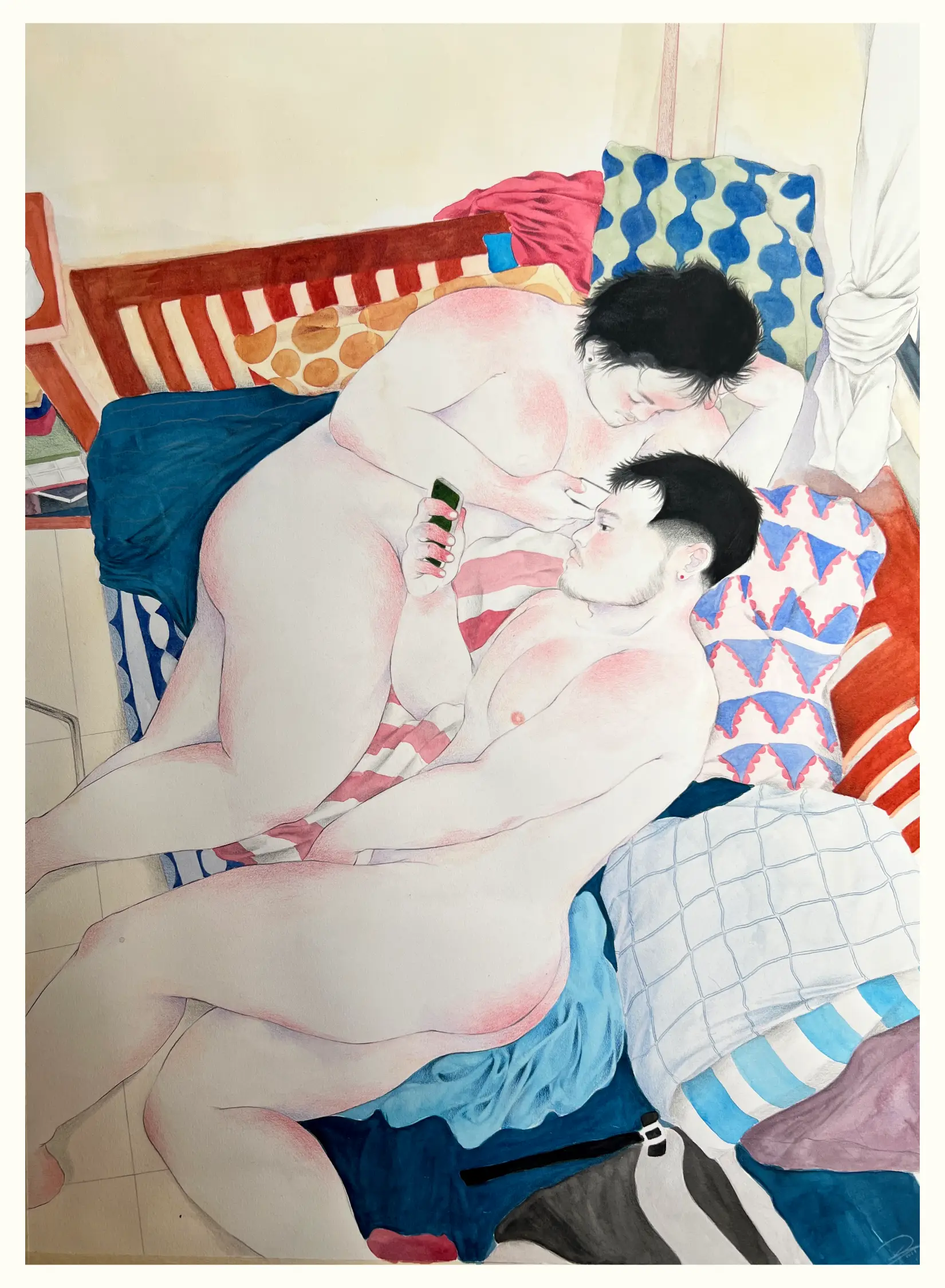
“I understood the theme of the event, but I don’t think the curator fully got what my work was about,” he shared. “And the thing is, I didn’t apply to be part of it—they invited me. So I assumed they already knew what kind of art I make. That experience really opened my eyes. Accepting your queerness can feel freeing, but it also comes with boundaries. It’s like, yes, you’re expressing who you are—but at the same time, you’re reminded that not everyone’s ready to accept that. It’s liberating, but it’s also limiting in ways that are hard to ignore.”
“Most of the support for queer art comes from independent galleries—and I’m really thankful for them,” he concluded. “They’re the ones creating space for people like me.”
A Bias Against Queerness?
By the count of this writer, very few galleries right now are doing any queer-specific exhibitions for Pride Month. In fact, there’s only one being promoted right now: Kalawakan Spacetime’s Vuhklaan Sa Kalawakwahn, which is running till July 12.
Over the past eighteen months, only a handful of spaces have mounted queer-themed exhibitions. These include artist-run spaces like ANIMA Art Space and NO Community-run Space. Galleries like UP Fine Arts Parola, Kalawakan Spacetime, and Gravity Art Space have also taken up the mantle. However, many exhibitions have largely avoided such topics.
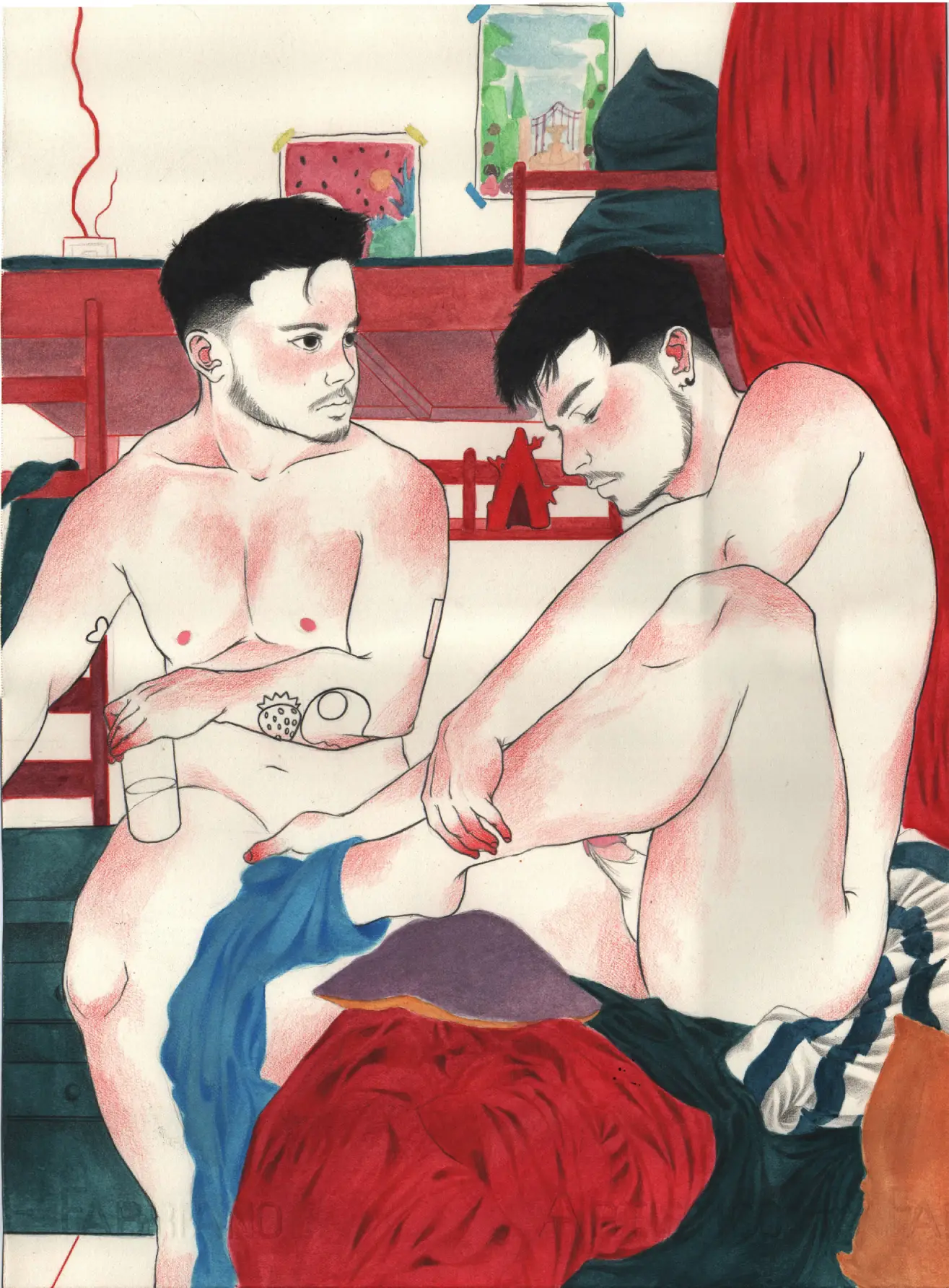
It’s not an intentional bias, of course; most mainstream galleries are queer-friendly institutions when you ask them about it directly. But queer-centric exhibits are still not a part of the norm, and it’s a combination of the said income inequality keeping them from focusing on their art, a lack of industry connections, and the heteronormative belief that LGBTQIA+ art is unacceptable within polite society.
“Visibility often depends on whether the theme is ‘on brand’ or if it’s Pride Month,” Amago opined. “Outside of that, opportunities can be limited unless you’re connected or already part of certain circles. Independent galleries have really carried that space for queer artists, and I think that says a lot about how much work still needs to be done to create real, lasting inclusion—not just performative support.”
Finding Community Around Being Queer in the Philippines
Outside the formal art world, many of these artists admitted that they have found solidarity in likeminded and supportive people. In these small pockets and places, many of the artists interviewed said that they found inspiration and boundless explorations for their interests and ideas that they otherwise wouldn’t get in cishetero spaces.
“It’s opened doors to honest storytelling and deep connection,” AJ Cu shared. “I’ve found a community, people who get it without explanation.”
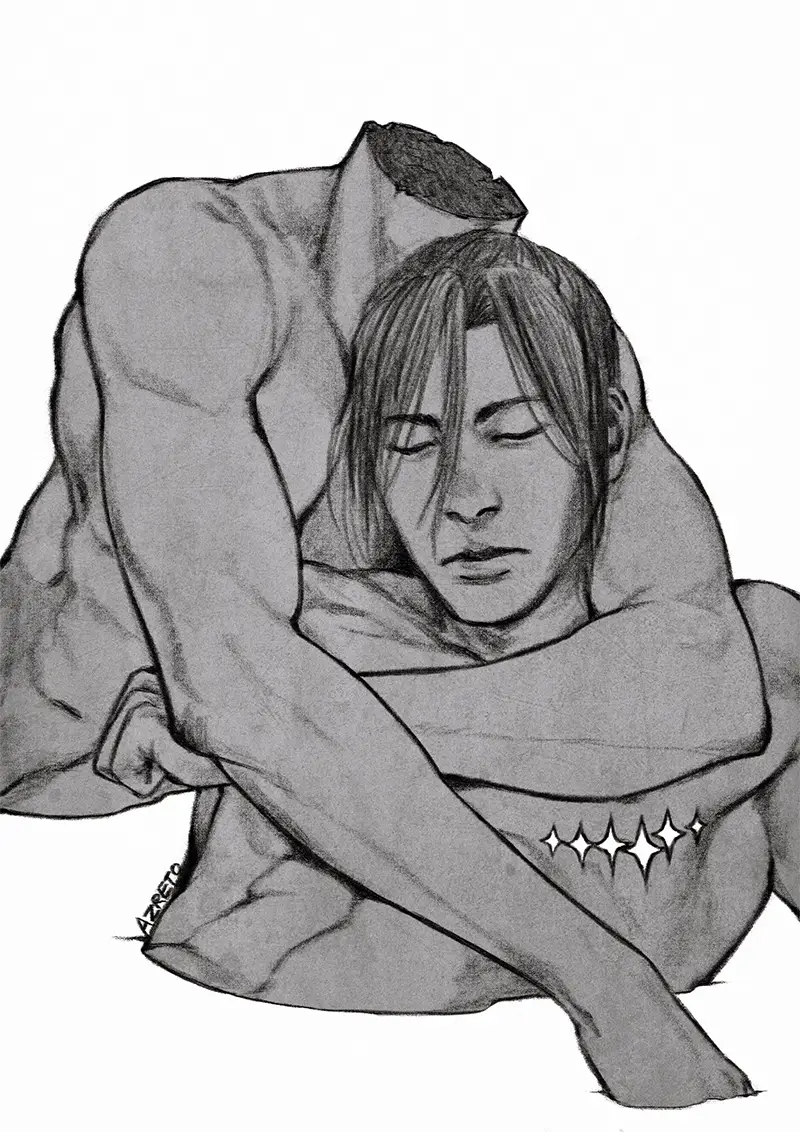
“I do volunteer with some organizations/projects/etc, and most of them have been very accommodating since they are also mostly run by queer people. It’s really rewarding and fruitful to have a queer-based community you can rely on for connections,” artist Aze Granada (he/they) said.
“On the positive side, [queerness has] allowed me to connect with communities—both online and in real life—that embrace diversity and self-expression,” digital illustrator Raven (they/them) said. “It’s through these communities that I’ve discovered new perspectives, inspirations, and even collaborations that I wouldn’t have found otherwise.”
A Push Towards Anti-Discrimination
And though our society remains discriminatory against queer people, many working in corporate or freelance settings have positive experiences, too. They noted that many workplaces have adopted inclusive policies for the LGBTQIA+ community, including using the lived names and preferred pronouns of transgender people working in their companies.
“I’ve been pleasantly surprised at my last office job, after I stated my preferred pronouns and that I was trans, management used them correctly and even my work documents addressed to me used he/him,” artist Riley said.
“I’ve been a freelance digital artist for over a decade, and glad to say, I only have clients who want to get exactly the kind of art they know I can provide for them. They don’t ask or need to know anything else about me,” Aze Granada shared.
Another digital artist, John, shared that his coworkers have been explicitly supportive of his identity as a trans man, and has concretely done steps to make him comfortable in the workplace. “Thankfully, when I was starting out, the director and supervisor of my team were very supportive,” he shared. “When I mentioned being uncomfortable with my work email that featured my deadname, they spoke directly to IT for me and that moment, I am forever grateful for.”
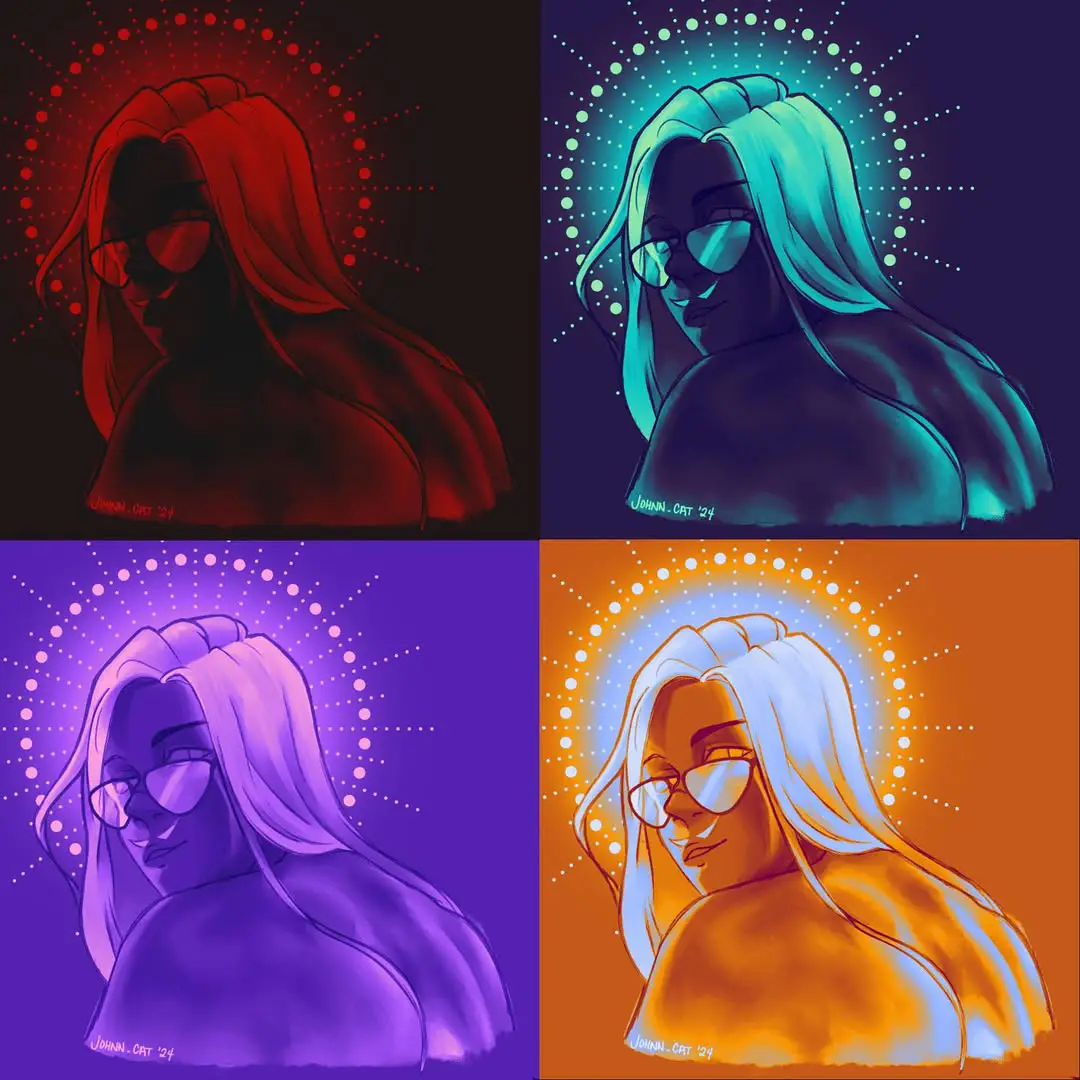
“In the industry I work in, I’m proud to hear others say that queer people are here to thrive—and dominate. With that, inclusivity and acceptance in the workplace are no longer questions, but givens,” Morale said.
“However, this progress did not happen overnight,” she elaborated. “The acceptance we now enjoy is the result of the courage and resilience of pioneers in the industry who paved the way. Because of them, new talents are now able to flourish and thrive in an environment that embraces creative expression and authenticity — a safe space that didn’t always exist before.”
What Needs To Be Done For A Better Environment for Queer Artists?
In the end, queer artists and cishetero artists share the same end goals in their struggle for recognition: more funding for the arts, more protections against discriminatory and exploitative practices, and more opportunities for poorer artists to shine across the world.
For queer artists, however, there also needs to be a more inclusive environment built that allows them to live freely by their SOGIEs without the risk of being judged or experiencing prejudiced practices against them. That means, for example, transgender people can present their gender honestly without fear of reprisal, or a gay or lesbian couple are able to bring their partners to work events without worrying about getting fired for it.
“Society could support artists like me by providing more accessible funding, inclusive platforms, and safe spaces that celebrate diverse voices. Whether through grants, community programs, or workplace protections, these efforts would make it easier to focus on creating meaningful art without constant financial or social pressures,” Raven said.
An equal rallying cry for all of these artists is the need for better funding opportunities to artists across the country. Many of them have been at the receiving end of the exploitation of creatives by corporations: censorship, late payments, unpaid work, and lack of work opportunities outside of urban areas.
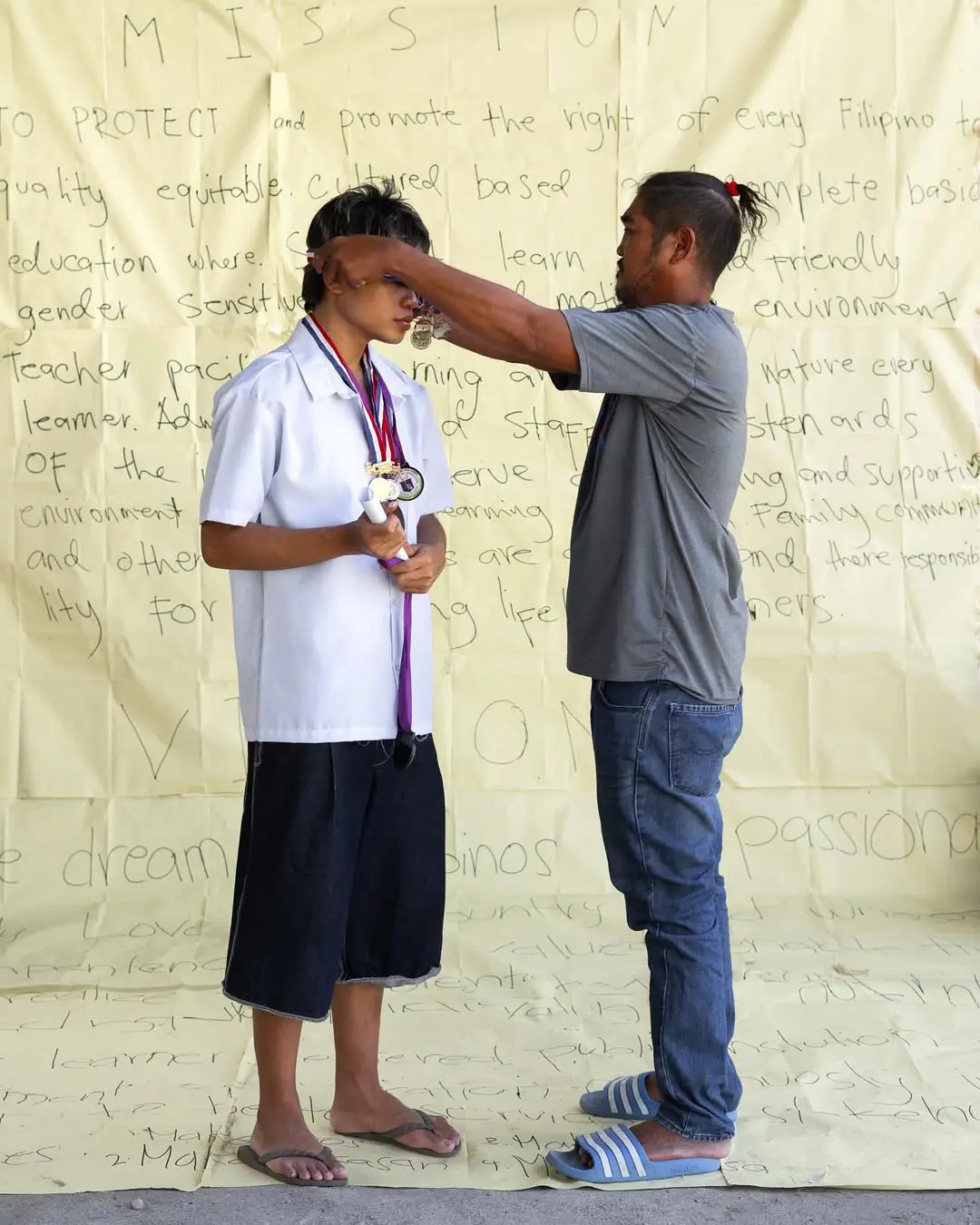
“It feels like our talent is being taken advantage of rather than nurtured,” Lee Morale said. As an artist who grew up in Mindanao, she advocates specifically for more opportunities to queer artists in the provinces, a way to provide an avenue for “cultural empowerment.”
“I hope for a future where more opportunities are created not just for artists in Metro Manila or Luzon, but for all of us across the regions,” she elaborated on her stance. “We have so much to offer—but how can we showcase it if we are constantly denied the platforms we need to shine?”
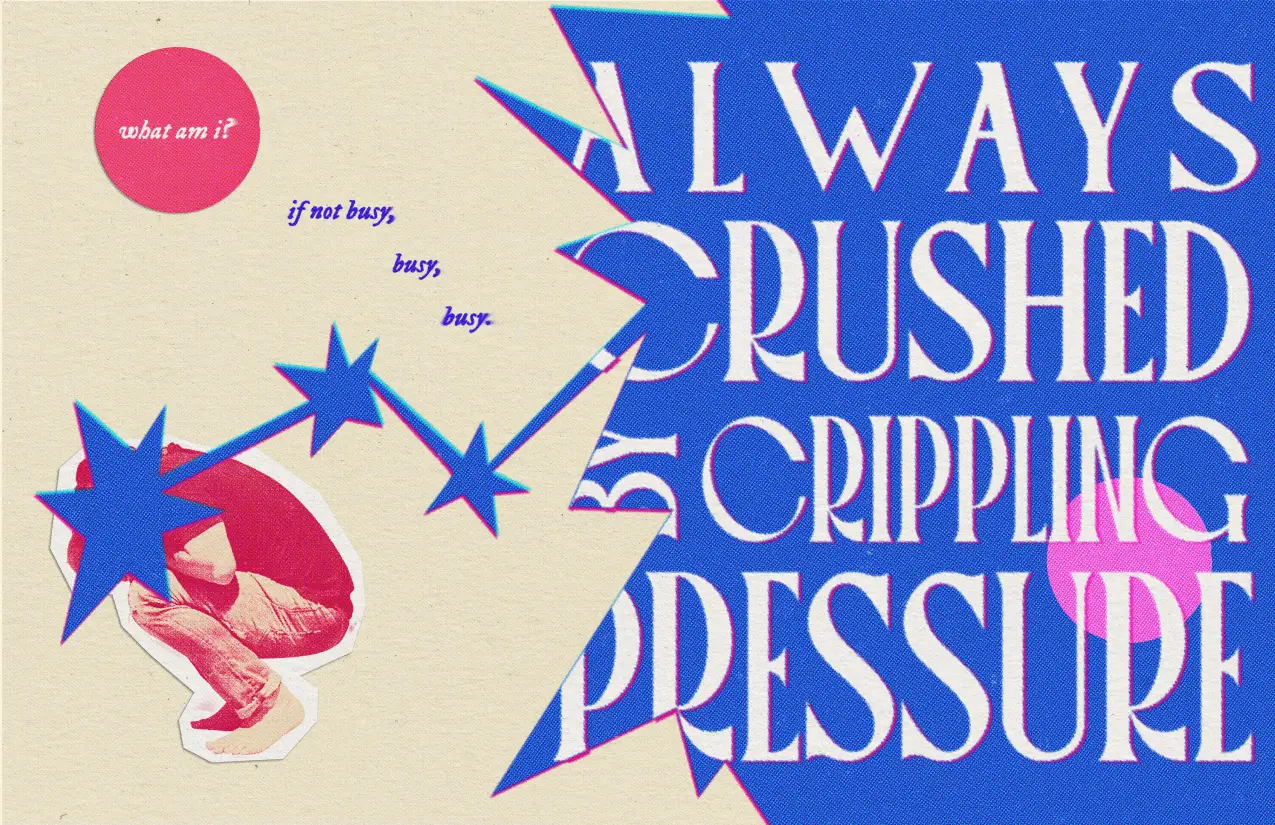
“Fund artists without asking them to water themselves down,” AJ Cu added. “Invest in queer-led projects, local initiatives, and community art spaces. Give us room to experiment, fail, and grow—like anyone else.”
Related reading: ‘Extasis Forever’: Representing Mirrors to the Queer Experience
Frequently Asked Questions
This Batangas beach house is defined by its “lived-in” aesthetic, intentional use of local materials, and an open-air ground floor lounge that lacks doors or windows. By utilizing age-old Filipino design principles for coastal dwellings, the home fosters a seamless flow between the indoors and the sea. The design prioritizes casual elegance and comfort over rigid styles, creating a timeless sanctuary that feels like it has aged gracefully from the moment of completion.
The owners adopted an eclectic approach, acquiring unique items they loved during their travels and allowing the pieces to dictate their own placement within the home. This “no rules” philosophy, guided by intuition and personal history, resulted in a curated space filled with cherished mementos and gifted artworks. By working with Grupo Santamaria, they were able to display these diverse treasures with restraint, ensuring the home feels cohesive rather than cluttered.
A central feature of the home is the unpartitioned living space on the ground floor, which mirrors historical Filipino dwellings that traditionally lacked rigid room divisions. Principal Designer Nina Santamaria highlights this progressive choice as a way to honor indigenous architecture while maximizing natural ventilation and coastal views. This structural openness allows the home to breathe and encourages a communal atmosphere that is deeply rooted in local cultural traditions.
The house emphasizes sustainability through the use of indigenous materials and repurposed furniture pieces that tell a story of longevity. The construction process itself—taking three and a half years—taught the owners to embrace an unhurried pace and let go of perfectionism. This deliberate, slow-growth approach created a safe haven that encourages inhabitants to decelerate, focus on their well-being, and find peace of mind away from city life.
The homeowners envisioned the beach house as a permanent retreat where they could grow old, specifically requesting that it not look “brand new” or artificial. By incorporating repurposed materials and eclectic antiques, they created an environment that feels established and full of history. This design choice ensures the home will continue to age gracefully over decades, maintaining its character and warmth as it becomes a long-term sanctuary for family and friends.
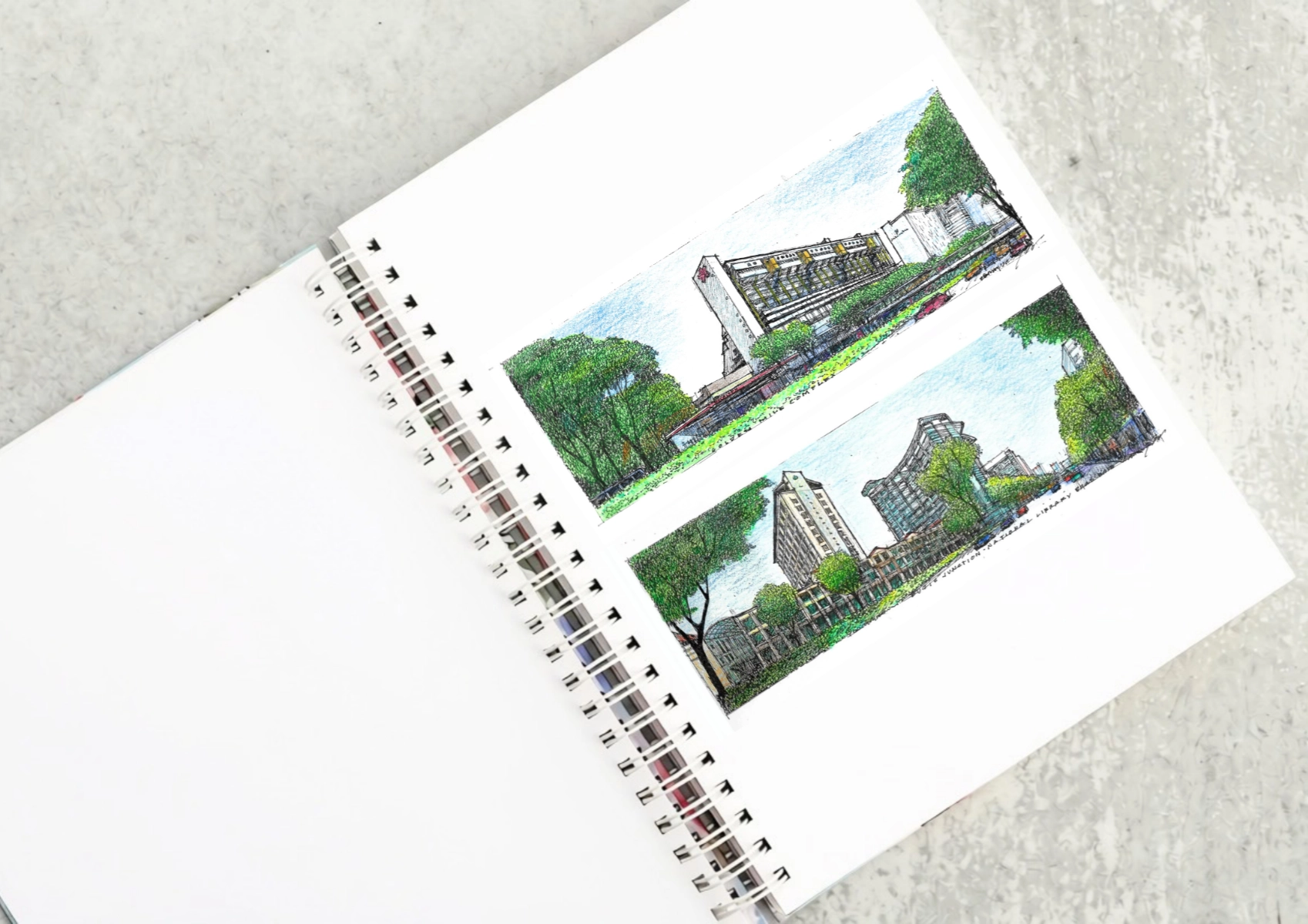
Two sketches of Singapore connect BluPrint Editor in Chief Paulo G. Alcazaren’s personal and professional history with Shared Ground: ArchitectureArchitectureThe art and science of designing and constructing buildings, structures, and spaces that are functional, safe, and aesthetically pleasing. It encompasses the planning, design, materials, and techniques used to createGo to Architecture Glossary of Care, Culture, […]
In a way, designers are the modern-day soothsayers and prophets. They design for the future, predicting how a room, a house, a building or a whole city will be used by people. They foresee how users will interact with a space, conjure exact shades of colors to elicit specific behavior and arrange furniture to build […]
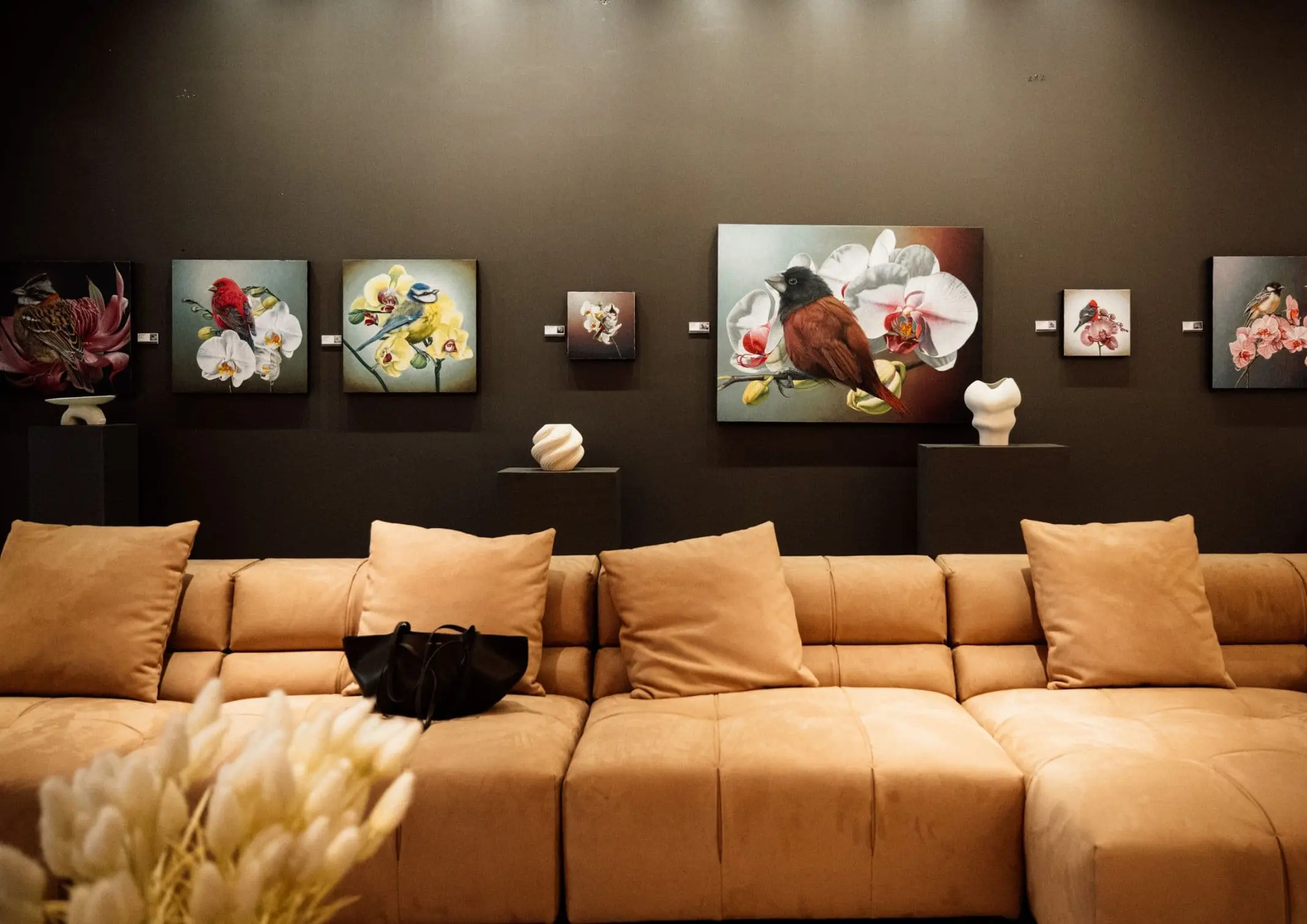
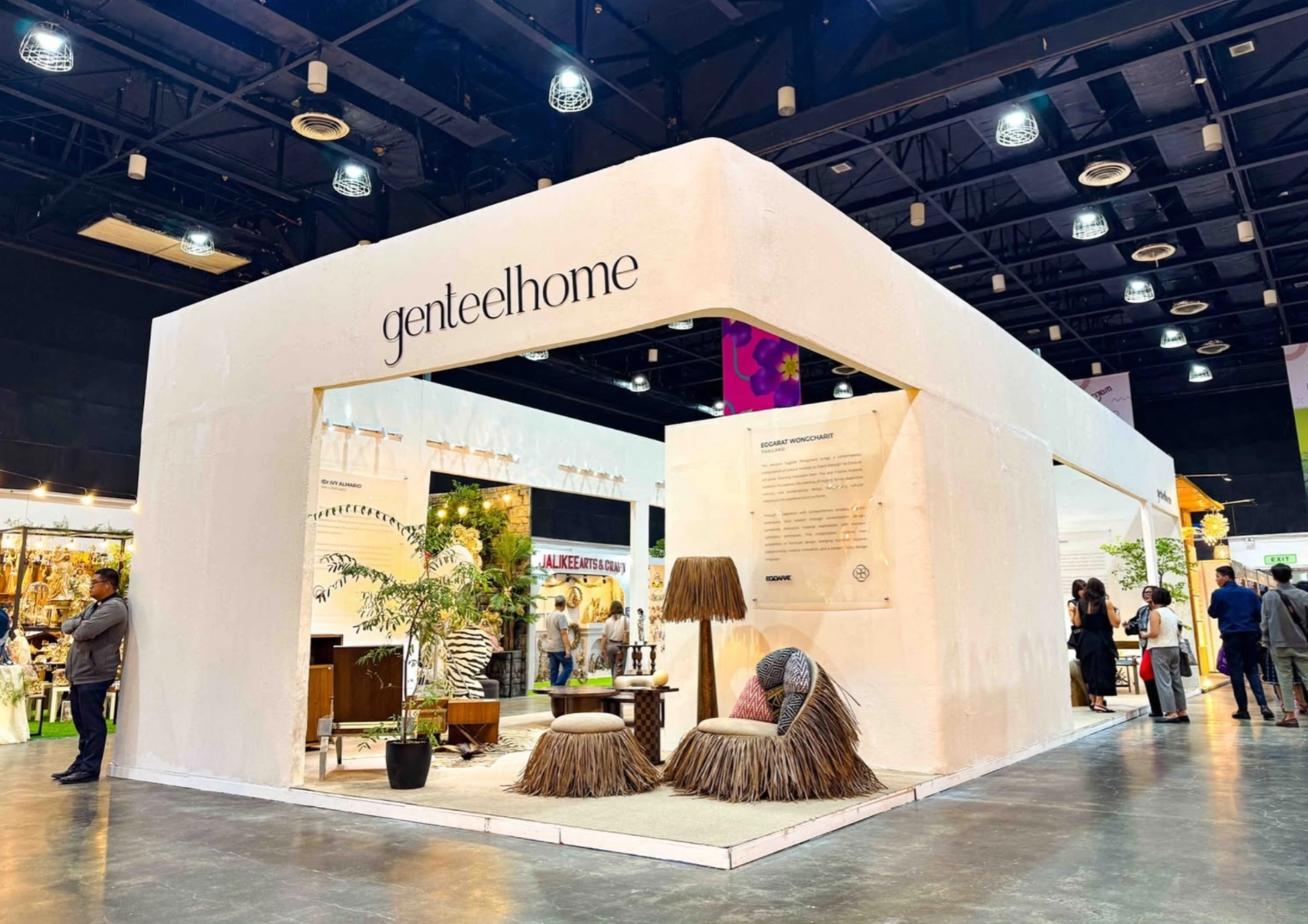
Art and furniture are often selected separately, yet their relationship can shape how a room looks and feels. The collaboration between Hooga and Galerie Joaquin explores how these elements can work together, bringing contemporary artworks into furnished residential settings at Hooga’s showroom in Uptown Mall, Bonifacio Global City. For Hooga, which curates furniture, lighting, and […]
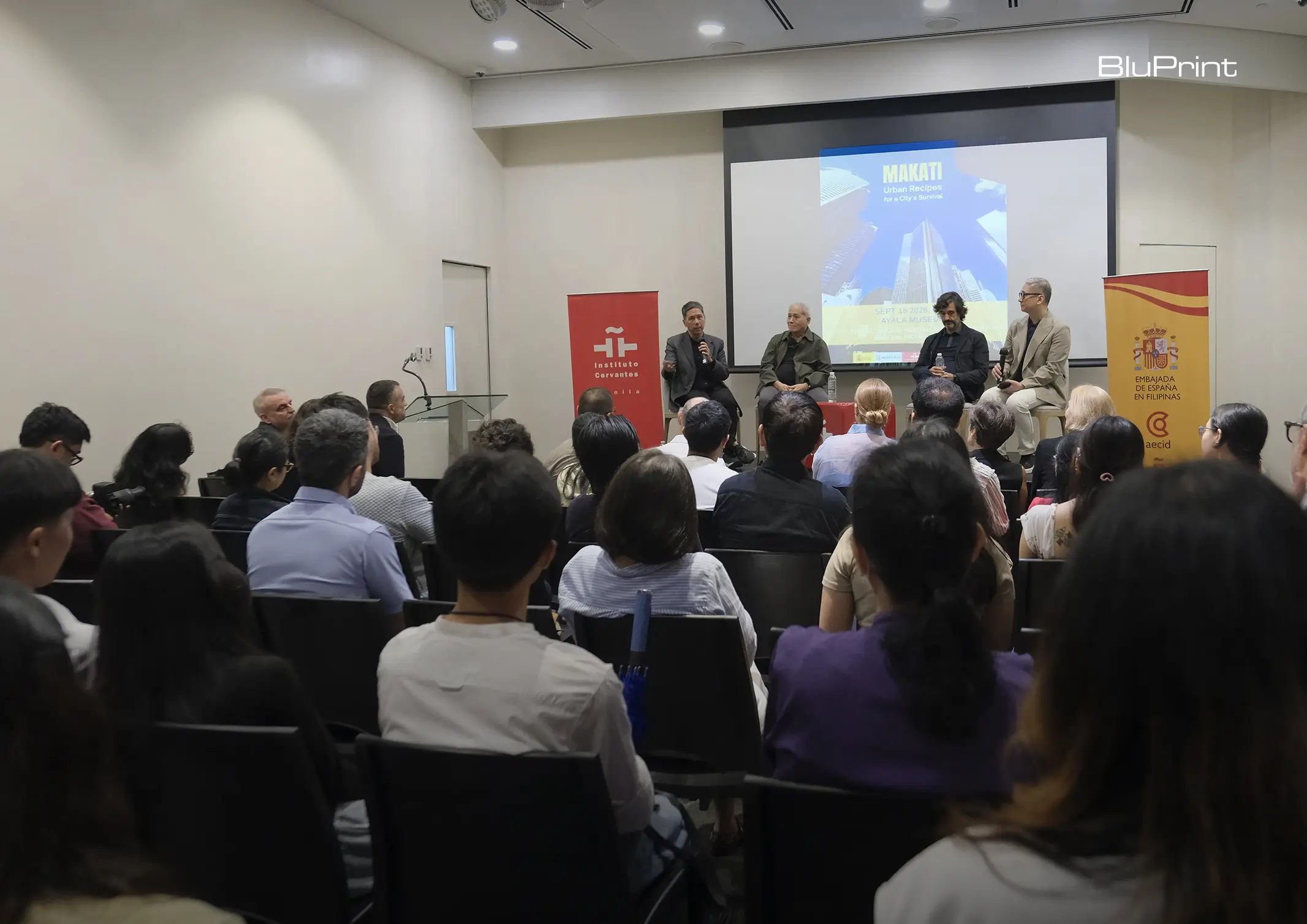
How can better-planned cities create the conditions for more creative, livable, and resilient urban environments? “Makati Urban Recipes for a City’s Survival,” a colloquium held at the Ayala Museum on September 15, brought together architects and practitioners from the fields of urbanism and the creative economy to discuss how design, planning, and collaboration can address […]
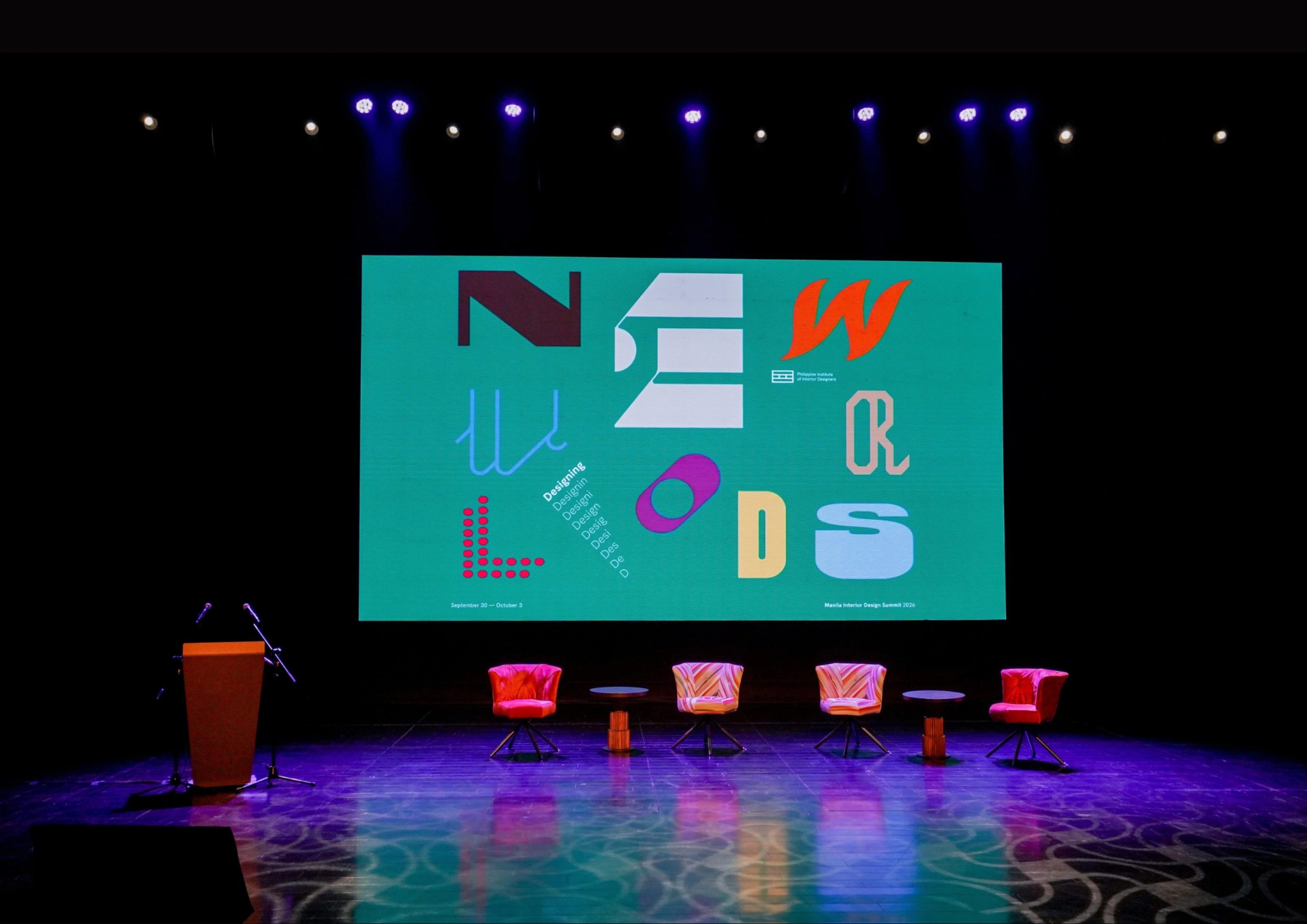
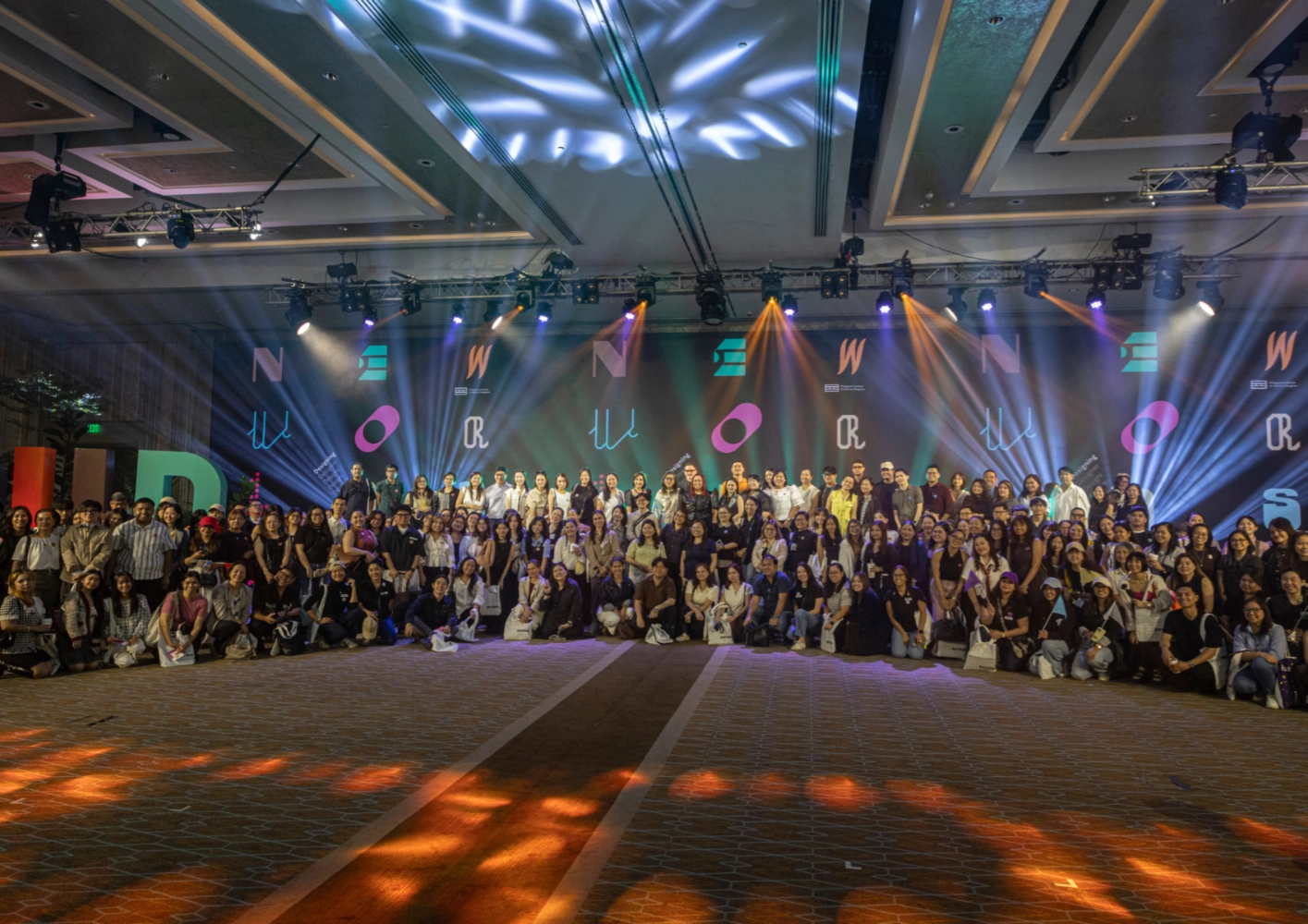
The fourth Manila Interior DesignInterior DesignThe discipline of planning and shaping interior spaces for function, comfort, safety, and beauty. It covers layout, lighting, materials, finishes, furniture, and color, and in the Philippines is a licensedGo to Interior Design Glossary Summit (MIDS) brought together more than 300 delegates for four days of conversations, exhibitions, and design […]
Read the issues.

Collect the volumes.

Recommended Video
Tap to Unmute
Unmute
0:00
0:00