Bigkis is the act of binding. In Tagalog, the word can refer to something used to bind or encircle, as well as a bundle formed by tying several separate elements together. Figuratively, it can also mean a bond, union, or unity. The meanings move from the physical act of joining things together to the connection […]
Contemporary Art in the Philippines: Exhibits You May Have Missed



As the country puts the first half of 2025 to bed, the progress of contemporary art in the Philippines continues unabated. A bevy of artistry in various galleries and exhibitions in Metro Manila made themselves known throughout the half-year, finding ways to distinguish themselves in an ever-crowded marketplace of art.
BluPrint looks back at some of the art exhibitions of the last six months, highlighting the works and artists who find creative ways to expound on their ideas while reacting to the strangeness of our times.
How We’re Using ‘Contemporary Art’ As A Label
Of course, labeling a whole swatch of artworks unrelated to each other, movement or otherwise, as “Philippine contemporary art” can feel disingenuous. Admittedly, many of these artists are part of different movements, utilizing different mediums to express concepts that they have in common.
As a whole, labels on artistry are hard to pin down due to how art just changes as it exists—for example, “modern art,” as used by critics, tends to refer to the 1940s and 1960s. Going further than that, basing a label on a time period can smoosh out the different variations that existed during the era.
The term contemporary art is more nebulous than most. It basically means “the art movements of today” but it never really specifies what time period that really means, changing depending on the context of the times. There’s an art exhibit right now that uses the term “early contemporary art” to talk about artists from fifty years ago.
So why use it? It’s because art works best when the context of the times evokes a reaction from the viewer. Even if they exist in different movements or mediums, they respond to our current environment, and because of that implicit connections exist within them.
That’s how we’re using “contemporary art in the Philippines” as a phrase in this article. In such fractured and tumultuous times, these works feel like earnest reflections of the chaos we find ourselves. How does art talk about the unfamiliar world we see today?
‘An Archipelago of Salvage’
This exhibition at Artinformal Gallery functioned as a perfect encapsulation of the history of our country. The works by Rando Onia wrestle with different familiar iconographies of Philippine culture and attempt to explore something deeper in the human condition.
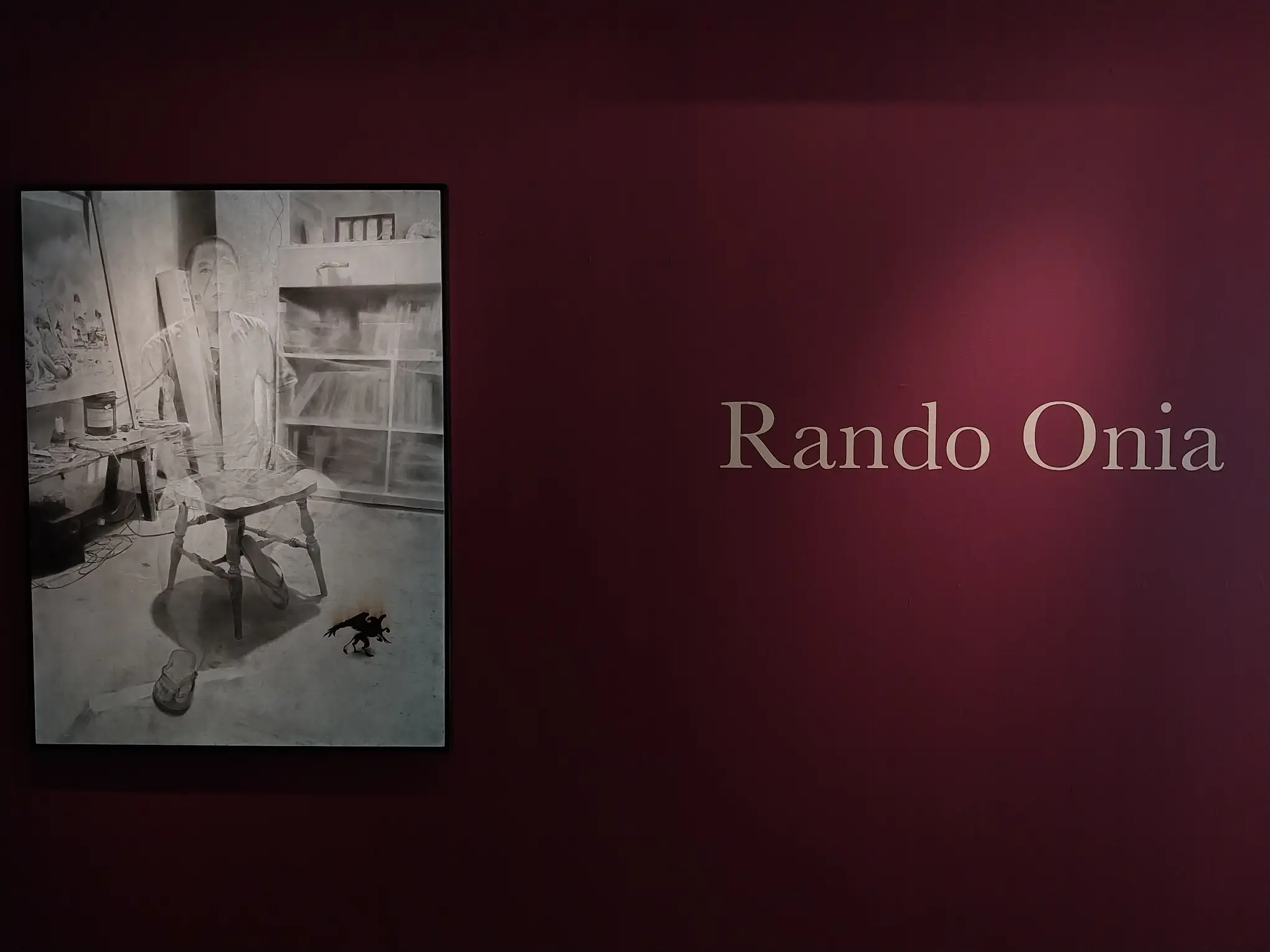
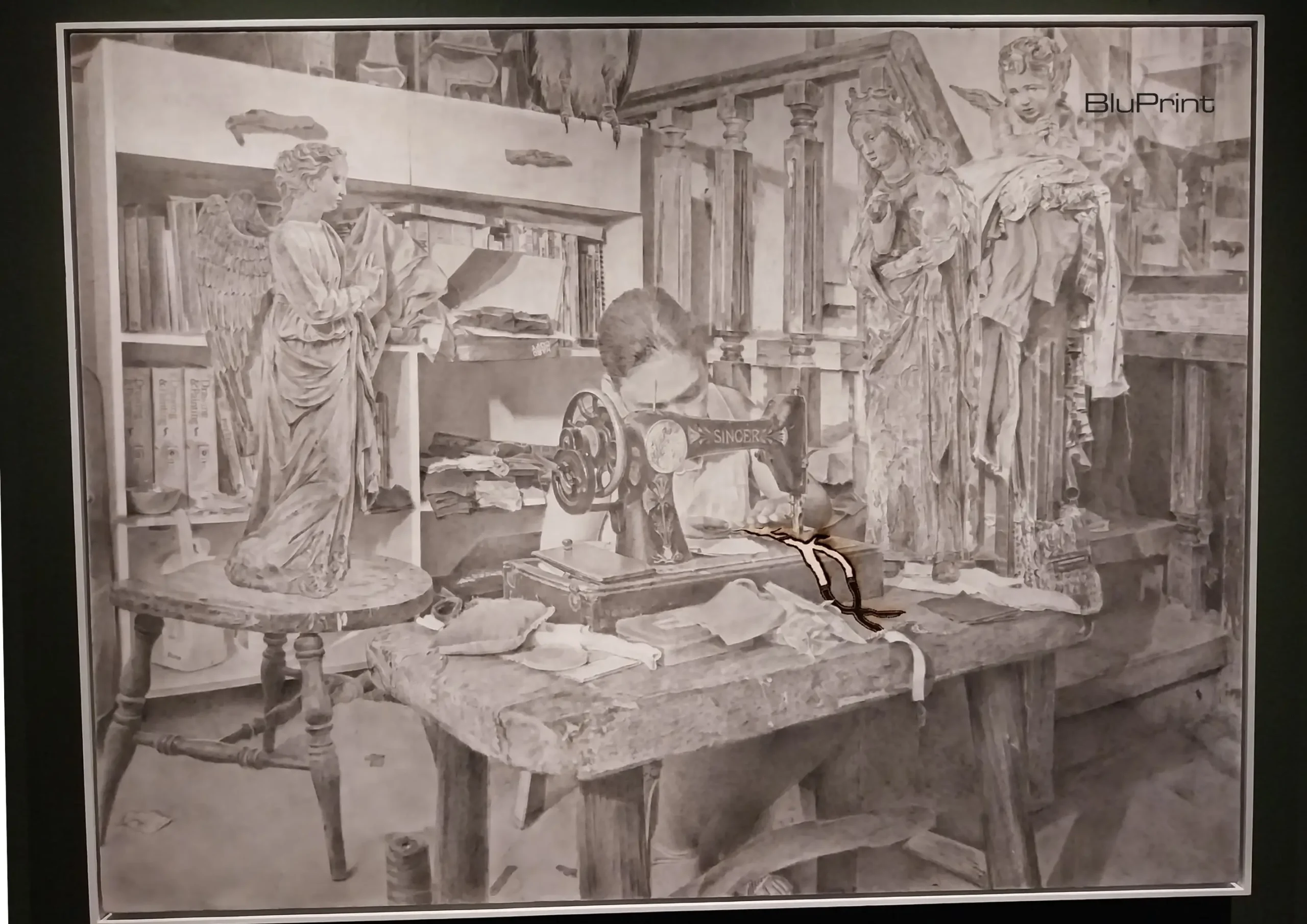
The images are all in monochrome, depicting different images like a Catholic school class picture, a huge religious gathering of people in the streets, or a seamstress working on a piece of cloth. All of it varies in location, in timelines, and even in scale. There’s one painting at the center that morphs different locations around Manila Bay together in a mosaic, playing with perspective to create a fantastical panoramic image.
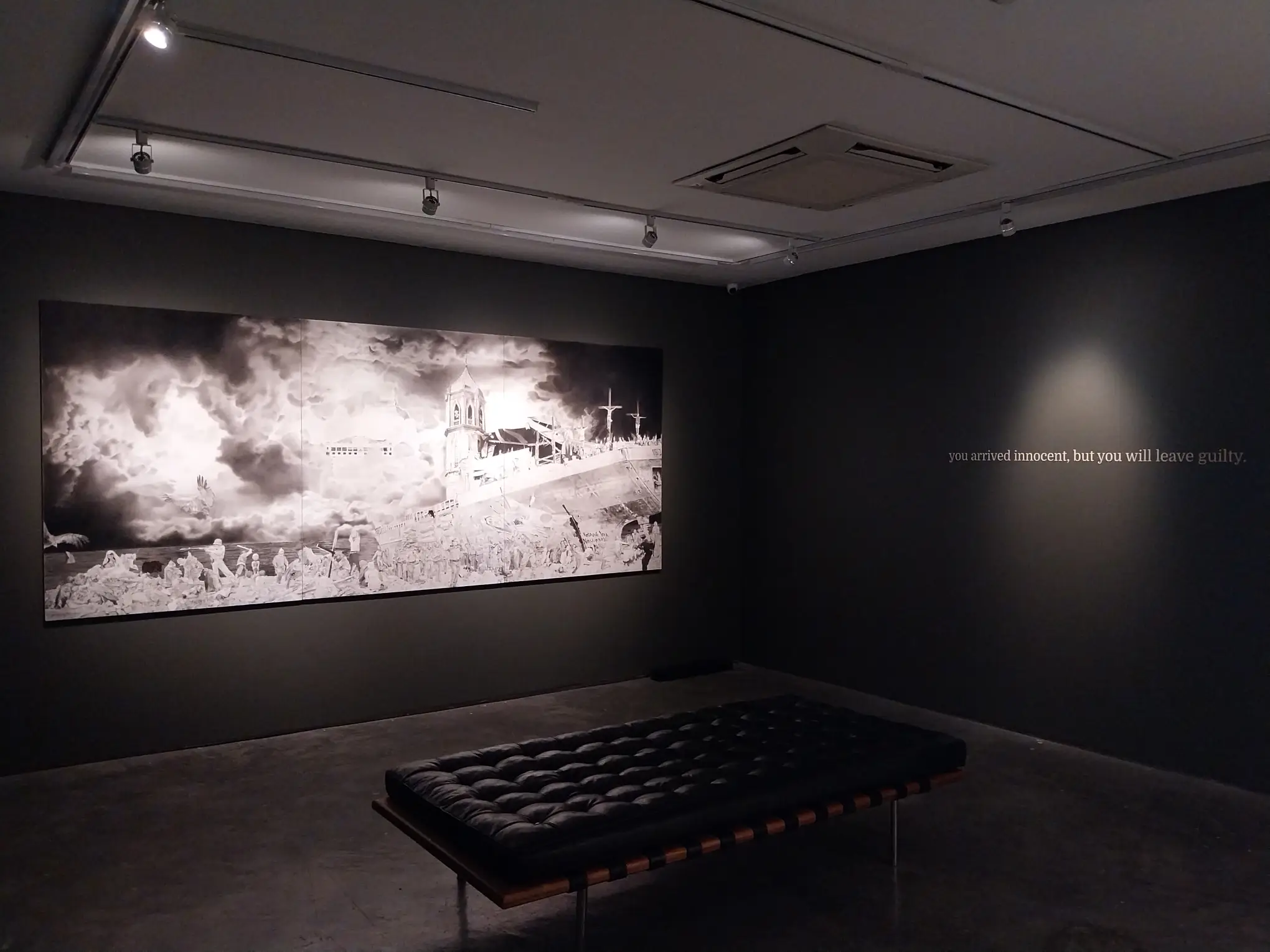
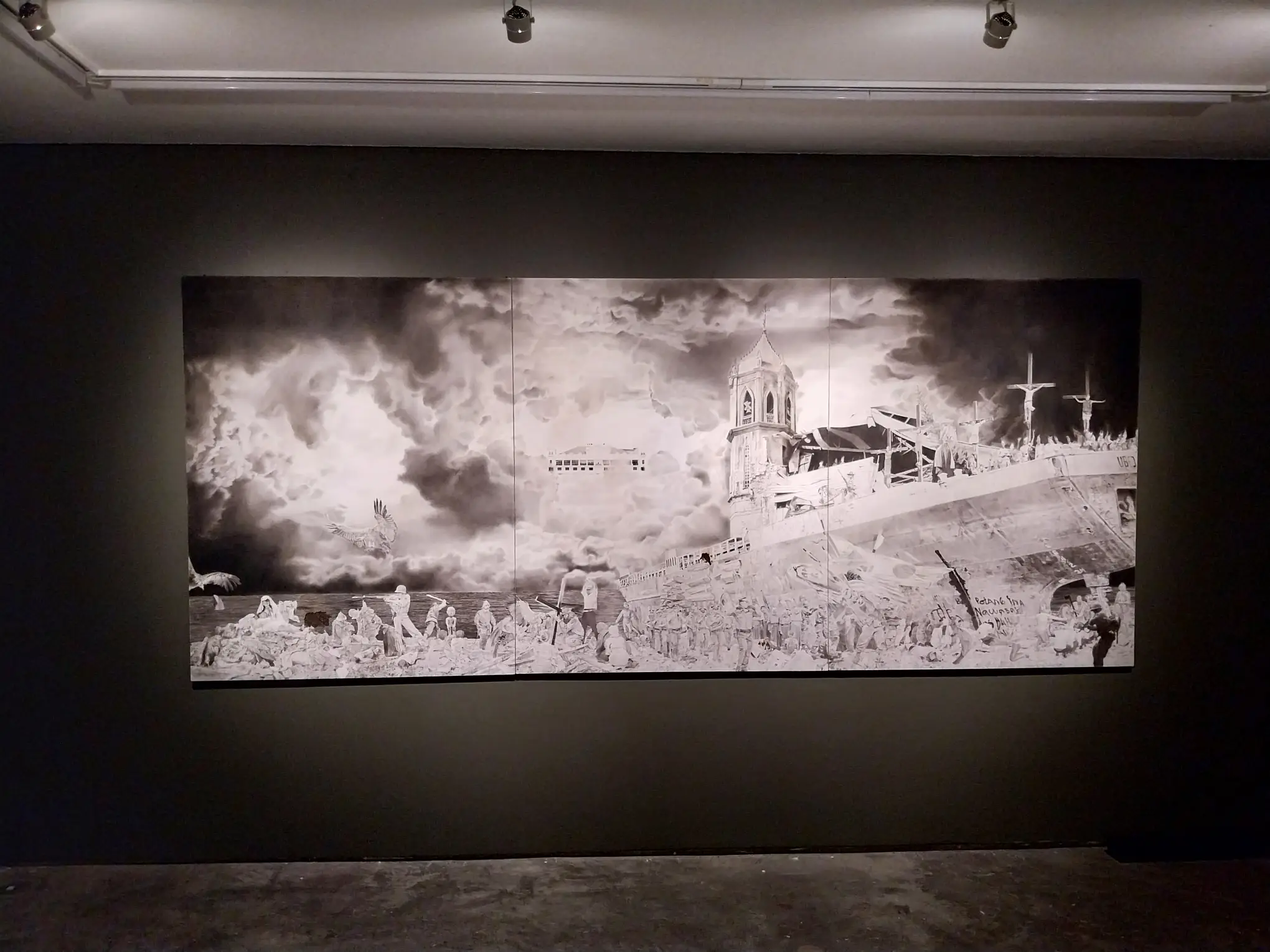
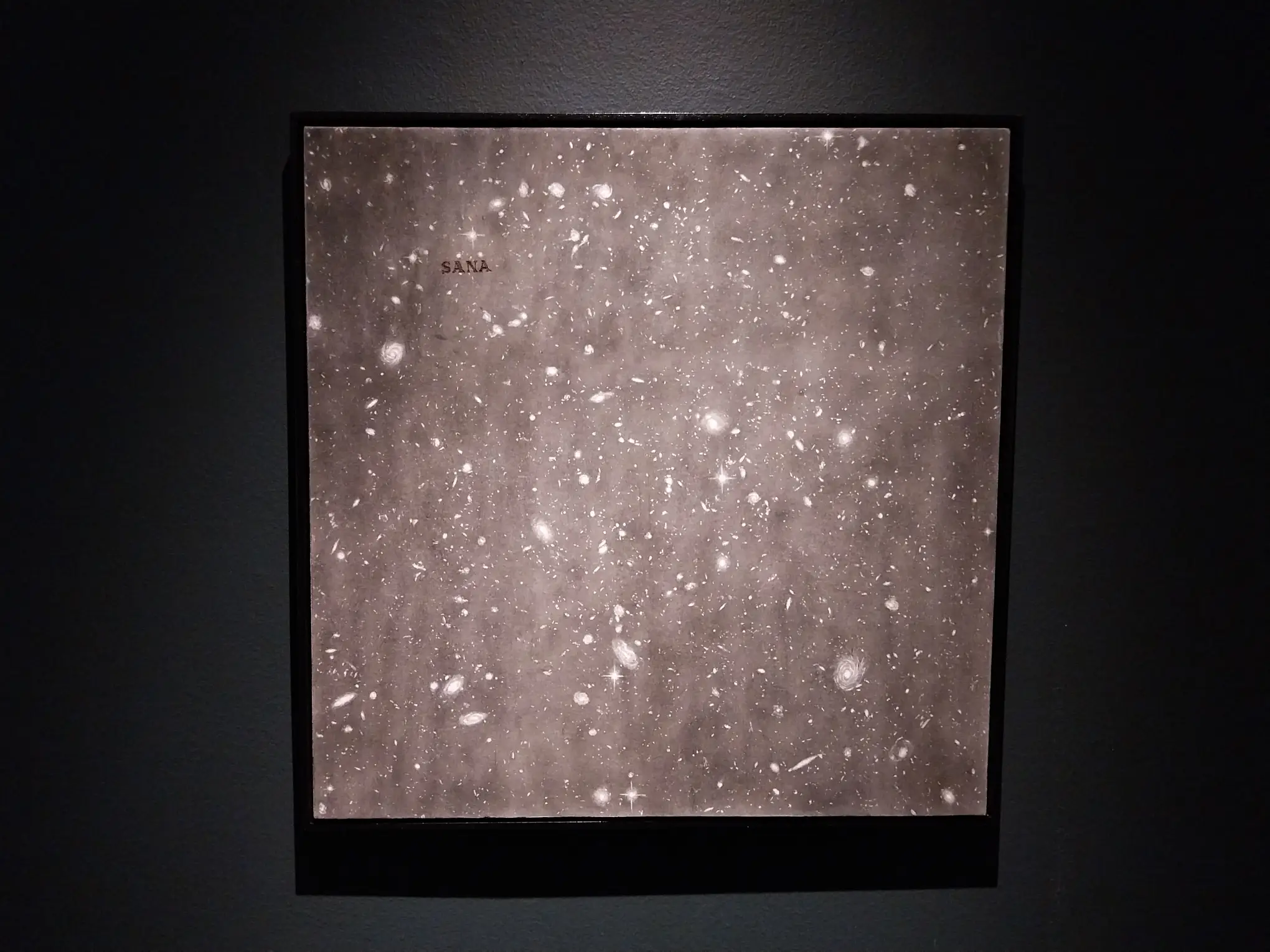
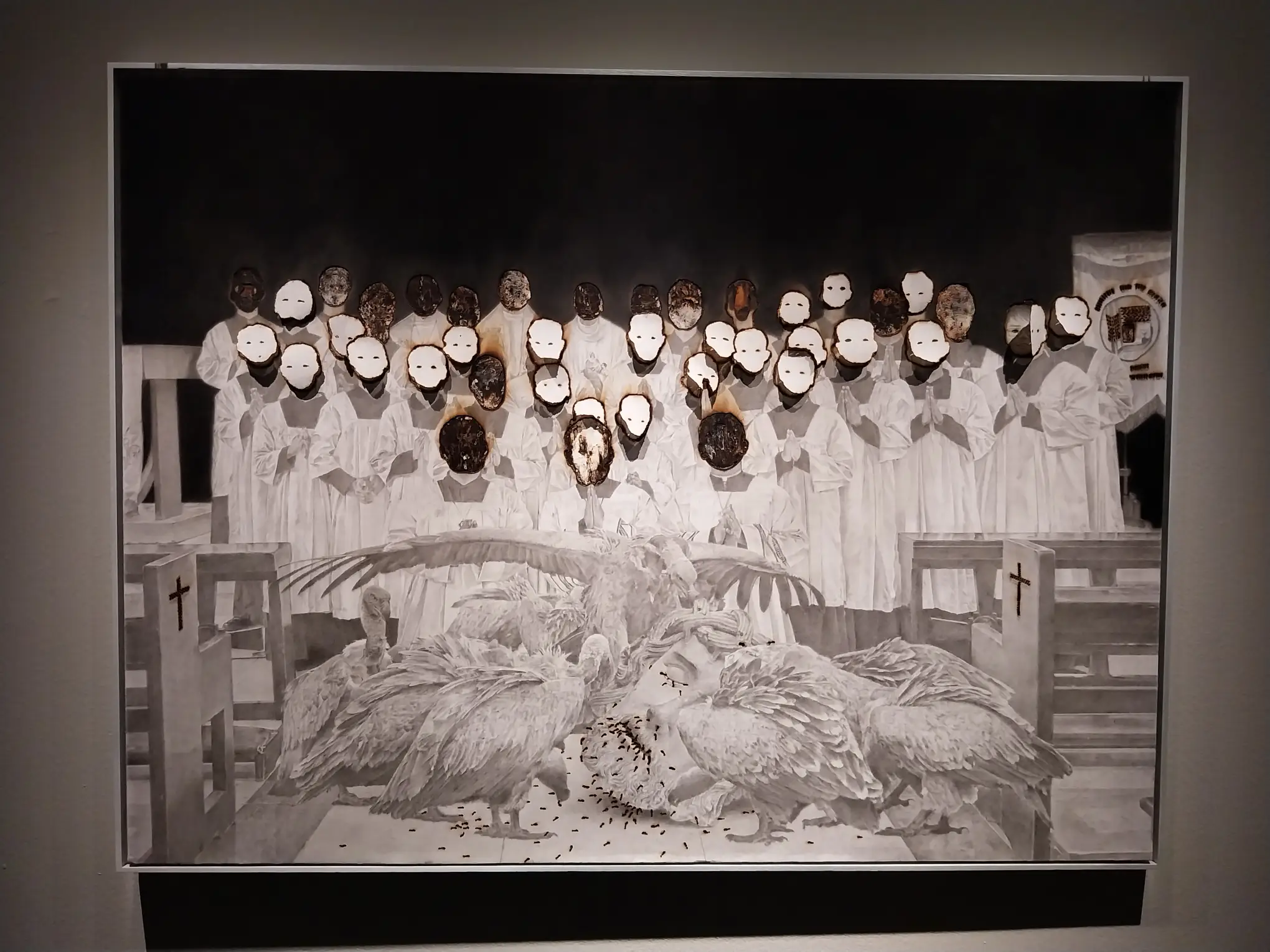
In these paintings, Onia burns portions of the work to create a different, contrasting shade of white with black ash-lined paper at the edges. It morphs the details, turning the cloth of the seamstress or the faces of the parochial students into stark white and ash.
Onia’s intent appears to be an examination of our complicity in the systems that we’re part of. “…[The artist] explores the complexities of the human experience and the evolving nature of the human psyche,” the description of the exhibit said.
‘The Neverending Cooking Show’
Seeweirdo’s exhibition at Vinyl on Vinyl utilizes the act of cooking as a metaphor for artistry and the emotions and feelings it attracts from people. The artworks have a cartoonish aesthetic to them, but their cutesy nature makes the messy and affecting ways of creating art more relatable to a general audience.
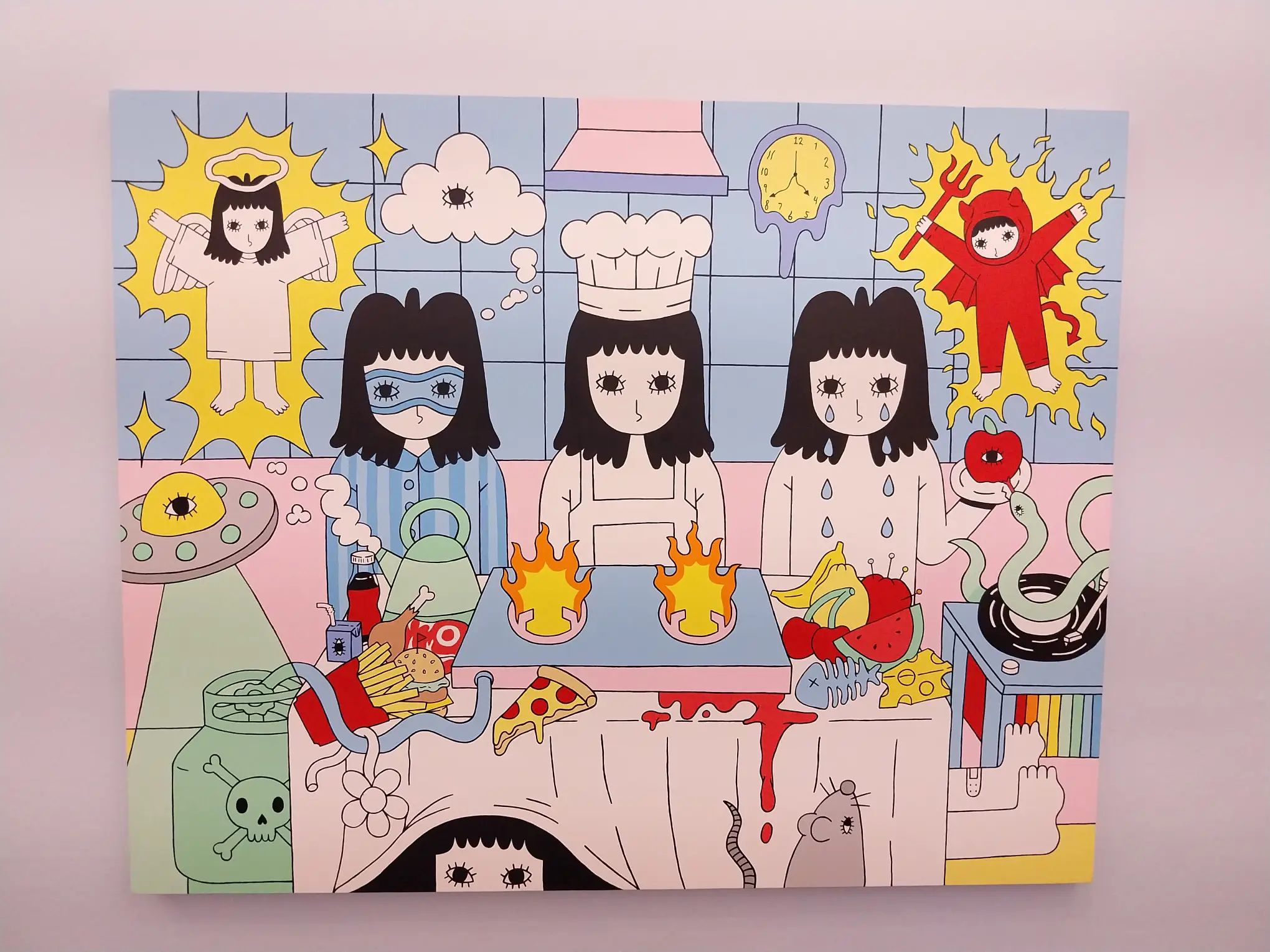
Here we see the central character in different chaotic situations as they cook. At times, the kitchen around them is burning down. One work has the central character engulfed in blue flames. And yet, through it all, the sentiment of the exhibit pushes towards a resonant feeling that the hardships of creating will produce something great in the end, whether it’s a plate of food or a whole new batch of artworks.
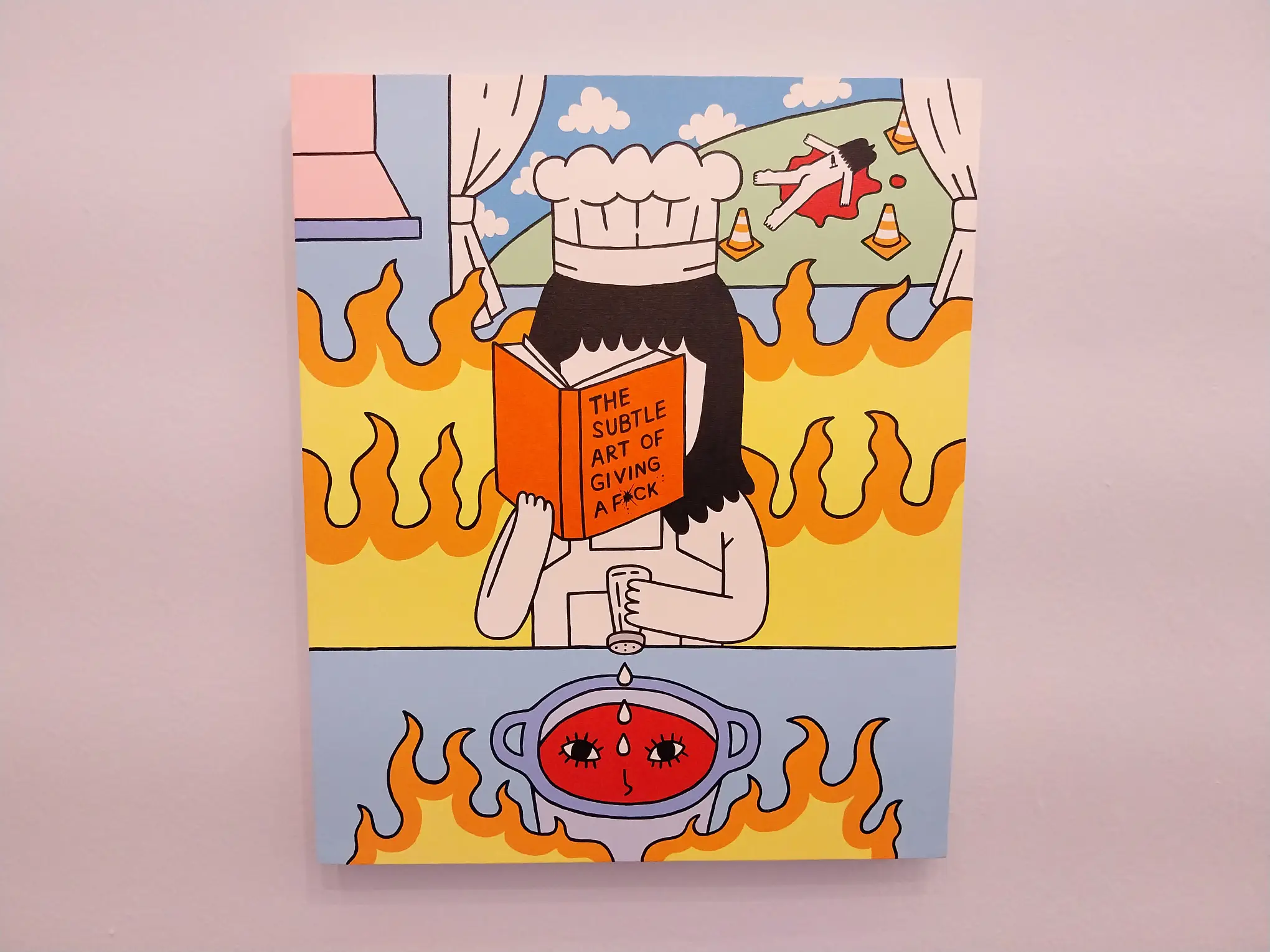
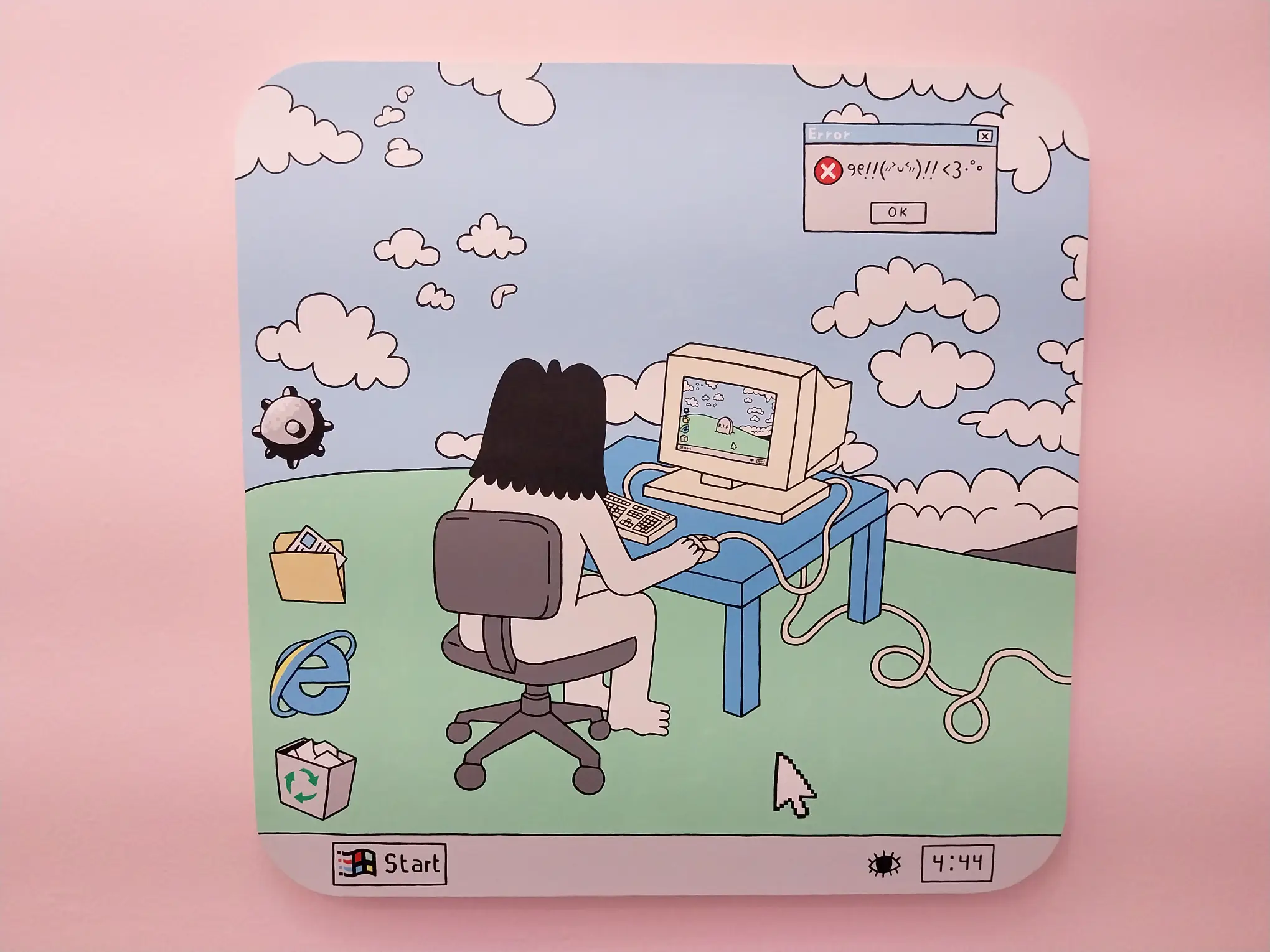
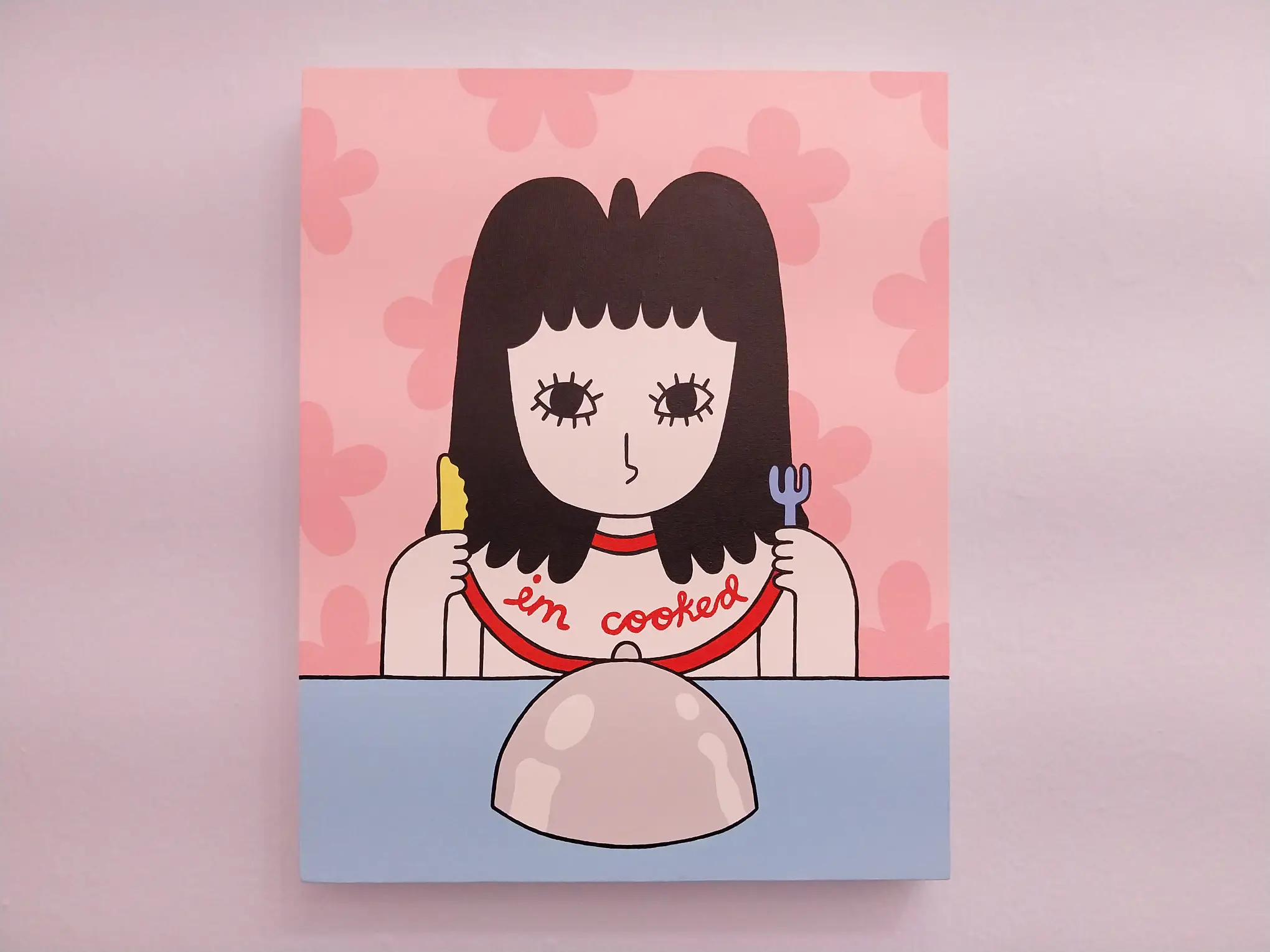
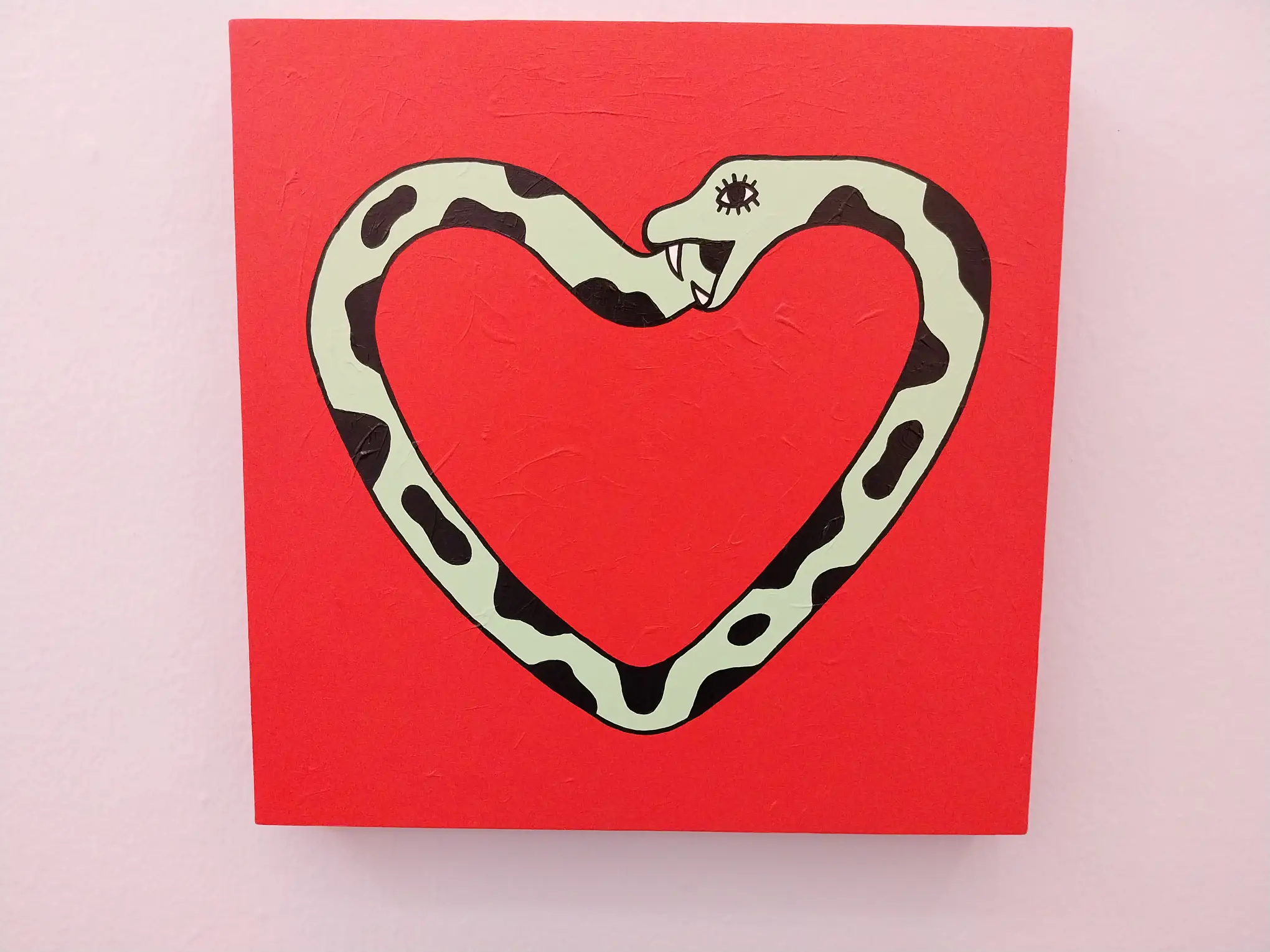
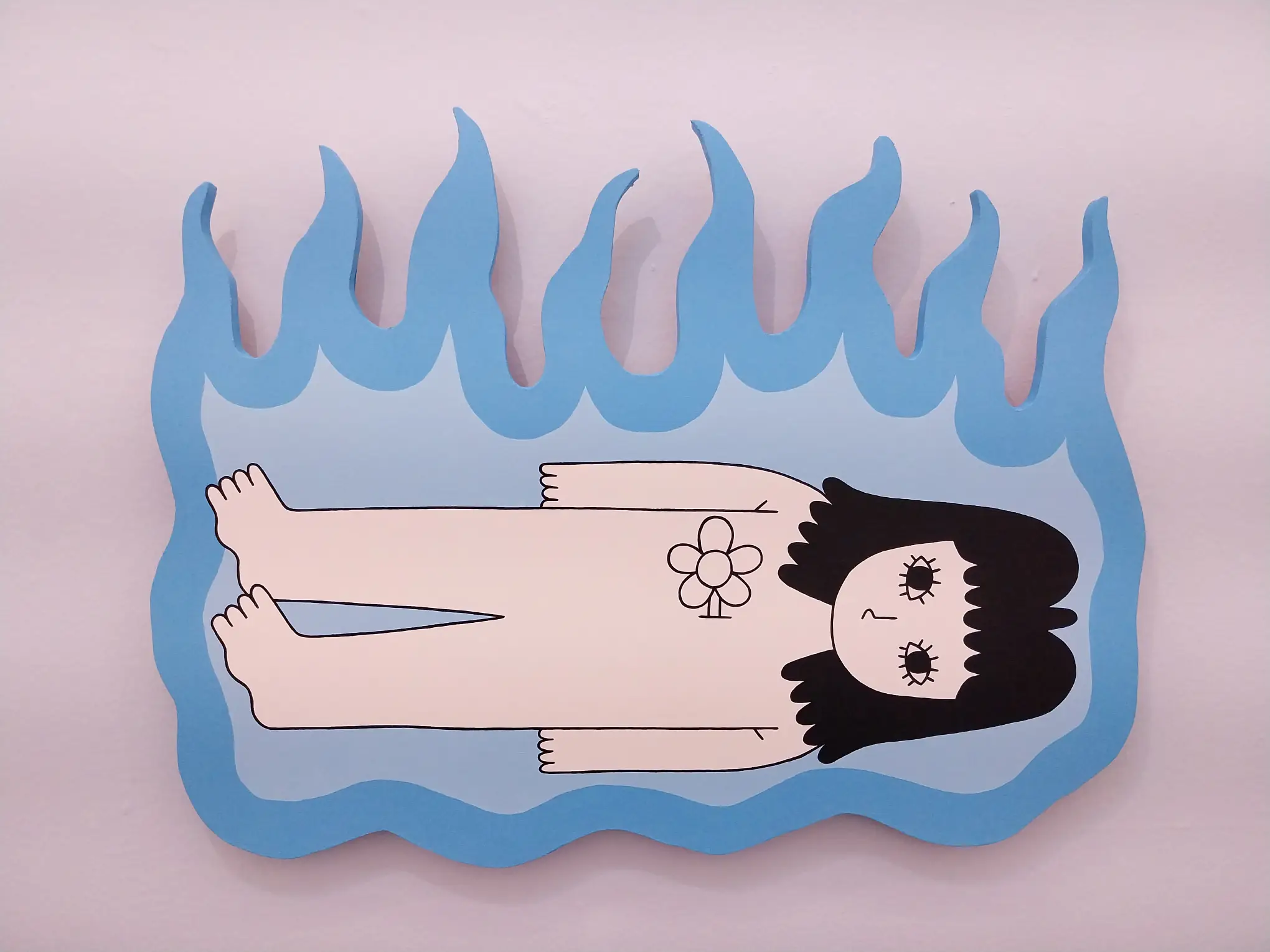
“The message is clear: keep ‘cooking,’” the exhibit write-up said. “We are all a constant work in progress because growth itself is constant. Embrace the unknown, move forward with resilience, and celebrate the ongoing process of creation—in life or in art—no matter how imperfect it may be.”
‘Passing Through Its Opposite’
Janice Liuson-Young’s exhibition at Village Art Gallery feels like an explicitly jagged leap forward in her recent works. The artist, working with a specific swirling style of painted abstraction, elaborates on the form with a sense of fragmentation that reflects turmoil and storminess.
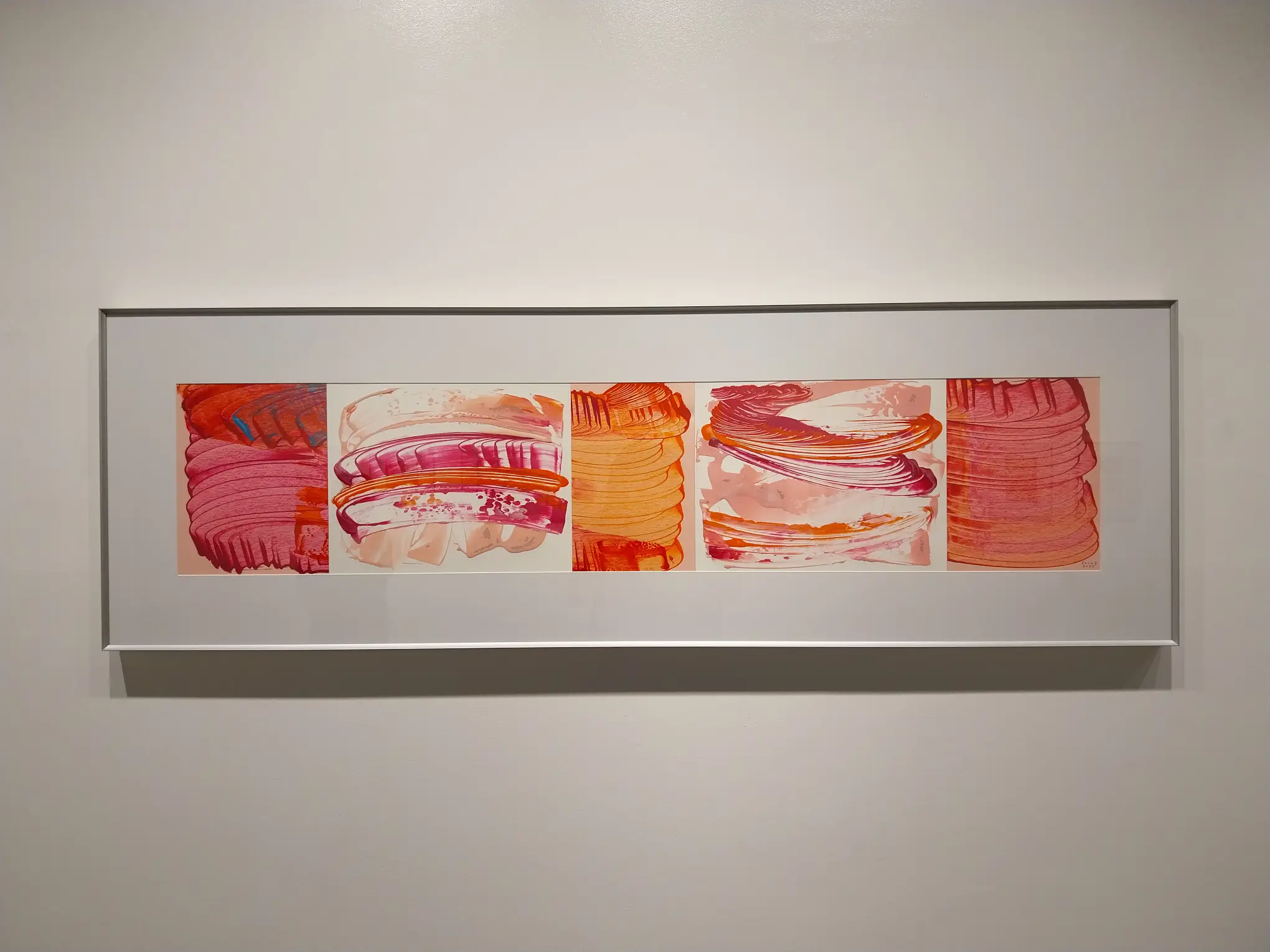
For this form of contemporary art, “jagged” seems like the right word to describe it. It seems like the artist cut out different portions of her already-painted works, and pasted them together, creating an uneven flow that comes across like the jump cuts in a Godard film.
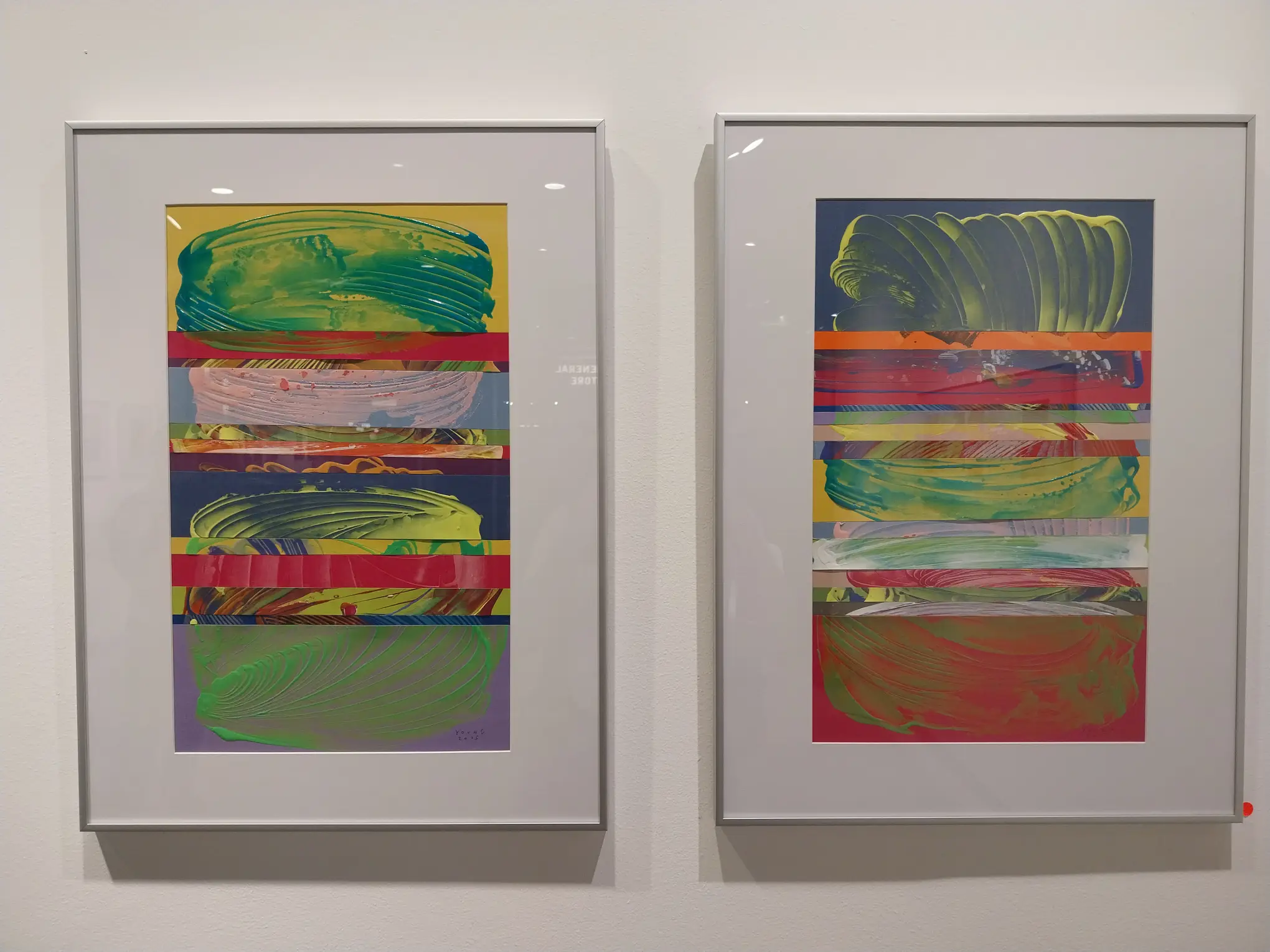
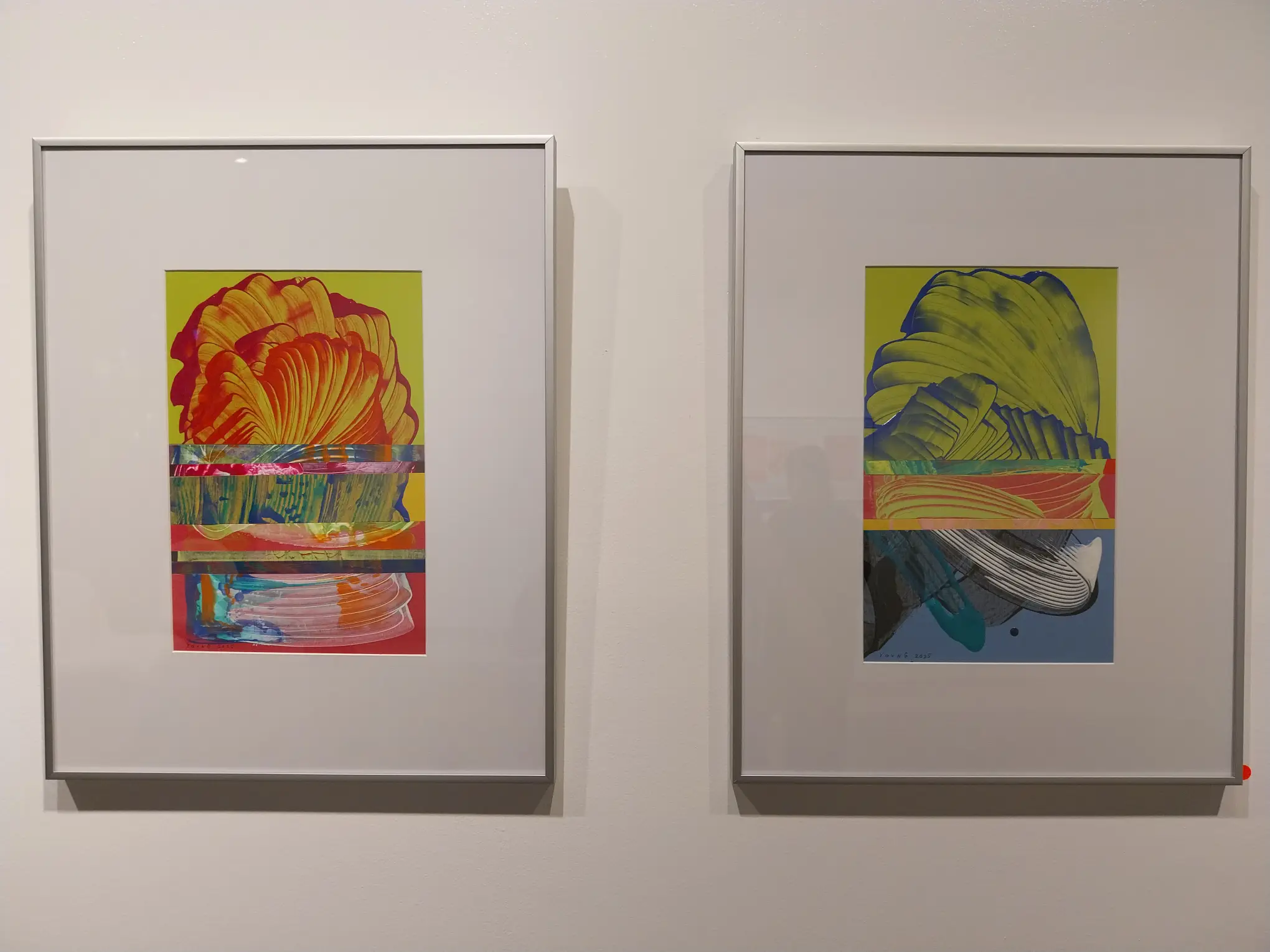
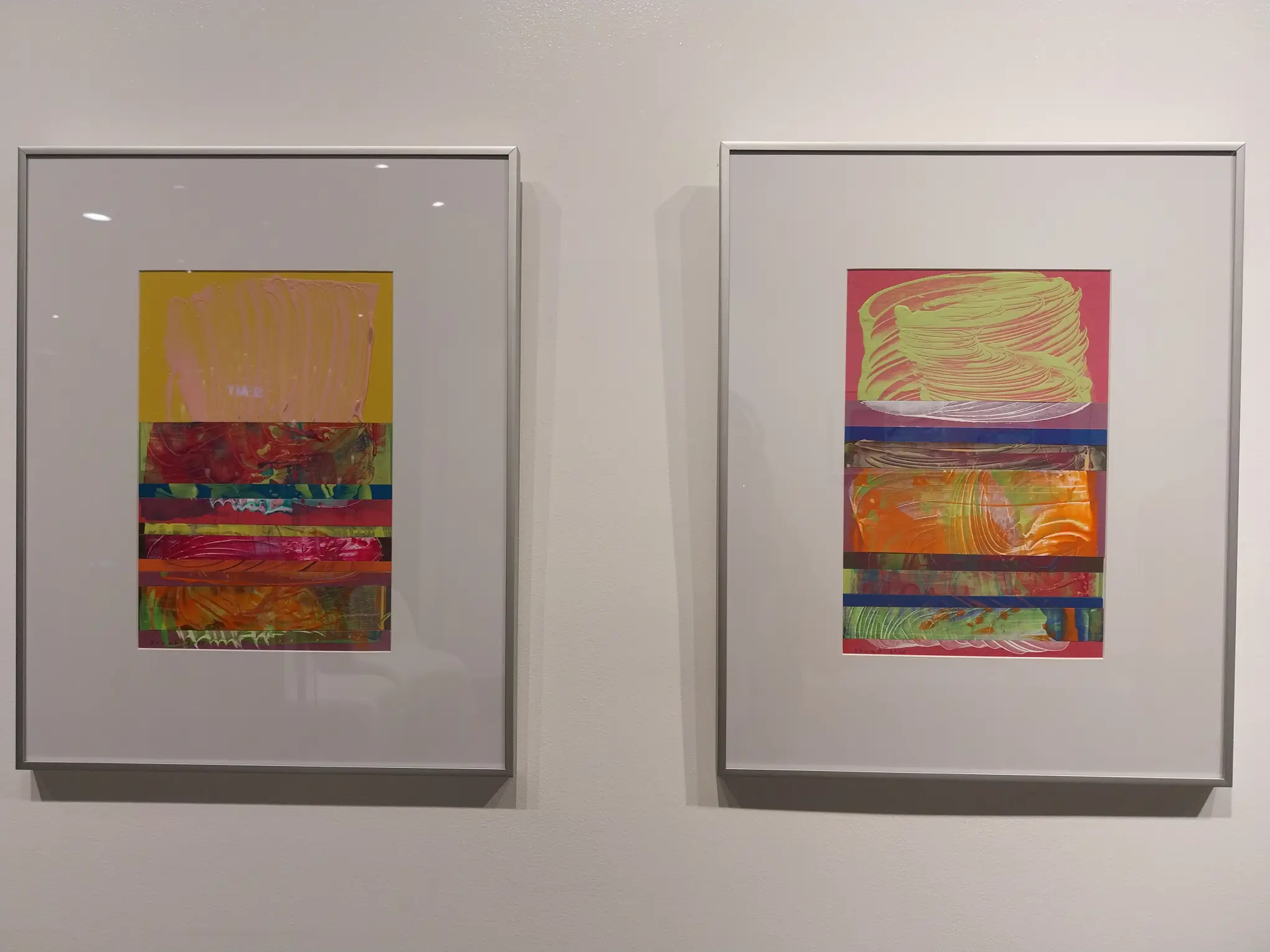
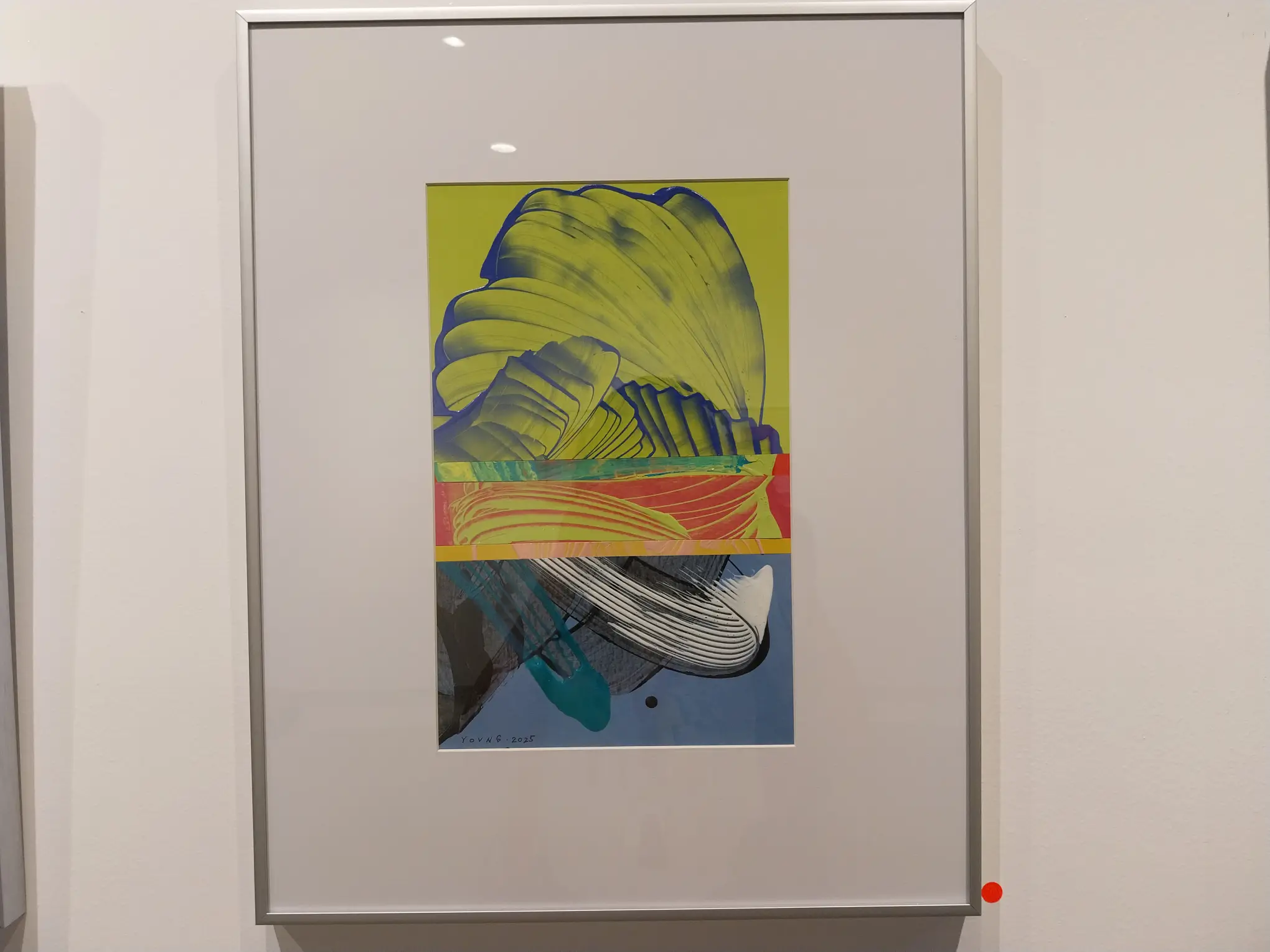
“What might otherwise be dismissed as remnants or discards are reconfigured into elements of renewed meaning, forming composite pictorial fields that meditate on transformation, loss, and recovery,” curator Patrick de Veyra said about the piece.
‘Moving Still’
A constant trend in contemporary art in the Philippines of all forms is capturing stillness and slowness in images. Part of that is the economics of scale: minimalist stillness can be easier to capture on film or on a painting because of how little it utilizes as a medium. But there’s also the reflection of the quiet tumult that exists in the lives of every Filipino today.
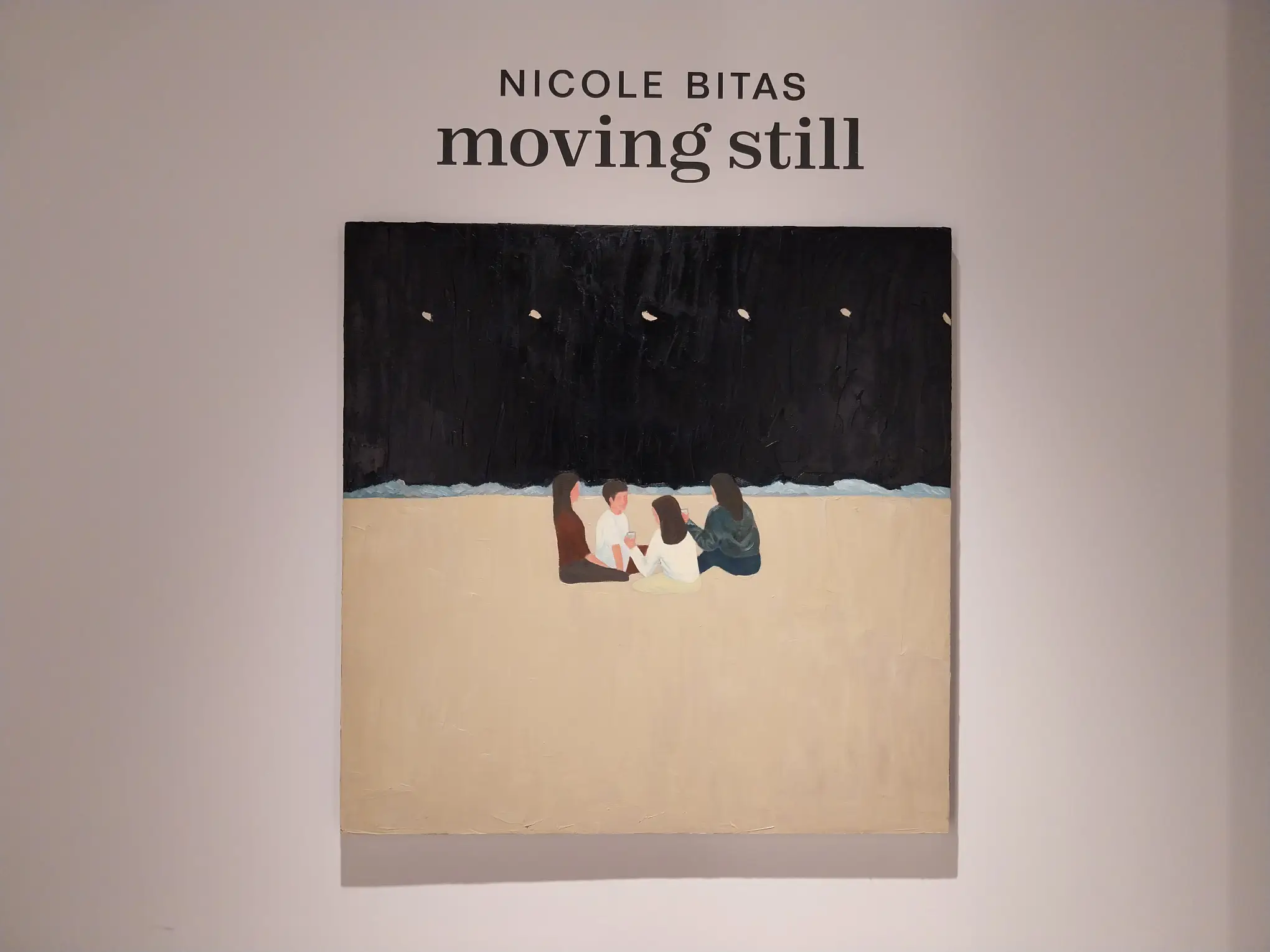
For this exhibition by Nicole Bitas at Galerie Stephanie, the paintings explore the same kind of stillness that a filmmaker like Lav Diaz would depict. Her paintings capture the quiet domestic scenes in between the big ones. It highlighted situations like a contemplative breakfast, waiting around a crowd at a shopping mall, a picnic at a beach, whispering together in discussion of secrets.
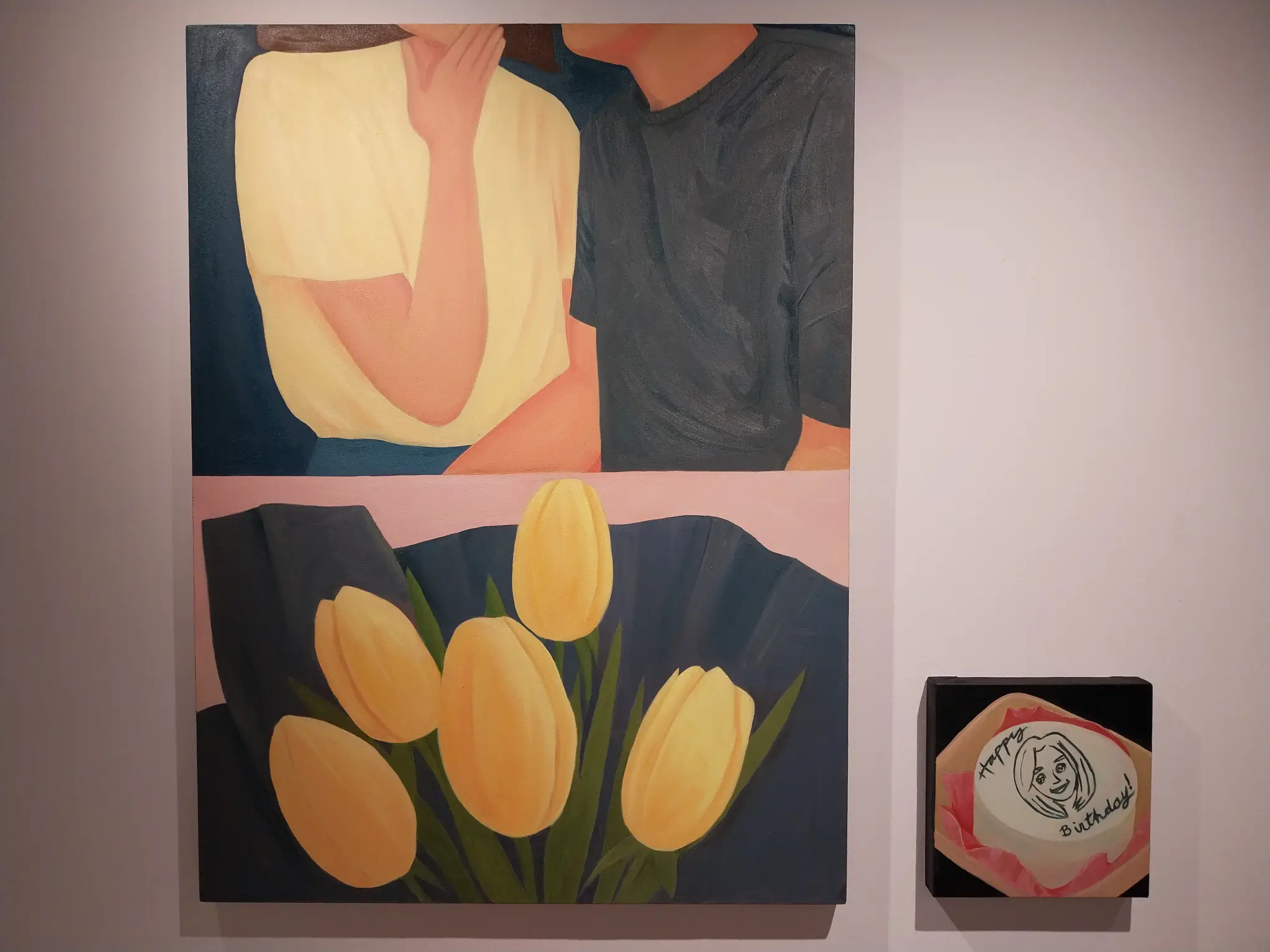
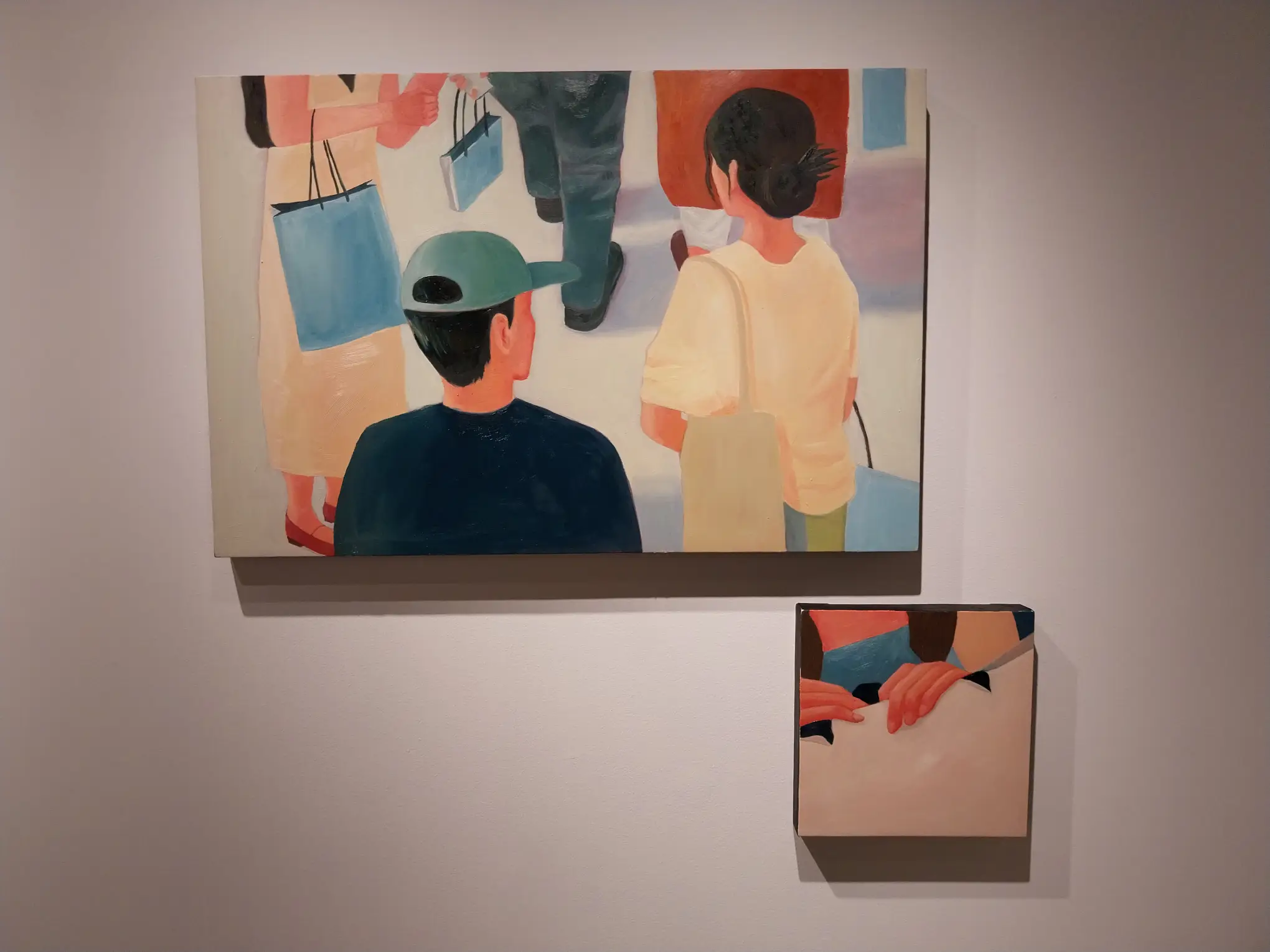
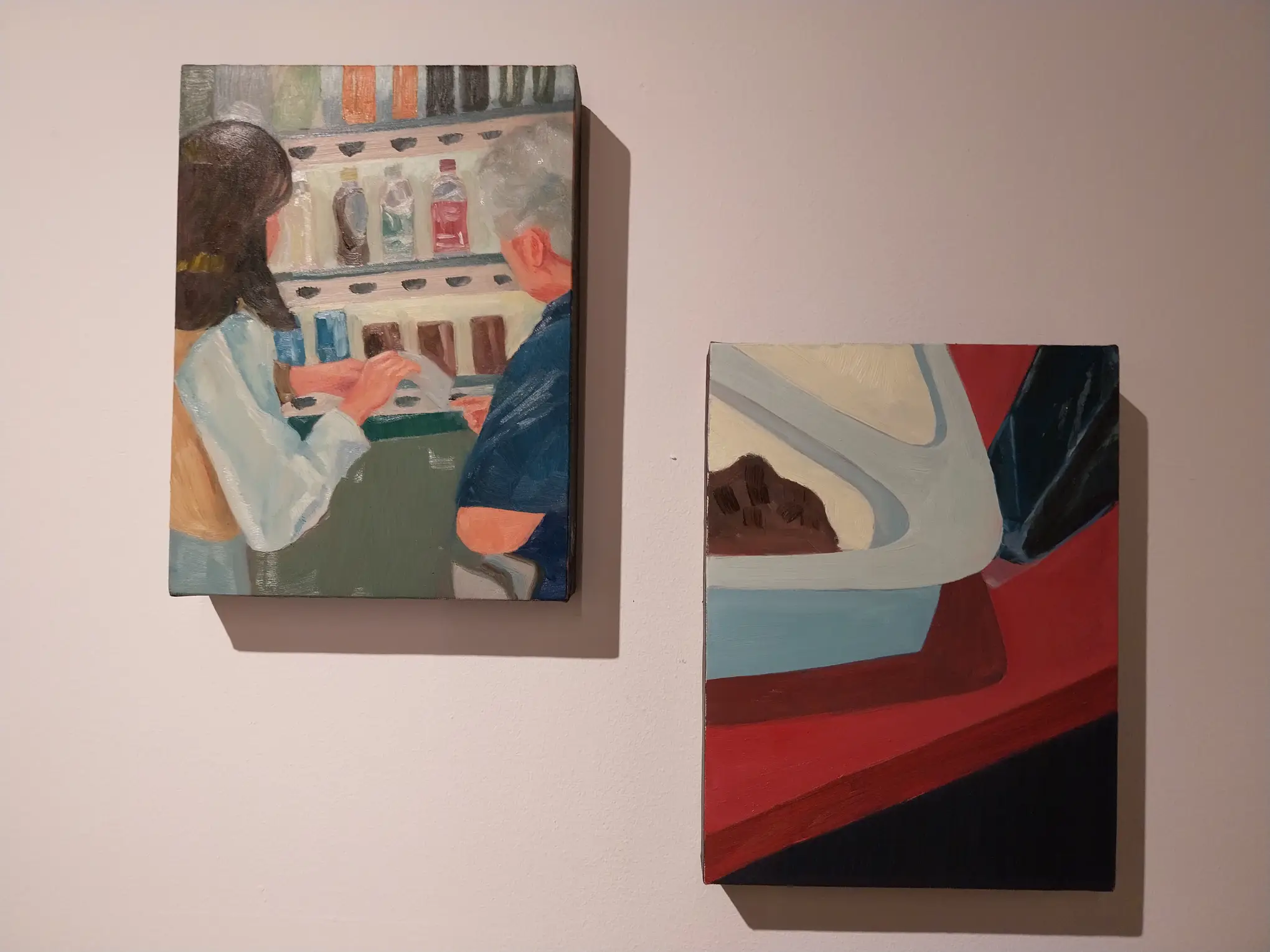
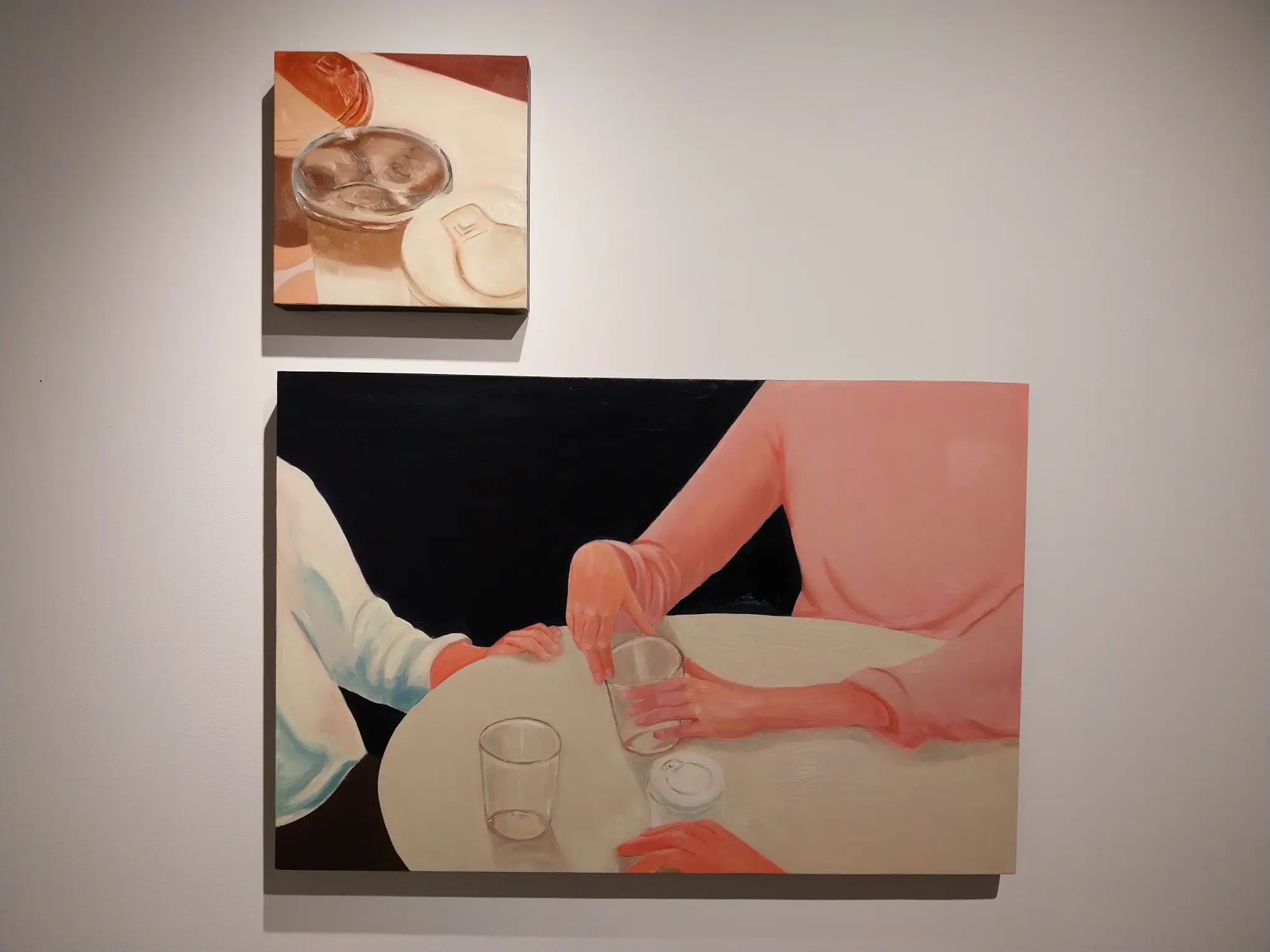
It’s intimate, pointing towards meditation of the so-called “unimportant” moments in our lives. And from there, it finds that those little moments in between the big ones matter just as much in the way we process and evoke the meaning of our lives.
“The expression of care without words spoken just actions taken, the number of cups revealing the presence of another,” the exhibit write-up said. “Small details that build up the story, significant in its existence, solidified by its results.”
‘everything, in time’
For this solo art exhibition by Christian Gonzales, there’s a sense of glory and majesty to be found in the artist’s use of gold and silver in their abstract paintings. Shown at Art Camp Gallery in Makati City, these artworks by Gonzales have an almost animalistic urge within them, finding a rhythm with the patterns on the canvas.
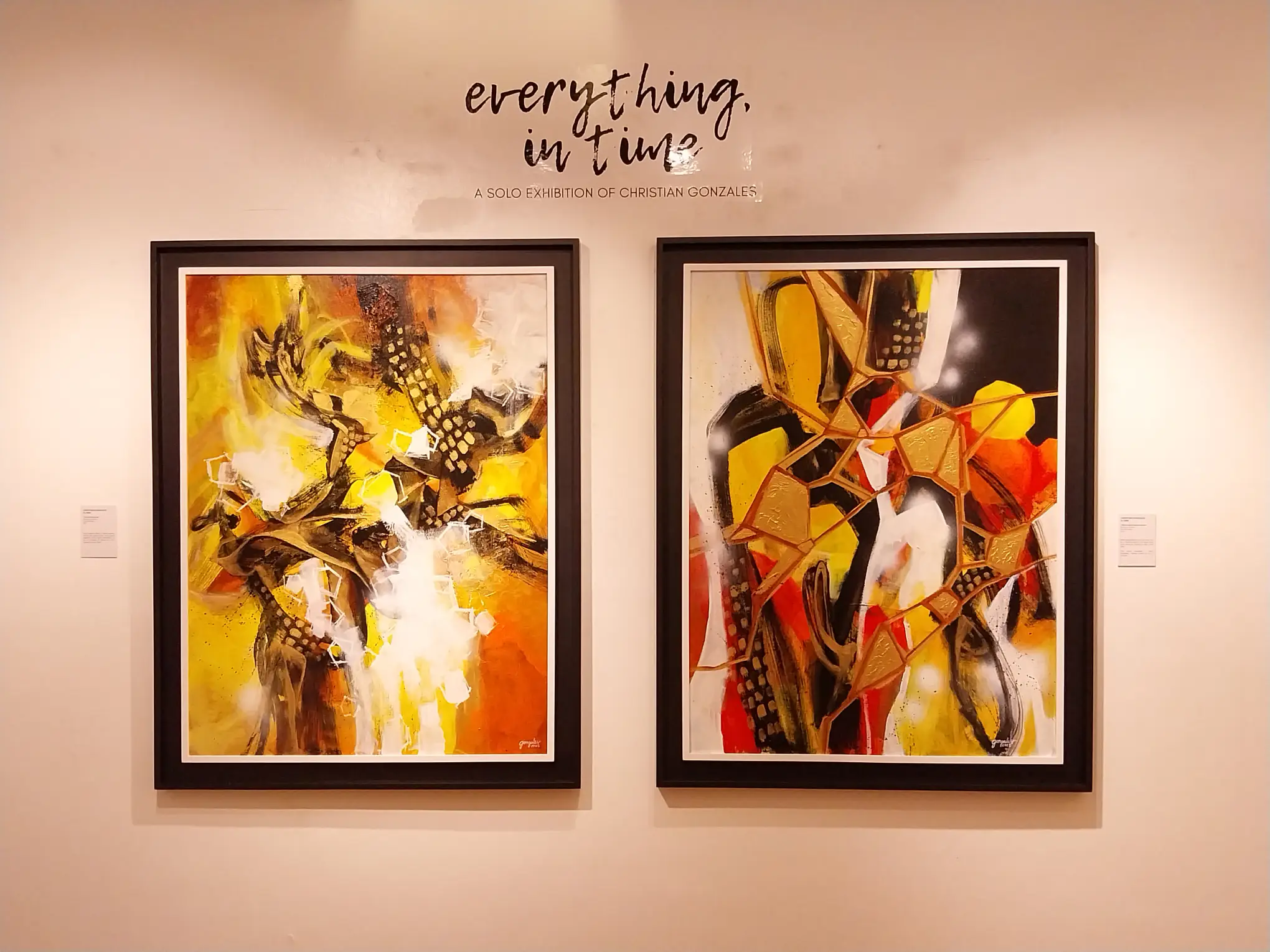
Gonzales, as an abstract painter, utilizes these patterns as a way of depicting time as a concept. The usage of such vivid colors is supposed to mimic different portions of the sky in their core essence and splendor—an abstract, contemporary art take on something akin to an Amorsolo painting.
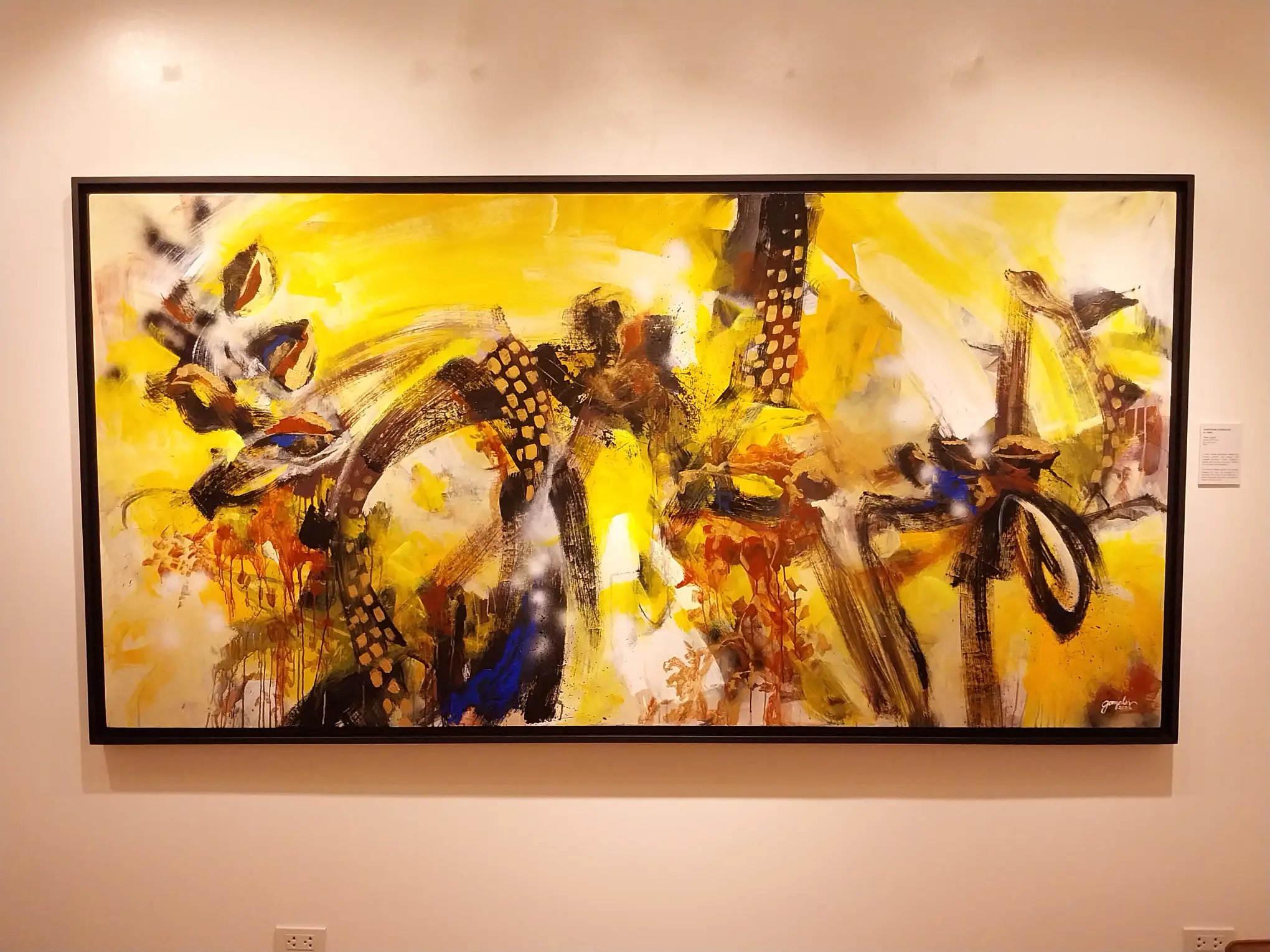
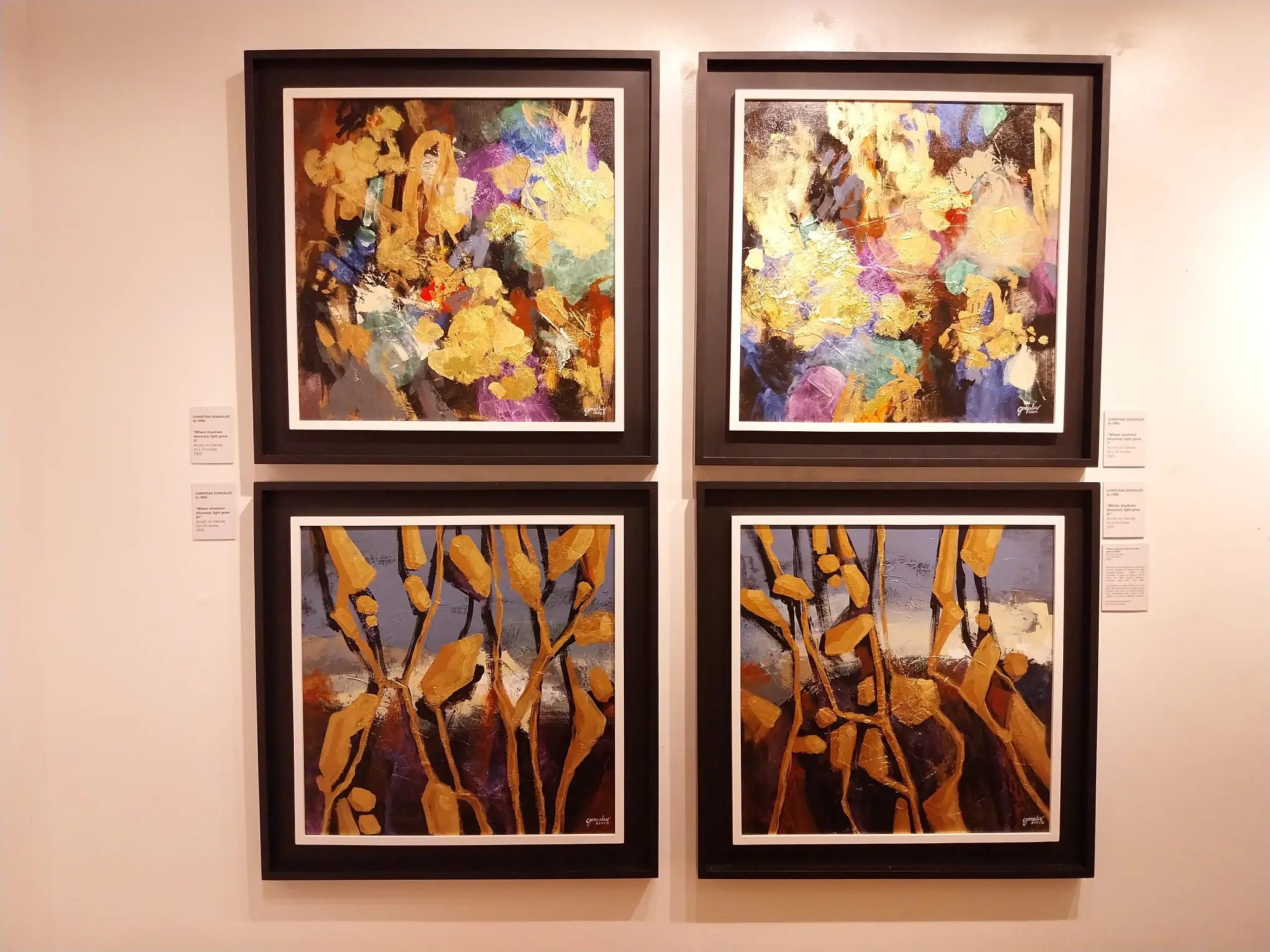
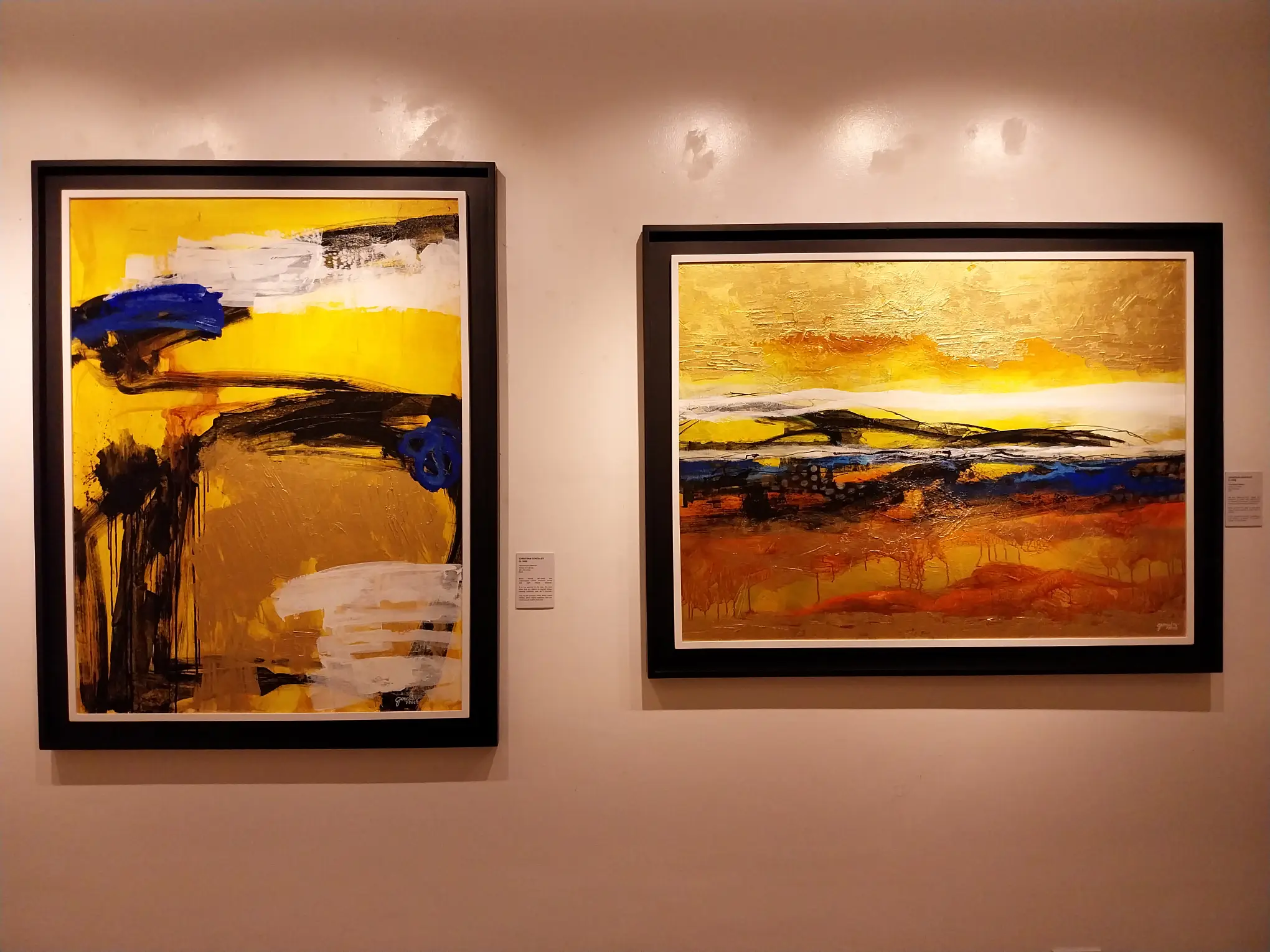
“Each work feels like a moment held in light. Whether it’s the glow of morning, the heat of midday, or the gentle fade of dusk, Gonzales captures time as a feeling,” the exhibit write-up said. “There’s no rush here—only presence, patience, and a quiet kind of beauty.”
‘Lives of the Toll Takers’
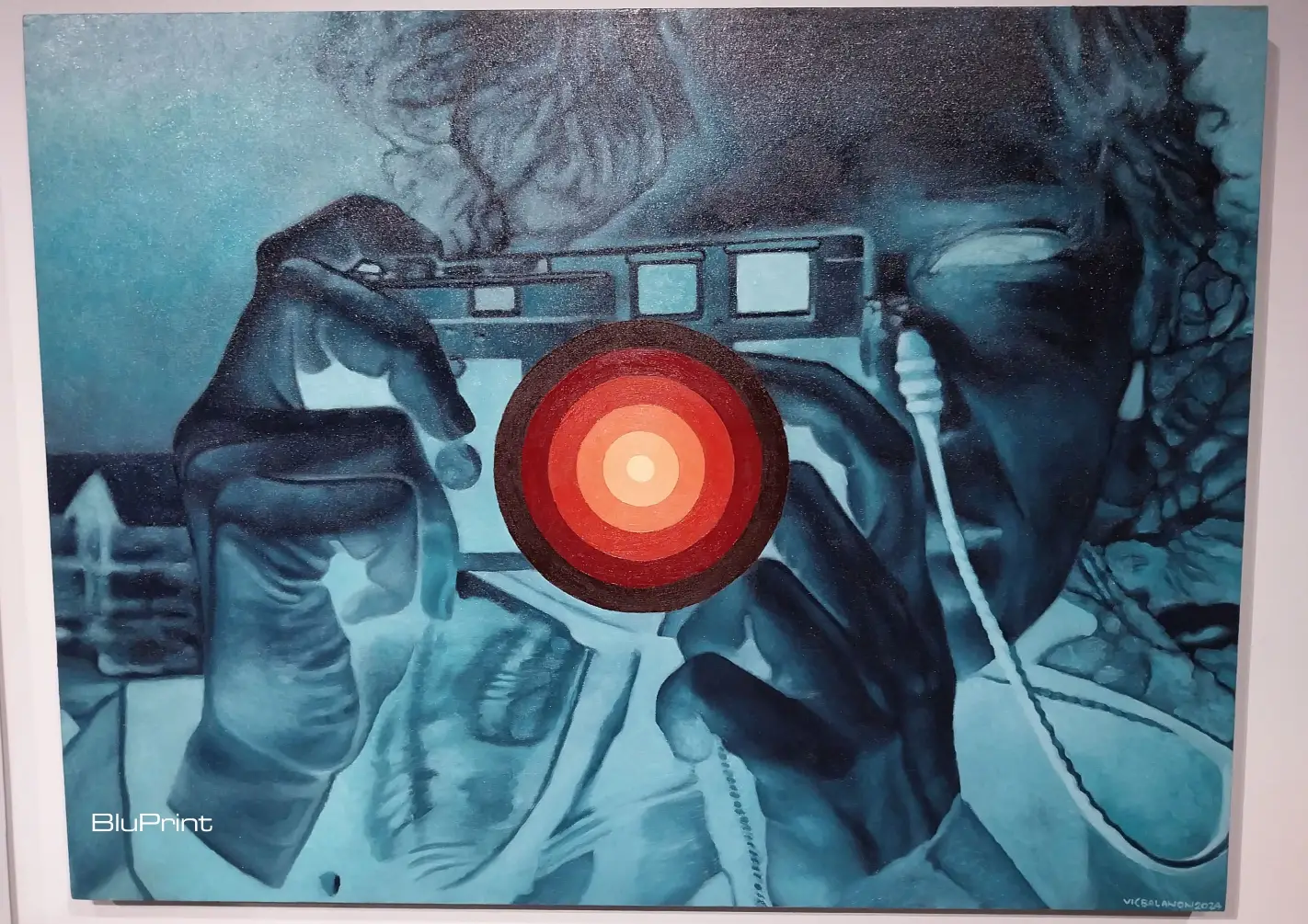
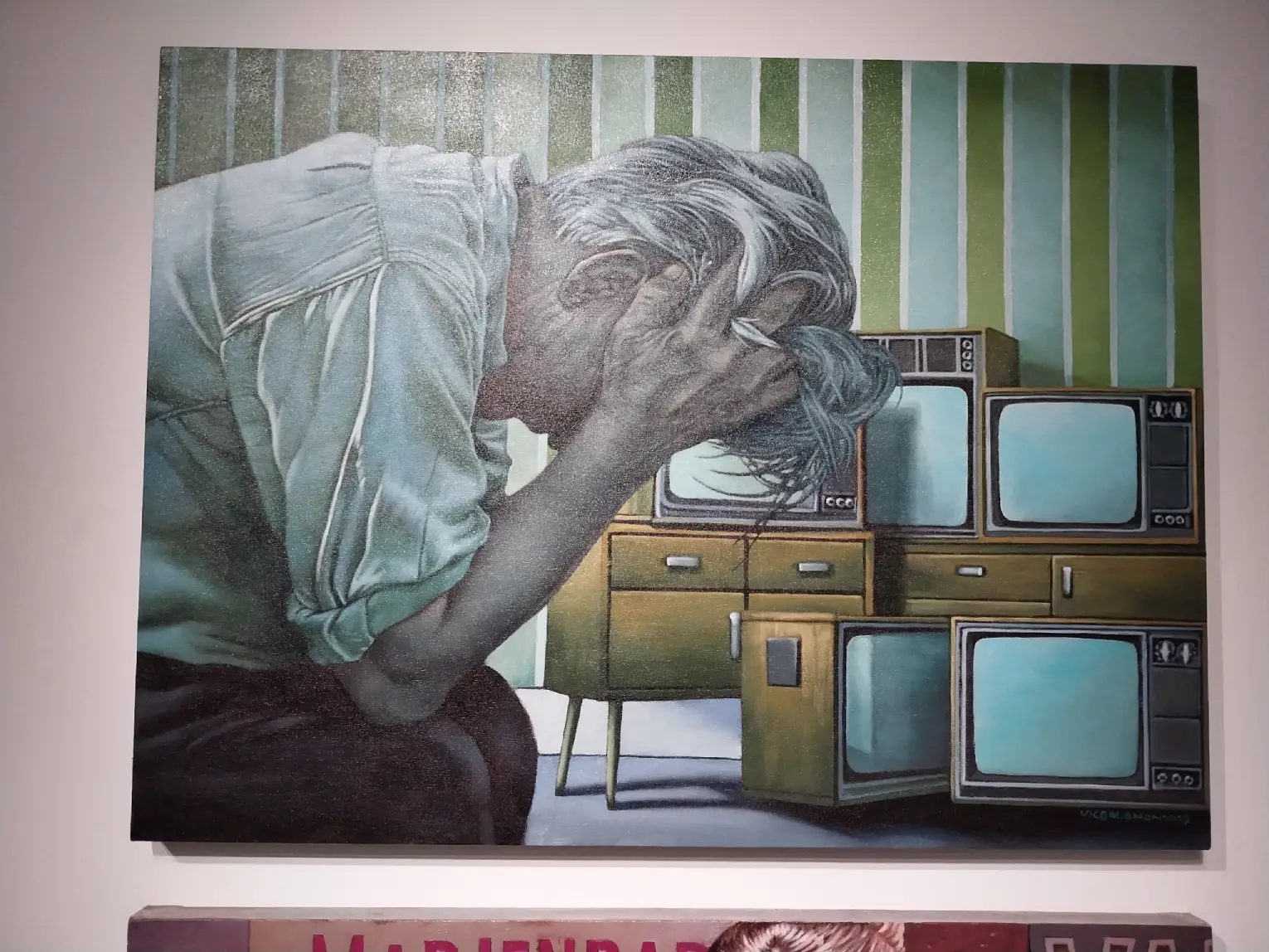
Victor Balanon’s exhibition at Modeka Art works with a specific stylistic idea that mixes different influences from across time: neo-noir, ‘60s French New Wave, cubism, and surrealism. These seemingly-disparate influences mix together for a consciously cinematic look that commentates on our society today.
Here, we see different characters in strong, emotional moments, as if coping with a world that’s leaving them behind. Two different paintings, for example, portray their respective characters in the midst of a crying fit while surrounded by televisions and film advertisements—hallmarks of entertainment (and distraction) in society.
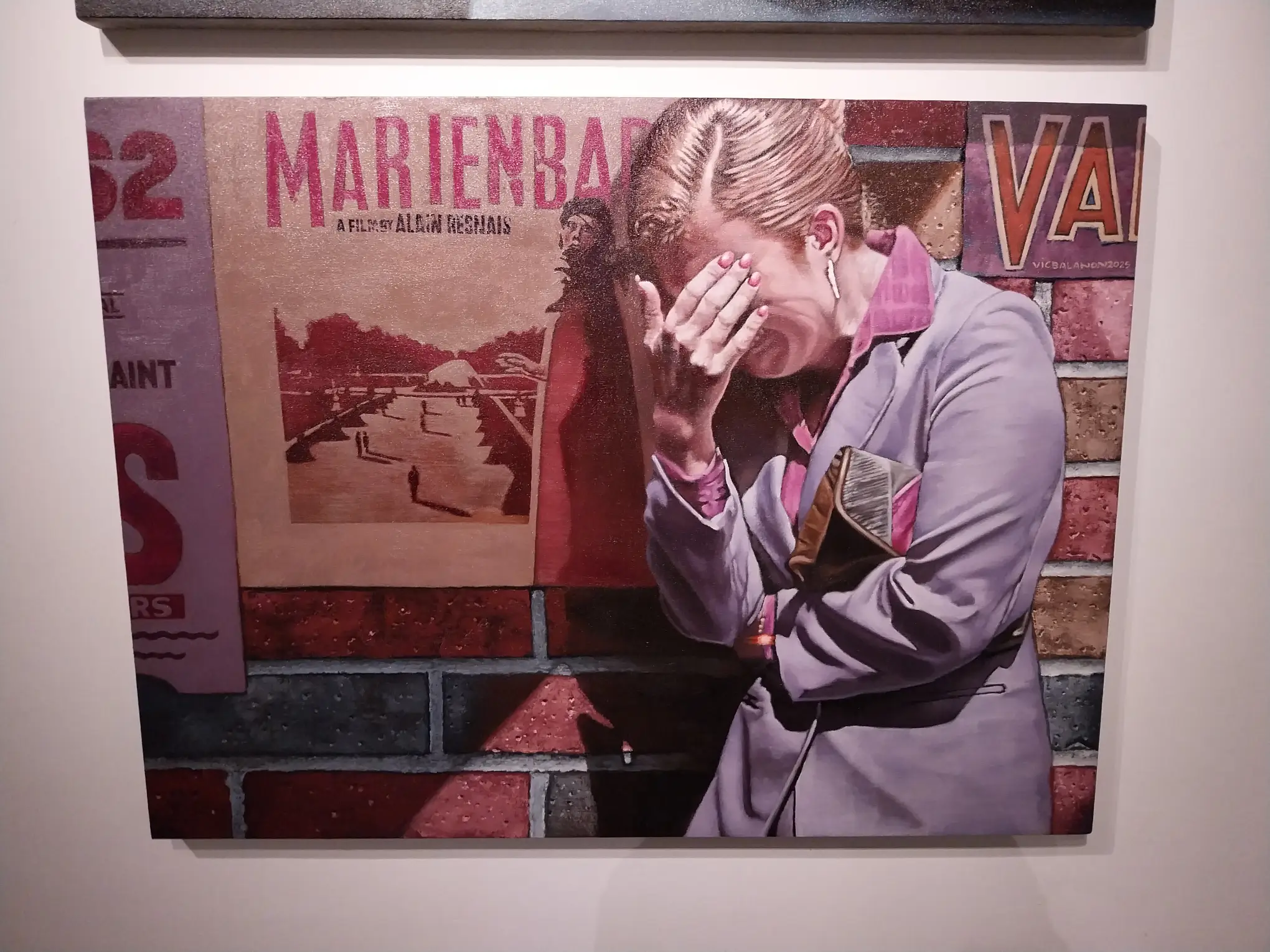
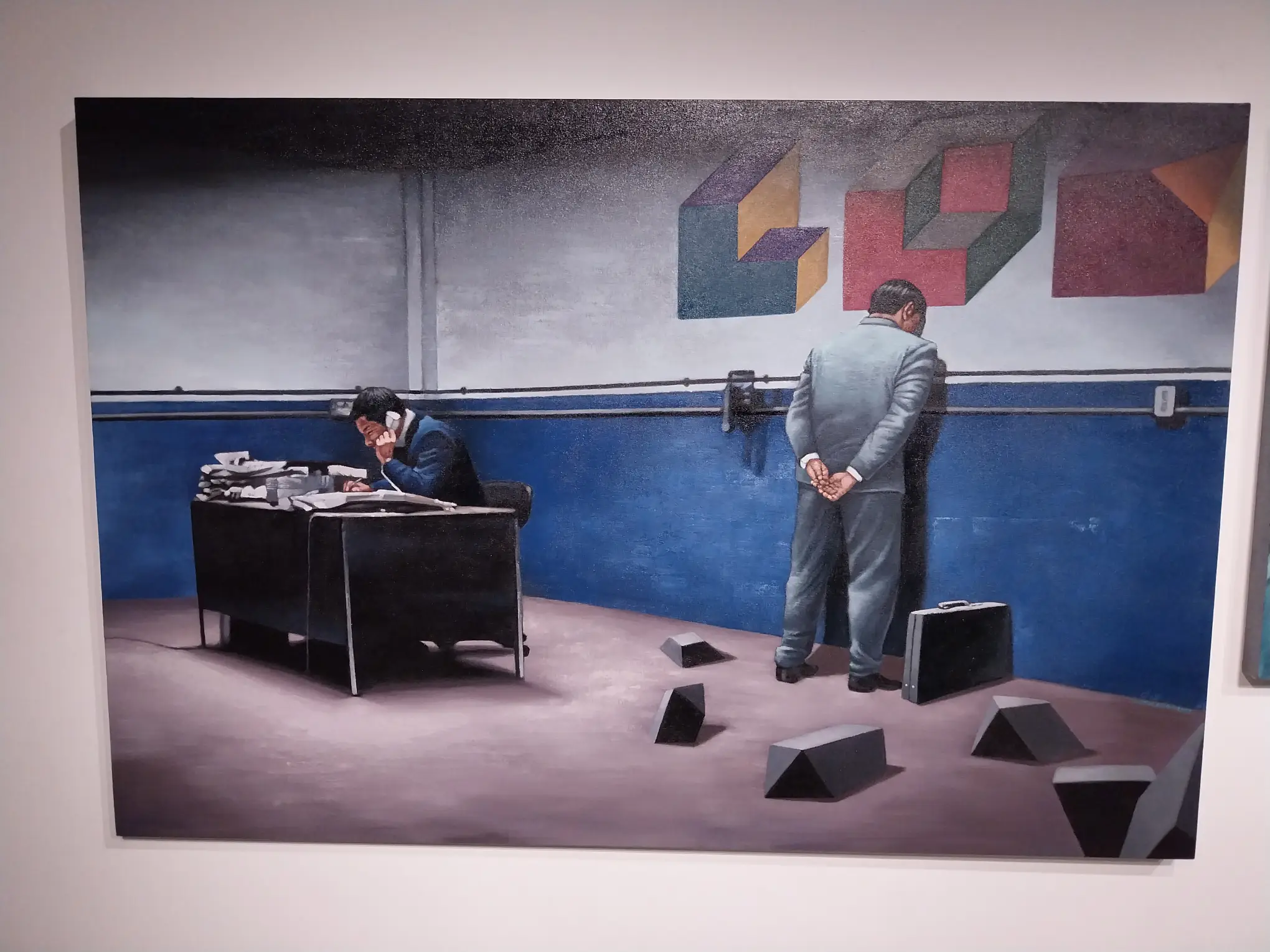
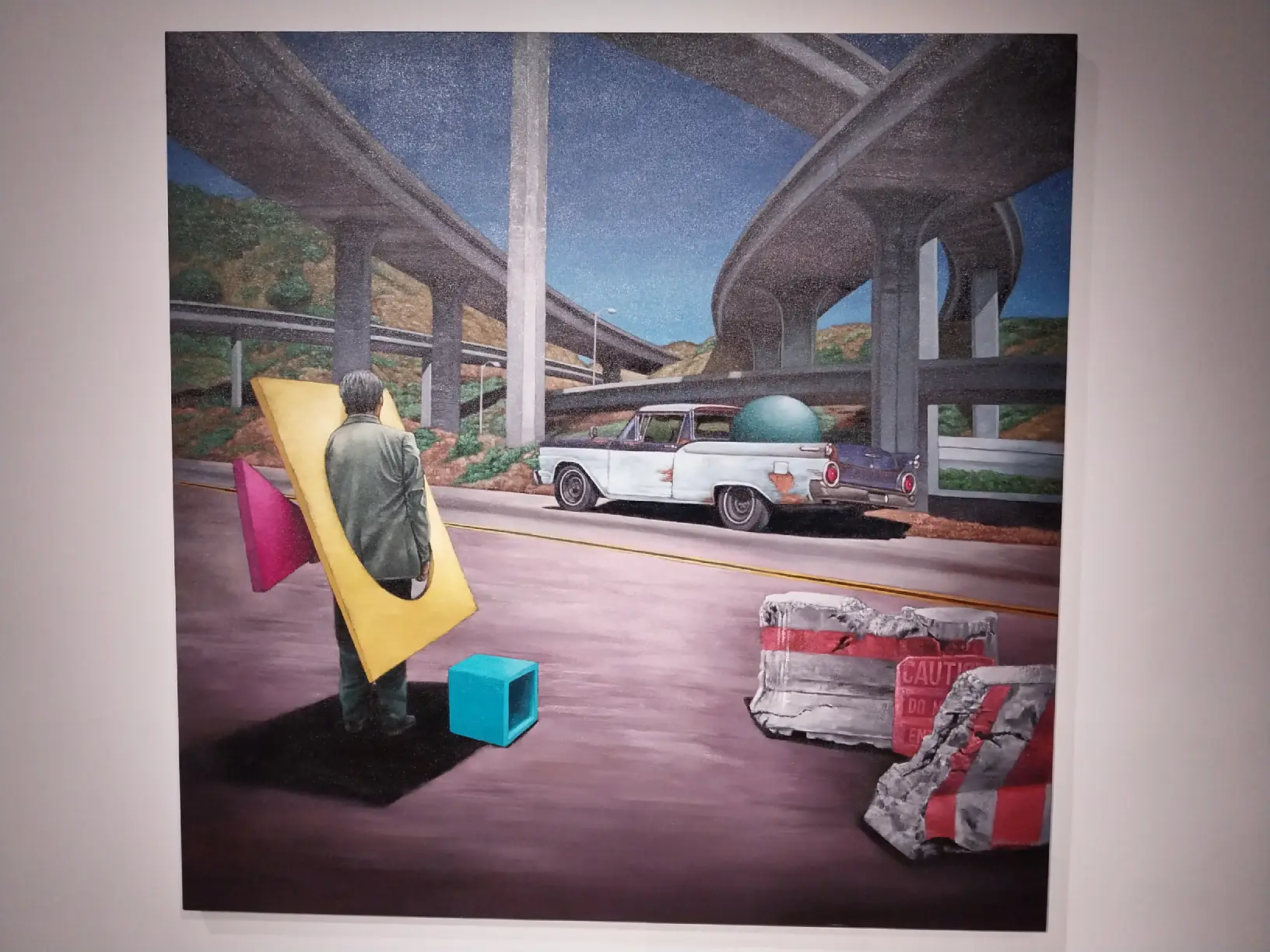
Others are more abstract in their rumination. Two paintings contain a man in a suit surrounded by, at times, concrete versions of basic shapes as they seem to look emotively at the trappings of the office and highways. One painting that stands out is an infrared-esque image of a person taking a photograph.
Altogether, it seems to create a portrait of a society adrift. Where do we go when the meaning of life seems to have been drained in favor of consumerism and a work-centric existence? What does it mean when our world is so cut off from the reality of our pains that we seem to drift into fantasy instead?
‘Parallax, A Trace’
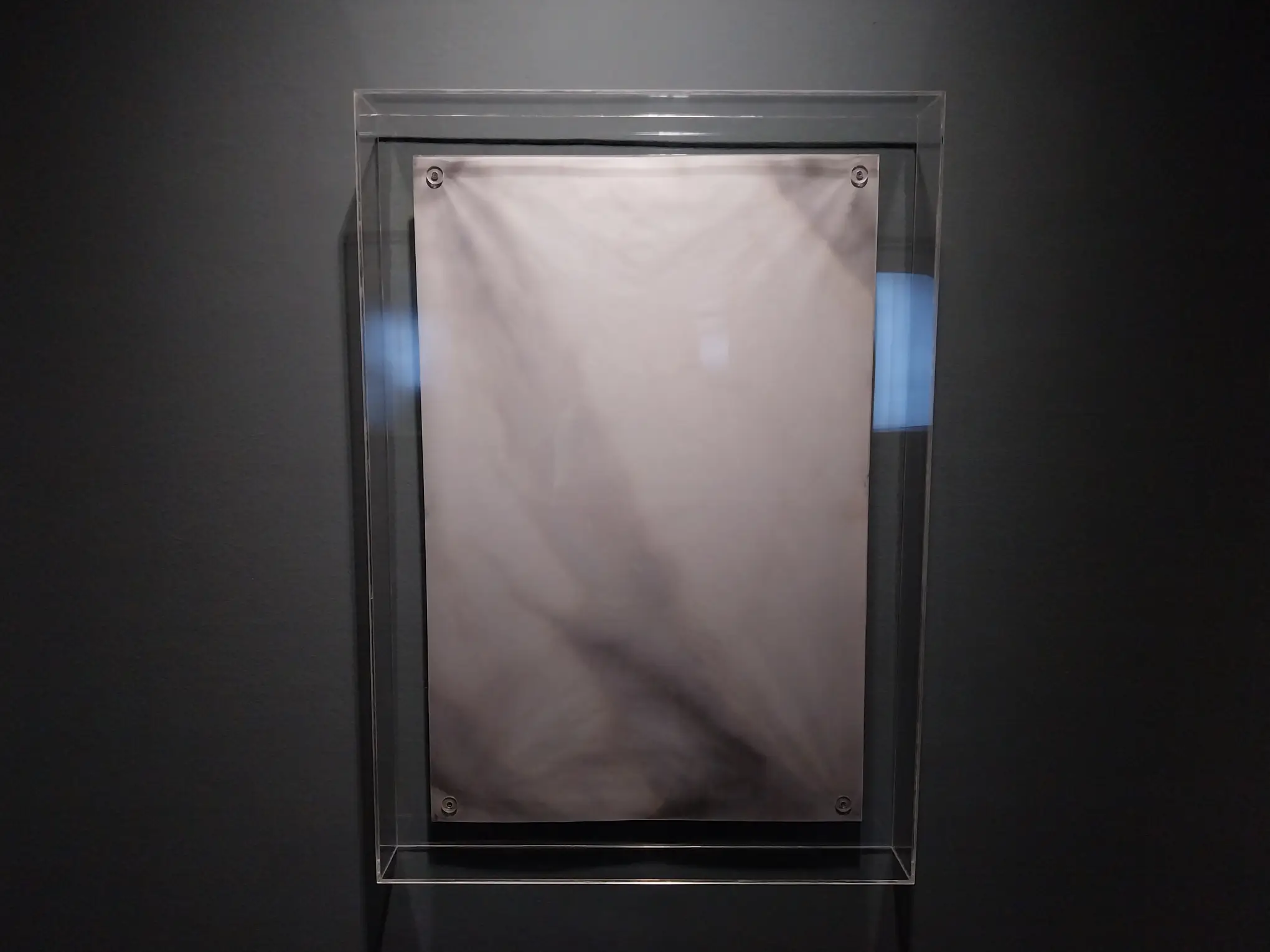
For Rhaz Oriente’s exhibition in MO_Space, there’s a sense of melancholy in the emotive use of lights and projection for the works. The images here are smokey, warped, and blurred, whether it’s the wall projection of different environments, or the lightboxes with their ghostlike appearance.
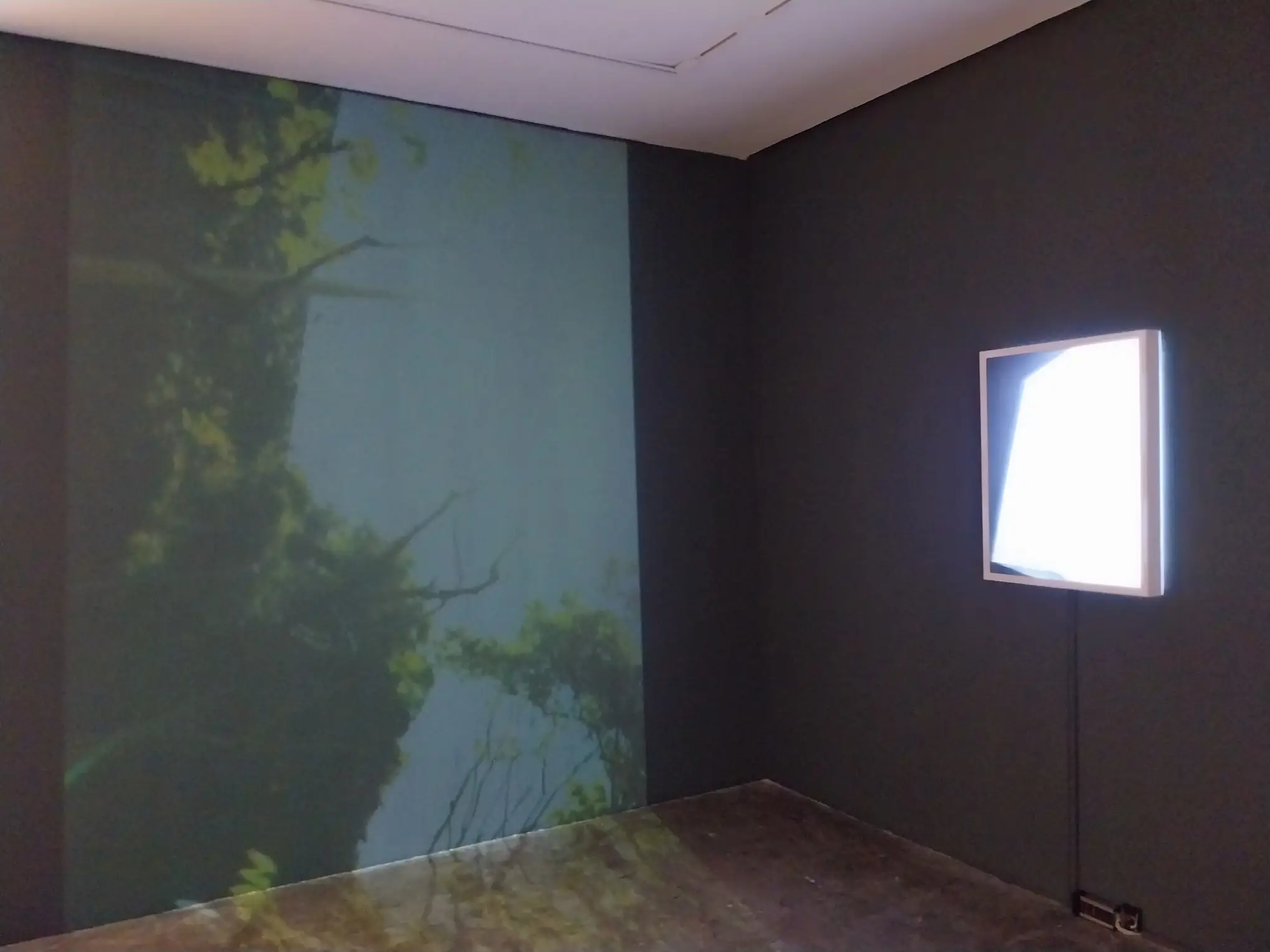
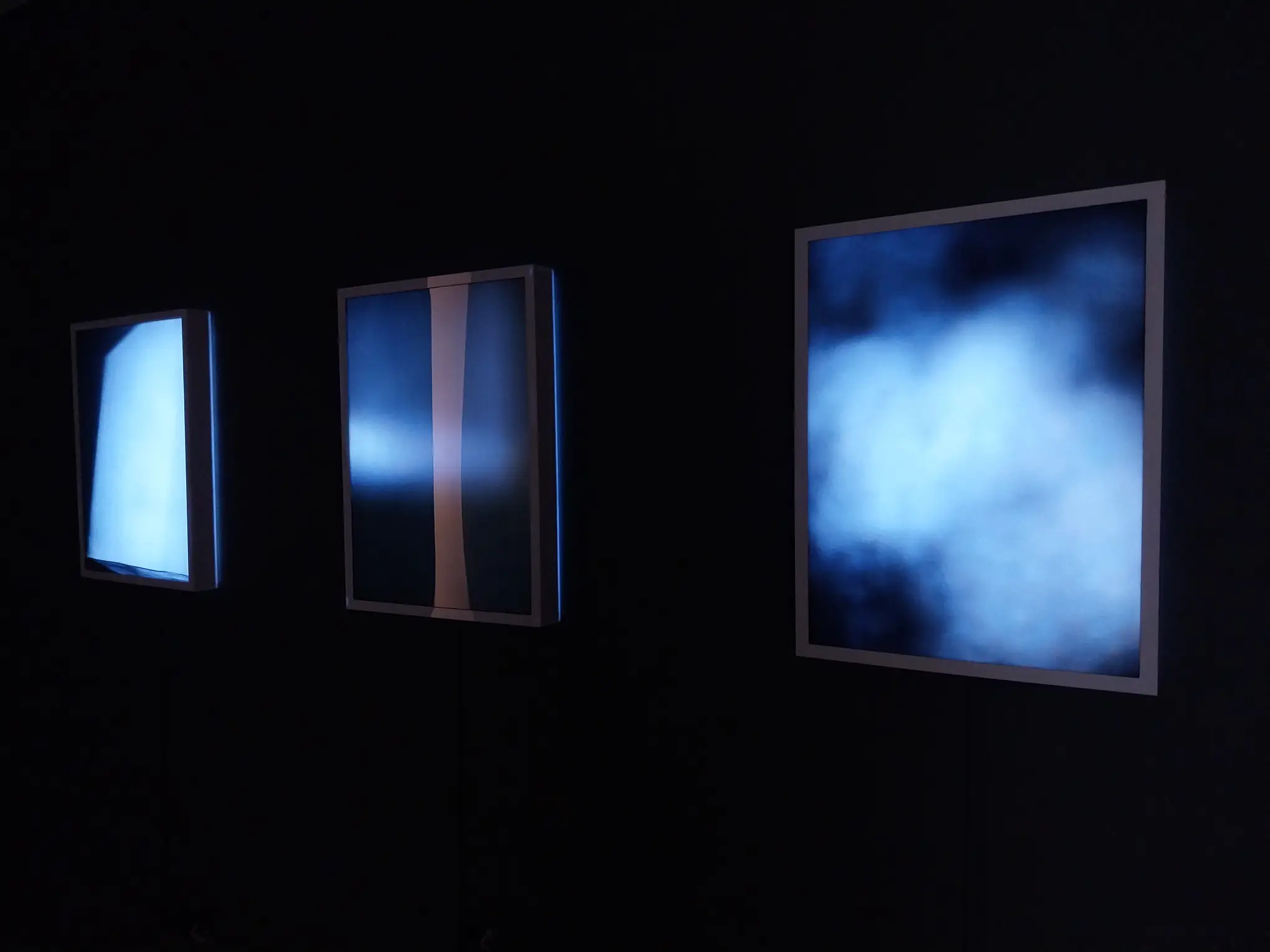
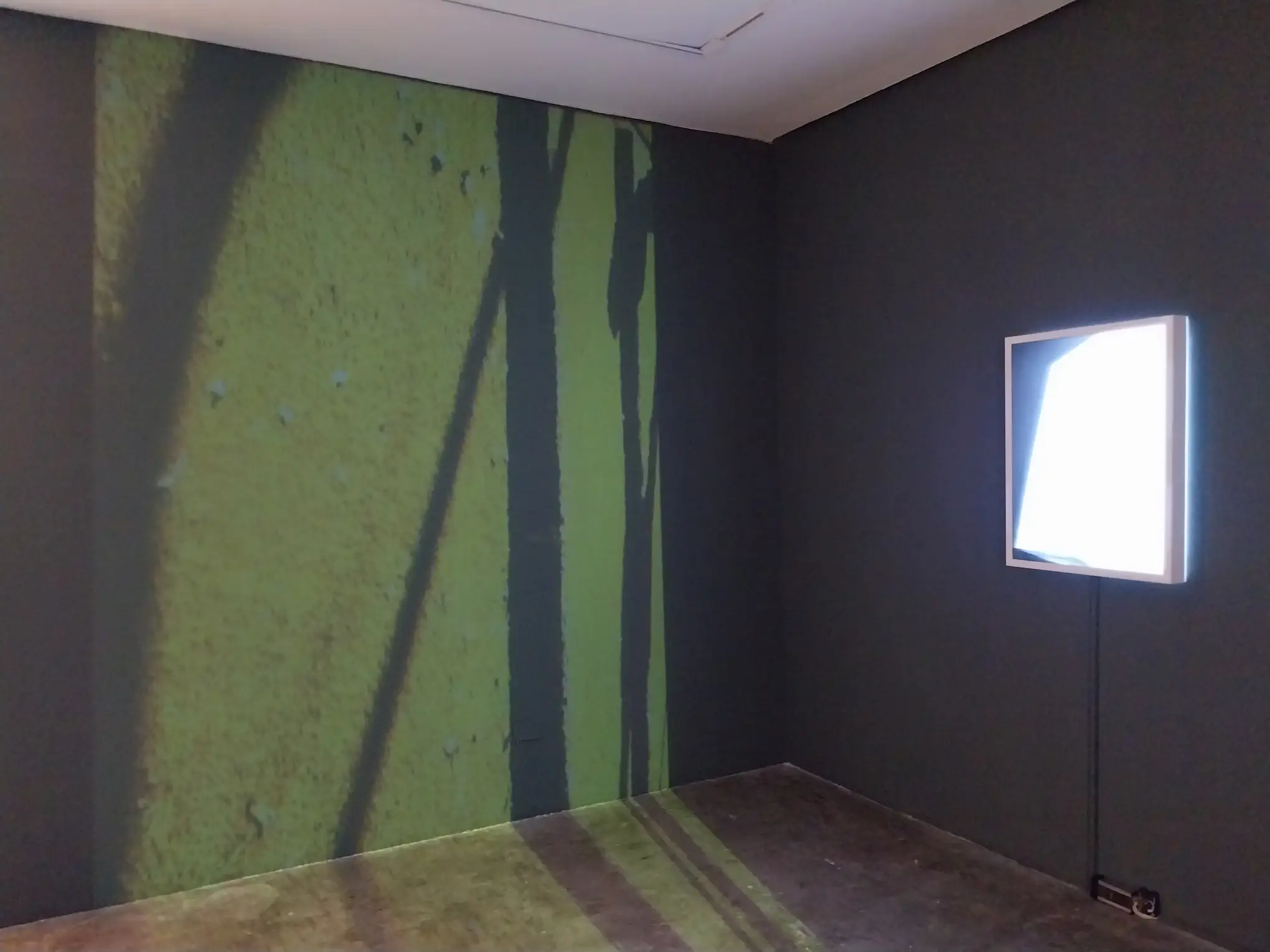
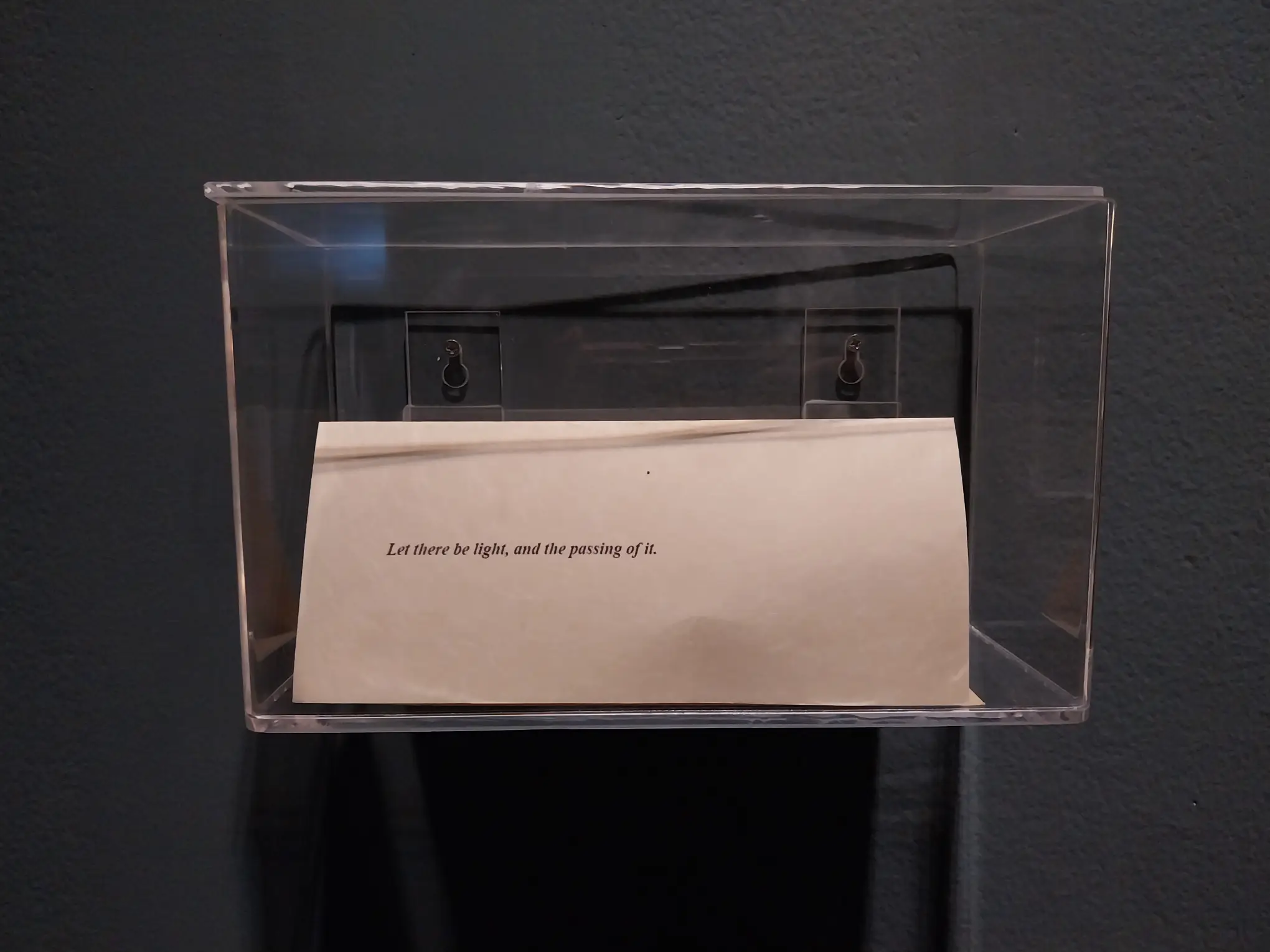
The most emotional part, however, is the poetry included in the exhibit. Here, we get fragmented poetry that ruminates on our perspectives of light, its shifting roles depending on the context—happiness, loss, the past, the future, reality, and artificiality.
Some of the poems are put in a clear box, something to be seen, but never touched, reflecting the strange artificiality of our own experiences with the world today. “She parallels the intangibility and ubiquity of illumination in art—being a predominantly visual form—with the frailty of memory,” the exhibit write-up said.
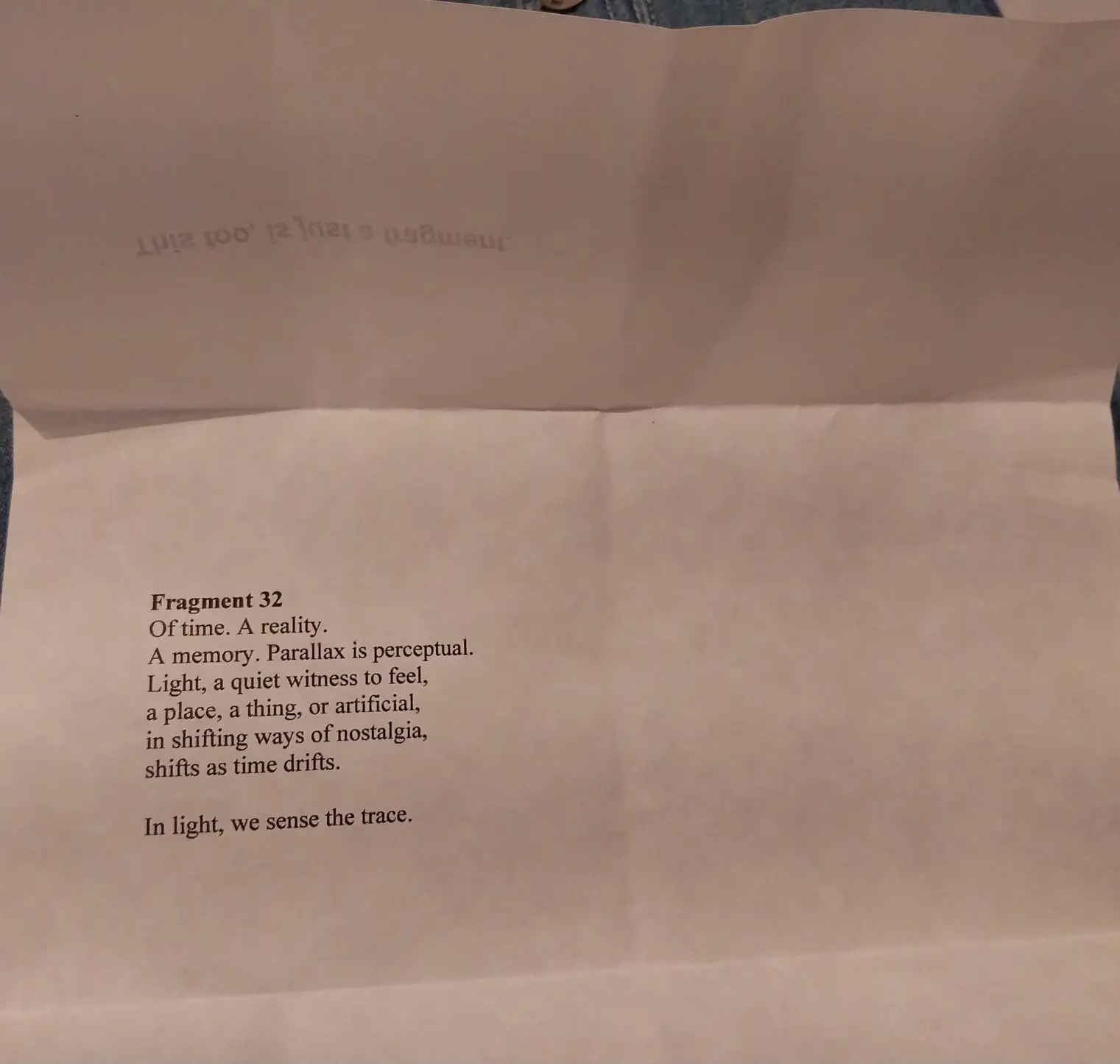
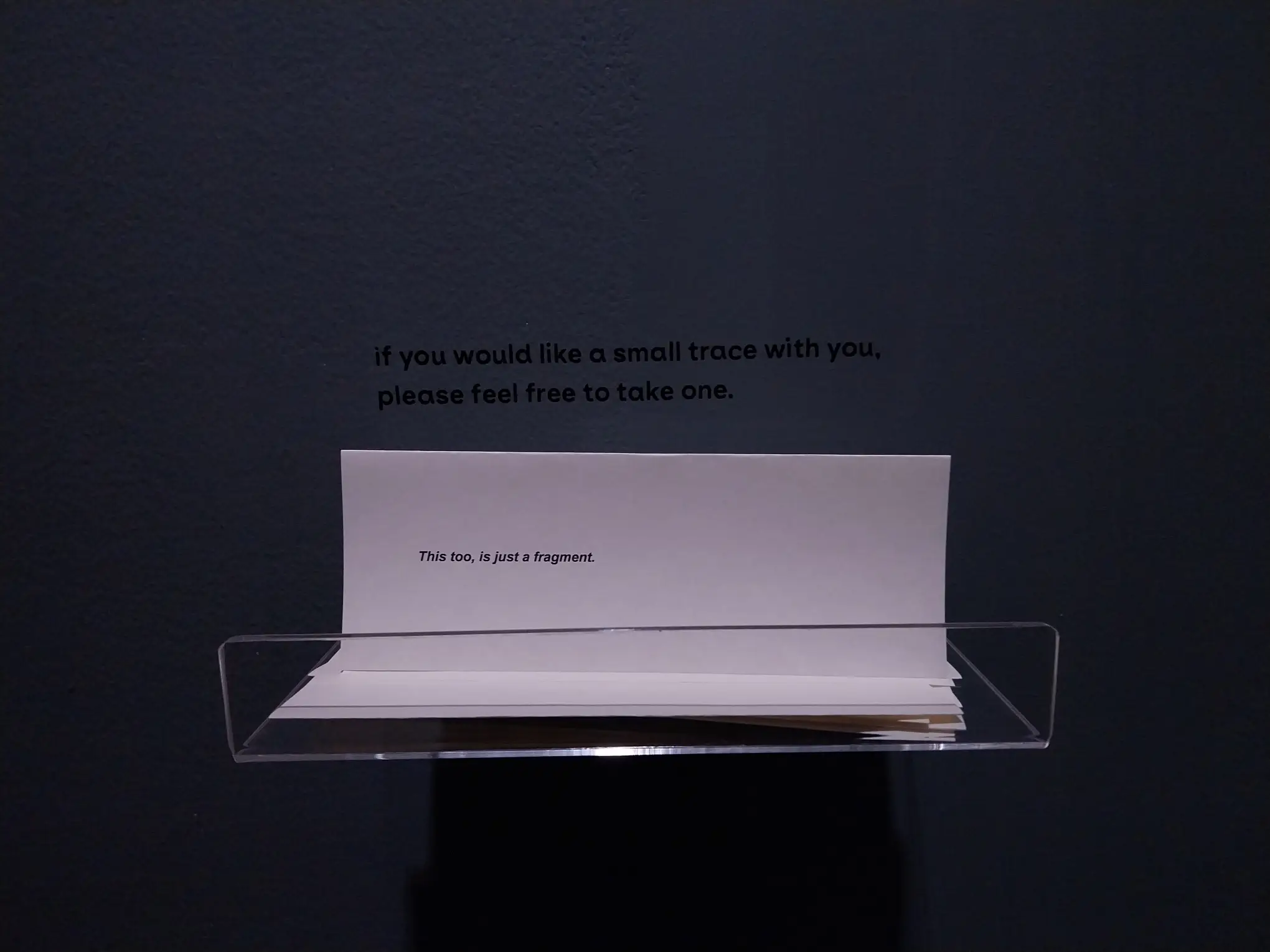
“This crucial aspect in her pieces navigates through acrylic glass and photocopier ink on tracing paper, contorting itself through these diaphanous materials and onto seemingly hazycanvases. Light thus has access to areas we can only visualize as if it is the only thing that concedes memory’s power to construct its contents.”
Finding Your Artistic Voice
These examples of contemporary art in the Philippines, when combined, showcase a society adrift. Many of these works battle against the darkness behind the illusion of ease that our consumerist, technology-driven culture has cultivated within us.
These artists reckon with these effects on our contemporary mind, as they look for their own freedom through commentary, through fragmentation, through nature, or through the ruminative use of new mediums within the forms. However their approach is, the outcome is the same: finding their individuality in a sea of conformity.
Photos by Elle Yap.
Related reading: ‘Moments of Delay’ Meditates on the Realities of Contemporary Art
Frequently Asked Questions
The term is difficult to pin down because it refers to the art movements of today, which constantly shift depending on the current context. Critics note that labeling unrelated artworks under one banner can be disingenuous, as artists often belong to different movements or use disparate mediums. However, the label remains useful because it links works that, despite their differences, earnstly reflect and respond to the fractured and tumultuous environment of our specific time.
In his monochrome exhibition at Artinformal Gallery, Onia uses familiar Philippine iconography—such as religious gatherings and Catholic school portraits—to examine the human condition. He employs a unique technique of burning portions of his work with black ash-lined paper to create contrasting shades of white. This process morphs the details of the images, serving as a visual metaphor for the complexities of the human psyche and our involvement in the systems we inhabit.
The exhibition utilizes the act of cooking as a powerful metaphor for the messy, often chaotic process of artistic creation. Using a cartoonish aesthetic, the artist depicts characters in burning kitchens or engulfed in flames to illustrate that growth is constant and often difficult. The core message encourages resilience, suggesting that the hardships of “cooking” or creating will eventually produce something meaningful, regardless of how imperfect the process may seem.
Balanon mixes neo-noir, French New Wave, and surrealist styles at Modeka Art to create a portrait of a society adrift in consumerism. His works often feature characters in emotional distress surrounded by televisions and advertisements, highlighting how entertainment acts as a distraction from the draining reality of a work-centric existence. By using these cinematic tropes, Balanon questions what happens to human meaning when our world becomes cut off from genuine emotional reality.
Nicole Bitas captures the quiet, domestic moments “in between” major life events, such as contemplative breakfasts or waiting in malls, to show that these small details build the true story of our lives. Similarly, Rhaz Oriente uses smoky projections and ghostlike lightboxes to explore the frailty of memory and the intangibility of light. Both artists move away from large-scale spectacles to focus on the meditative, often overlooked aspects of the human experience.
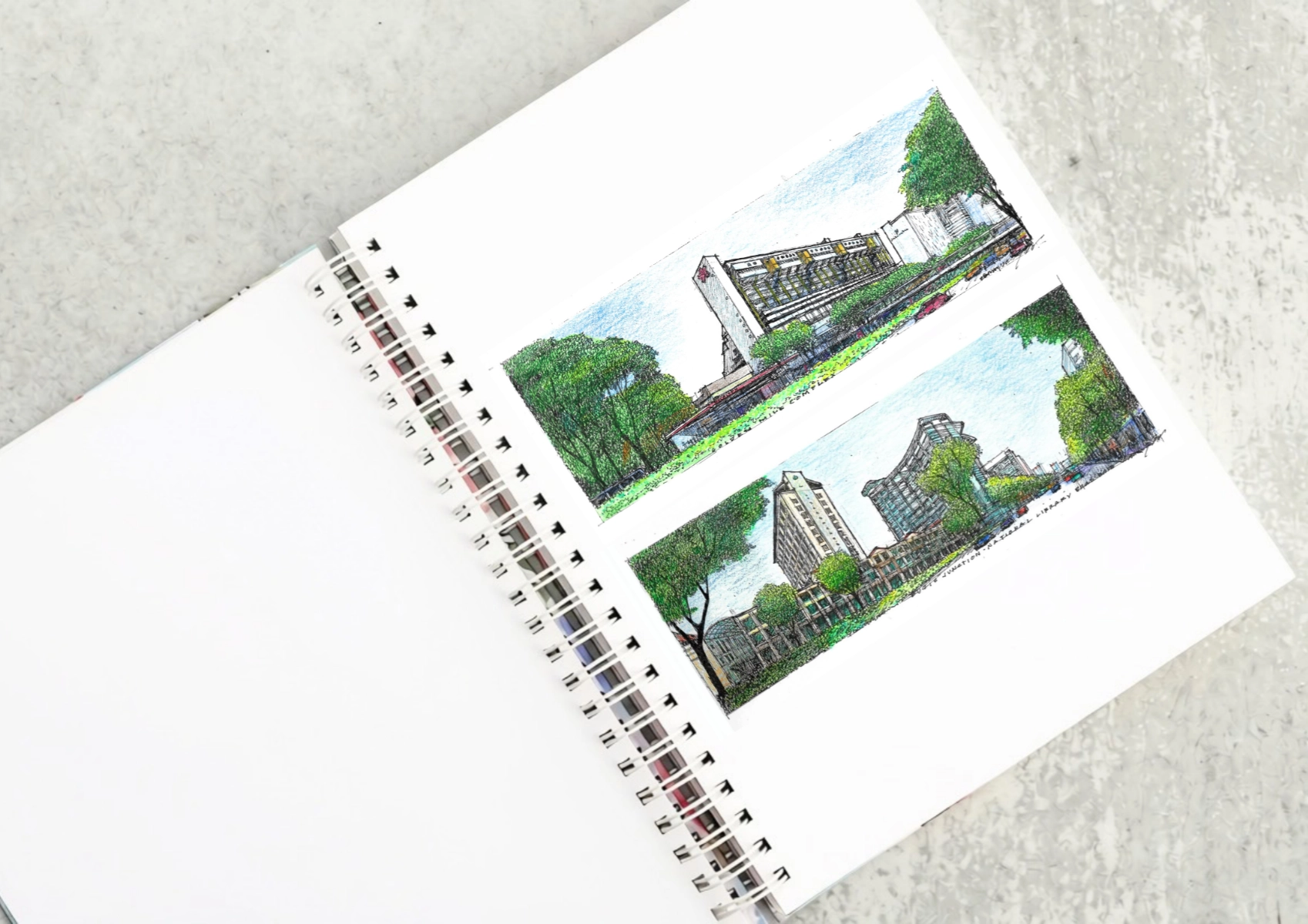
Two sketches of Singapore connect BluPrint Editor in Chief Paulo G. Alcazaren’s personal and professional history with Shared Ground: ArchitectureArchitectureThe art and science of designing and constructing buildings, structures, and spaces that are functional, safe, and aesthetically pleasing. It encompasses the planning, design, materials, and techniques used to createGo to Architecture Glossary of Care, Culture, […]
In a way, designers are the modern-day soothsayers and prophets. They design for the future, predicting how a room, a house, a building or a whole city will be used by people. They foresee how users will interact with a space, conjure exact shades of colors to elicit specific behavior and arrange furniture to build […]
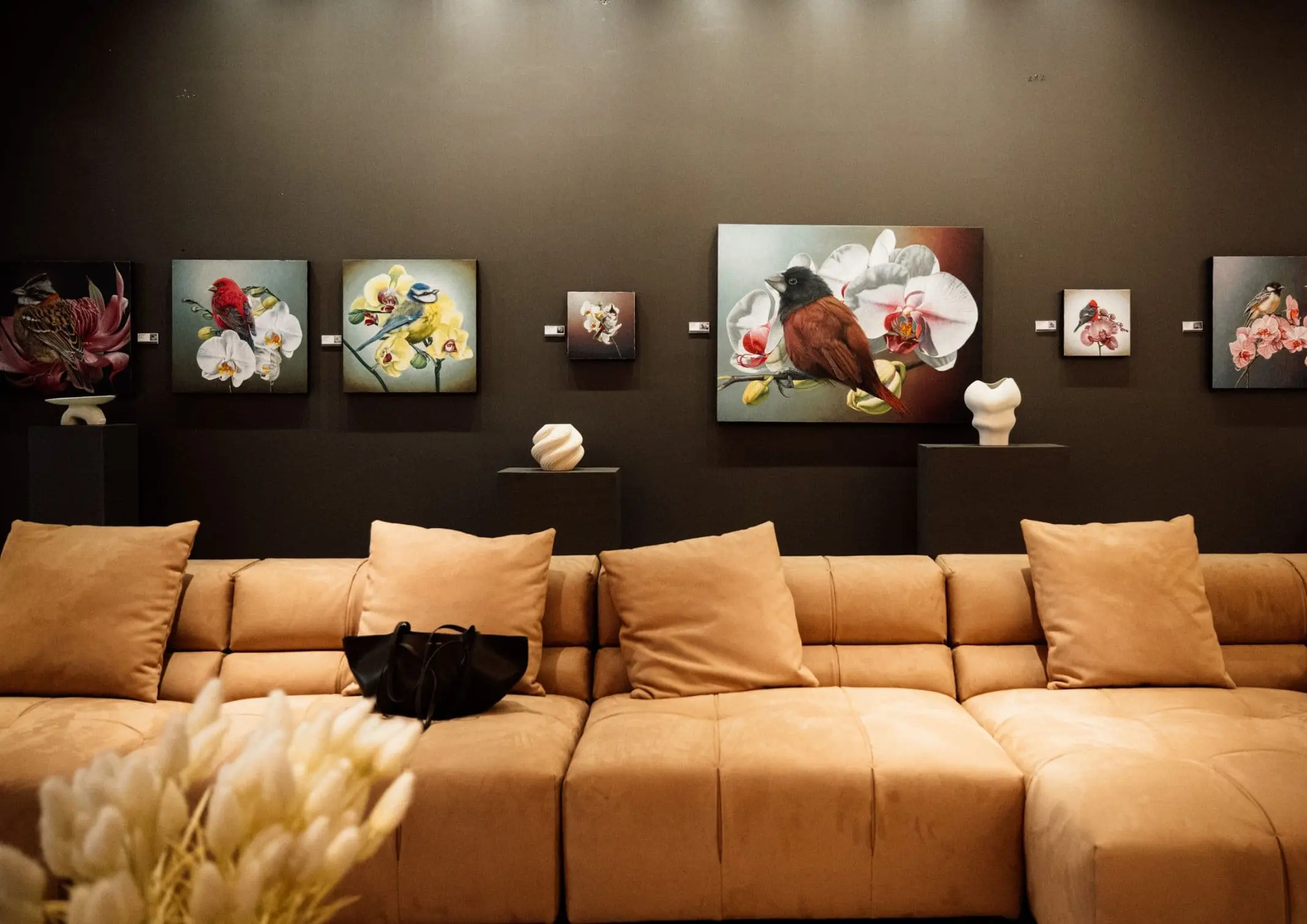
Art and furniture are often selected separately, yet their relationship can shape how a room looks and feels. The collaboration between Hooga and Galerie Joaquin explores how these elements can work together, bringing contemporary artworks into furnished residential settings at Hooga’s showroom in Uptown Mall, Bonifacio Global City. For Hooga, which curates furniture, lighting, and […]
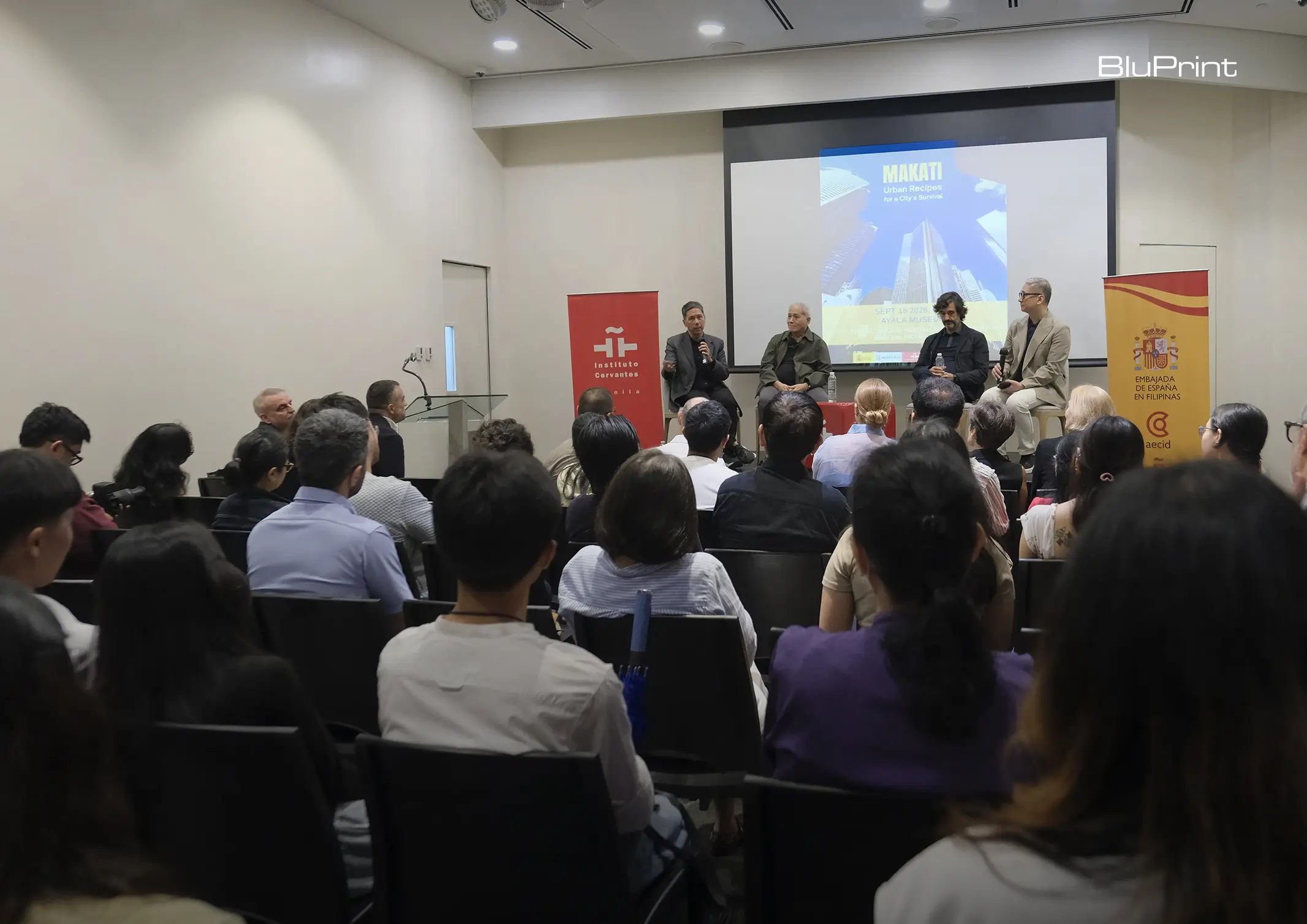
How can better-planned cities create the conditions for more creative, livable, and resilient urban environments? “Makati Urban Recipes for a City’s Survival,” a colloquium held at the Ayala Museum on September 15, brought together architects and practitioners from the fields of urbanism and the creative economy to discuss how design, planning, and collaboration can address […]
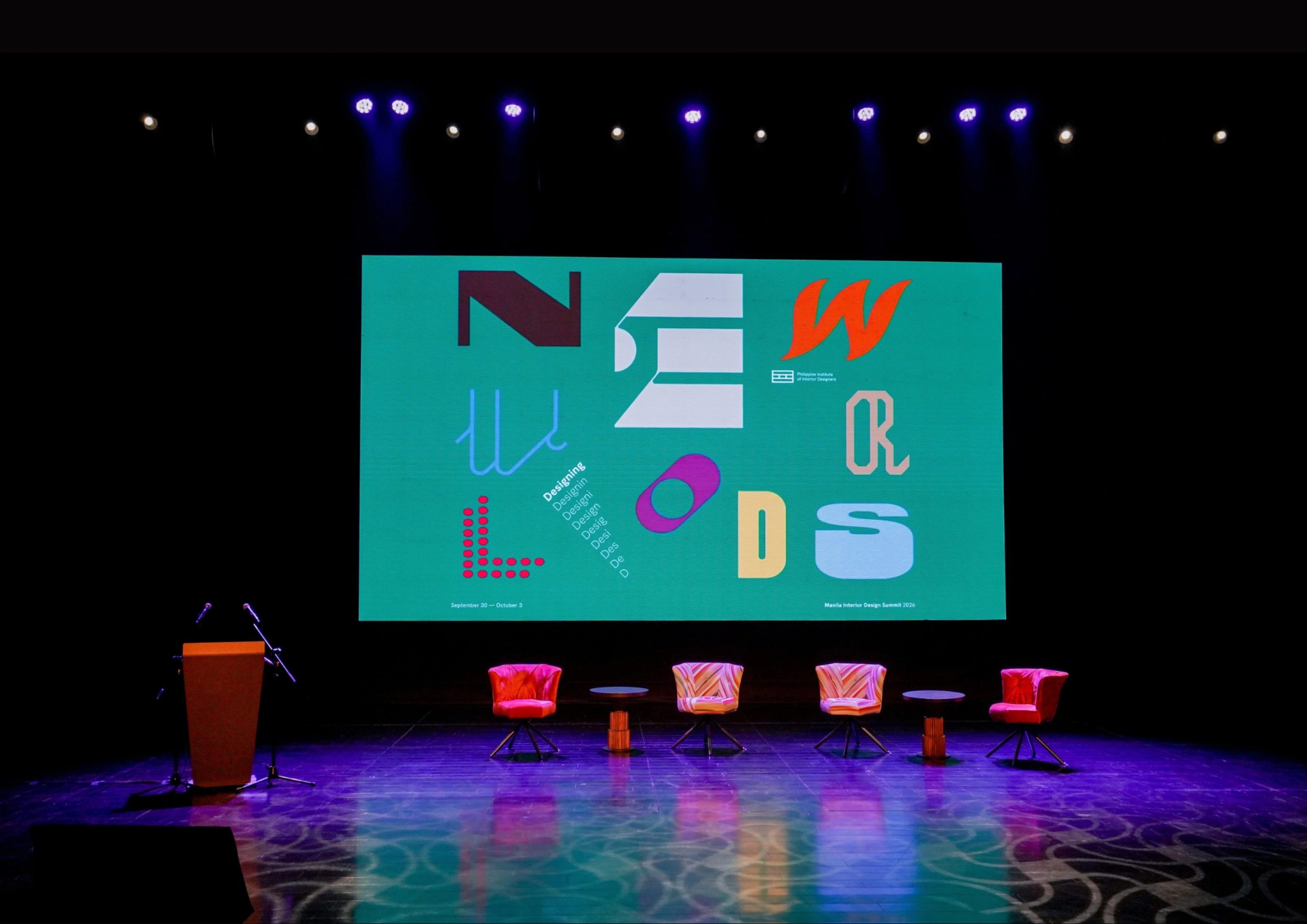
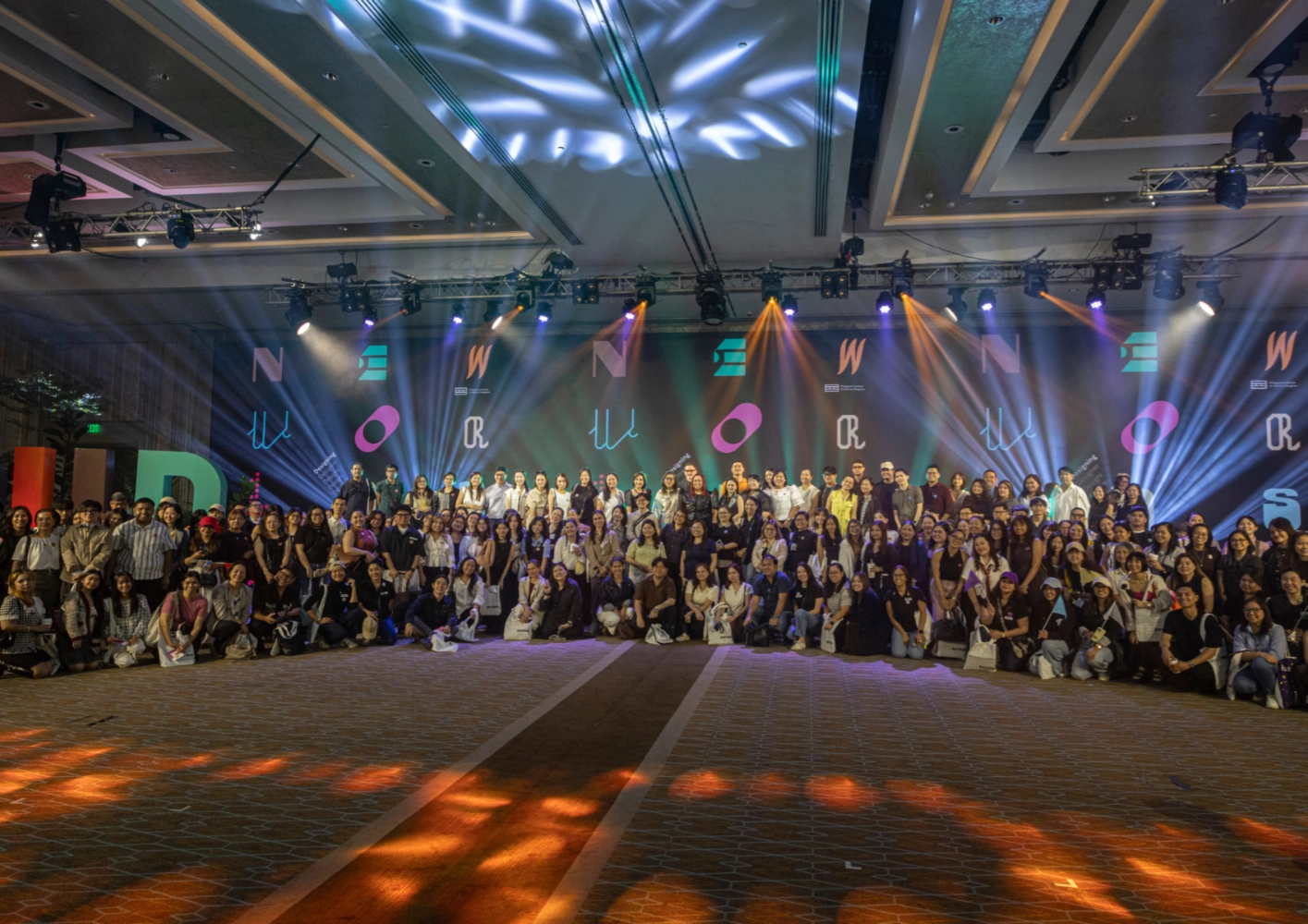
The fourth Manila Interior DesignInterior DesignThe discipline of planning and shaping interior spaces for function, comfort, safety, and beauty. It covers layout, lighting, materials, finishes, furniture, and color, and in the Philippines is a licensedGo to Interior Design Glossary Summit (MIDS) brought together more than 300 delegates for four days of conversations, exhibitions, and design […]
Read the issues.

Collect the volumes.

Recommended Video
Tap to Unmute
Unmute
0:00
0:00