Bigkis is the act of binding. In Tagalog, the word can refer to something used to bind or encircle, as well as a bundle formed by tying several separate elements together. Figuratively, it can also mean a bond, union, or unity. The meanings move from the physical act of joining things together to the connection […]
Casa Diago: Rooted Stillness and Quiet Living



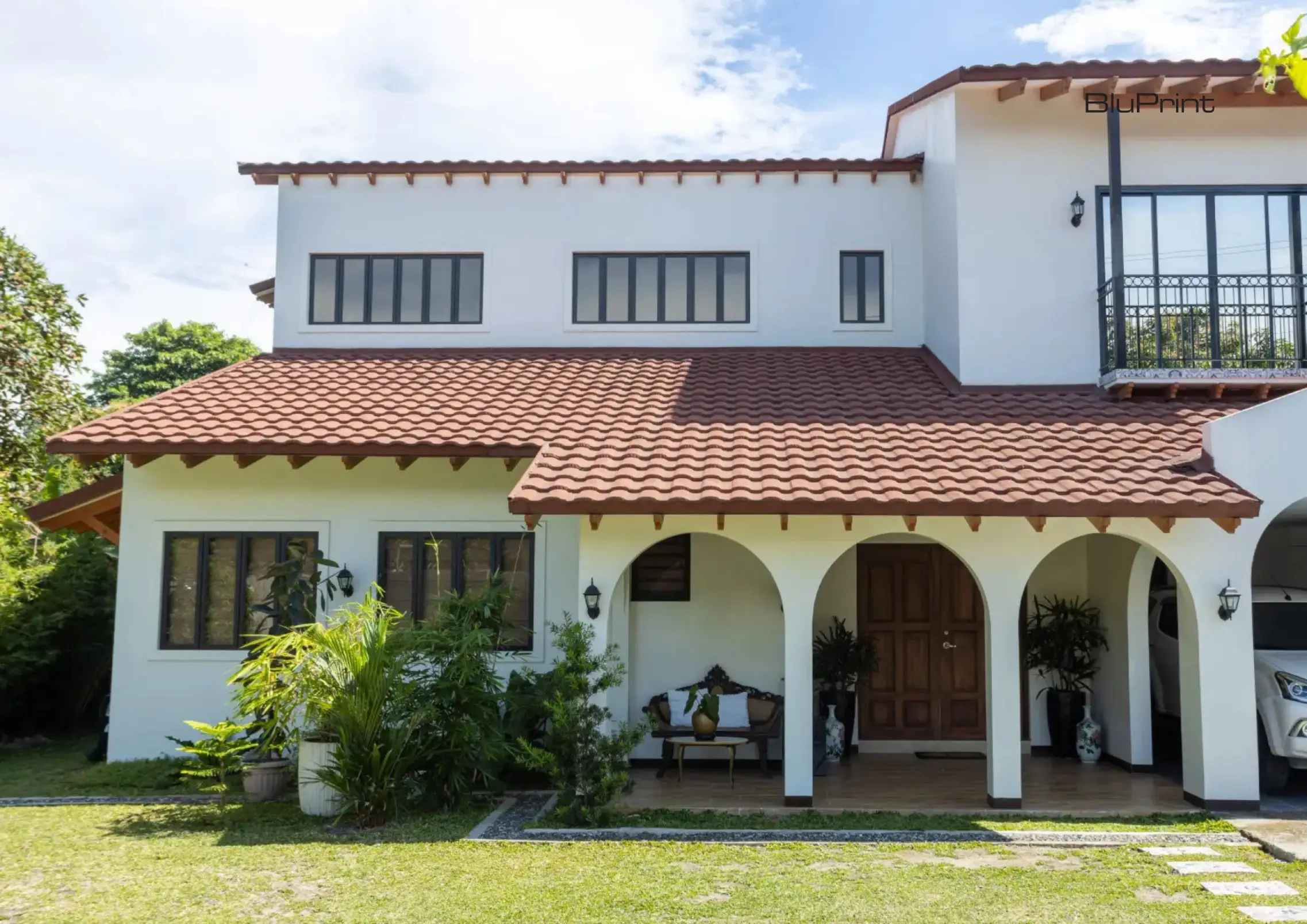
Situated in a quiet community in Dumaguete, Casa Diago is a retirement home shaped by tradition, constraint, and climate. Set on a roughly 1,200-square-meter lot populated by mature mango trees, the house enjoys an idyllic setting ideal for slow-paced living.
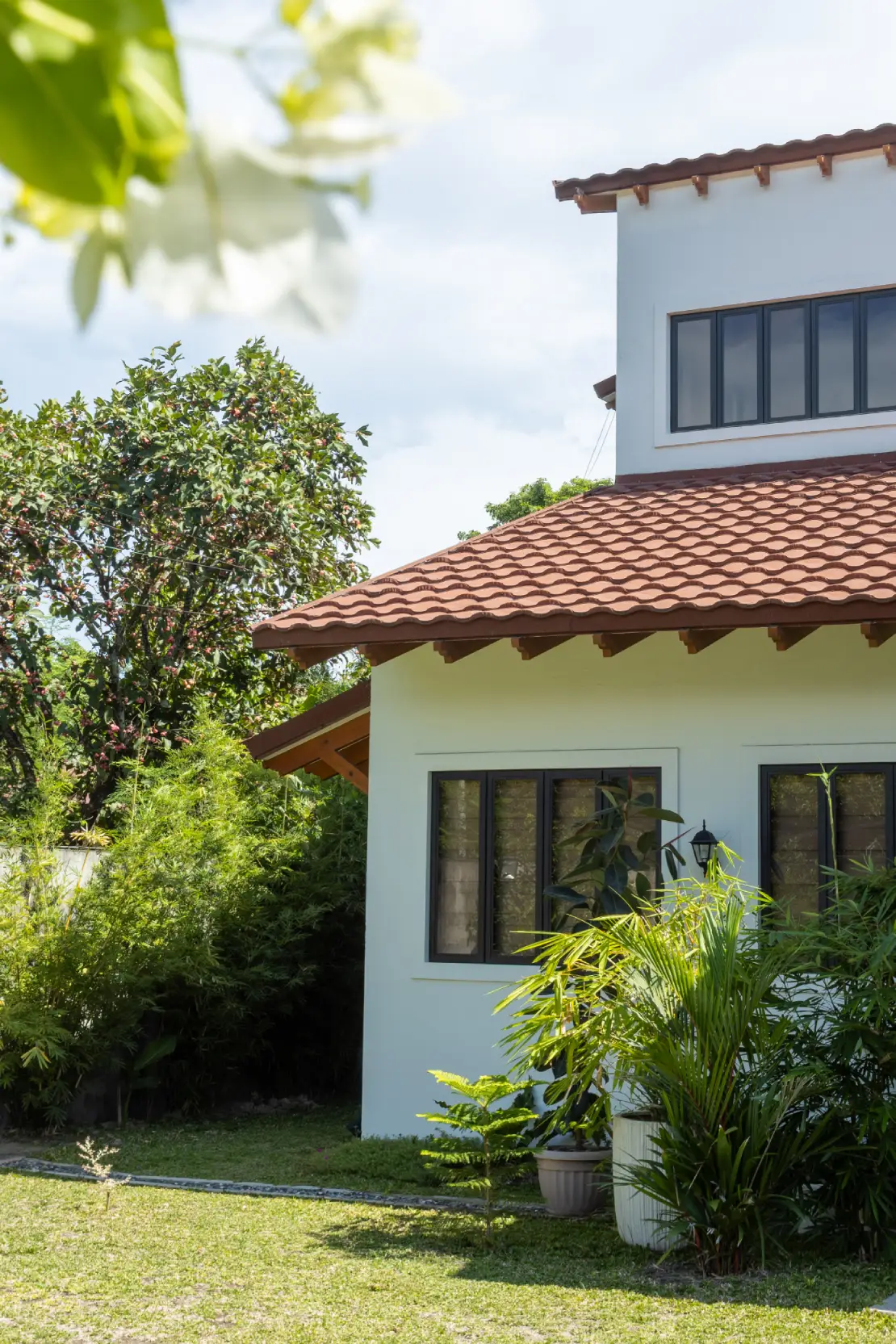
Architect Gaston Pastrano designed the 300-square-meter residence for a retired couple moving back to their hometown after decades of living in Manila. The brief called for a timeless, not-too-modern, not-too-traditional house that embraced Mediterranean influences while accommodating the couple’s collection of heirloom furniture.
Navigating Constraints in Construction
One of the first challenges was site planning: “Half of the property is full of mango trees,” Pastrano shares. “The clients didn’t want to cut anything down, so we had to compress the design as much as possible.”
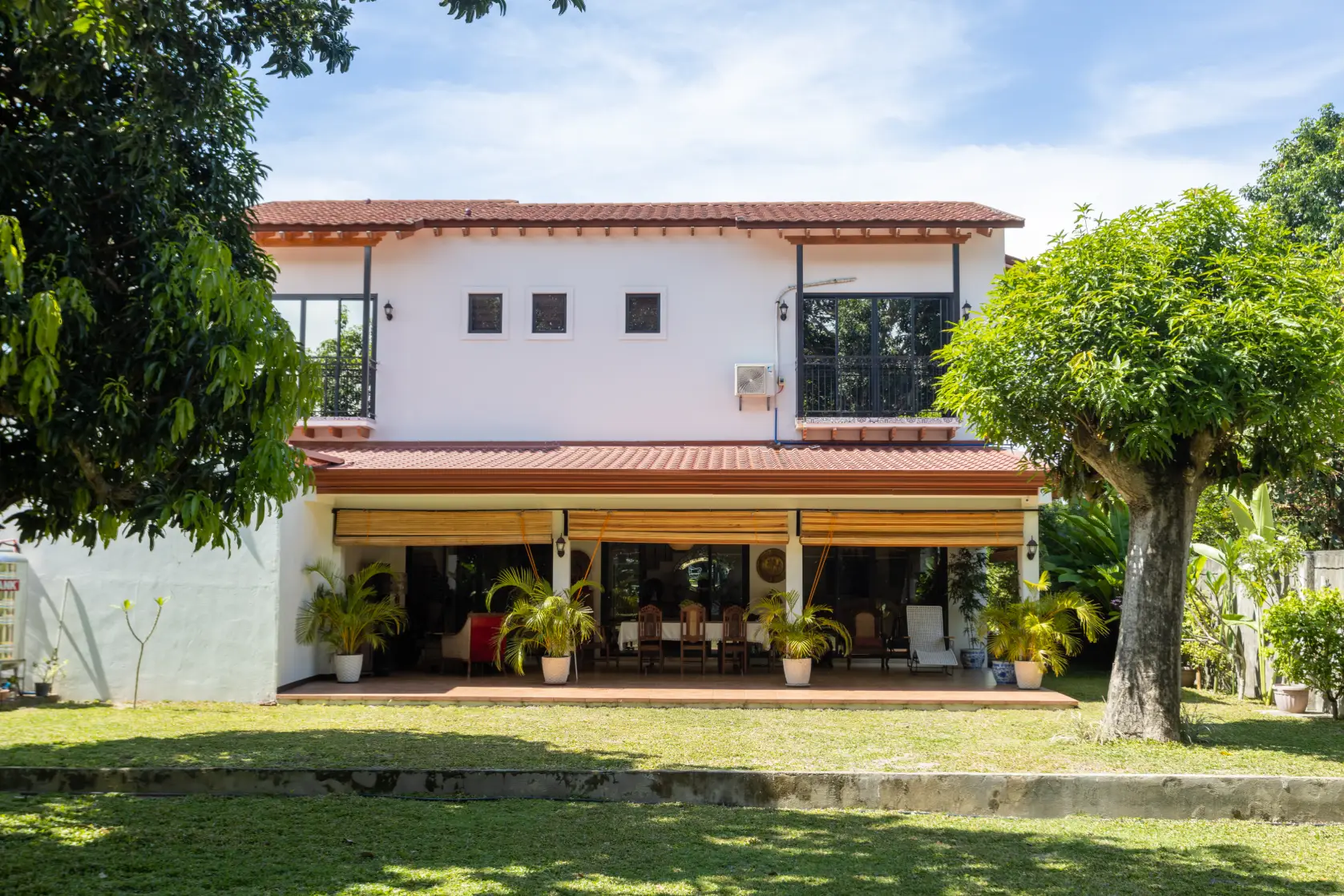
To preserve the trees, the house footprint was pulled inward, creating both a deep front garden and a private rear garden. A covered lanai connects the home to these outdoor spaces. “The main living area follows an open floor planFloor PlanA scaled drawing showing a building's layout as seen from above, as if sliced horizontally at roughly waist height. It maps rooms, walls, doors, windows, circulation, and fixed furniture, helpingGo to Floor Plan Glossary,” the architect explains. “Each space interacts with the lanai before reaching the garden.”
Another challenge was the location. Since Pastrano is based in Manila, all coordination during construction had to be done through phone calls. “Everything was done virtually with the contractor and with the clients—from sourcing the tiles, ceiling fixtures, and roofing materials,” the architect explains.
Construction also took place during the pandemic, making it difficult to find a reliable contractor. When the pandemic was followed by various global events that affected oil prices, material costs rose as well, adding to the challenges the design team was already facing.
“We had to really manage how to execute it without changing the design [while still retaining] good quality materials,” he adds. Some modifications were made to the initial plan, such as the design of the lanai and the roof material; instead of the originally envisioned clay, they opted for stone-coated roofing. “We had to find good suppliers that met the budget.”
Durable and Climate-Responsive Materials
With Casa Diago, it’s all about simplicity and resilience. Faux wood beams were used outdoors to minimize maintenance while adding an accent to the white ceiling. They also serve a practical function: concealing electrical wiring to maintain a clean, uncluttered look. For the lanai flooring, the design team chose wood-look tiles for their ability to withstand Dumaguete’s heat and humidity.
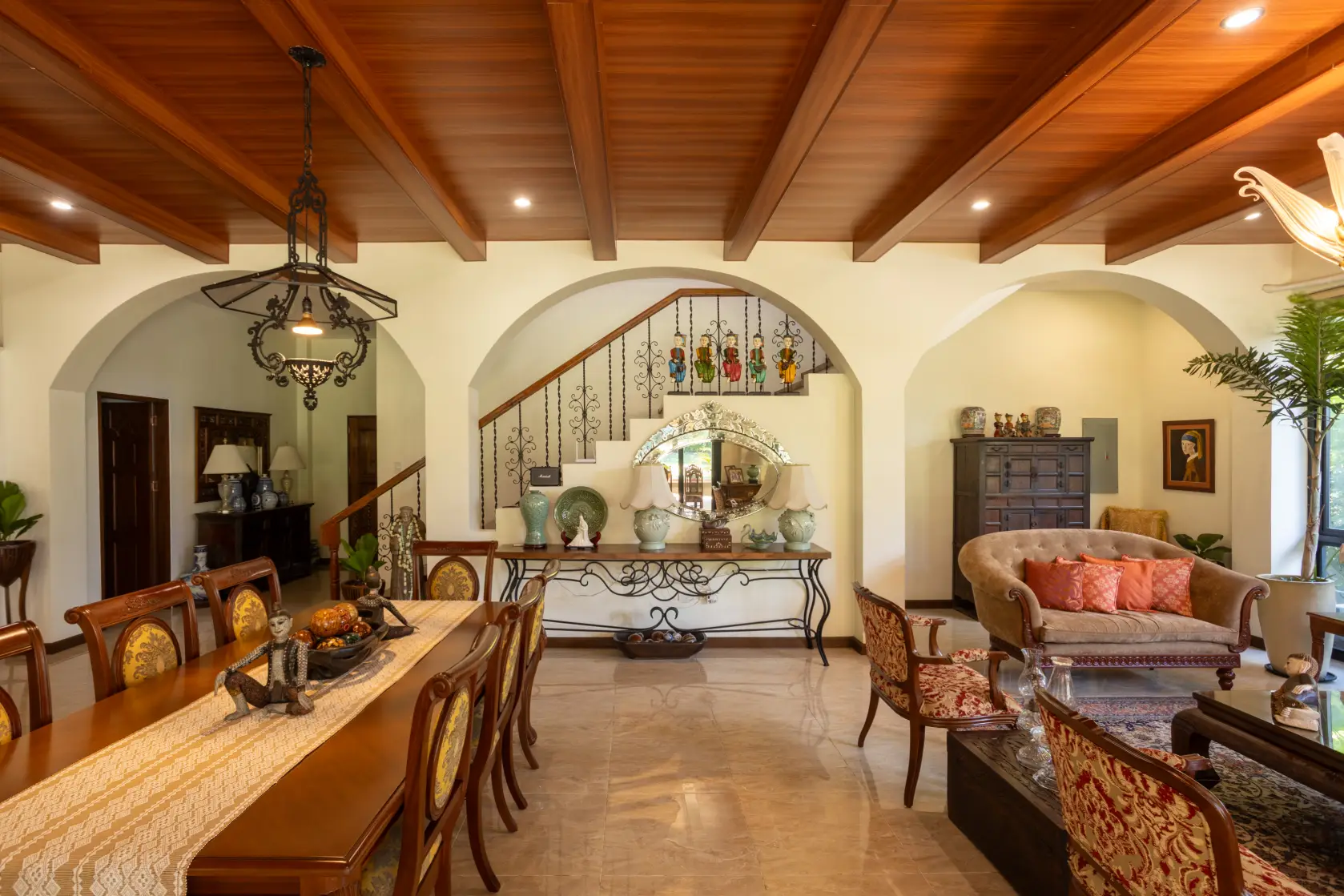
Reclaimed wood was also used as an accent material, including in the exterior roof weaves and repurposed wooden doors. Ceramic tiles were selected for the indoor flooring due to supply chain limitations, while modular kitchen cabinets and granite countertops sourced from Cebu offered long-lasting performance. Neutral finishes were chosen to complement the homeowners’ existing furniture.
Mediterranean Design Built for the Tropics
Careful orientation and passive cooling strategies ensure the home suits its tropical setting. The structure is positioned to block the intense afternoon sun, with the garage acting as a buffer. Large operable windows on opposite walls allow wind to pass through, keeping the interiors cool.
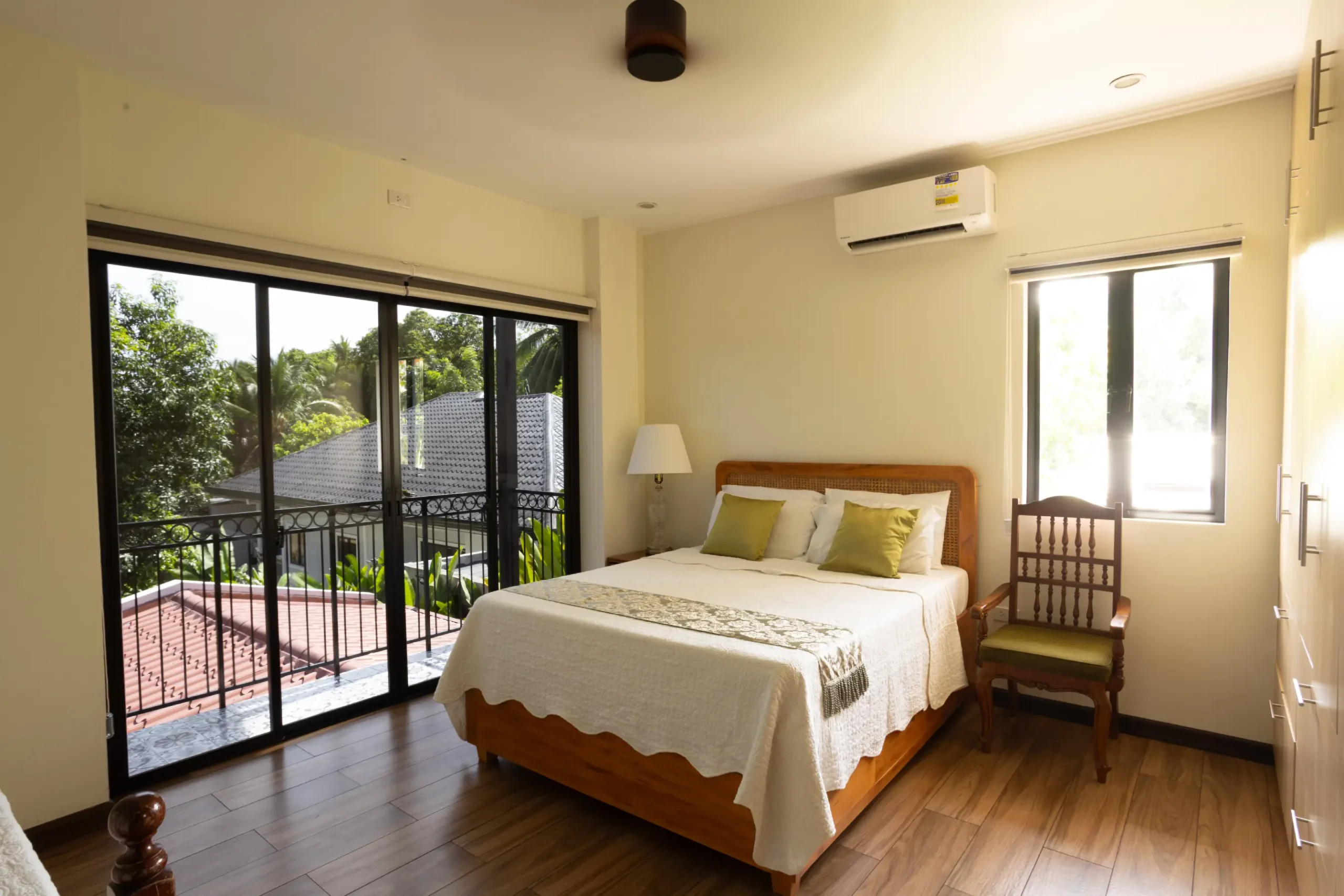
Rain protection posed a unique challenge. “The tricky thing with Mediterranean architectureArchitectureThe art and science of designing and constructing buildings, structures, and spaces that are functional, safe, and aesthetically pleasing. It encompasses the planning, design, materials, and techniques used to createGo to Architecture Glossary is that you normally don’t have large roof awnings,” the architect notes. “So, with this one, we have to be creative in a way that every window still has an awning for protection, but it still retains that nice Mediterranean character.”
He adds that the balconies also have their respective roof canopies that don’t extend throughout the perimeter of the house. “It only extends where their windows will be. So we get a nice, small roof profile. It still looks very Mediterranean, but at least it gets to protect them from any rainfall,” Pastrano notes. Meanwhile, a stone-coated roof offers resilience against typhoons.
Casa Diago and Its Open-Plan Design
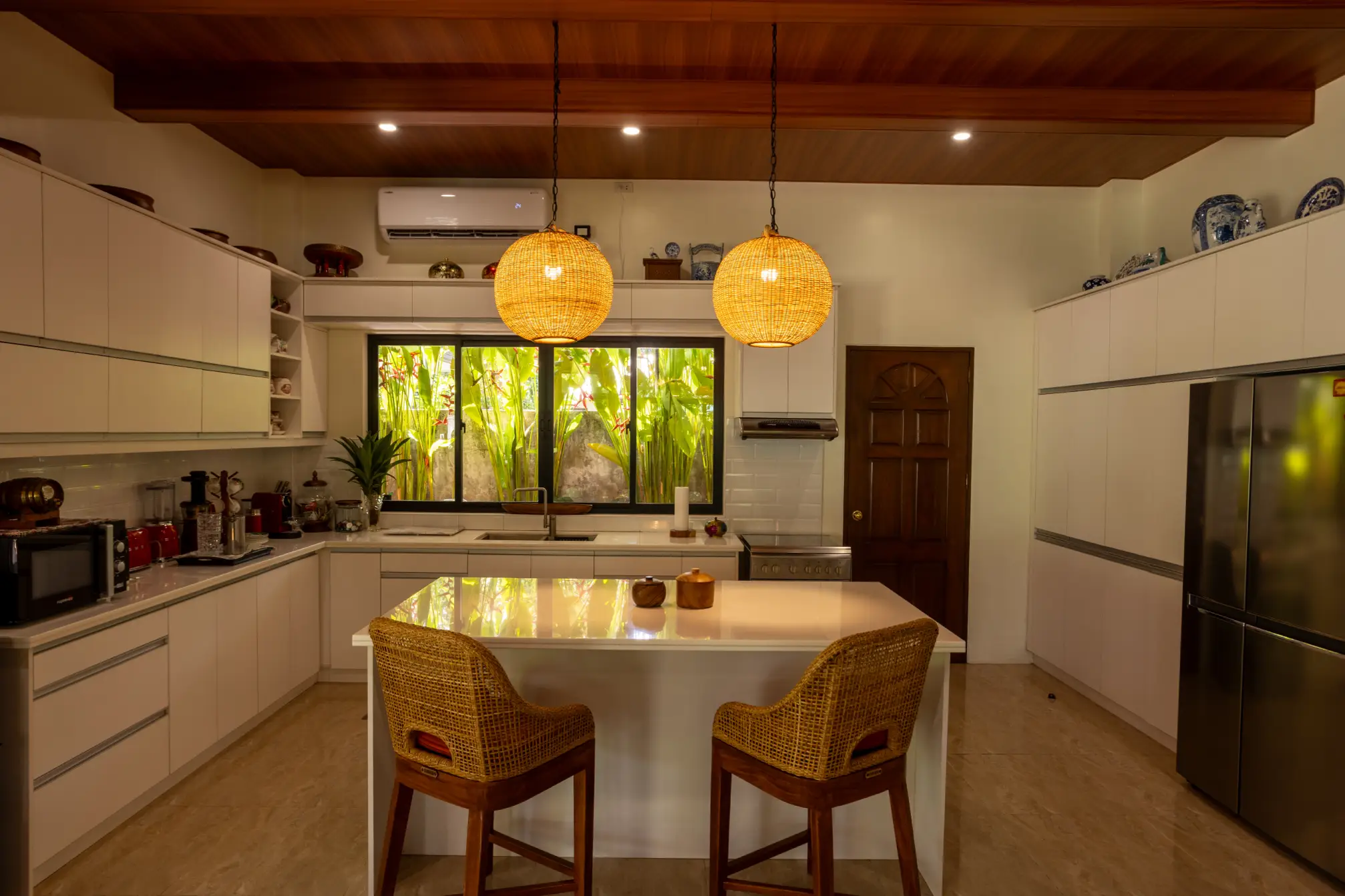
While Casa Diago is decidedly Mediterranean in character, its planning is uniquely Filipino. Spaces are constructed to accommodate family gatherings and visiting relatives. A wide foyer greets guests and buffers the more private zones of the home.
The open-plan design of the living, dining, and kitchen spaces extend naturally to the lanai and garden, while the bedrooms are tucked away for privacy. “There’s a nice separation between the active areas and the quiet areas,” Pastrano describes.
The house also tells a story of continuity. Furniture pieces that the homeowners have collected over the years dot the spaces, carrying memories built across time. “We live here at the moment—just the two of us—and I look forward to every occasion when my children would come over and my grandchildren would be in town,” says the husband.
A Home for All
Since the house was built, the homeowners have already held gatherings, such as relatives and friends dropping by for lunch and dinner, or even just to enjoy a cup of coffee with the couple.
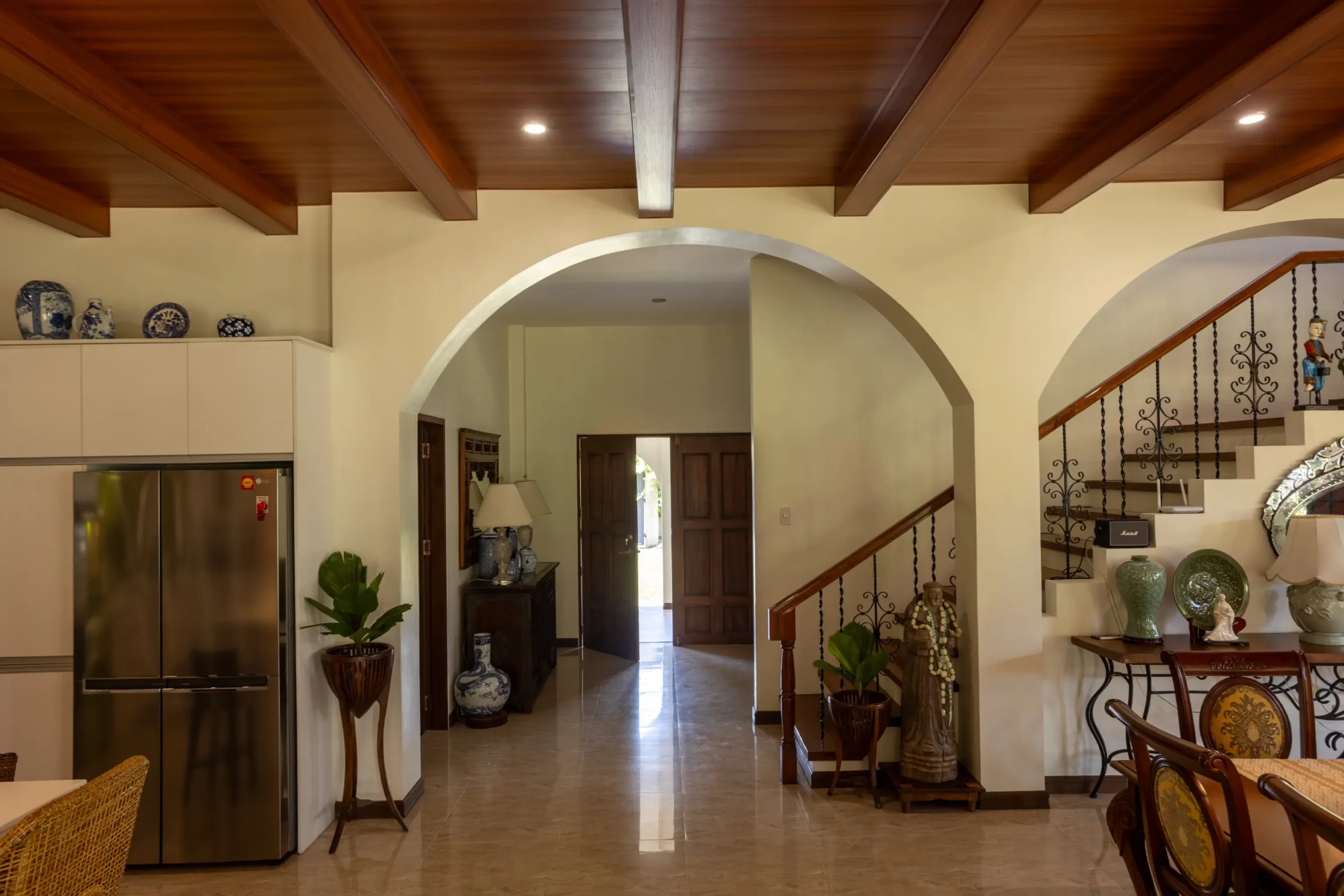
With its enduring structure and thoughtfully planned spaces, Casa Diago is more than a retirement home: it’s a setting for life well-lived. Built to honor both tradition and daily rituals, it offers the couple a place to celebrate the present while welcoming the future.
Here, design becomes the backdrop for gatherings, quiet moments, and the steady rhythm of family life—proof that a well-designed home doesn’t just house memories, it helps create them.
Photos by Excel Panlaque.
Related reading: The Hillside Villa Where Rock and Roll Finds Respite
Frequently Asked Questions
Architect Gaston Pastrano compressed the building’s footprint to avoid cutting down any of the mature mango trees on the property. This strategy pulled the house inward, resulting in a long, narrow layout that created a deep front garden and a private rear sanctuary. By prioritizing the existing flora, the design maintains an idyllic, shaded environment essential for a retirement home.
To manage rising material costs during the pandemic, the team replaced the originally planned clay tiles with stone-coated roofing, which offers a similar look and high typhoon resilience at a lower price point. Additionally, they used wood-look tiles for the lanai and faux wood beams for the ceiling to ensure durability and low maintenance in Dumaguete’s humid climate.
Traditional Mediterranean architecture typically lacks large roof eaves, which is problematic during heavy Philippine rains. Pastrano solved this by designing creative, localized awnings and roof canopies that only extend over windows and balconies rather than the entire perimeter. This approach protects the interior from rainfall while maintaining the clean, small roof profile characteristic of the Mediterranean style.
The house is strategically oriented so that the garage acts as a buffer against the intense afternoon sun. To facilitate airflow, the architect utilized an open-plan layout with large, operable windows placed on opposite walls to encourage cross-ventilation. These design choices reduce the reliance on artificial cooling by allowing natural breezes to permeate the living spaces.
While the aesthetic is Mediterranean, the floor plan is “uniquely Filipino,” featuring a wide foyer to buffer private zones and an open layout designed for large family gatherings. The living and dining areas flow seamlessly into a covered lanai, accommodating the “active” social life of Filipino families while keeping bedrooms tucked away for the “quiet” needs of a retirement dwelling.
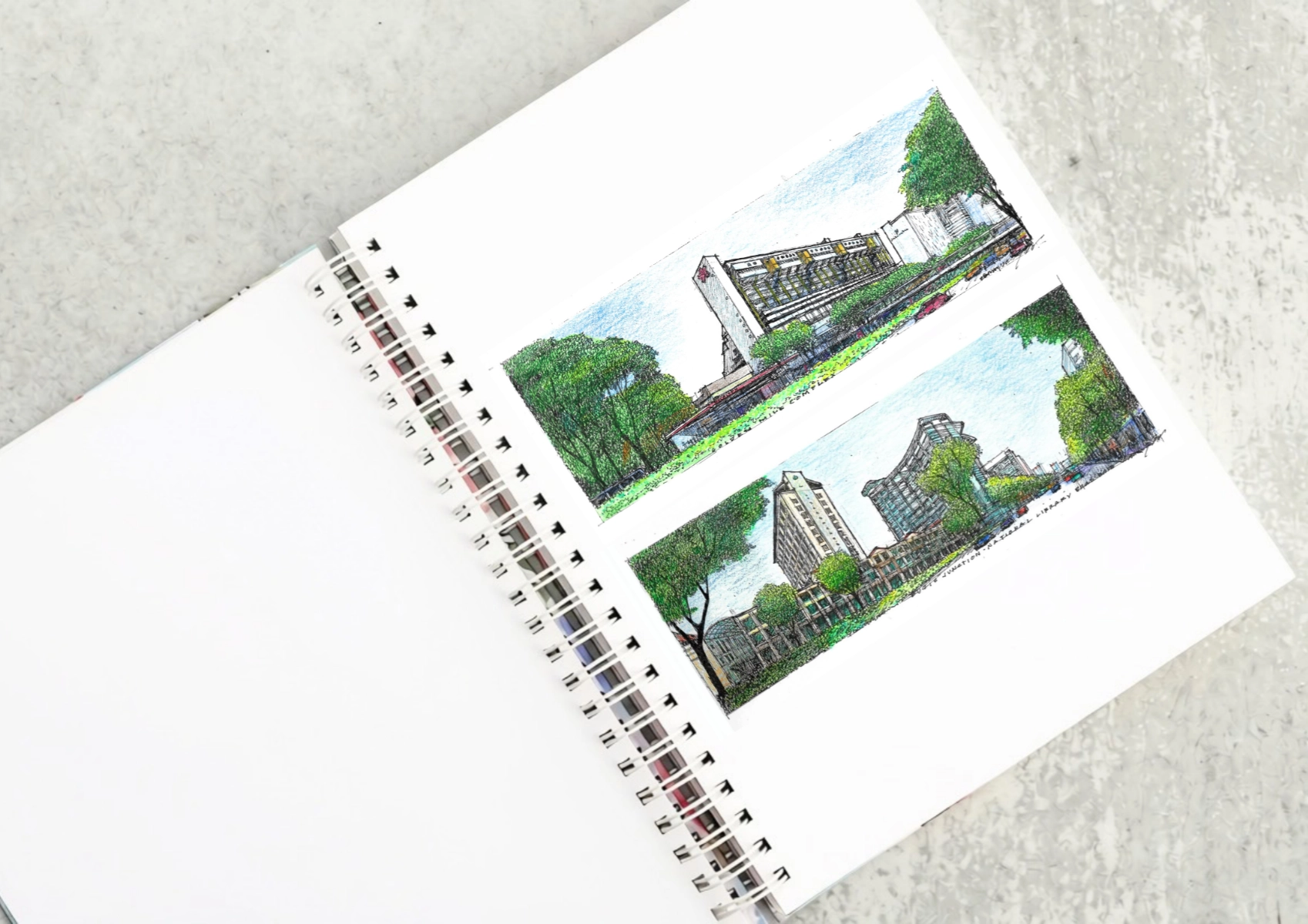
Two sketches of Singapore connect BluPrint Editor in Chief Paulo G. Alcazaren’s personal and professional history with Shared Ground: ArchitectureArchitectureThe art and science of designing and constructing buildings, structures, and spaces that are functional, safe, and aesthetically pleasing. It encompasses the planning, design, materials, and techniques used to createGo to Architecture Glossary of Care, Culture, […]

In a way, designers are the modern-day soothsayers and prophets. They design for the future, predicting how a room, a house, a building or a whole city will be used by people. They foresee how users will interact with a space, conjure exact shades of colors to elicit specific behavior and arrange furniture to build […]
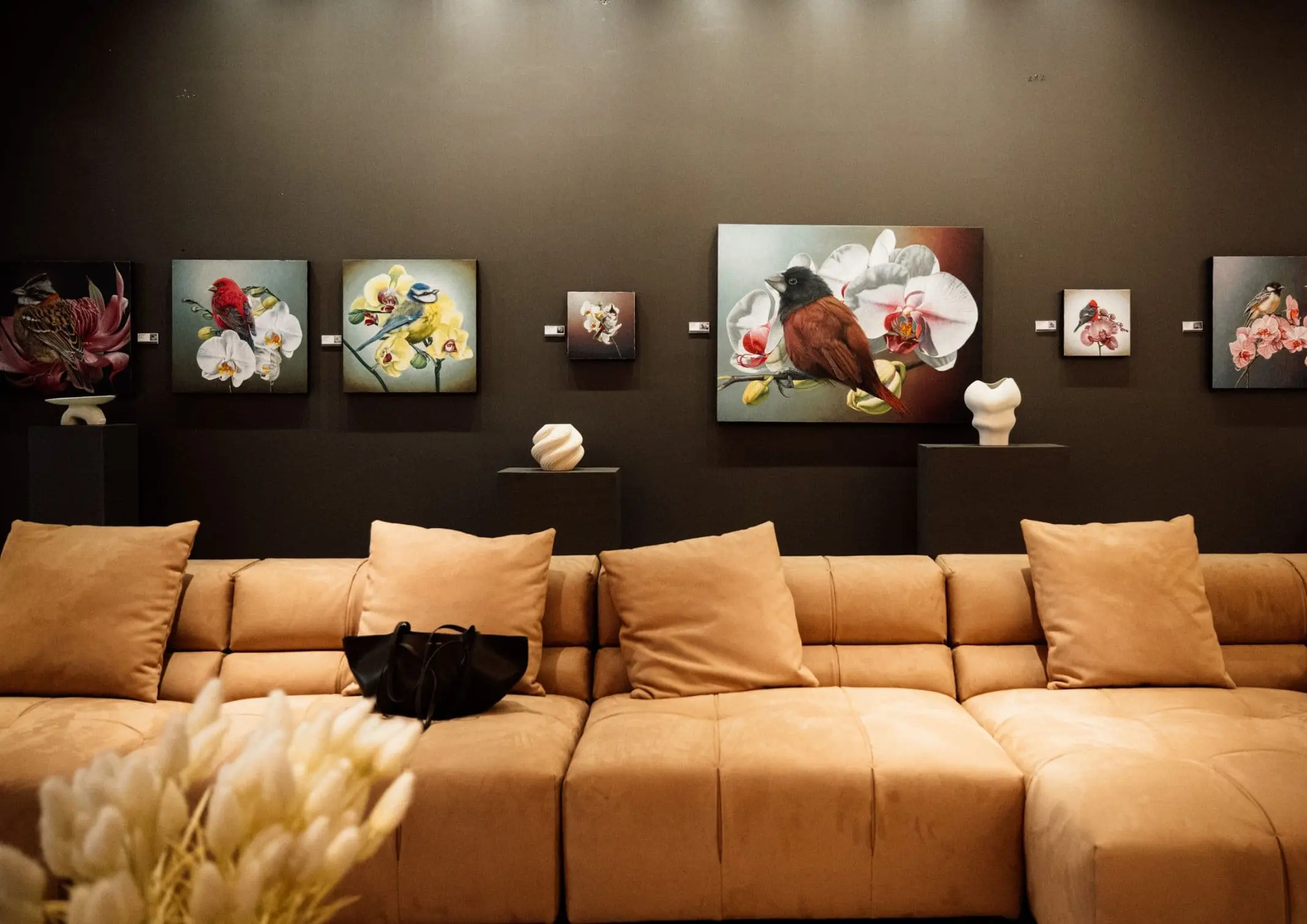
Art and furniture are often selected separately, yet their relationship can shape how a room looks and feels. The collaboration between Hooga and Galerie Joaquin explores how these elements can work together, bringing contemporary artworks into furnished residential settings at Hooga’s showroom in Uptown Mall, Bonifacio Global City. For Hooga, which curates furniture, lighting, and […]
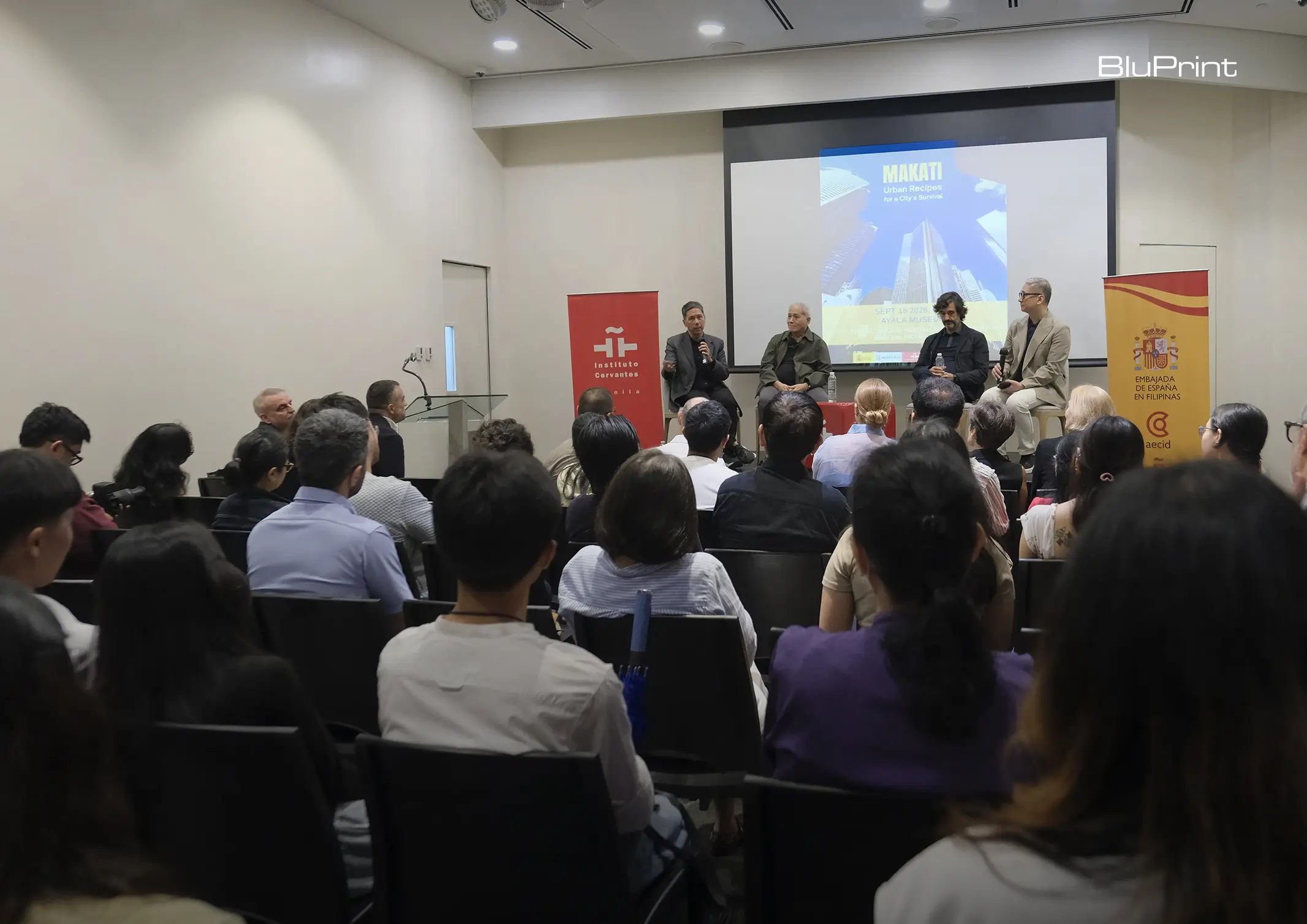
How can better-planned cities create the conditions for more creative, livable, and resilient urban environments? “Makati Urban Recipes for a City’s Survival,” a colloquium held at the Ayala Museum on September 15, brought together architects and practitioners from the fields of urbanism and the creative economy to discuss how design, planning, and collaboration can address […]
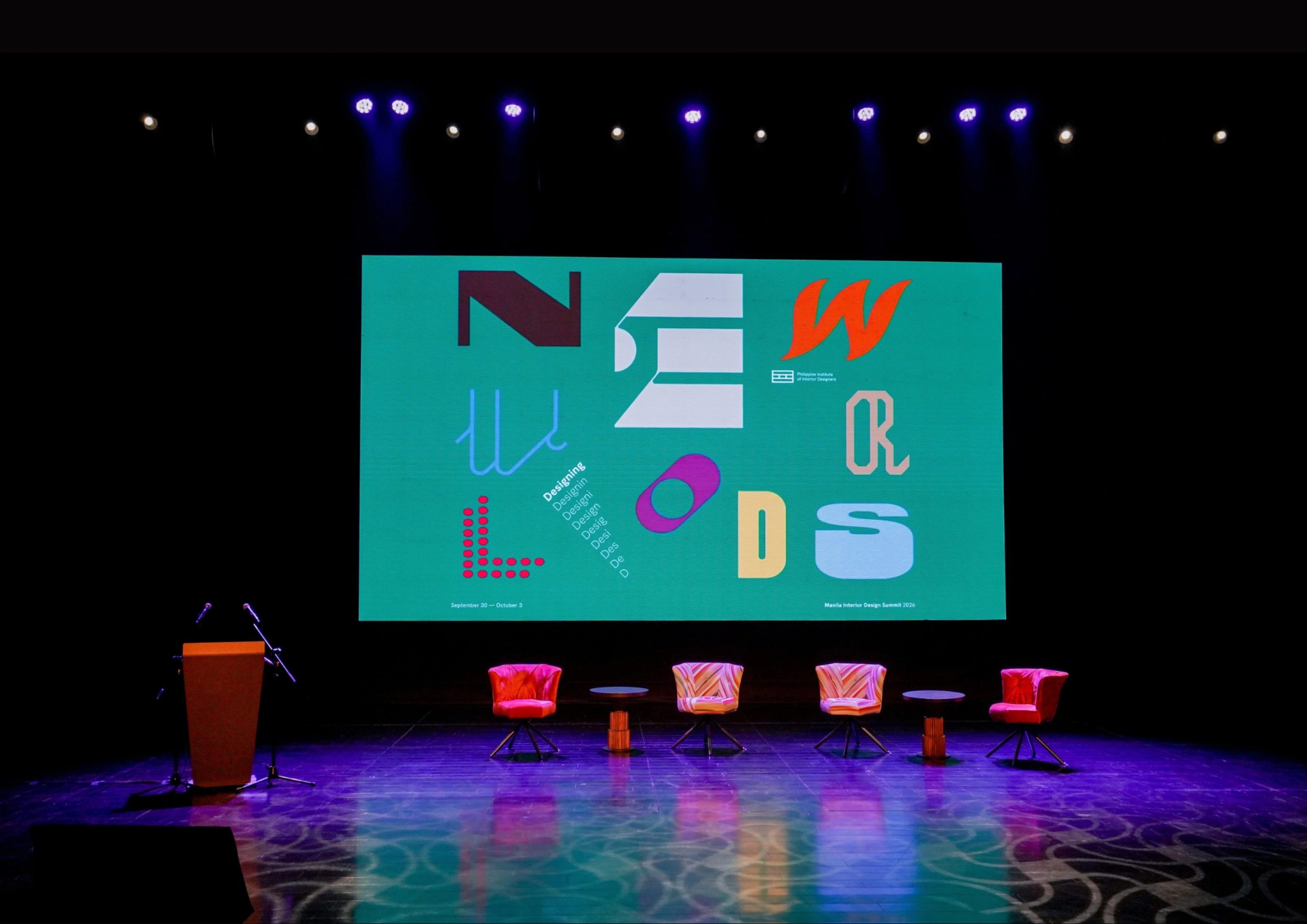
The fourth Manila Interior DesignInterior DesignThe discipline of planning and shaping interior spaces for function, comfort, safety, and beauty. It covers layout, lighting, materials, finishes, furniture, and color, and in the Philippines is a licensedGo to Interior Design Glossary Summit (MIDS) brought together more than 300 delegates for four days of conversations, exhibitions, and design […]
Read the issues.

Collect the volumes.

Recommended Video
Tap to Unmute
Unmute
0:00
0:00