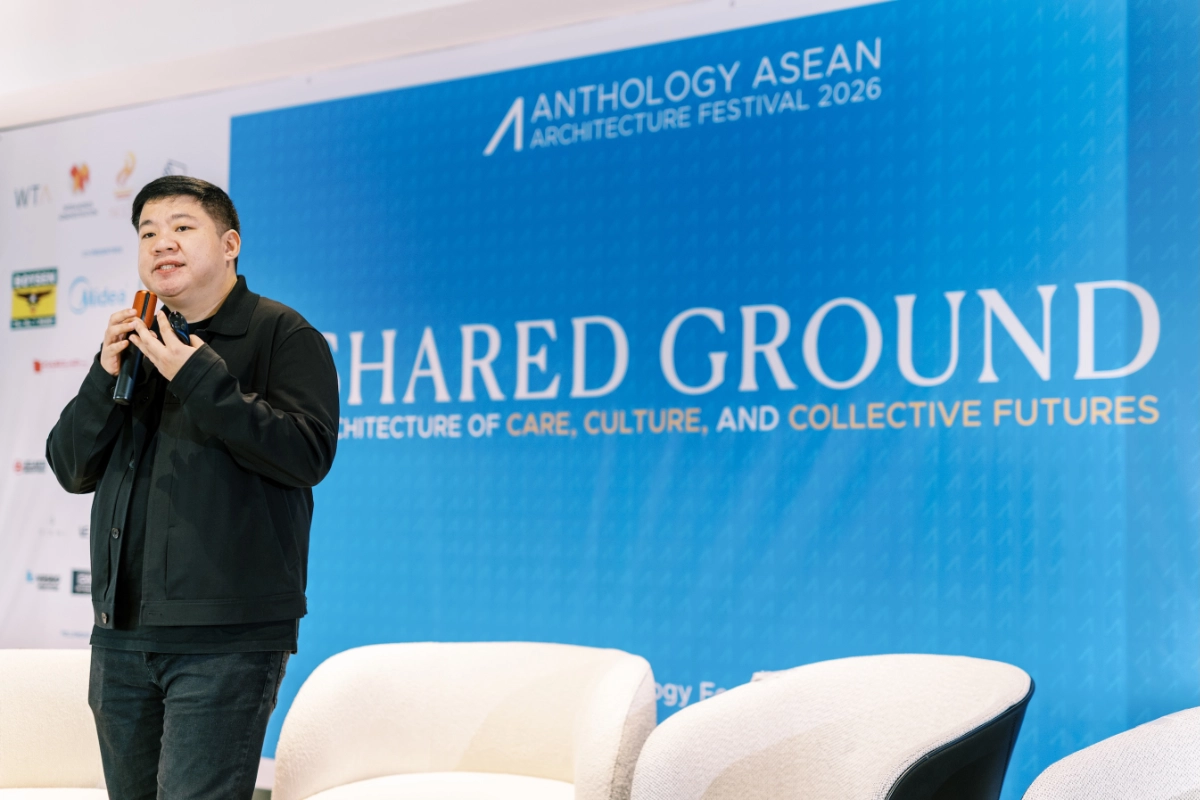
“Buildings only become architectureArchitectureThe art and science of designing and constructing buildings, structures, and spaces that are functional, safe, and aesthetically pleasing. It encompasses the planning, design, materials, and techniques used to createGo to Architecture Glossary when they are shared,” said William Ti Jr., founder of the Anthology Festival and WTA Architecture and Design Studio, […]
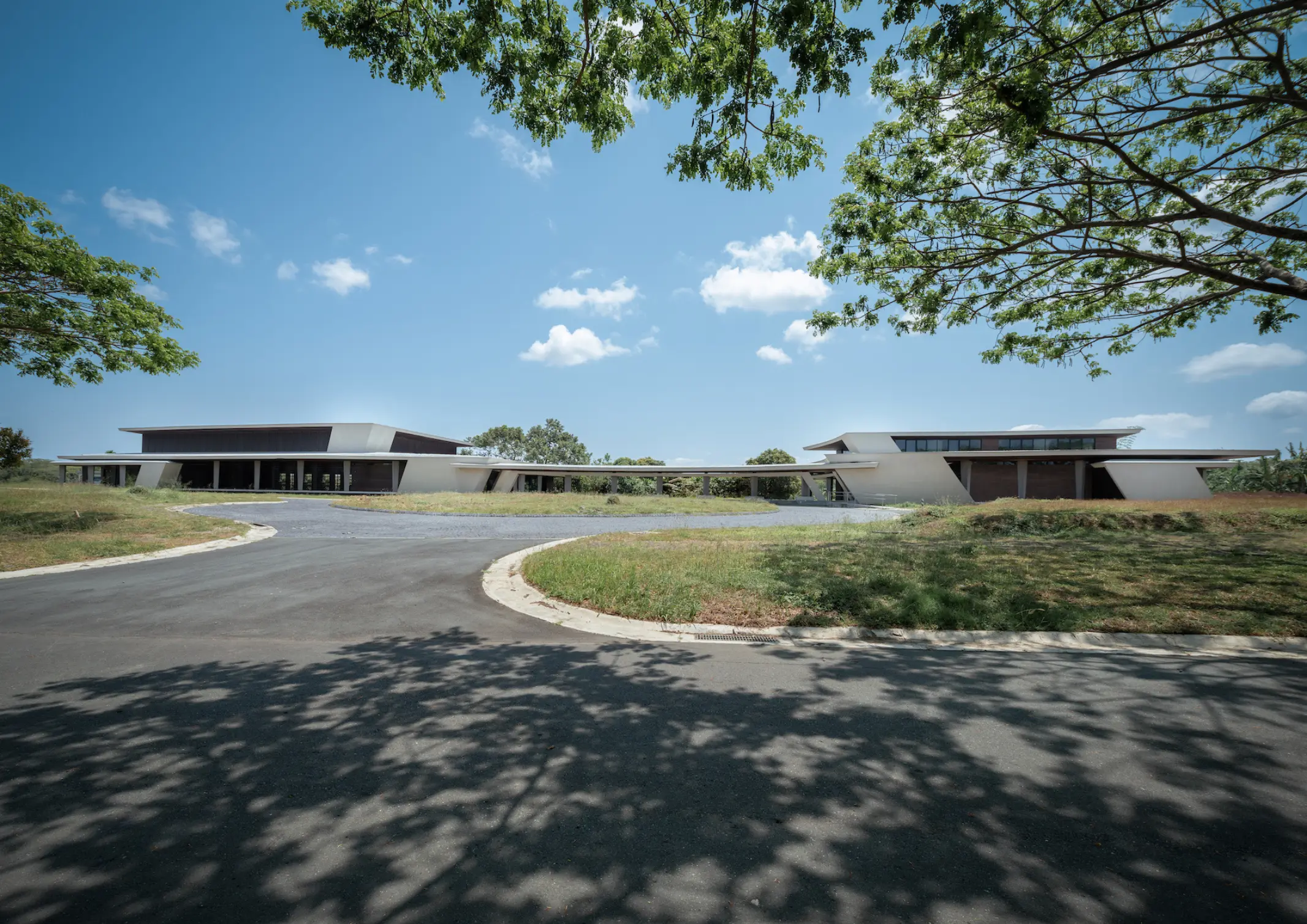
Luscara and Soliento: Barchan + Architecture on Designing a Clubhouse that Responds to its Landscape



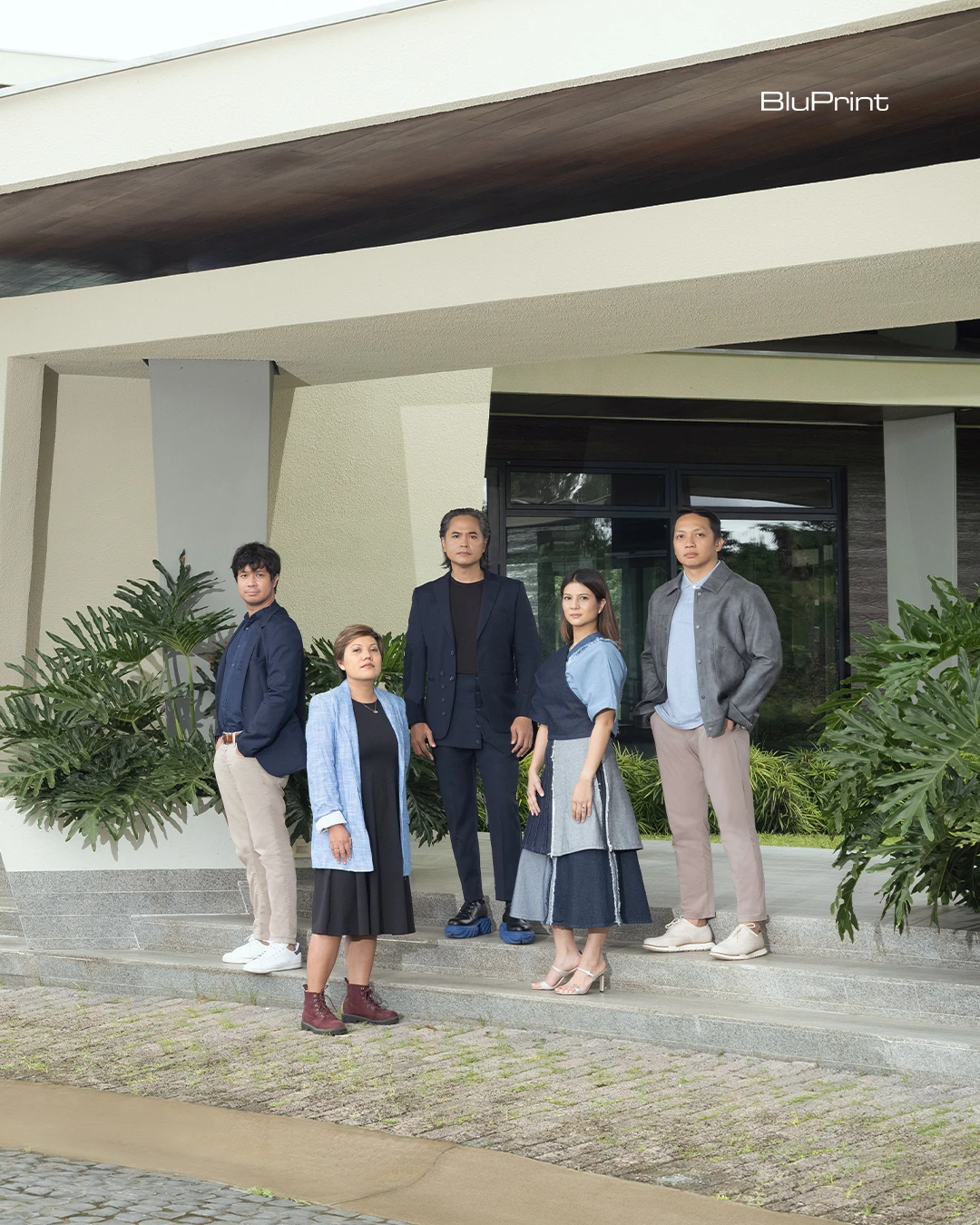
Situated in Laguna, south of Metro Manila, is a multi-thousand-hectare development created by Ayala Land Premier within the growth corridor of the CALABARZON Region. Barchan + Architecture was tasked with crafting a clubhouse for the subdivisions of Luscara and Soliento. Principal Architect of Barchan + ArchitectureArchitectureThe art and science of designing and constructing buildings, structures, and spaces that are functional, safe, and aesthetically pleasing. It encompasses the planning, design, materials, and techniques used to createGo to Architecture Glossary, Jason Buensalido, explains the firm’s process in creating the Luscara Clubhouse and the Soliento Clubhouse.
Luscara: Working Within Constraints
Luscara occupies a unique site: a long, narrow strip that includes a six-meter-wide, no-build zone running its entire length. Adding to this challenge is a ravine that leads to a creek, which requires a large easement. These constraints limited the buildable area to a long, narrow blank strip.
To address these challenges, the firm established an elongated form that emphasized the site’s terrain. The result is a clubhouse that grows from its topography, with its gentle curves, porous design, and green landscaping. Beyond the site’s constraints, the firm also sought its potentials.
Courtyards, which are approximately the size of a basketball court, define the zoning of both subdivisions. Surrounding it are lots meant for a cluster of around 8 to 10 houses. These courtyards create enclaves within the subdivision, ensuring residents’ safety.
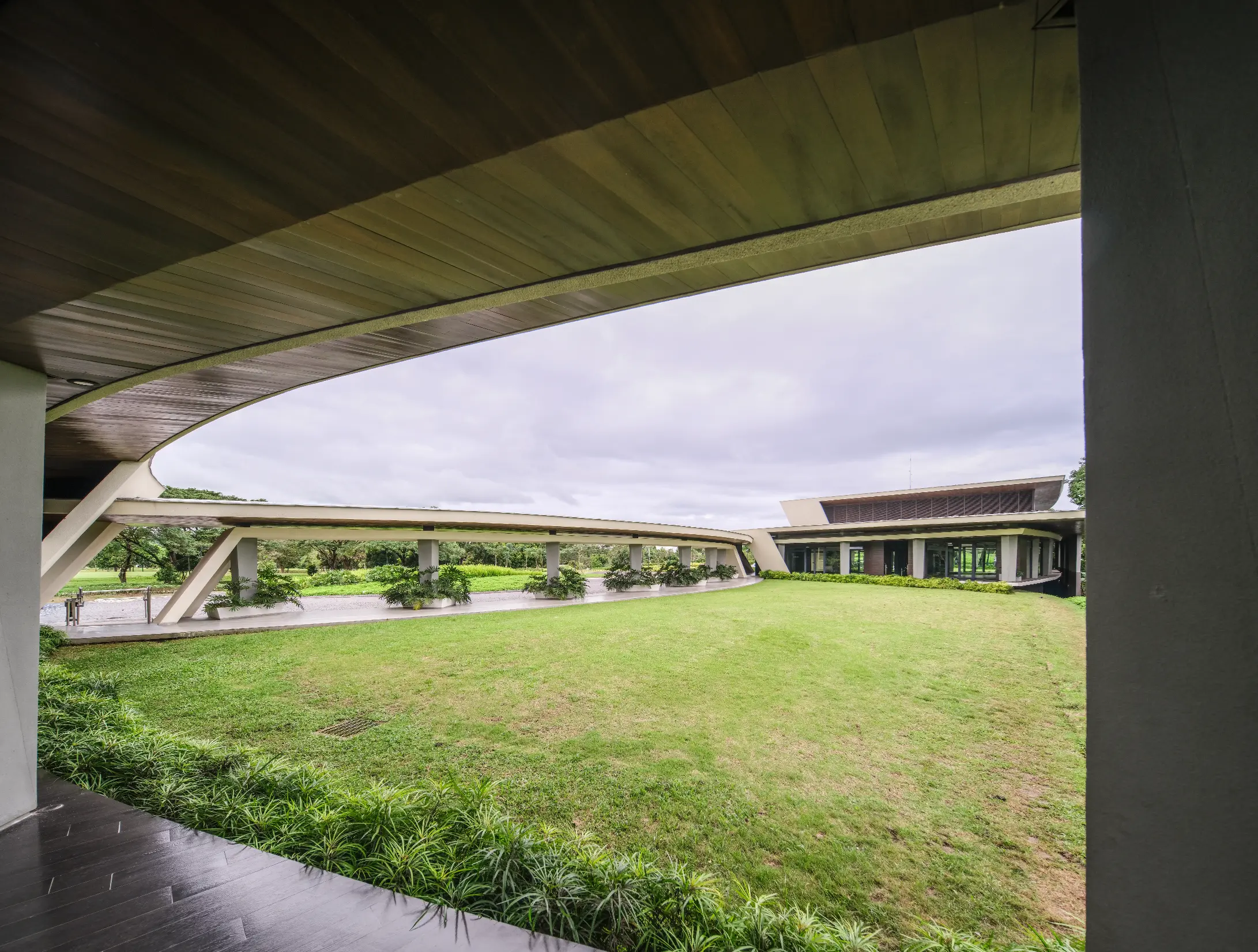
The creation of these courtyards further positions these subdivisions as premium, low-density residential developments. Running perpendicular to Luscara’s clubhouse, Buensalido saw the courtyards as potentials. In response, he ensured that there is an axis running across the courtyards that crosses through the clubhouse. In doing so, he removed anything that might obstruct the site’s mountain views.
By leveraging the absence of architectureArchitectureThe art and science of designing and constructing buildings, structures, and spaces that are functional, safe, and aesthetically pleasing. It encompasses the planning, design, materials, and techniques used to createGo to Architecture Glossary, the firm saw it as an organizing principle and a way to create physical access and continuity of open space. In addition, the physical separation of the 3,500-square-meter area created distinct social and active zones.
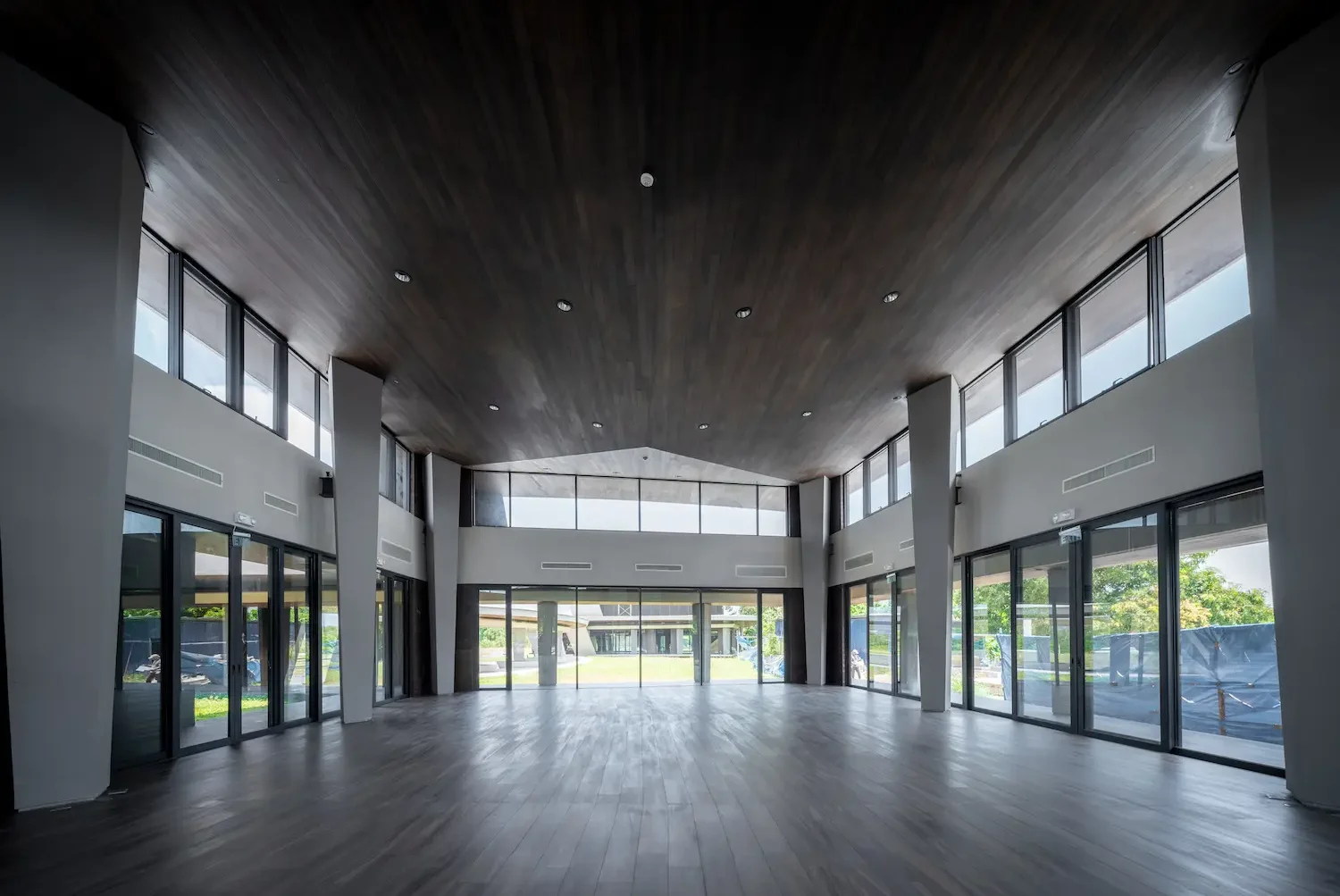
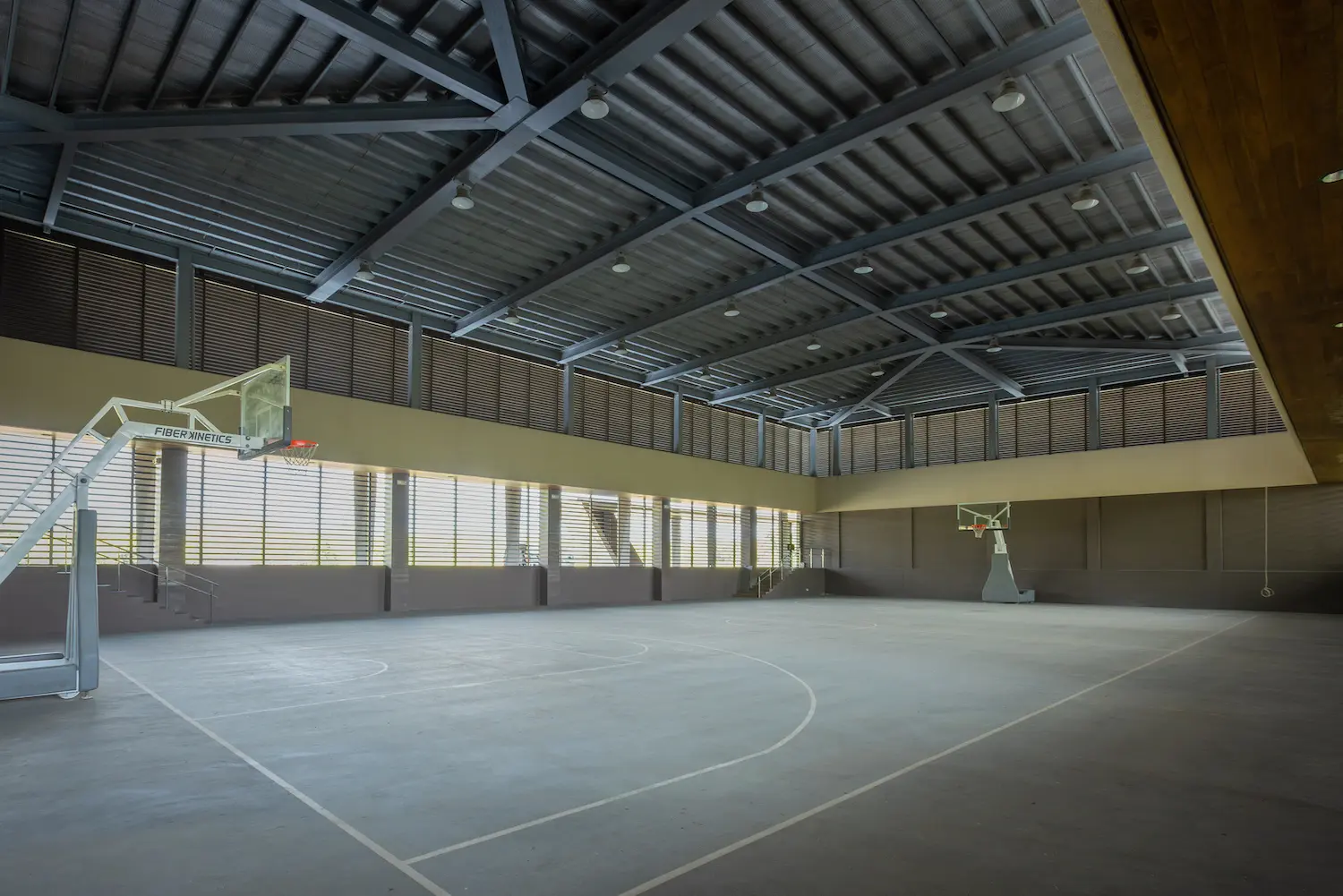
The former comprises a multipurpose hall, toilet facilities, lockers, a pool, and an outdoor area for residents to enjoy. The latter includes a basketball court, a gym, a children’s play area, the homeowner’s association’s admin office, and the utility rooms.
Luscara, meaning light, inspired the juxtaposition of its materiality: light and dark. The light appears in its use of white stucco. On the other hand, dark materials such as wood eaves, powder-coated slats, and wood-grade aluminum create a contrasting look.
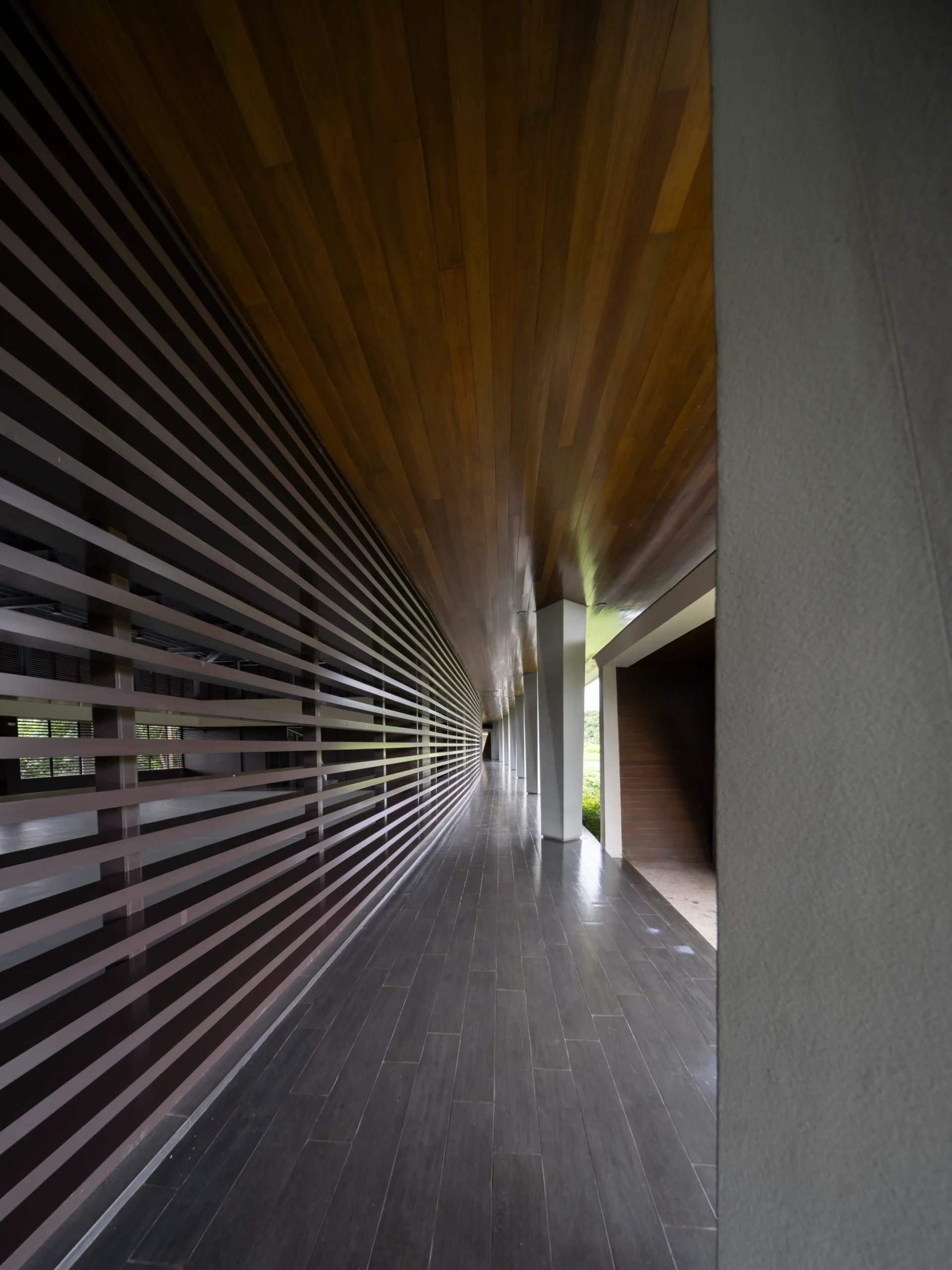
Buensalido states, “Our basic belief is that architectureArchitectureThe art and science of designing and constructing buildings, structures, and spaces that are functional, safe, and aesthetically pleasing. It encompasses the planning, design, materials, and techniques used to createGo to Architecture Glossary is simply a response to context. The context can be basic. For example, architectural components that we respond to are climate, topography, [and] orientation. Of course, there’s the complex component of context, which [is] most often non-physical, [such as] the positioning of the developer, sellability, [and the] goals of the developer. So, we wanted to respect that context.”
Soliento: Sibling Architecture
Luscara and Soliento were designed similarly, with Buensalido describing the clubhouses as “siblings.” Developed after Luscara, Soliento sits on a triangular site. Buensalido defined the clubhouses as contemporary expressions distinctly rooted in nature. The design draws from modernism’s recurring presence across decades, from the 1930s to the present.
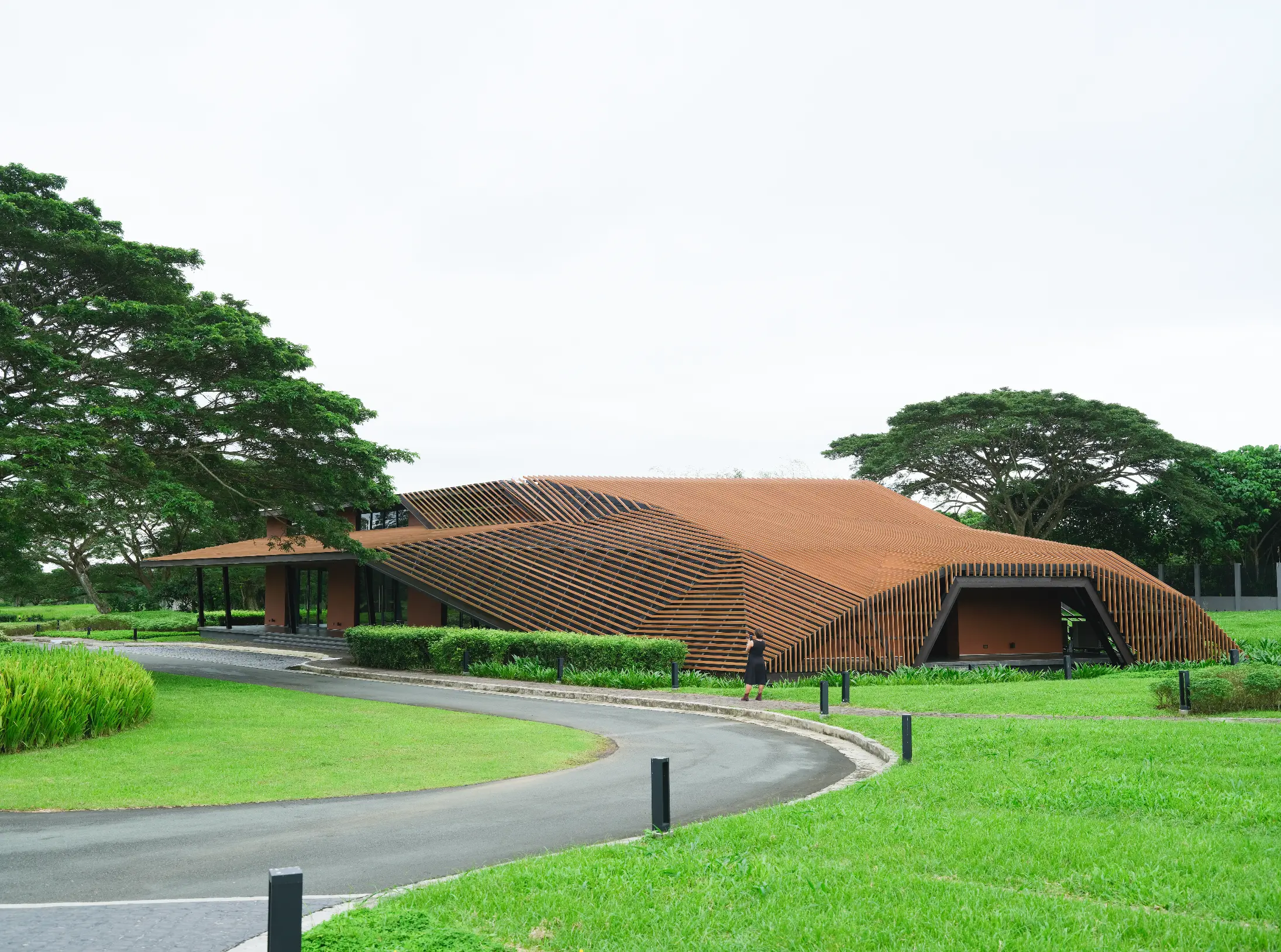
“We wanted something that’s very timeless. We imagine architecture that illuminates elegant qualities of simplicity and minimalism—the reduction of architecture from over-ornamentation to its bare essentials or its bare essence,” Buensalido shares.
The name Soliento is a portmanteau of the Spanish words for “sun” (sol) and “wind” (viento). In turn, natural formations, such as trees, streams, and mountain landscapes, inspired its architectural design. Utilizing lines to interpret these elements, the design combines the site’s topography with modernist horizontality. “Lines in architectureArchitectureThe art and science of designing and constructing buildings, structures, and spaces that are functional, safe, and aesthetically pleasing. It encompasses the planning, design, materials, and techniques used to createGo to Architecture Glossary have always been a strategy,” Buensalido explains.
Horizontal lines, for instance, were used to bring the otherwise massive structure closer to the earth because of the horizon’s length. In turn, this made the structure more human in scale. Furthermore, there are diagonal lines present, from the ground to the sky, in the form of mountainscapes or rolling terrain. This diagonality is used to negotiate the two horizontal lines, forming a canopy or roof.
From the top view, a curved language is added to the architecture. This creates a sense of curiosity for people walking through the spaces. This interplay of lines results in a softer, more transitional design. For Soliento, this is evidenced by its screens, lattices, and porous slats. These features deflect excessive heat and strong winds while welcoming filtered light and gentle breezes.
Broader Impact
Both projects redefine premium residential development by prioritizing human connection over exclusivity. Barchan + ArchitectureArchitectureThe art and science of designing and constructing buildings, structures, and spaces that are functional, safe, and aesthetically pleasing. It encompasses the planning, design, materials, and techniques used to createGo to Architecture Glossary created amenities that facilitate relationships among individuals, families, neighbors, and the entire village.
“The hope of architectureArchitectureThe art and science of designing and constructing buildings, structures, and spaces that are functional, safe, and aesthetically pleasing. It encompasses the planning, design, materials, and techniques used to createGo to Architecture Glossary [is] to recede and to be taken over by community and landscape. [It can also influence] the home designs, so that they will also recede. [This] will create a collection of houses that celebrate architecture, that celebrate people, community, rather than houses that seek attention,” Buensalido remarks.
Ultimately, Luscara and Soliento demonstrate how architectural constraints, when embraced creatively, generate more interesting solutions. Both projects prove that architectureArchitectureThe art and science of designing and constructing buildings, structures, and spaces that are functional, safe, and aesthetically pleasing. It encompasses the planning, design, materials, and techniques used to createGo to Architecture Glossary succeeds when it thoughtfully responds to its context.
Read More: Pueblo de Oro Townsquare Fuses Tradition and Modernity
Frequently Asked Questions
The Luscara site featured a long, narrow strip complicated by a six-meter-wide no-build zone and a significant ravine easement. Technically, the firm responded by establishing an elongated, porous form that follows the site’s topography. By leveraging these constraints, the architecture “recedes,” using the absence of physical structures to create an organizing axis that maintains unobstructed views of the nearby mountains.
The clubhouse is physically separated into two distinct functional zones to manage low-density residential needs. The Social Zone contains the multipurpose hall, pool, and lounge areas, characterized by dark wooden slats that contrast with natural light. The Active Zone houses the basketball court, gym, children’s play area, and administrative offices. This separation allows for simultaneous use of the facility without acoustic or functional interference.
“Luscara,” meaning light, inspired a technical juxtaposition of light and dark materials. The “light” is expressed through white stucco walls that reflect the sun. The “dark” contrast is achieved through the use of wood eaves, powder-coated slats, and wood-grade aluminum. This materiality is not just aesthetic; the slats serve as functional screens that manage solar heat gain while maintaining a visual connection to the courtyards.
The name Soliento—a portmanteau of sol (sun) and viento (wind)—is reflected in its modernist, horizontal design. To prevent the structure from feeling overly massive, Buensalido utilized horizontal lines to ground the building and bring it closer to the earth’s horizon. Diagonal lines were then used to mimic the rolling terrain of the surrounding mountainscapes, forming a canopy that connects the ground to the sky, effectively making the structure feel more approachable and “human.”
For the Soliento Clubhouse, the design features an interplay of curved lines, screens, and porous slats. Technically, these elements function as a passive cooling system. The lattices are engineered to deflect excessive tropical heat and break strong winds, while simultaneously allowing filtered light and gentle breezes to permeate the social spaces. This creates a softer, transitional environment that reduces the need for mechanical cooling.
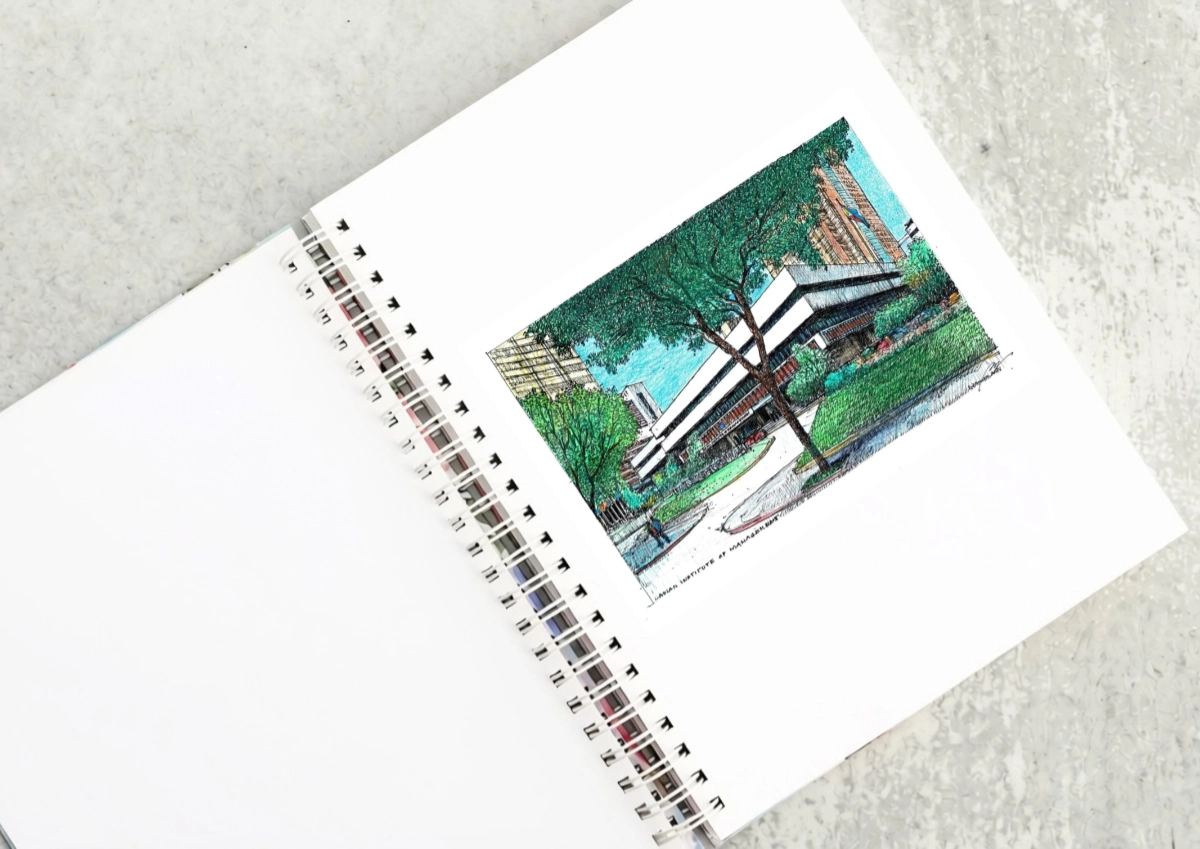
A Filipino Interpretation of Modernist Architecture Unlike the rest of Makati today, the northern end of Paseo de Roxas in Makati is anchored by a low complex rather than a tall skyscraper. This is the elegant Asian Institute of Management, designed by architect Gabriel Formoso and completed in 1971. In my opinion, the building is […]

“Thailand has claimed urban creativity and livability. Singapore has institutional design leadership. Indonesia is emerging as a design hub. Vietnam is moving into design innovation. And the Philippines? Its position is not weak. It is simply unclaimed.” For IDr. Cecil Ravelas, National President of the Philippine Institute of Interior Designers (PIID), the challenge is not […]
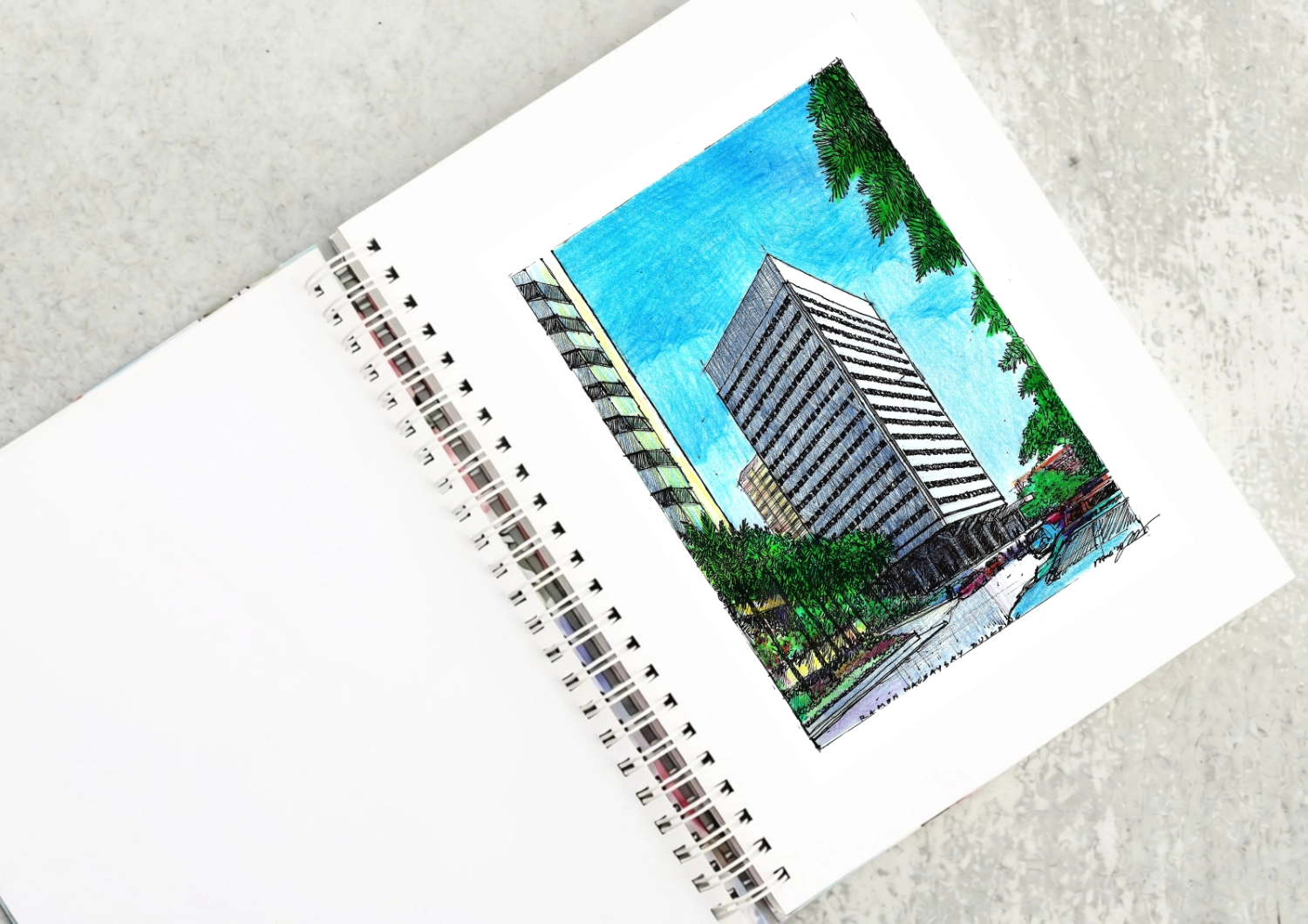
The Ramon Magsaysay Center as a Modernist Landmark Driving down Roxas boulevard from Rizal Park, what will catch your eye is the most elegant modernist structure in the country, the Ramon Magsaysay Center. Most established Filipino architects put it in their top ten lists of favorite buildings. It was designed by Alfredo J. Luz, who […]

Rinna Soriano’s favorite part of her work is sanding. At her workbench, she stays focused, following the grain, adjusting to changes in its direction. Narra, she has learned, can have interlocking grain. A piece of mango once proved particularly difficult until a worker explained that she had reached the point where a branch once grew […]
Read the issues.

Collect the volumes.

Recommended Video
Tap to Unmute
Unmute
0:00
0:00