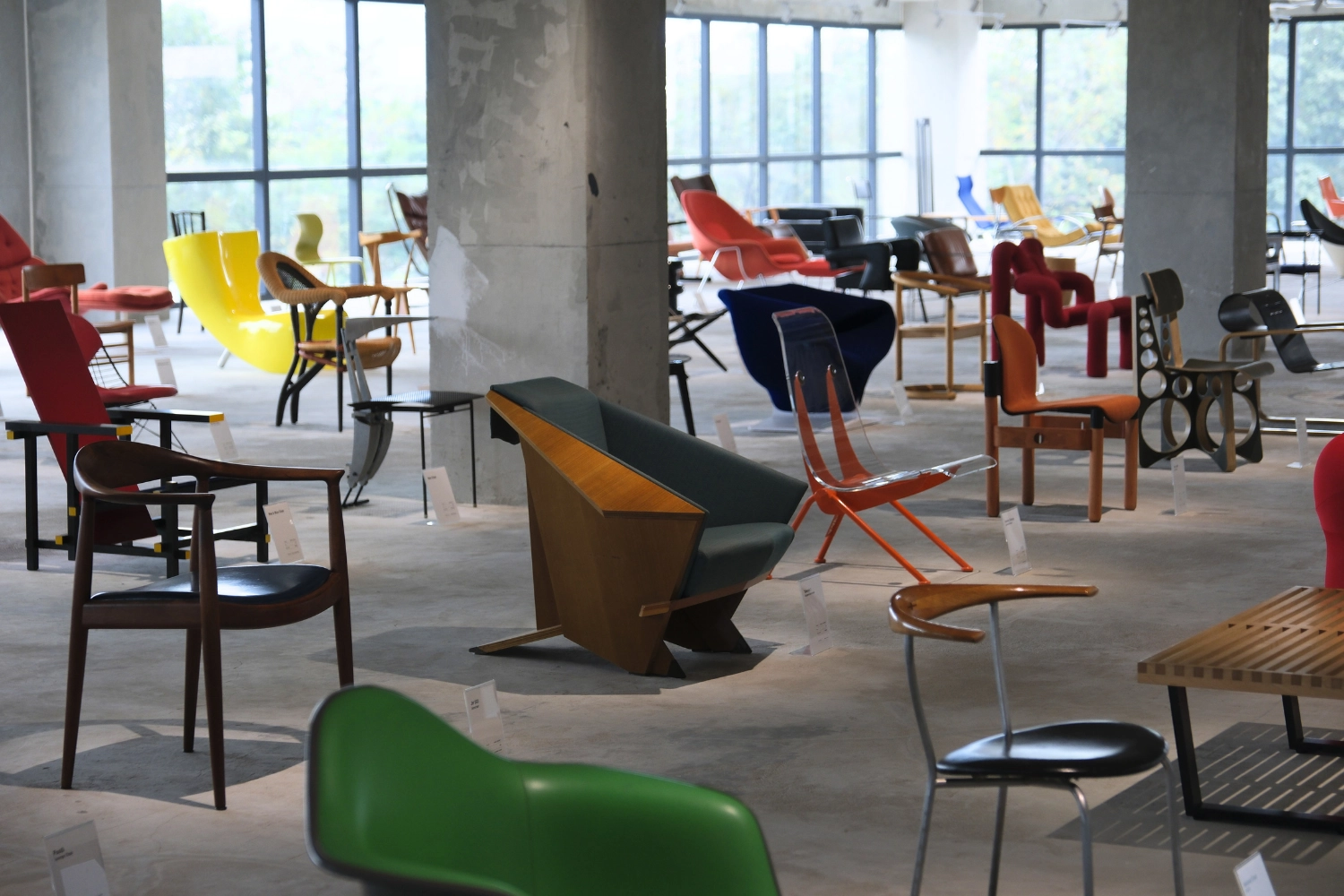
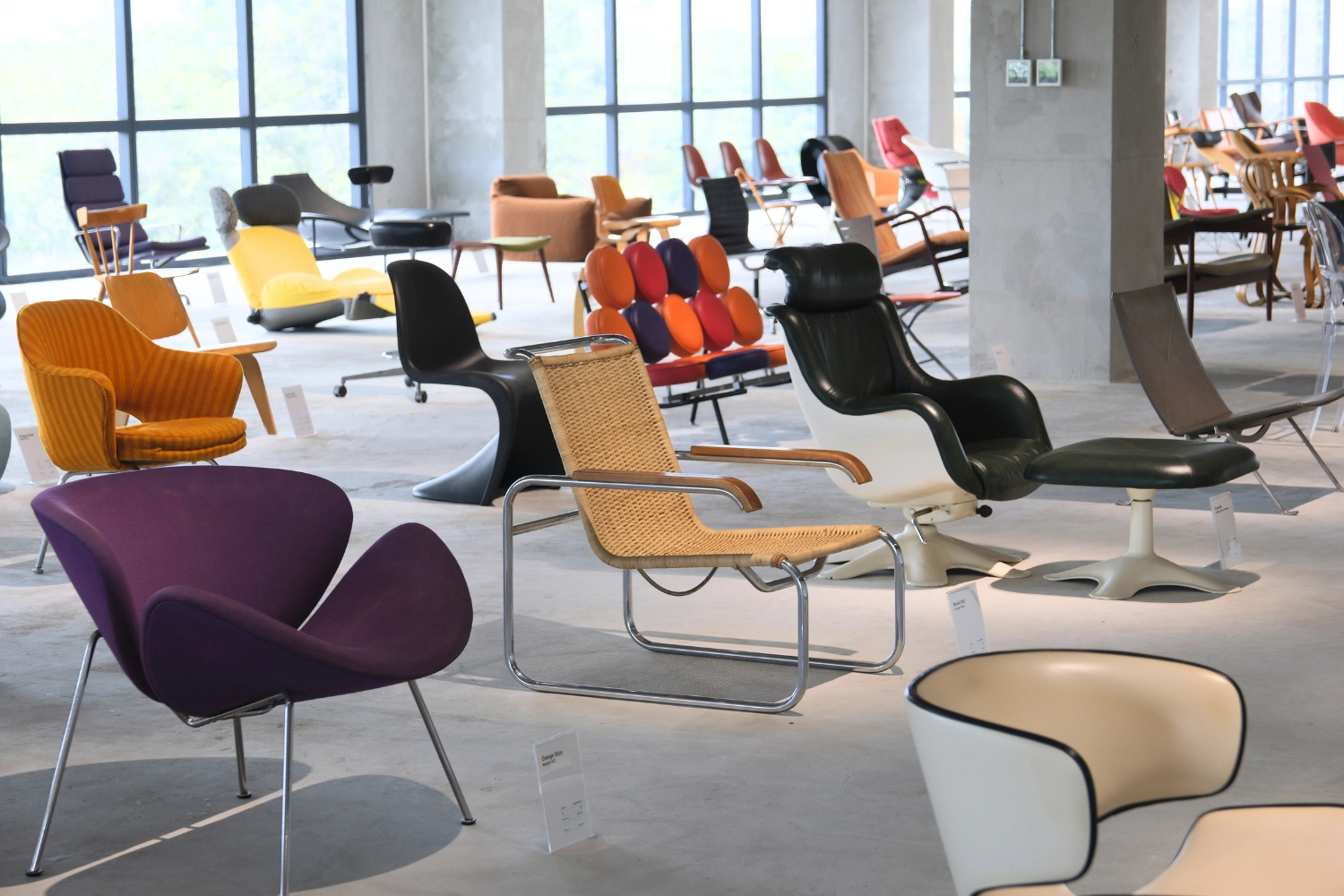
There are 197 chairs on the unfinished yet pristine concrete floor. Take a step forward, and you might accidentally step into a name card on the floor introducing the Panton Chair by Verner Panton in front of you. Back up a few paces in caution, and you run the risk of actually bumping into the […]
In Chairs We Trust: A Showcase of Midcentury Design Somewhere in Nuvali


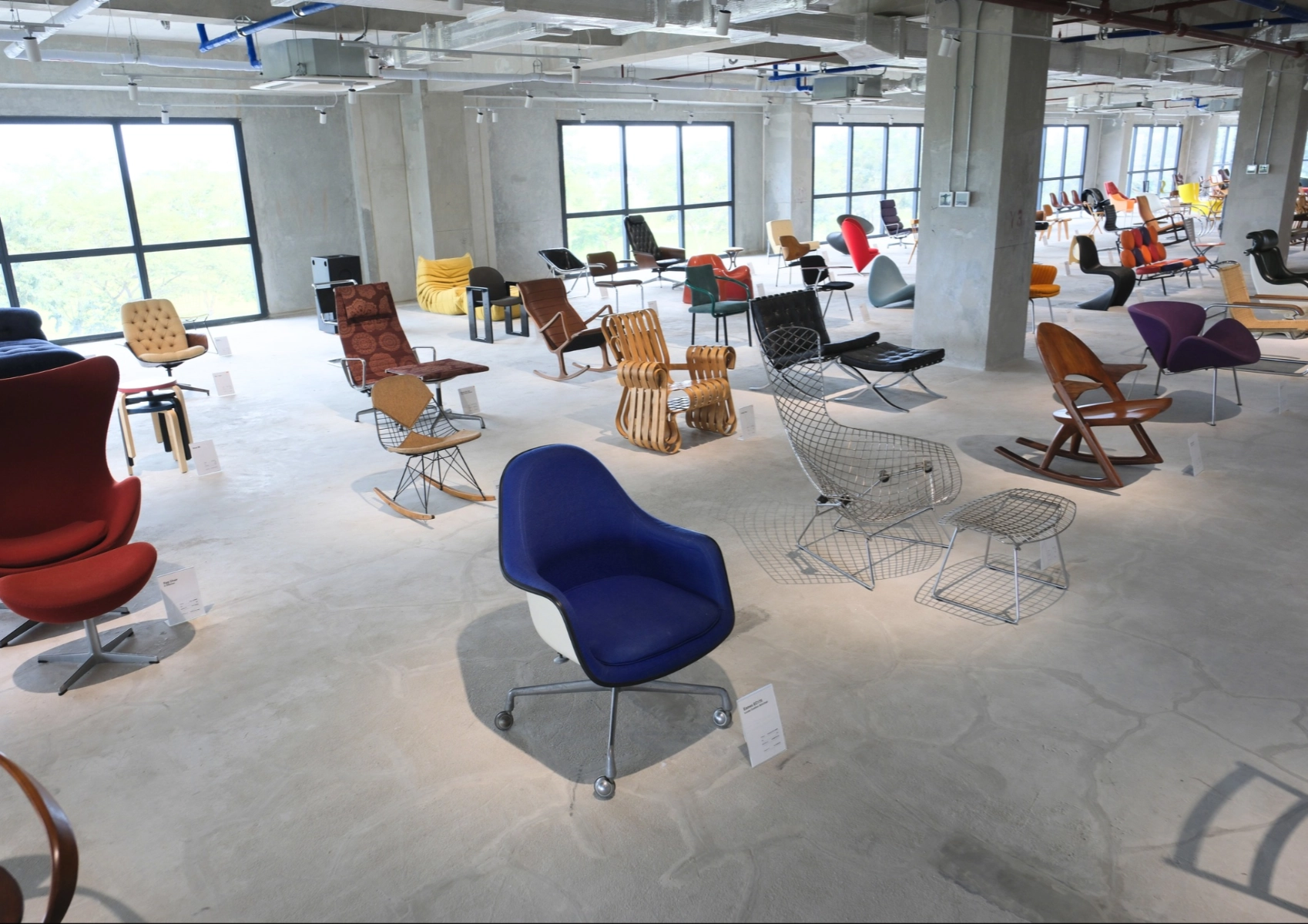
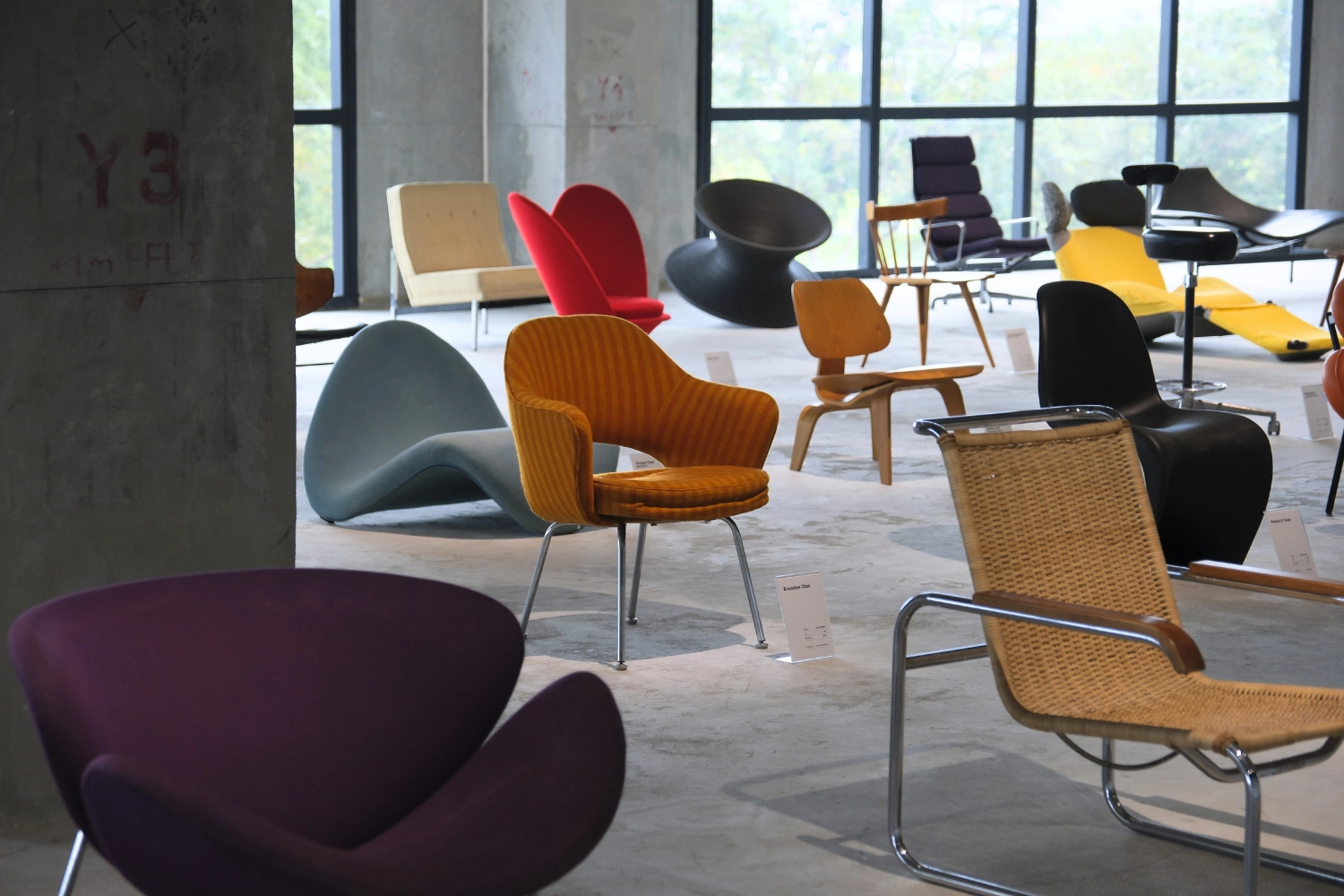
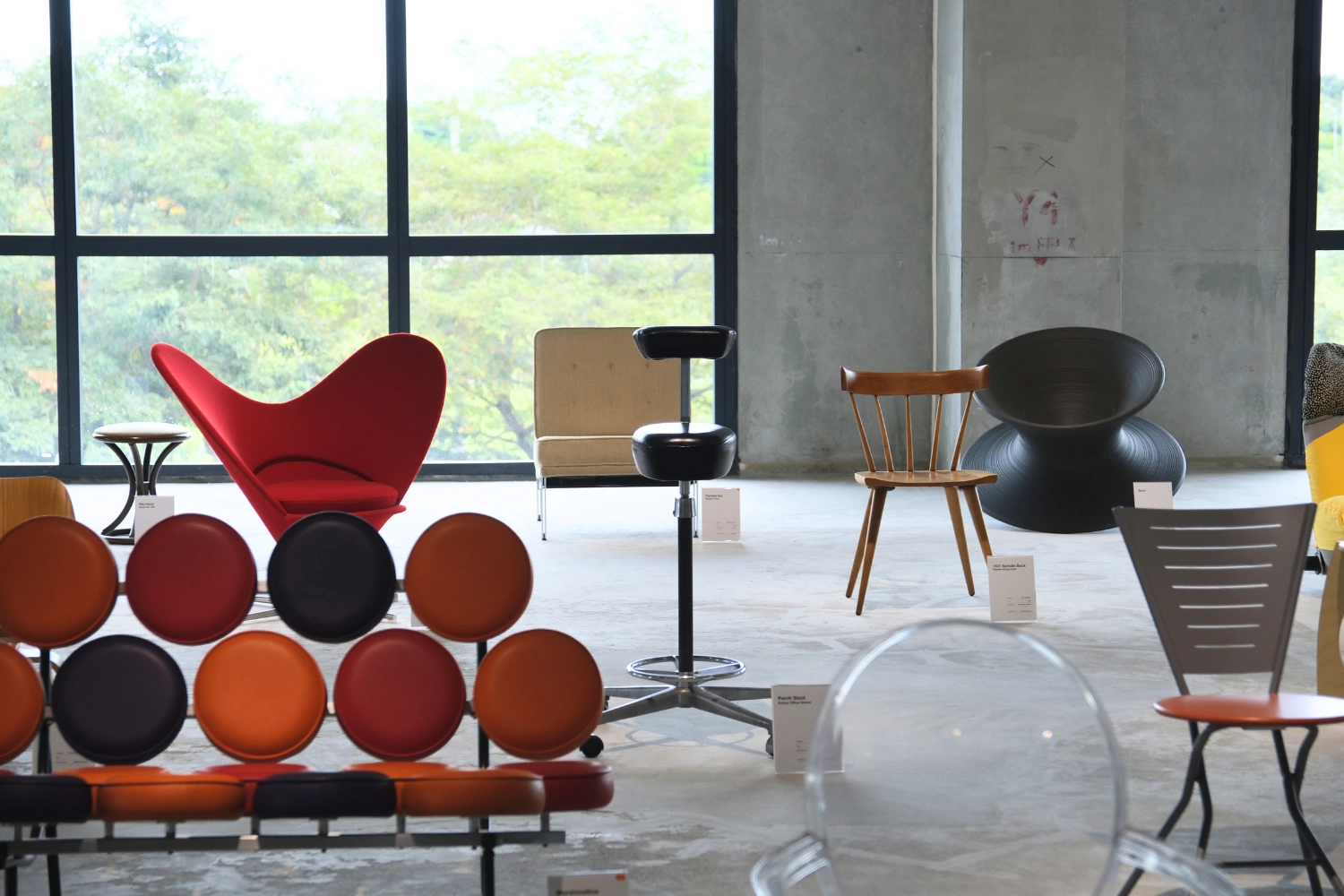
There are 197 chairs on the unfinished yet pristine concrete floor.
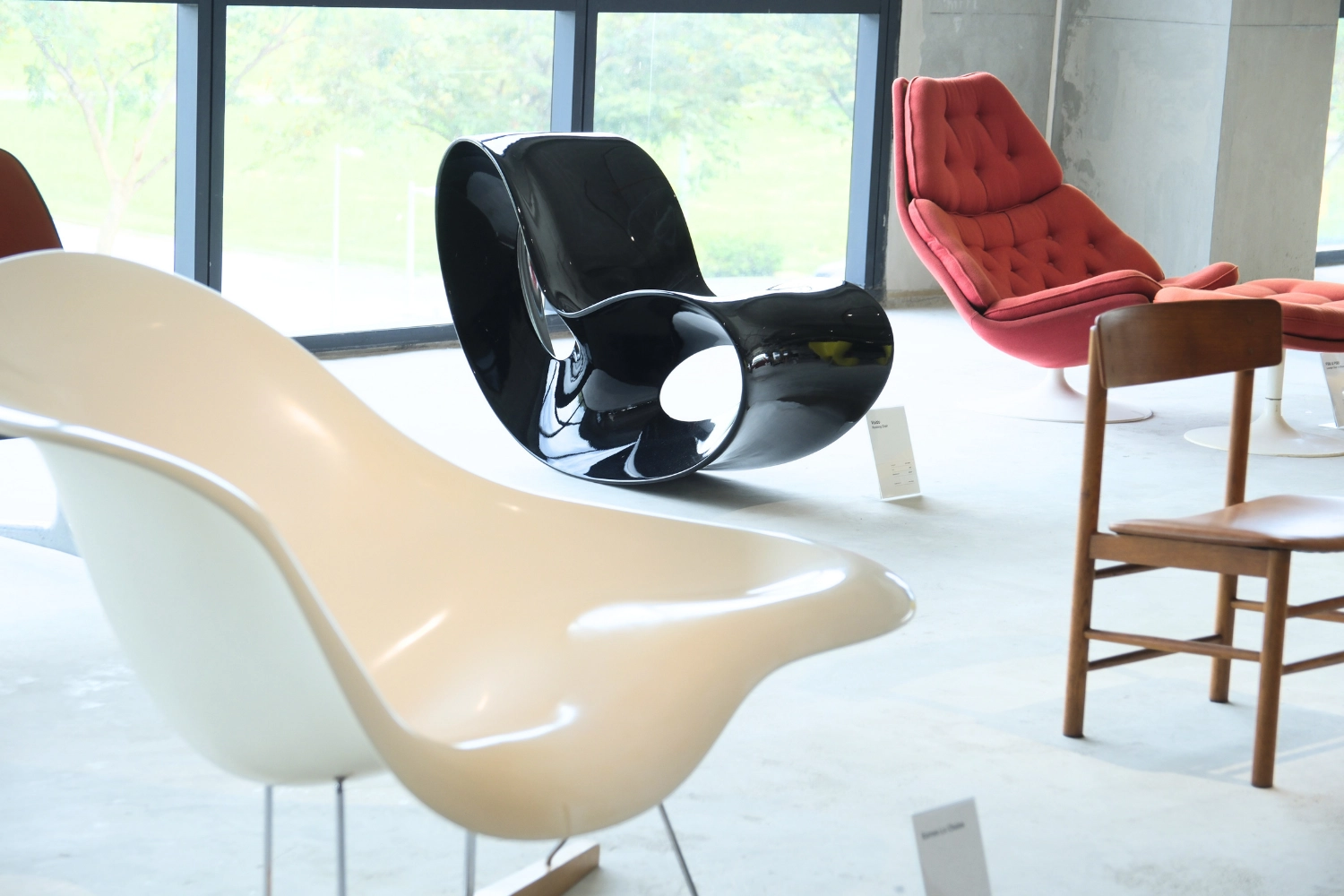
Take a step forward, and you might accidentally step into a name card on the floor introducing the Panton Chair by Verner Panton in front of you. Back up a few paces in caution, and you run the risk of actually bumping into the Marshmallow Sofa designed by Irving Harper and George Nelson.
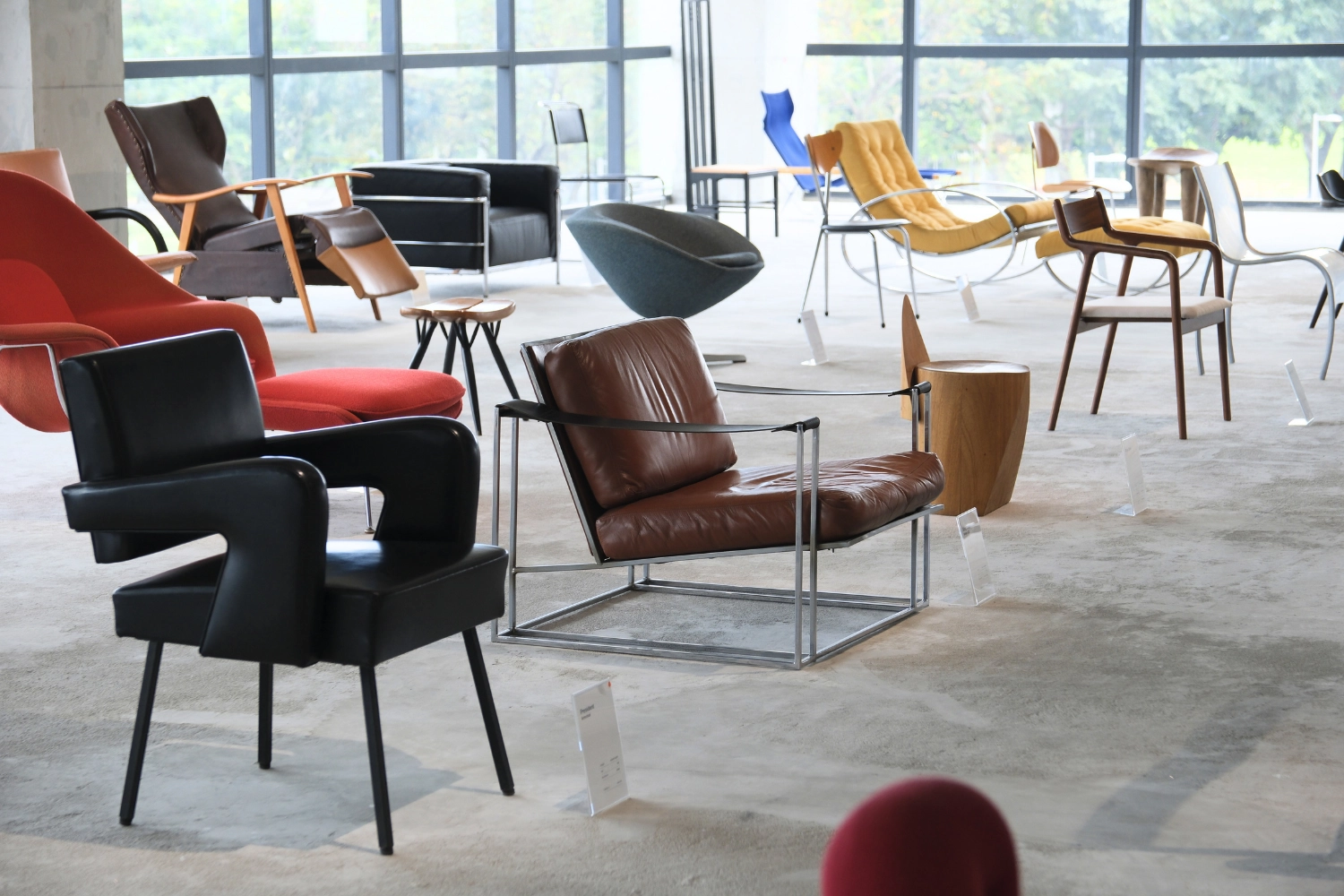
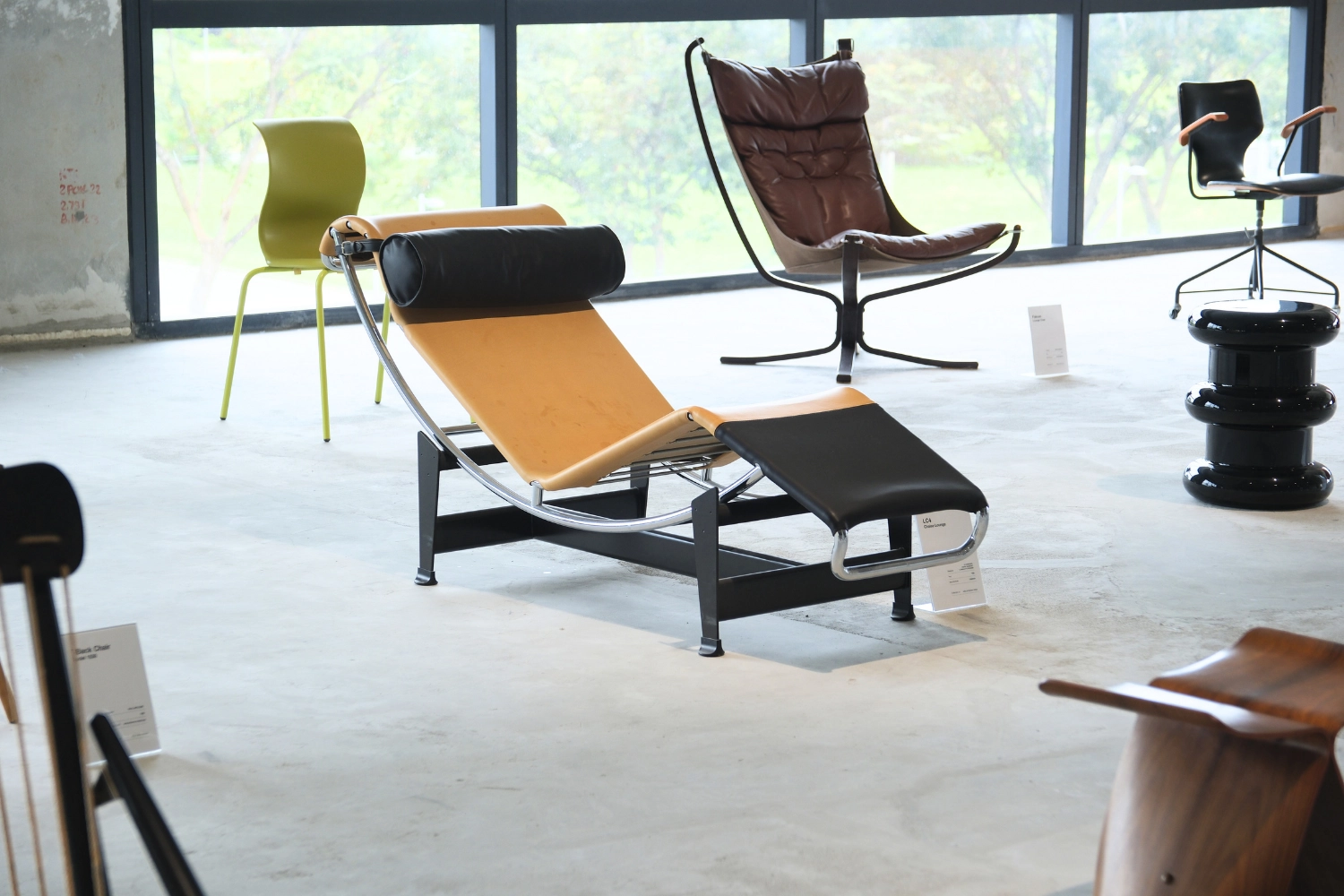
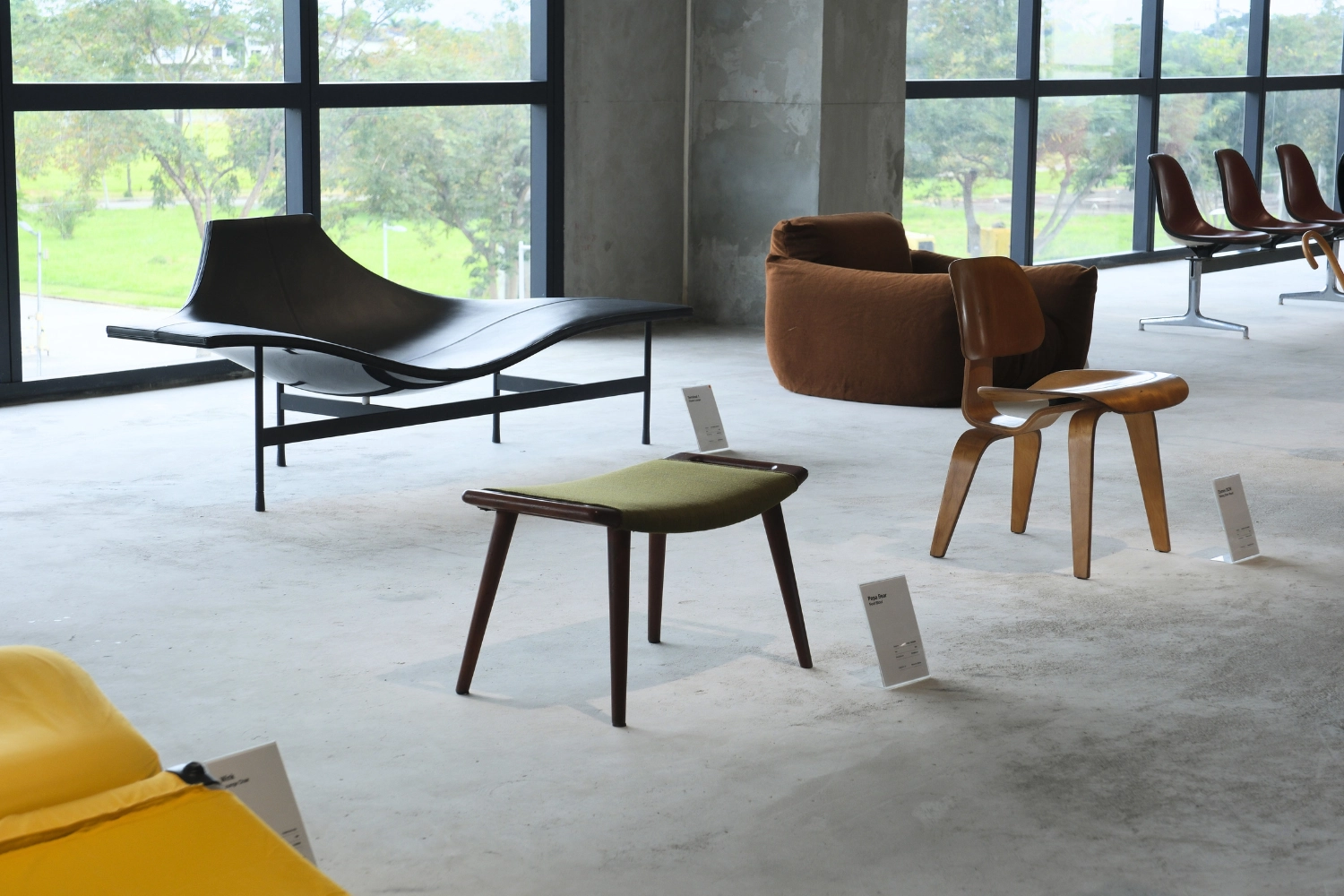
Both share space with Panton’s Heart Cone Chair, the Barcelona Chair and Ottoman by Mies Van Der Rohe, La Chaise, Loose Cushion Armchair, and Billy Wilder lounger by Charles and Ray Eames, the Ribbon Chair and Tongue Chair by Pierre Paulin, the Red and Blue by Gerrit Rietveld, the Wiggle Side Chair and Cross Check Chair by Frank Gehry, numerous Eero Saarinens, and many more—each piece an original gleaned from private collections.
It’s an astounding assemblage of midcentury modern chairs, all on display at the In Chairs We Trust exhibit of MCM’s Somewhere in Nuvali show. It’s even more jaw-dropping when MCM co-founder Ken Mishuku reveals that half the chairs on display are from his own personal collection, and that the other half consists of pieces sold to clients, borrowed for the show. “Some of the pieces here, I bought 15 years ago,” Mishuku shares as he walks us through the exhibit. “A lot of these, I’ve been saving in our warehouse for a time like this, for an occasion when we could show them properly.”
Mishuku and his wife Isa co-founded MCM, or Midcentury Manila. It took root on Facebook, where the couple sold pieces online, and has since evolved into a studio, restoration workshop, gallery, and, now, a multidisciplinary creative space.
Related Read: 7 Must-Have Iconic Chairs You Need to Know
The Chair That Started It All
It all began with one of the chairs sitting prettily in the exhibit—the instantly-recognizable Eames Lounge Chair, albeit one purchased on OLX, the online marketplace of the noughties.
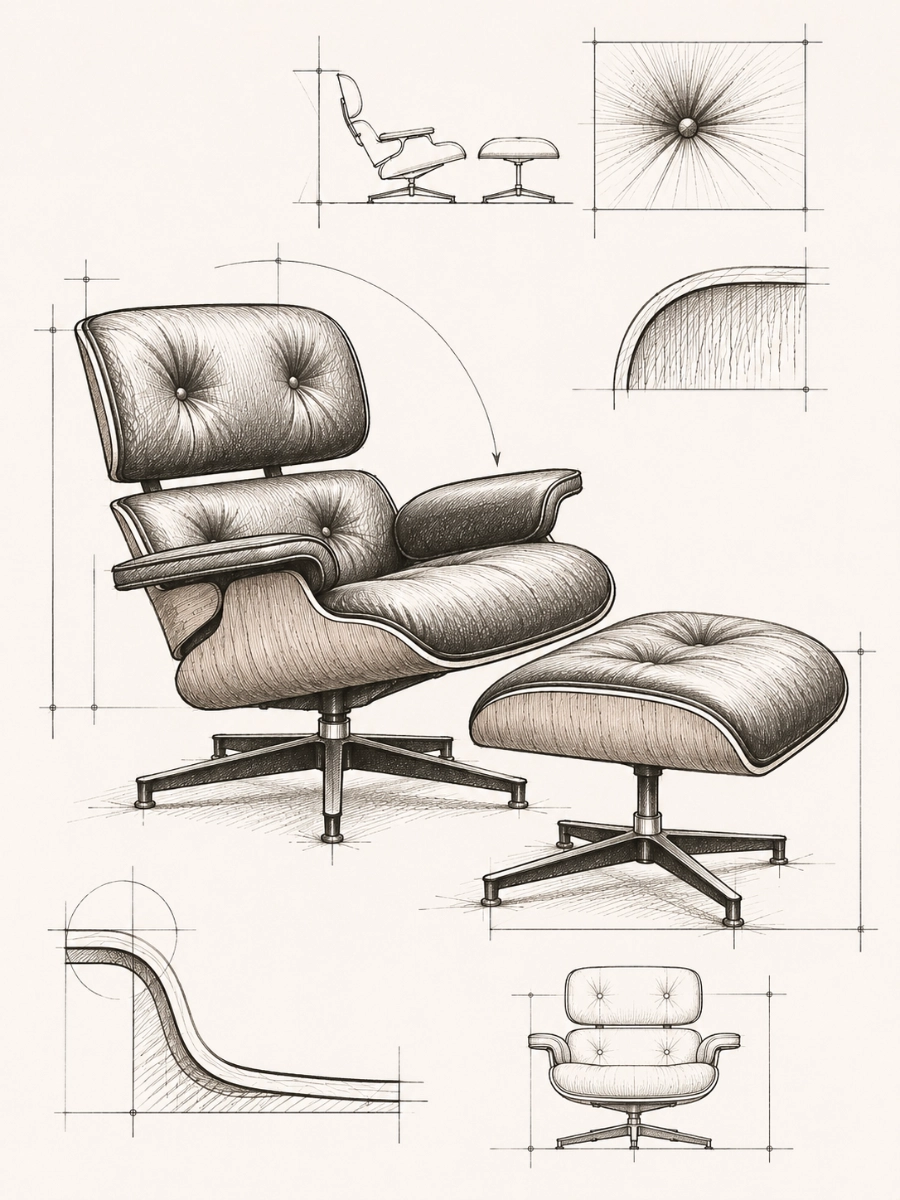
“Ken and I were working on our home,” Isa explains, “and we realized that we had super opposing tastes.” Ken’s ran more masculine along the lines of tufting and leather, while Isa preferred a clean, minimalist, airy look. The midcentury modern aesthetic, they discovered, was a happy compromise, and they hedged their furnishing bets on an online purchase of a supposedly vintage Eames lounger. “Sobrang sira na siya (it’s so dilapidated),” Ken recalls. “The seller said, ‘It’s a 60s piece.’ Sabi ko, (I said) ‘Uy, original!” So we paid a good amount of money for it. And then we tried to restore it. Got parts abroad, hindi nag-fit (didn’t fit).”
The couple buried themselves in research on how to restore the piece, buying books and kicking off a deep dive into midcentury modern furniture and history—a quest that would ultimately prove that the Eames lounge chair that they purchased was, unfortunately, a fake. The fire, however, had been lit.
“I got so into it,” Ken says. “Sabi ko, ang ganda ng story ng midcentury modern. And so I dug deeper, found out how to authenticate. I searched for more [pieces], but this time, I knew how to figure out if it was real. I’d come across original pieces that people didn’t know were original. So ang dami ko na-acquire, to the point na, sumobra na. (I acquired a lot to the point that I had too much.) So I tried to sell them.”
Selling came with its own challenges, the biggest one being that the public didn’t fully grasp the value of an original piece. “We had to educate,” Ken says. “We would get comments like, ‘Diba may ganyan sa SM’ (Isn’t this available at SM?) They had no idea that there was a designer. What we did, we would post [online] and put the history behind the chair.”
Related Read: Espresso: A Unique Neutral Color Adding Warmth and Drama to Interiors
Bringing Design History to a Wider Audience
Educating people about midcentury modern design has turned into a mission for MCM. It is, in fact, one of the reasons why they decided to mount Somewhere in Nuvali. “I really want to educate the younger ones,” Ken shares. “Something like this, you won’t normally see in the Philippines. But if you go to Europe or Japan, this is something that you’ll see being done there. I feel like since I had access to all these chairs, might as well put it out there.”
And so, somewhere in Nuvali, there is a two-part exhibit.
The first part, of course, is In Chairs We Trust, featuring original midcentury pieces, such as Ken’s favorites, Frank Lloyd Wright’s Origami Chair, Finn Juhl’s Chieftain Chair, and Tom Sachs’ Shop Chair. They’ve also included less popular midcentury chairs, such as the Cockpit Chair. “I wanted to put pieces that, even in shows done abroad, hindi nila makikita (they won’t see it), but I feel like you have to take a look at them kasi maganda rin sila (because they are also beautiful).”
Related Read: Over 200 Iconic, Forgotten, and New Vitra Chairs Assembled
Beyond the Chairs
The second exhibit is “The Dept Store,” which is essentially a curated marketplace with select apparel, footwear, watches, eyewear, paper products, lamps, textiles, ceramics, and yes, MCM furniture, for sale. Every weekend, when the exhibit opens, restaurant pop-ups feed a hungry crowd, complete with coffee and alcoholic beverages, and a solid lineup of DJs and bands take over the decks and musical setup.
What Somewhere in Nuvali really is, is a taste of a perspective—a very specific, design- and quality-first approach to living that is the essence of MCM. Isa shares how the MCM warehouse in Biñan has evolved into a melting pot of design, music, and art, with vintage guitars, art, clothing, and a weekly hang and jam session with musicians. “We have so many different pursuits, so we decided to just put it all there.”
The show is a display of craftsmanship at its finest, which is what drew Ken and Isa to midcentury modern furniture in the first place. The craftsmanship of the pieces, Ken says, is what makes a midcentury piece worth collecting. “If you look at all the pieces, you’ll see a lot of work and attention to detail. But what I like about it the most is that, behind most chairs, were architects. I think Le Corbusier said, ‘It’s more difficult to design a chair than a building.’ That’s how they perceived it. So when you see the chairs, you’ll see that a lot of effort was really put into making it. There’s also this one chair, if I’m not mistaken, yung Eames aluminum chair. When Charles and Ray Eames were asked, sabi nila it was a 40-year planning process before it really took place. That’s how long it took for these chairs to get going. That’s what I wanted to show.”
Related Read: Spinach House: A Blend of Mid-Century Modern and Modern Tropical Design
MCM’s Somewhere in Nuvali show runs every weekend until December 20 at Nuvali Technohub 1 in Nuvali, Laguna. On November 15, certain pieces will be swapped out to put new ones on display. Check @midcenturymanila on Instagram for more details and updates.
Frequently Asked Questions
Somewhere in Nuvali is a two-part show organized by Midcentury Manila (MCM), combining an exhibition of original designer chairs with The Dept Store, a curated marketplace. Weekend activities include food and beverage pop-ups and music performances.
In Chairs We Trust is the chair exhibition within Somewhere in Nuvali, featuring 197 original pieces from private collections, including designs by Charles and Ray Eames, Verner Panton, Pierre Paulin, and other influential designers.
Midcentury Manila was founded by Ken and Isa Mishuku. The business began with the couple’s interest in midcentury modern furniture and has since expanded into furniture restoration, collecting, and creative programming.
The Dept Store is a curated marketplace featuring apparel, footwear, watches, eyewear, lighting, textiles, ceramics, paper products, and furniture from MCM.
Somewhere in Nuvali takes place every weekend until December 20, 2026, at Nuvali Technohub 1 in Nuvali, Laguna. Selected exhibition pieces will be changed on November 15.
Comfort is an essential consideration in bathroom design. In a compact condominium, it may begin with efficient planning and fixtures that maximize limited space. In a private residence, it may involve generous proportions, personalized details, and greater privacy. In hotels and commercial developments, comfort must also account for different users, frequent use, and operational requirements. […]
Revisiting Jose Maria Zaragoza’s 1969 modernist landmark on Ortigas Avenue, where corporate architectureArchitectureThe art and science of designing and constructing buildings, structures, and spaces that are functional, safe, and aesthetically pleasing. It encompasses the planning, design, materials, and techniques used to createGo to Architecture Glossary, performing arts, and personal memories come together. The Meralco Building […]
There is no excerpt because this is a protected post.
Culture is not just a motif incorporated into architectureArchitectureThe art and science of designing and constructing buildings, structures, and spaces that are functional, safe, and aesthetically pleasing. It encompasses the planning, design, materials, and techniques used to createGo to Architecture Glossary and interior design. It is shaped by people, places, and shared experiences. On the […]
Read the issues.

Collect the volumes.

Recommended Video
Tap to Unmute
Unmute
0:00
0:00