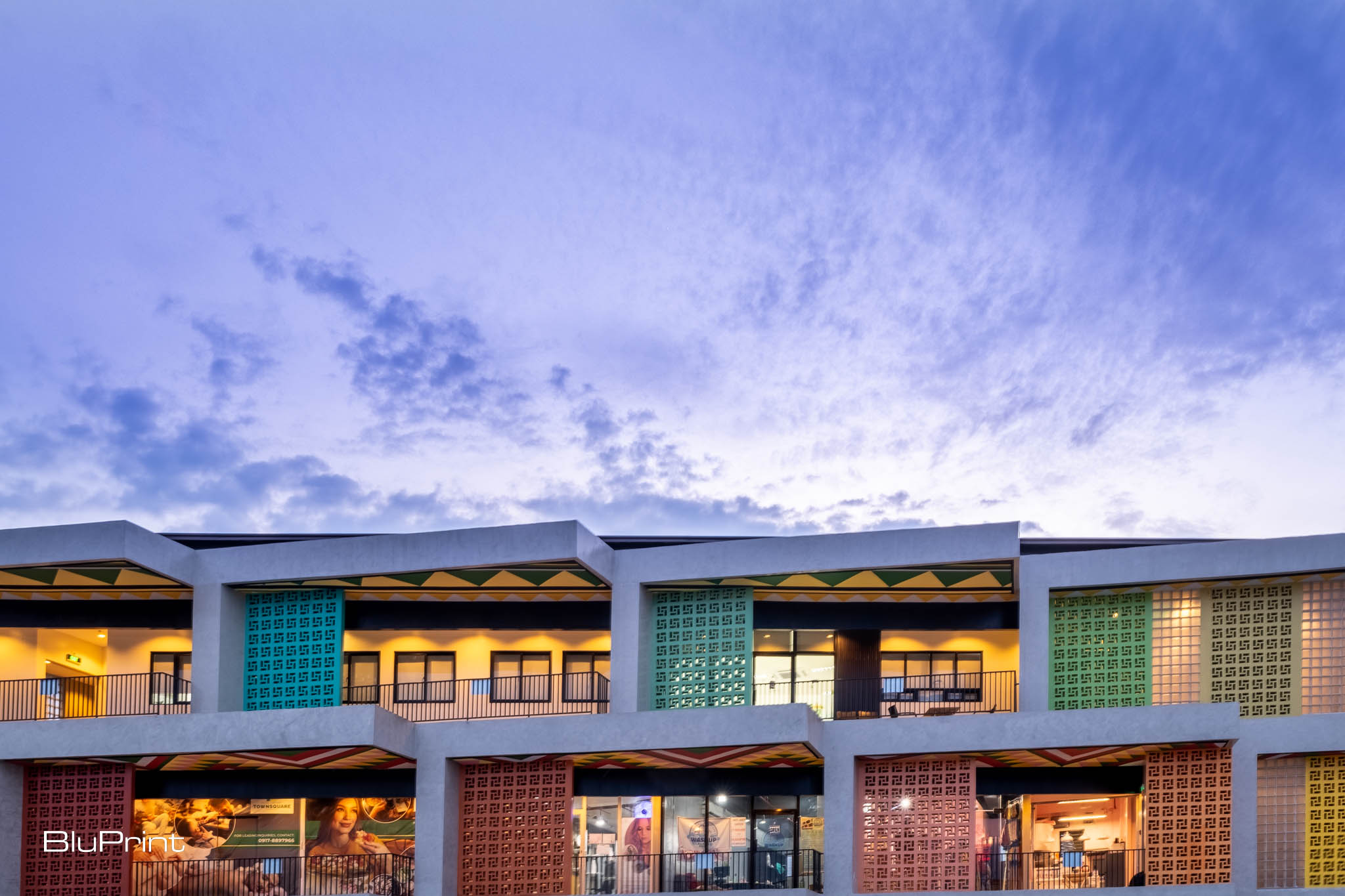
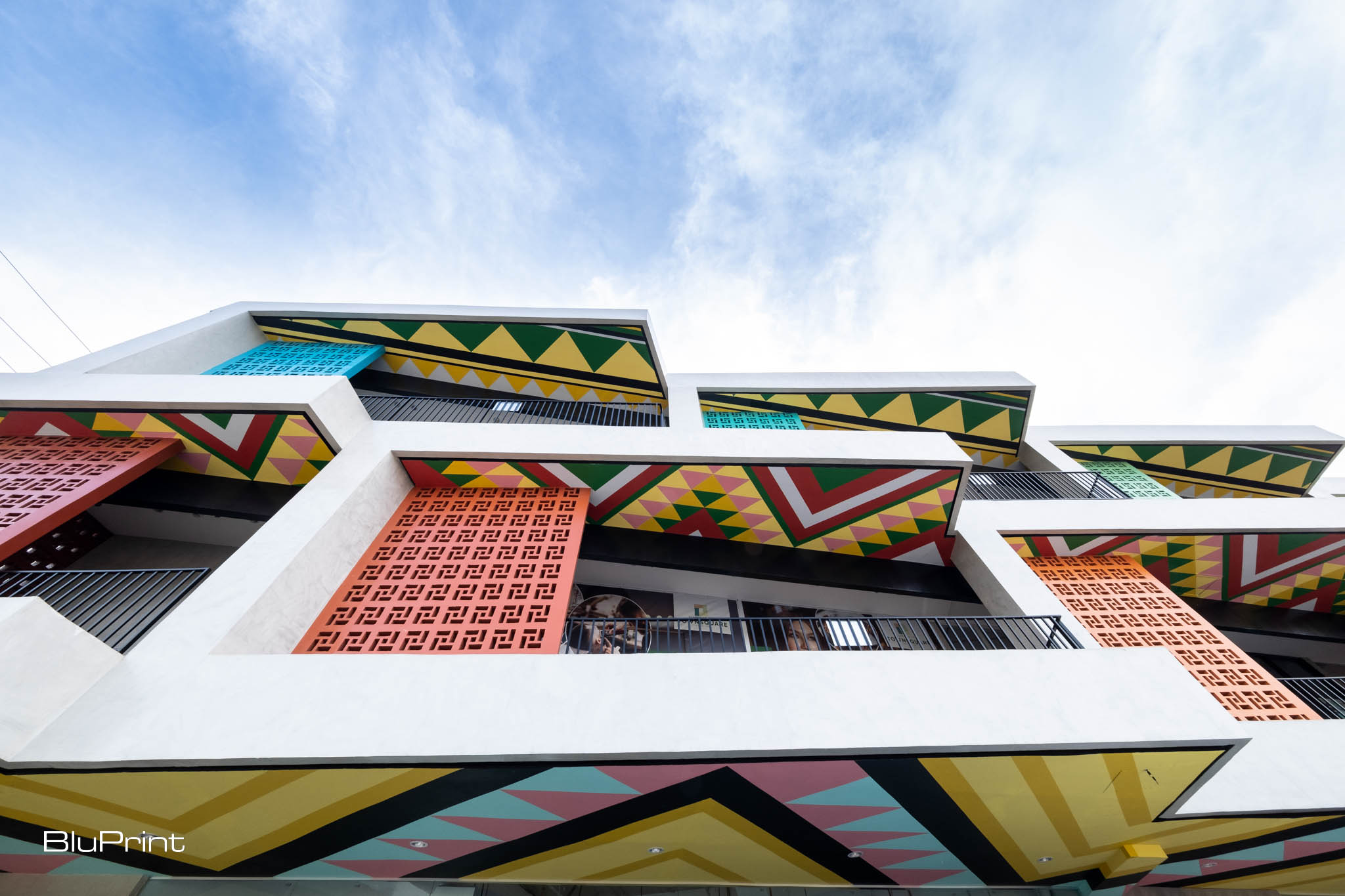
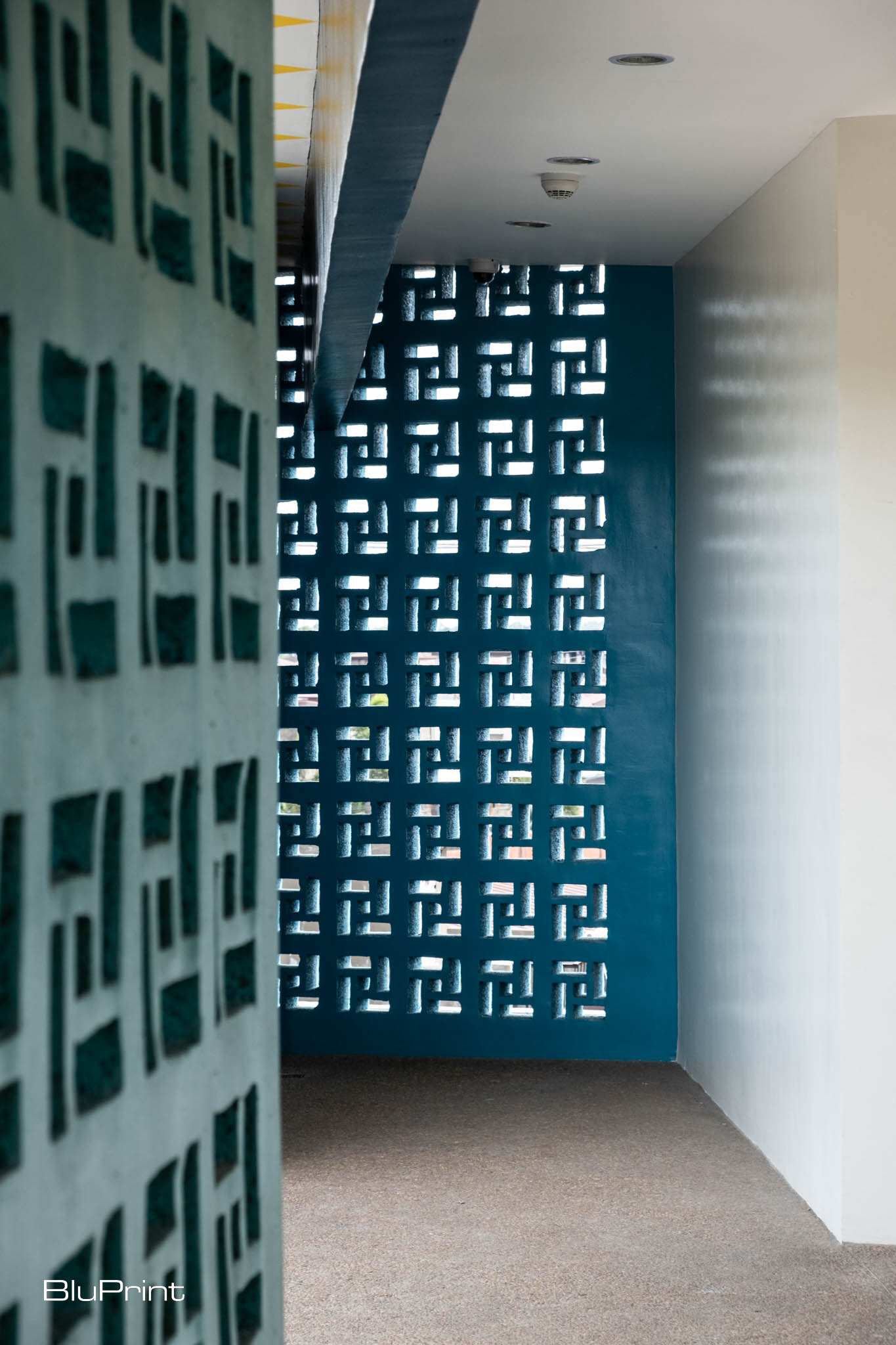
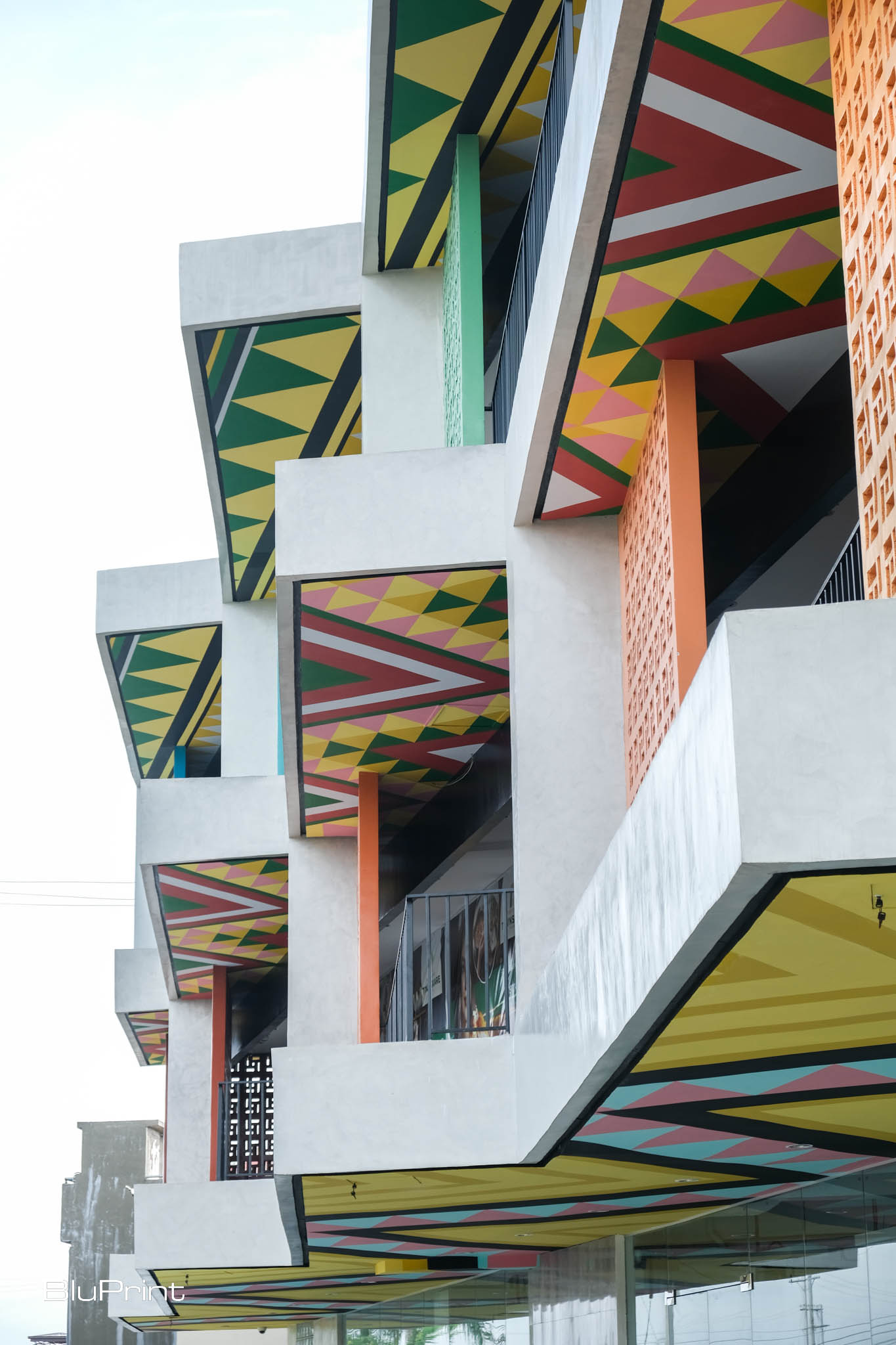
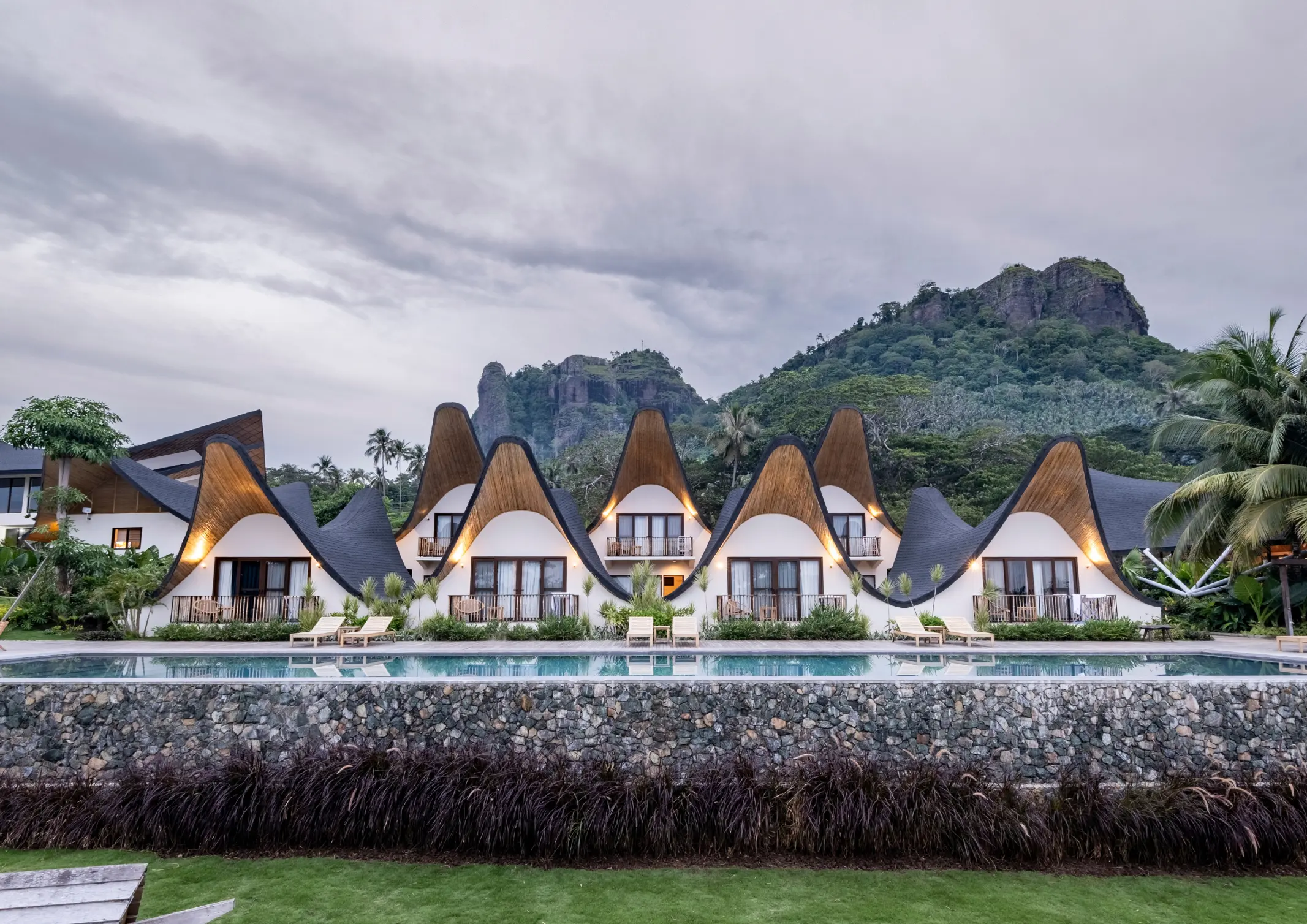
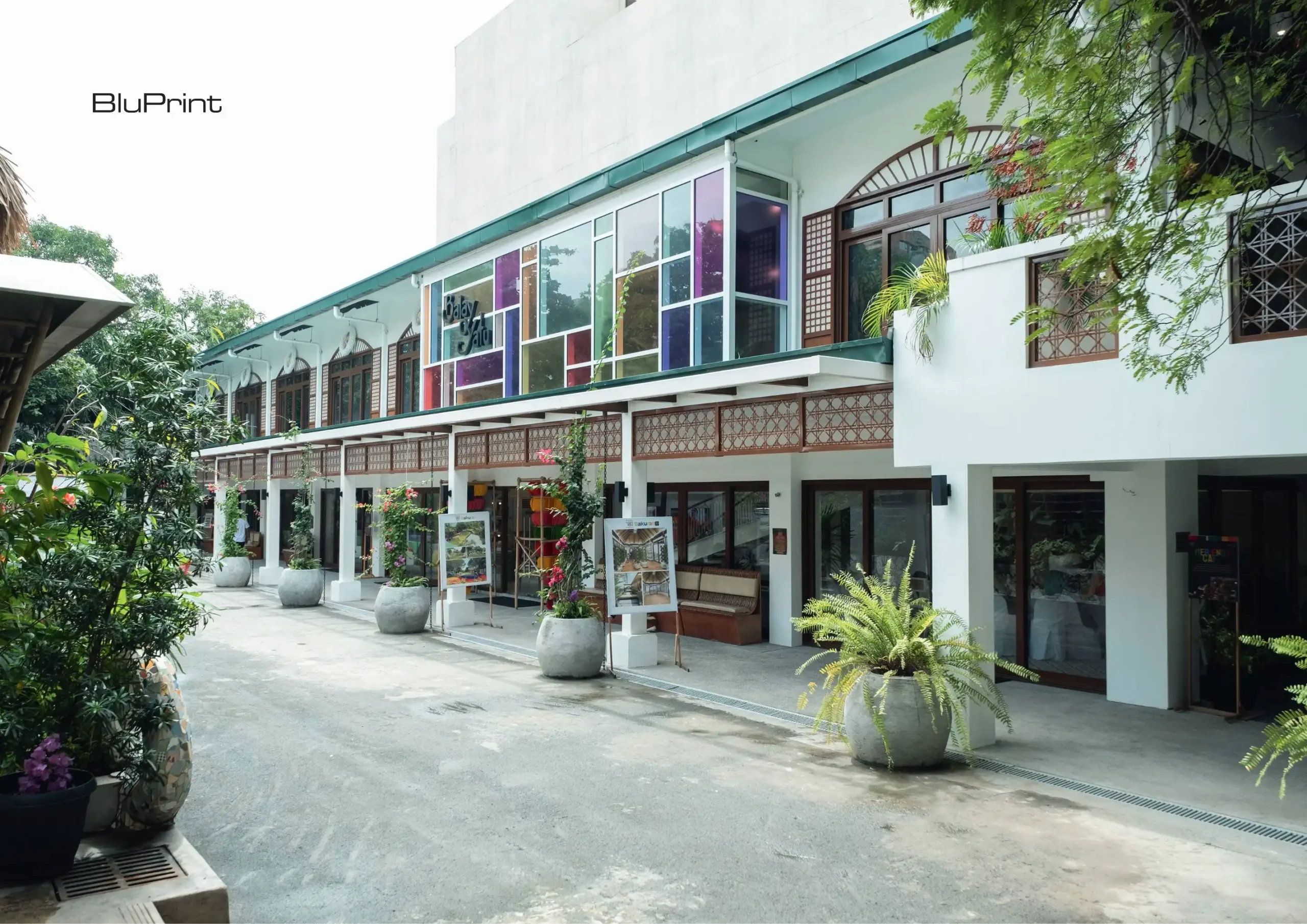
Nestled on the picturesque shores of Mactan Island, Cebu, Pueblo de Oro Townsquare stands as a testament to innovative architectural design. The project, designed by Barchan + Architecture, seamlessly blends local cultural elements with modern functionality. It exemplifies a harmonious convergence of community needs, sustainable practices, and aesthetic appeal.
In an interview with Jason Buensalido, Barchan + Architecture Chief Design Ambassador and Founder, and Cholo Ramirez, Associate Architect for Culture and Lead Project Architect, we delve into the meticulous planning and visionary concepts that shaped this transformative development.
Cultural Context and Design Philosophy
Pueblo de Oro Townsquare was conceived with a clear vision to create a vibrant neighborhood strip mall and commercial center. Buensalido and Ramirez emphasized the project’s foundation in modern Asian architecture. Meant to resonate deeply with its surroundings, it reflects both the historical roots and dynamic future of Mactan Island. Located within an established residential community, the project faced the dual challenge of integrating seamlessly with existing townhouses while meeting the commercial aspirations of the client.
Advertisement
Buensalido explained, “From the outset, we aimed to design a space that not only serves commercial purposes but also enriches the daily lives of residents. This meant aligning our architectural vision with the cultural and spatial dynamics of the neighborhood.”
Design Innovation vs. Conventional Norms
A pivotal aspect of our discussion centered on overcoming initial client reservations towards a more expansive, unconventional design. During the negotiation process, Buensalido and Ramirez pushed for a larger, more innovative layout. Their design emphasized community interaction and experiential richness, rather than simply maximizing space.
Buensalido elaborated, “We faced resistance from the client who initially favored a more compact, traditional design to optimize leasable space. However, through dialogue and presenting our design rationale, we convinced them of the long-term benefits of our approach.”
Advertisement
This negotiation highlighted the architects’ dedication to balancing financial pragmatism with design innovation. In the end, they reached a compromise that preserved the project’s integrity while addressing practical demands.
Integrating with the Community
Integral to Pueblo de Oro Townsquare’s success was its seamless integration within the existing community fabric. The architects meticulously aligned the commercial buildings’ grid with adjacent residential lots. This creates a cohesive streetscape that enhances accessibility and visual appeal. By orienting the structures obliquely rather than perpendicularly to the street, they aimed to maximize visibility and create inviting pedestrian pathways that engage with the neighborhood from multiple perspectives.
Beunsalido highlighted, “We studied the smallest lot alignments and translated these onto our site plan, ensuring our design respects and enhances the surrounding residential context. This approach not only facilitates natural flow but also fosters a sense of place and identity.”
Advertisement
The architects further elaborated how they made the commercial spaces feel like home for visitors. They ensure the width of the retail stores is almost the same as the width of the lots, especially the townhouses. “The reason we did that is because we wanted the granular quality of the building, the scale of the building, to relate to the scale of the neighborhood, not in a conceptual way but in a physical, readable, experiential way,” Buensalido explained. “When you go to a mall, for example, if you’re living in a small house and then you go to a mall, sometimes the scale is too grand that you feel alienated,” he added.
Pueblo de Oro Townsquare is just the first phase of the project. But its impact extends beyond physical structures to embody a philosophy that challenges norms and celebrates local identity. Barchan + Architecture’s vision serves as a beacon for future architectural endeavors. It urges designers and developers to embrace cultural richness, sustainability, and community engagement as guiding principles.
Contemporary design refers to the constantly evolving design trends of today. With the power to design our built environments, architects have been experimenting with various architectural approaches. Whether that is through unconventional forms or the integration of smart technologies, BluPrint lists down Filipino architects who are defining contemporary architecture. Deo Alam Architect Deo Alrashid Alam […]
In the Philippines, adaptive reuse gained traction during the 1970s with the rise of conservation and environmental preservation movements. It offered an architectural solution that reuses existing spaces to fit modern needs. Across the country, several projects demonstrate how this approach is being applied—transforming heritage structures into active spaces for culture, hospitality, and community life. […]
From residential spaces to civic structures, lighting dictates the mood of a space. It controls the visual dynamics of an interior, serving as a guiding tool that highlights key design elements, including materials and textures. Related Reading: Lampscaping: How to Light up Your Home like a Pro Regulating the Mood: Natural and Artificial Light in […]
More and more Filipinos are flocking to condominium communities. Often tucked within busy city centers, condo living acts as a small respite from urban chaos. Faced with the challenge of transforming a cramped condominium into a warm living space, BluPrint lists condo interior design ideas that can maximize each square foot of small spaces. Purposeful […]
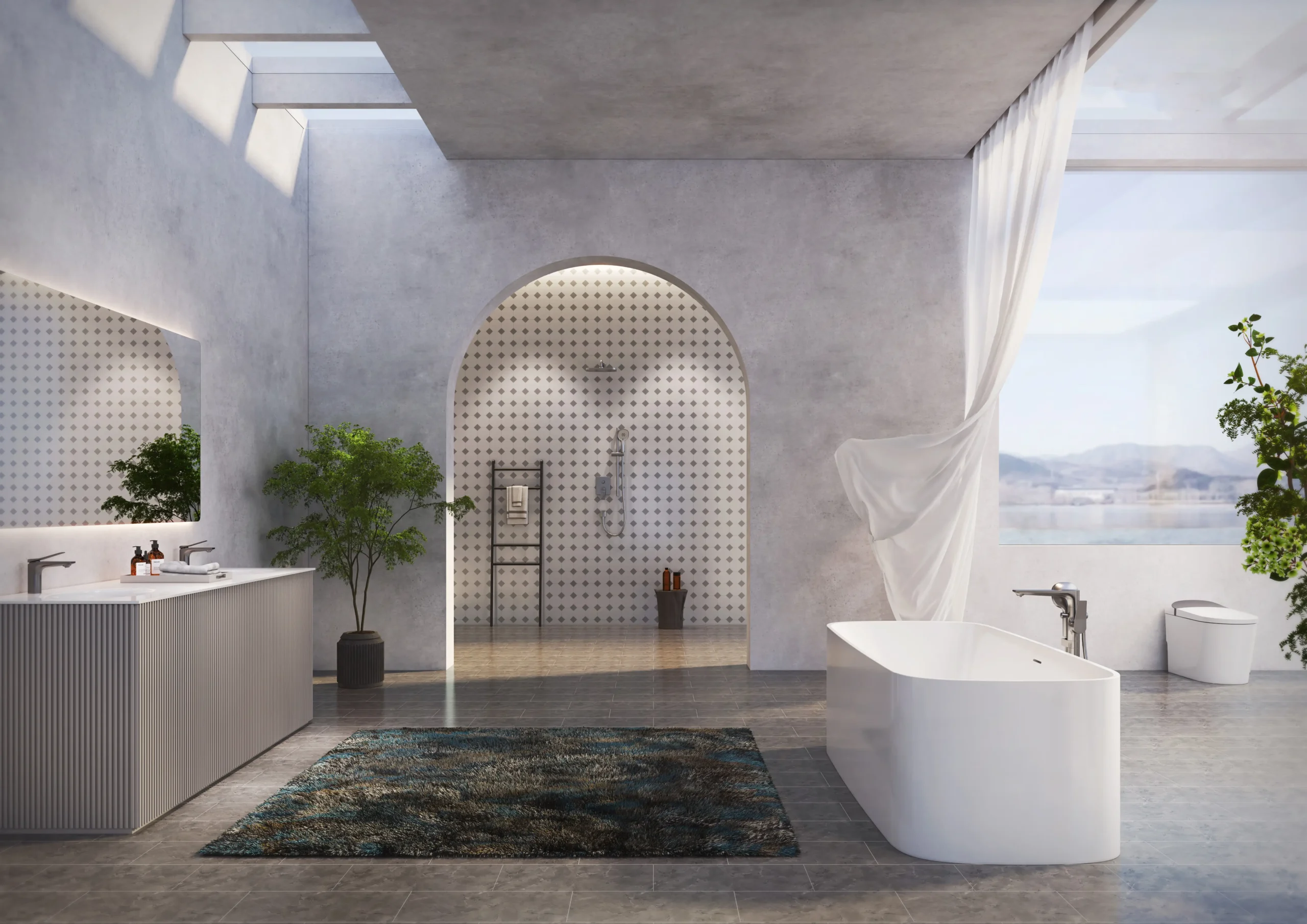
Modern bathrooms are no longer purely functional spaces. Increasingly, they are being designed as environments that support cleanliness, ease, and quiet restoration within the home. As daily life becomes more demanding and health awareness continues to rise, homeowners are beginning to expect more from the spaces where daily rituals begin and end. For architects and […]
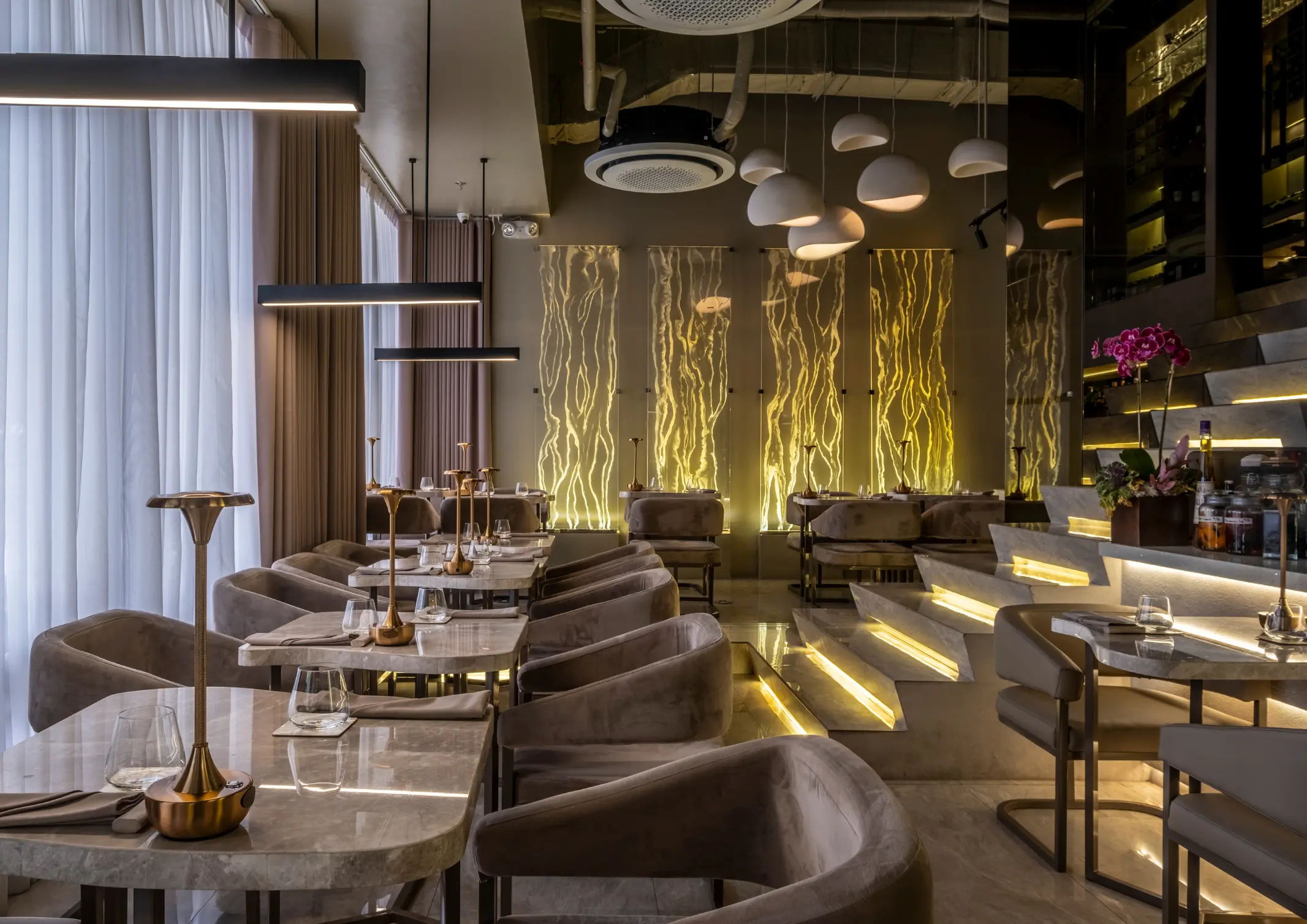
From the moment a diner steps through the door, each detail shapes how a meal is experienced. Restaurant design has evolved, with architects and culinary professionals collaborating to create built spaces that are as intentional as the menu itself. The spatial atmosphere acts as an additional ingredient that can define the culinary experience. Taupe and […]