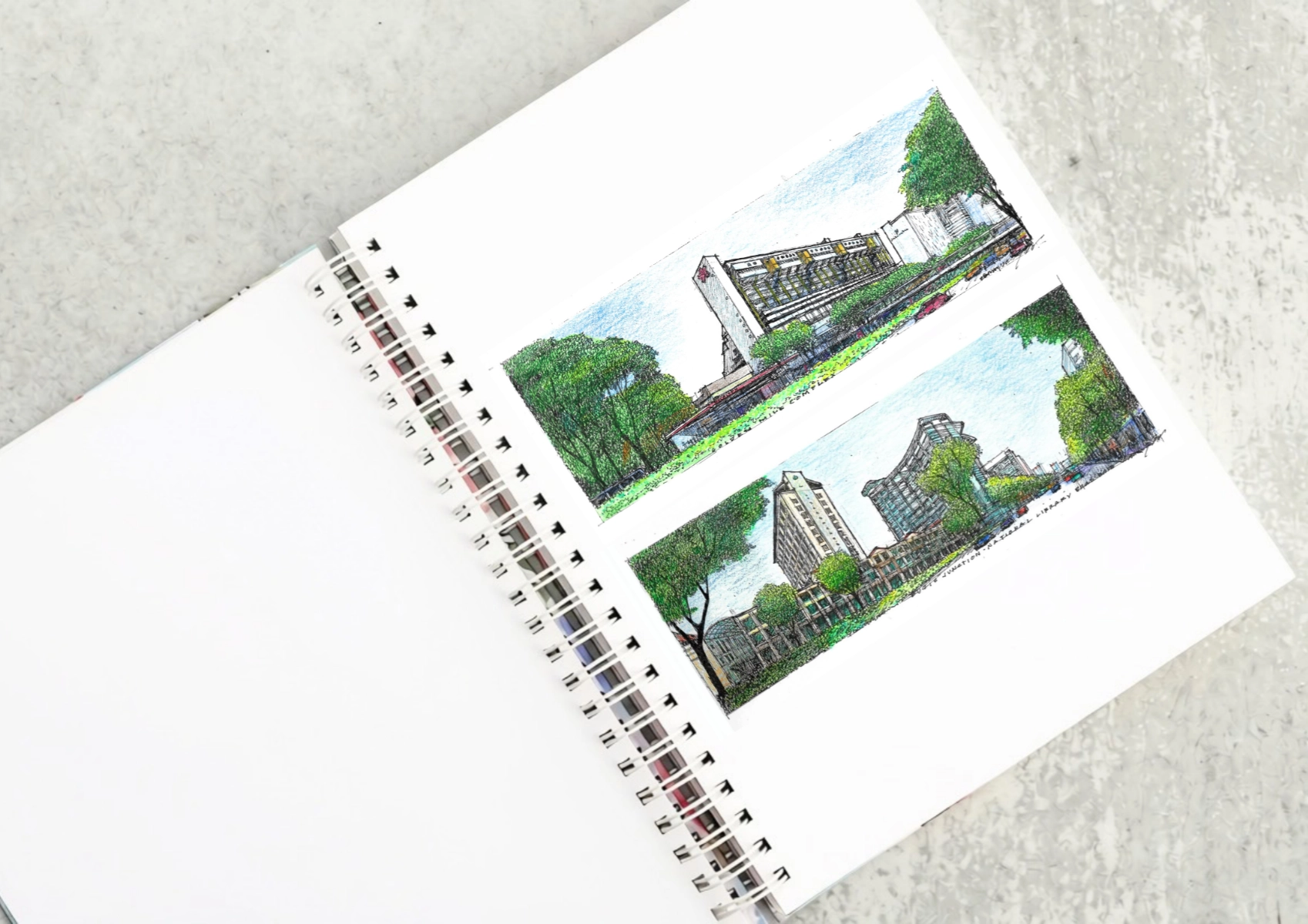
Two sketches of Singapore connect BluPrint Editor in Chief Paulo G. Alcazaren’s personal and professional history with Shared Ground: ArchitectureArchitectureThe art and science of designing and constructing buildings, structures, and spaces that are functional, safe, and aesthetically pleasing. It encompasses the planning, design, materials, and techniques used to createGo to Architecture Glossary of Care, Culture, […]
Forkid’s Club: A Play Haven Designed for Families



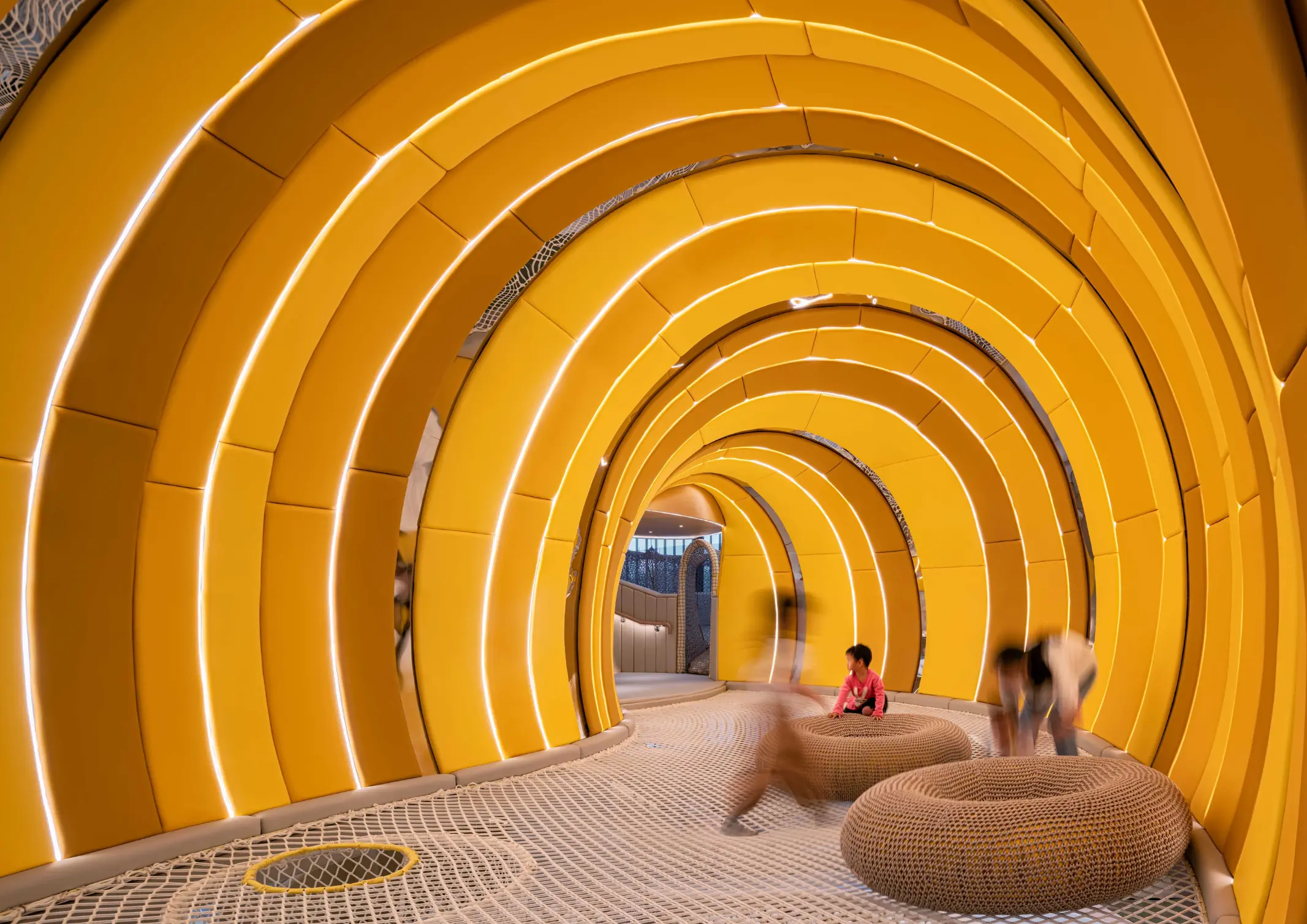
Situated within the Shenzhen Nanshan Park, Forkid’s Club is a composite family space designed by Horace Pan of PANORAMA Design Group. Drawing inspiration from the Valley of Dreams, the space pulls parents and children away from the busy city and into an imaginative world. Inside its three floors, the design integrates functions of play, learning, dining, and socializing.
The Design Language
Through its distinct double-height volume, along with the newly built mezzanine, the design aims to inspire spatial excitement and self-exploration in children. The space breaks the rigidity of the building’s perimeter through the use of curves. Its curvilinear tectonics feature a dynamic flow, from playpens to the layout plan, that perfectly accommodates children’s play.
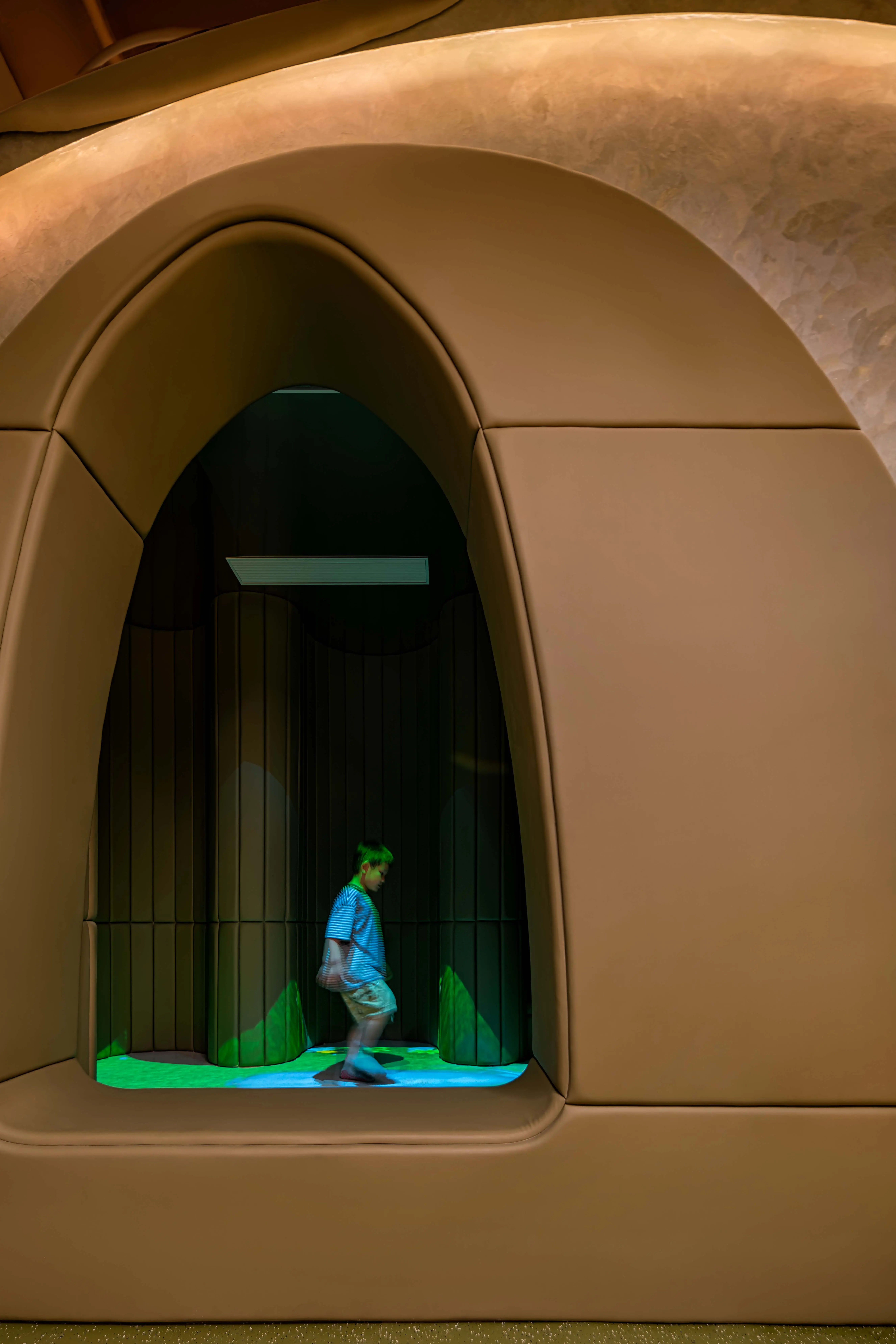
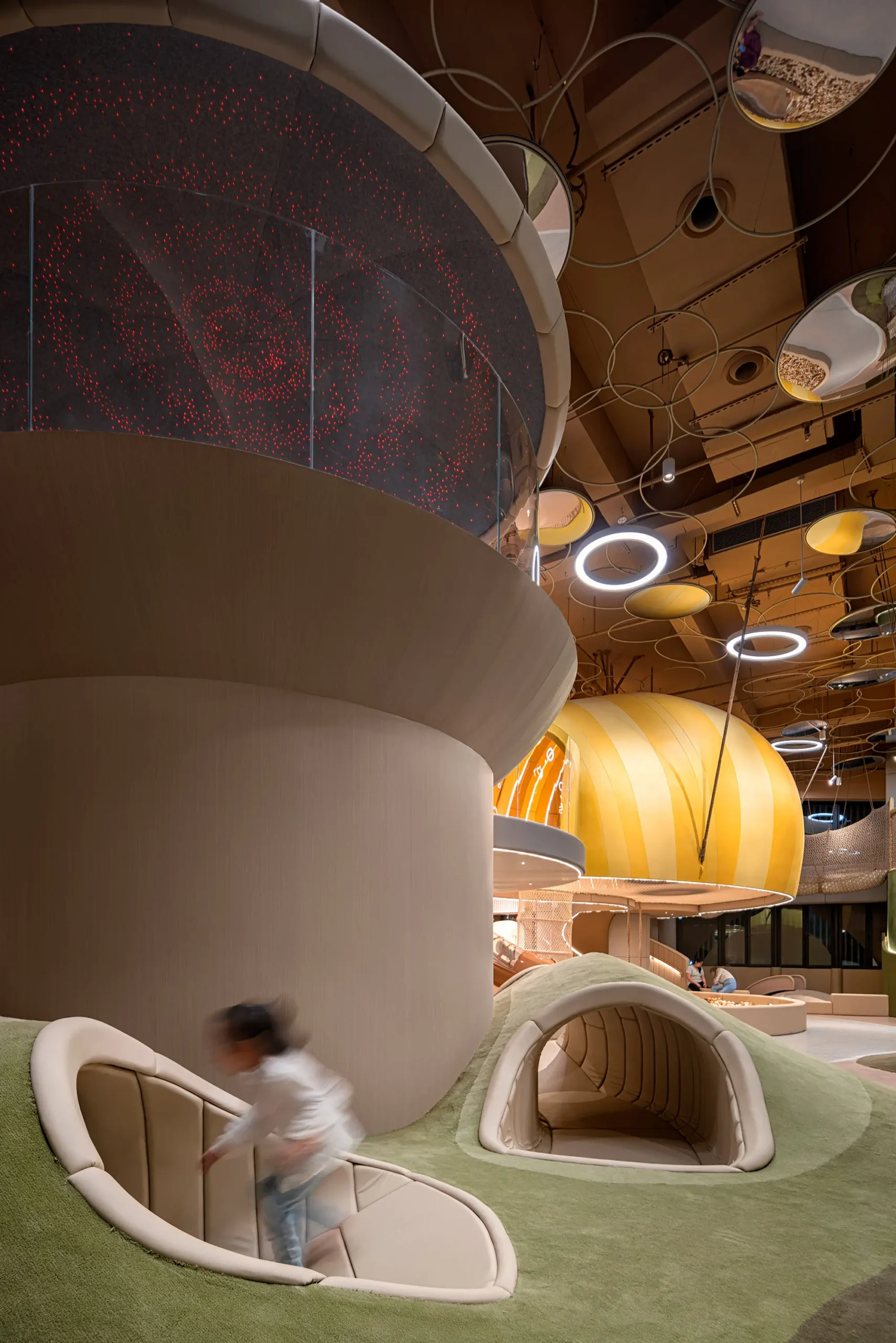
The playscape’s design employs a deliberate interplay of symbolic colors, shapes, scales, and textures. This strategic manipulation meets the playscape’s functional and emotional needs, as seen in the layout plan, where the circular flow creates a smooth transition from each zone. As such, children can freely immerse themselves from one play area to the next. Within these spaces, design choices such as a circular roof that mimics a starry night offer an additional whimsical dimension well-suited for children’s imaginations.
To complement the curved interiors, an abstract representation of the valley’s seasonal changes was used to stimulate children’s imaginations. Mirroring the natural landscape, the design offers memorable experiences for both parents and children across all three levels.
Seasons at Play
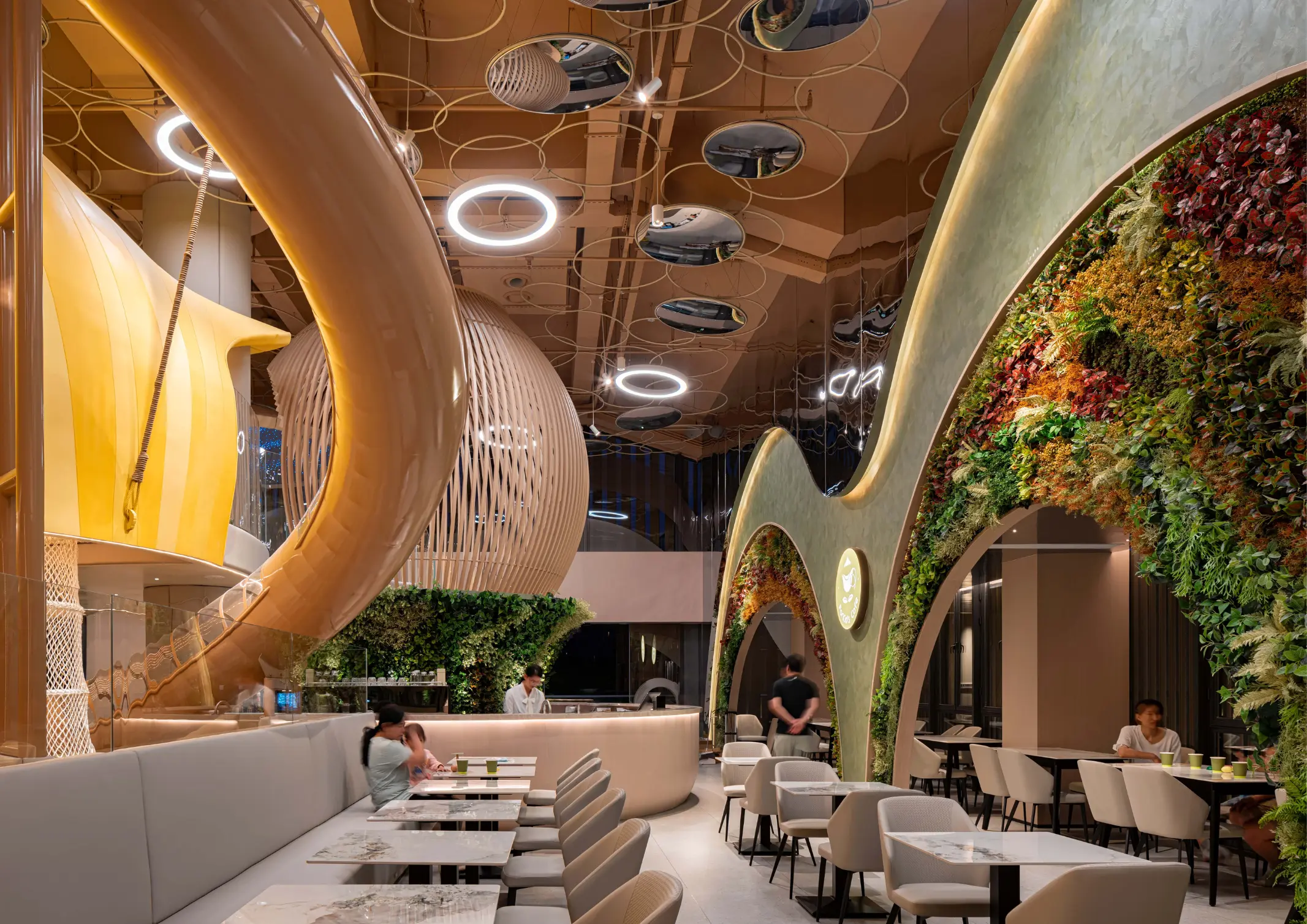
The interior is divided into four distinct zones: Spring Valley, Summer Beach, Autumn Leaf, and Winter Cave. Firstly, the Spring Valley is a vibrant welcome zone designed in shades of green to evoke the beauty of spring. Here, undulating hills offer a topographical play element for children. A giant, tree-like observatory tower dominates the center. In addition, it visually connects children with their parents as it presents a panoramic view of the space. There, parents can relax in the adjacent family café, which provides food and refreshments.
Secondly, the Summer Beach is a multi-tactile area featuring a beach-like open space with a designated color yellow. It features an array of play elements that contribute to a diverse and multi-tactile experience for children. Features such as the wooden ball pool and climbing ropes encourage children to use their hands and bodies to explore the different textures and shapes available within the area.
Thirdly, the Autumn Leaf is designated as the anti-gravity zone, distinguished by a suspended, orange leaf-shaped structure. It incorporates a rope array and a trampoline, providing a semi-enclosed environment perfectly suited for activities such as hide-and-seek and participation in anti-gravity exercises like rope climbing and trampolining.
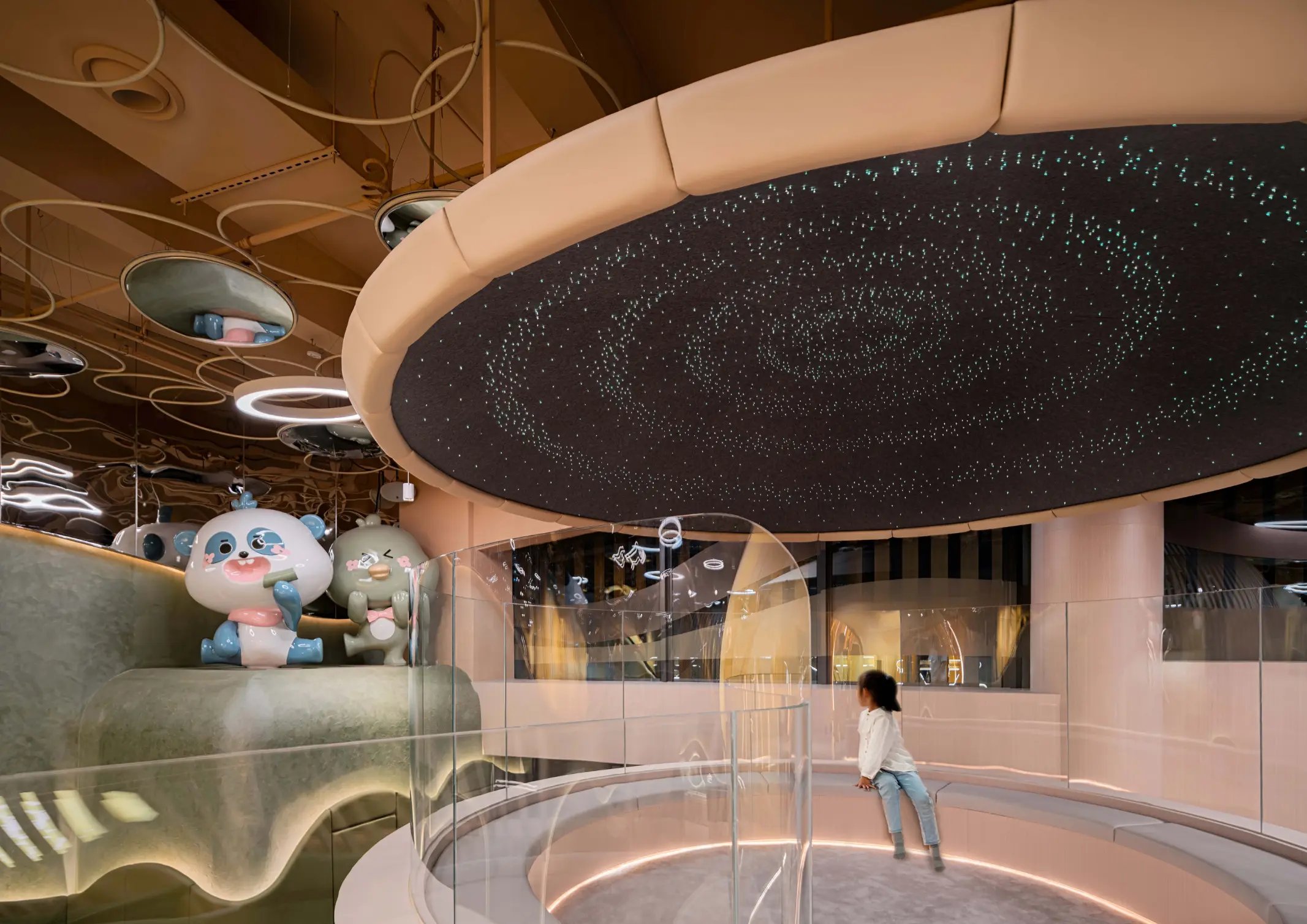
Fourthly, the Winter Cave is referred to as the digital-interaction zone. It is located on the top level and comprises two multi-purpose gray areas: an open theater and an enclosed cave. These spaces are designed as quiet corners and feature interactive digital projections on the floor and ceiling. Features such as custom-designed 3D cartoon characters, rhythmic convex mirror discs, and distorted mirrored walls bring the space to life.
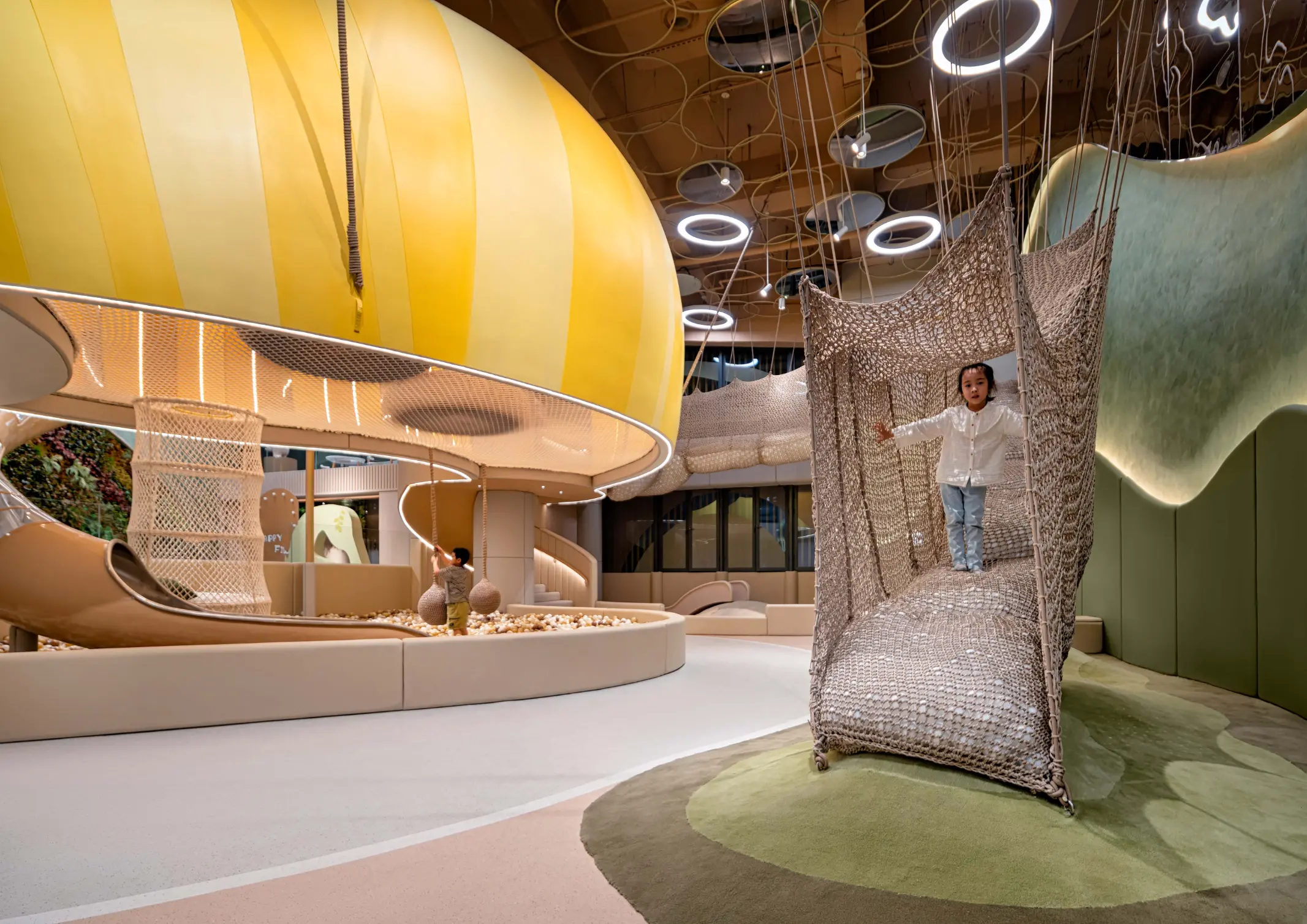
Ultimately, Forkid’s Club provides a stimulating and vibrant 380-sqm environment where both parents and children can immerse themselves in a vibrant space that encourages boundless imagination and play.
Photographs provided by PANORAMA Design Group
Read More: Nakanoshima Children’s Book Forest by Tadao Ando
Frequently Asked Questions
The design utilizes curvilinear tectonics to break the rigidity of the building’s rectangular perimeter. Technically, curves are used not just for aesthetics but to accommodate a children’s “circular flow,” allowing for smooth, unobstructed transitions between play zones. This reduces sharp corners (improving physical safety) and creates a dynamic, fluid layout plan that encourages self-exploration and spatial excitement.
The double-height volume is a strategic architectural move to provide vertical visual connectivity. By integrating a newly built mezzanine, the 380-sqm space maximizes its functional footprint while creating different scales of enclosure. This allows for a “topographical” play experience, where elements like the central observatory tower provide a panoramic vantage point for children to connect with parents located on different levels.
The club is divided into four zones based on the seasons: Spring Valley (Green), Summer Beach (Yellow), Autumn Leaf (Orange), and Winter Cave (Gray). This use of symbolic color and texture acts as a non-linear wayfinding system. Each zone is engineered for a specific sensory experience: “Spring” uses undulating hills for topography, “Summer” uses multi-tactile wooden ball pools, “Autumn” focuses on anti-gravity rope structures, and “Winter” utilizes digital projections for quiet, immersive interaction.
Located on the top level, the Winter Cave transitions from physical play to digital immersion. It features an open theater and an enclosed “cave” utilizing interactive digital projections on the floor and ceiling. Technically, the environment is enhanced by rhythmic convex mirror discs and distorted mirrored walls, which use reflection to alter the child’s perception of space and movement, bringing custom 3D cartoon characters to life in a semi-enclosed, quiet setting.
Forkid’s Club is designed as a composite space that integrates play, learning, dining, and socializing. Architecturally, this is achieved by placing “social anchors,” such as the family café, adjacent to high-visibility play elements like the observatory tower. This allows parents to maintain a line of sight with their children while relaxing in a sophisticated environment, ensuring the space functions as a sanctuary for the entire family rather than just a traditional playground.
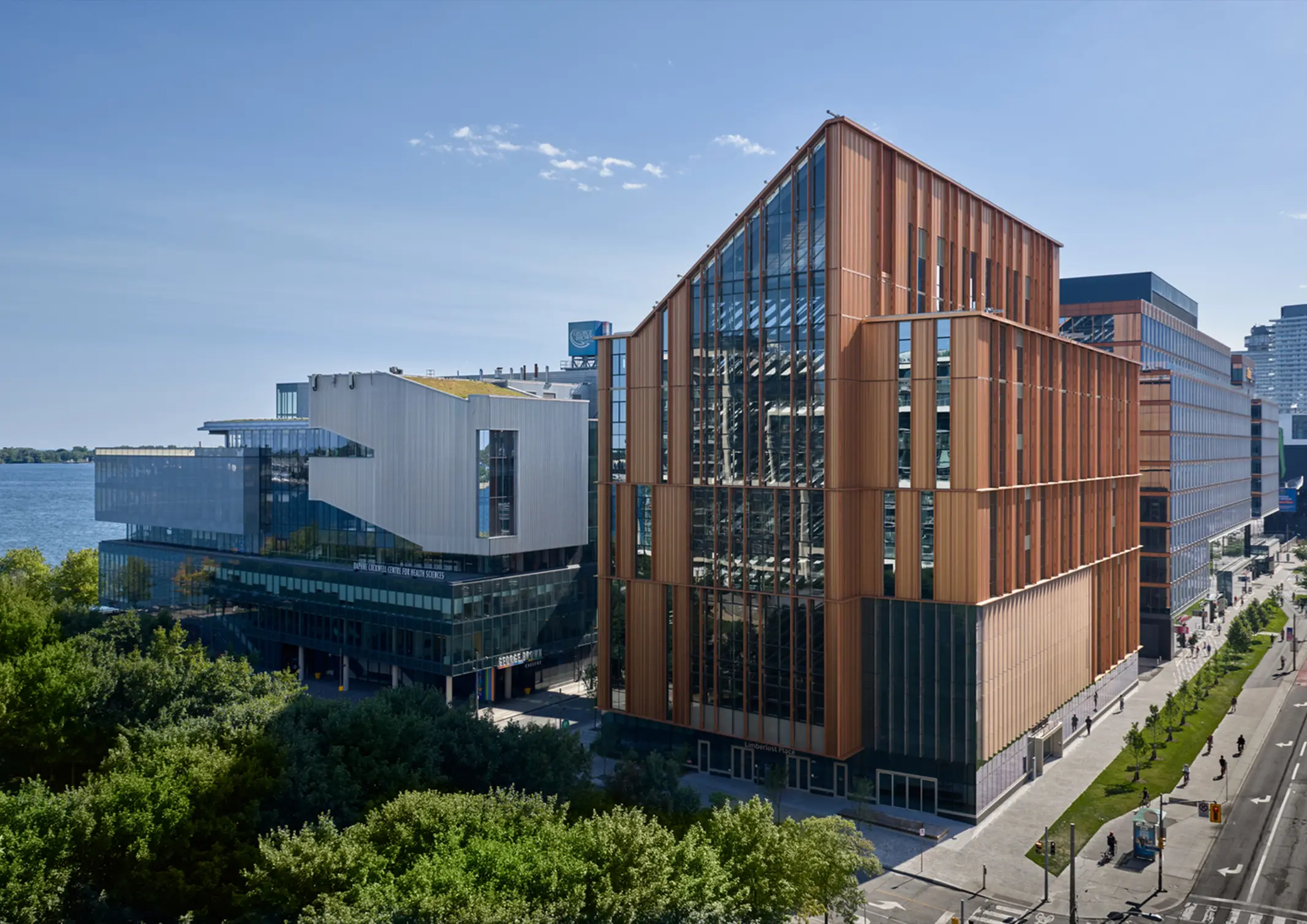
The projects recognized by Architizer’s 14th Annual A+Awards span architectureArchitectureThe art and science of designing and constructing buildings, structures, and spaces that are functional, safe, and aesthetically pleasing. It encompasses the planning, design, materials, and techniques used to createGo to Architecture Glossary, interiors, landscape, urban design, and sustainability. Organized by Architizer, one of the world’s […]
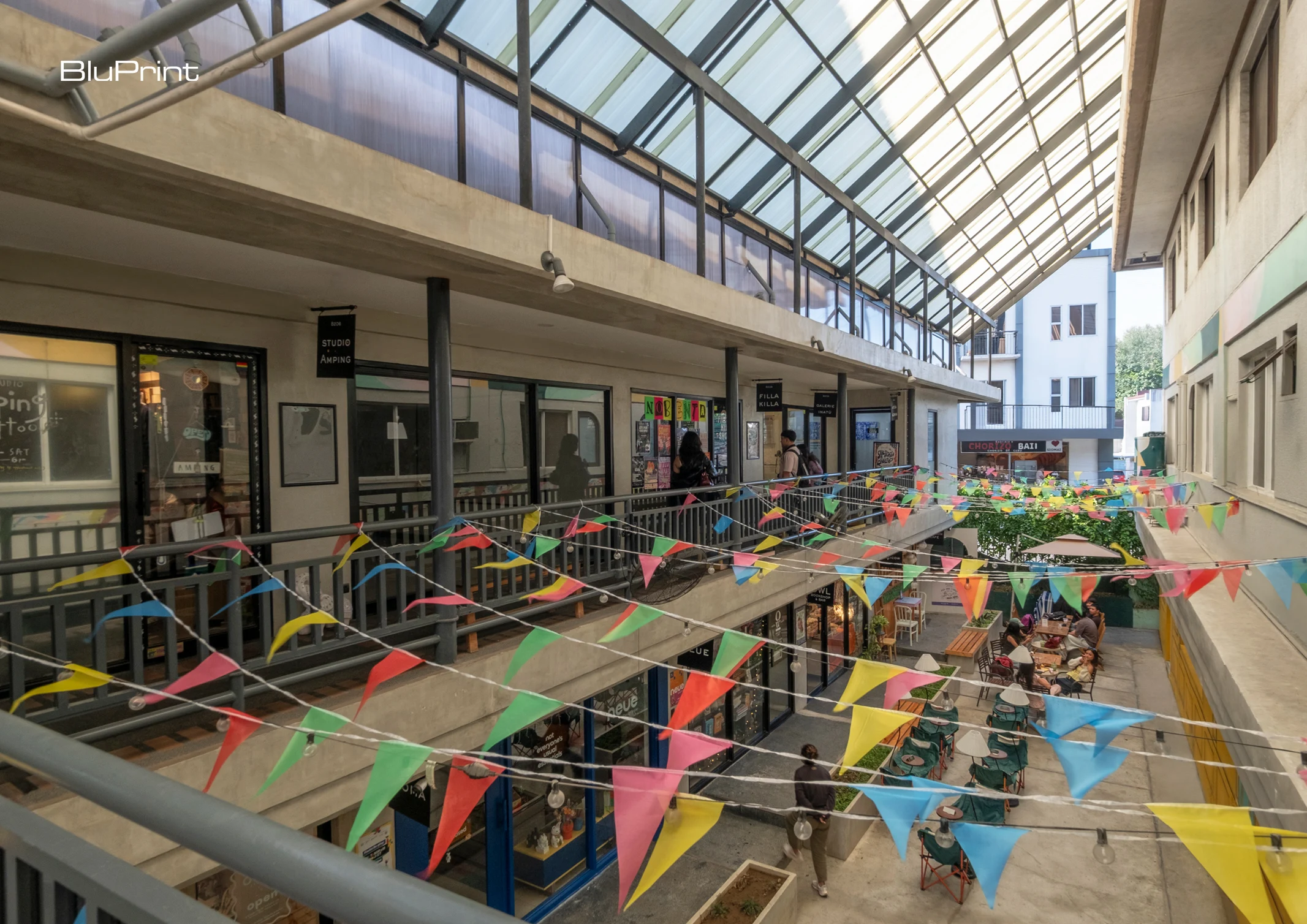
Within a two-building commercial complex organized around a central courtyard, an unexpected layout unfolds. The shops are small and quaint, uniformly sized, and directly face one another like apartment units. This is Atúa. Related Reading: Creative Placemaking: Designing Public Spaces that Reflect Shared Memory What used to be a functioning hotel in the early 1990s, […]
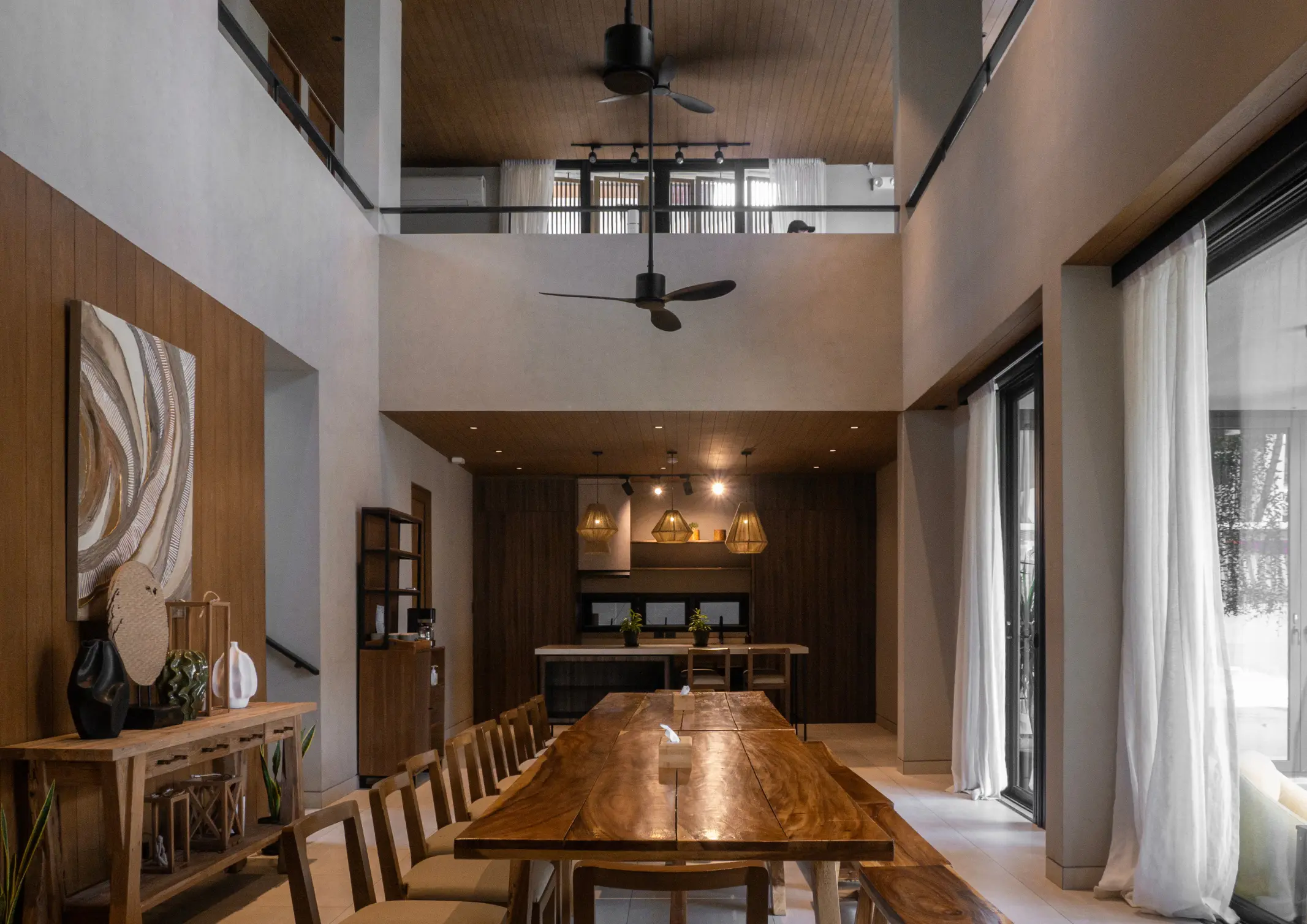
Designed by TAYO Architecture & Design, Balai Ba’i is a 900-square-meter resort located in Los Baños, Laguna. The owners wanted to evoke the same calm and craftsmanship found in Bali, Indonesia, while celebrating the natural beauty of the Philippines. As advocates of a distinct tropical-modernist approach, TAYO designed a resort that responds to its local […]
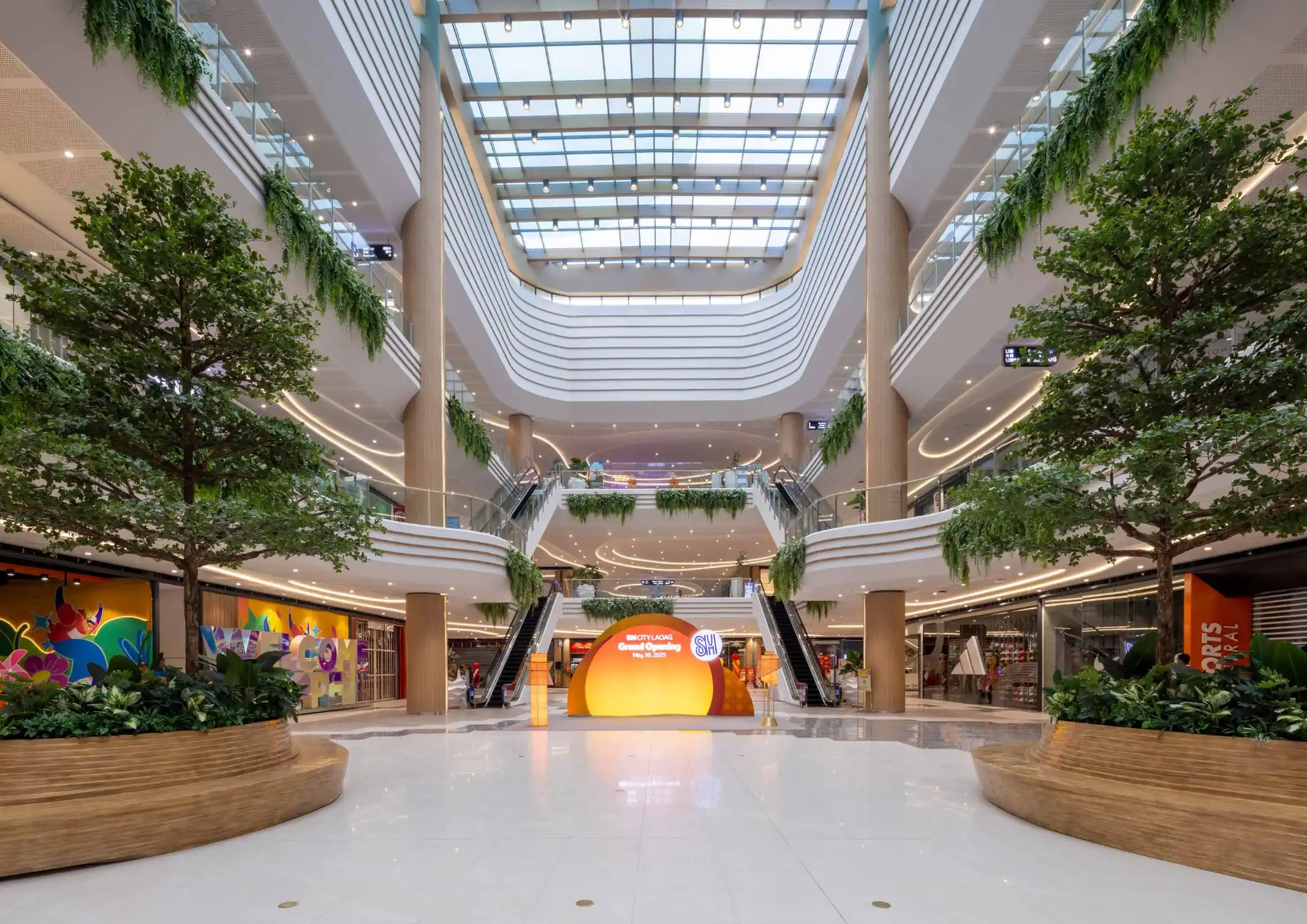
For decades, the standard SM mall design was a functional, air-conditioned box—efficient, pervasive, but largely without context. In the historic, sand-dune-framed city of Laoag, that formula has been decisively reimagined. Royal Pineda + designed SM Laoag as a proof of concept that true, high-quality, place-specific architectureArchitectureThe art and science of designing and constructing buildings, structures, […]
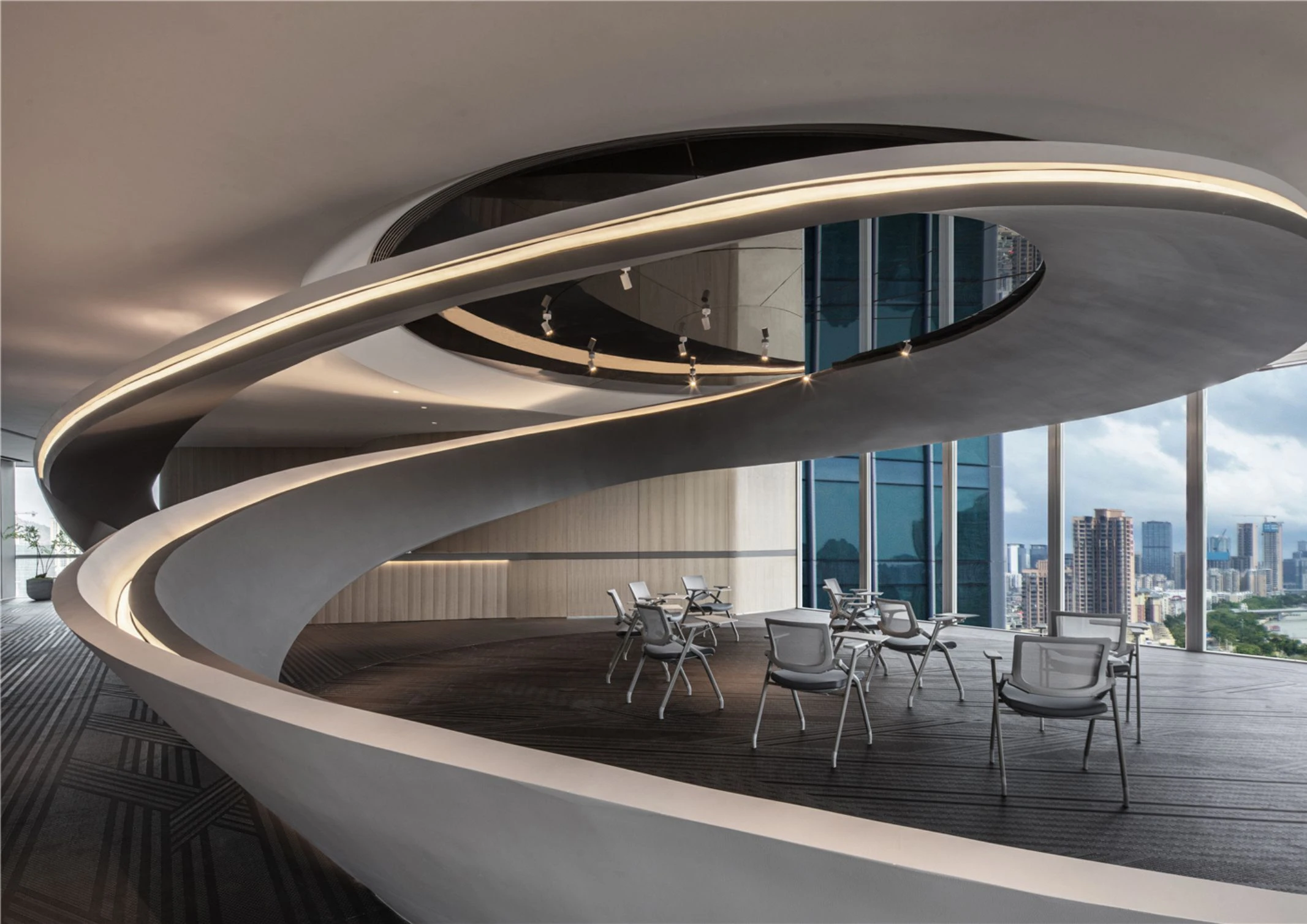
The modern corporate workplace is often synonymous with rigid, rectilinear forms—a sterile grid of glass and steel. However, at the intersection of Zhuhai and Macao, designer Kris Lin and his team at Kris Lin International Design have deliberately rejected this corporate norm. The Stream Office, a new business highland cover, is an architectural and interior […]
Read the issues.

Collect the volumes.

Recommended Video
Tap to Unmute
Unmute
0:00
0:00