Bigkis is the act of binding. In Tagalog, the word can refer to something used to bind or encircle, as well as a bundle formed by tying several separate elements together. Figuratively, it can also mean a bond, union, or unity. The meanings move from the physical act of joining things together to the connection […]
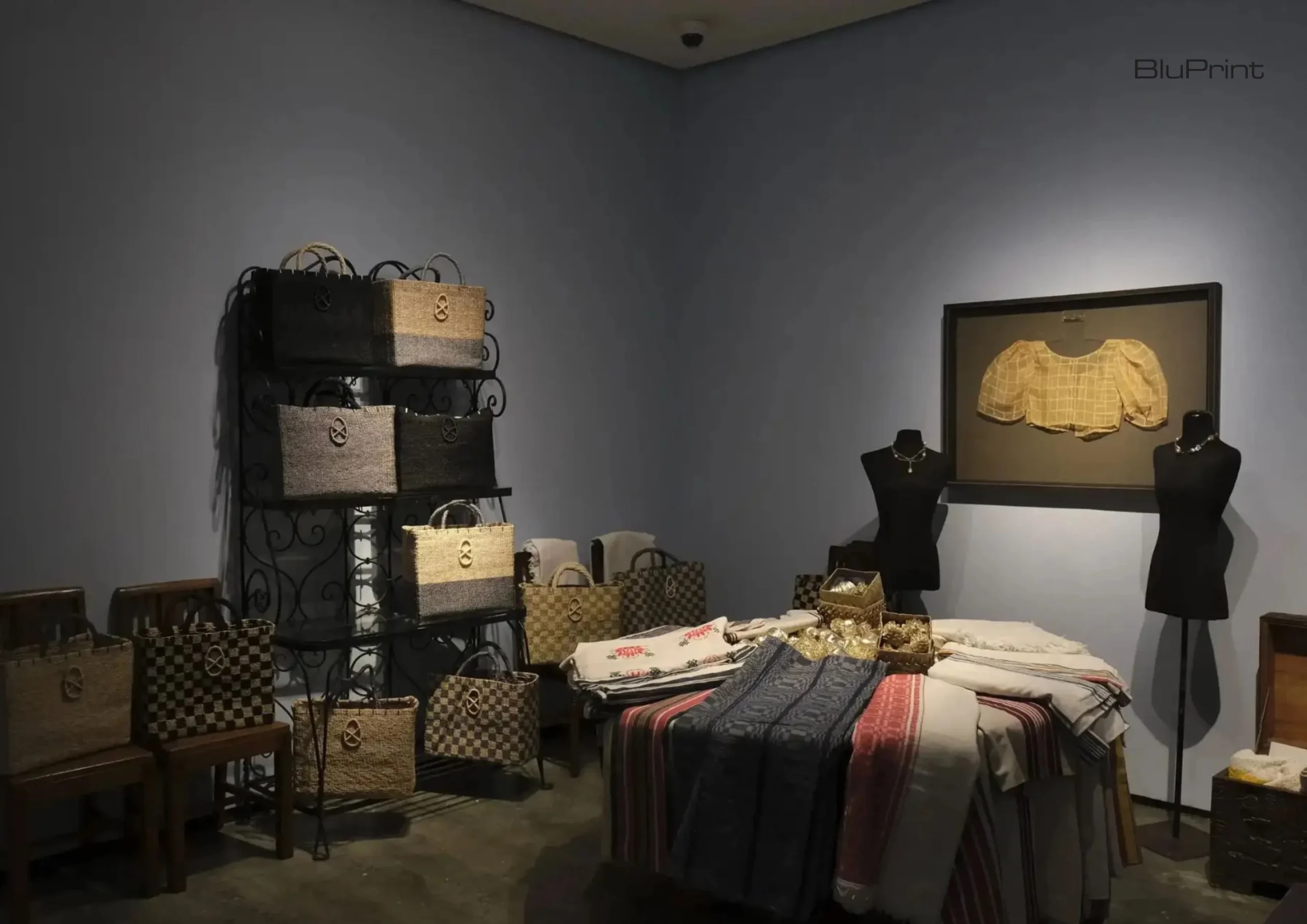
Caro Wilson Celebrates Seven Years with New Leon Gallery Exhibit



Caro Wilson, the hand-crafted jewelry and accessories brand created by Filipino-American designer Mark Wilson, celebrates their seventh anniversary this year. Wilson marked the occasion with an exhibit at Leon Gallery that showcases some of the company’s newest offerings.
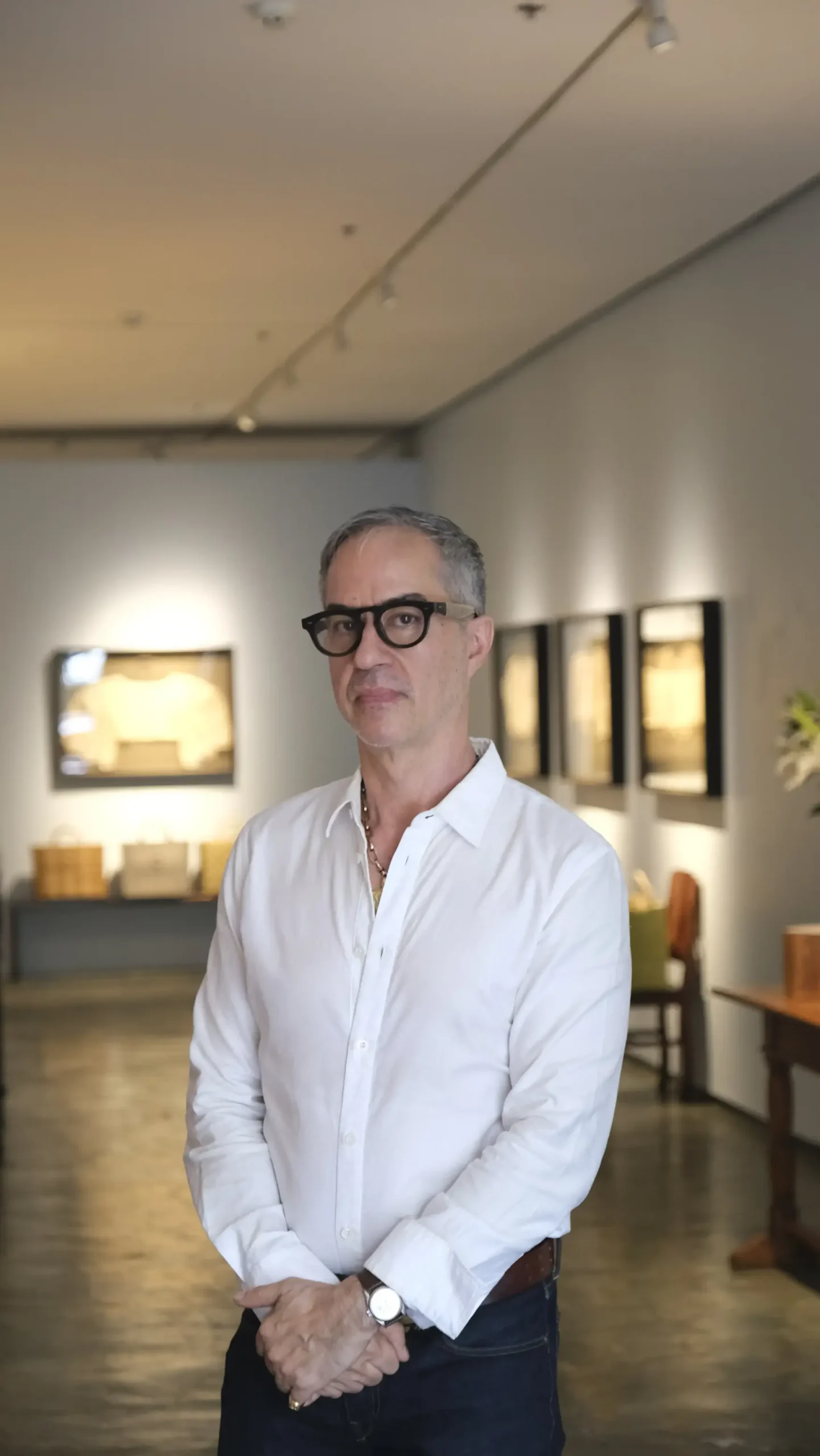
Wilson draws inspiration from the indigenous cultures of the Cordillera and the craftsmanship of Baguio artisans. Guided by the region’s emphasis on functional design, he reinterprets traditional forms into contemporary jewelry and accessories that reflect a modern sensibility.
Weaving Patterns for Bracelets and Rings
His signature works include a series of gold and silver bracelets and rings which use rattanRattanA flexible, climbing palm native to tropical Asia, whose strong, lightweight canes are woven and bent into furniture, baskets, and lighting. The Philippines, especially Cebu, is renowned for rattan craftsmanship,Go to Rattan Glossary weaving patterns for the structure. These works also come in oxidized silver that gives it a leather-like look, though Wilson emphasized that it was not leather.
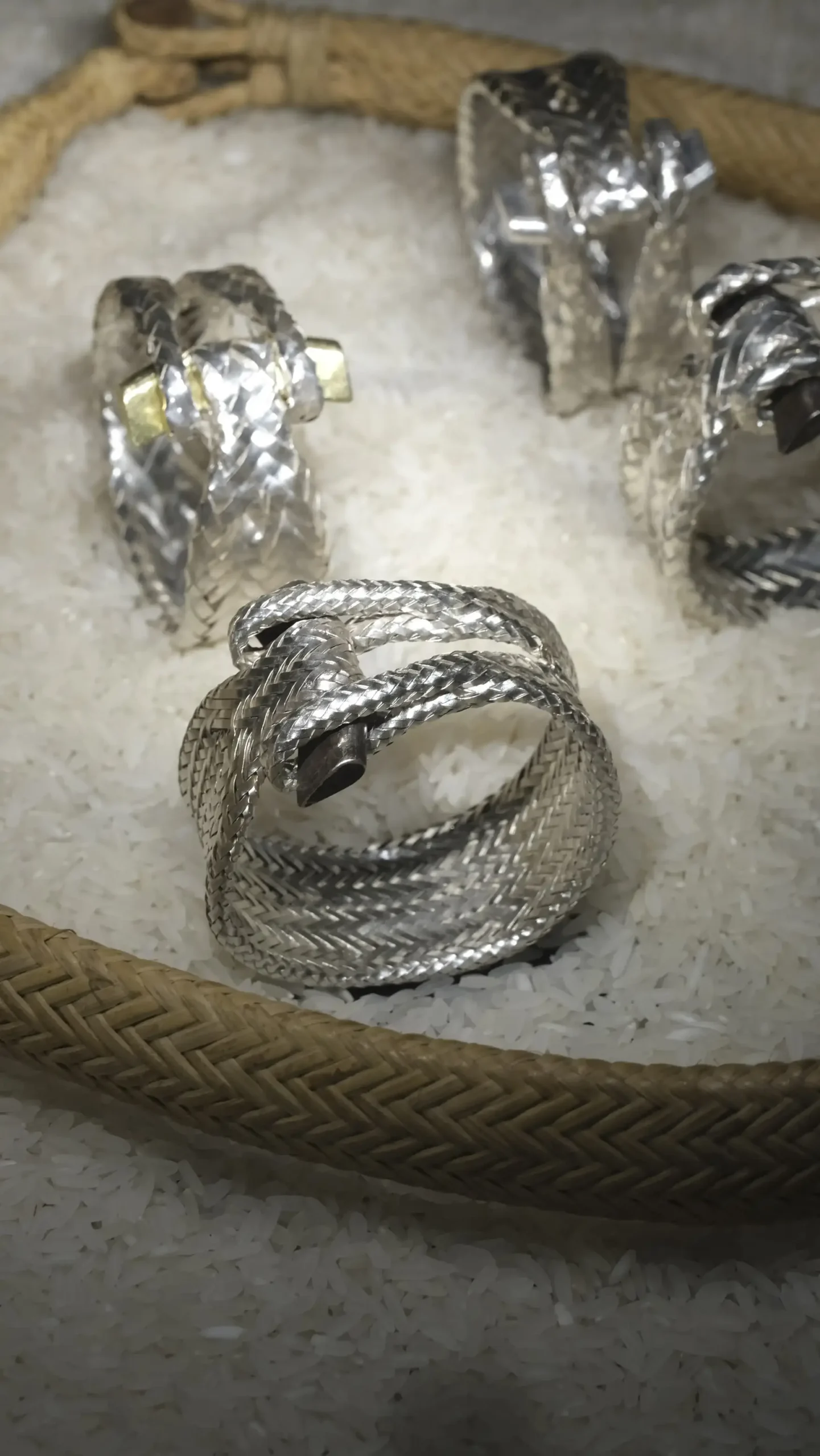
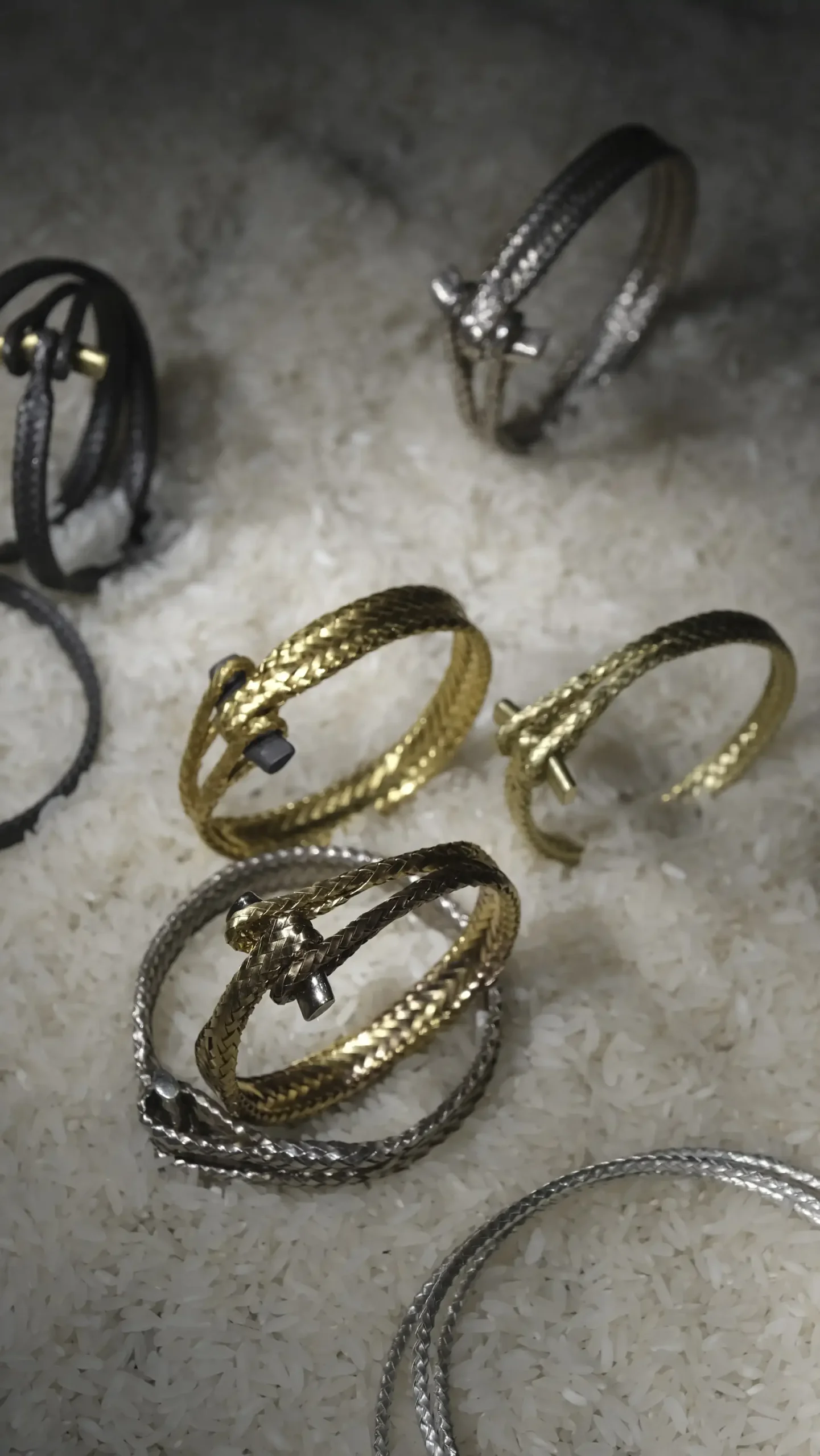
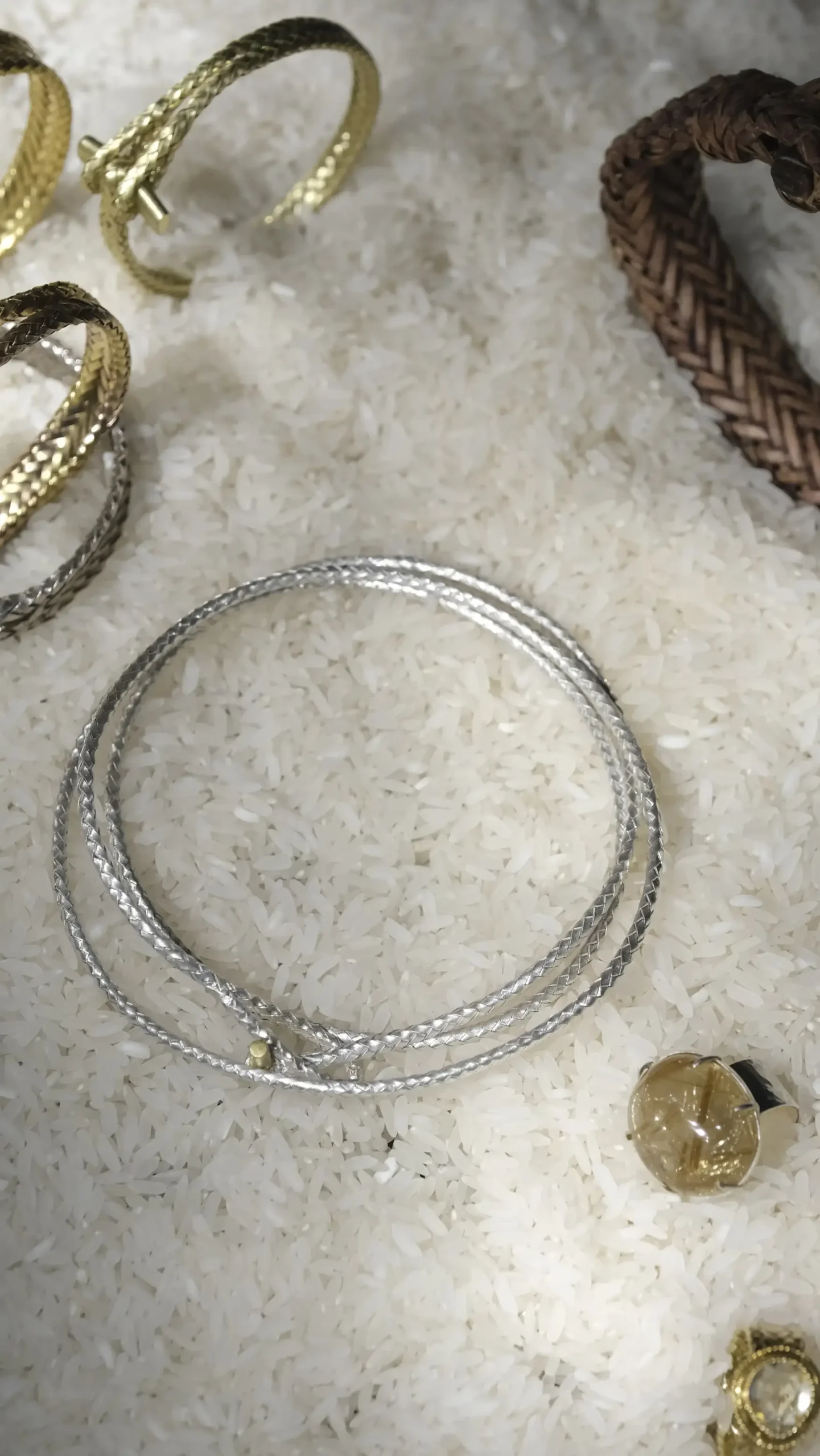
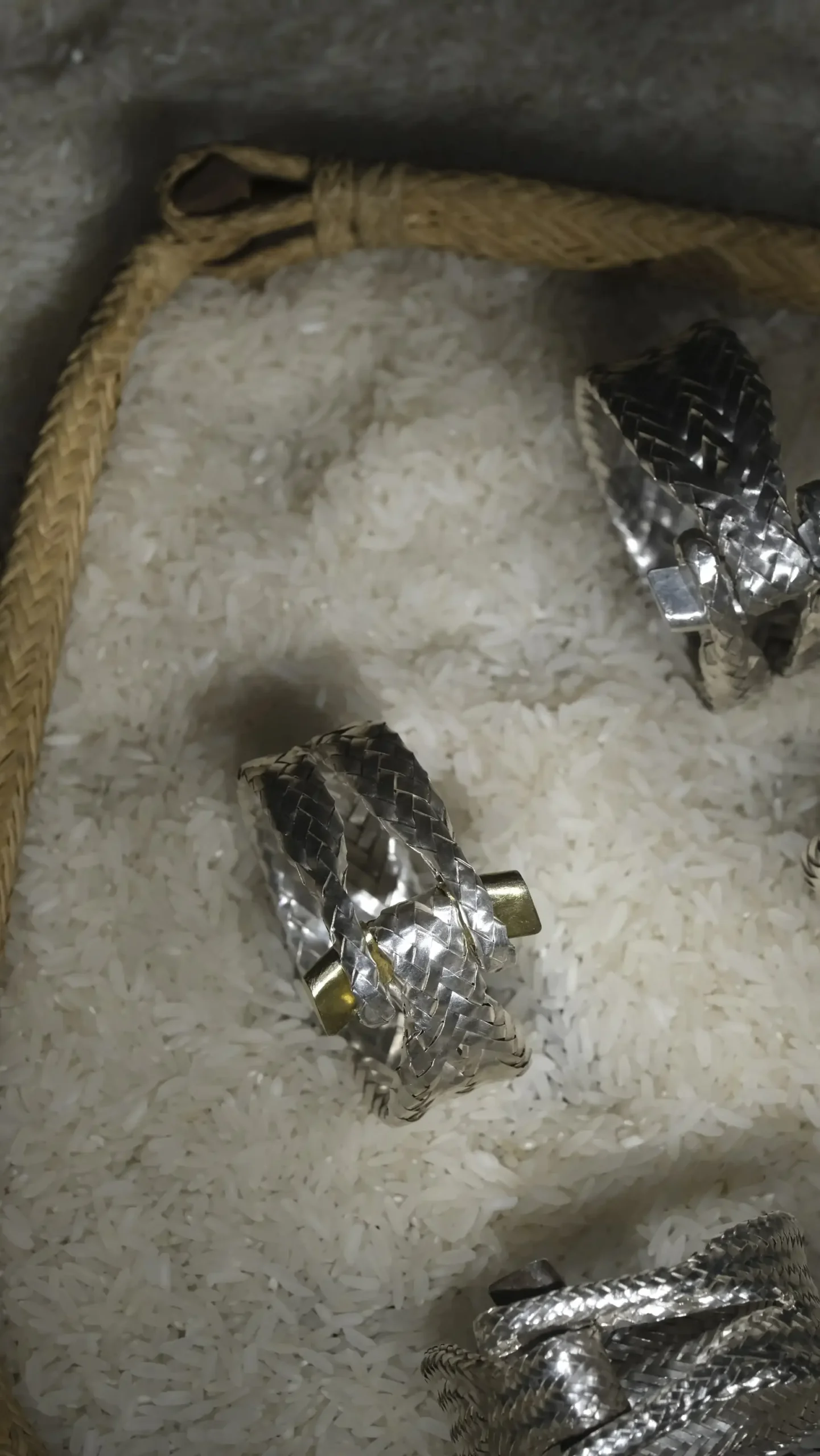
The structure of the bracelets mimics patterns found in bayongs and banigs utilized by people in the marketplace. Its firmness displays the Cordillera design as a sturdy piece of craftsmanship that showcases its adaptability in new mediums.
“It’s not the rattan that inspires me, it’s the form,” he said. “It’s just the beauty of it. And a lot of the bags are woven abaca, I’m also featuring in the show some rare fabrics that are piñya. It’s a tradition to do it in plant material like abaca or rattan. But there’s more permanence in metal. I just thought [doing] it with precious metals would create something [more like jewelry]. It would move it into jewelry.”
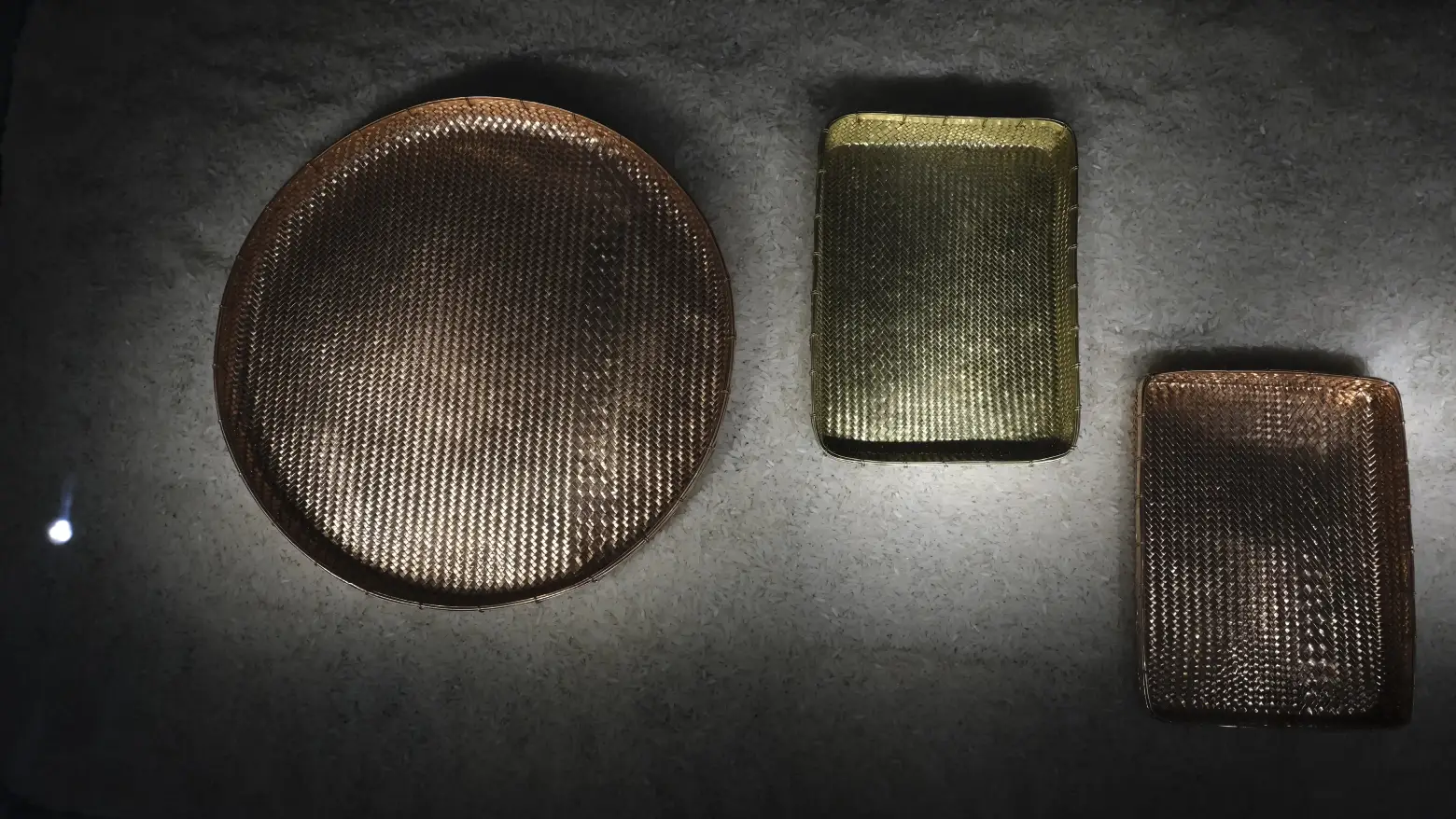
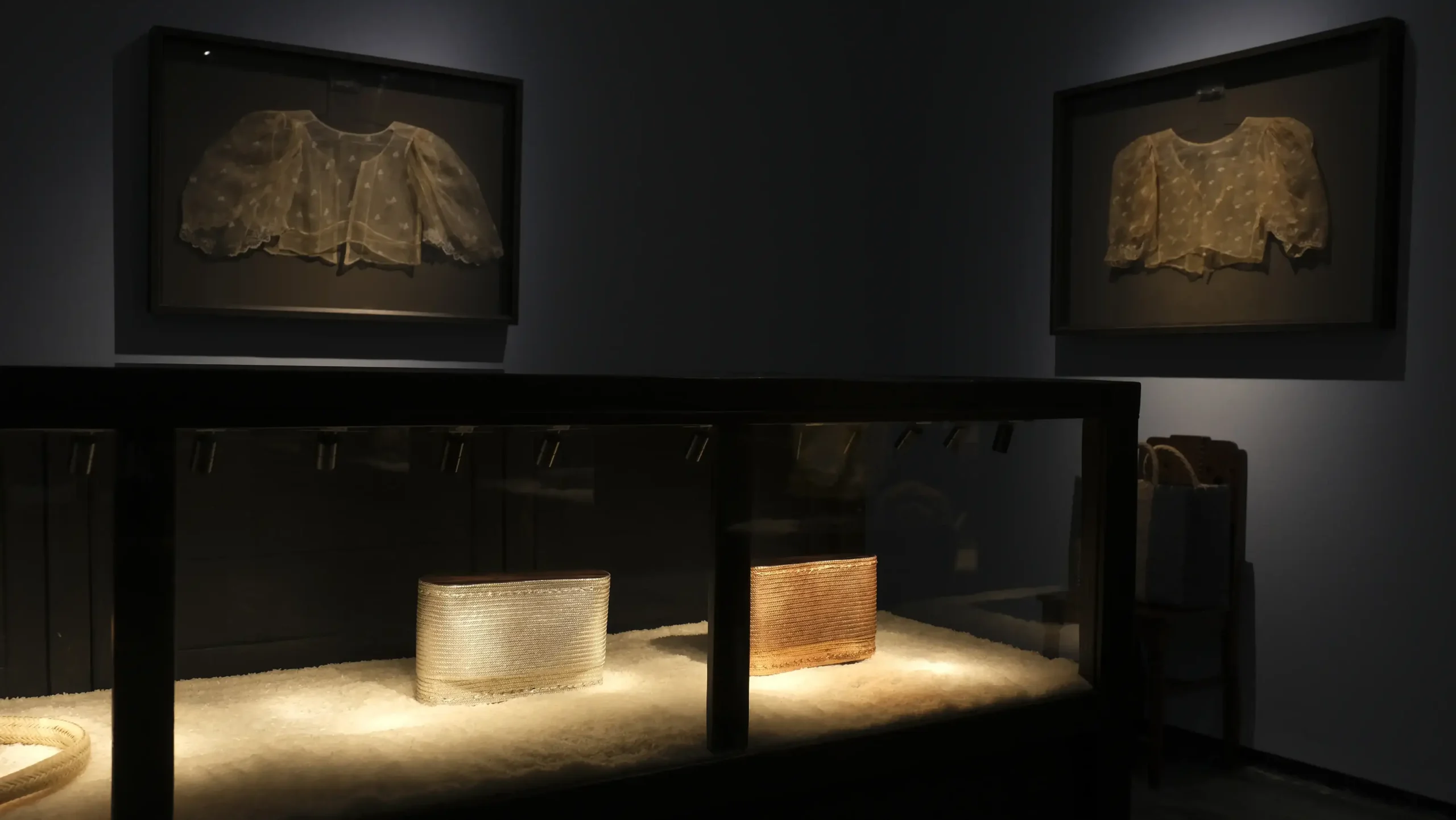
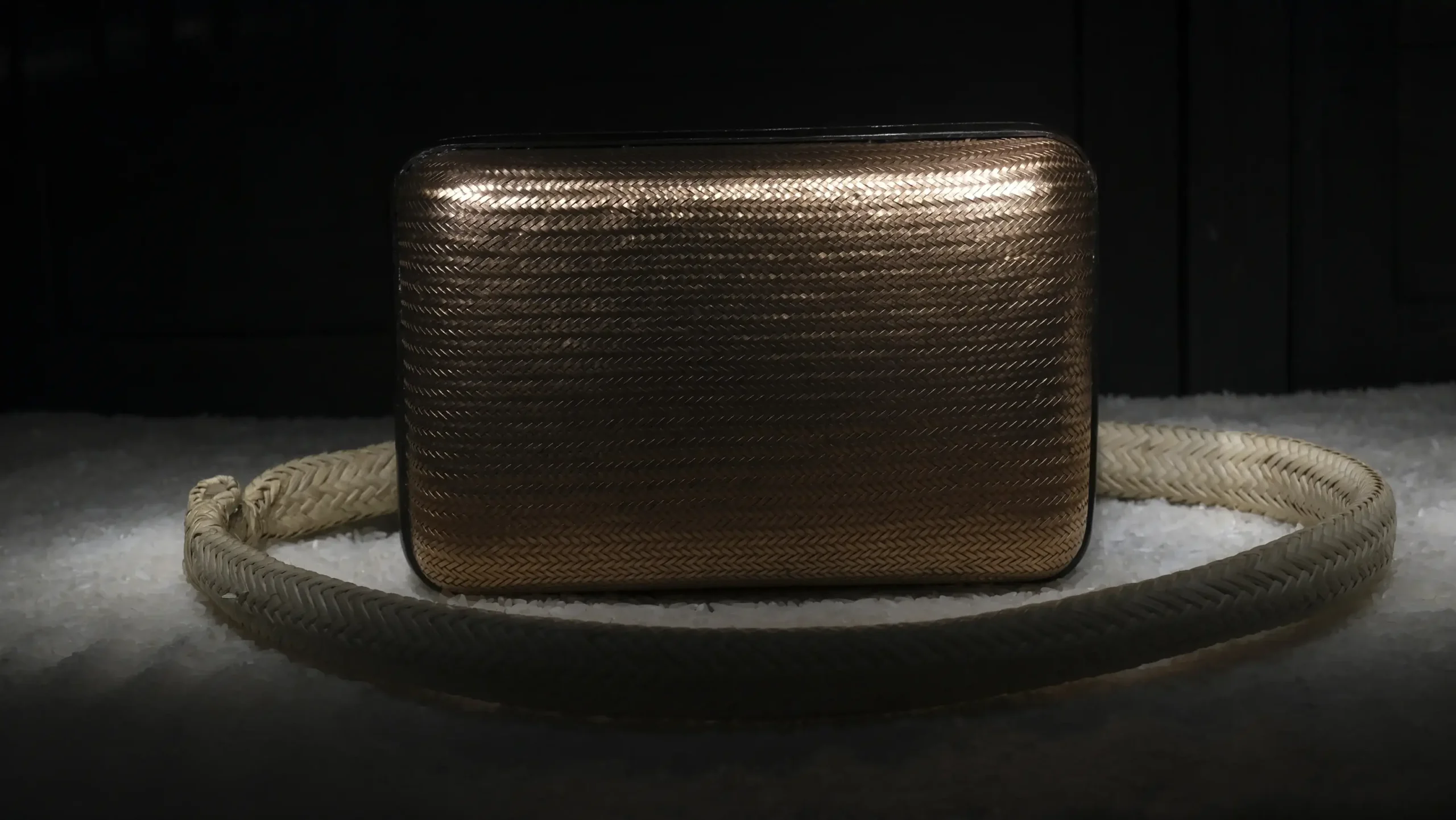
Alongside these woven bracelets are also woven copper baskets, which mimic the patterns and look of a typical bilao basket while still being functional as a tray. Bags and purses utilizing the pattern were also included in the exhibit.
Rooted in Indigenous Design and Culture
New horizontal thread patterns and checker design lines for their tote bags were also presented in the exhibit. Handwoven in Bicol with abaca material, he described these bags as “durable,” able to keep their form for long periods of time.
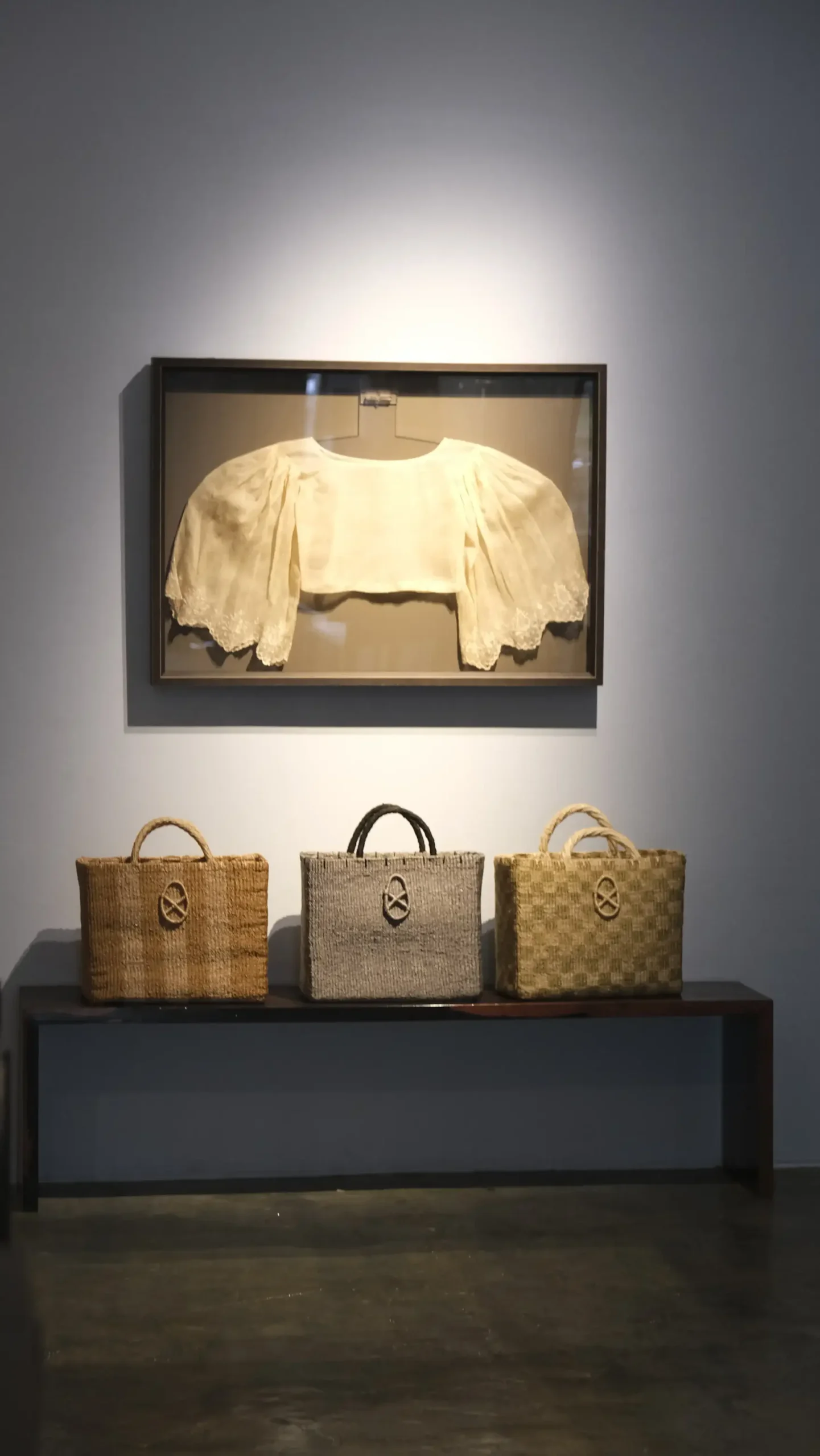
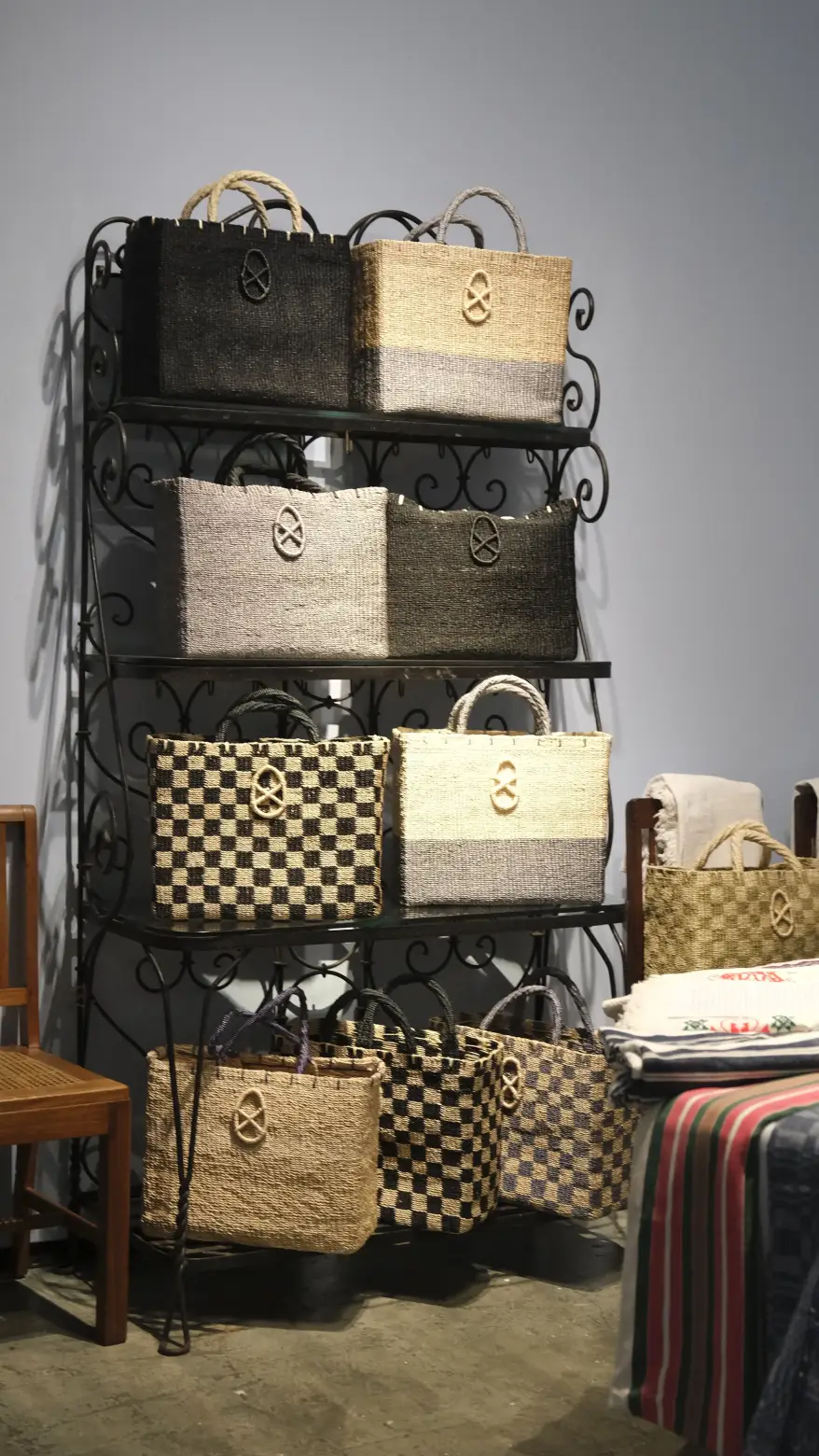
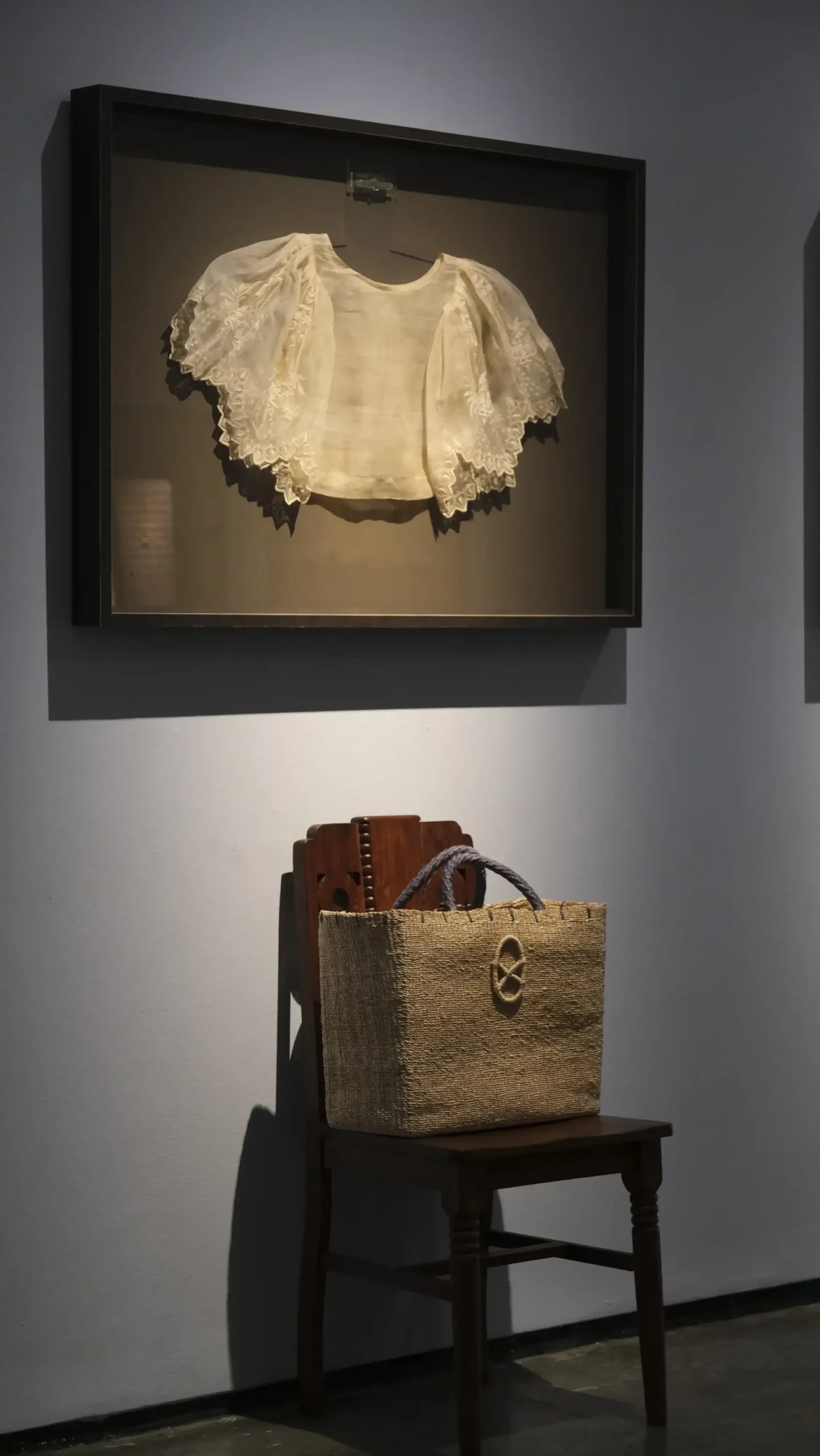
Beyond that, they also showcased offerings of blankets and other fabrics that apply processes like binetwagan, binakul, and insukit for the works. These hail from the Ilocos region, which emphasize unique geometric patterns in the products.
Among the new works that Caro Wilson is offering for the coming year is a broader selection of ating-ating, or talisman-like, necklaces. These use different traditional colonial and religious designs taken from brass molds and imprinted in silver and gold. For these necklaces, the ones shown in the exhibit utilize either a snake chain or herringbone chain pattern for added firmness and texture.
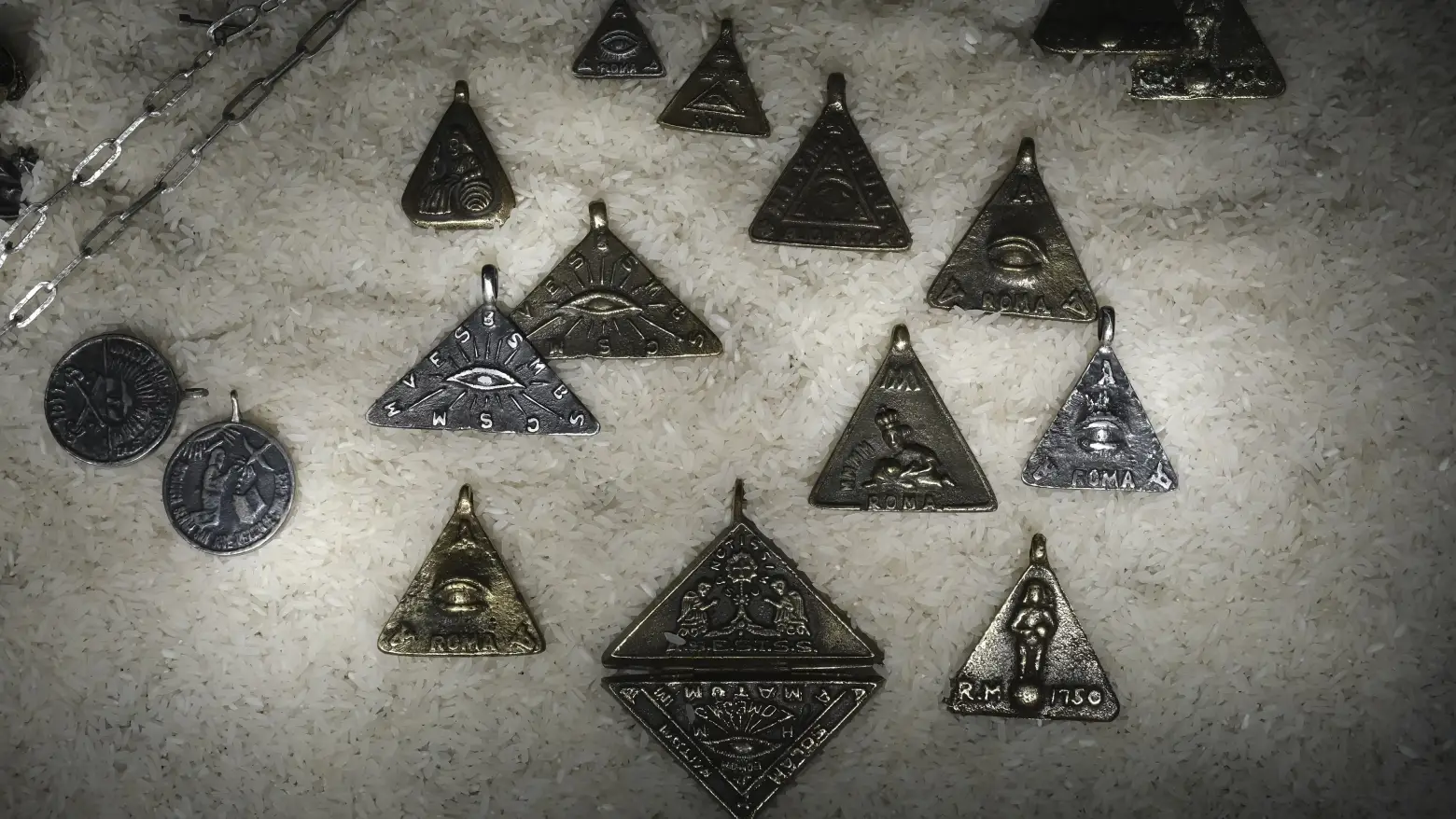
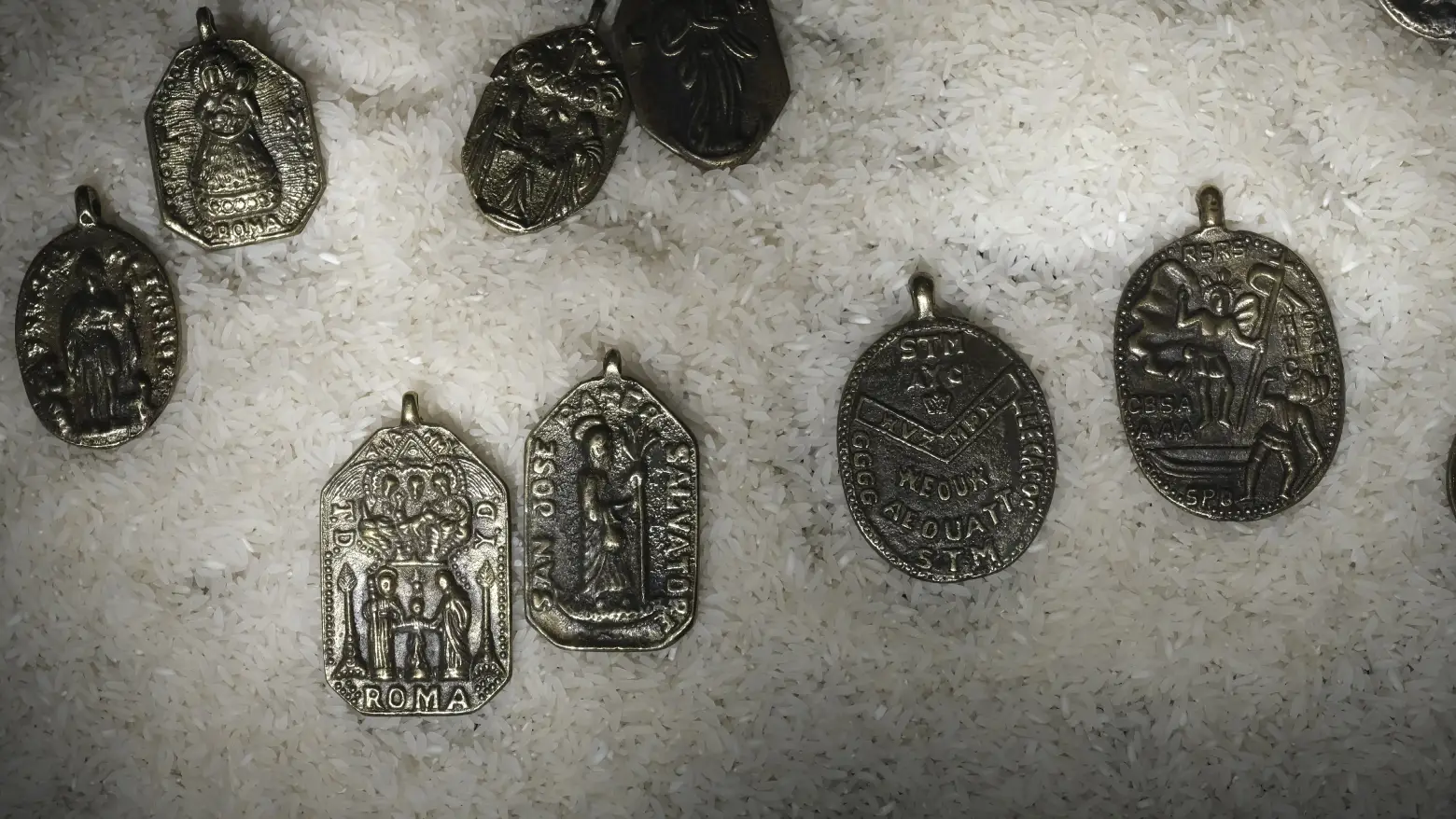
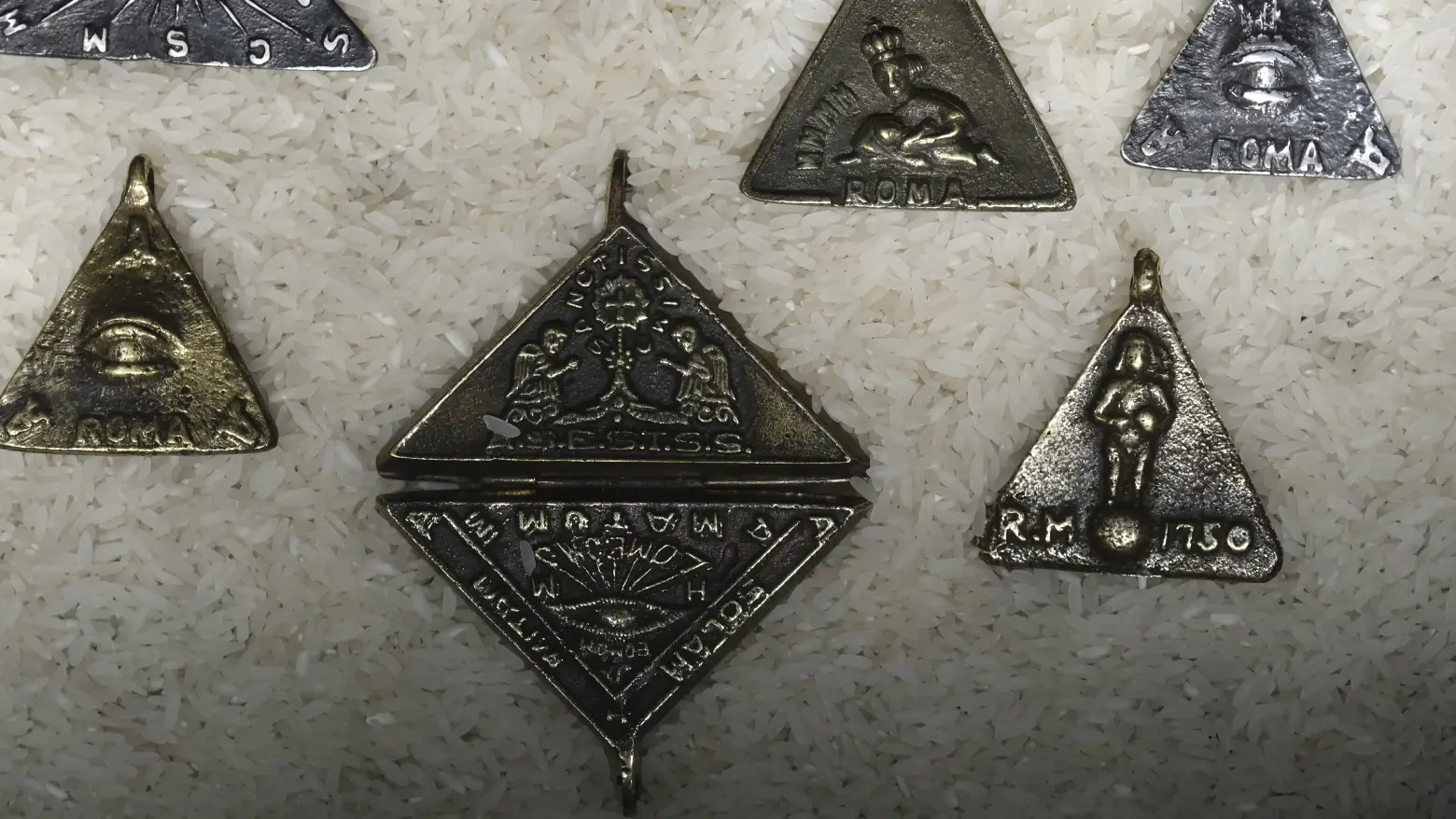
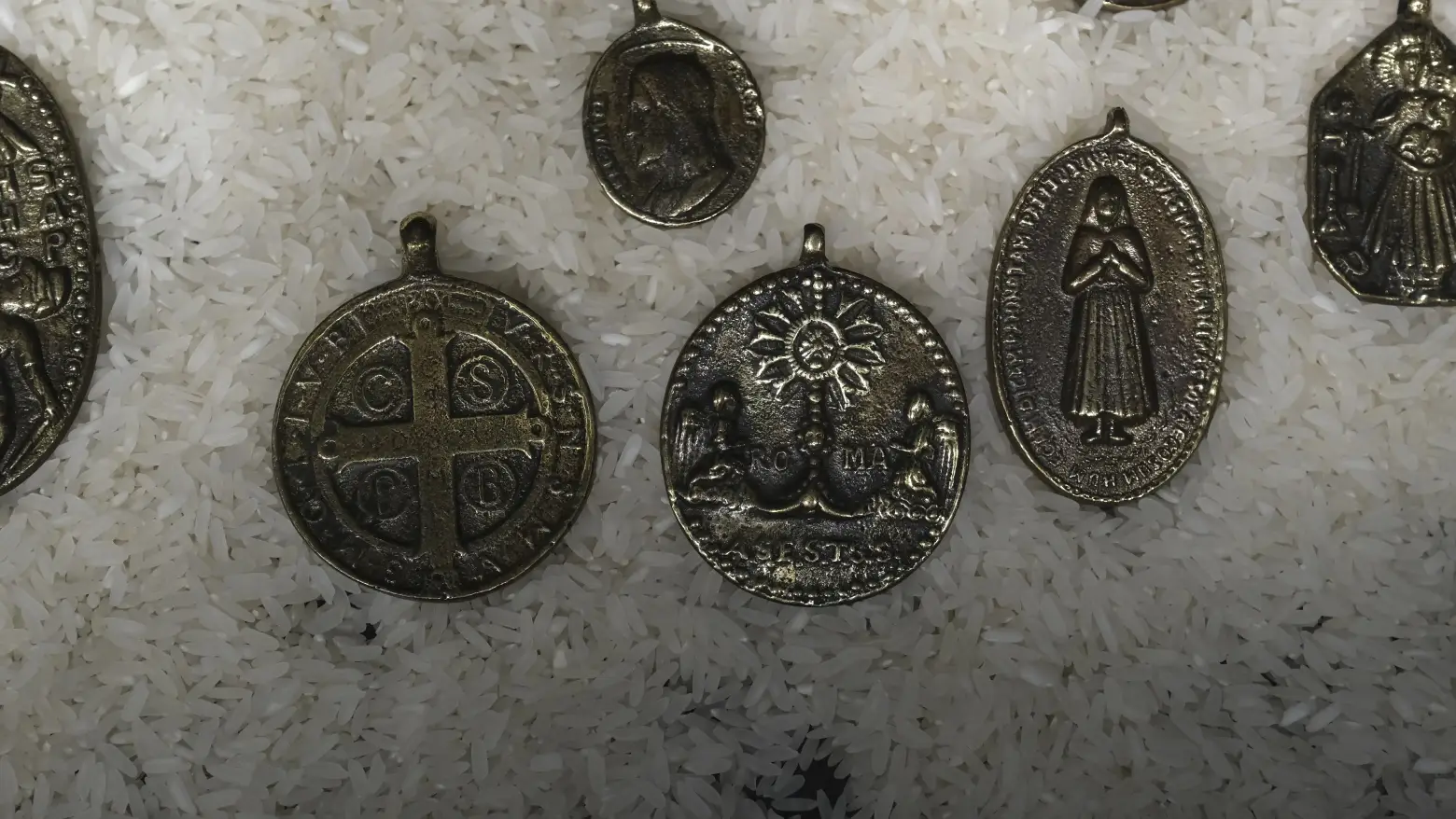
“I’ve always had these ating-atings,” he explained. “And what we’re doing more of now is casting them in gold and silver. Of course, the process of ating-ating making is casting from a form that came before it. So, that’s what we’re doing, but in gold and silver.”
Filipino Craftsmanship
As Caro Wilson continues forward as a brand rooted in indigenous design and culture, Mark Wilson emphasized the importance of highlighting the craftsmanship and history behind these designs. He believes that this hand-made aesthetic is not only hard to duplicate, but what effectively makes us unique from other styles abroad.
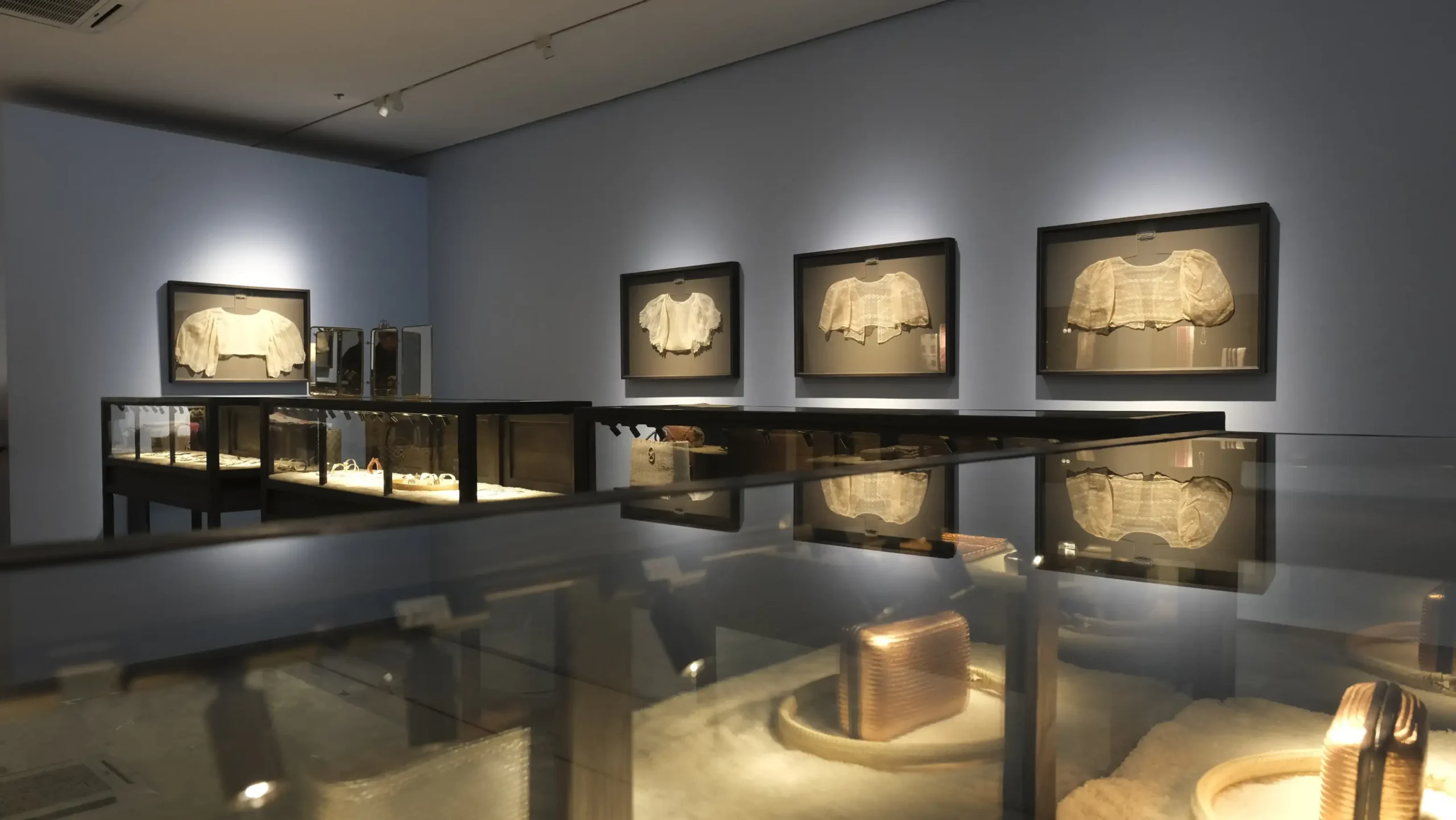
“ The skill level, the forms that have come about over history is [very unique]. The Filipino skill level is very minute,” he said. “It’s not big [in] scale. Our hand skills are very fine, and the [detail in that] scale is inspiring. That’s one of the things that this country does really well, you know?”
Photos by Ed Simon.
Related reading: Reuse, Repurpose, and Regenerate: ArteFino Festival 2023 Continues to Champion Local Craftsmanship
Frequently Asked Questions
Mark Wilson draws deep inspiration from the indigenous cultures of the Cordillera region and the functional artistry of Baguio artisans. His designs reinterpret traditional forms—such as the structural patterns found in marketplace bayongs and banigs—into contemporary jewelry and accessories. By translating these organic shapes into precious metals like gold and silver, he elevates ancestral “form” into permanent, modern wearable art.
The brand’s signature bracelets and rings utilize intricate rattan weaving patterns executed in silver, gold, and oxidized silver. Wilson recreates the aesthetic of woven abaca or rattan using metal to ensure durability and a “jewelry-like” permanence. This meticulous craftsmanship mimics the beauty of traditional Filipino bags and baskets while offering a sophisticated, leather-like texture through specialized oxidation processes.
Ating-ating are talisman-like necklaces inspired by traditional colonial and religious designs. For the latest collection, Caro Wilson casts these pieces in gold and silver using brass molds taken from historical forms. These pendants are typically paired with snake or herringbone chains to provide a firm, textured feel that complements the spiritual and historical weight of the talismans.
The exhibit showcases high-quality fabrics and blankets from the Ilocos region that utilize traditional processes such as binetwagan, binakul, and insukit. These methods are celebrated for their unique geometric patterns and cultural significance. Additionally, the brand features durable tote bags handwoven in Bicol from abaca, as well as rare items made from piña fabric, highlighting a broad spectrum of Filipino textile heritage.
Mark Wilson believes the brand’s uniqueness lies in the “minute” and “fine” skill level inherent in Filipino hand-craftsmanship, which is difficult to replicate through mass production. The history behind the forms and the high level of detail achieved on a small scale set these pieces apart from international styles. By focusing on these fine hand skills, Caro Wilson champions the distinctiveness of Filipino artistry as a leader in high-end, culturally-rooted design.
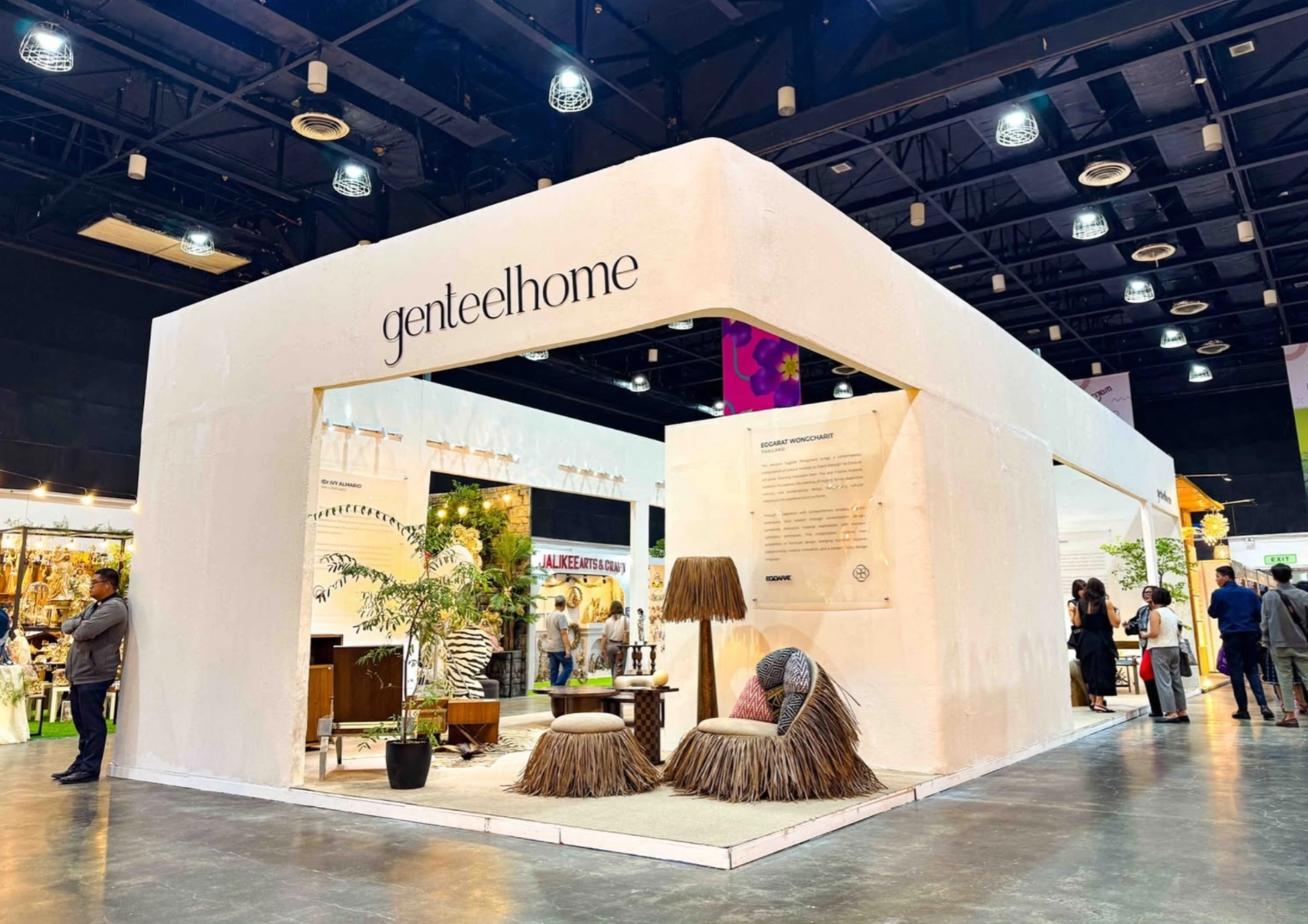
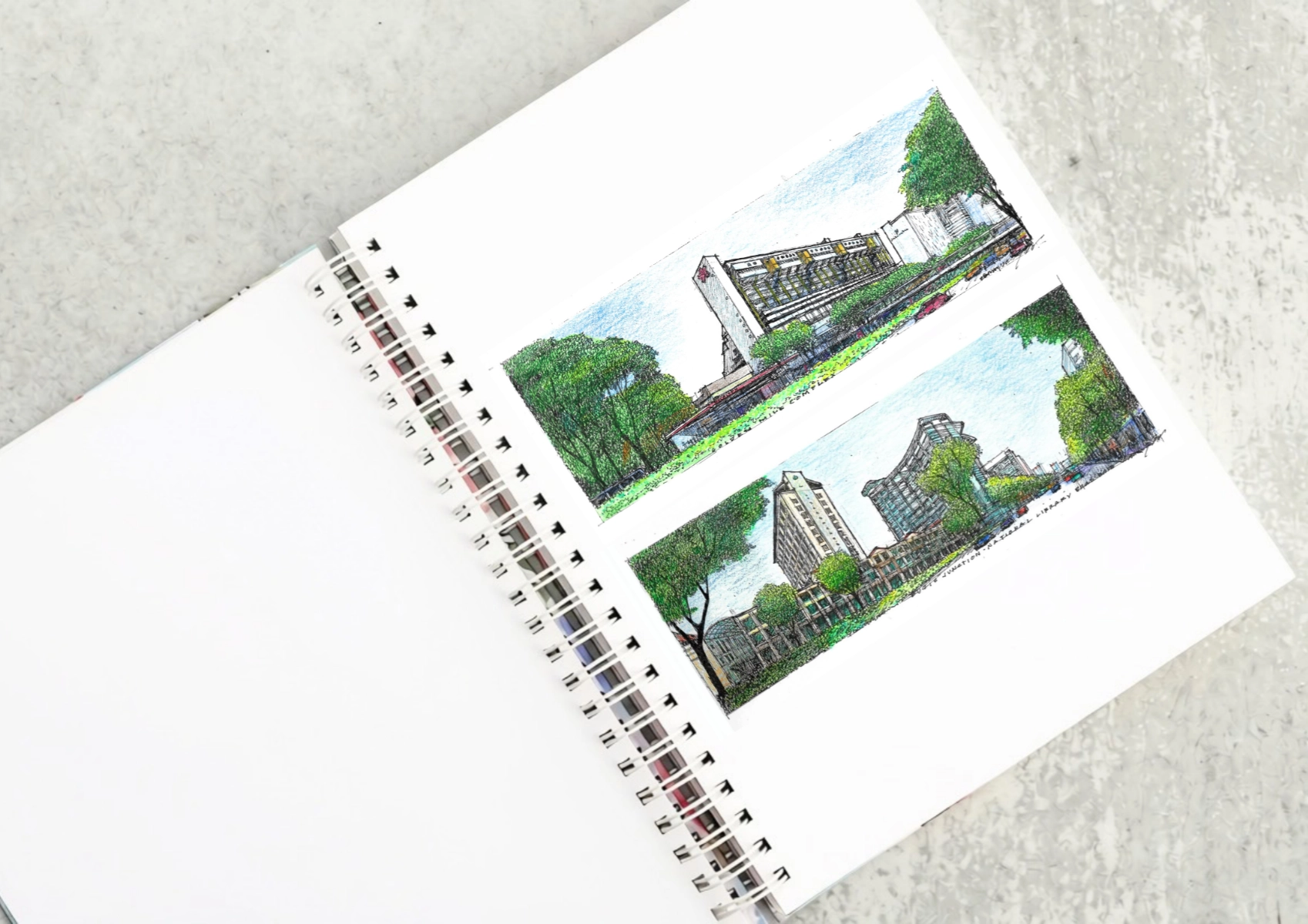
Two sketches of Singapore connect BluPrint Editor in Chief Paulo G. Alcazaren’s personal and professional history with Shared Ground: ArchitectureArchitectureThe art and science of designing and constructing buildings, structures, and spaces that are functional, safe, and aesthetically pleasing. It encompasses the planning, design, materials, and techniques used to createGo to Architecture Glossary of Care, Culture, […]
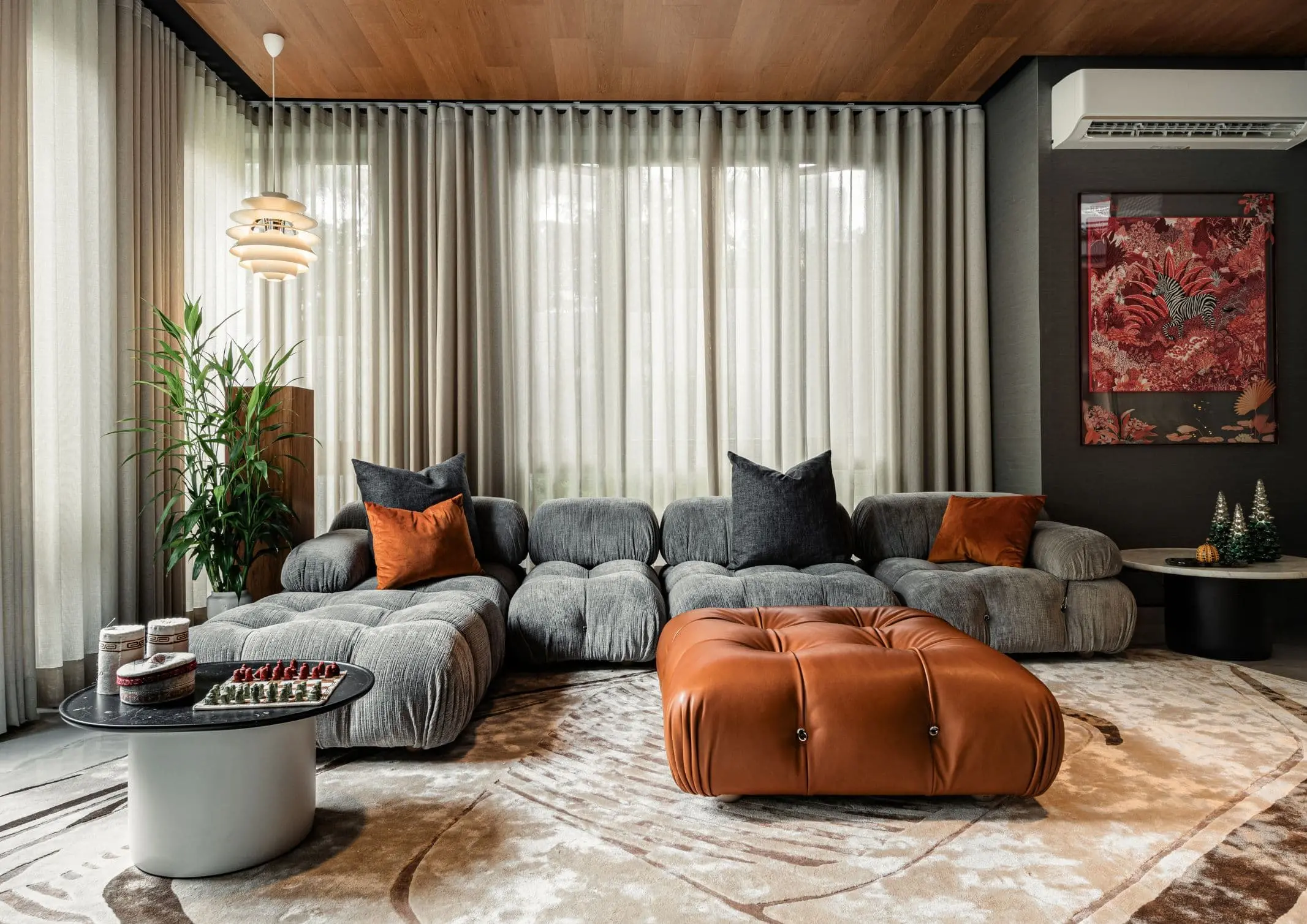
Some have become household names – Coleman, Oster, and KitchenAid – products that have found their way into Filipino kitchens, homes and family routines. In home furnishings, brands such as B&B Italia, Ethan Allen, Sub-Zero, Miele, SieMatic, Louis Poulsen, Hunter Douglas, Tempur, and Technogym, have helped shape the way Filipinos live. From everyday essentials to […]
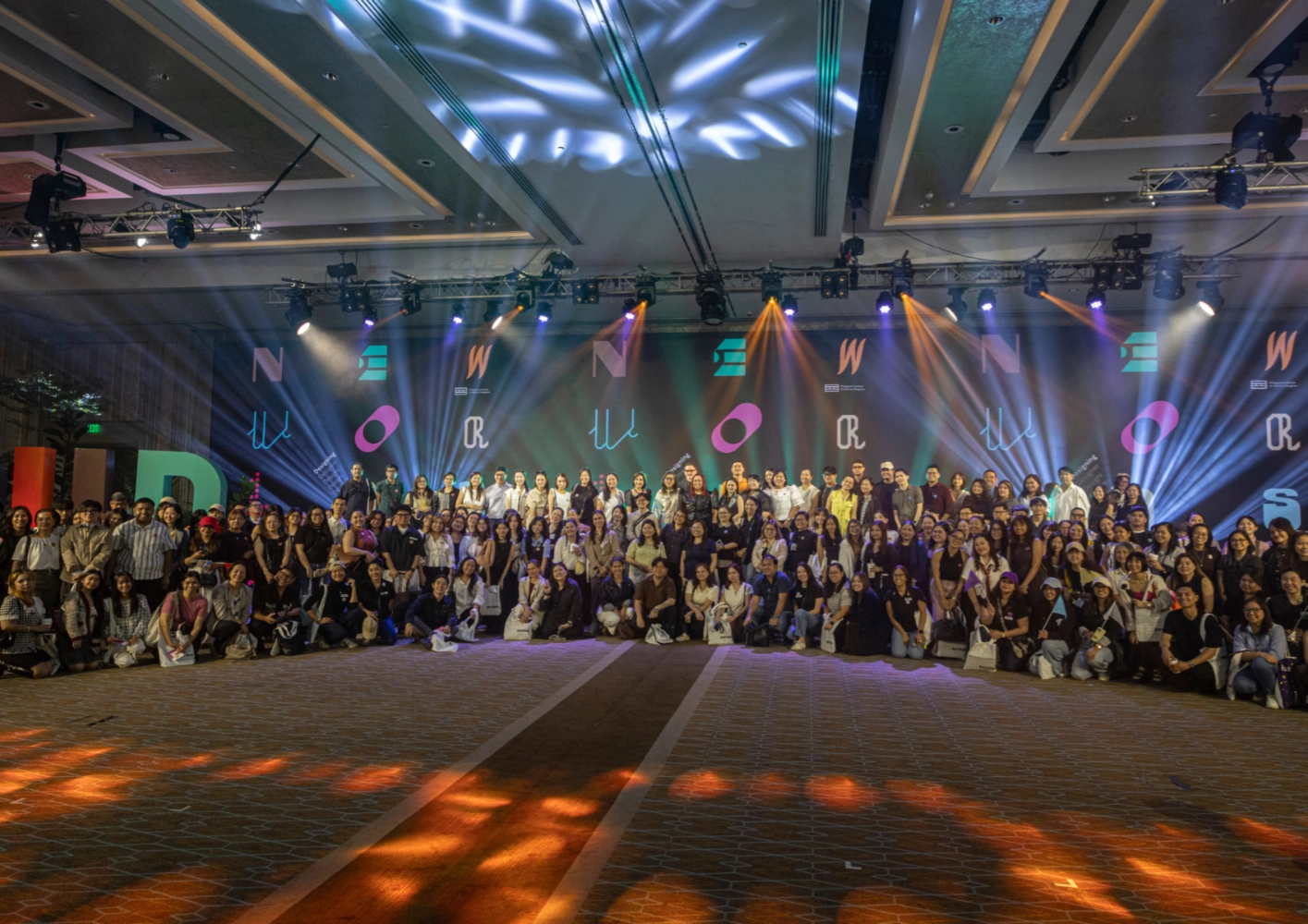
In a way, designers are the modern-day soothsayers and prophets. They design for the future, predicting how a room, a house, a building or a whole city will be used by people. They foresee how users will interact with a space, conjure exact shades of colors to elicit specific behavior and arrange furniture to build […]
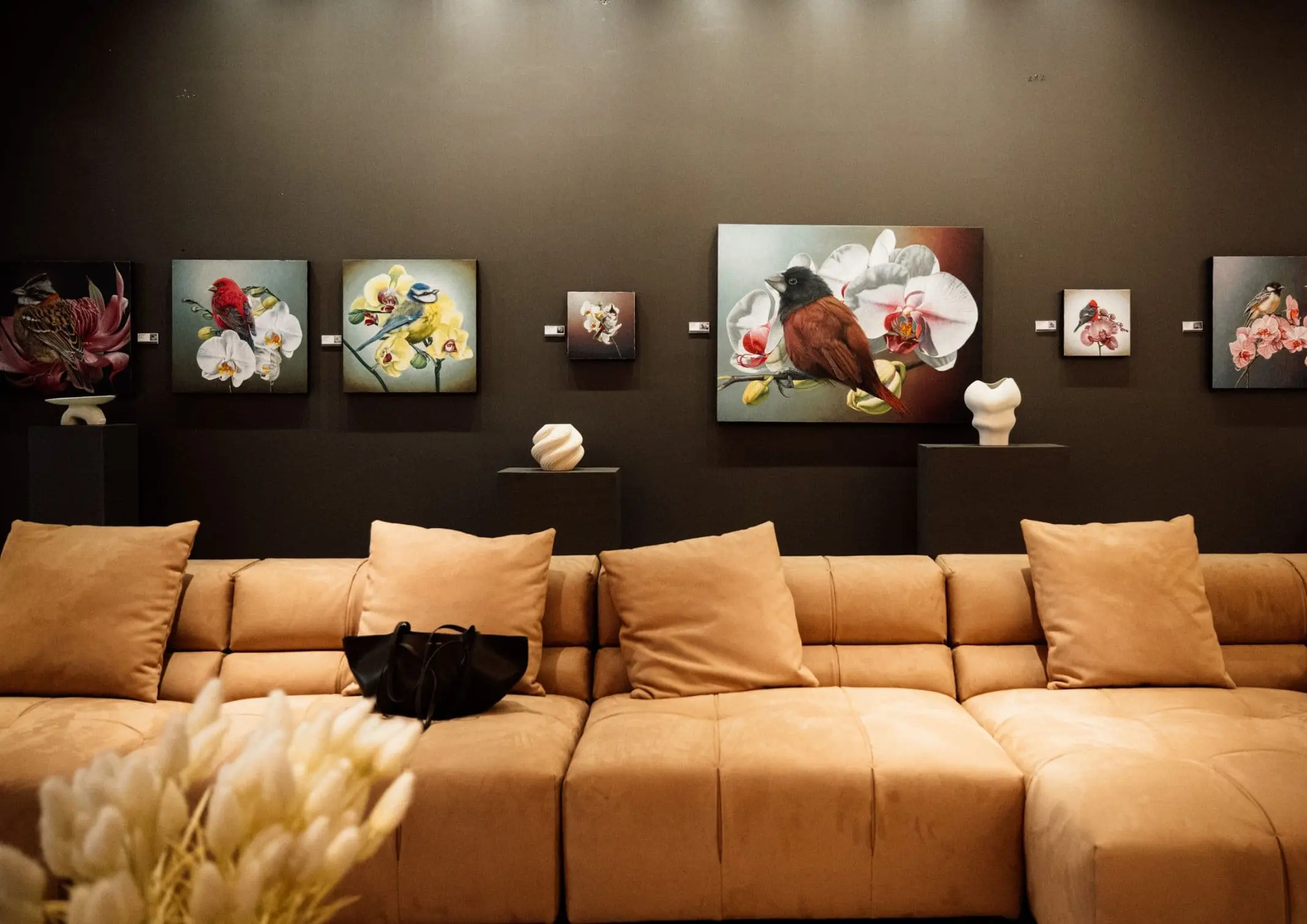
Art and furniture are often selected separately, yet their relationship can shape how a room looks and feels. The collaboration between Hooga and Galerie Joaquin explores how these elements can work together, bringing contemporary artworks into furnished residential settings at Hooga’s showroom in Uptown Mall, Bonifacio Global City. For Hooga, which curates furniture, lighting, and […]
Read the issues.

Collect the volumes.

Recommended Video
Tap to Unmute
Unmute
0:00
0:00