Bigkis is the act of binding. In Tagalog, the word can refer to something used to bind or encircle, as well as a bundle formed by tying several separate elements together. Figuratively, it can also mean a bond, union, or unity. The meanings move from the physical act of joining things together to the connection […]
‘Dialogo’: Two Artists Collaborative and Find Middle Ground in New Exhibit



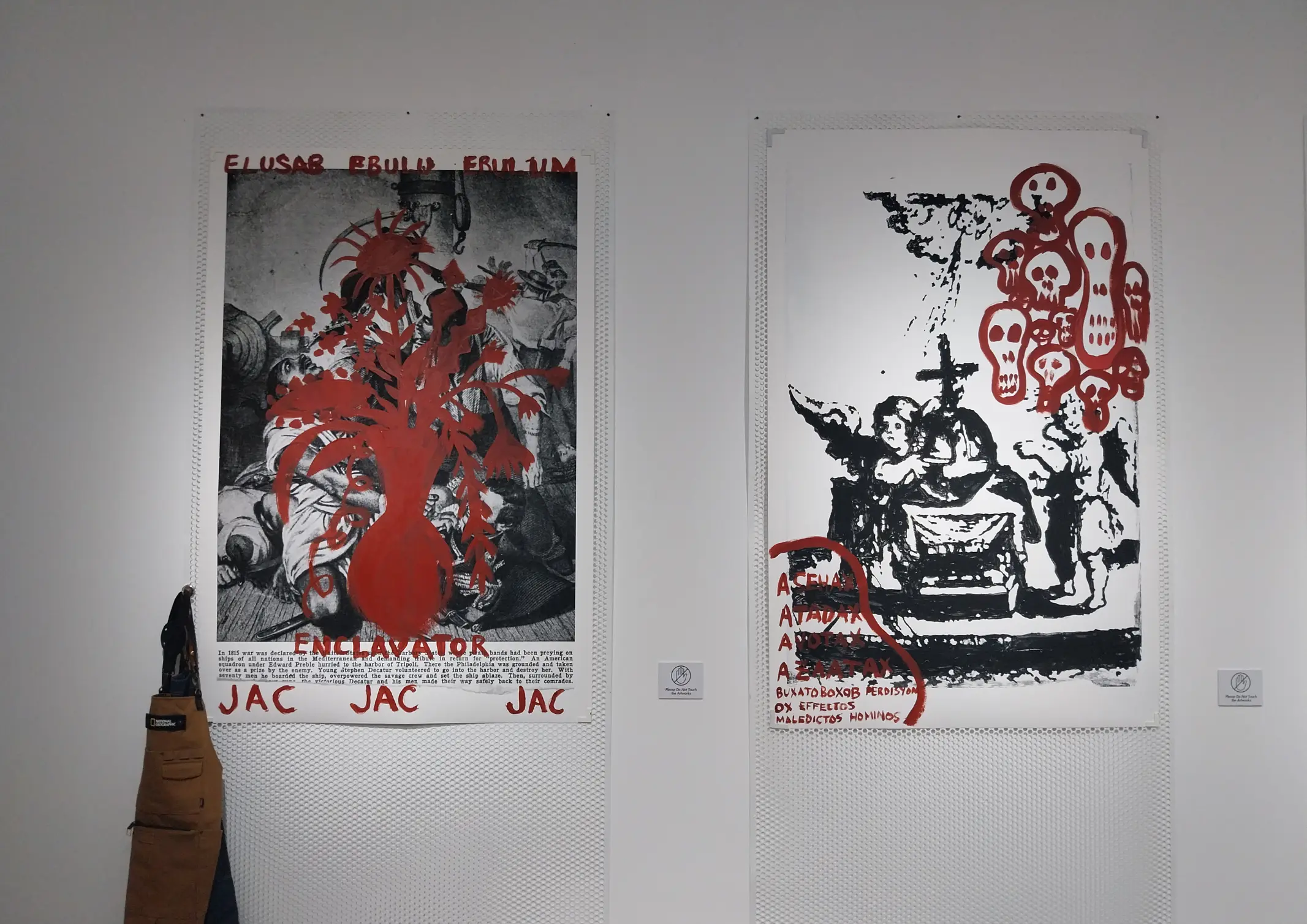
Cloud Grey Gallery put together two esteemed artists, Manuel Ocampo and Ronald Ventura, for Dialogo. As a gallery located at the Grand Hyatt Manila, Cloud Grey has a more forward-thinking approach to contemporary art movements at the time. “They’re provocations,” the gallery declared as they described their approach, “invitations to see the familiar transformed.”
For Dialogo, creative director Ruel Caasi had the idea of combining two artists with distinctive styles for the exhibition. The hope was to see how their artistic styles would mesh, but instead, they seemed to clash, creating a much more interesting explosion of their two styles confined to a single canvas.
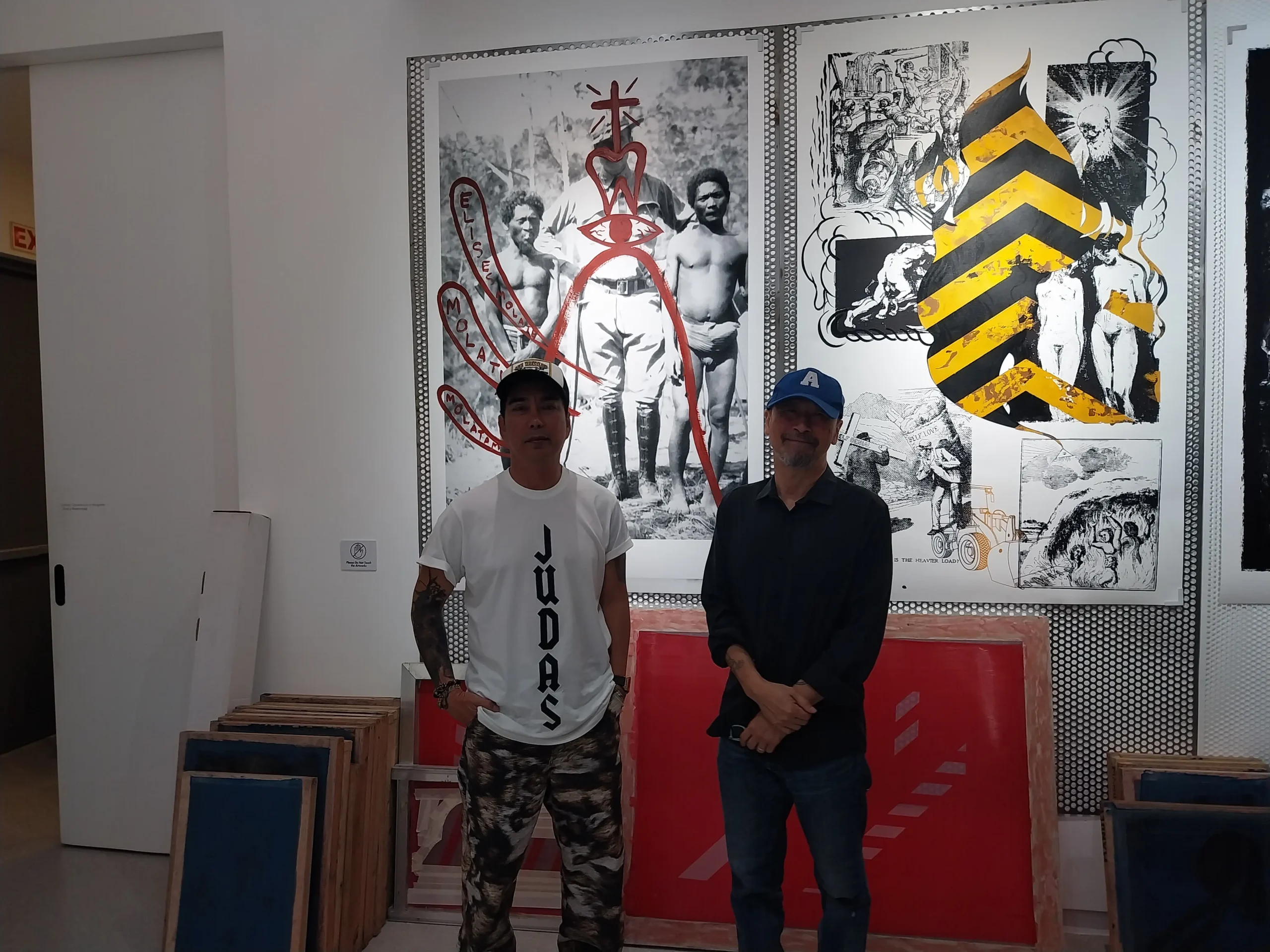
“What rises from that tension is something neither could make alone,” the exhibit write-up said. “[It’s] a third presence with its own pulse and its own unruly intelligence. It’s an ‘It’s Alive!’ kind of Frankenstein moment: one with its own mood, its own pulse, and its own way of looking at contemporary life.”
Punk and Polish
Manuel Ocampo, as an artist, is full of explosive volatility, championing the investigation of different sociopolitical aspects of living in the Philippines through a mix of cultural ideas. Ronald Ventura, meanwhile, has more precision in his attempts at deconstruction. His style is a merging of juxtapositions from different eras of art, highlighting their contradictory aspects for all to see.
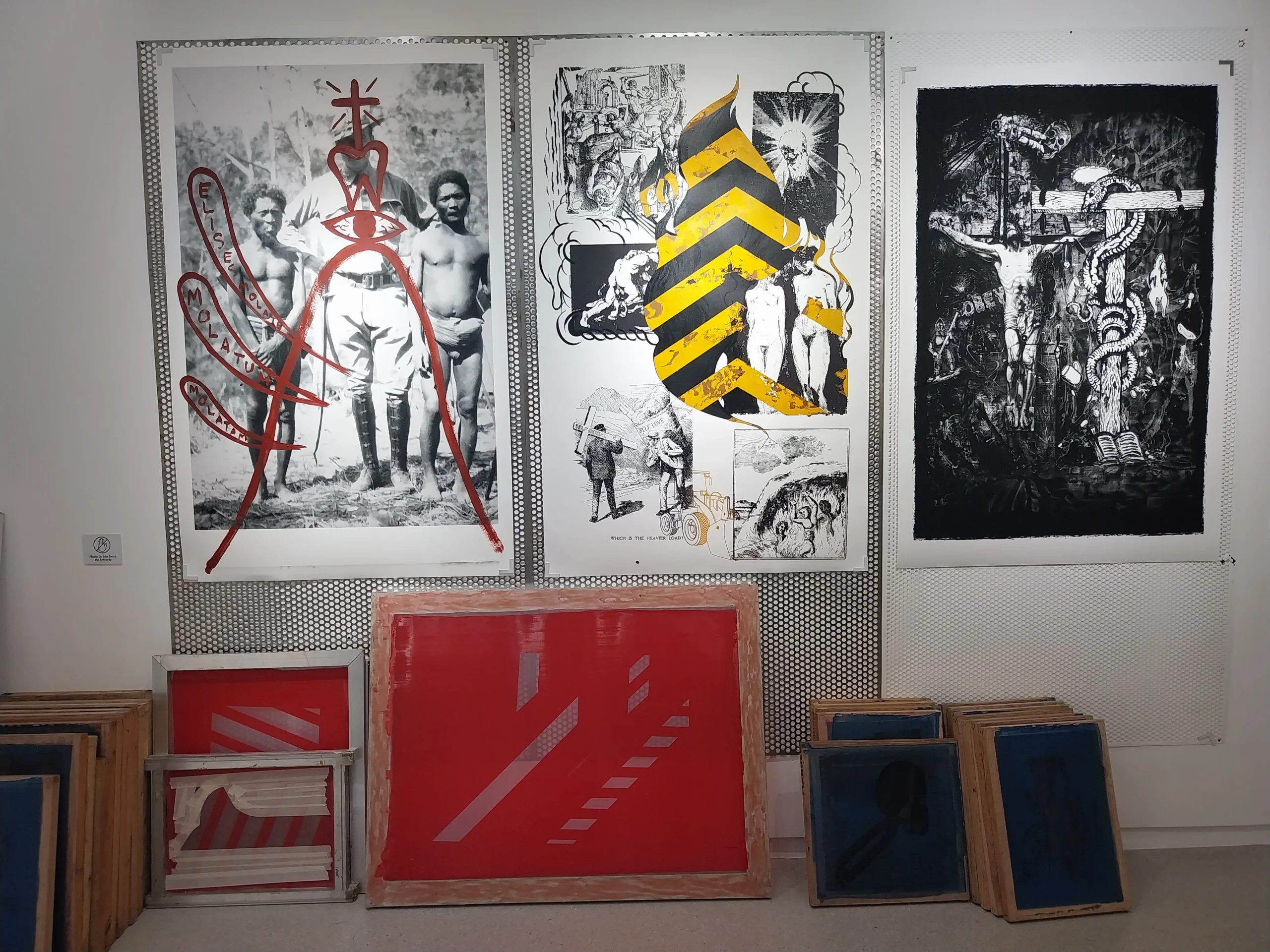
Even in their own words, Ocampo called himself more of an anti-establishment punk, as he created elaborate prints of revered religious iconography and symbols in society to be critiqued and dismantled. Ventura was more precise in his methodology, and indeed, his style seems more centered on a postmodern twist on important symbols: a mockery of what high art symbolizes, making you take seriously what we call frivolous cartoons and iconography.
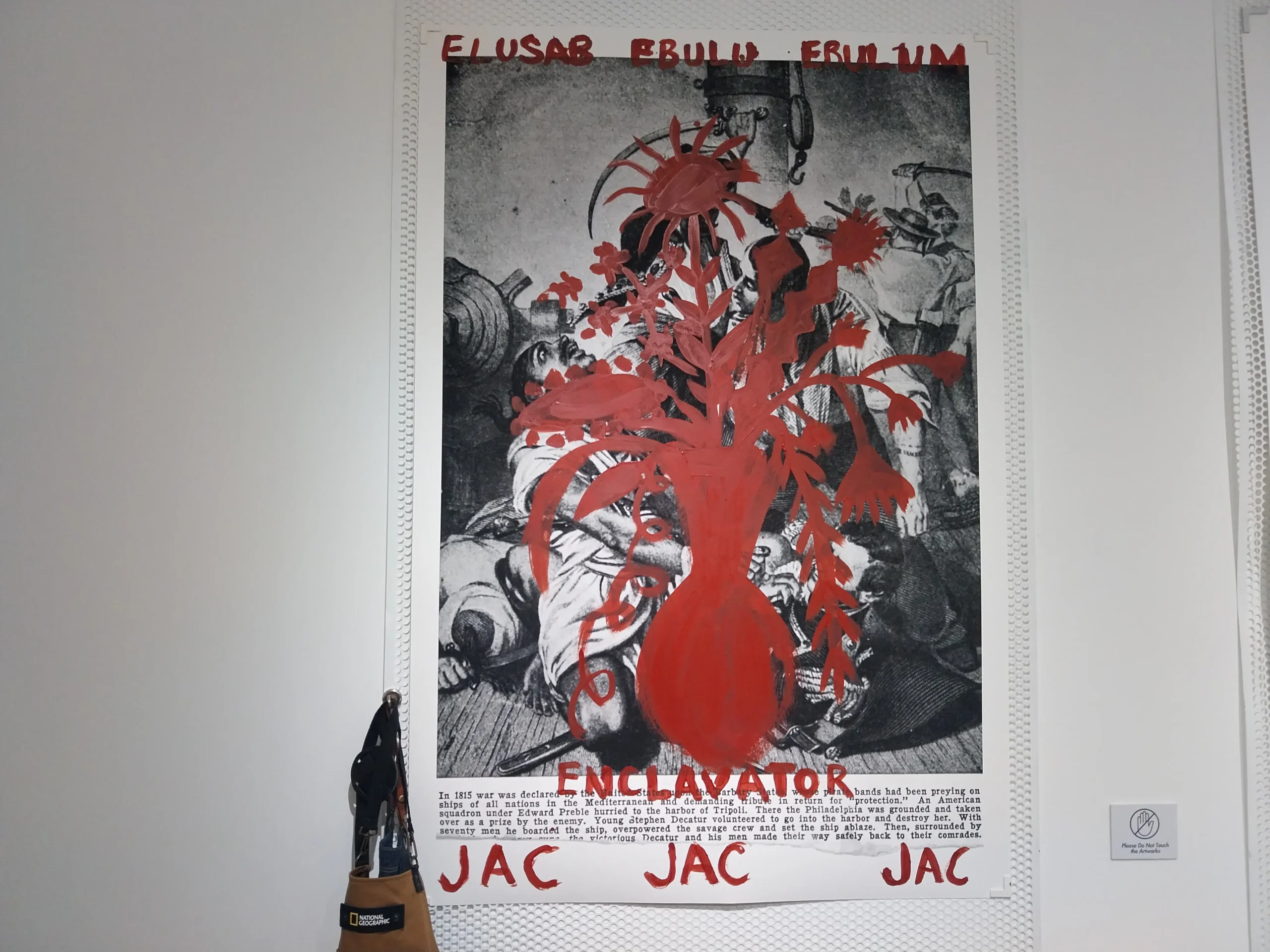
The exhibit write-up called the combination “the Dead Kennedys jamming with Dream Theater.” While an expressive and interesting image, the end product of Dialogo is not as disorienting as that image suggests. Even as they clash, Ocampo and Ventura find middle ground in their style that provokes and relaxes at the same time.
Its uniqueness really lies in how these two seem to be conversing with each other through the work, which was indeed how the output came about. One artist would lay down a layer of an idea on the canvas, and the other would add or subtract with something they believed would complement it. It’s them putting their own styles on top of each other, attempting a clear message while saying two different things in two different ways.
Settled, Unsettled; Finished and Unfinished
Dialogo does come off a little bit hurried in the mind’s eye, but it explodes with a lot of artistic flavor. Neither Manuel Ocampo nor Ronald Ventura wanted to compromise their work. Because of how they overlap, they craft many contradictory messages about the society we live in today, what we value in it, and how we define it for ourselves.
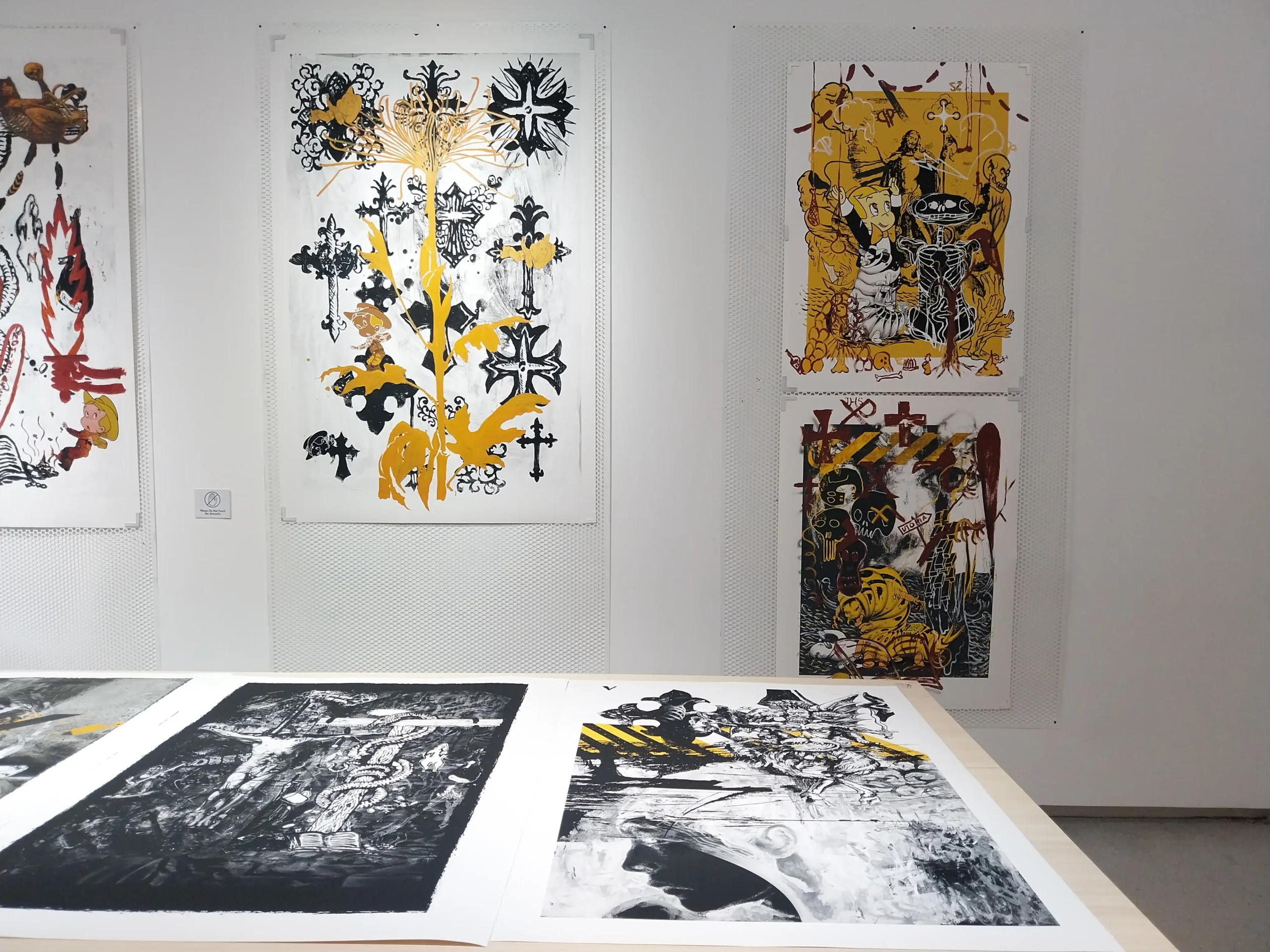
“The pieces echo the world we live in: layered, volatile, full of uneasy truths, marching into a burning future,” the exhibit write-up said. “Beauty sits beside brutality; history leaks into myth; and everything shifts. The images give form to how certainty has become a scarce commodity. Tension drives the plot of the story of the world.”
If it were more coherent or incoherent, it would be unintelligible; as it stood, Dialogo finds us with two artists yelling over each other, and finding something compelling in that process.
Photographs by Elle Yap.
Frequently Asked Questions
Manuel Ocampo is characterized by “explosive volatility,” utilizing a raw, anti-establishment punk aesthetic to dismantle religious and sociopolitical icons. In contrast, Ronald Ventura brings a “postmodern precision” to the canvas, merging juxtapositions from different art eras with a polished, almost virtuosic methodology. The exhibit write-up famously describes this technical collision as “the Dead Kennedys jamming with Dream Theater,” where Ocampo’s visceral critiques meet Ventura’s precise deconstructions.
The uniqueness of the work lies in a literal additive and subtractive process of conversation. One artist would lay down a foundational layer of an idea, and the other would then add or subtract elements they felt would complement or challenge the initial thought. This layering technique allows both artists to speak simultaneously on the same surface, resulting in a composition that says two different things in two different ways without ever reaching a full compromise.
The collaboration aims to produce something neither artist could achieve in isolation. This “third presence” has its own pulse and mood, functioning as a hybrid intelligence born from the tension of the clash. Rather than a cohesive partnership, the works are viewed as a zone where certainty is scarce and tension drives the narrative, reflecting a world that is layered, volatile, and full of “uneasy truths.”
Ventura’s style specifically focuses on mocking the concept of “high art” by elevating frivolous cartoons and pop iconography to a level of serious consideration. By merging these with Ocampo’s elaborate prints of revered religious symbols, the exhibition forces a dialogue on how society defines value. This creates a space where “beauty sits beside brutality,” and history is seen leaking into modern myth.
The works often appear hurried or “unsettled” to the mind’s eye, which is a deliberate choice to reflect a “burning future.” By leaving pieces in a state that feels both finished and unfinished, the artists mirror the volatility of contemporary life. If the works were purely coherent, they would lose their edge; instead, the compelling nature of the exhibit comes from two distinct voices “yelling over each other” until a functional, albeit restless, middle ground is found.
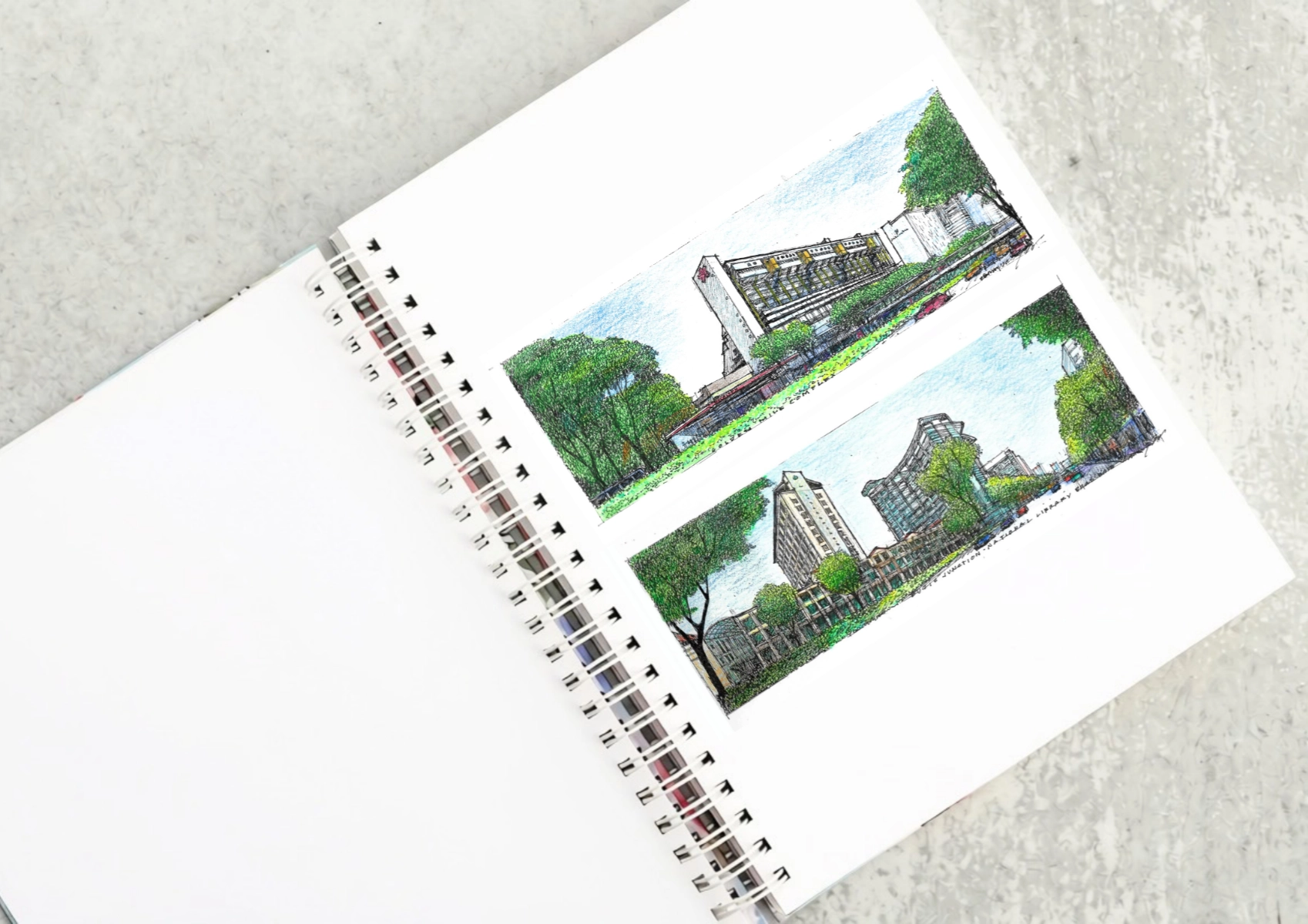
Two sketches of Singapore connect BluPrint Editor in Chief Paulo G. Alcazaren’s personal and professional history with Shared Ground: ArchitectureArchitectureThe art and science of designing and constructing buildings, structures, and spaces that are functional, safe, and aesthetically pleasing. It encompasses the planning, design, materials, and techniques used to createGo to Architecture Glossary of Care, Culture, […]
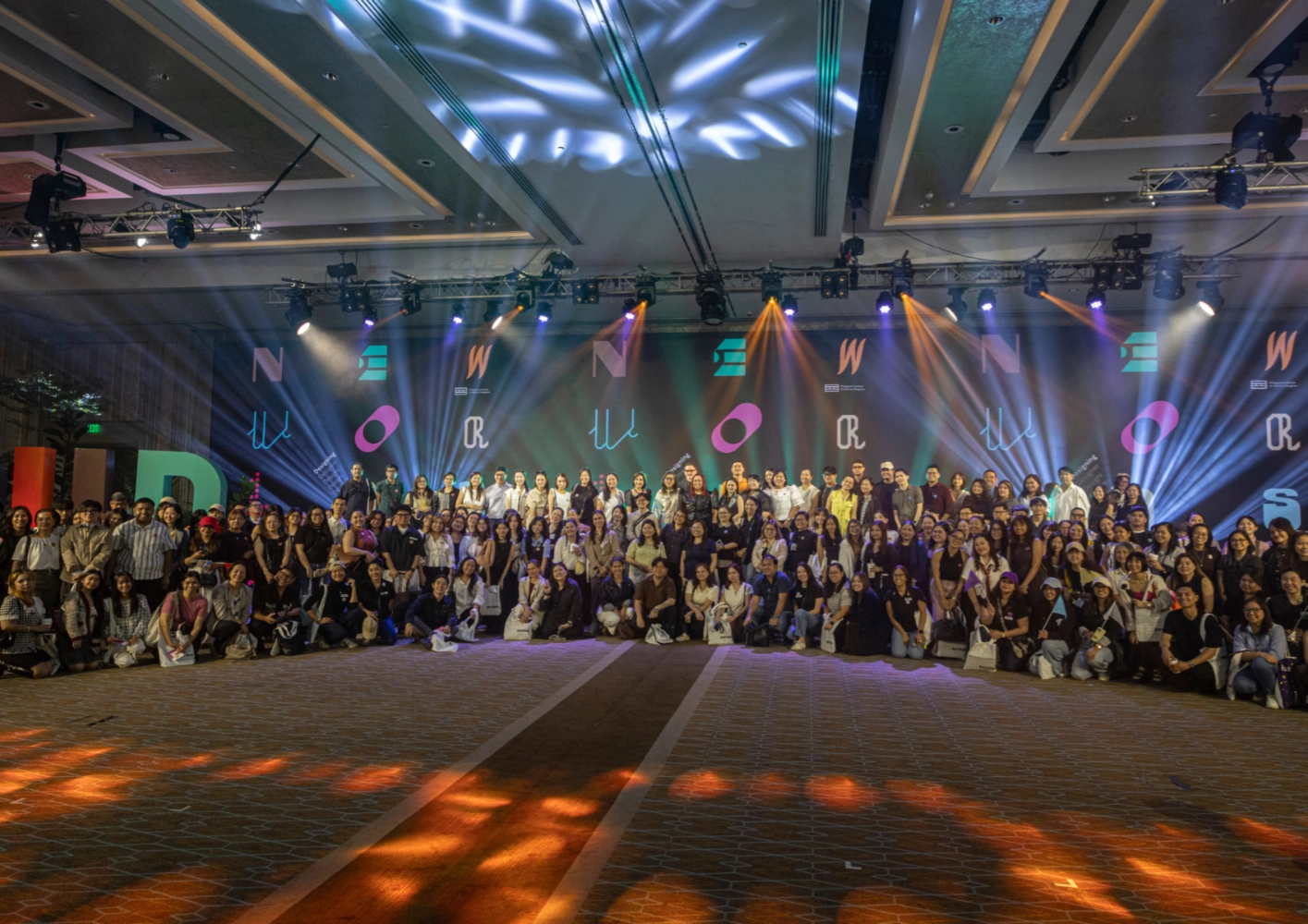
In a way, designers are the modern-day soothsayers and prophets. They design for the future, predicting how a room, a house, a building or a whole city will be used by people. They foresee how users will interact with a space, conjure exact shades of colors to elicit specific behavior and arrange furniture to build […]
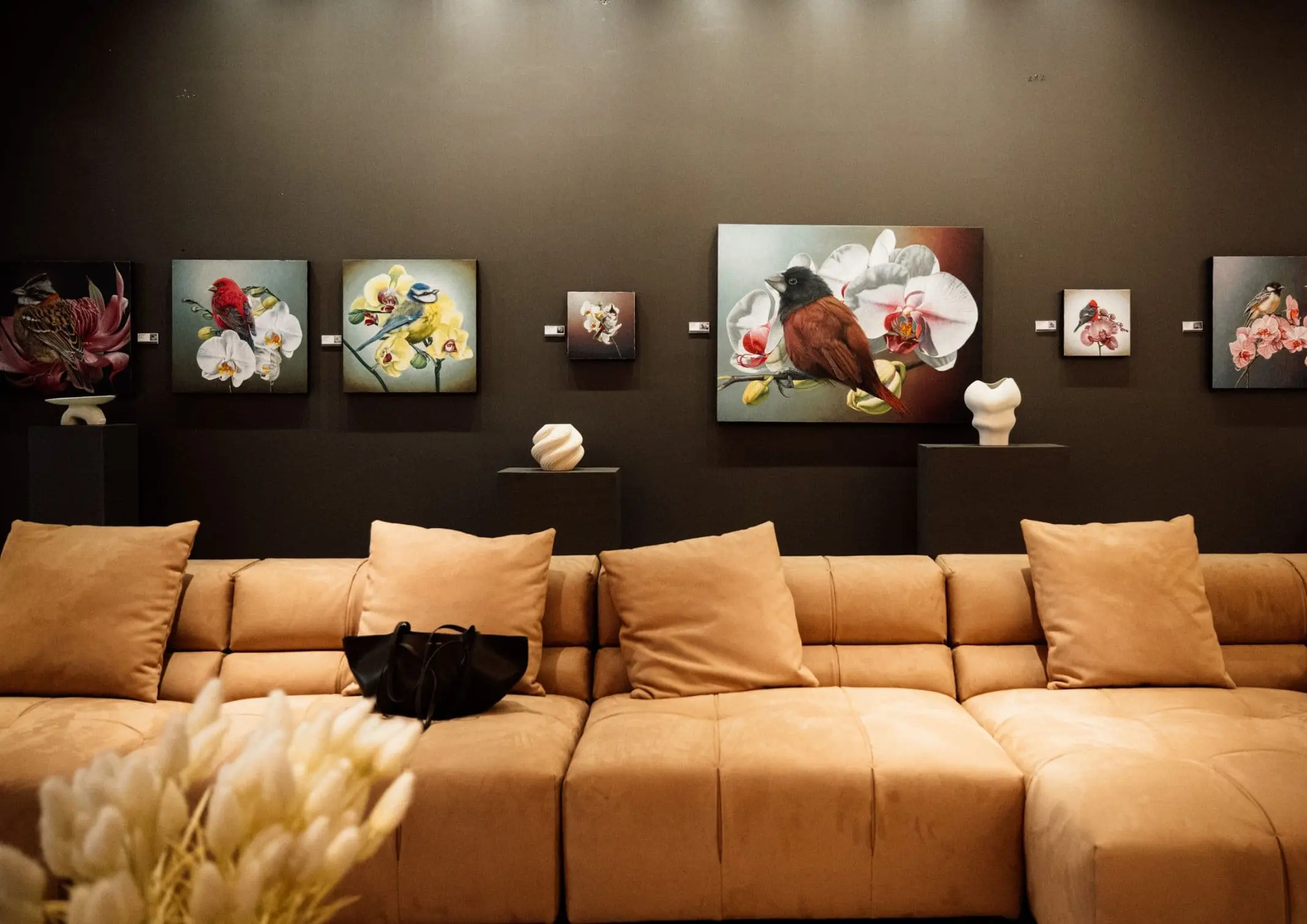
Art and furniture are often selected separately, yet their relationship can shape how a room looks and feels. The collaboration between Hooga and Galerie Joaquin explores how these elements can work together, bringing contemporary artworks into furnished residential settings at Hooga’s showroom in Uptown Mall, Bonifacio Global City. For Hooga, which curates furniture, lighting, and […]
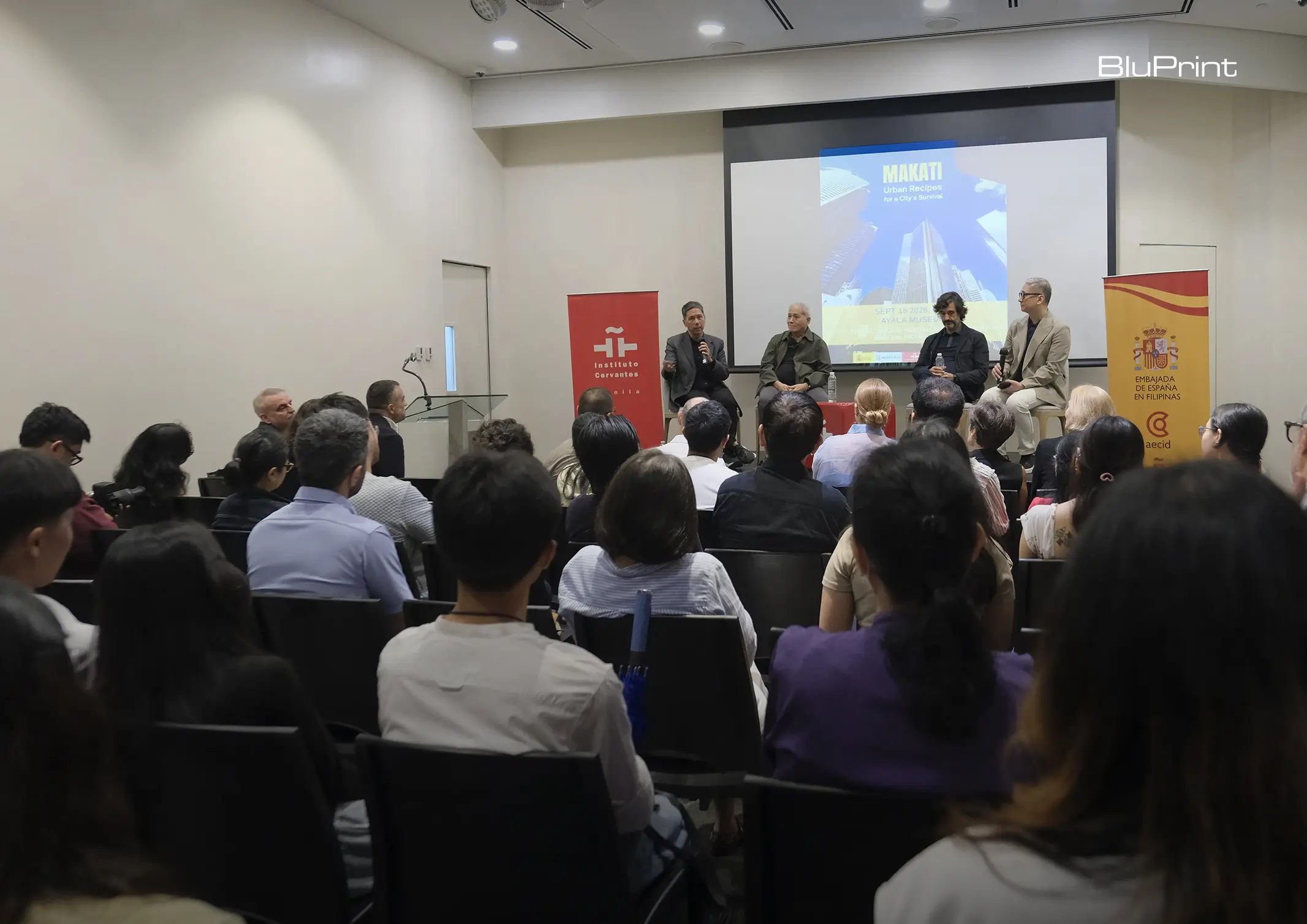
How can better-planned cities create the conditions for more creative, livable, and resilient urban environments? “Makati Urban Recipes for a City’s Survival,” a colloquium held at the Ayala Museum on September 15, brought together architects and practitioners from the fields of urbanism and the creative economy to discuss how design, planning, and collaboration can address […]
Read the issues.

Collect the volumes.

Recommended Video
Tap to Unmute
Unmute
0:00
0:00