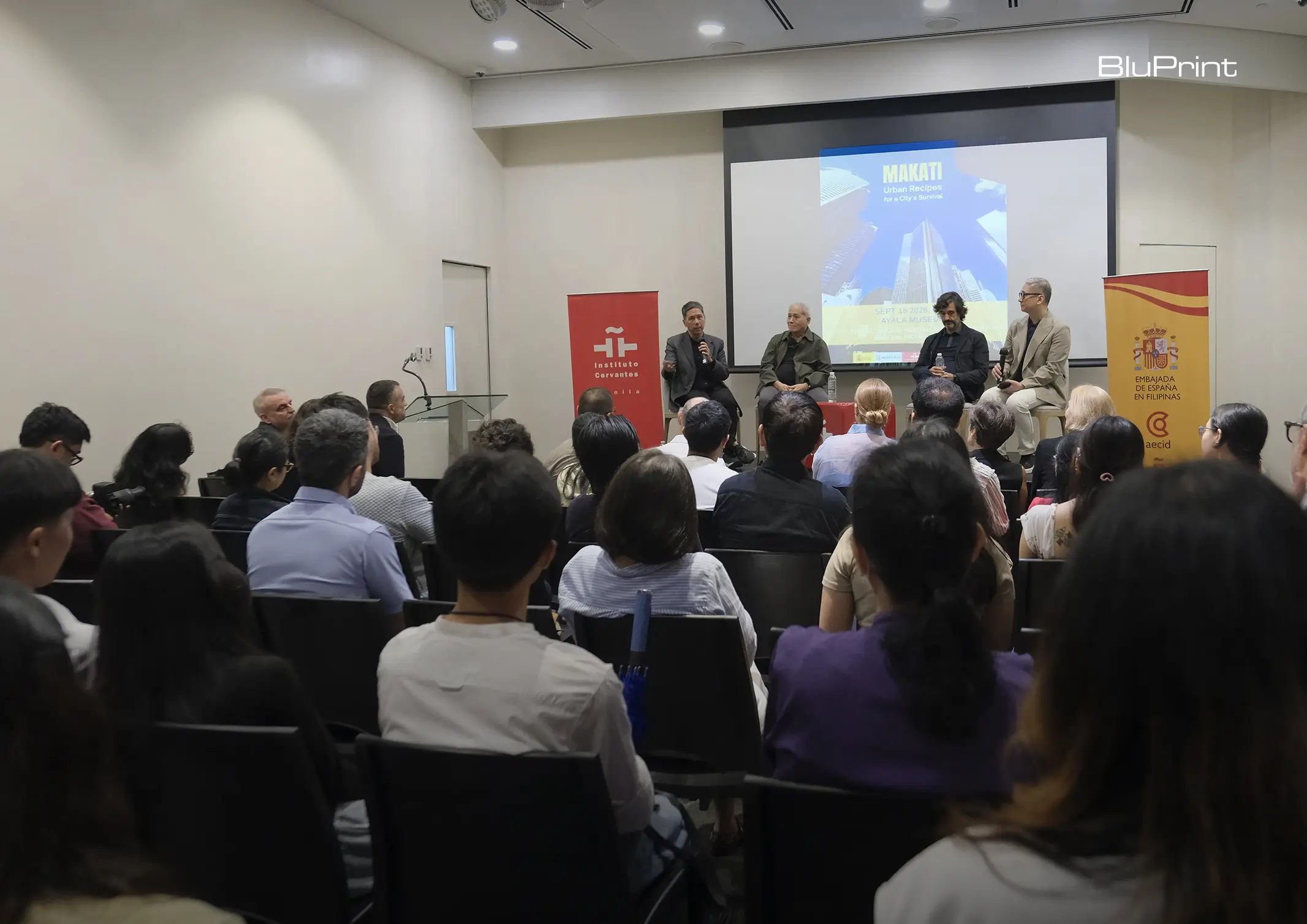
How can better-planned cities create the conditions for more creative, livable, and resilient urban environments? “Makati Urban Recipes for a City’s Survival,” a colloquium held at the Ayala Museum on September 15, brought together architects and practitioners from the fields of urbanism and the creative economy to discuss how design, planning, and collaboration can address […]
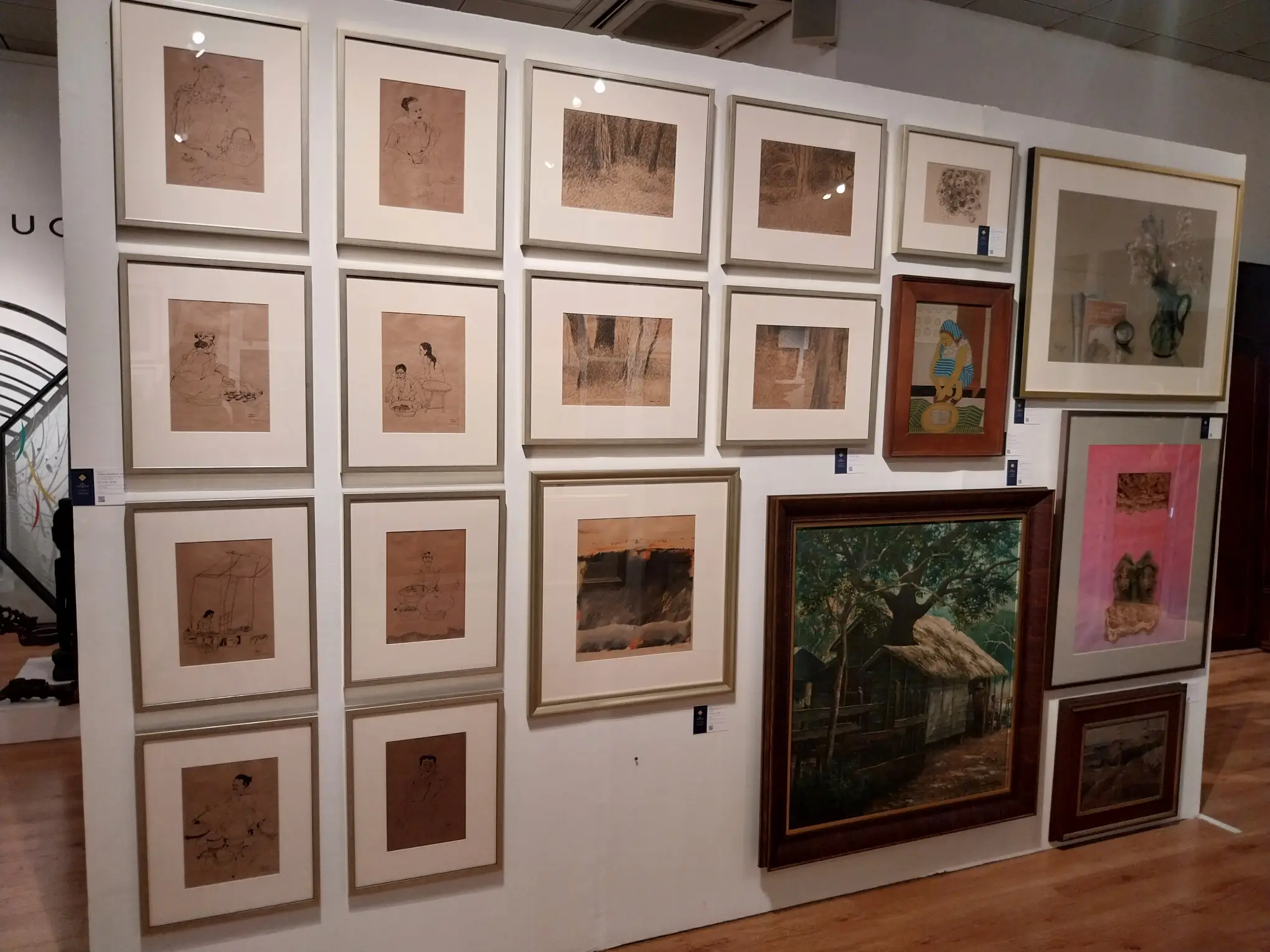
‘The Well-Appointed Life’ Caters to the Enlightened Tastes of the Modern Collector



Salcedo Auctions held The Well-Appointed Life sale on September 27, with the theme circling around “The Art of Enlightenment,” or the way one cultivates the kind of taste and mindset that gives way to knowledge and refinement. The artworks that showed up in the collection reflect that kind of sensibility: a desire for going beyond our lives and towards a legacy greater than ourselves.
“This guiding concept is a tribute to the refined sensibilities, cultivated intellect, and pursuit of legacy that define the discerning collector,” Ramon E.S. Lerma, the chairman of Salcedo Auctions, said.
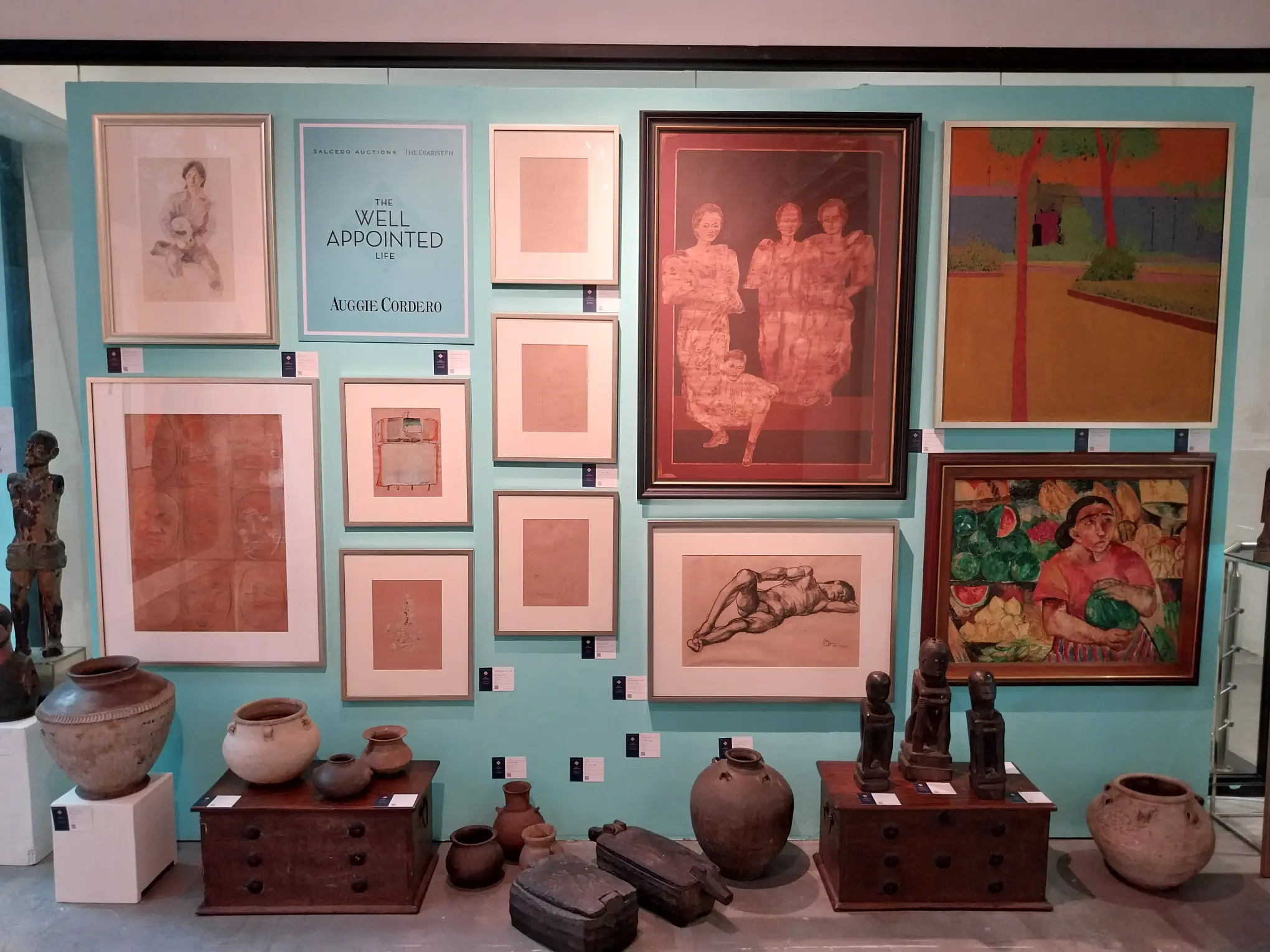
The auction will be selling off hundreds of cultural artifacts of varying mediums and importance. From these artworks, the most buzzy will be paintings and sketches from illustrious masters of the form. However, for cultural and history buffs, the collection also has well-preserved furniture and objects from the Spanish colonial era and indigenous artisan materials.
Each of the artifacts here surrounds itself with the importance of our rich cultural history, which The Well-Appointed Life highlighted with aplomb. More than knowledge-building of the past, it points towards a future of preservation for future generations.
Artifacts from Jose Rizal
The most impressive coup in the collection are two artifacts from National Hero Dr. Jose Rizal. These two historic relics are an original sketch entitled “Portrait of a European Gentleman,” and a report card of his during his stay at Ateneo Municipal de Manila, dated 1876.
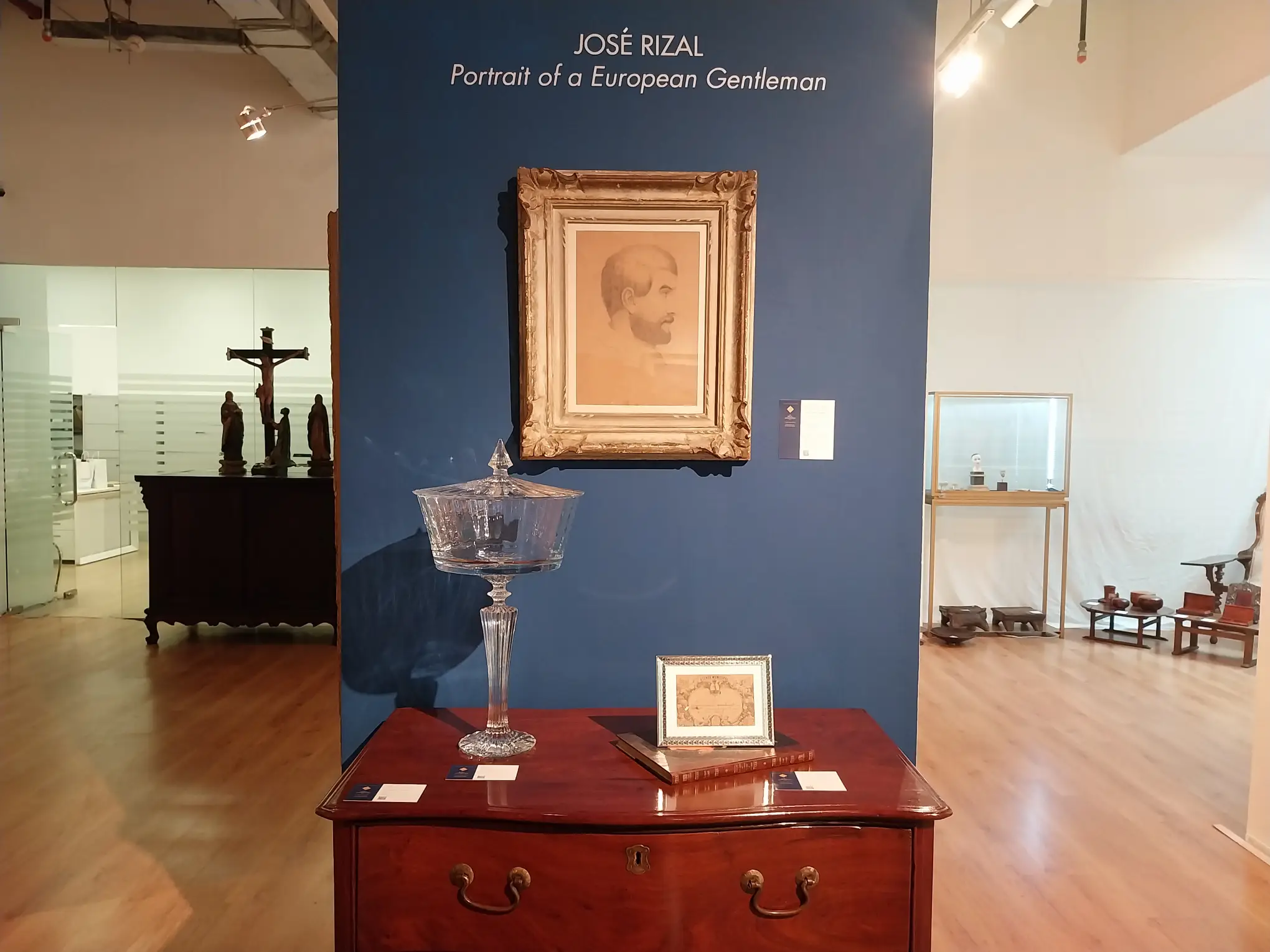
“Portrait of a European Gentleman” showcases the true Renaissance man status of Rizal, which complement his scientific, literary, and political pursuits, providing a glimpse of how well-rounded his education was at the time.
“The drawing embodies Rizal’s place at the crossroads of East and West, tradition and modernity,” the write-up on the piece said. “The image of a European sitter, rendered by a Filipino reformist, encapsulates his dual vision: rooted in his homeland yet cosmopolitan in outlook. Rizal’s exposure to European culture and education informed his reformist convictions and sharpened his critique of colonial rule.”
Defining the Humanity of Our Past
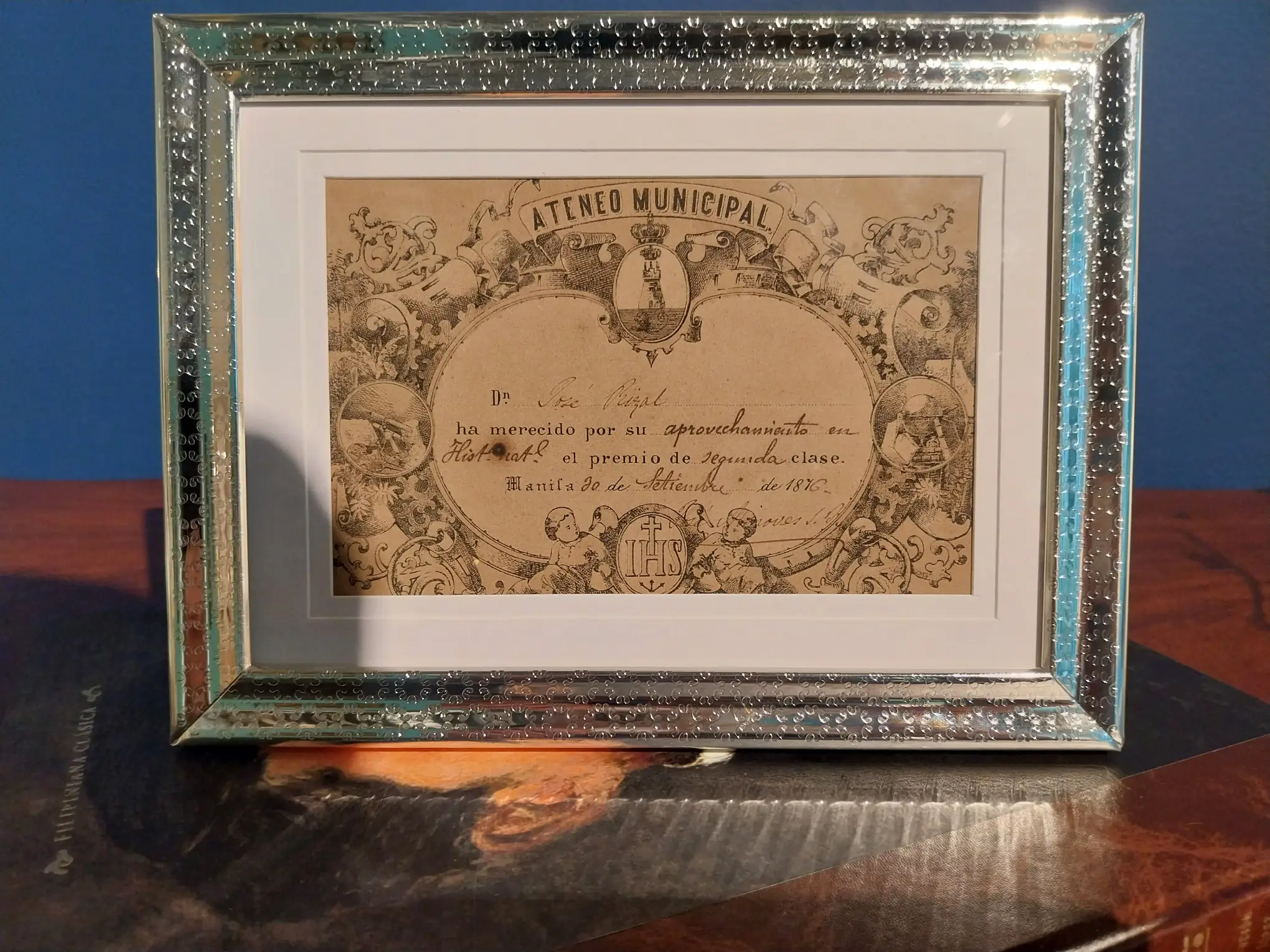
The report card, meanwhile, is one of the few that has survived over the centuries that chronicle Rizal’s six-year stay at Ateneo. It’s also the first of its kind to survive an auction—a true rarity for collectors. This card shows his grade in Historia Natural, or Biology, with him getting relatively average passing grades on the subject.
“These deeply personal artifacts of our foremost Filipino luminary embody the very spirit of enlightenment— of knowledge, artistry, and patriotism intertwined,” Lerma said about the two pieces.
As a complement to these artifacts from Jose Rizal, The Well-Appointed Life also auctioned off a pastel piece by National Artist Benedicto “Bencab” Cabrera entitled “Rizal’s Foreign Lovers.” Made in 1996 during the lead-up to the centennial celebrations of our country, it portrays four of the known lovers of Rizal during his time abroad.
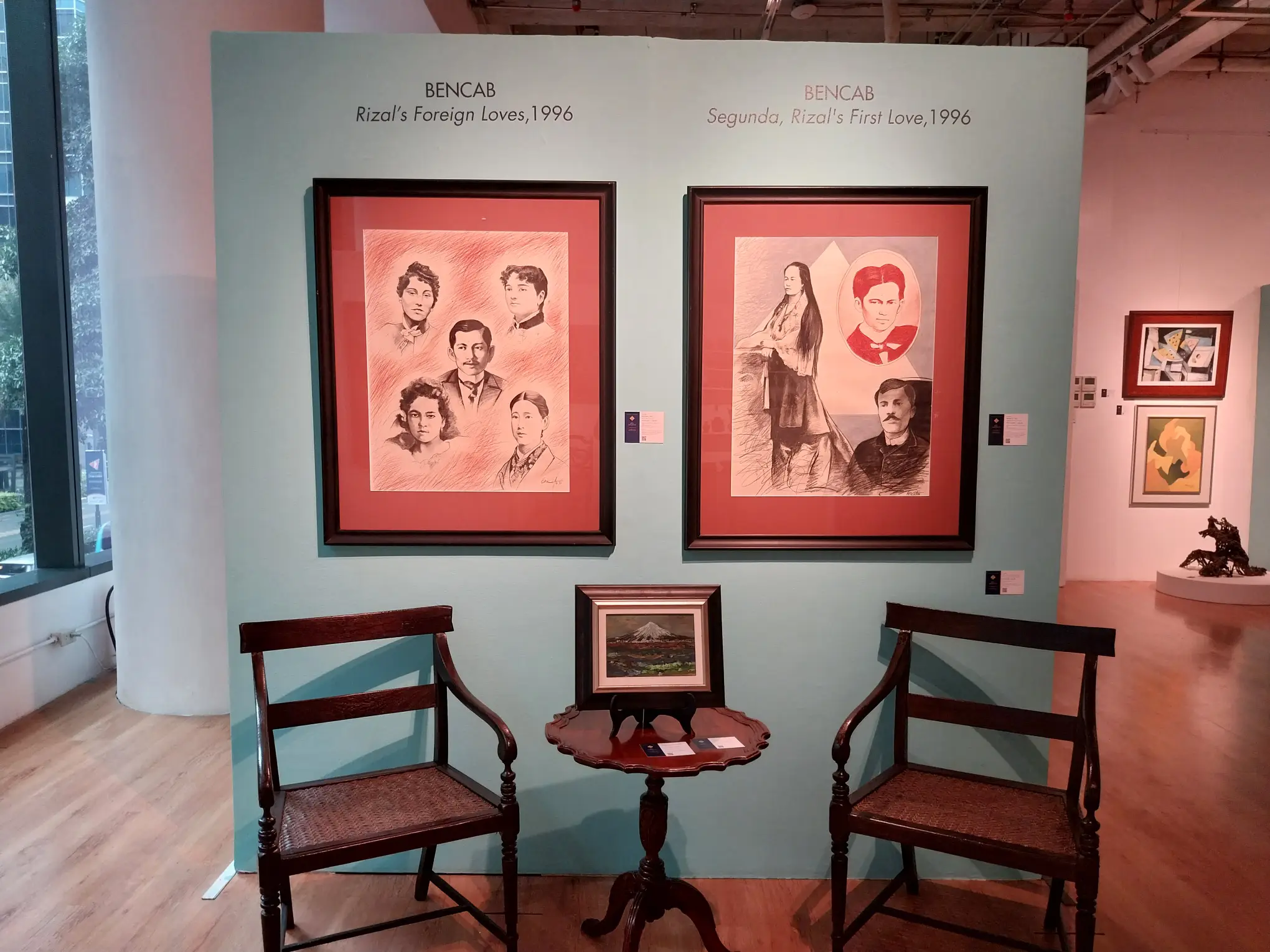
“By turning his gaze toward these women, BenCab reframes the historical narrative, highlighting the private sphere of a man often cast in the role of martyr and political symbol,” the write-up for the work said. “The choice of pastel enhances the tenderness of the portrayal: strokes of color suggesting vulnerability, warmth, and fleeting connection.”
Signature Artists from Philippine History
More paintings and sculptures abound, from Arturo Luz and Lao Lianben and Fernando Zobel, to more modern artists such as Pacita Abad and Annie Cabigting.
Included in the collection is an early painting of National Artist Fernando Amorsolo. “Legazpi,” from 1928, is a historical portrait of Miguel Lopez de Legazpi, the first Governor-General of the Philippines. The work is rare not just for being from the earlier years of his practice, but also due to it being a historical portrait, which he did not do often.
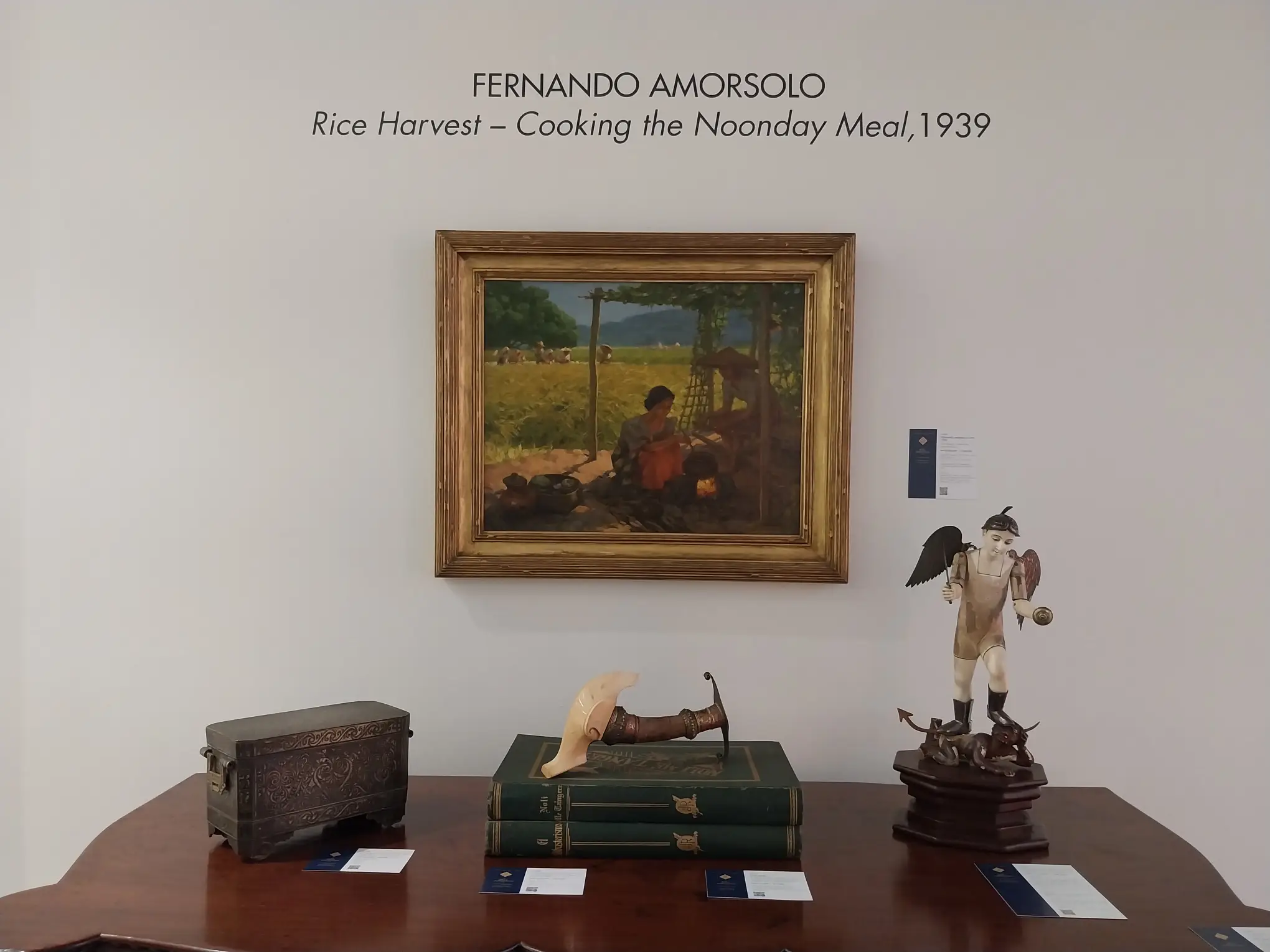
“Amorsolo’s treatment of the figure evokes not just a historical portrait, but also a meditation on legacy and identity, recalling earlier canonical images where the subject appears commandingly, such as Juan Luna’s El Pacto de Sangre,” the write-up for the work said.
“The Lotus,” by National Artist Jose Joya dated 1979, is a collage of different layers of acrylic and textured paper, creating a layered, abstract image of a lotus flower that “recalls both geological strata and organic petals.” He had sold it to his close friend May Soliven, having personally delivered and installed it in her home as a token of friendship.
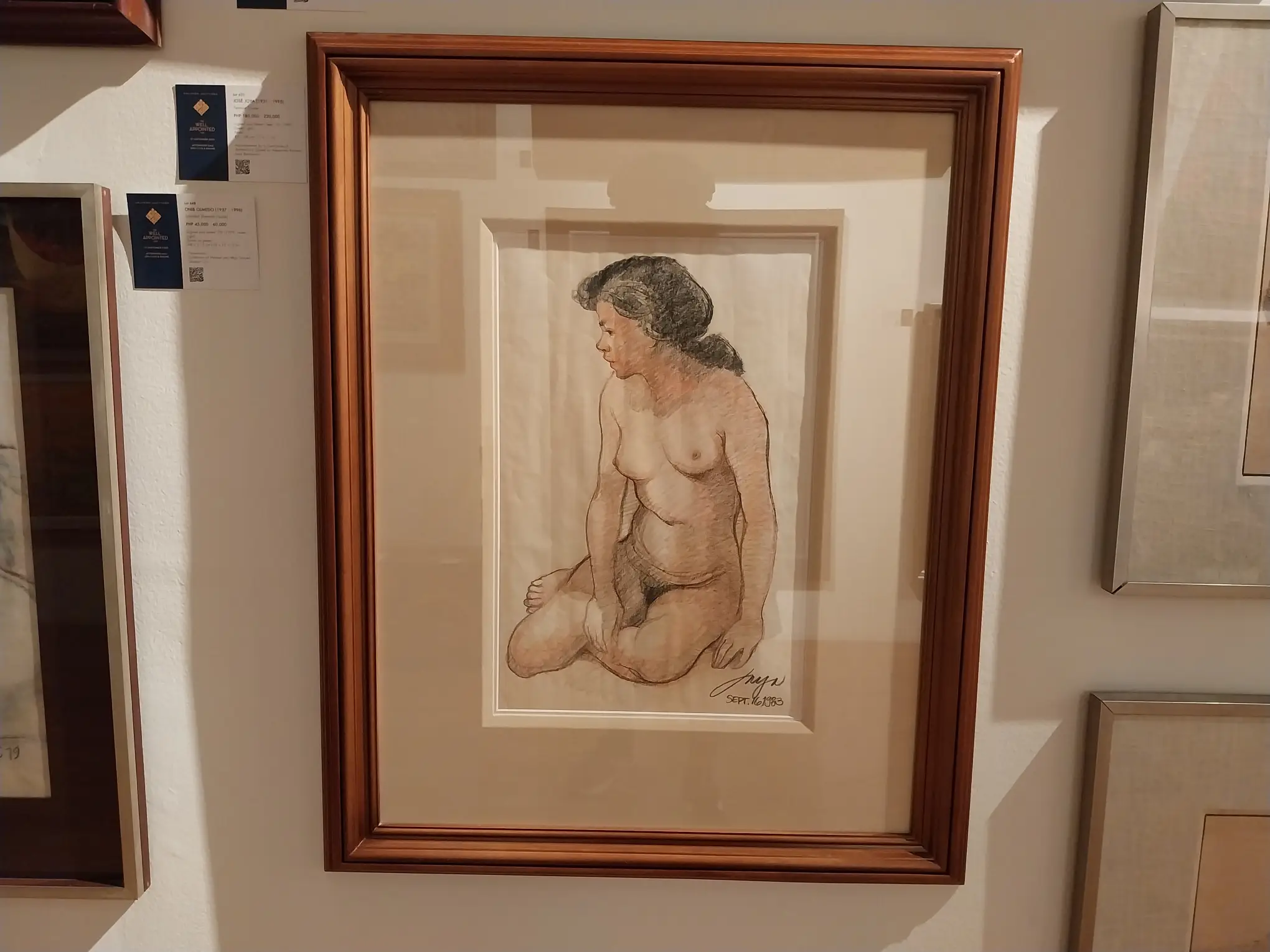
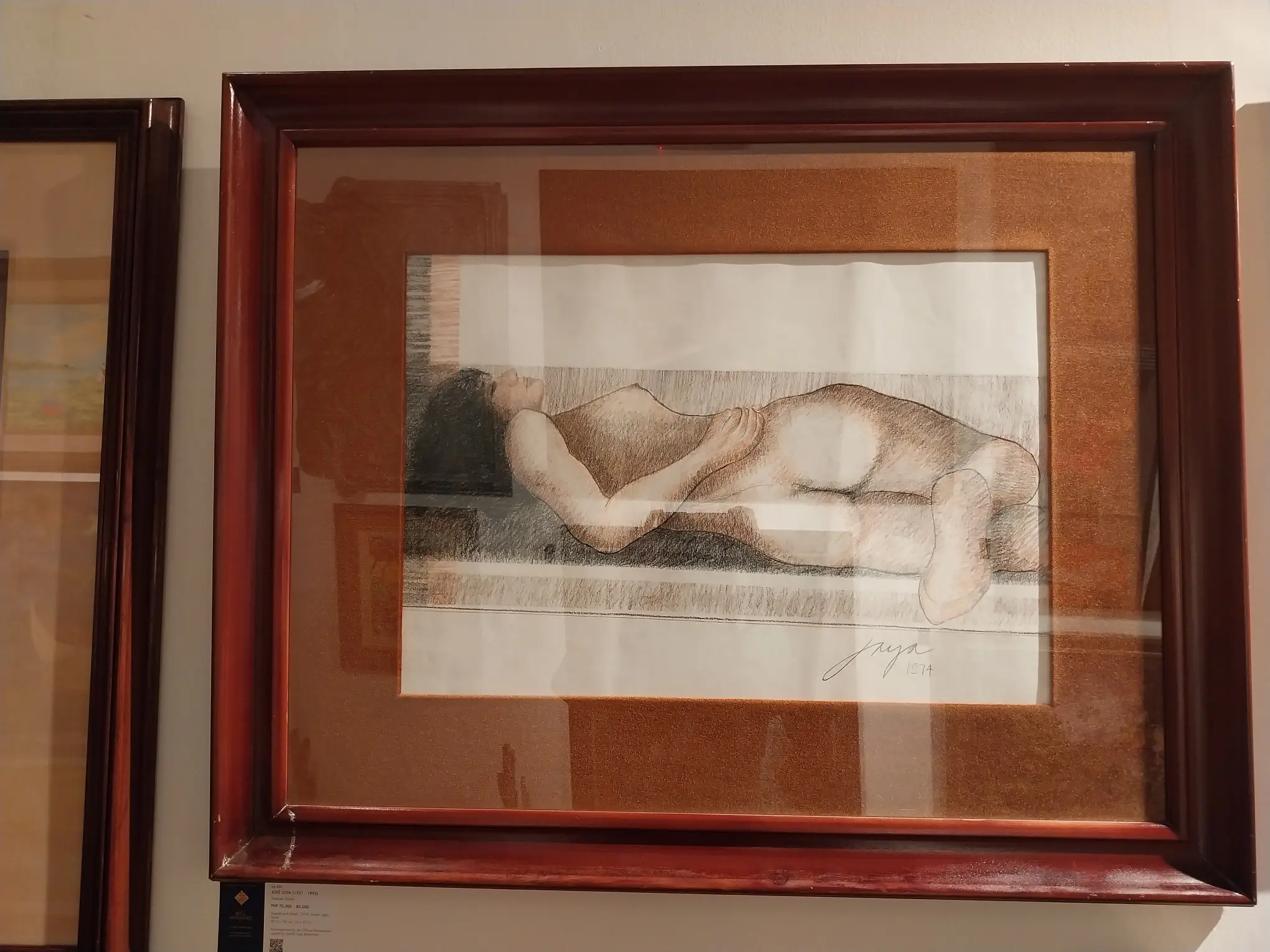
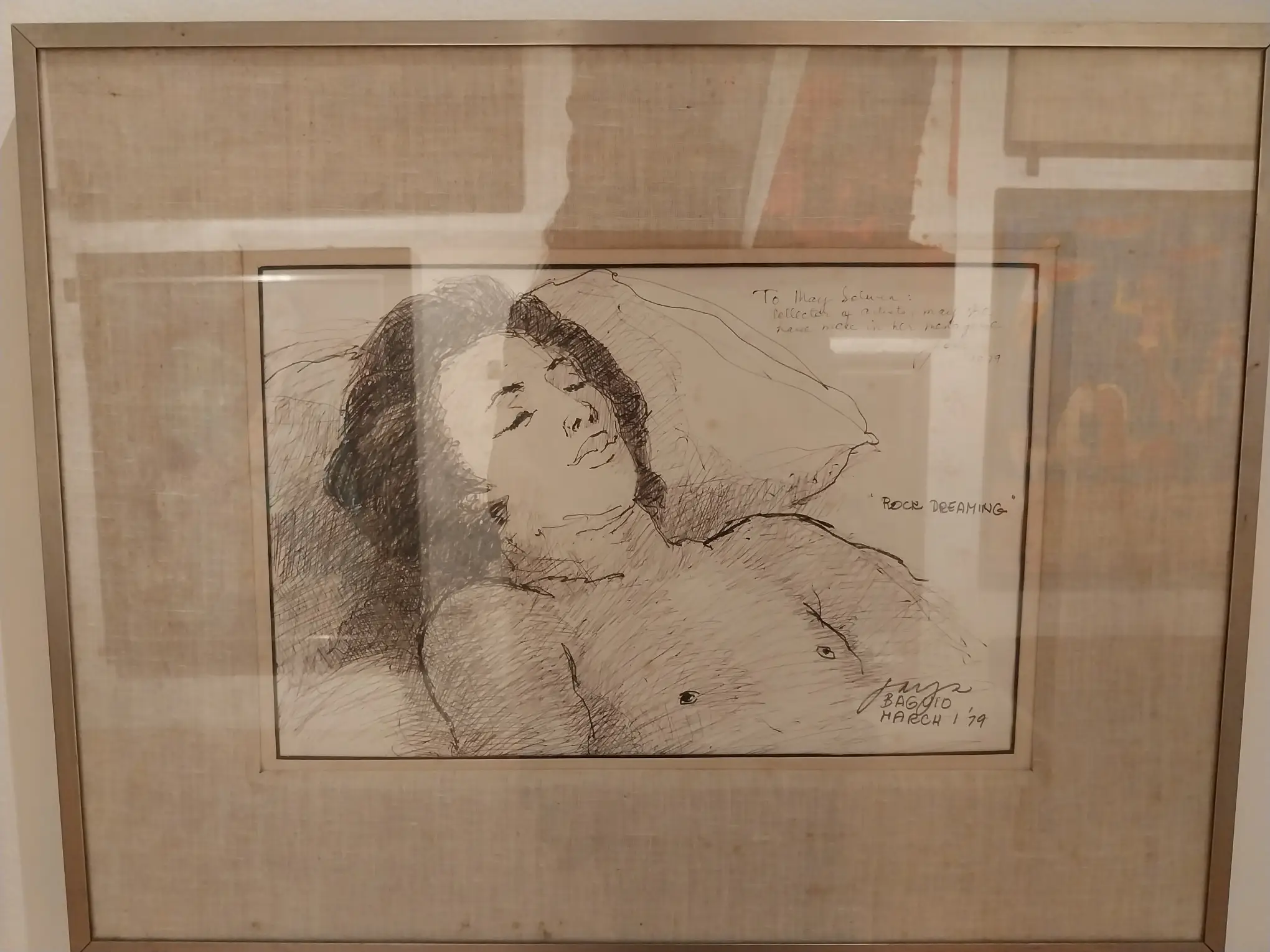
“More than a significant example of his collage practice, it was a painting he reserved for himself, one he considered central to his artistic achievement,” the write-up said. “Its passage from the artist’s collection into that of a trusted friend makes it an especially rare offering, marked by layers of both artistic and personal significance.”
Cultivated and Refined Sensibilities
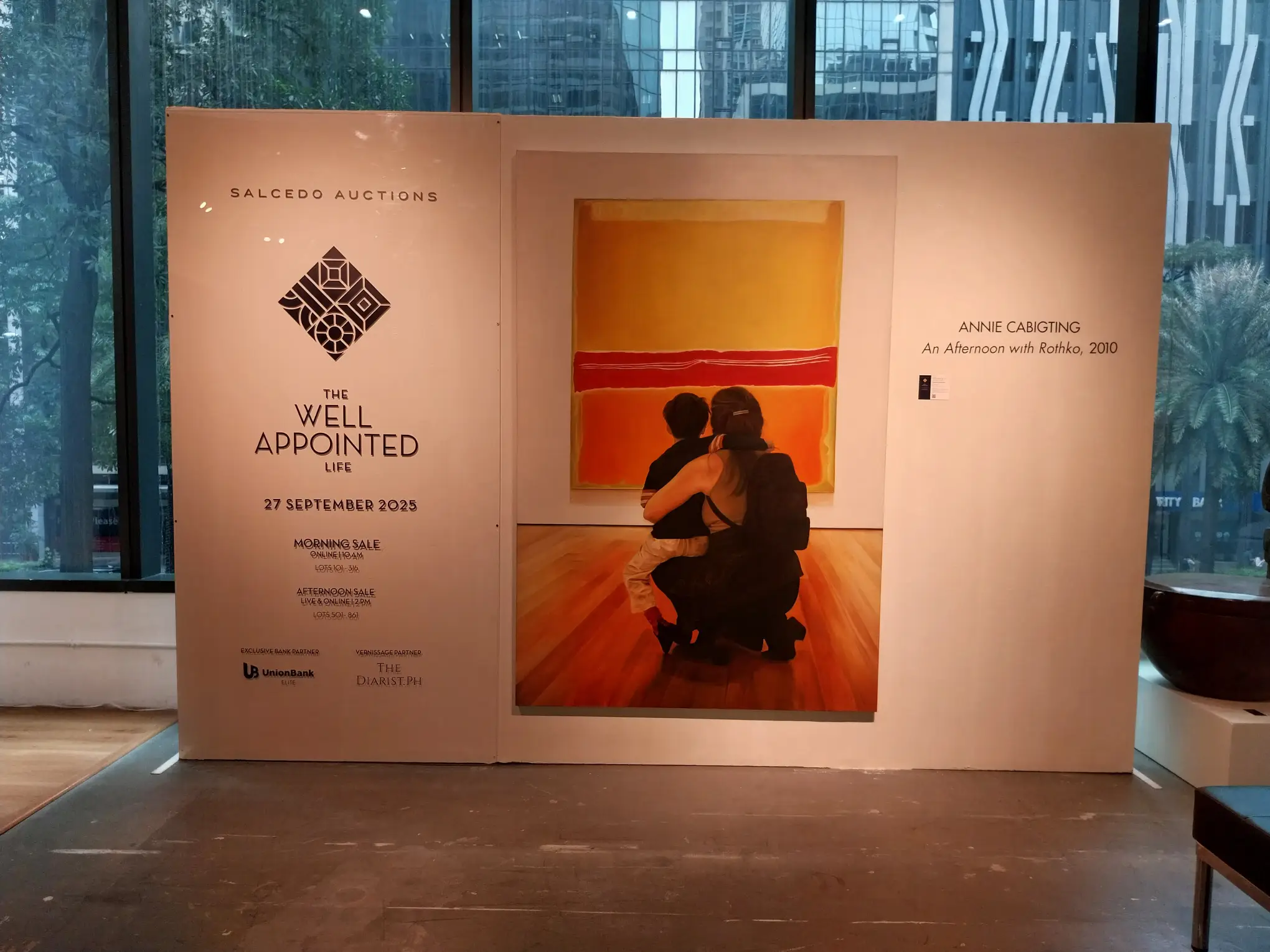
For this specific collection of works, Annie Cabigting’s work, especially, “An Afternoon with Rothko,” really bridges the reasoning of why artists and collectors exist in the first place.
The Cabigting painting has a mother and child looking at a painting by abstract expressionist painter Mark Rothko, “No. 5/No. 22,” with both subjects seemingly staring at it in awe. Rothko’s yellow-and-orange combination, as featured in the painting, really makes it look like it’s beaming down on its subjects like sunlight.
“For collectors, ‘An Afternoon with Rothko’ offers not just rarity but resonance,” the write-up said. “In the quiet stillness of a mother and child standing before ‘No. 5/No. 22,’ Cabigting reminds us that the life of art lies not only in the canvas, but in the moments of awakening it creates—moments of profound human enlightenment.”
The Well-Appointed Life, and auctions like it, provide an opportunity for collectors to be able to engage with the kind of rich history that the Philippines has in its art scene. It’s a preview of our indigenous, colonial, and modern-day art culture, showing that, regardless of the era it comes from, Philippine ingenuity and artistry is encoded within our very being as people.
Photos by Elle Yap.
Related Reading: ‘Finer Pursuits’ Celebrates the Masters with Rare Art Auction
Frequently Asked Questions
The theme “The Art of Enlightenment” refers to the cultivation of a refined mindset and taste that values knowledge, history, and legacy over material possession. It suggests that a discerning collector does not merely acquire objects but curates a collection that reflects a “Renaissance” sensibility—blending intellectual curiosity with an appreciation for cultural preservation. This guiding concept emphasizes that the true life of art exists in the moments of awakening and human connection it creates across generations.
The collection features two exceptionally rare items: an original sketch entitled “Portrait of a European Gentleman” and an authentic 1876 report card from Ateneo Municipal de Manila. The report card is a historic rarity as it is the first of its kind to survive for public auction, offering a glimpse into Rizal’s grades in Historia Natural (Biology). The sketch highlights Rizal’s “Renaissance man” status, embodying his dual vision as both a Filipino reformist and a cosmopolitan intellectual at the crossroads of East and West.
National Artist Benedicto “Bencab” Cabrera’s 1996 pastel work reframes Dr. Jose Rizal from a static political martyr to a vulnerable human being. By focusing on four of Rizal’s lovers abroad, the work explores the private sphere of the hero. The choice of pastel as a medium adds technical tenderness, using soft strokes and warmth to suggest fleeting emotional connections, thereby adding “human enlightenment” to the historical narrative often dominated by political and scientific achievement.
The painting “Legazpi” is rare because it is an early work from Amorsolo’s practice and represents a historical portrait, a genre he did not frequently explore. It depicts Miguel Lopez de Legazpi, the first Governor-General of the Philippines. Architecturally, the treatment of the figure mirrors the commanding presence found in Juan Luna’s El Pacto de Sangre, serving as a meditation on legacy and colonial identity rather than a simple aesthetic portrait.
Jose Joya’s 1979 work, “The Lotus,” is a masterclass in his collage practice, utilizing layers of acrylic and textured paper. The composition is designed to resemble both “geological strata and organic petals,” creating a three-dimensional abstract form. Beyond its technical brilliance, the piece holds high “provenance value,” as Joya originally reserved it for his personal collection before gifting and installing it himself in the home of a close friend, adding a layer of personal history to its artistic merit.
Cabigting’s work depicts a mother and child in quiet awe before a Mark Rothko painting, illustrating the “awakening” that art facilitates. For collectors, this piece resonates because it highlights that the value of a canvas lies in the human enlightenment it triggers. By painting the act of observing art, Cabigting turns the gaze back on the viewer, reminding the modern collector that their role is to preserve these moments of profound stillness and intellectual growth.
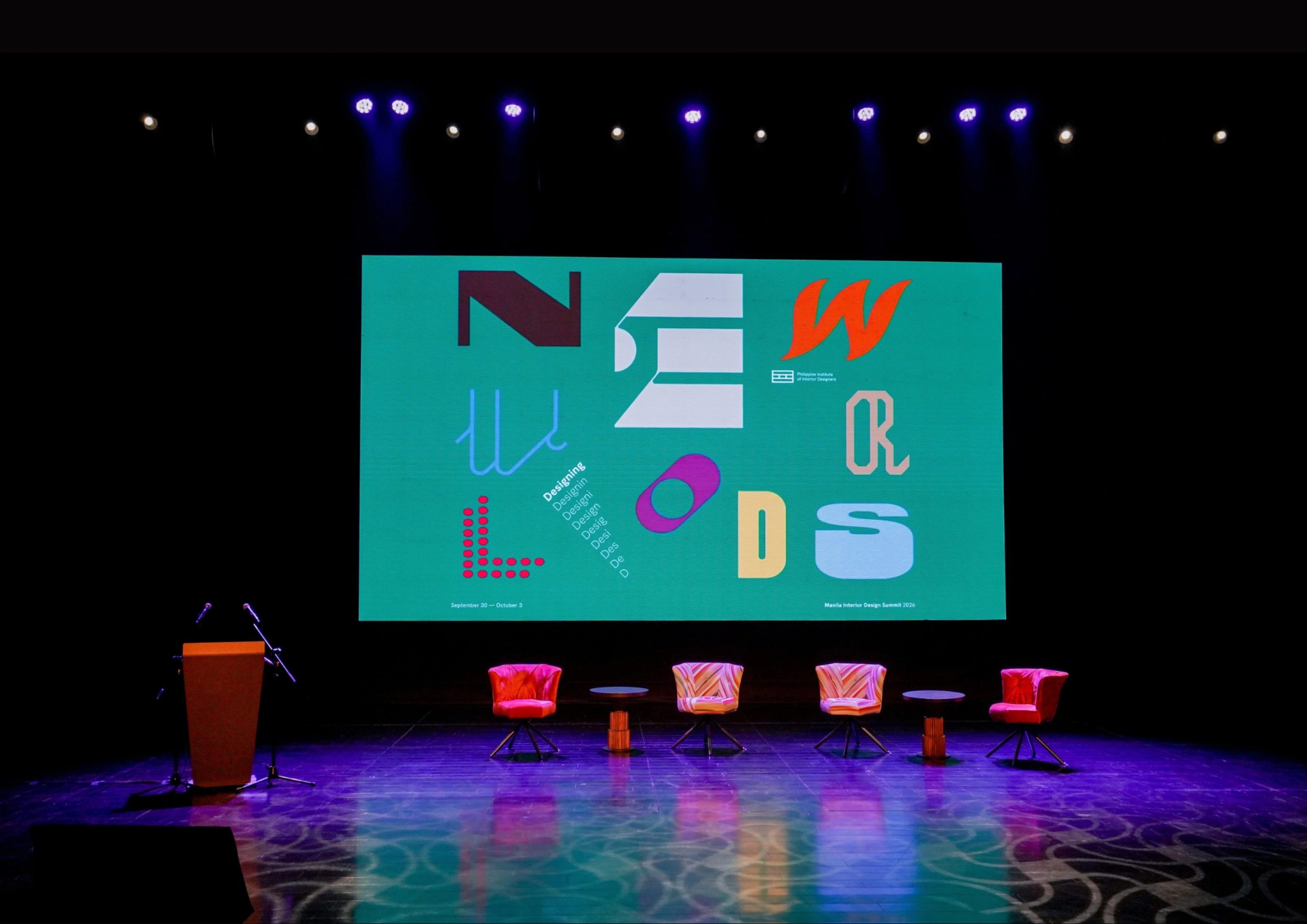
The fourth Manila Interior DesignInterior DesignThe discipline of planning and shaping interior spaces for function, comfort, safety, and beauty. It covers layout, lighting, materials, finishes, furniture, and color, and in the Philippines is a licensedGo to Interior Design Glossary Summit (MIDS) brought together more than 300 delegates for four days of conversations, exhibitions, and design […]
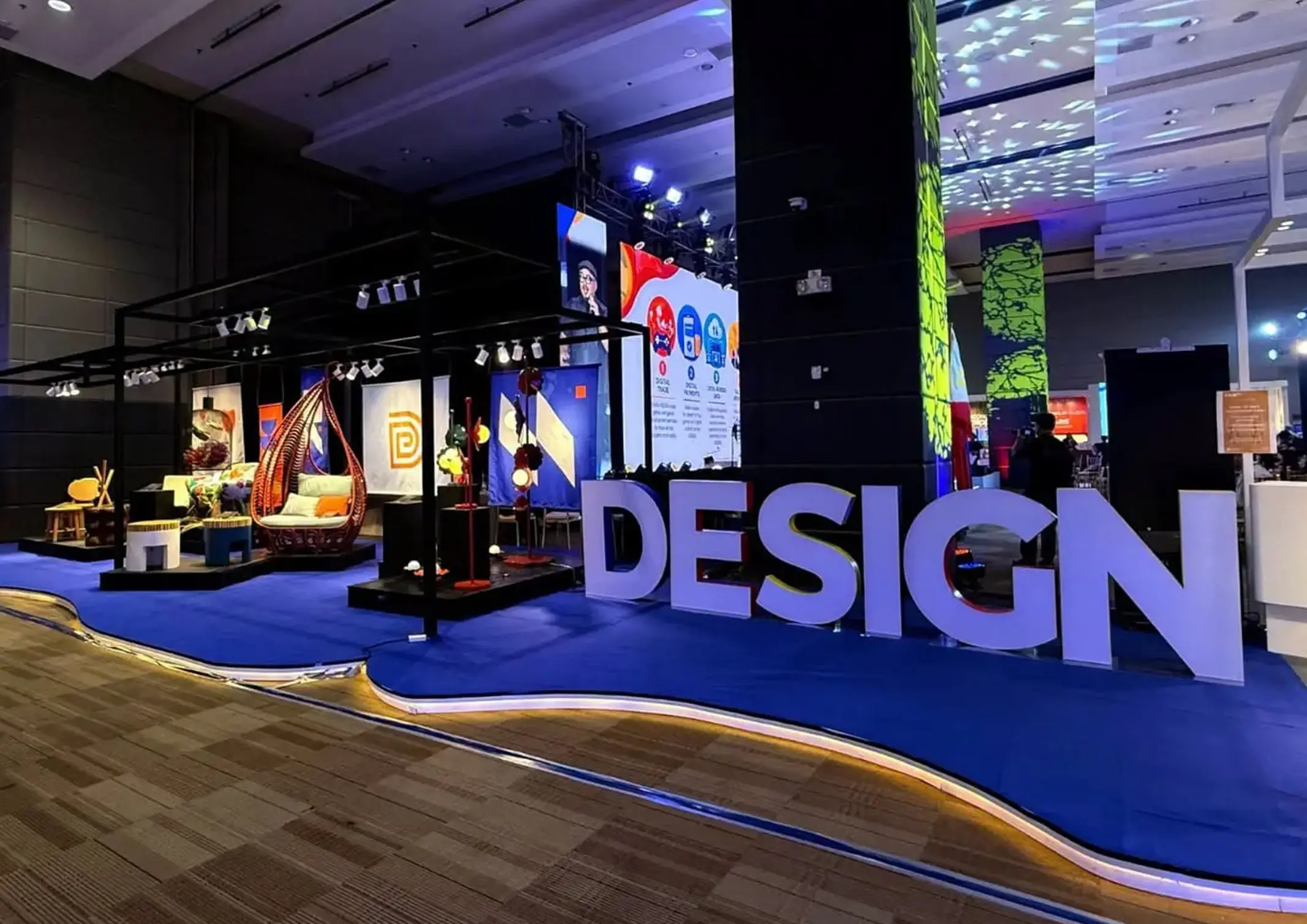
Held at the SMX Convention Center Aura in Taguig City, the first ASEAN Creative Industries Expo by Malikhaing Pinoy (ASEAN MPEx) features nine creative domains, including design, visual arts, digital interactive media, and performing arts. Organized by the Department of Trade and Industry (DTI), the event includes exhibitions, cultural performances, industry talks, and pitching sessions […]
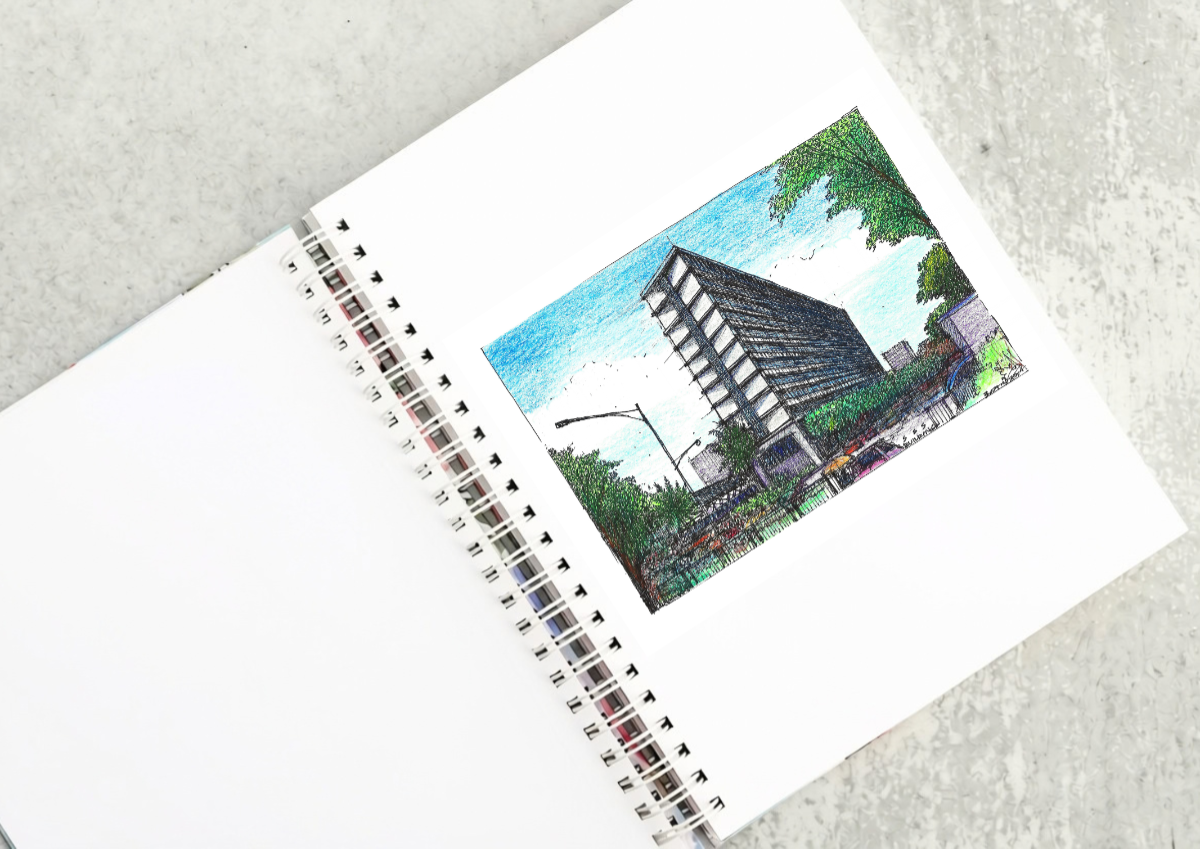
The SSS Building as an Expression of Civic Modernism My favorite modernist landmark in Quezon City is the SSS building on East Avenue. Designed by National Artist for ArchitectureArchitectureThe art and science of designing and constructing buildings, structures, and spaces that are functional, safe, and aesthetically pleasing. It encompasses the planning, design, materials, and techniques […]

Archie G. Carrasco, Chairman and CEO of AGC Power Holdings Corp. (AGC PHC), has been named to The BoF 500 Class of 2026 under the Media category, joining The Business of Fashion’s global community of individuals shaping the fashion industry. Carrasco is among 100 new members from 33 countries and 48 nationalities selected for the […]
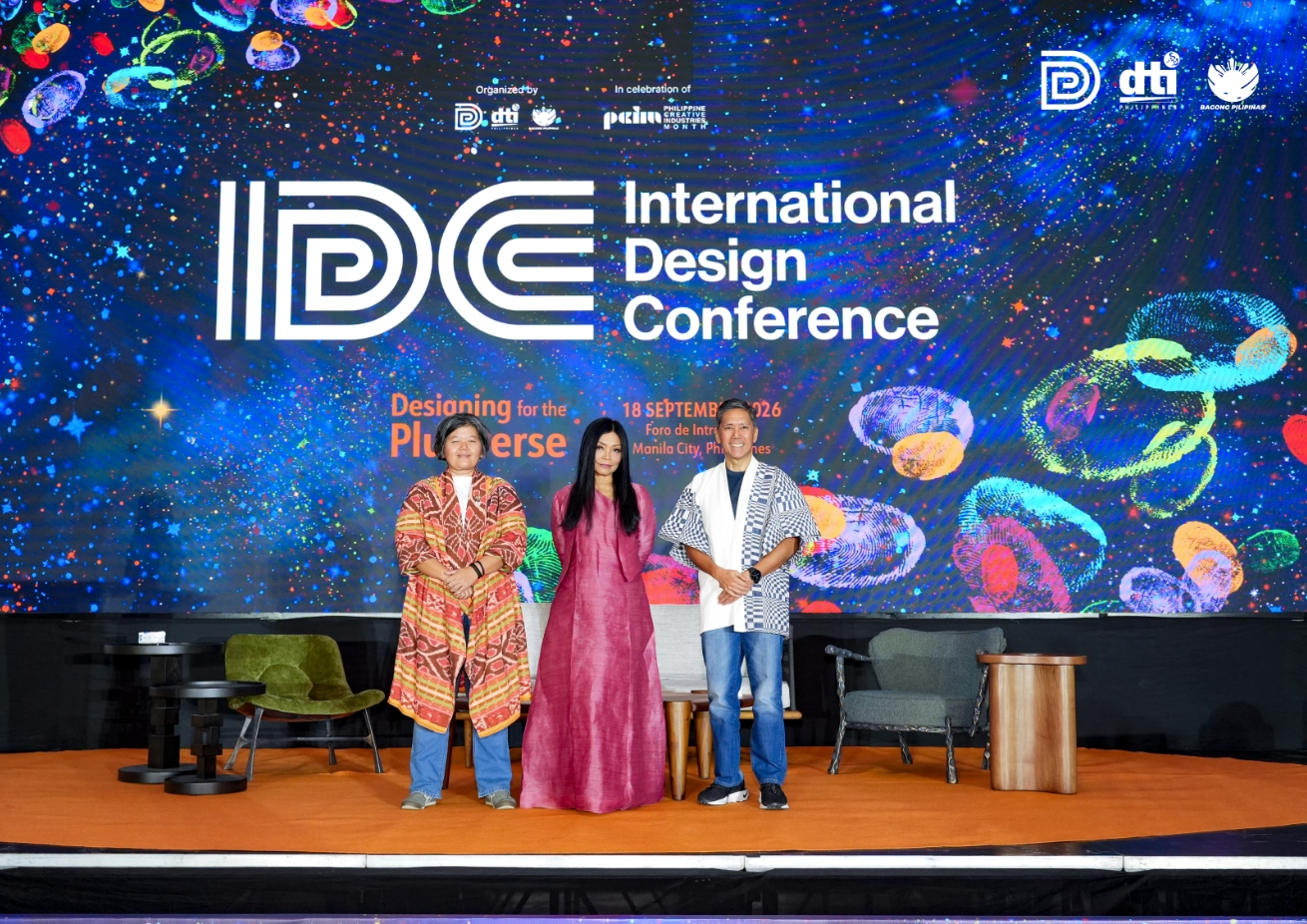
Culture in design does not always announce itself through a recognizable motif, material, or symbol. It can also be embedded in the relationships designers build, the knowledge they listen to, the materials they choose, and the decisions they make in response to communities and their environments. This distinction emerged throughout the 2026 International Design Conference […]
Read the issues.

Collect the volumes.

Recommended Video
Tap to Unmute
Unmute
0:00
0:00