Hapag and AYÀ aren’t your typical upscale restaurant and lounge. For one, these spaces are not located among the rows of popular dining spots in Rockwell Power Plant Mall. Tucked away on the seventh floor of The Balmori Suites, there are no lit signs bearing the names of the establishments—only a metal door knob bearing the logo of Hapag. Opening these double doors transports you to a world that exudes a sense of pride for everything Filipino.
“Hapag and Aya is our love story to the Filipino cuisine and culture,” says John Kevin Navoa, head chef and co-owner of Hapag and AYÀ. Hapag offers Filipino tasting menus and wines, while AYÀ—from the word anyaya, which means “to formally invite”—serves Filipino small plates along with the lounge’s signature cocktails and wines. A bi-level space houses both establishments, with Hapag occupying the main dining area on the lower level and AYÀ situated upstairs.
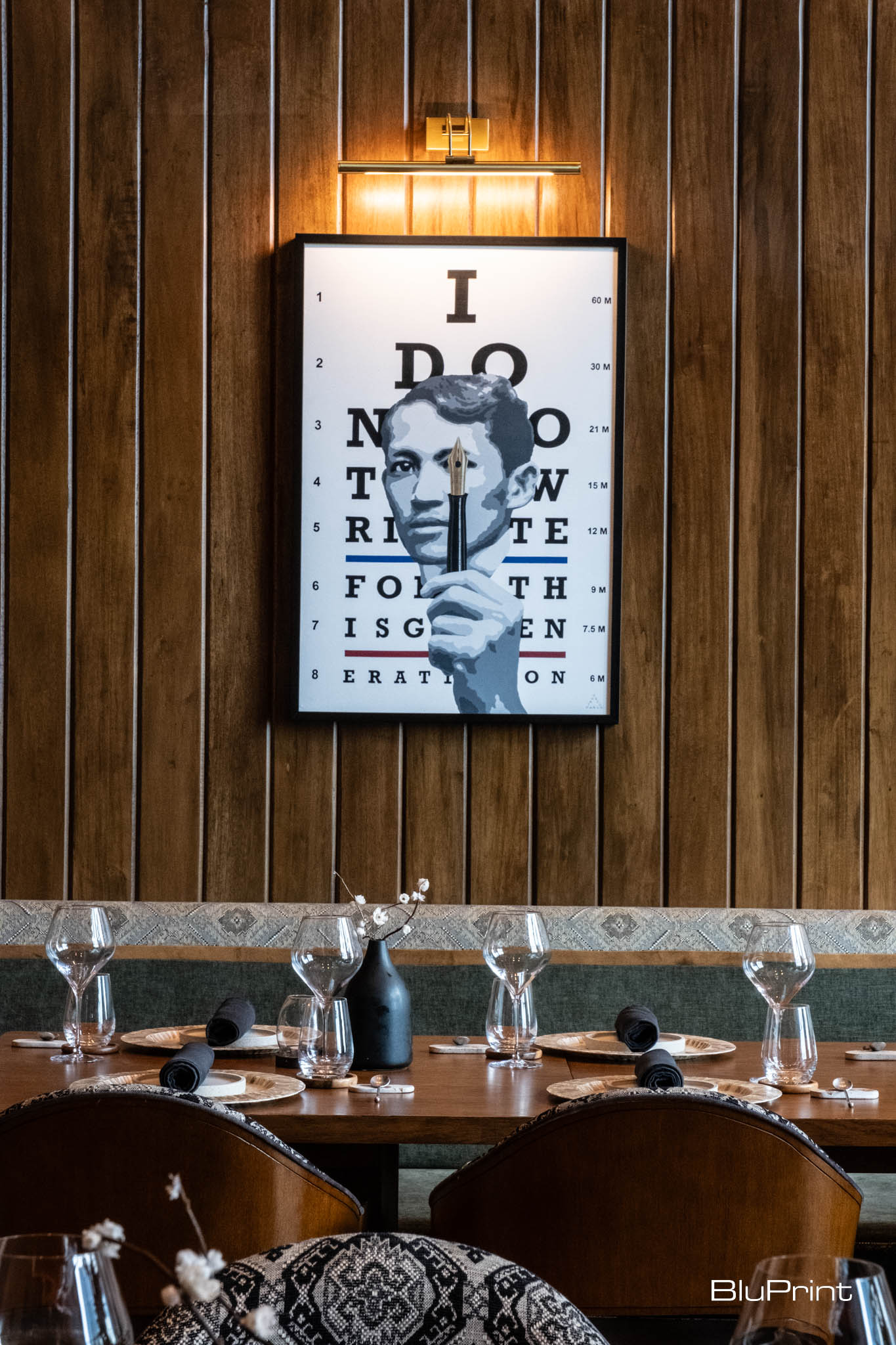
One of the artworks adorning the walls of Hapag is a piece from artist Carlo Tanseco’s Eye Chart Series.
“Hapag, in general, is a dining table where families go and eat together, share food, meet each other, and just enjoy everything,” shares Thirdy Dolatre, head chef and co-owner of Hapag and AYÀ. Navoa adds, “In our households, if you’re not hungry, our parents always told us to come to the dining table first, even if you’re not going to eat, just so we can be able to talk about anything and everything. So, I guess Hapag is such a very important thing in our culture here in the restaurant.”
Advertisement
An Abundance of Filipino Elements
Besides being a place where diners can enjoy reimagined Filipino cuisine and cocktails, the restaurant and lounge also serve as a home for Filipino artisanship. “The idea of the restaurant now, compared to before, [is] it’s now a vessel for local artists around the country. For example, we make all furniture locally, from Pampanga, even the art piece in the restaurant, the cutleries, all the produce. Everything you see at the restaurant is actually locally made,” Navoa explains.
Architect Liza Morales, creative director of Ecotecture Design Studio, nods to the restaurant’s unique Filipino cuisine by designing Hapag and AYÀ with a creative twist.
“[The owners] have taken a spin of some ingredients that may be overlooked by other chefs, and they kind of put that at the forefront. And it basically showcases the different regions of the Philippines and we kind of took inspiration from that, So, with the design, what we wanted to do is basically tour the guests in the different locations in the Philippines,” Morales explains.
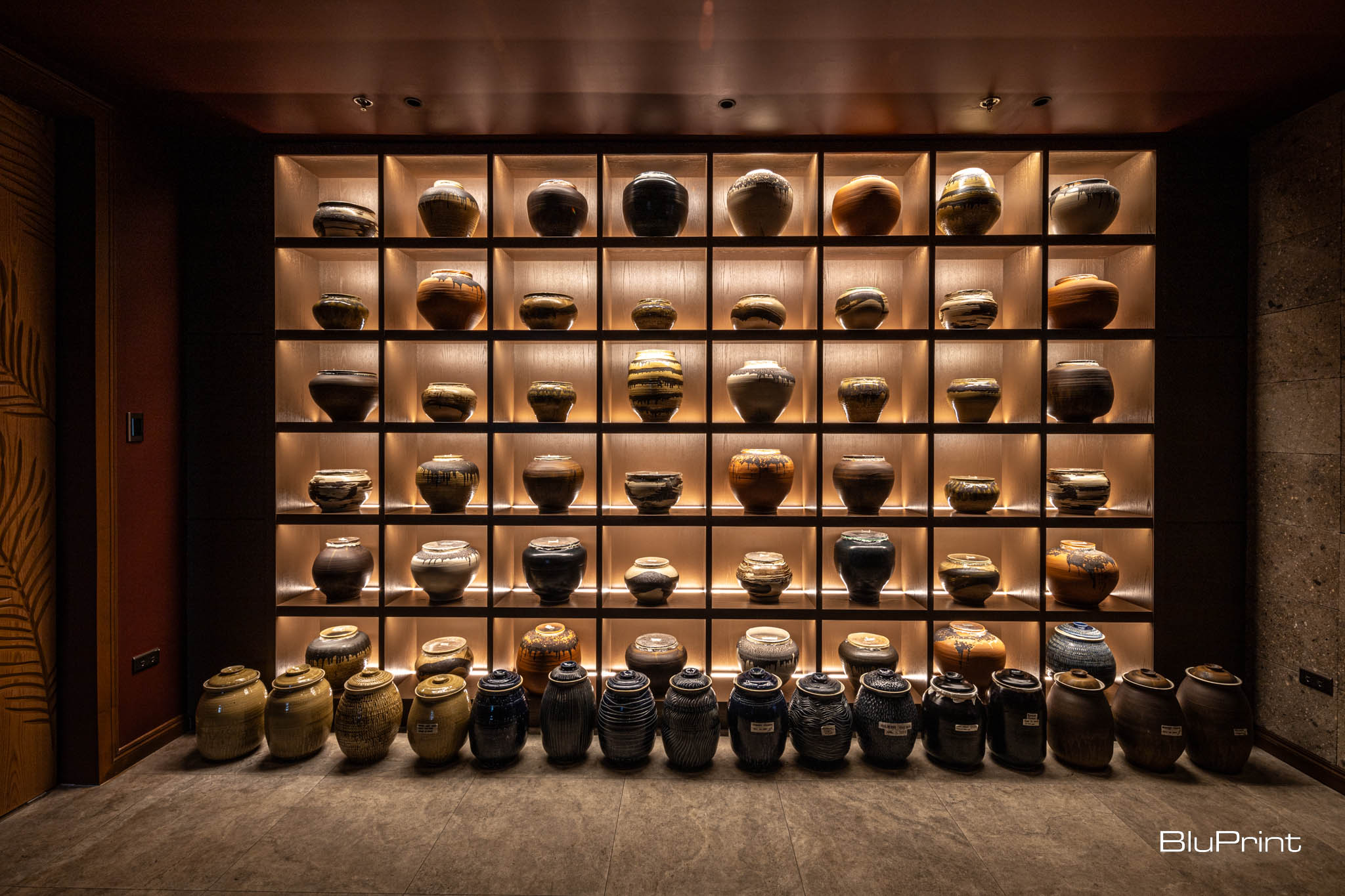
Jars made by potter Mia Casal on a lit shelf in the anteroom serve as an aesthetic focal point.
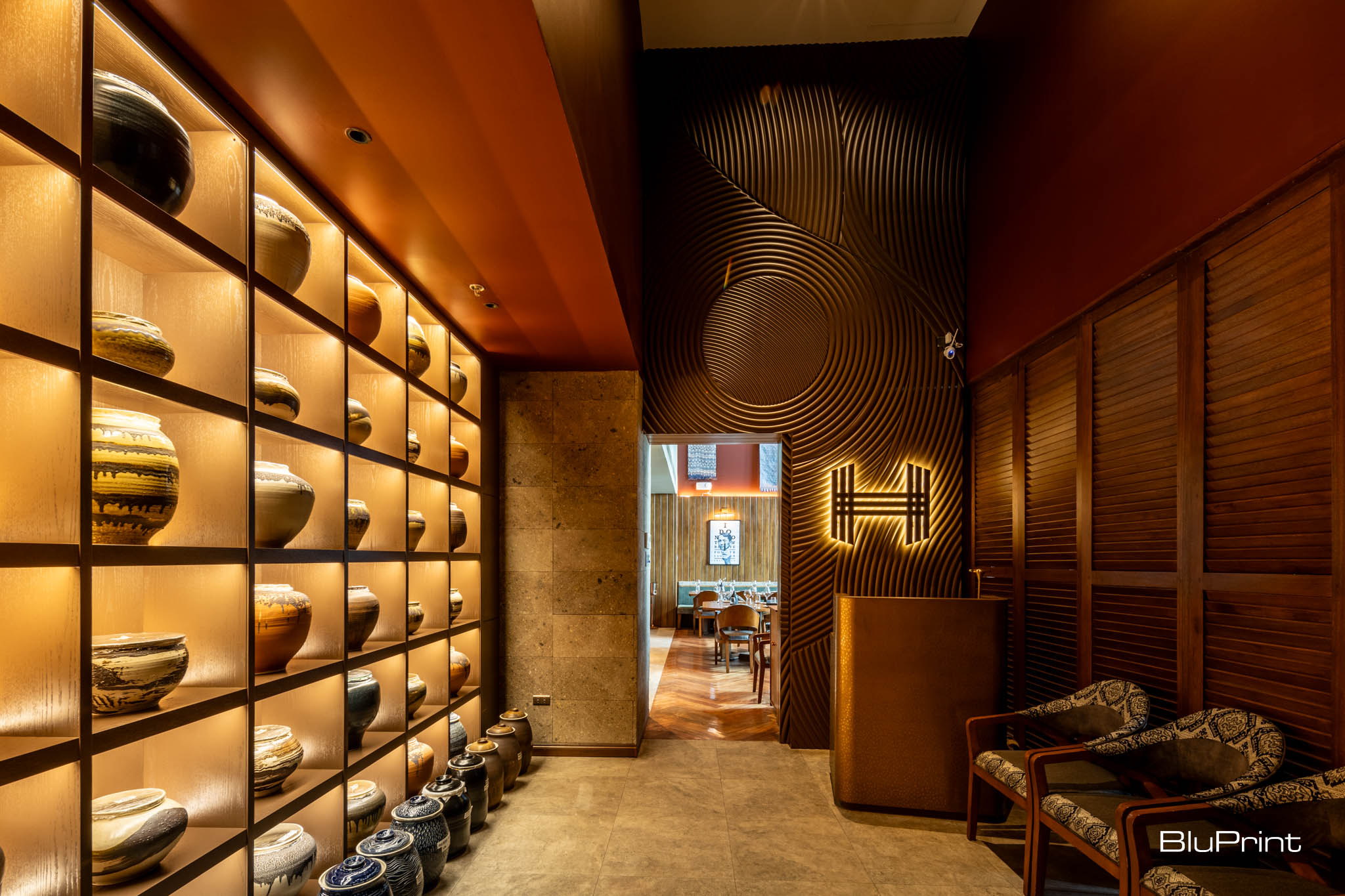
The double doors marking the entrance to the restaurant feature carvings of Filipino trees. These doors lead to a dimly-lit anteroom, where a shelf of jars by potter Mia Casal from Zambales, contain different ferments like tamarind miso, breadso, and banana vinegar stand on one side.
The anteroom clues diners in on the kind of Filipino elegance to expect inside the main dining area.
A Theatrical Dining Experience
Meanwhile, a floor-to-ceiling panel–a portion of which slides open to the main dining room–showcases carvings of semicircular patterns, which are a reference to the Banaue Rice Terraces. “It’s an ode to rice because rice is a foundation of a lot of dishes. And that’s kind of like a staple in [our] every meal as Filipinos,” Morales explains.
Advertisement
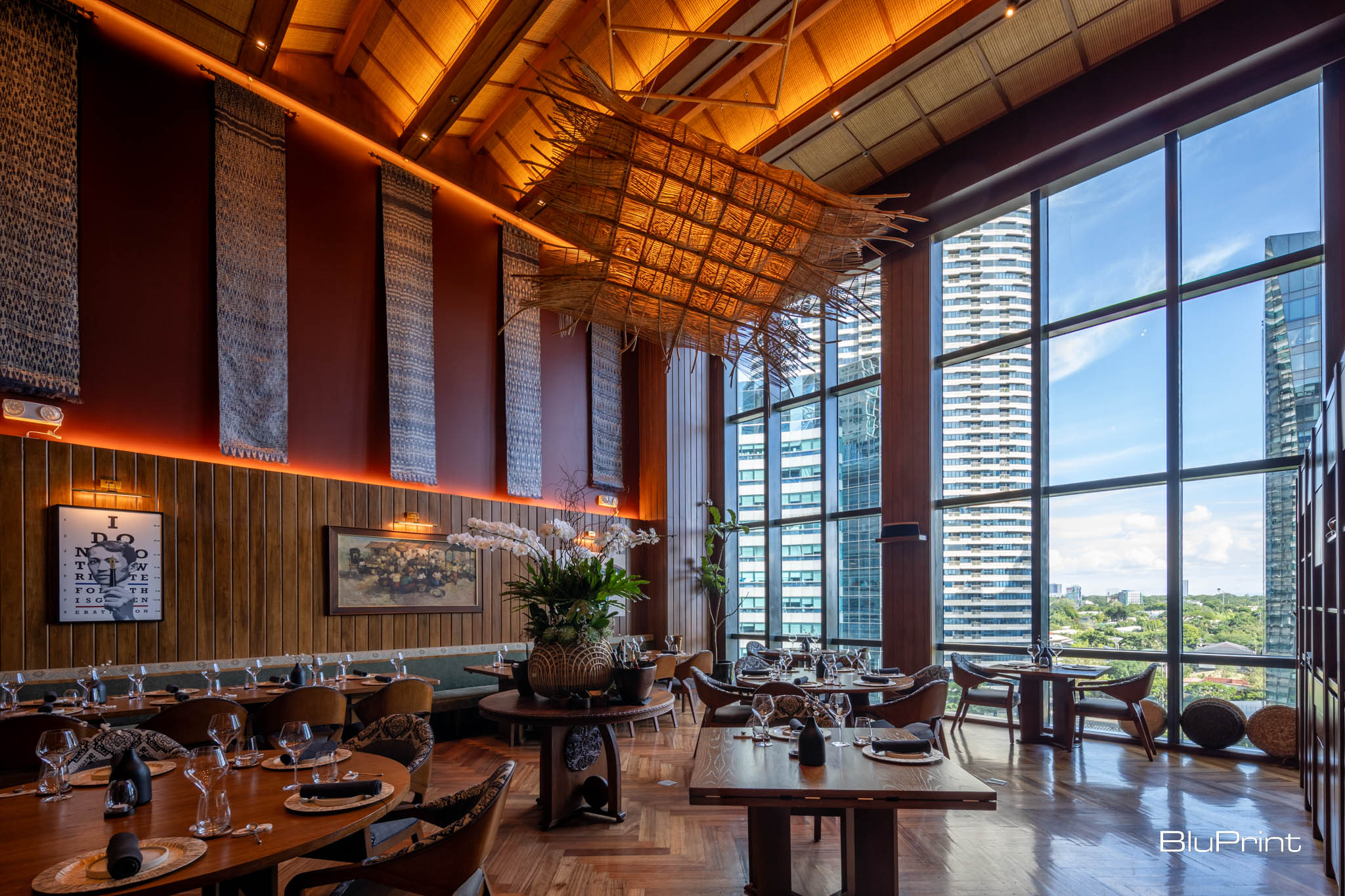
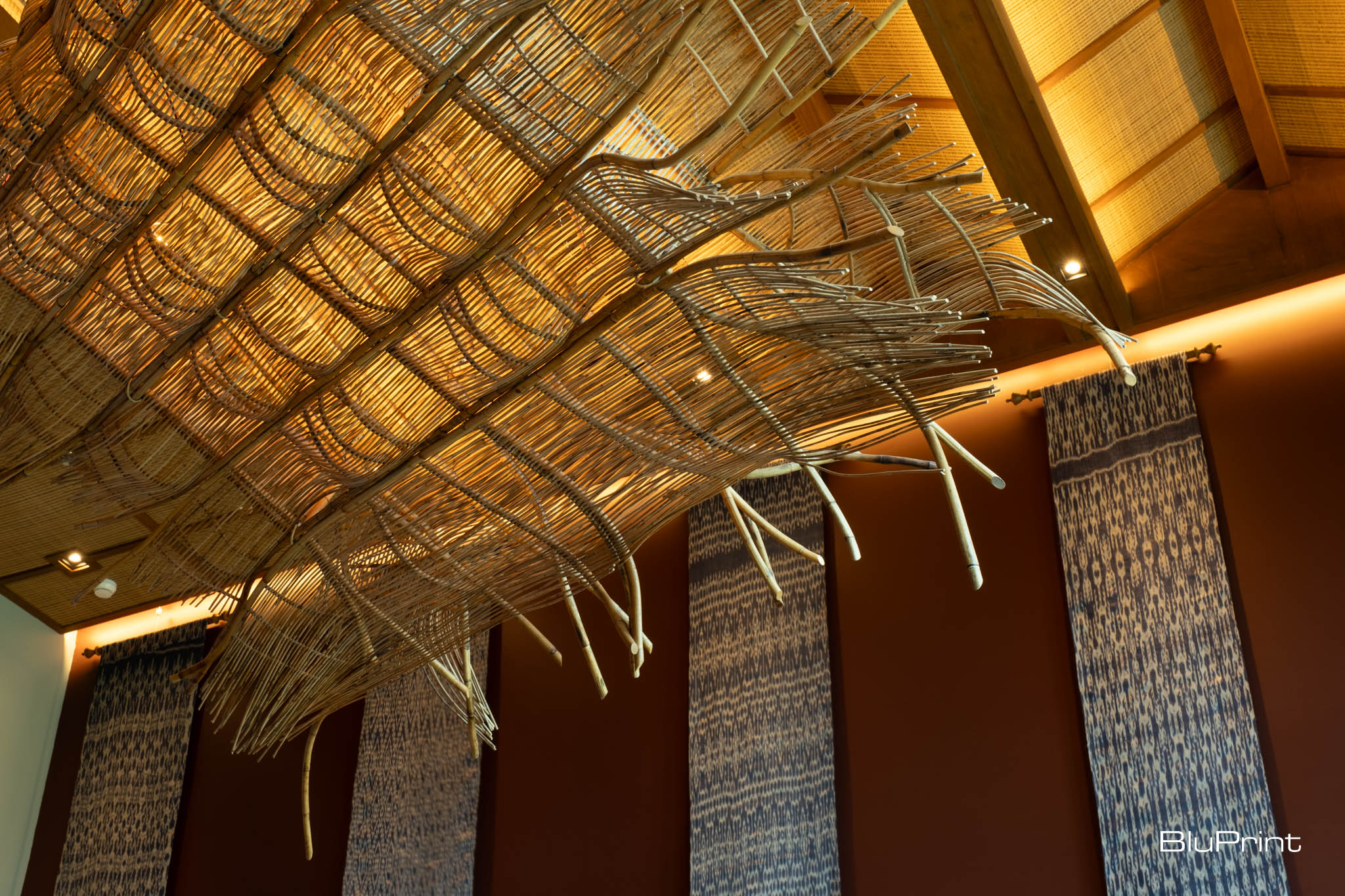
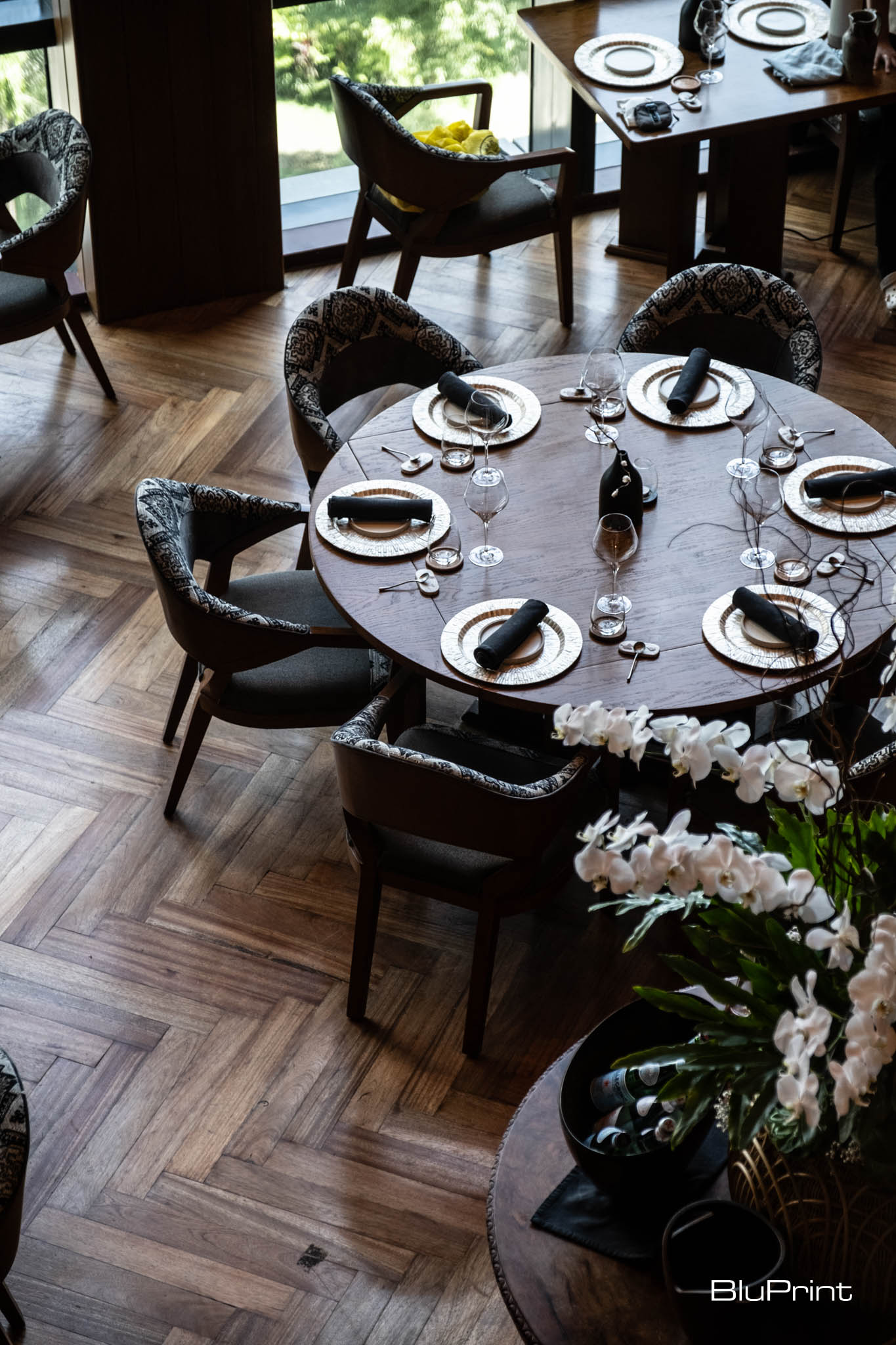
An E. Murio lamp hanging from the ceiling and indigenous fabrics adorning the walls are among the notable Filipino elements in Hapag.
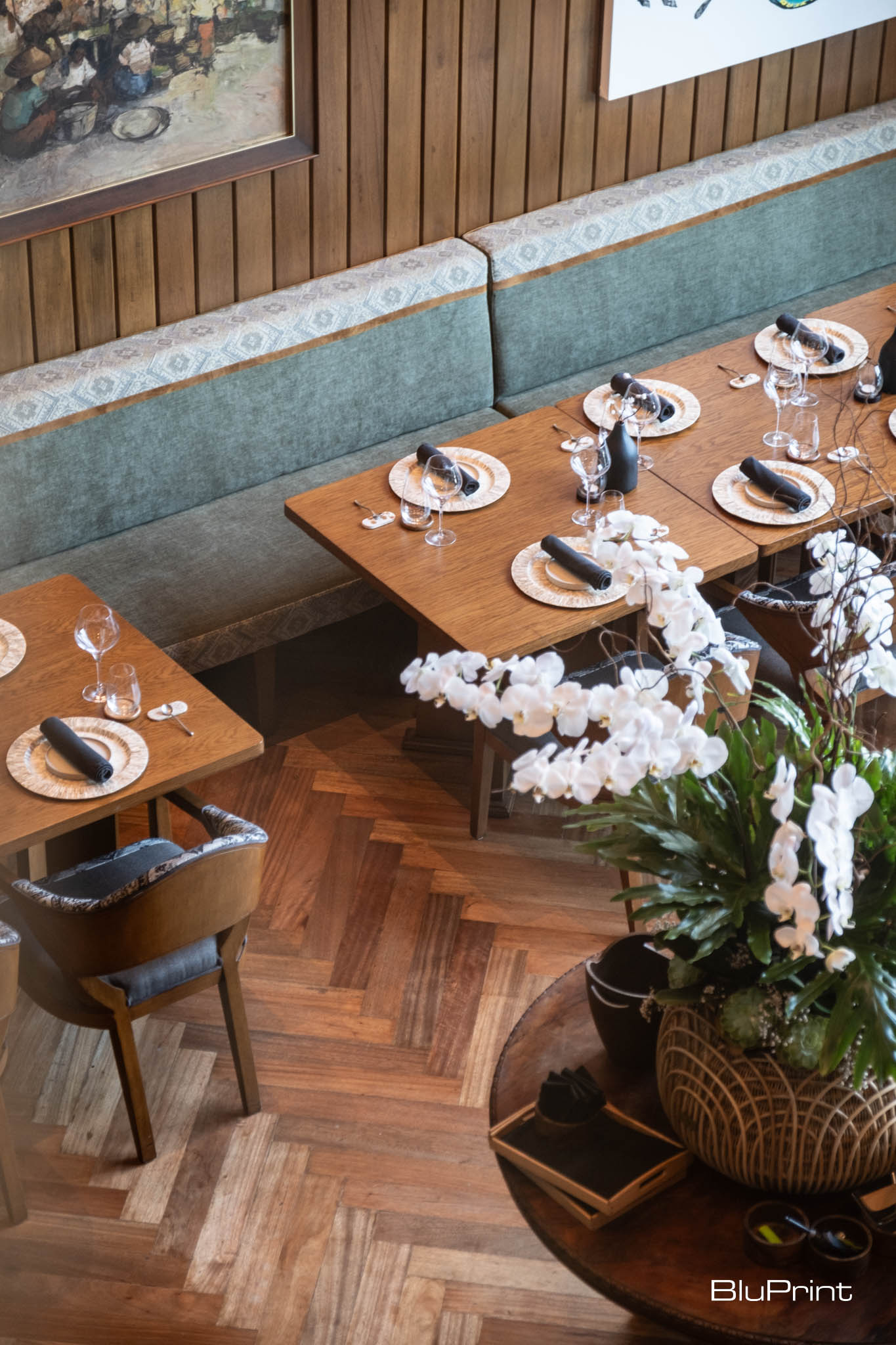
Wood flooring reminiscent of homes in the ’60s and ’70s makes Hapag feel like a house.
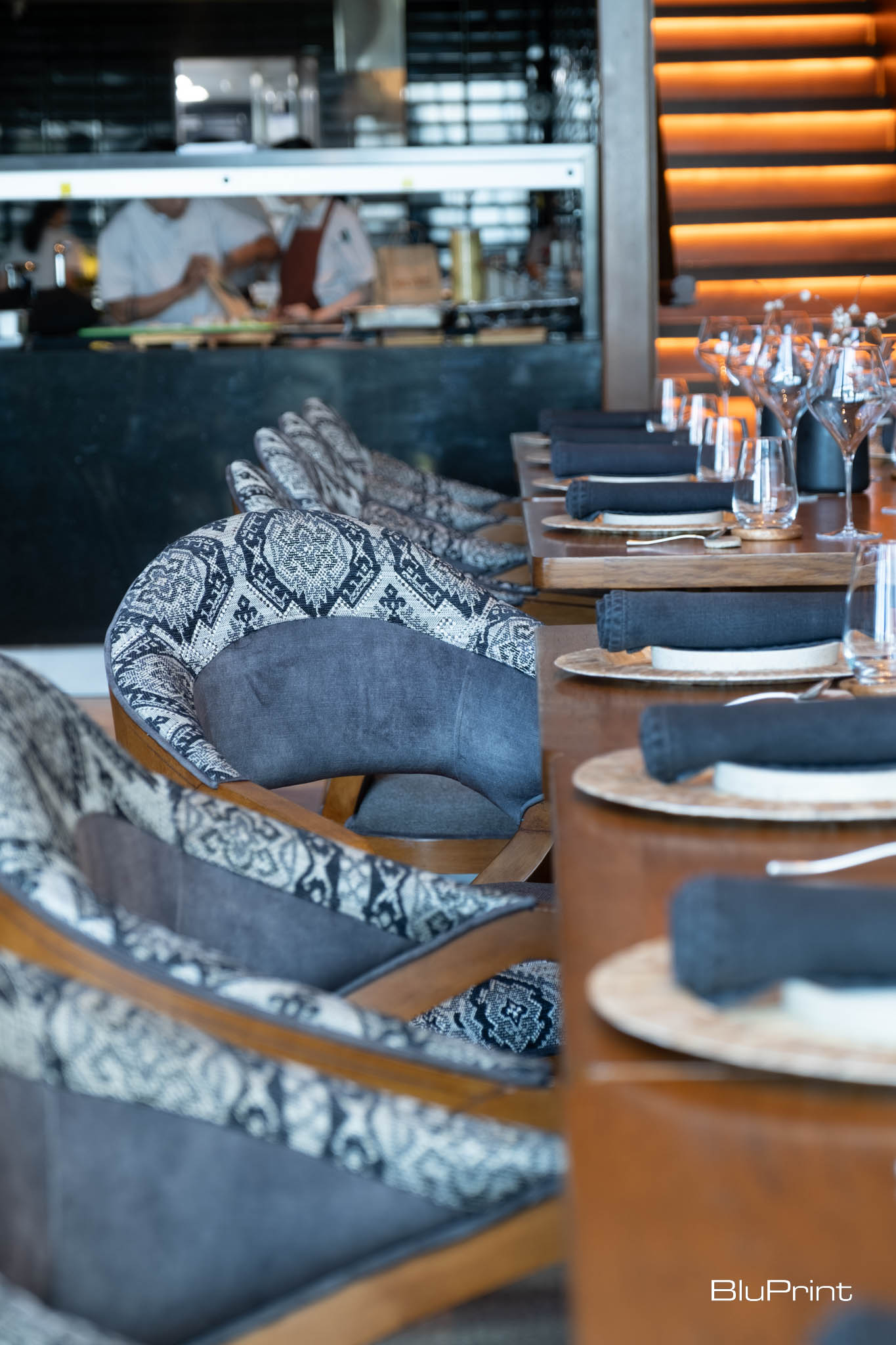
Uplholstered chairs make the dining area feel homey.
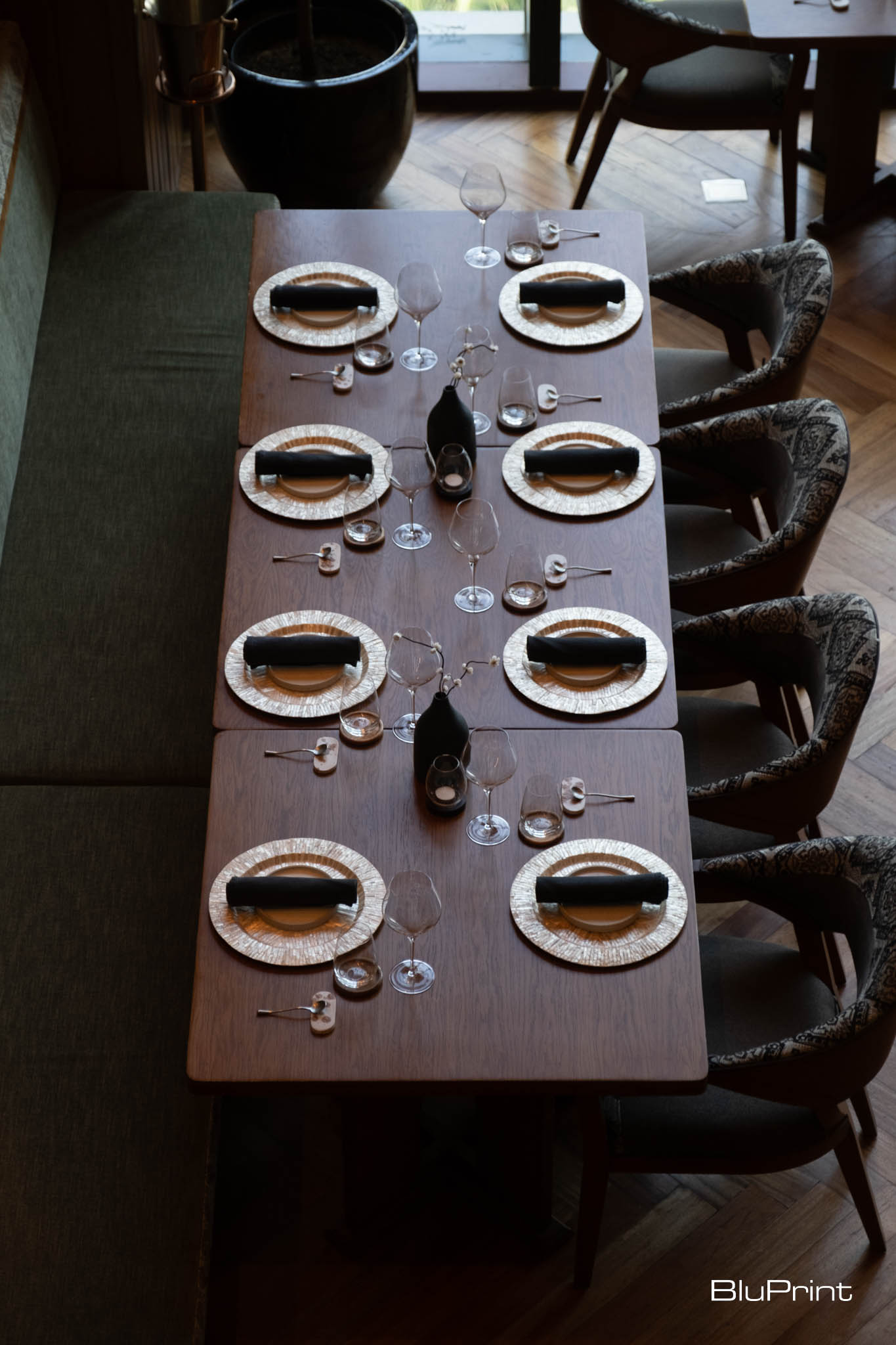
Big groups can be accommodated at Hapag by connecting multiple tables.
Hapag is designed to accommodate all types of diners—couples, groups of friends, or families.
A lambat-inspired lamp and local fabrics are among the notable Filipino elements in the dining area. Meanwhile, wood flooring reminiscent of ’60s and ’70s add a nostalgic touch.
In the main dining room, an E. Murio lamp, which takes its cues from lambat, hangs from the ceiling and adds drama to the space. “We wanted to make sure that it felt like a theatrical experience,” shares Erin Ganuelas, sommelier and co-owner of Hapag and AYÀ. “We wanted to make sure that Filipino culture was the very heart of everything that we do and represent in the restaurant.”
Local fabrics like t’nalak and inabel also adorn the walls, drawing attention to the high ceiling while adding more Filipino touches to the space.
Advertisement
Ode to Ancestral Homes
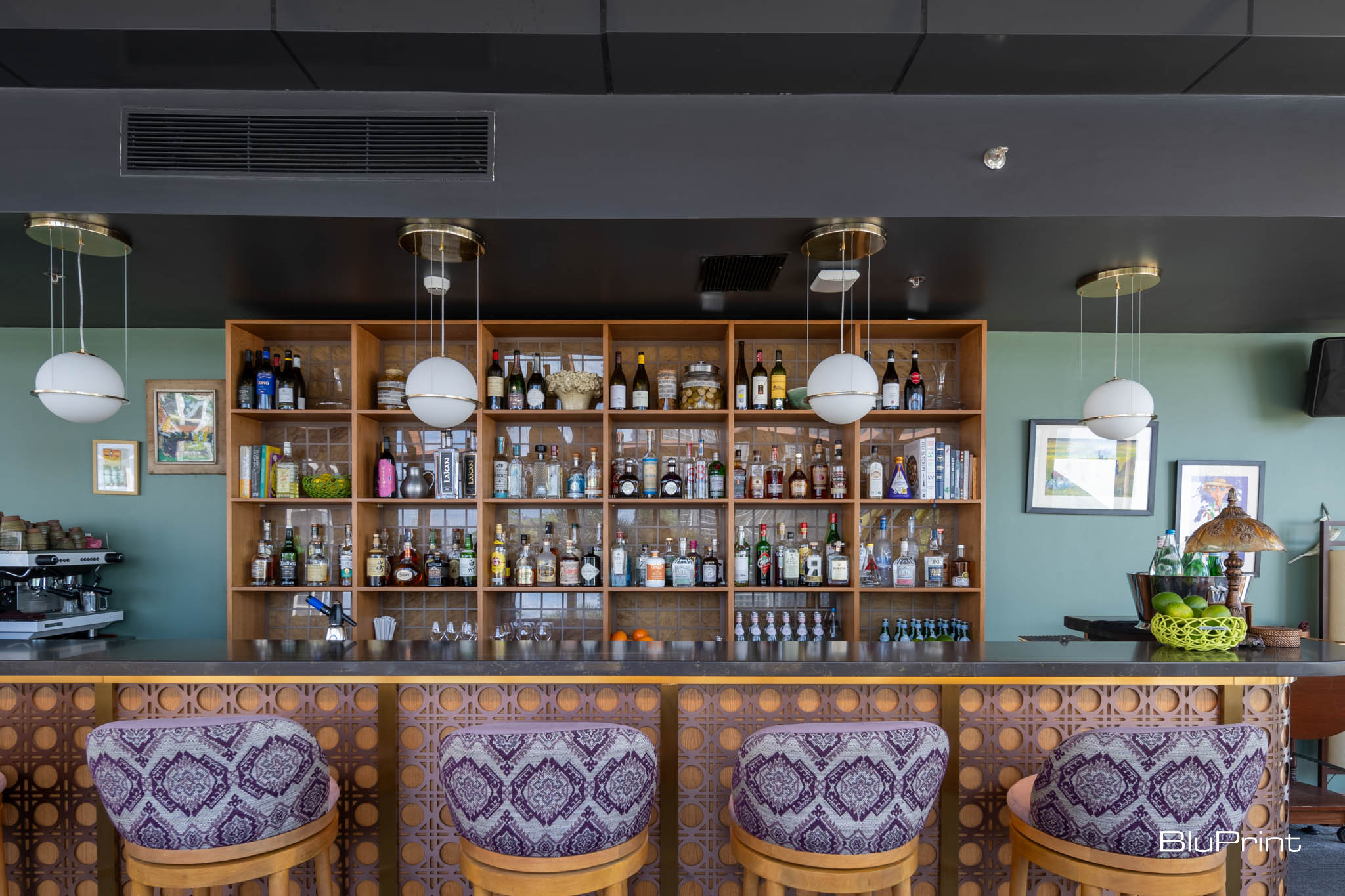
The solihiya pattern, reinterpreted using brass, adds a modern Filipino touch to the bar area at AYÀ.
The Filipino theme continues in the upper level, where AYÀ is located. “The inspiration for the bar area in AYÀ was the capiz tiles, but we reinterpreted using more modern materials,” Morales explains. We [also] took the solihiya pattern and reinterpreted it using brass. So, it’s a different spin to what you would commonly see in ancestral homes.”
The architect adds that she and her design team used wood flooring in the main dining area. They also incorporated adobe walls in Hapag’s anteroom—elements reminiscent of a ’60s to ’70s home.
These features align with the owners’ desire for a space that doesn’t feel too stiff but more like a house. Dolatre describes it as “relaxed elegance.” And with the restaurant highlighting Philippine cooking techniques like nilaga, kinilaw, inasal, pinausukan, and pinasingaw in its tasting menu, a refined Filipino but homey ambiance is just appropriate.
Advertisement
“Filipinos are always known to be very hospitable. If you invoke a feeling of a house, it’s easy for the food to follow,” Navoa declares. Dolatre adds that the food they serve is comforting. “Overall, that’s how we want our guests to feel. The feeling of not being intimidated, but at the same time, having a good time with the food, with the drinks, the ambiance, and the service of our staff,” Dolatre shares.
Upholstered chairs and carpeted floor make AYÀ a cozy space to enjoy cocktails in.
Designed to Change and Grow
“From the onset, when we were talking with the owners, we envisioned the space to kind of evolve over time,” Morales says. They wanted the space to be flexible and able to accommodate everyone–whether it’s a couple out on a date night or families celebrating a milestone.
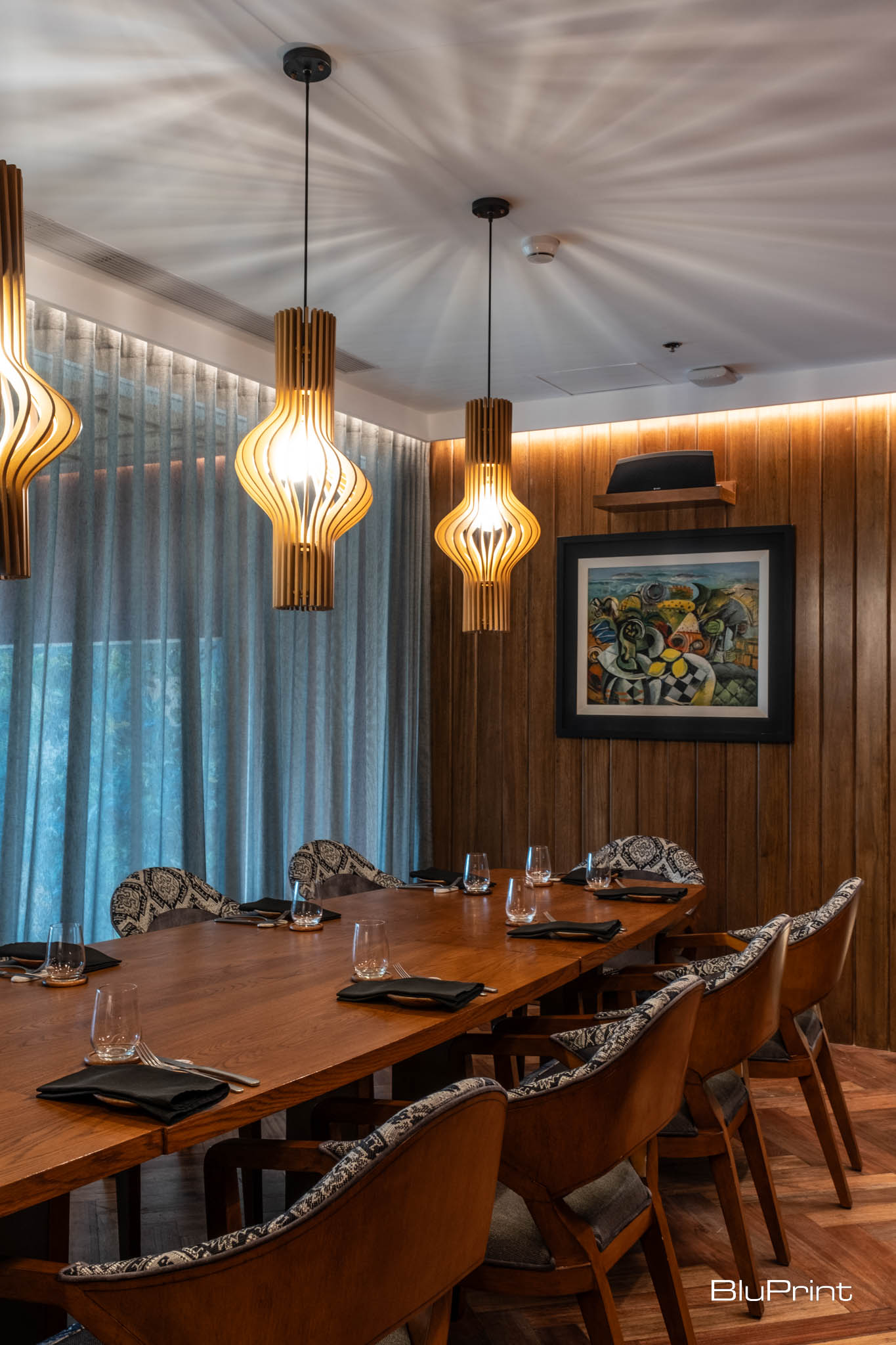
Hapag displays lamps from its previous space in Katipunan, Quezon City in one of the private dining rooms.
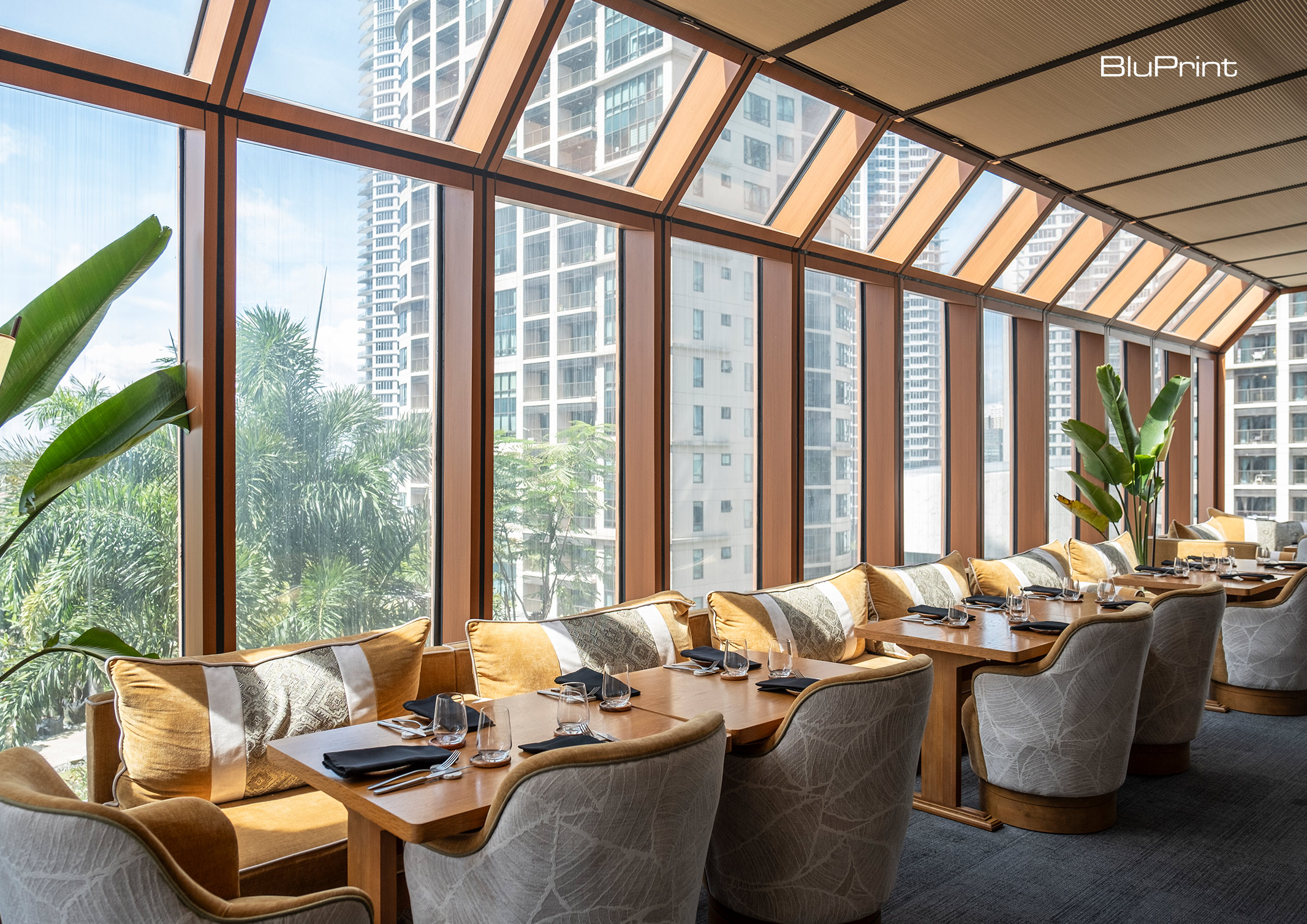
Hapag has two private rooms that can accommodate groups who want to have an intimate and exclusive gathering. Meanwhile, customers who just got off work can unwind with their favorite cocktails at AYÀ, or enjoy dinner at the main dining room while taking in the view of the city. “We don’t want to have a space [that limits] the kind of people who would be enjoying it,” Morales adds.
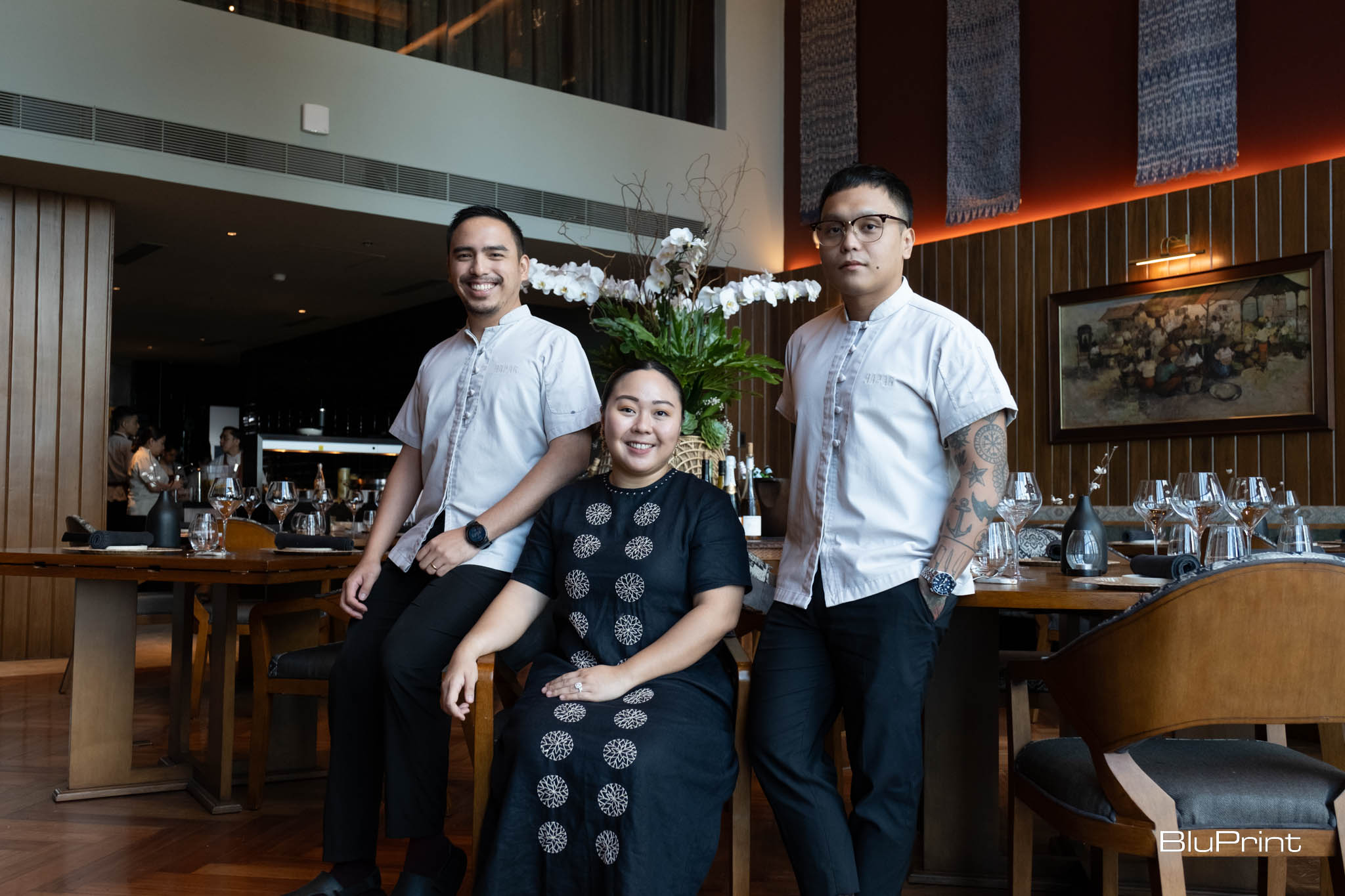
(from left to right) Head chef Thirdy Dolatre, sommelier Erin Ganuelas, and head chef John Kevin Navoa, owners of Hapag and AYÀ.
Navoa believes that as they grow more comfortable with the space, they will better understand its future. “But for now, it’s about just getting to show the world what this place is actually capable of…to continue growing and to show Filipino hospitality at its best,” the chef adds.
Located near the equator, factors such as heat and humidity are the norm in the Philippines. This tropical climate has shaped the development of architecture in the country. As Leandro V. Locsin stated: “The first consideration of the Filipino builder and certainly the most evident in his architecture, which is after all an outgrowth of […]
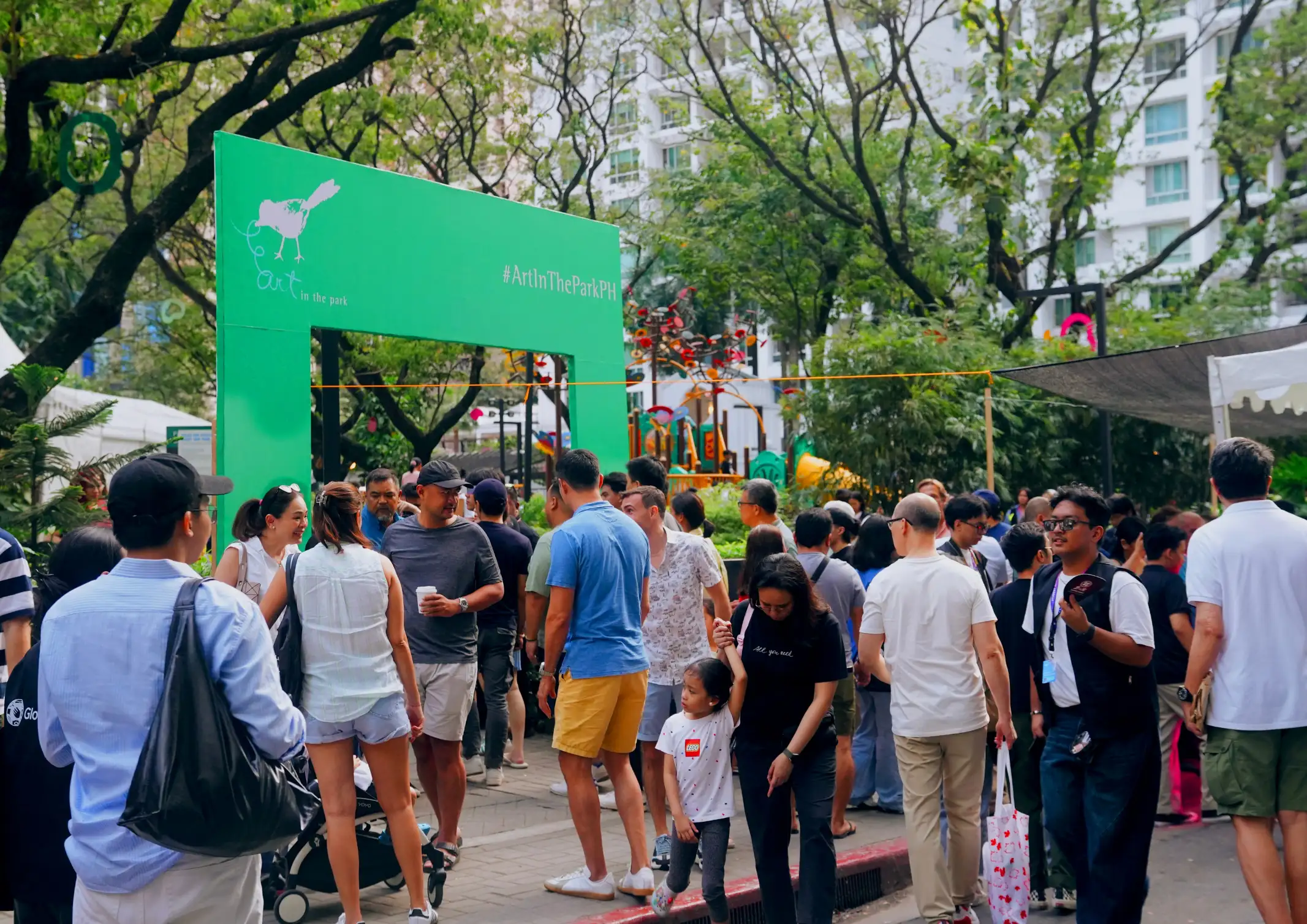
Art in the Park returned this year to Jaime Velasquez Park in Salcedo Village, Makati City, to celebrate its 20th anniversary. This year’s edition featured a curated selection of works from 55 exhibitors representing galleries, art collectives, independent art spaces, and student groups. With all artworks capped at Php 70,000, the fair continued its mission […]
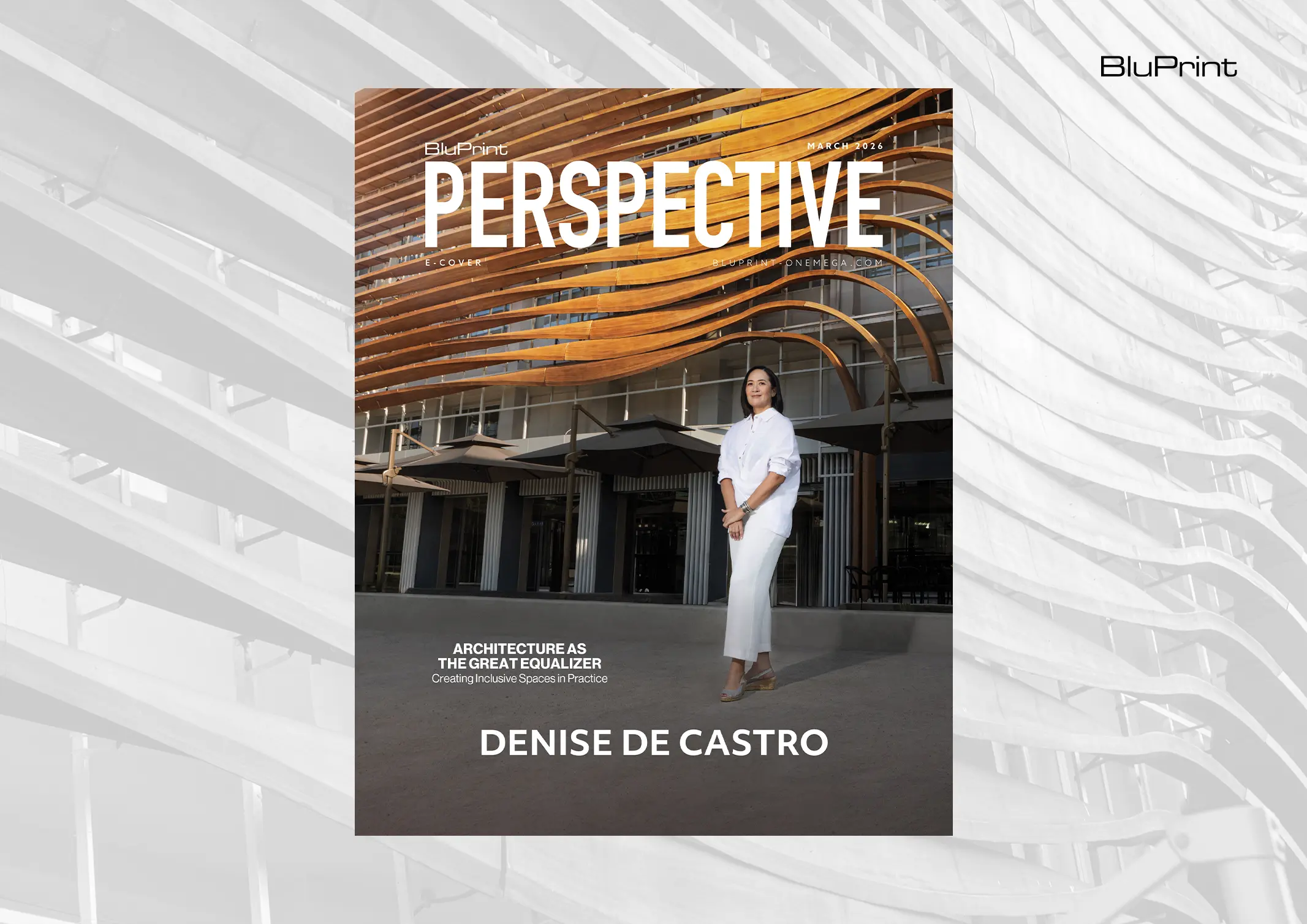
Denise de Castro, Principal Architect of DEQA Design Collaborative, believes that designing with equity in mind means starting at the workplace. Values and practices that your studio or office espouse inevitably filter down to the work that you do. Equitable design ensures that people with different needs and different backgrounds are supported through fair access, […]
Across Metro Manila, residential developments are increasingly designed around proximity. As cities grow denser and mobility becomes more complex, new housing is often positioned near transport nodes, commercial districts, and educational institutions. This approach reflects a broader shift in urban planning. Mixed-use environments allow residents to live closer to daily necessities—reducing commute times while supporting […]
Luxury in design is undergoing a quiet shift. Where once luxury was measured primarily through visual opulence, today it is increasingly defined by responsibility—through the way spaces are built, the materials selected, and the impact those decisions leave behind. At the Philippine World Building and Construction Expo (WORLDBEX) 2026, this evolving definition of luxury takes […]
For more than nine decades, Fisher & Paykel has approached design with a simple but exacting belief: that the best living environments are those shaped by people, place, and purpose. Rooted in New Zealand and deeply attuned to island and coastal living, the brand’s philosophy centres on quiet performance, material honesty, and appliances that integrate […]