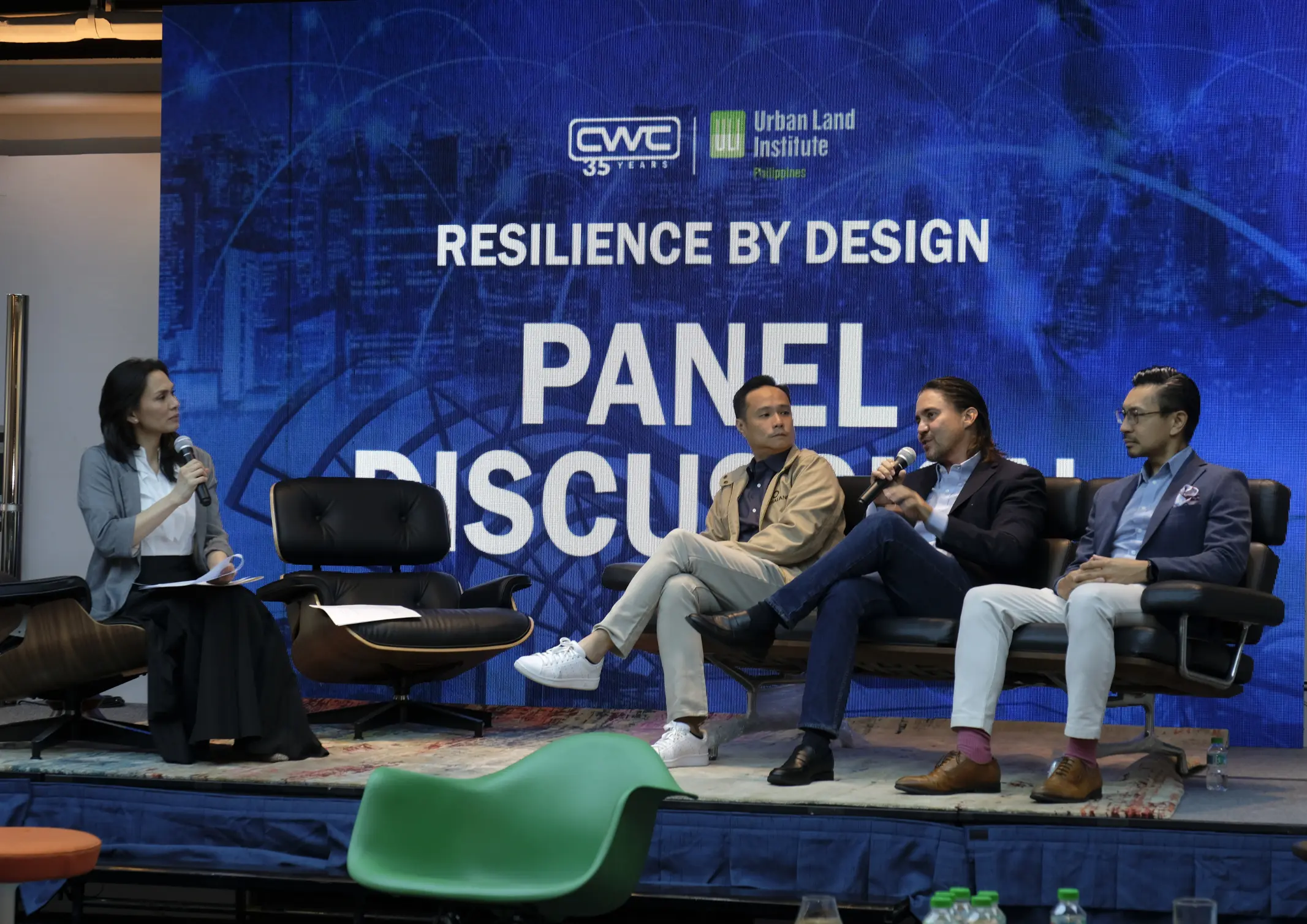
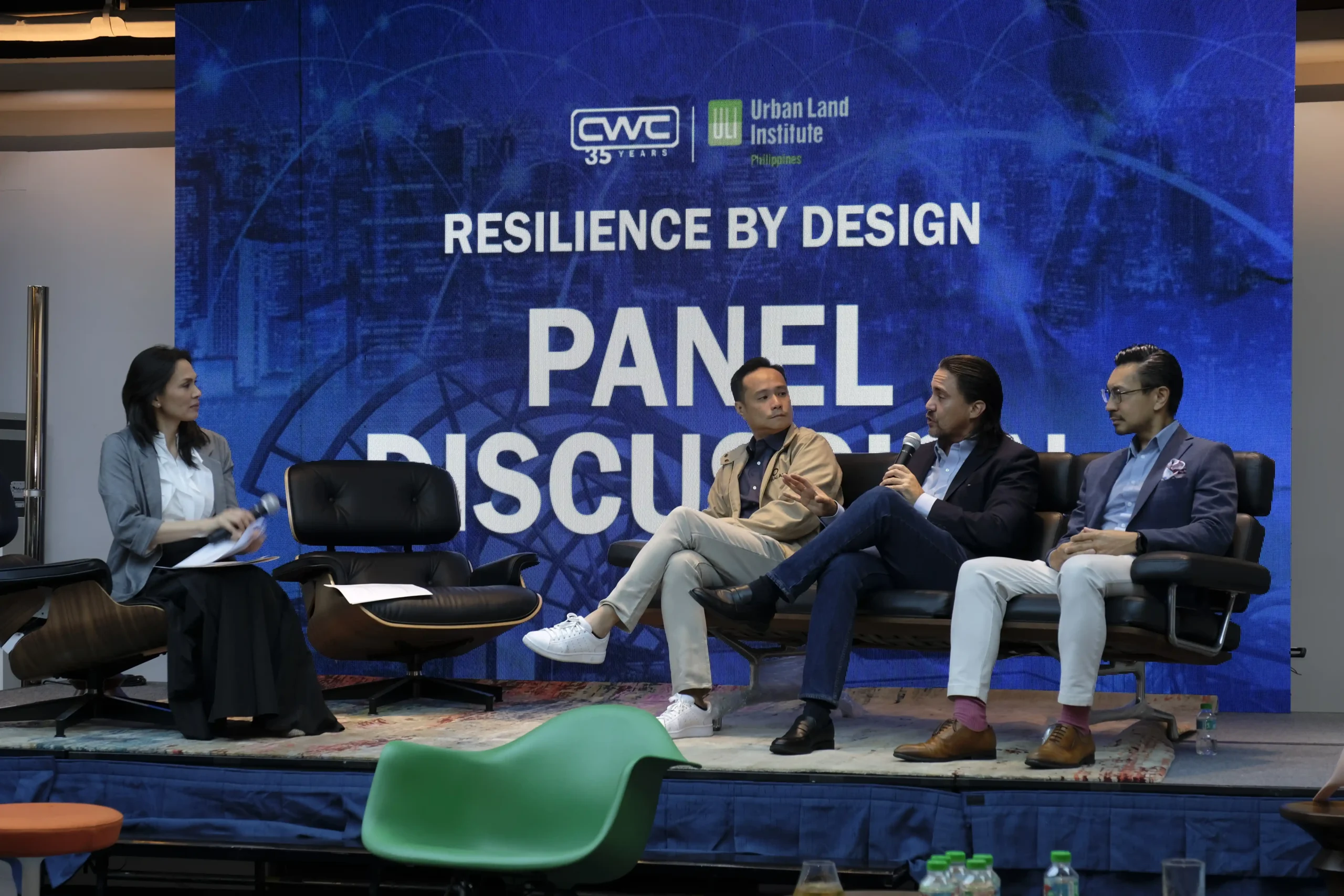
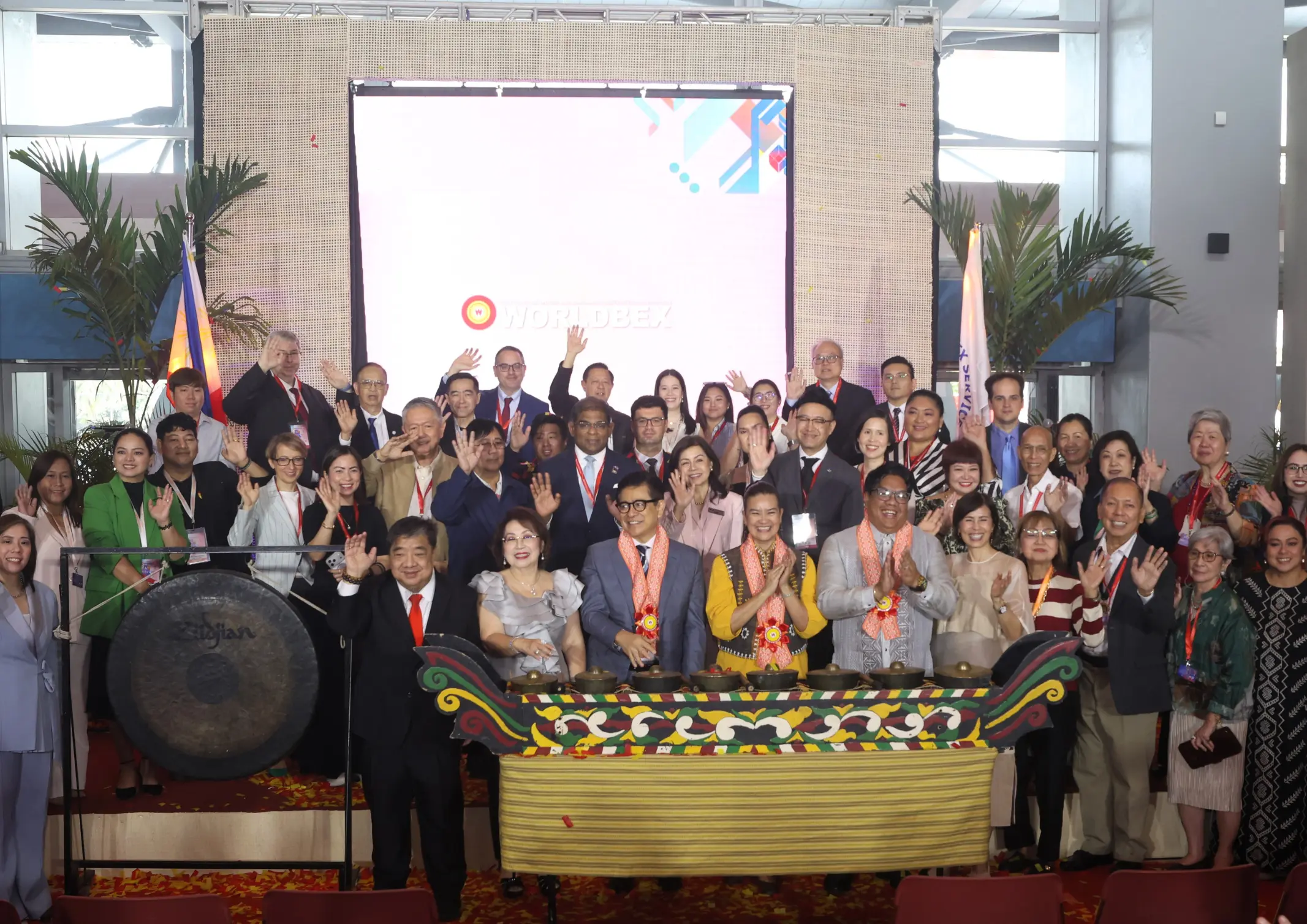
The CWC Design Center (CDC), along with the Urban Land Institute (ULI) Philippines, hosted its Resilience by Design: Strengthening Cities, Buildings, & Communities event. The event invited Architect Eric Manuel of ARCH Capital, Architect Gelo Mañosa of Mañosa & Co., and Oliver Chan of Arthland as panelists. Aptly named, the event discussed how good design can address the Philippines’ challenges, ranging from flood control to disaster resilience.
ULI Philippines: World Risk Report
Eric Manuel of ARCH Capital, and the current chair of ULI Philippines, stated in his opening remarks that the Philippines’ #1 ranking on the World Risk Report, which measures how vulnerable countries are to disasters and their capacity to respond. This ranking indicates that the Philippines is among the worst-positioned globally to handle disasters.
A key comparison was made between Japan and the Philippines, both of which face similar natural disaster risks. However, the former doesn’t appear in the top 50 due to its disaster preparedness and response capabilities. This is a stark contrast to the Philippines.
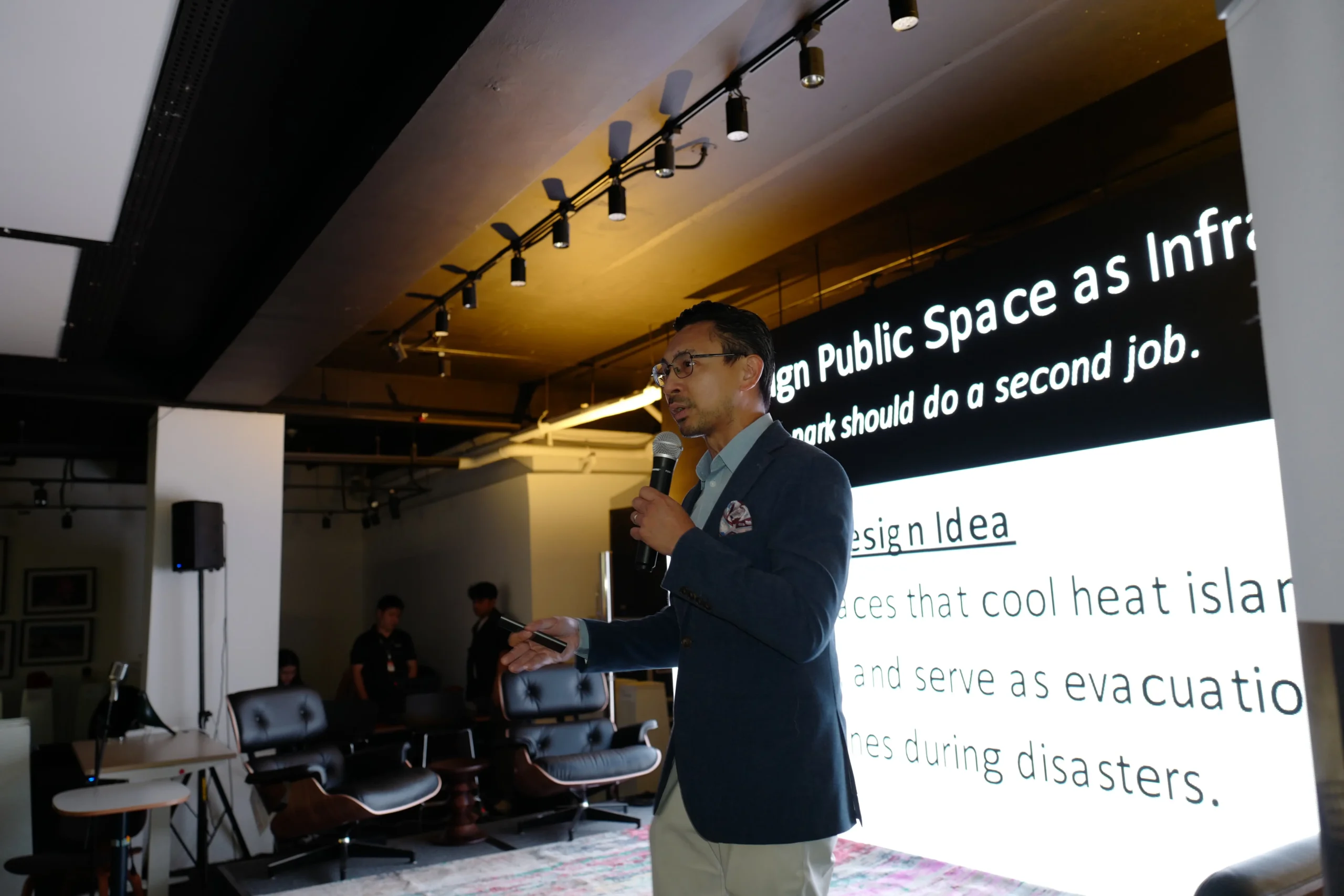
While he has presented the challenges the country faces, Manuel also highlighted how good design can address them. He listed six design principles for resilience: design for water, not against it; build up, not just stronger; make buildings self-sufficient; design public space as infrastructure; and flexibility beats permanence.
Advertisement
“Resilience is not a feature, it’s a design philosophy,” Manuel states. For him, resilience requires multi-sectoral collaboration among the government, the private sector, the community, and academia. Rather than just top-down governance, resilience is faced with a multidisciplinary approach.
In this approach, he emphasizes that there are 3 scales of design: city scale, building scale, and human scale. This refers to the actions we can take as individuals to promote sustainability and resilience. Manuel remarks, “And tonight, CWC will introduce something very special. We are actually doing something at the human scale. That is upcycled furniture, the things that we use in our day-to-day… Now, I want to emphasize the partnership we have with CWC. At the end of the day, I do not want to continue these conversations with design. We design for resiliency.”
Panel Discussion Insights
The panel featured Architects Eric Manuel, Gelo Mañosa, and Oliver Chan. The discussion panel on sustainable development offered insights into the subject, including a knowledge deficit in the Philippine real estate industry. While green buildings exist in the country, they are insufficient in number.
Advertisement
The country possesses an abundance of design talent, yet most sustainable construction is driven by compliance rather than genuine protection. Issues such as life cycles and long-term solutions are rarely considered in the design of structures.
The panelists identified education as one of the most critical issues in designing for sustainability. The consensus was that clients often don’t understand what sustainability truly entails. This leads to the misconception that sustainable options are expensive.
Panelists urged developers to think long-term, especially about future generations who will inherit the cities and buildings we live in now. This demographic shift offers compelling reasons for change. The younger generation demonstrates significantly greater environmental consciousness, and the panelists say this philosophy is often evident among younger members of their teams.
Advertisement
Chan, from Arthaland, shares: “So, [who] we focus on are people who believe in sustainability and why it matters. And that’s what we work on. Then, we teach them the fundamentals, how to make it even bigger. Then the ideas come in. The ideas come in because people believe in it, and they actually think of how to make [them] better.”
Looking Towards the Future
All three panelists estimate that climate-resilient design will only become a standard rather than a premium ten to fifteen years from now. As such, there is still a long way to go in building a more resilient Philippines. Matters such as education, government policy, climate reality, individual action, and local government initiatives are vital steps towards utilizing good design to combat our country’s vulnerability to disasters.
Mañosa laments how the inevitable changes in our climate will eventually force us to make the changes we need. He states, “Climate will force us to start making the changes… Stronger floods, stronger typhoons, stronger storm surges. It’s going to get hotter. It gets hotter. It gets worse year-by-year, and super typhoons are more frequent…We will be forced, whether we like it or not, to have to make changes.”
From the moment a diner steps through the door, each detail shapes how a meal is experienced. Restaurant design has evolved, with architects and culinary professionals collaborating to create built spaces that are as intentional as the menu itself. The spatial atmosphere acts as an additional ingredient that can define the culinary experience. Taupe and […]
With climate change and global warming, the Philippine climate is in constant evolution. Consequently, it is important for Filipinos to have living spaces that respond to the local environment. In this article, BluPrint lists down Filipino architects who are reimagining the tropical house, aligning the built and natural environment. BAAD Studio Principal architects Benjee Mendoza […]
Ventilation involves the introduction of outdoor air into a room, providing occupants with their needs. Proper ventilation allows for the moderation of internal temperatures, the creation of better airflow, the dilution of carbon dioxide to acceptable levels, and the removal of contaminants. This addresses health risks associated with indoor air pollution, such as respiratory problems […]
WORLDBEX 2026, running from March 12 to 15, 2026, proves itself as the Philippines’ leading construction and design expo as it wrapped its 29th edition. It drew together 1,000 local and international exhibitors under one theme, “Building Opportunities: Sustaining Lives.” Organized by Worldbex Services International (WSI), in support of the ABS-CBN Foundation Inc., the event […]
Located near the equator, factors such as heat and humidity are the norm in the Philippines. This tropical climate has shaped the development of architecture in the country. As Leandro V. Locsin stated: “The first consideration of the Filipino builder and certainly the most evident in his architecture, which is after all an outgrowth of […]