The Filipino Diaspora and the overseas Filipino workers (OFW) experience continues to be fertile ground for art exploration. In general, migration and diaspora are pertinent topics in pop culture; literally two recent Pixar movies, Turning Red and Elemental, explicitly harness that cultural divide.
And yet the discussion of the Philippines’ unique experiences with this phenomenon remains interesting. More than any other country in Asia, migration is an ongoing government policy rather than one rooted in political and economical instability.
The Philippine economy is fine; 5.6% growth of our GDP are good steady numbers, especially considering how a lot of countries faltered in their economic recovery post-COVID. And yet, there is also a question of how much of that money is due to internal economic growth and how much of it comes from overseas Filipino workers.
Over 2.3 million Filipino workers are currently deployed overseas, with many more having migrated out of the country and towards greener pastures in the West. Remittances increased to $37.2 billion dollars last year, representing 8.5% of our GDP.
Advertisement
It’s a literal billion-dollar income generator for the government that endangers workers and fractures families in ways that harm the cultural spirit of the country in ways we’re still seeking to understand.
There’s a reason why the two biggest Filipino movies of 2024, Hello, Love, Again and And The Breadwinner Is… centered around the stories of OFWs, and it’s because it’s an active injury that Filipinos are still trying to navigate.
Seeking Roots into Filipino Culture
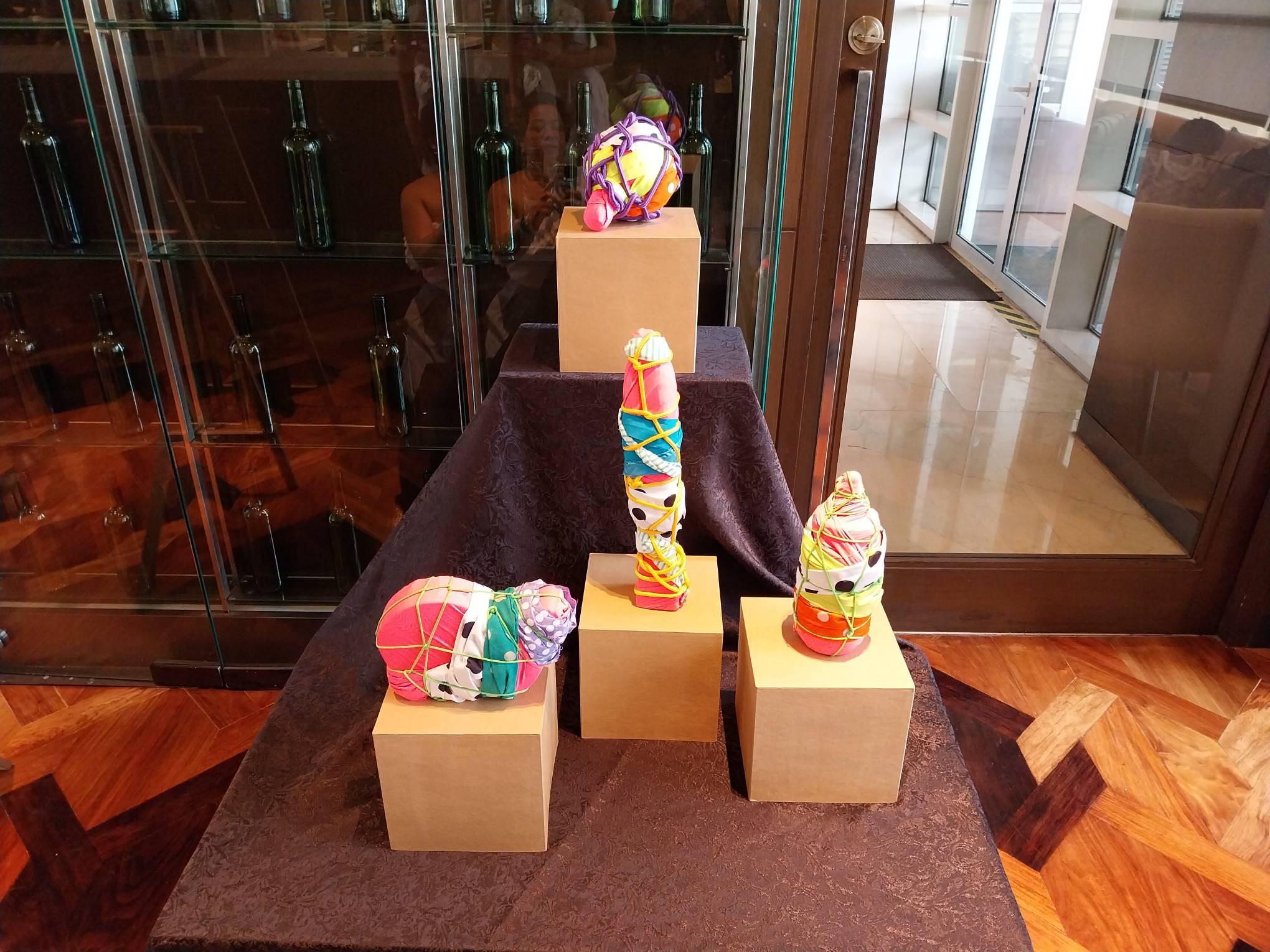
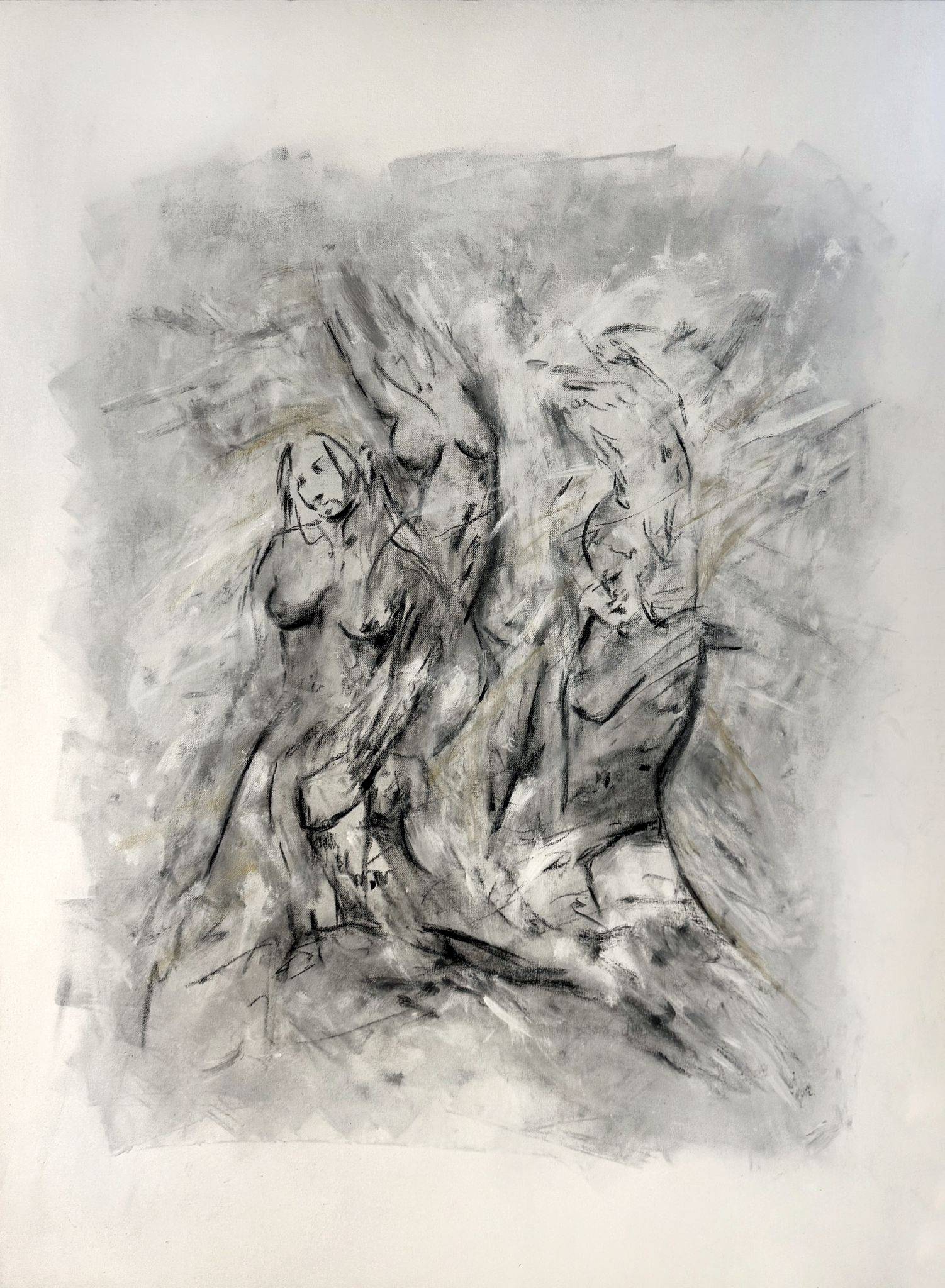
Beyond popular entertainment, it seems like something of interest to our local artists, too. One of the more interesting exhibitions happening this February is Lakbay: Voyages into the Absolute. It’s partially a tribute exhibit to Nena Saguil and a showcase of never-before-seen work. What’s interesting about it is how it assembled different Filipino artists based around the world to contribute to the exhibit.
Works by Kulay Laibitigan for “Lakbay: Voyages Into the Absolute.” Photo by Elle Yap.
The exhibit’s curator Marika Constantino and Art House founder Carlo Pineda talked about how excited all of the contributors were, at the opportunity to reconnect with the local art scene and to create new associations in the country as a whole. Pineda, especially, discussed the need to create a community with these artists to link them firmly into the local scene.
“Stillness II” by Kim Cruz. Photo provided by the organizers.
What struck the hardest about the exhibit was the desire of these artists to reconnect with their cultural heritage. Even in the land of opportunity, these artists need that connection to their roots as a way of understanding themselves in the grand tapestry of life.
Advertisement
“The mere fact that a number of Filipinos need to go abroad for greener pastures, that in itself is an important topic,” Constantino said. “And unless we’re able to make these Filipinos stay at home and give them the opportunities that everyone has a right to have, then that will be a forever topic.”
The Promised Land Narratives
Some recent exhibitions in Manila dealt with such topics of migration and the Filipino diaspora; none of them have reflected on it positively.
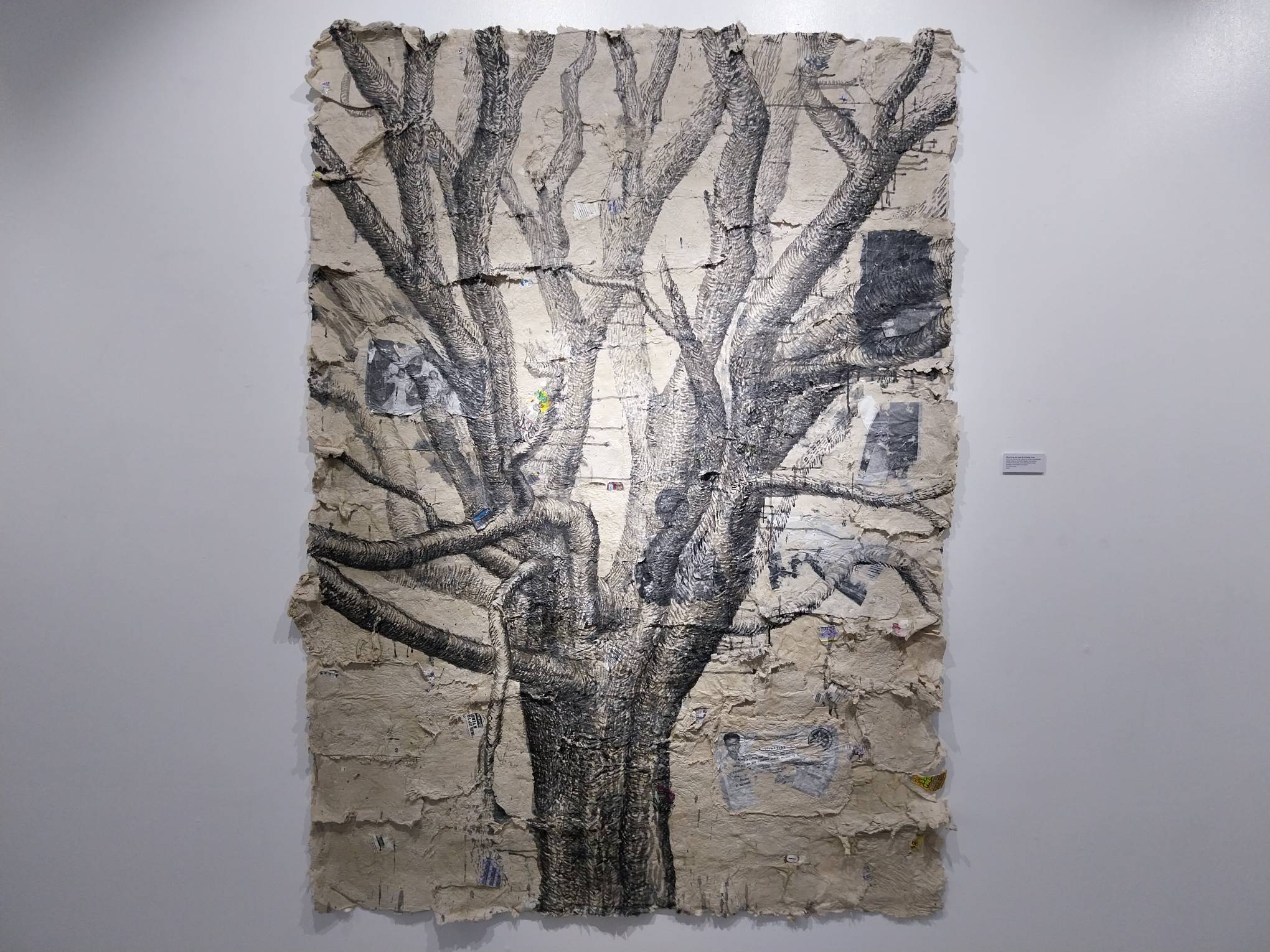
Mother/land by Nicolei Gupit, for example, saw mostly drawbacks in the way that our society valorizes leaving to America for better opportunities. The exhibit’s artworks show her lack of connection with her heritage and family; crumpled papers, images, and documents being her only solid connection to the past.
That lack of connection in pursuit of the “American dream” largely left a stranger in both lands, so to speak, with no solid roots in either the United States or the Philippines because of this fragmented nature of her life.
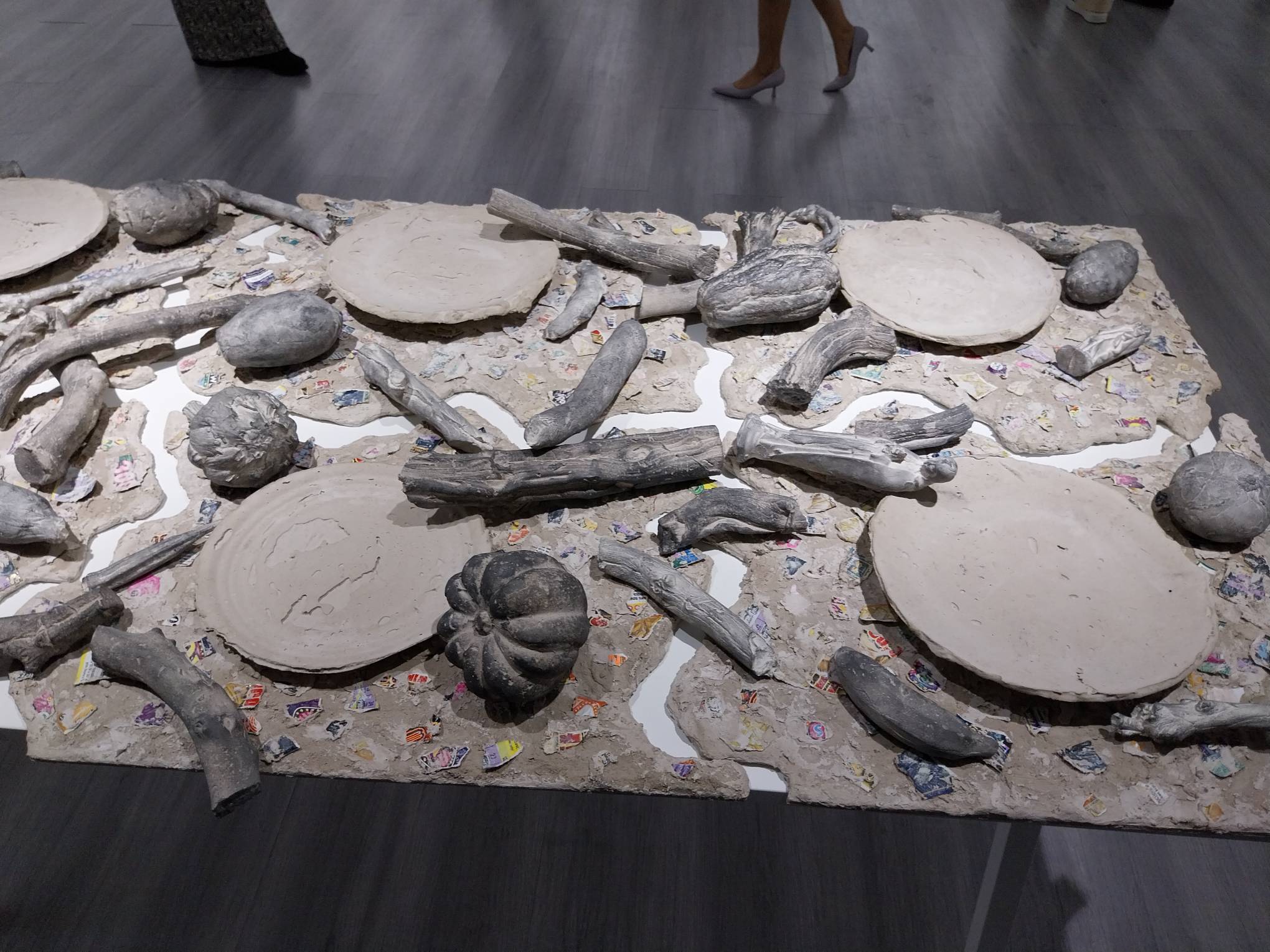
Close-up of the empty dinner table mixed media artwork for “Mother/land.”
“The loss is something that people don’t talk about,” she had said. “The loss is like, for example, in my family, we don’t eat together. We don’t have reunions in person. We’re not able to spend time together in a meaningful way. And so, that’s something that I think Filipinos in the Philippines often overlook.”
Advertisement
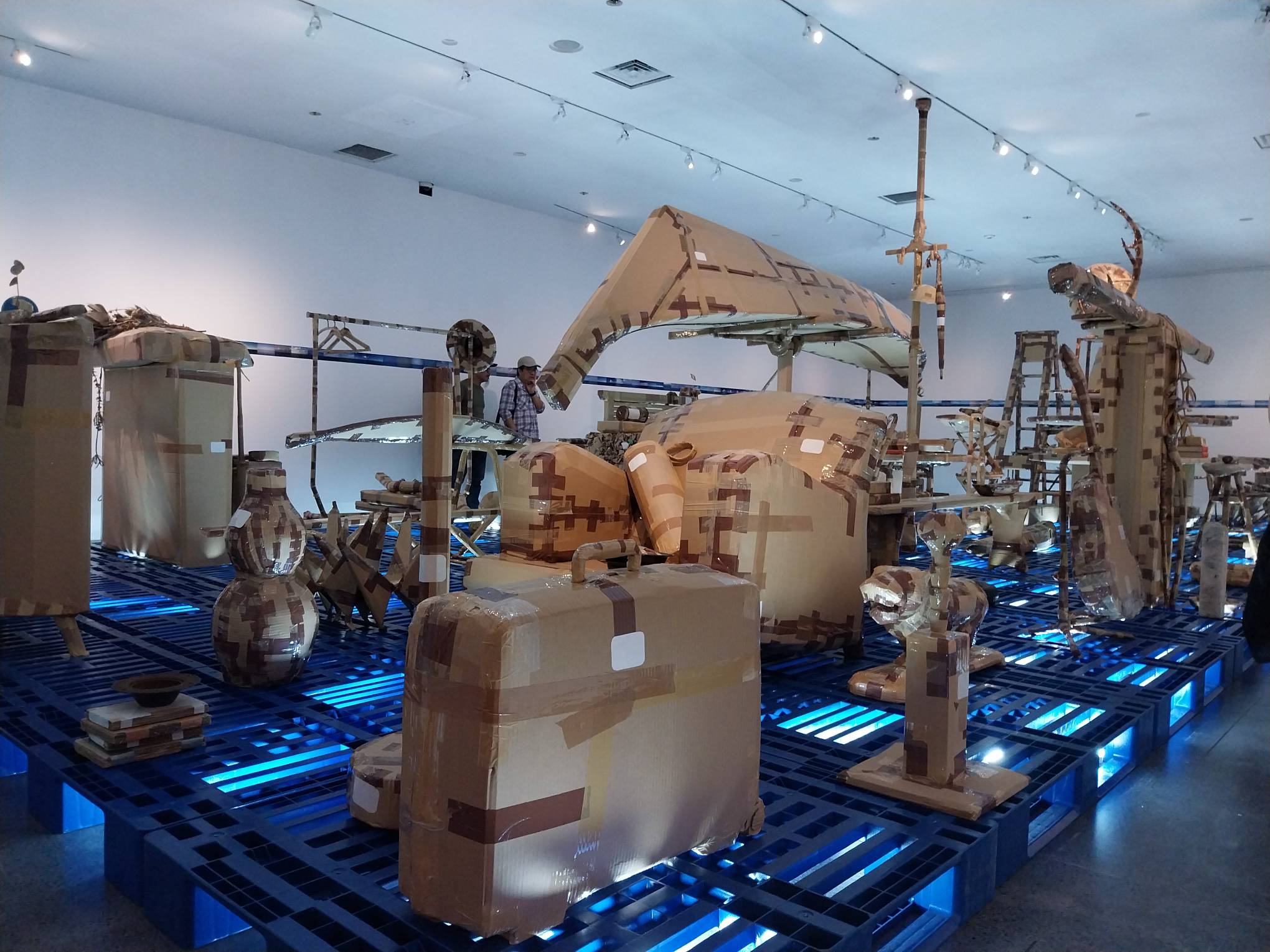
Project Belonging: From There to Here also tackles the lack of roots that many Filipinos who migrated to other countries contend with. Isabel and Alfredo Aquilizan’s works very literally boxes up the furniture and personal effects of a person as a metaphor for the feeling of displacement that OFWs feel.
The Aquilizans’ “Nothing to Declare” for “Project Belonging.”
It all circles around such complicated ideas of selfhood and citizenship, about what matters more to us: the culture in which we grew up in and the people we share experiences with, or the possibility of a better life in a country that alienates and others you in the grand scheme of things.
The Spectre of Anti-Immigration Policies in the West
Talking about the Filipino diaspora and OFW experience now feels necessary especially as the larger headwinds of our society veer against migration as a whole. “Finding better opportunities by living in Western countries” rings hollow due to the continued attacks of racial minorities in both Europe and the United States.
Advertisement
The US is most egregious with their rhetoric, of course, as they explicitly push a white supremacist narrative that aims to arrest and deport migrants regardless of their legal citizenship status in the country. At first glance, it’s likely to only affect so-called tago-ng-tago Filipinos who don’t have green cards or visas.
However, the fundamental crisis at hand comes from their explicit attacks on even naturalized citizens, with their immigration police indiscriminately arresting anyone they deem illegal. Currently, in fact, they are even aiming to remove birthright citizenship, putting at risk many Filipinos who were born and raised in the United States to be deported to a country they barely know.
It’s become an impending time bomb for our government, as the Philippine economy relies heavily on remittances. President Ferdinand Marcos, Jr. even announced an attempt to try to influence the Trump administration on its policies. That attempt will likely fail in the current American bloodlust against migrants, legal or illegal.
Advertisement
Abuses and Mistreatment of Migrants
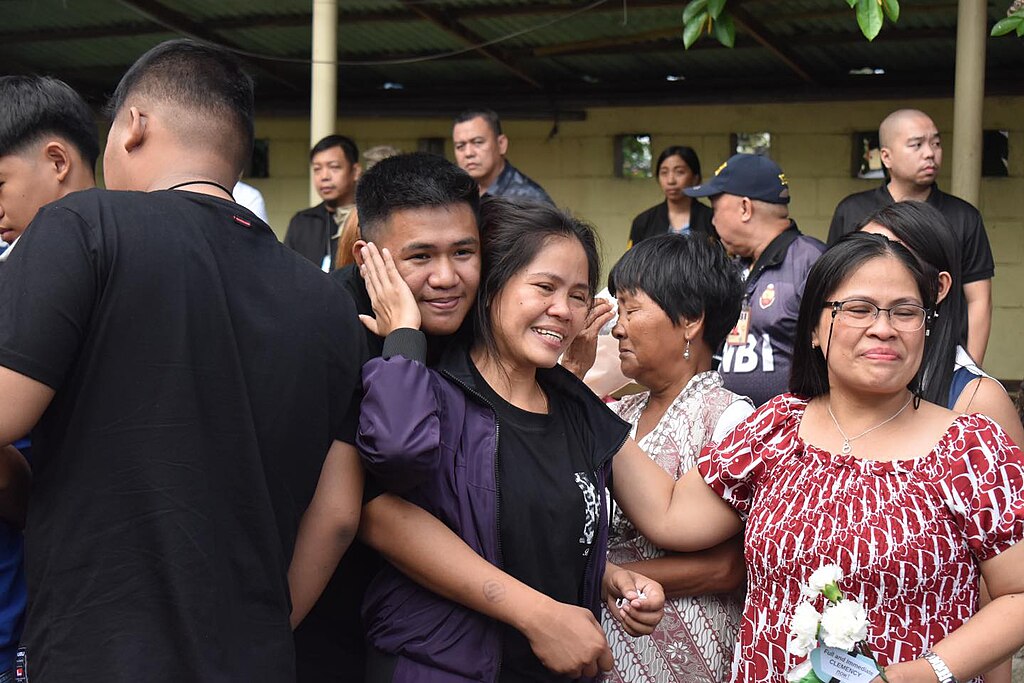
Added to that is the continual abuse of OFWs abroad. There’s all the murders in the host countries—as recently as January of this year. There’s also the cases of human trafficking, currently exemplified by the Mary Jane Veloso case which only found a questionable resolution this year.
Mary Jane Veloso in her return to the Philippines. Photo by Bureau of Corrections Public Information Office. Source: Wikimedia Commons.
Thousands of cases of abuse and maltreatment of OFWs are filed on a yearly basis, for decades now. And yet the government policy remains lacking, giving many Filipinos little reprieve or safety in their work places, and continuing to endanger them today in host countries that have shown little regard for the safety of migrant workers.
Suddenly, even greener pastures of tolerance don’t look tolerable at all.
Looking to Define Culture in Our Own Terms
At the end of the day, the unjust treatment of Philippine migrants is an ongoing problem with no future solution in sight. Our government is more focused on infrastructure rather than industrialization, and its anti-worker stances, from the minimum wage to its anti-union lean, ensures that Filipinos will look for better opportunities abroad for as long as they can.
Advertisement
Thus, especially with the increasingly racist immigration sentiment in the West, the Philippine art scene will likely see more and more artworks catered to the feelings of the Filipino diaspora, artists seeking community in a world that feels targeted against them.
Contemporary design refers to the constantly evolving design trends of today. With the power to design our built environments, architects have been experimenting with various architectural approaches. Whether that is through unconventional forms or the integration of smart technologies, BluPrint lists down Filipino architects who are defining contemporary architecture. Deo Alam Architect Deo Alrashid Alam […]
In the Philippines, adaptive reuse gained traction during the 1970s with the rise of conservation and environmental preservation movements. It offered an architectural solution that reuses existing spaces to fit modern needs. Across the country, several projects demonstrate how this approach is being applied—transforming heritage structures into active spaces for culture, hospitality, and community life. […]
From residential spaces to civic structures, lighting dictates the mood of a space. It controls the visual dynamics of an interior, serving as a guiding tool that highlights key design elements, including materials and textures. Related Reading: Lampscaping: How to Light up Your Home like a Pro Regulating the Mood: Natural and Artificial Light in […]
More and more Filipinos are flocking to condominium communities. Often tucked within busy city centers, condo living acts as a small respite from urban chaos. Faced with the challenge of transforming a cramped condominium into a warm living space, BluPrint lists condo interior design ideas that can maximize each square foot of small spaces. Purposeful […]
Modern bathrooms are no longer purely functional spaces. Increasingly, they are being designed as environments that support cleanliness, ease, and quiet restoration within the home. As daily life becomes more demanding and health awareness continues to rise, homeowners are beginning to expect more from the spaces where daily rituals begin and end. For architects and […]
From the moment a diner steps through the door, each detail shapes how a meal is experienced. Restaurant design has evolved, with architects and culinary professionals collaborating to create built spaces that are as intentional as the menu itself. The spatial atmosphere acts as an additional ingredient that can define the culinary experience. Taupe and […]