“Buildings only become architectureArchitectureThe art and science of designing and constructing buildings, structures, and spaces that are functional, safe, and aesthetically pleasing. It encompasses the planning, design, materials, and techniques used to createGo to Architecture Glossary when they are shared,” said William Ti Jr., founder of the Anthology Festival and WTA Architecture and Design Studio, […]
‘Transitions and Continuity’ Provokes Questions in Creating Video Art



Transitions and Continuity, the new exhibit at the Ateneo Art Gallery, begs the question of how we interpret video art. As a medium intrinsically linked to mass-media consumption, can video exist beyond that need for mass appeal, and instead explore ideas uniquely suited for its format?
The Ateneo Art Gallery is unique in this country for its collection of video art. They worked with a former graduate of theirs, Clarissa Chikiamco, to identify and curate their latest exhibition, showing how technology has changed in how we present this art form over time.
“From a museum’s standpoint, these shifts in technology have given rise to issues of authenticity and materiality,” the exhibit write-up said. “The process of mounting this exhibition has been an opportunity to deliberate and collaborate with artists on defining strategies in managing contemporary art and video installations.”
Four artists contributed to the exhibit: Martha Atienza, Kaloy Olavides, Mark Salvatus, and Gerardo Tan. The works here were presented by the artists over a decade ago. Each of them remounted the exhibits for the gallery, and reckoned with how the interpretation of their works have changed over time.
Participative Works
All the works in Transitions and Continuity pursue a unique sense of avant-garde artistry that wouldn’t translate well in a mainstream narrative sense. They really work with the space around them, inviting the viewers to participate in the pieces in their own unique ways.
Two works exemplify that participative experimentation at play here in the exhibit. Kaloy Olavides’s “Here and Not Here” recreates his undergraduate thesis where he stands still in the middle of the room while surrounded by TV screens and cameras on all four corners. The screen broadcasts this stillness in the moment, and viewers are forced to enter the frame to see the televisions, all the while Olavides stands there in silence.
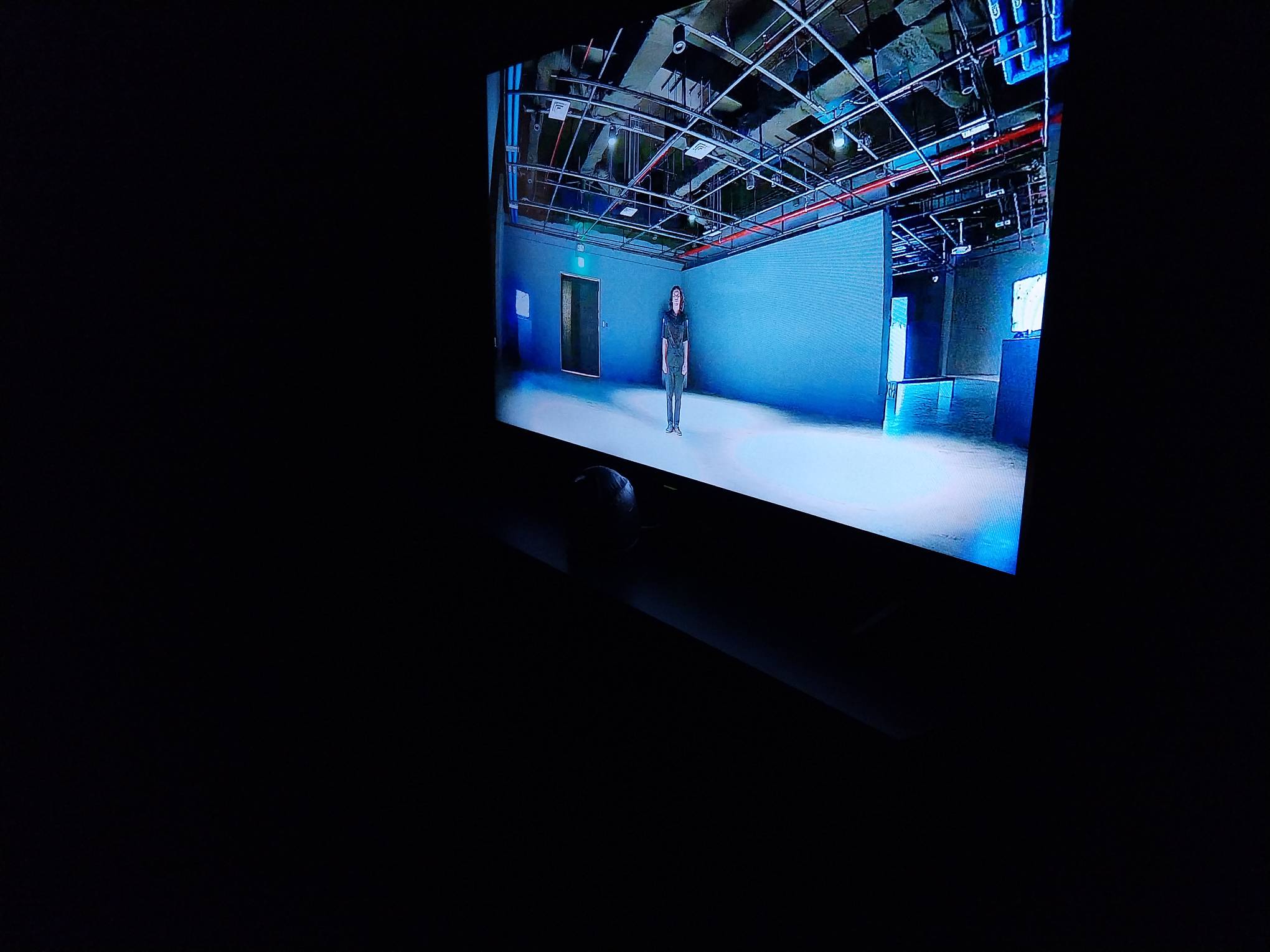
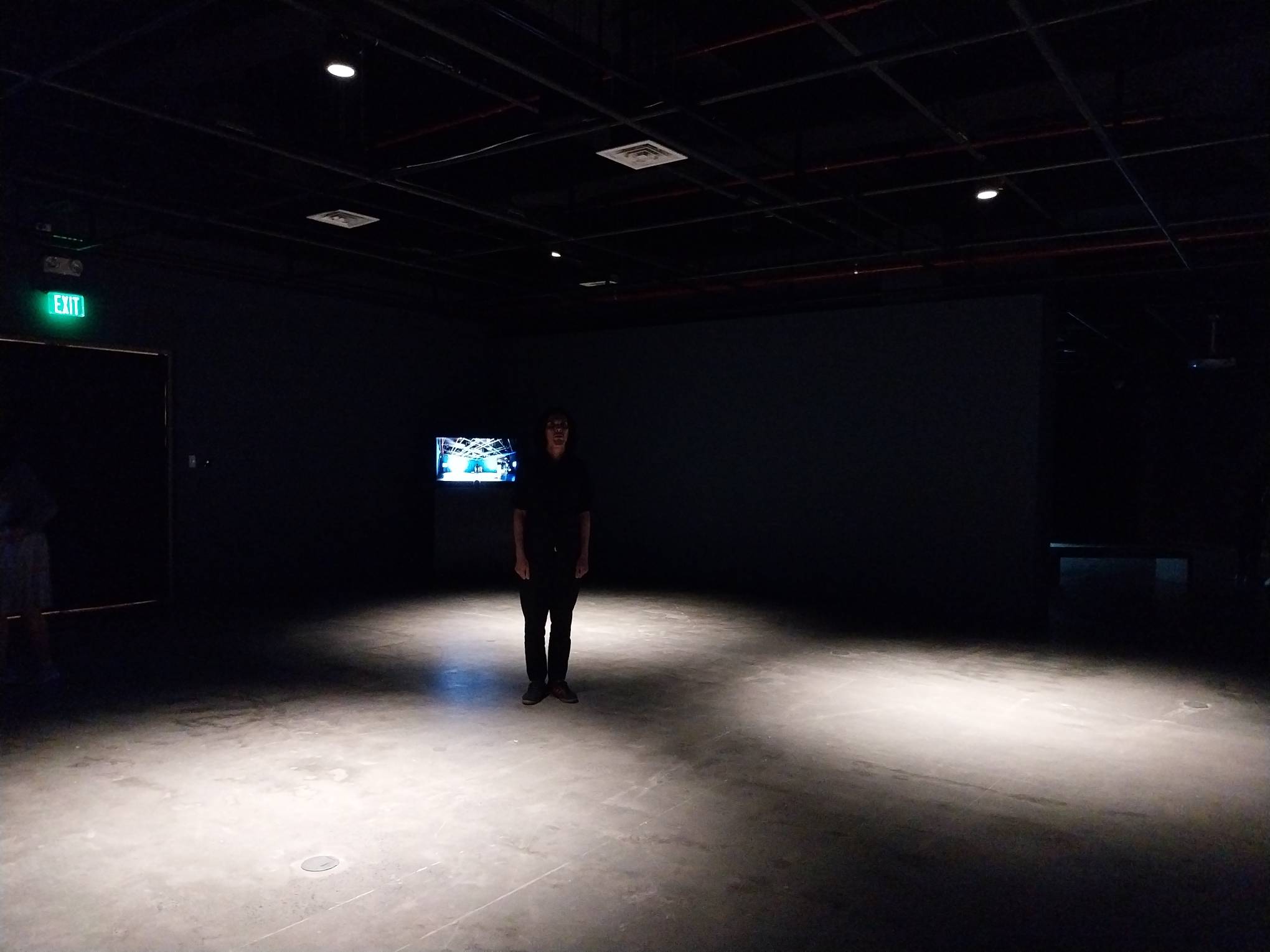
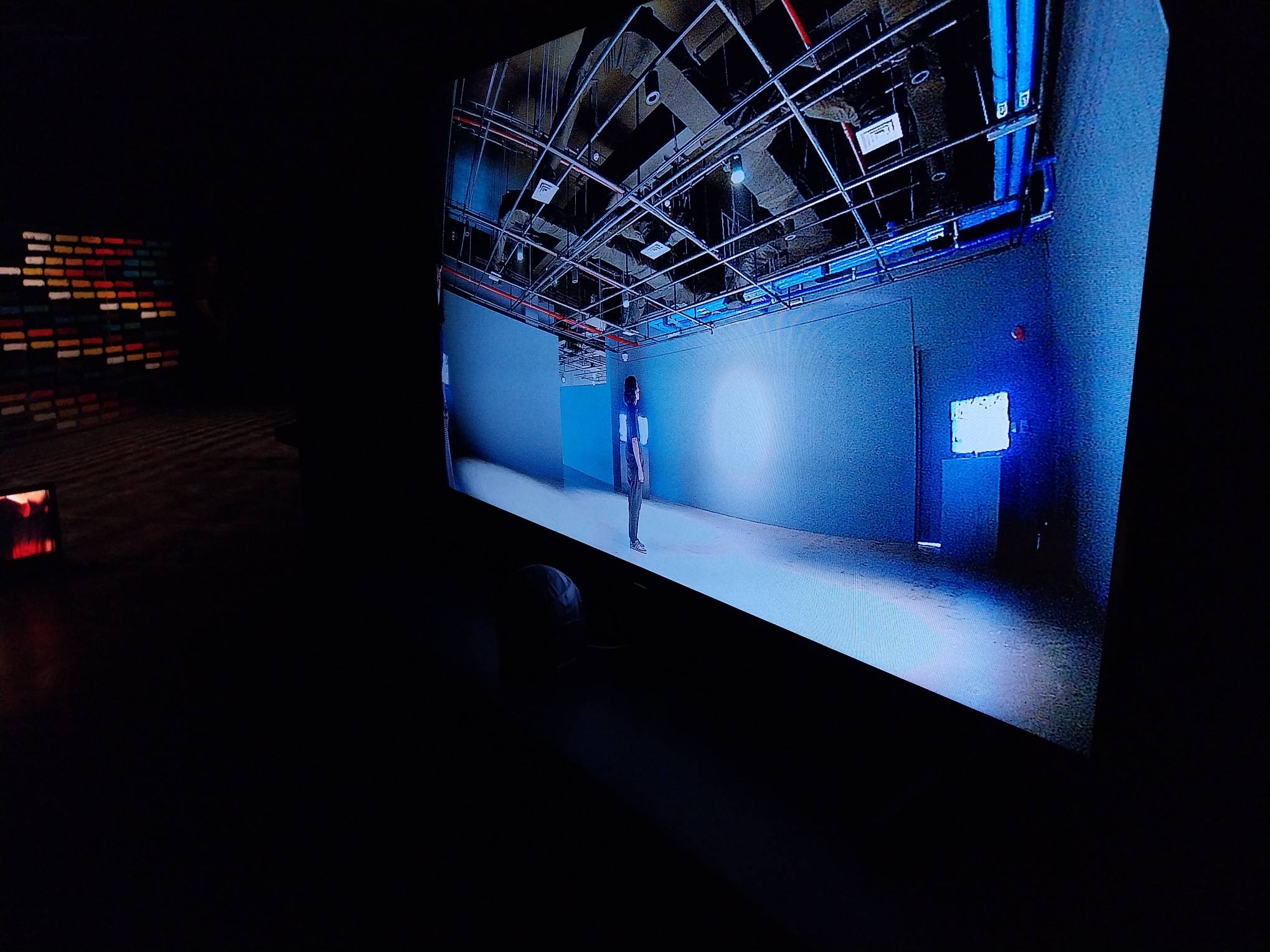
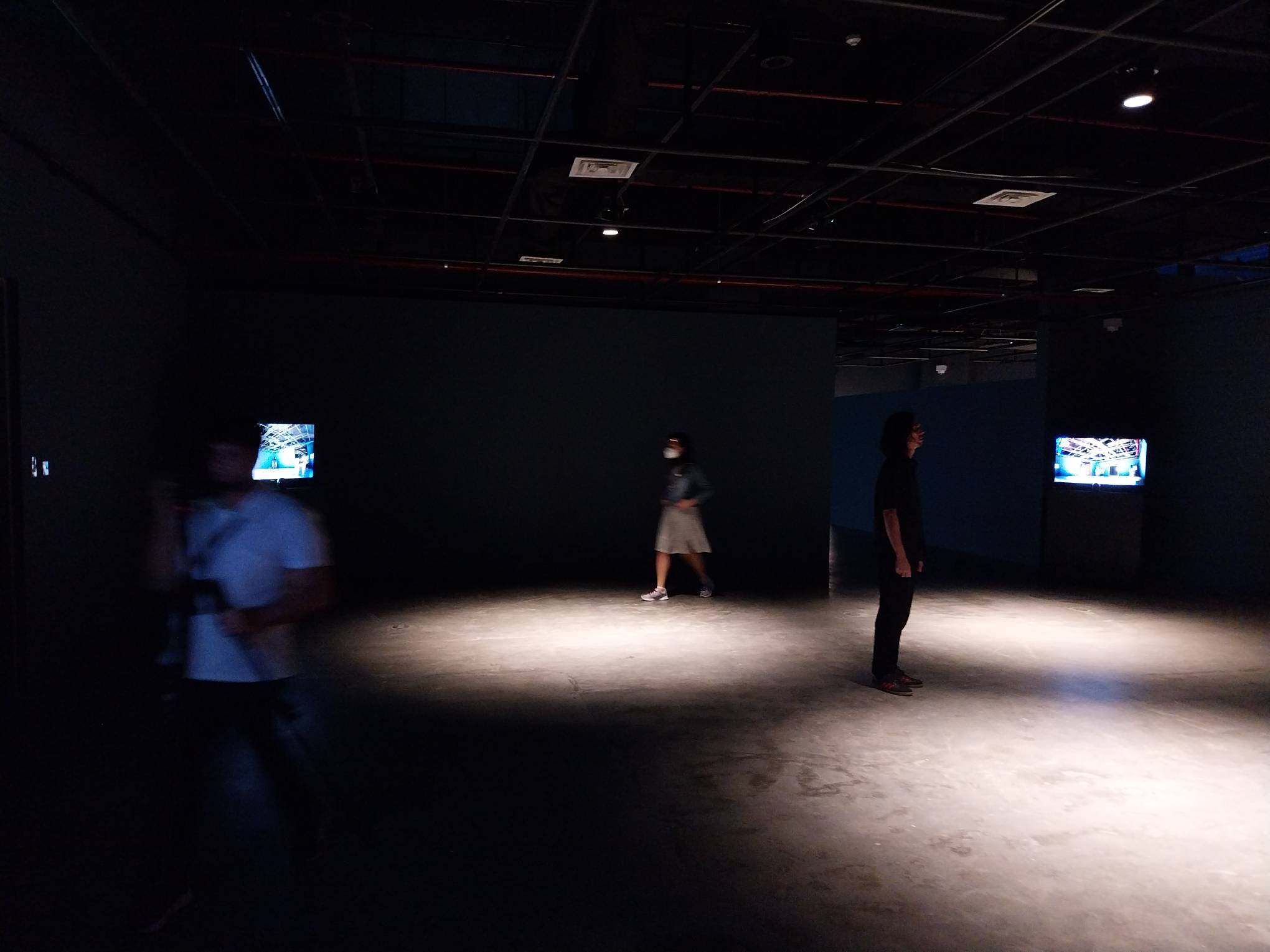
It’s an interesting project that he has performed over the decades. He noted that, as he repeats the project in different contexts, the work gets harder to perform. His body aging, his knees wobbly and weaker than before, it reflects a perspective on how art can change over time with the artist performing them.
Spinning in Circles
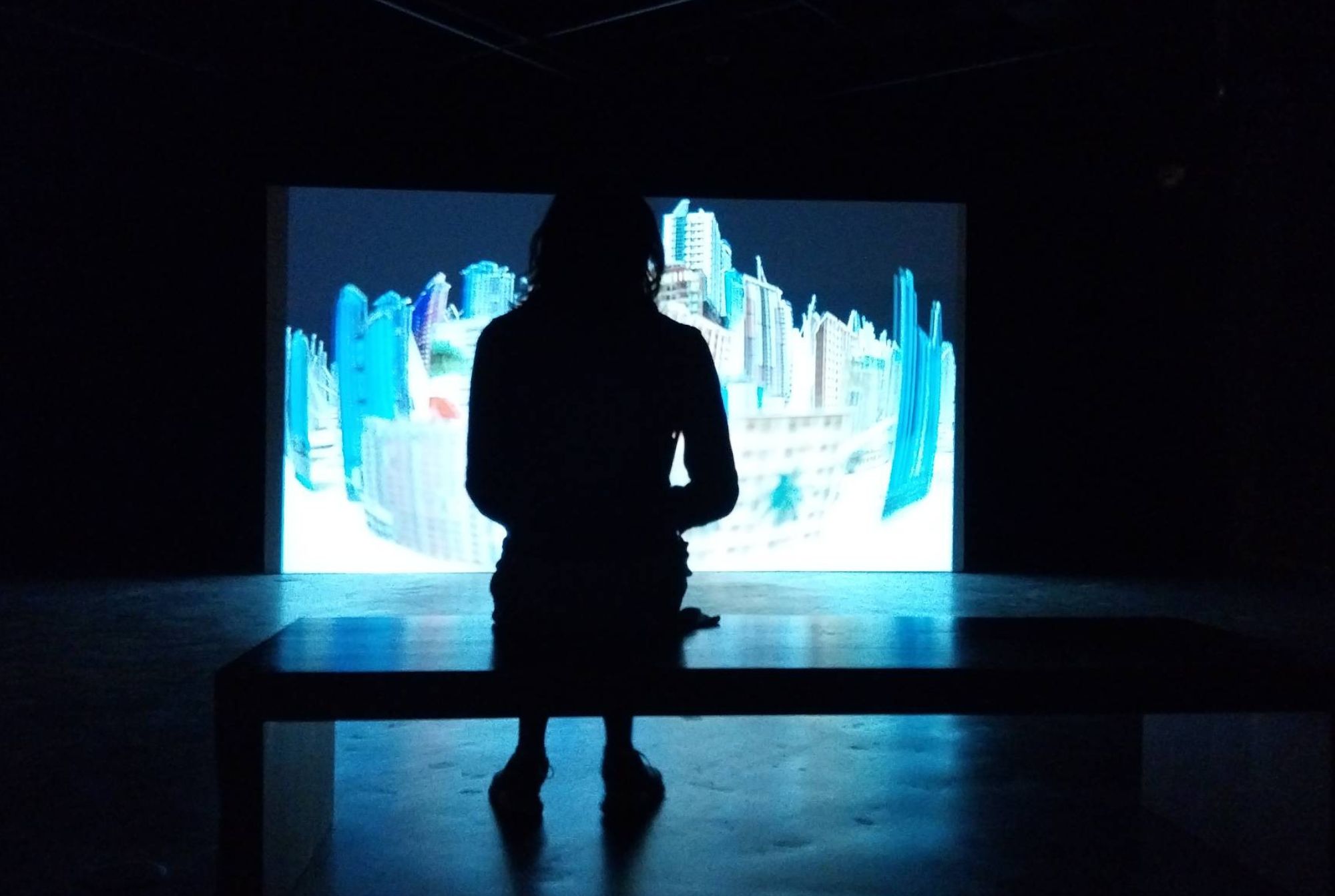
Meanwhile, Mark Salvatus’ “Model City” constructs “a rotating city” with brochures of condominiums the artist collected. The rotating city is then broadcast live on a screen in another room, while marketing taglines blare from the speakers. Visitors can look at the rotating city and find themselves in the video frame of the project looking like giants.
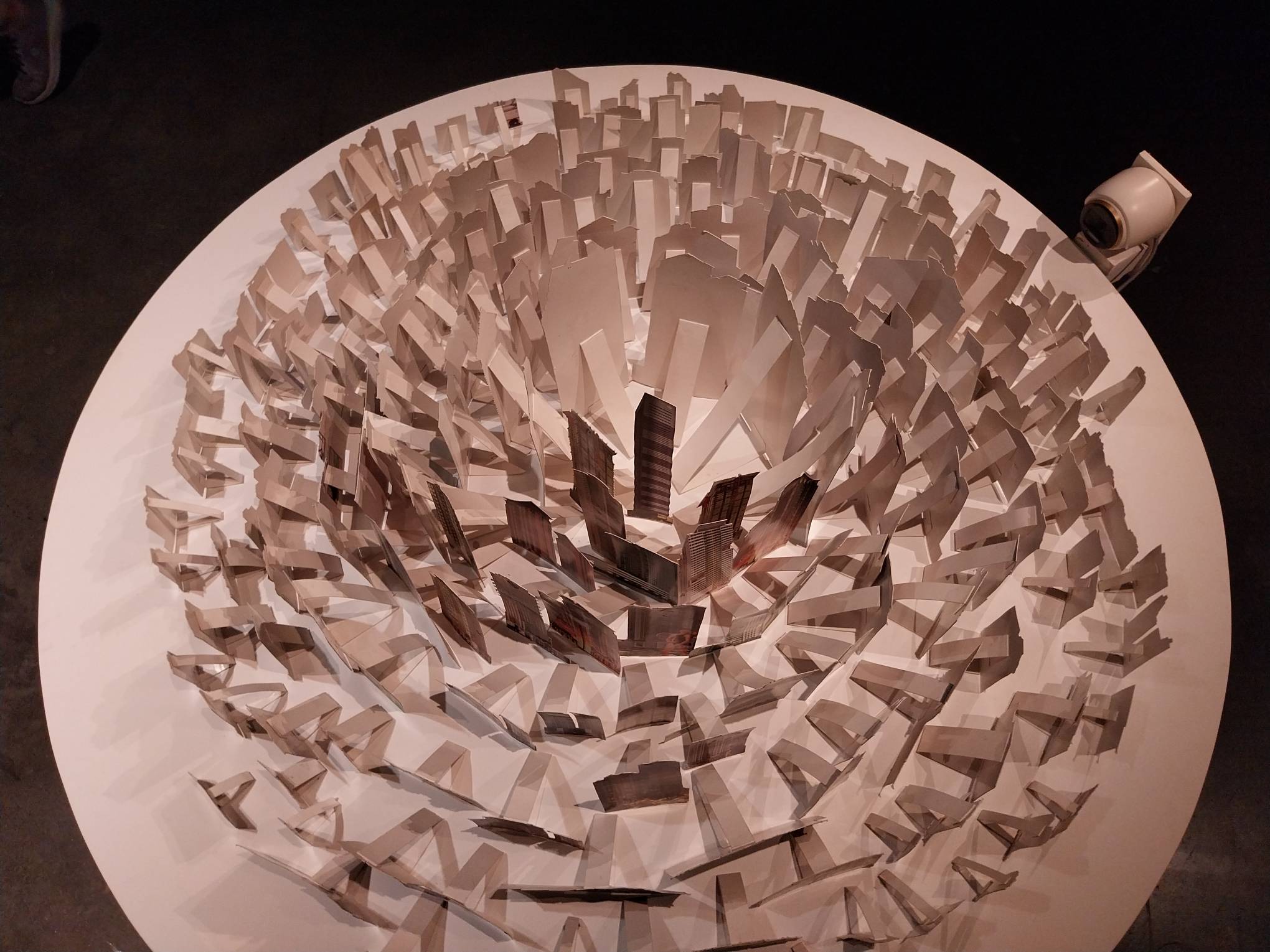
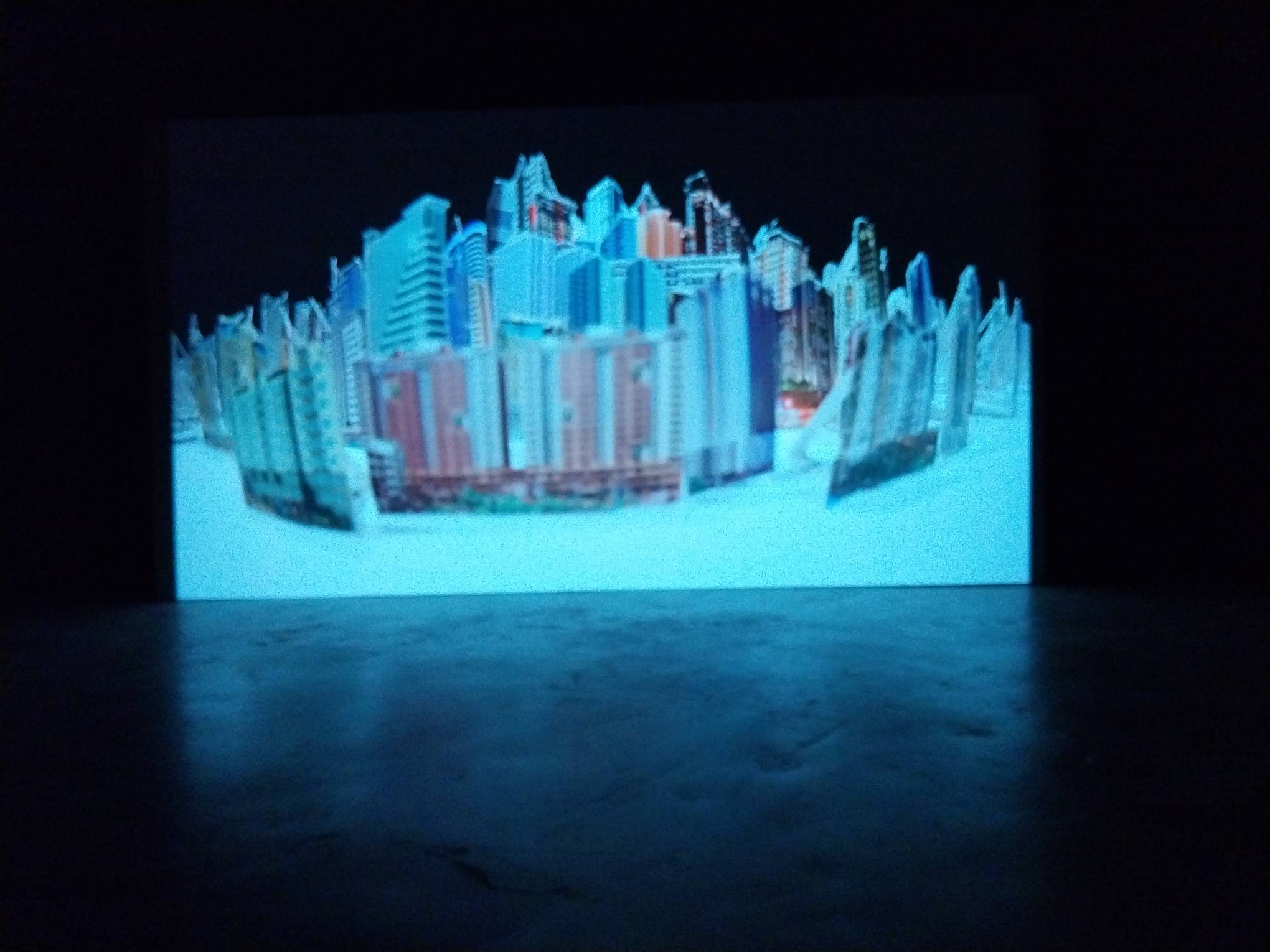
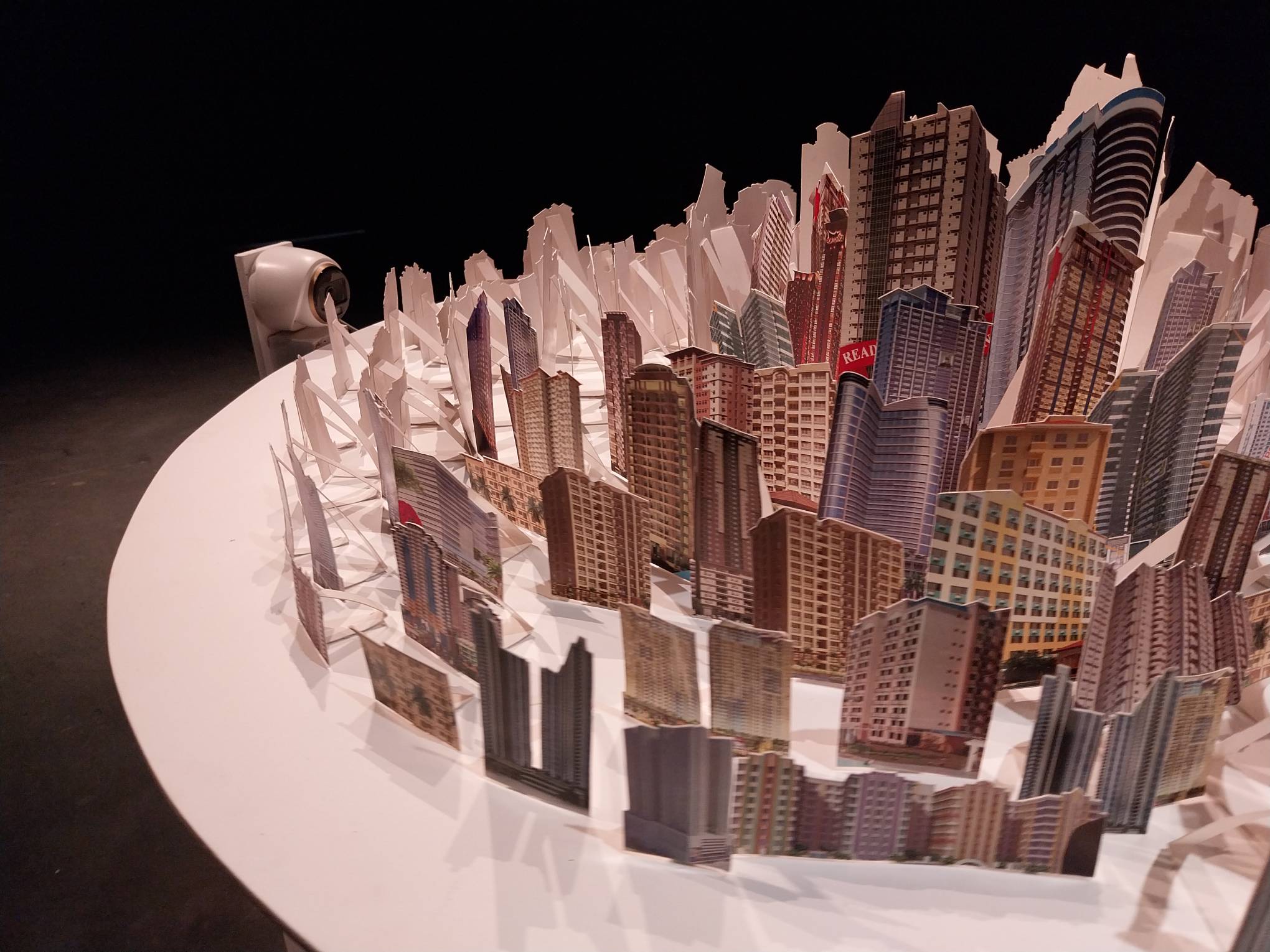
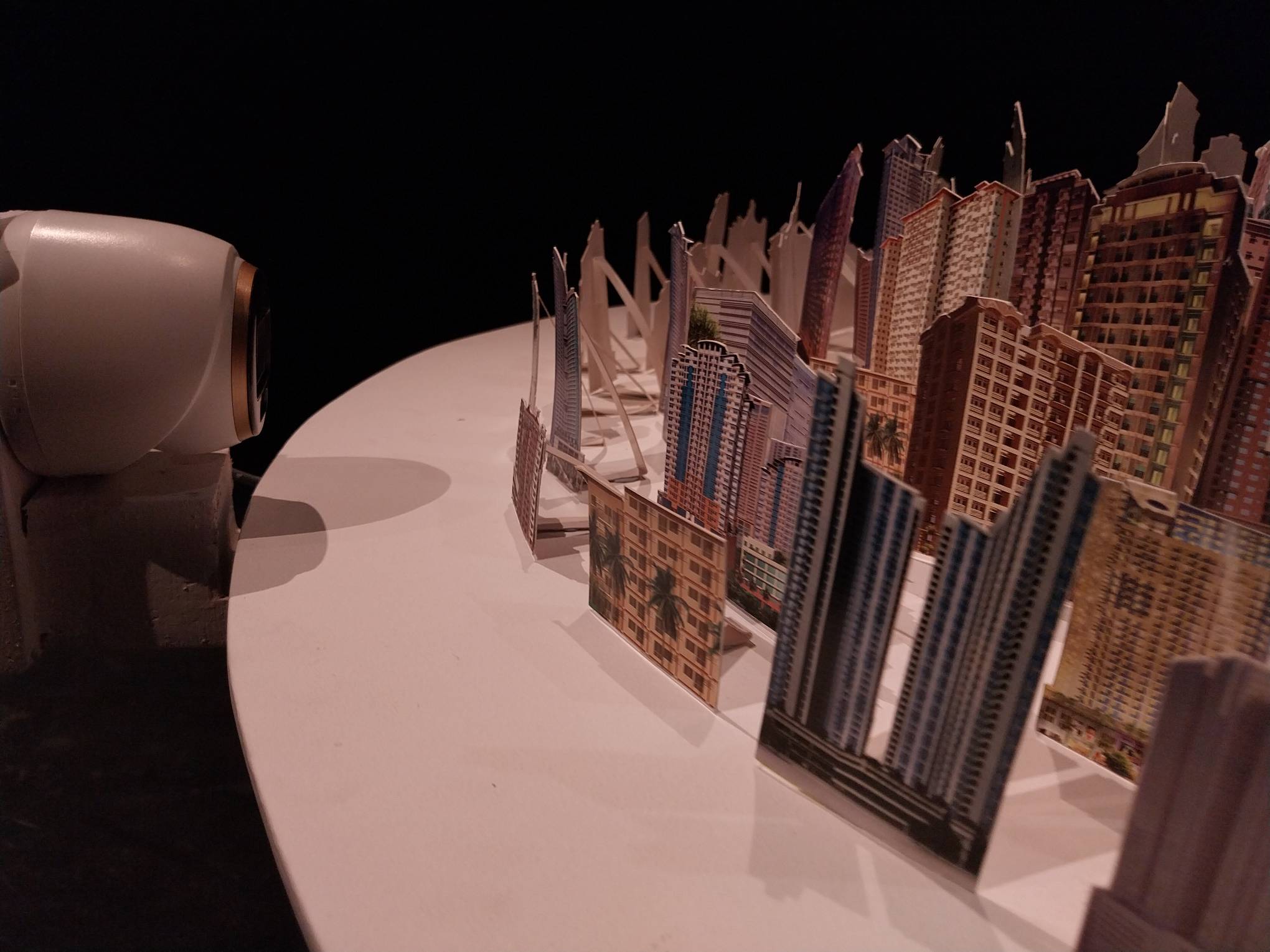
The project reflects on the constant expansion and growth of capitalist interests in our cities. The constant rotation of the buildings, the taglines barked out like they have meaning, forces visitors to see the saturation of the city from a new perspective.
It doesn’t have a negative view of capitalism, necessarily. It just invites us to contemplate the life many of us live.
Different Angles of Living
The other two video for Transitions and Continuity works invite less participation from the audience. Rather, they engineer new ways of looking into the medium of video-based art as a whole, challenging us with new angles on presenting and creating art.
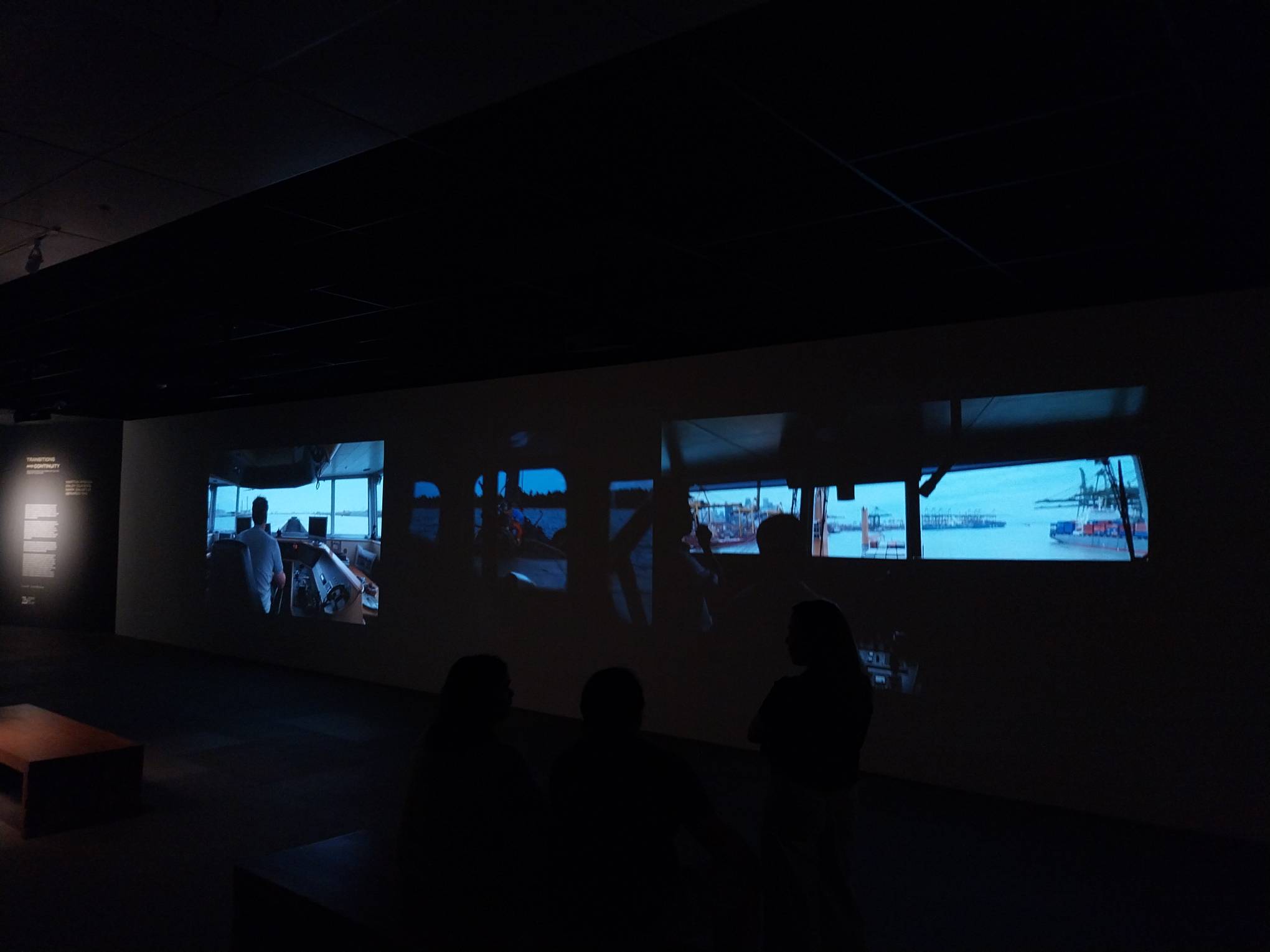
Martha Atienza’s “Gilubong ang Akon Pusod sa Dagat (My Navel is Buried in the Sea)” projects itself on three different screens to tell the same story of fishermen and seafarers and their relationship with the sea. It works akin to a split-screen, the images complementing each other as Atienza shows us the mundanity of being out at sea in different angles and personas.
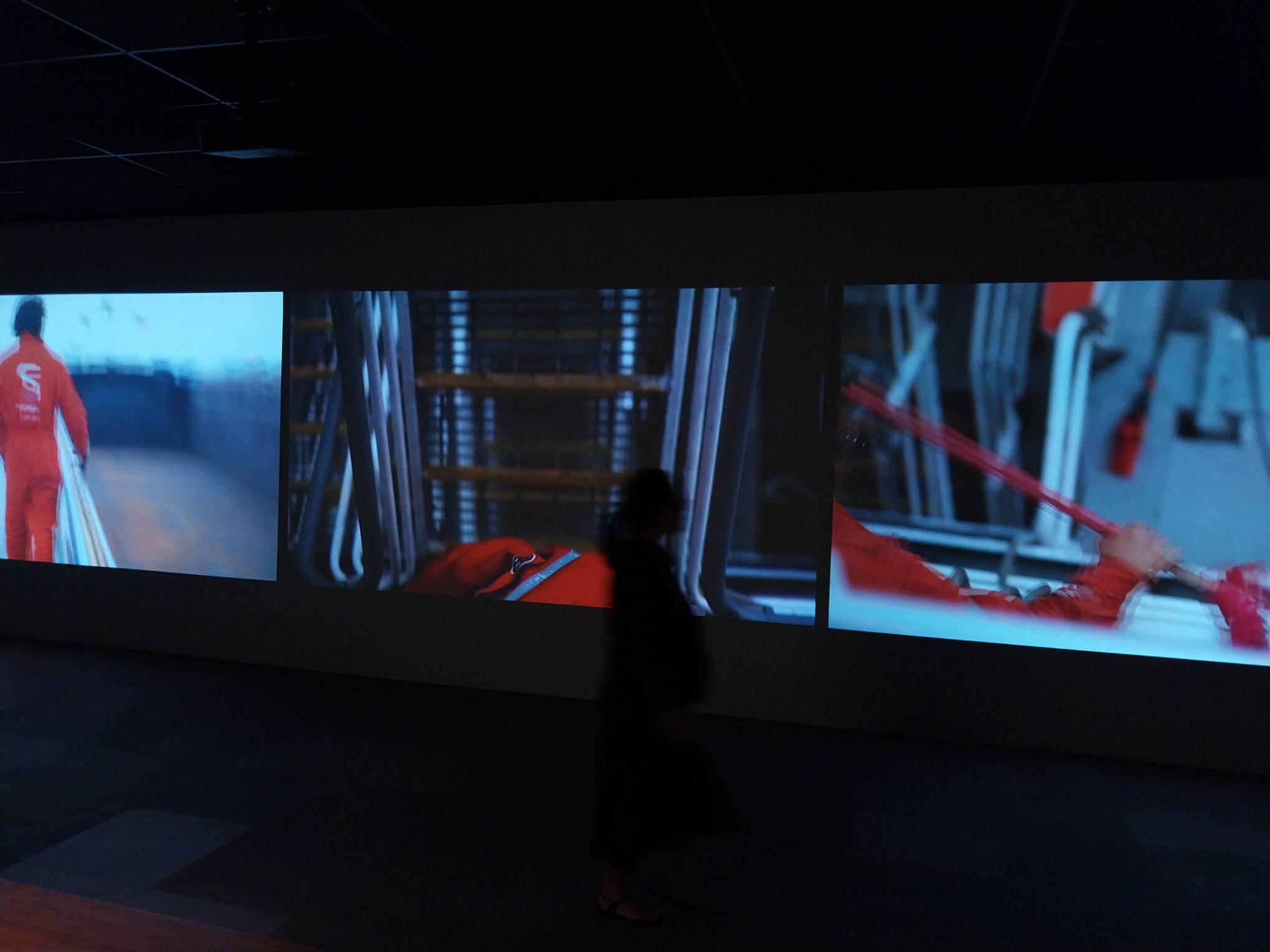
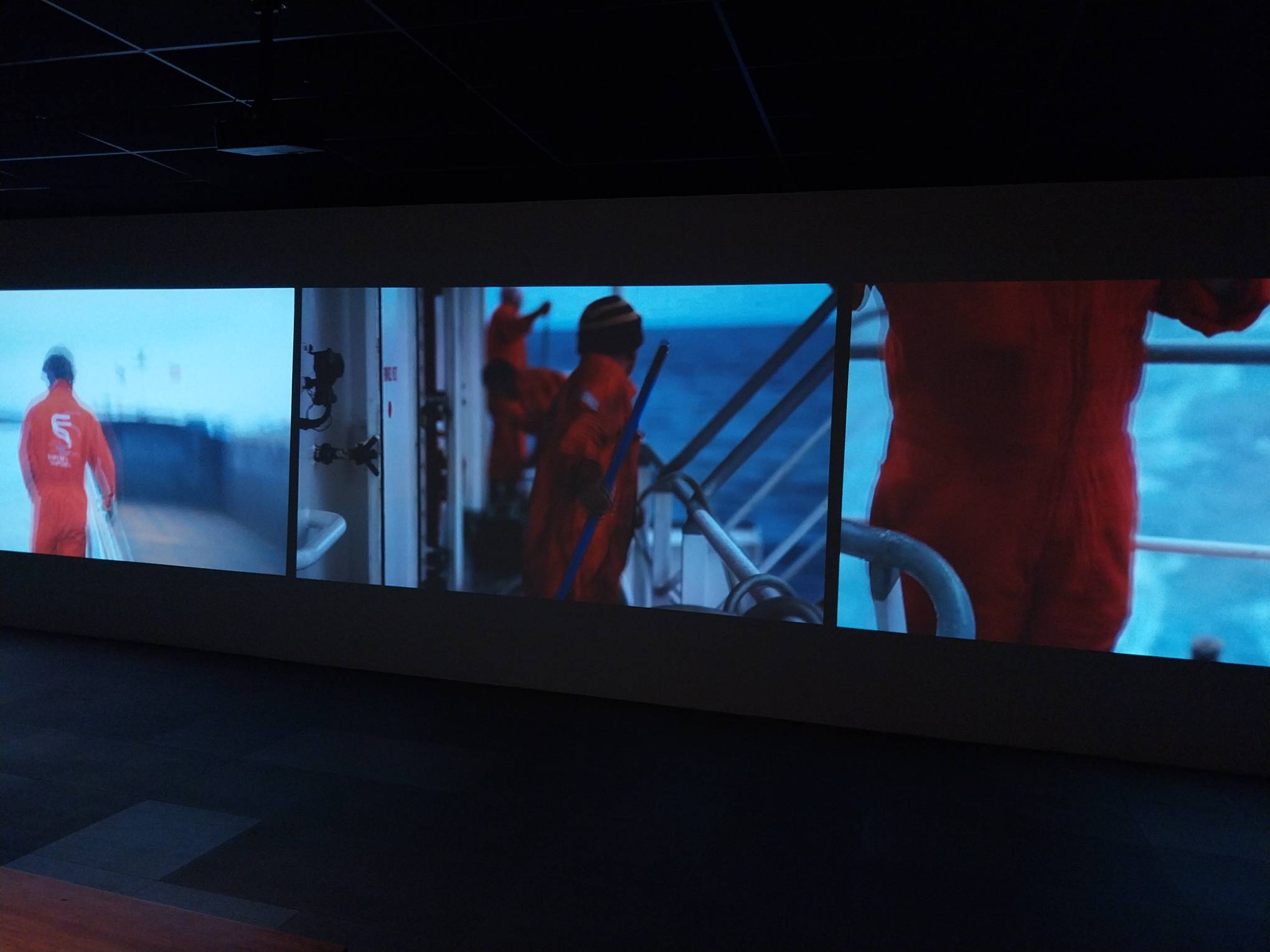
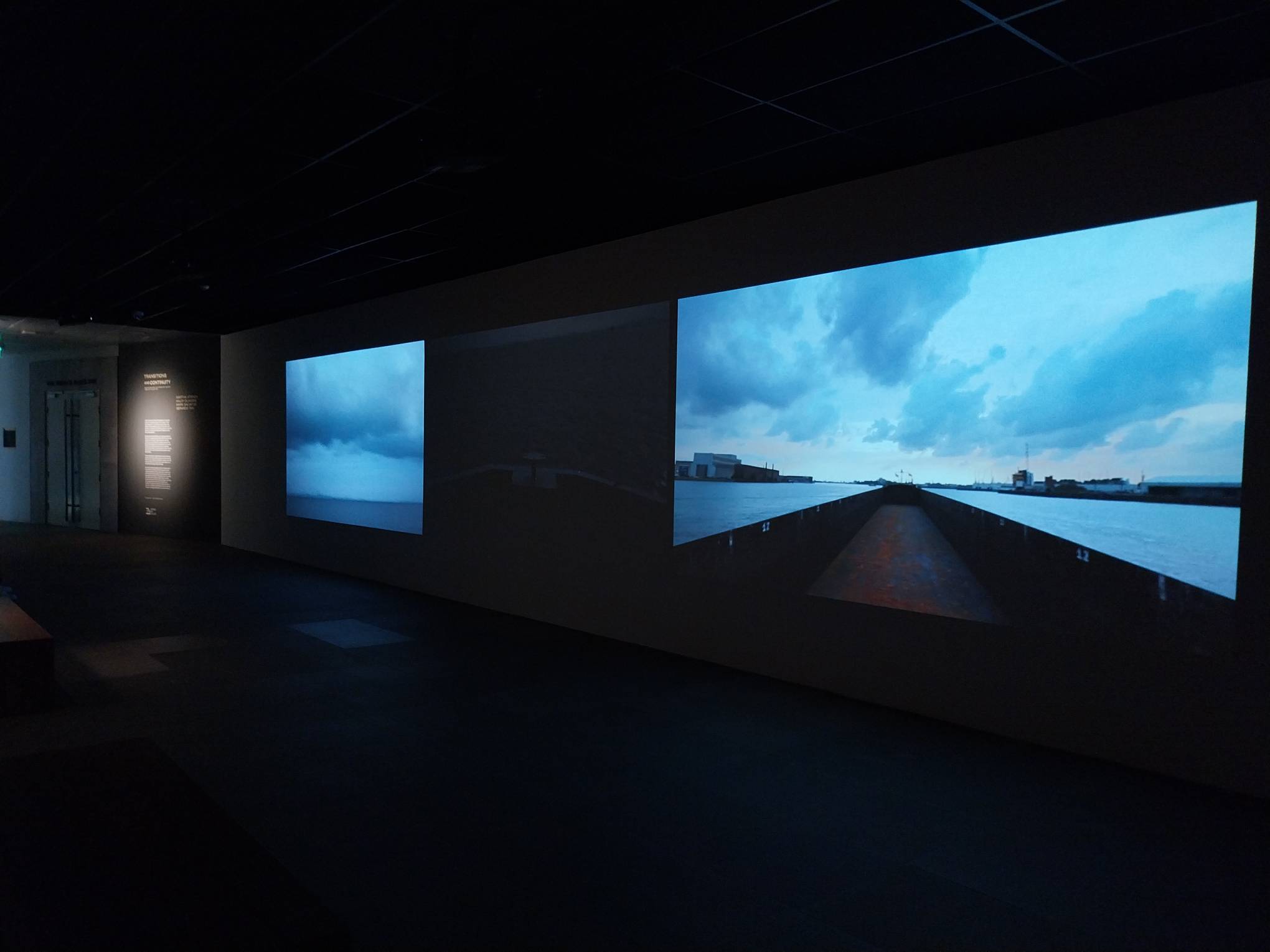
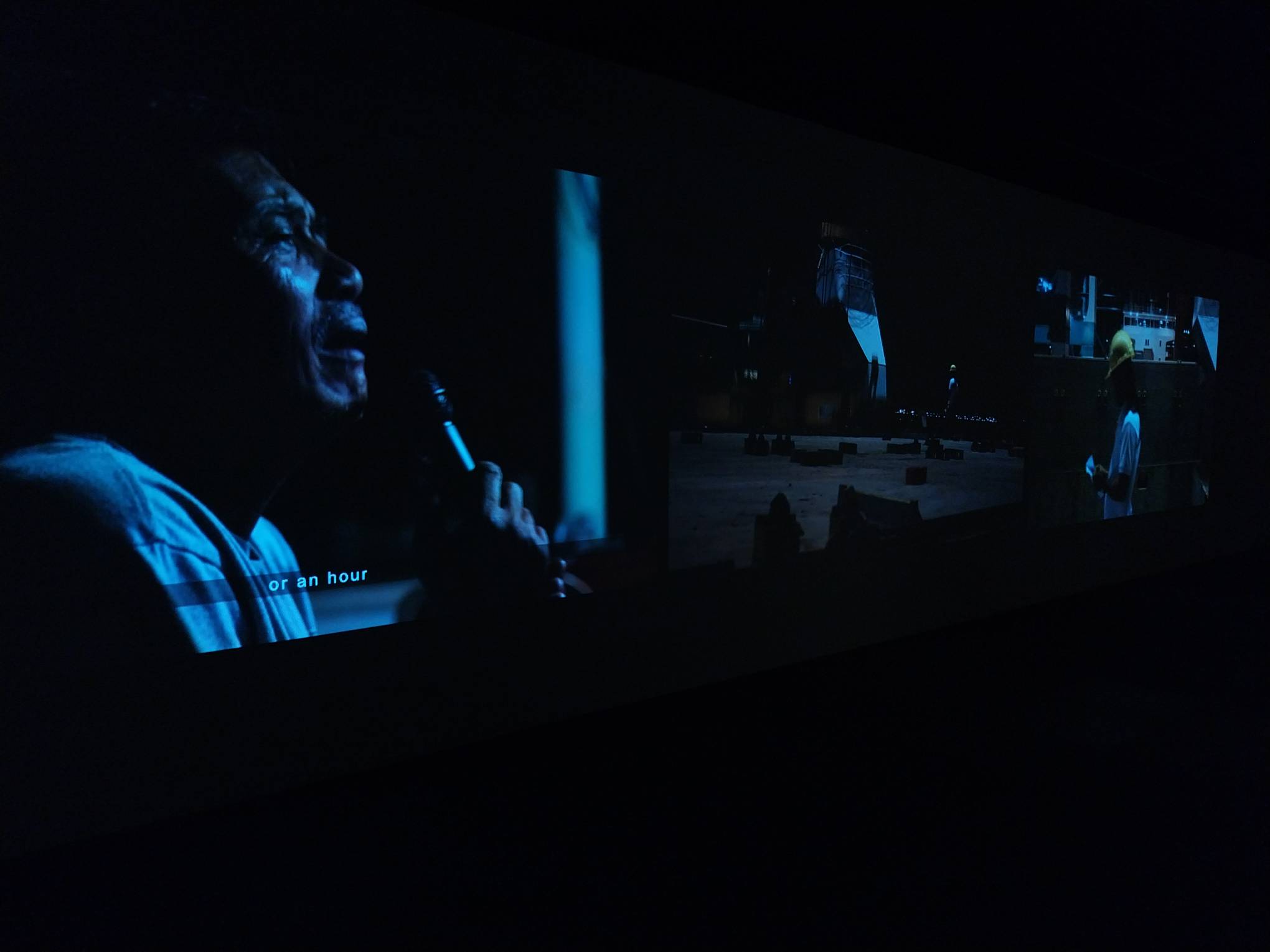
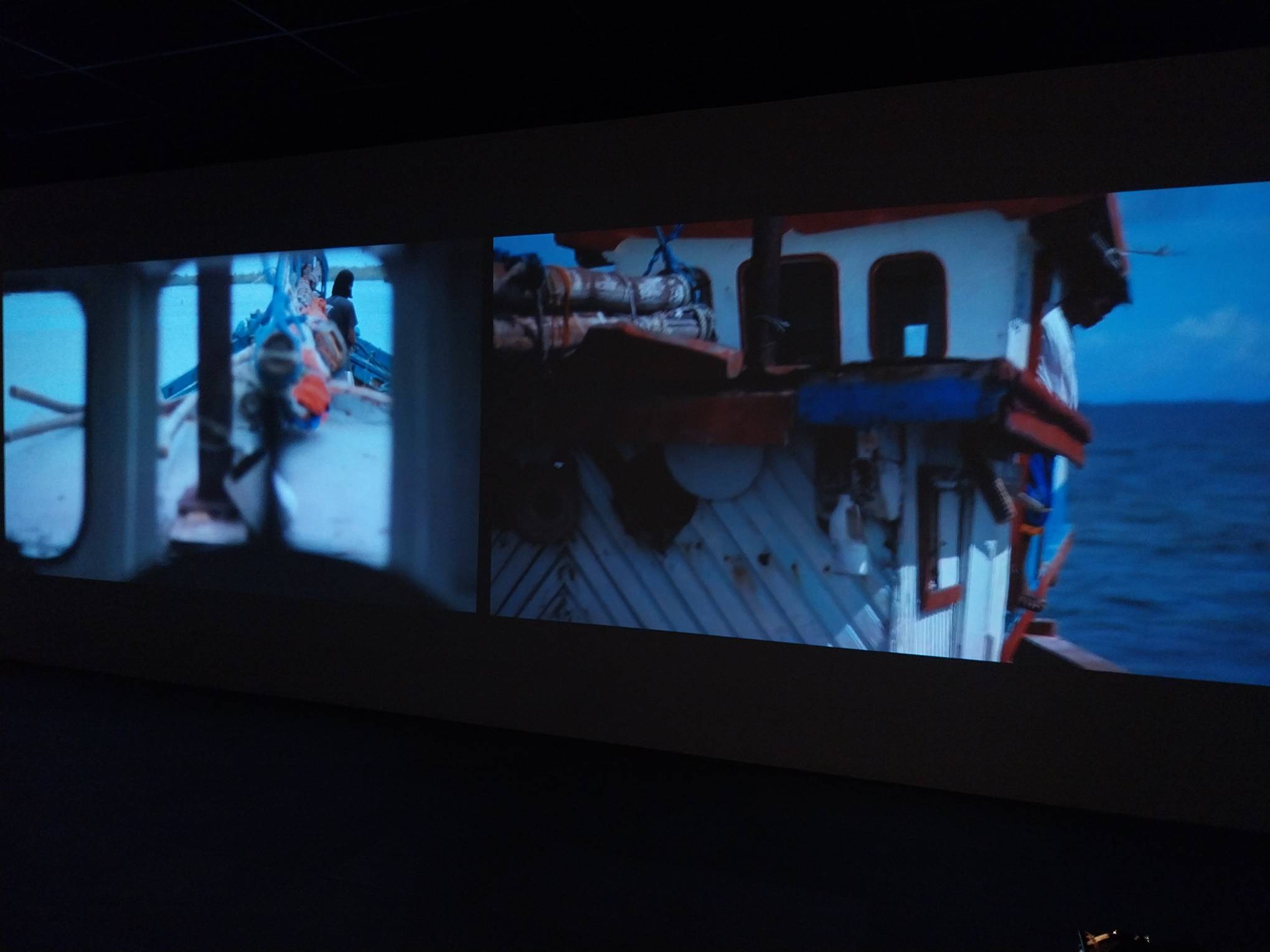
“It portrays the Philippines’ relationship with water in diverse situations and perspectives simultaneously, capturing rhythms and emotions across land and sea exploring themes of necessity, opportunity, community, and isolation,” the exhibit write-up said.
The work is immersive. Once you get into the beat of things and the way the images are projected, it feels genuinely moving as it travels from one action to the next, watching these seafarers doing their jobs with competency and aplomb.
Offbeat Creations
Finally, Gerardo Tan’s “Mirror Painting” shows a mirror filled with lines painted in different colors. The artist scattered three different CRT television screens on the floor. The TVs show the artist using the camera to paint each of the lines in the mirror.
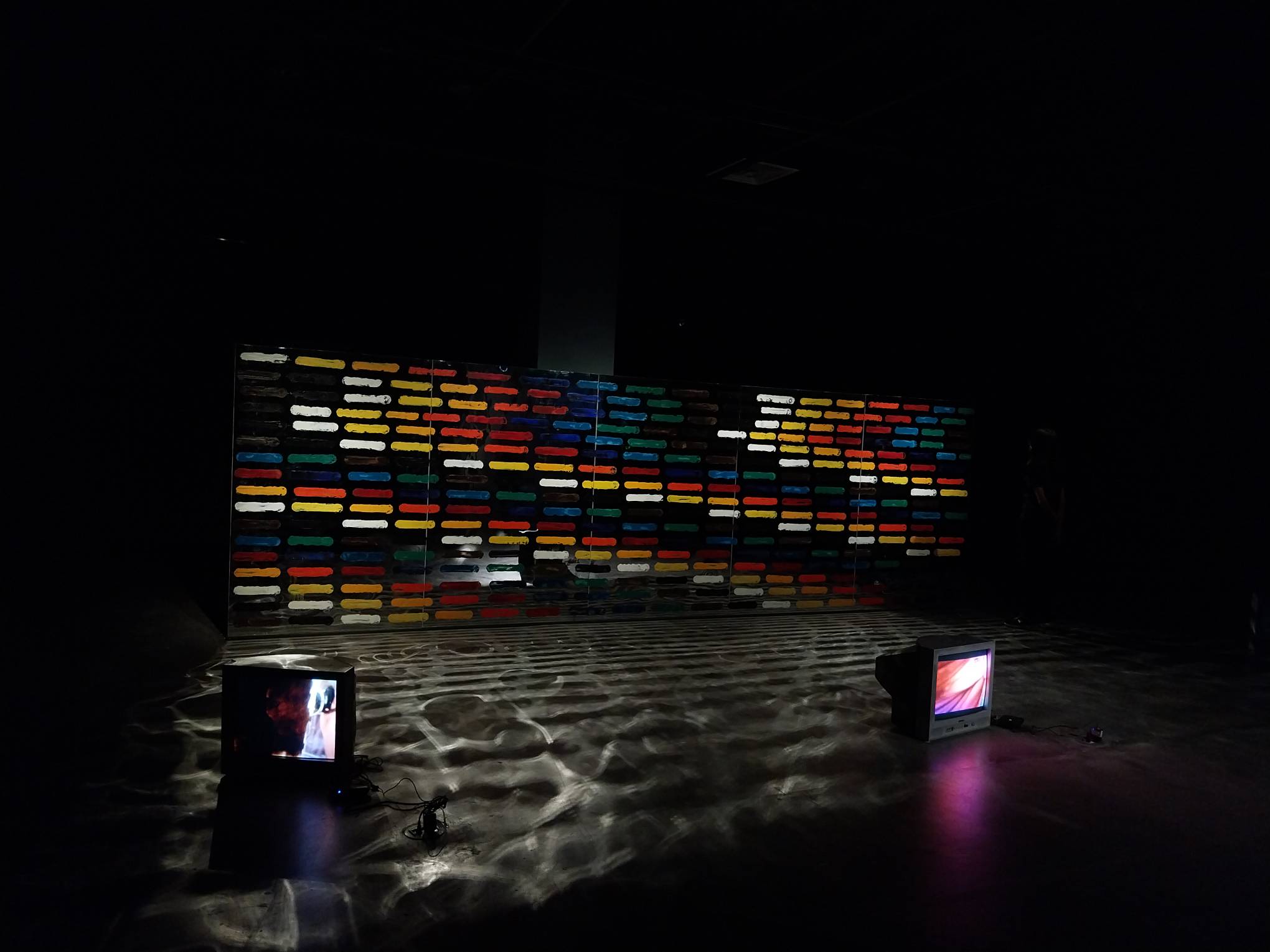
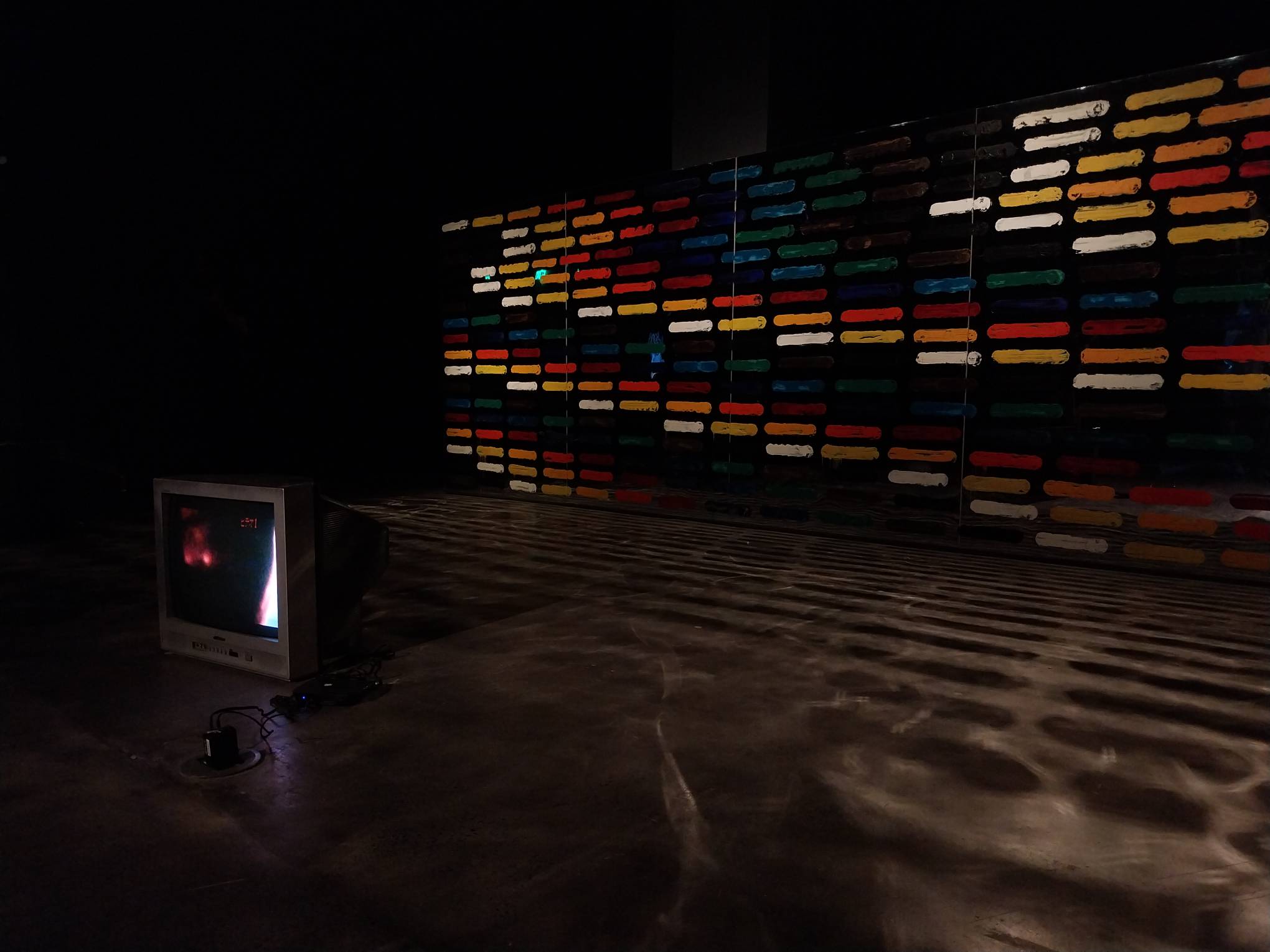
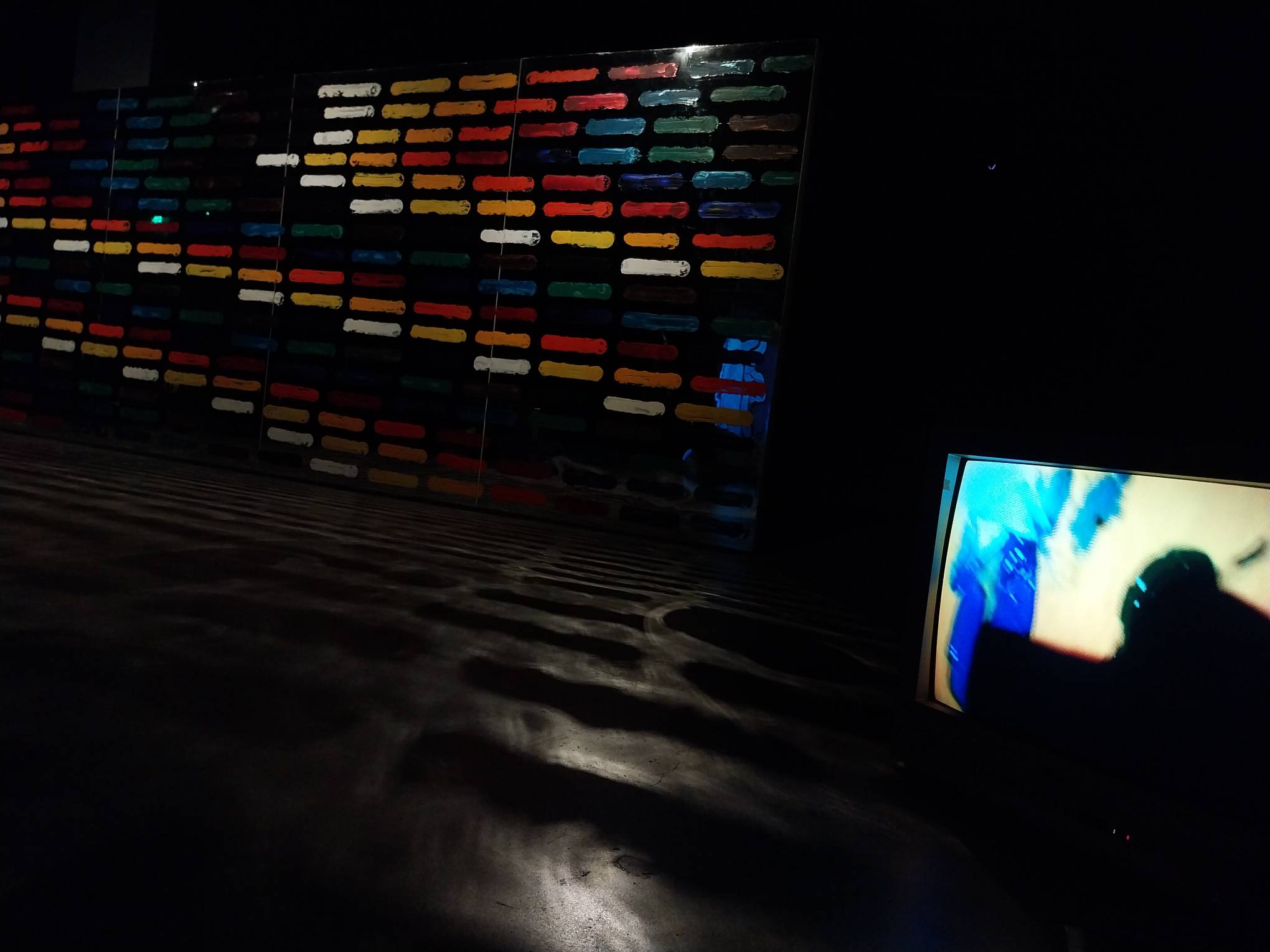
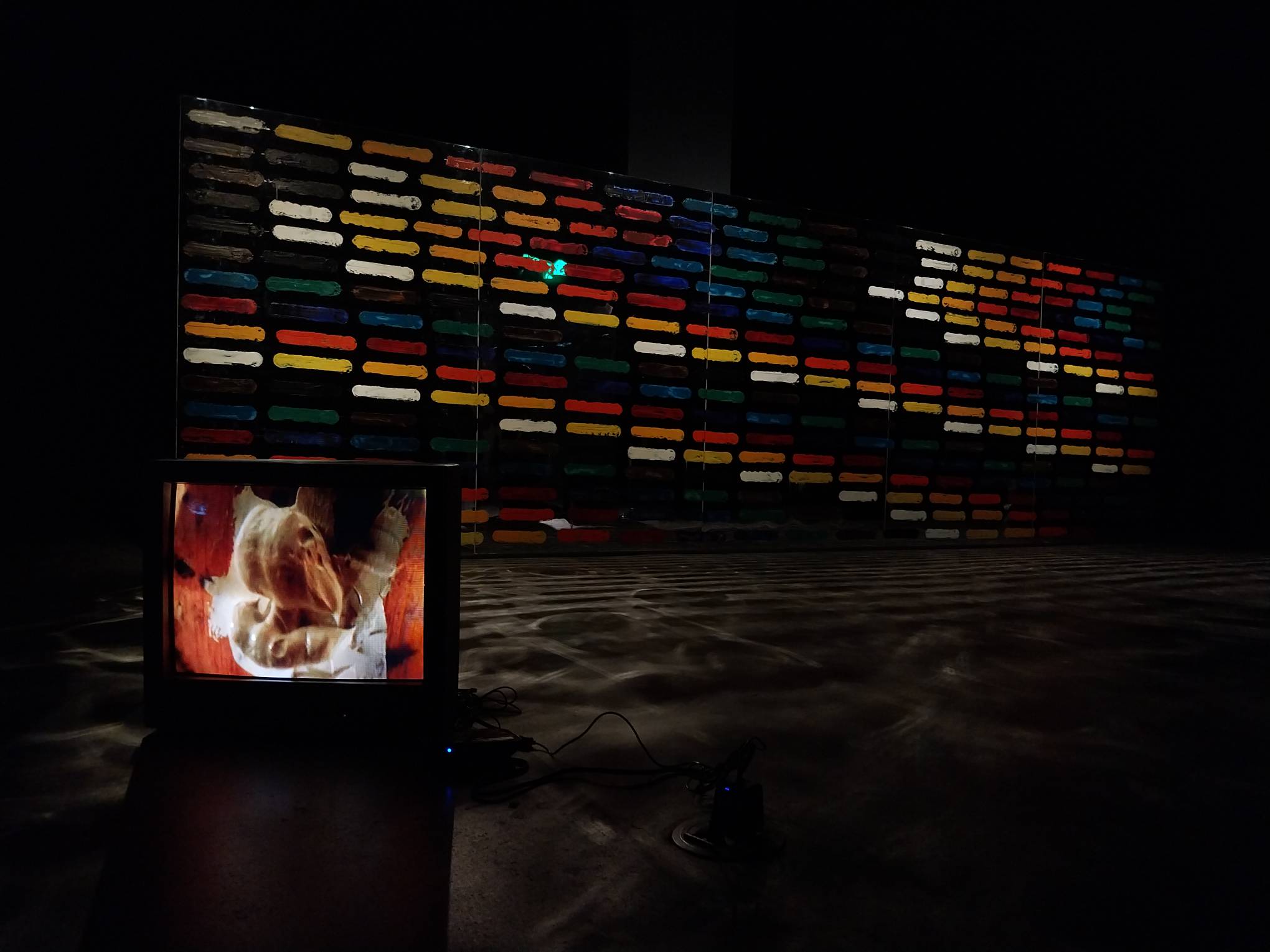
“[The work] explores painting as a mimetic technique,” the exhibit write-up said. “… [It] emphasizes the act of application over form. By creating a feedback loop, Tan pondered the essence of painting through a contemporary lens, emphasizing the process and its representation.”
The Message of Video Art
If “the medium is the message,” then this exhibit pushes the message that one reveals different truths of humanity depending on what medium is used. One sees it in the stillness of Olavides’ work despite the live feed or the singular story Atienza tells with three screens.
A core emotionality about the human condition exists in each work. These ideas appear because of the medium of video, of how it shows these moving images in a way that a painting never could. Motion adds a new dimension to art that betrays the lack of permanence in our daily lives.
Transitions and Continuity, above all else, affirms the importance of video art as a relevant medium. It shows how one bends video’s form and functionality beyond the excursions of professional storytelling, that the medium itself can tell stories that other forms cannot.
Related reading: Martha Atienza’s Sub-aquatic Procession Wins in Art Basel
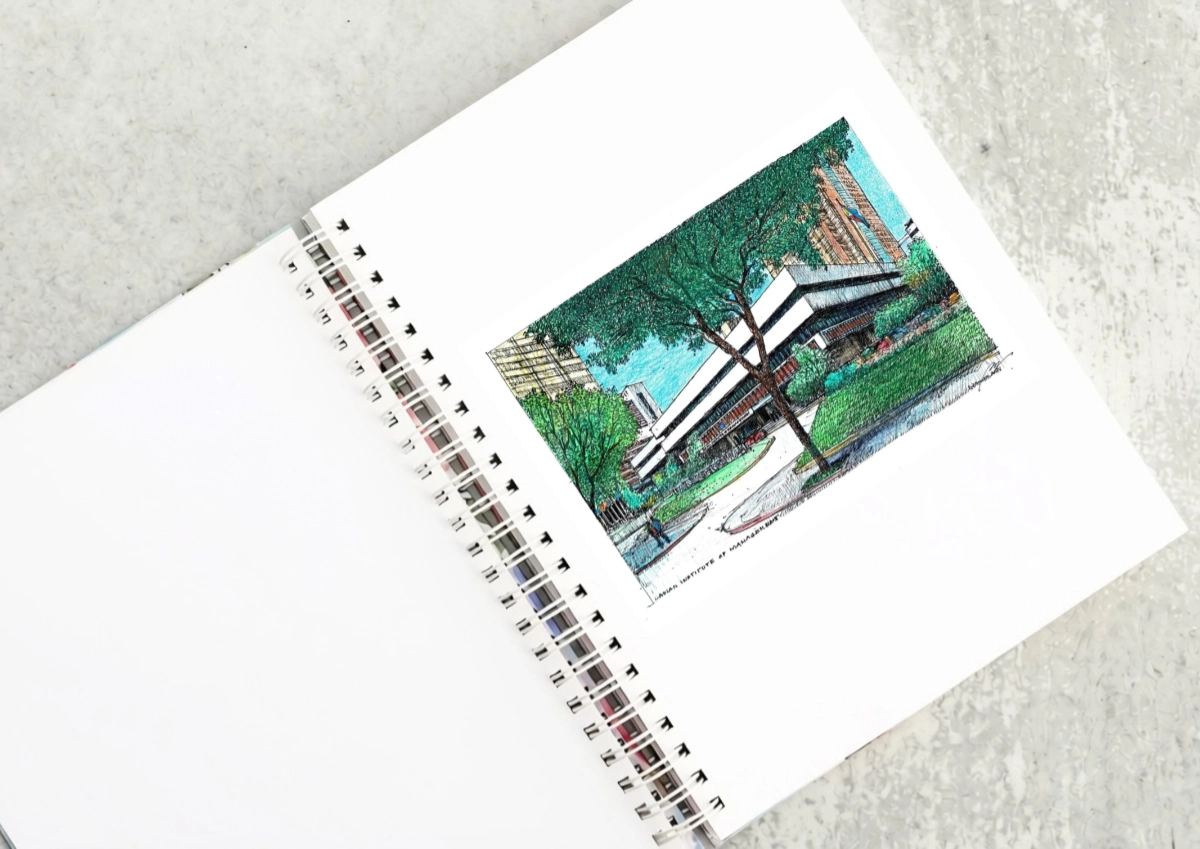
A Filipino Interpretation of Modernist Architecture Unlike the rest of Makati today, the northern end of Paseo de Roxas in Makati is anchored by a low complex rather than a tall skyscraper. This is the elegant Asian Institute of Management, designed by architect Gabriel Formoso and completed in 1971. In my opinion, the building is […]
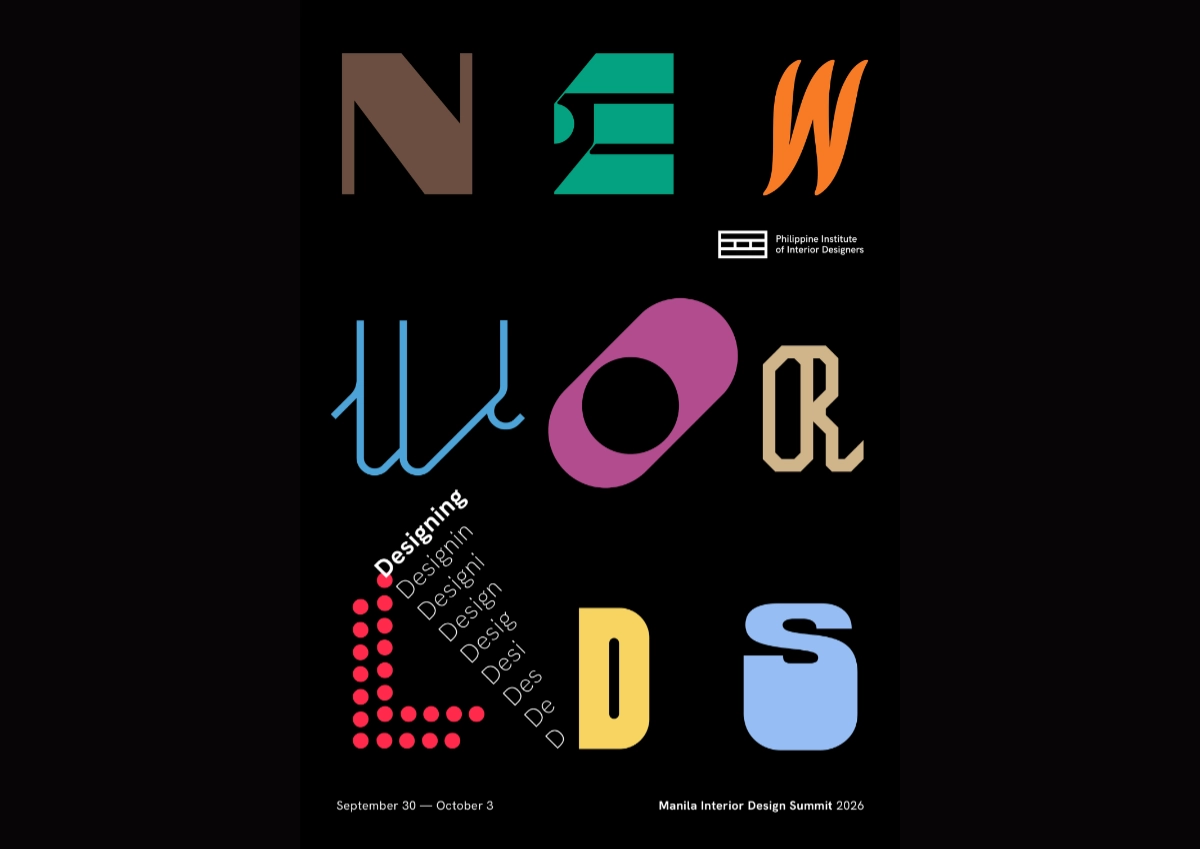
“Thailand has claimed urban creativity and livability. Singapore has institutional design leadership. Indonesia is emerging as a design hub. Vietnam is moving into design innovation. And the Philippines? Its position is not weak. It is simply unclaimed.” For IDr. Cecil Ravelas, National President of the Philippine Institute of Interior Designers (PIID), the challenge is not […]
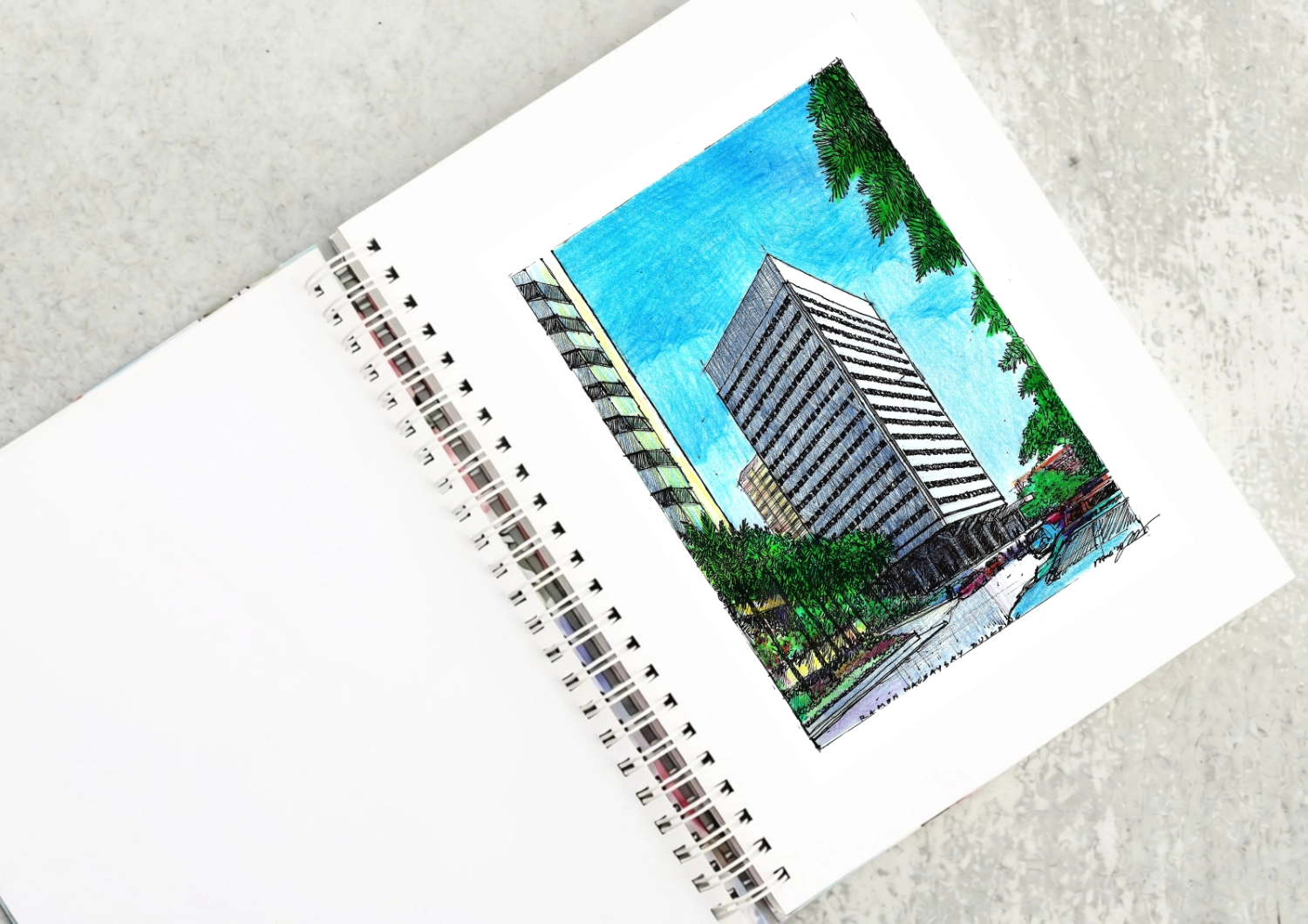
The Ramon Magsaysay Center as a Modernist Landmark Driving down Roxas boulevard from Rizal Park, what will catch your eye is the most elegant modernist structure in the country, the Ramon Magsaysay Center. Most established Filipino architects put it in their top ten lists of favorite buildings. It was designed by Alfredo J. Luz, who […]

Rinna Soriano’s favorite part of her work is sanding. At her workbench, she stays focused, following the grain, adjusting to changes in its direction. Narra, she has learned, can have interlocking grain. A piece of mango once proved particularly difficult until a worker explained that she had reached the point where a branch once grew […]
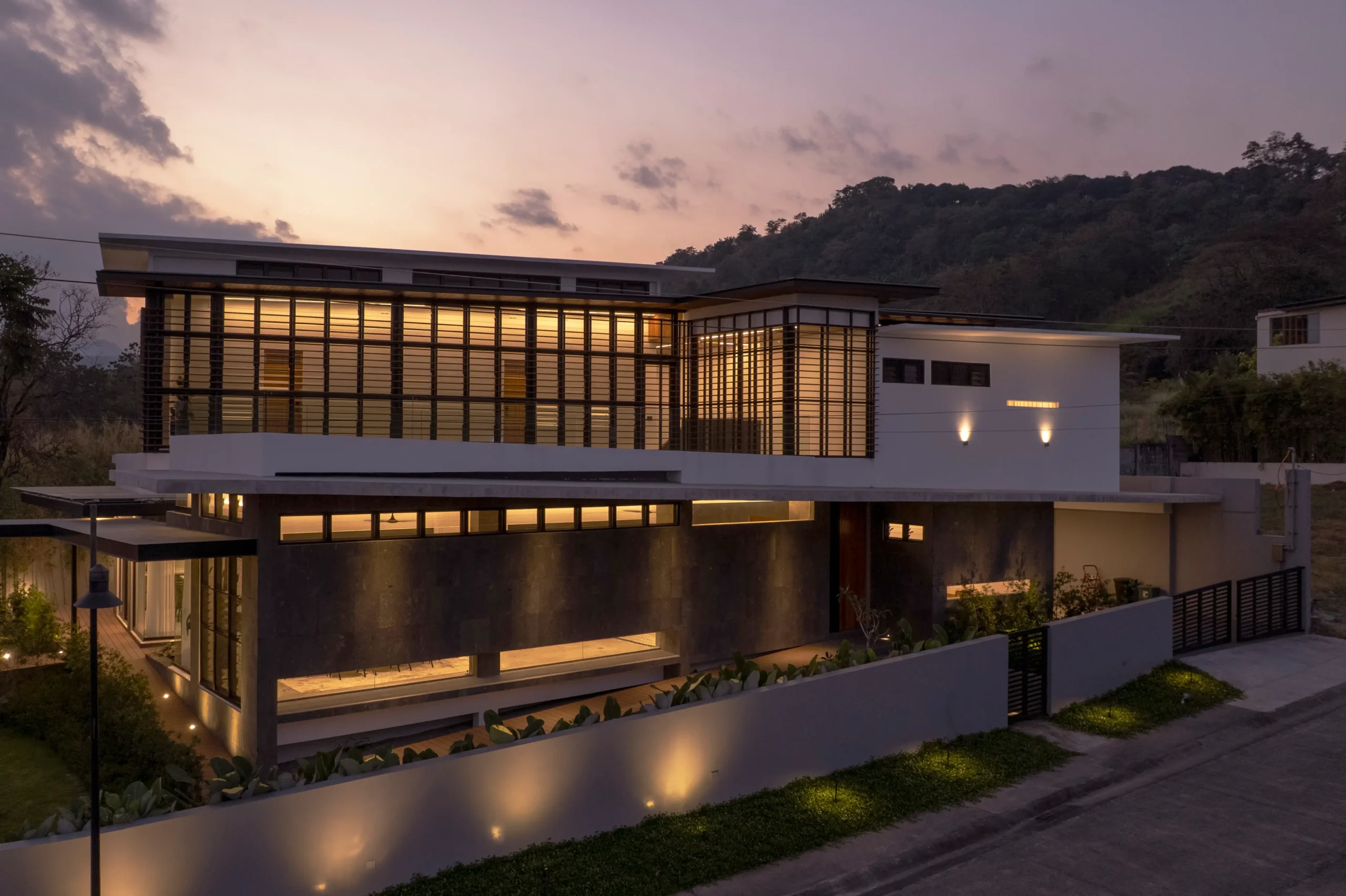
Filipino architectureArchitectureThe art and science of designing and constructing buildings, structures, and spaces that are functional, safe, and aesthetically pleasing. It encompasses the planning, design, materials, and techniques used to createGo to Architecture Glossary has long been associated with indigenous materials and vernacular design strategies, from bamboo and timber construction to jalousie windows, generous spaces, […]
Read the issues.

Collect the volumes.

Recommended Video
Tap to Unmute
Unmute
0:00
0:00