Bigkis is the act of binding. In Tagalog, the word can refer to something used to bind or encircle, as well as a bundle formed by tying several separate elements together. Figuratively, it can also mean a bond, union, or unity. The meanings move from the physical act of joining things together to the connection […]
‘an open hand, a cosmos’ Portrays Ever-evolving Microscopic Life in Art



an open hand, a cosmos uses delicate fibers, beadwork, and embroidery to artistically recreate cellular life. Katherine Nuñez connects the materials to the representation, a way of ruminating the links of everyone in nature.
Exhibiting at Gravity Art Space until September 14, Nuñez wanted to reimagine our perspective on living beings. Microscopic organisms function in nature, existing as maintenance workers, important in different processes, whether parasitic or symbiotic. It exists every day, unseen, by the naked eye.
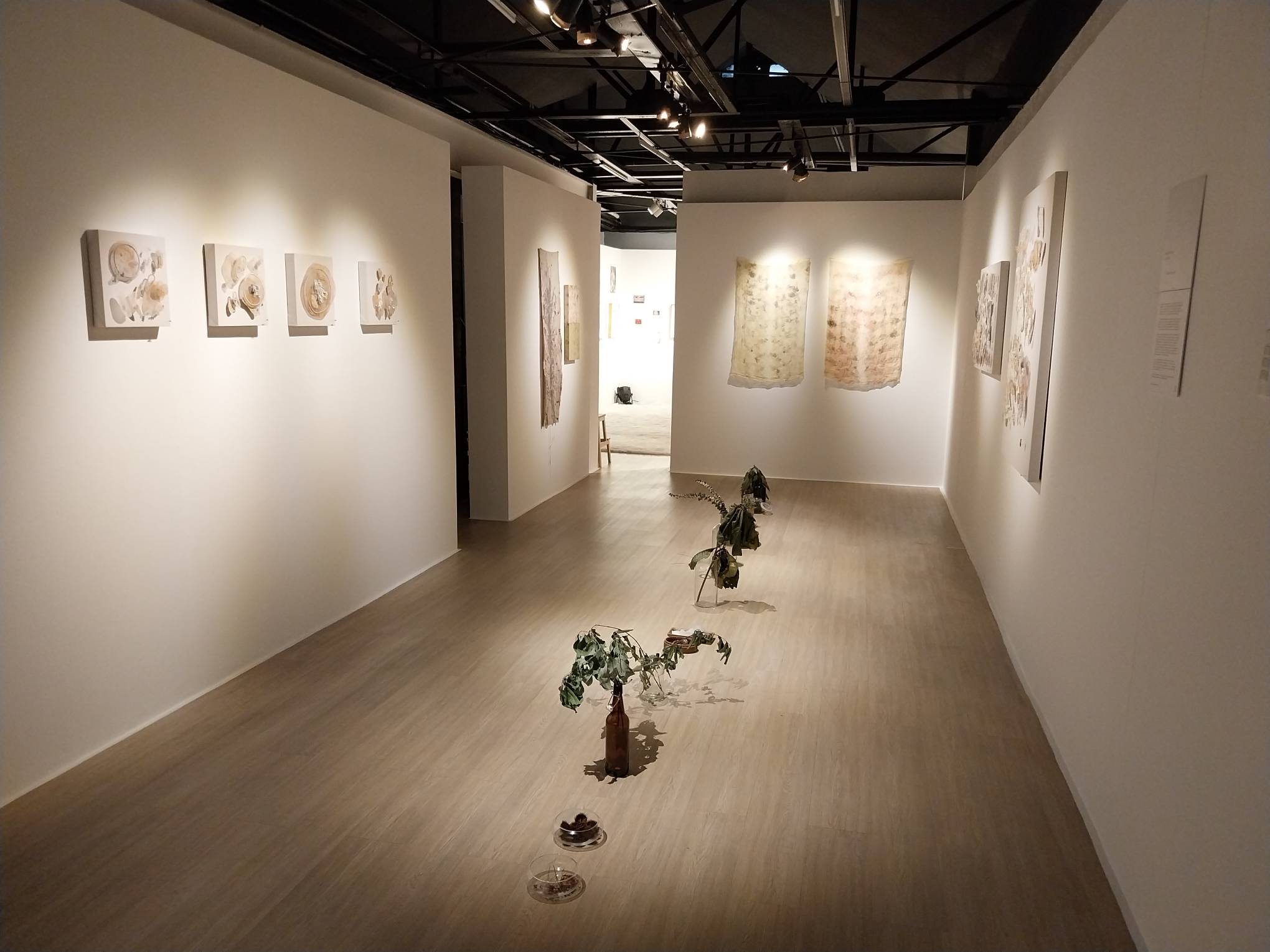
“[…] we are taken by open hand as witnesses to a certain fluency in expressing maintenance and care,” Frankie Lalunio wrote for the exhibit. “Mending, pruning, feeding, maintaining, resting, fermenting, exhaling…rendered microscopic, invisible against the great narratives that run what has become our everyday life.”
Line of Macroscopic Plant Life
an open hand, a cosmos greets viewers with a line of plants, fruits, and minerals running across the space. From rock salt to the skin of fruits like rambutan to small, colorful flowers, it illustrates the way nature coexists with our daily practices and rituals.
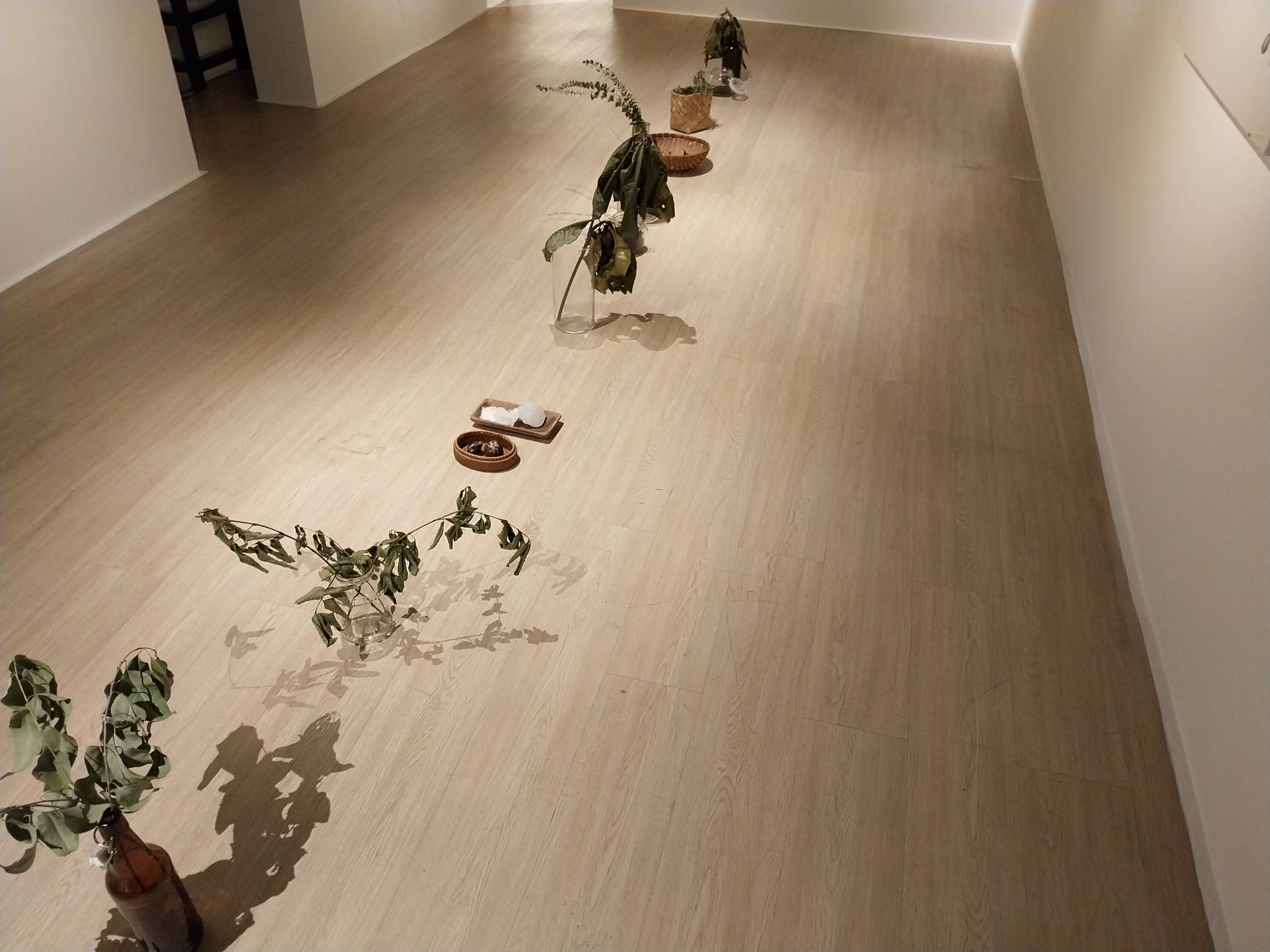
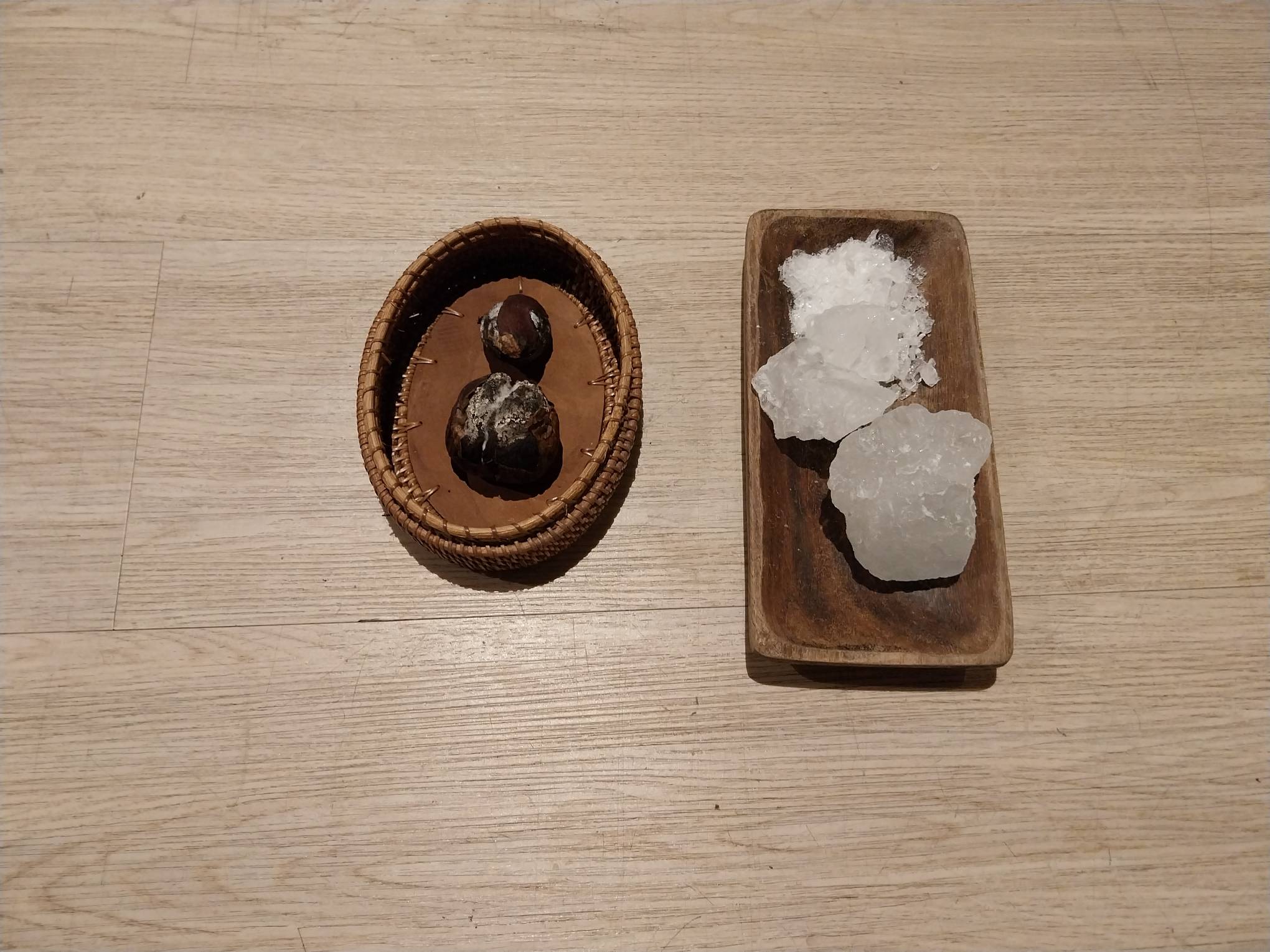
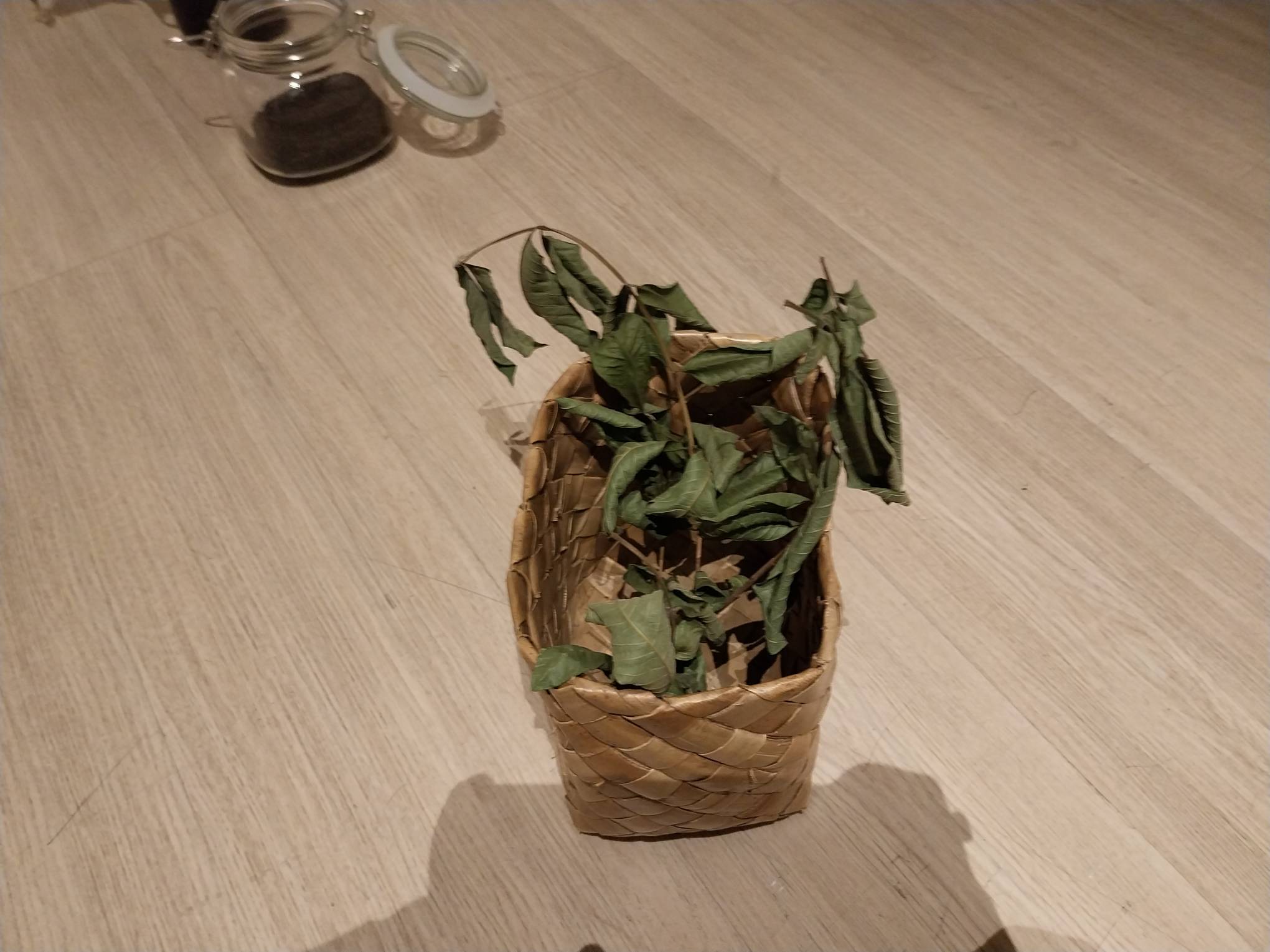
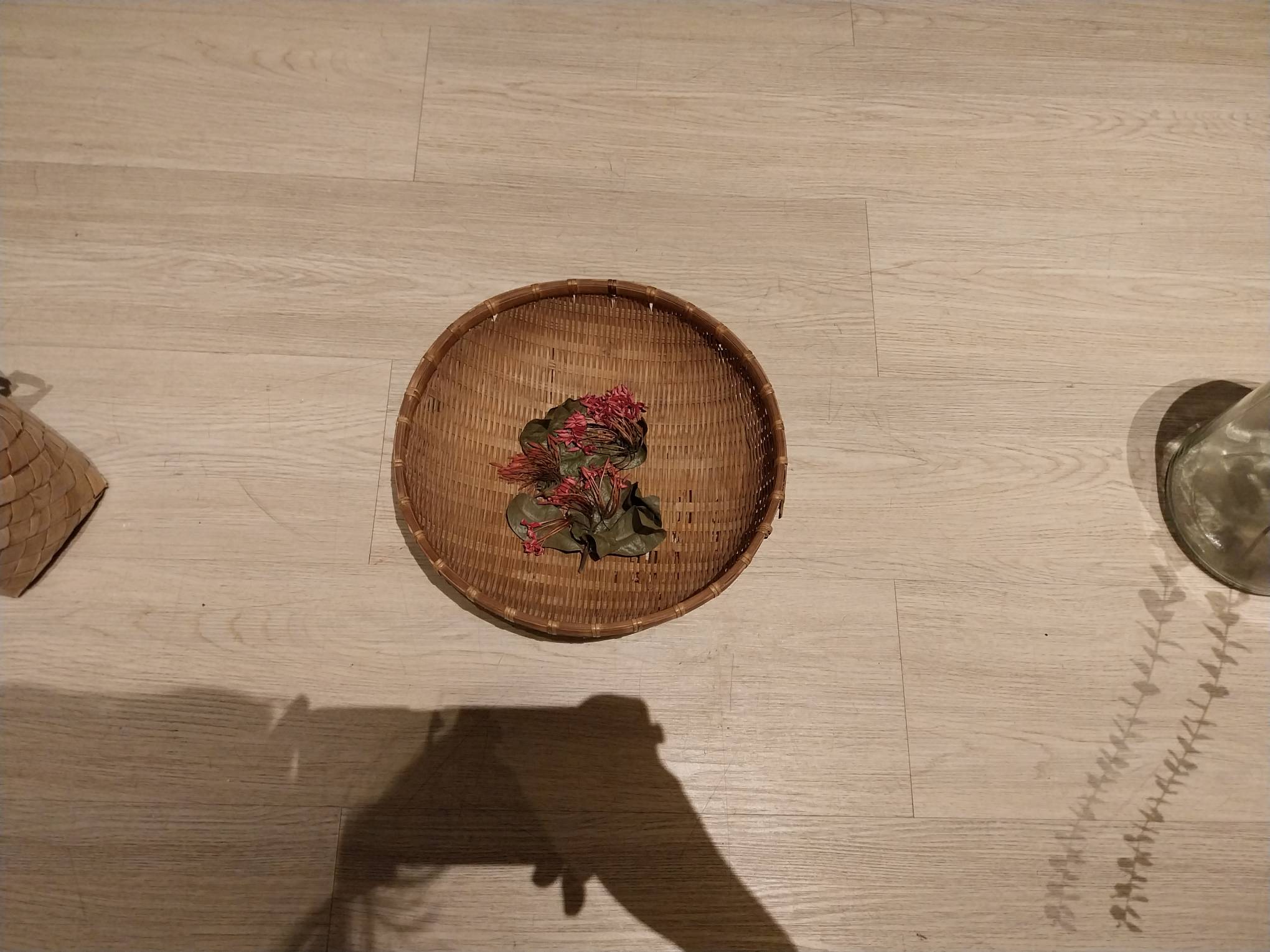
This portion exists separately from the artworks by Nuñez, seemingly unconnected from her cellular art. Its appearance in the exhibit appears to be more supplementary, adding to the eco-centric atmosphere of the exhibit.
The addition also gives a different perspective towards the materiality of art as a whole—these fabric weavings by Nuñez are made from objects derived from nature. It highlights their importance of the natural in the production of these pieces representing the microscopic.
Dynamic Portrayals of the Microscopic
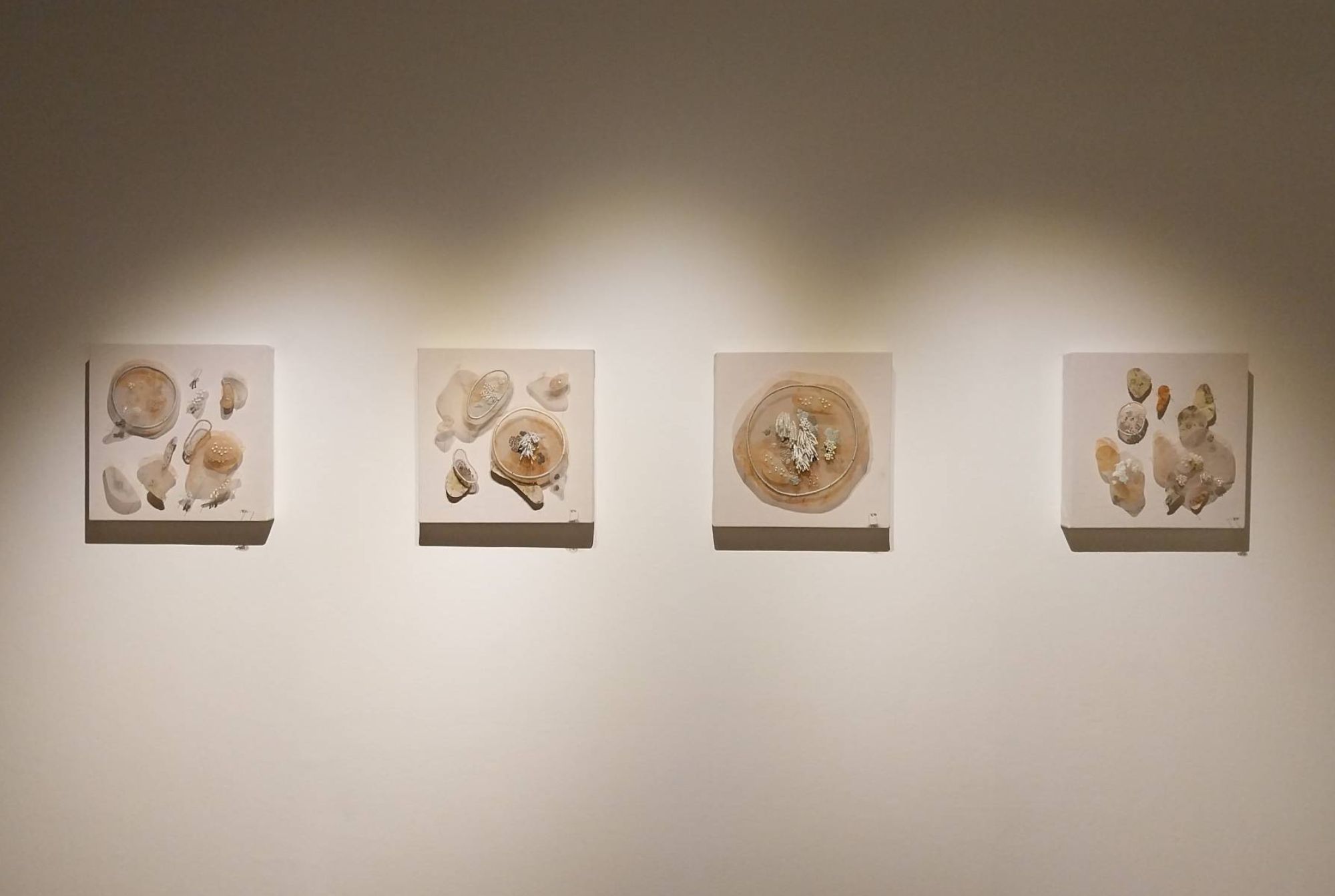
Katherine Nuñez’s works hang on the walls of the exhibit space. Four works depict cells with art materials that mimic their organic nature. “a composition to a forage collection 1-4” uses eco-dyed fabric to create the semi-transparent look of the cells that we see in our textbooks and microscopes.
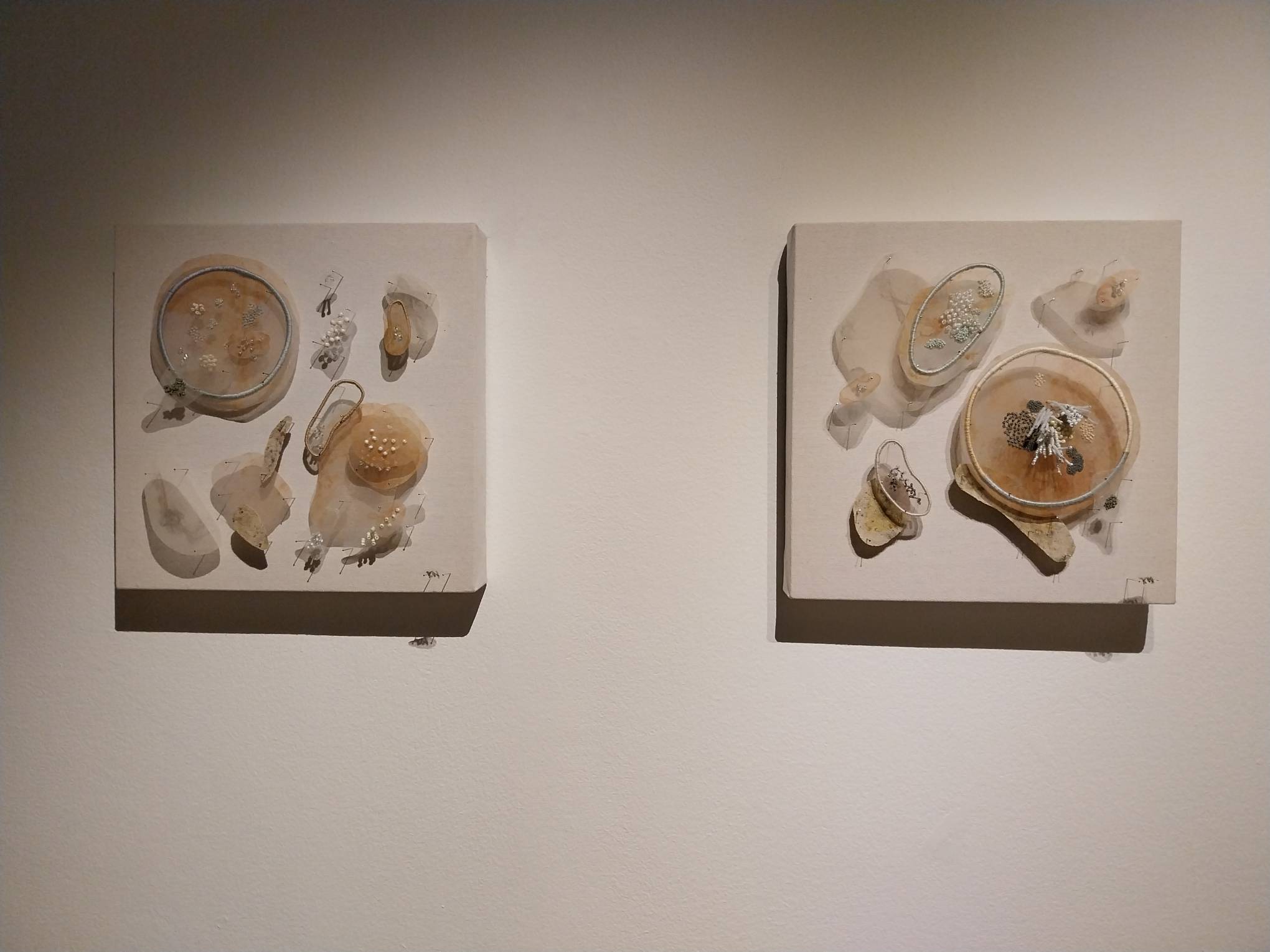
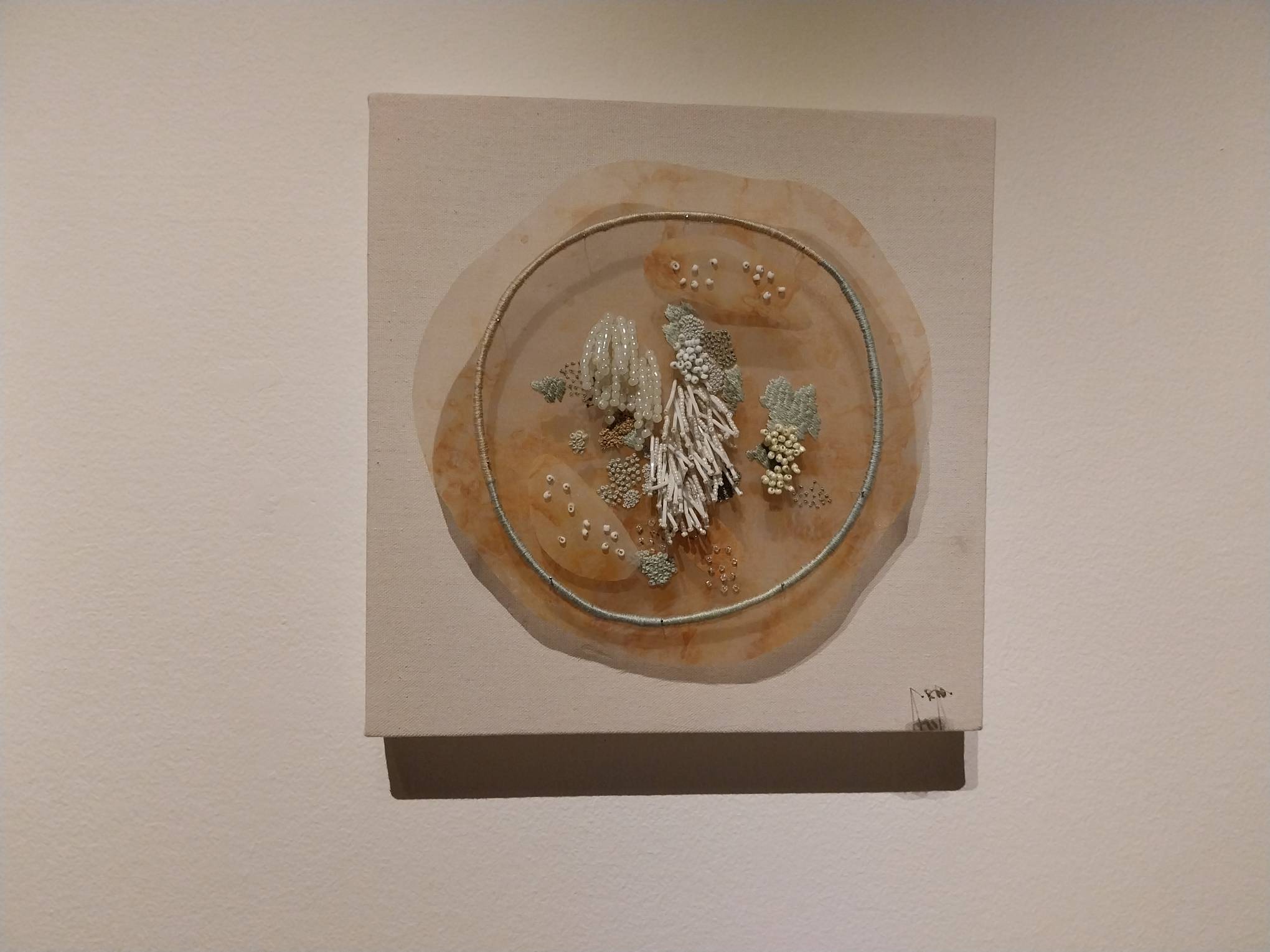
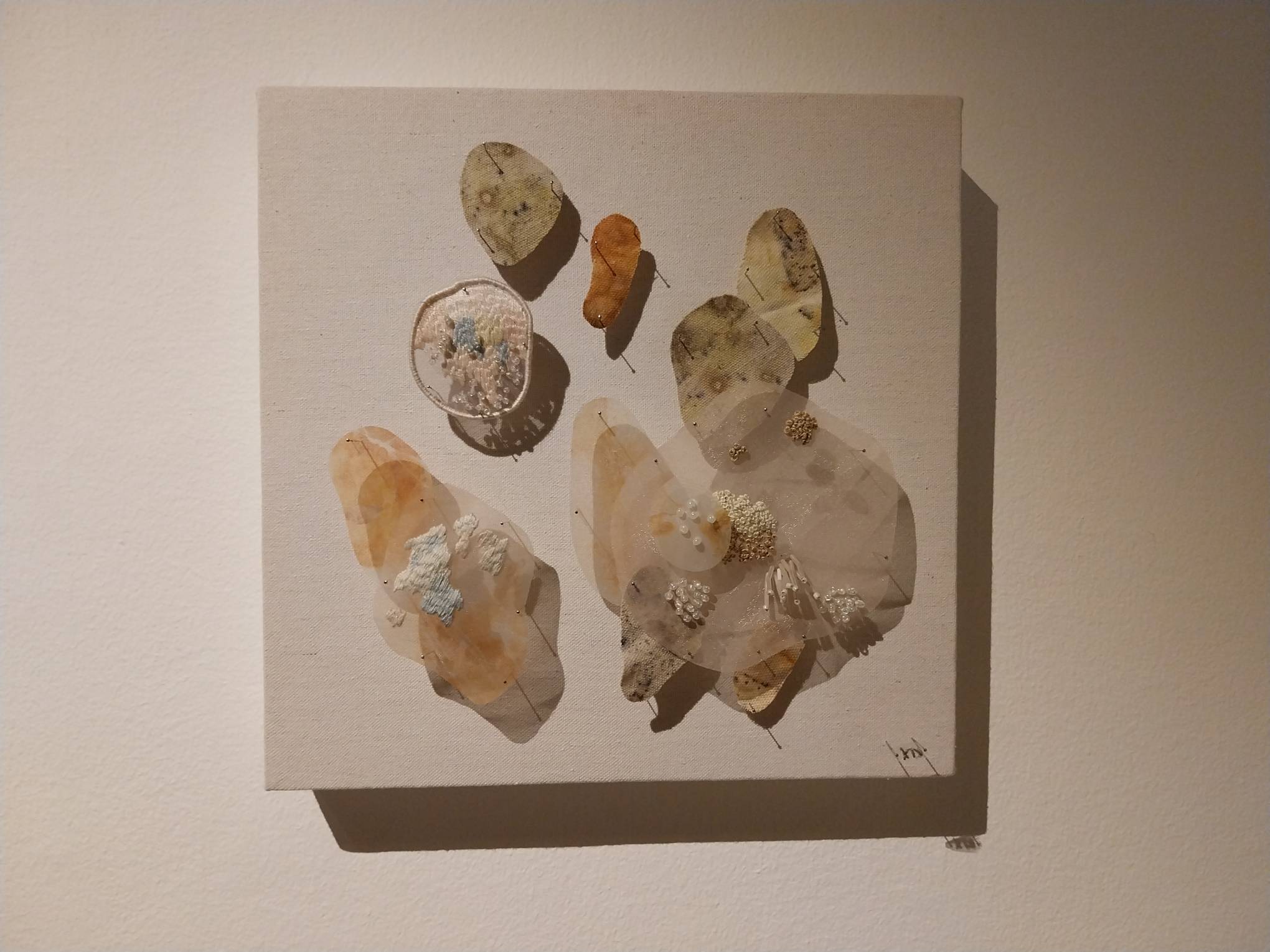
Then, she used beads and other fabrics to depict the organelles which float around a cell, and stitchwork for the membrane holding it together. Some of the fabrics are overlaid on top of each other to create a three-dimensional look for the cells. They seem to stack up like a unit, showing how different cells can coexist together in a singular space.
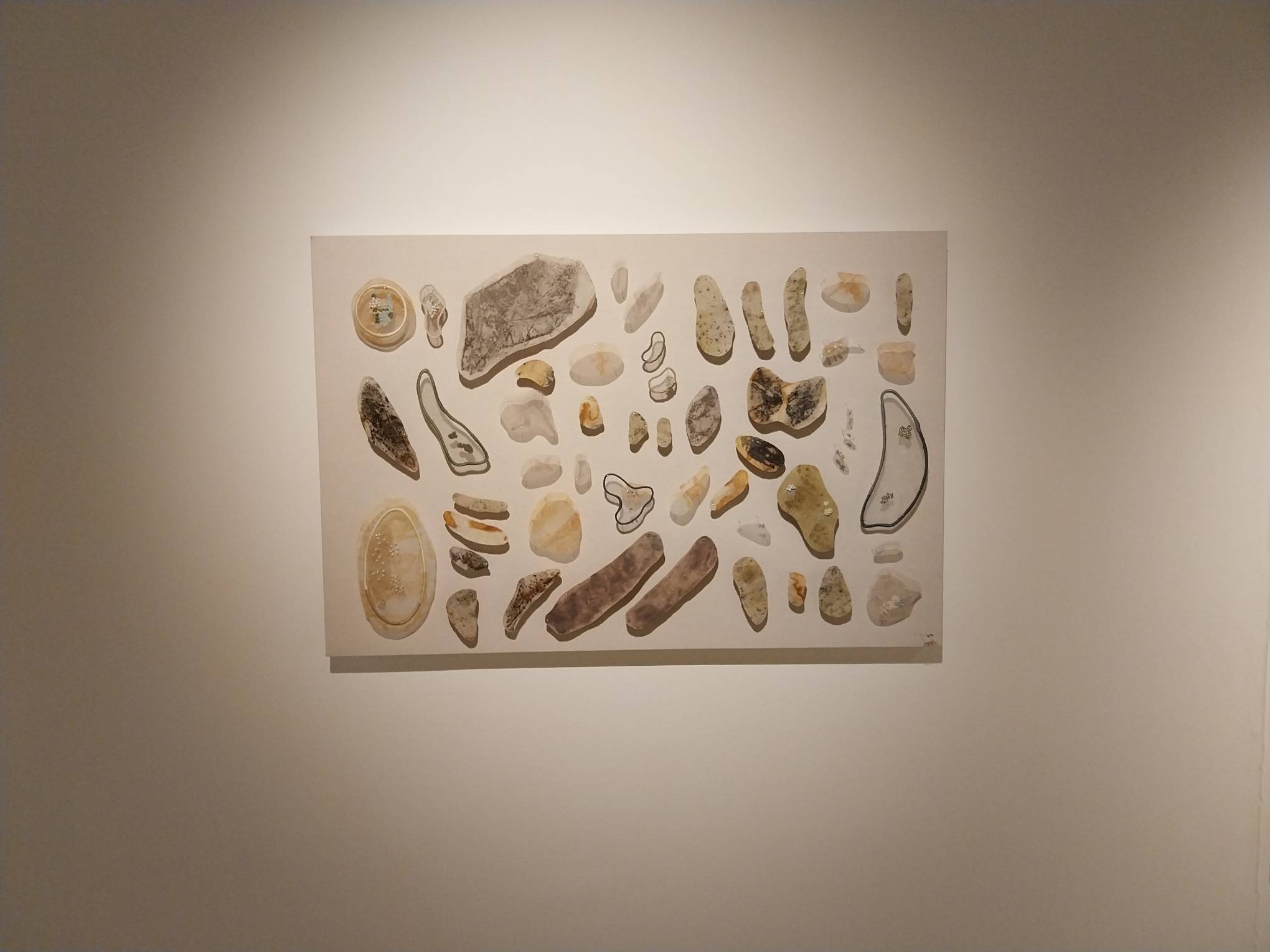
This methodology applies to two other works in the exhibit, “specimens from my neighbor’s garden” and “assembling cosmos.” For the former, each piece of fabric appears to have been separated from each other to show the individual nature of these works.
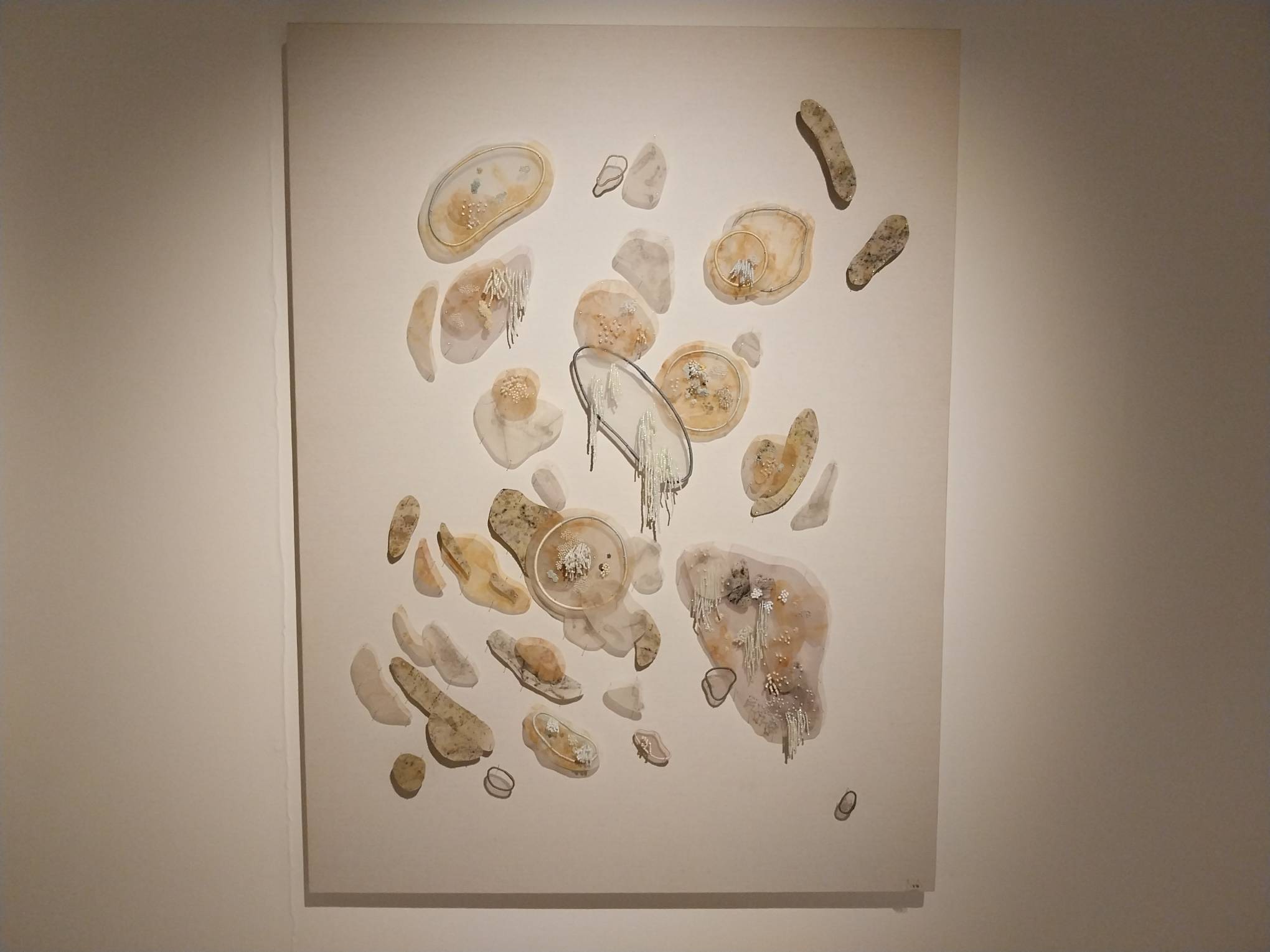
The latter, meanwhile, looks like it’s in the midst of decay. The eco dyes applied to the fabric establishes a look of escaping organelles leaking out of a cell as its membrane is breached. In the bottom of the work, seemingly-dead cells float around, largely empty of the interior structure to make them function.
Morphing Everyday Materials
Beyond the depictions of cells, an open hand, a cosmos displays different fabrics with the eco dye applied on them. Each of the fabrics demonstrate how the organic nature of the materials affect its look and composition.
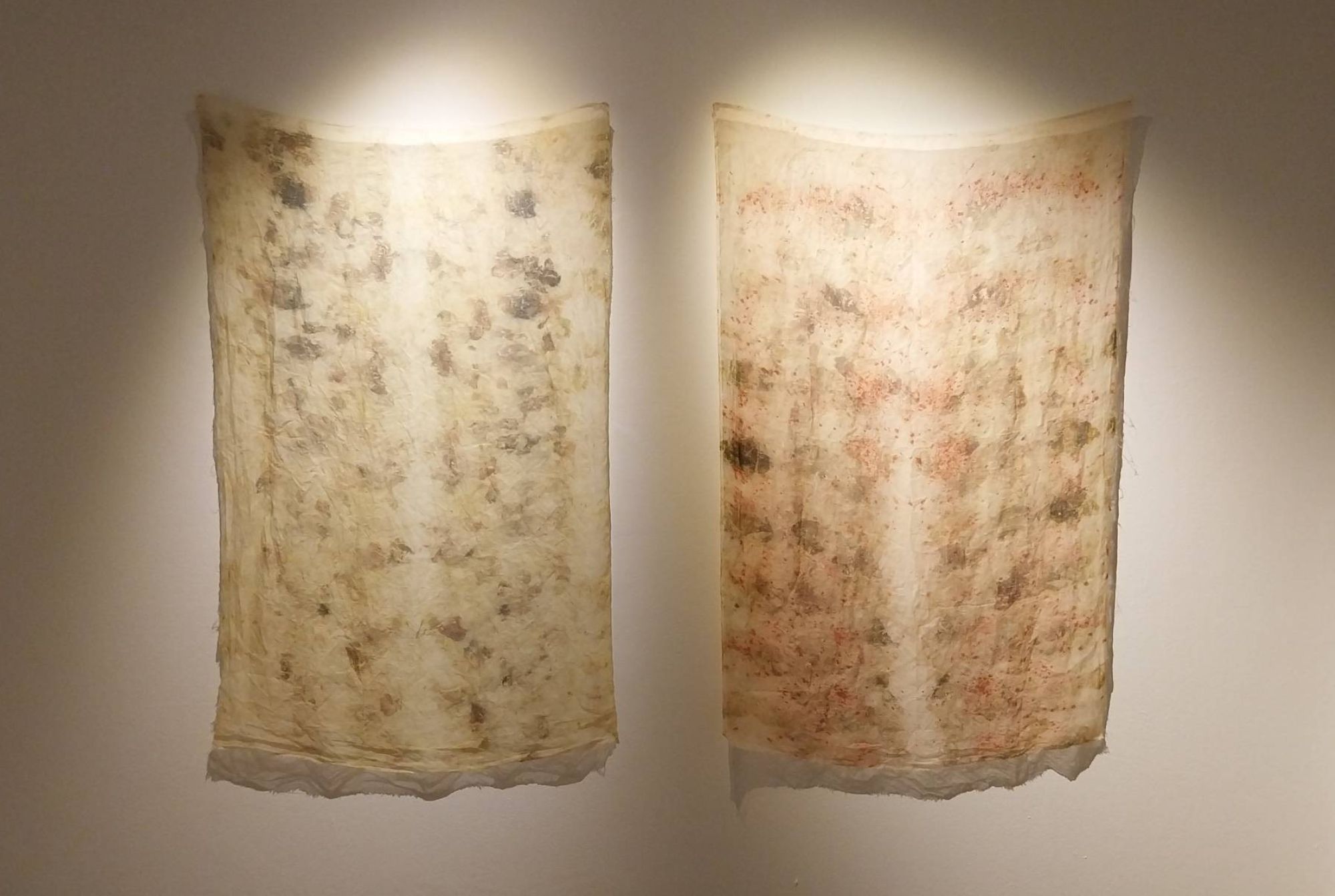
“soil samples” illustrates imprinted figures on the fabric. “grown on soil, now fluttering lightly 1-2” show blotches of paint dye evenly-distributed together, with each side separated by a white partition in the middle.
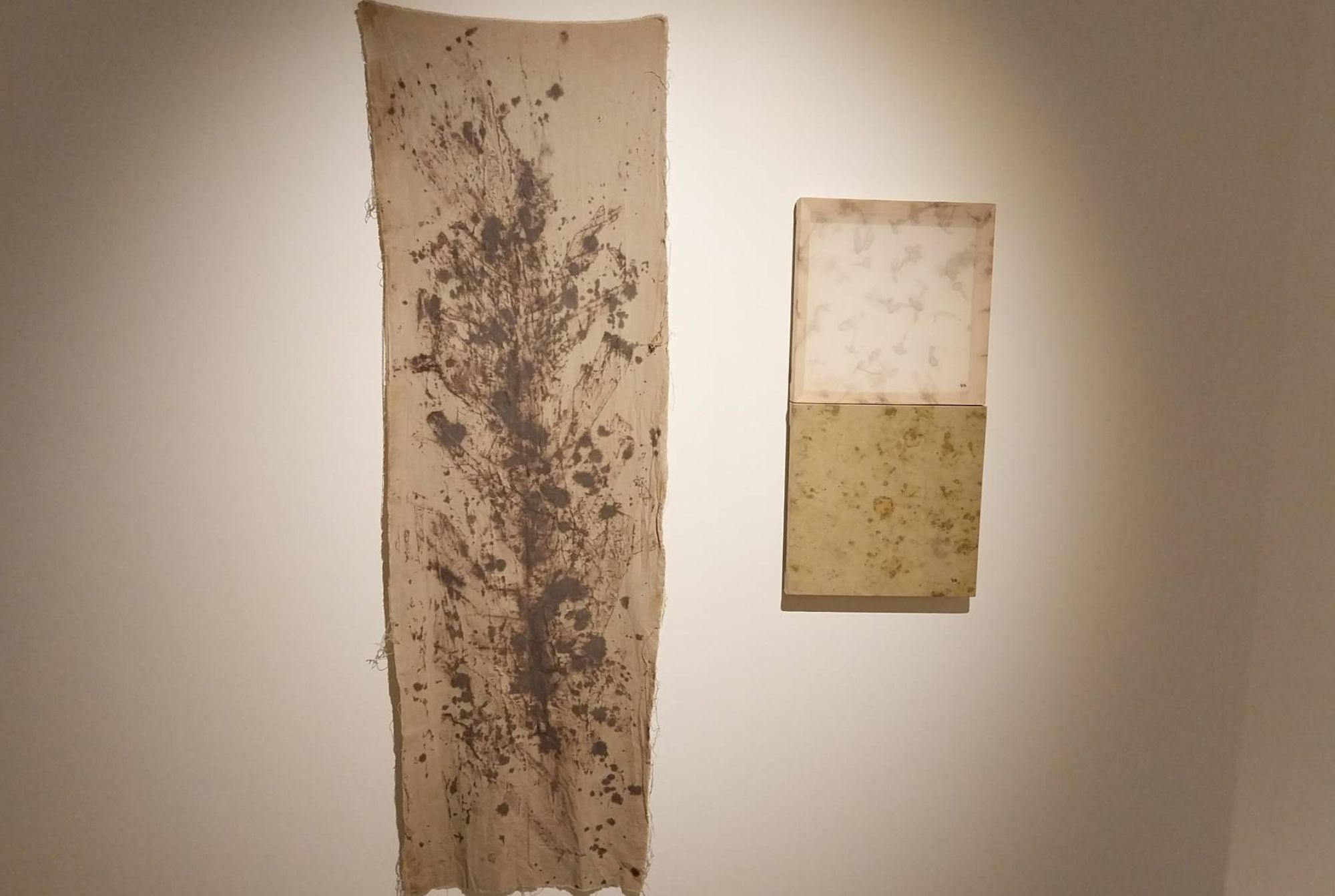
“The everyday becomes the material where toil morphs into apparition, leaving the traces of process in the surface,” Lalunio wrote. “It is probably the smear of translucent color one can only notice upon second glances.”
Katherine Nuñez’s an open hand, a cosmos finds the beauty and delicateness in the invisible nature around us. She produces a series of works that breathes itself into life, illuminating ideas and processes that tend to go unnoticed.
Related reading: Julieanne Ng Portrays Humanity’s Decaying Ambition in New Exhibit
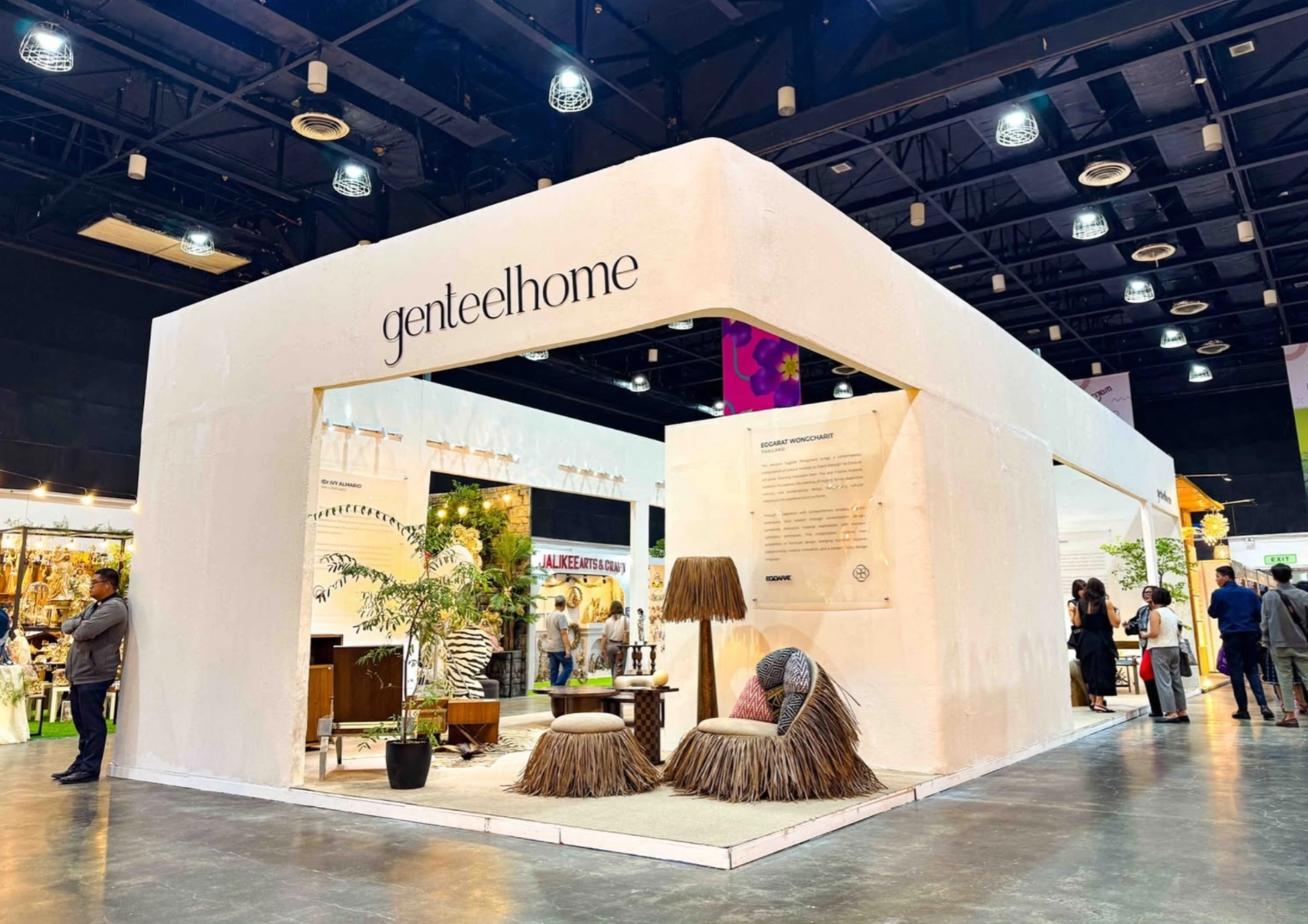
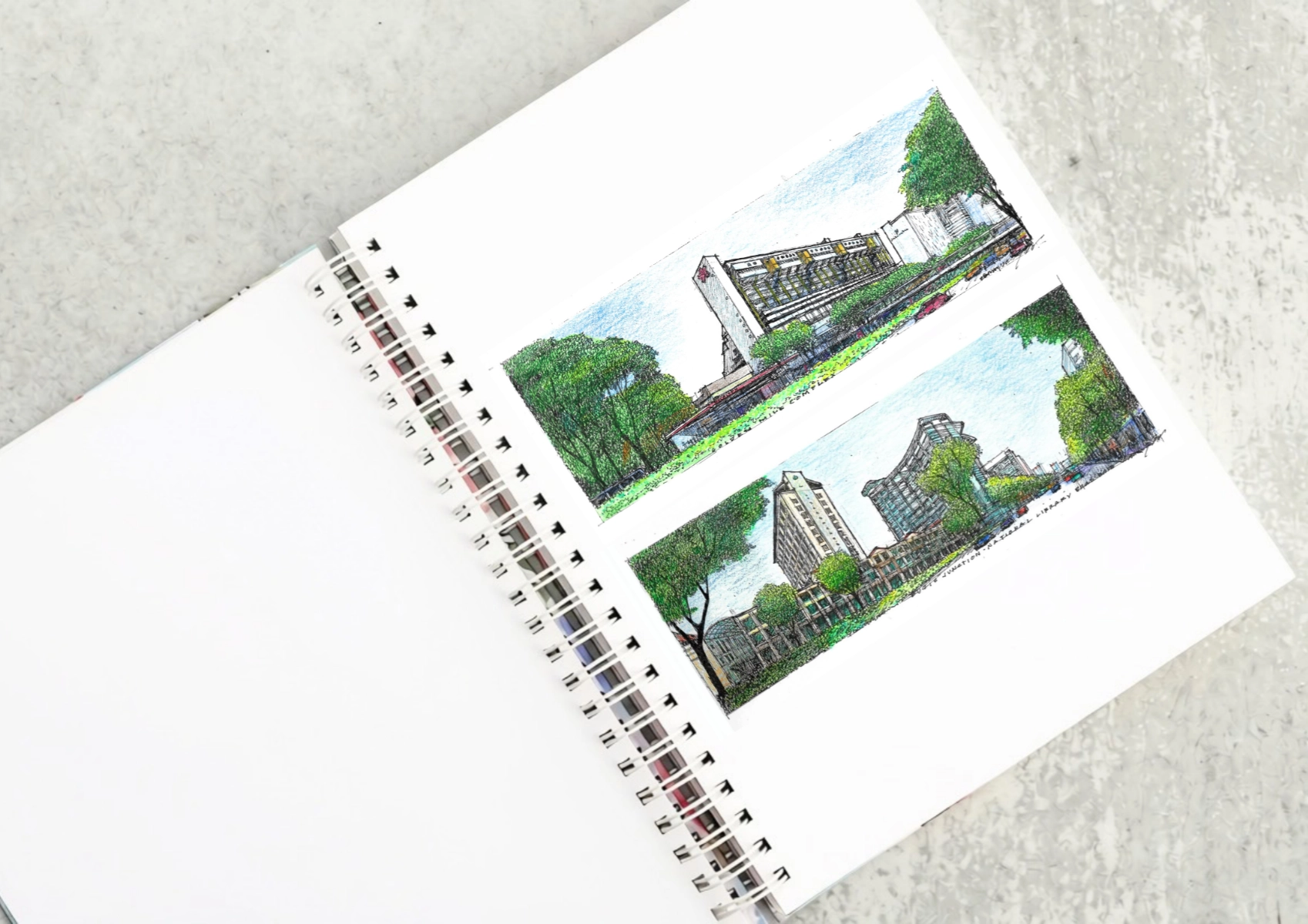
Two sketches of Singapore connect BluPrint Editor in Chief Paulo G. Alcazaren’s personal and professional history with Shared Ground: ArchitectureArchitectureThe art and science of designing and constructing buildings, structures, and spaces that are functional, safe, and aesthetically pleasing. It encompasses the planning, design, materials, and techniques used to createGo to Architecture Glossary of Care, Culture, […]
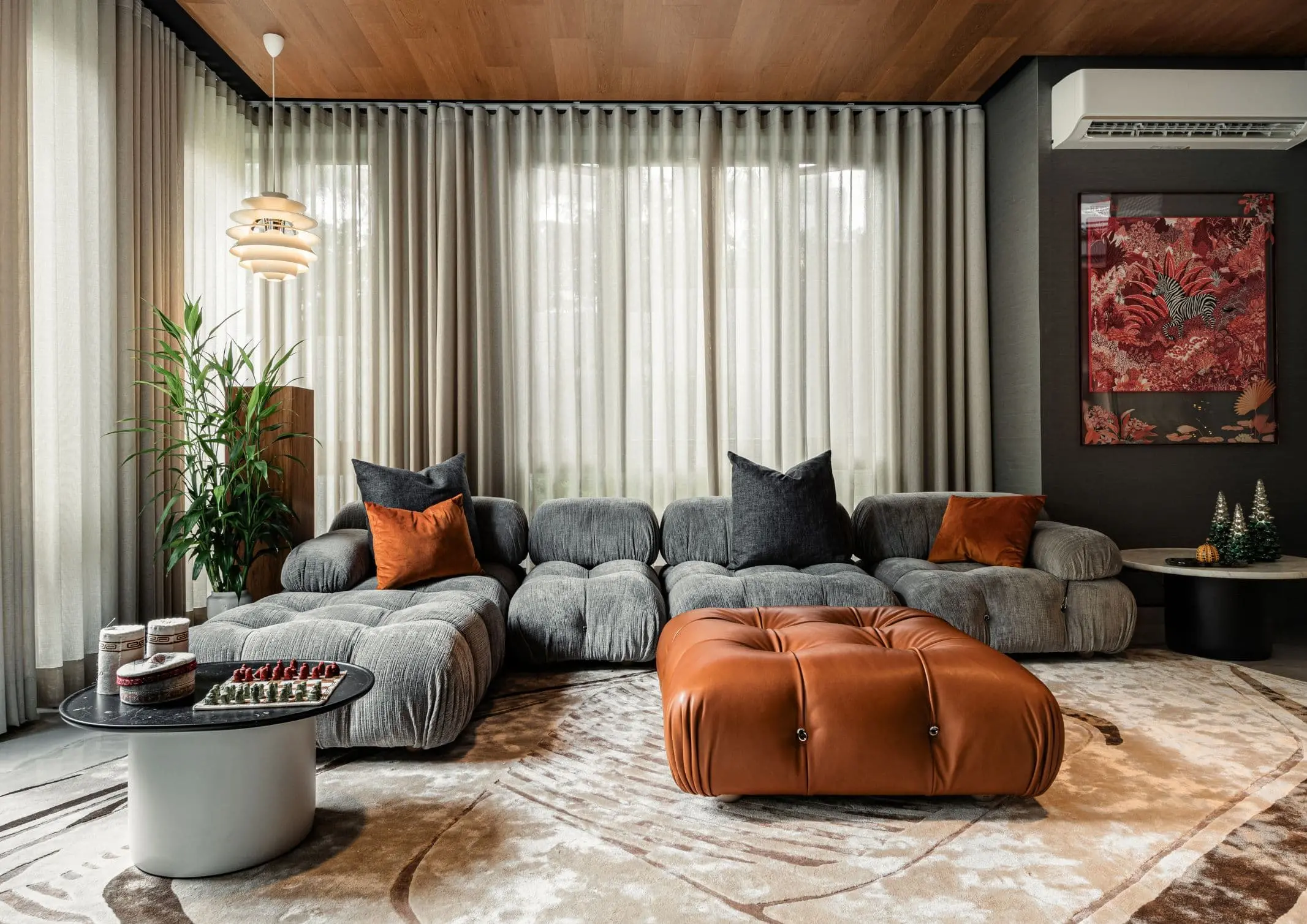
Some have become household names – Coleman, Oster, and KitchenAid – products that have found their way into Filipino kitchens, homes and family routines. In home furnishings, brands such as B&B Italia, Ethan Allen, Sub-Zero, Miele, SieMatic, Louis Poulsen, Hunter Douglas, Tempur, and Technogym, have helped shape the way Filipinos live. From everyday essentials to […]
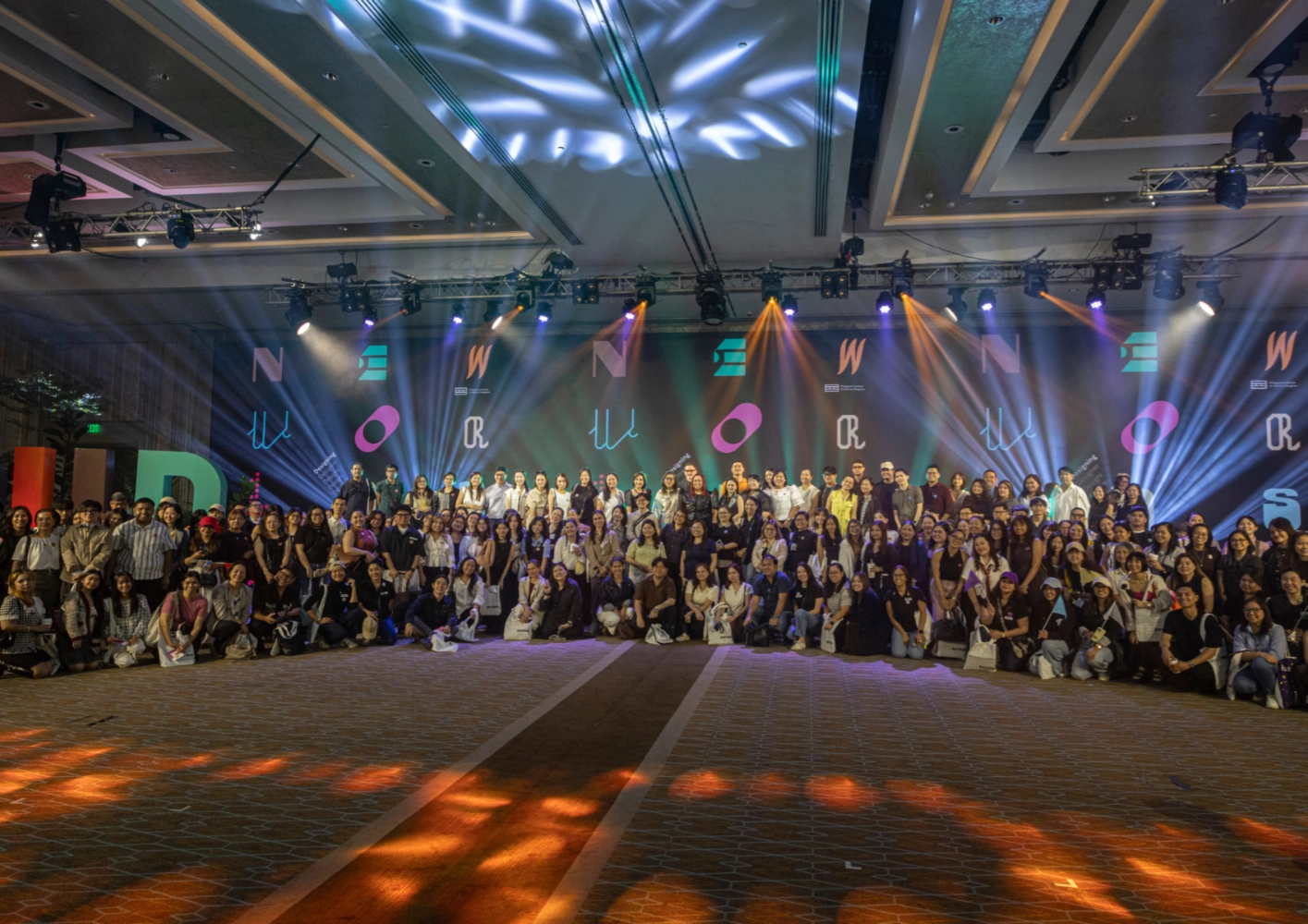
In a way, designers are the modern-day soothsayers and prophets. They design for the future, predicting how a room, a house, a building or a whole city will be used by people. They foresee how users will interact with a space, conjure exact shades of colors to elicit specific behavior and arrange furniture to build […]
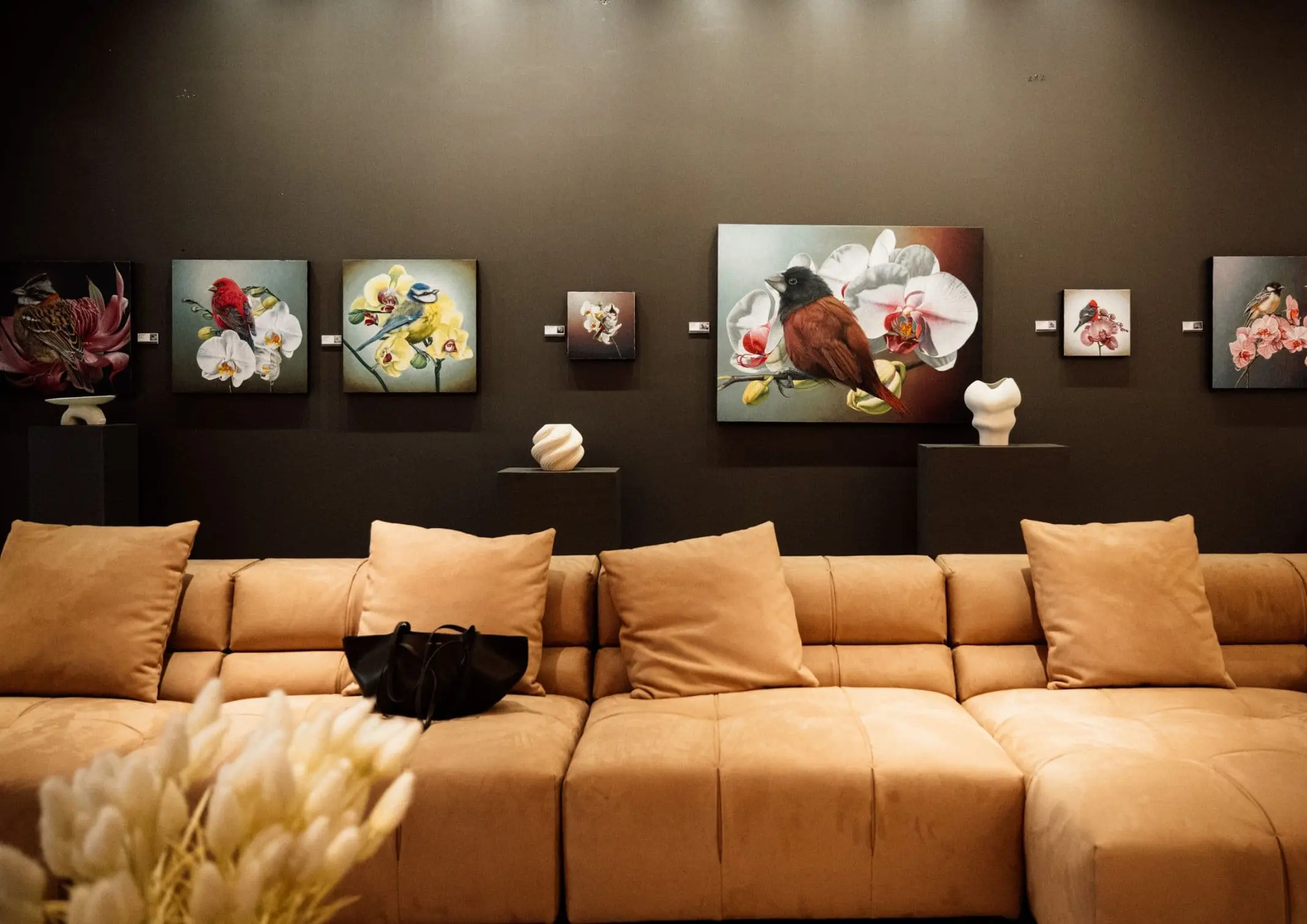
Art and furniture are often selected separately, yet their relationship can shape how a room looks and feels. The collaboration between Hooga and Galerie Joaquin explores how these elements can work together, bringing contemporary artworks into furnished residential settings at Hooga’s showroom in Uptown Mall, Bonifacio Global City. For Hooga, which curates furniture, lighting, and […]
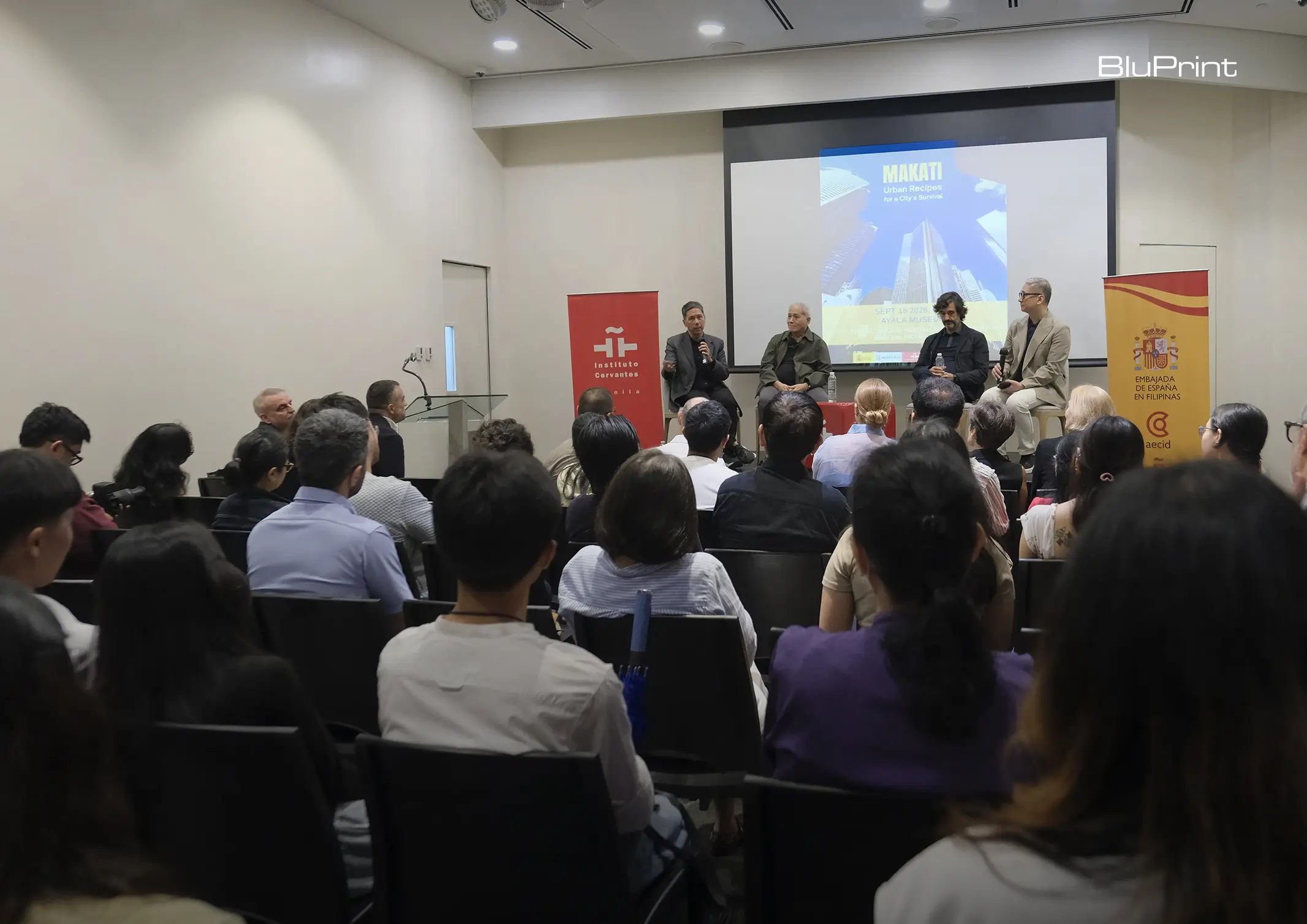
How can better-planned cities create the conditions for more creative, livable, and resilient urban environments? “Makati Urban Recipes for a City’s Survival,” a colloquium held at the Ayala Museum on September 15, brought together architects and practitioners from the fields of urbanism and the creative economy to discuss how design, planning, and collaboration can address […]
Read the issues.

Collect the volumes.

Recommended Video
Tap to Unmute
Unmute
0:00
0:00