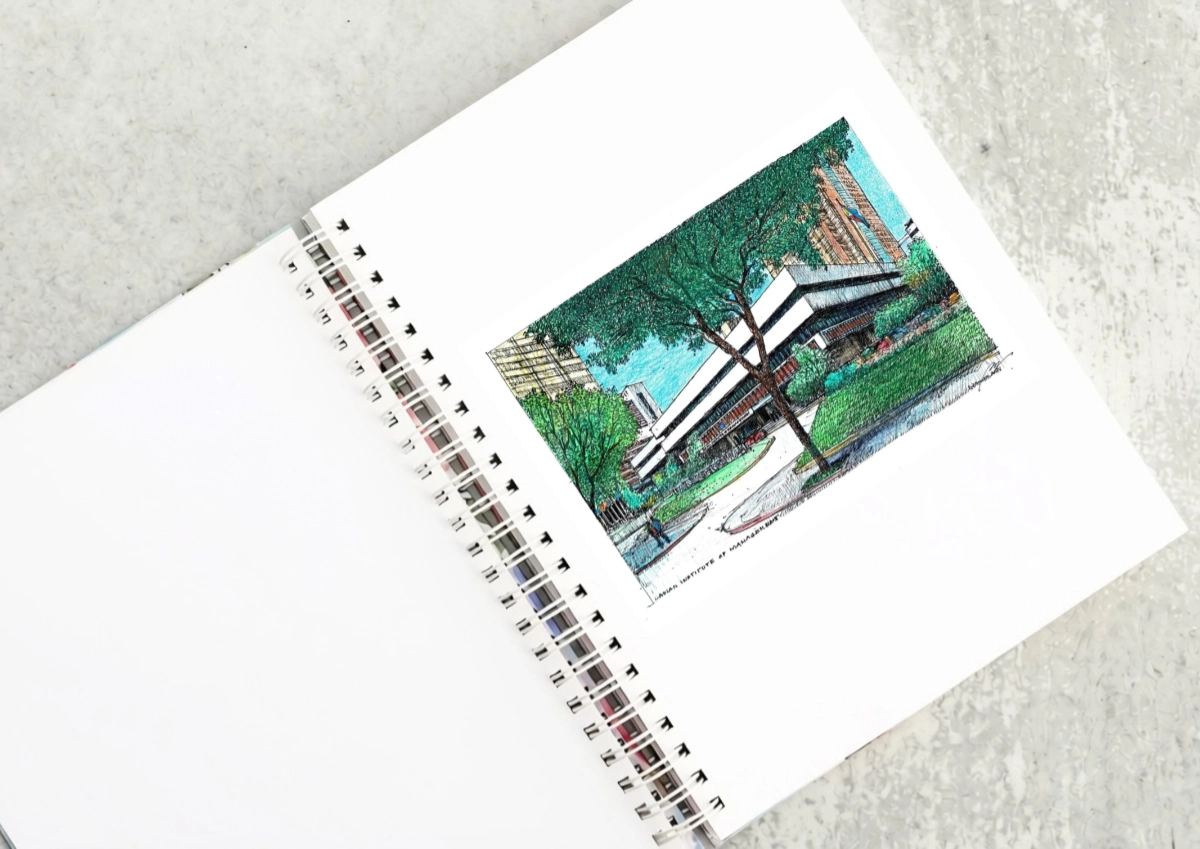
A Filipino Interpretation of Modernist Architecture Unlike the rest of Makati today, the northern end of Paseo de Roxas in Makati is anchored by a low complex rather than a tall skyscraper. This is the elegant Asian Institute of Management, designed by architect Gabriel Formoso and completed in 1971. In my opinion, the building is […]
‘Angat Sining’ Highlights the Importance of Art Advocacy in the Philippines



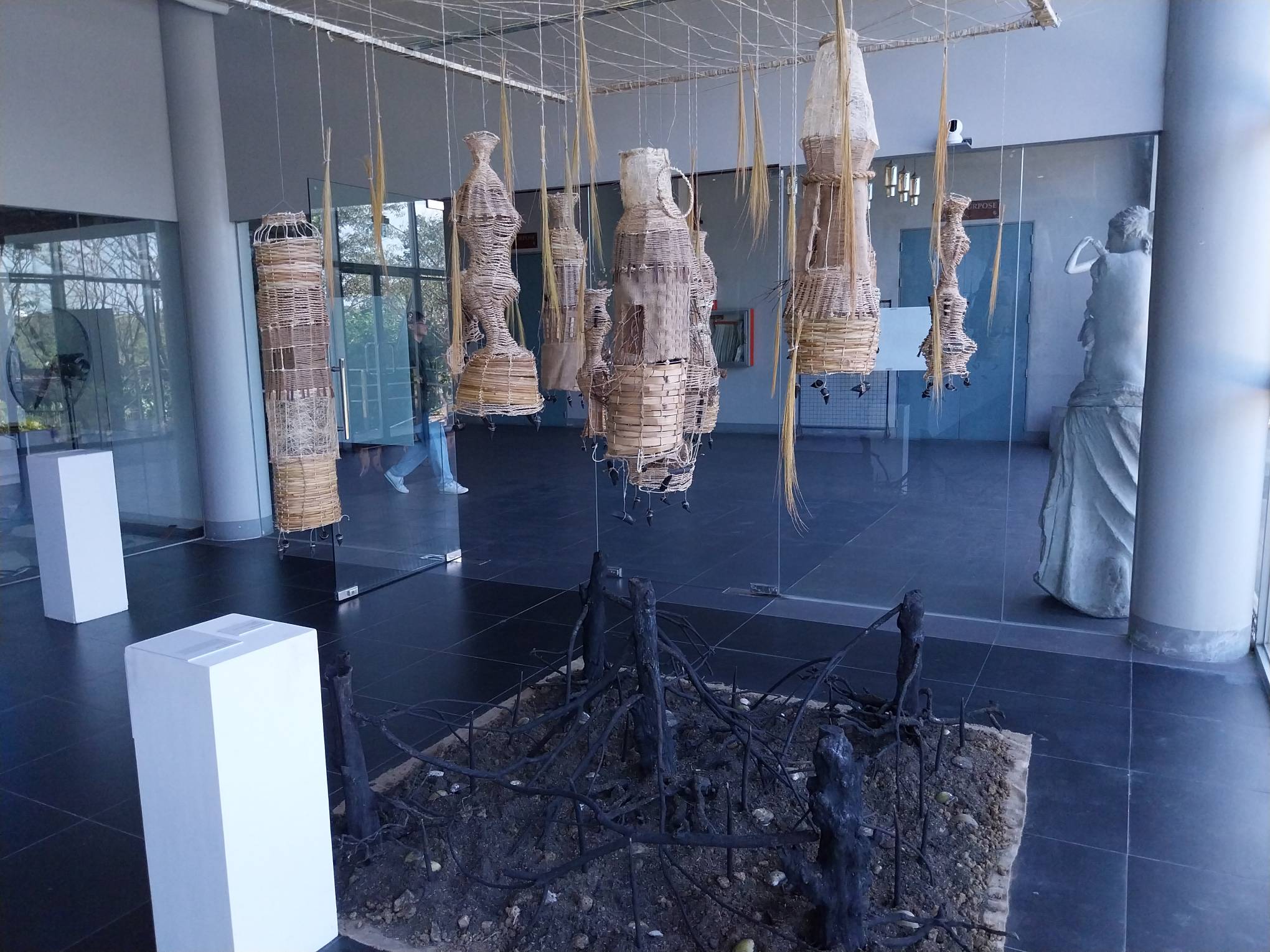
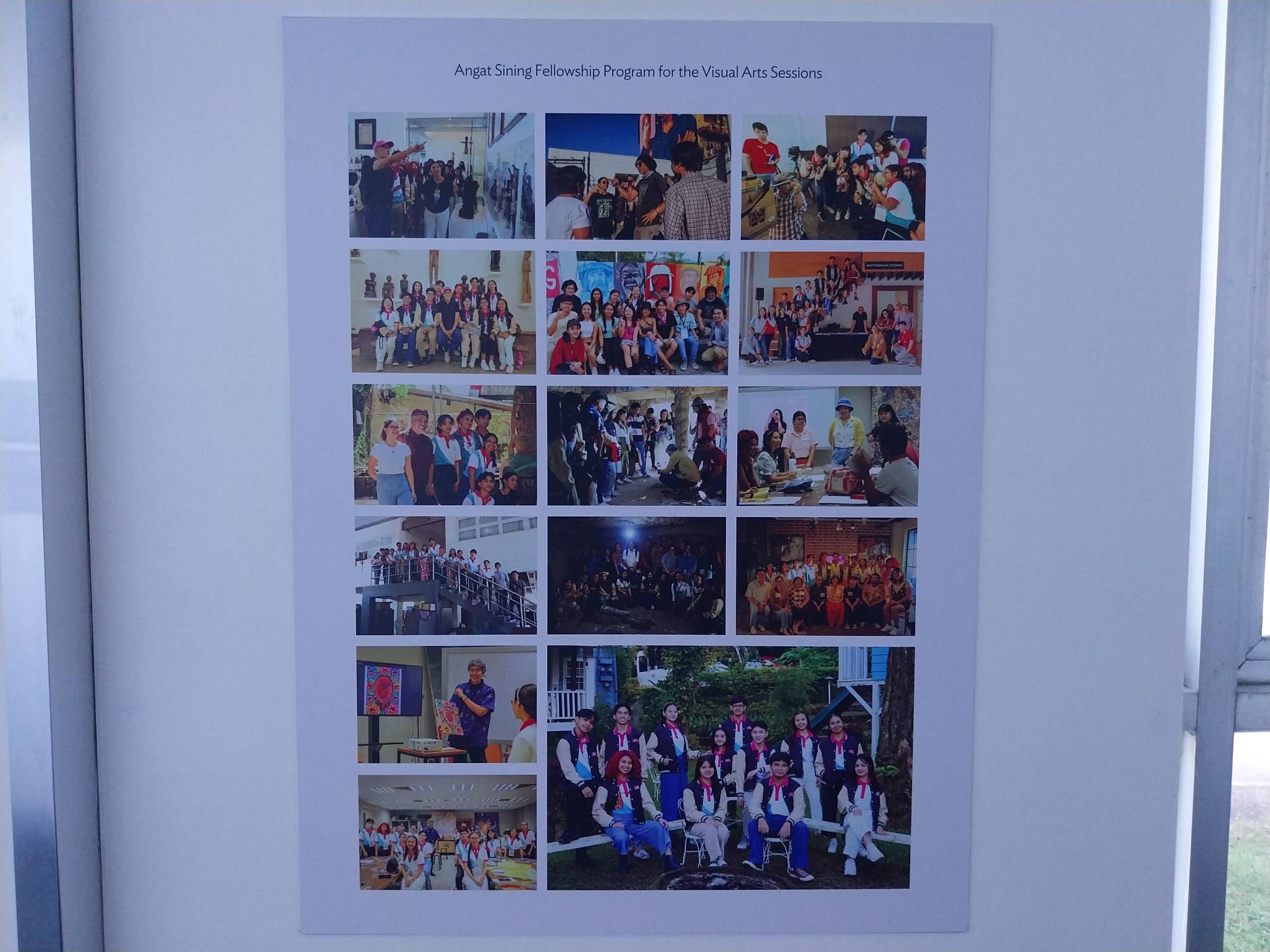
Angat Sining is an exhibition showcasing visual artists who benefitted from the Angat Sining Fellowship. Shown at UP Parola Gallery, it enrolled twelve high school students in a six-month program to “explore their artistic potential through various art forms.” It was done in partnership with Metrobank Foundation, Inc. and the Ateneo de Manila Fine Arts Department.
The fellowship is run by Angat Buhay, a non-government organization that came about in the aftermath of the 2022 Presidential campaign of Leni Robredo. Despite her loss, the organization seeks to continue its goal of empowering different marginalized communities.
The Angat Sining Fellowship functions as part of the organization’s Arts & Culture initiative. They describe it as a project “dedicated to fostering an inclusive space for mutual learning, dialogue, and networking between emerging young talent and established artists in the Philippines.”
“The initiative is driven by the dedication of volunteer artists who passionately dedicated their talent, time, and effort from the very beginning,” the organization said. “By providing them with a platform, we aim to nurture and empower them to become better creators for the nation.”
Advocating for Young Talent
For the fellowship’s six-month program, the organization assembled a roster of celebrated artists to mentor the high schoolers. It includes artists like BenCab, Mark Justiniani, Toym Imao, and AG Saño, as well as artist collectives like Ang llustrador ng Kabataan (Ang INK), Fotobaryo, and The Mighty Bhutens.
The experts “not only fostered artistic growth but also emphasized the importance of social impact through art,” the exhibit write-up said. “By engaging with the broader community and creating works that resonate with Filipino culture and values, the fellows were inspired to use their creative talents to drive positive change.”
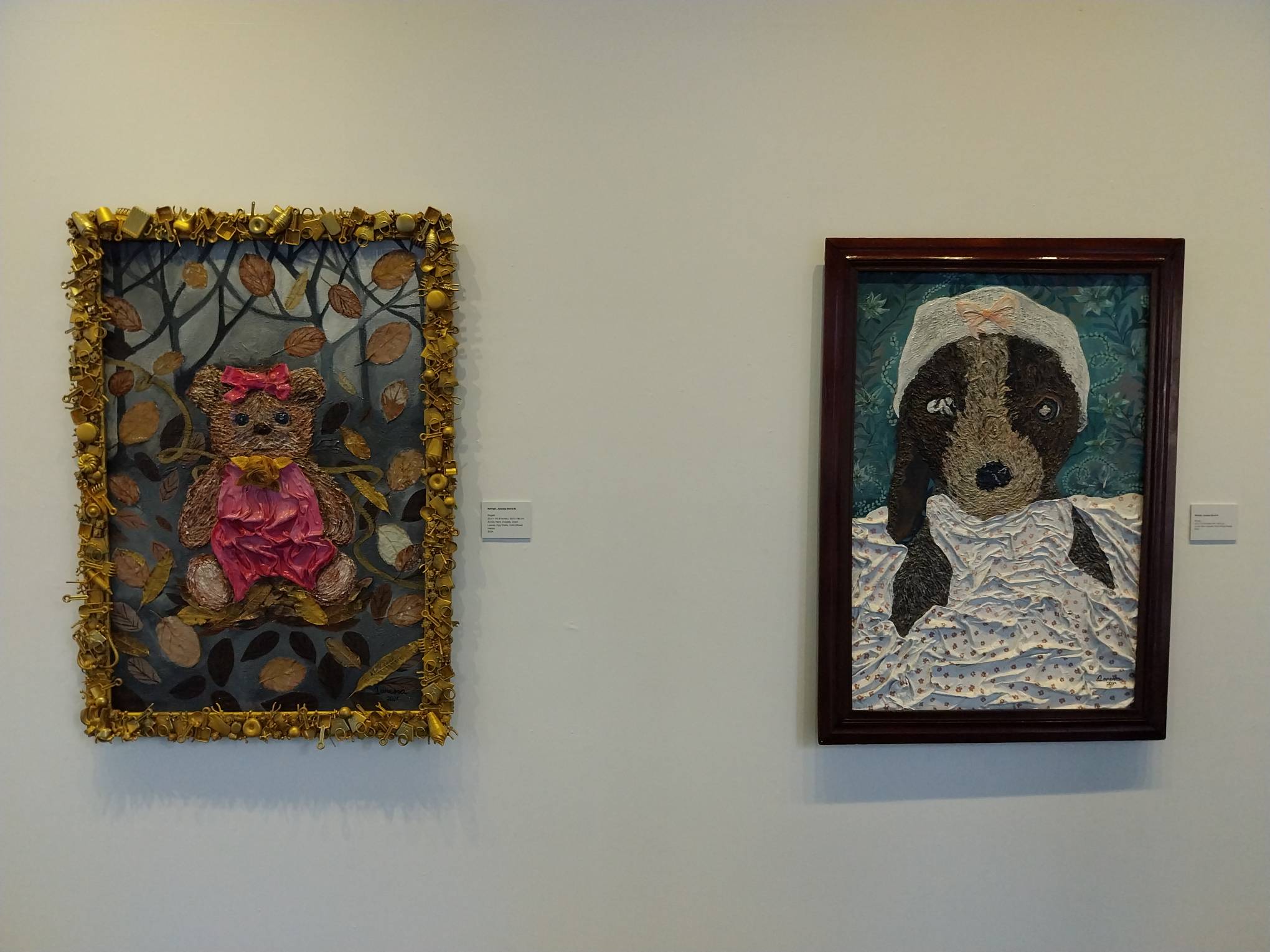
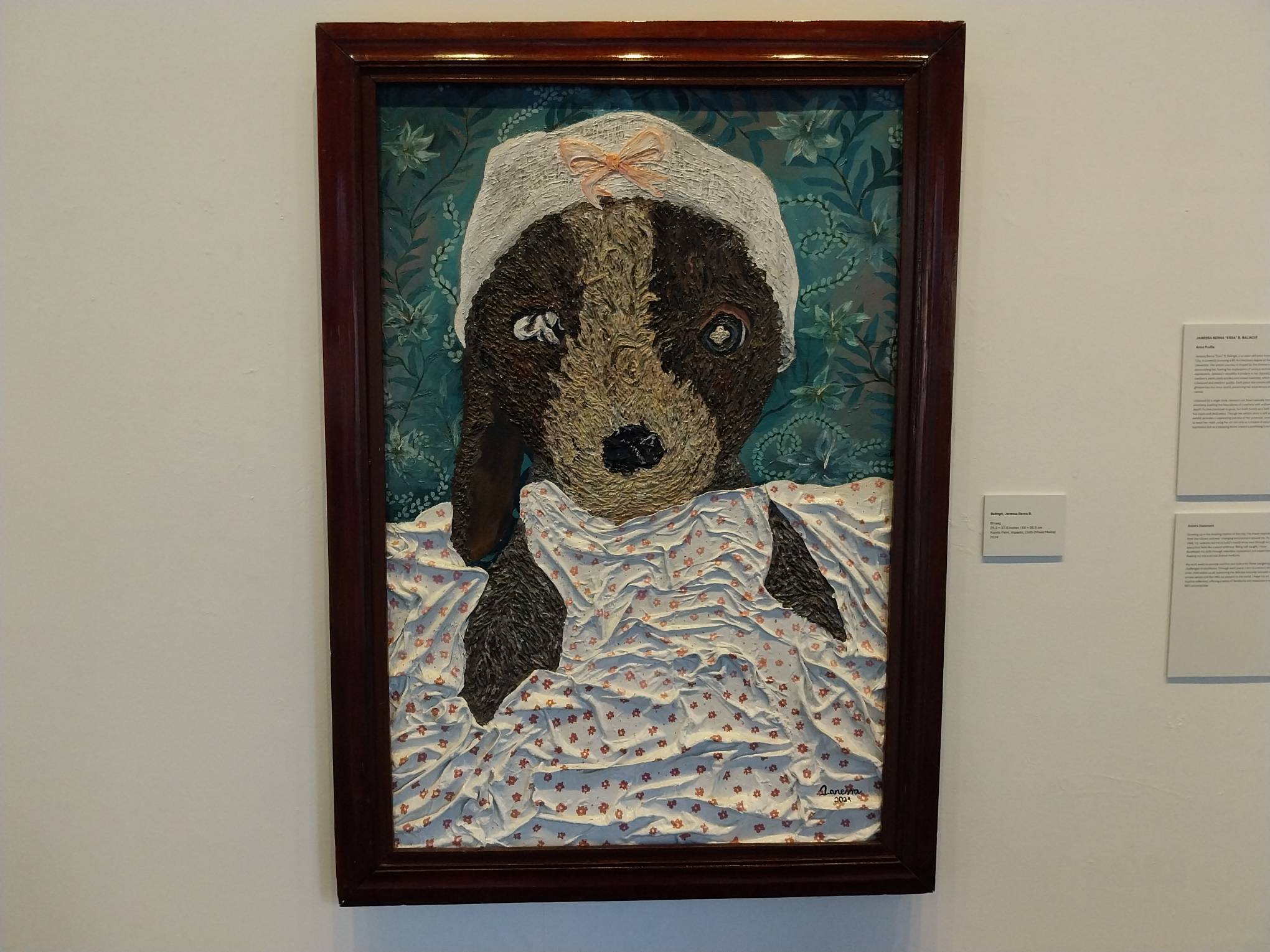
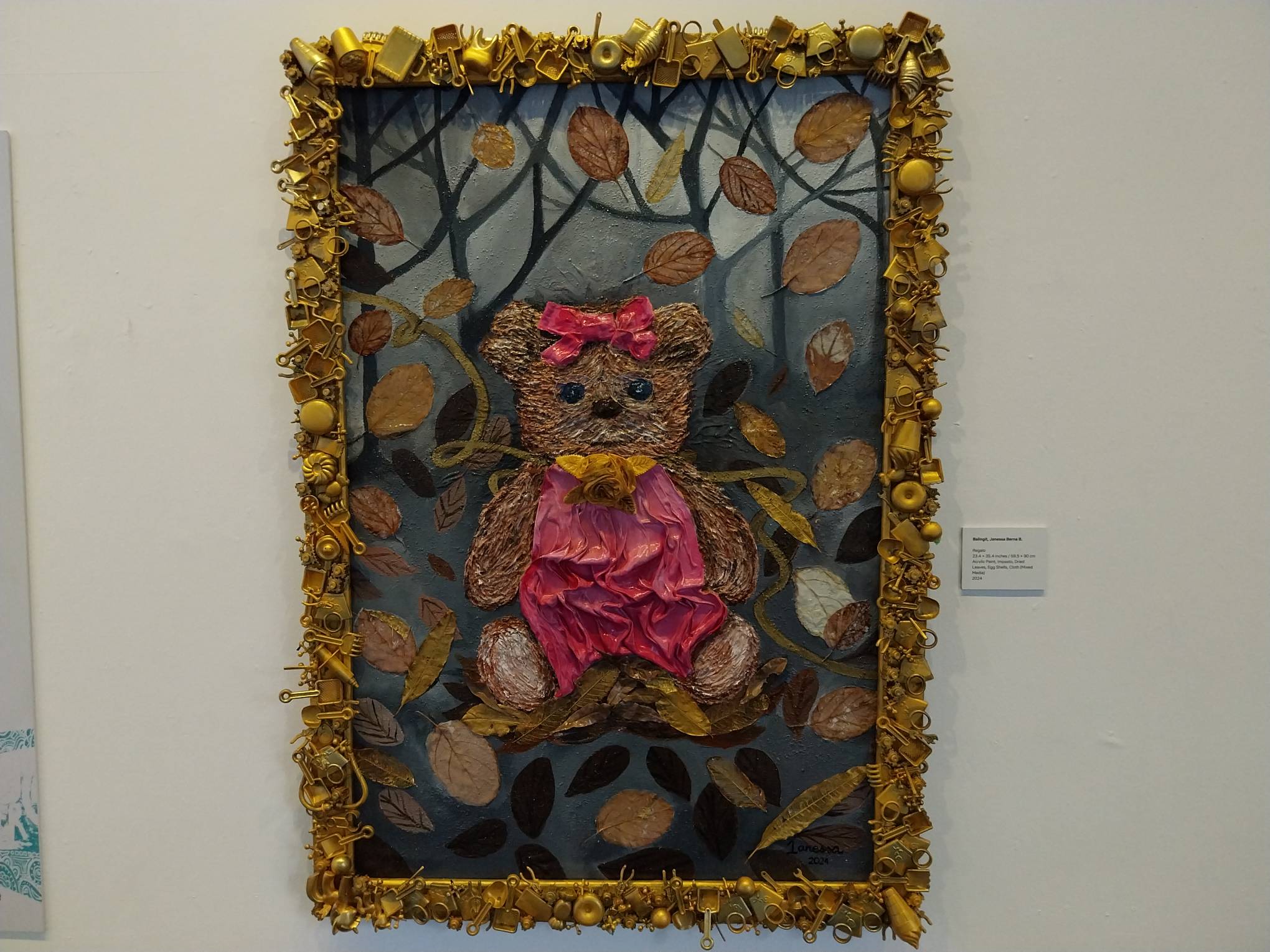
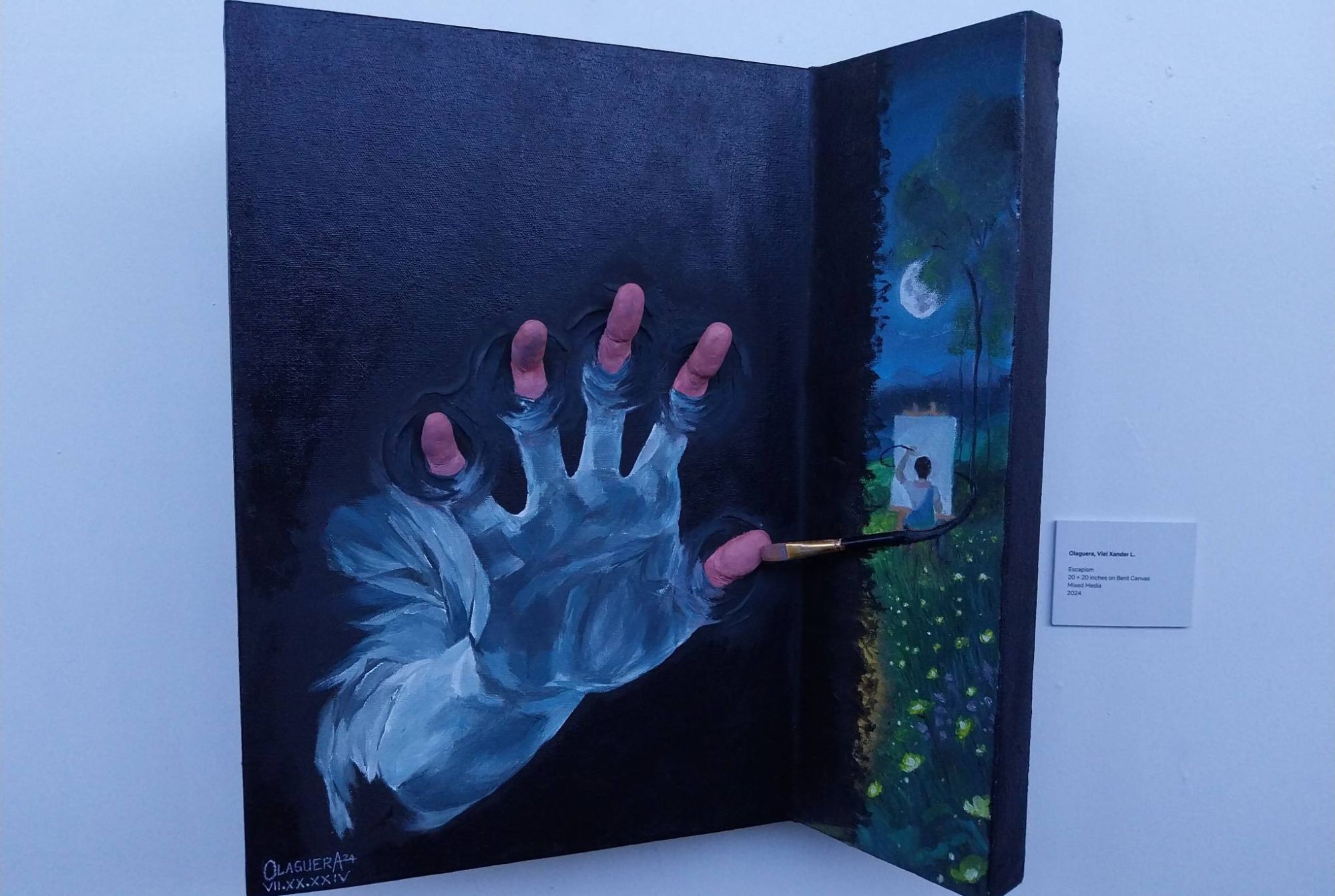
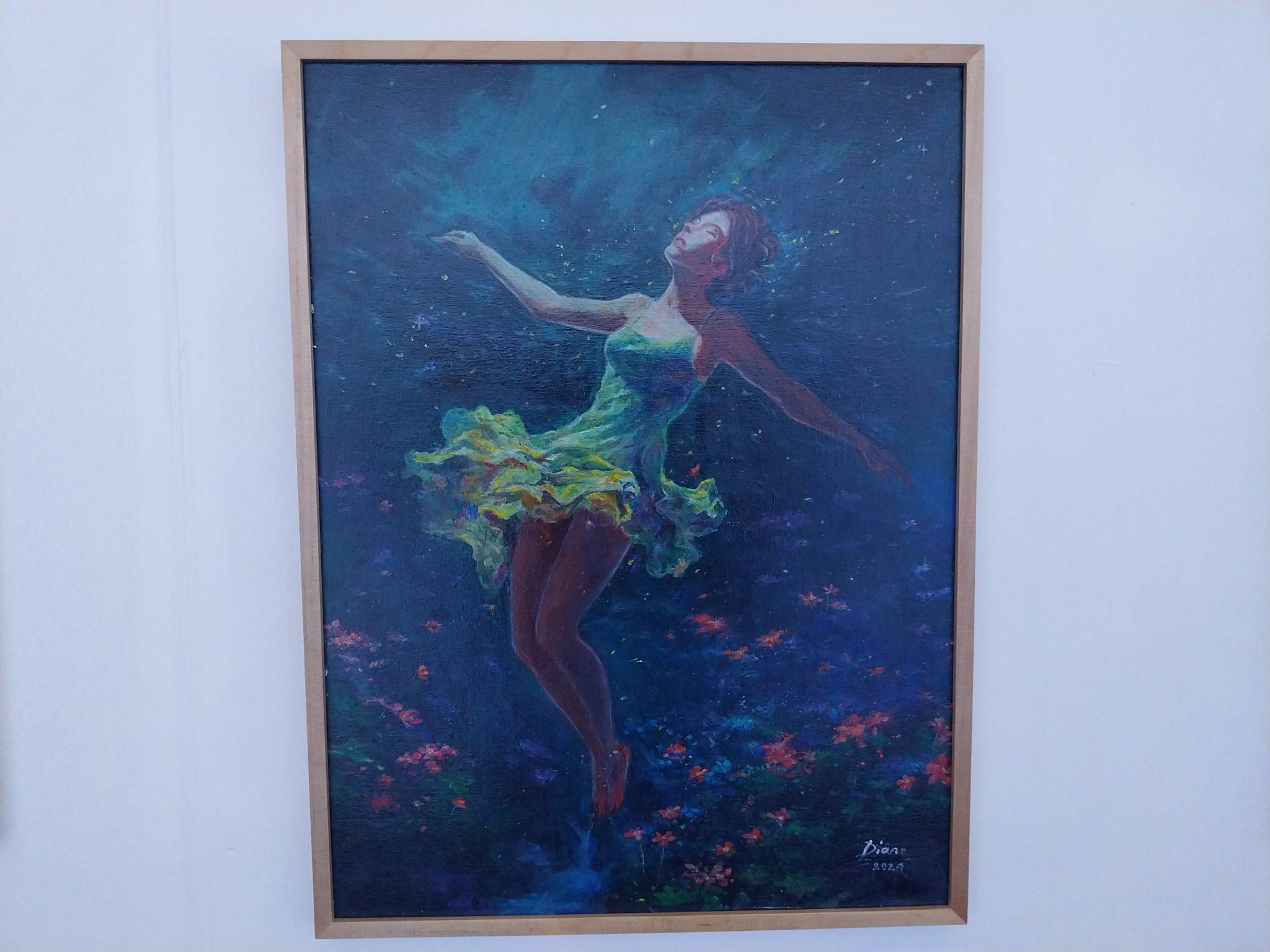
For many of the artworks exhibited, they exude a lot of unique potential and perspectives from different sectors of society. Janessa Balingit, for example, utilizes a unique mix of acrylic paint, cloth, and different found objects to craft quasi-realistic impasto paintings of different childhood memorabilia.
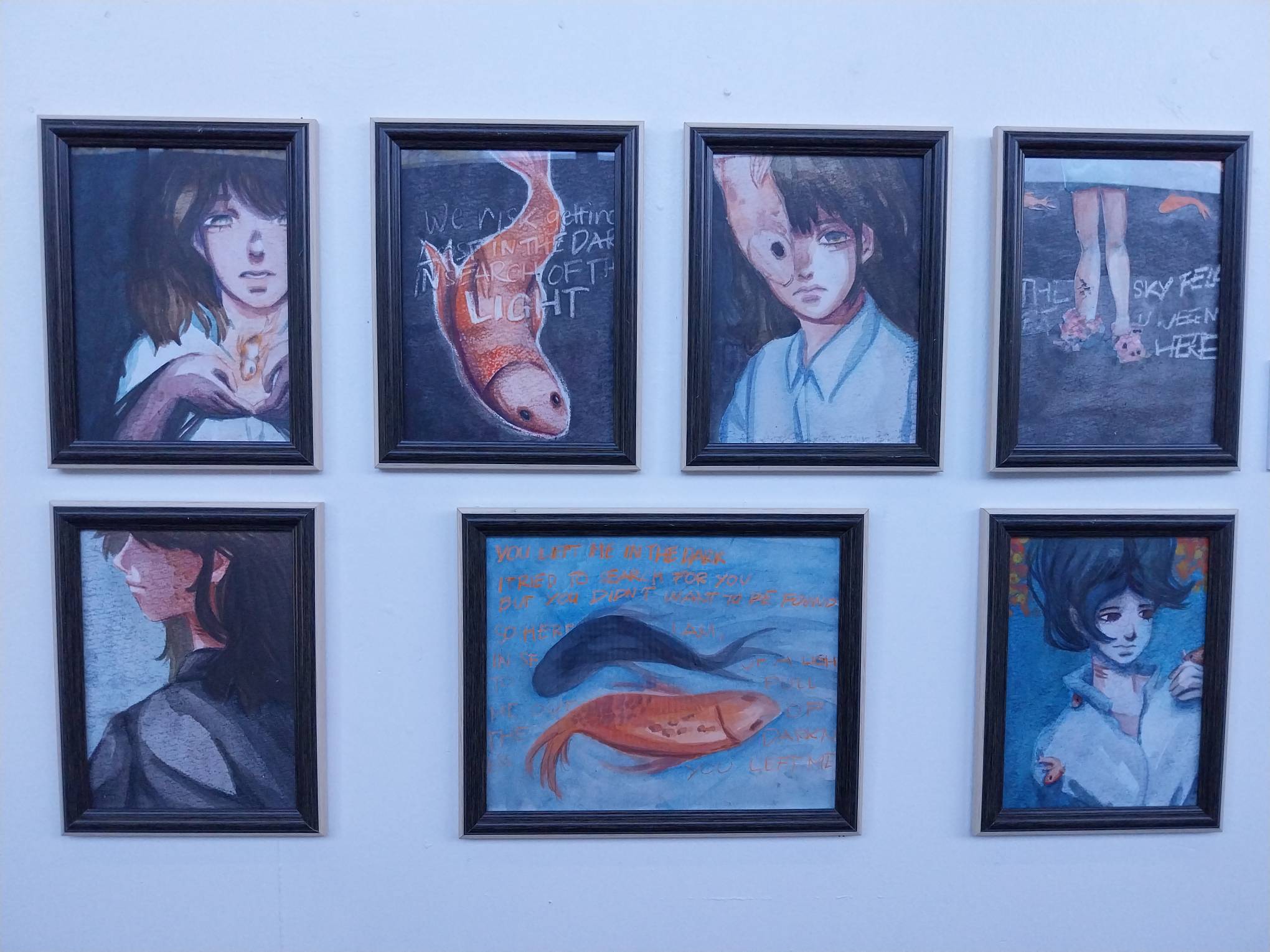
Others, like Riva Awat, reveal some of their more personal struggles in their work. Awat painted a series of watercolor paintings that depict an existential crisis, with the focal symbol being fishes swimming around the human figure. They said that the paintings function as“my way of letting go of what once held me back, and I hope it inspires others to find their own light in the darkness.”
Opportunities for Cultural Development
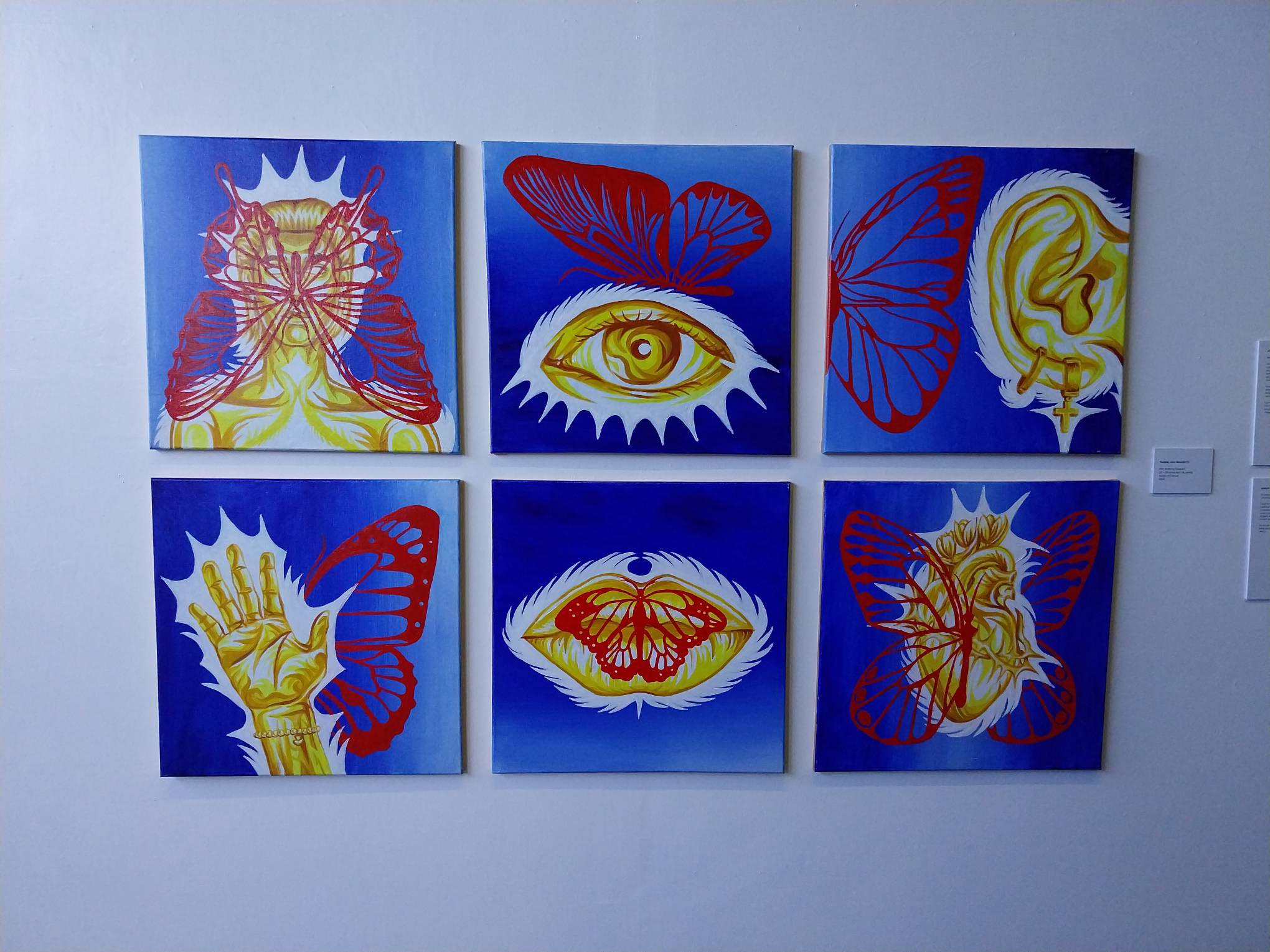
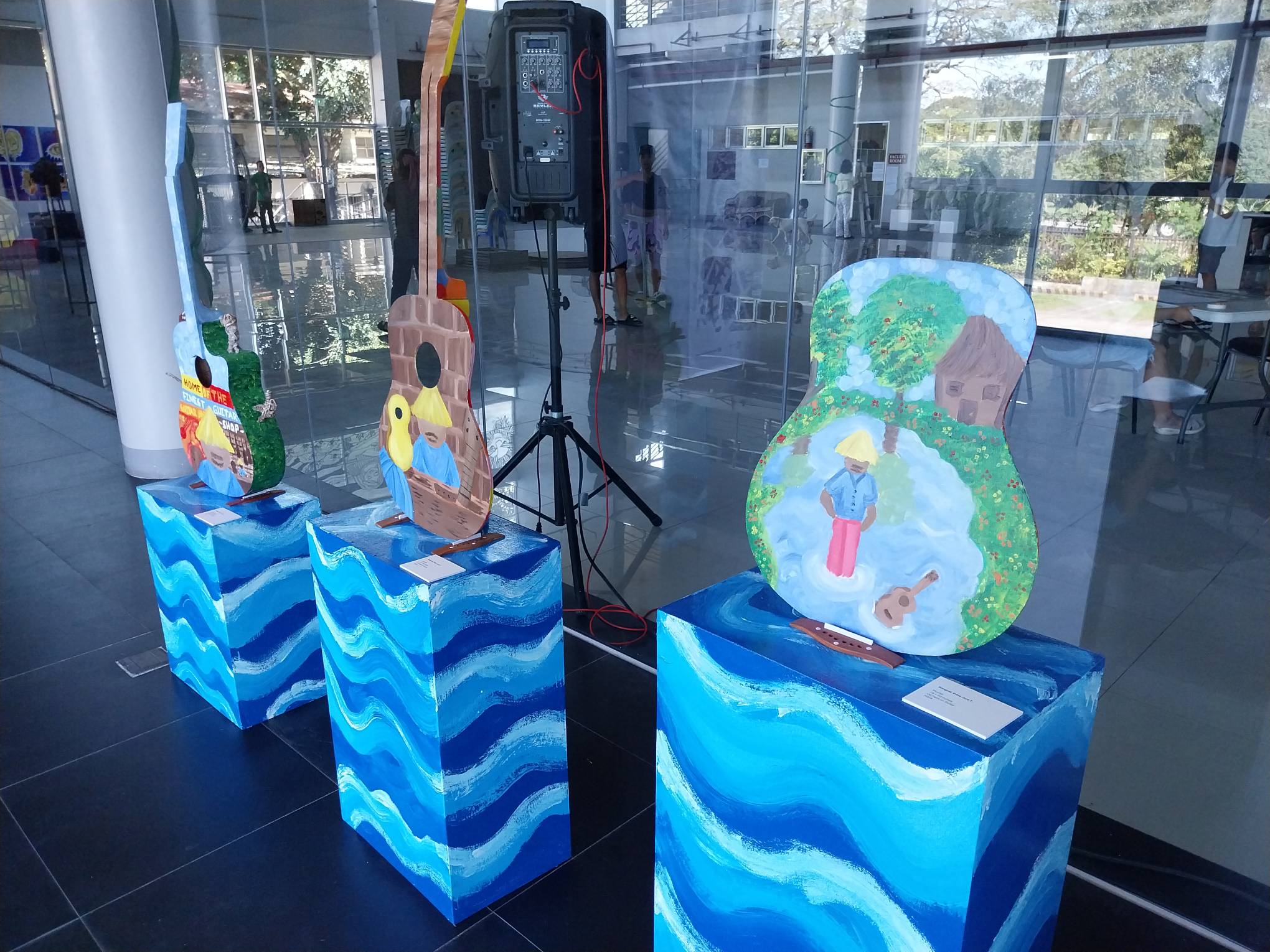
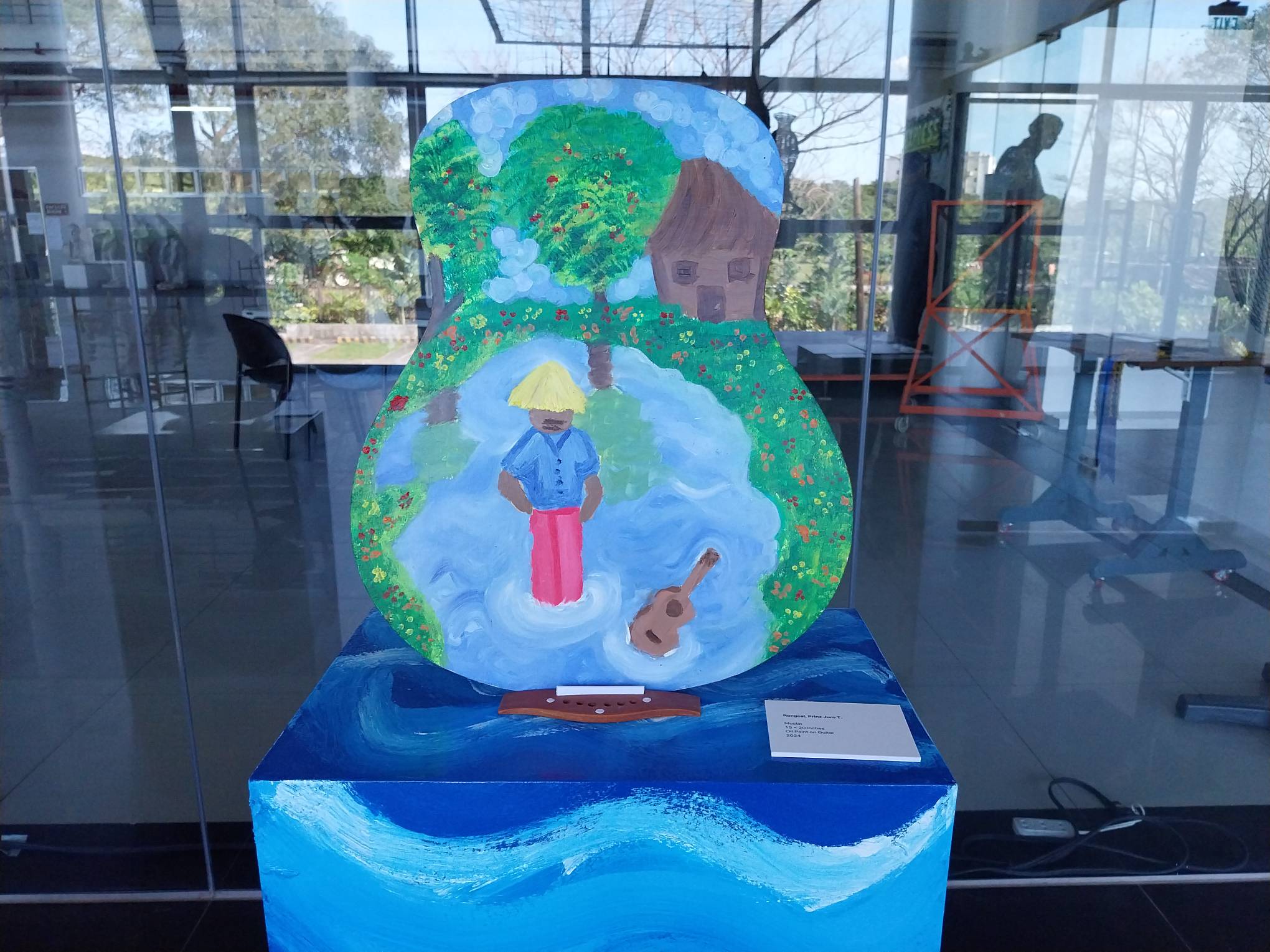
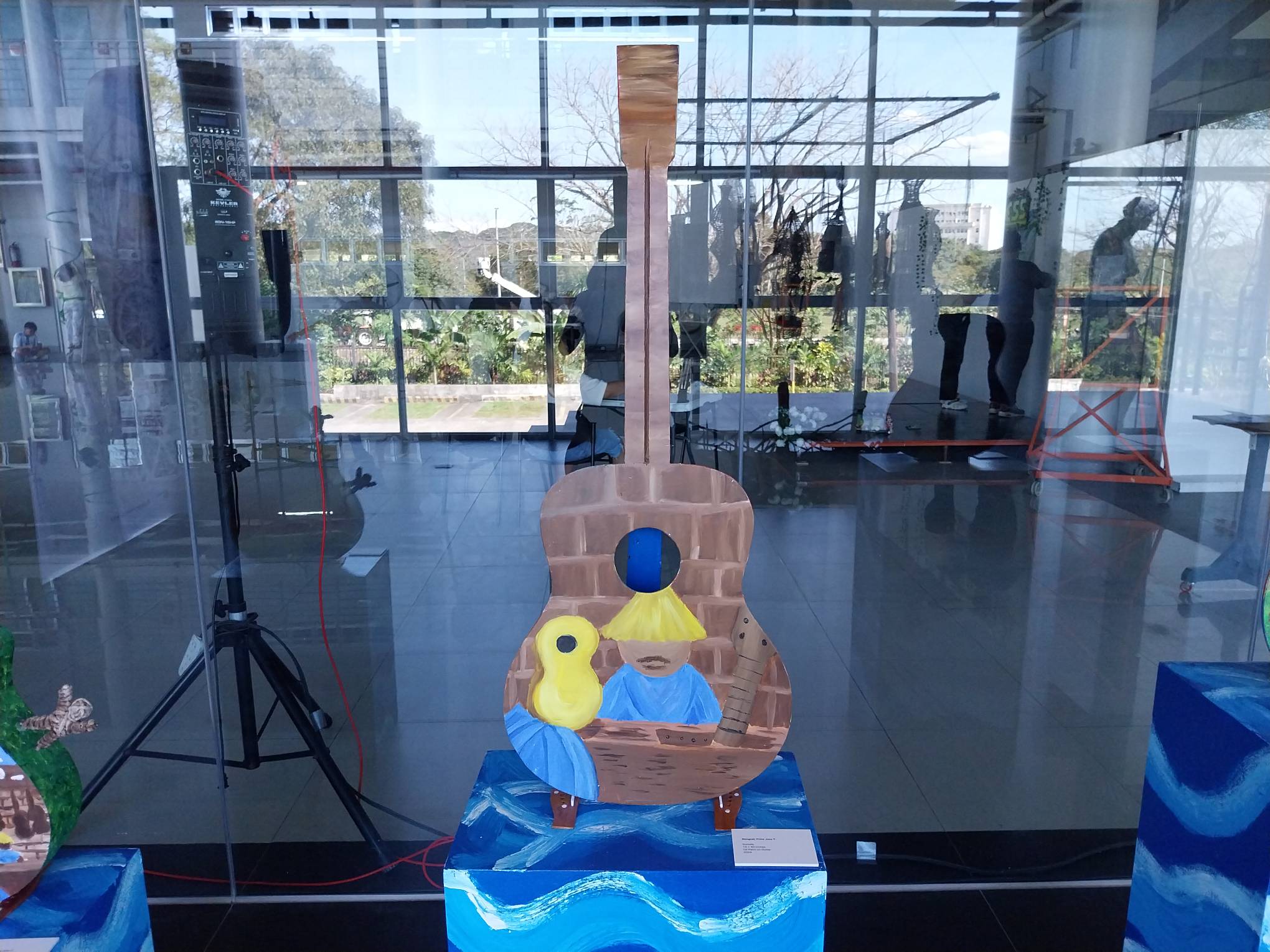
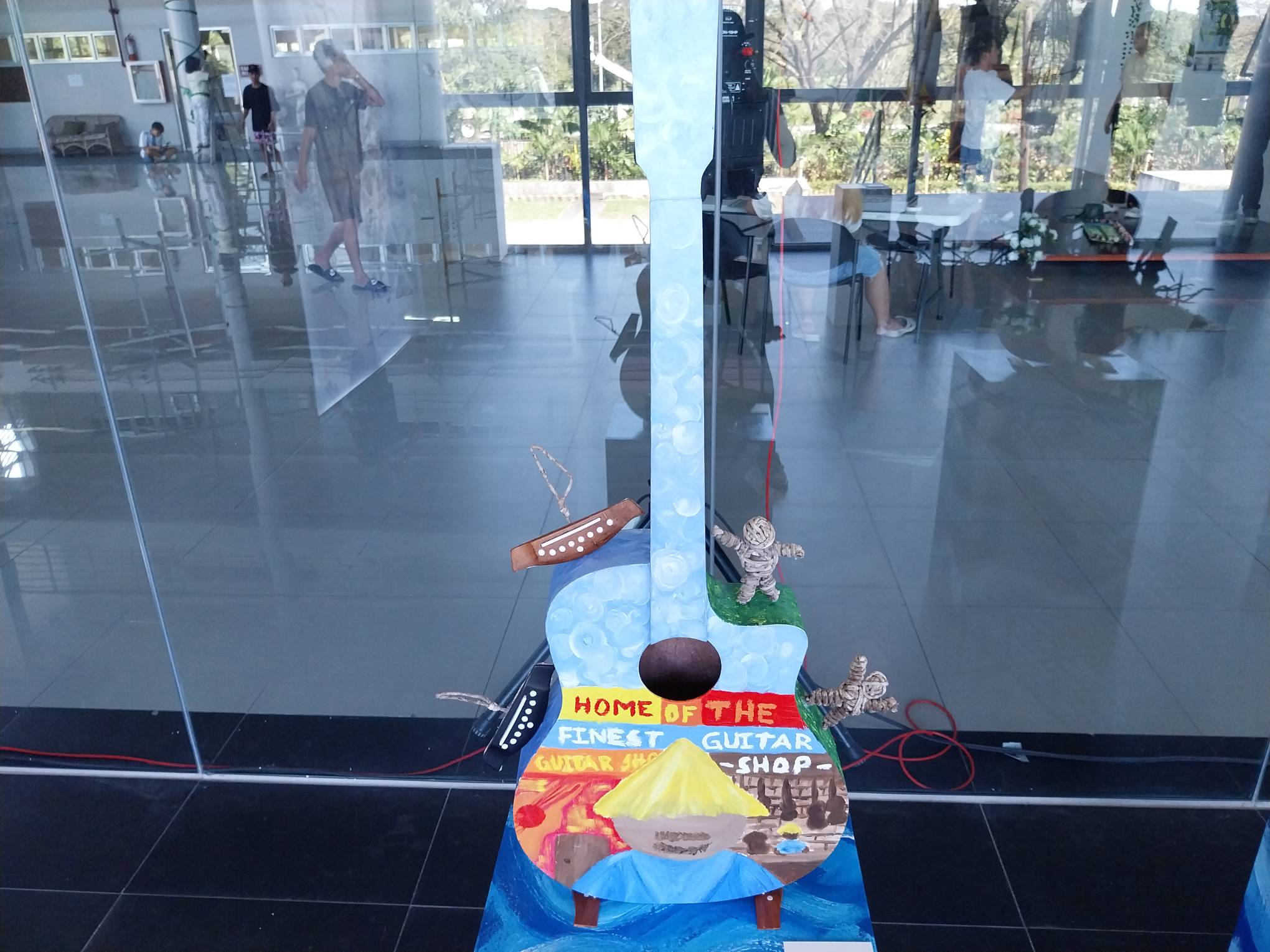
For some of the high school students featured, it allowed them an avenue to discuss their own sociopolitical situations. Prinz Rongcal, for example, painted the bodies of guitars as a way of representing the importance of traditional culture in our art. Meanwhile, John Benedict Medalla designed a six-panel work that communicates the idea of “metamorphosis” through butterflies, with a subtextual metaphor that addresses the queer themes the artist is interested in.
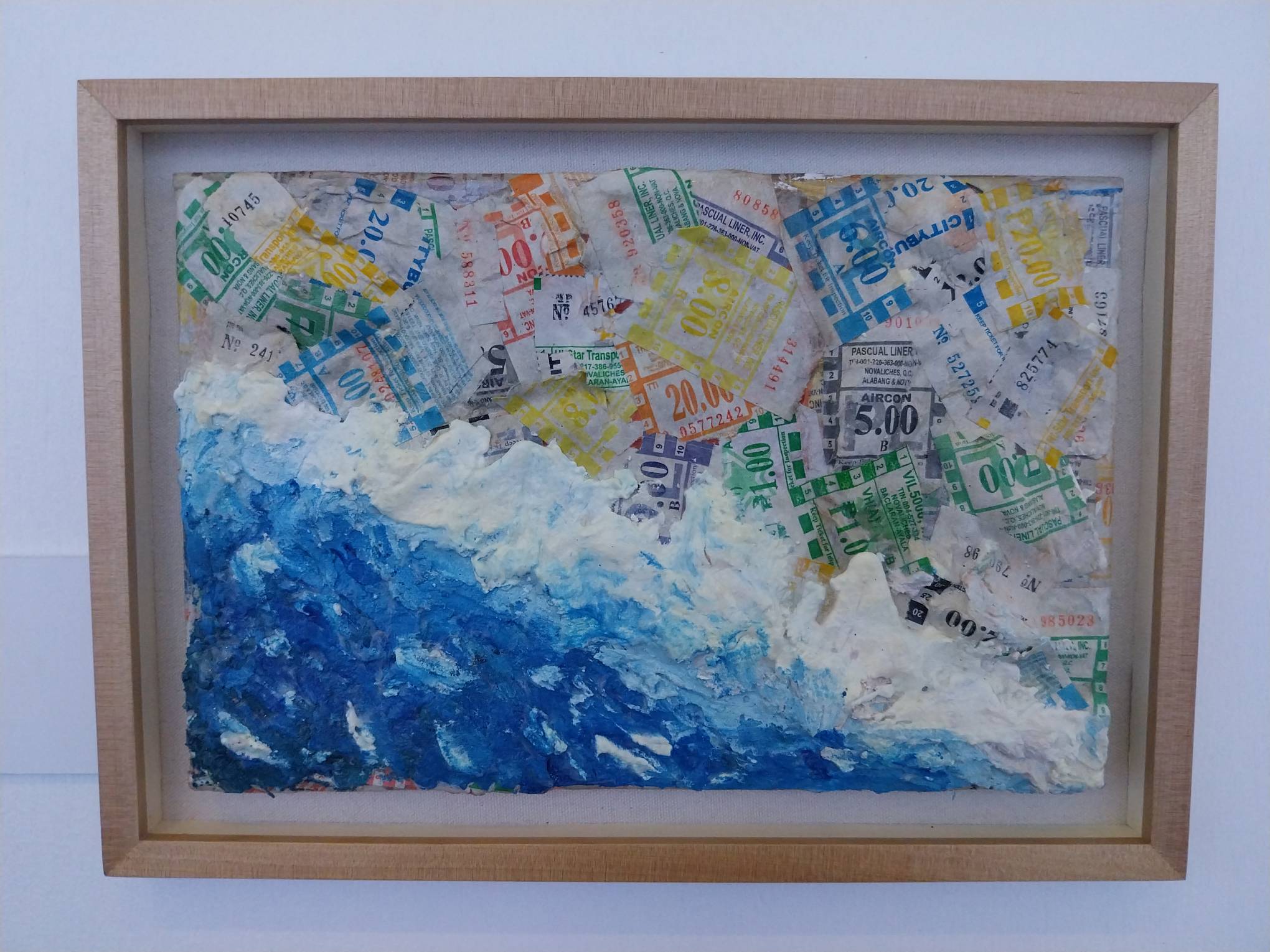
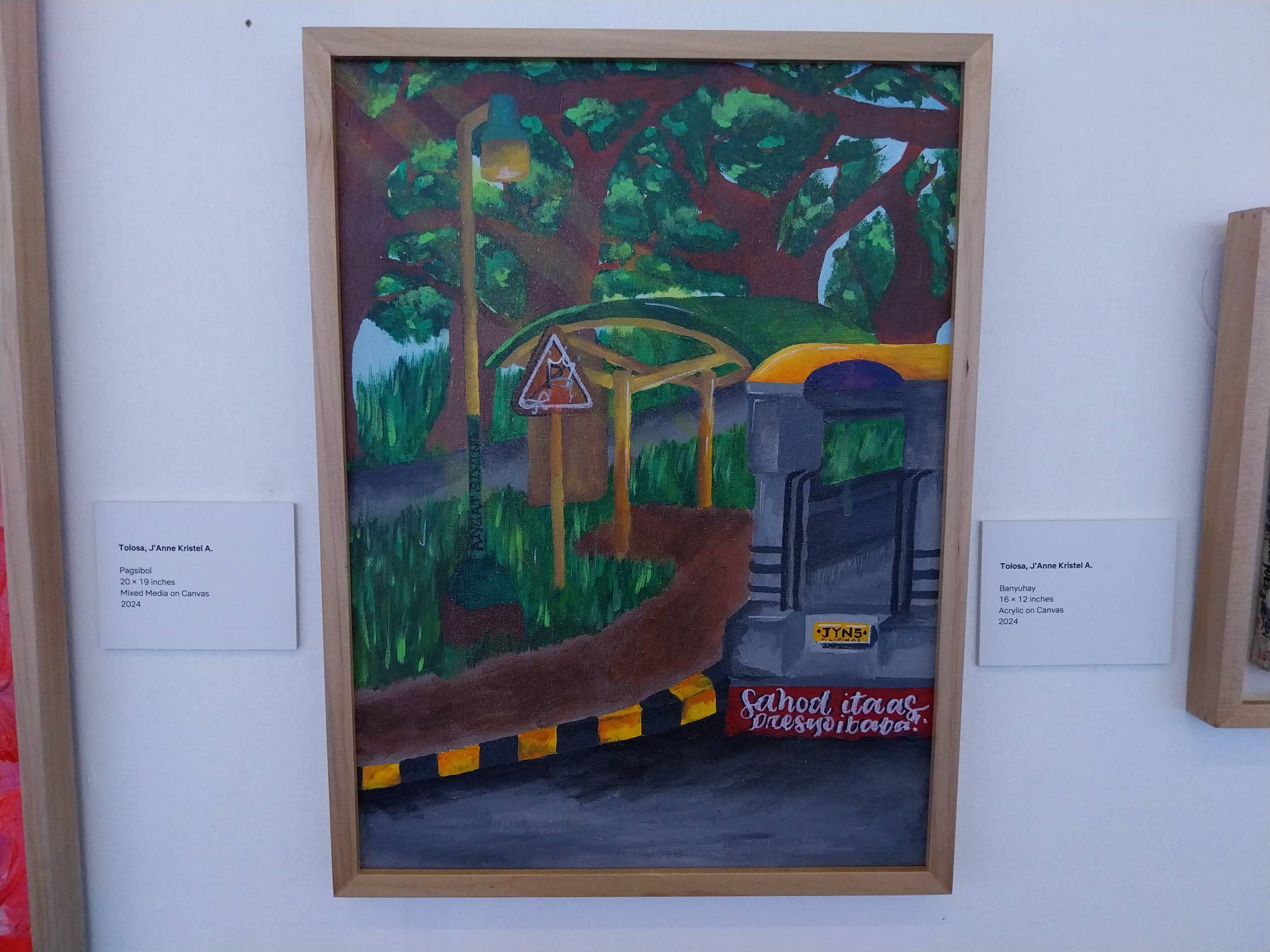
J’Anne Kristel Tolosa’s blend of traditional paintings and mixed media artworks also find interesting ways of illustrating the daily grind faced by different people in the country. One work uses bus tickets in the midst of being washed away. In contrast to that, the artist also paints a jeepney parked next to a waiting shed.
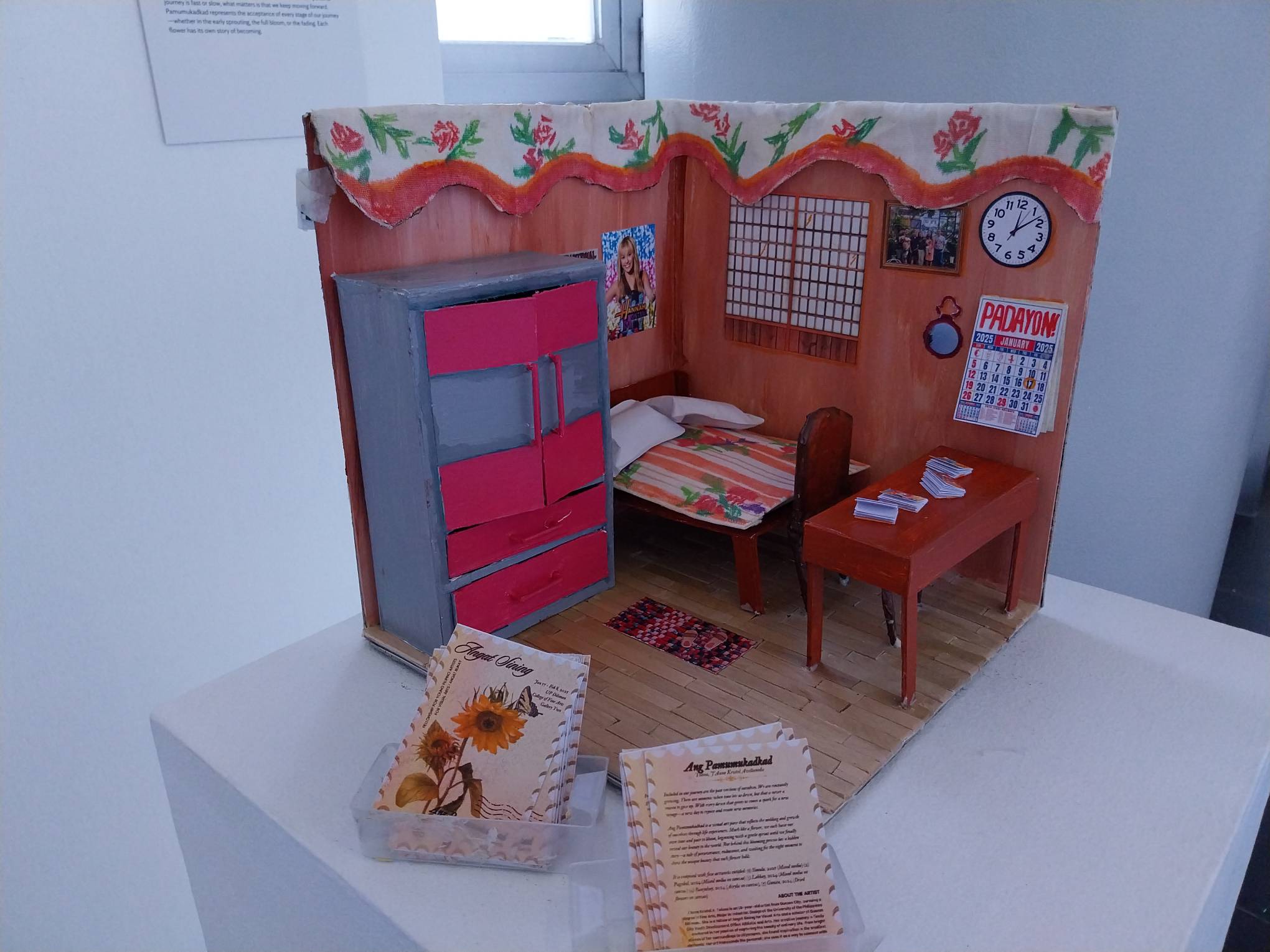
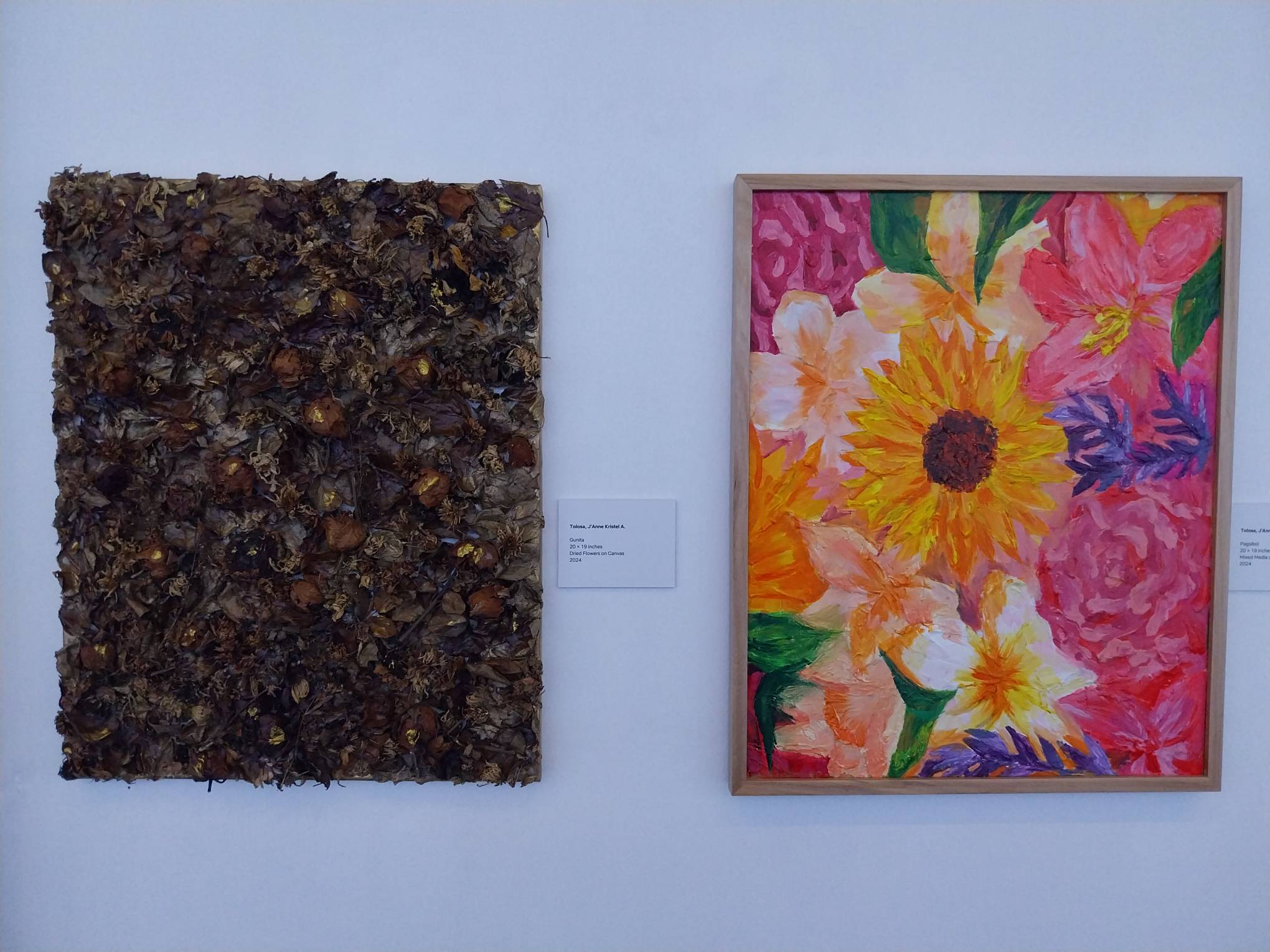
Her other works in the exhibit certainly hint towards a hunger for creativity that plays with the dynamics of ideas and how the medium can serve them differently. Two works here by her center on flowers, but one puts dried flowers on the canvas while the other appears to use paint to depict its blossoming.
Overall, Angat Sining veers towards an attempt to democratize art in both access and topics. It showcases the importance of evolution and practice in making artworks. More than that, it provides the necessity of giving space for growth and freedom for even the youngest artist to ensure both variety and a wide-eyed engagement to Filipino society at large.
The exhibit will be viewable at UP Fine Arts Parola Gallery until February 19.
Photos by Elle Yap.
Related reading: Haiyan Ke Tang: Finding Equality in a Community Center
Frequently Asked Questions
The Angat Sining Fellowship is a mentorship program launched by the non-profit organization Angat Buhay to empower young, marginalized visual artists. The program enrolled twelve high school students in a six-month intensive course designed to explore their artistic potential across various mediums. By partnering with institutions like the Metrobank Foundation and Ateneo de Manila, the fellowship fosters an inclusive space for emerging talent to learn directly from the country’s most established creators.
The program features a prestigious roster of mentors, including National Artist BenCab and celebrated figures such as Mark Justiniani, Toym Imao, and AG Saño. Artist collectives like Ang Illustrador ng Kabataan (Ang INK) and Fotobaryo also contribute their expertise. These mentors provide technical guidance while emphasizing the importance of social impact, inspiring students to use their creative voices to drive positive change within Filipino society.
The artworks in the exhibit reflect a wide array of personal struggles and sociopolitical observations. For instance, Riva Awat uses watercolor series to process existential crises, while John Benedict Medalla explores queer themes through the metaphor of butterfly metamorphosis. Other artists, like J’Anne Kristel Tolosa, utilize found objects such as bus tickets to illustrate the daily grind of the Filipino working class, demonstrating a sophisticated engagement with their surroundings.
Many fellows use their platform to bridge the gap between traditional Filipino heritage and contemporary expression. Prinz Rongcal, for example, uses the bodies of guitars as canvases to represent the vital role of traditional culture in the modern art scene. This focus on “cultural development” ensures that the next generation of artists remains rooted in Filipino values even as they experiment with avant-garde techniques and mixed media.
Angat Sining highlights the necessity of providing marginalized youth with the resources, space, and freedom to grow as creators. By decentralizing art education and providing a platform for those outside the traditional art establishment, the initiative ensures a more diverse and representative “national imagination.” This democratization process is vital for fostering a variety of perspectives that reflect the true complexity of the Filipino experience across all sectors of society.
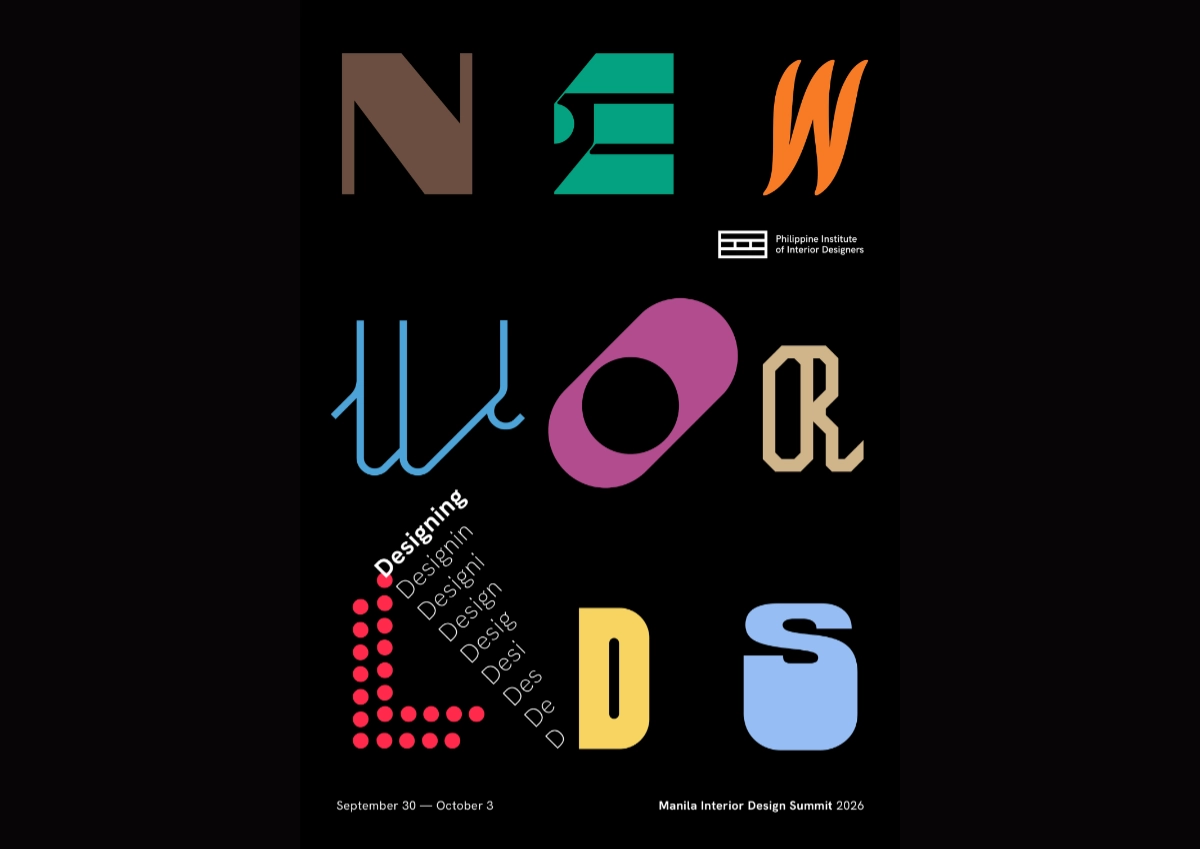
“Thailand has claimed urban creativity and livability. Singapore has institutional design leadership. Indonesia is emerging as a design hub. Vietnam is moving into design innovation. And the Philippines? Its position is not weak. It is simply unclaimed.” For IDr. Cecil Ravelas, National President of the Philippine Institute of Interior Designers (PIID), the challenge is not […]
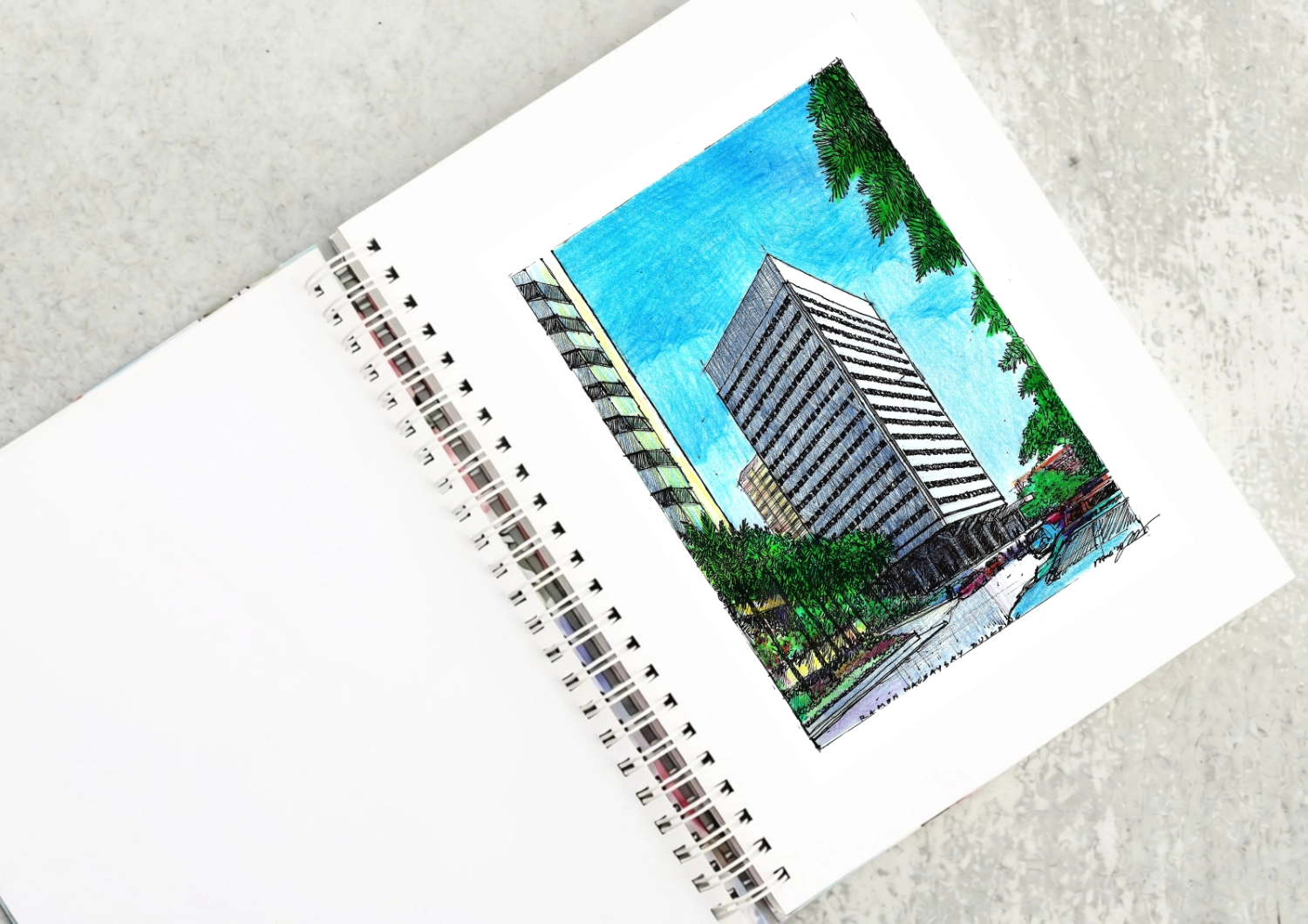
The Ramon Magsaysay Center as a Modernist Landmark Driving down Roxas boulevard from Rizal Park, what will catch your eye is the most elegant modernist structure in the country, the Ramon Magsaysay Center. Most established Filipino architects put it in their top ten lists of favorite buildings. It was designed by Alfredo J. Luz, who […]

Rinna Soriano’s favorite part of her work is sanding. At her workbench, she stays focused, following the grain, adjusting to changes in its direction. Narra, she has learned, can have interlocking grain. A piece of mango once proved particularly difficult until a worker explained that she had reached the point where a branch once grew […]
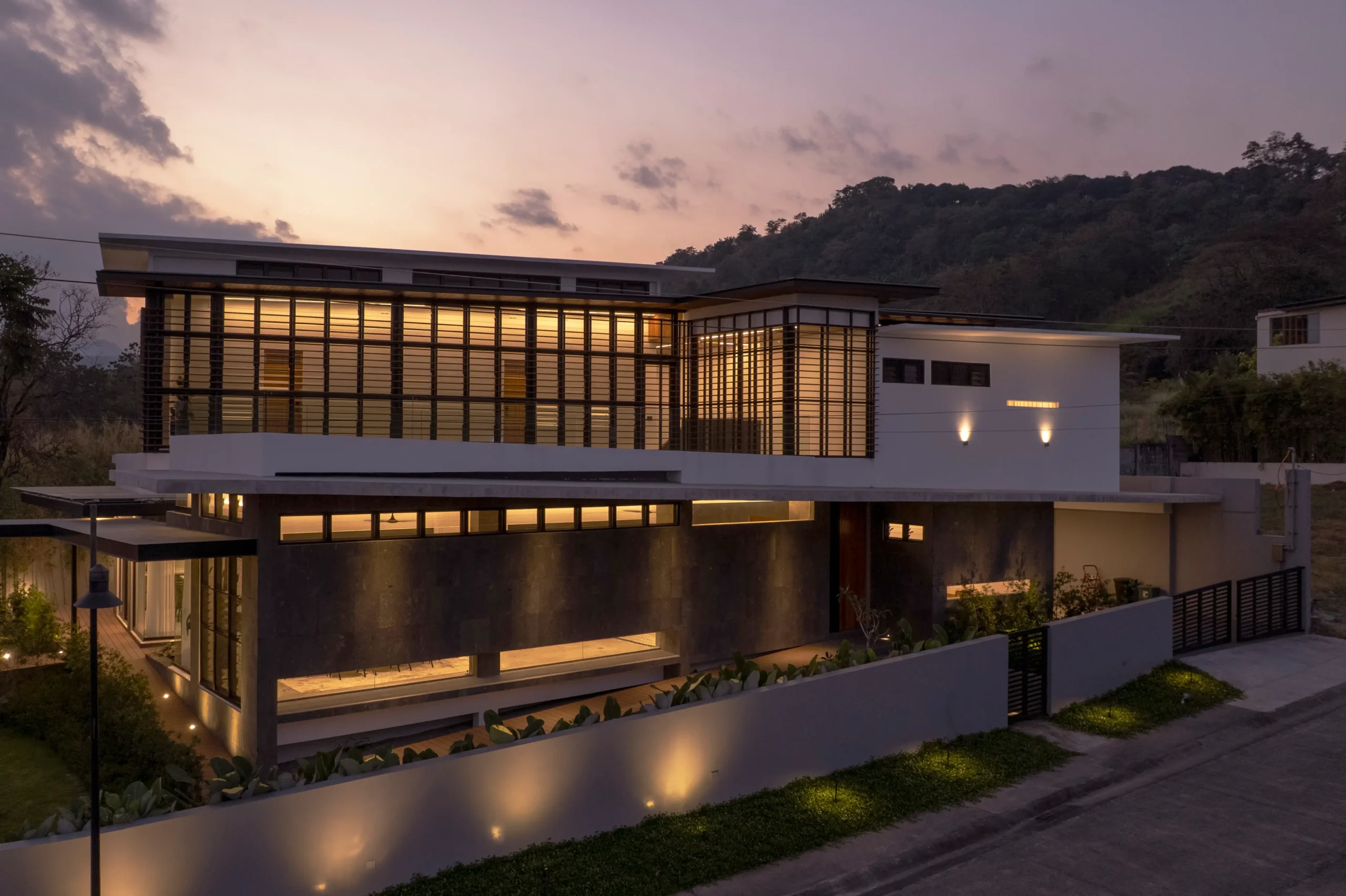
Filipino architectureArchitectureThe art and science of designing and constructing buildings, structures, and spaces that are functional, safe, and aesthetically pleasing. It encompasses the planning, design, materials, and techniques used to createGo to Architecture Glossary has long been associated with indigenous materials and vernacular design strategies, from bamboo and timber construction to jalousie windows, generous spaces, […]
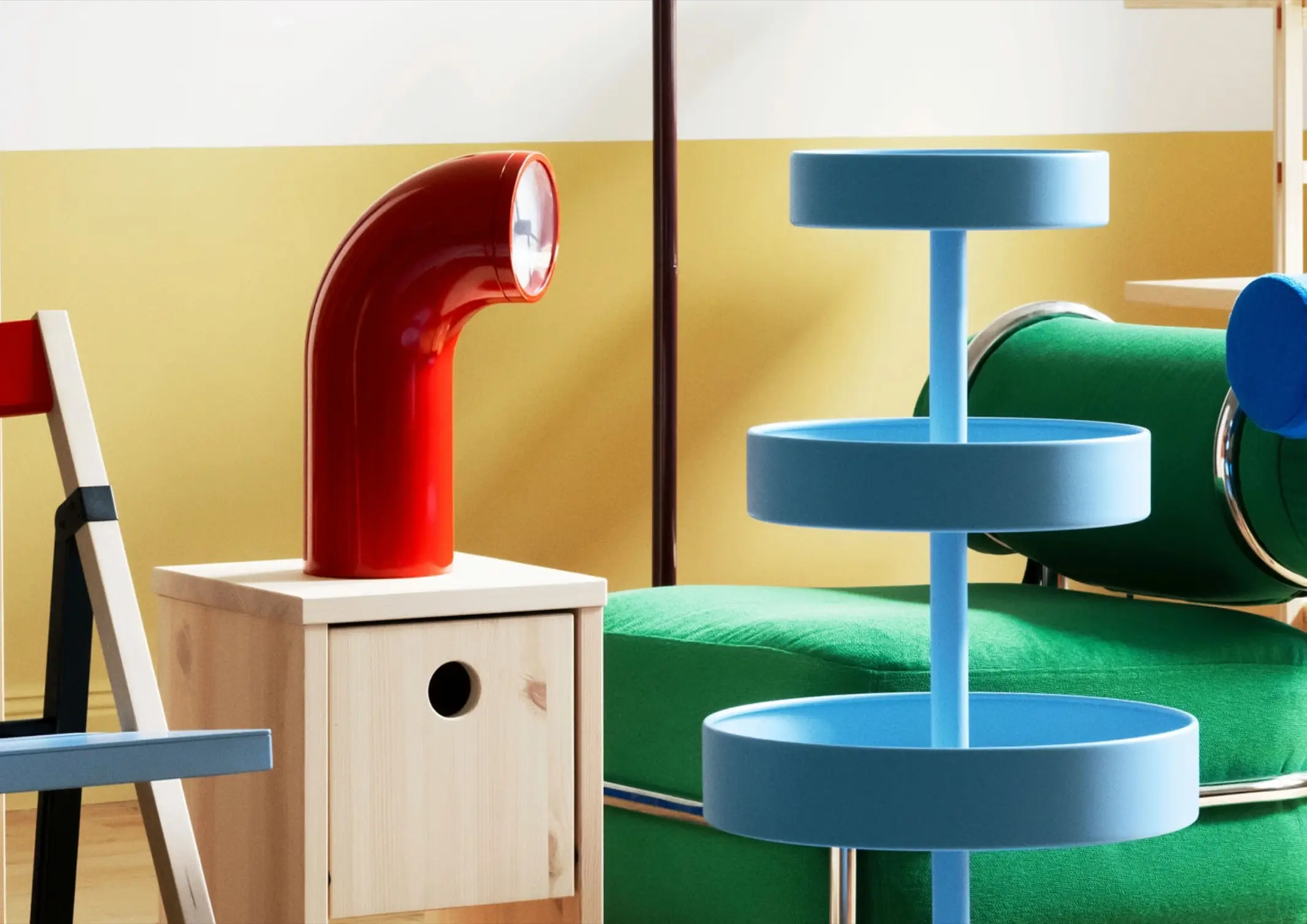
A chair does not always prescribe how to sit in it. A lamp can be more than a source of light. A clock can be more than a way to tell the time.These small departures from convention are at the center of IKEA PS 2026. The latest iteration of IKEA’s experimental PS series comprises more […]
Read the issues.

Collect the volumes.

Recommended Video
Tap to Unmute
Unmute
0:00
0:00