Bigkis is the act of binding. In Tagalog, the word can refer to something used to bind or encircle, as well as a bundle formed by tying several separate elements together. Figuratively, it can also mean a bond, union, or unity. The meanings move from the physical act of joining things together to the connection […]
4 Global Coffee Shop Interior Design Ideas Shaped by Community and Tradition



Coffee weaves itself into the very fabric of countless cultures across the globe. And as coffee shops blossom into vibrant social hubs, they also become expressions of what a community believes and represents. These four coffee shop interior designInterior DesignThe discipline of planning and shaping interior spaces for function, comfort, safety, and beauty. It covers layout, lighting, materials, finishes, furniture, and color, and in the Philippines is a licensedGo to Interior Design Glossary ideas across the globe offer a glimpse into this fascinating interplay between culture, caffeine, and artistic sensibilities, reflecting the distinct character of its local environment.
The Fav Café
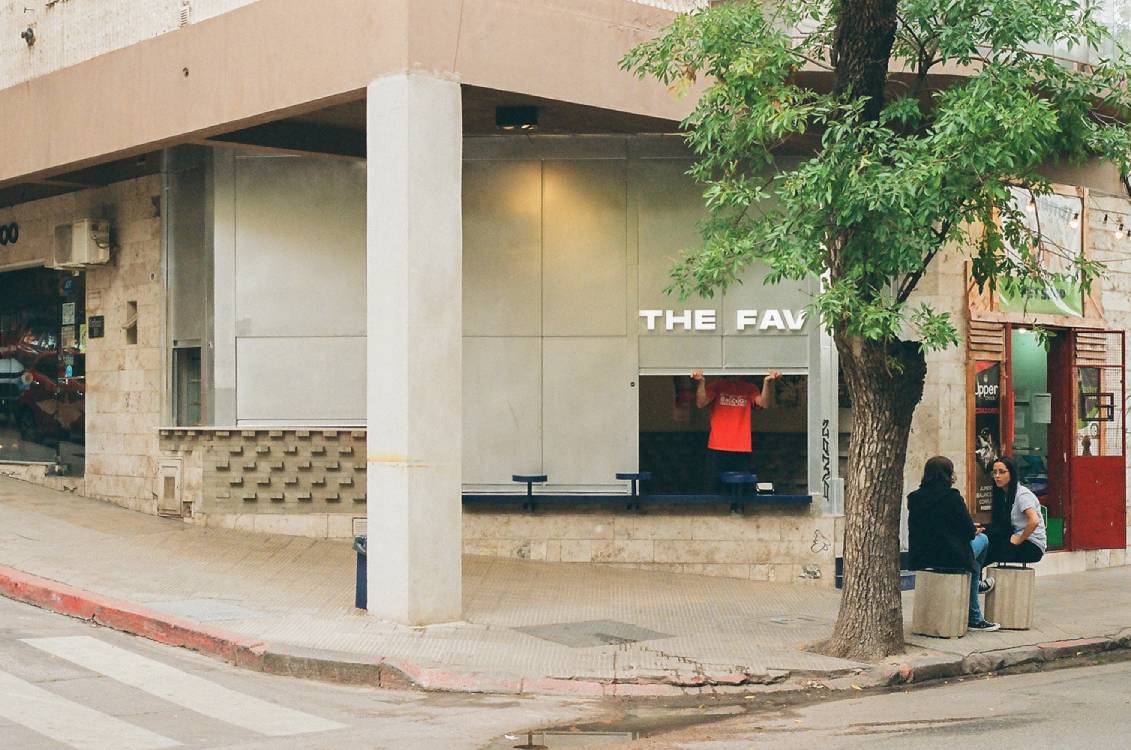
Located in Ciudad de Córdoba, Argentina, this coffee shop presents a compelling study in maximizing functionality within limited urban space. Designed by Rare Studio Experimental, it recognizes the increasing density and cost of urban environments.
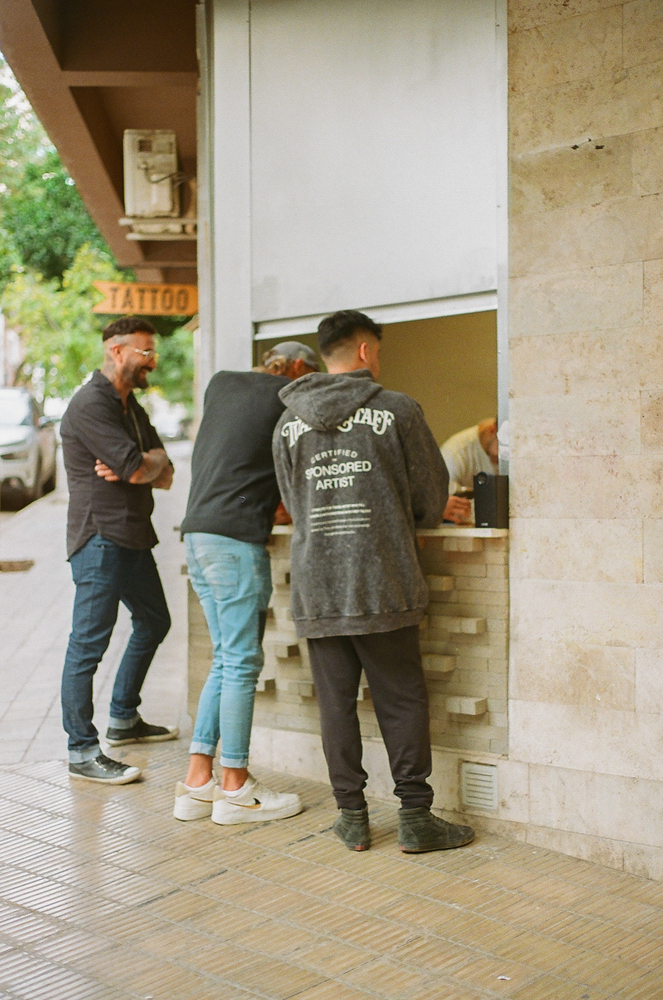
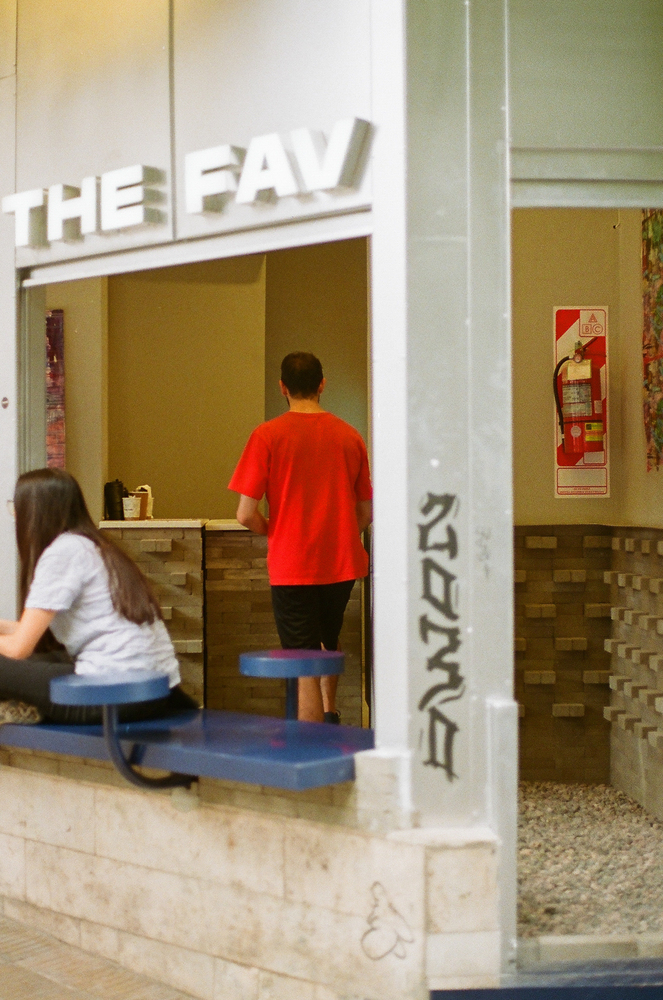
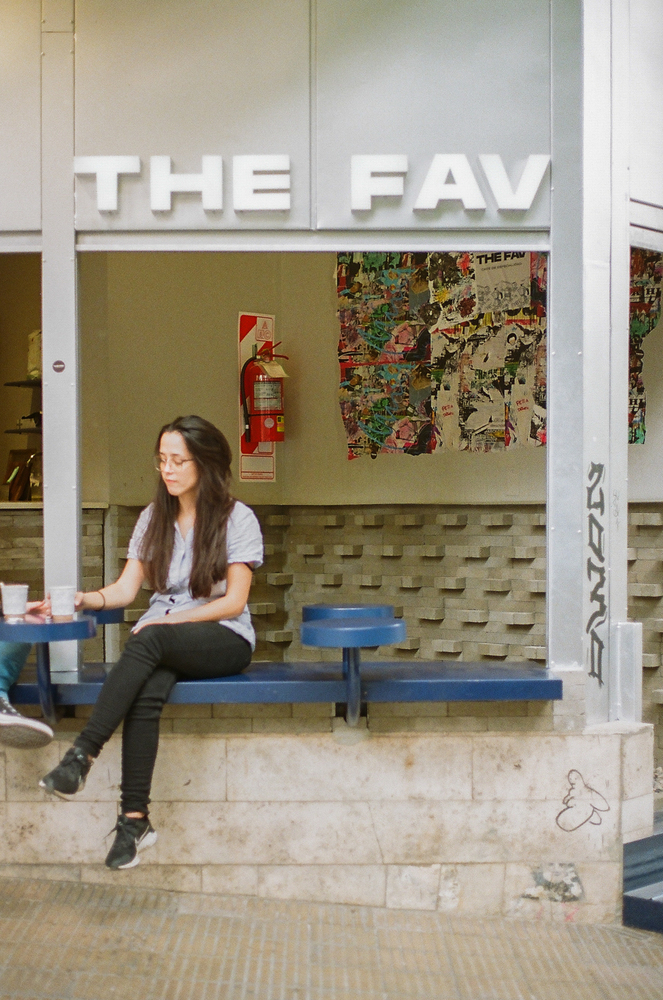
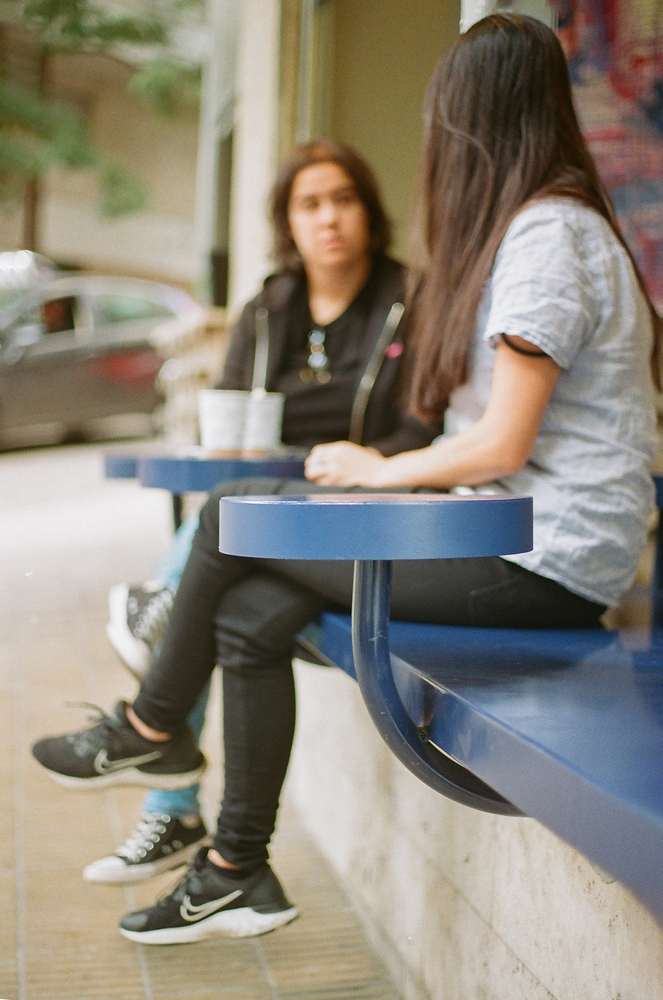
The small coffee shop challenges conventional establishment design by prioritizing efficiency and adaptability to the city street. It intentionally blurs the boundaries between public and private realms. When closed, it appears as a typical street corner with shuttered, graffiti-adorned metal doors and windows. Upon opening, however, the cafe reveals an ingenious use of space, creating a “plaza within a cafe.”
This open layout, featuring street art, a long communal bench, and exterior round tables, invites neighborhood interaction and use even outside operating hours. The dual ordering system, with an interior counter and an exterior take-out window, caters to both lingering customers and those on the move.
With only six tables, the simple coffee shop interior design idea prioritizes serving the on-the-go city dweller and fostering community by reclaiming sidewalk space and encouraging mobility. It contrasts with coffee shop chains that often cultivate exclusive spaces, prompting a reconsideration of how commercial establishments can be more inclusive and serve as neighborhood meeting points.
Ultimately, The Fav Café serves as a valuable experiment in merging public and private space in compact urban settings, offering insights for creating closer-knit communities in increasingly urbanized futures.
Read more here.
Cafe Day
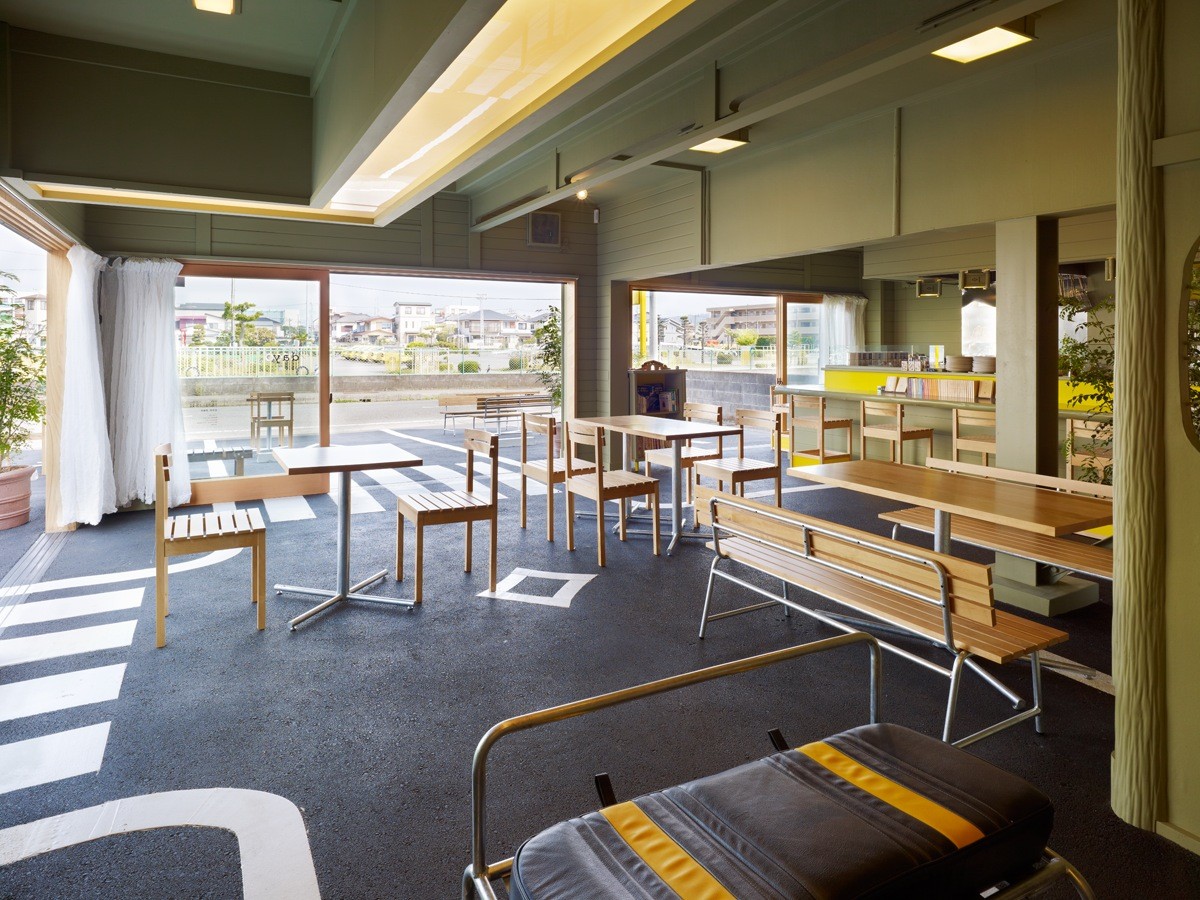
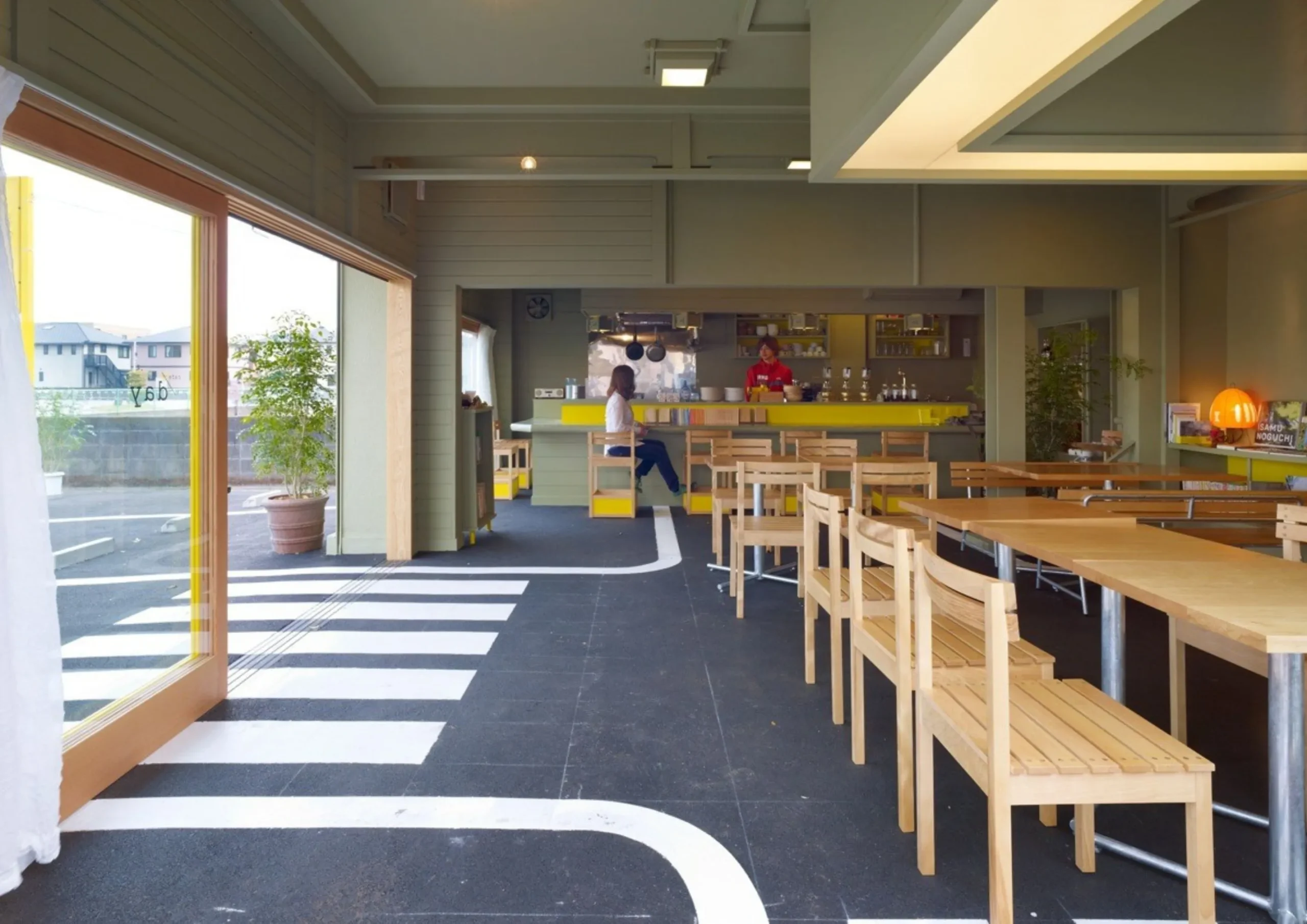
In Shizuoka, Japan, Suppose Design Office creatively transformed two traditional izakaya pubs into a contemporary coffee shop. It is envisioned to be a new neighborhood gathering spot while retaining a sense of community.
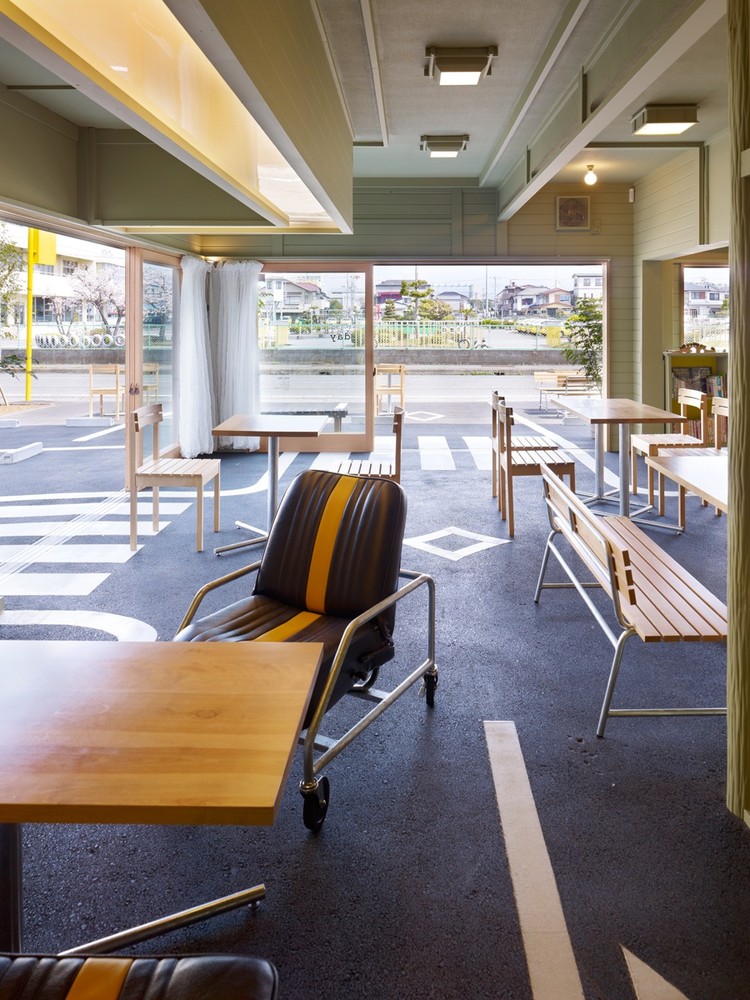
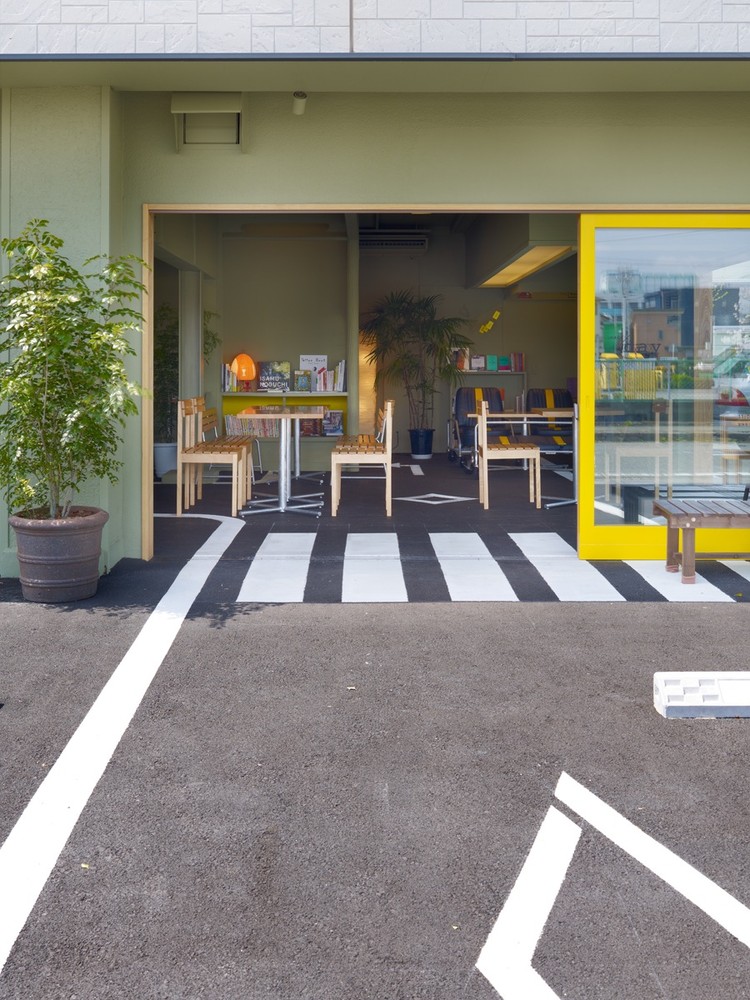
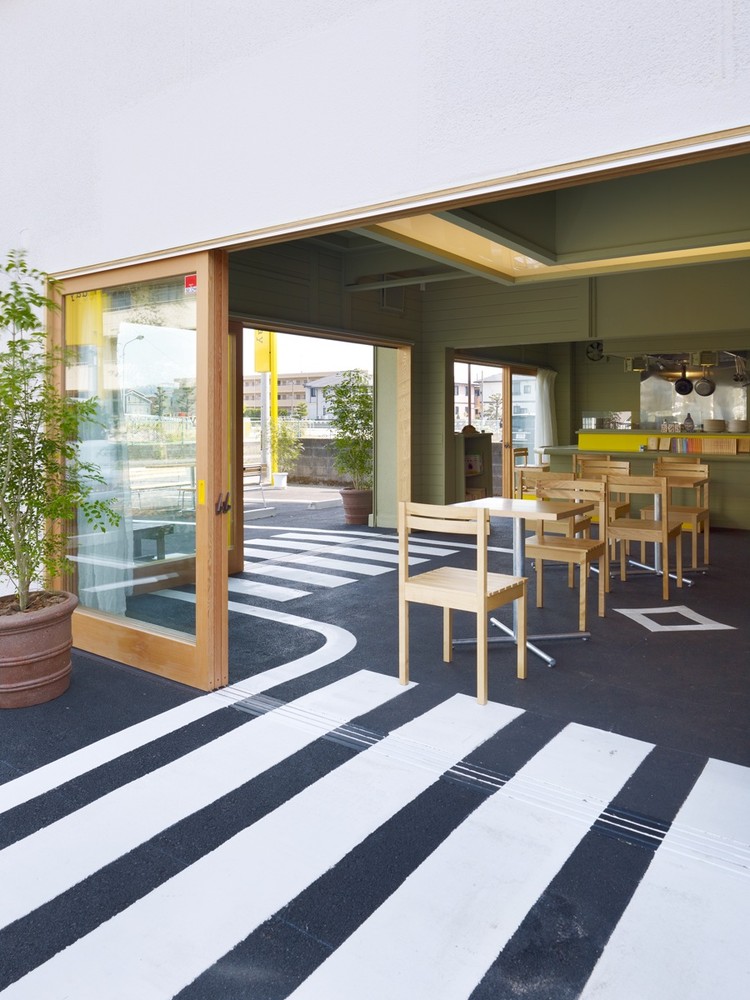
The design cleverly extends the street into the building by using asphalt flooring and incorporating road markings and yellow accents reminiscent of a nearby driving school. This unique approach seamlessly integrates the interior and exterior, further enhanced by the removal of interior walls and the addition of outdoor seating.
Despite its playful urban character, Cafe Day pays homage to its past by exposing structural elements like the wood-cladded gable roofGable RoofA roof with two sloping sides that meet at a central ridge, forming a triangular wall section, or gable, at each end. Simple to build and efficient at shedding rain,Go to Gable Roof Glossary. The modern coffee shop interior design also features repurposed car seats and bus stop-inspired benches, nodding to the local automotive history and public amenities. A restrained yet impactful material palette of concrete, wood, and pops of color creates a bright and airy atmosphere, aligning with Asian Zen design principles and amplified by natural light.
This simple coffee shop interior designInterior DesignThe discipline of planning and shaping interior spaces for function, comfort, safety, and beauty. It covers layout, lighting, materials, finishes, furniture, and color, and in the Philippines is a licensedGo to Interior Design Glossary idea additionally prioritizes both functionality and a welcoming atmosphere. It features an approachable service counter and open shelving and a rear terrace for a more intimate seating area.
Cafe Day now acts as a “third place” for locals, fostering social interaction and community vitality. Through adaptive reuseAdaptive ReuseThe practice of converting an old or disused building for a new purpose while keeping its structure and character. In the Philippines, it has turned heritage houses, warehouses, and factoriesGo to Adaptive Reuse Glossary and imaginative design, Suppose Design Office has created a vibrant destination that celebrates its context and offers a fresh perspective on local identity.
Photos by Toshiyuki Yano
To learn more about the feature, click here.
Coffeelin
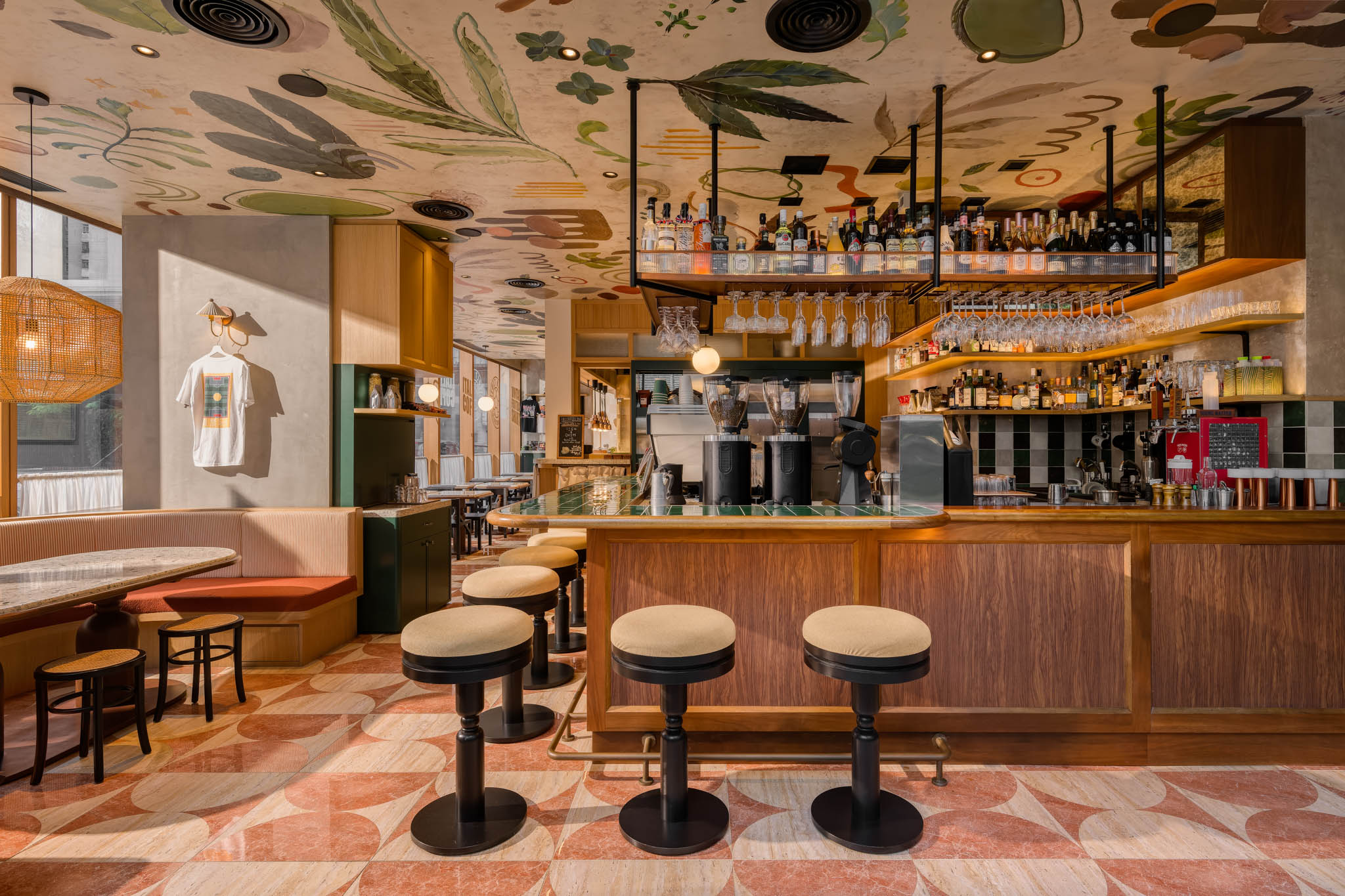
Hong Kong’s cosmopolitan environment serves as the backdrop for this Italian coffee shop that transcends mere beverage service. Collaborating with JJ Acuña / Bespoke Studio, its new locations in Fortress Hill and Central aim to immerse patrons in Italian heritage and foster connections across diverse backgrounds through a shared appreciation for coffee culture.
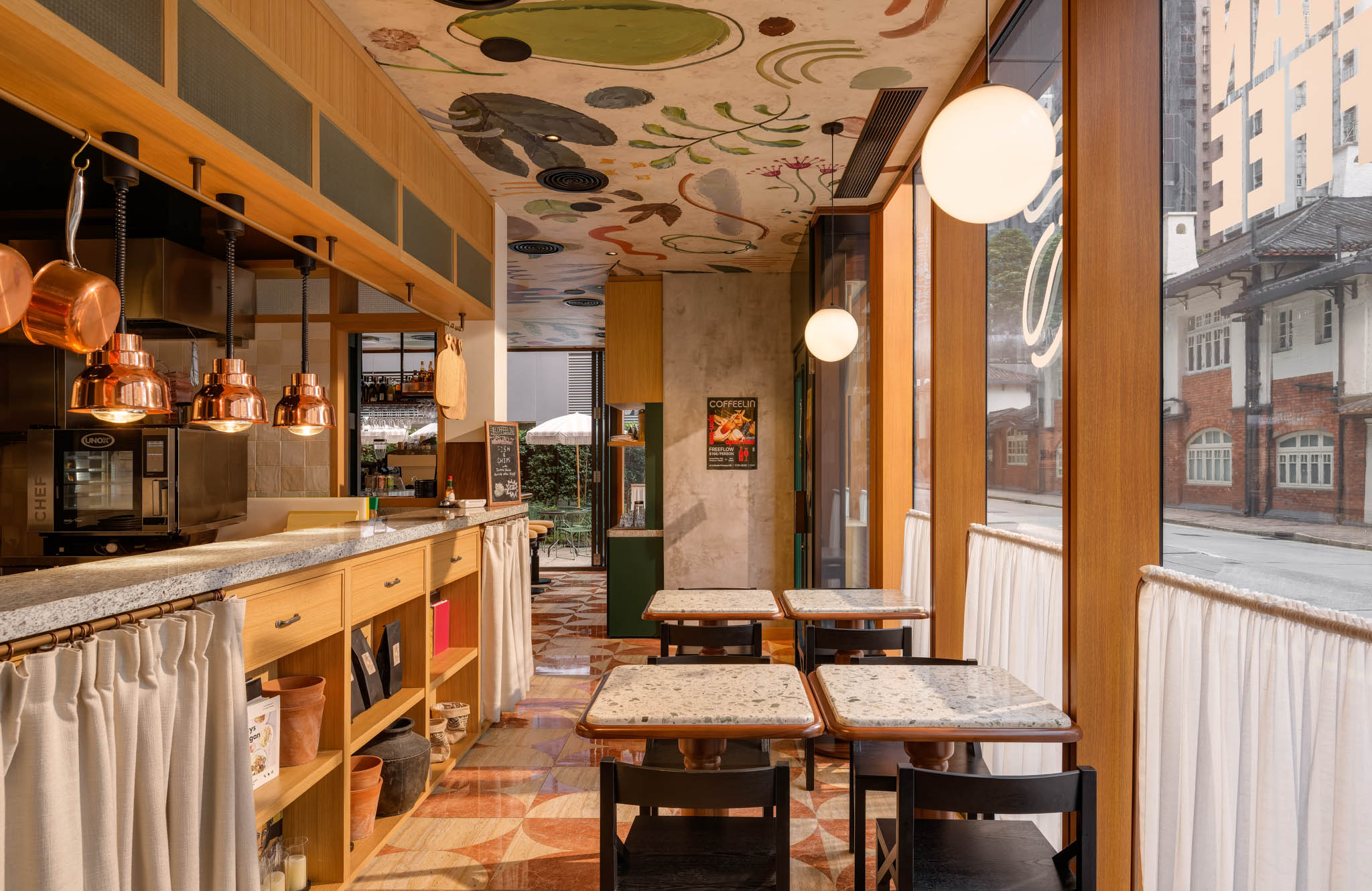
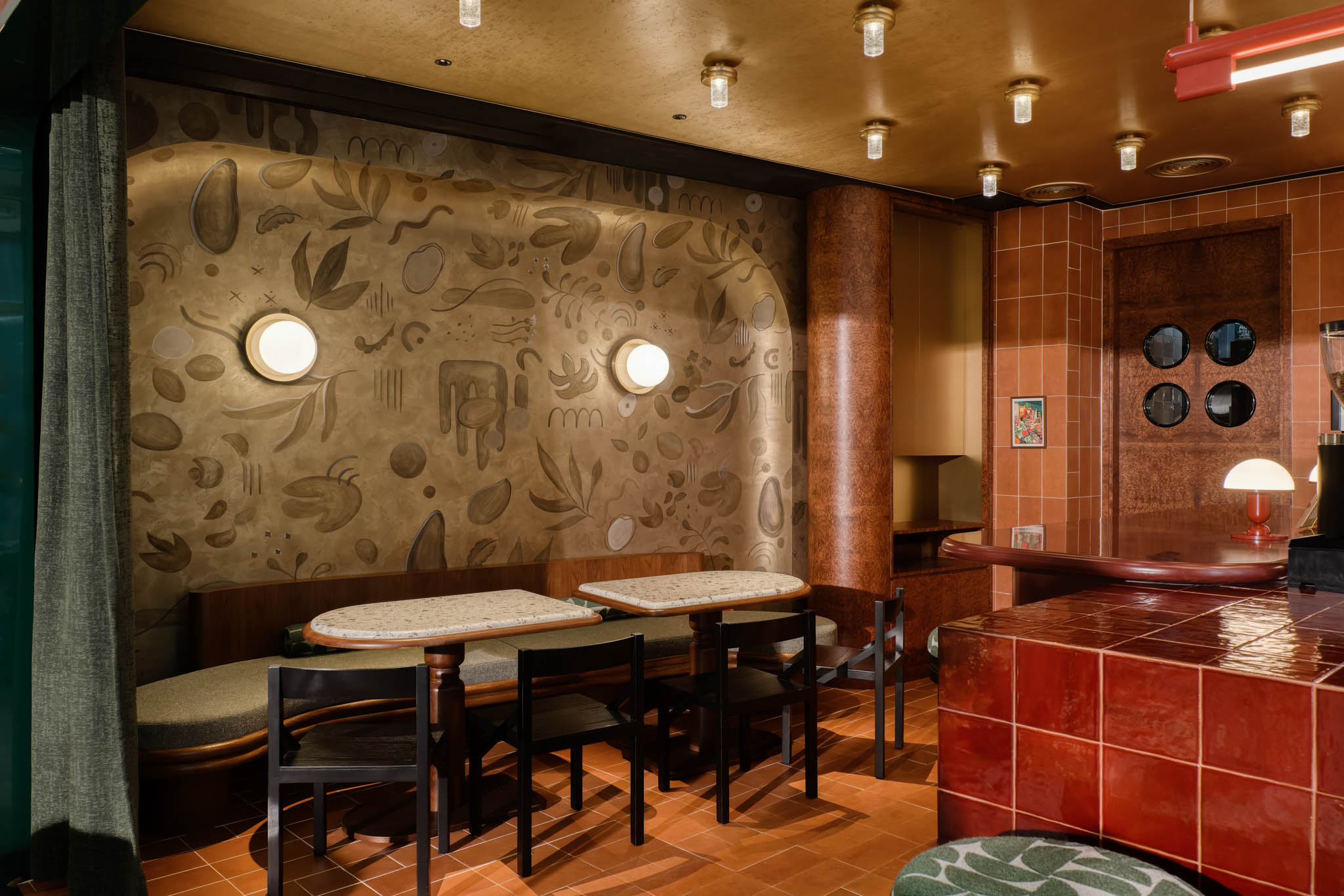
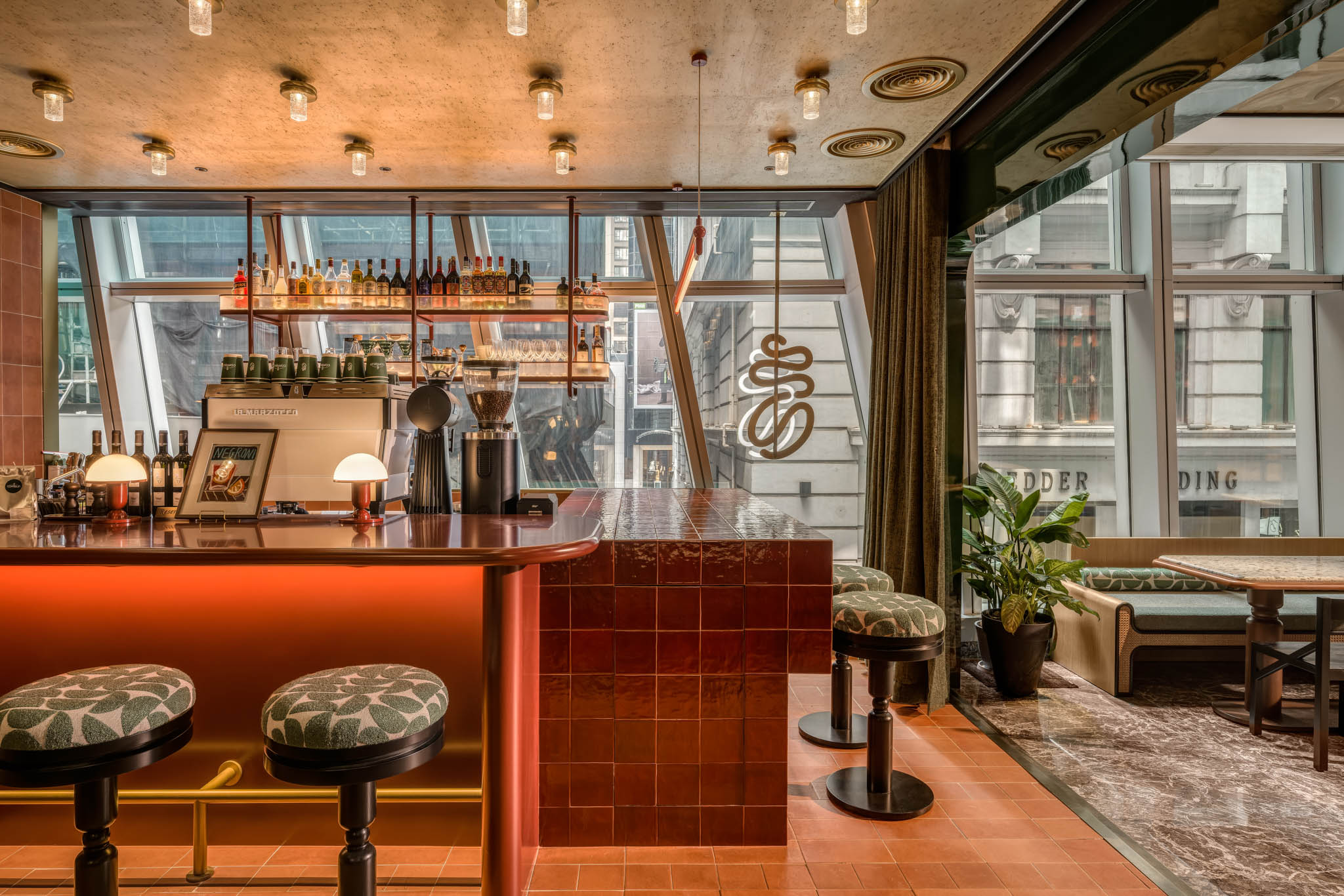
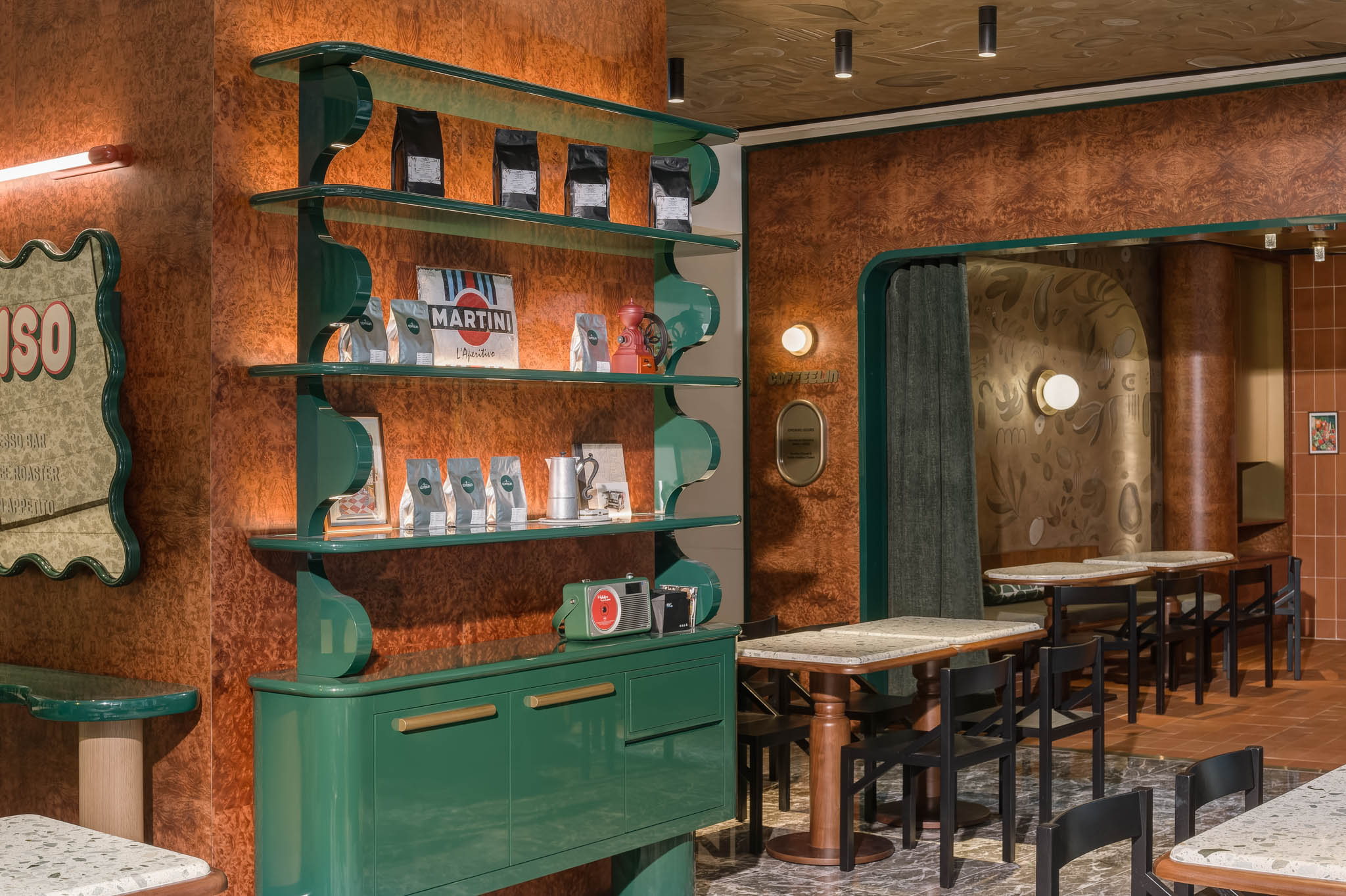
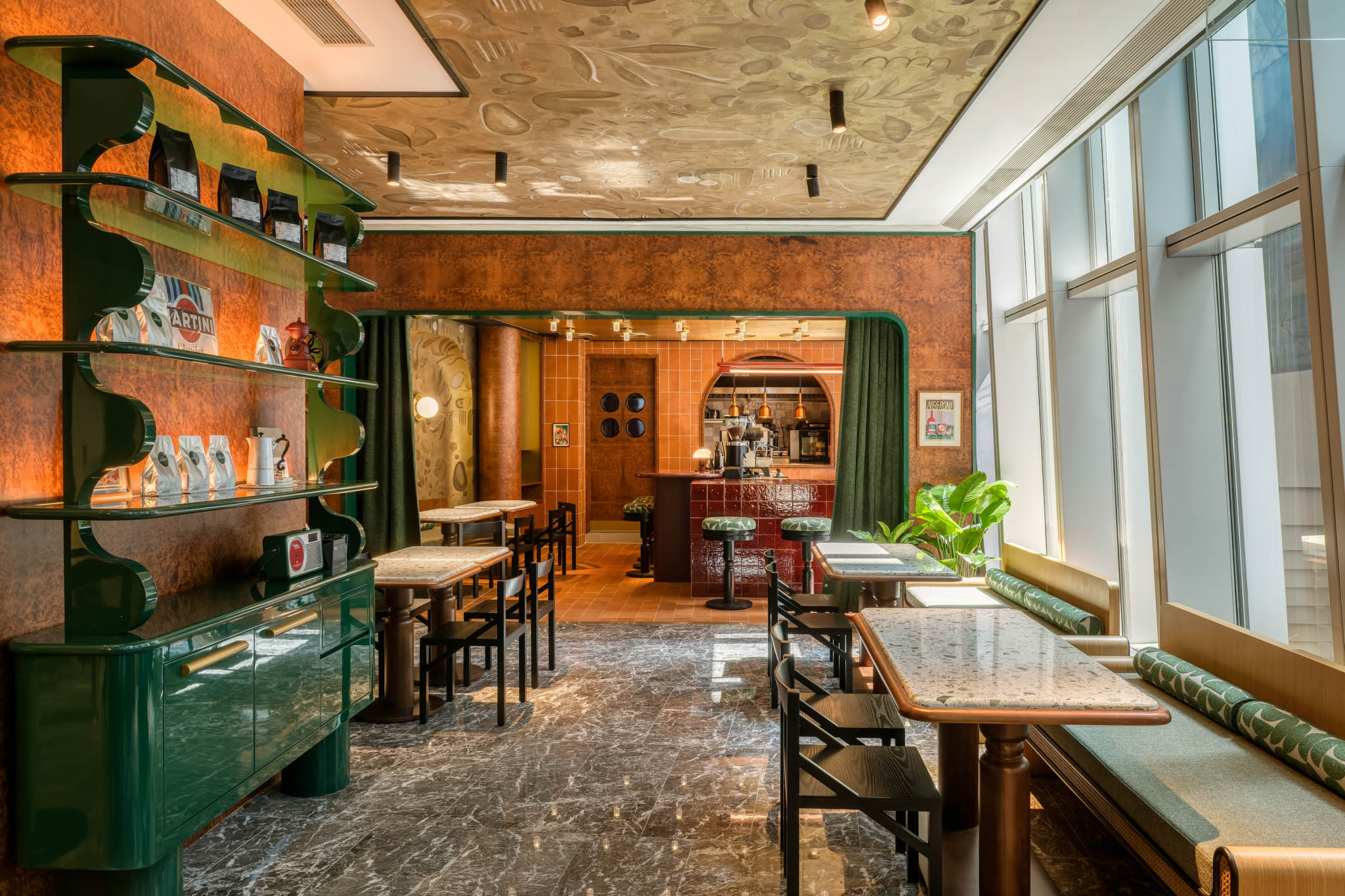
Since its 2021 Happy Valley debut, this coffee destination showcases Milan’s vibrant day-to-night café scene. As the exclusive Asian supplier of Torrefazione Griso beans, it offers authentic Milanese brews.
This dedication to Italian flavor extends to the modern coffee shop interior designInterior DesignThe discipline of planning and shaping interior spaces for function, comfort, safety, and beauty. It covers layout, lighting, materials, finishes, furniture, and color, and in the Philippines is a licensedGo to Interior Design Glossary. It highlights Memphis-style art, antique mirrors, and other details evoking Italian nostalgia.
The two new expansions also introduce distinct narratives. Coffeelin Fortress Hill embodies a cozy Italian osteria, reminiscent of a grandchild’s tribute to their grandmother, with rustic and mid-century elements, an open kitchen fostering familial warmth.
Meanwhile, Coffeelin Central captures the conviviality of a traditional taverna, sparking childhood memories with terracotta tiles, black marble, and playful touches like mushroom lamps, encouraging interaction through shared tables.
Acuña emphasizes that these new spaces celebrate different facets of Milanese family heritage, inviting guests to become part of the Coffeelin family and experience the brand’s unique traditions. Coffeelin’s growth represents an ongoing narrative, weaving Italian coffee culture into Hong Kong’s dynamic landscape, one thoughtfully designed space and shared experience at a time.
Photo credits to Steven Ko Photography
Check the full article here.
Tanatap Frame Garden
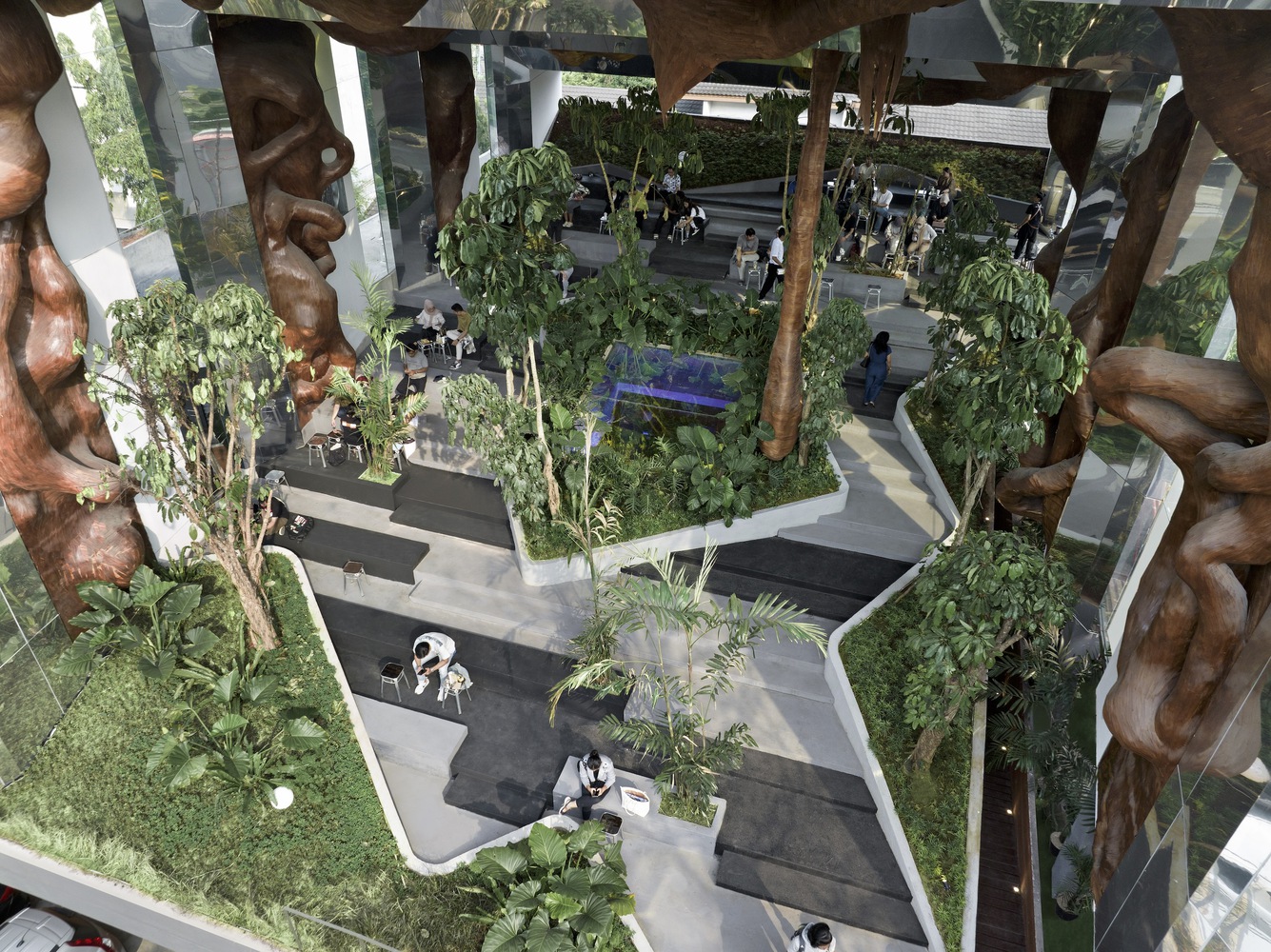
RAD+ar’s interior design for a coffee shop in Jakarta redefines urban building. It eschews a traditional facade for a layered series of surfaces that frame views and integrate nature. This two-story structure offers an immersive experience, allowing patrons to feel connected to the outdoors within the city.
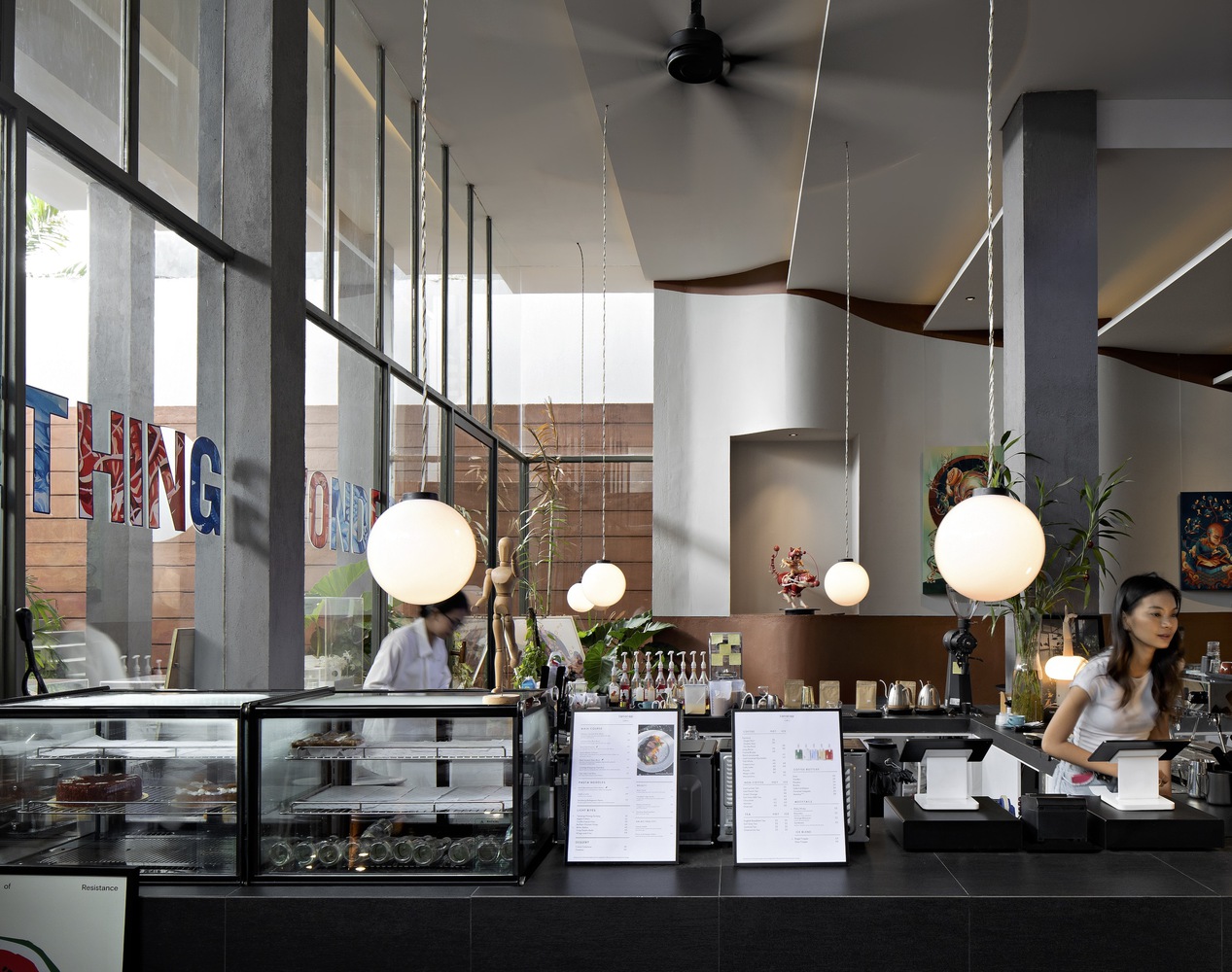
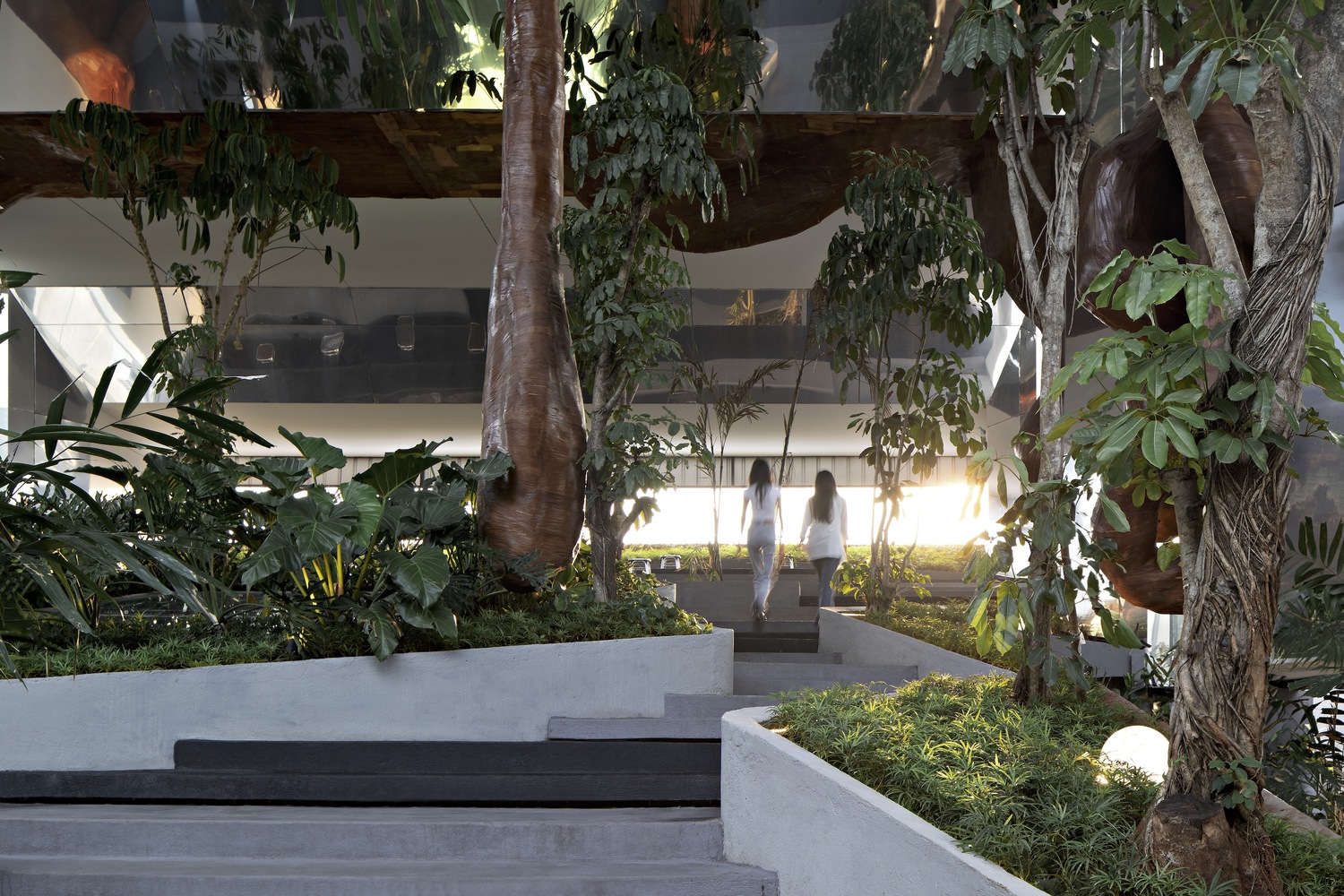
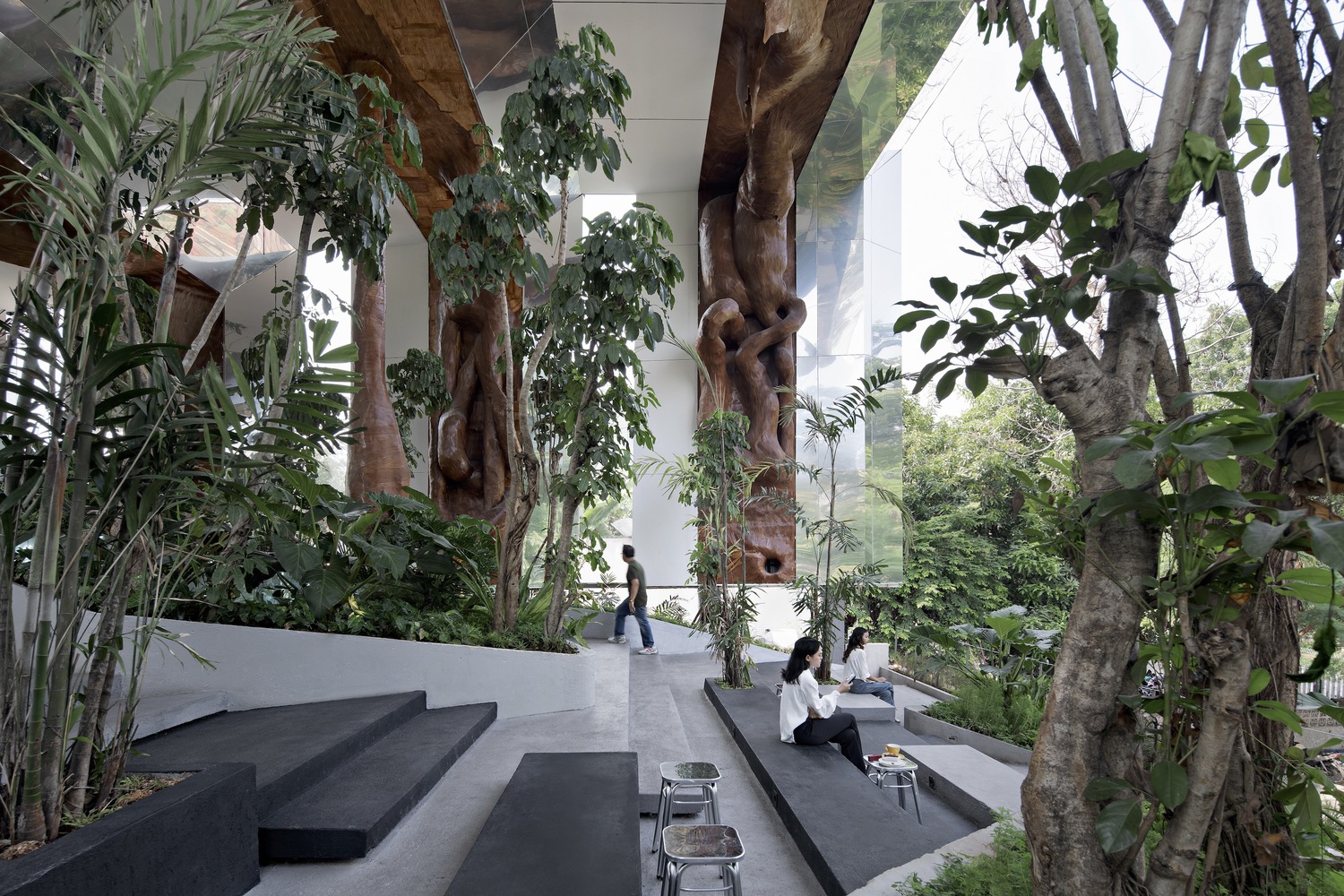
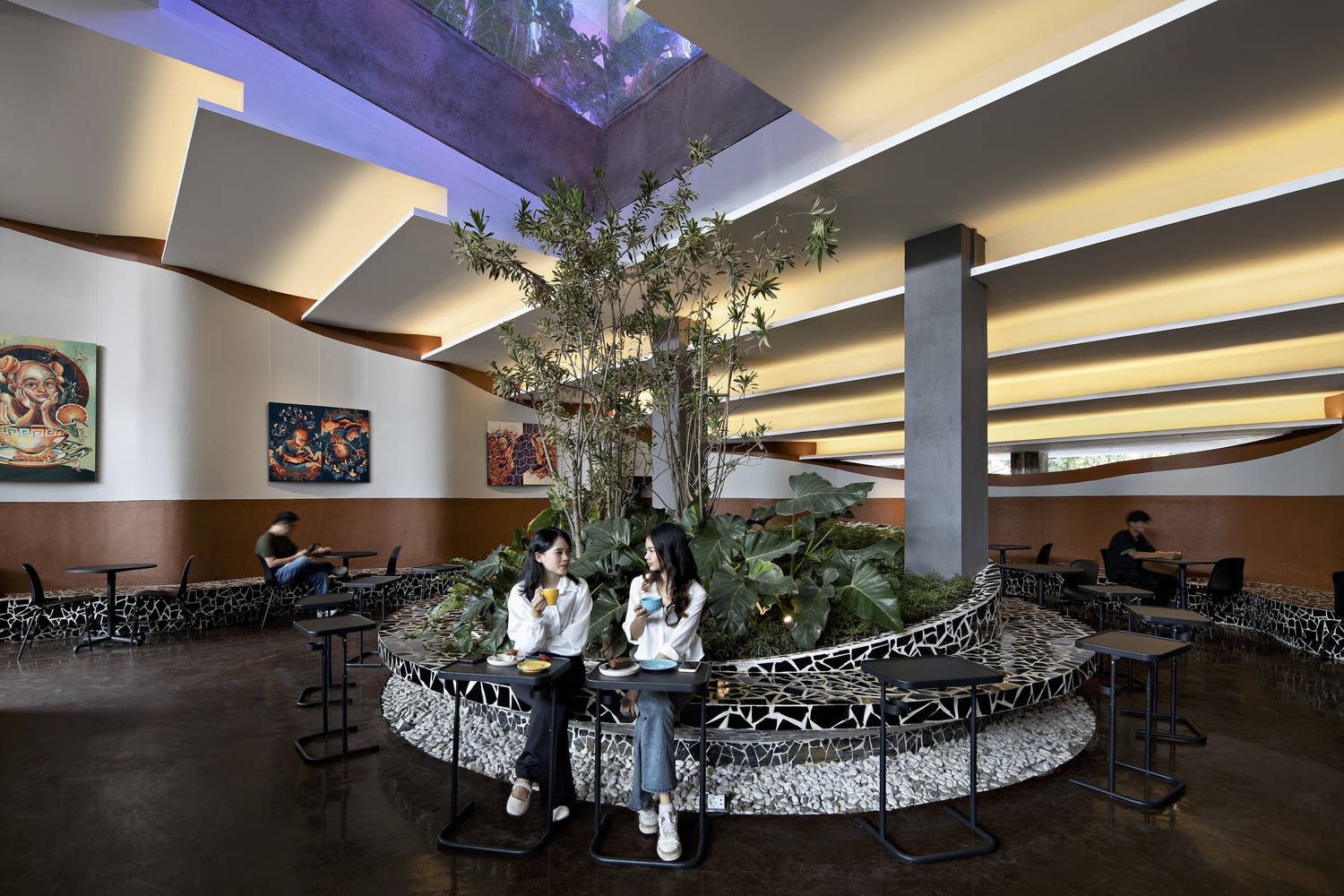
The ground floor features a conventional space. A central skylight, communal tables, and curved seating along the perimeter, all set against a minimalist backdrop of wood and concrete defines the simple coffee shop interior designInterior DesignThe discipline of planning and shaping interior spaces for function, comfort, safety, and beauty. It covers layout, lighting, materials, finishes, furniture, and color, and in the Philippines is a licensedGo to Interior Design Glossary. A central pocket garden and strategically placed artwork enhance the ambiance, while the floating ceiling design subtly guides exploration.
The second floor unveils the coffee shop’s unique “frame” concept: an amphitheater-like garden sloping towards the existing tree line. This facade-less design, utilizing materials like stainless steel, GRC, glass, and parametric wood-like vines, opens the building to Jakarta’s natural beauty, inviting in light and breezes.
Interconnected spaces and a dramatic shift in ceiling height create a sense of discovery and highlight the garden’s grandeur. Circulation is made user-friendly with steps, counters, and built-in seating interwoven with plant boxes and trees. Reflecting glass and openings further blur the lines between interior and exterior.
Beyond aesthetics, the design prioritizes environmental and social sustainability. The building’s orientation and permeable structure promote natural cross-ventilation and daylightingDaylightingThe deliberate use of natural light to illuminate interior spaces through windows, skylights, clerestories, light wells, and reflective surfaces. Well-planned daylighting reduces reliance on artificial lighting and energy costs, whileGo to Daylighting Glossary. The extensive use of greenery provides natural shading and air filtration, creating a comfortable microclimate. Moreover, the open spaces are designed to host public gatherings, galleries, performances, and exhibitions, fostering community engagement. The Tanatap Frame Garden successfully merges art, nature, and cafe culture, offering a refreshing and sustainable model for urban development.
Read the full story here.
The coffee shop interior design ideas globally testify that the spaces we inhabit while enjoying our daily brew are far from neutral. They are imbued with the spirit of their communities, acting as visual narratives of local customs and beliefs surrounding coffee culture.
Read more: A Complete Guide to Cafecore Decor
Frequently Asked Questions
The Fav Café utilizes a “plaza within a cafe” design to maximize functionality in dense urban environments by blurring the lines between public and private space. Featuring a long communal bench, street art, and an exterior take-out window, the layout encourages neighborhood interaction even when the shop is closed. This inclusive approach prioritizes the on-the-go city dweller and reclaims sidewalk space to foster a closer-knit community through mobility and shared use.
Located in Shizuoka, Cafe Day incorporates asphalt flooring, road markings, and yellow accents to mimic the appearance of a nearby driving school, effectively extending the street into the building. The design further honors its context by repurposing car seats and bus stop-inspired benches as furniture, nodding to the local automotive history. This playful urban character is balanced with Asian Zen principles, creating a bright, airy “third place” that celebrates both tradition and modern community life.
Coffeelin uses Memphis-style art, antique mirrors, and terracotta tiles to immerse patrons in the vibrant day-to-night café culture of Milan. Each location tells a distinct story; the Fortress Hill site reflects a cozy Italian osteria with rustic mid-century elements, while the Central branch captures the conviviality of a traditional taverna using black marble and mushroom lamps. These thoughtful design narratives aim to foster familial warmth and cross-cultural connections through a shared appreciation for authentic Italian heritage.
The Tanatap Frame Garden eschews a traditional facade in favor of a “frame” concept that uses layered surfaces and a floating ceiling to integrate the building with its natural surroundings. The second floor features an amphitheater-like garden sloping toward the tree line, utilizing materials like stainless steel and parametric wood-like vines to invite in natural light and breezes. This facade-less approach blurs the lines between interior and exterior, turning the coffee shop into an immersive, nature-centric urban sanctuary.
Sustainability is central to the Tanatap Frame Garden’s design, which employs a permeable structure to promote natural cross-ventilation and daylighting. Extensive greenery integrated throughout the space provides natural shading and air filtration, creating a comfortable microclimate without heavy reliance on artificial cooling. Beyond environmental factors, the open layout is designed for social sustainability, hosting public galleries and performances that encourage long-term community engagement and a refreshing model for sustainable urban development.
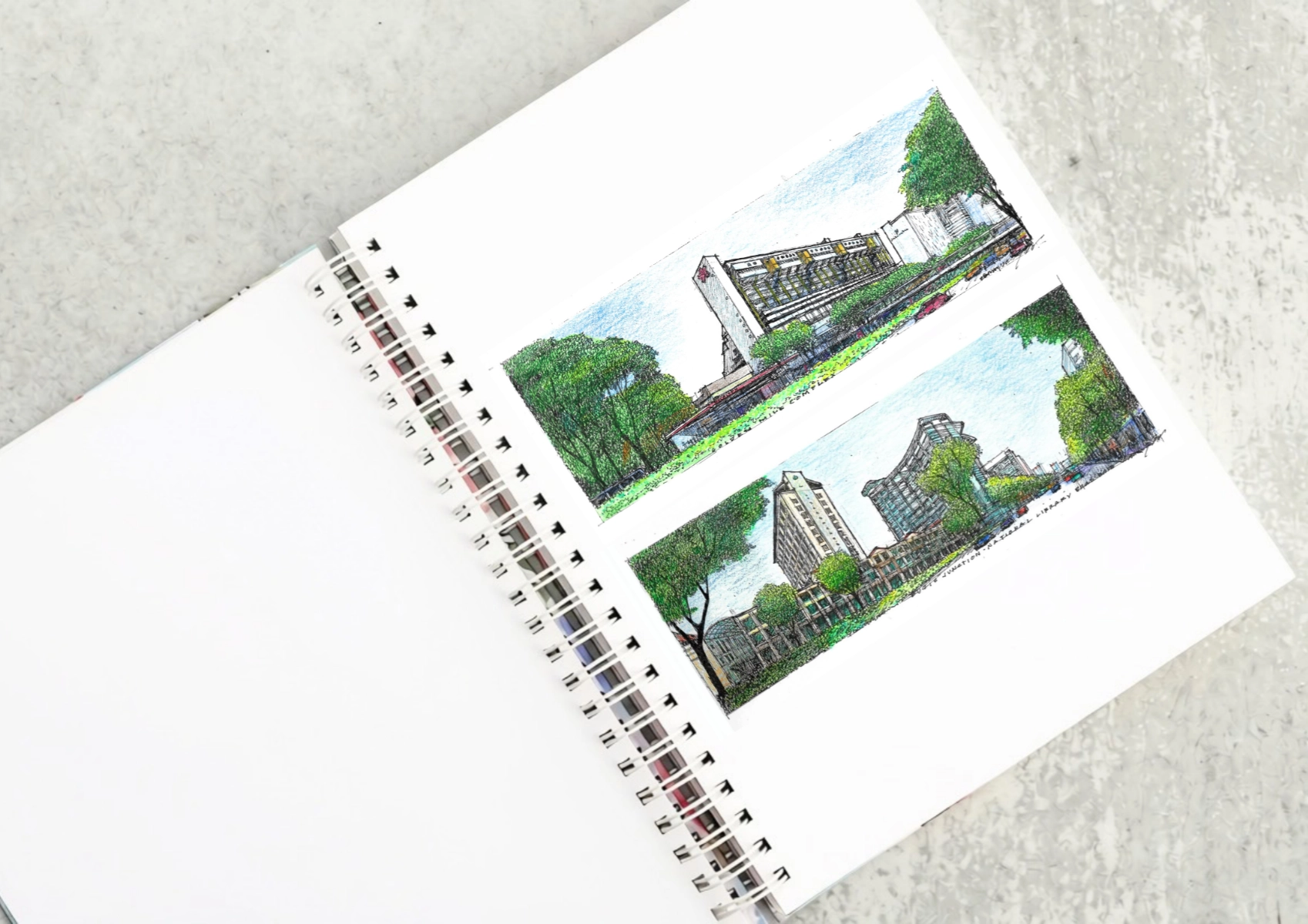
Two sketches of Singapore connect BluPrint Editor in Chief Paulo G. Alcazaren’s personal and professional history with Shared Ground: ArchitectureArchitectureThe art and science of designing and constructing buildings, structures, and spaces that are functional, safe, and aesthetically pleasing. It encompasses the planning, design, materials, and techniques used to createGo to Architecture Glossary of Care, Culture, […]
In a way, designers are the modern-day soothsayers and prophets. They design for the future, predicting how a room, a house, a building or a whole city will be used by people. They foresee how users will interact with a space, conjure exact shades of colors to elicit specific behavior and arrange furniture to build […]
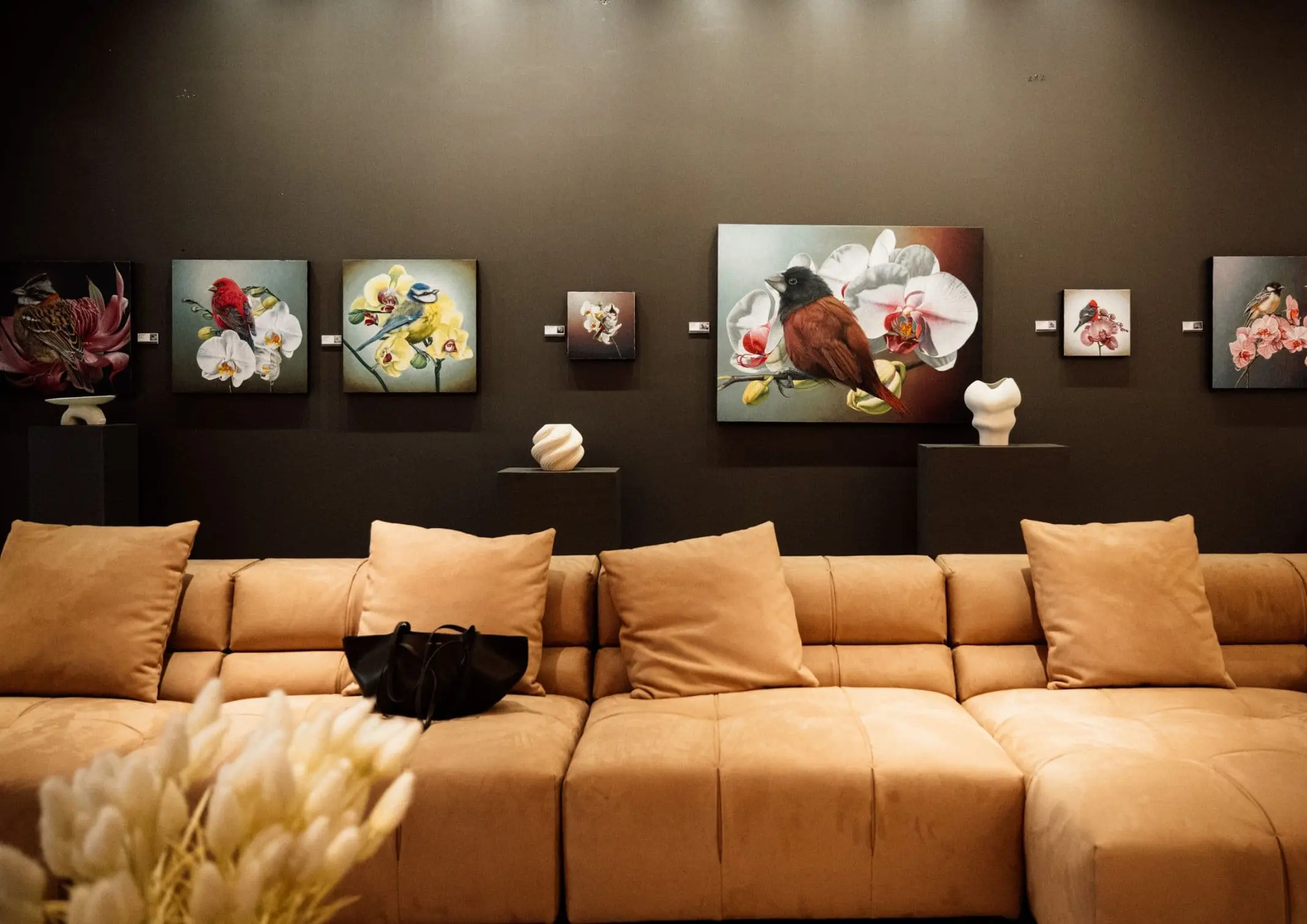
Art and furniture are often selected separately, yet their relationship can shape how a room looks and feels. The collaboration between Hooga and Galerie Joaquin explores how these elements can work together, bringing contemporary artworks into furnished residential settings at Hooga’s showroom in Uptown Mall, Bonifacio Global City. For Hooga, which curates furniture, lighting, and […]
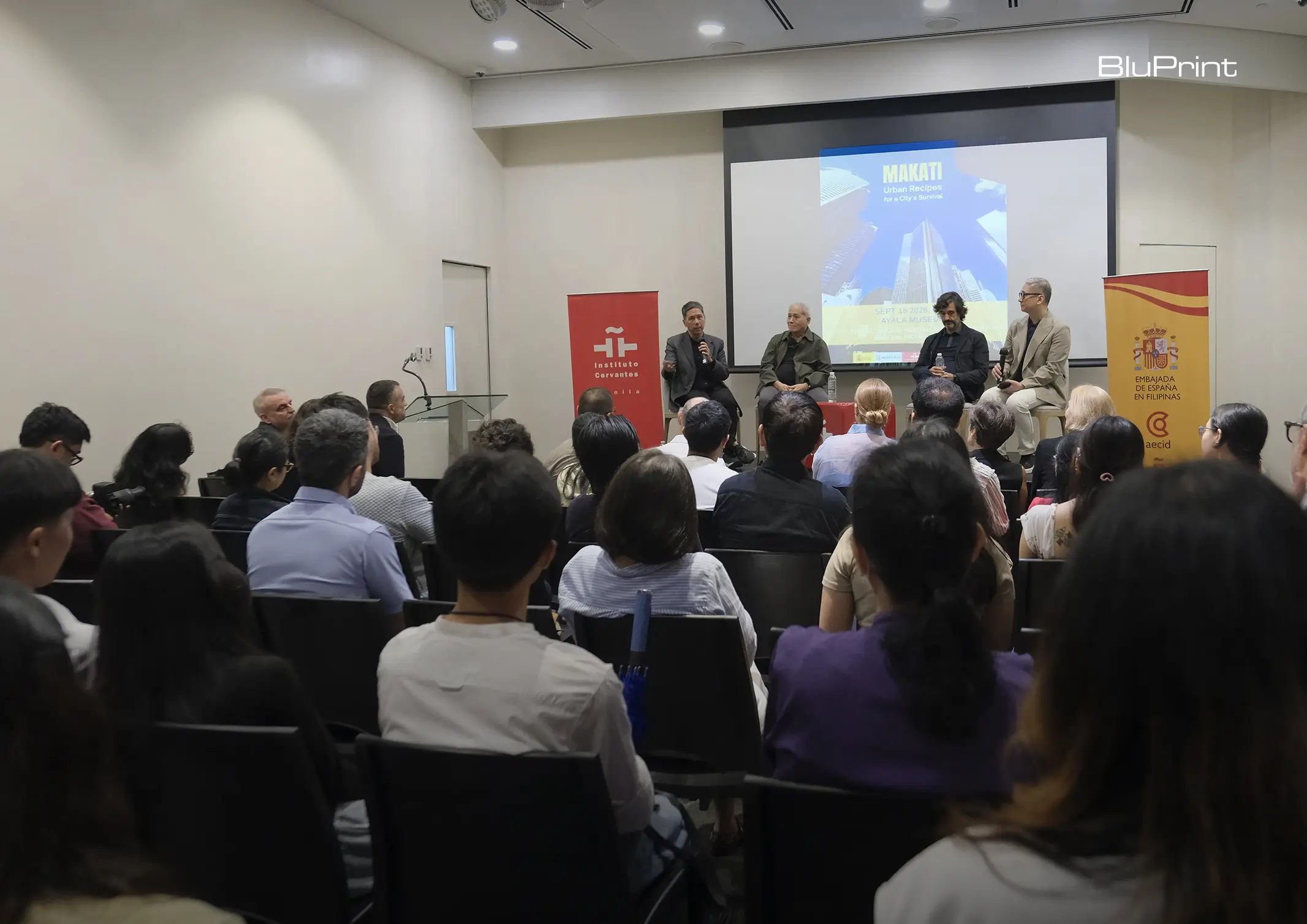
How can better-planned cities create the conditions for more creative, livable, and resilient urban environments? “Makati Urban Recipes for a City’s Survival,” a colloquium held at the Ayala Museum on September 15, brought together architects and practitioners from the fields of urbanism and the creative economy to discuss how design, planning, and collaboration can address […]
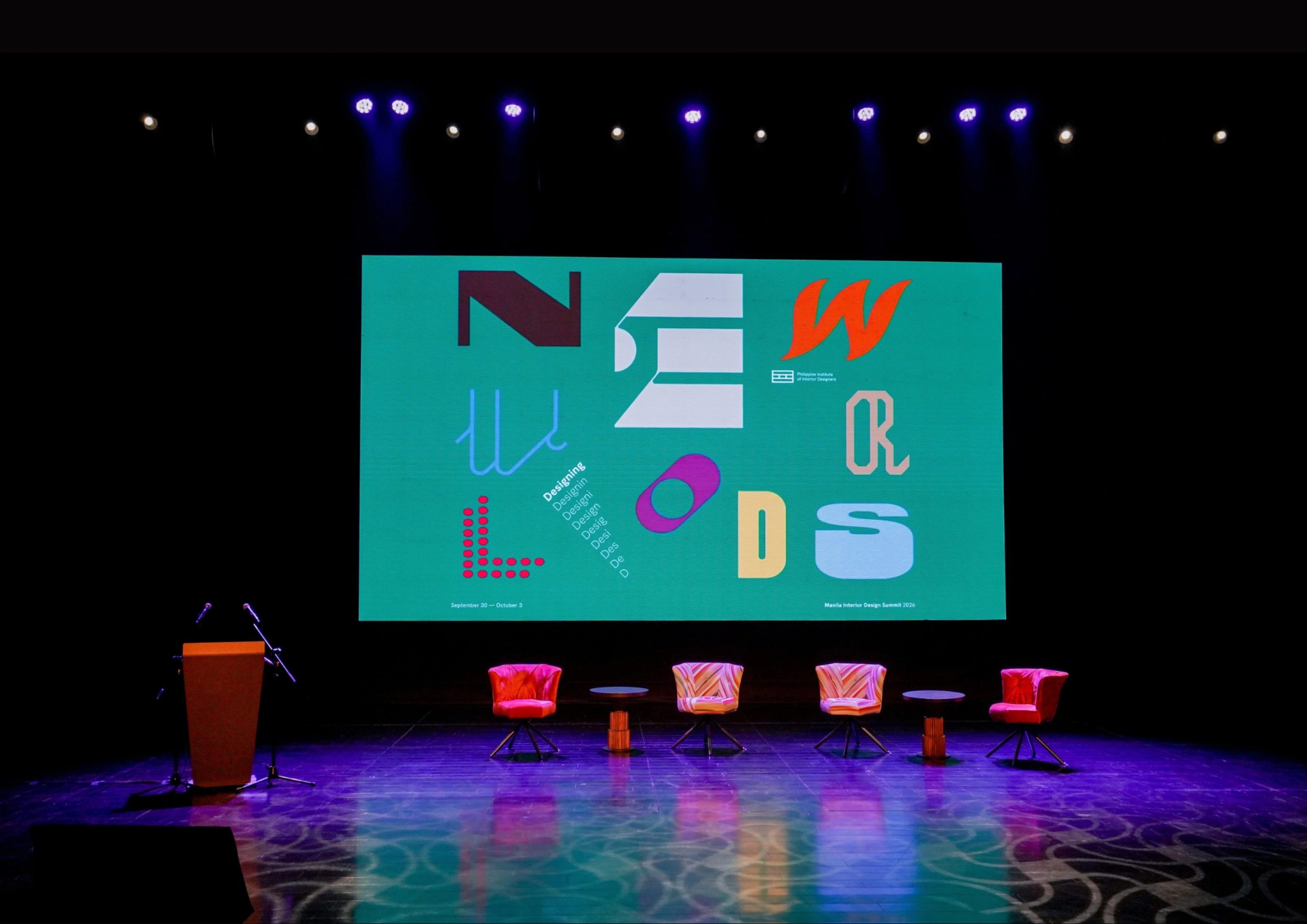
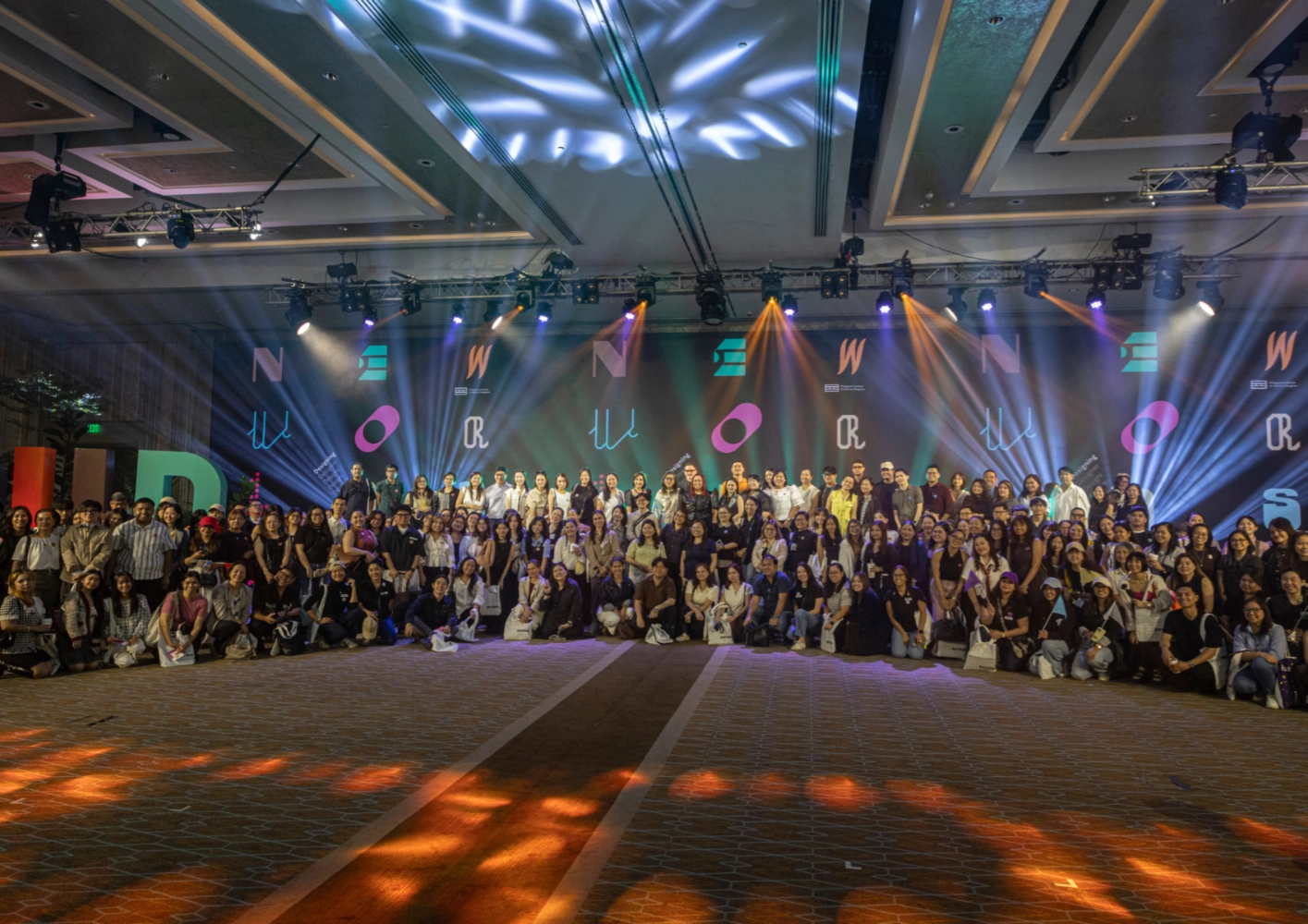
The fourth Manila Interior DesignInterior DesignThe discipline of planning and shaping interior spaces for function, comfort, safety, and beauty. It covers layout, lighting, materials, finishes, furniture, and color, and in the Philippines is a licensedGo to Interior Design Glossary Summit (MIDS) brought together more than 300 delegates for four days of conversations, exhibitions, and design […]
Read the issues.

Collect the volumes.

Recommended Video
Tap to Unmute
Unmute
0:00
0:00