Bigkis is the act of binding. In Tagalog, the word can refer to something used to bind or encircle, as well as a bundle formed by tying several separate elements together. Figuratively, it can also mean a bond, union, or unity. The meanings move from the physical act of joining things together to the connection […]
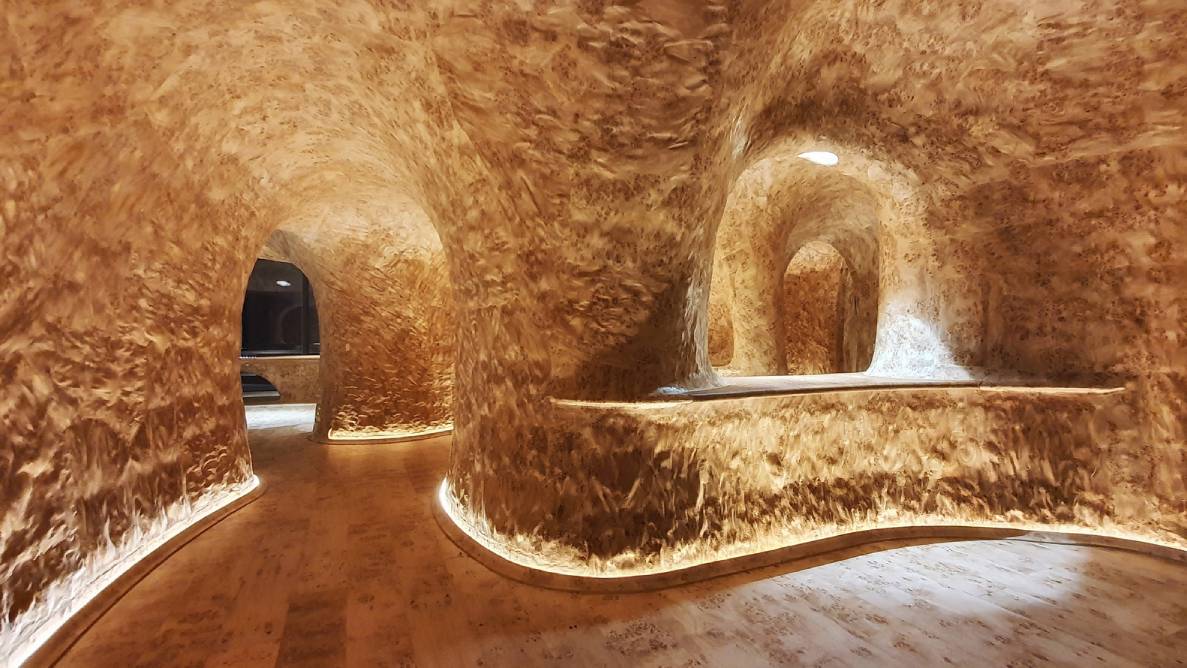
Cave Office Flows to the Rhythm of Human Movement



Is there really only one way of working? For example, should offices really just be composed of cubicles and a break room? Or can we break out of that thinking? The Cave Office in Mexico offers a different approach on how to play around with form to meet a function.
Located in Ciudad de México, Cave Office overlooks a business park filled with buildings and greenery. Javier Senosiain created the design alongside Luis Raúl Enríquez M. and Julieta Badillo taking on the role as lead architects.
Adapting to Human Patterns
Cave Office was created to be a natural evolution to the idea of open planOpen PlanA layout that removes most interior walls between living, dining, and kitchen areas to create one continuous, flexible space. Open plans improve natural light, cross-ventilation, and social interaction, making themGo to Open Plan Glossary work spaces. Or perhaps more of a de-evolution, as it pushes against modern practices of how offices should be, and instead finds the flow of humanity through the past.
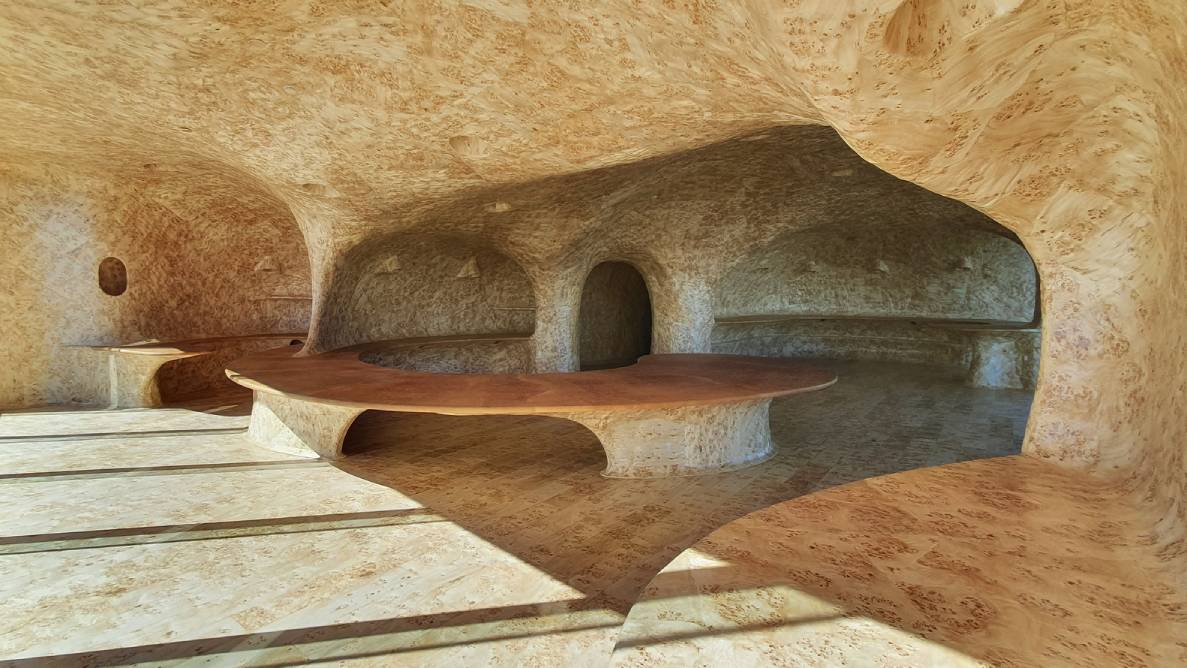
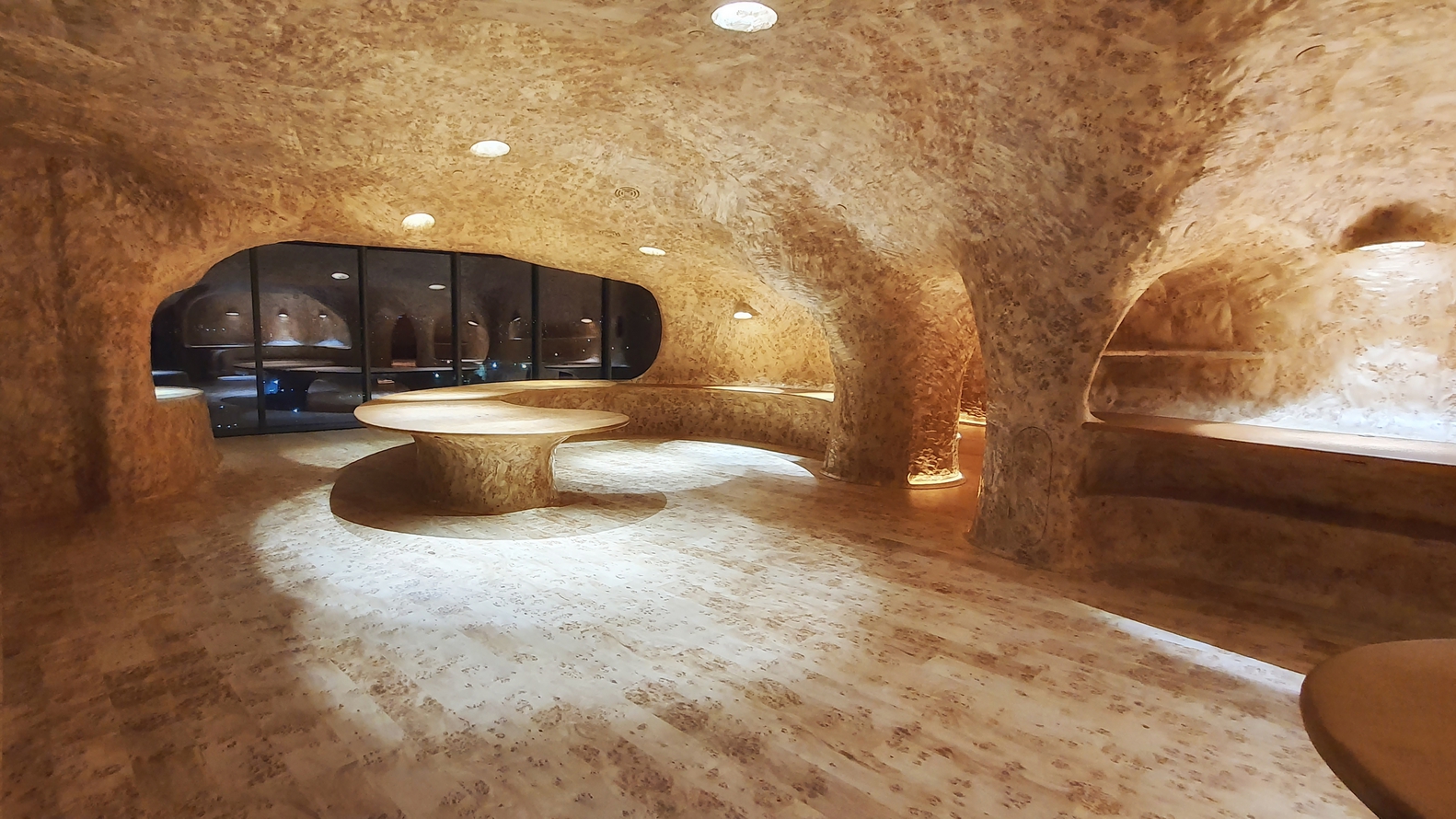
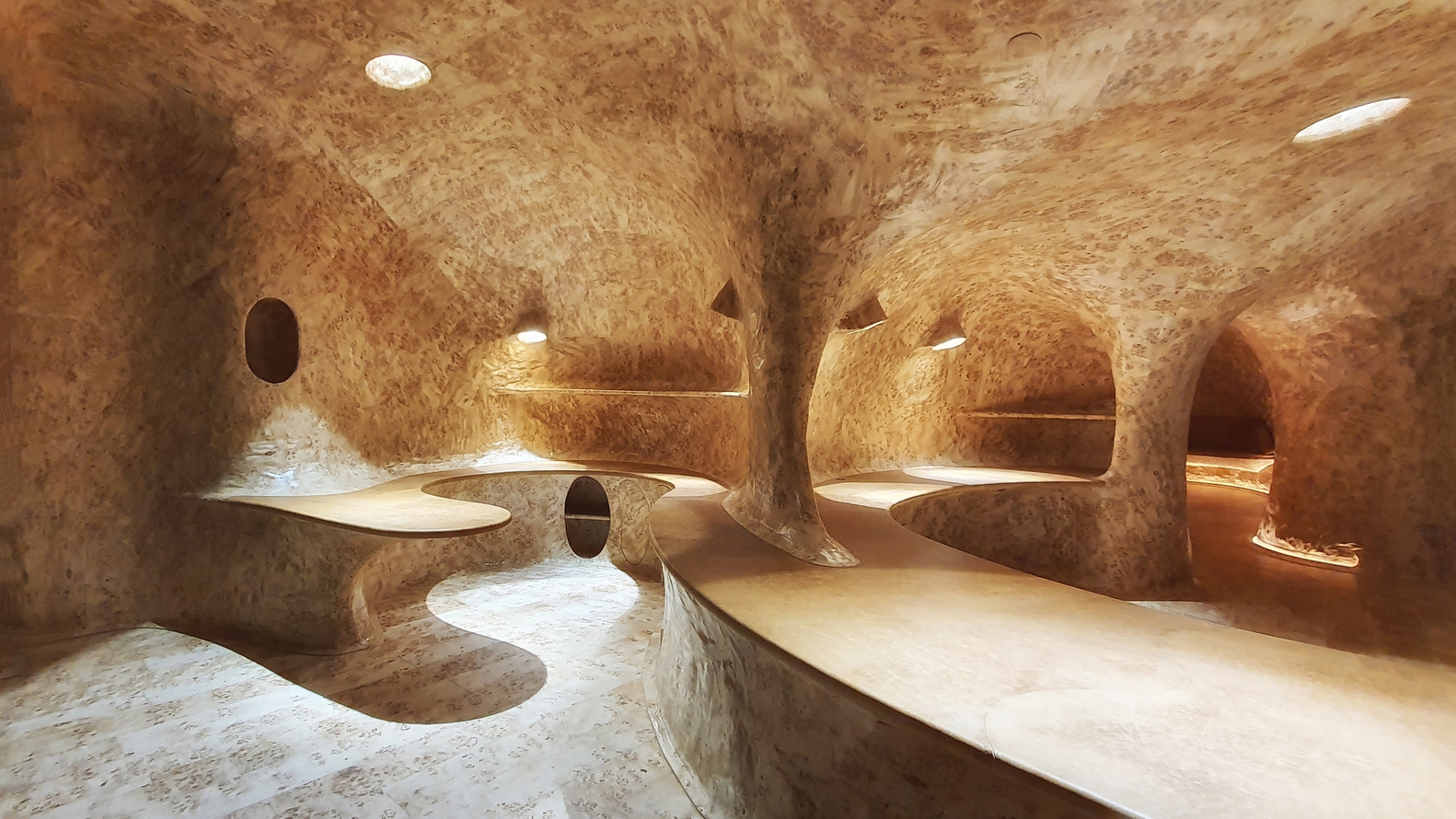
The office interior evokes the appearance of a cave, achieved through the undulating walls and yellow lighting. To achieve this look, they applied maple root veneer to the ceilings, walls, and floor, emphasizing spaciousness through the pine wood skeletons. The overall effect resembles the iconic Cantina from the original Star Wars film.
Constructing the Interior
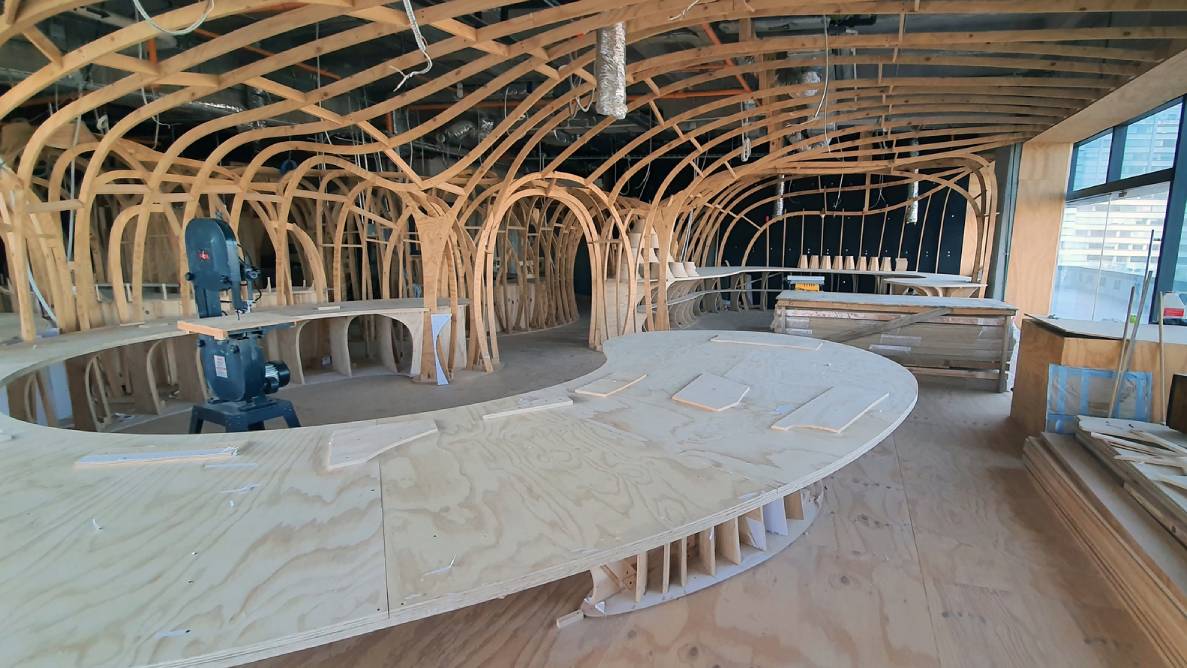
The architects imbued the rectangular layout with a sense of naturalness reminiscent of cave-like structures, typically characterized by rounded forms resulting from erosion. Within this layout, strategic pathways delineate separate zones: private, secluded areas conducive to focused work, and communal spaces. Surfaces upholstered in leather add further comfort.
This design results in three distinct zones, with a central volume serving as the communal hub, with workshop spaces and private meeting rooms for interactions with colleagues and clients. Additionally, an adjacent terrace provides an outdoor space for workers seeking external stimulation.
Stimulating Dynamics
The rooms’ layout use interconnected curves rather than solid wall partitions, creating a dynamic flow throughout the interior. By examining the schematics, you can observe this intentional choice to promote fluidity. Additionally, the furniture seamlessly integrates into the overall design.
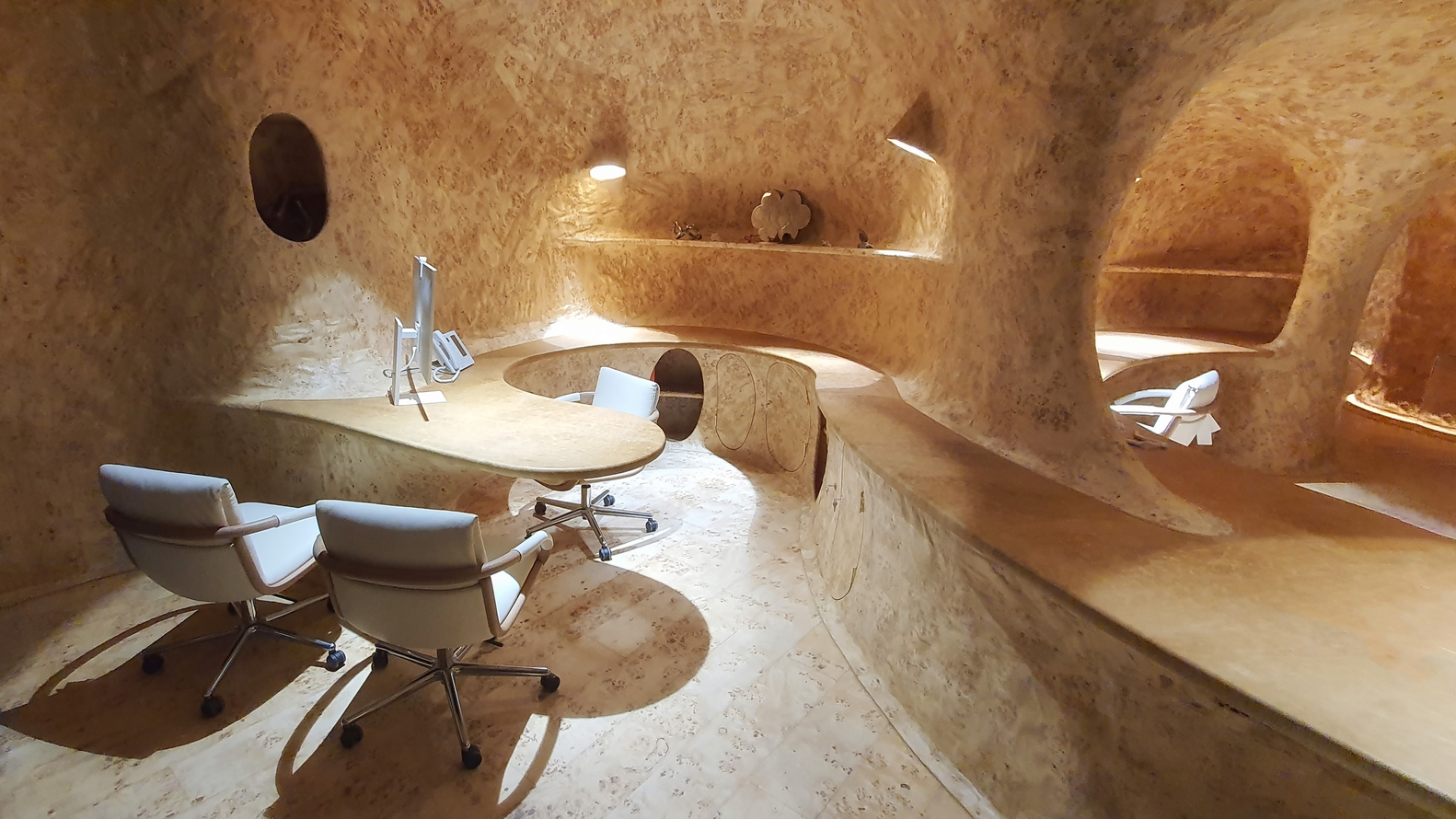
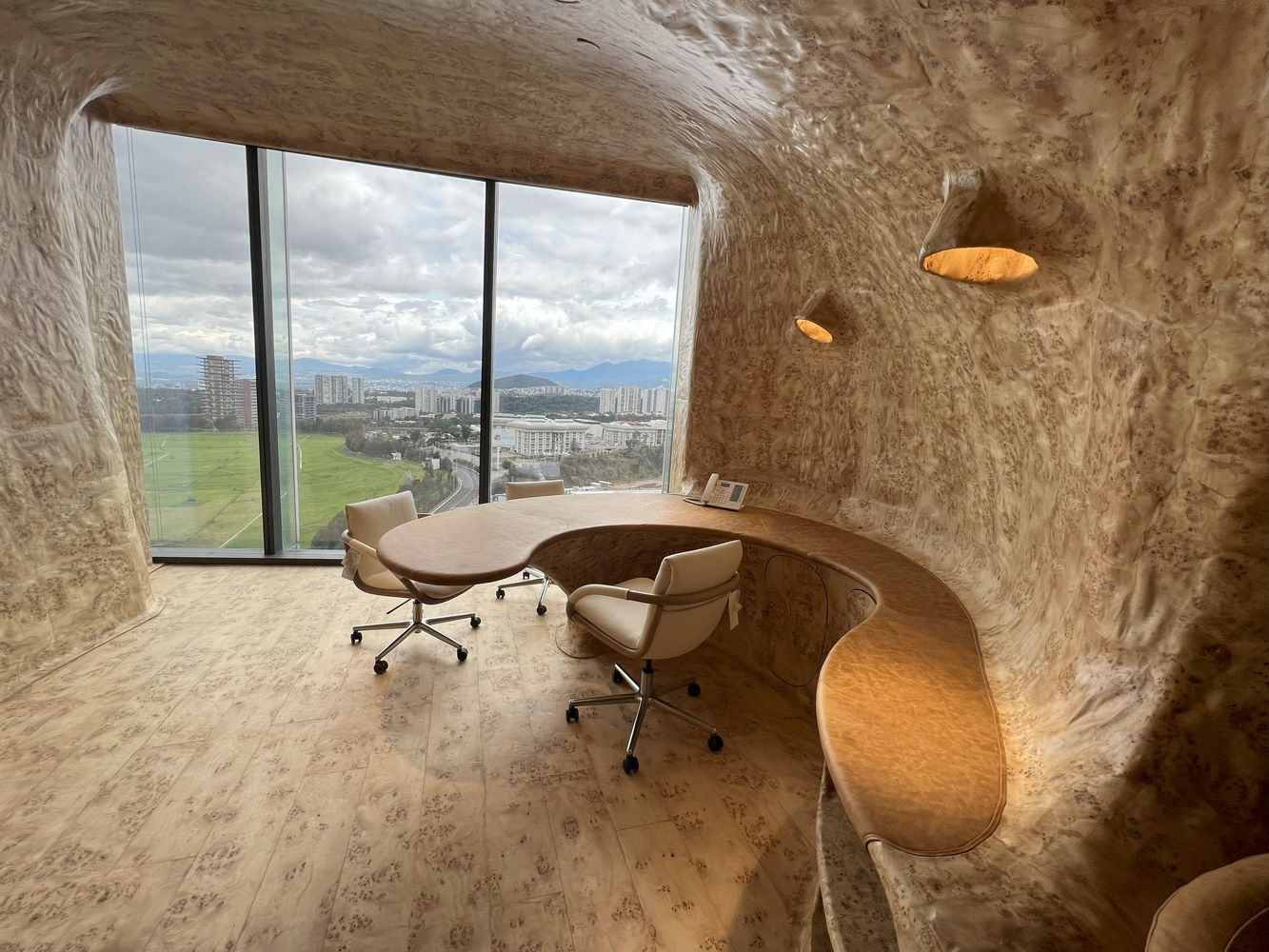
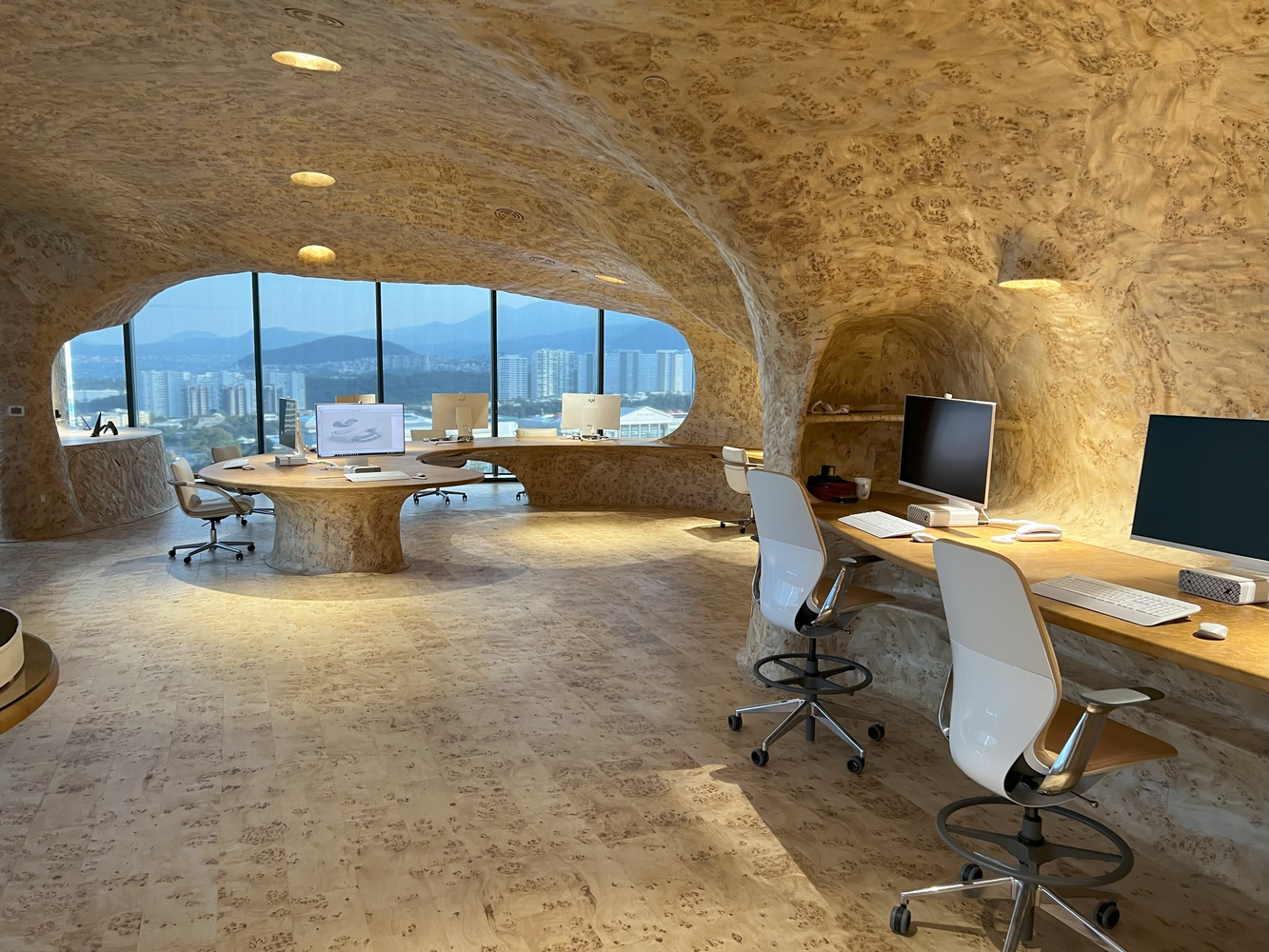
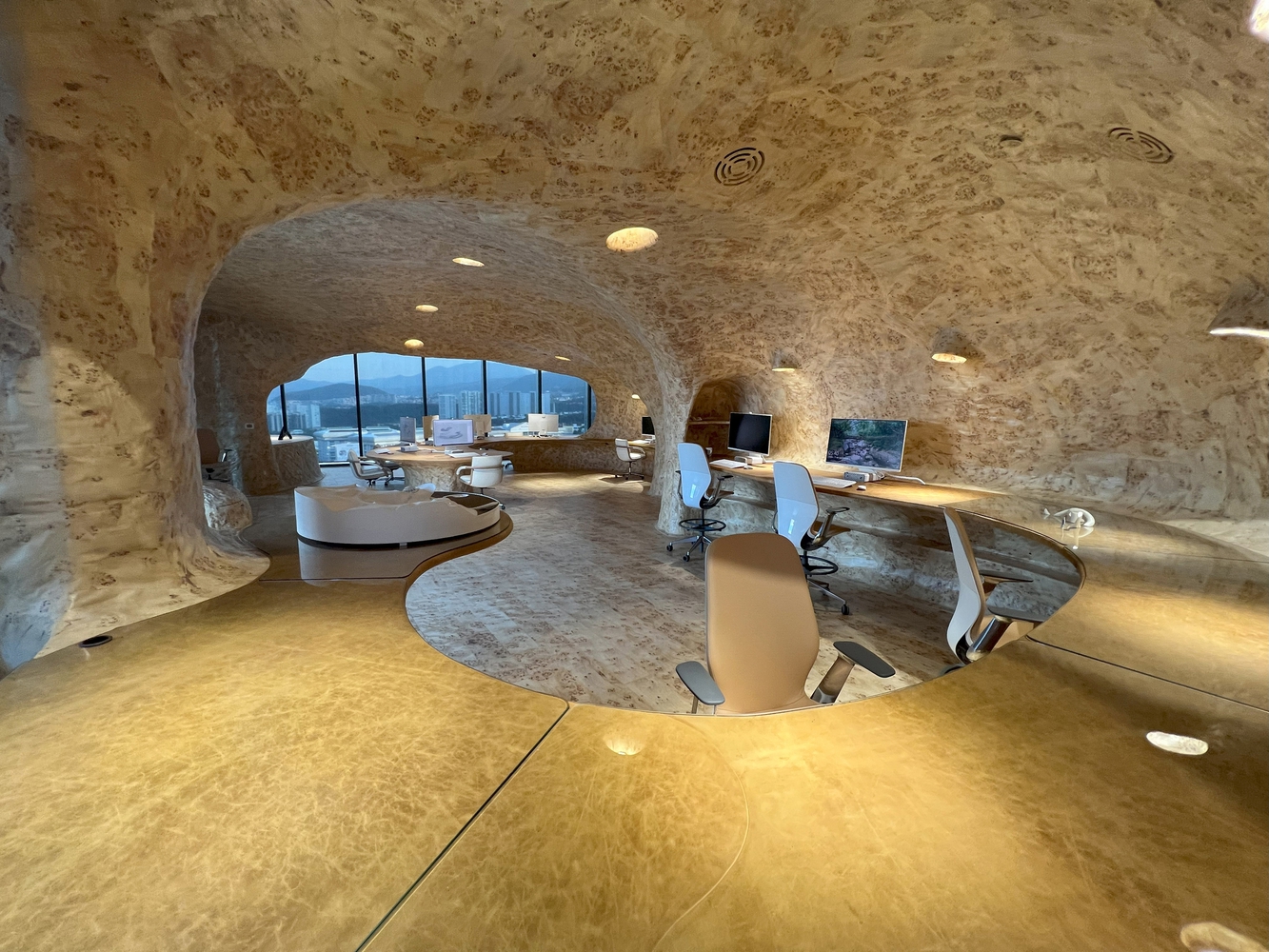
The architects stated plainly in their intent for the building: they wanted “environments that follow the natural rhythm of human movements, are areas where integrated furniture facilitates circulation.” It flows well to and from each other, and follows the rhythm of human movement rather than boxing it in.
Cave Office echoes the need of a dynamic office that is people-friendly in its design. The look is naturalistic, its openness encourages interaction without removing the privacy aspect in the matter. This office shows that, sometimes, you see the future by looking towards the past.
Related reading: C-Studio Is A Recreational Facility that Serves As The Owner’s Man Cave
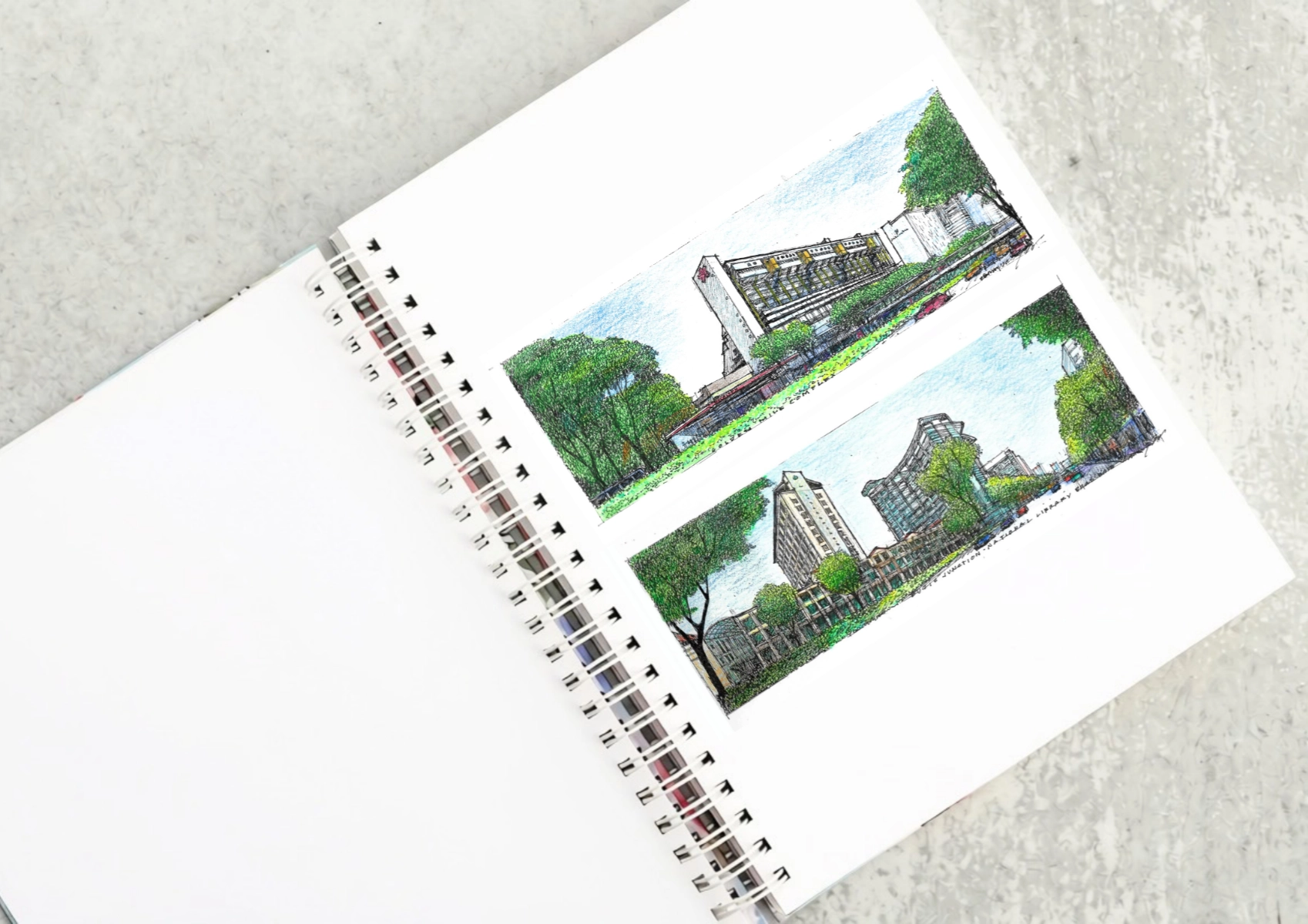
Two sketches of Singapore connect BluPrint Editor in Chief Paulo G. Alcazaren’s personal and professional history with Shared Ground: ArchitectureArchitectureThe art and science of designing and constructing buildings, structures, and spaces that are functional, safe, and aesthetically pleasing. It encompasses the planning, design, materials, and techniques used to createGo to Architecture Glossary of Care, Culture, […]
In a way, designers are the modern-day soothsayers and prophets. They design for the future, predicting how a room, a house, a building or a whole city will be used by people. They foresee how users will interact with a space, conjure exact shades of colors to elicit specific behavior and arrange furniture to build […]
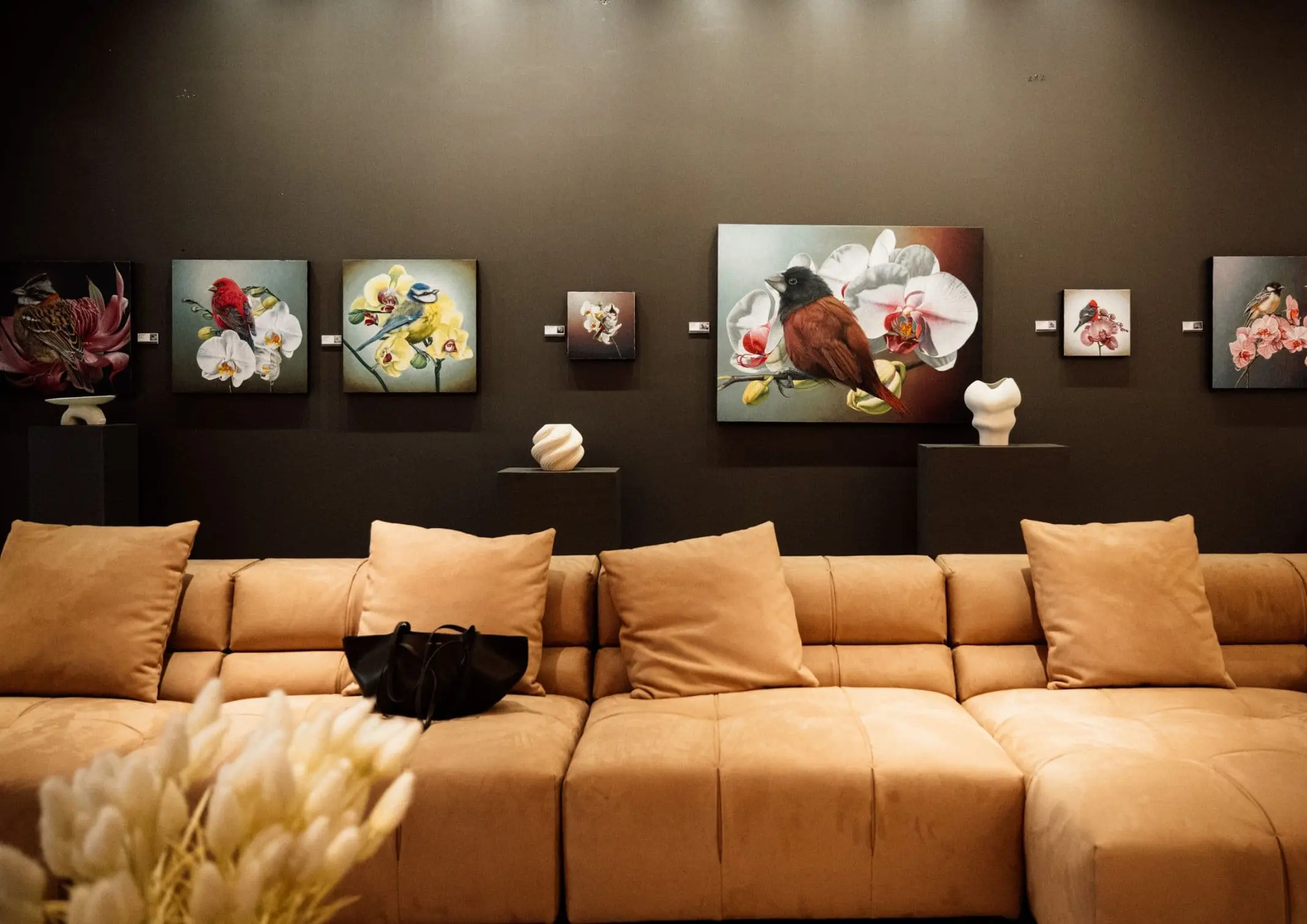
Art and furniture are often selected separately, yet their relationship can shape how a room looks and feels. The collaboration between Hooga and Galerie Joaquin explores how these elements can work together, bringing contemporary artworks into furnished residential settings at Hooga’s showroom in Uptown Mall, Bonifacio Global City. For Hooga, which curates furniture, lighting, and […]
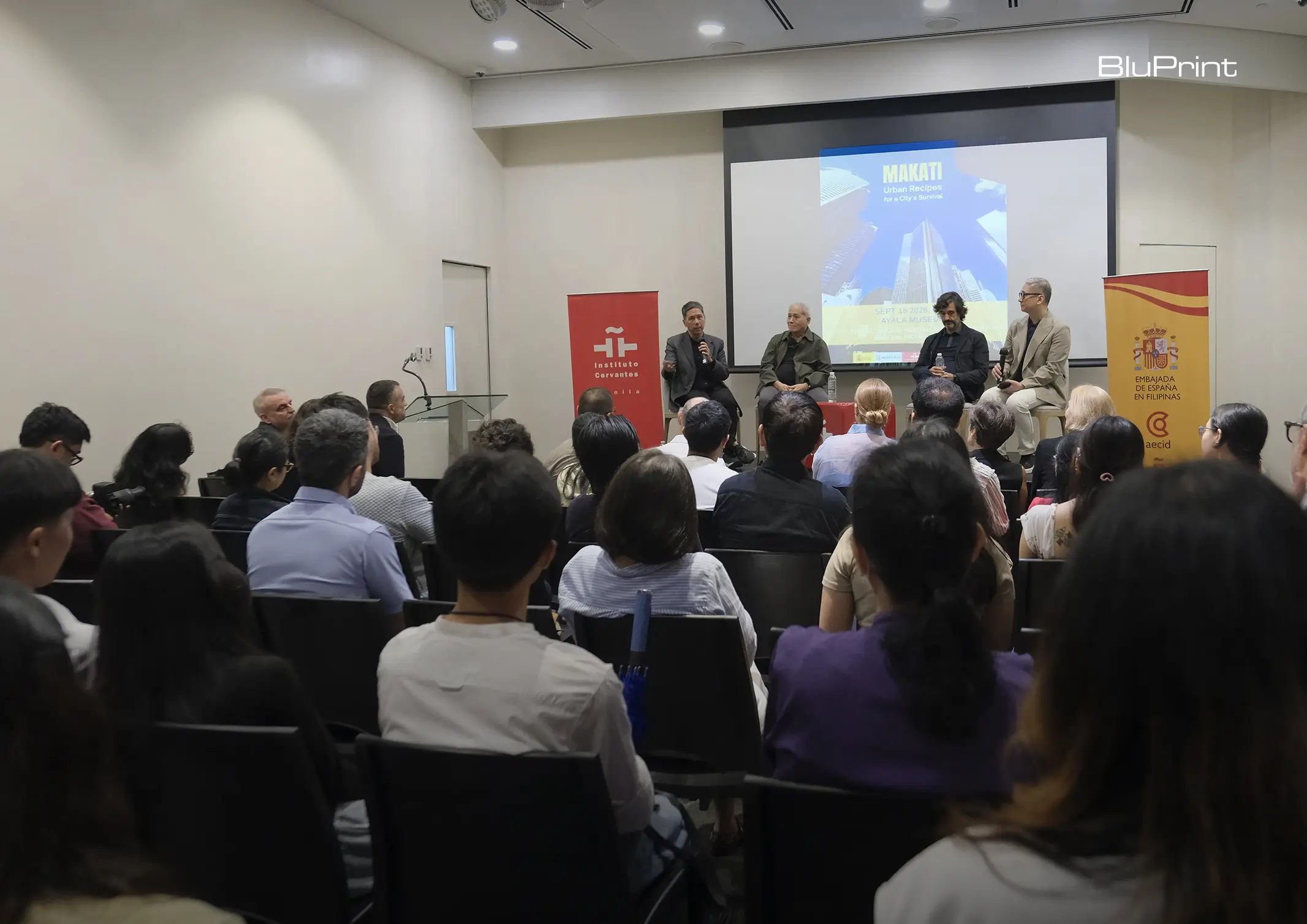
How can better-planned cities create the conditions for more creative, livable, and resilient urban environments? “Makati Urban Recipes for a City’s Survival,” a colloquium held at the Ayala Museum on September 15, brought together architects and practitioners from the fields of urbanism and the creative economy to discuss how design, planning, and collaboration can address […]
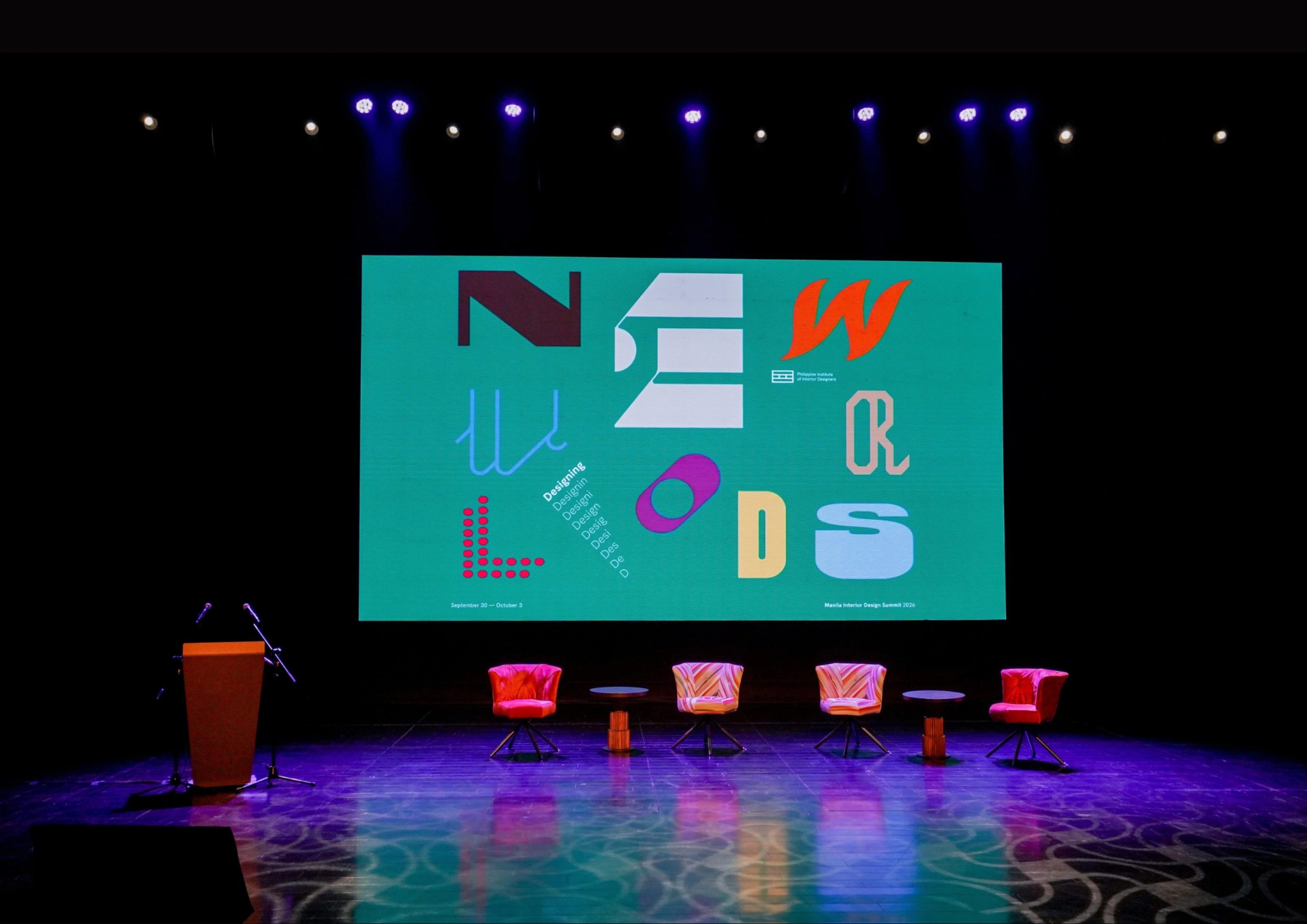
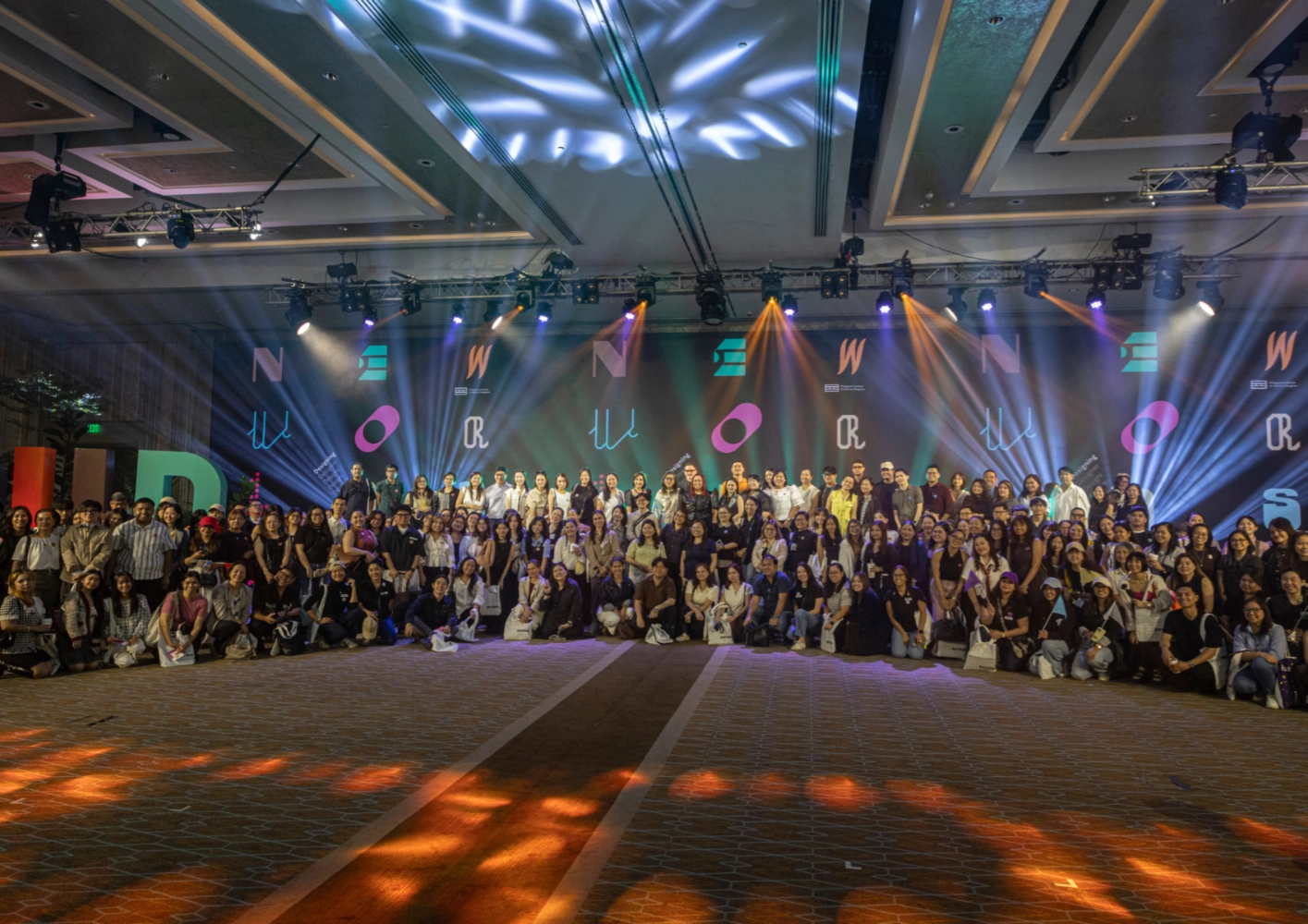
The fourth Manila Interior DesignInterior DesignThe discipline of planning and shaping interior spaces for function, comfort, safety, and beauty. It covers layout, lighting, materials, finishes, furniture, and color, and in the Philippines is a licensedGo to Interior Design Glossary Summit (MIDS) brought together more than 300 delegates for four days of conversations, exhibitions, and design […]
Read the issues.

Collect the volumes.

Recommended Video
Tap to Unmute
Unmute
0:00
0:00