A renewed focus on restoring heritage buildings has become evident in the current administration’s agenda. Among these notable projects are the Goldenberg Mansion and the Laperal Mansion. The Goldenberg Mansion, originally restored by the acclaimed architect Leandro Locsin over 50 years ago, has been conservatively returned to its pristine stature. Jonathan Matti, an in-demand interior designer with a background in architecture, was given the task of designing a new structure in the lush garden area of the Goldenberg Mansion.
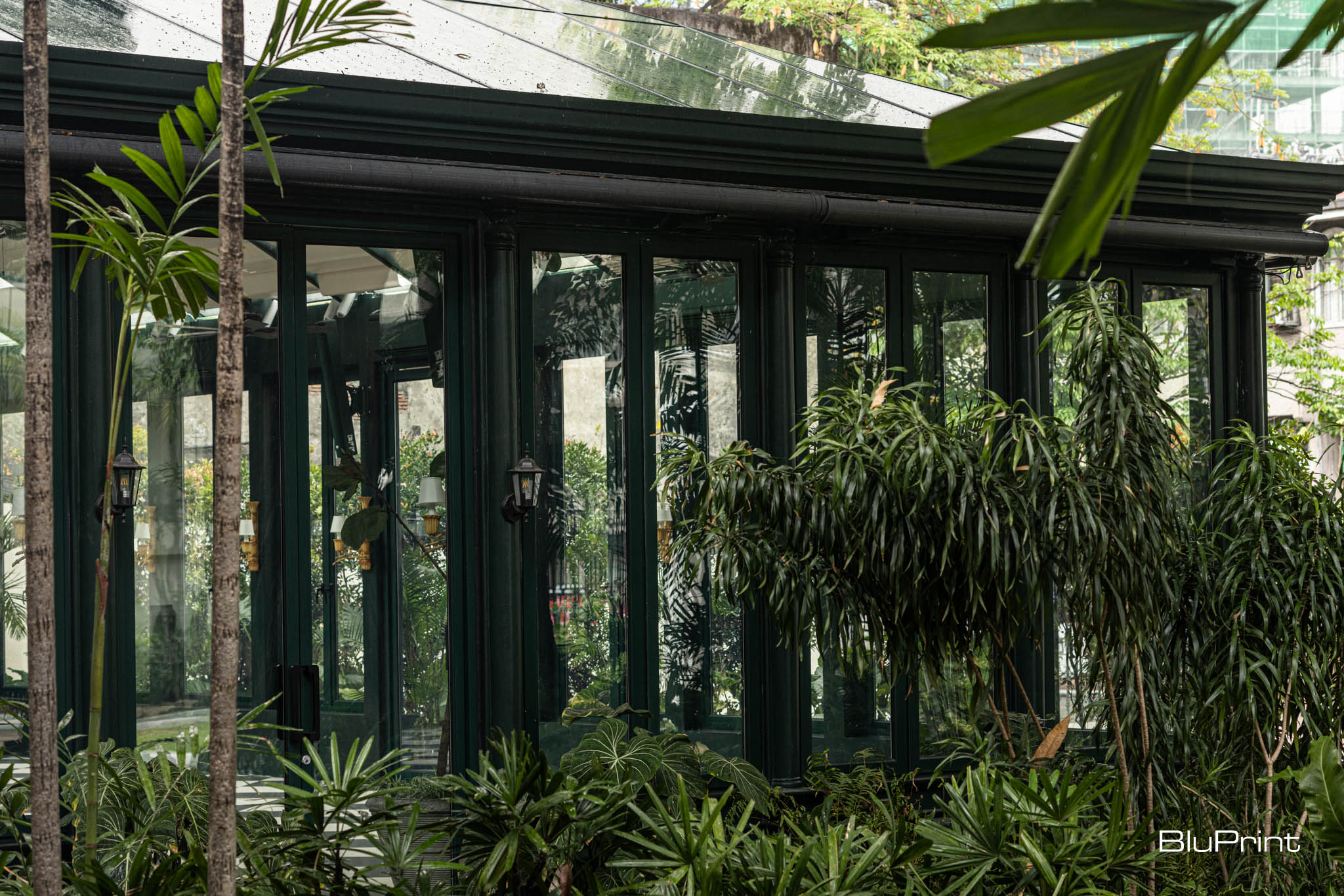
The steel and glass structure seamlessly blends with the surrounding gardens.
“The idea was we didn’t want it to be taken away from the garden,” Matti shares. “When you look at it, you don’t see it right away. There are those gigantic balete trees and all the foliage that covers it. So when you’re inside, you really feel like you’re in the garden. When they use it for events, they also fill it with a lot of plants, so you really feel like you’re still outside, but you’re indoors.”
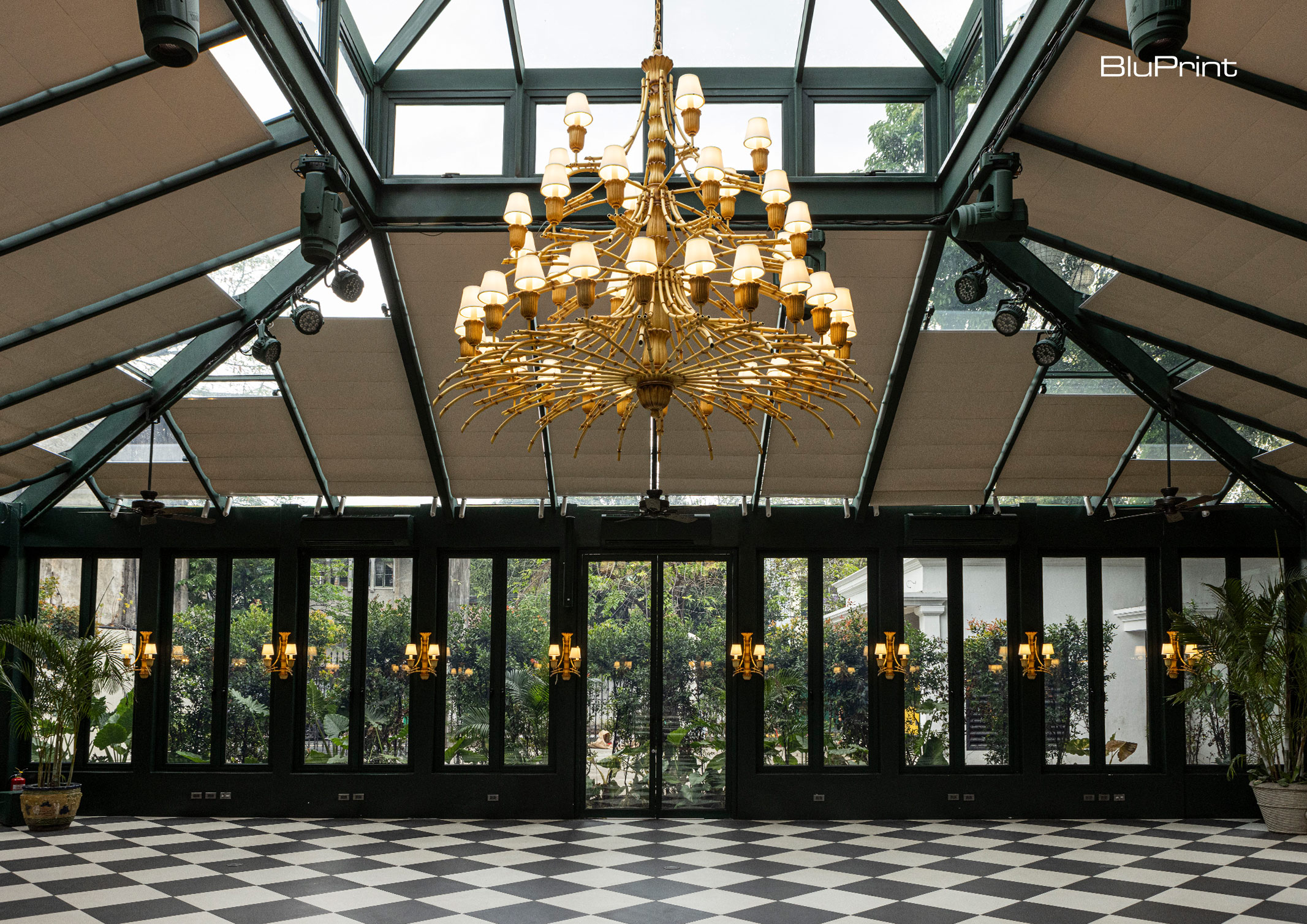
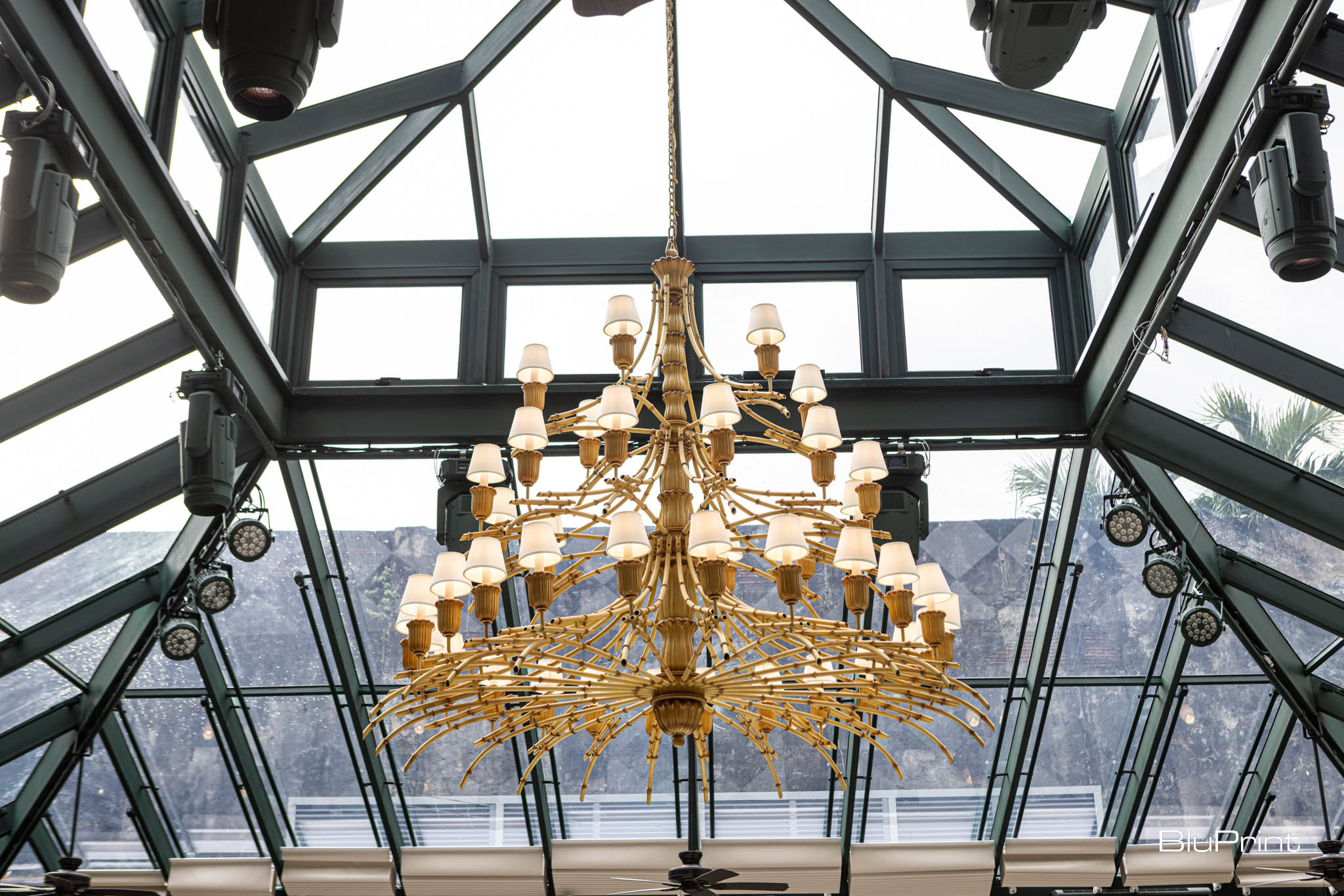
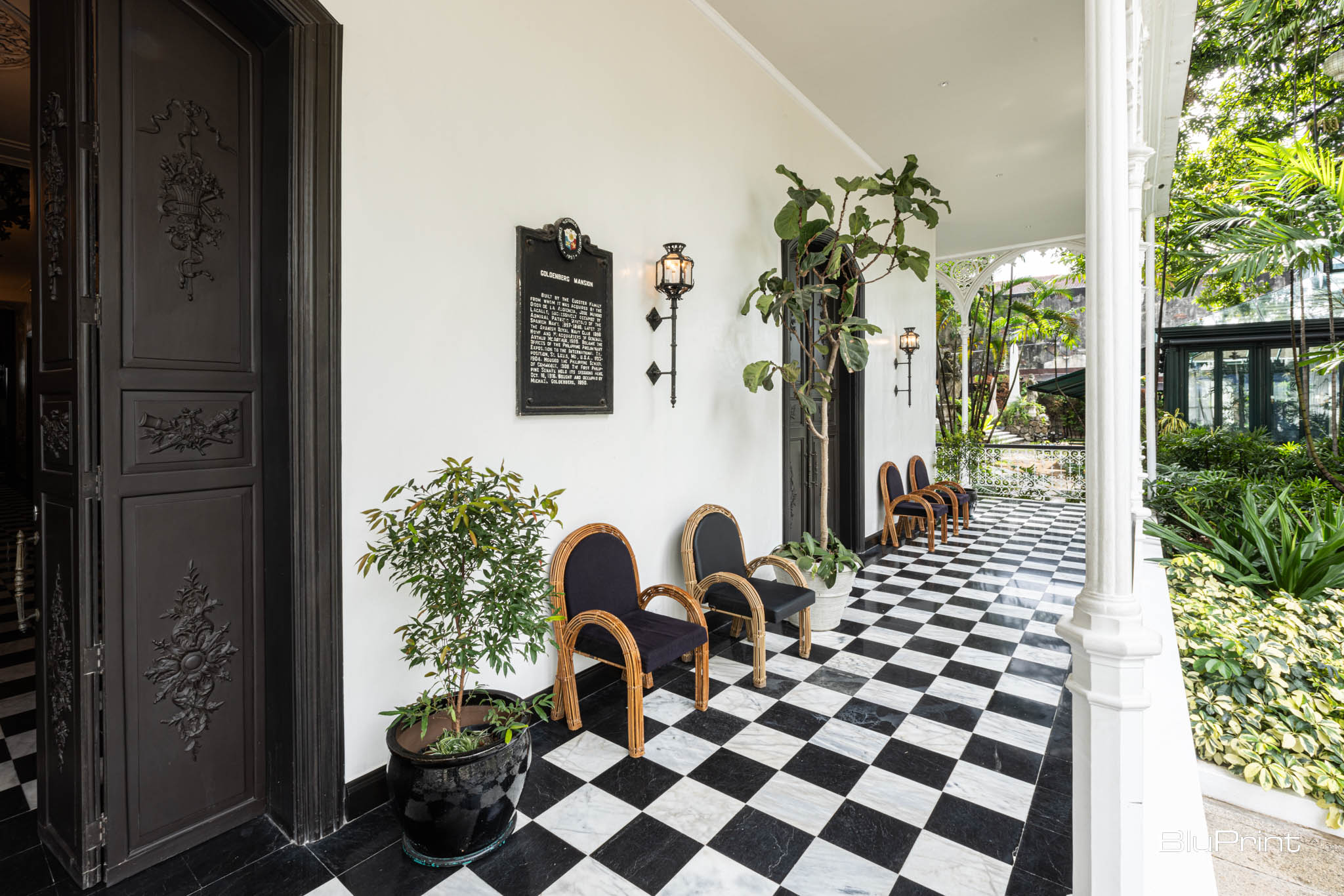
The Glass House mirrors the 19th-century design aesthetic of the existing structure such as the black and white checkered tile floors. A dark emerald metal skeleton upholds glass walls and roofing while camouflaging and nestling into the existing trees and plants of the garden. Palayan Lamps custom made the wall lights and a giant chandelier made to look like bamboo. “We didn’t want the Glass House to veer away from the original architecture of the Goldenberg Mansion. We didn’t want it to fight or steal the thunder from it. So it had to be unobtrusive yet blending with the architecture.”
Advertisement
The Role of Research and Collaboration
A custom made chandelier by Palayan Lamps mimics the look of bamboo.
Restoring heritage buildings is a complex process that requires meticulous research and collaboration. The Malacañan Museum has provided invaluable support in this endeavor, offering historical insights and guidance. This collaborative approach ensures that every detail, from architectural elements to interior design, aligns with the historical context of the buildings.
Matti emphasizes the importance of teamwork in heritage restoration projects. “It takes a village to create something like this. So we all work as a team,” he explains. This careful selection of materials and integration of modern elements enhance functionality while respecting historical integrity.
Revitalizing Heritage for the Future
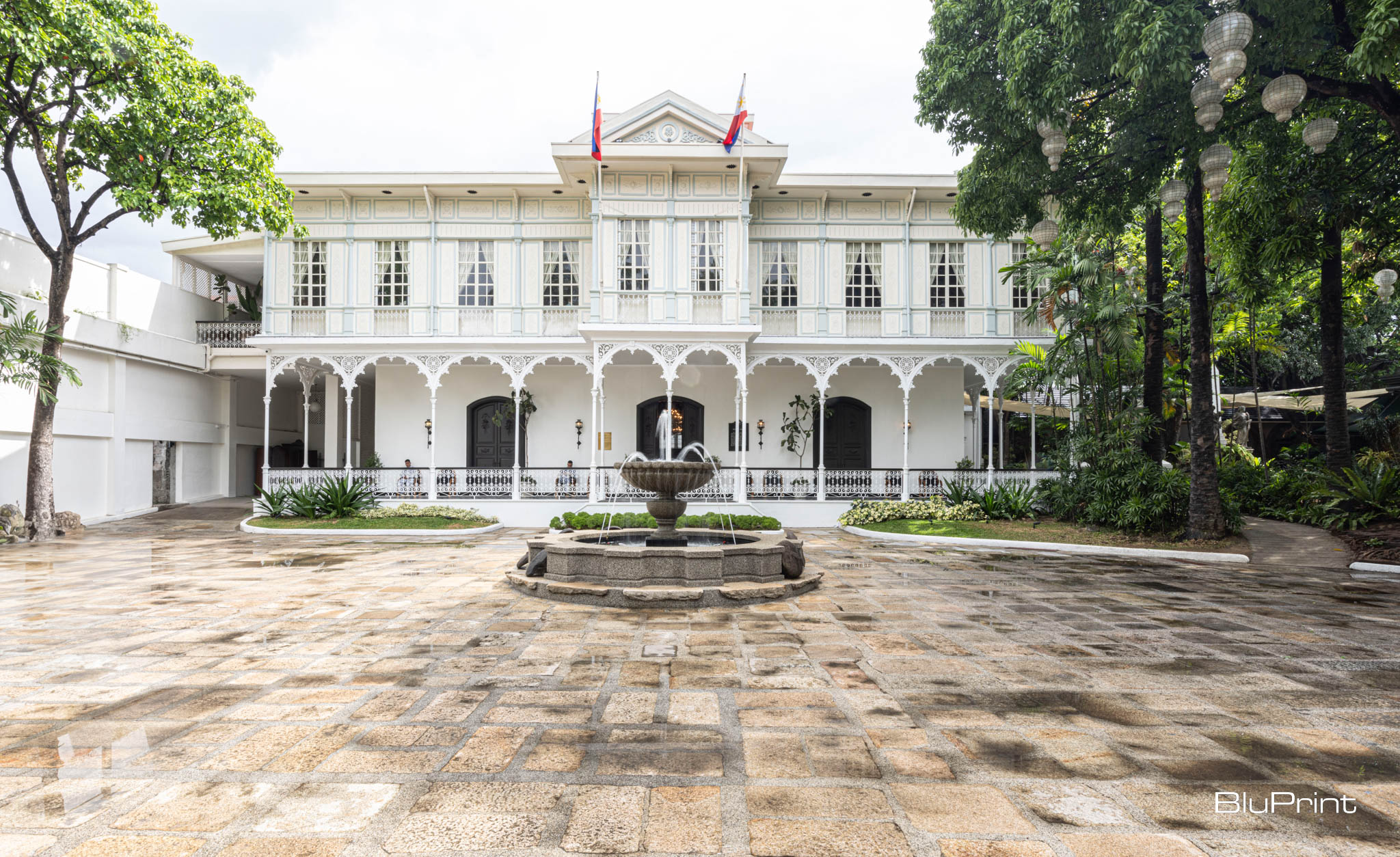
The beautiful courtyard outside Goldenberg Mansion.
The restoration of the Goldenberg and Laperal Mansions exemplifies a broader commitment to preserving and revitalizing Manila’s architectural heritage. These projects safeguard our historical structures. But they also breathe new life into them, making them functional and relevant in contemporary society.
Goldenberg Mansion’s distinct checkered floors are a nod to its original design.
The Glass House at the Goldenberg Mansion is a prime example of how modern design can harmonize with historical architecture. Elements like the black and white checkered tile floors and custom-made lighting fixtures pay homage to the mansion’s rich history while providing a versatile space for modern use.
Advertisement
These restored heritage buildings continue to serve as venues for official functions and cultural events. But they also stand as symbols of Manila’s enduring architectural legacy. The careful balance of preservation and innovation ensures that these historical structures remain vibrant and relevant, contributing to the city’s cultural and architectural landscape for generations to come.
Contemporary design refers to the constantly evolving design trends of today. With the power to design our built environments, architects have been experimenting with various architectural approaches. Whether that is through unconventional forms or the integration of smart technologies, BluPrint lists down Filipino architects who are defining contemporary architecture. Deo Alam Architect Deo Alrashid Alam […]
In the Philippines, adaptive reuse gained traction during the 1970s with the rise of conservation and environmental preservation movements. It offered an architectural solution that reuses existing spaces to fit modern needs. Across the country, several projects demonstrate how this approach is being applied—transforming heritage structures into active spaces for culture, hospitality, and community life. […]
From residential spaces to civic structures, lighting dictates the mood of a space. It controls the visual dynamics of an interior, serving as a guiding tool that highlights key design elements, including materials and textures. Related Reading: Lampscaping: How to Light up Your Home like a Pro Regulating the Mood: Natural and Artificial Light in […]
More and more Filipinos are flocking to condominium communities. Often tucked within busy city centers, condo living acts as a small respite from urban chaos. Faced with the challenge of transforming a cramped condominium into a warm living space, BluPrint lists condo interior design ideas that can maximize each square foot of small spaces. Purposeful […]
Modern bathrooms are no longer purely functional spaces. Increasingly, they are being designed as environments that support cleanliness, ease, and quiet restoration within the home. As daily life becomes more demanding and health awareness continues to rise, homeowners are beginning to expect more from the spaces where daily rituals begin and end. For architects and […]
From the moment a diner steps through the door, each detail shapes how a meal is experienced. Restaurant design has evolved, with architects and culinary professionals collaborating to create built spaces that are as intentional as the menu itself. The spatial atmosphere acts as an additional ingredient that can define the culinary experience. Taupe and […]