Bigkis is the act of binding. In Tagalog, the word can refer to something used to bind or encircle, as well as a bundle formed by tying several separate elements together. Figuratively, it can also mean a bond, union, or unity. The meanings move from the physical act of joining things together to the connection […]
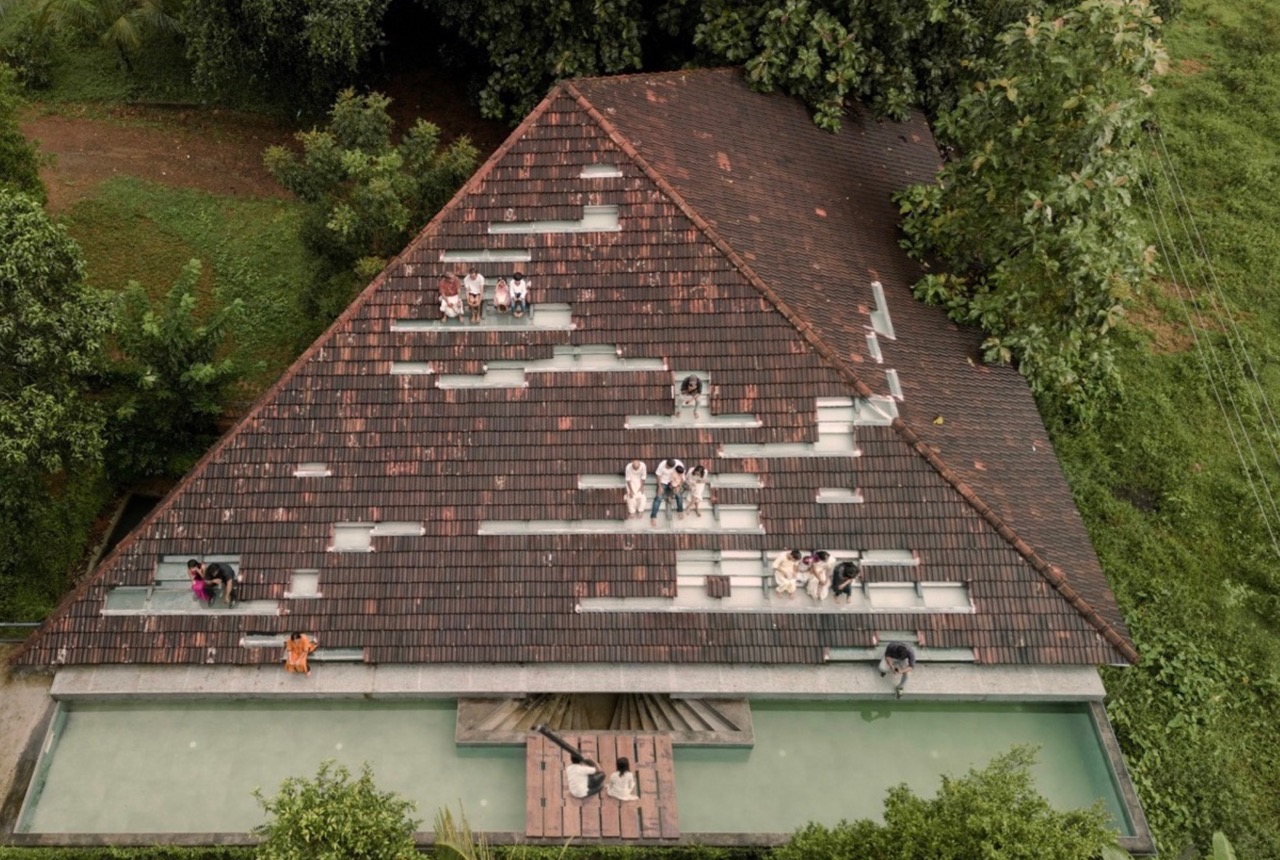
Nisarga Art Hub: Kerala’s Architectural Roots Embraces the Arts



The Nisarga Art Hub unites tradition, sustainability, and arts as it stands tall amidst the paddy fields of Angamaly, India. Built for a family of musicians, architecture firm Wallmakers infuses the Kerala region’s rich architectural heritage with an inclusive twist. The community center immerses artists in nature, making it a venue geared towards bringing out inspiration.
Sitting Amongst the Clouds
Looking at the historic homes in the area, the architects wanted to design a structure that would stylistically and functionally be familiar to the nearby community. Taking advantage of the landscape, a majestic sloping tile roof presents itself as an “outdoor” space, that doubles as a sheltered seating area. Its form and build is reminiscent of traditional Kerala architectureArchitectureThe art and science of designing and constructing buildings, structures, and spaces that are functional, safe, and aesthetically pleasing. It encompasses the planning, design, materials, and techniques used to createGo to Architecture Glossary. This design choice pays homage to the regional context while also serving functional purposes of insulation and temperature regulation.
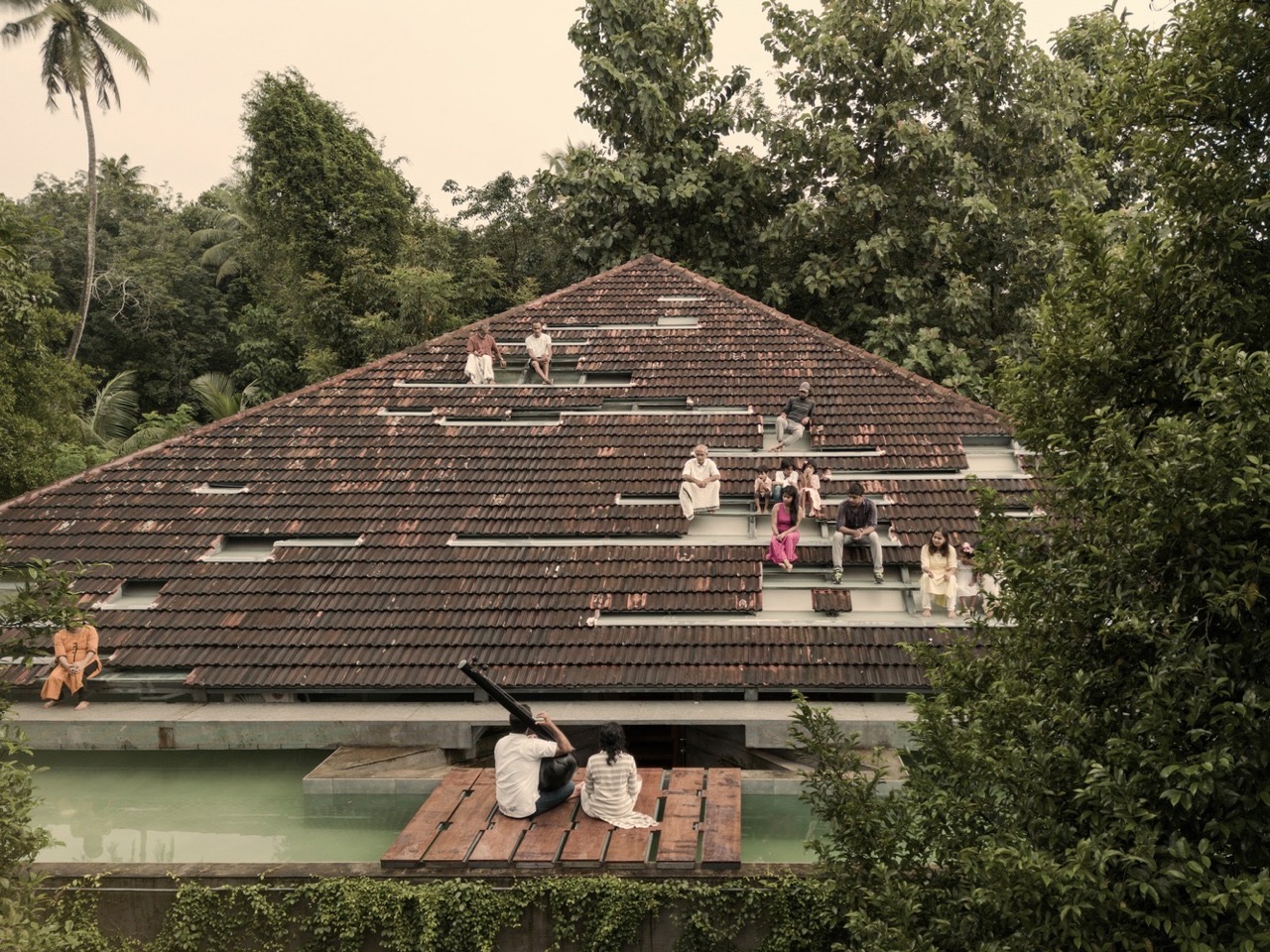
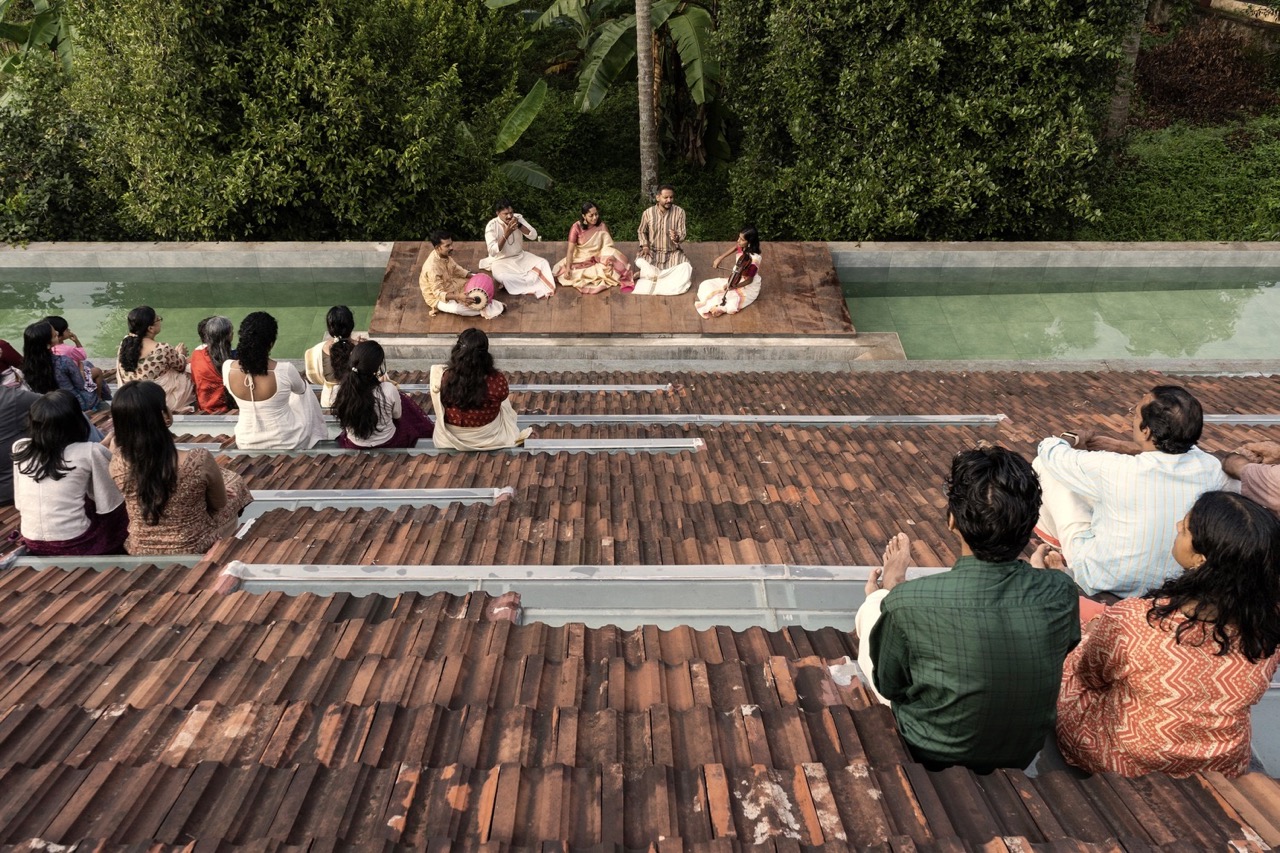
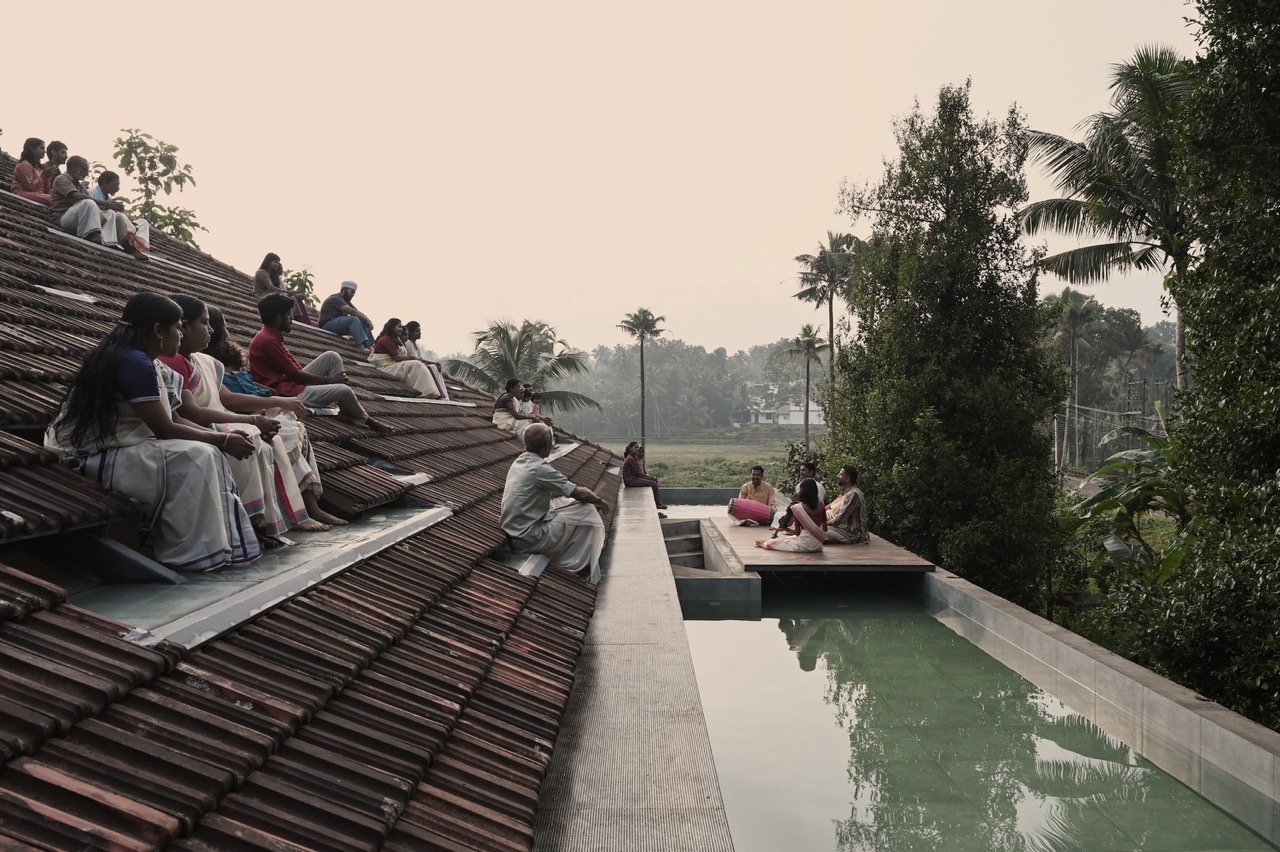
The roof acts as an amphitheater that sits heavensward. Its seating design is capable of accommodating up to 80 people brought together in a dynamic arrangement. Its low slope allows for controlled movement and ensures that users are safely away from the edge. A central stage sits above a calming pool of water that visually links the structure to the nearby river.
Furthermore, seating doubles as a series of skylights angled at 35 degrees fills the interiors with rays of sunlight and views of the starry night. Rather than being a separate component, the roofing now brings in both people and light. A verandah is also constructed using reclaimed laterite blocks from demolished local buildings, adding a rustic charm and further connecting the structure to its context.
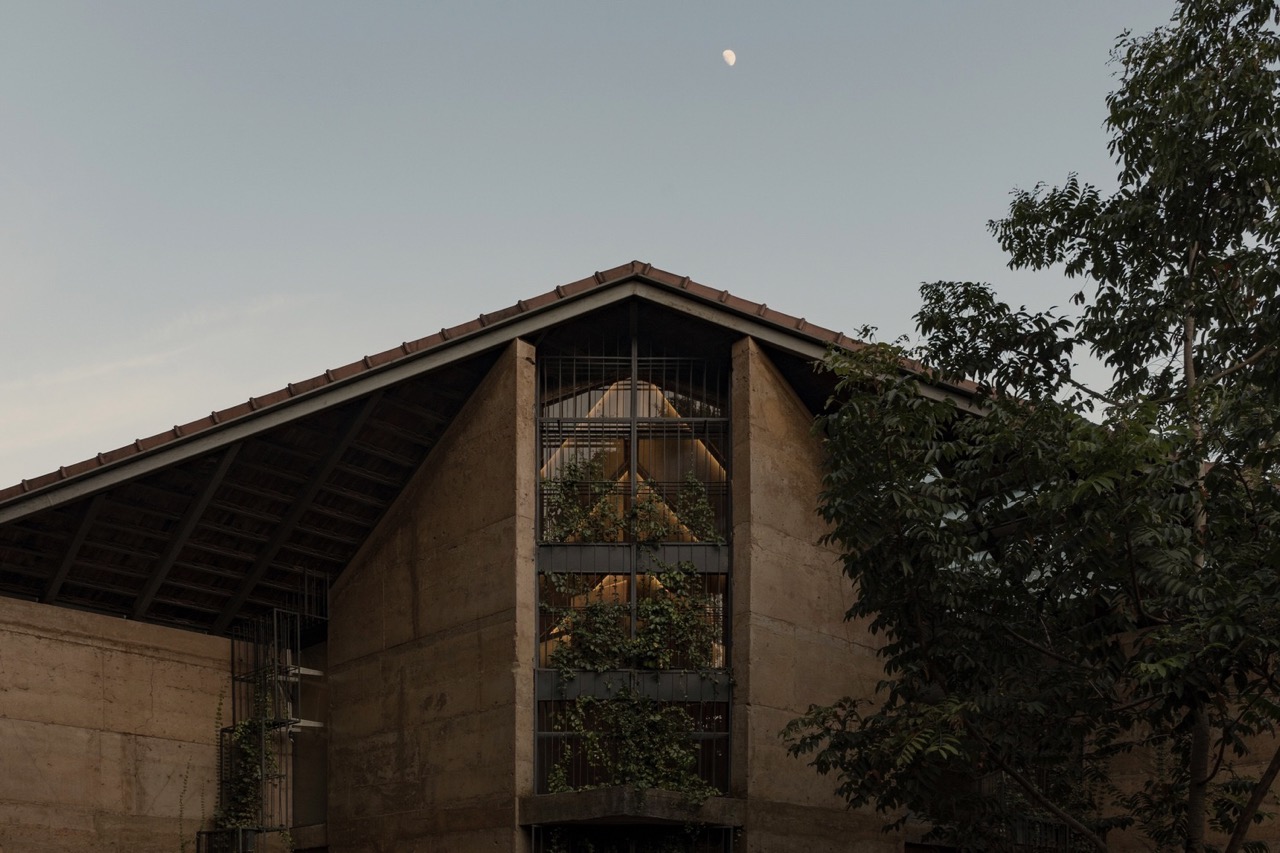
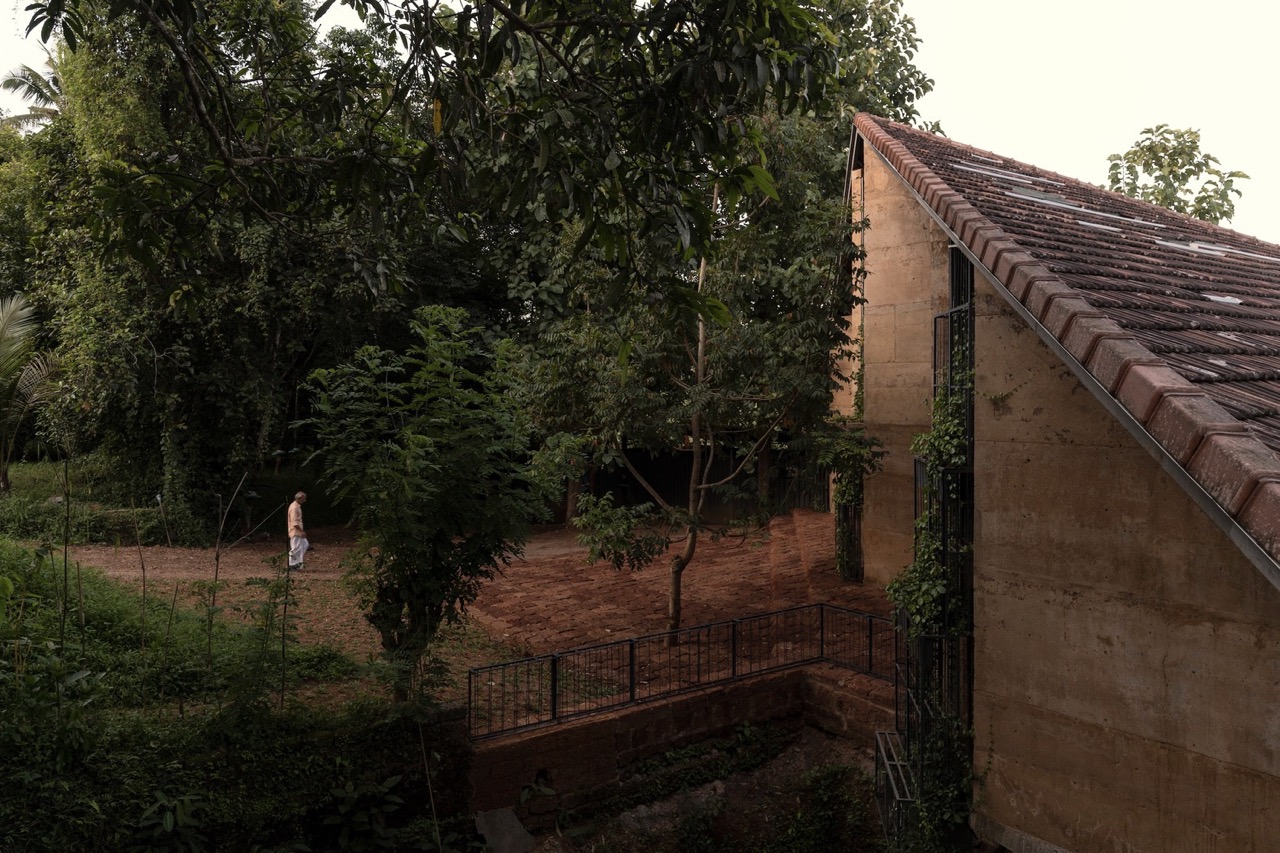
Along its elevationElevationAn architectural drawing that shows one side of a building as a flat, straight-on view, without perspective. Elevations describe heights, openings, materials, and proportions of the façade, and are usedGo to Elevation Glossary, the structure’s profile splits down the middle by a curtain of greenery that gracefully cascades down repurposed metal racks. This “green screen” adds a biophilic touch and filters the harsh afternoon sun. The walls are then angled around this focal point, centralizing it further while slimming the structure’s massing. The brutalist exterior walls are made with a Shuttered Debris Wall Technique, utilizing recycled waste and soil from the site that captures the appearance of a raw concrete finish.
The Presence of Absence
Inside the Nisarga Art Hub are open spaces awaiting to be filled with imagination. Its flexible and adaptive layout supports a slew of artistic endeavors whether it be exhibits or workshops. A sparse furnishing approach sunken seating throughout further strengthens this purpose in the design.
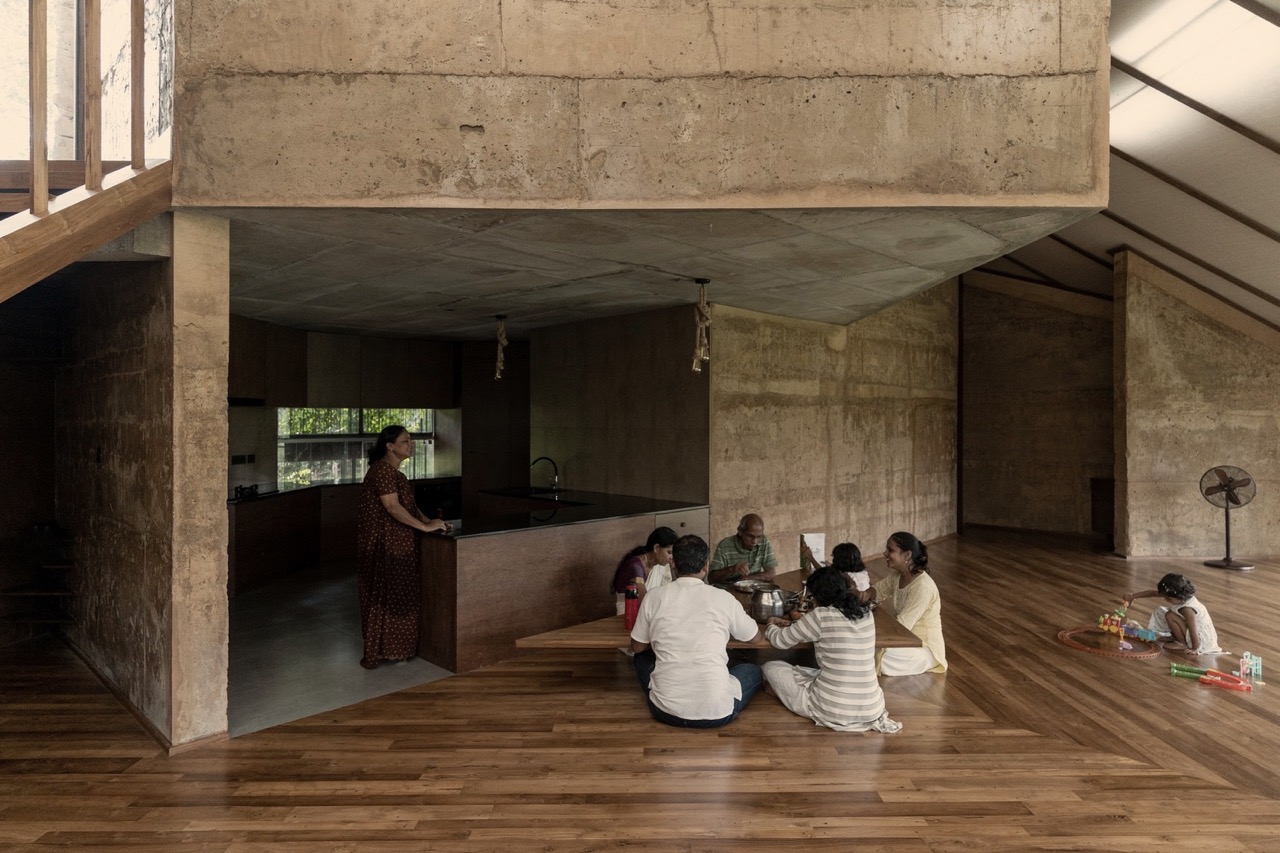
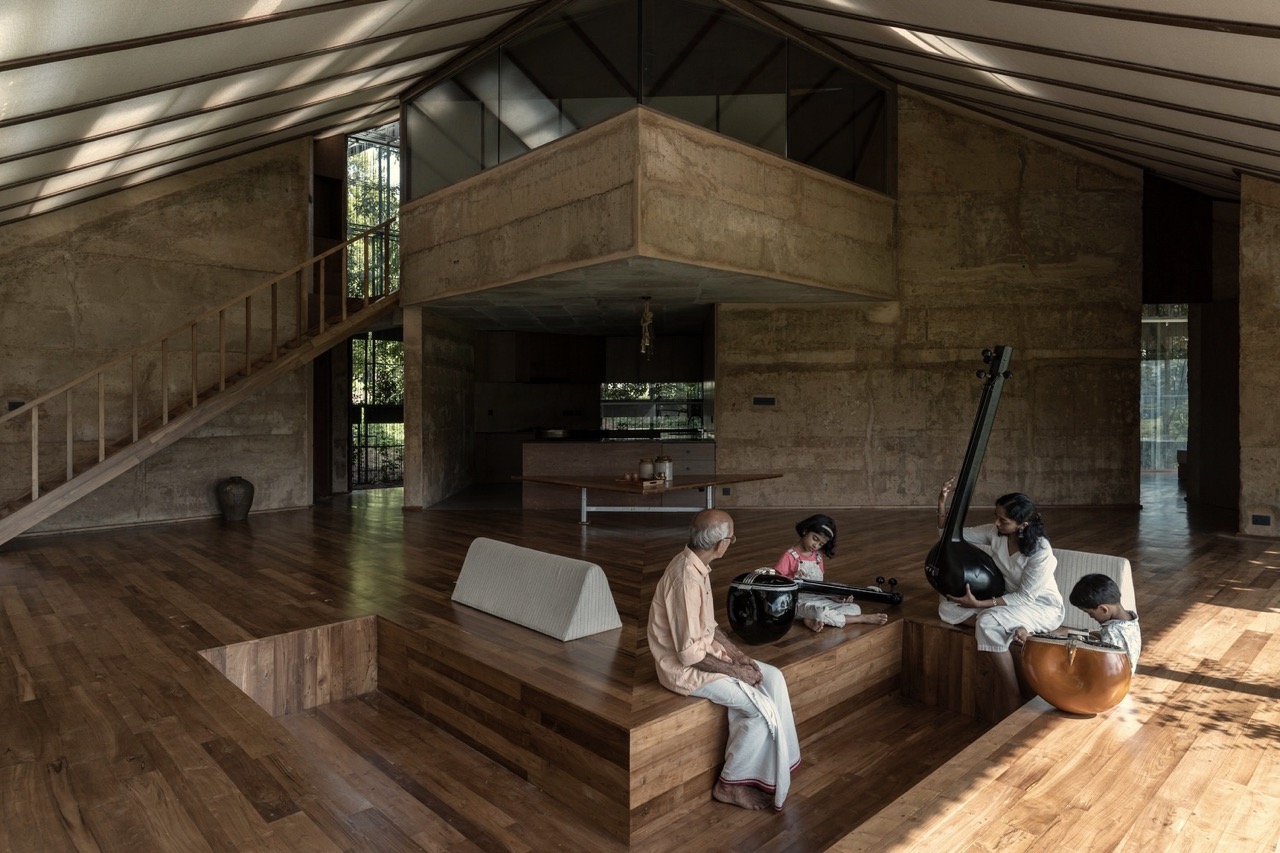
Social spaces sit front and center as a double-height ceiling adds spaciousness and centrality to them. Fenestrations and fully operable walls capture the nearby views of paddy fields that blend in a rural feel. A cantilevered area on the first floor makes room for other creative mediums such as a recording studio.
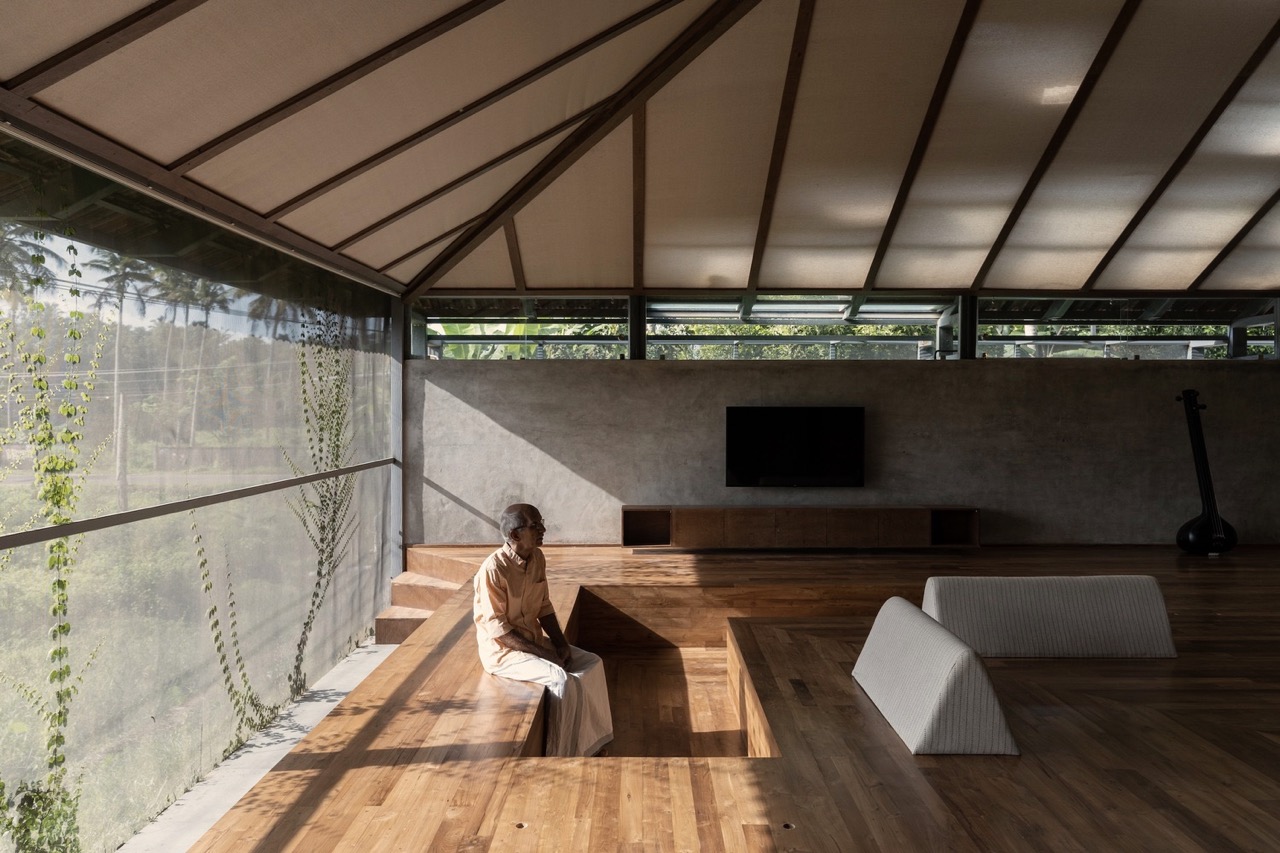
The interiors feature exposed concrete ceilings and unfinished walls. It celebrates the raw beauty of materials and the workmanship of construction. Furthermore, this accessible aesthetic reinterprets how even the most basic forms of construction can evoke elegance when designed well. Rolled burlap sacks cover the skylights, adding a textured and diffused character to the natural light that enters the rooms.
Artfully Sustainable
Wallmakers, as their name suggests, have a patented formula for sustainable walls called “Shuttered Debris Wall Technique”. Their walls are designed to use recycled construction materials alongside the nearby soil. This practice reduces the structure’s environmental footprint and costs. The integrity of this structural element is well-founded as it is capable of supporting cantilevers and the massive roof of the Nisarga Art Hub.
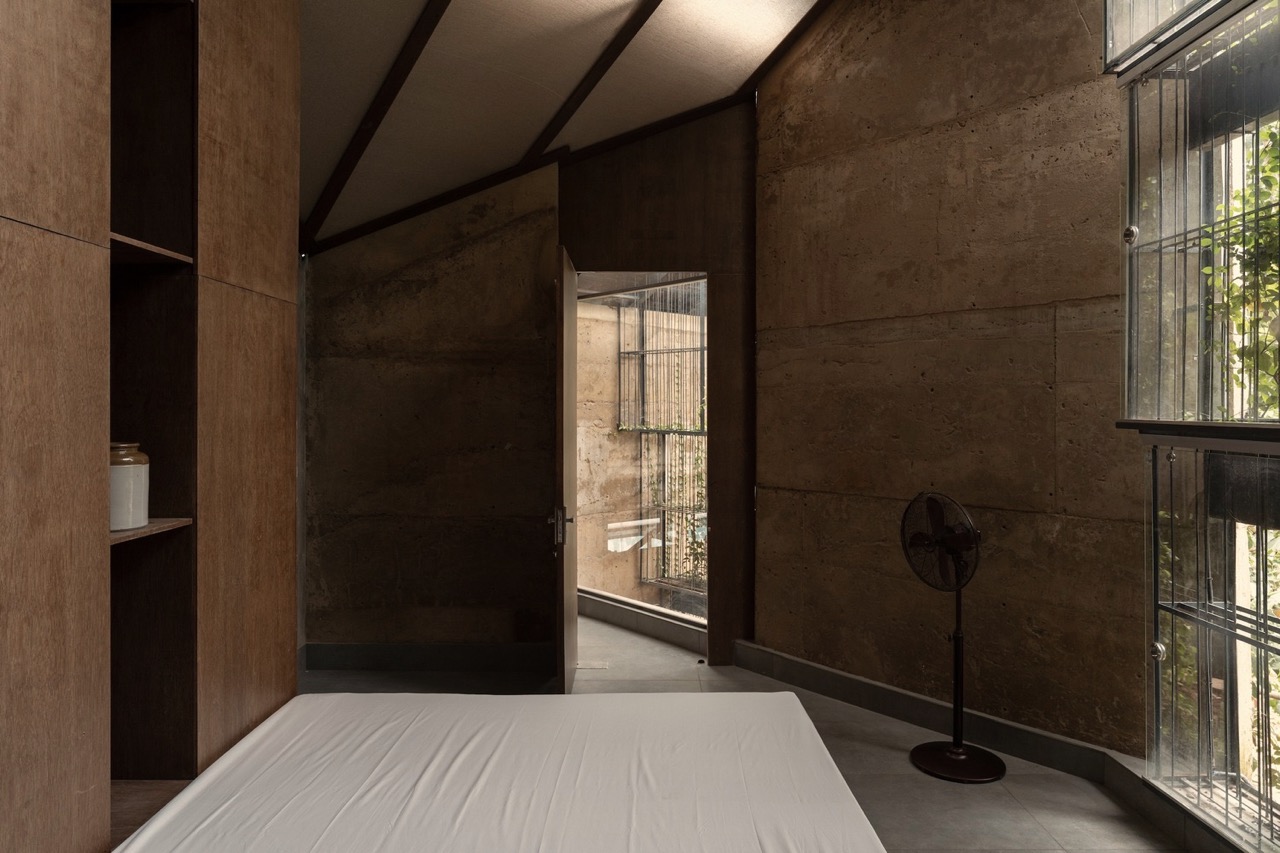
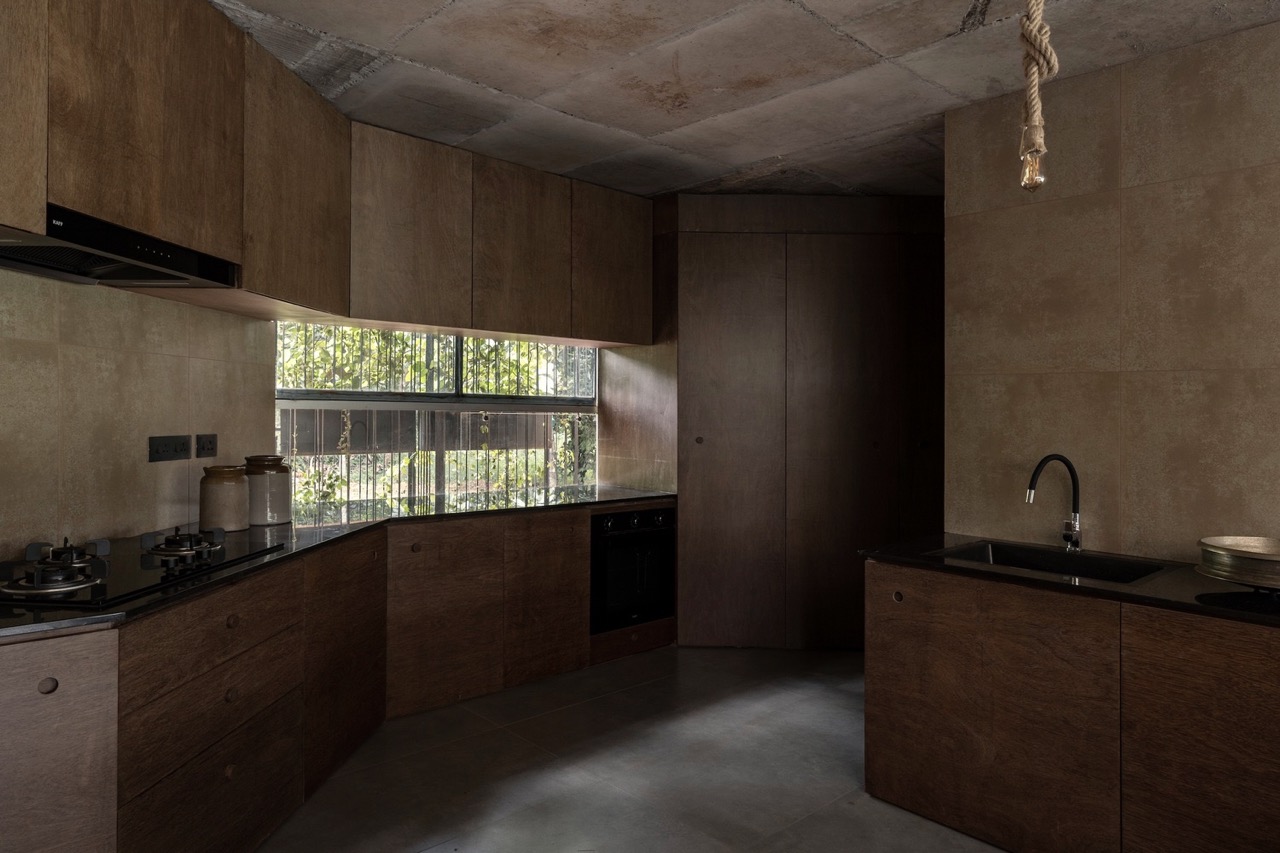
The numerous openings invite both natural light and the breeze, which reduces consumption. Furthermore, its constant use as a venue for gathering makes this home a valuable asset to the community. This factor relates to the importance that architectureArchitectureThe art and science of designing and constructing buildings, structures, and spaces that are functional, safe, and aesthetically pleasing. It encompasses the planning, design, materials, and techniques used to createGo to Architecture Glossary should also be for others, making the building serviceable to more people.
The Nisarga Art Hub manages to serve its purpose well as it draws inspiration from the region’s heritage, contributes a social gathering space, and does it all in a sustainable manner. It’s an ode to the arts and its nurturing effect upon the human spirit.
Read more: Art Sector Gallery: Where Natural Beauty Meets Metropolitan Culture
Photo credit: Syam Sreesylam
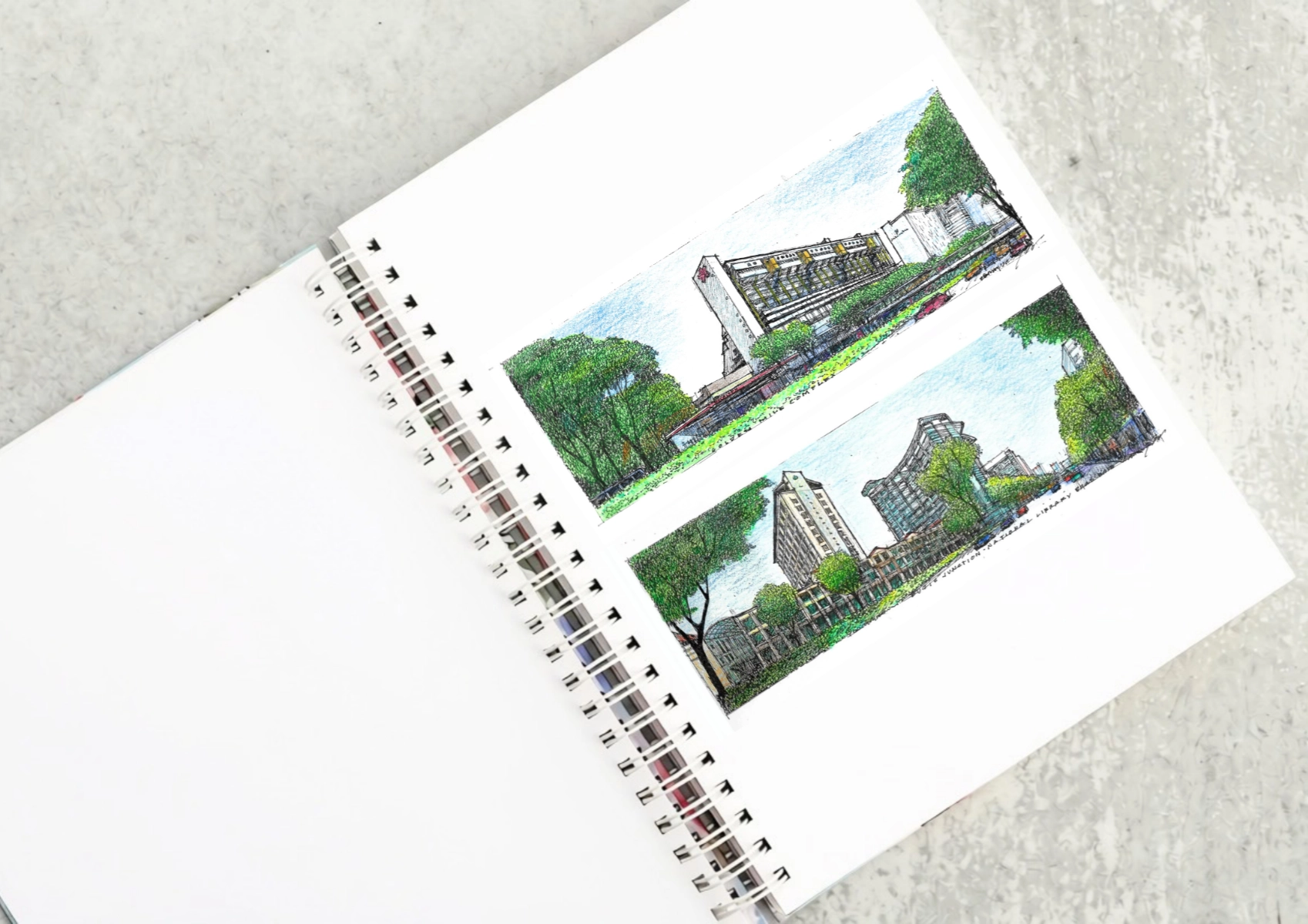
Two sketches of Singapore connect BluPrint Editor in Chief Paulo G. Alcazaren’s personal and professional history with Shared Ground: ArchitectureArchitectureThe art and science of designing and constructing buildings, structures, and spaces that are functional, safe, and aesthetically pleasing. It encompasses the planning, design, materials, and techniques used to createGo to Architecture Glossary of Care, Culture, […]
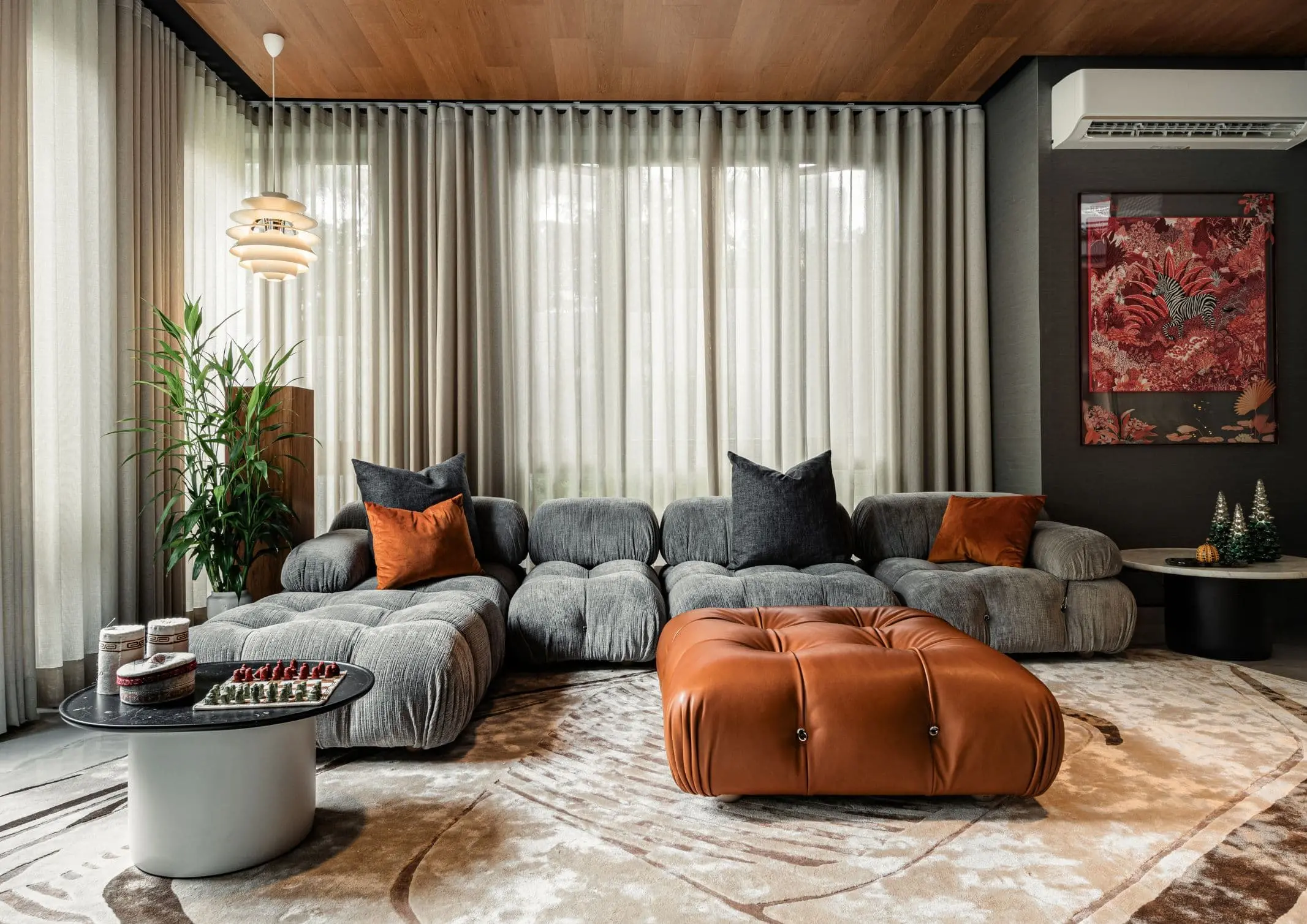
Some have become household names – Coleman, Oster, and KitchenAid – products that have found their way into Filipino kitchens, homes and family routines. In home furnishings, brands such as B&B Italia, Ethan Allen, Sub-Zero, Miele, SieMatic, Louis Poulsen, Hunter Douglas, Tempur, and Technogym, have helped shape the way Filipinos live. From everyday essentials to […]

In a way, designers are the modern-day soothsayers and prophets. They design for the future, predicting how a room, a house, a building or a whole city will be used by people. They foresee how users will interact with a space, conjure exact shades of colors to elicit specific behavior and arrange furniture to build […]
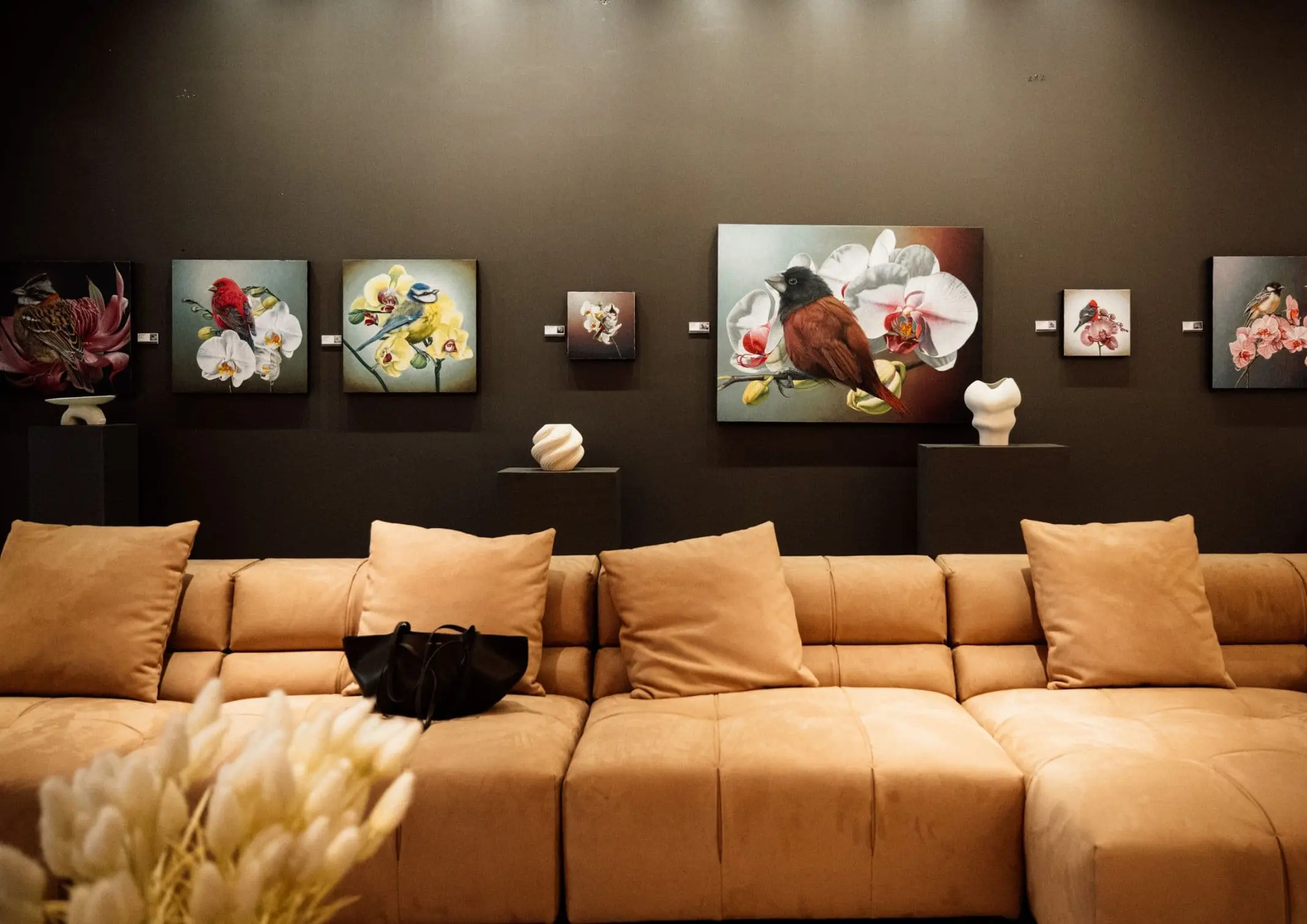
Art and furniture are often selected separately, yet their relationship can shape how a room looks and feels. The collaboration between Hooga and Galerie Joaquin explores how these elements can work together, bringing contemporary artworks into furnished residential settings at Hooga’s showroom in Uptown Mall, Bonifacio Global City. For Hooga, which curates furniture, lighting, and […]
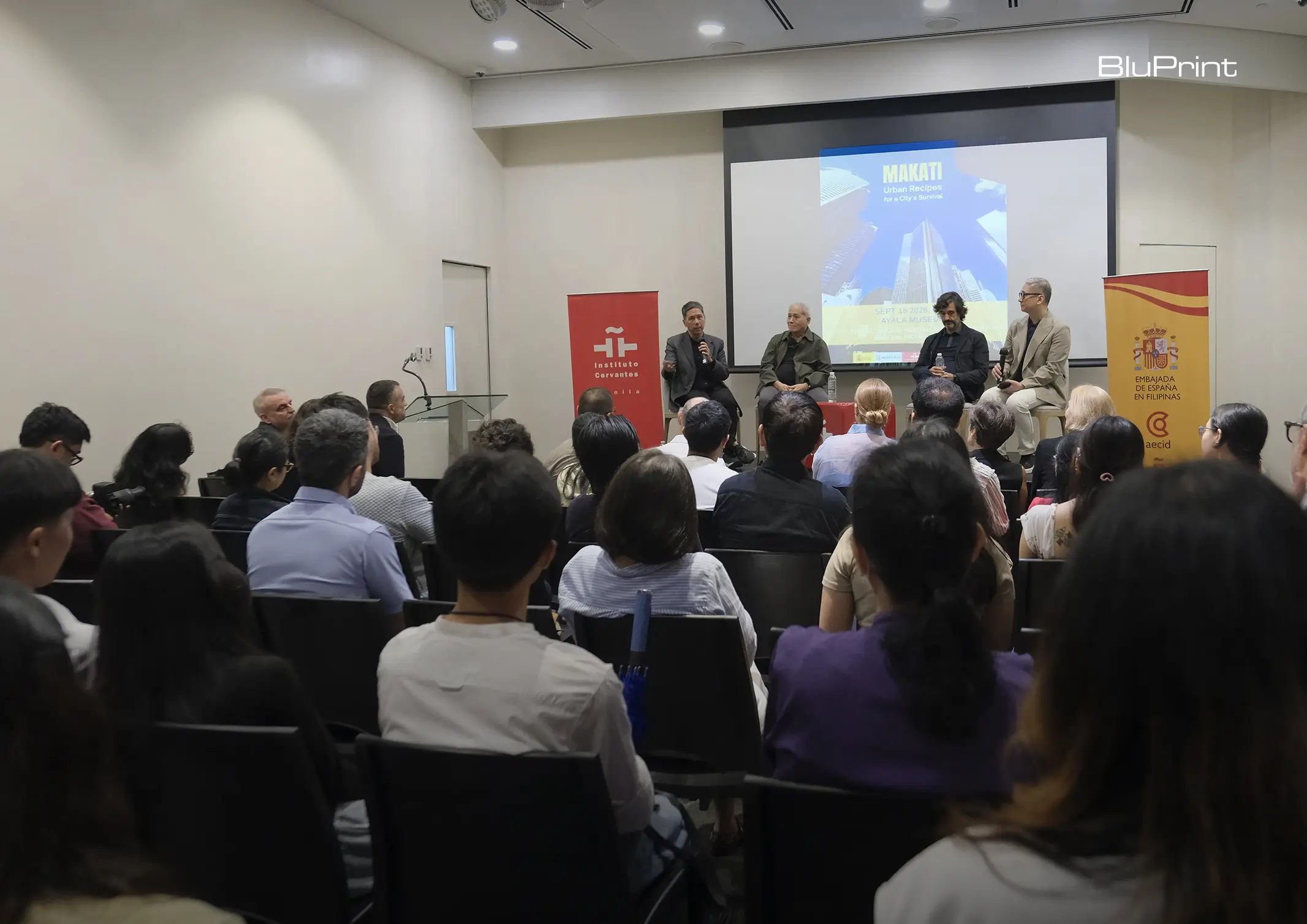
How can better-planned cities create the conditions for more creative, livable, and resilient urban environments? “Makati Urban Recipes for a City’s Survival,” a colloquium held at the Ayala Museum on September 15, brought together architects and practitioners from the fields of urbanism and the creative economy to discuss how design, planning, and collaboration can address […]
Read the issues.

Collect the volumes.

Recommended Video
Tap to Unmute
Unmute
0:00
0:00