Bahay Pangulo, the official residence of the President of the Philippines, is located inside Malacañang Park, a 19-hectare land that also houses a golf course, the headquarters of the Presidential Security Group (PSG), and the PSG Hospital.
In 2022, the presidential house, then called Bahay Pagbabago, was damaged when a 7.1-magnitude earthquake hit Metro Manila and its neighboring areas. The damage prompted President Ferdinand Marcos, Jr. to have the structure renovated. He tapped architect Conrad Onglao to lead the renovation and design what is now the Bahay Pangulo.
The Beginnings of Bahay Pangulo and Malacañang Park
In the 1930s, during the term of President Manuel L. Quezon, the Philippine government acquired a 19-hectare lot at the south bank of Pasig River. This land, once composed of rice fields, was developed into Malacañang Park consisting of three buildings: a recreation hall, an assembly hall, and a rest house for the Philippine President and the First Family.
Advertisement
Esteemed architects Juan M. Arellano and Antonio M. Toledo designed the original rest house. Standing directly opposite the river facade of Malacañang Palace, the rest house had a Zen-like feel because of the bamboo, nipa, and other native materials used.
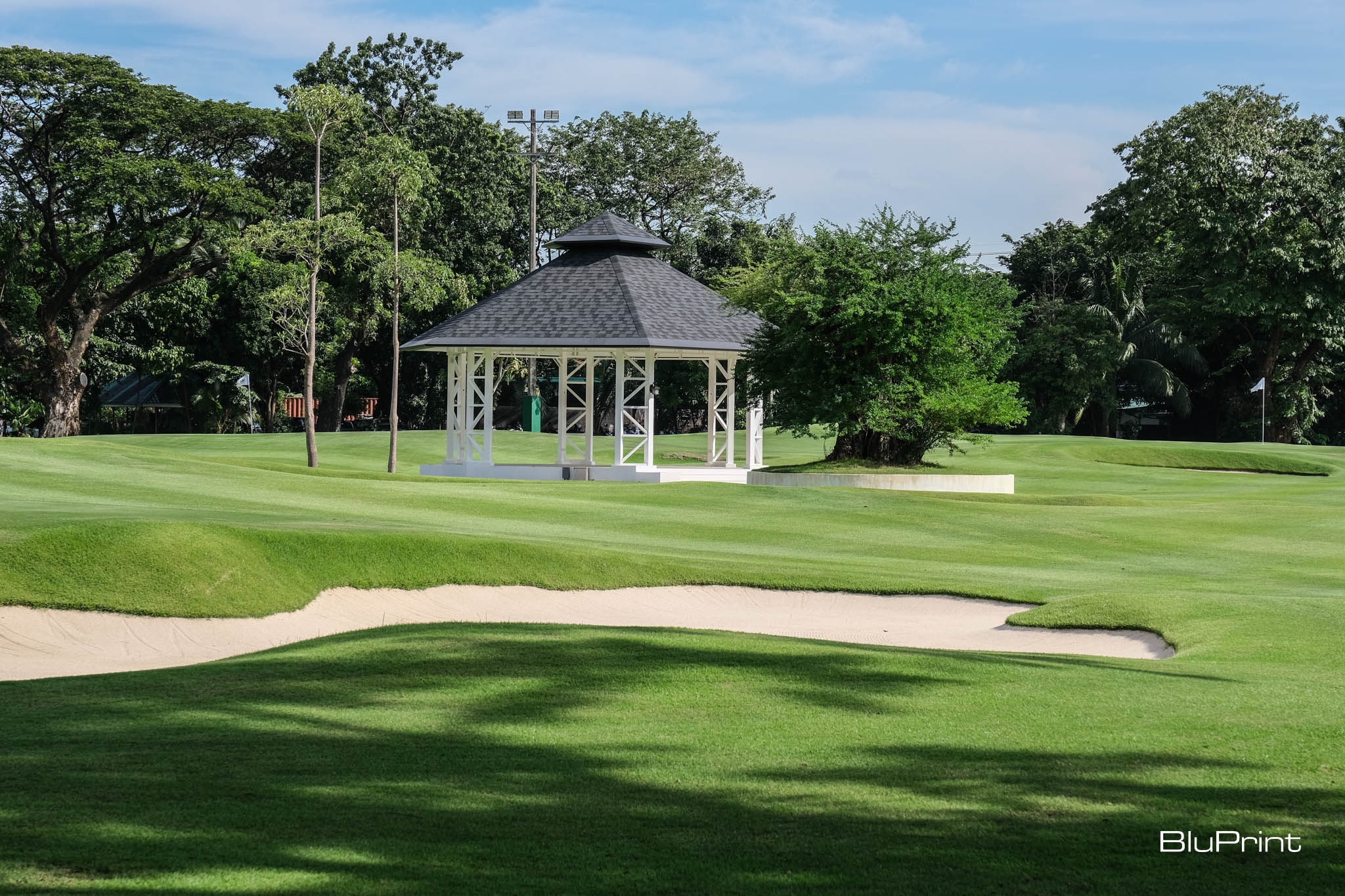
The diligently maintained golf course, which has nine holes, preserves the historical value of the property.
In the 1940s, a golf course was created in Malacañang Park after the attempted assassination of President Jose P. Laurel. After the administrations of President Jose P. Laurel and President Manuel A. Roxas, the golf course underwent improvements. More areas for resting were added and a golf club was established.
Renovations Over the Years
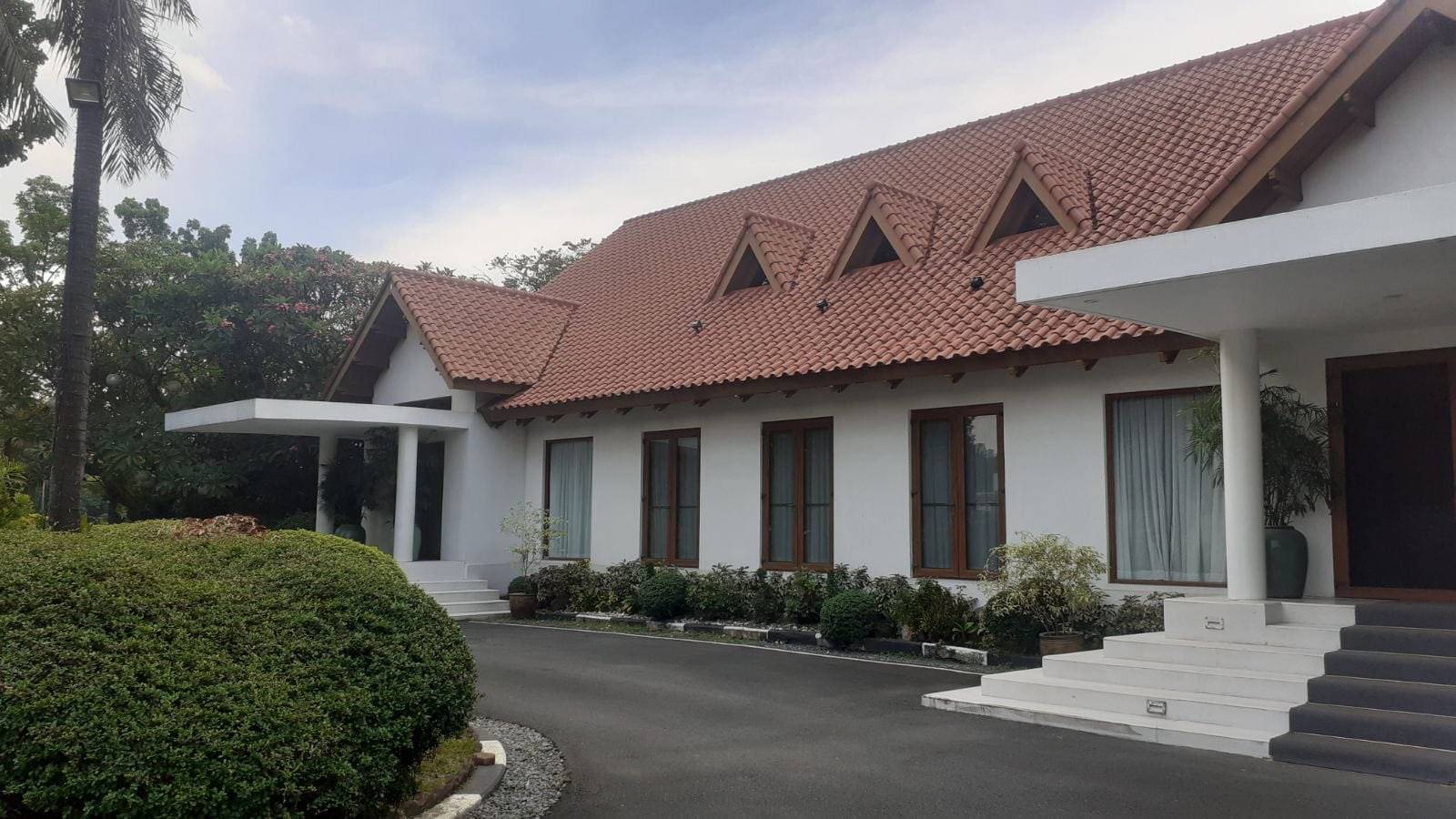
This was how the presidential residence looked like in June 2022 before the renovation. Photo courtesy of the Office of the President
During the term of President Diosdado P. Macapagal, a contemporary-style guest house was built to house visiting dignitaries. This space was called Bahay Pangarap. During the administration of President Ferdinand E. Marcos, National Artist for Architecture Francisco Mañosa added a pitched roof, narra flooring, and capiz windows to Bahay Pangarap and referred to it as Bahay Kubo. The guest house also served as the residence of President Ferdinand E. Marcos’s mother, Doña Josefa Edralin.
Advertisement
President Fidel V. Ramos repurposed Bahay Pangarap during his administration as a clubhouse for the Malacañang Golf Club, earning the name Bahay Malago, a wordplay on Malacañang Golf. The old recreation hall was also repaired and restored in collaboration with Mañosa and became the new Bahay Pangarap, serving as an alternative venue for official functions.
In 2008, during the regime of President Gloria Macapagal-Arroyo, Bahay Pangarap underwent a major renovation due to termite infestation. She tapped architect Conrad Onglao to work on the new structure: a contemporary Asian house with a tropical garden and a modern swimming pool.
When President Benigno “Noynoy” Aquino III came into office, he made Bahay Pangarap his official residence. A guest room, a staff room, and a room for his security team was added to the house. In 2016, President Rodrigo Duterte renamed Bahay Pangarap to Bahay Pagbabago. Like Aquino, he also resided in this house. During Duterte’s term, few repairs were made, as he preferred to preserve the historical integrity of the place.
Advertisement
Bahay Pangulo Today
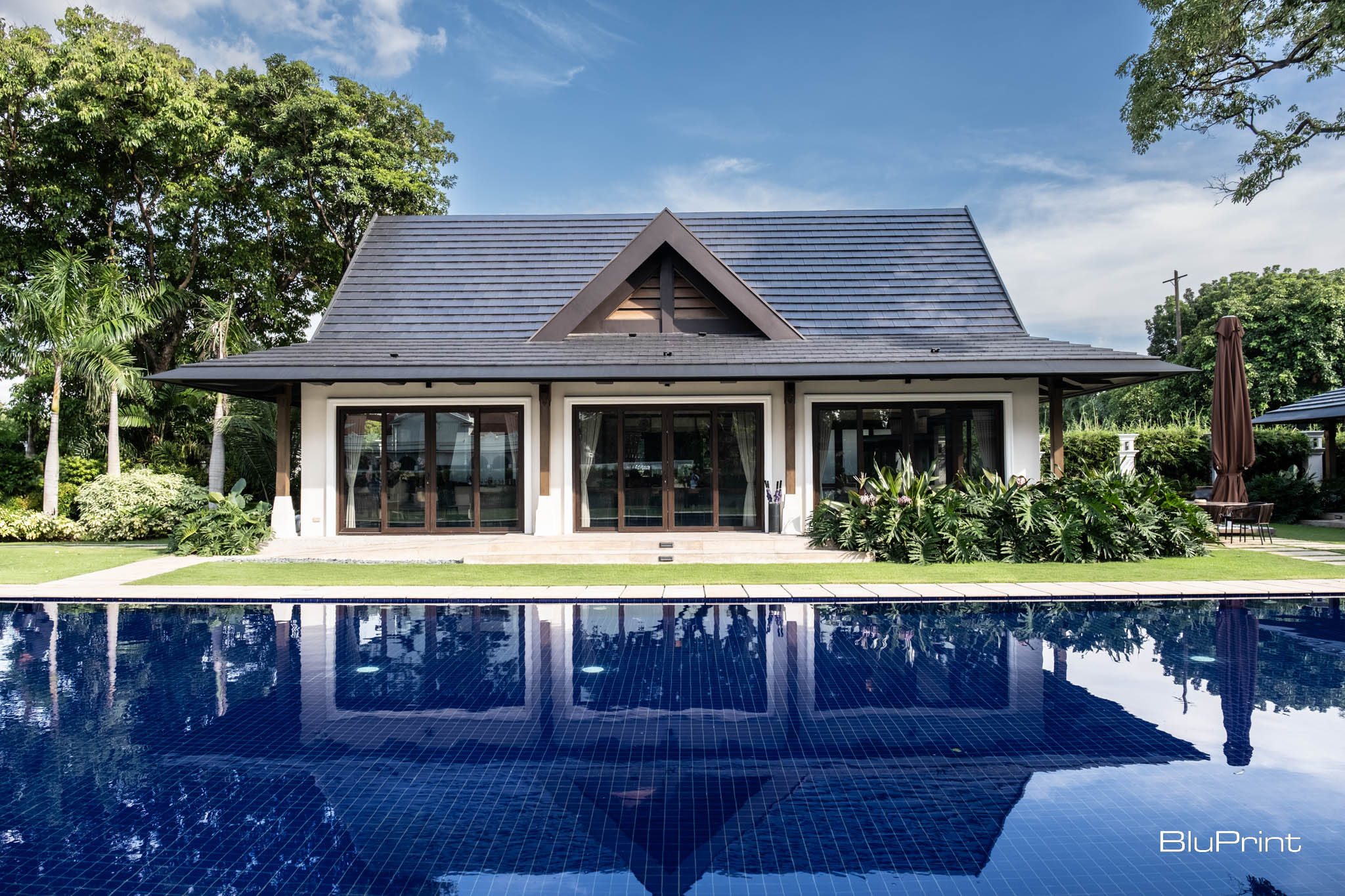
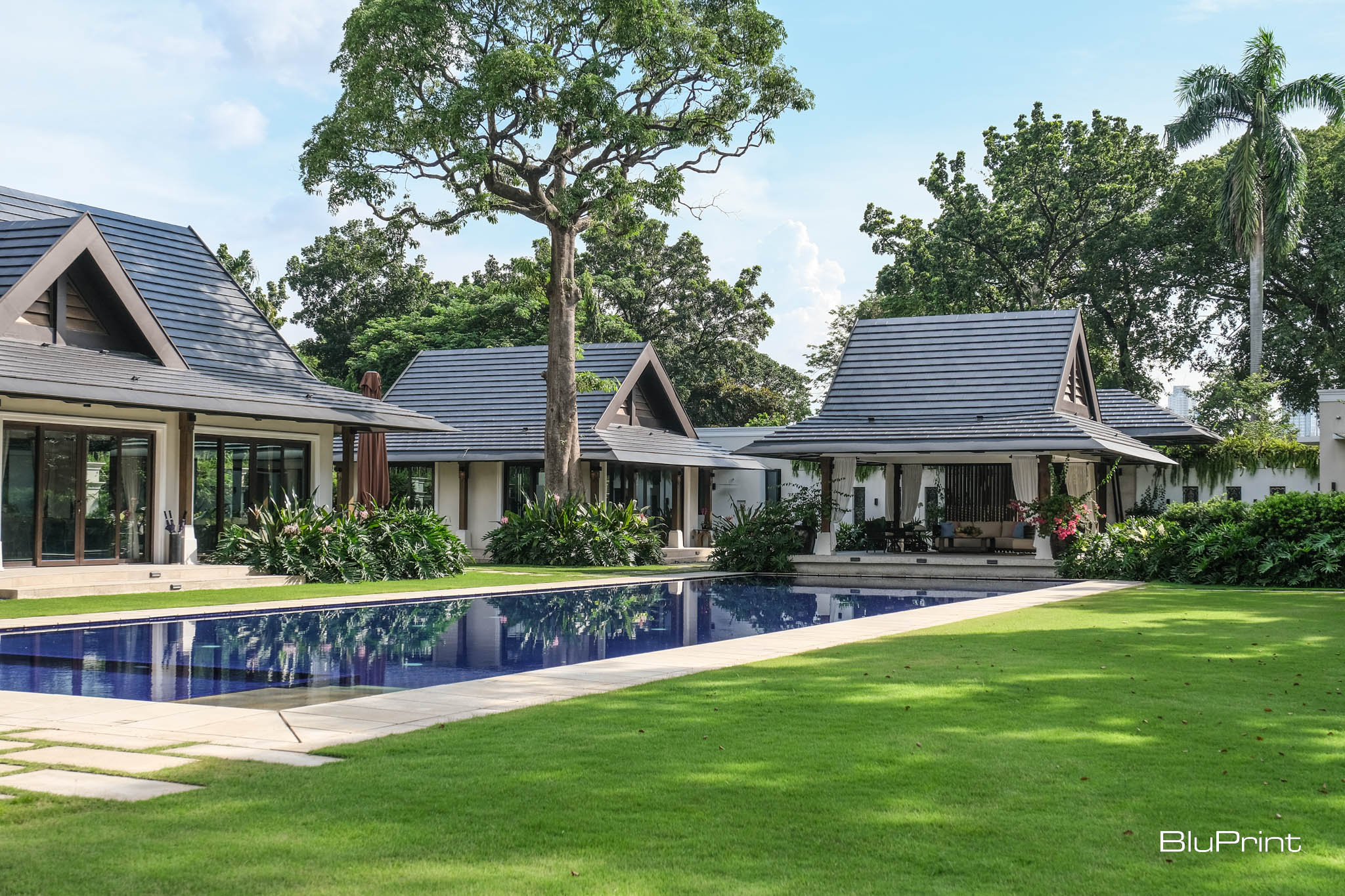
The presidential residence has a deconstructed layout, with separate structures for different areas, allowing occupants to hold multiple activities at the same time. Onglao also gave Bahay Pangulo an Asian modern architecture style, giving it a resort-like feel.
Let’s take a look at the different areas of Bahay Pangulo.
Main House
Photo by Ed Simon
Photo by Ed Simon
Photo by Ed Simon
Photo by Ed Simon
Photo by Ed Simon
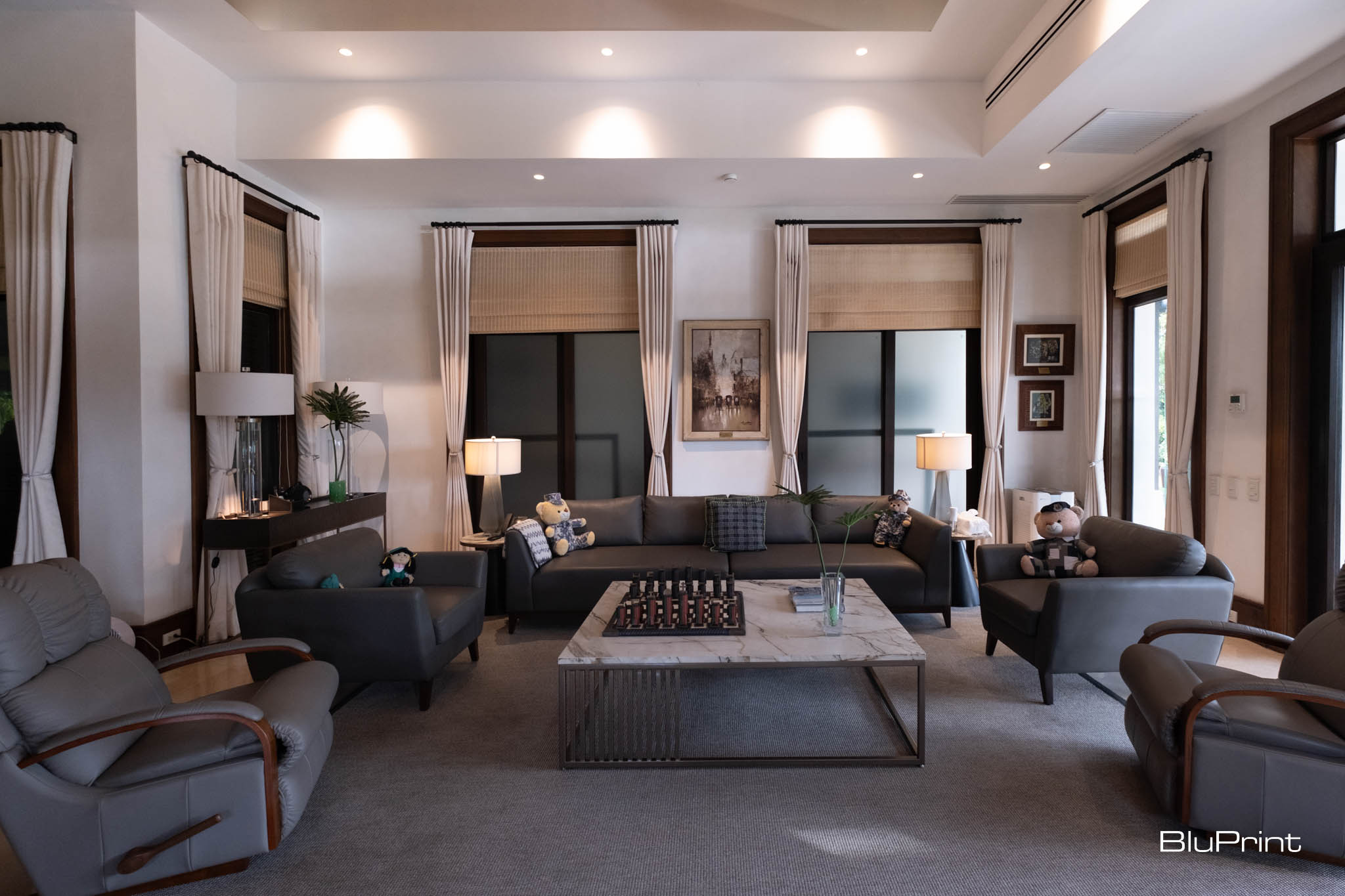
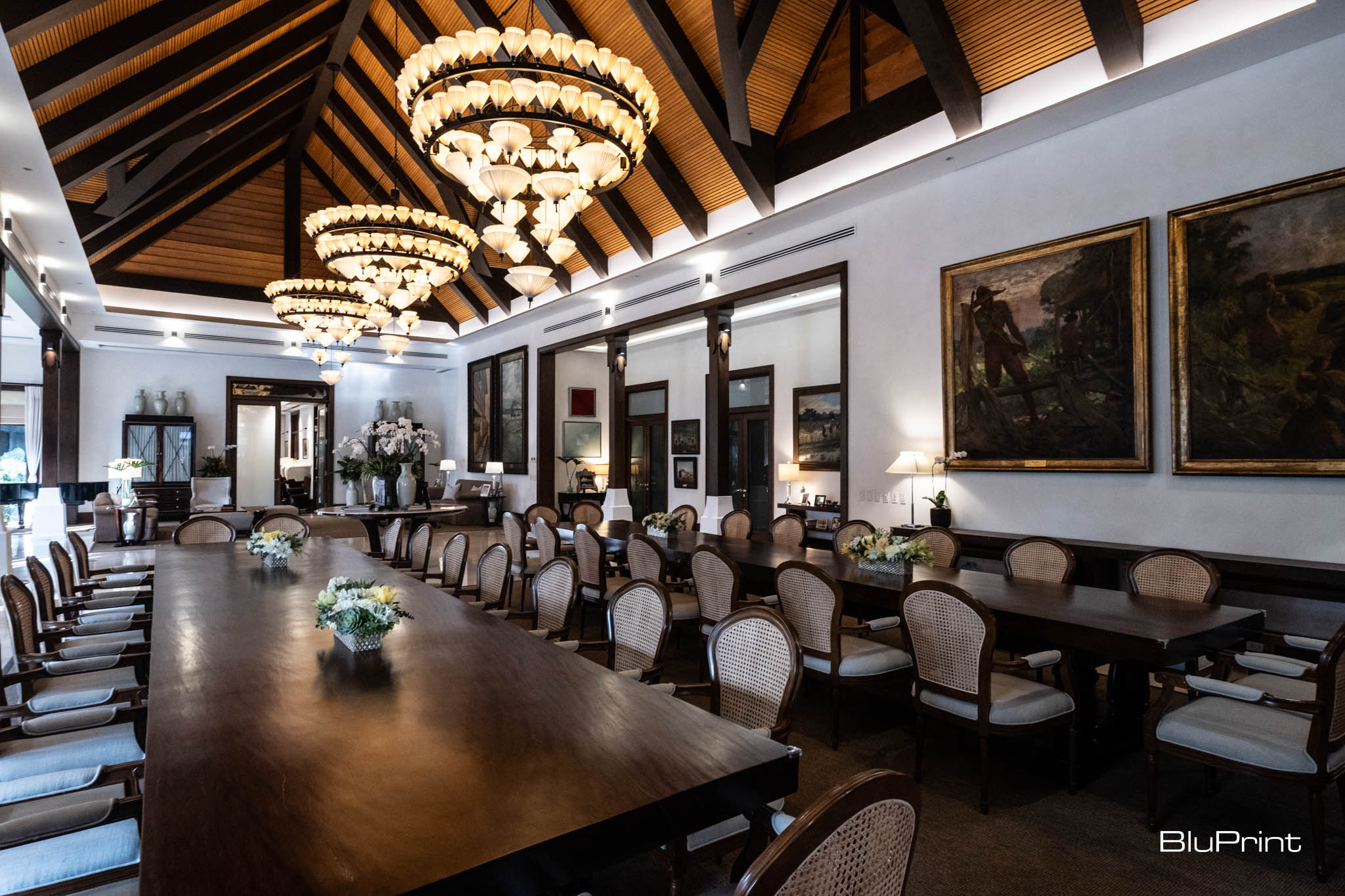
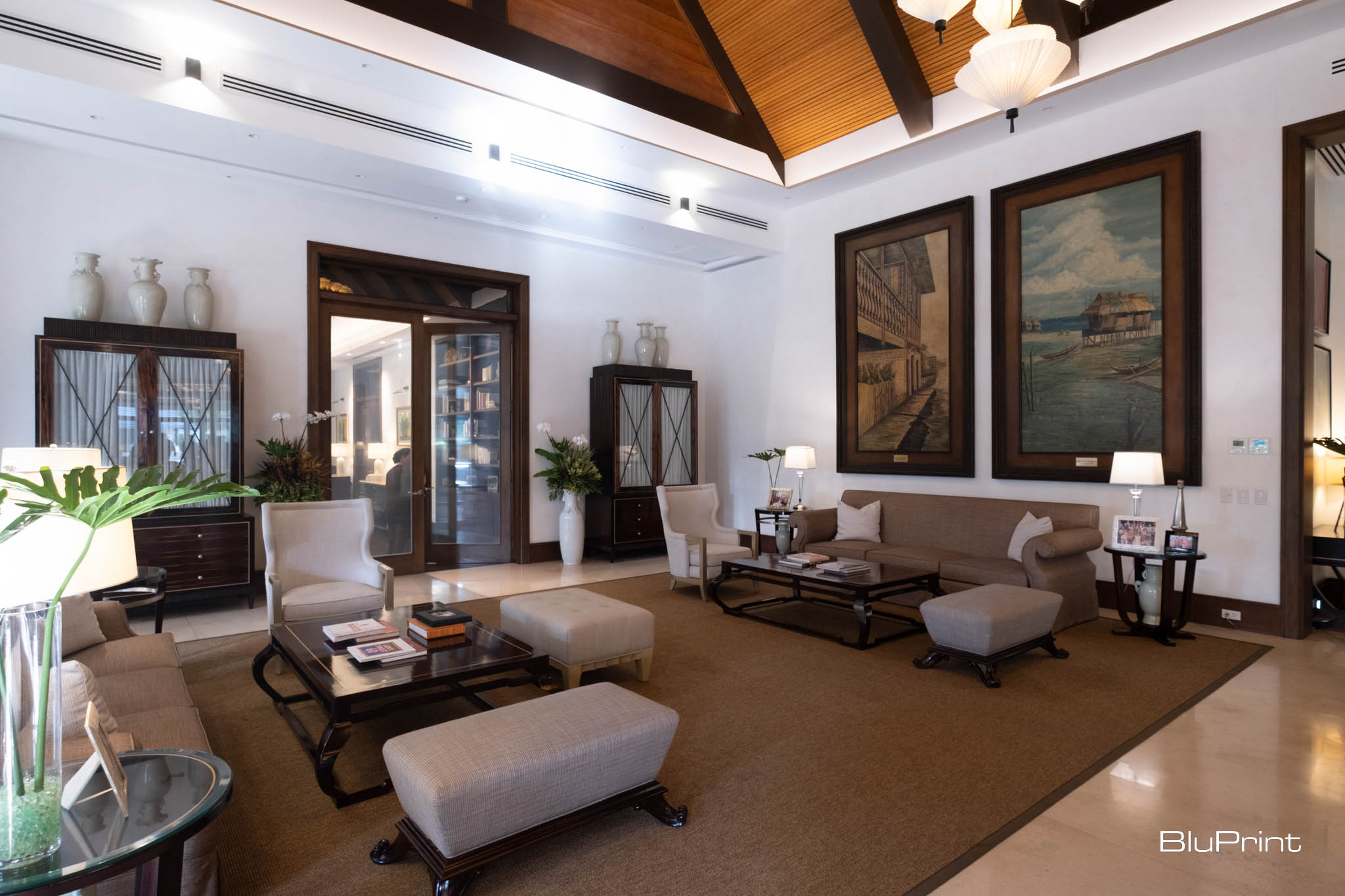
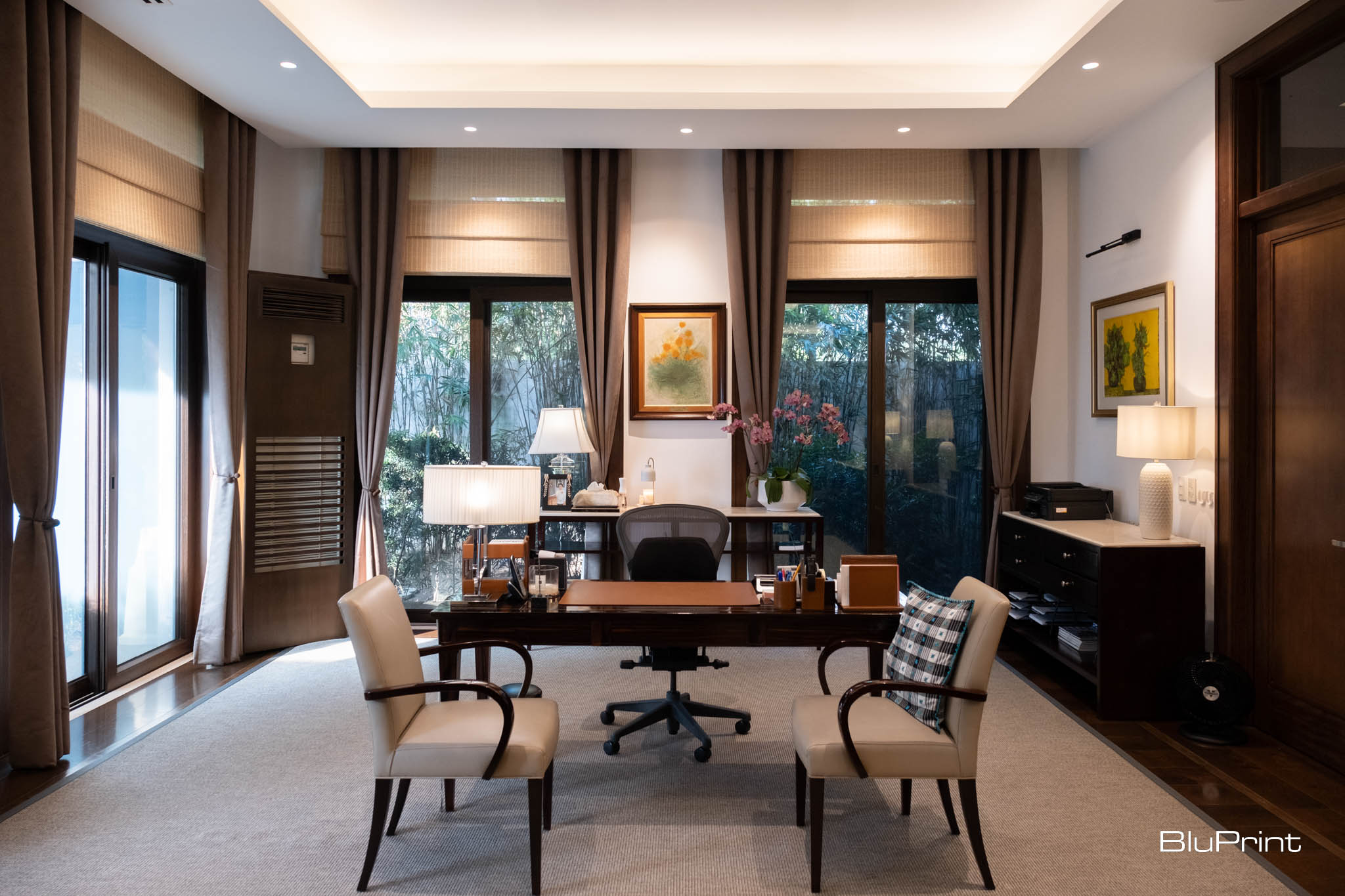
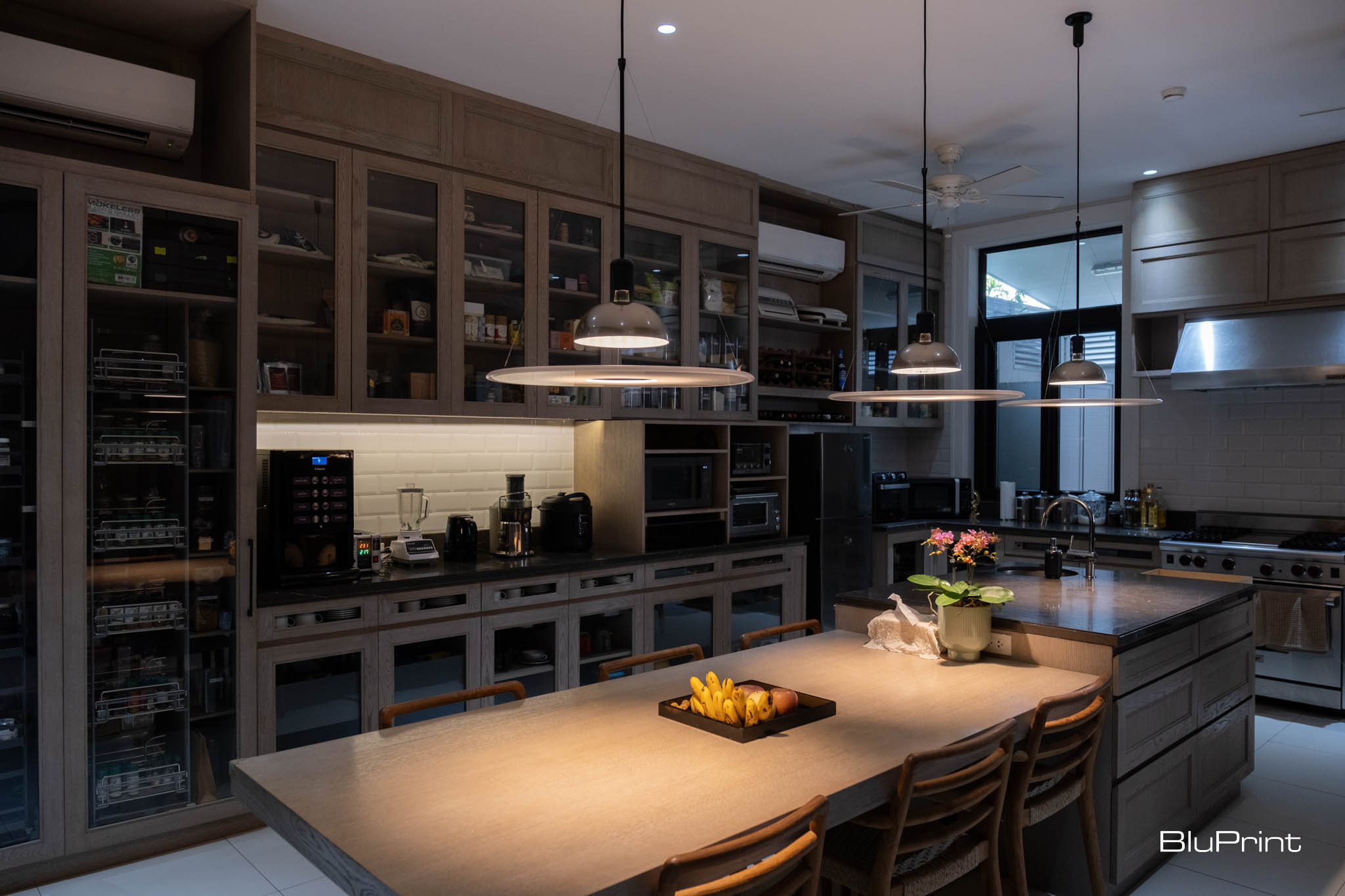
In the main house are the living area, the dining area, the study room, and the kitchen.
Advertisement
This space is where the President and the First Family reside. “We did the old structure during GMA’s time. It was called Bahay Pangarap. The idea was really to save it. But on closer scrutiny, we noticed that it was already full of anay. The air conditioning hasn’t really been kept well. The structure, being beside the Pasig River, the slab was already moving,” Onglao narrated.
The old structure was then demolished to give way to a new one while keeping the same footprint. The renovated house is also protected from flooding, thanks to its increased elevation.
Upon entering, a living area filled with grays, whites, and beiges greets guests. A sliding door opens to the dining space, with two 16-seater tables to accommodate multiple guests. Next to the dining space another seating area for entertaining. On the other end of the main house is the study room, while a door on one side of the dining space leads to the kitchen.
Advertisement
Guest Villa
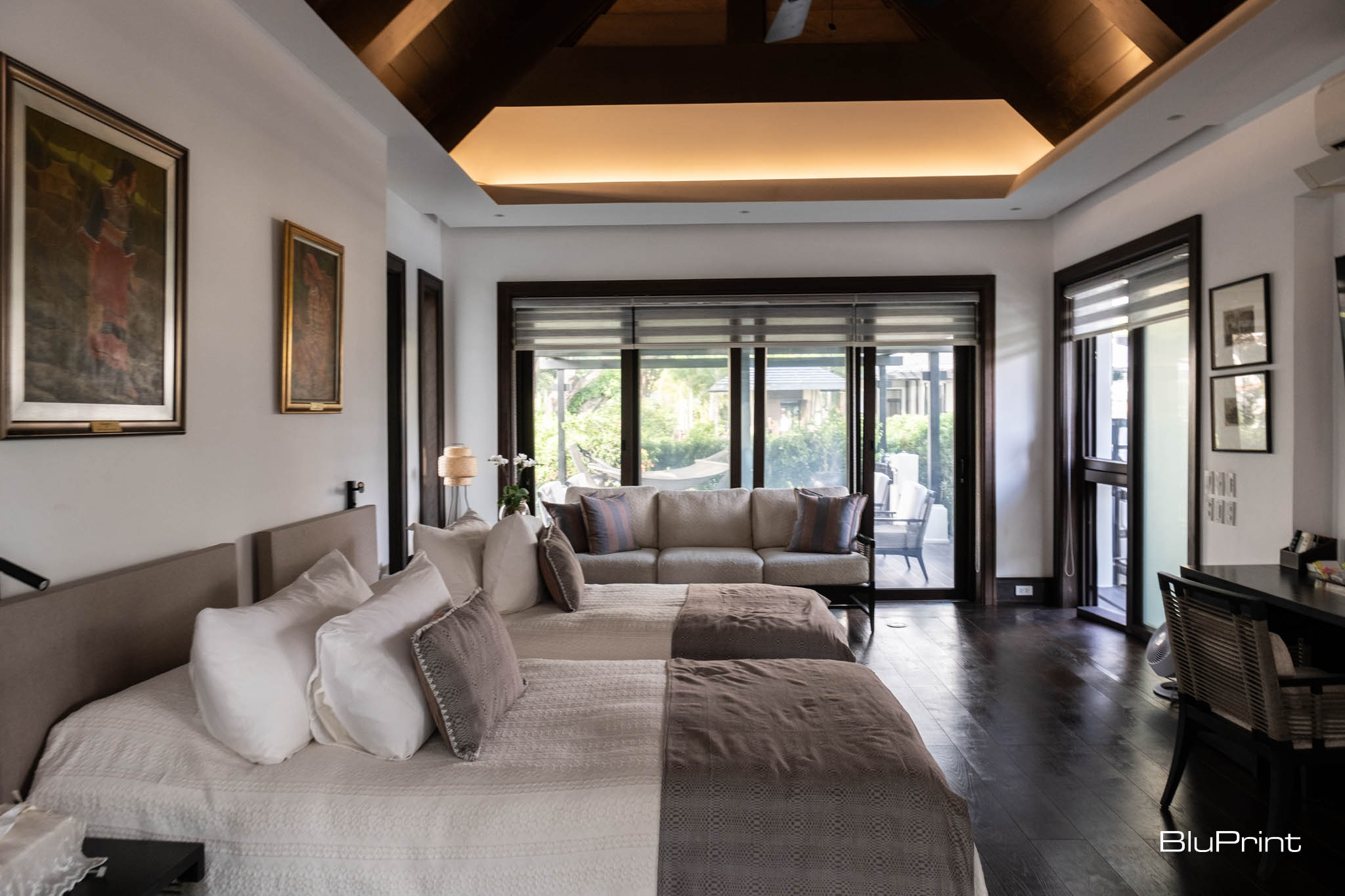
The guest villa has enough room to accommodate visitors who are spending the night.
When the President and First Lady’s child relatives come over, this space serves as their bedroom. Glass windows and sliding doors give the room a view of the garden and pool.
Pool Area
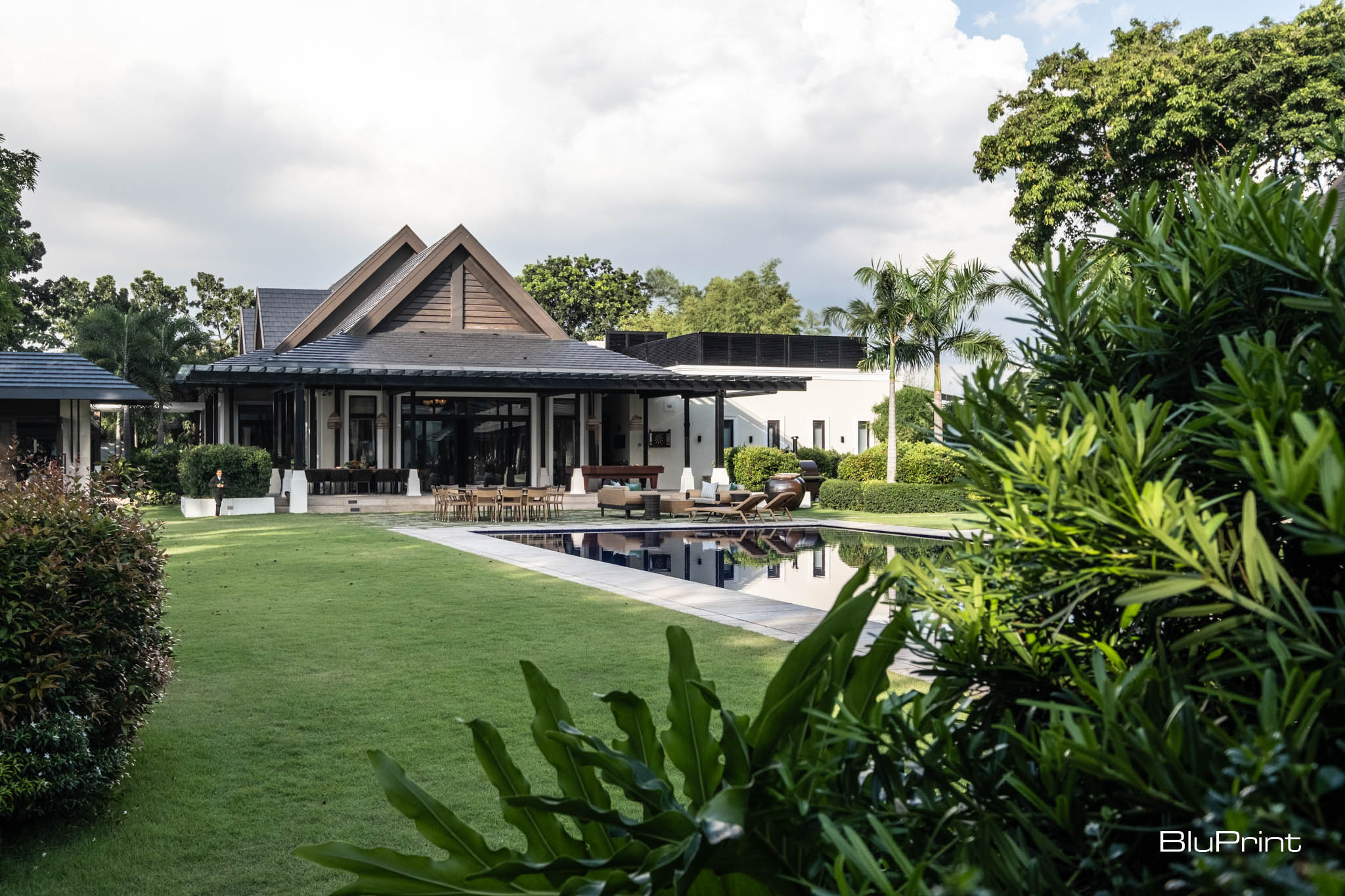
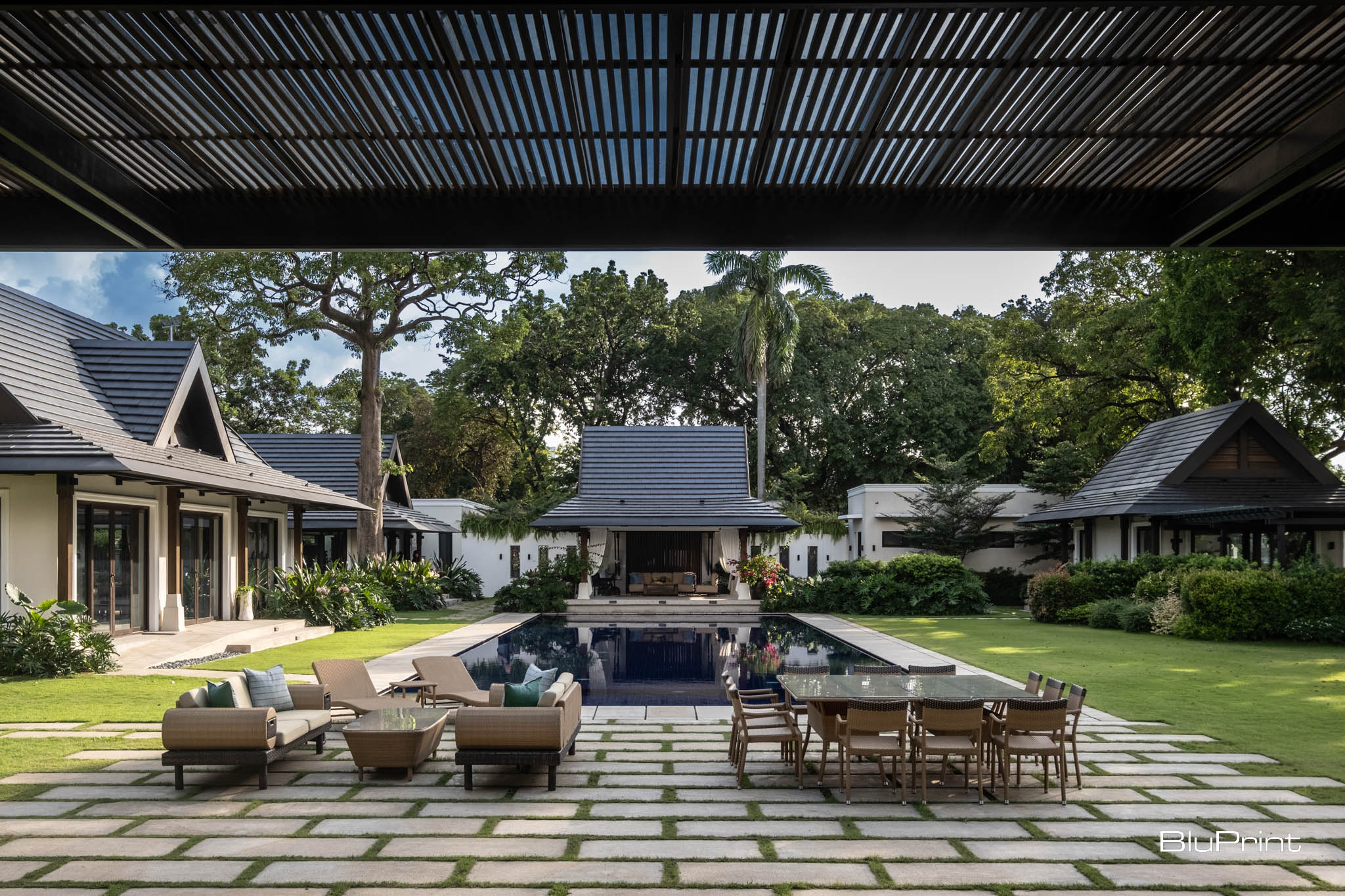
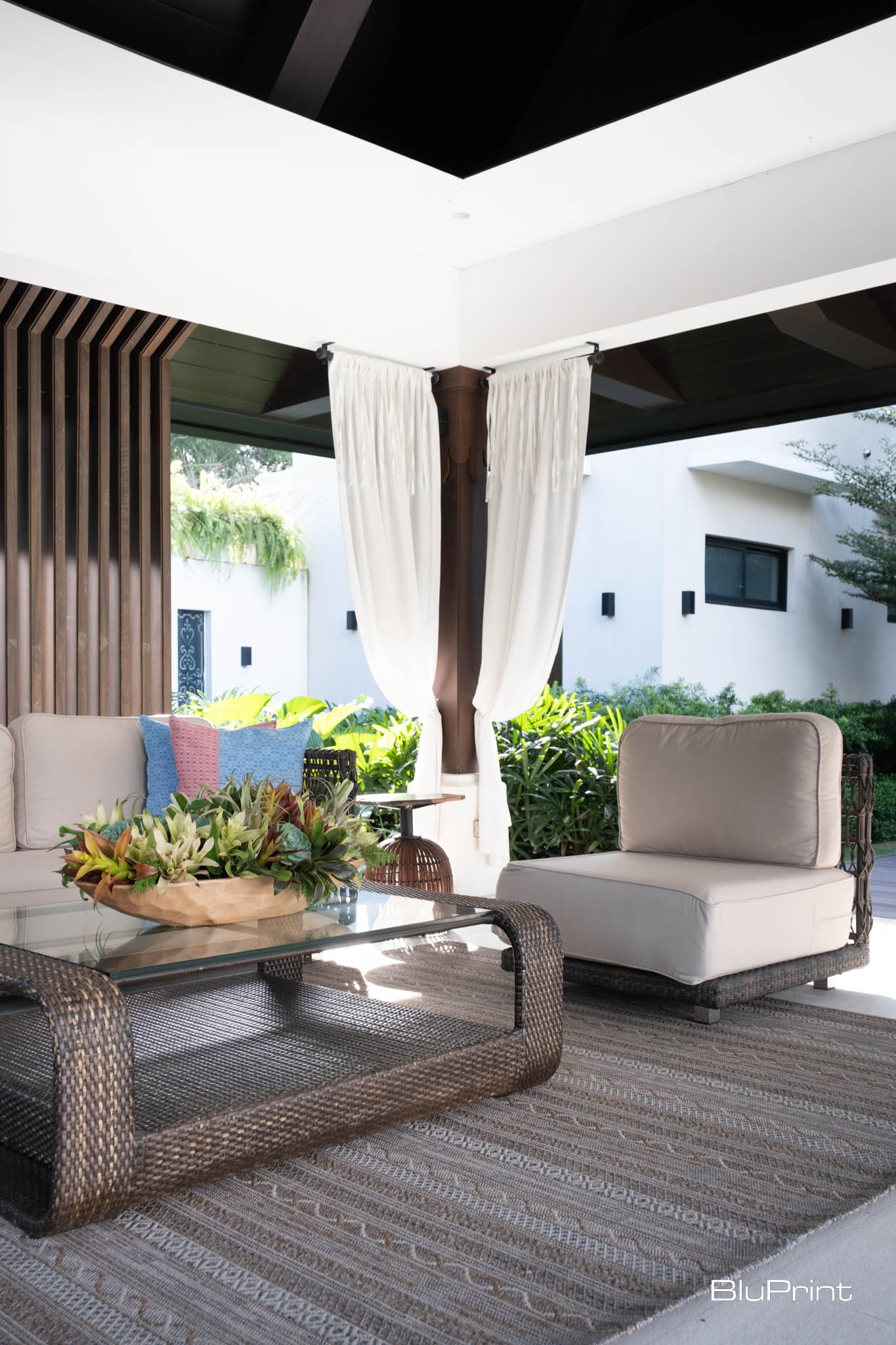
The pool area has outdoor dining and lounging spot on one side and a cabana on the other end.
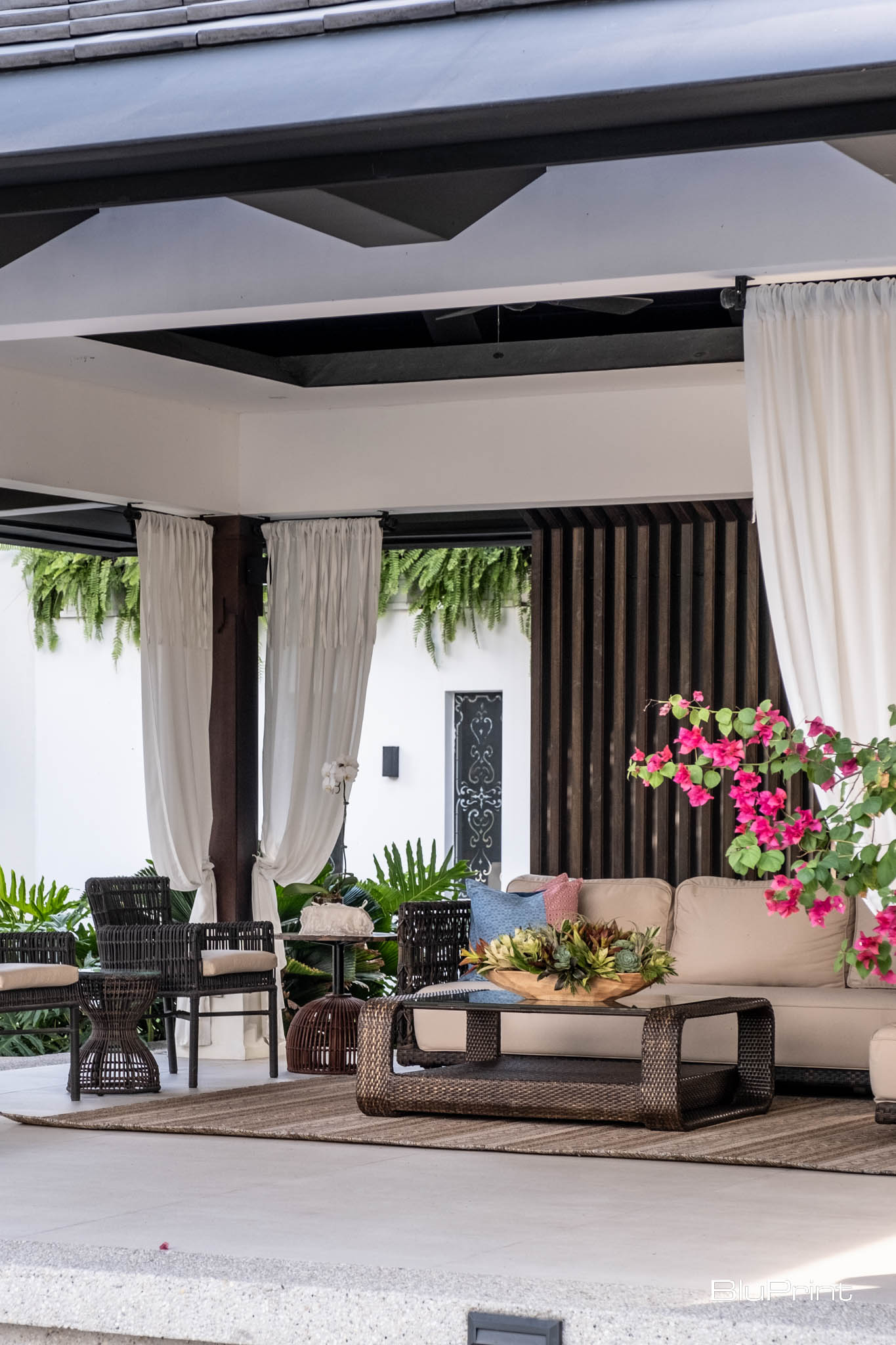
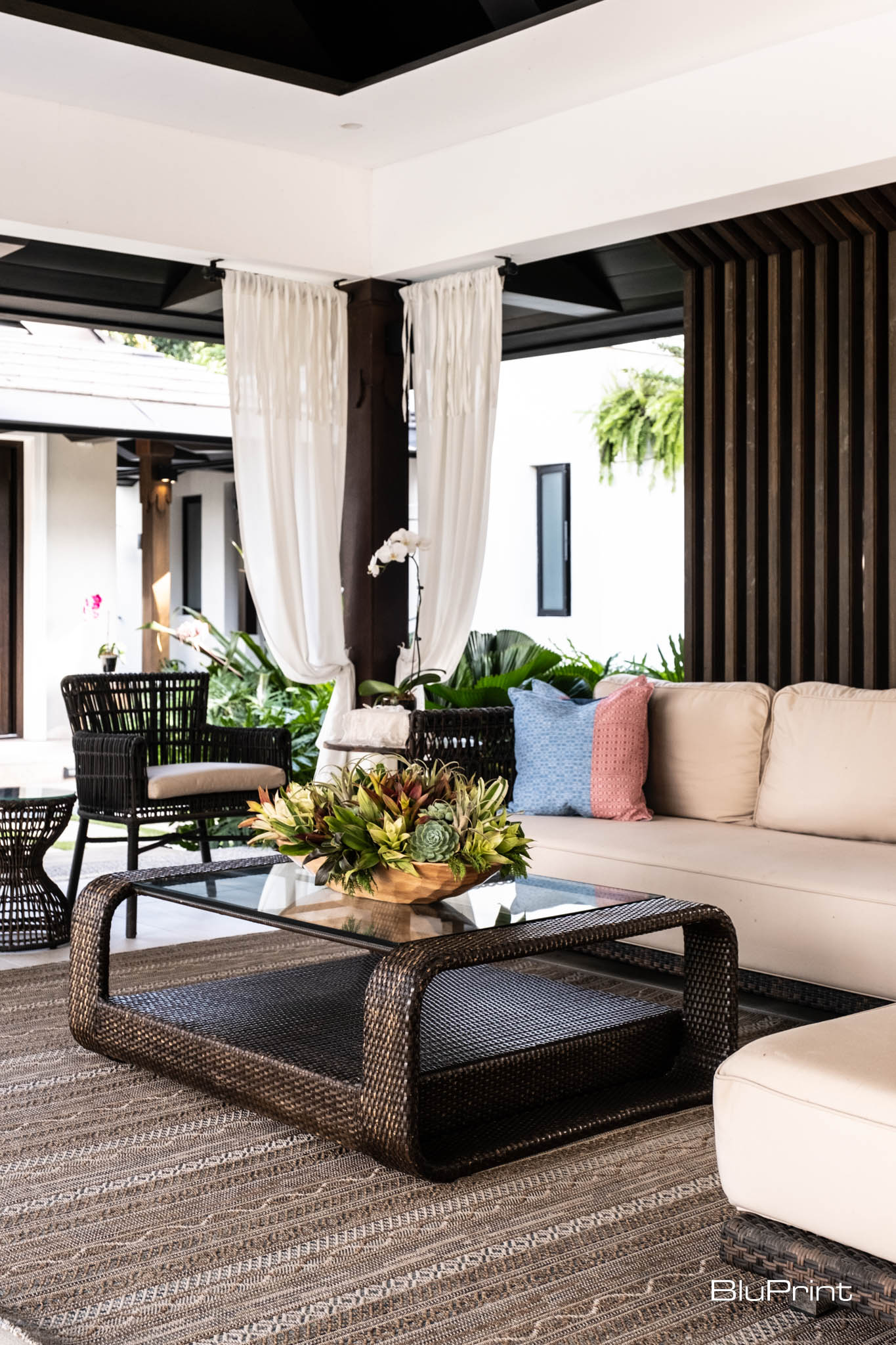
The pool, which used to have a pergola shading it on one end, has been revived and transformed with a more modern design and cleaner lines. The cabana at one end of the pool, which is opposite the main house, provides a seating area for guests.
Photo by Ed Simon
Photo by Ed Simon
Photo by Ed Simon
The cabana provides a comfortable lounging area outdoors, as it offers shade from the sun. The curtains can be drawn for privacy.
Advertisement
Pavilion and Gym
Meetings and other gatherings can be held at the pavilion, which is separate from the main house.
Another structure on one side of the pool area is a room where meetings and gatherings can be held. It has two 12-seater tables that can accommodate up to 24 guests at a time.
At the far corner of the garden is the gym, where the President exercises daily.
The deconstructed layout of the presidential residence allows various activities to happen simultaneously.
Built to Last
The renovation of Bahay Pangulo not only gave the presidential residence a facelift, but it also made the structure more durable with the use of steel, increased elevation, and other improvements. Onglao also said maintenance won’t be as difficult as before. With this, the new Bahay Pangulo can remain intact for years to come and endure multiple presidential terms.
Bahay Pangulo was reinforced with modern structural upgrades and heritage-preserving techniques to withstand earthquakes and typhoons. These improvements maintain the building’s historical integrity while ensuring safety against natural disasters common in the Philippines.
Advertisement
Some presidents chose Bahay Pangulo for its serene location and smaller, more intimate setting compared to Malacañang. It offered a quieter retreat while still reflecting the prestige of a presidential residence.
Bahay Pangulo showcases Filipino design through intricate woodwork, capiz shell windows, and traditional craftsmanship. These features highlight cultural heritage while blending classic details with functional modern elements.
Malacañang Park has evolved with landscaped gardens, recreational spaces, and improved facilities while preserving its historical charm. The park reflects both heritage conservation and modern adaptation for public and ceremonial use.
Advertisement
Yes, structural issues like termite damage and water exposure prompted the renovation. Restoration efforts addressed these problems while preserving the home’s original architecture and ensuring long-term durability.
Located near the equator, factors such as heat and humidity are the norm in the Philippines. This tropical climate has shaped the development of architecture in the country. As Leandro V. Locsin stated: “The first consideration of the Filipino builder and certainly the most evident in his architecture, which is after all an outgrowth of […]
Art in the Park returned this year to Jaime Velasquez Park in Salcedo Village, Makati City, to celebrate its 20th anniversary. This year’s edition featured a curated selection of works from 55 exhibitors representing galleries, art collectives, independent art spaces, and student groups. With all artworks capped at Php 70,000, the fair continued its mission […]
Denise de Castro, Principal Architect of DEQA Design Collaborative, believes that designing with equity in mind means starting at the workplace. Values and practices that your studio or office espouse inevitably filter down to the work that you do. Equitable design ensures that people with different needs and different backgrounds are supported through fair access, […]
Across Metro Manila, residential developments are increasingly designed around proximity. As cities grow denser and mobility becomes more complex, new housing is often positioned near transport nodes, commercial districts, and educational institutions. This approach reflects a broader shift in urban planning. Mixed-use environments allow residents to live closer to daily necessities—reducing commute times while supporting […]
Luxury in design is undergoing a quiet shift. Where once luxury was measured primarily through visual opulence, today it is increasingly defined by responsibility—through the way spaces are built, the materials selected, and the impact those decisions leave behind. At the Philippine World Building and Construction Expo (WORLDBEX) 2026, this evolving definition of luxury takes […]
For more than nine decades, Fisher & Paykel has approached design with a simple but exacting belief: that the best living environments are those shaped by people, place, and purpose. Rooted in New Zealand and deeply attuned to island and coastal living, the brand’s philosophy centres on quiet performance, material honesty, and appliances that integrate […]
Download this month's BLUPRINT magazine digital copy from: