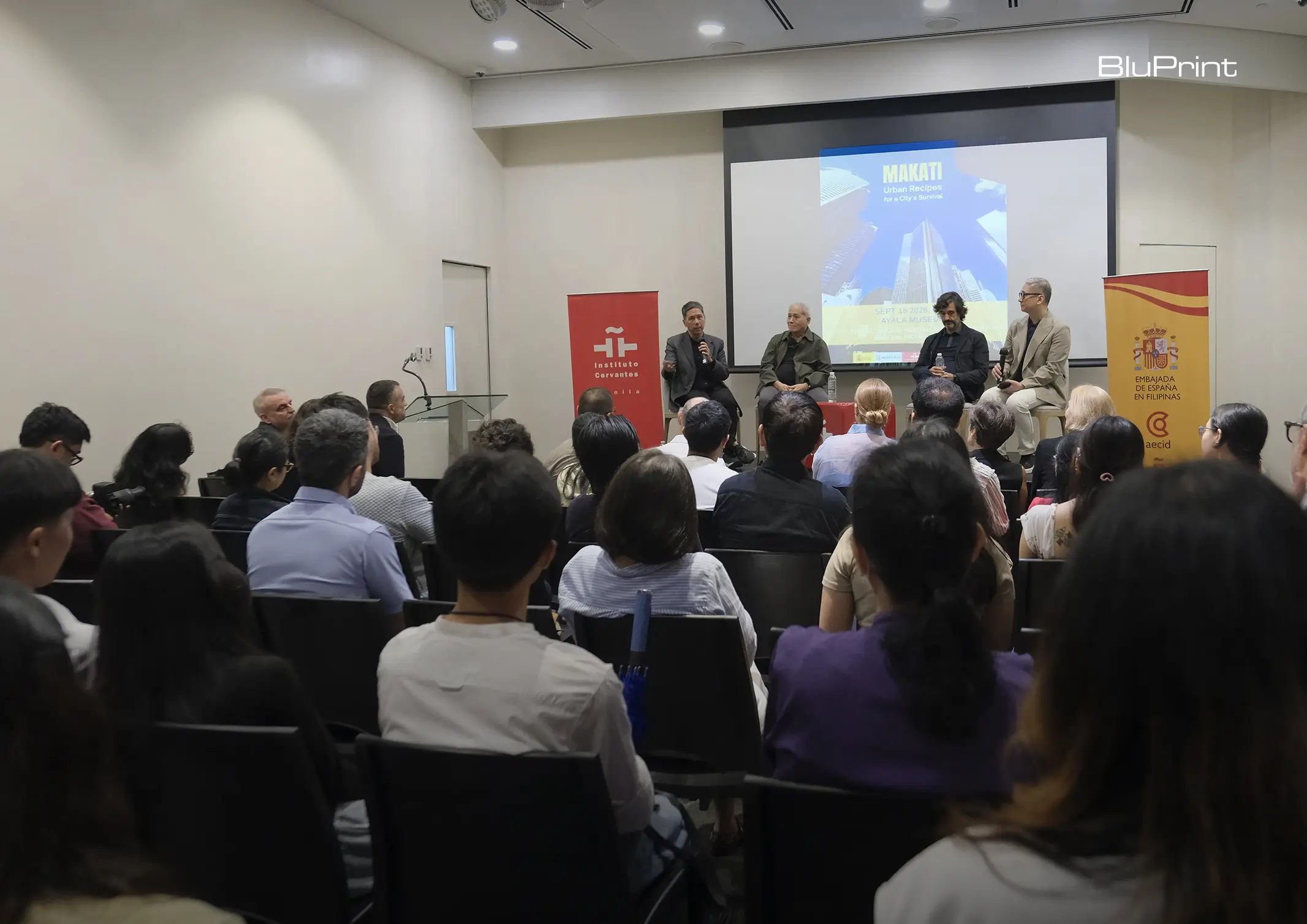
How can better-planned cities create the conditions for more creative, livable, and resilient urban environments? “Makati Urban Recipes for a City’s Survival,” a colloquium held at the Ayala Museum on September 15, brought together architects and practitioners from the fields of urbanism and the creative economy to discuss how design, planning, and collaboration can address […]
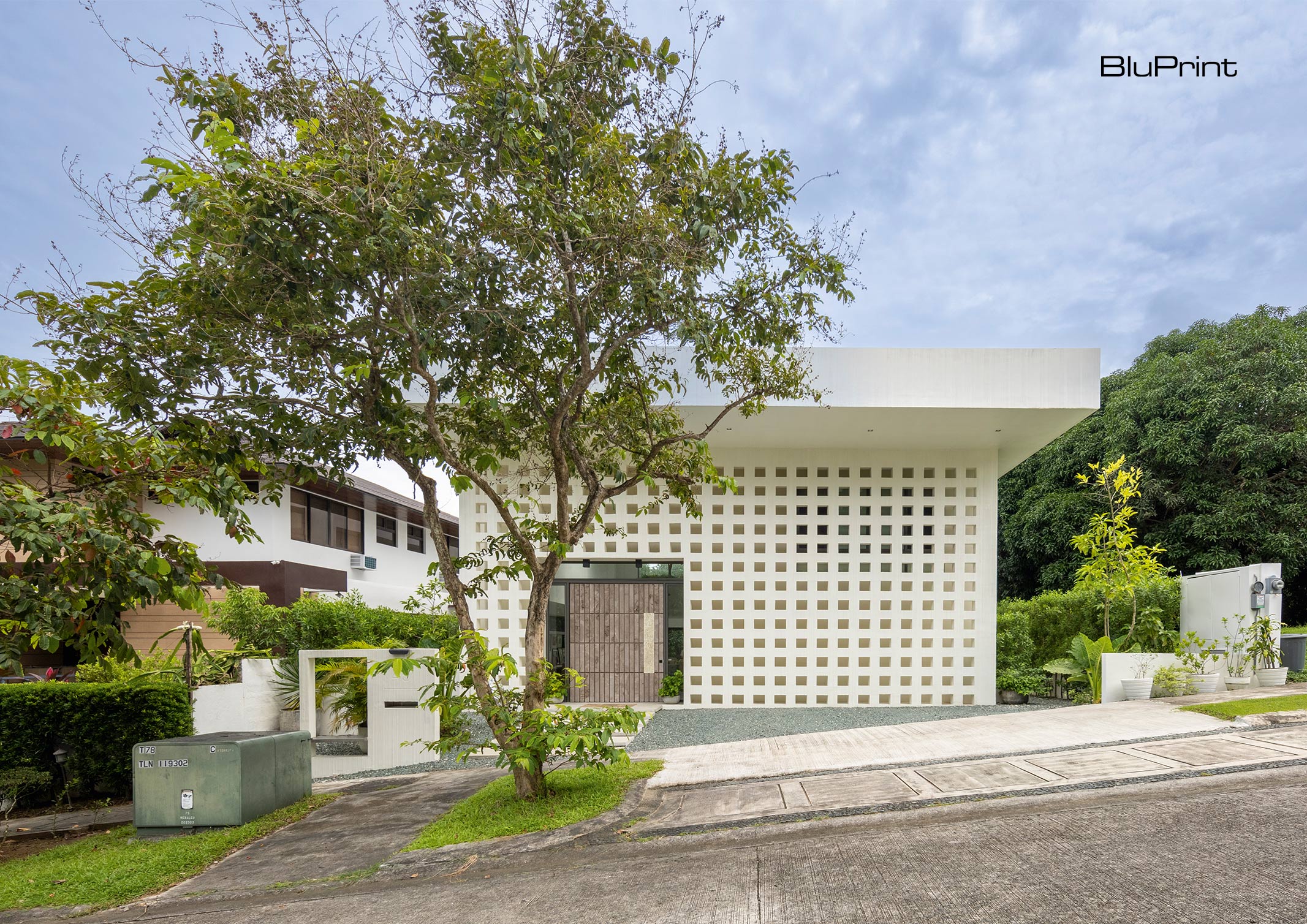
Tampipi House: Designing Outside the Box



The Tampipi House is a modern interpretation of Filipino design. Crafted by Carlo Calma, Creative Director of Carlo Calma Consultancy, the structure features a minimalist exterior, with the facade decked with small square cutouts—an ode to the tampipi, which is a traditional handwoven box with a lid.
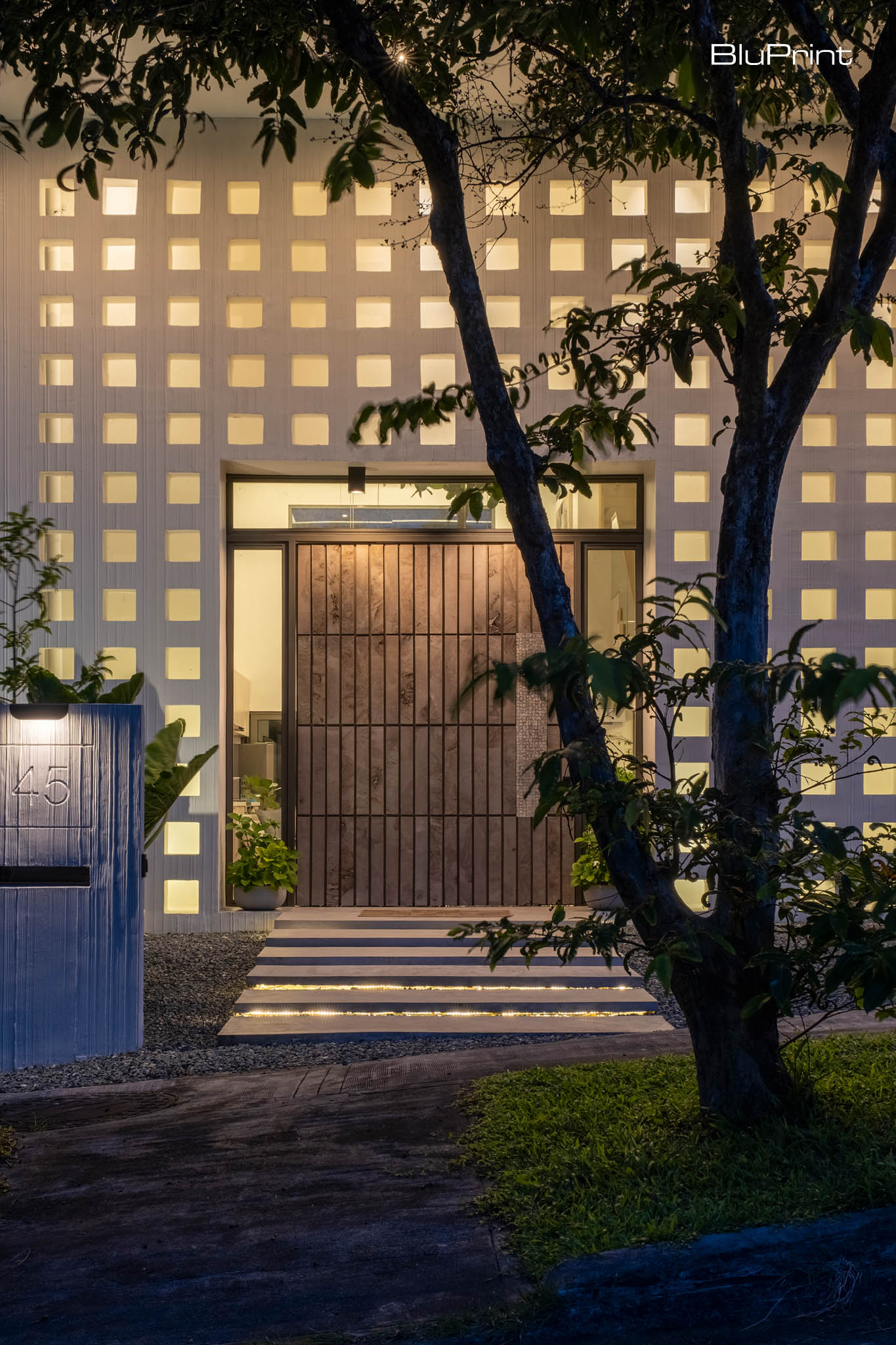
The grains on the front door add a warm, organic touch to the facade of the house.
Calma designed this house for a small family: a couple and their teenage son. “We started with the concept of tampipi as a kind of box that when you open it, there’s a lot of surprises,” Calma explains. The lady of the house also narrates that in their first online meeting with Calma, there was a tampipi box on her desk, and she showed it to him as the design inspiration. “We wanted a space that felt like a cocoon for us, but was airy,” she shares. “We’ve always loved the aesthetic of Spanish houses outside the city, like the vacation houses where it’s white. It’s all clean.”
Seamlessly Connected Spaces
True to the tampipi inspiration, the facade features a wall with square cutouts. This wall serves as a sun-shading device that helps filter sunlight and provides privacy, shielding the bedrooms from street view. This feature also eliminates the need for traditional gates, highlighting the form and aesthetics of the house.
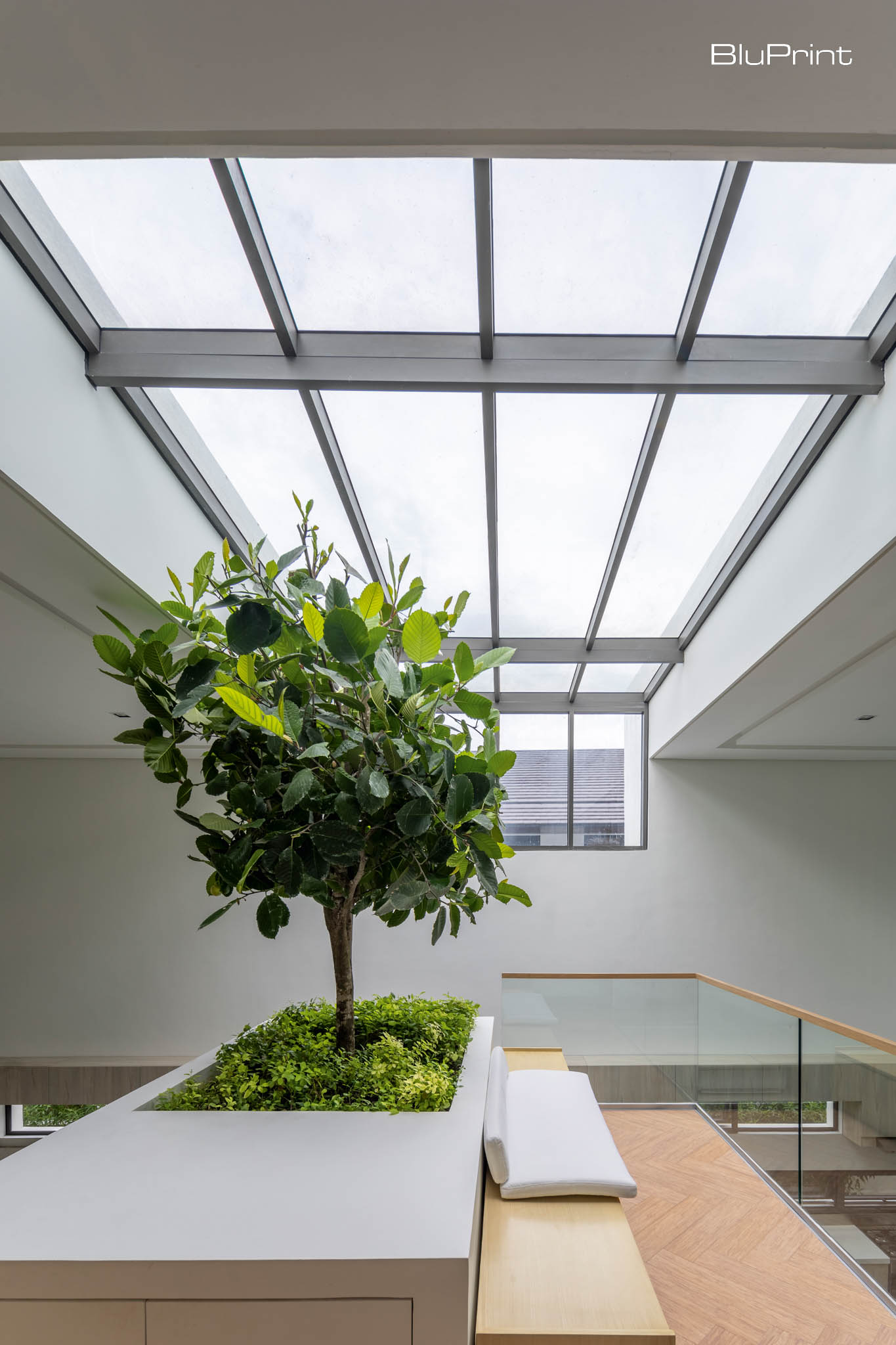
The indoor garden, featuring a katmon tree, serves as a cozy hangout spot.
The white, concrete exterior also features a textural treatment crafted using stamping technique. This texture also gives the house character. “I loved it the first time we saw it,” begins the wife, adding that they first saw the wall treatment with afternoon sun. “When I was seeing the shadows of the texture, sabi ko, gawin natin sa buong bahay. It feels organic that way.”
Love for Local
The Tampipi House also showcases Filipino craftsmanship, as seen in the Romblon marble bathroom countertops and dining table, custom-made Machuca tiles crafted in San Miguel, Manila used in the bathrooms and service kitchen, and furniture pieces and accessories sourced in Pampanga, Laguna, and other parts of the country. The homeowners mixed these pieces with repurposed old furniture.
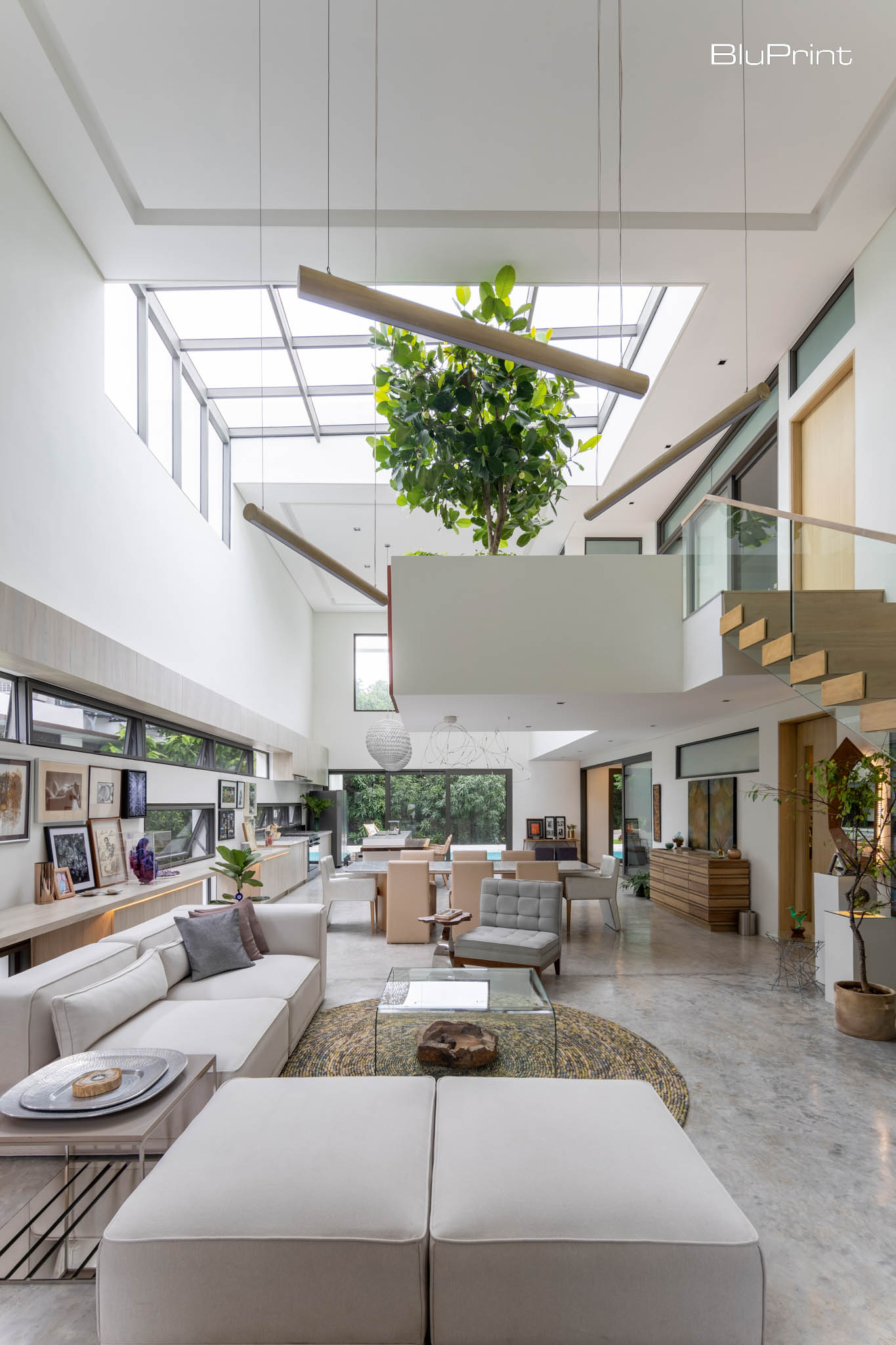
The glass skylight allows natural light to pour in, creating bright and airy interiors. Meanwhile, furniture in neutral tones lends the spaces a refined look.
The lady of the house, who is an interior designer herself, also has an impressive art collection. Works of Filipino contemporary artists like Migs Villanueva, Gary Custodio, Arce, Jonathan Olazo, and National Artist Benedicto “BenCab” Cabrera line one side of the living room. More artworks and objet d’art figure by the stairs, highlighting her deep appreciation for art and her innate talent for curation.
Embodying Creative Approaches
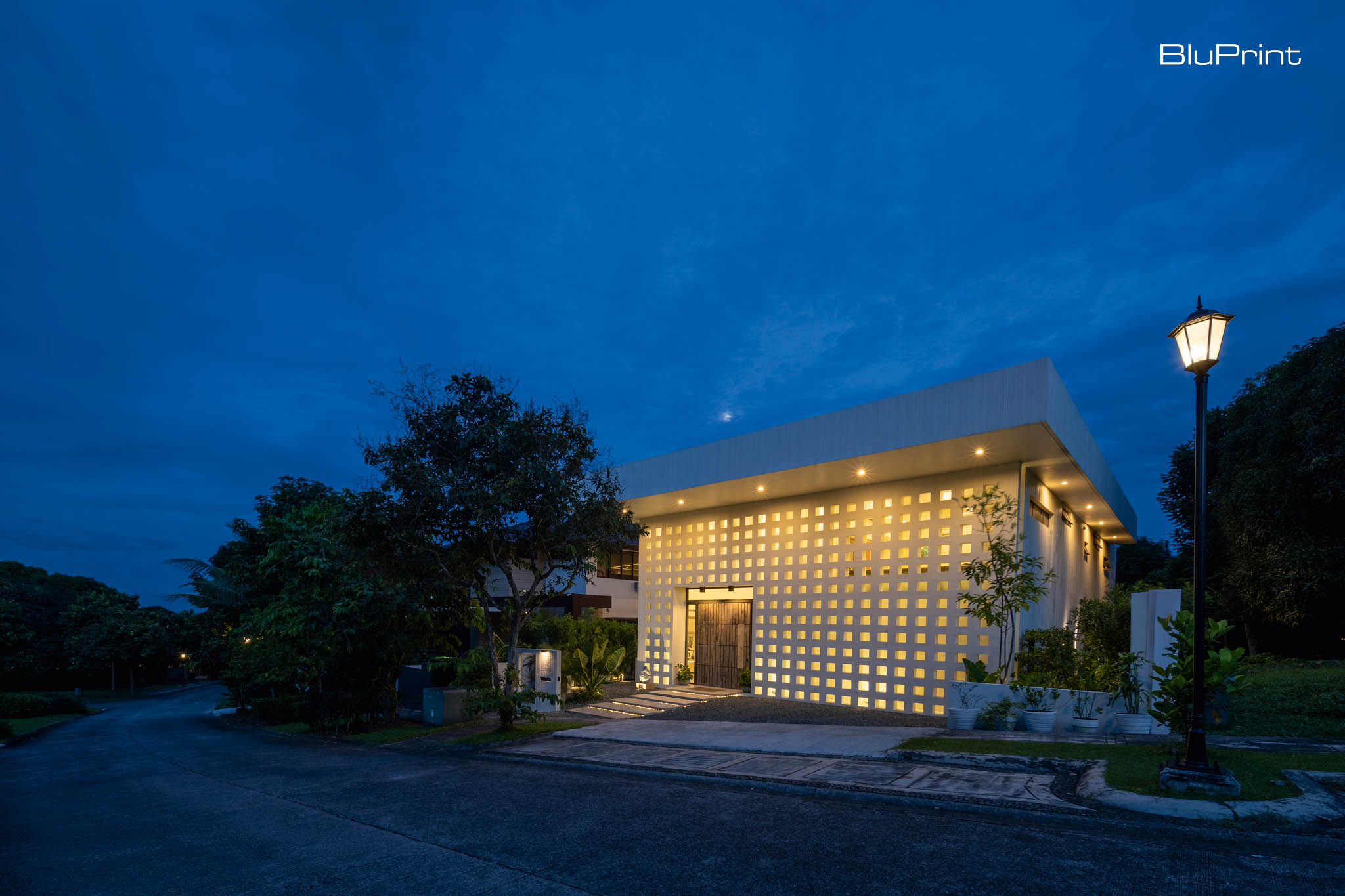
Warm lighting enhances the Tampipi House’s exterior, transforming its architecture into a masterpiece.
The Tampipi House presents a reimagined take on Filipino design crafted using cutting-edge materials. It is also the culmination of the homeowners and Calma’s smooth collaboration fueled by a clear design vision.
“It’s a great family home,” Calma notes. “I think it will continue to grow with them.” As the spaces evolve to suit the homeowners’ needs, one thing remains: Beyond its beauty, the Tampipi House serves as a model for a plethora of possibilities in sustainable and culturally inspired architectureArchitectureThe art and science of designing and constructing buildings, structures, and spaces that are functional, safe, and aesthetically pleasing. It encompasses the planning, design, materials, and techniques used to createGo to Architecture Glossary.
Read more about Tampipi House by ordering your copy of BluPrint Volume 2, available via the sarisari.shopping website, Shopee, and Lazada. E-magazines are available for download via Readly, Press Reader, and Magzter.
Photography by Ed Simon.
Read more: Carlo Calma and His Pursuit of Architectural Happiness
Frequently Asked Questions
The residence is a modern interpretation of Filipino style inspired by the tampipi, a traditional handwoven chest. Carlo Calma translated this concept into a minimalist structure that acts as a “box of surprises,” featuring a unique facade with square cutouts that mimic the texture of the woven lid.
The facade’s signature square cutouts serve as a functional sun-shading device that filters natural light while shielding the bedrooms from street view. This design choice provides a cocoon-like sense of privacy and eliminates the need for traditional gates, maintaining a seamless and airy connection to the outdoors.
The white concrete exterior features a distinctive textural treatment created through a specialized stamping technique. This organic texture reacts dynamically with sunlight, casting shifting shadows throughout the day to give the minimalist structure a living, tactile character that avoids a sterile appearance.
The home integrates local materials and artistry, including Romblon marble for countertops, custom Machuca tiles from Manila, and furniture sourced from Laguna and Pampanga. These elements are paired with an extensive collection of contemporary Filipino art, featuring works by National Artist BenCab and other renowned local painters.
By utilizing a glass skylight for natural illumination and strategic wall openings for ventilation, the design reduces the need for artificial lighting and cooling. The project demonstrates how culturally inspired motifs can be merged with modern materials to create a sustainable, evolution-ready family home.
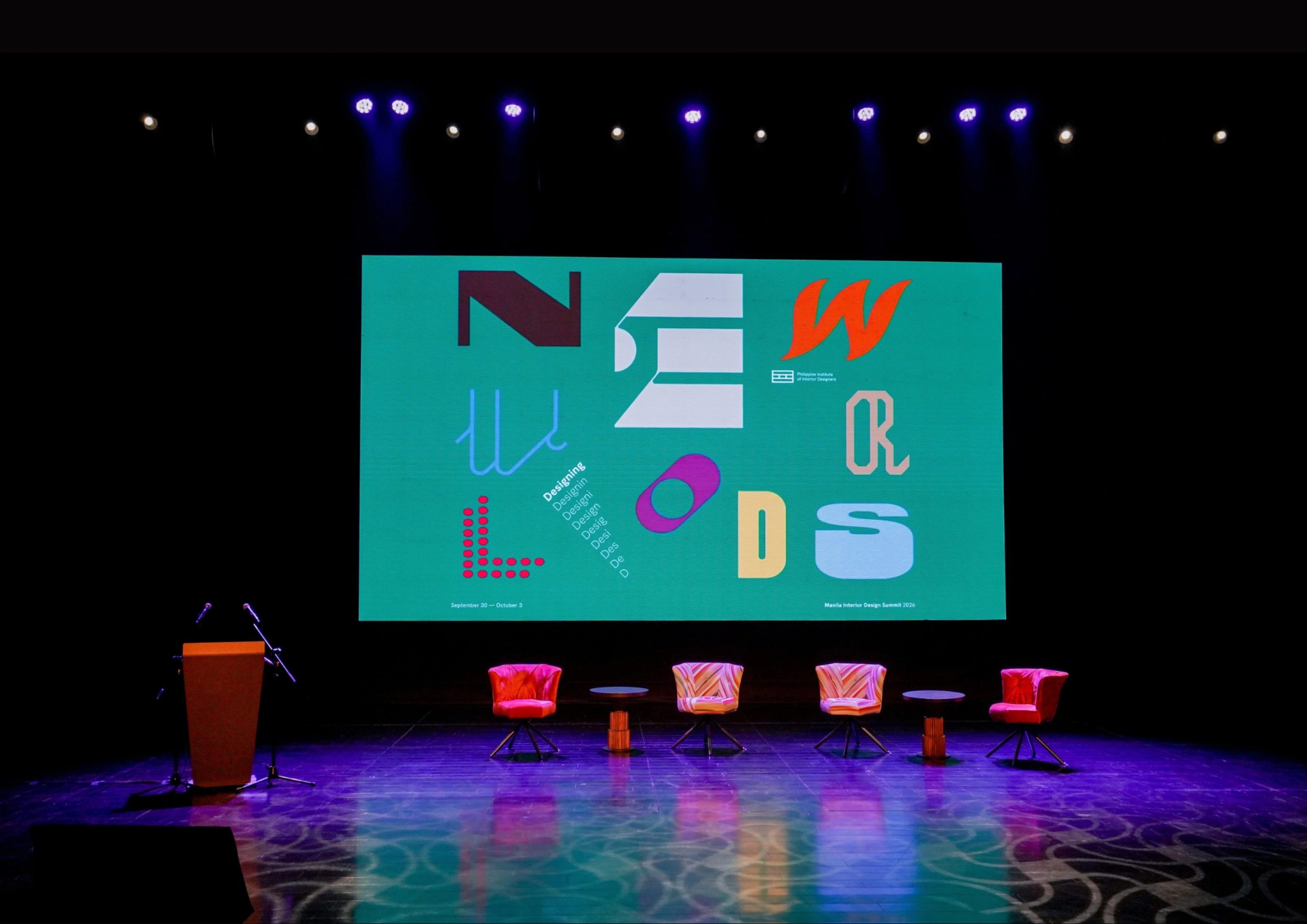
The fourth Manila Interior DesignInterior DesignThe discipline of planning and shaping interior spaces for function, comfort, safety, and beauty. It covers layout, lighting, materials, finishes, furniture, and color, and in the Philippines is a licensedGo to Interior Design Glossary Summit (MIDS) brought together more than 300 delegates for four days of conversations, exhibitions, and design […]
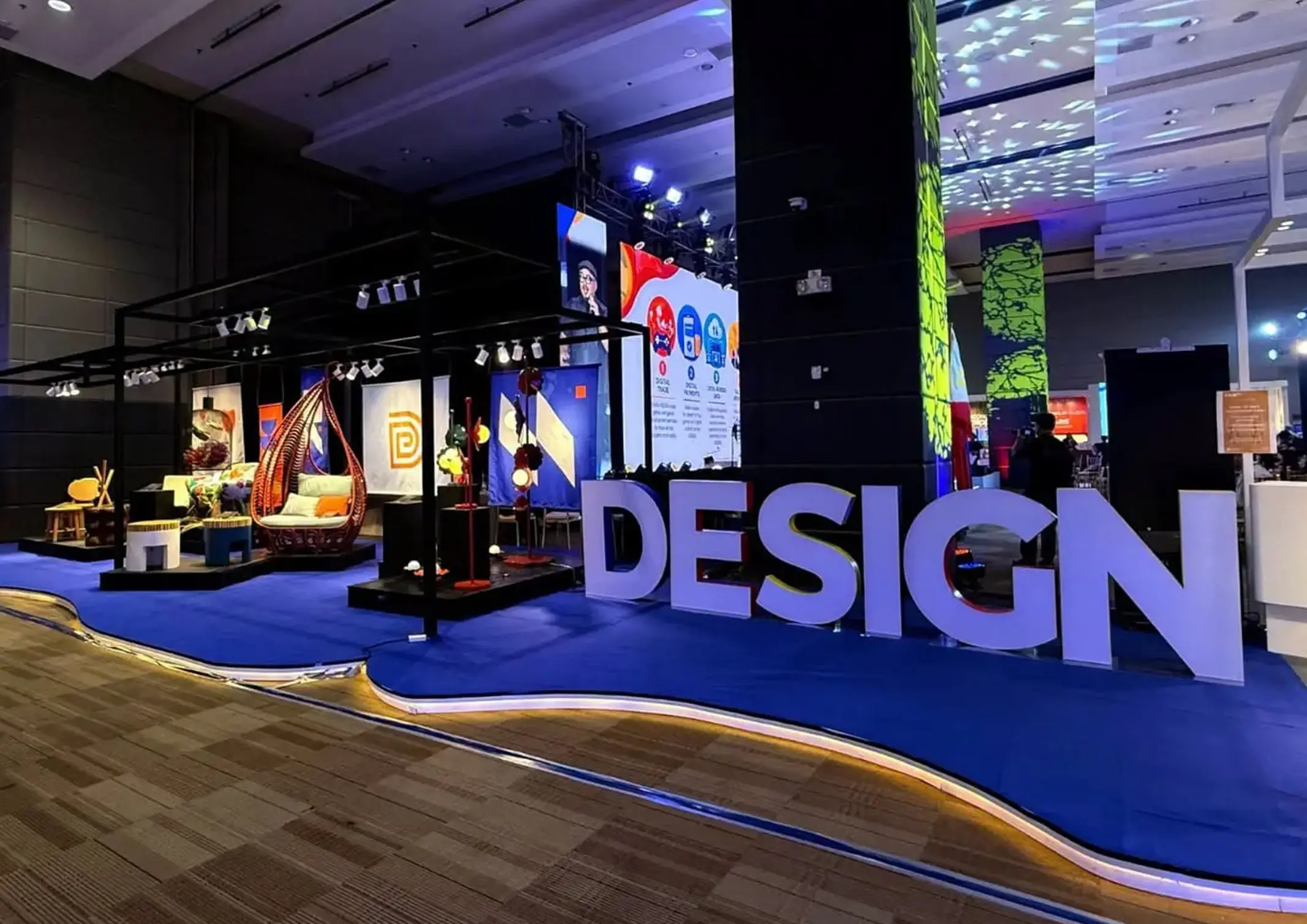
Held at the SMX Convention Center Aura in Taguig City, the first ASEAN Creative Industries Expo by Malikhaing Pinoy (ASEAN MPEx) features nine creative domains, including design, visual arts, digital interactive media, and performing arts. Organized by the Department of Trade and Industry (DTI), the event includes exhibitions, cultural performances, industry talks, and pitching sessions […]
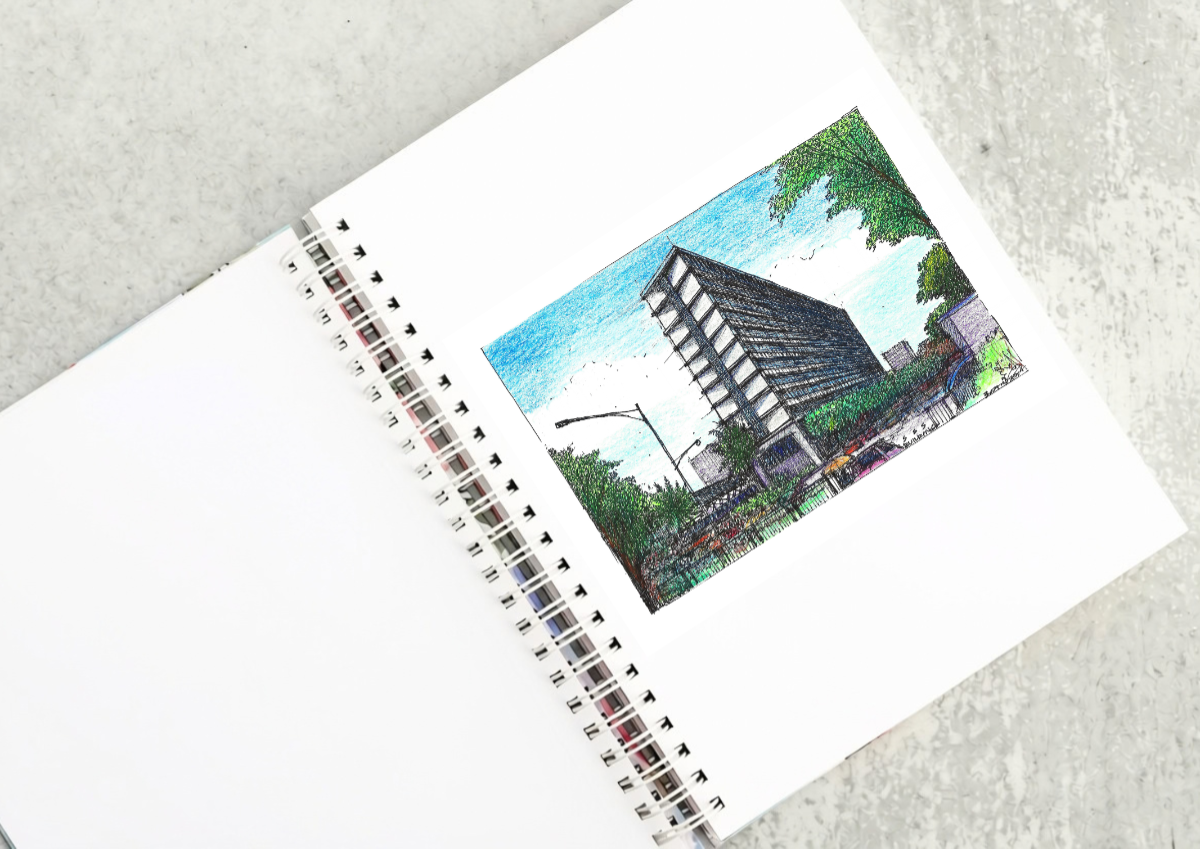
The SSS Building as an Expression of Civic Modernism My favorite modernist landmark in Quezon City is the SSS building on East Avenue. Designed by National Artist for ArchitectureArchitectureThe art and science of designing and constructing buildings, structures, and spaces that are functional, safe, and aesthetically pleasing. It encompasses the planning, design, materials, and techniques […]

Archie G. Carrasco, Chairman and CEO of AGC Power Holdings Corp. (AGC PHC), has been named to The BoF 500 Class of 2026 under the Media category, joining The Business of Fashion’s global community of individuals shaping the fashion industry. Carrasco is among 100 new members from 33 countries and 48 nationalities selected for the […]
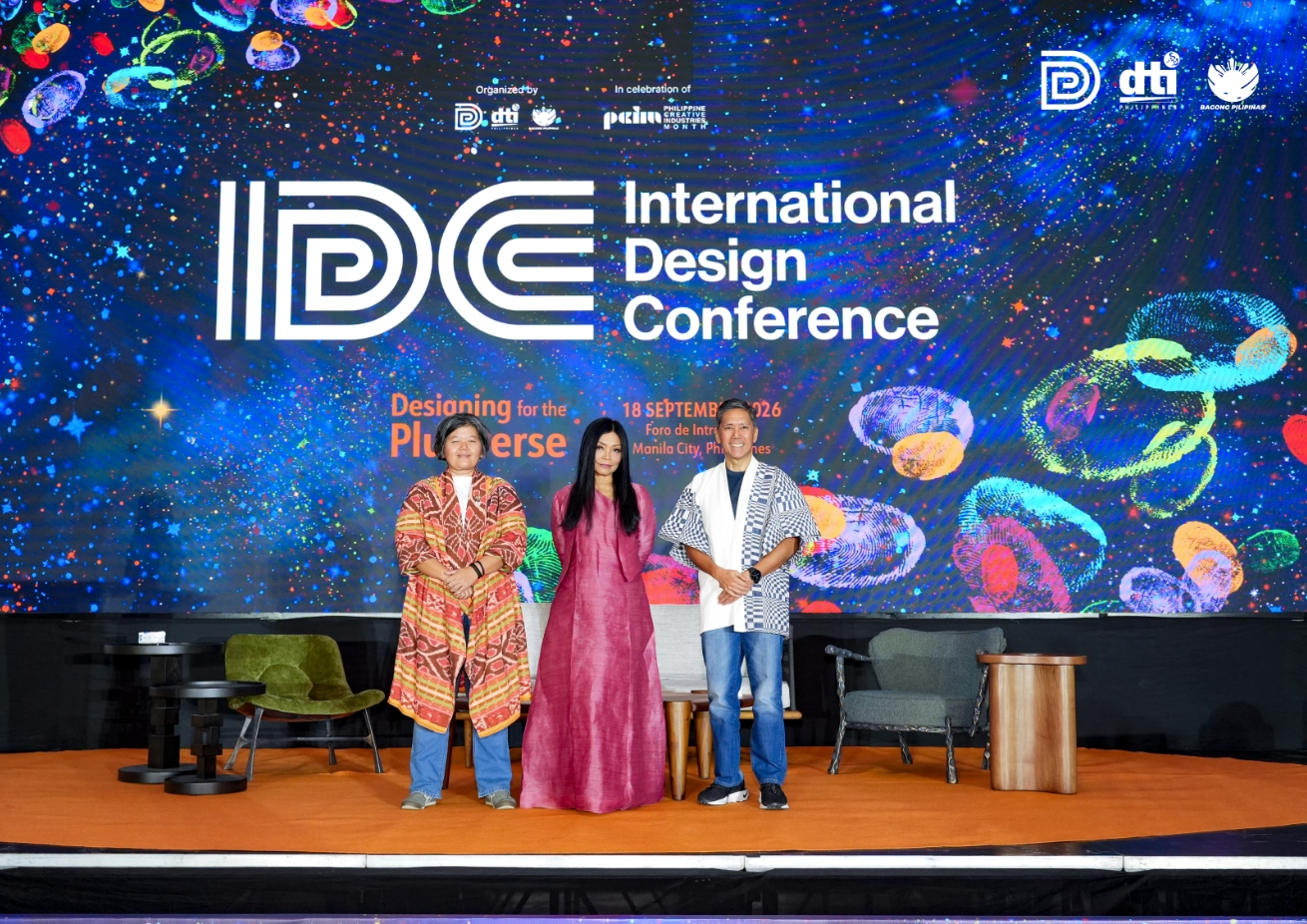
Culture in design does not always announce itself through a recognizable motif, material, or symbol. It can also be embedded in the relationships designers build, the knowledge they listen to, the materials they choose, and the decisions they make in response to communities and their environments. This distinction emerged throughout the 2026 International Design Conference […]
Read the issues.

Collect the volumes.

Recommended Video
Tap to Unmute
Unmute
0:00
0:00