Bigkis is the act of binding. In Tagalog, the word can refer to something used to bind or encircle, as well as a bundle formed by tying several separate elements together. Figuratively, it can also mean a bond, union, or unity. The meanings move from the physical act of joining things together to the connection […]
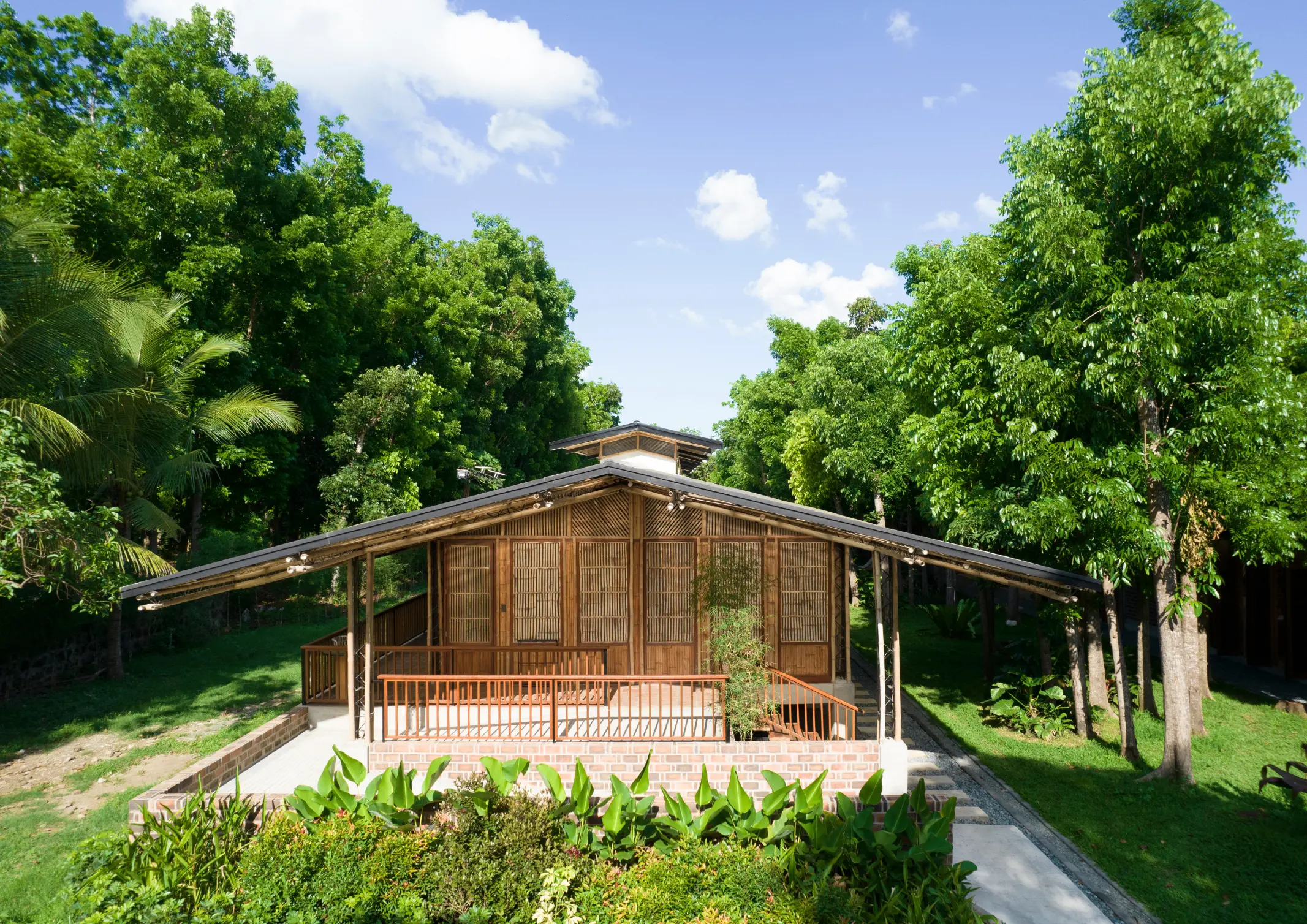
The Dew is in the Mist: Kilyawan Farm Resort



Kilyawan is the local name for the golden oriole, a native bird with a song like a flute, which can be heard throughout our project site. Kilyawan Farm Resort is two hours from Manila, the Philippine capital. It is an 8.5-hectare property just north of Ibaan, a small town in the province of Batangas. The climate is tropical but relatively mild, because of its higher elevationElevationAn architectural drawing that shows one side of a building as a flat, straight-on view, without perspective. Elevations describe heights, openings, materials, and proportions of the façade, and are usedGo to Elevation Glossary. This gently-sloped farm is home to bamboo groves, fruit trees, and, until recently, 55,000 clamoring chickens. These were housed in eight rectangular chicken coops that occupied roughly half the farm.
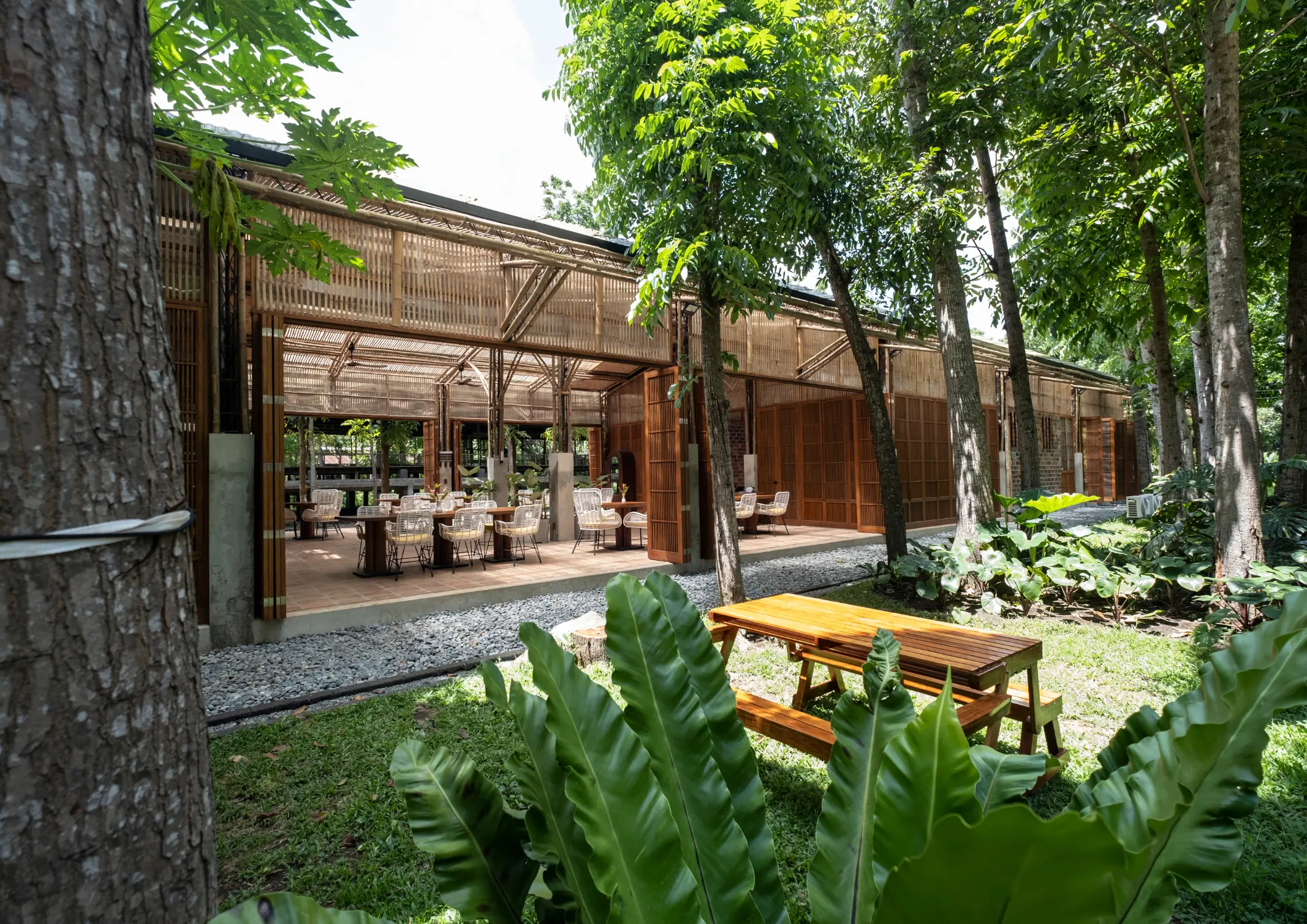
The owners, the Ganzon family, had been interested in agricultural tourism, inspired by Italy’s “agriturismo.” They had developed a five-year plan to convert the farm into an eco-tourism resort for biking, swimming, fruit picking, and other activities.
Chicken Coop to Cabin Building
The development begins at the northern end of the farm, accessible from the town road. Two of the eight chicken coops have been developed. One is the Reception Building; the other is the Cabins Building which houses guests.
The new buildings relate to the trees in a manner unchanged from when they were chicken coops, reflecting our efforts to preserve the spirit of place. Four trees shielding the Reception Building were supposed to be removed, but we decided to keep them as a veil to create the surprise of a strong architectural axis inside.
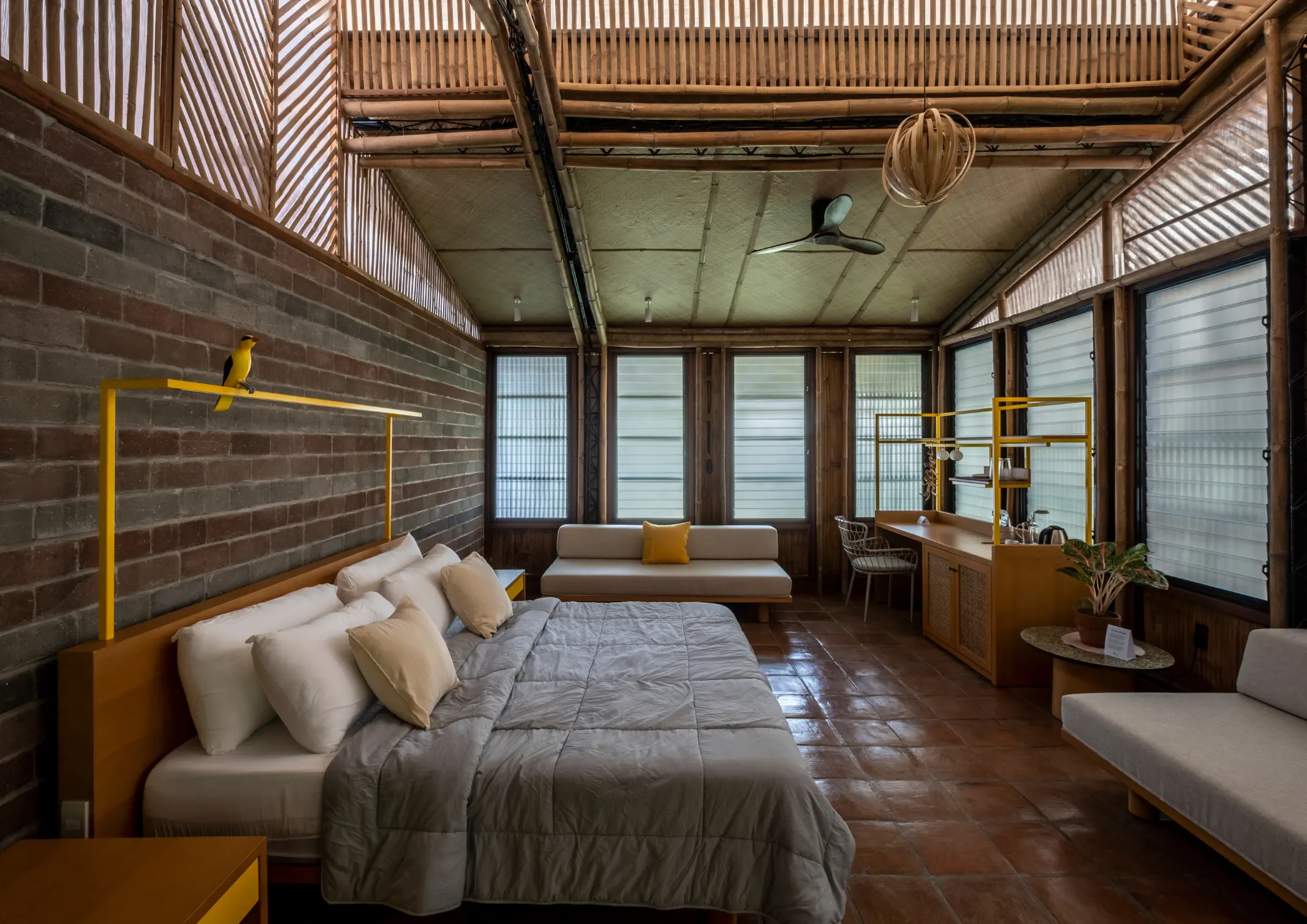
As we move from one space to another, we pass the central corridor, where shadows move slowly across clay tile floor and clay brick walls marking the passage of time.
Daylight enters and touches different materials at different times of the day in different ways, inviting shadows to create intricate patterns that transform the simple surfaces. The silent eloquence of these brick walls is a testament to the immanence of material.
Kilyawan embodies our firm’s core values of authenticity, sustainability, memory, daylight, and spirit of place. As our clients also share these values, the spirit of dialogue was constant, and enabled all of us as a team to face unexpected challenges with unity and creativity.
The morning sun enters the interior space, as it has always done to restart its daily ritual. But whereas in the past it merely marked time with a slow brightening, it now begins a stately dance of light and shadow on the brick walls and clay tile floor. And the sound you hear is no longer the clucking of cooped-up chickens but the song of the golden oriole – the kilyawan.

This article has been abridged for digital publication. Read the full story behind the Kilyawan Farm Resort by ordering your copy of BluPrint’s “Design Conversations” at Sari Sari Shopping, Shopee, and Lazada. E-magazines are also available for download here or through Readly, Press Reader, and Magzter.
Dive into the captivating world of architectureArchitectureThe art and science of designing and constructing buildings, structures, and spaces that are functional, safe, and aesthetically pleasing. It encompasses the planning, design, materials, and techniques used to createGo to Architecture Glossary, interiors, and arts & culture by getting exclusive digital access to BluPrint’s past and upcoming issues. Click here to find out more.
Photographed by Ed Simon
Read more: The Origins of a Signature Style: Revisiting a 25-year-old Design Challenge
Frequently Asked Questions
The resort utilizes adaptive reuse by transforming former chicken coops into guest cabins. This reduces construction waste and preserves the site’s heritage. By integrating local materials like woven split bamboo, clay bricks, and recycled footprints, the project minimizes its environmental impact while maintaining a “spirit of place” that honors its agricultural roots.
The palette features clay tile floors, clay brick walls, and woven split bamboo ceilings. These natural materials are chosen for their “silent eloquence” and ability to interact with shifting daylight. This combination creates intricate shadow patterns throughout the day, providing a tactile, organic atmosphere that blurs the line between the interior and the surrounding tropical landscape.
Yes, through a process inspired by Italian “agriturismo.” Kilyawan Farm Resort successfully converted an 8.5-hectare poultry farm into a sustainable destination. By repurposing existing structures rather than demolishing them, the developers created a high-end experience that includes fruit picking and biking while preserving the property’s natural biodiversity and historical narrative.
A major mistake in rural development is erasing the site’s history through total demolition. Kilyawan avoided this by retaining the original building axes and protecting existing trees. Additionally, they avoided “closed-box” designs; instead, they used deep eaves and breathable bamboo to ensure natural ventilation, preventing the common error of ignoring tropical climate realities in favor of modern aesthetics.
The architecture employs deep eaves of polycarbonate and bamboo to provide shade while inviting in diffused morning light. Thermal mass materials, such as clay bricks, help regulate indoor temperatures against the Batangas heat. This strategic use of daylight creates a “stately dance” of shadows, reducing the need for artificial lighting and mechanical cooling while enhancing guest comfort.
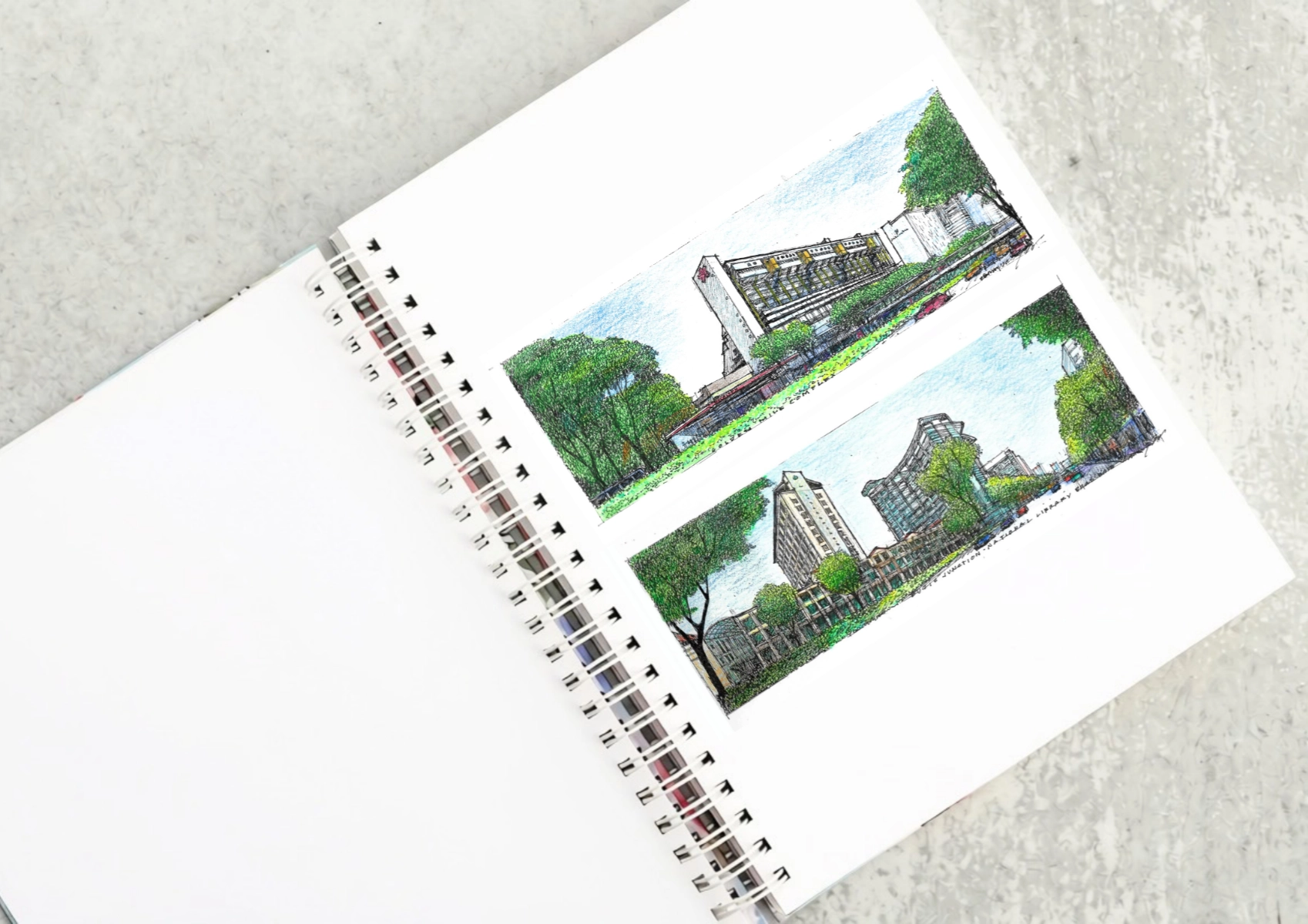
Two sketches of Singapore connect BluPrint Editor in Chief Paulo G. Alcazaren’s personal and professional history with Shared Ground: ArchitectureArchitectureThe art and science of designing and constructing buildings, structures, and spaces that are functional, safe, and aesthetically pleasing. It encompasses the planning, design, materials, and techniques used to createGo to Architecture Glossary of Care, Culture, […]
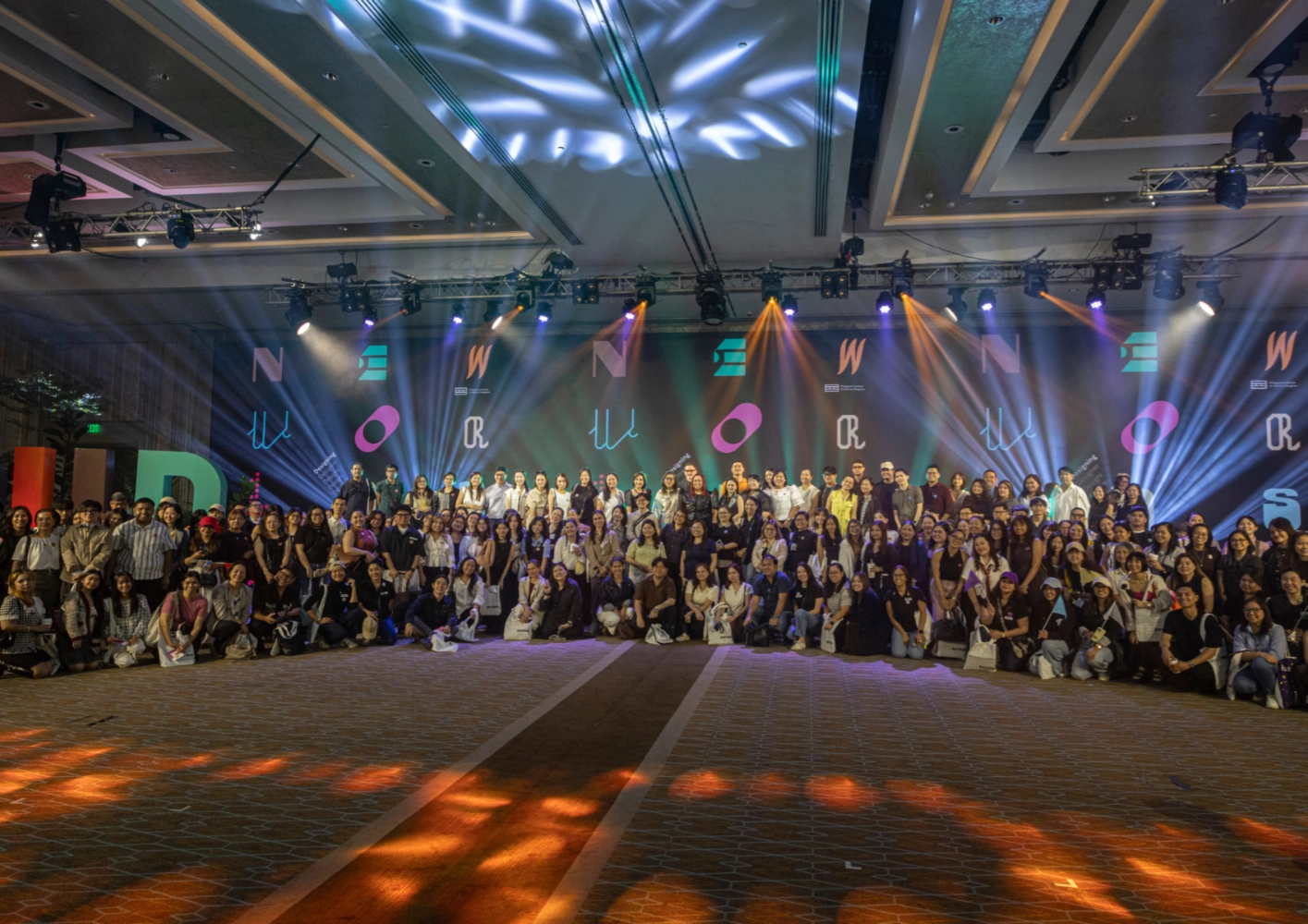
In a way, designers are the modern-day soothsayers and prophets. They design for the future, predicting how a room, a house, a building or a whole city will be used by people. They foresee how users will interact with a space, conjure exact shades of colors to elicit specific behavior and arrange furniture to build […]
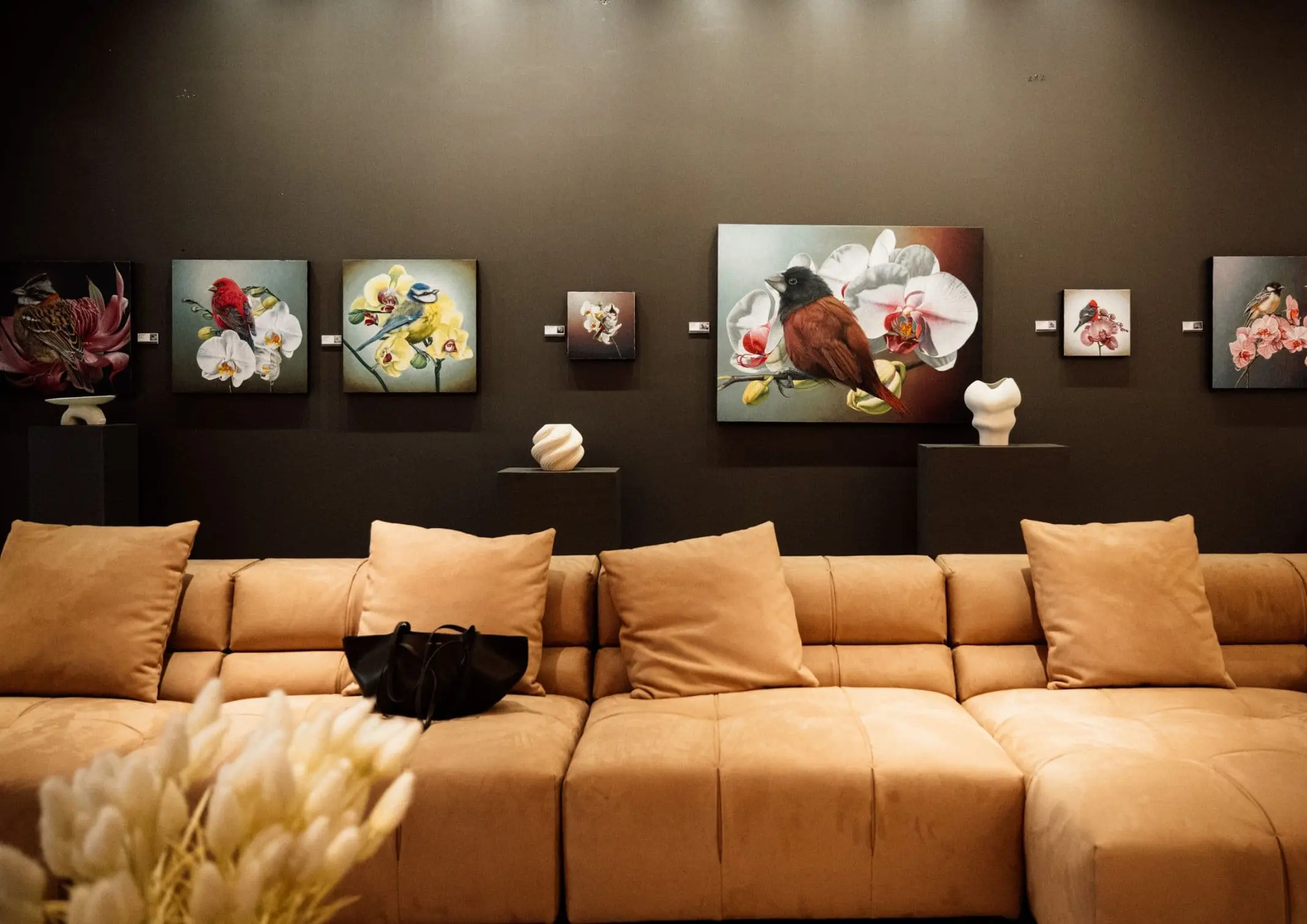
Art and furniture are often selected separately, yet their relationship can shape how a room looks and feels. The collaboration between Hooga and Galerie Joaquin explores how these elements can work together, bringing contemporary artworks into furnished residential settings at Hooga’s showroom in Uptown Mall, Bonifacio Global City. For Hooga, which curates furniture, lighting, and […]
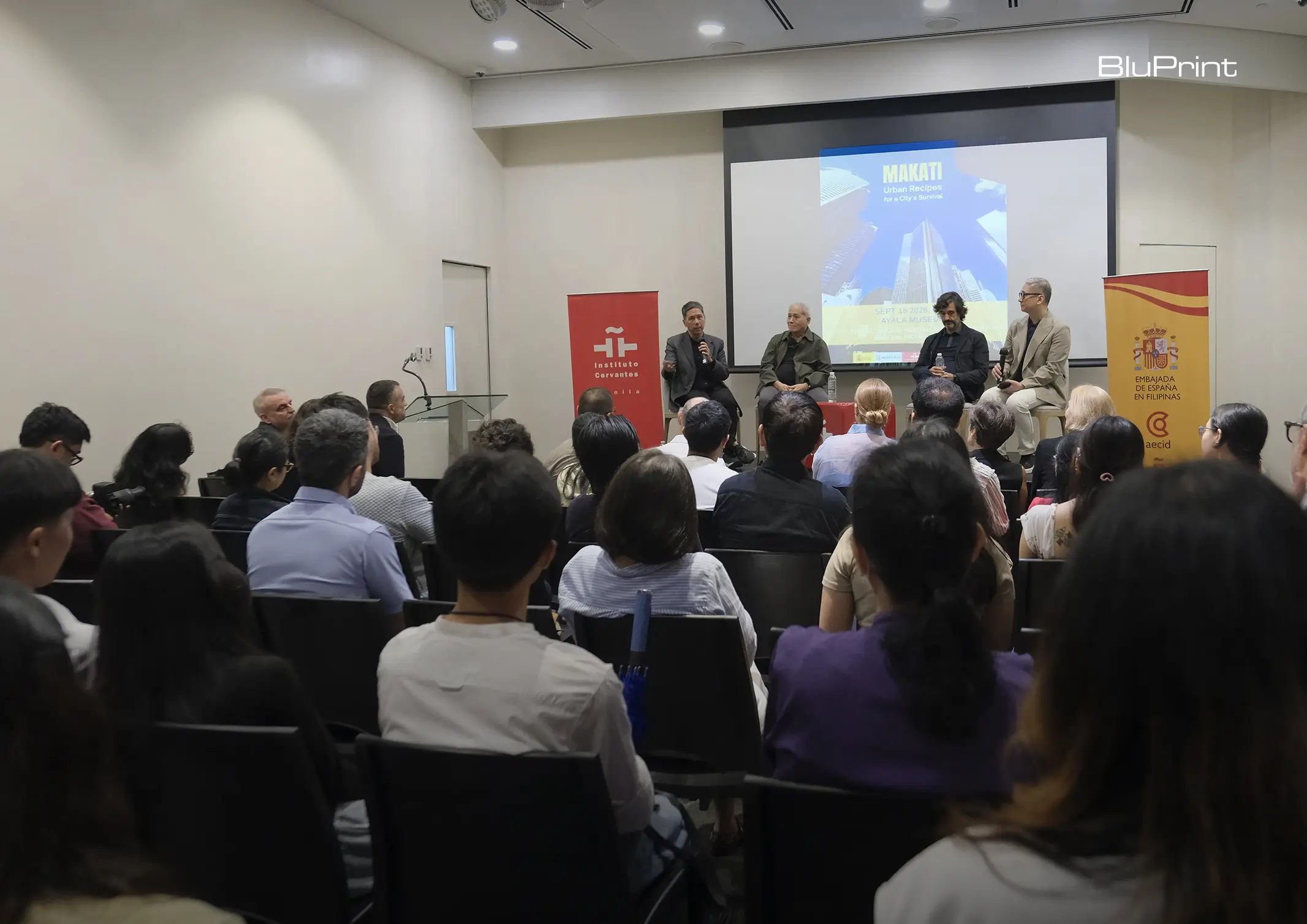
How can better-planned cities create the conditions for more creative, livable, and resilient urban environments? “Makati Urban Recipes for a City’s Survival,” a colloquium held at the Ayala Museum on September 15, brought together architects and practitioners from the fields of urbanism and the creative economy to discuss how design, planning, and collaboration can address […]
Read the issues.

Collect the volumes.

Recommended Video
Tap to Unmute
Unmute
0:00
0:00