Bigkis is the act of binding. In Tagalog, the word can refer to something used to bind or encircle, as well as a bundle formed by tying several separate elements together. Figuratively, it can also mean a bond, union, or unity. The meanings move from the physical act of joining things together to the connection […]
‘Now/Here’ and Illustrating the Strange Contradictions of Philippine Society



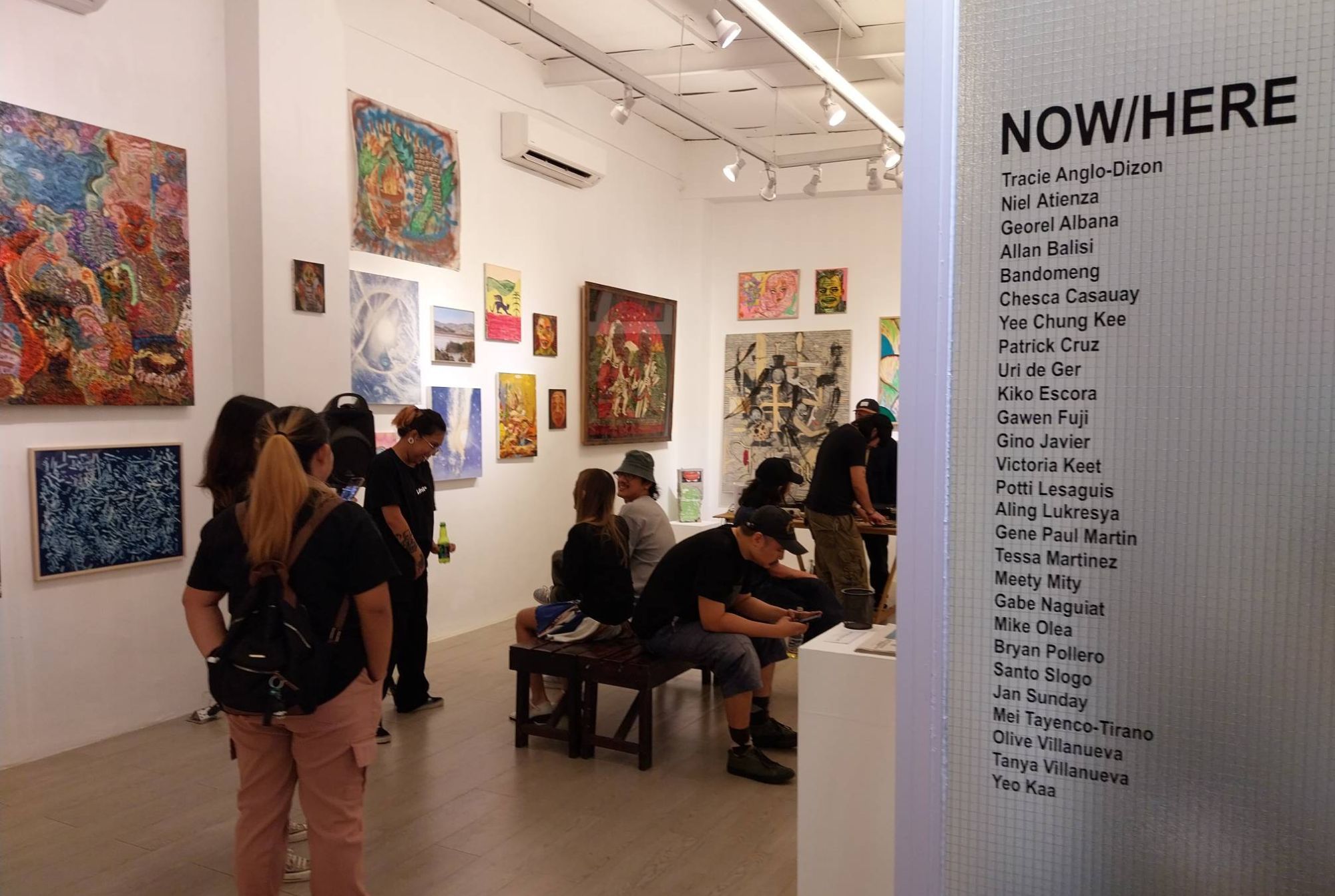
Now/Here, also known as Middle of Now/Here, is a group exhibition at Bunso Gallery in San Juan City. It features different artists defining their sense of self in an ever-evolving world. The artworks allow them to characterize their own environment as they see it, these differing angles coming together to orchestrate a picture of our society.
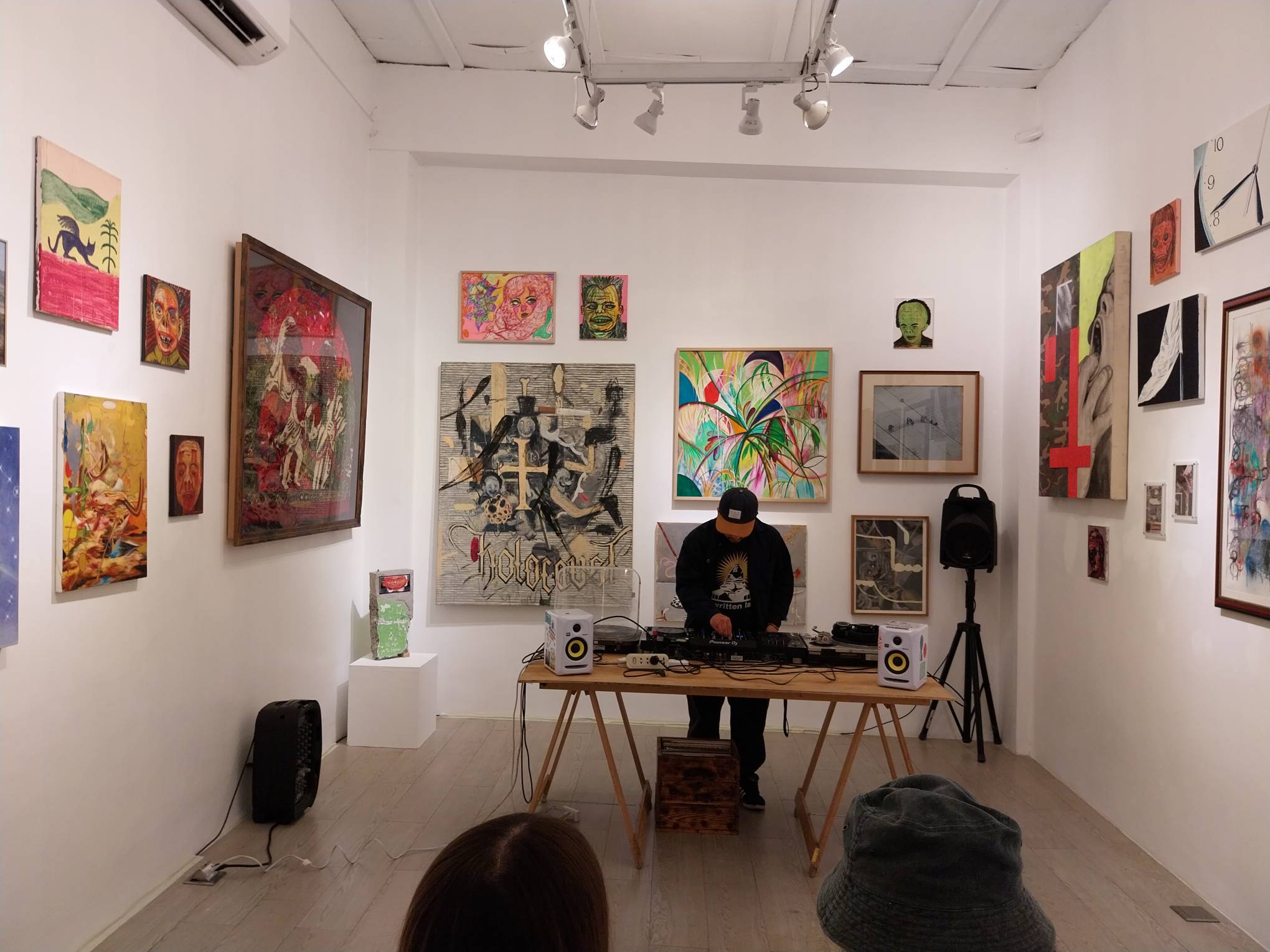
“This exhibition confronts the existential tension of presence—the sense of being everywhere and nowhere at once,” Jan Sunday, one of the contributors for the exhibit, wrote. “Here, time and space collapse, and the self is suspended in a state of uncertainty. Neither fully grounded nor entirely adrift, we occupy the “/” — a symbolic slash that marks the threshold between opposites.”
Un/Familiar Lands
Now/Here, as an exhibition, showcases a mix of styles and personal ideas about society that feels cognizant of the alienation one experiences from society. In the vastness of the Earth, one appears small, mutable, and swept away by the powers-that-be. Some of the artists certainly speak to a specific kind of ennui that comes from existing specifically in this time period.
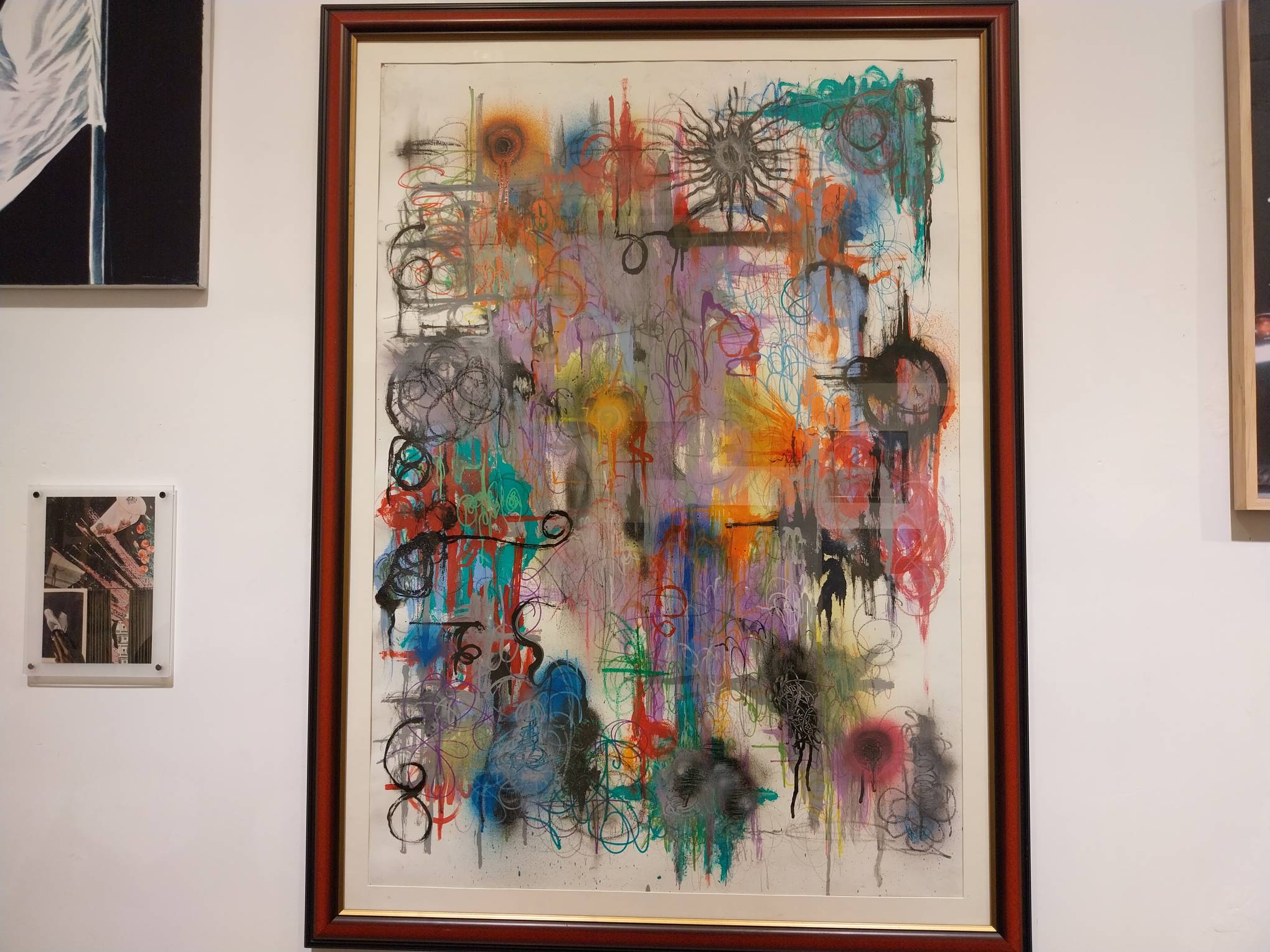
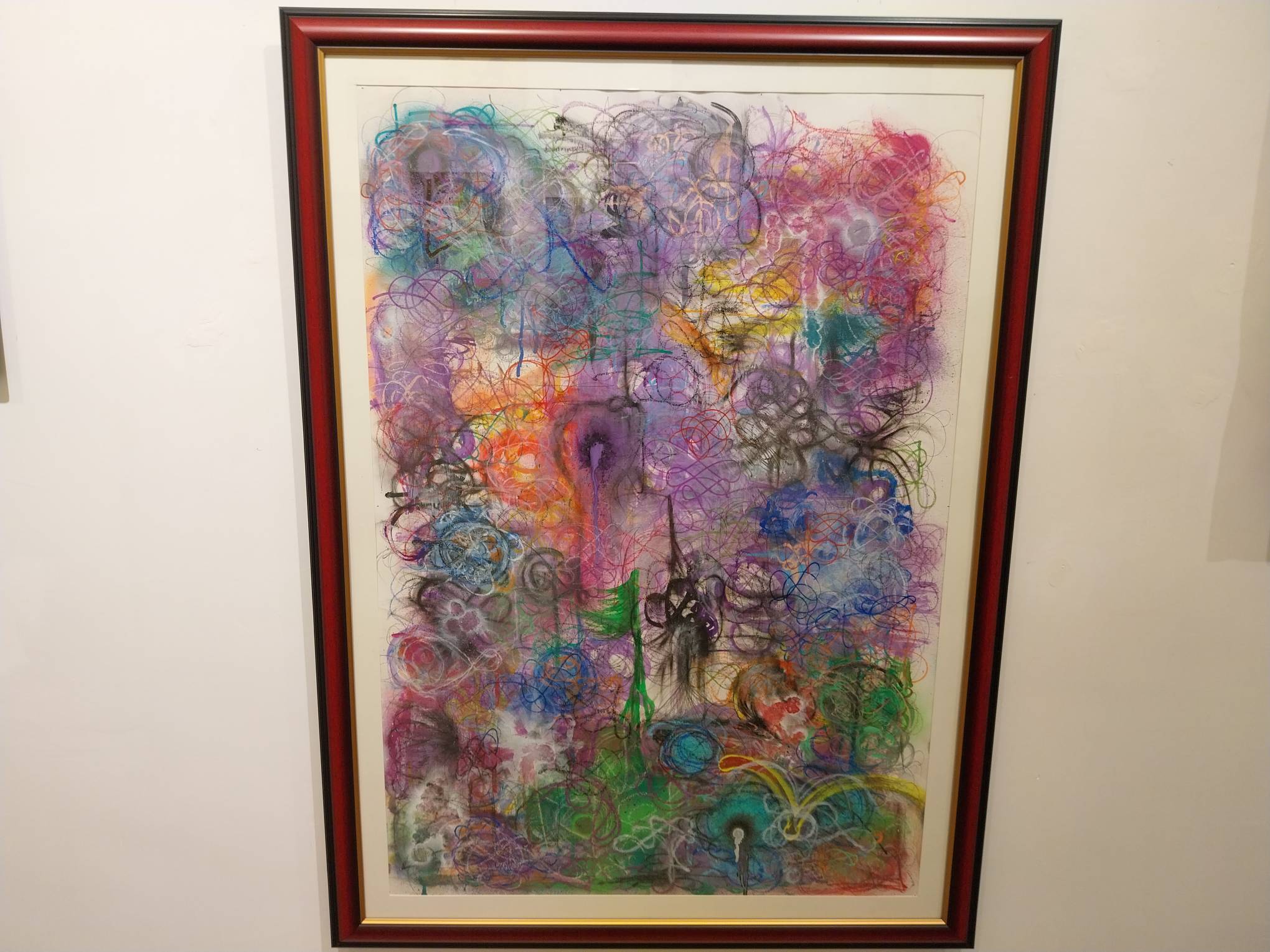
Georel Albaña., for example, utilizes abstraction and graffiti-like textures for “Untitled” and “The Doorman’s Dead Language,” expressing a colorful angst through the curves and swiggles prominently displayed in the painting. At times, it harkens towards arabesque styles with the way the patterns interact with each other.
Different artists play with the texture from nature. There’s Aleng Lukresya’s flowery, curving shapes in “To Live Without Self-Delusion,” or Potti Lesaguis’s “Bye bye Butterfly” which finds a shape-like relationship between flowers and butterflies. Neil Atienza contributes two black-and-white paintings of trees and their surroundings, while Gene Paul Martin showcases a bright and fiery explosion of color in “Slow Factory.”
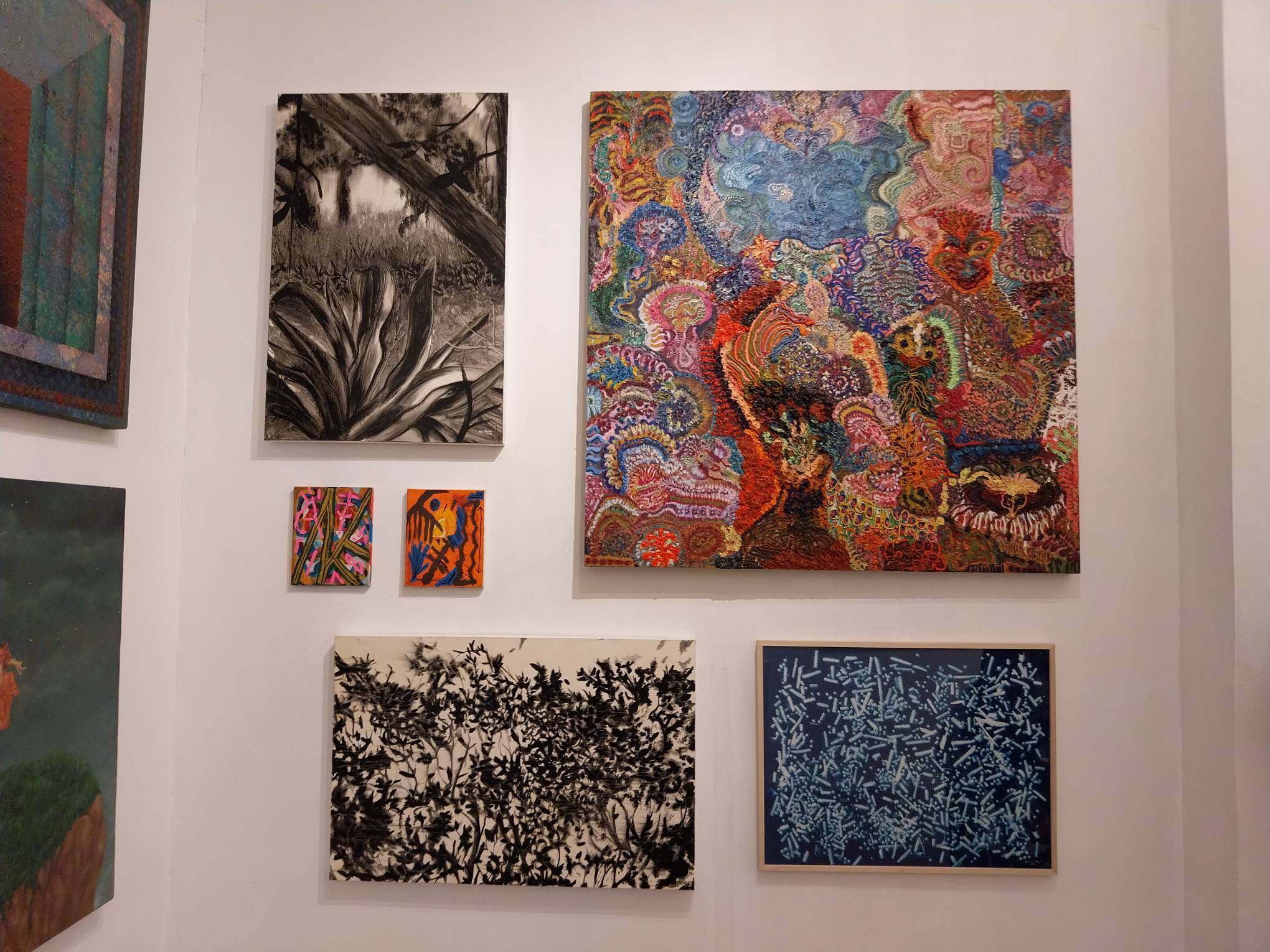
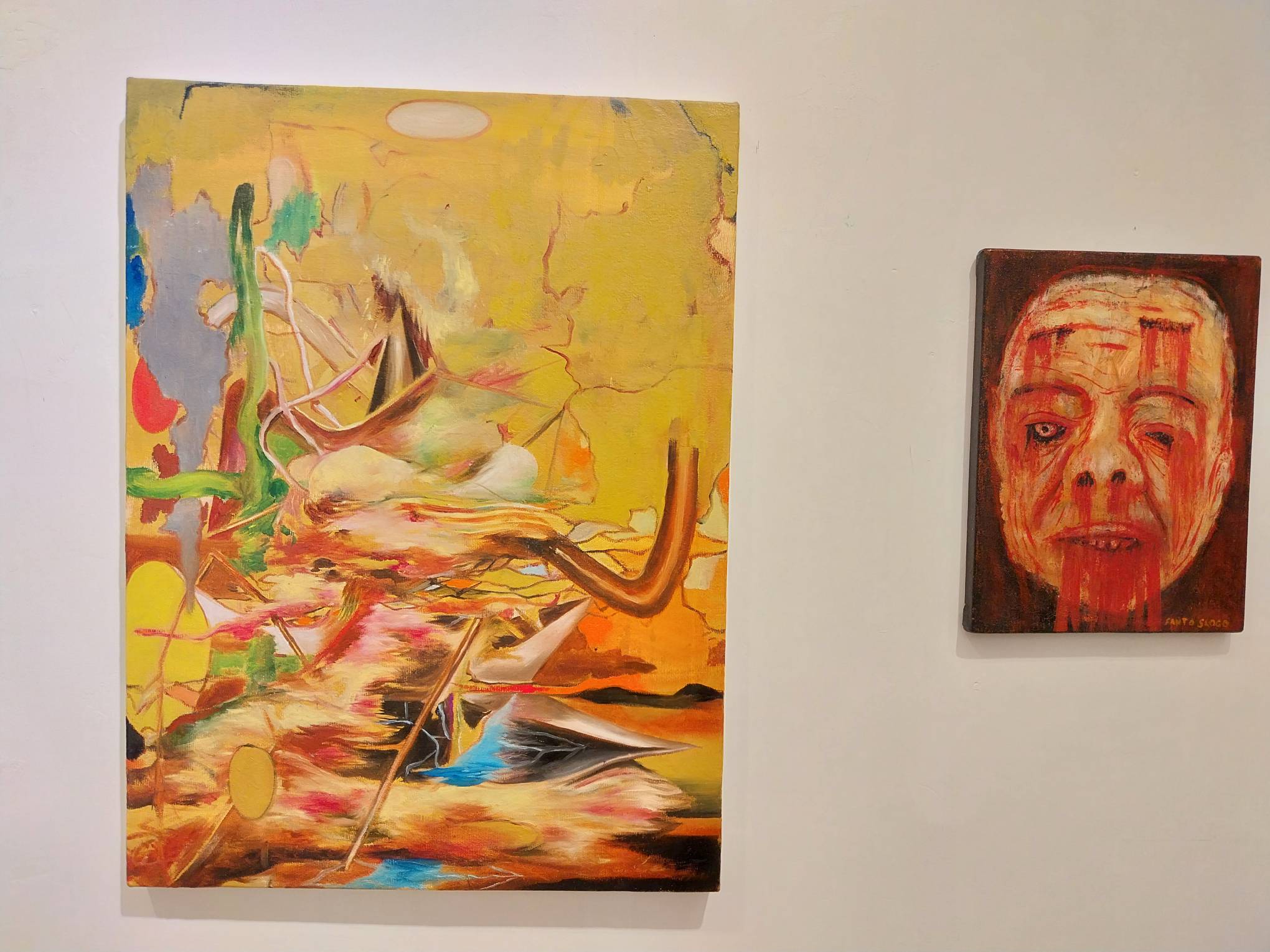
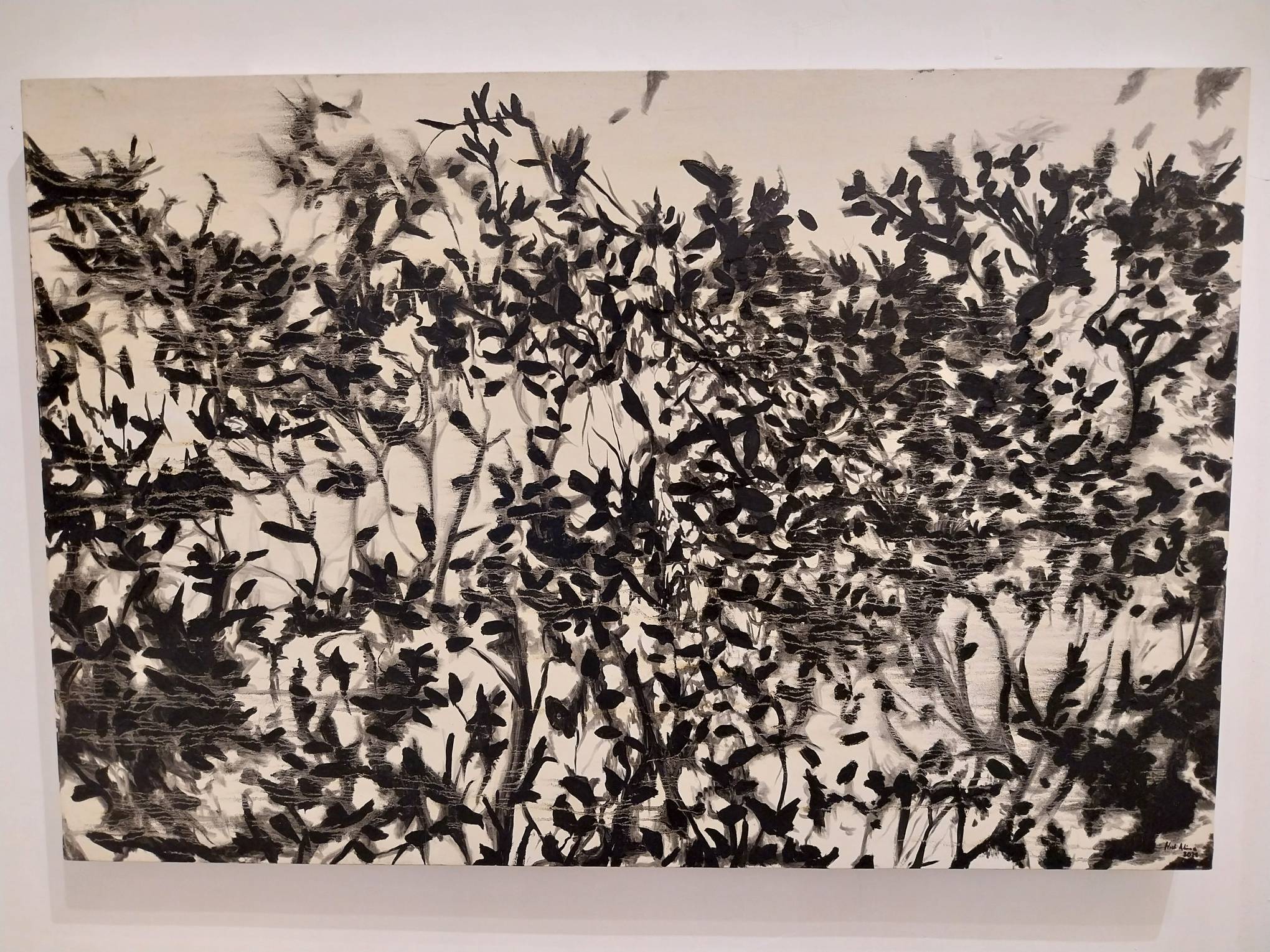
These different artists exude a sense of congenial familiarity with the world around them, allowing for such unorthodox creativity in highlighting these environments. It exemplifies nature as an experience separate from ourselves, one easily dissectable within our minds.
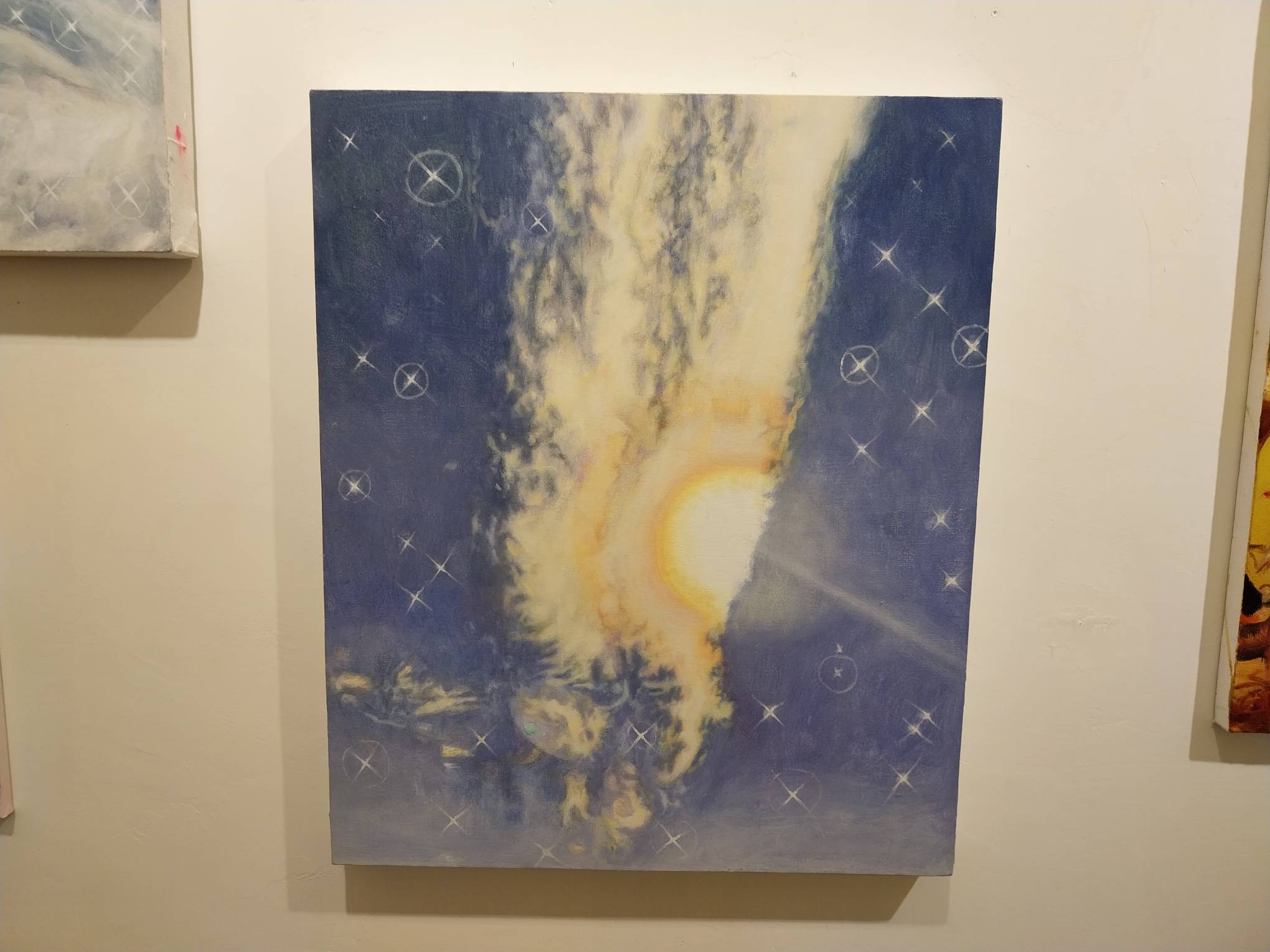
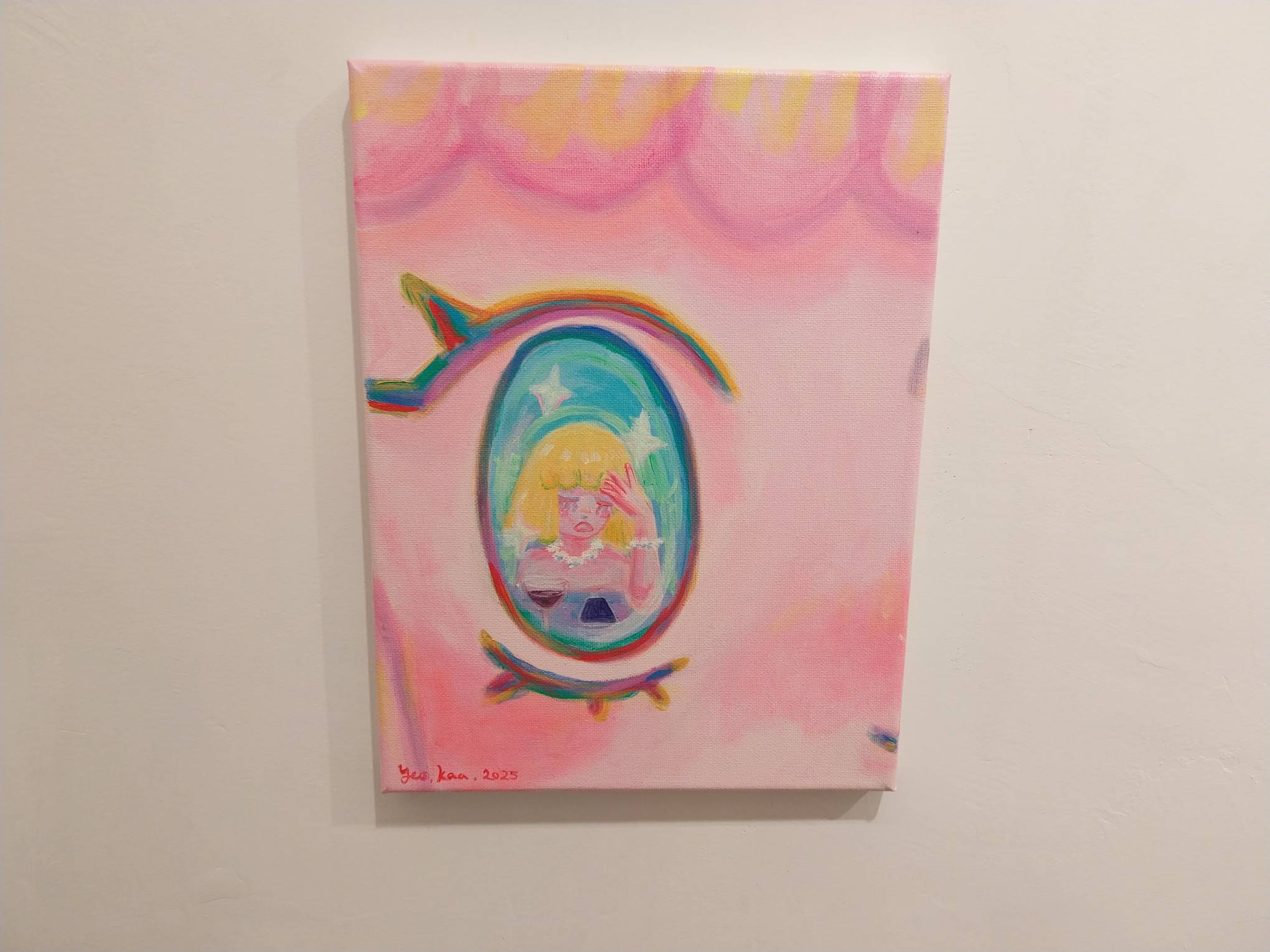
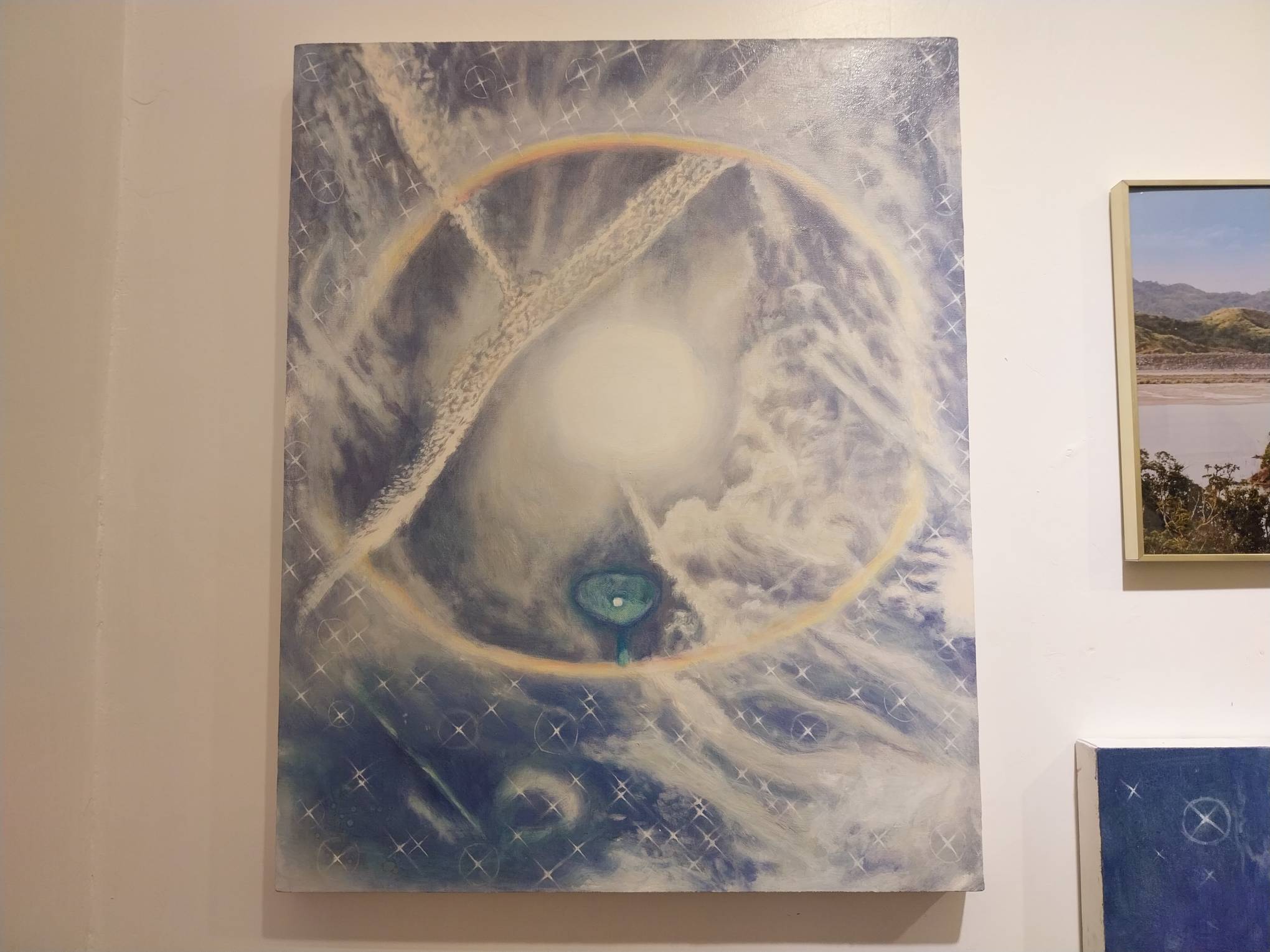
“Playing on the duality of ‘nowhere’ and ‘now here,’ it draws from the conceptual frame of “ILALM / IBABAW” (below /above), positioning us at the liminal divide: the in-between,” Sunday wrote.
The Politics of Being ‘Now/Here’
Most interesting about Now/Here, however, is how it addresses our political climate as an important part of our sense of place. Something as abstract as “politics” tends to be seen as ideals. But in this exhibit, some works imply the idea that the political climate can be as important as the physical climate when pinning down our situational self.
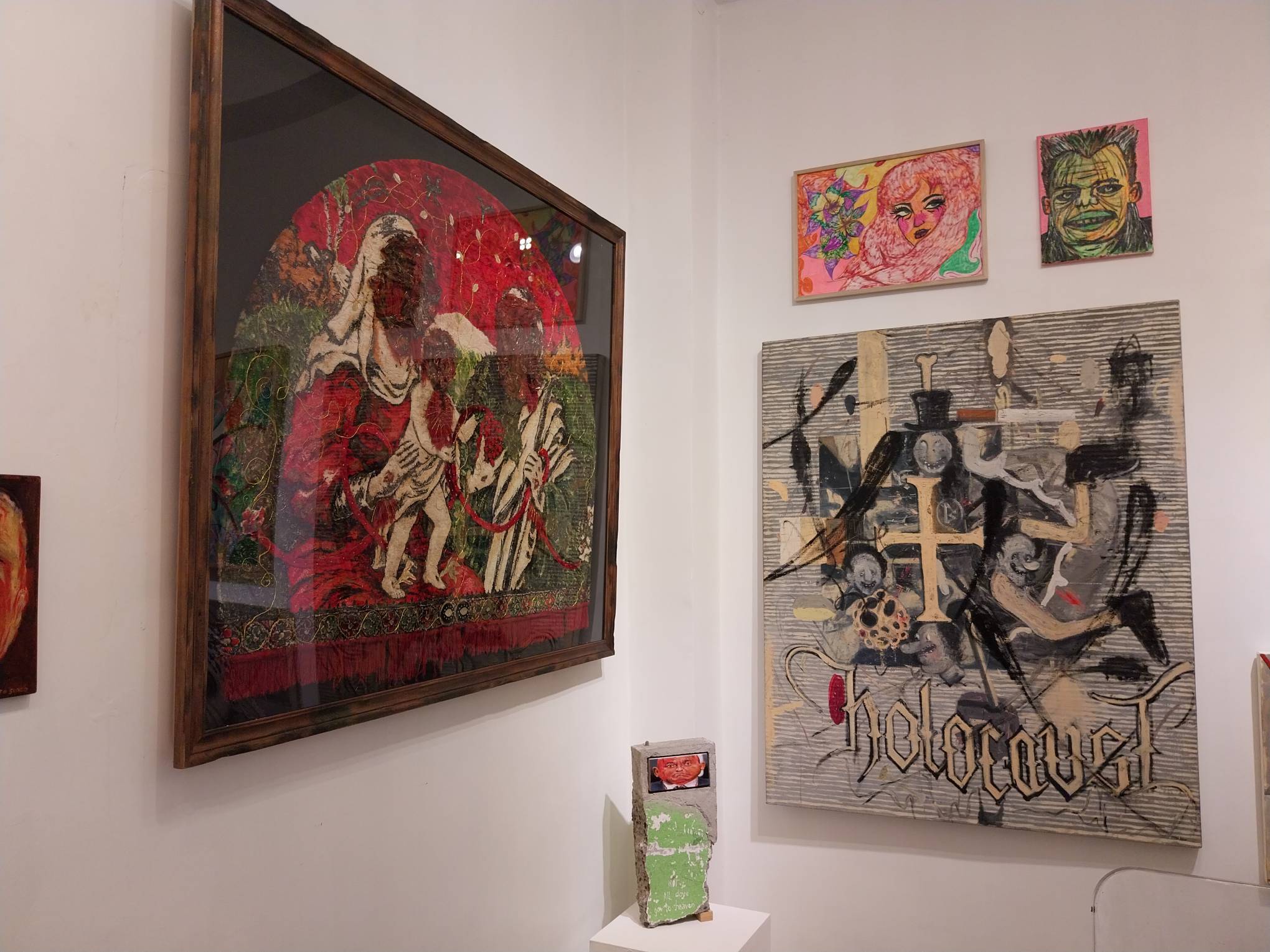
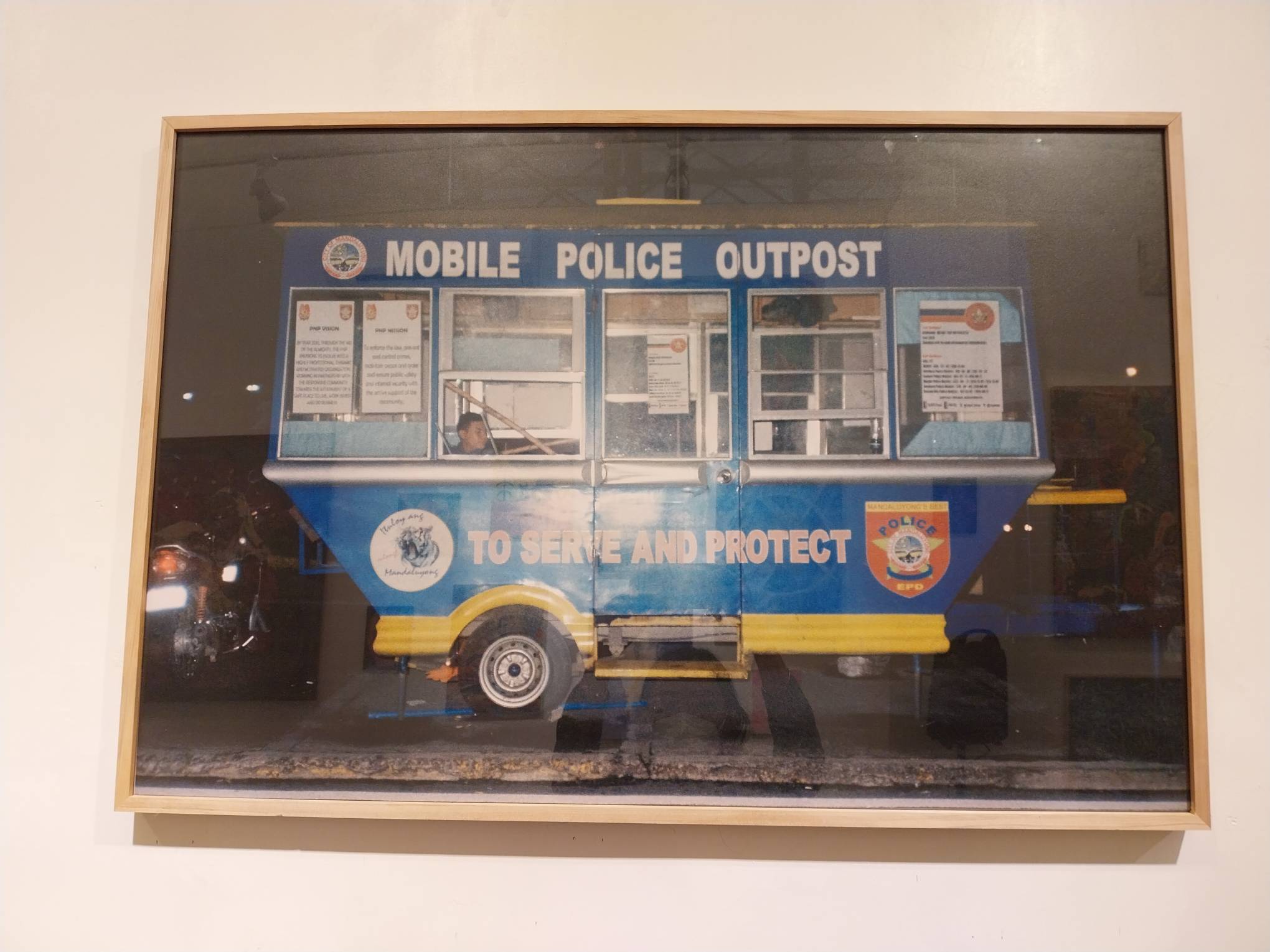
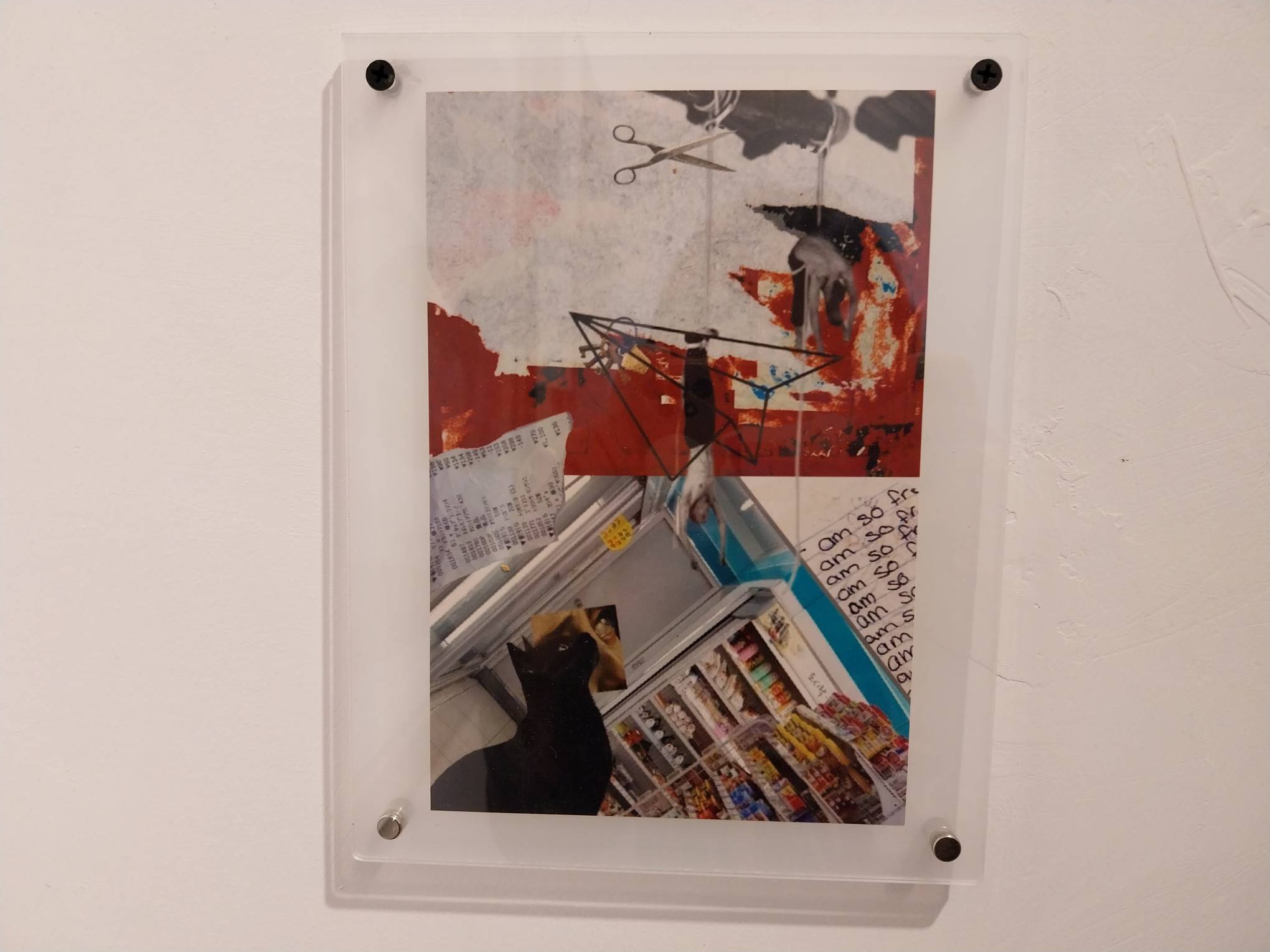
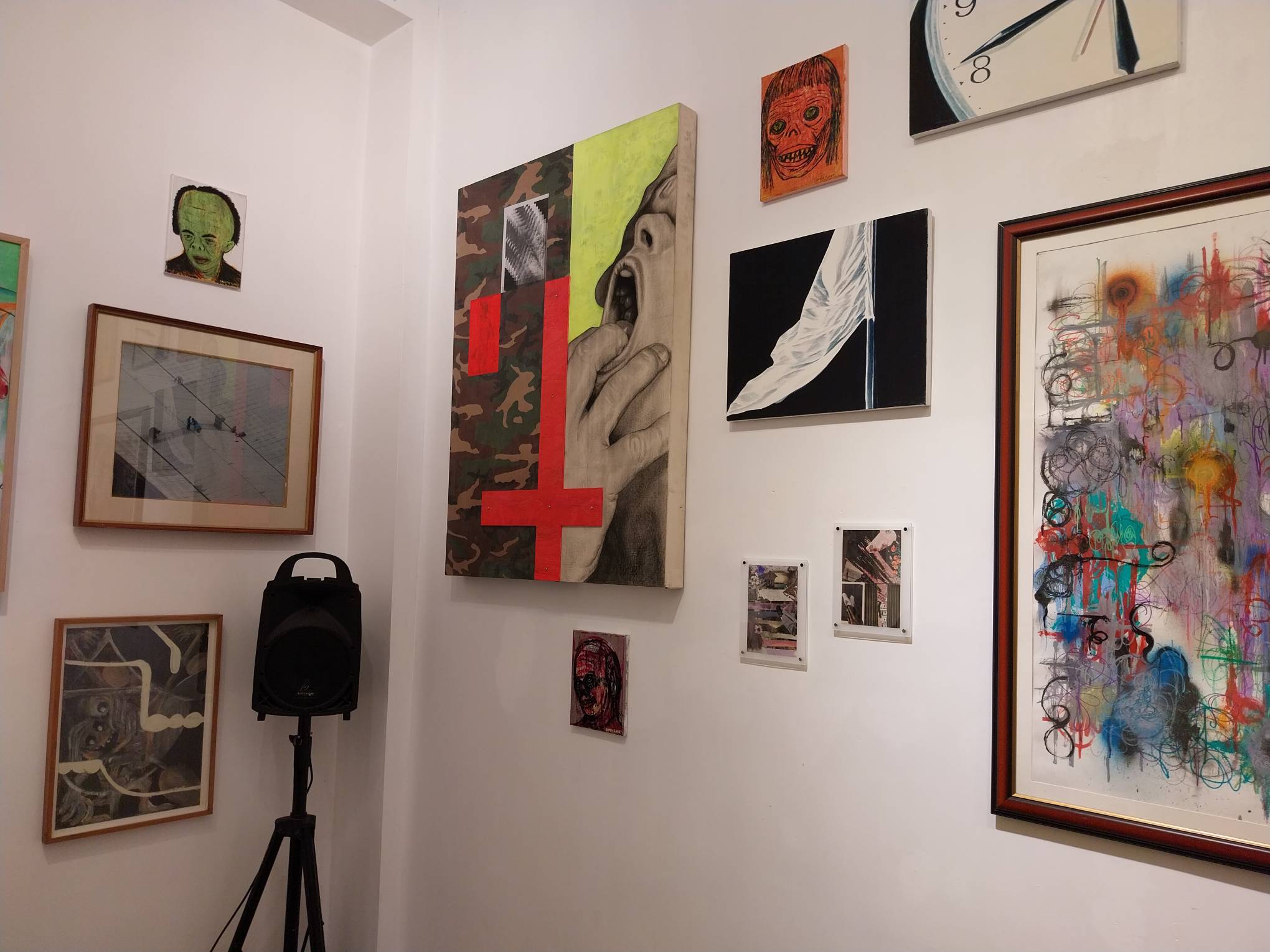
Works like Bandomeng’s “Untitled (Holocaust),” Kiko Escora’s “Ek – Ek Ng Talipandas,” or Gino Javier’s “Mobile Police Outpost” deliberate on the symbolisms that permeate our daily life. Tanya Villanueva even included an open call poster for contributors to a zine about the politics of womanhood, arts, and culture.
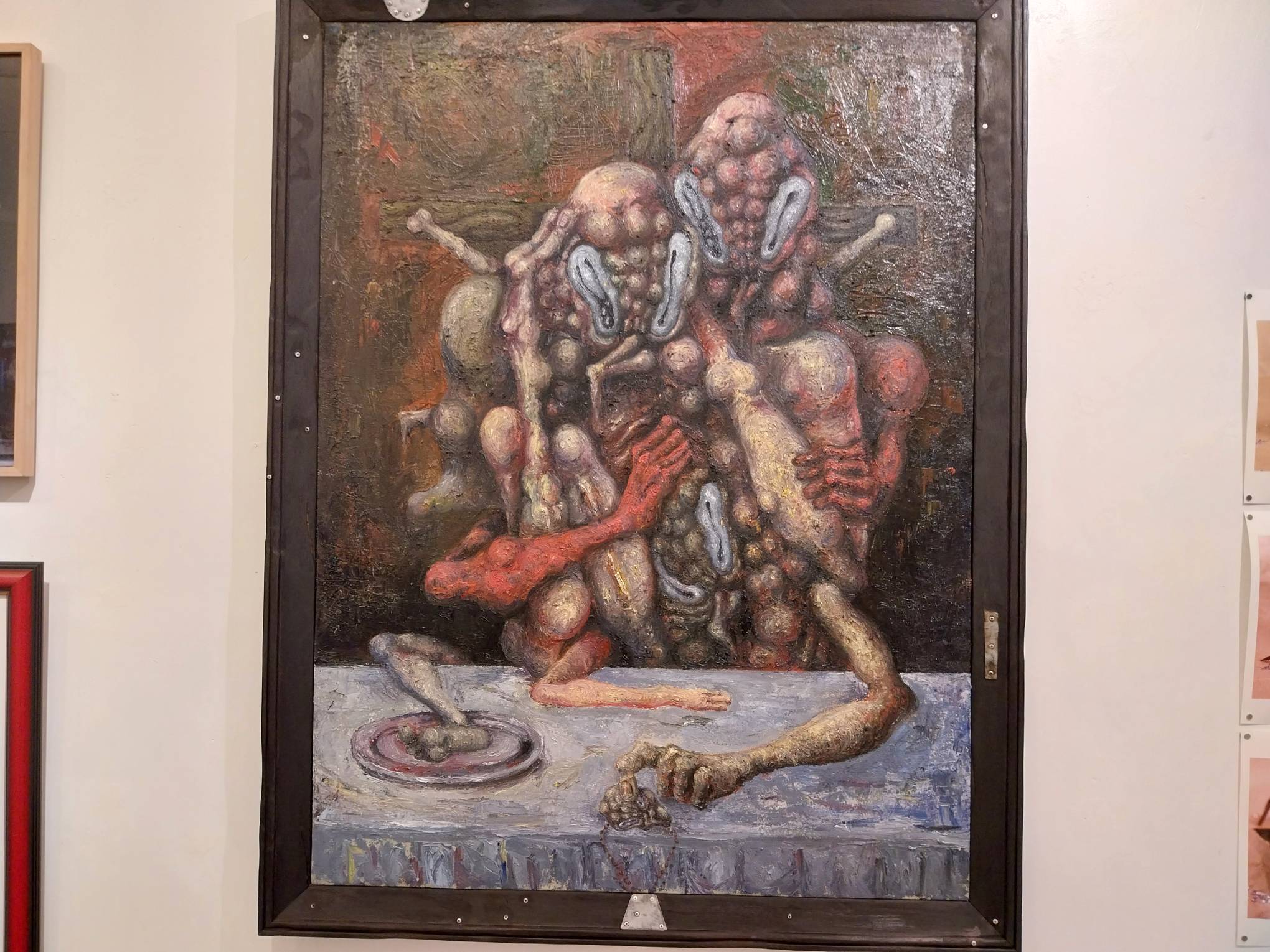
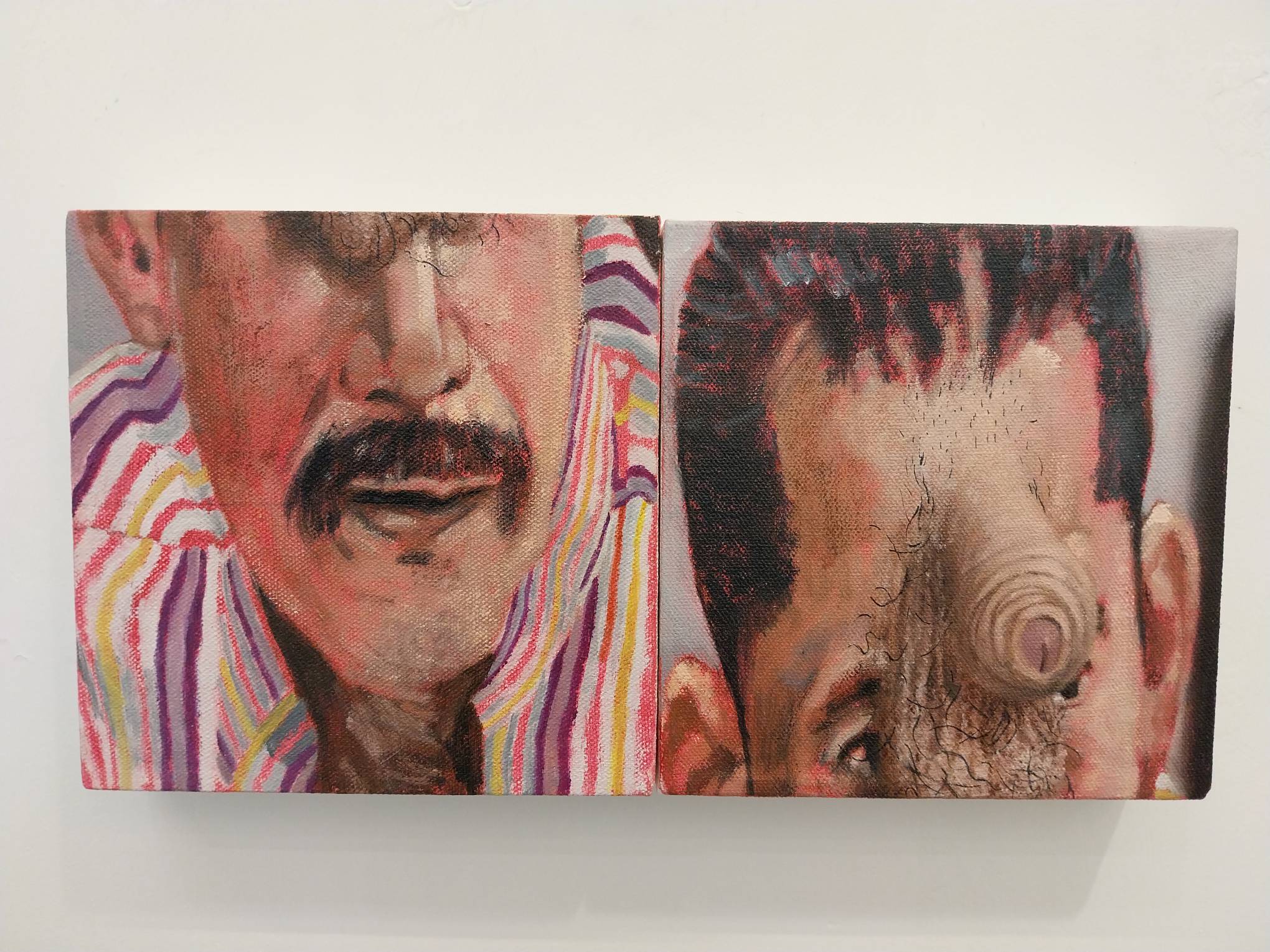
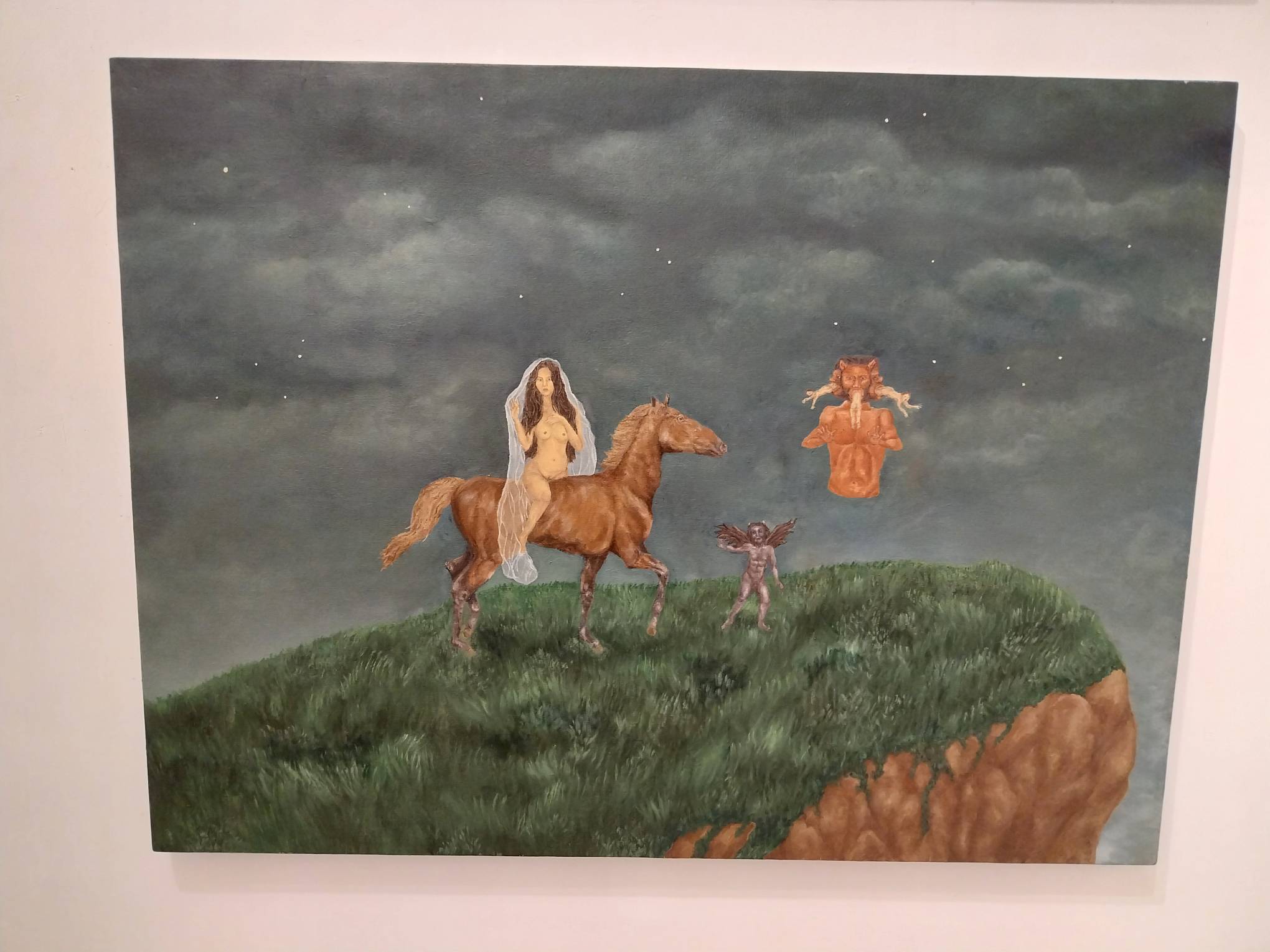
Other works seem to function more as subtle criticism of appearances and how ugliness tends to lead to ostracization. Gawen Fuji’s “Tinakot ang Sariling Multo,” Santo Slogo’s multiple stylized portraits, and Jan Sunday’s “Sancta Family” really pierce through that bubble of beauty to question why we assign a moral value to ugliness.
The Dynamics of Being
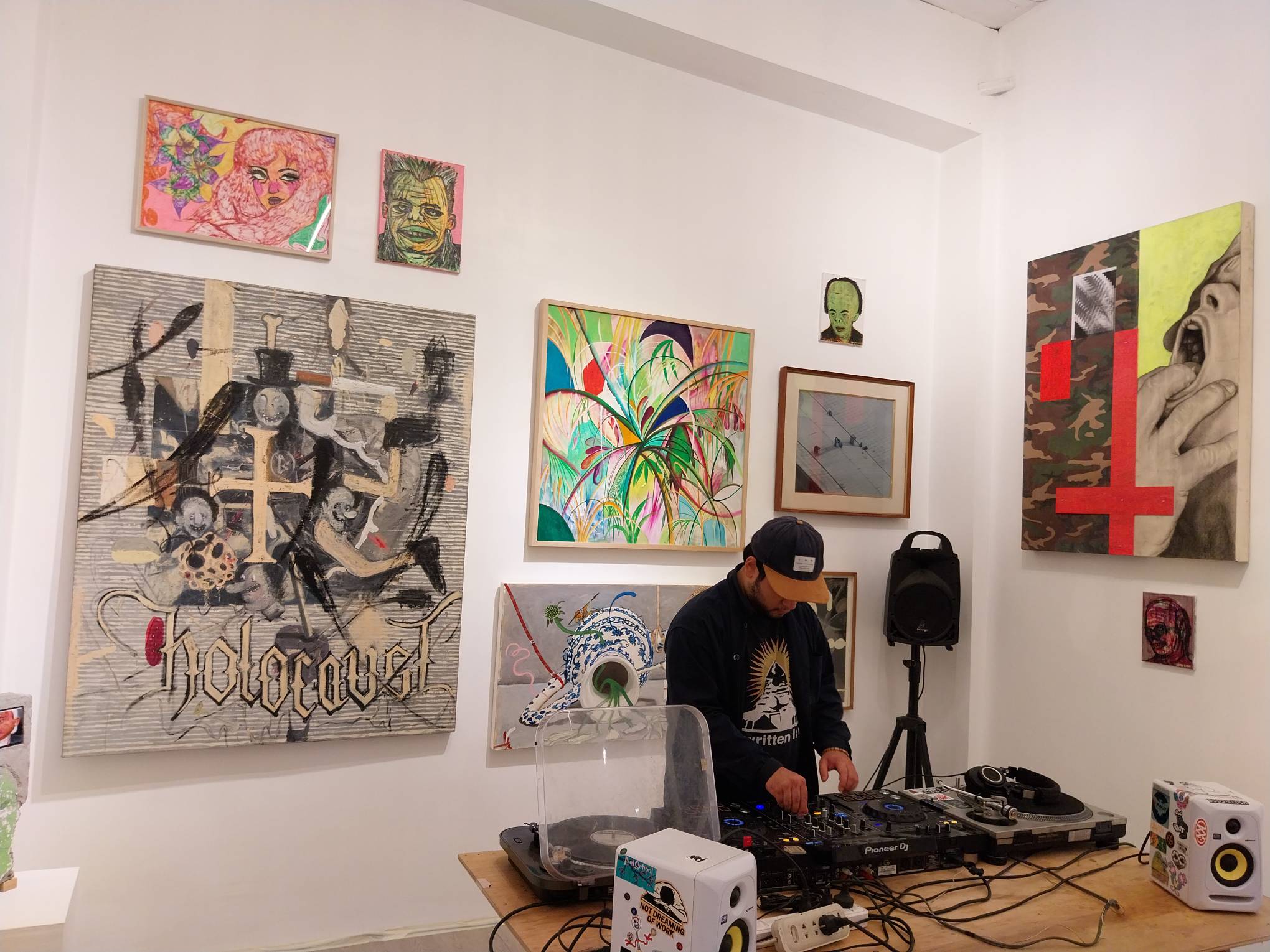
The dynamics being explored, on how politics can in fact be an immutable part of who we are, are interesting. They ponder on how it affects how we define ourselves, pulling on the cords while leaving the answers for its audience to figure out.
Does our environment affect the way that we perceive ourselves, or do we ourselves—our ideas of soul and being—affect our perception of our environment? Now/Here abounds with provocative images and interpretations. And it challenges how we engage with such questions individually—and how that affects our lives as a whole.
Photos by Elle Yap.
Related reading: ‘Pwera Usog’: Finding Freedom from the Hypocrisy of Society
Frequently Asked Questions
The exhibition explores the existential tension of presence, playing on the duality of being “nowhere” and “now here.” It features 27 artists who characterize their environment to orchestrate a broader picture of Philippine society, focusing on the “liminal divide”—the “in-between” state of the self. This theme is represented by a symbolic slash (“/”) that marks the threshold between being fully grounded in reality and entirely adrift in an evolving world.
Many artists address the specific angst of existing in the modern era, where individuals can feel small and mutable against global powers. Georel Albaña uses graffiti-like textures and arabesque patterns to express colorful angst, while other artists like Aleng Lukresya and Potti Lesaguis use organic, nature-inspired shapes to dissect the experience of nature as something separate from the self. These varied styles highlight a sense of “congenial familiarity” with a world that simultaneously feels alienating.
The exhibition posits that the political climate is just as crucial as the physical environment in defining a person’s situational self. Works by artists like Bandomeng, Kiko Escora, and Gino Javier use symbols of authority and historical trauma (such as police outposts or holocaust imagery) to ground the abstract concept of “politics” into daily life. This suggests that political realities are immutable parts of individual identity rather than just external ideals.
Several artists, including Gawen Fuji, Santo Slogo, and Jan Sunday, intentionally “pierce the bubble of beauty” by focusing on stylized portraits and themes of ugliness. These works question why society often assigns a negative moral value to the unsightly or the ostracized. By embracing these contradictions, the exhibit challenges the audience to look past superficial appearances to understand the complex internal “soul” of the subjects.
The collection ultimately asks whether our environment dictates how we perceive ourselves, or if our internal sense of being shapes our perception of our surroundings. By presenting provocative images of nature, politics, and the human form, Now/Here functions as a catalyst for viewers to engage with these questions individually. The goal is to spark a realization of how these internal and external dynamics affect our lives as a collective whole.
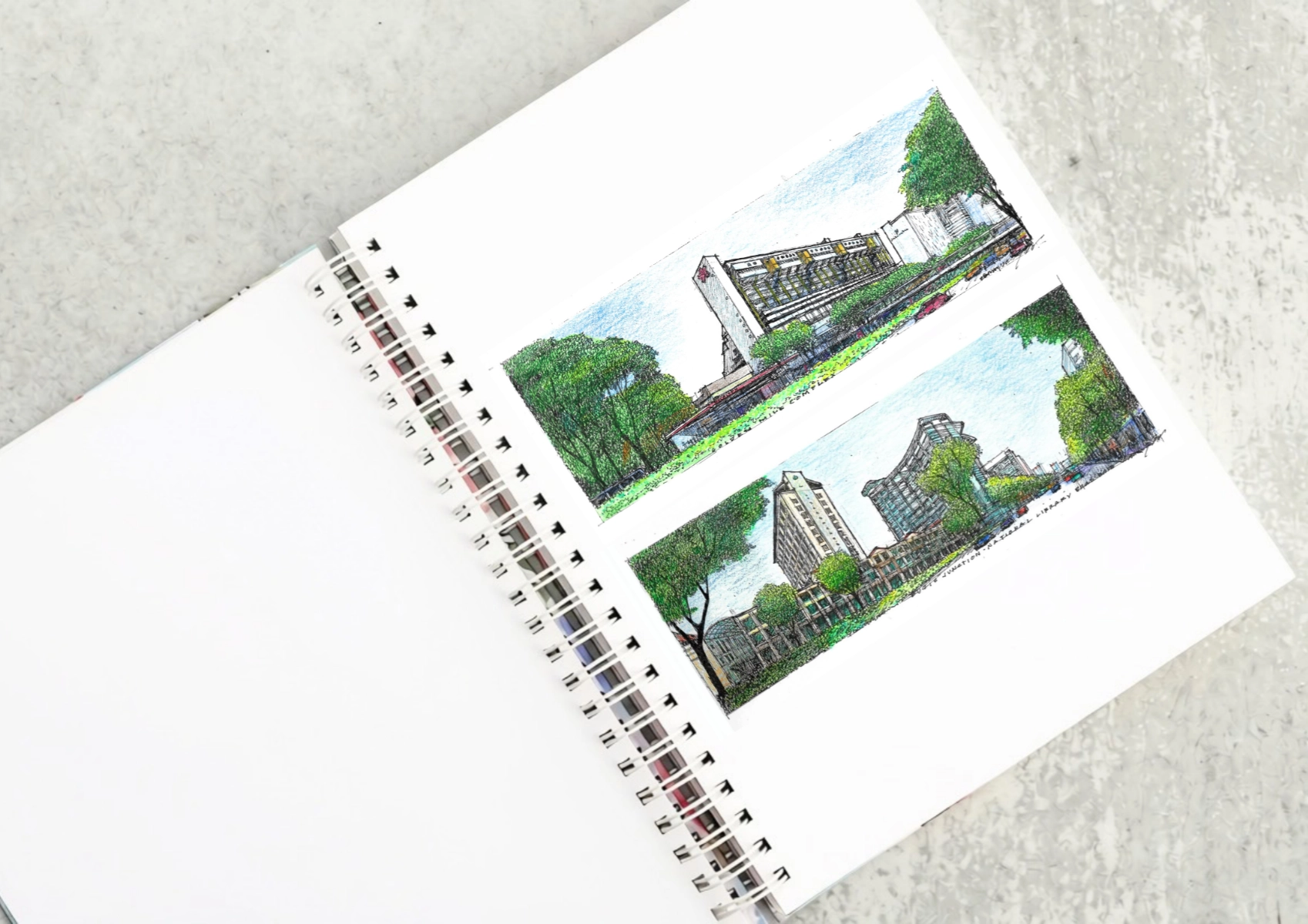
Two sketches of Singapore connect BluPrint Editor in Chief Paulo G. Alcazaren’s personal and professional history with Shared Ground: ArchitectureArchitectureThe art and science of designing and constructing buildings, structures, and spaces that are functional, safe, and aesthetically pleasing. It encompasses the planning, design, materials, and techniques used to createGo to Architecture Glossary of Care, Culture, […]
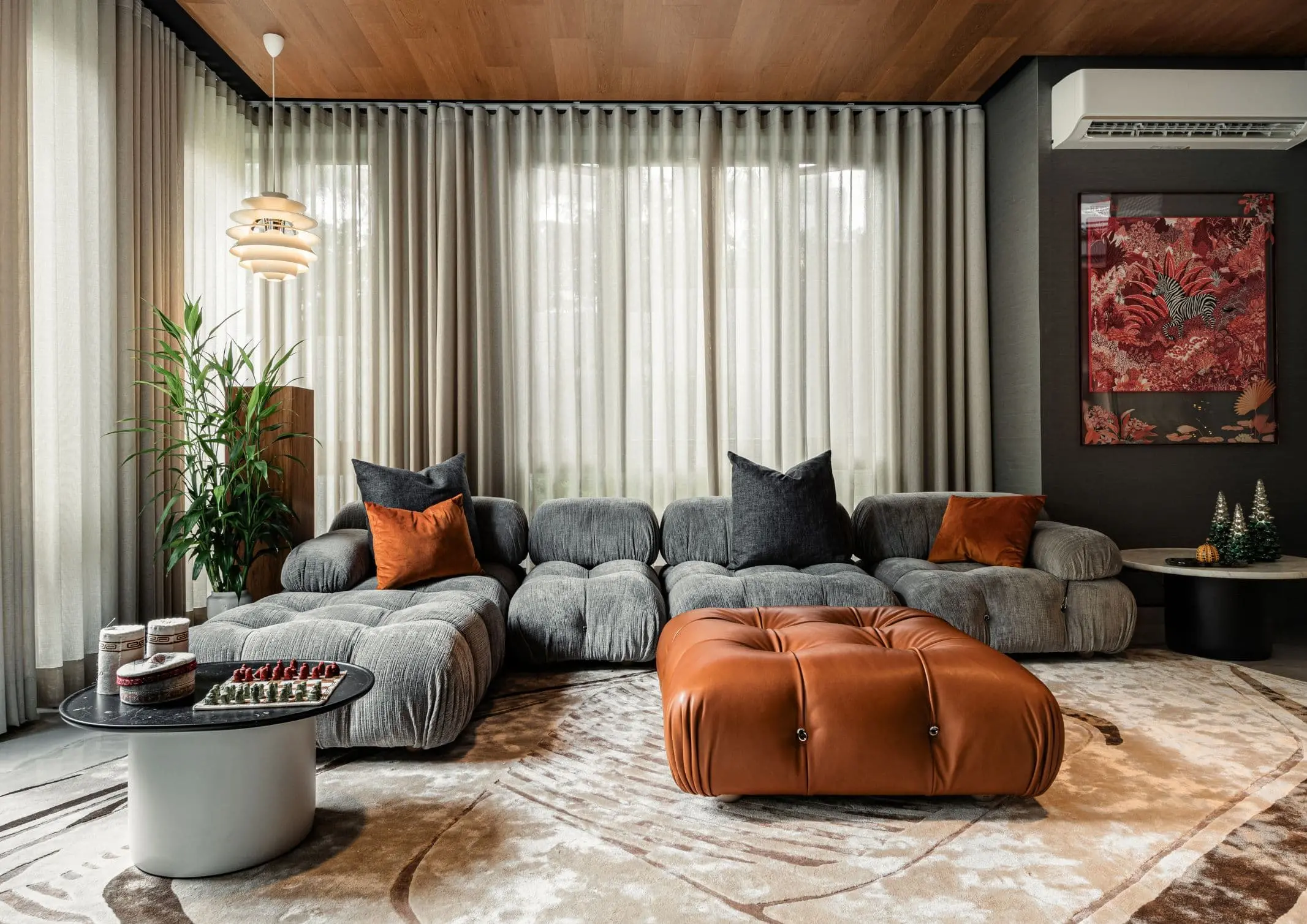
Some have become household names – Coleman, Oster, and KitchenAid – products that have found their way into Filipino kitchens, homes and family routines. In home furnishings, brands such as B&B Italia, Ethan Allen, Sub-Zero, Miele, SieMatic, Louis Poulsen, Hunter Douglas, Tempur, and Technogym, have helped shape the way Filipinos live. From everyday essentials to […]
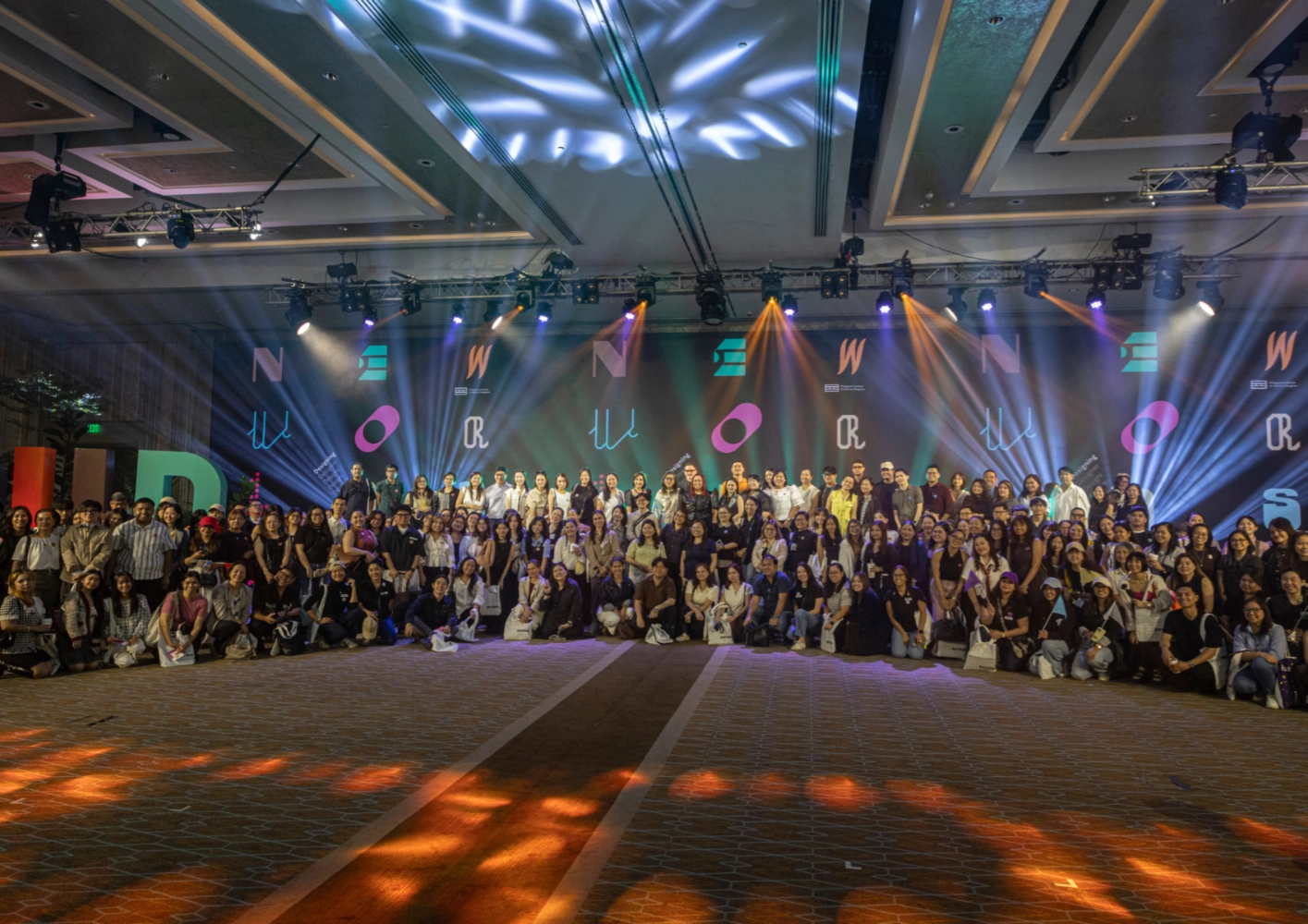
In a way, designers are the modern-day soothsayers and prophets. They design for the future, predicting how a room, a house, a building or a whole city will be used by people. They foresee how users will interact with a space, conjure exact shades of colors to elicit specific behavior and arrange furniture to build […]
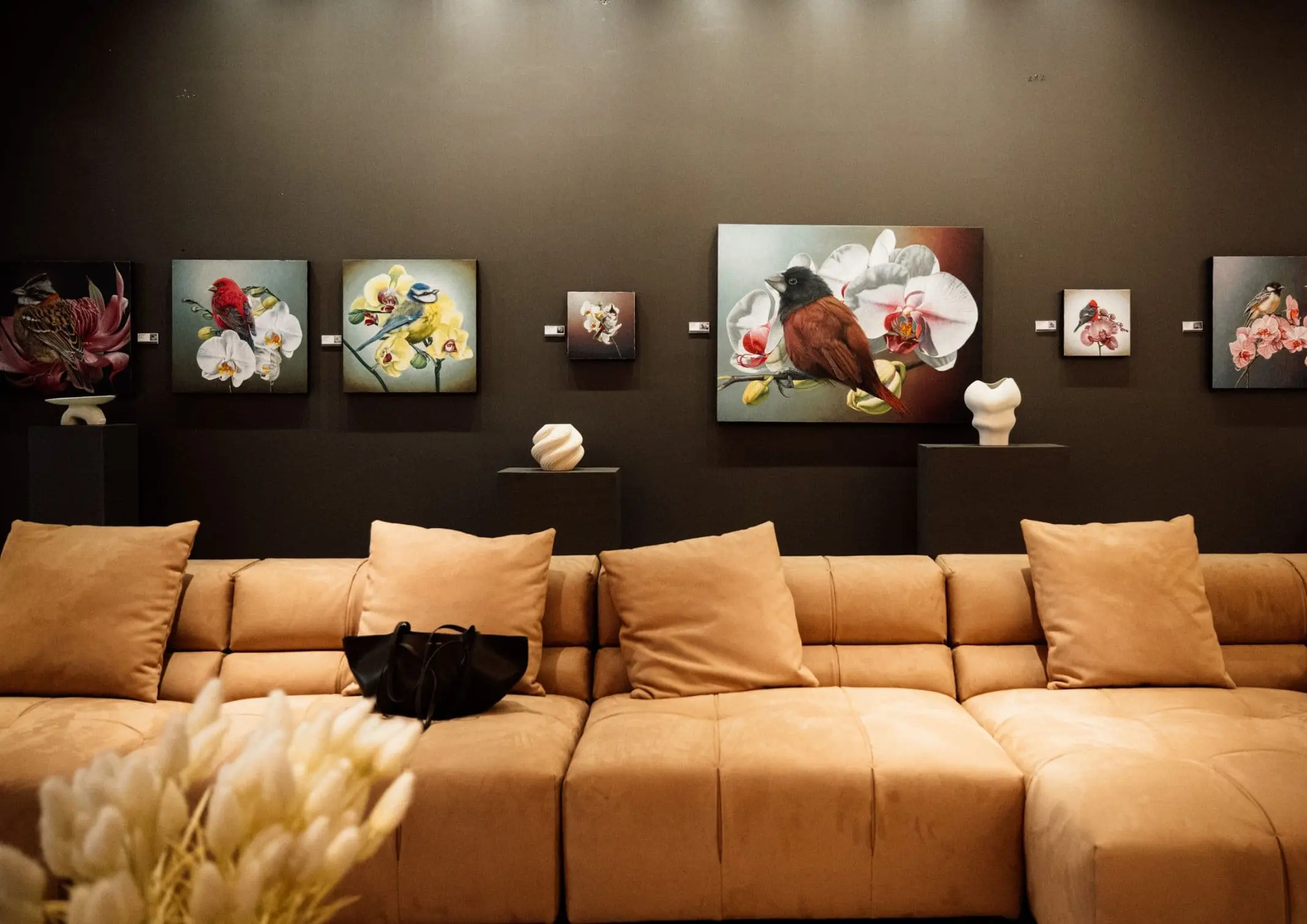
Art and furniture are often selected separately, yet their relationship can shape how a room looks and feels. The collaboration between Hooga and Galerie Joaquin explores how these elements can work together, bringing contemporary artworks into furnished residential settings at Hooga’s showroom in Uptown Mall, Bonifacio Global City. For Hooga, which curates furniture, lighting, and […]
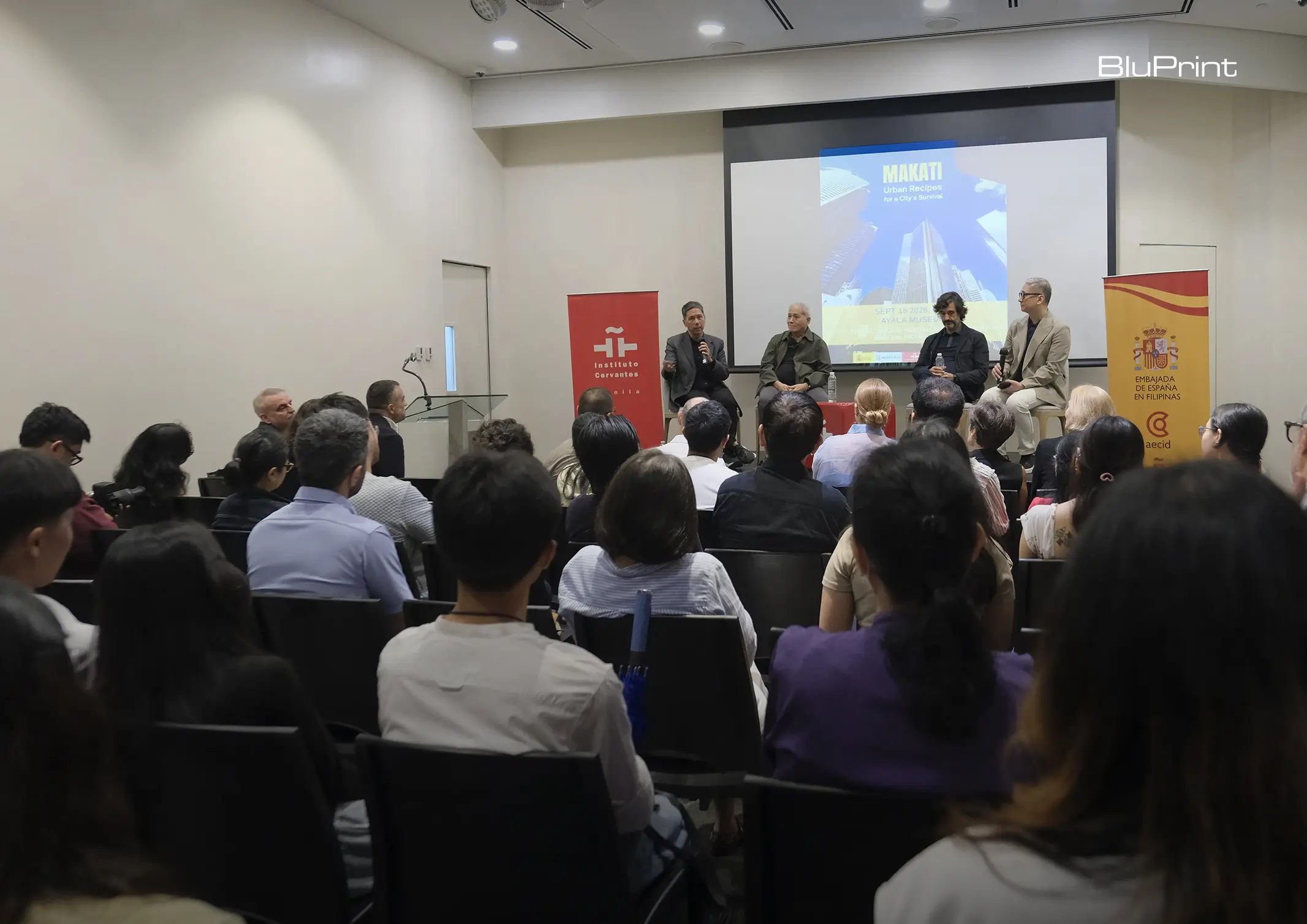
How can better-planned cities create the conditions for more creative, livable, and resilient urban environments? “Makati Urban Recipes for a City’s Survival,” a colloquium held at the Ayala Museum on September 15, brought together architects and practitioners from the fields of urbanism and the creative economy to discuss how design, planning, and collaboration can address […]
Read the issues.

Collect the volumes.

Recommended Video
Tap to Unmute
Unmute
0:00
0:00