Bigkis is the act of binding. In Tagalog, the word can refer to something used to bind or encircle, as well as a bundle formed by tying several separate elements together. Figuratively, it can also mean a bond, union, or unity. The meanings move from the physical act of joining things together to the connection […]
‘Breaking to Mend’: Ciane Xavier Illustrates the Fragility of Human Emotions



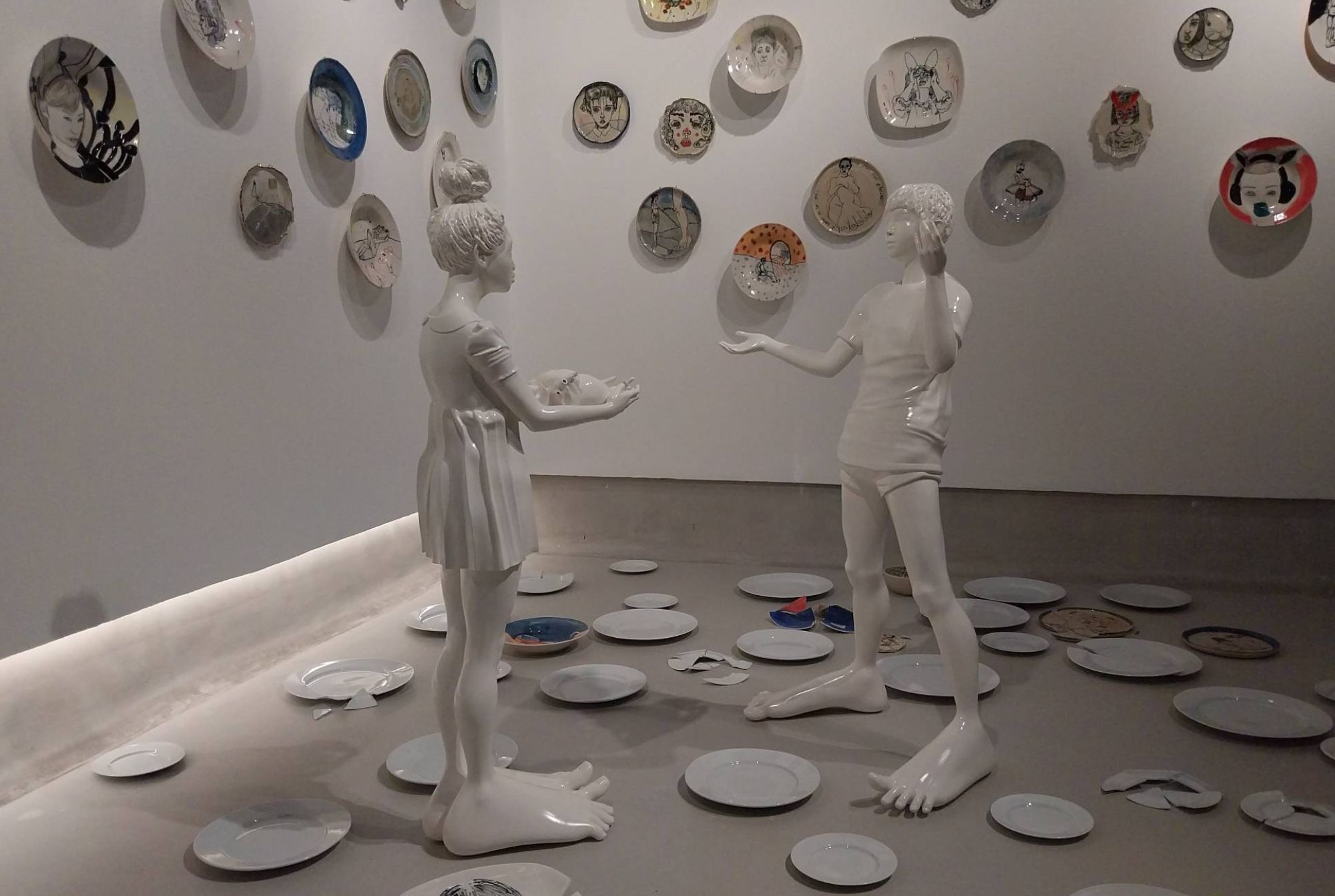
Seeing the spectrum of human emotions as fragile is a concept as old as time. The way emotions break and mold itself to our environment is the subject of a lot of art. What Ciane Xavier does with Breaking to Mend, however, is to capture these emotions in porcelain, literalizing the conceptual framework interplaying with the work.
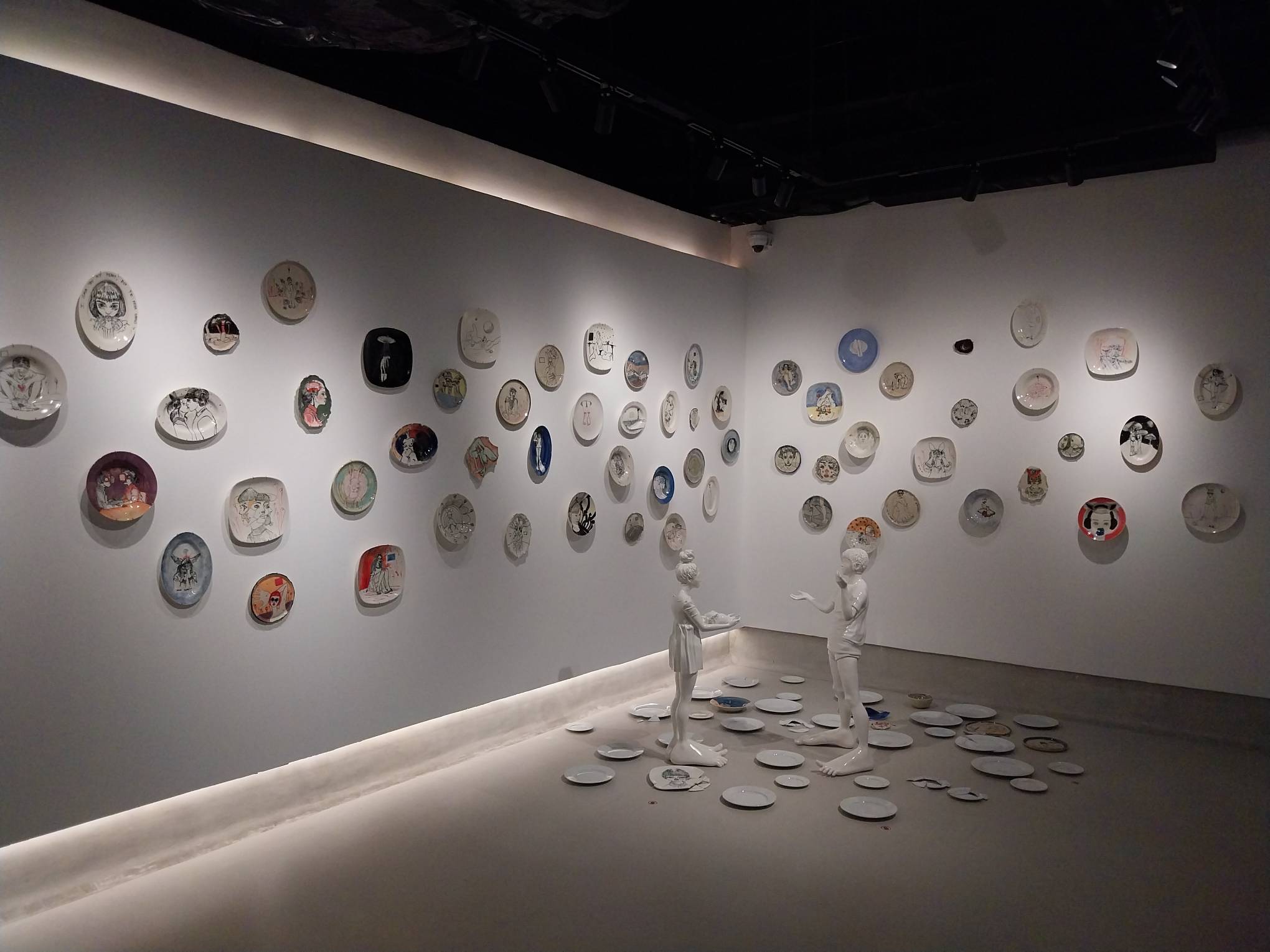
The Galerie Stephanie exhibit uses the delicate nature of porcelain to run the gamut of human emotions that we experience. The plates in these exhibits depict different situations and states of emotions, and it gives us a general idea of the breadth of feelings that humanity deals with in a lifetime.
“In its fragility, this delicate material is strengthened by stories that are glazed by the human emotions and the relationships that bind one to another,” the exhibit write-up said. “This exhibition is an invitation to engage in the metaphorical mending of ‘moments we cherish and the moments we fear.’”
Porcelain Heart
Xavier, a self-taught artist and sculptor who grew up in South Brazil, works as a pop surrealist in a variety of mediums. For her, the medium informs the truth of the experience, and she allows her ideas to bend to what the material she works with requires.
In Breaking to Mend, she works with porcelain plates and sculptures, depicting a slew of emotions with the medium. At the center of the exhibit are two porcelain structures of people with large feet—one person is doing a defensive stance as they stare at the other person, holding a heart while seemingly offering it to the first person.
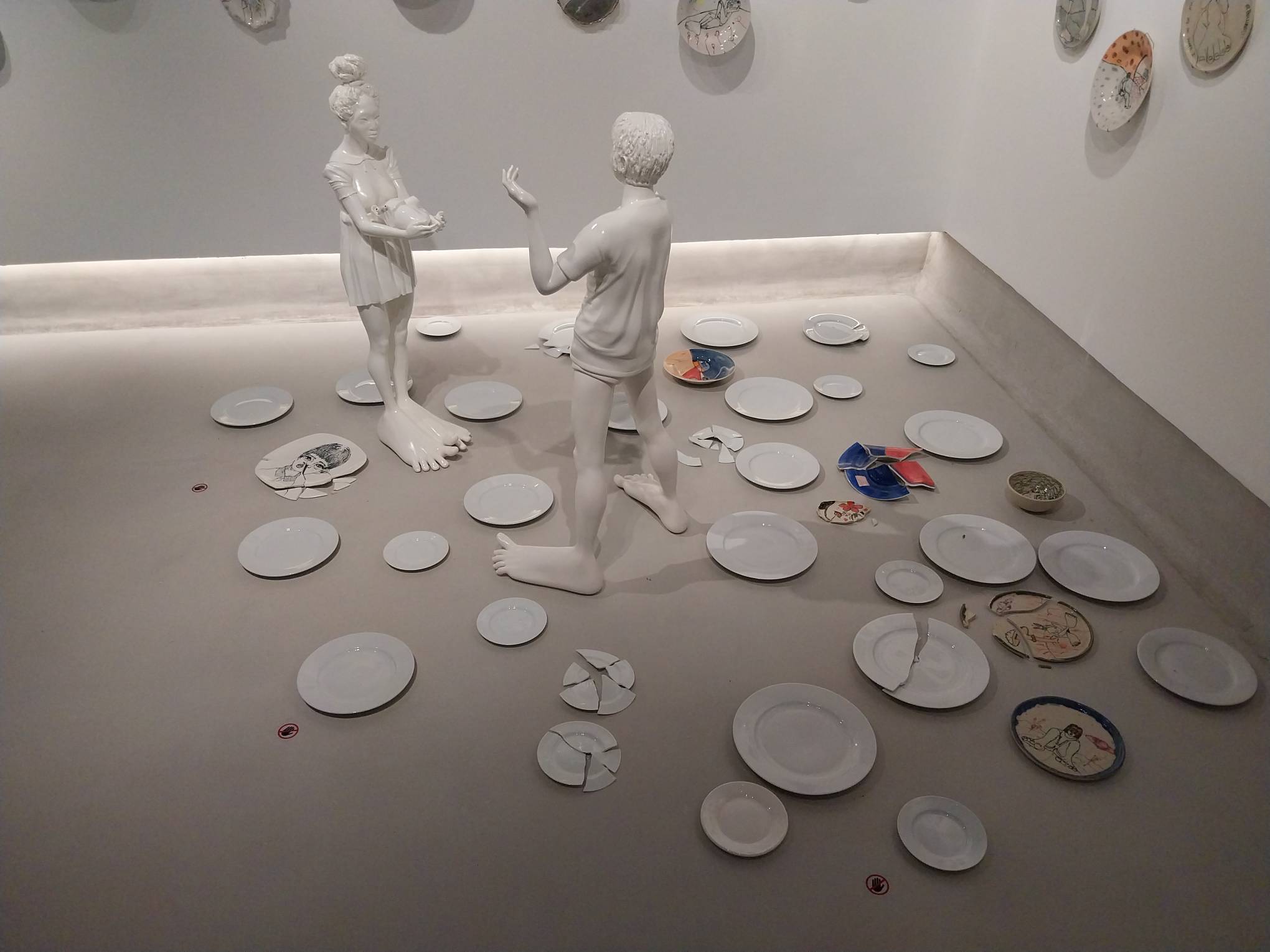
Surrounding the ground of the sculptures are broken plates, showcasing the turmoil of the relationship at the center. Some of the plates contain sad, reluctant faces, adding even more emotionality to the shattering. Others are empty, just collateral damage in whatever argument is being depicted at the moment.
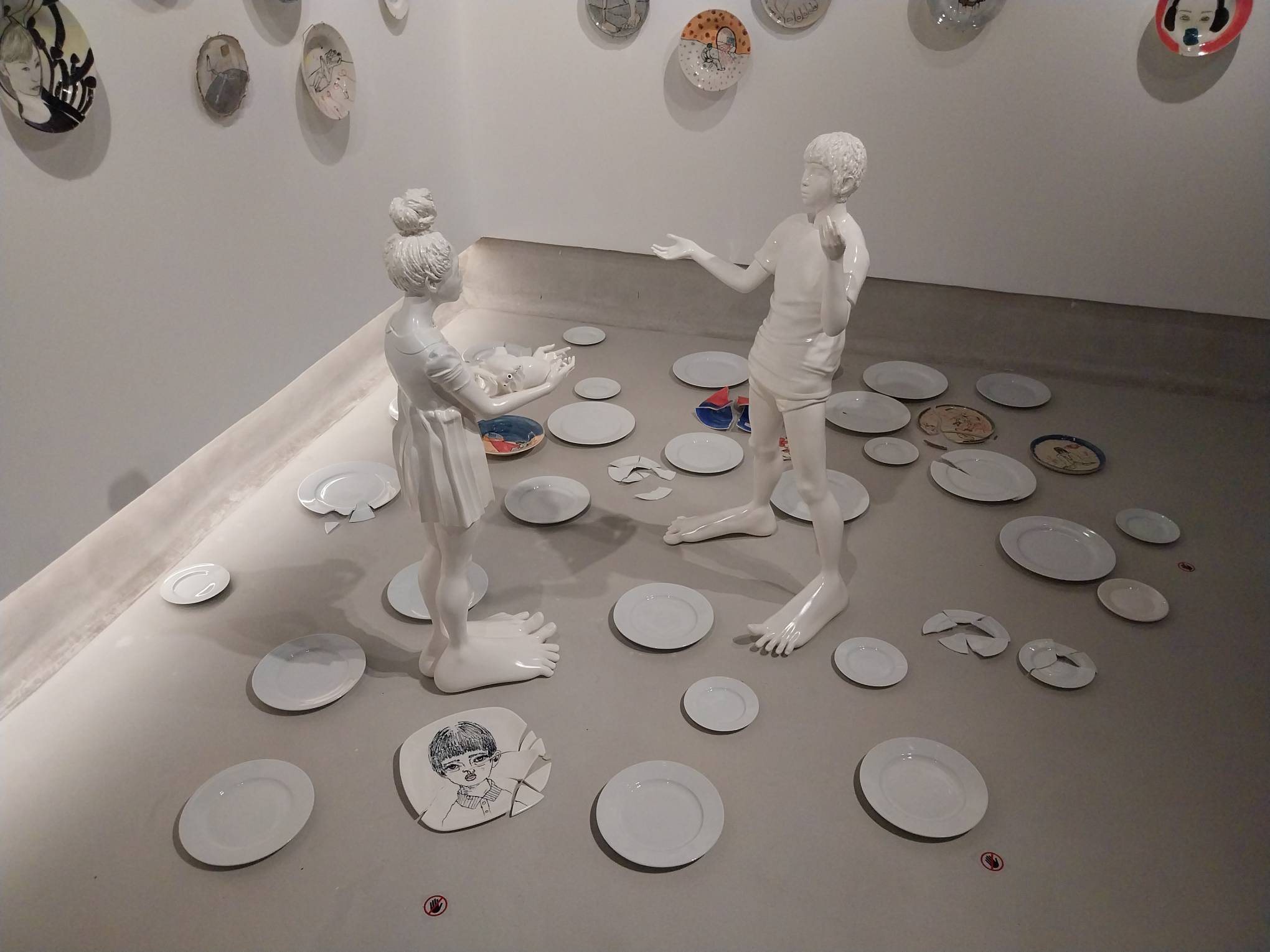
“The interplay of both whole and broken porcelains symbolize the various stages of vulnerabilities that each relationship narrates-either still seeing the whole in its brokenness, or too shattered that it identifies as a new entity,” the exhibit write-up said.
Strength in Fragility
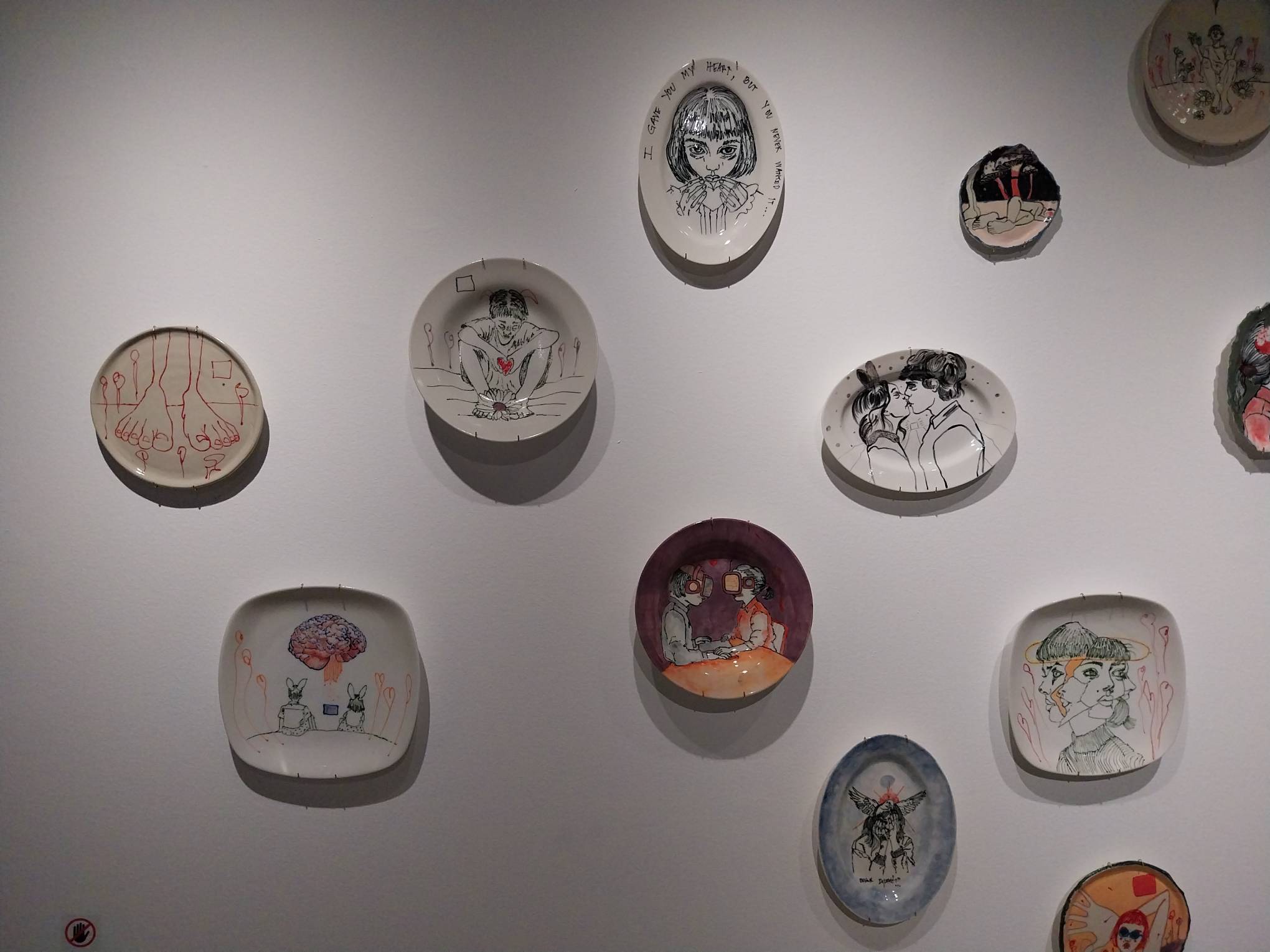
The walls around them contain different paintings done in a variety of plate sizes—some utilizing the typical rounded plates, while others are more jagged at the edges. The artist glazed her artworks directly into the plate, showing the seeming inevitability of these emotions being felt.
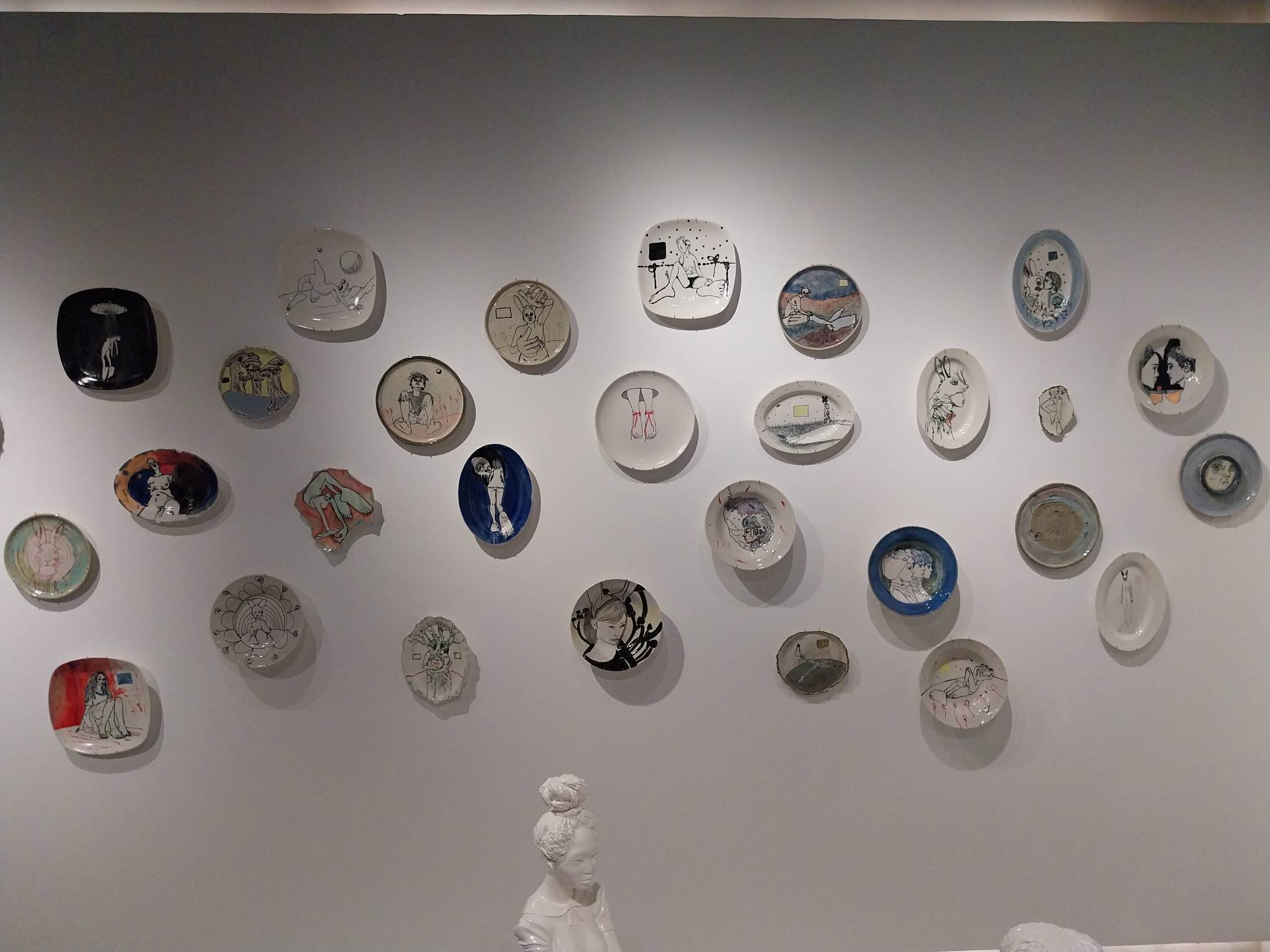
Ciane Xavier shows a diverse set of situations there: there are lovers talking to each other, people dissociating while listening to music, and multiple people seemingly screaming into nothingness. Many even place the people in more fantastical situations, making references to pop culture touchstones like Alice in Wonderland.
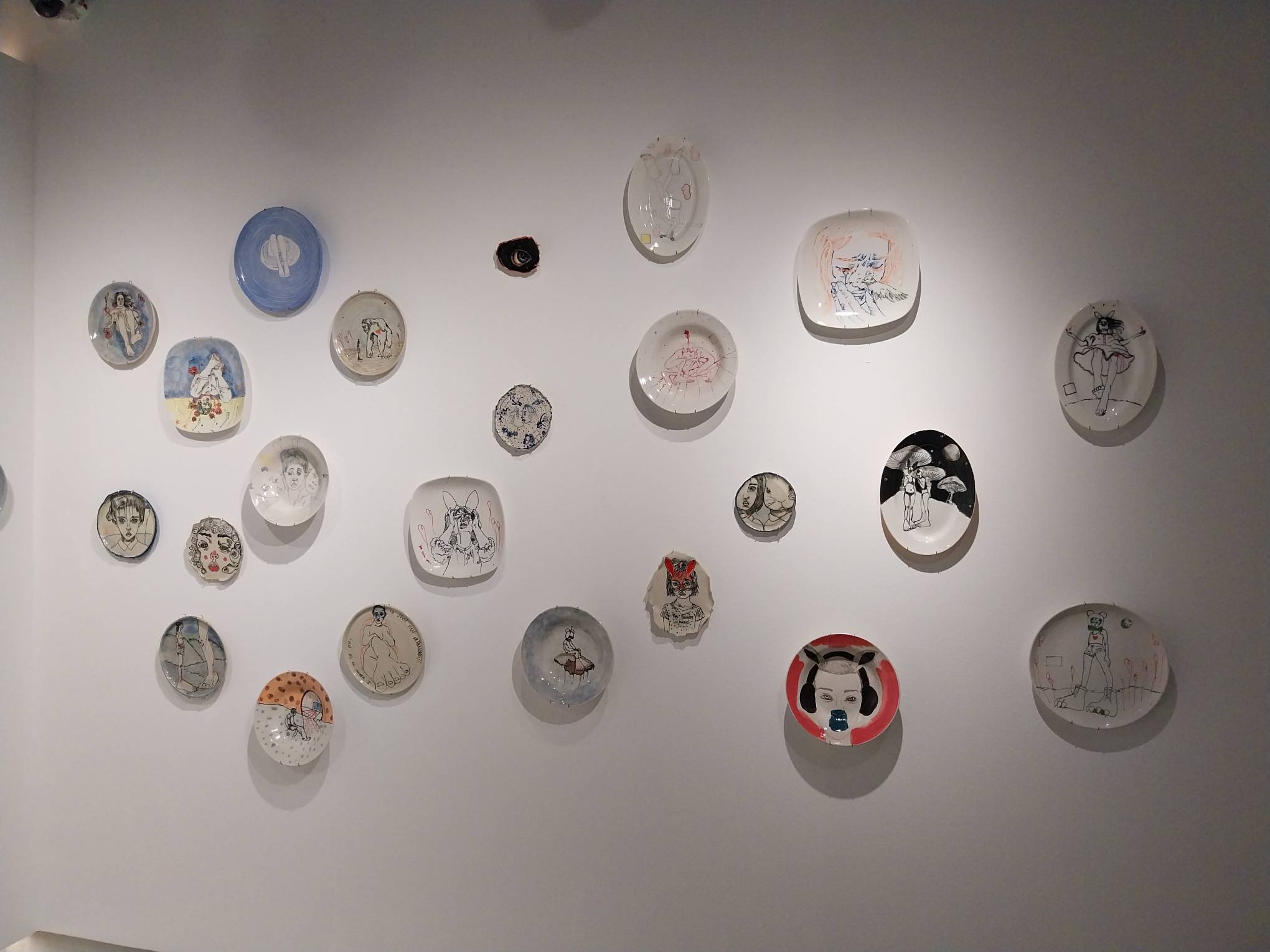
Breaking to Mend shows that the fragility of our relationships aren’t dependent on their explosiveness. Ciane Xavier characterizes the brittleness of our stability, and how who we are can be changed by the situations we find ourselves in.
The complexity of these depictions—fantastical and ordinary at the same time—provides that even the small emotions that we experience can upend the frail balance that we bring upon ourselves.
Photos by Elle Yap.
Related reading: ‘Sandata’: Archie Geotina Probes at the Fragility of Power
Frequently Asked Questions
The exhibition explores the spectrum of human emotions and the inherent fragility of relationships through the literal and metaphorical use of porcelain. By depicting moments of both cherished connection and deep-seated fear, Xavier invites viewers to engage in the mending of their own emotional vulnerabilities. The works symbolize how identity can be shattered by life’s experiences and subsequently transformed into something entirely new and resilient.
Ciane Xavier selected porcelain because its delicate nature literalizes the conceptual framework of human stability and emotional brittleness. For this self-taught sculptor, the medium informs the truth of the experience, requiring her ideas to bend to the material’s physical requirements. Porcelain’s ability to be both exquisitely beautiful and easily broken serves as a perfect metaphor for the vulnerable stages of interpersonal relationships.
The broken plates surrounding the central porcelain sculptures represent the emotional turmoil, collateral damage, and inherent vulnerability found within human relationships. Some shards feature sad, reluctant faces, while others are left blank to signify the loss of identity after a traumatic or explosive event. This display illustrates the stages of a relationship, highlighting whether one sees the “whole” within the cracks or identifies as a newly shattered entity.
As a pop surrealist, Xavier blends ordinary human situations with fantastical elements, including references to literary touchstones like Alice in Wonderland. Her glazed plate artworks feature diverse scenes, from lovers in dialogue to characters dissociating through music or screaming into the void. These surreal depictions emphasize that even the smallest, most quiet emotions can upend the frail balance of our reality, making the ordinary feel profoundly extraordinary.
The two central structures depict figures with characteristically large feet, representing a dynamic of vulnerability and defense between two people. One figure is captured in a defensive stance while the other offers a porcelain heart, literalizing the risk and exposure involved in emotional exchange. This focal point anchors the surrounding wall of plates, providing a physical narrative of how stories are “glazed” by the emotions and relationships that bind us.
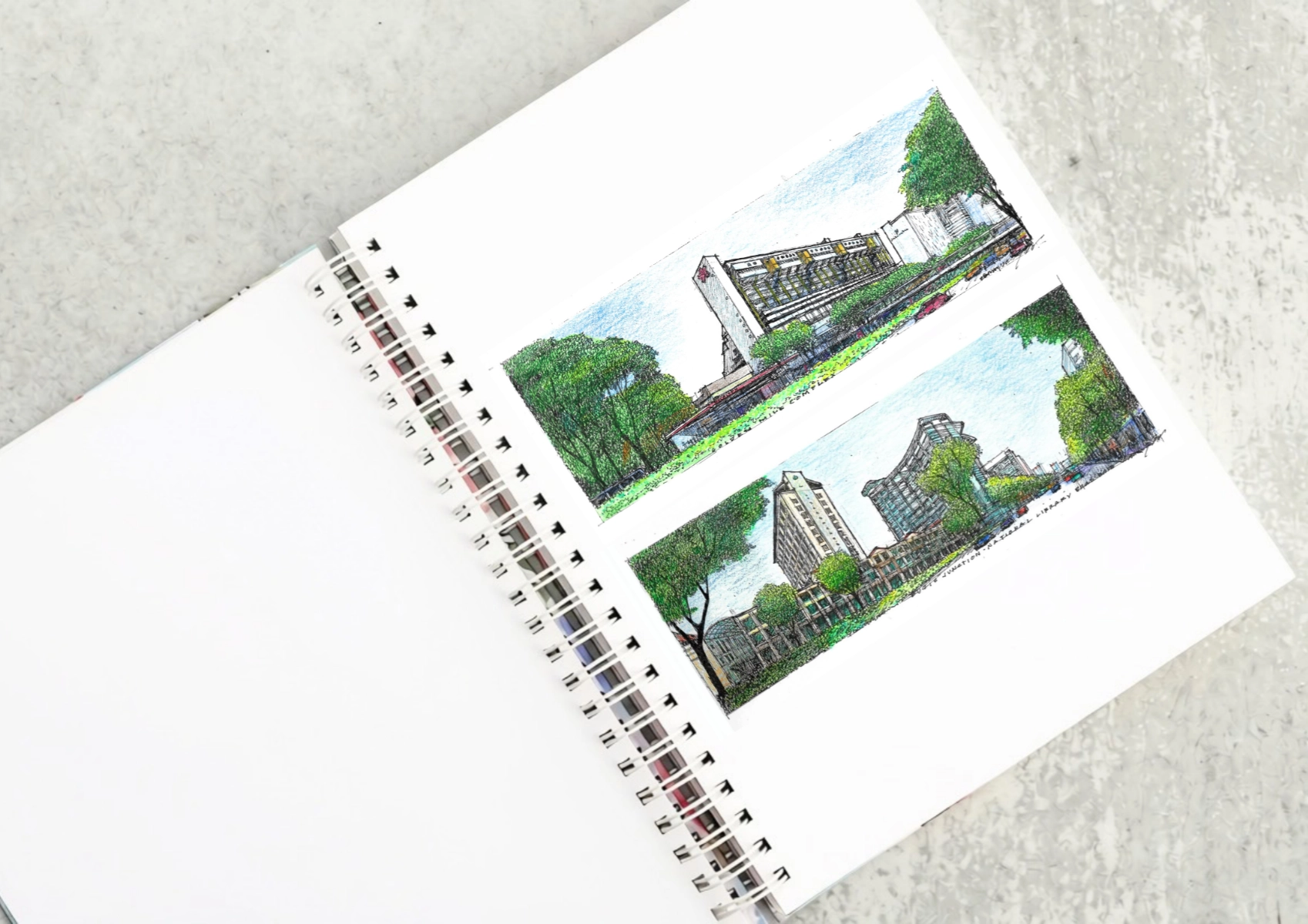
Two sketches of Singapore connect BluPrint Editor in Chief Paulo G. Alcazaren’s personal and professional history with Shared Ground: ArchitectureArchitectureThe art and science of designing and constructing buildings, structures, and spaces that are functional, safe, and aesthetically pleasing. It encompasses the planning, design, materials, and techniques used to createGo to Architecture Glossary of Care, Culture, […]
In a way, designers are the modern-day soothsayers and prophets. They design for the future, predicting how a room, a house, a building or a whole city will be used by people. They foresee how users will interact with a space, conjure exact shades of colors to elicit specific behavior and arrange furniture to build […]
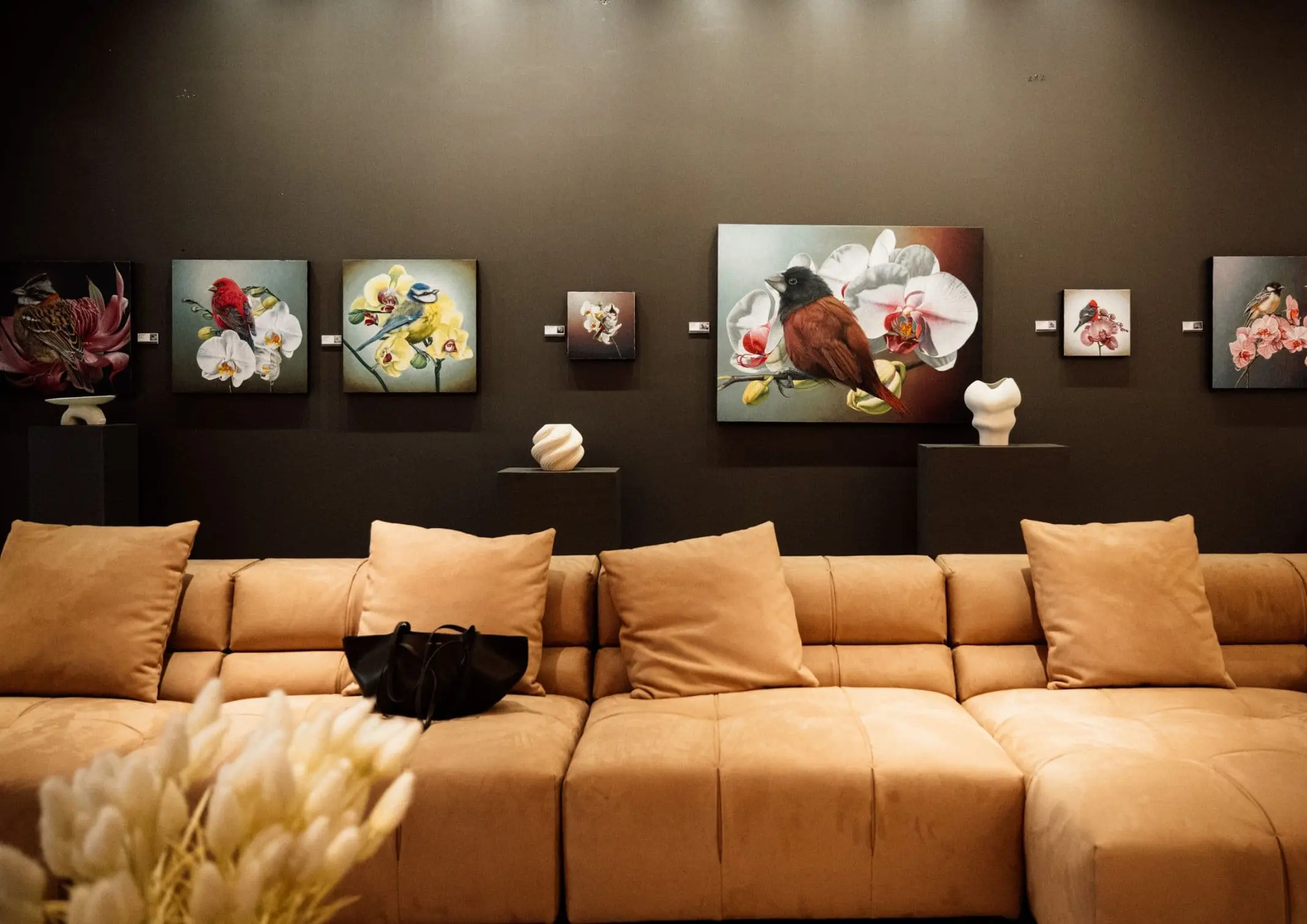
Art and furniture are often selected separately, yet their relationship can shape how a room looks and feels. The collaboration between Hooga and Galerie Joaquin explores how these elements can work together, bringing contemporary artworks into furnished residential settings at Hooga’s showroom in Uptown Mall, Bonifacio Global City. For Hooga, which curates furniture, lighting, and […]
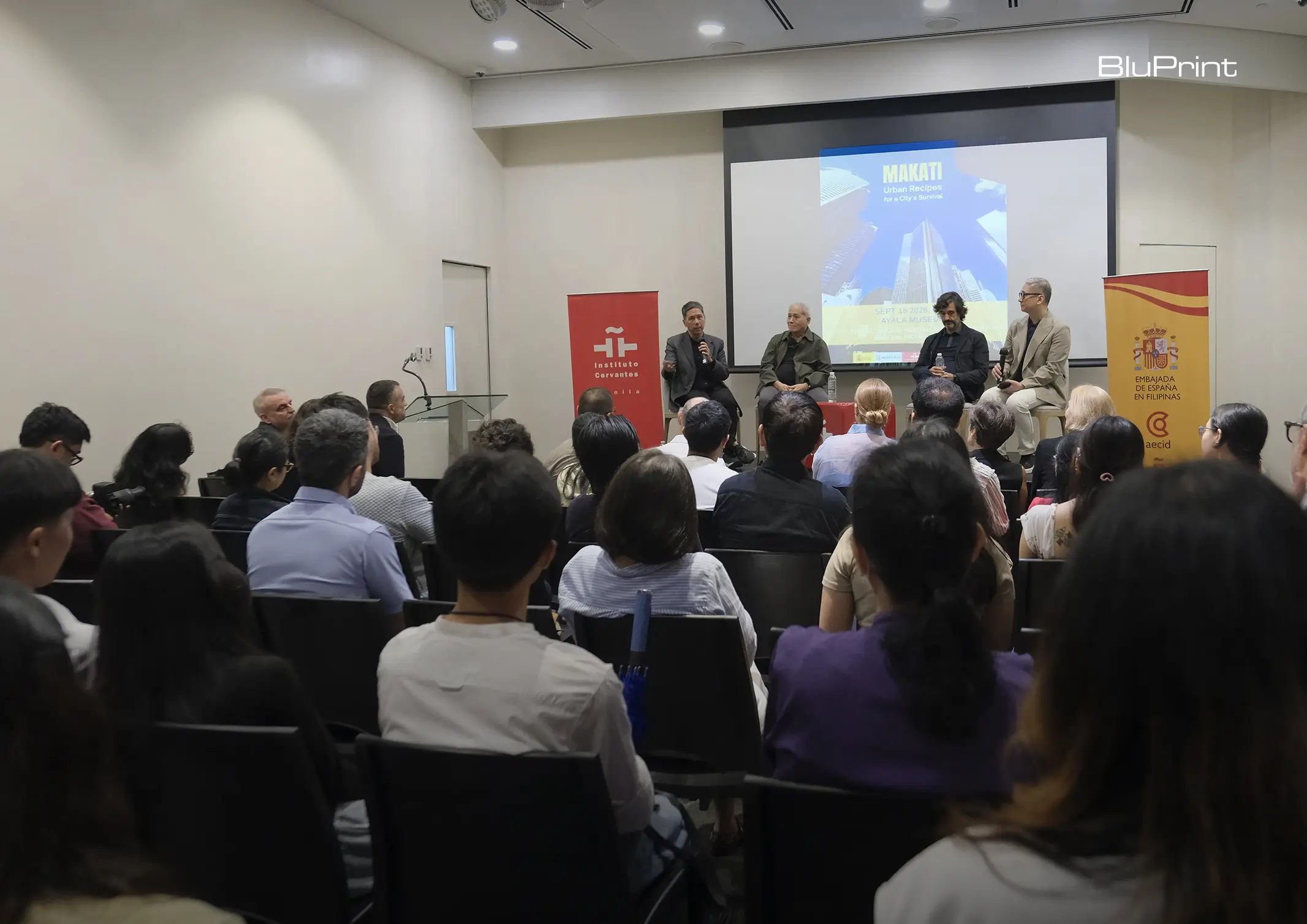
How can better-planned cities create the conditions for more creative, livable, and resilient urban environments? “Makati Urban Recipes for a City’s Survival,” a colloquium held at the Ayala Museum on September 15, brought together architects and practitioners from the fields of urbanism and the creative economy to discuss how design, planning, and collaboration can address […]
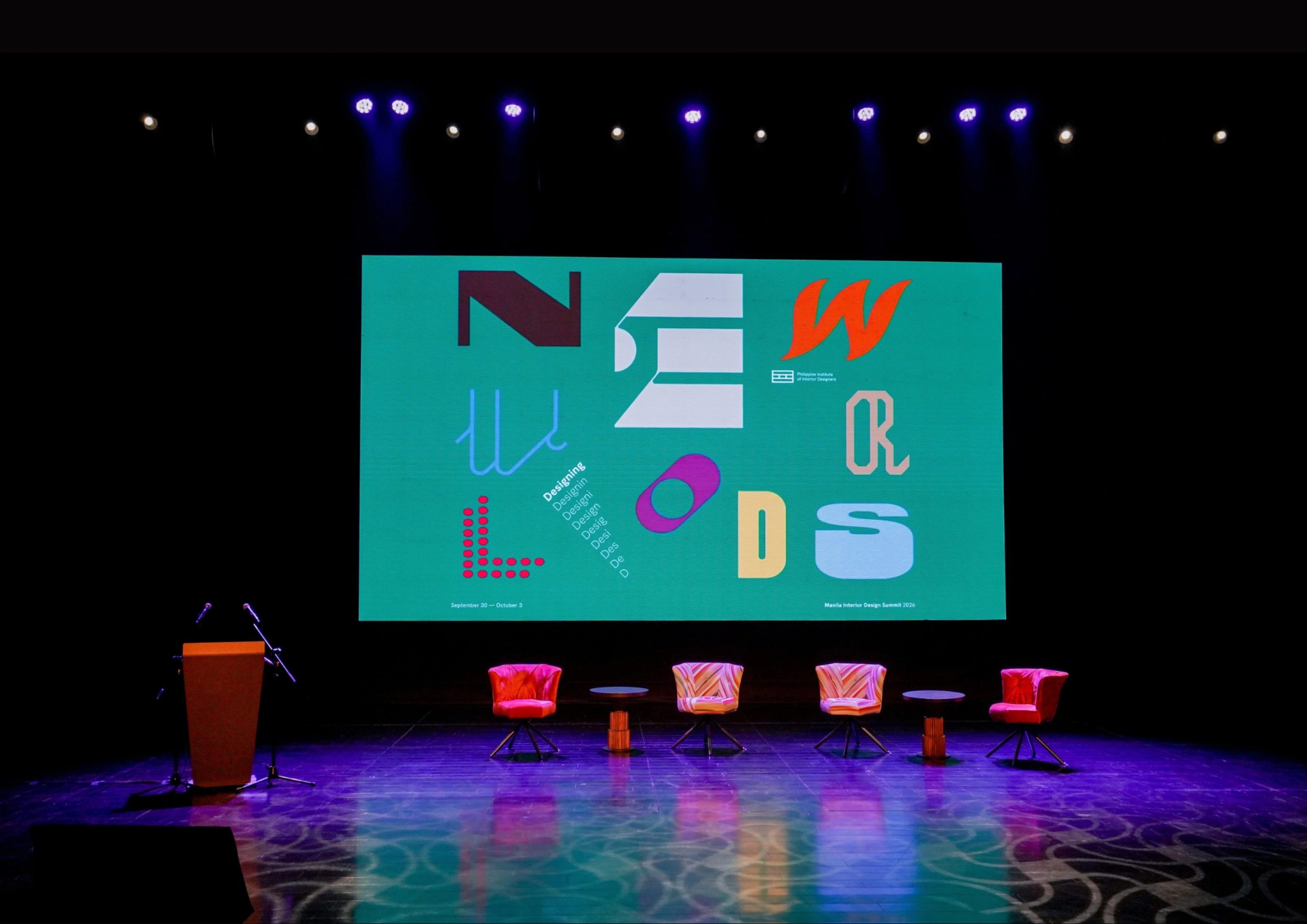
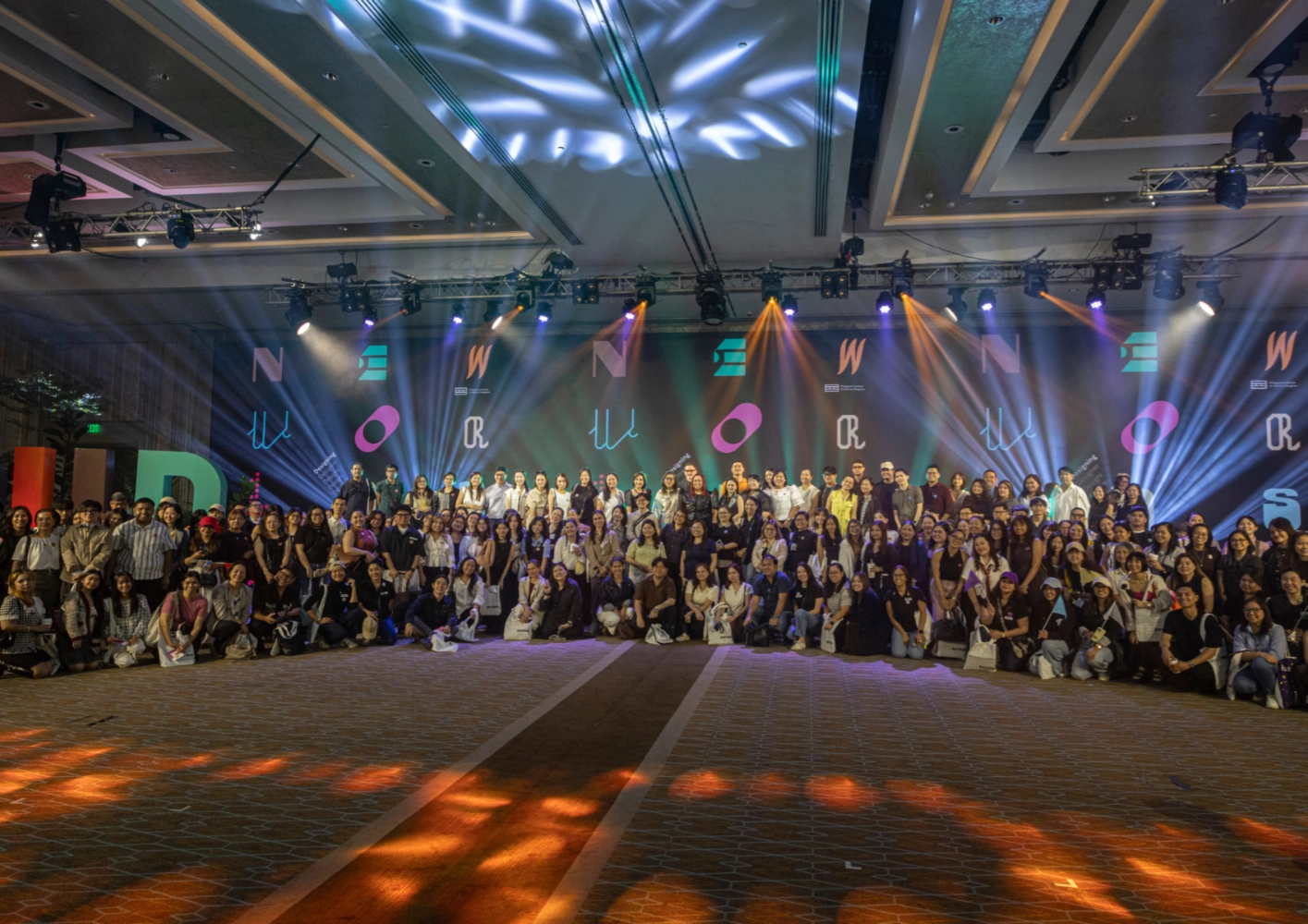
The fourth Manila Interior DesignInterior DesignThe discipline of planning and shaping interior spaces for function, comfort, safety, and beauty. It covers layout, lighting, materials, finishes, furniture, and color, and in the Philippines is a licensedGo to Interior Design Glossary Summit (MIDS) brought together more than 300 delegates for four days of conversations, exhibitions, and design […]
Read the issues.

Collect the volumes.

Recommended Video
Tap to Unmute
Unmute
0:00
0:00