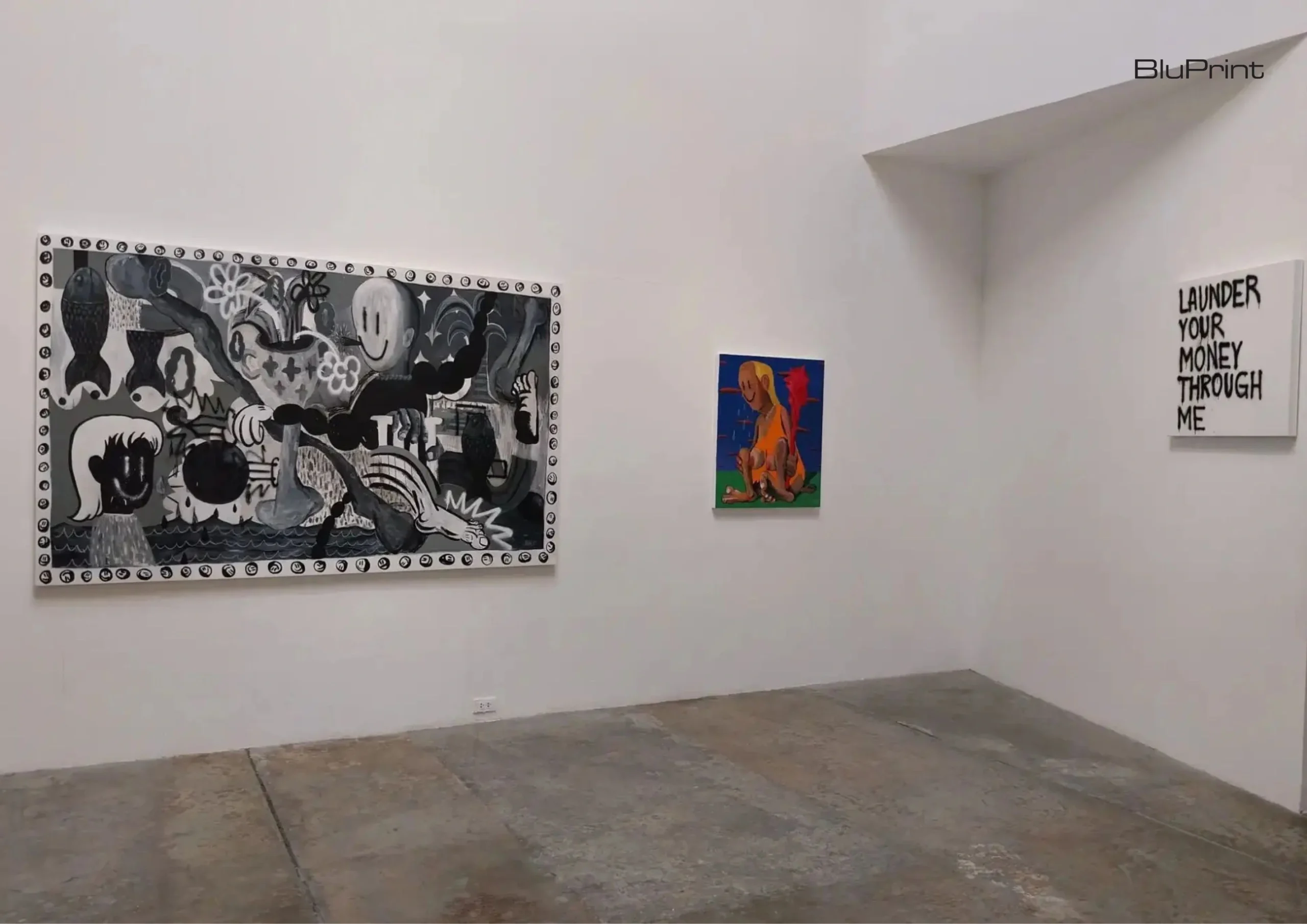
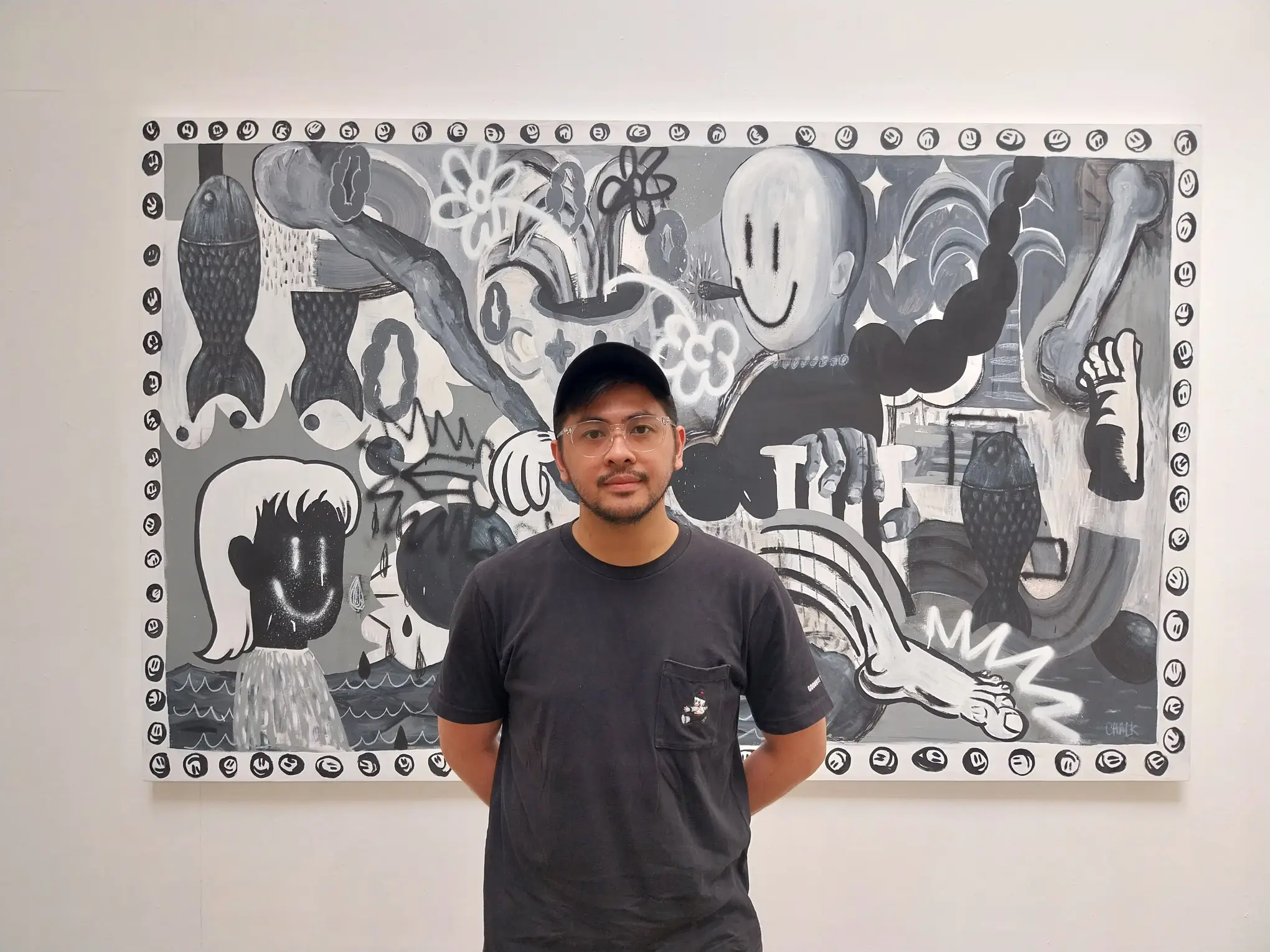
Artist Chalk Zaldivar has a lot to say about our institutions and how it affects the way we make and perceive art today in his recent exhibit at Vinyl on Vinyl, State of the Art. While it is a tongue-in-cheek exhibition with some silliness imbued in the artworks, there’s also a sense of righteous disdain to some of the practices found in the art world today, locally and internationally.
Artist Chalk Zaldivar in front of one of his paintings for “State of the Art.”
“Me, I like making concepts, making ideas for each show,” Zaldivar said. “So for this show, parang ‘wait, ano kaya, let’s poke fun at the whole industry.’ Since there’s a veil of seriousness and pretension with the whole art [scene].”
“It seems fun to talk about, you know, but no artist is willing to cross the line,” he added. “So since no one’s talking about it, [I] might as well add it naman din. And at least it creates conversation about the topic, makes people reassess it.”
Advertisement
Broad, Colorful Satire
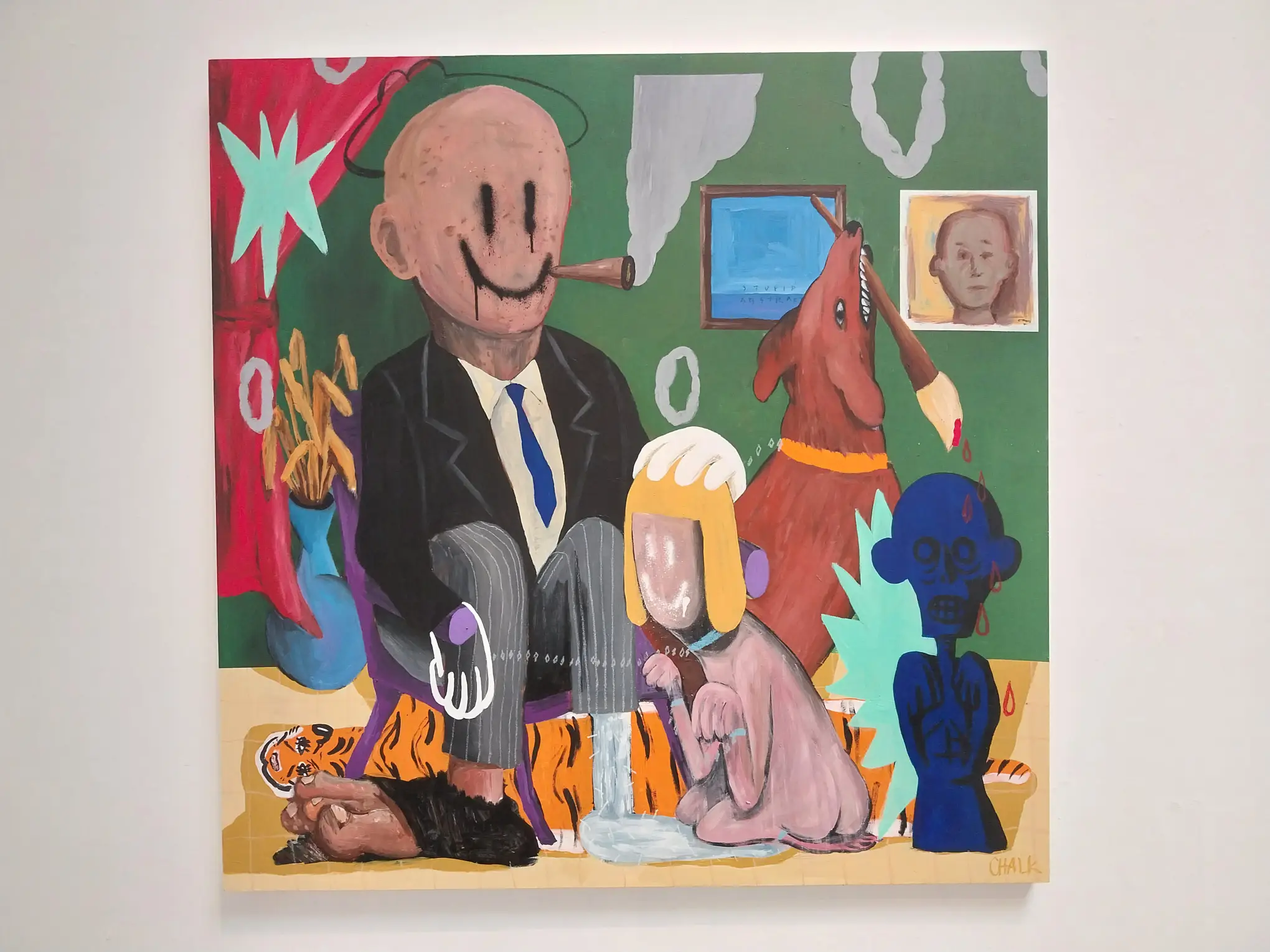
The ten or so works that Chalk Zaldivar made for State of the Art appear to have a blunt sharpness in their satire. Most of the paintings are colorful, vividly deploying Zaldivar’s signature mix of broad cartoonish gestures and sprayed-on smiley faces to discuss the ideas surrounding the exhibit.
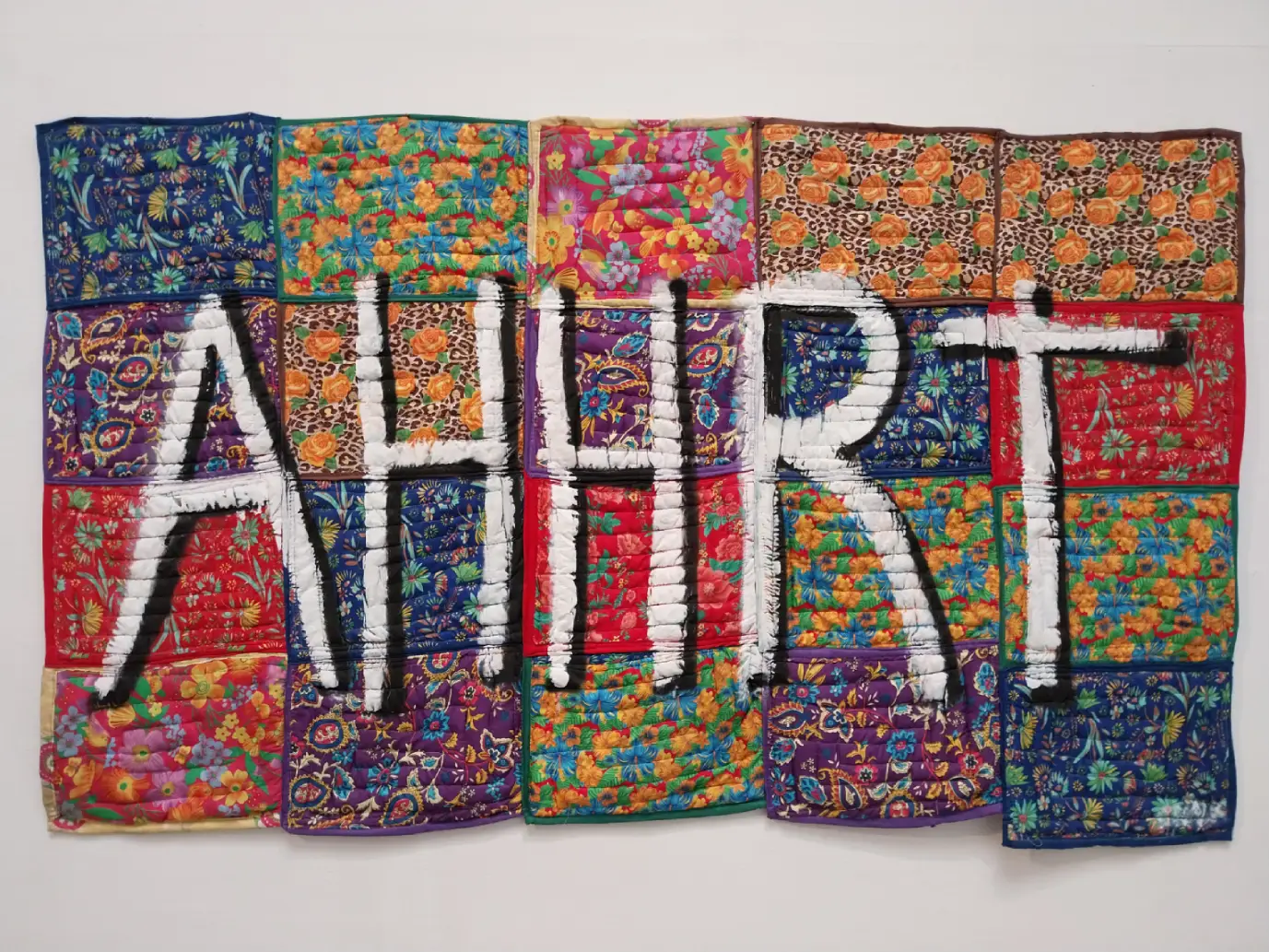
For Zaldivar, the cheekiness of the works are the point. One artwork, “Basahan,” finds the artist assembling and sewing together cheap rags with flowery designs used for household chores and then painting the word “AHHRT” over it. It’s a commentary on trendchasers, and the tendency of some people following what’s popular instead of cultivating their own style.
“Basahan” by Chalk Zaldivar.
“It’s more of an observation [of the trend of textile art]. The trend is going big. And with trends of course, maraming sobrang galing; madami din na, you know, they’re in it for the trend also. Me as an artist, parang gusto ko ding sumali sa trend, itong wave ng textile art. So what better way to [than] using basahan; it’s a mockery of [the idea of] me making a textile work.”
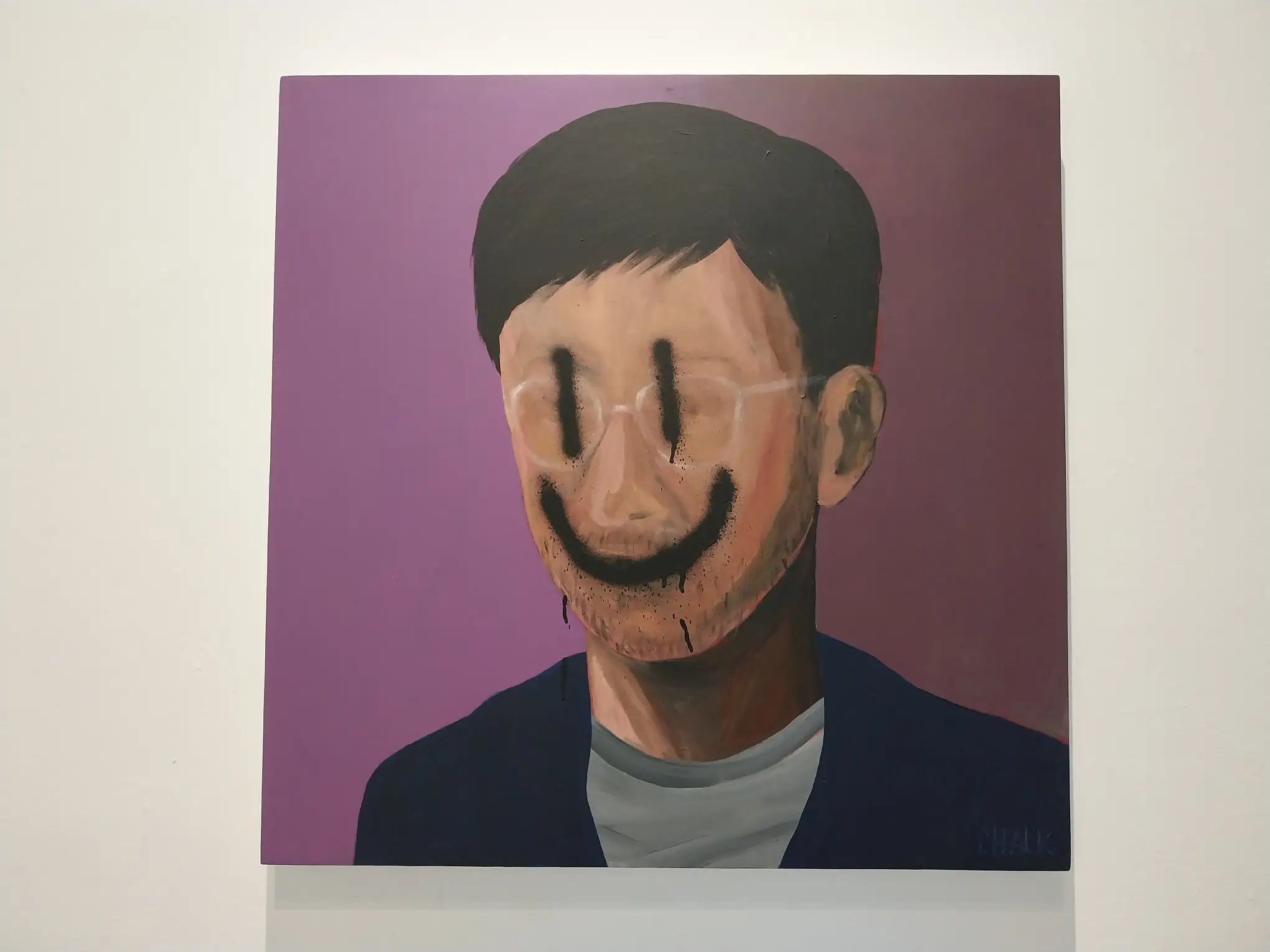
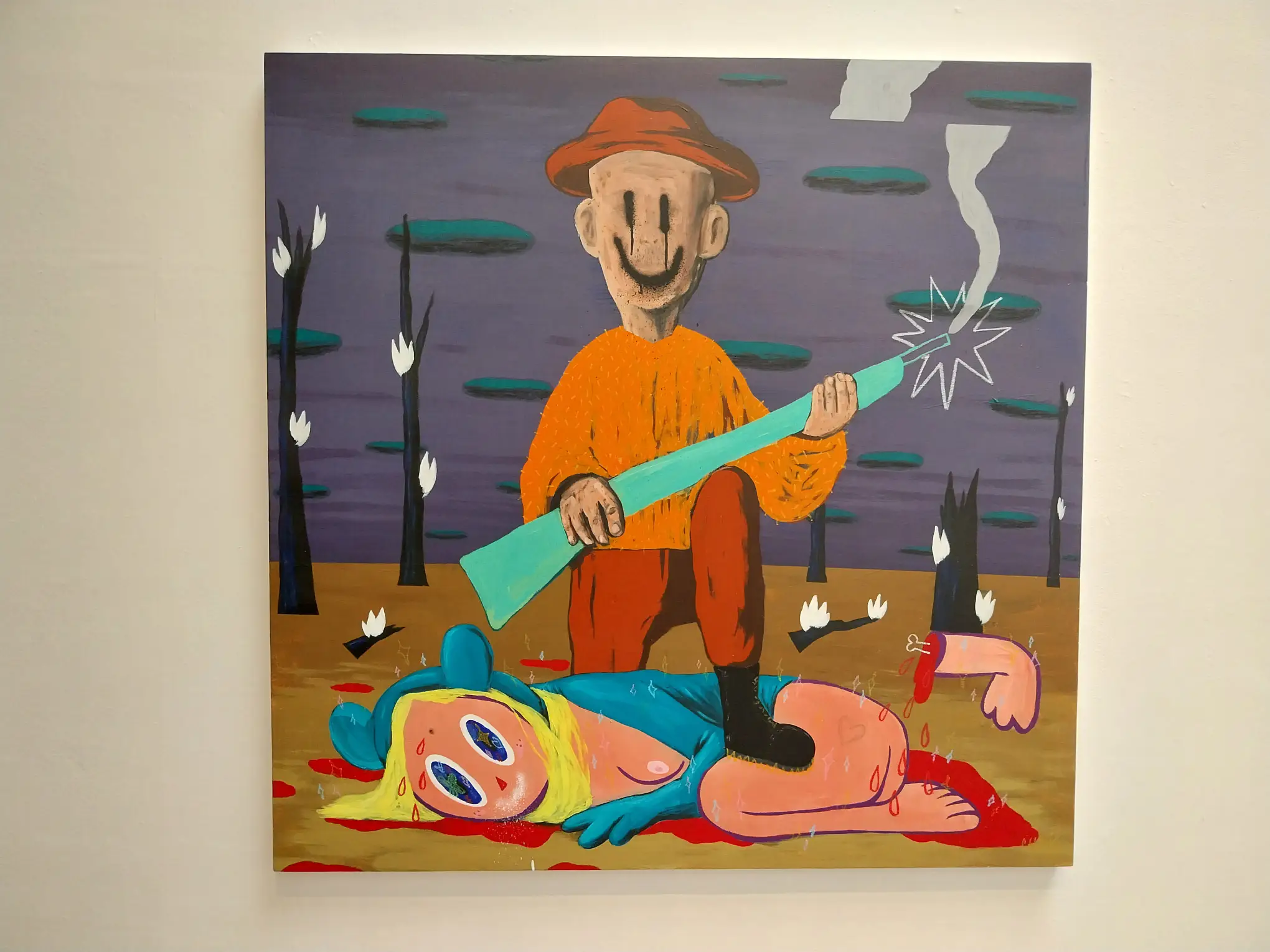
A lot of the satire throughout State of the Art is that blunt. From “Allow Me to Manage Your Art,” which shows a person in a suit surrounded by a collection of artworks, to “The Death of Cutesy Art,” which shows a decapitated corpse of an animal-person hybrid as a hunter stands over it, Chalk Zaldivar cycles through different corporate art trends with the glibness of a Bugs Bunny cartoon.
Advertisement
How Does Money Affect the Art We Love?
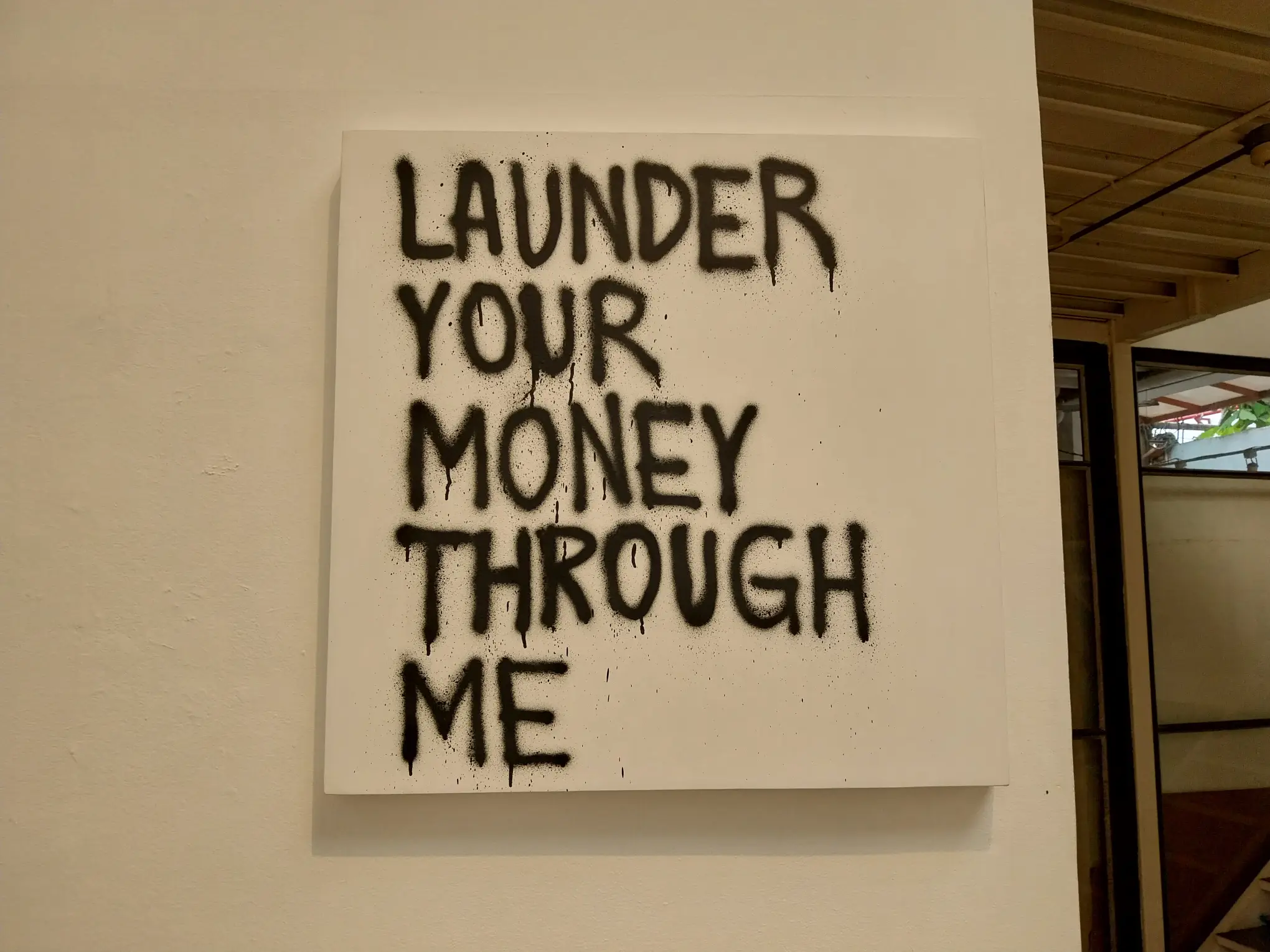
Possibly the most pointed satire in all the paintings is “LYMTM,” an aerosol-on-canvas piece where Zaldivar sprays “Launder Your Money Through Me” in giant black letters on the canvas. It’s the simplest and bluntest work in the exhibit, one that attacks the inaccessibility of artworks for a broader mass audience.
“Financially, parang maraming ways naman to go around with art,” Zaldivar said. “Some buy it, buy it as a business expense, ganyan; to avoid taxes, ganon. Yung iba dirty money: they buy your art, then years later they sell it, and that’s how the money gets cleaned.”
“LYMTM” by Chalk Zaldivar for his exhibit “State of the Art.”
Carlomar Daoana, who wrote the exhibit write-up, added that the financial component of the art world “robs other collectors of the opportunity to purchase works of artists they sincerely love at fair prices.” It becomes less about appreciating the artworks, he said, and more about profit and the prestige of making money with those prices.
Advertisement
“When wealthy individuals with no taste start dipping their toes into the art world, then you are pretty certain that most of the works they buy will end up in storage, only to be seen again when they decide that the market is ripe for it,” Daoana said.
Gatekeeping Prestige
Included in the exhibit are three glass plaques called the “TAA 2025,” which is short for “Tropahan Art Awards.” In there, Zaldivar’s satire is aimed at other artists, on the idea of the pursuit of validation from different institutions to be able to make a living with their works. How do artists adjust their artworks to find that validation from the gatekeepers of society?
“There’s a prestige with artists and institutions giving awards,” he said. “What does this all mean? What does a plaque signify? What does an award tell you?”
Advertisement
Zaldivar observed from the way his friends have received awards that the artists who become famous require more luck, opportunities, and their industry connections rather than the quality of the artworks themselves. He clarified that this did not mean that an artist is undeserving of an award, but it does mean that those who are vaulted to such prestige are less.
“It’s funny, [the] relationship ng artists [to the] awards na nakukuha nila, to the institutions that gives them. Because it’s important to some artists, [because it’s] how they make a living out of it. And what does an award really mean: nagbabago ba ang process natin? Nagiging mas financially free ba tayo when we get this? Do collectors flock to the people, to the artists that are given awards to? It’s funny lang, the whole dynamic of the systems involving award giving.”
“Mediocre Artist, Puro Smiley” by Chalk Zaldivar.
Going Beyond Institutions
State of the Art does showcase an art world more obsessed with prestige than craft. And yet, a tenor of hope exists within the exhibit, which is that, whether within the system or outside of art, the kind of art that speaks to you continues to endure anyways.
Advertisement
For example, while mocking trendchasers for textile art, Chalk Zaldivar expressed his admiration for the people who really work with the form to show their creativity at work. “The really good ones, ang intricate ng process nila when it comes to this form of art,” he commented.
“The Death of Cutest Art” for “State of the Art.”
And Daoana added that regardless of how assimilated an artwork is in the mainstream, it can still commentate on that world even then. “I don’t think that an artwork’s potency diminishes when it integrates into the nebulous financial realm. With its discursive capabilities, an artwork can potentially critique the space that seeks to contain it,” he said.
In the end, State of the Art assesses the shortcoming that money and prestige puts in the art world, while still recognizing the amazing craft and creativity at the center of every creation in this world.
Contemporary design refers to the constantly evolving design trends of today. With the power to design our built environments, architects have been experimenting with various architectural approaches. Whether that is through unconventional forms or the integration of smart technologies, BluPrint lists down Filipino architects who are defining contemporary architecture. Deo Alam Architect Deo Alrashid Alam […]
In the Philippines, adaptive reuse gained traction during the 1970s with the rise of conservation and environmental preservation movements. It offered an architectural solution that reuses existing spaces to fit modern needs. Across the country, several projects demonstrate how this approach is being applied—transforming heritage structures into active spaces for culture, hospitality, and community life. […]
From residential spaces to civic structures, lighting dictates the mood of a space. It controls the visual dynamics of an interior, serving as a guiding tool that highlights key design elements, including materials and textures. Related Reading: Lampscaping: How to Light up Your Home like a Pro Regulating the Mood: Natural and Artificial Light in […]
More and more Filipinos are flocking to condominium communities. Often tucked within busy city centers, condo living acts as a small respite from urban chaos. Faced with the challenge of transforming a cramped condominium into a warm living space, BluPrint lists condo interior design ideas that can maximize each square foot of small spaces. Purposeful […]
Modern bathrooms are no longer purely functional spaces. Increasingly, they are being designed as environments that support cleanliness, ease, and quiet restoration within the home. As daily life becomes more demanding and health awareness continues to rise, homeowners are beginning to expect more from the spaces where daily rituals begin and end. For architects and […]
From the moment a diner steps through the door, each detail shapes how a meal is experienced. Restaurant design has evolved, with architects and culinary professionals collaborating to create built spaces that are as intentional as the menu itself. The spatial atmosphere acts as an additional ingredient that can define the culinary experience. Taupe and […]