Bigkis is the act of binding. In Tagalog, the word can refer to something used to bind or encircle, as well as a bundle formed by tying several separate elements together. Figuratively, it can also mean a bond, union, or unity. The meanings move from the physical act of joining things together to the connection […]
Lorebert Maralita Explores Third World Labor in New Exhibit



Labor rights continue to be a touchy issue in the Philippines, especially with endo contractualization being a continuing problem. With Sambingay sa Ikatulo nga Kaibutan, or Parable of the Third World, artist Lorebert Maralita examines the plight of the working class with excellent crafted artworks observing their current situation.
This exhibit, showing at Altro Mondo Creative Space until October 5, centers around laborers. Whether it’s construction workers, farmers, or minimum wage earners, Maralita portrays their constant struggle to make ends meet and their continued survival against exploitation by the ruling class.
“Economics, in Maralita’s world, is not an abstract concept but a brutal reality,” the exhibit write-up by Kaye Oyek said. “[It’s] etched into the very fabric of life, shaping destinies and dictating fates.”
The Daily Grind of the Third World Worker
Lorebert Maralita’s exhibit is shaped by calendars, barriers, and bills that need to be paid. The different artworks utilize common pieces in the laborers’ daily grind, from face towels to construction tarpaulins to barbed wire.
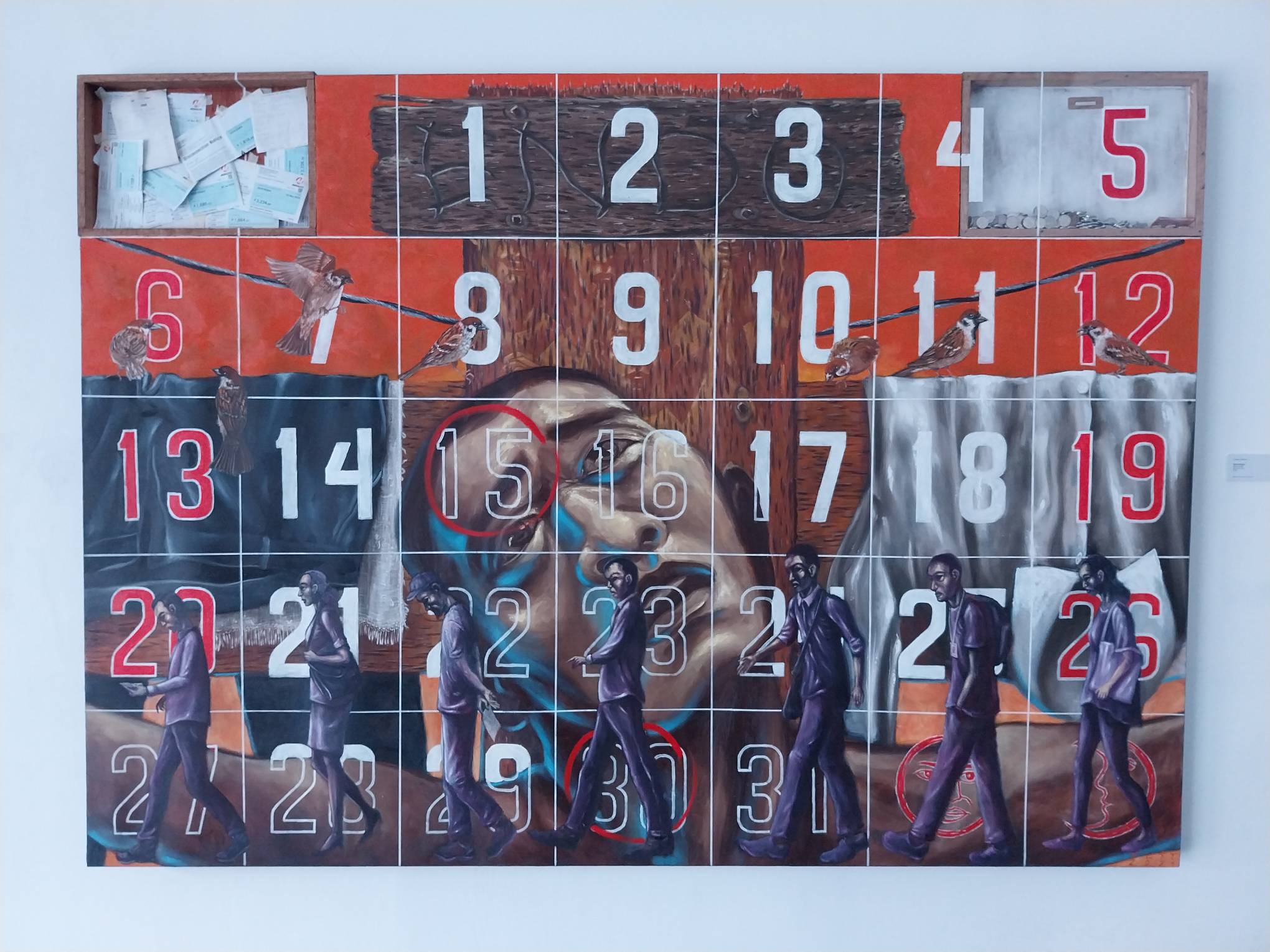
One prominent work uses a calendar to indicate the cyclical nature of hard labor for the working class. The 15th and 30th are prominently encircled in red, the background showing a man crucified with the word “endo” above their head. A pile of Meralco bills are stored on one side of the calendar.
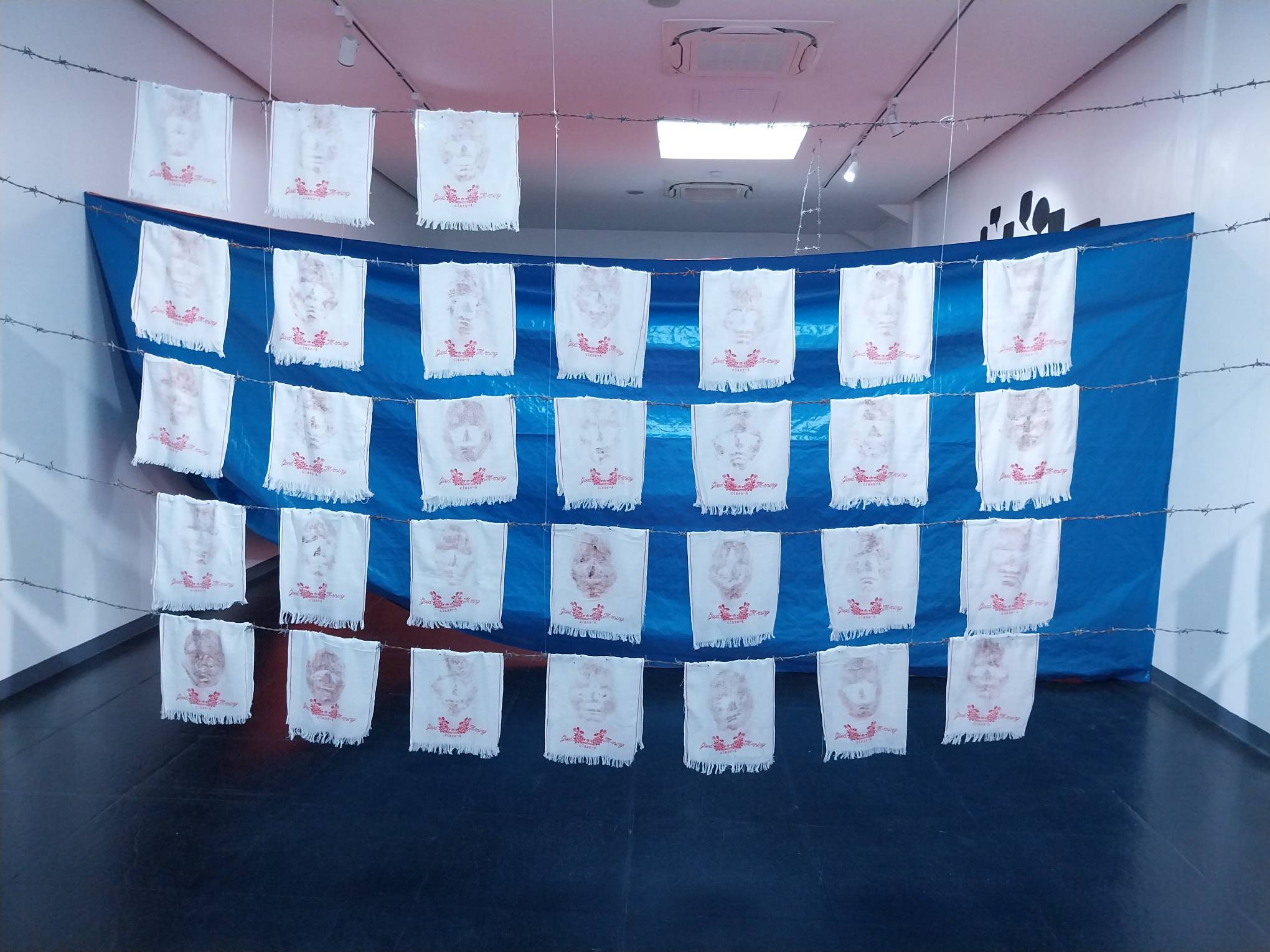
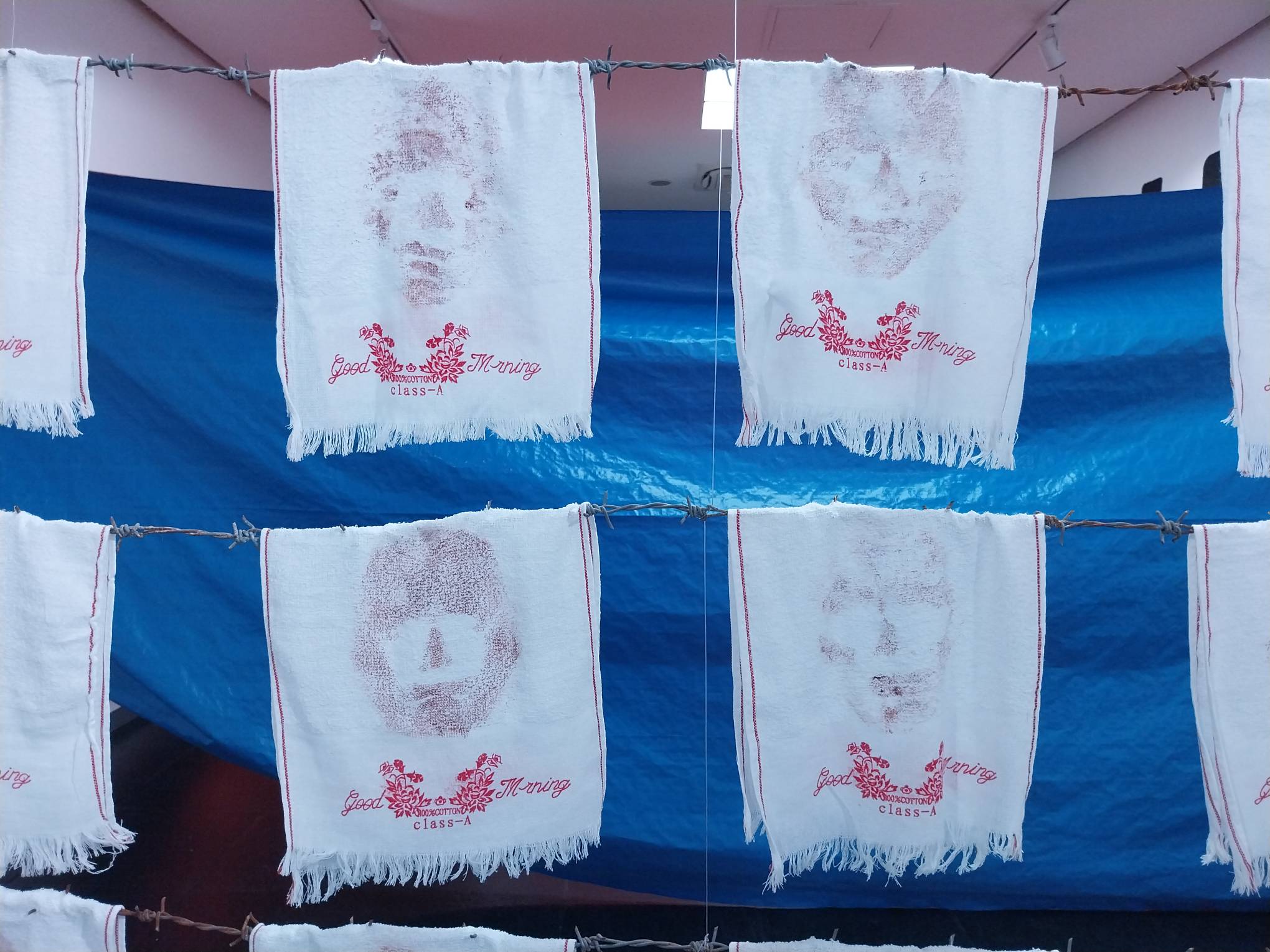
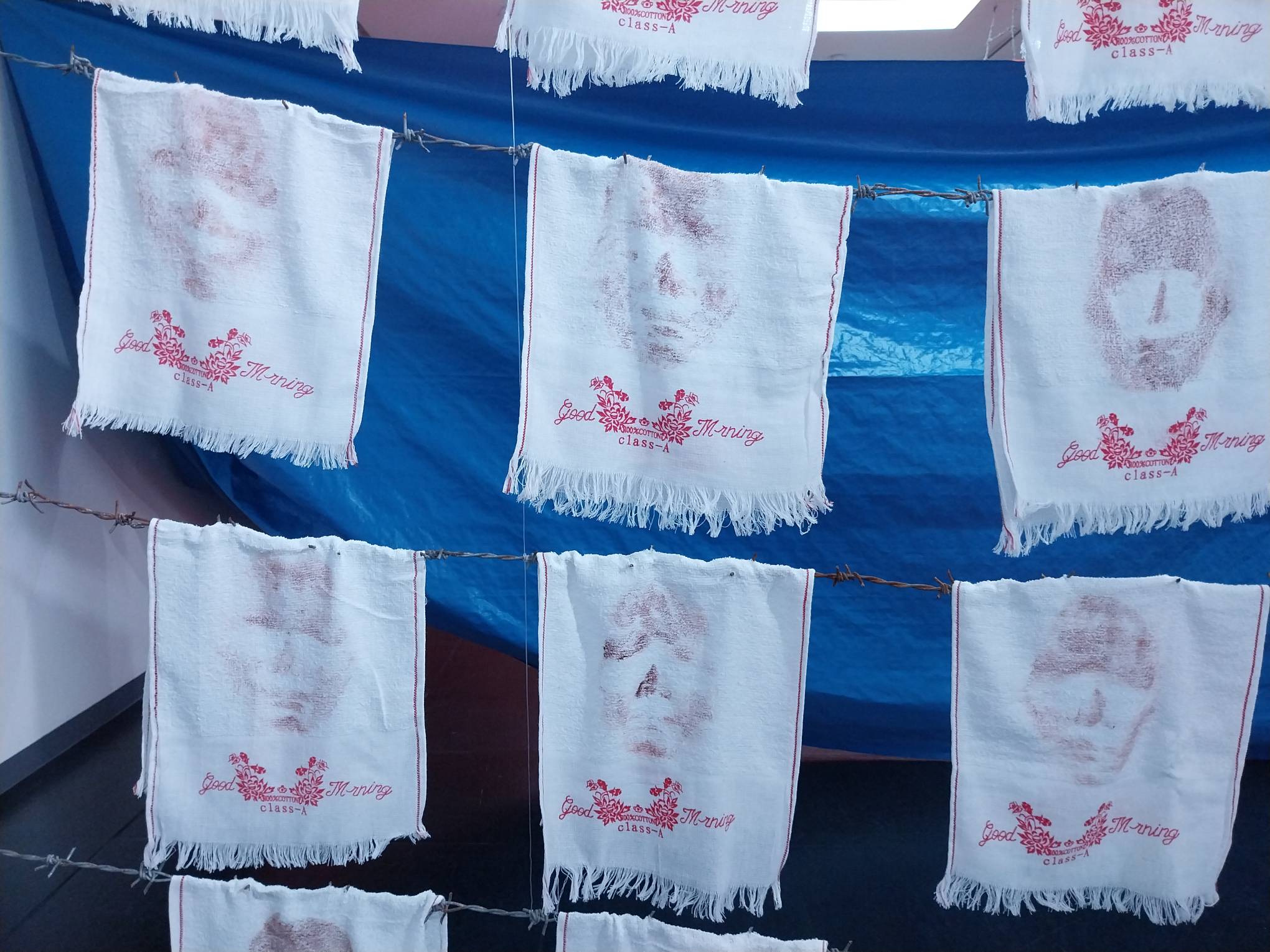
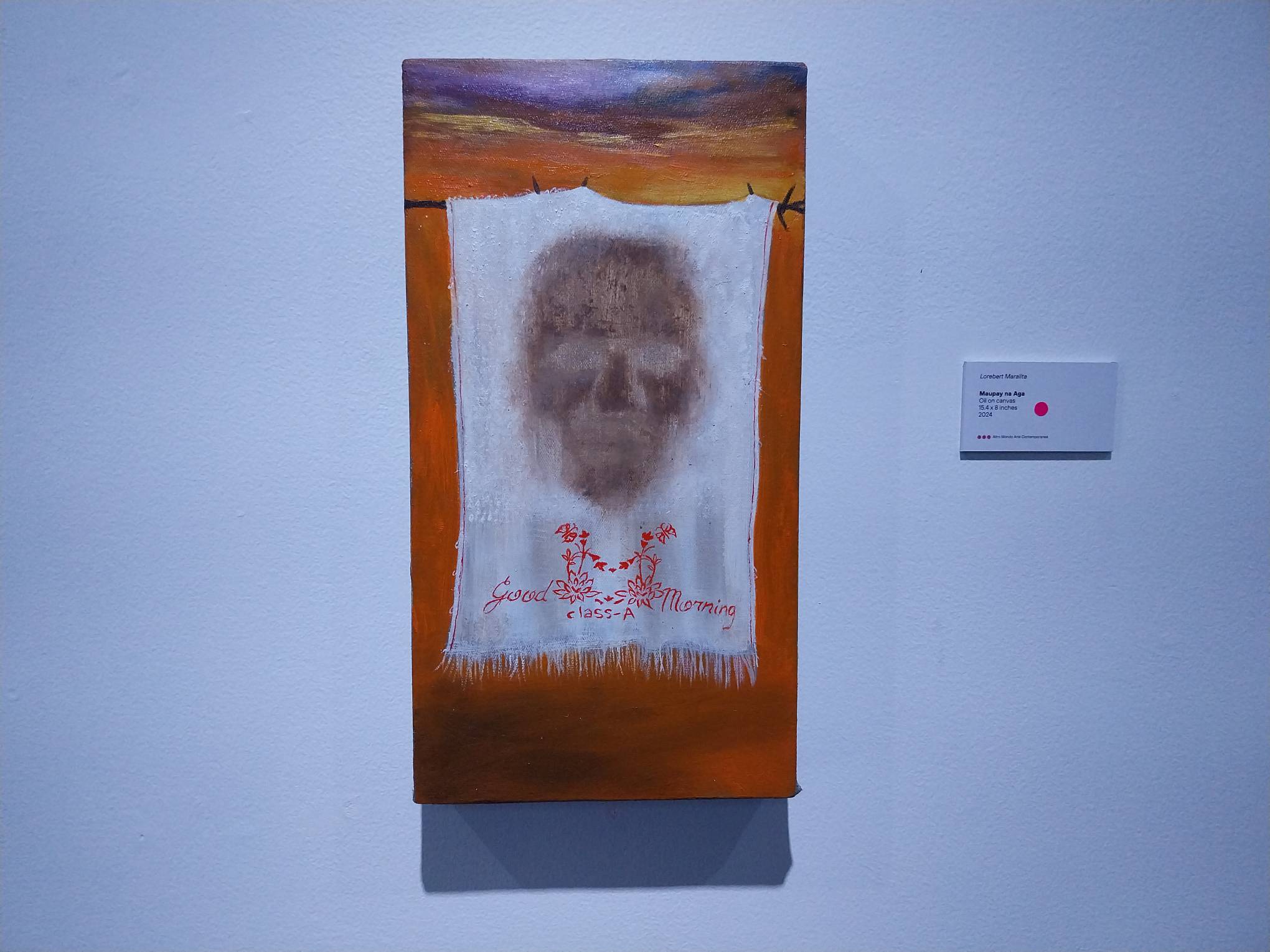
Barbed wire appears prominently in Maralita’s works for exhibit. One elaborately collects smeared faces on towels hung on rows of barbed wire. Another crafts a ladder-like sculpture surrounded by orange construction tarpaulins. These peek through just enough on one side to show a painted crowd of people with black speech bubbles hovering above them.
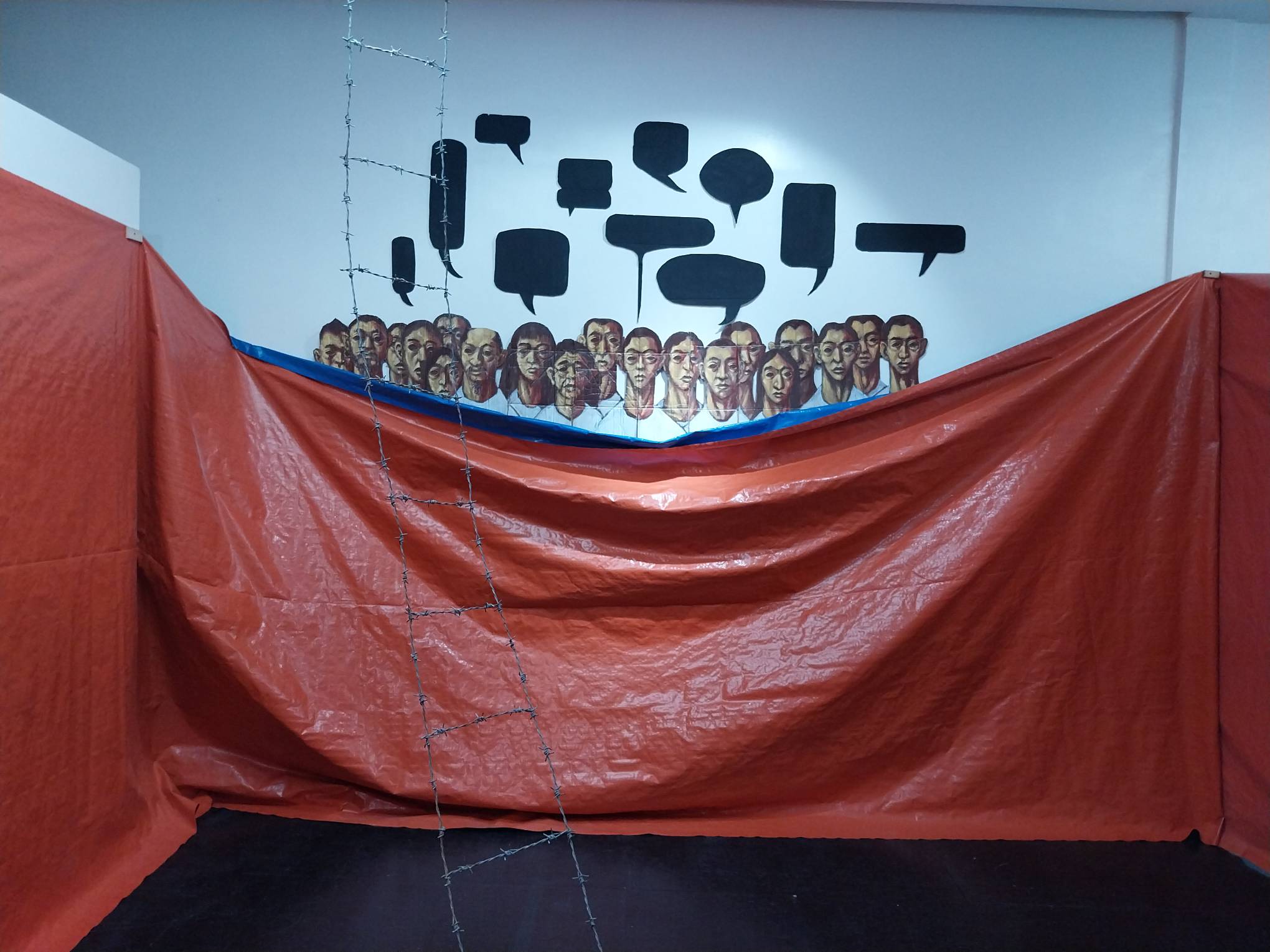
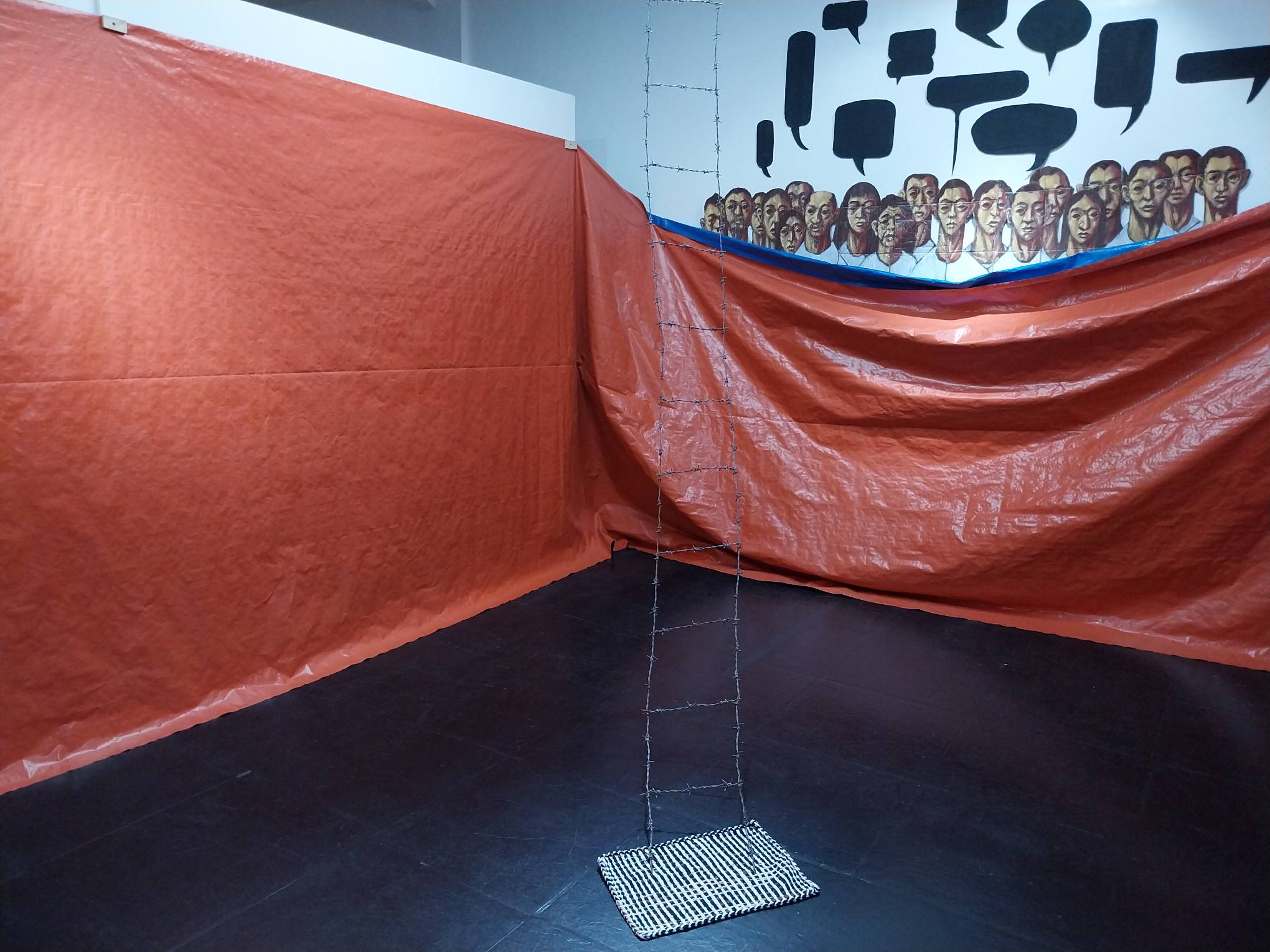
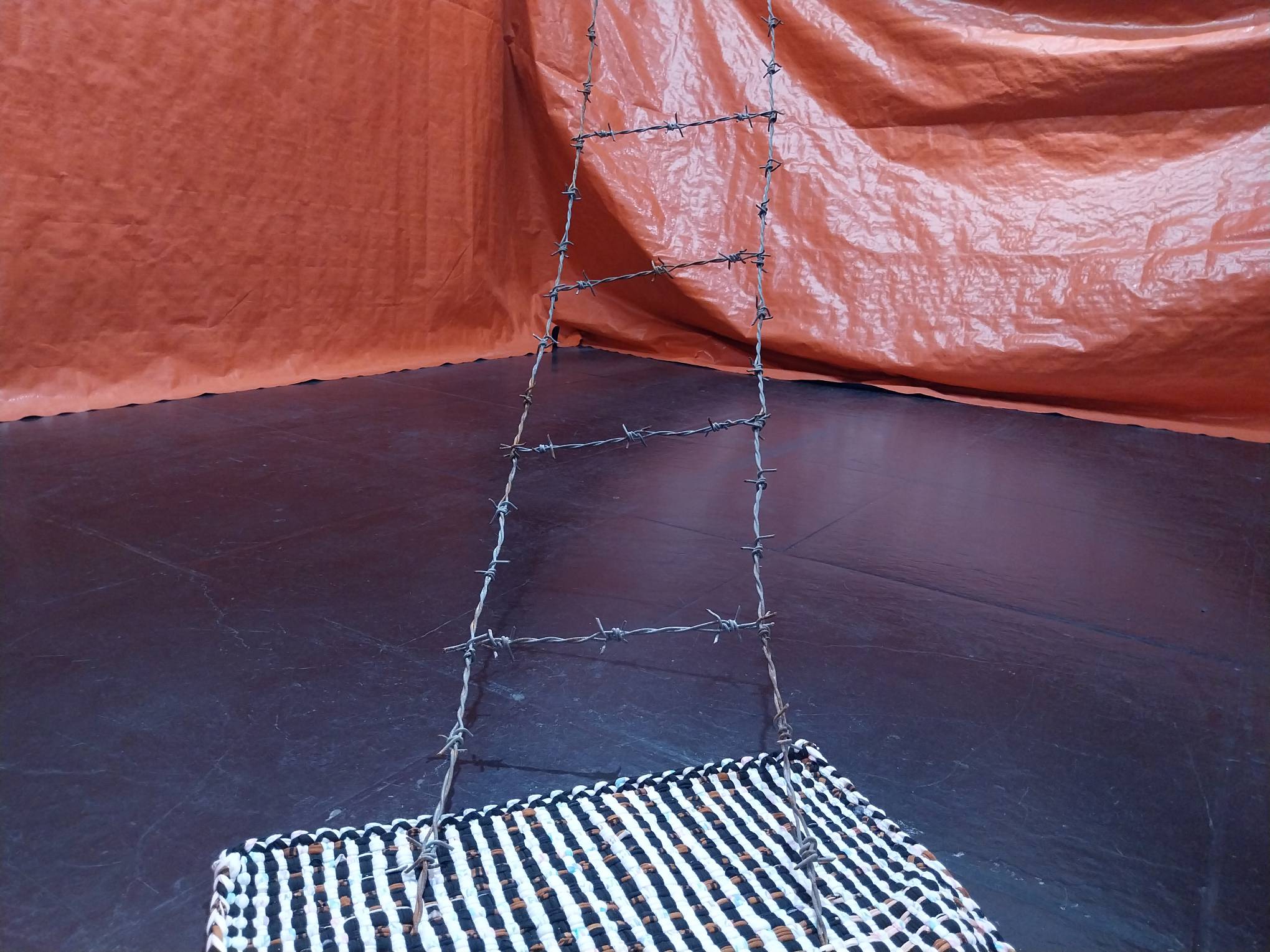
It reflects the strange pieces of punishment and reprieve that define the day-to-day lives of laborers. Always, a push-and-pull of carrots and sticks exist to keep them in line with what their companies want from them.
“Birds and barbed wire weave through the compositions, symbols of freedom and confinement, hope, and despair. Laborers’ blood, sweat, and tears are not just metaphors; they are almost tangible, transferred onto a Good Morning towel like a modern-day Shroud of Turin,” Oyek wrote.
Rediscovering The Dignity of Labor in Undignified Times
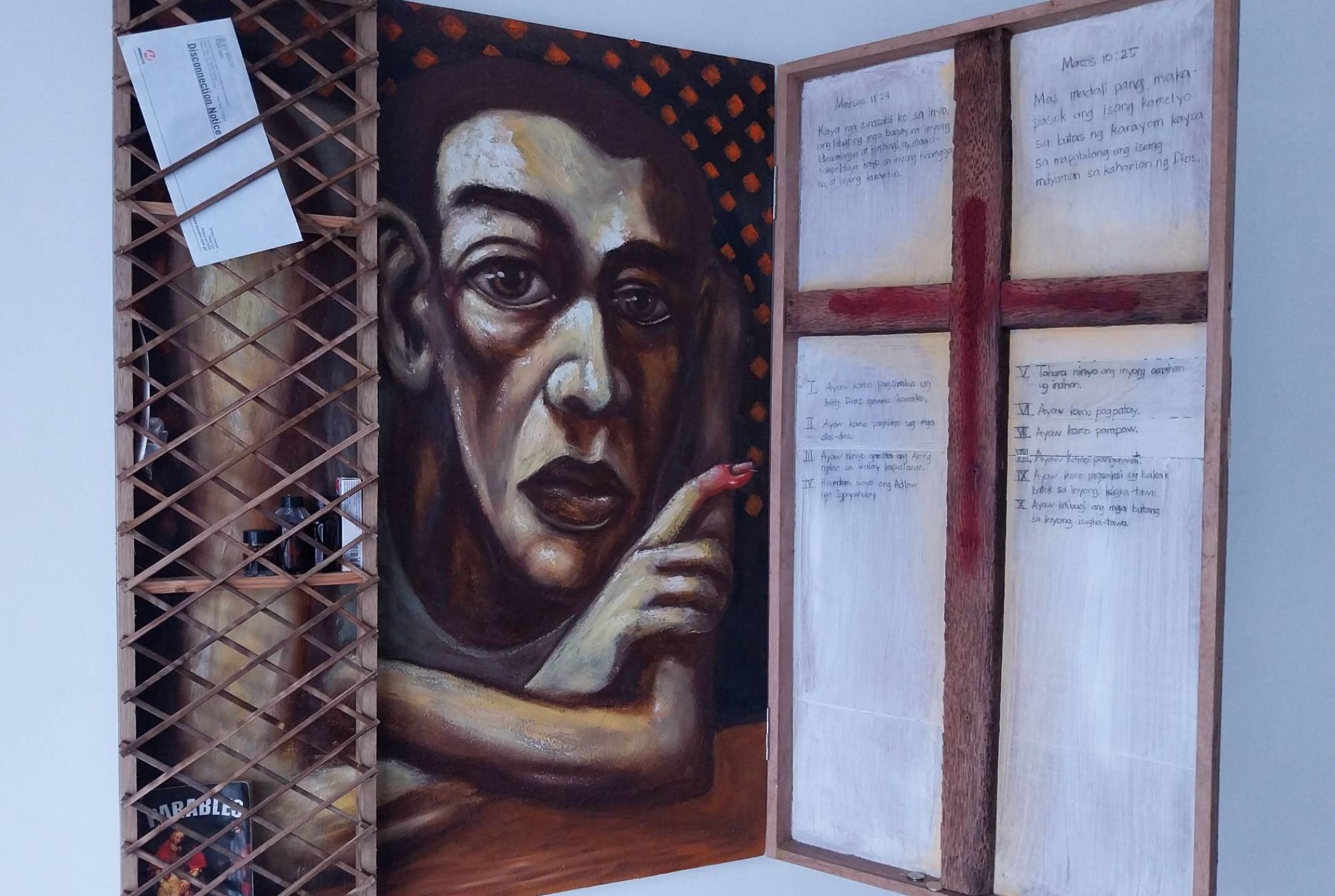
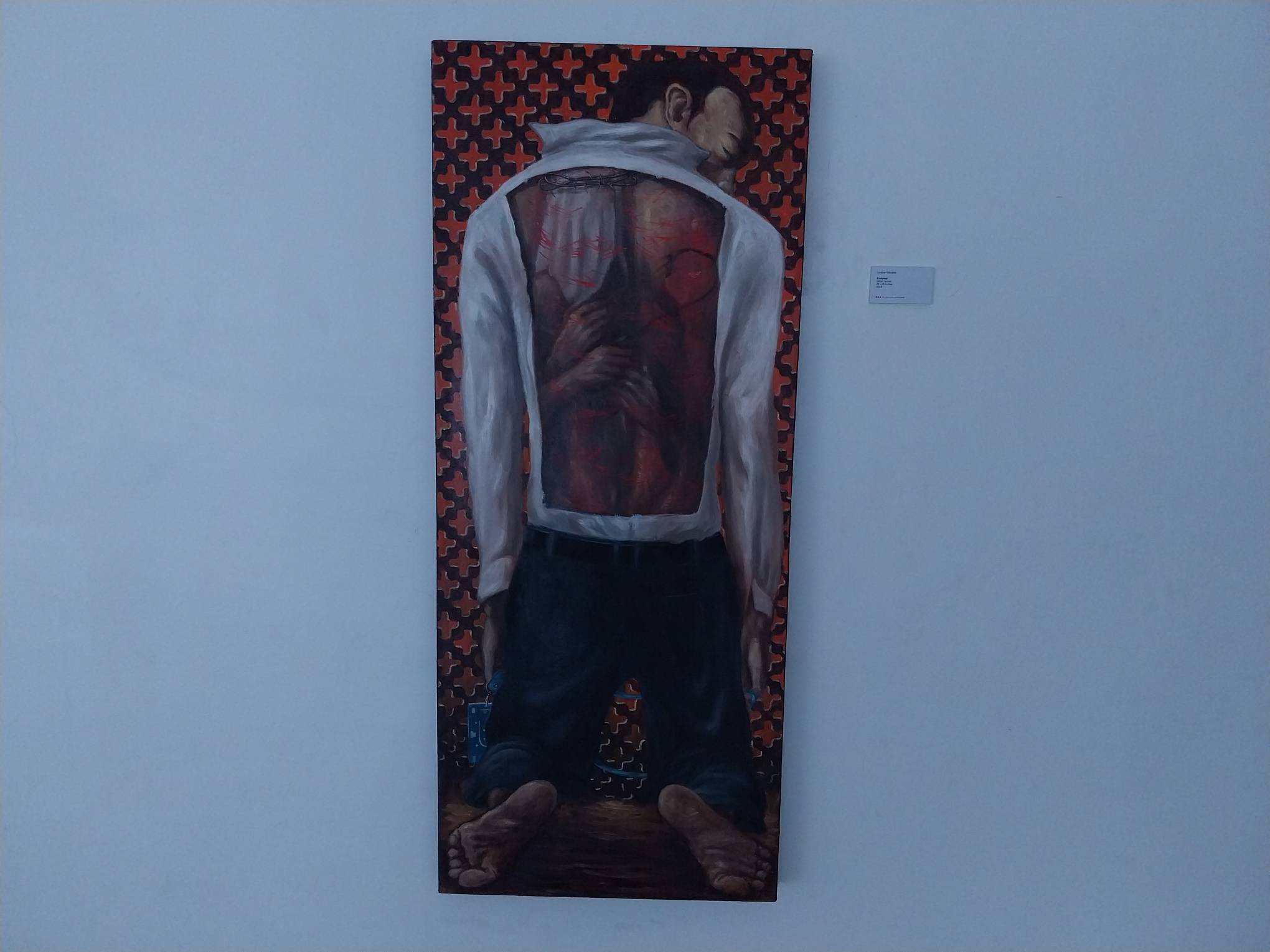
For much of Sambingay sa Ikatulo nga Kaibutan, Lorebert Maralita applies religious or Biblical imagery to highlight the sacrifice of the working class. According to Oyek, the artist does this as a way of emphasizing the laborers’ continued vulnerability in our systems. Instead of relying on systems rife with injustice, they rely on religion as a way of finding hope in their situations.
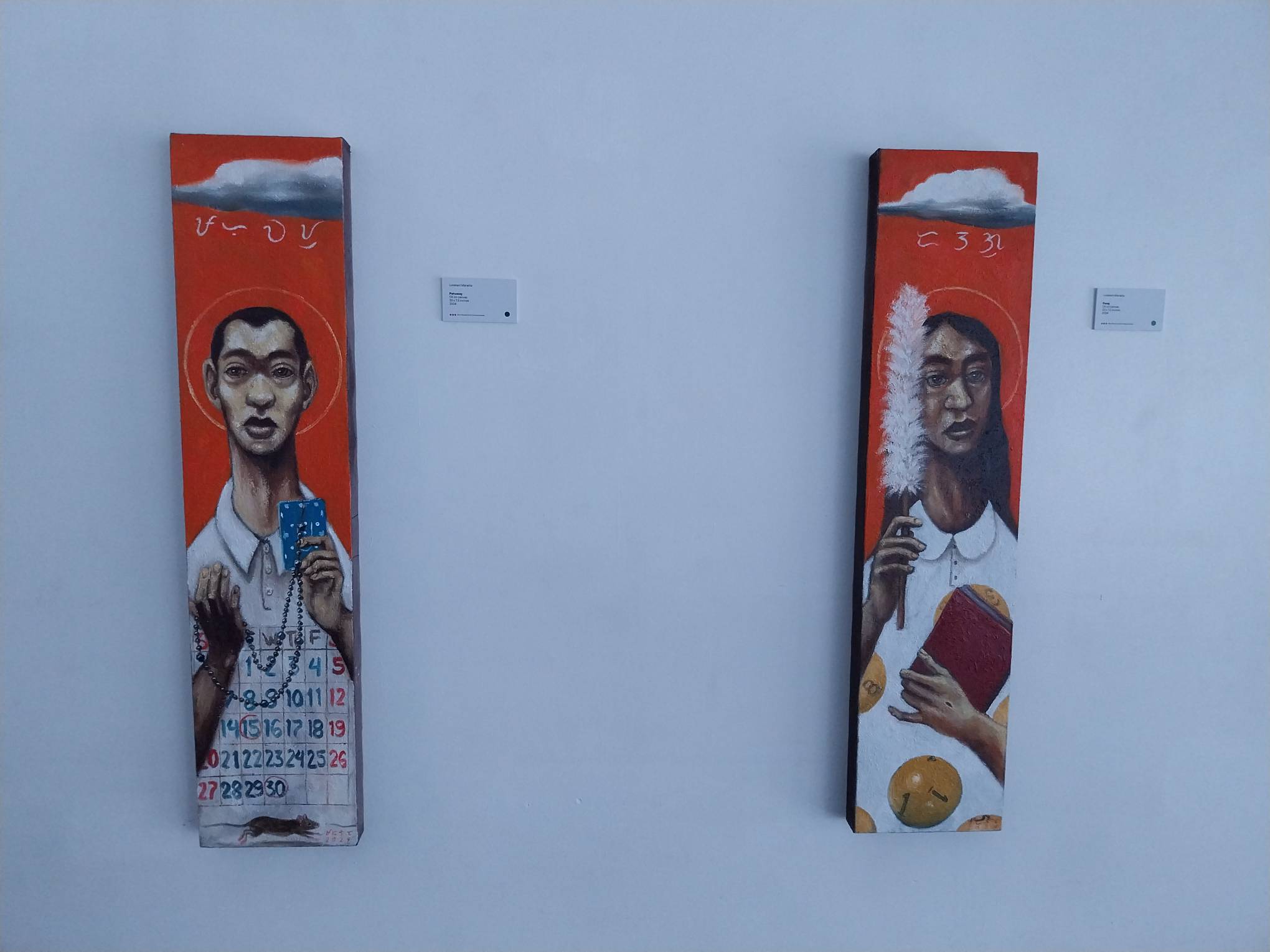
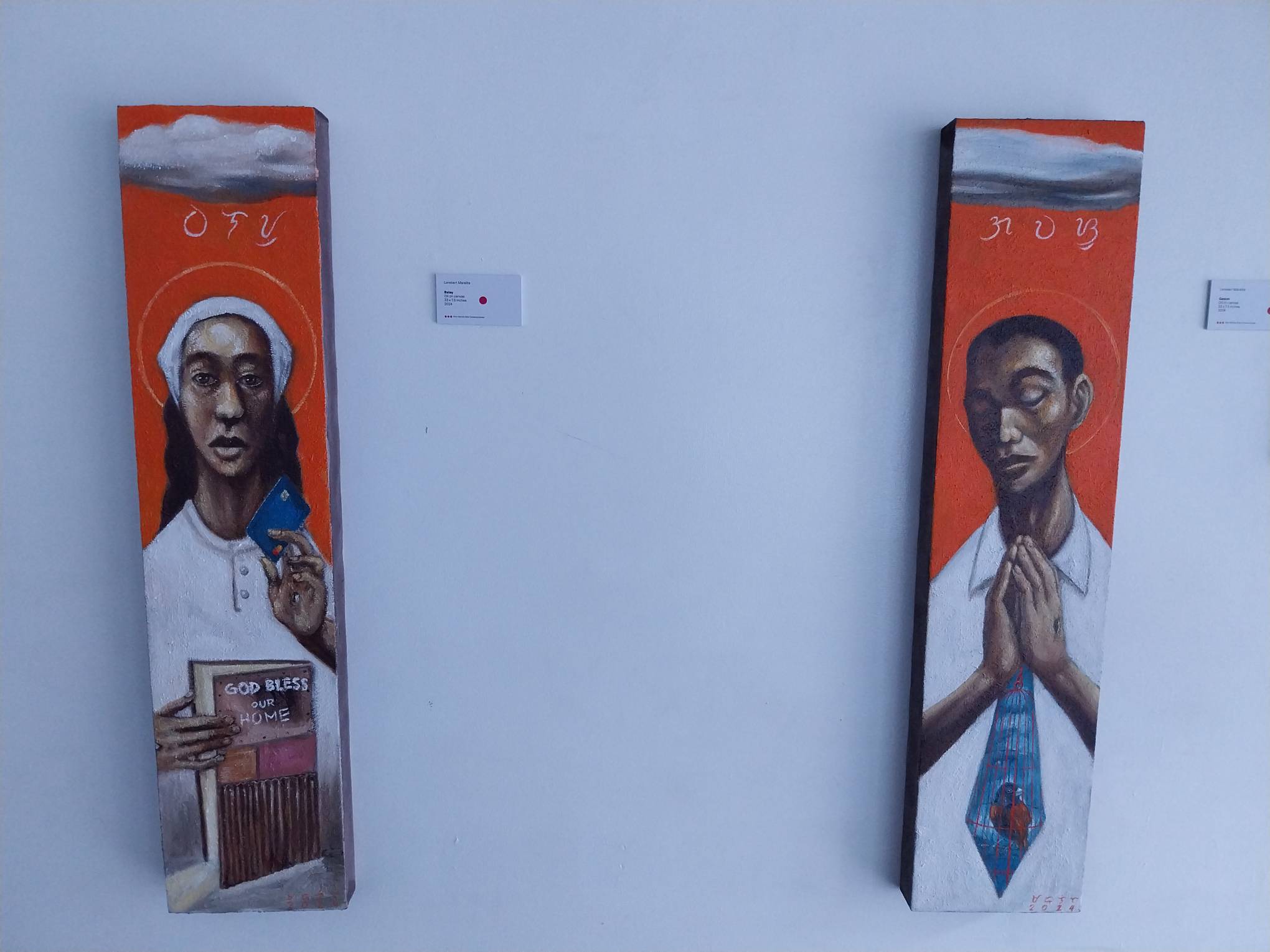
Multiple paintings have workers and students posed as saints with halos above their heads. They hold various paraphernalia that remind viewers of their working class origins—dusters, student IDs, lotto balls. Their canvases are shaped to remind one of the colorful slitted windows in churches.
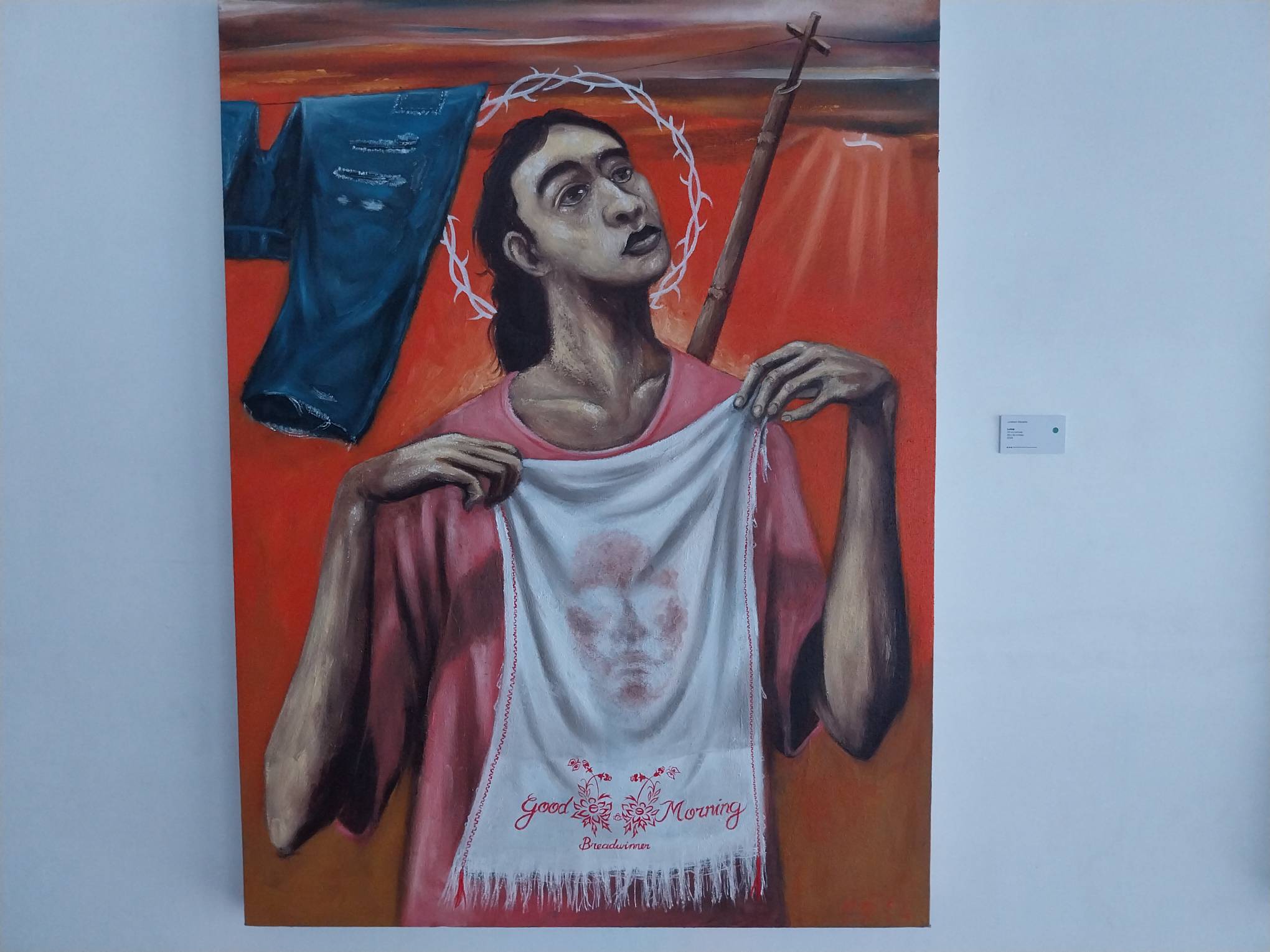
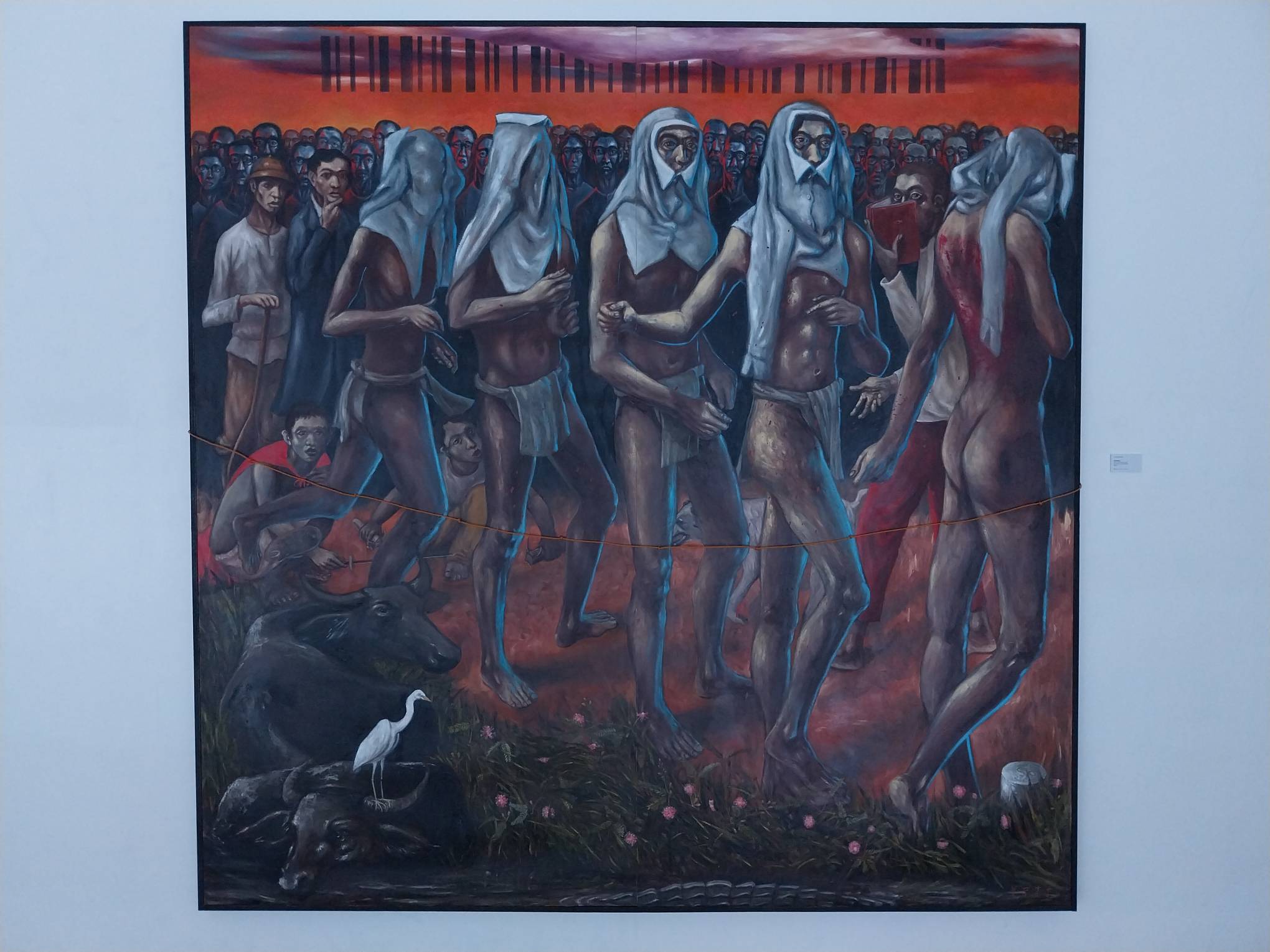
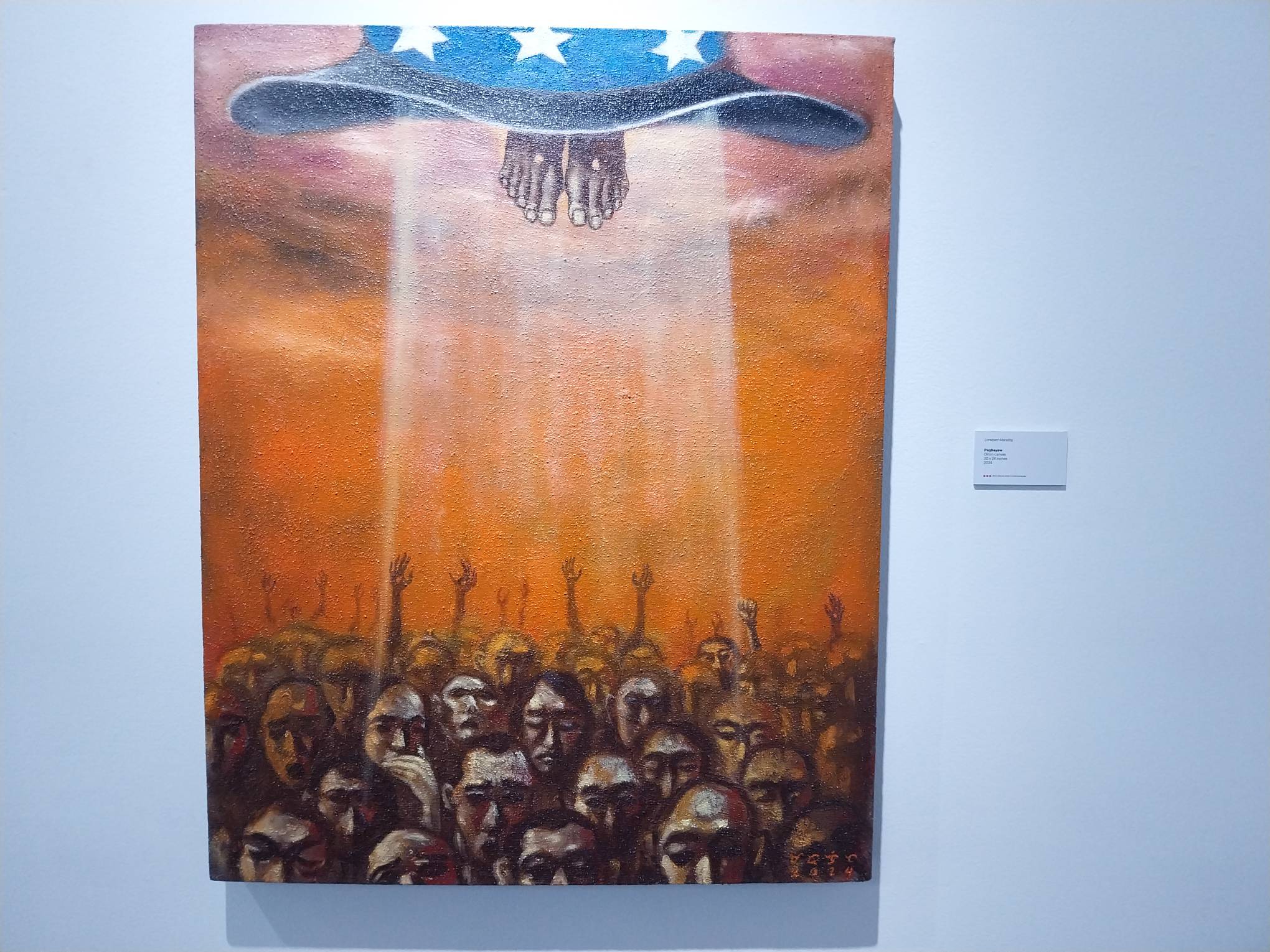
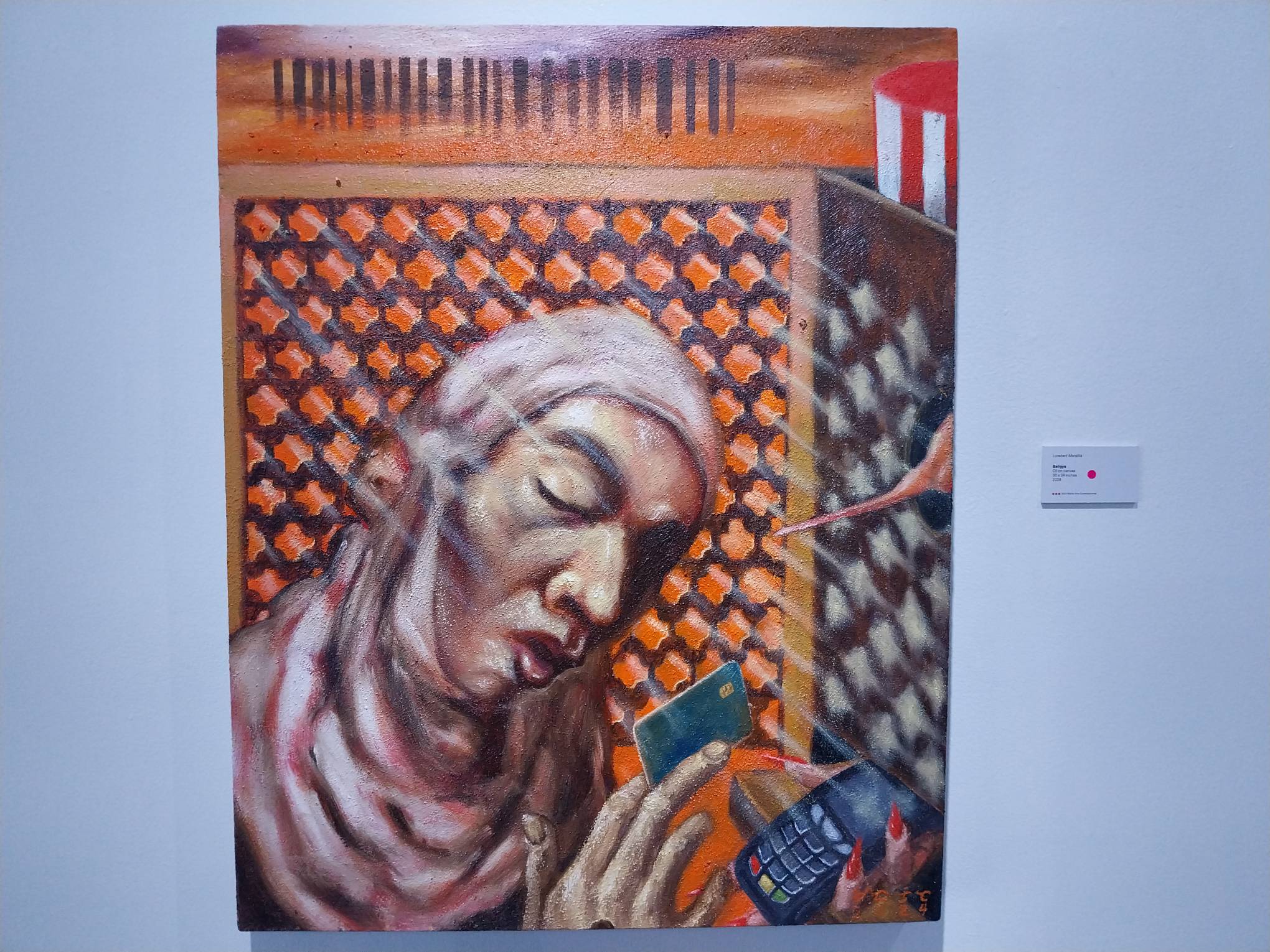
One painting, “Lutop,” has a person holding up a face towel look up in reverence as a crown of thorns appears behind them. Another painting, “Pagbayaw,” has a crowd of people looking up at a floating, Christ-like figure wearing an American-coded robe. “Sambigay,” meanwhile, finds us looking at a line of workers with covered faces and near-naked bodies walking in procession.
Labor is Not Sacrifice
The contrast of religious imagery applied to people in dire straits creates a juxtaposition that probes the meaningfulness of the “sacrifice” these working class folks live through day-by-day. It reminds viewers that these are people, not symbols, with needs, rights, and desires that are overlooked by the system as a whole.
“Maralita enjoins us to confront the realities we often overlook,” Oyek wrote. “[He’s] using his art to remind us that behind every statistic, there is a story, a life, a parable waiting to be told…”
Sambingay sa Ikatulo nga Kaibutan empathizes with the plight of the working class, people who live paycheck to paycheck in a bid to survive an exploitative world. Lorebert Maralita implores viewers to see these workers as people, and help move us away from such exploitative systems that entrap these people today.
Photos by Elle Yap.
Related reading: ‘Alburoto’: Recontextualizing Labor Rights as a Women’s Issue
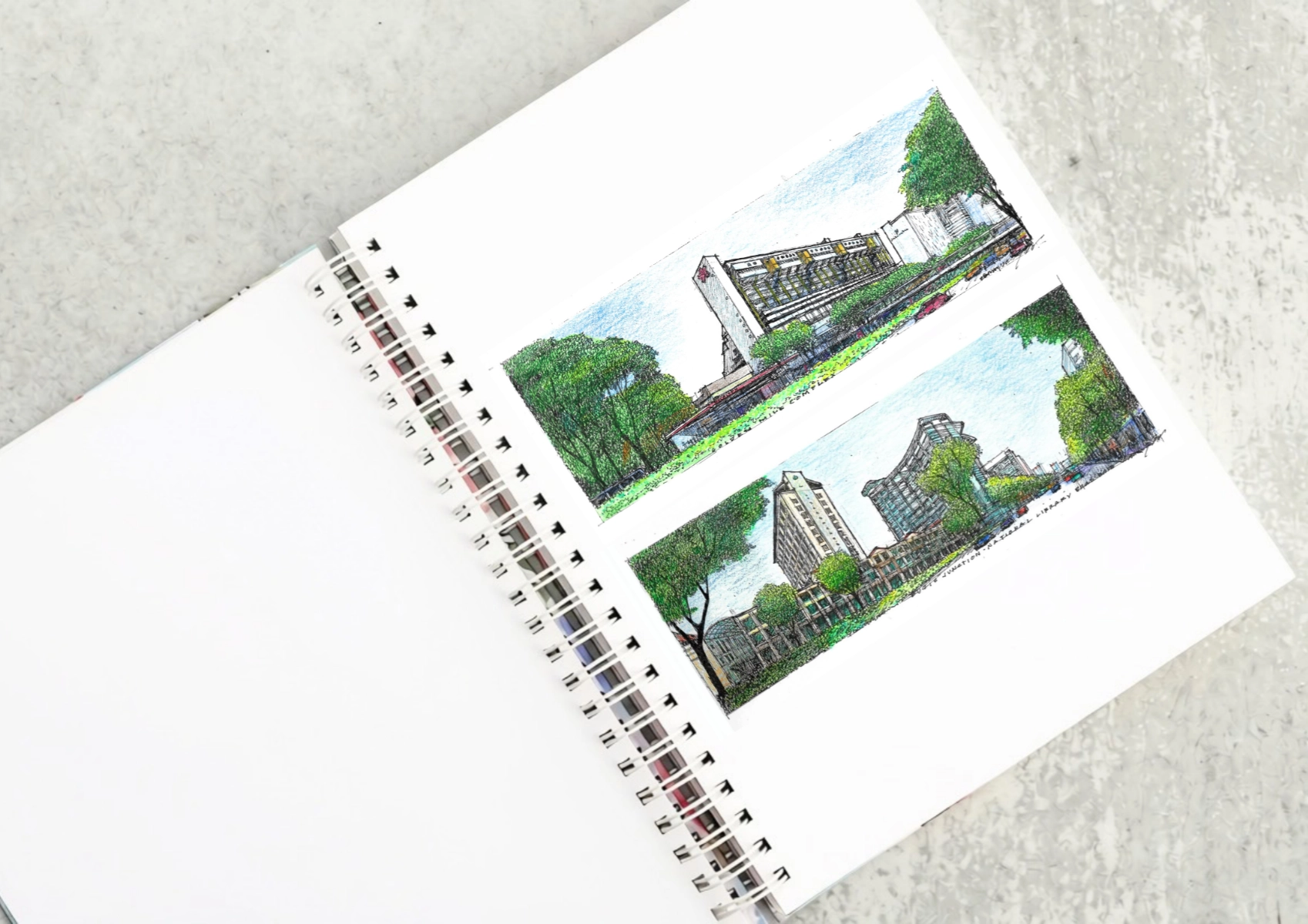
Two sketches of Singapore connect BluPrint Editor in Chief Paulo G. Alcazaren’s personal and professional history with Shared Ground: ArchitectureArchitectureThe art and science of designing and constructing buildings, structures, and spaces that are functional, safe, and aesthetically pleasing. It encompasses the planning, design, materials, and techniques used to createGo to Architecture Glossary of Care, Culture, […]
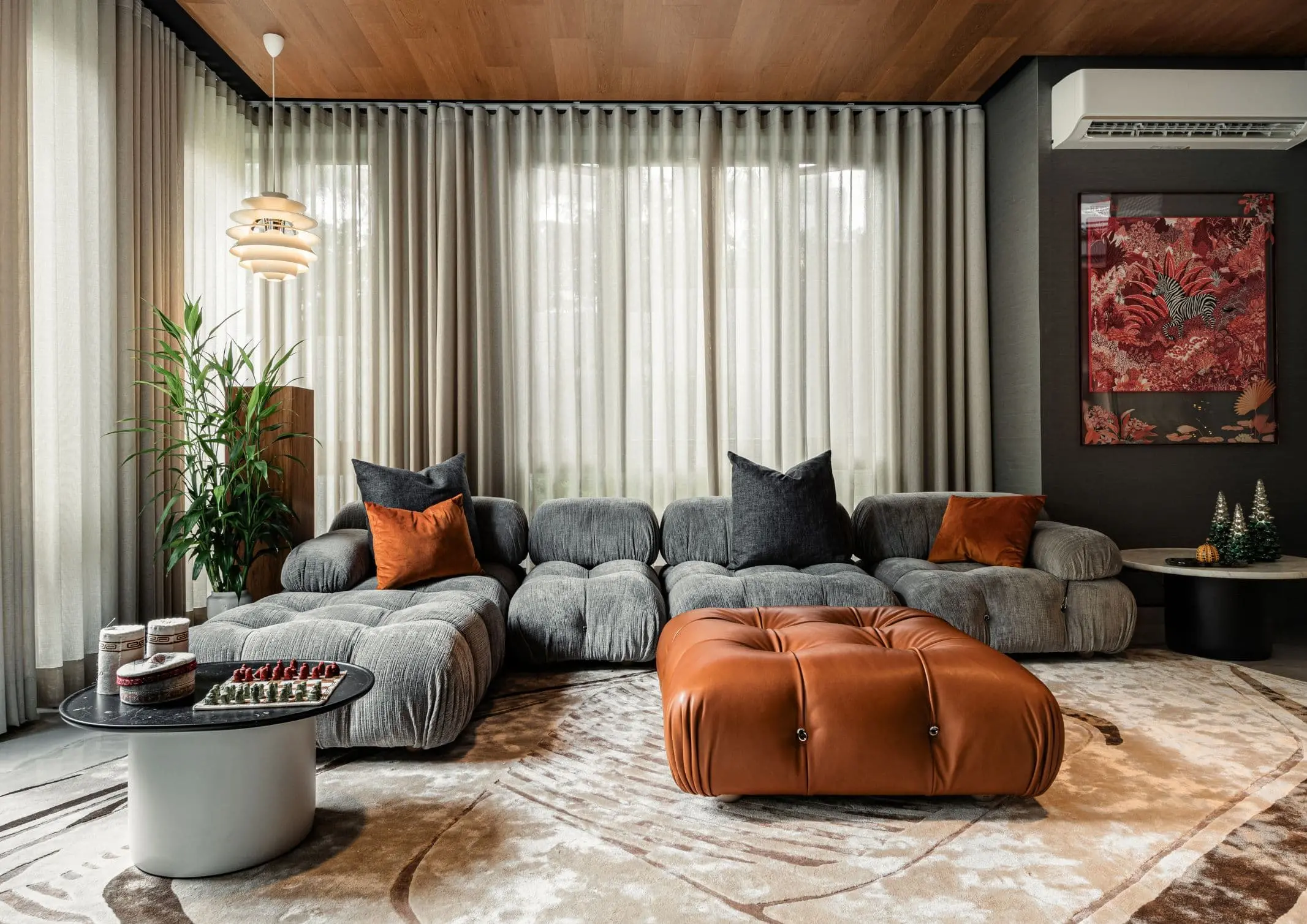
Some have become household names – Coleman, Oster, and KitchenAid – products that have found their way into Filipino kitchens, homes and family routines. In home furnishings, brands such as B&B Italia, Ethan Allen, Sub-Zero, Miele, SieMatic, Louis Poulsen, Hunter Douglas, Tempur, and Technogym, have helped shape the way Filipinos live. From everyday essentials to […]
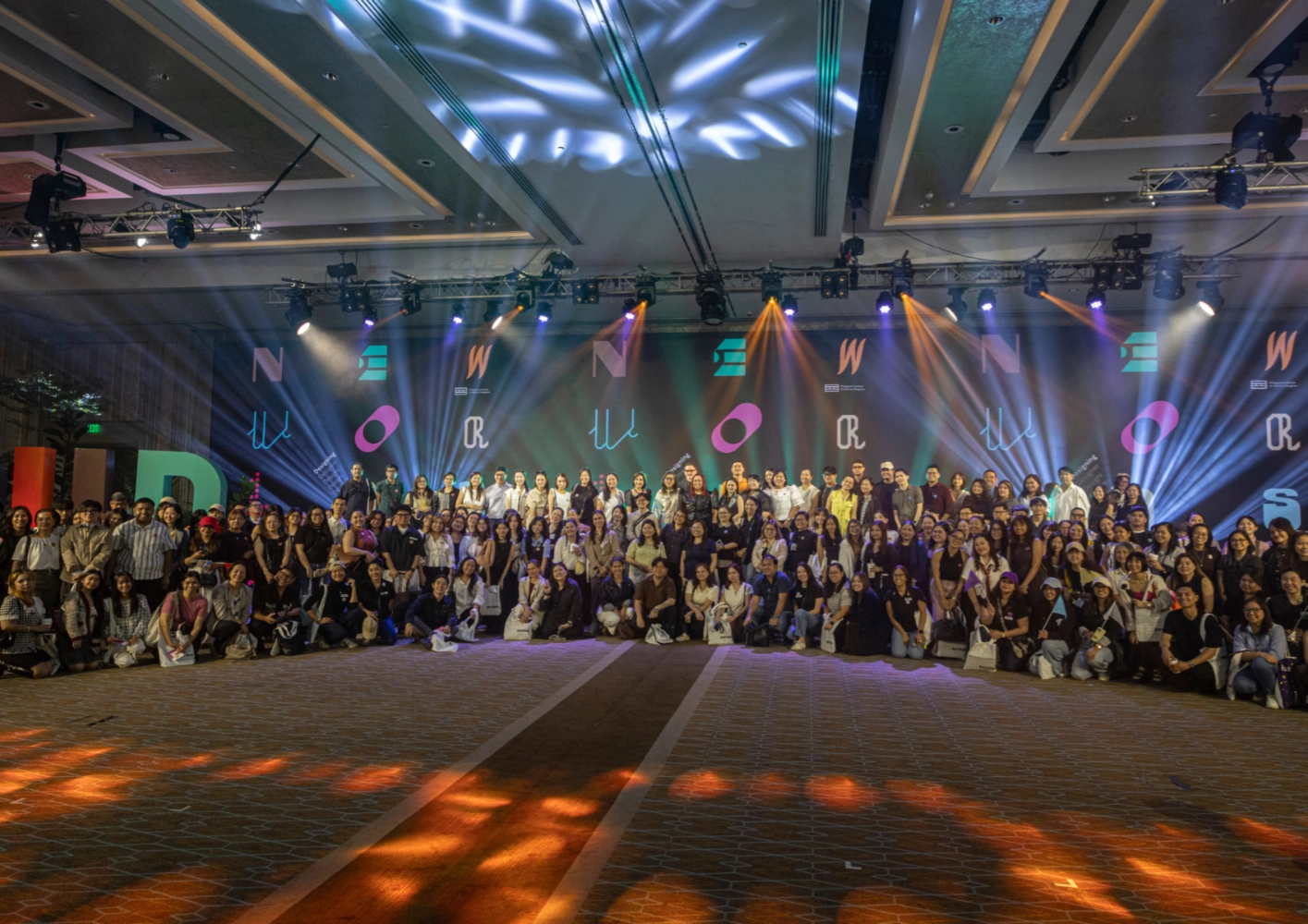
In a way, designers are the modern-day soothsayers and prophets. They design for the future, predicting how a room, a house, a building or a whole city will be used by people. They foresee how users will interact with a space, conjure exact shades of colors to elicit specific behavior and arrange furniture to build […]
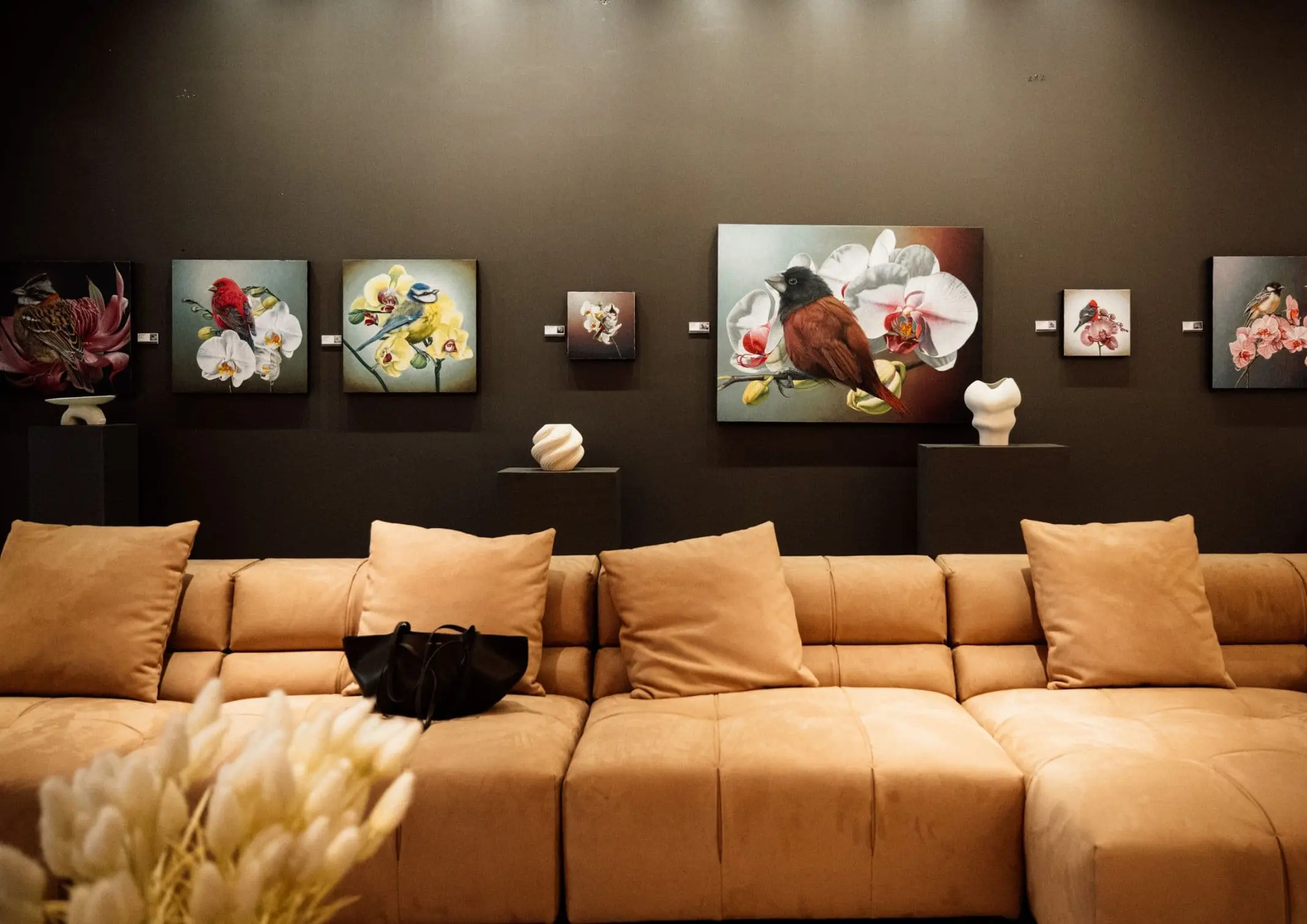
Art and furniture are often selected separately, yet their relationship can shape how a room looks and feels. The collaboration between Hooga and Galerie Joaquin explores how these elements can work together, bringing contemporary artworks into furnished residential settings at Hooga’s showroom in Uptown Mall, Bonifacio Global City. For Hooga, which curates furniture, lighting, and […]
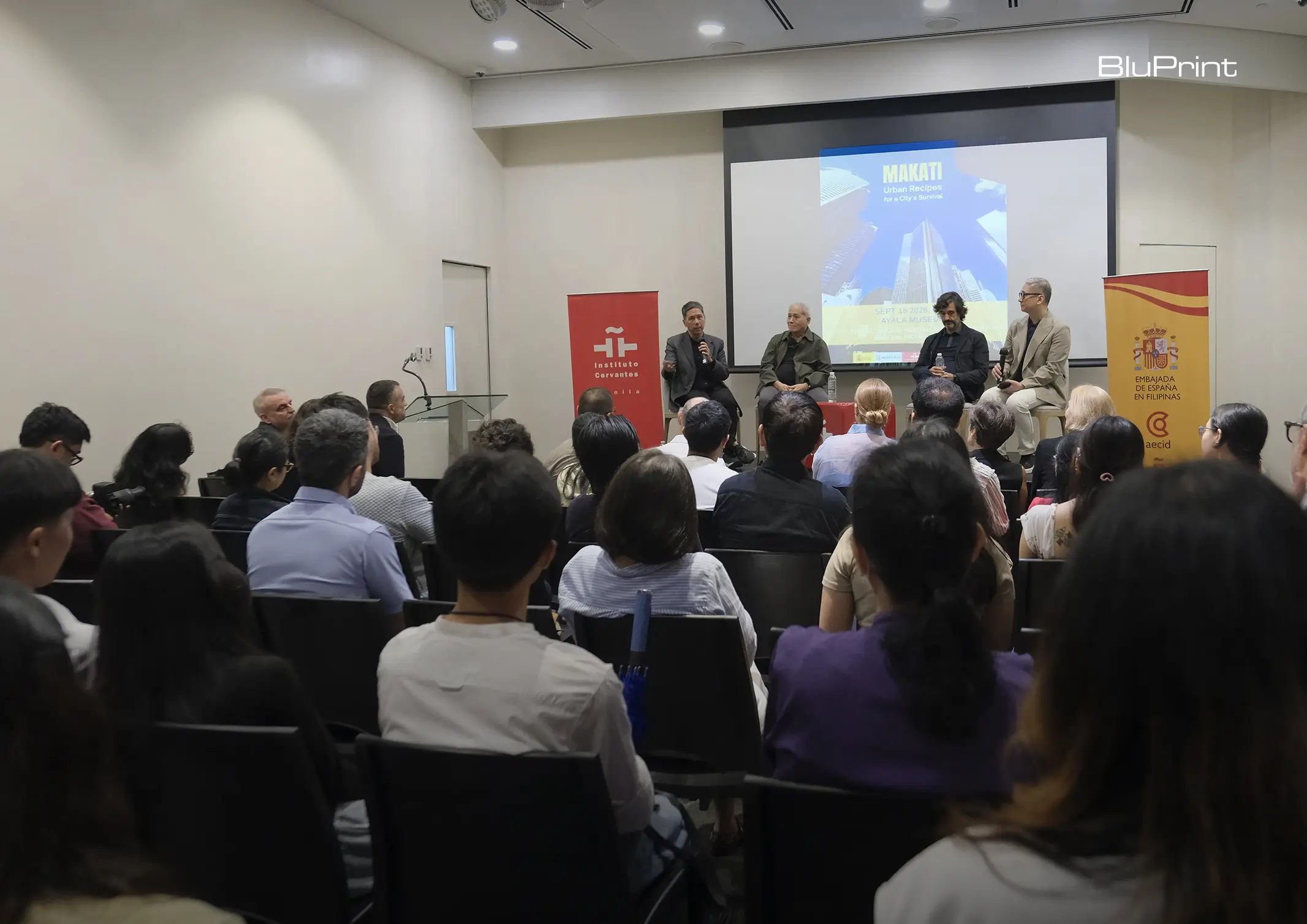
How can better-planned cities create the conditions for more creative, livable, and resilient urban environments? “Makati Urban Recipes for a City’s Survival,” a colloquium held at the Ayala Museum on September 15, brought together architects and practitioners from the fields of urbanism and the creative economy to discuss how design, planning, and collaboration can address […]
Read the issues.

Collect the volumes.

Recommended Video
Tap to Unmute
Unmute
0:00
0:00