Bigkis is the act of binding. In Tagalog, the word can refer to something used to bind or encircle, as well as a bundle formed by tying several separate elements together. Figuratively, it can also mean a bond, union, or unity. The meanings move from the physical act of joining things together to the connection […]
To Weave a Nation: National Day at Osaka Expo



It began with a single voice, unaccompanied, unornamented.
On June 7, as the sun dipped toward late afternoon at Expo 2025 Osaka, a woman stepped onto the stage in full T’boli ceremonial attire. The venue: the Ray Garden, an airy, glass-clad hall designed as a gathering space for National Day performances—a “garden of rays”—a metaphor for harmony, dialogue, and shared light across nations.
Her name: Rosie Godwino Sula—chanter of the Tudbulul, bearer of ancestral memory, and recognized by the Philippine government as a National Living Treasure or Manlilikha ng Bayan. There was no music to guide her, only her voice—piercing, circling, and ancient—opened the program. A chant composed not for this moment, but passed down through generations. Always slightly improvised. Always alive.
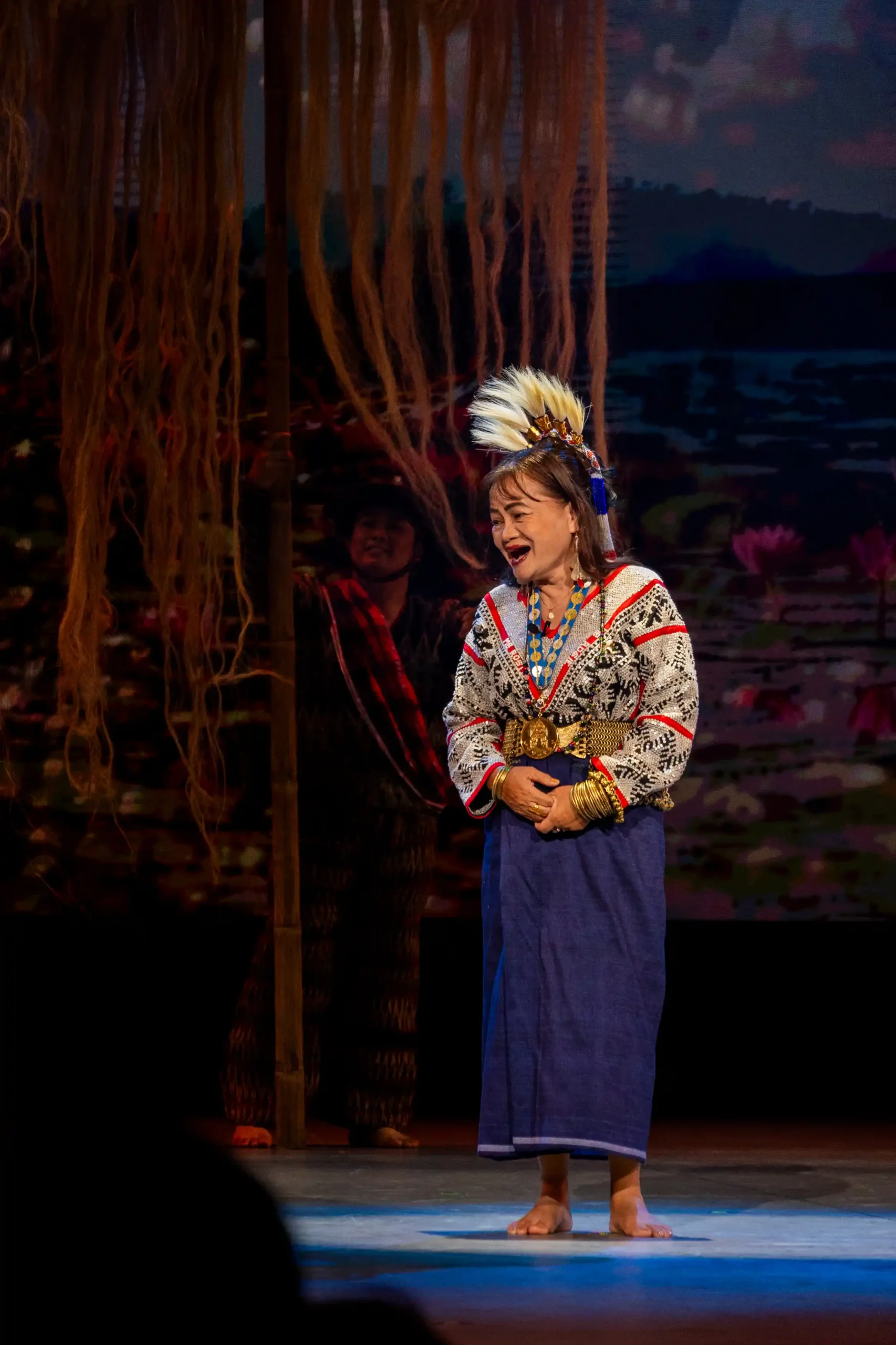
The sound startled the crowd. Expecting entertainment, we sat up, alert. Her voice didn’t simply echo—it thrummed. It felt as if she were casting it in arcs across the room, encircling us, then reeling the sound back in. I felt it—not just in my ears, but in my chest. It wasn’t a performance. It was a summons.
With this gesture, the Philippines opened with a solemn assertion: our national narrative begins with the spoken word, the oral epic, the embodied memory of a people. Before we were a republic, we were a chorus of islands, each with its own cadence.
To begin with chant was to begin with the oldest kind of knowledge—summoned from the diaphragm, improvised in the moment, inspired by the gods.
Hinabing Gunità (Woven Memory)
The first of the three performance suites, Hinabing Gunità, summoned dances drawn from the rituals, festivals, and everyday rhythms of Philippine communities—woven into a sensuous act of remembering. Through movement, texture, and cadence, the suite suggested that tradition is not a frozen archive, but a living system of values and ways of sensing the world.
I hadn’t had enough of Sula—her chant lingered, its meaning elusive. I wanted to understand the sounds she was making, to hold on to the feeling it stirred.
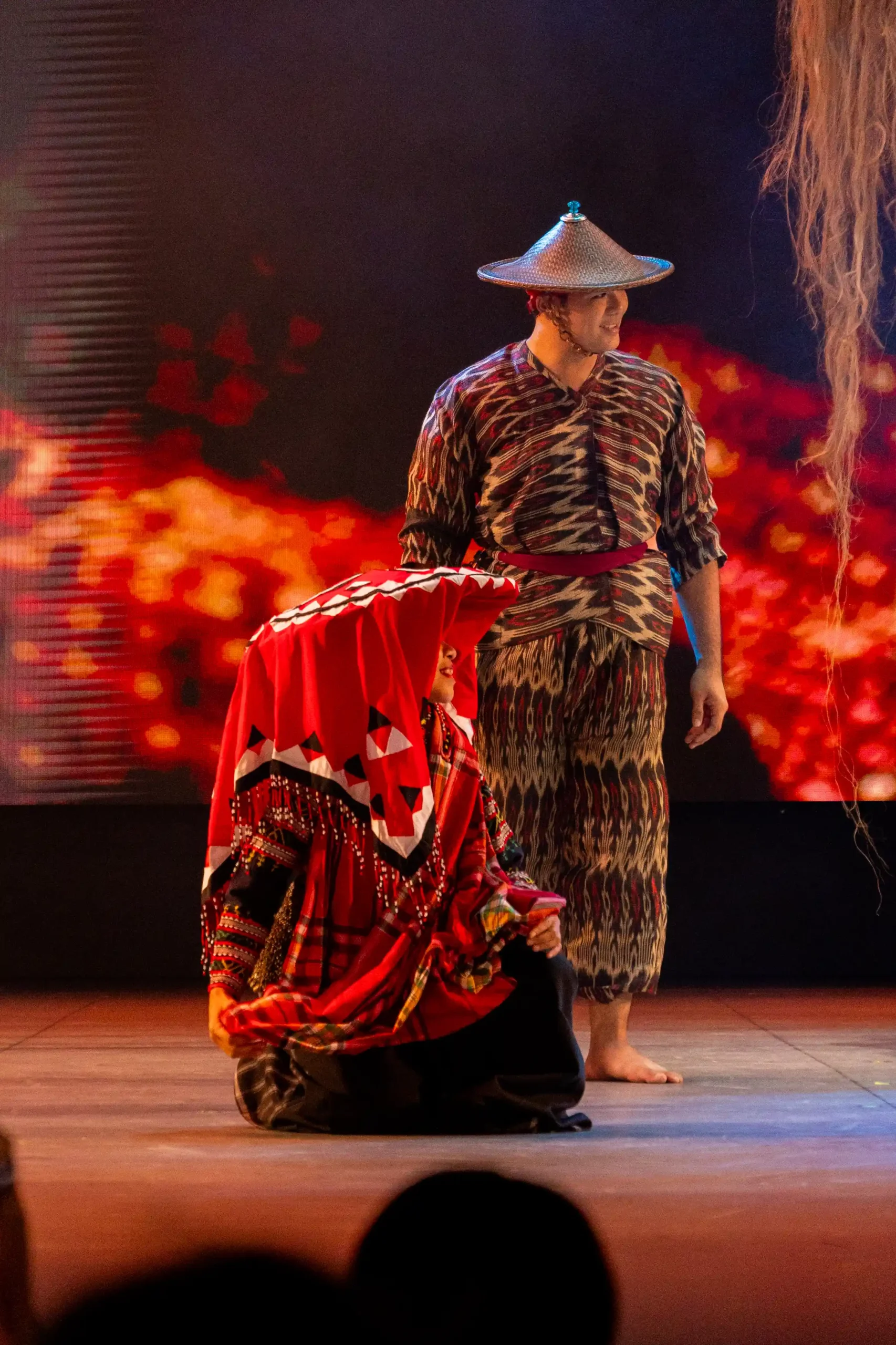
Then the scene began to shift. From the wings emerged the men of the Ramon Obusan Folkloric Group, carrying a stylized dreamweaver’s frame and bundles of long, flowing abaca—the start of the sacred act of weaving the t’nalak, the revered T’boli cloth believed to be dream-guided and spirit-woven.
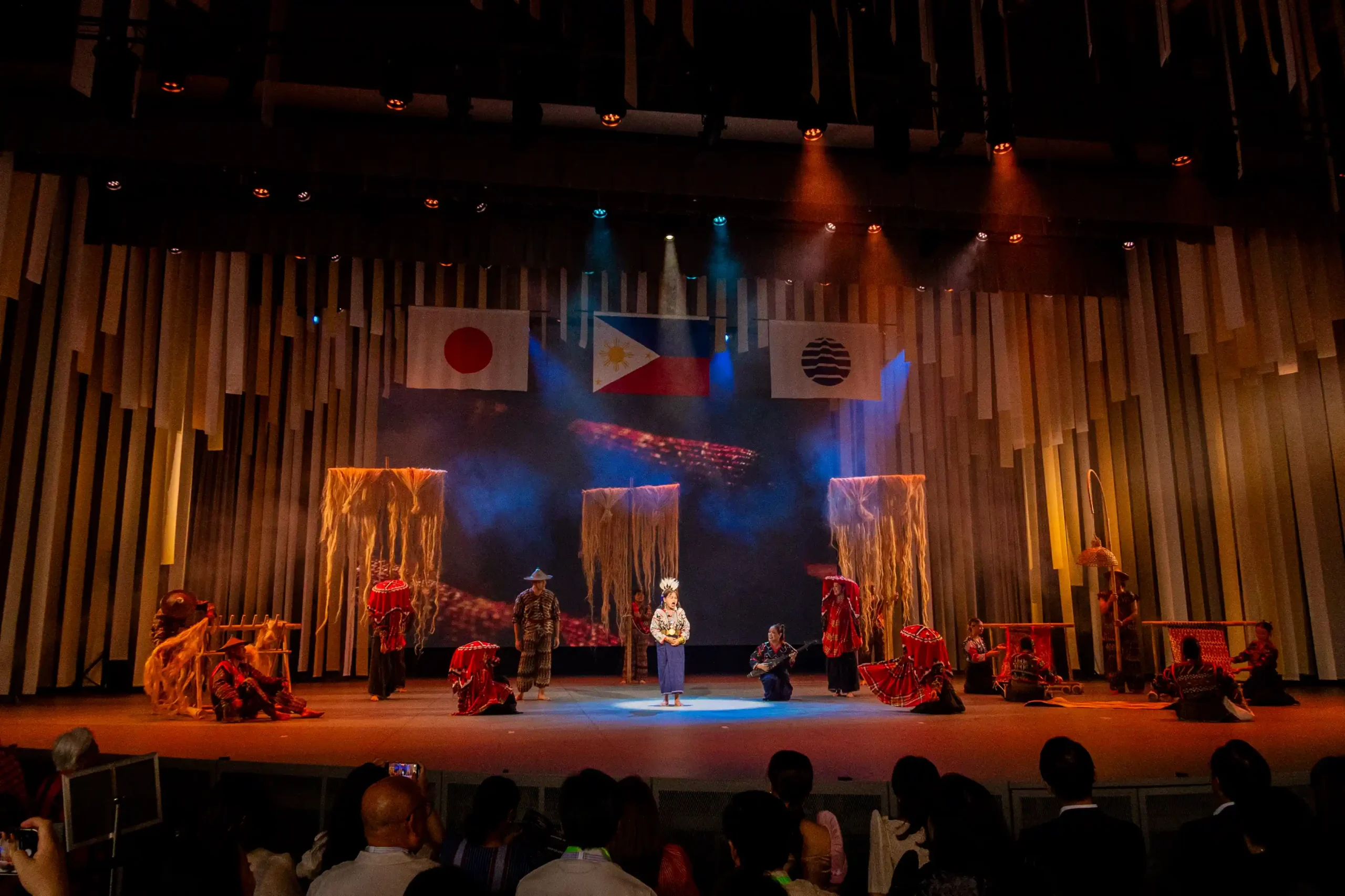
The women entered in silence, faces partially obscured by large red slo’ung knibang hats. Then Rosie Sula began to move. She didn’t lift her feet off the floor yet she slowly glided across the stage, head bowed—slow, deliberate, mesmerizing. Her gestures drew the curves of mountains and the flow of rivers.
The scene dissolved, giving way to the rest of the suite.
The Ramon Obusan Folkloric Group performed a sequence of dances in woven and embroidered garments representing the T’boli, Visayan, Tausug, and Kalinga peoples. Each segment radiated warmth, celebration, and continuity.
“We wanted a performance that reflected all of us,” said Marga Nograles, COO of the Tourism Promotions Board. “Not just one region or tribe, but the full rhythm of Luzon, Visayas, and Mindanao. That’s how we honor the Filipino story: as one voice, richly woven.”
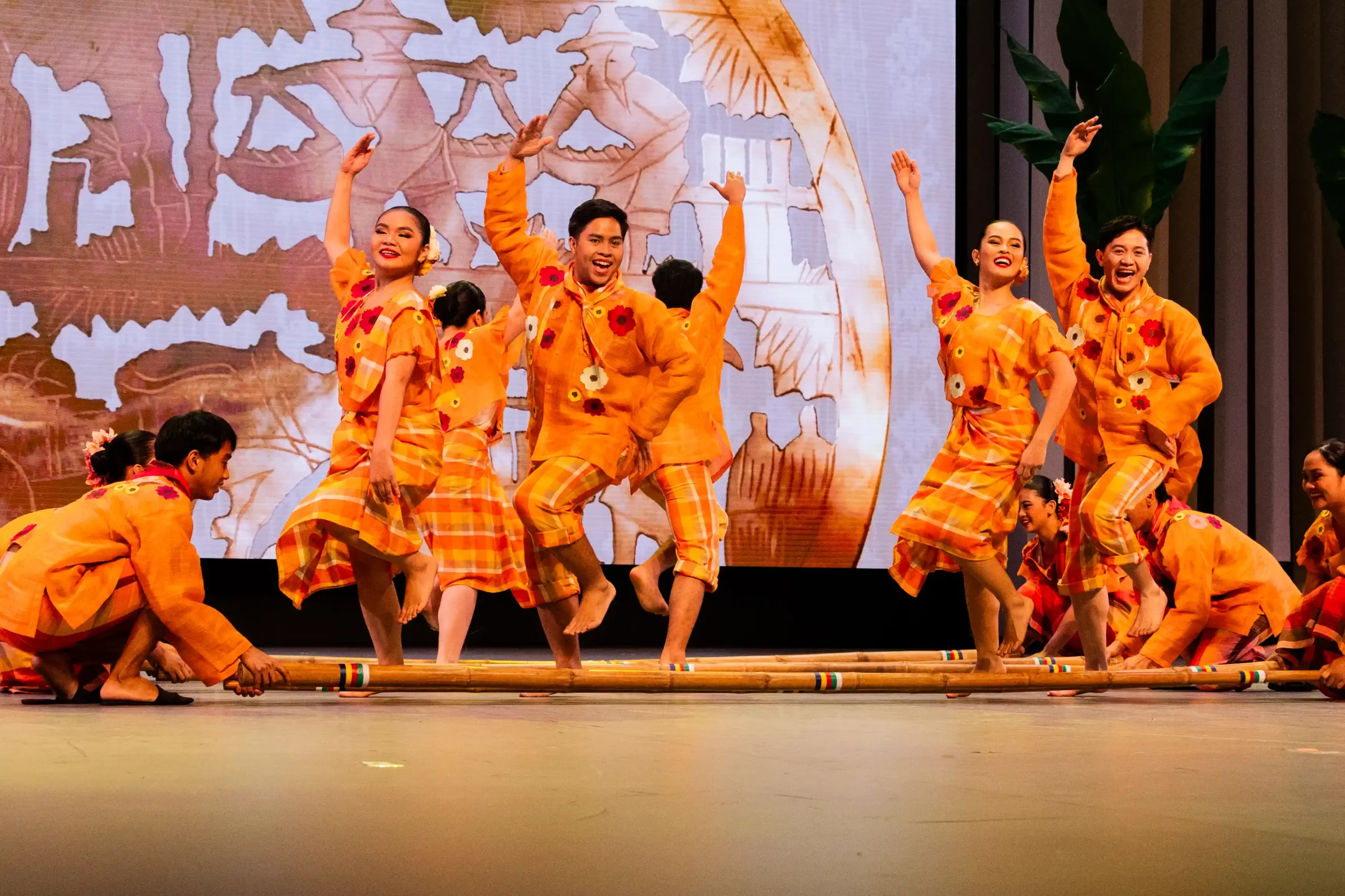
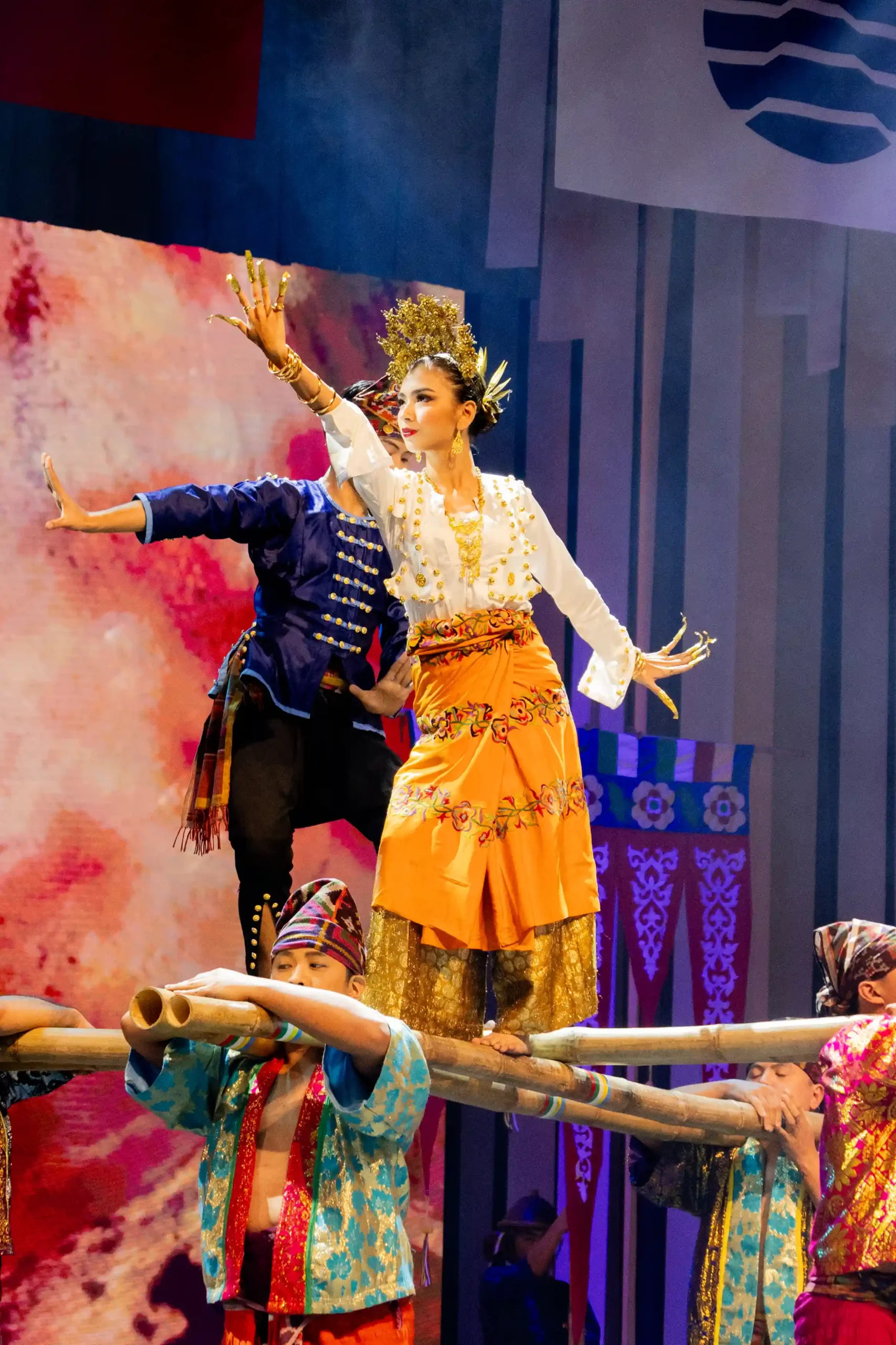
The T’boli dance Kadal Tajo, a dramatic retelling of an injured bird being coaxed back to flight, revealed a cosmology shaped by interdependence. The Visayan Tinikling, vibrant and boisterous, had dancers clapping, egging each other on as they darted between clacking bamboo poles, letting out gleeful shouts at the thrill of each “near miss.” The Tausug’s Pangalay, luminous and exacting, traced arcs in the air with convex fingers tipped in gleaming metal nails.
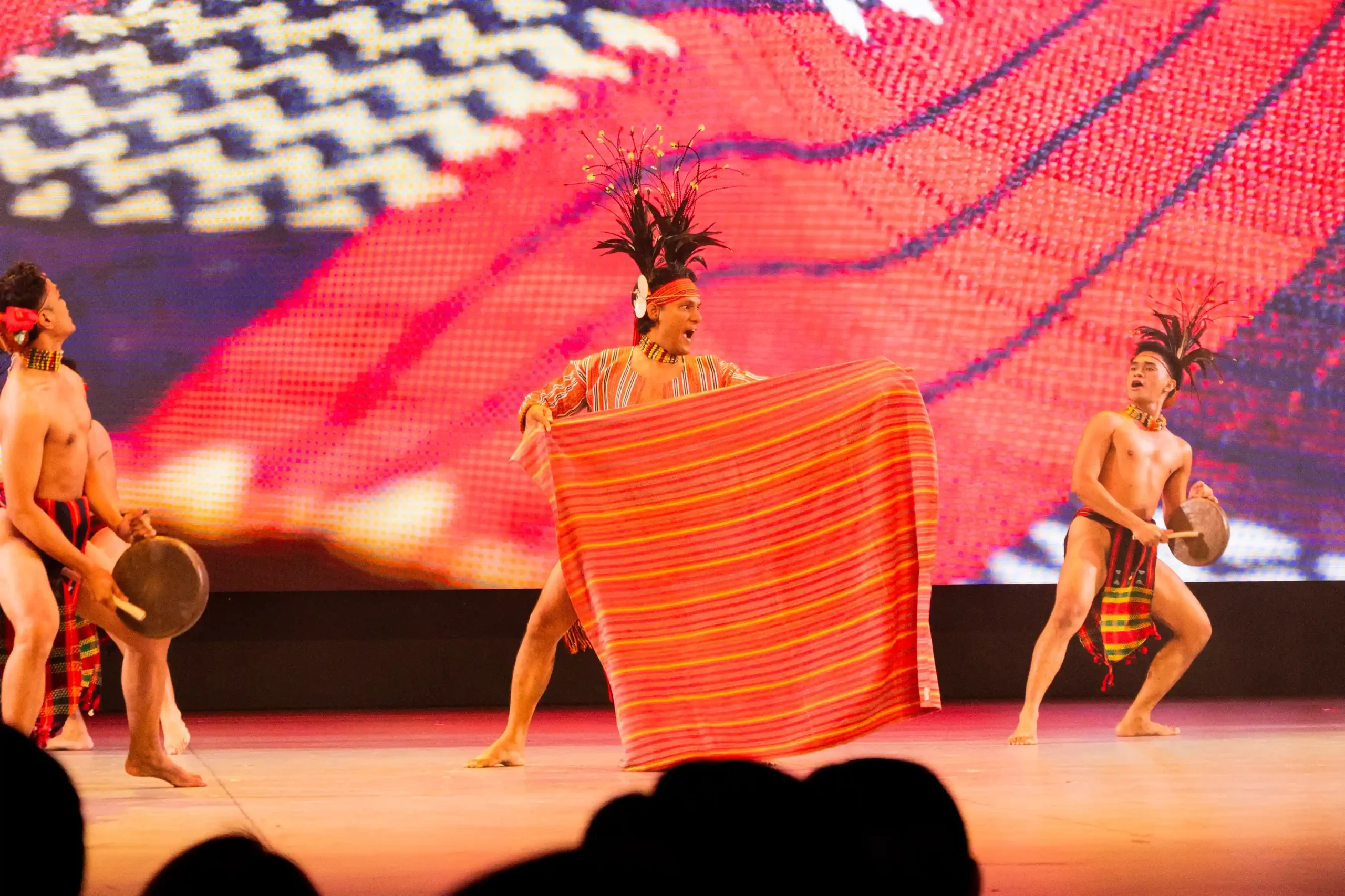
The Kalinga dances—Salip, Tajok, and Banga—brought percussion, courtship, and balance into one kinetic offering.
Woven together, these dances formed a great village in motion, reminding us that tradition doesn’t belong under glass or on a dusty page—it lives when danced, shared, and passed on.
Matatag na Kasulukuyan (Resilient Present)
If the first suite grounded the nation in ancestral memory, the second asserted its resilience in the now. Matatag na Kasulukuyan threaded together contemporary voices shaped by daily struggle, unrelenting faith, the full-throated expression of joy and grief, and a love of laughter that refuses to be extinguished. Through the music of National Artist for Music Ryan Cayabyab and rising composers like Ferdinand Aragon, the suite gave shape to dreams and daily acts of hope.
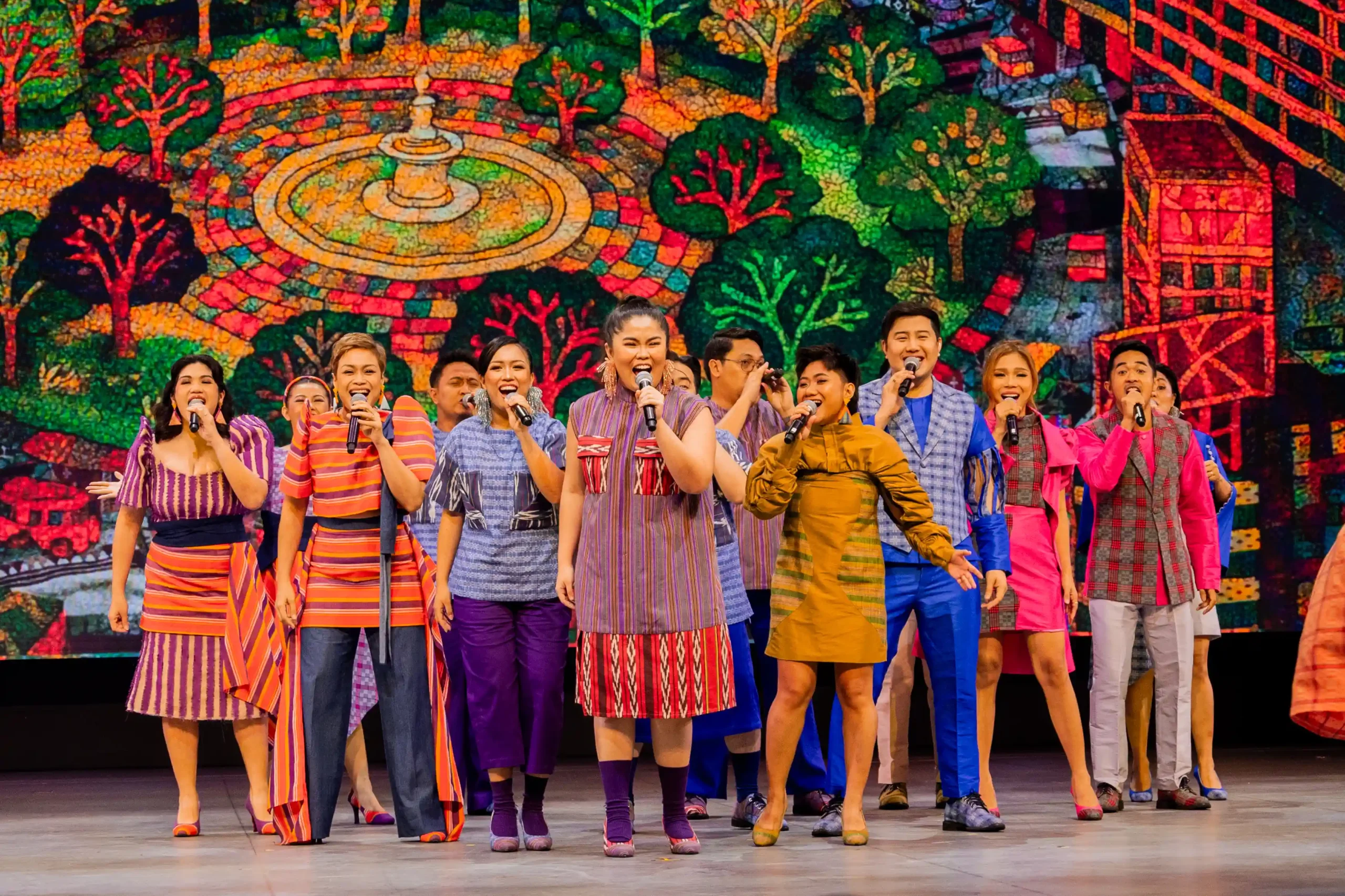
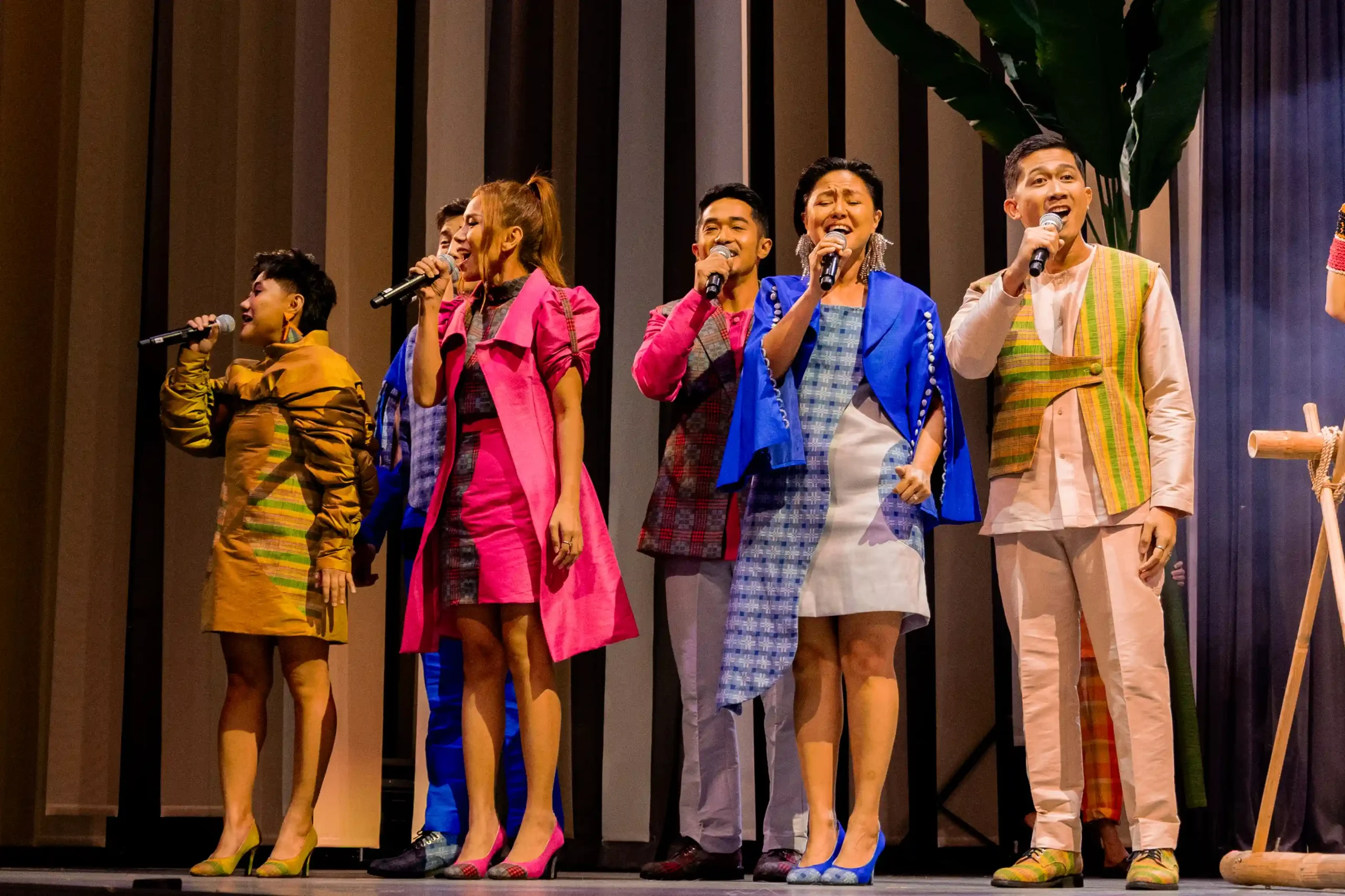
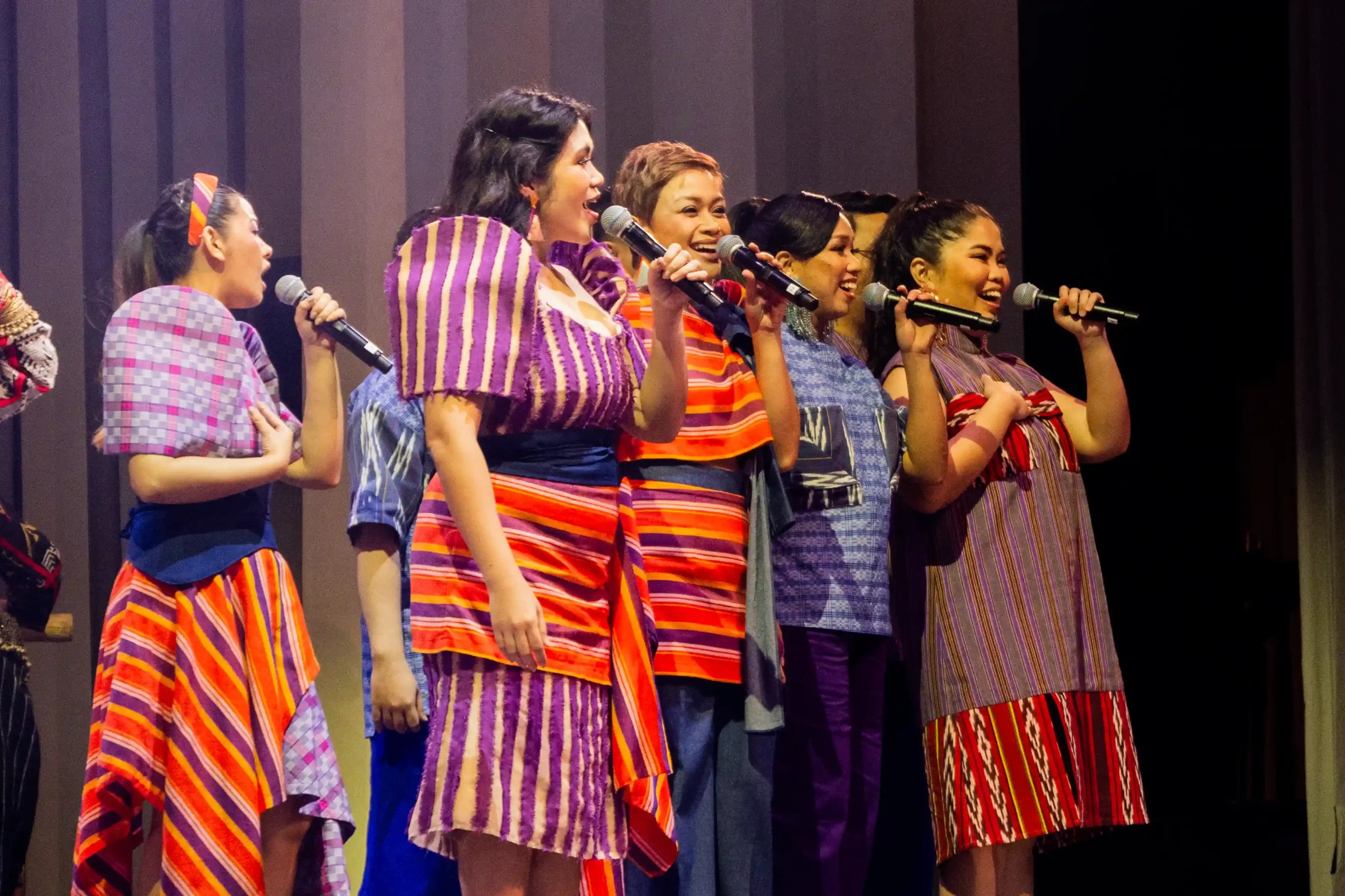
Baihana (left, in butterfly sleeves) Acapellago (center, with twin square pockets) and Pinopela (right, in mustard, royal blue and fuschia tops) wore a combination of inabelInabelA traditional handwoven textile from the Ilocos region, made on wooden pedal looms using cotton and time-honored geometric patterns. Known for its strength, texture, and cooling feel, inabel has movedGo to Inabel Glossary and binakol, abaca ikat, stripes, and plaids in saturated jewel tones inspired by jeepney colors. Designers: Gino Gonzales, C.J. Martin, Geom Hernandez, and Marlon Tuazon.
Acapellago, Baihana, and Pinopela—vocal ensembles known for their award-winning harmonies—reinterpreted Cayabyab’s work with emotional precision and vocal clarity. Their layered arrangements, mostly a cappella, evoked the power of collective voice—voices singing not in unison but in harmony, listening, responding, adjusting. Songs like “Liman Dipang Tao,” “Araw Gabi” and “Hibang sa Awit,” brought cheeky romance and exuberant playfulness to the stage—echoed by the colorful jeepneys dancers raised like trophies and drove in mad circles as if to say: this chaos is ours and we move with joy!
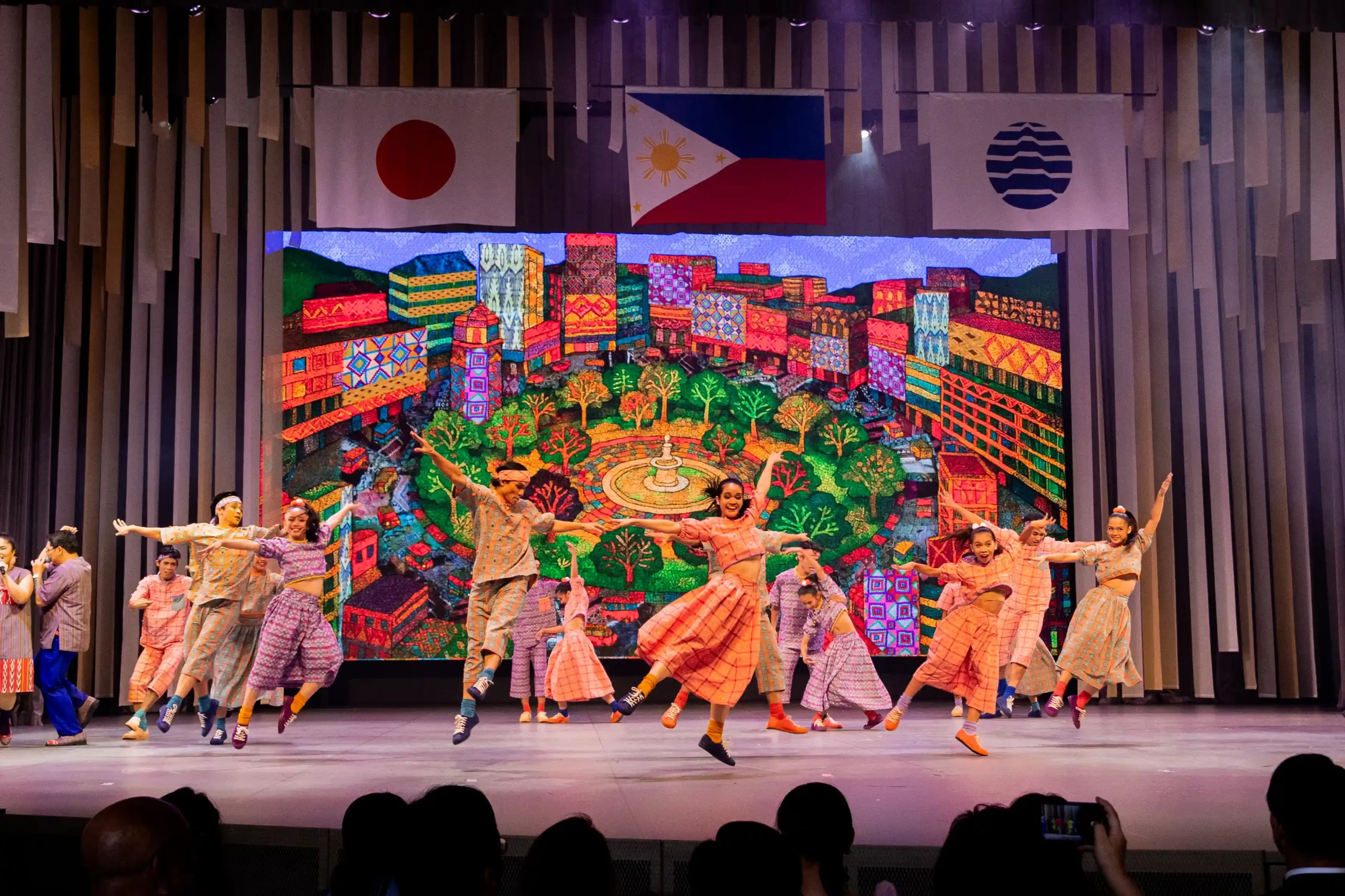
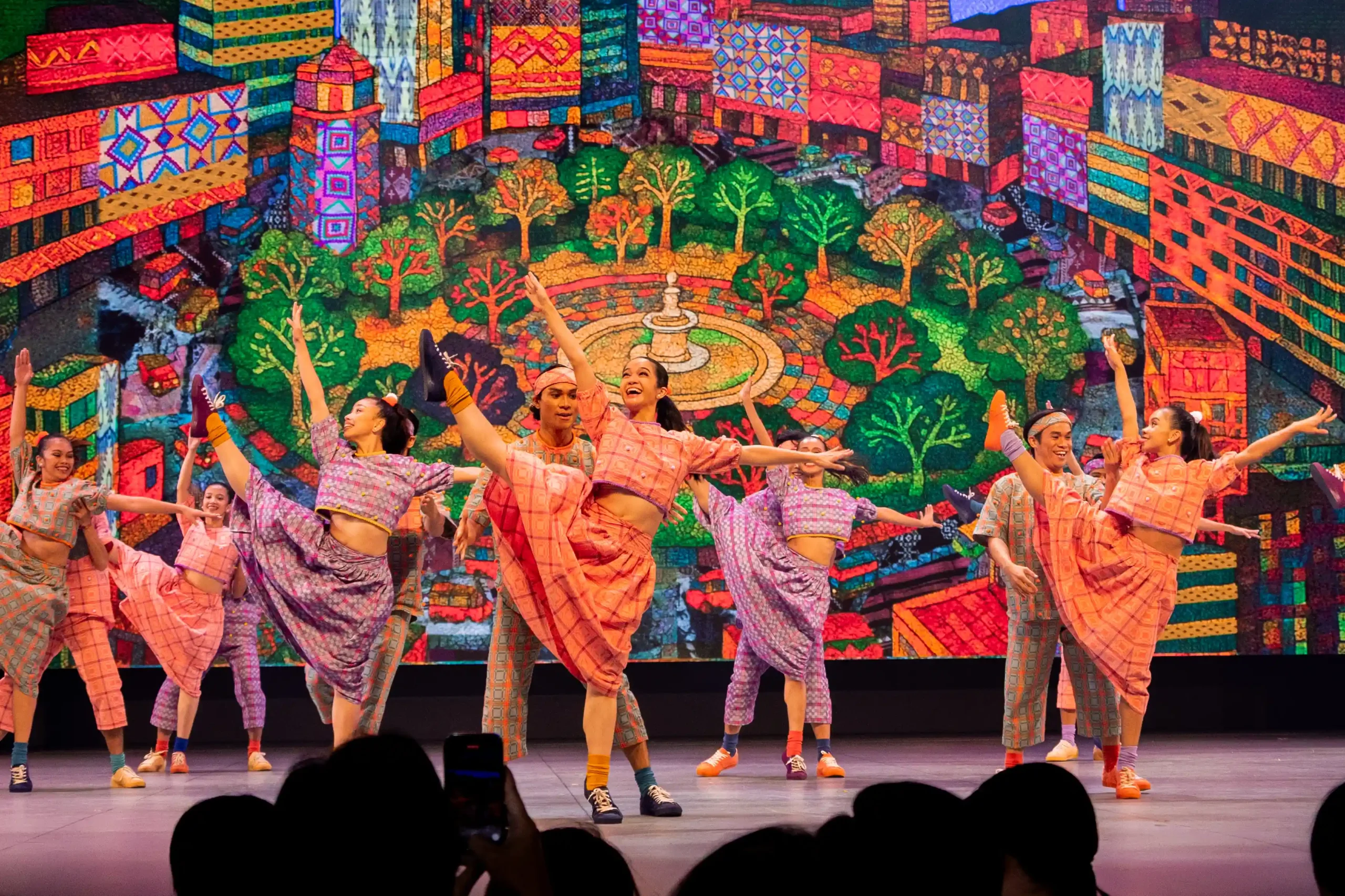
Alice Reyes Dance Philippines—named for its founder, National Artist for Dance Alice Reyes—animated these themes in movement, especially in their premiere inspired by National Artist for Visual Arts Larry Alcala’s iconic “Slice of Life” —a beloved cartoon series that captured the quirks of Filipino everyday life. Their choreography distilled its texture: the humor, the traffic, the crush of a crowd, the unexpected moments of recognition.
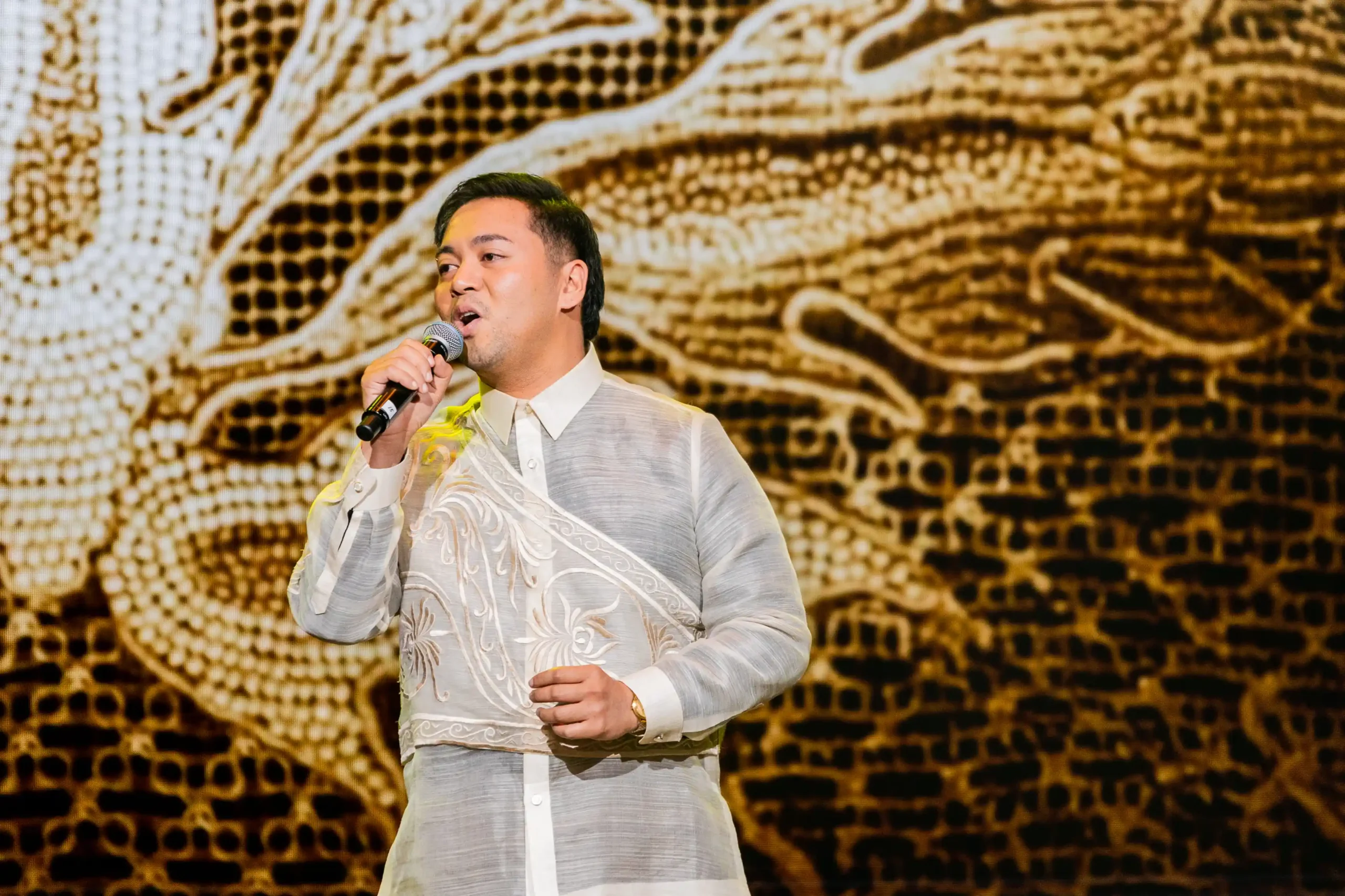
Sofronio Vasquez, the first Filipino and first Asian male to win The Voice USA, closed the suite. His performance marked a homecoming of sorts—a voice celebrated overseas, returning as part of a national declaration on the world stage. Warm and full even as the melodies climbed, his voice drew tears from Filipinos in the audience. He sang a medley that spanned yearning (“Nais Ko”), defiant hope (“Bangon Adlaw”), and fierce determination (“Posible”). A true tenor, his tone remained lush and effortless even at the highest notes, each phrase grounded in meaning and remembrance. He had lived the distance, too—once an OFW himself—and the songs landed with quiet force among those who knew that life firsthand.
Together, the performances reminded us that matatag na kasalukuyan—resilience in the present—is the ongoing work of weaving meaning, memory, and imagination into the fabric of daily life. It is where the spirit of a people tests its strength.
As Marga Nograles observed, “The world is searching for meaning. What we offer isn’t just beauty—it’s depth. Hinabing Hiraya carries our values, our spirit, and the warmth that stays with you.”
That warmth and passion would crescendo into the final suite.
Hirayang Kinabukasan (Woven Future)
The third and final suite dared to look ahead. While the earlier performances summoned memory and identity, Hiraya ng Kinabukasan asked: What now? What do we carry forward—and how?
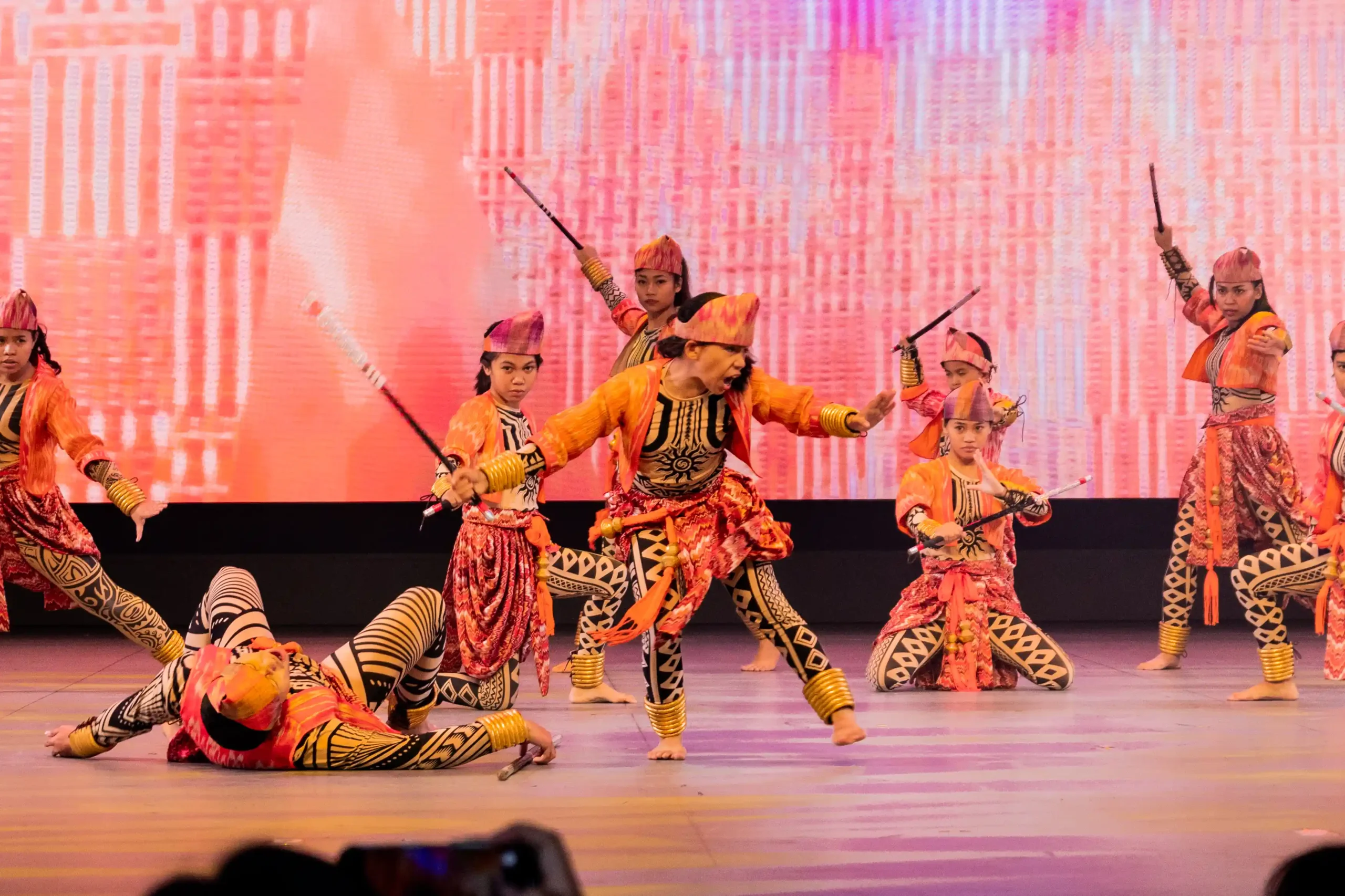
The answers burst forth in a succession of electrifying acts. Lapu-Lapu Arnis de Abanico exploded onto the stage in red and gold—young warriors, some barely shoulder-high, brandishing sticks with ferocity and focus that brought the crowd to life. The applause grew louder as each tiny but fierce combatant took the spotlight.
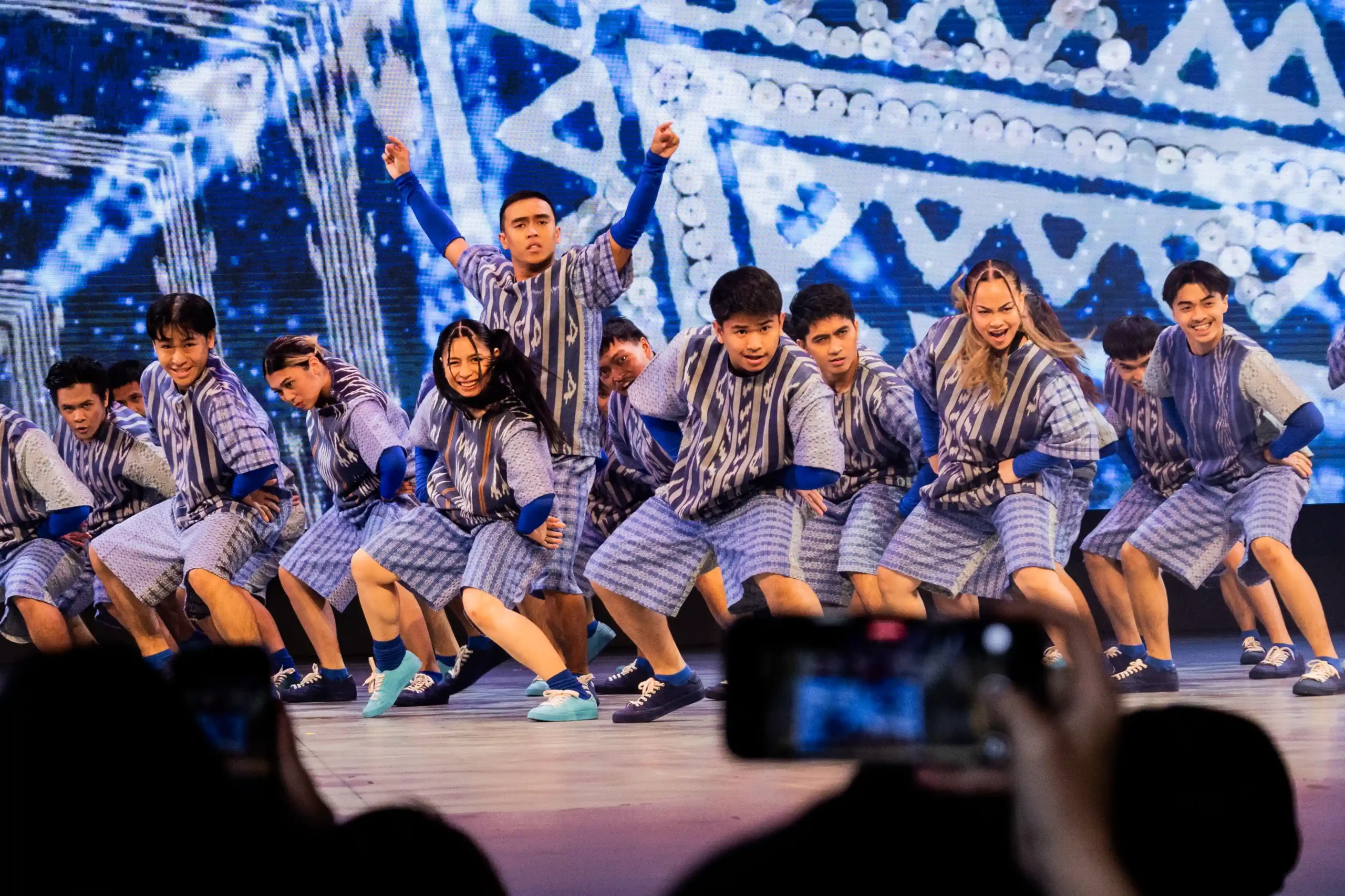
Then came UPeepz, their championship hip-hop charged with swagger and syncopation, defiant in a joyful way, virtuosic for sure, rooted in denim, ikat, and a kinetic vocabulary that merged global pulse with local soul. Finally, Lumad Basakanon – Sinulog swept in with golden skirts and radiant smiles, their synchronized stomps and turns invoking jubilation, devotion, and the euphoria of festival.
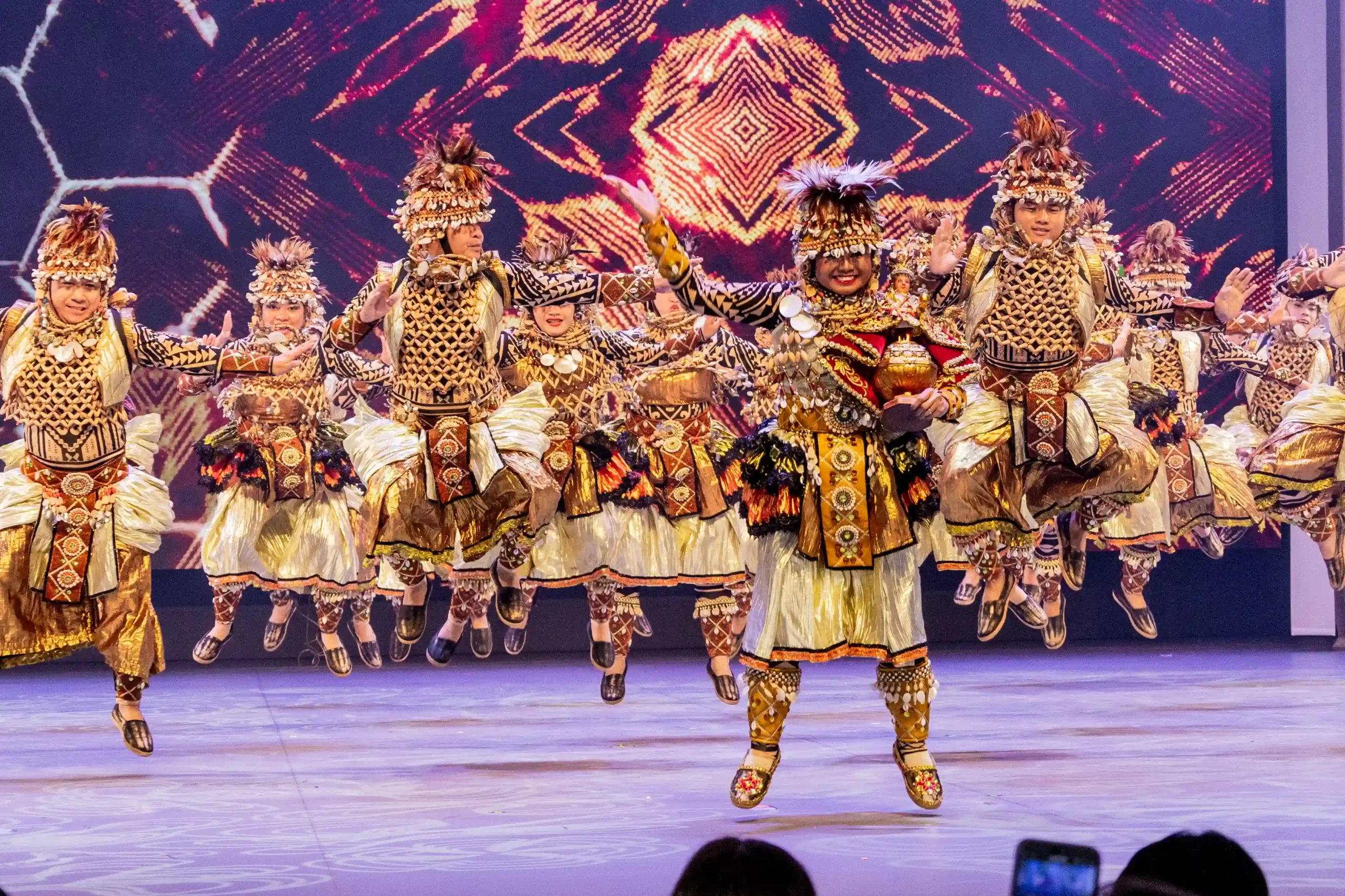
What began as invocation had become a crescendo. It was as if each group were trying to outdo the one before—tumbling, spinning, stomping, delighting. The costumes by Gino Gonzales shimmered in motion, underscoring the unity of purpose: to imagine a future that dances, dares, and remembers—a vision pulsing with joy, conviction, and life.
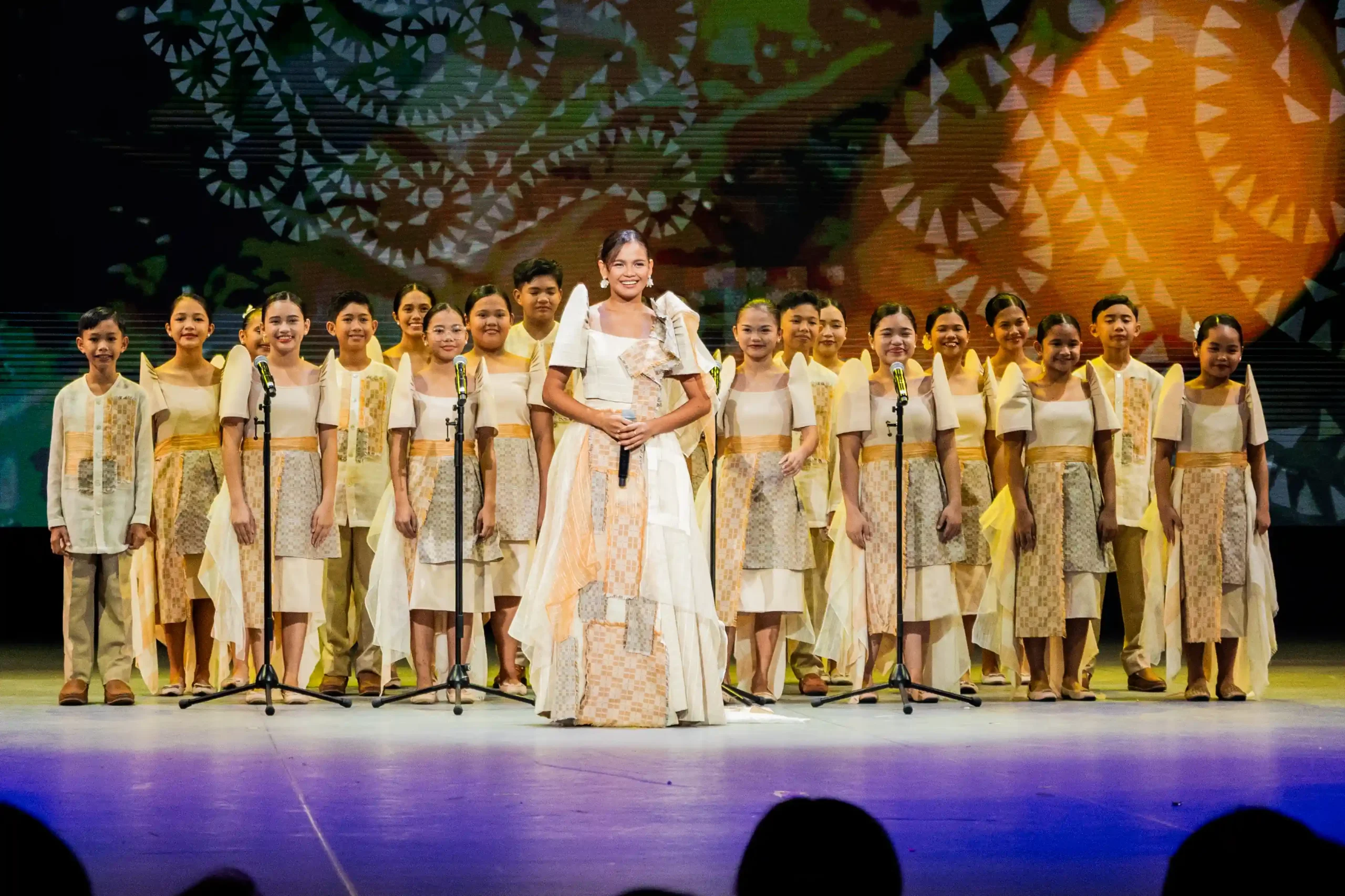
The suite then shifted key. From bold movement to collective voice: the Loboc Children’s Choir and pop artist Zephanie sang of hope, brotherhood, and responsibility in reinterpreted anthems. Most moving was Ryan Cayabyab’s “Better World”, revised—with his blessing—to make the hope it carried feel not distant, but now.
Original:
I see this one day / When all the world will hear us, / That someday when all will stand before us…
Rewritten:
The dream that someday / When all the world will hear us, / That one day is here and now upon us.
“We asked permission to change the words,” shared Marga Nograles, who cried during rehearsals and again, at the performance. “We wanted the singers to say, ‘We are going to make you a better world.’ That we’re not waiting for change. That we’re building it now.”
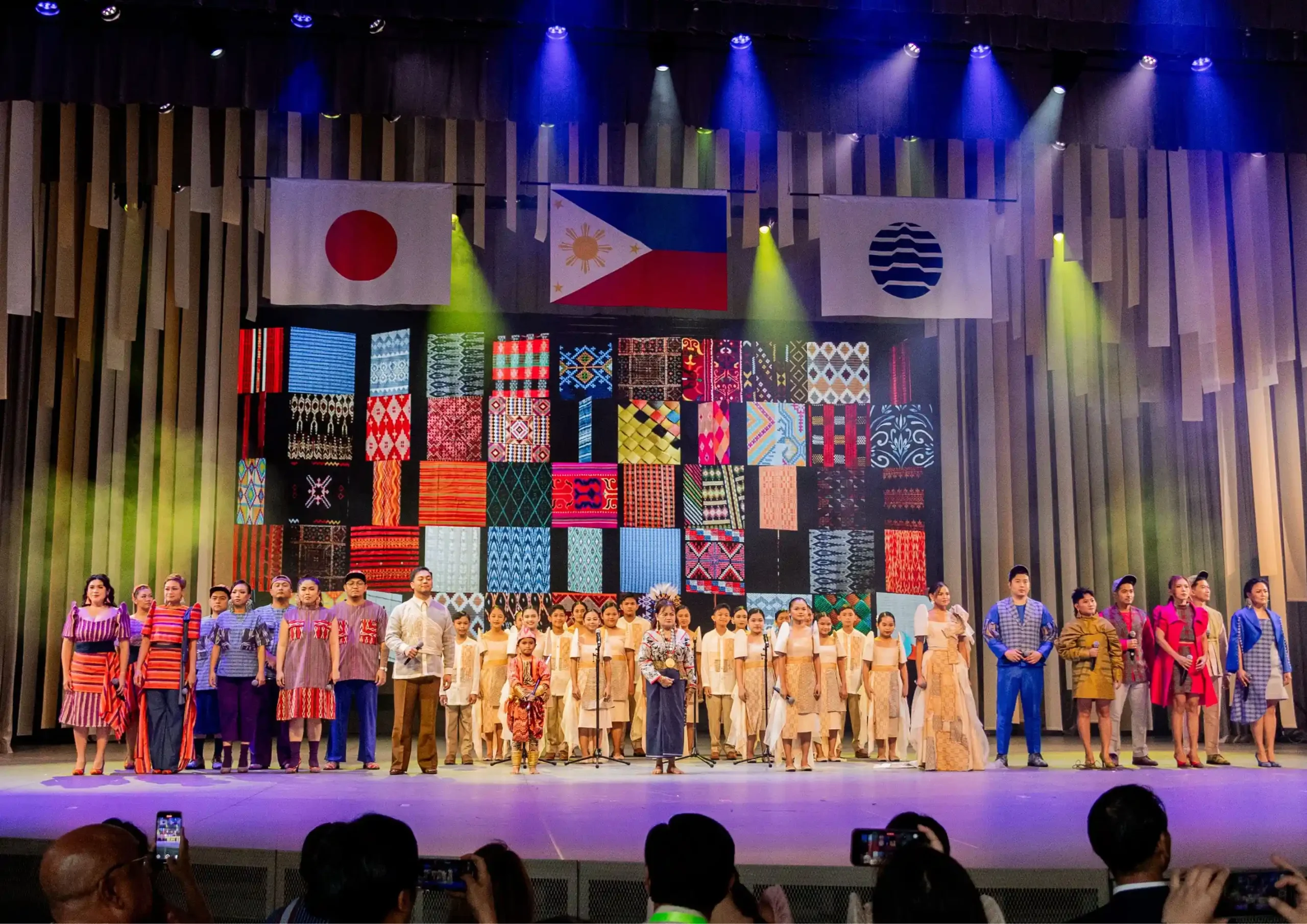
By the time the entire ensemble—Rosie Sula, the Obusan dancers, Acapellago, Baihana, Pinopela, Alice Reyes Dance Philippines, and others—joined the youth for the final bow, the vision was clear. This was a celebration, yes. And very much a reckoning too.
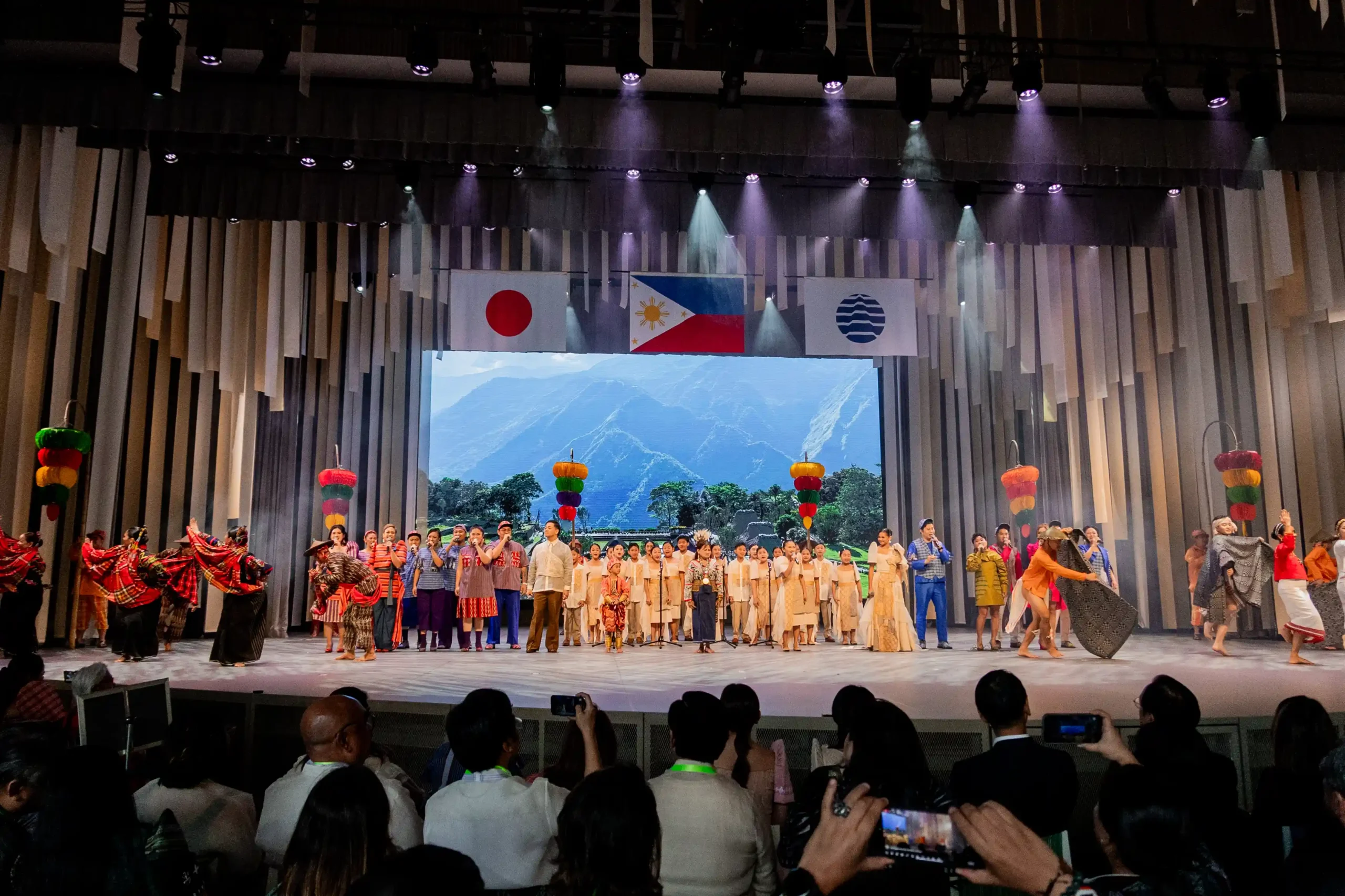
Dennis Marasigan, Vice President and Artistic Director of the Cultural Center of the Philippines, later reflected, “Even just recalling the finale makes me emotional. Everyone was on stage, the theme came full circle—it was powerful. Every voice and tradition present. It summed up who we are: many cultures, one people.”
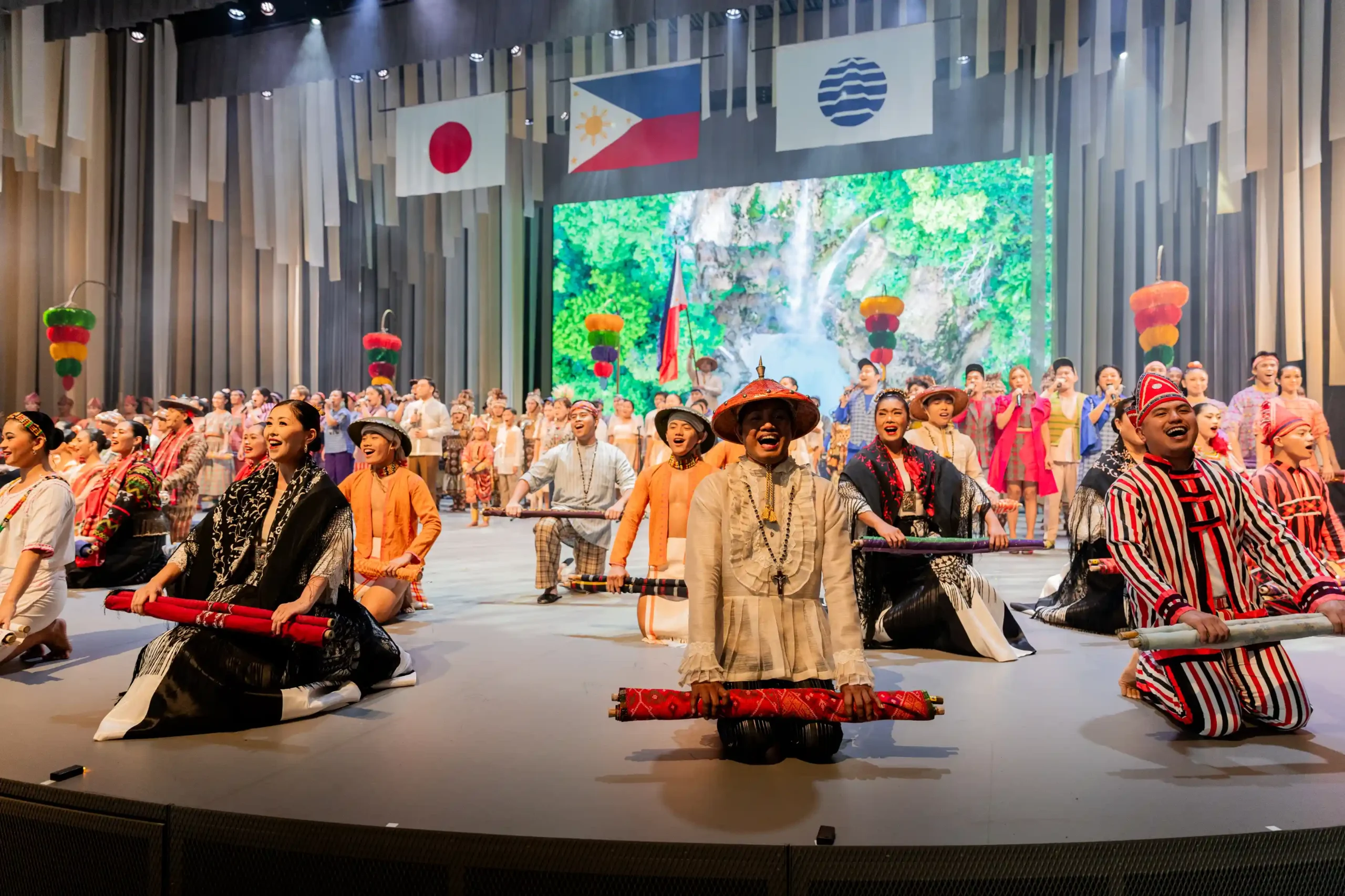
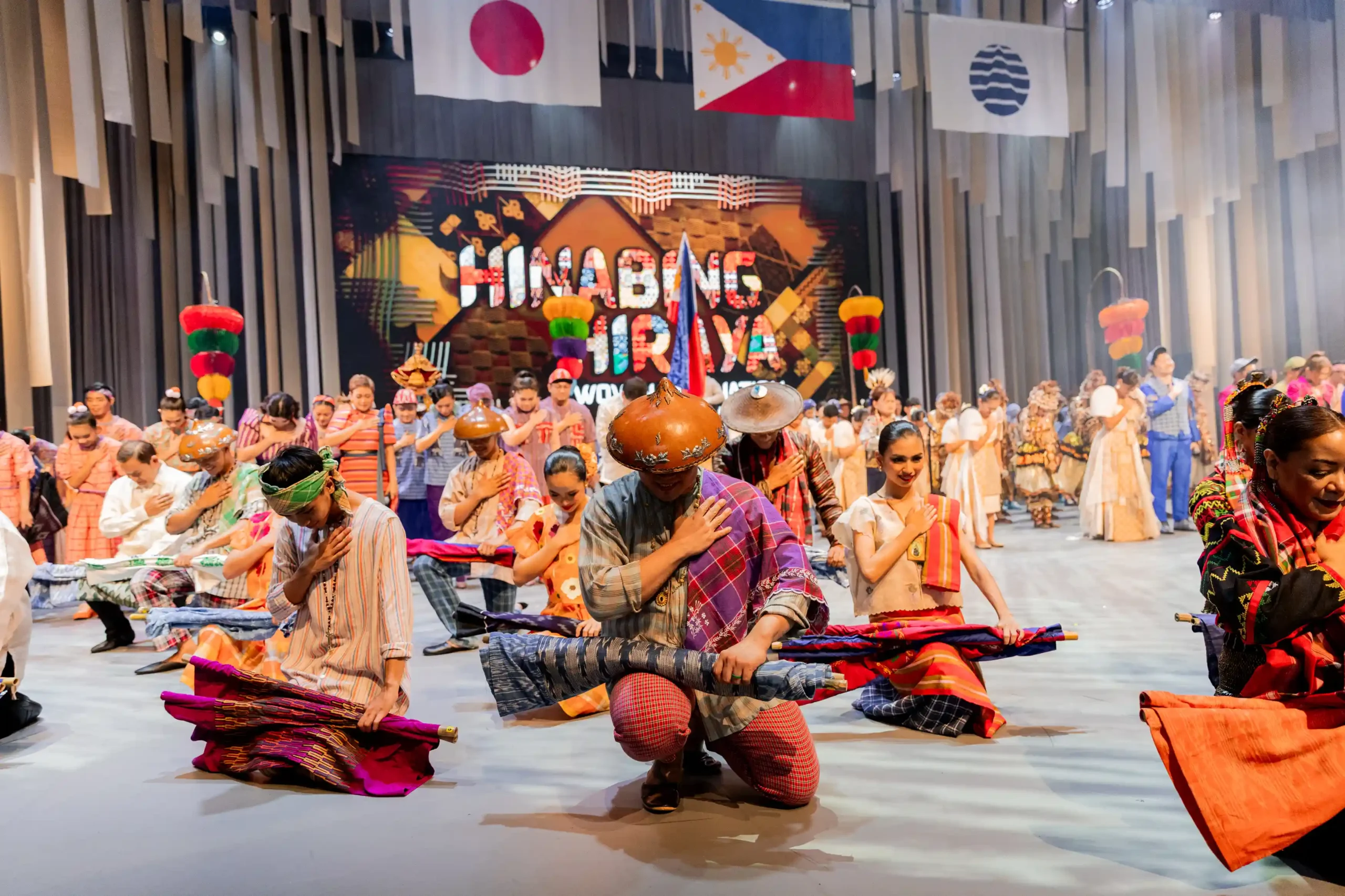
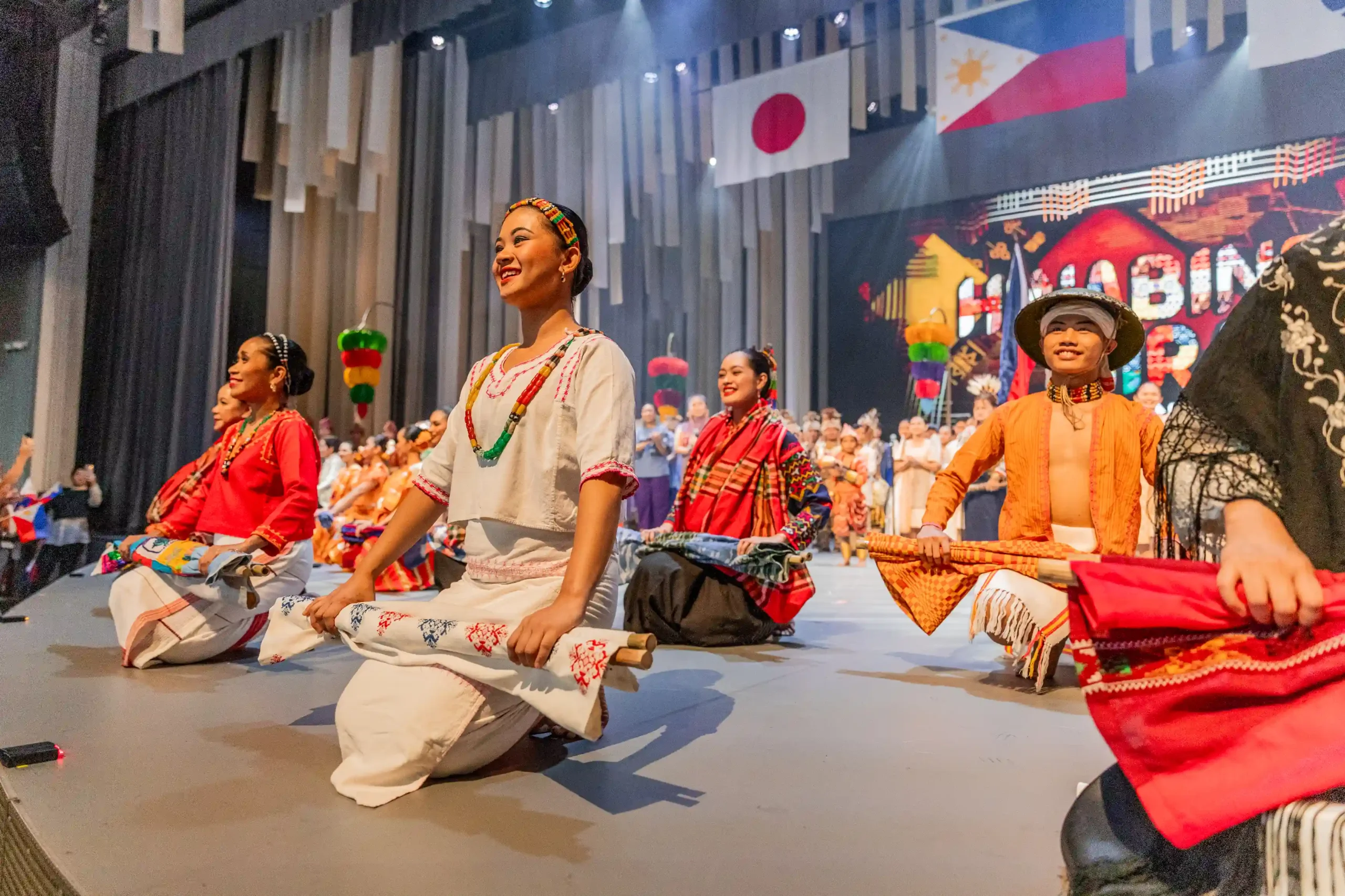
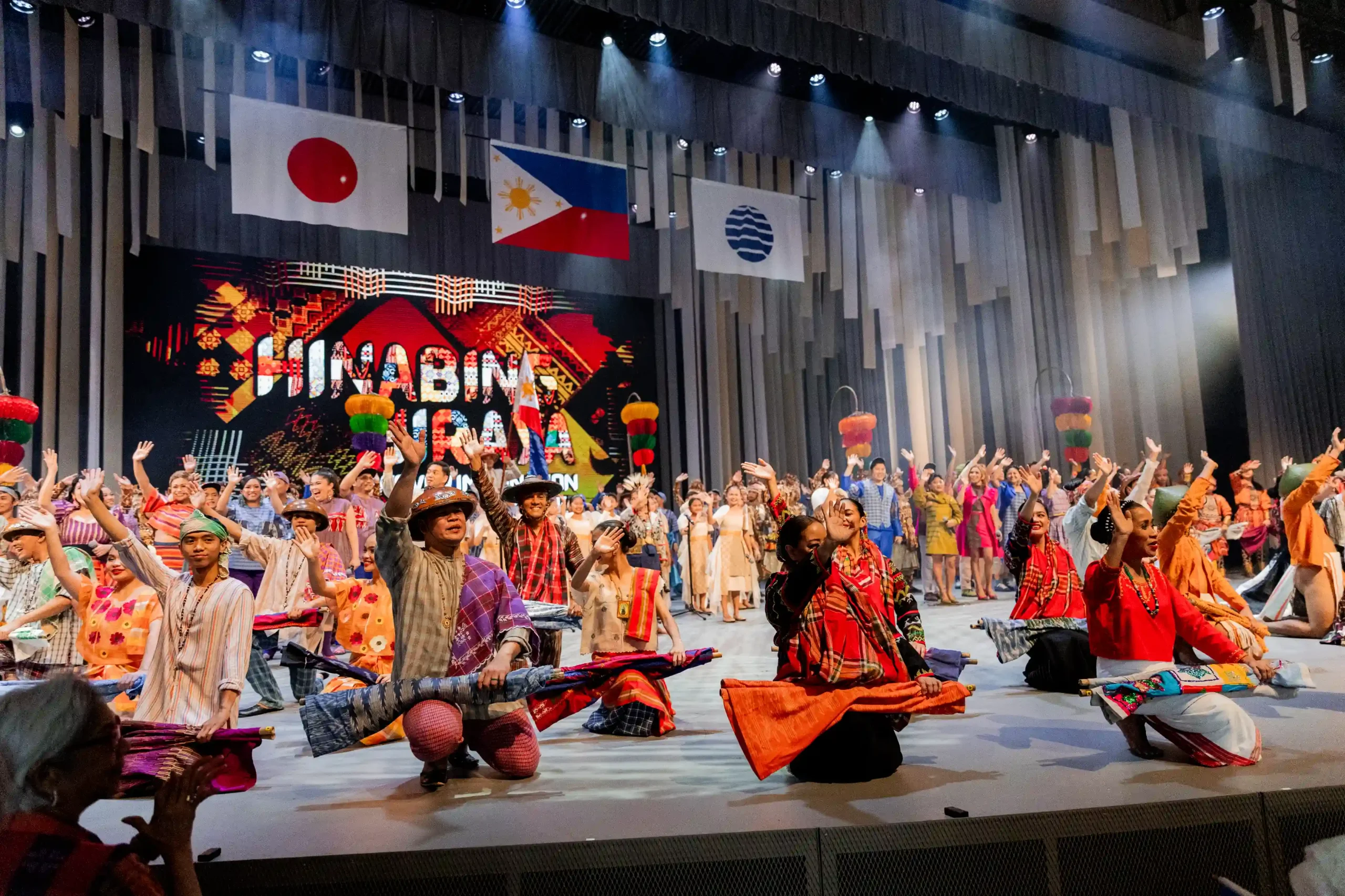
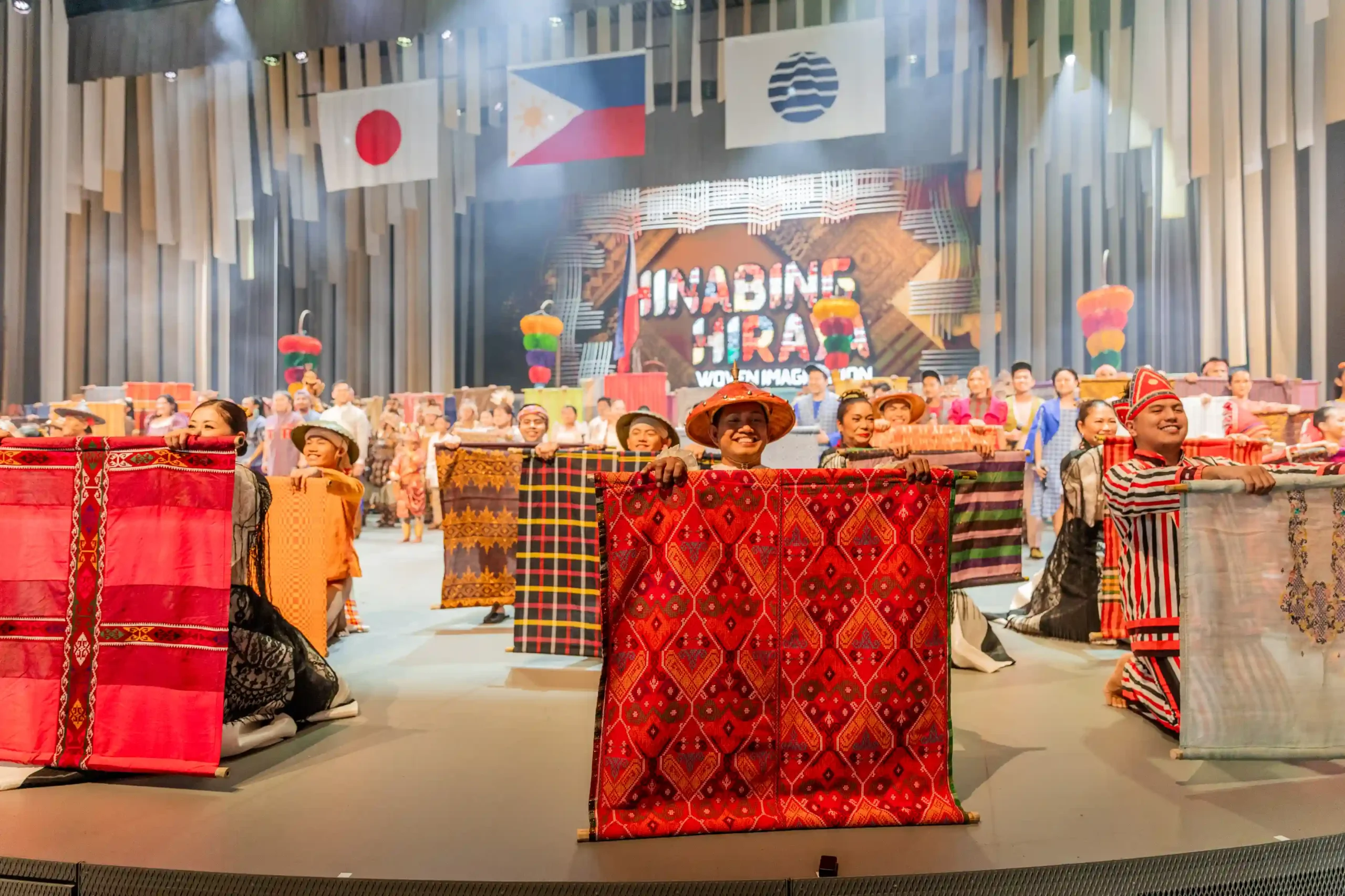
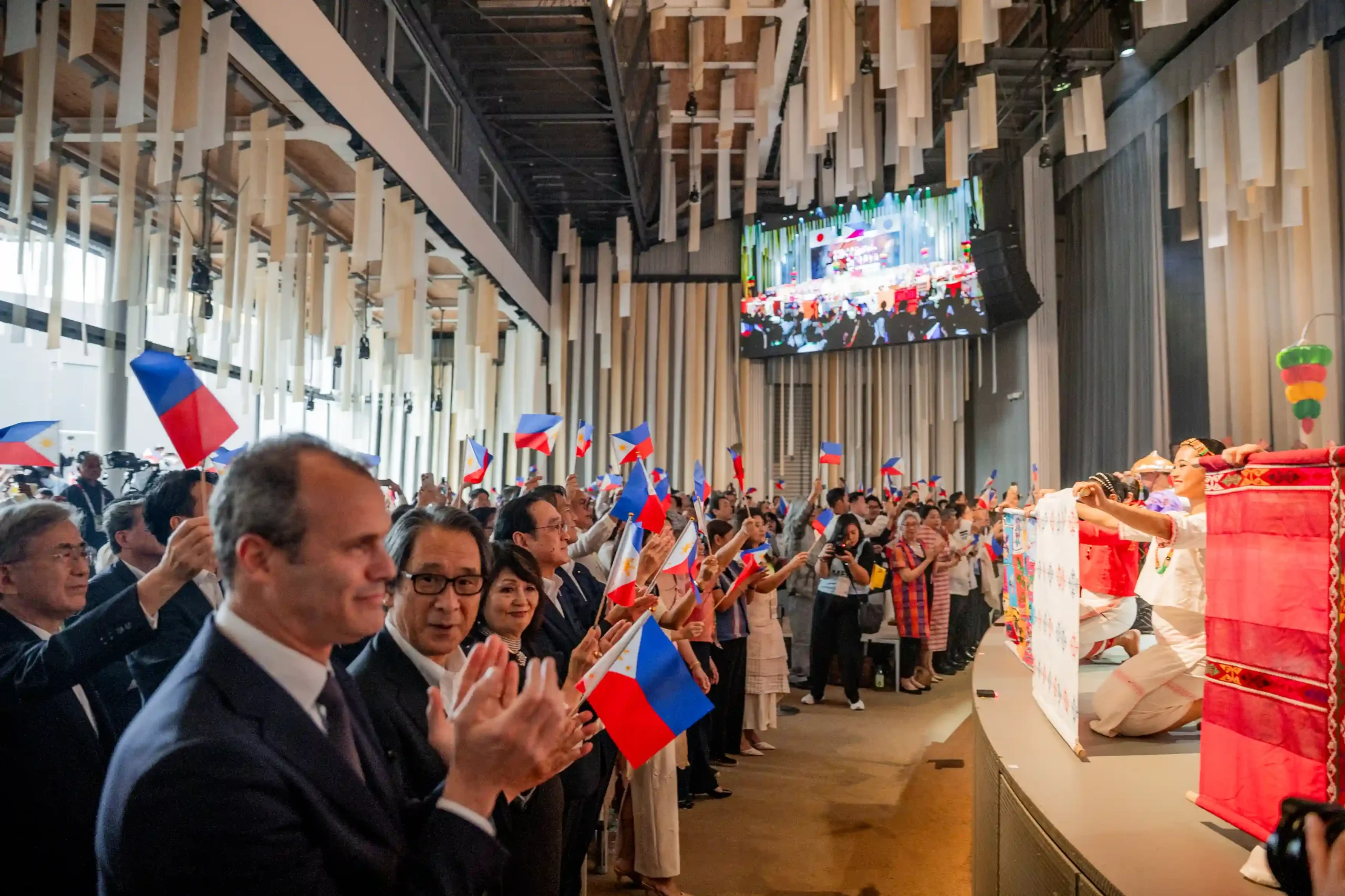
As the ensemble sang “Pilipinas Kong Mahal,” the audience joined in. Dancers stepped forward and unfurled handwoven cloths from across the islands. With the final note, the hall erupted—applause, cheers, flags waving. Performers bowed, hands to heart, acknowledging the ovation from a crowd now on its feet—many wiping their eyes, others laughing at each other’s tears and hugging.
He continued, “What I hope foreign audiences see is that this isn’t just performance. It’s a narrative of how we’ve carried the past, responded to the present, and envisioned the future—together.”
To weave a nation is to do more than honor the past. It is to recognize that every chant remembered, every movement preserved, and every song reimagined is a thread.
These threads are not spun for someday—they are woven now, for the better future we dare to make.
List of Performers
Suite 1: Hinabing Gunità (Woven Memory)
Rosie Godwino Sula | Lake Sebu, South Cotabato
Ramon Obusan Folkloric Group | Pasay, Manila
Suite 2: Hinabing Diwa (Woven Spirit)
Baihana | Metro Manila
Acapellago | Bulacan
Pinopela | Baguio
Alice Reyes Dance Philippines | Metro Manila
Sofronio Vasquez | Ozamiz, Misamis Occidental
Suite 3: Hiraya ng Kinabukasan (Woven Future)
Lumad Basakanon-Sinulog | Cebu
Lapu-Lapu Arnis de Abaniko | Cebu
UPeepZ | Makati
Loboc Children’s Choir | Bohol
Zephanie | Biñan, Laguna
National Day Performance Credits
Concept & Direction: Dexter M. Santos
Production Design: Gino Gonzales
Choreography: Jhunnard Jhordan S. Cruz, Ronelson P. Yadao, Dennis A. Navarro, Ma. Crystal Jane Bolanio Sapio, Chips Beltran
Music Arrangement: Orlando J. Ocampo, Joshua Cadeliña, Krina Cayabyab, Carlo Santos, Von De Guzman
Video Design: Joyce Sahagun Garcia
Technical Direction & Lighting Design: Meliton Roxas Jr.
Associate Director & Script: Mikko Angeles
Dramaturgy: Davidson Oliveros, Marvin Olaes
Vocal Direction: Joshua Cadeliña
Asst. Production Designer: Leslie Centeno
Asst. Video & Graphic Design: Steven Tansiongco
Project Management: Joshua Caesar Chan
Production Management: Fatima Ivy Baggao
Deputy Technical Director: Miguel Torralba
Stage Management: Ed Murillo
Sound Engineer: Rards Corpus
Production Assistants: Niña Graziella Camo, Shania Lee Cuerpo, Flow State
Asst. Stage Managers: Jai Avila, Dennis Ong
Spinner: Roan Cornejo
DOP for LED Materials: John Paul Santos
Photography courtesy of Tourism Promotion Board.
Read more: Osaka World Expo Philippine Pavilion: What the First 100,000 Visitors Know That You Don’t
Frequently Asked Questions
The performance opened with Rosie Godwino Sula, a National Living Treasure, chanting the Tudbulul to assert that the Philippine narrative begins with oral tradition and embodied memory. This ancient, improvised T’boli epic served as a “summons” rather than mere entertainment, grounding the nation’s identity in ancestral knowledge before transitioning into visual dance. By starting with the unaccompanied voice, the showcase highlighted that the archipelago’s history is a “chorus of islands” held together by sacred, spoken threads.
The Hinabing Gunità suite showcased dances from the T’boli, Visayan, Tausug, and Kalinga peoples to prove that tradition is a dynamic set of values rather than a frozen archive. By featuring rituals like the sacred weaving of t’nalak and the rhythmic Tinikling, the performance moved heritage “out of the glass case” and onto the stage. This approach emphasizes that cultural identity remains vibrant only when it is actively danced, shared, and passed down through generations.
The Matatag na Kasalukuyan section used contemporary music and dance to illustrate how Filipinos find joy and hope amidst daily struggles and chaos. Featuring vocal harmonies from groups like Acapellago and choreography inspired by Larry Alcala’s “Slice of Life,” the suite celebrated the unique “chaos” of Filipino everyday life, such as jeepney culture and crowded streets. It asserted that resilience is an ongoing act of weaving humor and faith into the fabric of the present.
With the permission of National Artist Ryan Cayabyab, the lyrics of “Better World” were updated from a future-leaning “someday” to a defiant “here and now.” This change shifted the narrative from waiting for a better world to actively building one, placing the responsibility on the current generation and the youth. This lyrical pivot served as a powerful declaration that the Philippines is not merely dreaming of progress but is already executing its vision for a better global future.
The theme “To Weave a Nation” represents the unification of diverse regional cultures into a singular, cohesive national identity through the metaphor of textiles. During the finale, performers from all three suites—ranging from hip-hop dancers to traditional chanters—unfurled handwoven cloths from across the islands while singing “Pilipinas Kong Mahal.” This visual crescendo symbolized that every movement, chant, and song is a vital thread in the ongoing project of nation-building and cultural solidarity.
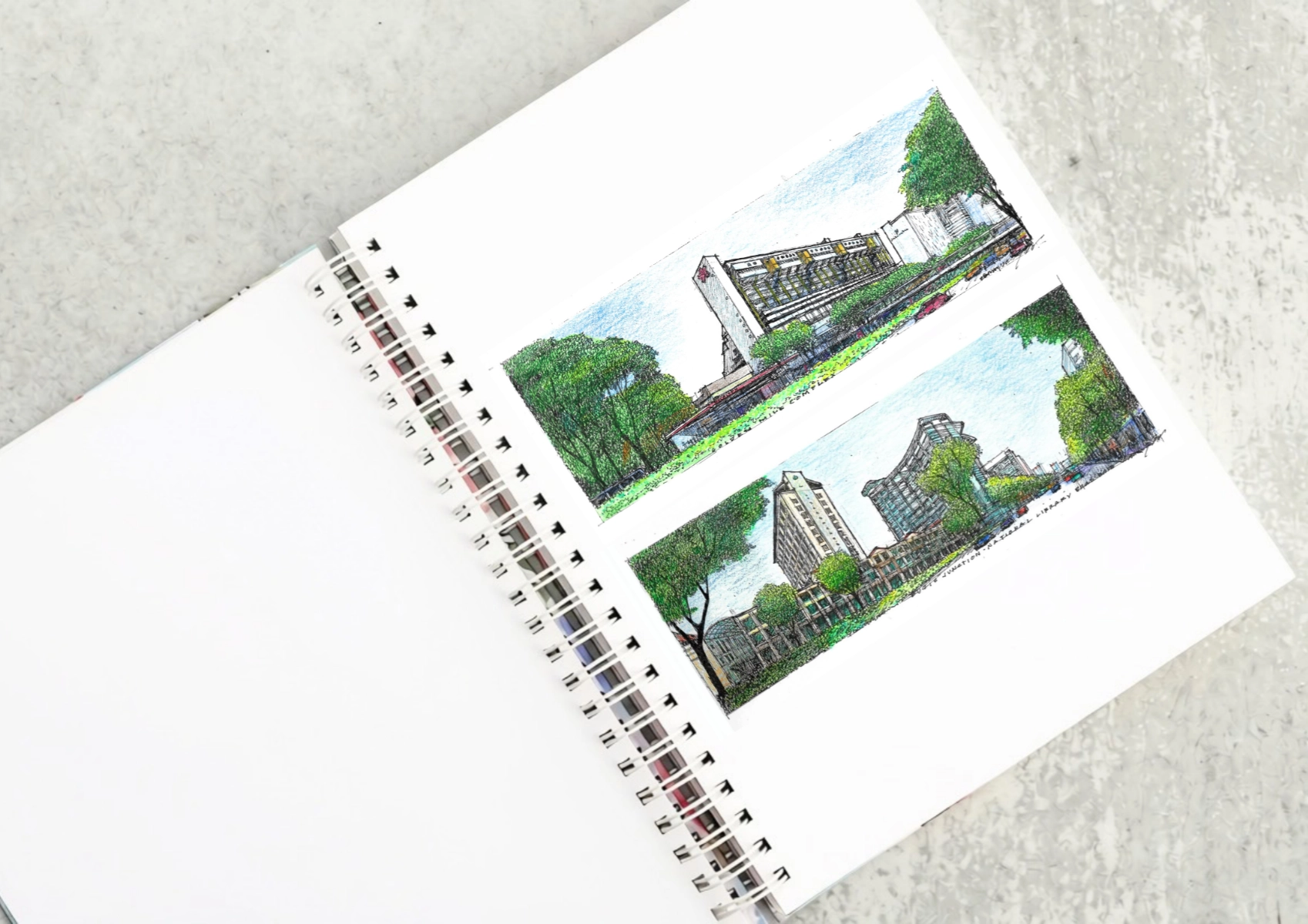
Two sketches of Singapore connect BluPrint Editor in Chief Paulo G. Alcazaren’s personal and professional history with Shared Ground: ArchitectureArchitectureThe art and science of designing and constructing buildings, structures, and spaces that are functional, safe, and aesthetically pleasing. It encompasses the planning, design, materials, and techniques used to createGo to Architecture Glossary of Care, Culture, […]
In a way, designers are the modern-day soothsayers and prophets. They design for the future, predicting how a room, a house, a building or a whole city will be used by people. They foresee how users will interact with a space, conjure exact shades of colors to elicit specific behavior and arrange furniture to build […]
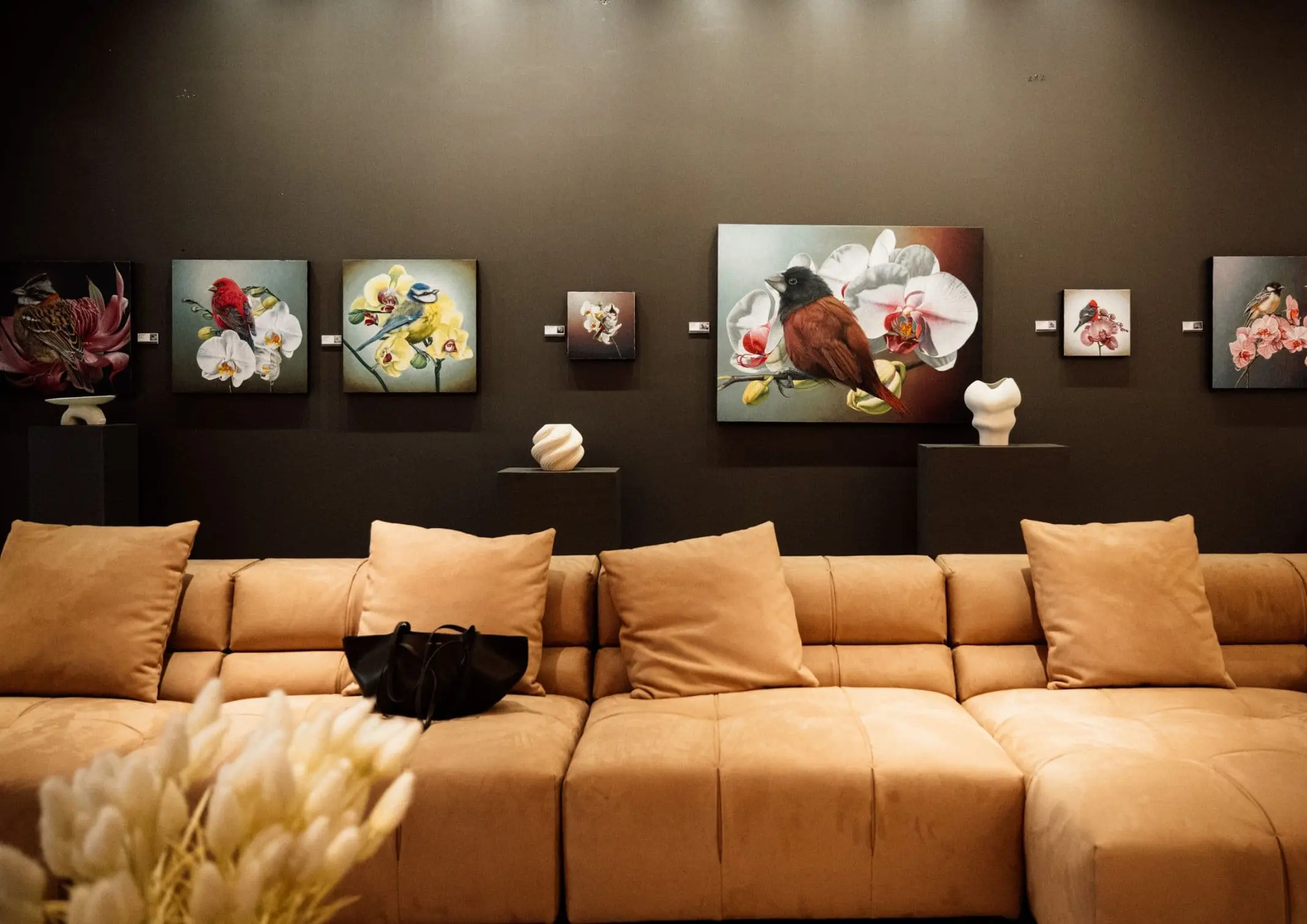
Art and furniture are often selected separately, yet their relationship can shape how a room looks and feels. The collaboration between Hooga and Galerie Joaquin explores how these elements can work together, bringing contemporary artworks into furnished residential settings at Hooga’s showroom in Uptown Mall, Bonifacio Global City. For Hooga, which curates furniture, lighting, and […]
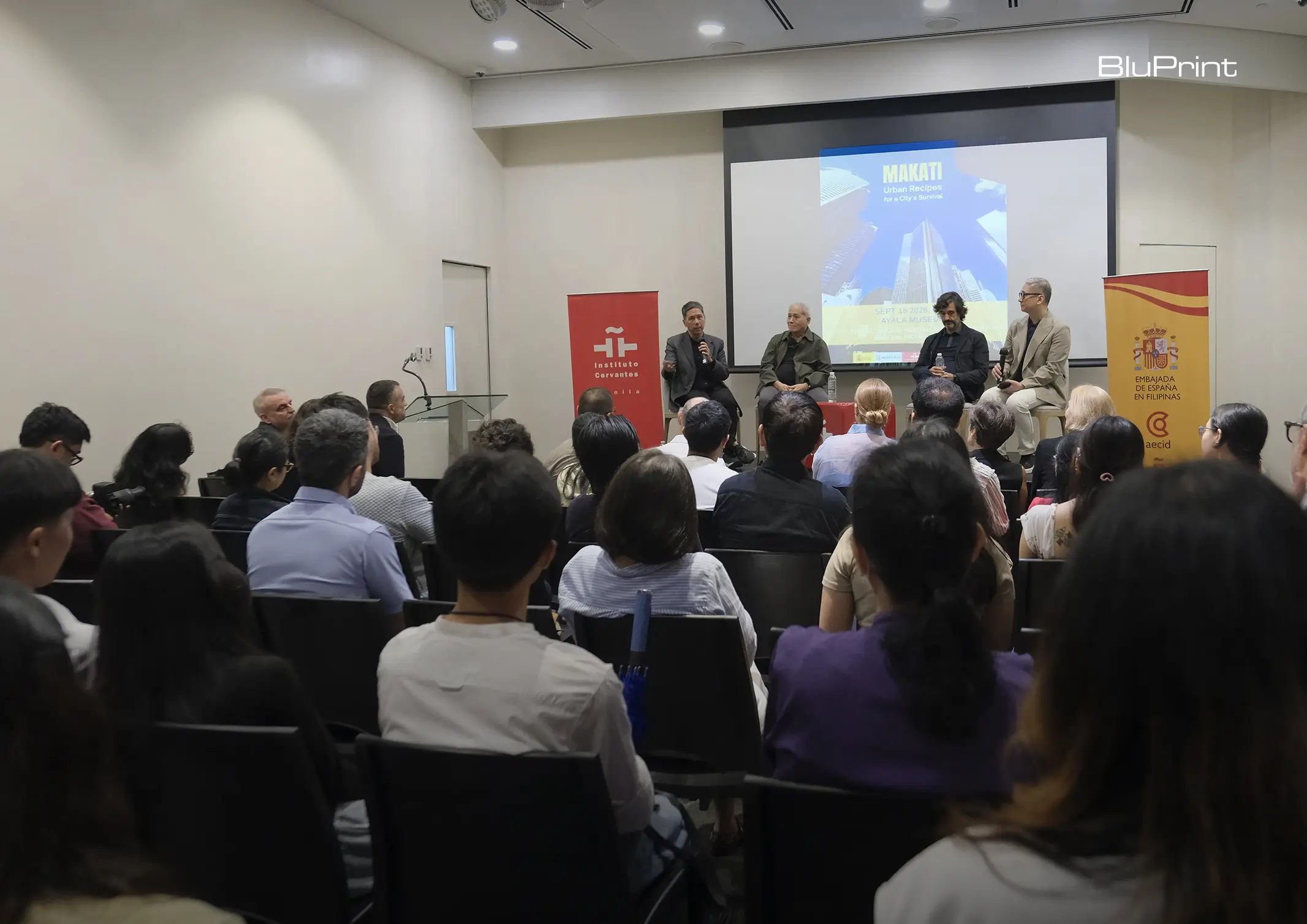
How can better-planned cities create the conditions for more creative, livable, and resilient urban environments? “Makati Urban Recipes for a City’s Survival,” a colloquium held at the Ayala Museum on September 15, brought together architects and practitioners from the fields of urbanism and the creative economy to discuss how design, planning, and collaboration can address […]
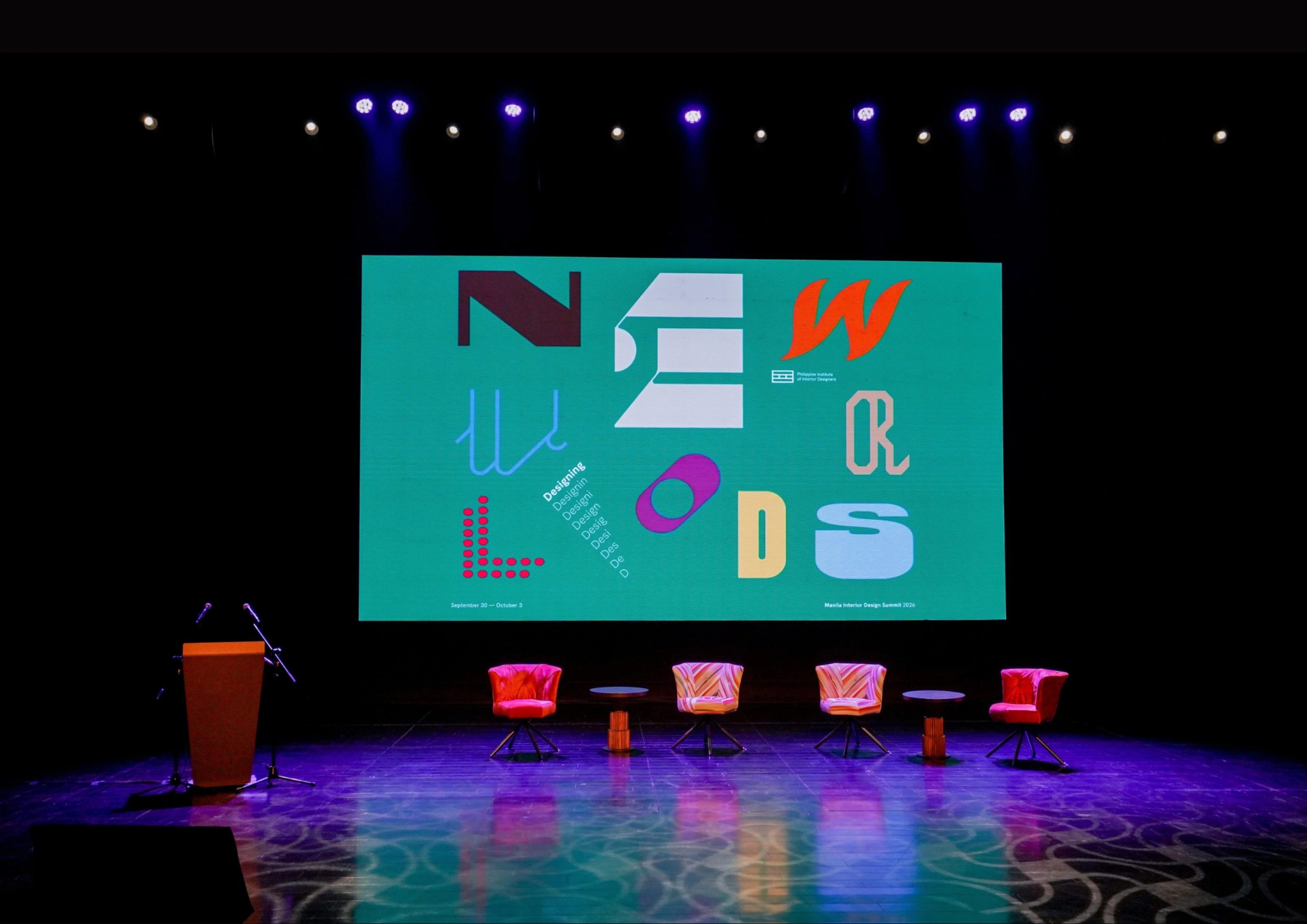
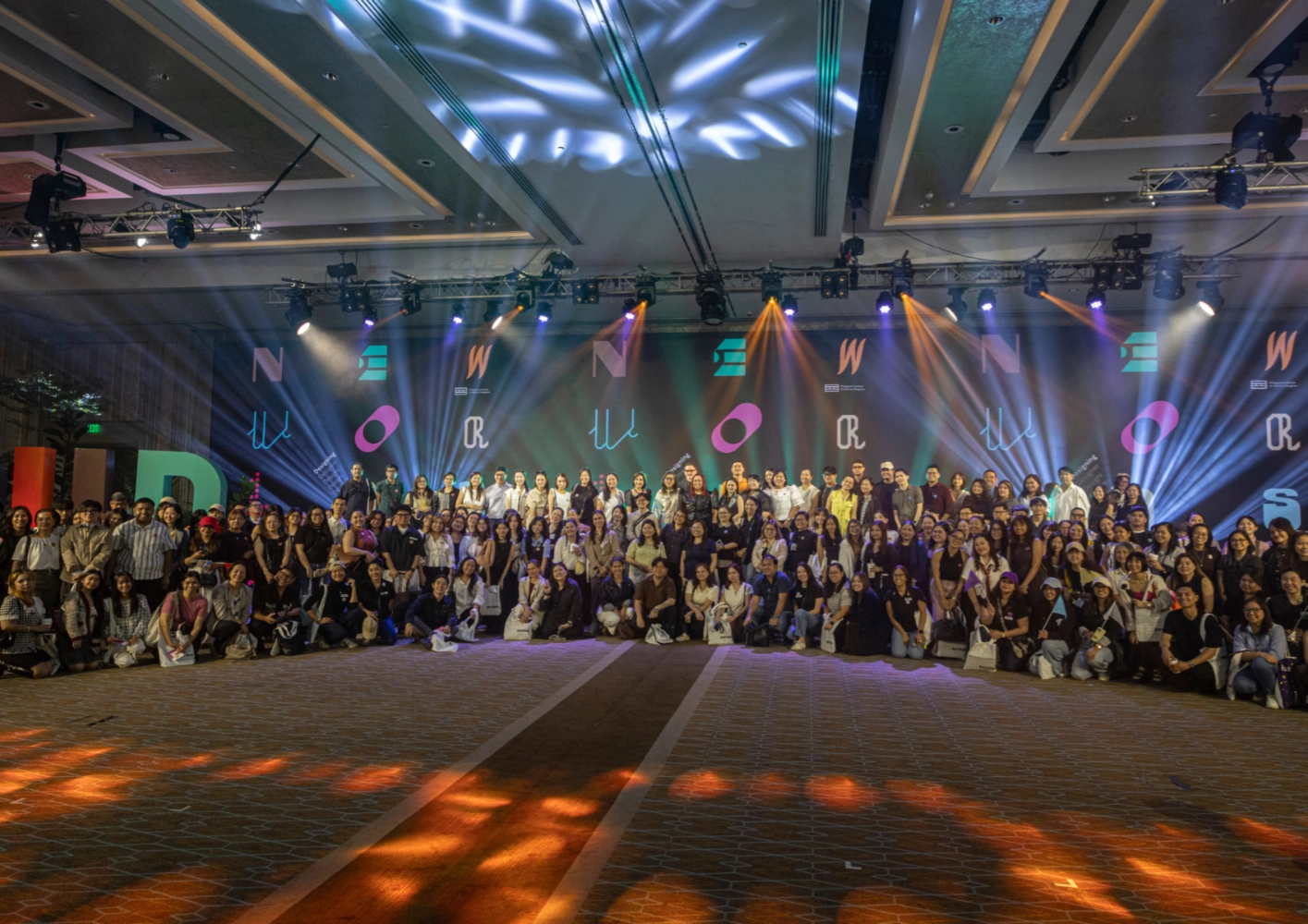
The fourth Manila Interior DesignInterior DesignThe discipline of planning and shaping interior spaces for function, comfort, safety, and beauty. It covers layout, lighting, materials, finishes, furniture, and color, and in the Philippines is a licensedGo to Interior Design Glossary Summit (MIDS) brought together more than 300 delegates for four days of conversations, exhibitions, and design […]
Read the issues.

Collect the volumes.

Recommended Video
Tap to Unmute
Unmute
0:00
0:00