Rinna Soriano’s favorite part of her work is sanding. At her workbench, she stays focused, following the grain, adjusting to changes in its direction. Narra, she has learned, can have interlocking grain. A piece of mango once proved particularly difficult until a worker explained that she had reached the point where a branch once grew […]
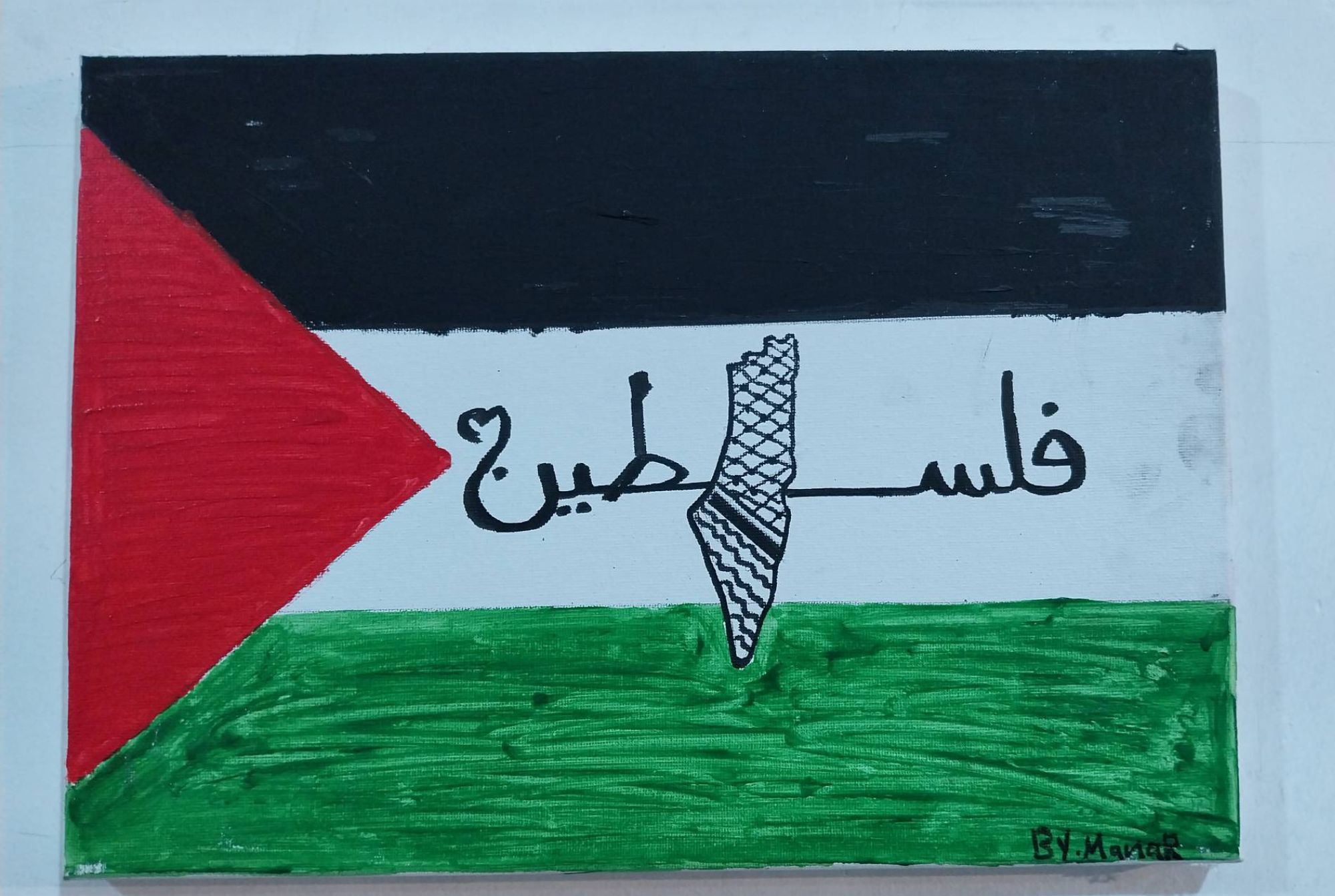
‘Ilog Hanggang Laot’ Demands Empathy and Action for War-Weary Palestinians



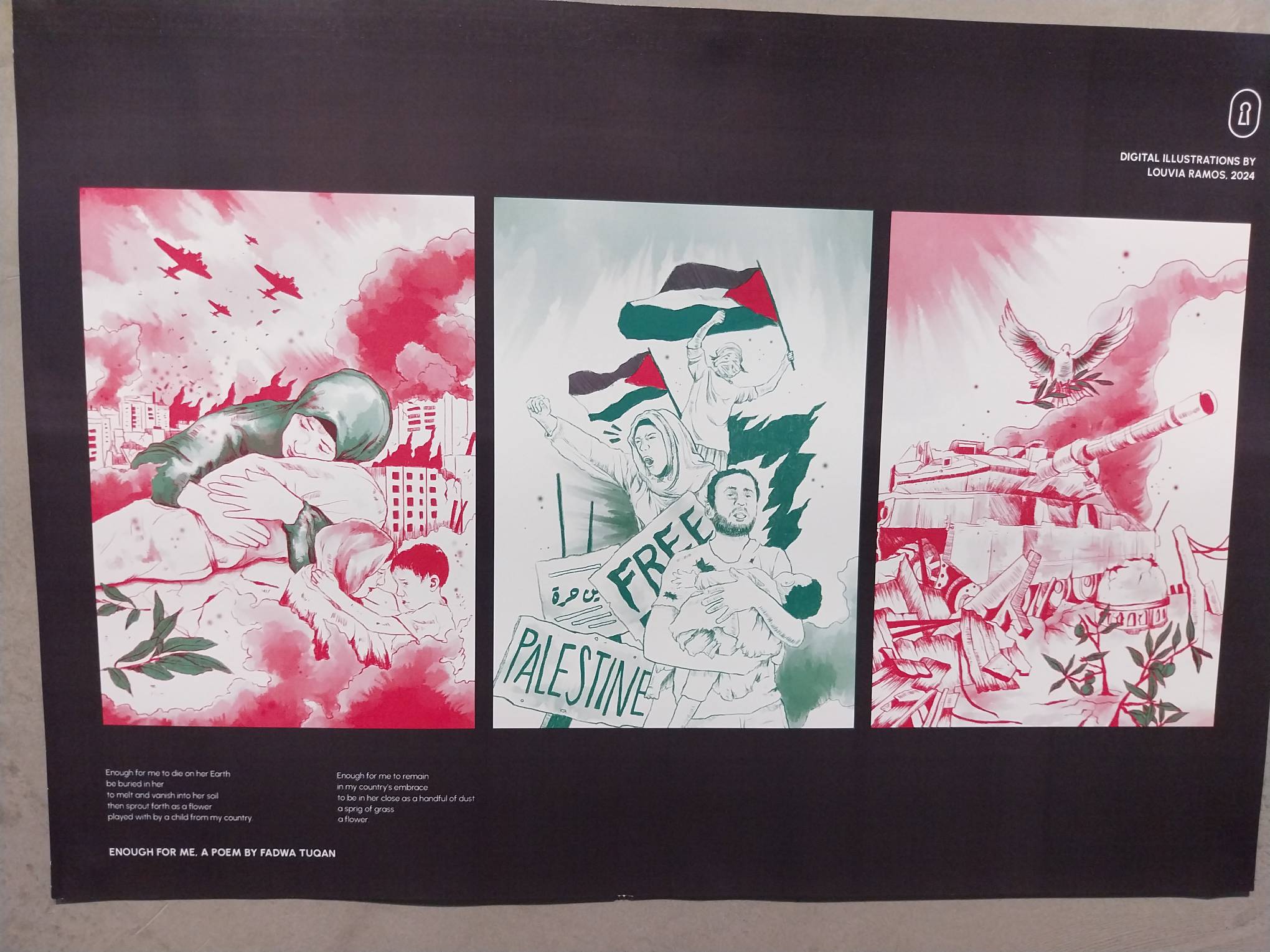
Ilog Hanggang Laot: A Palestinian Solidarity Art Exhibit expresses the need to support Palestinian refugees and causes in the country. The exhibit opened on September 13 at the SFAD Art Space of the Philippine Women’s University. Running until October 11, the exhibit was organized by art collective and labor rights activists SIKAD.
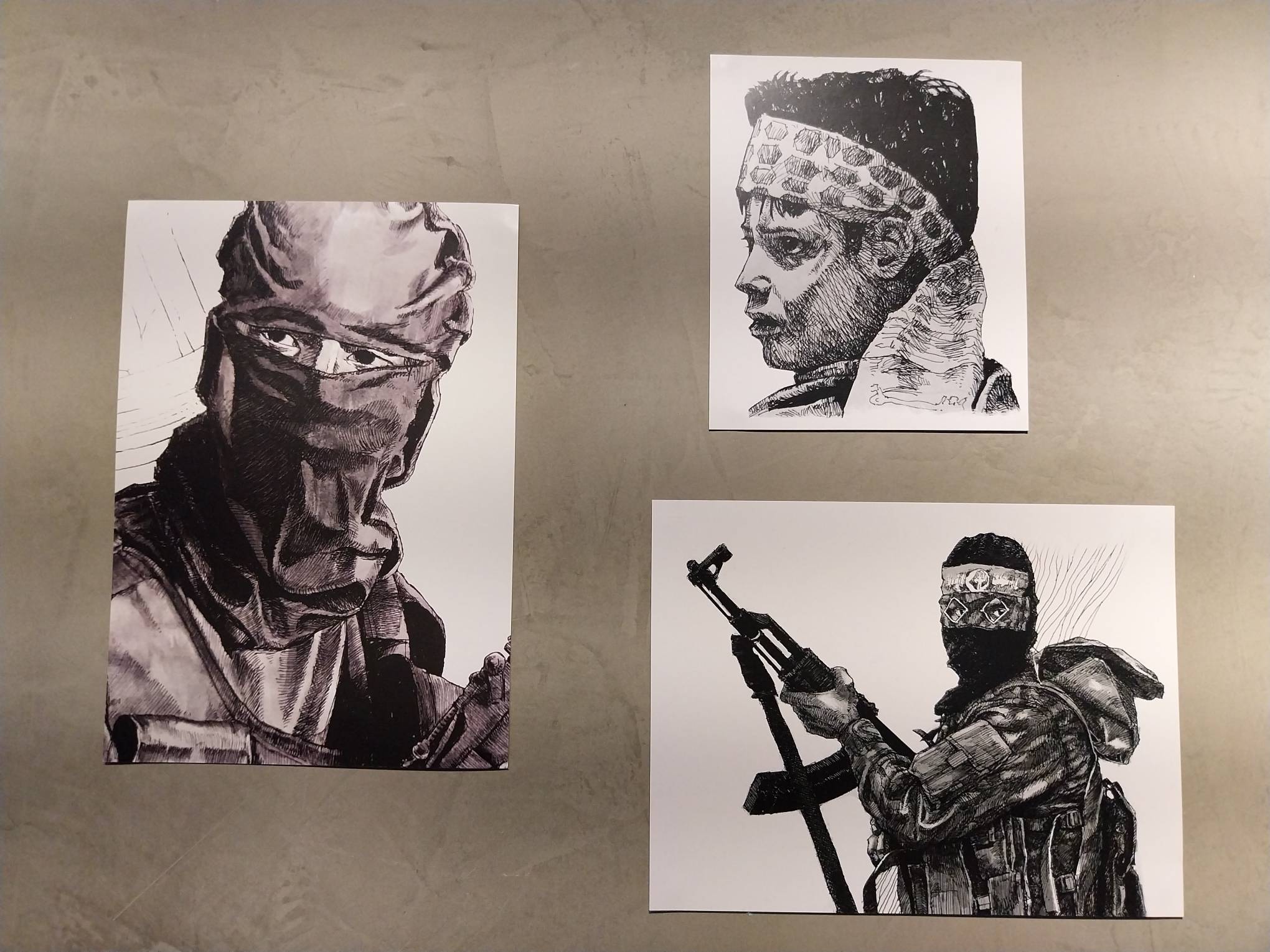
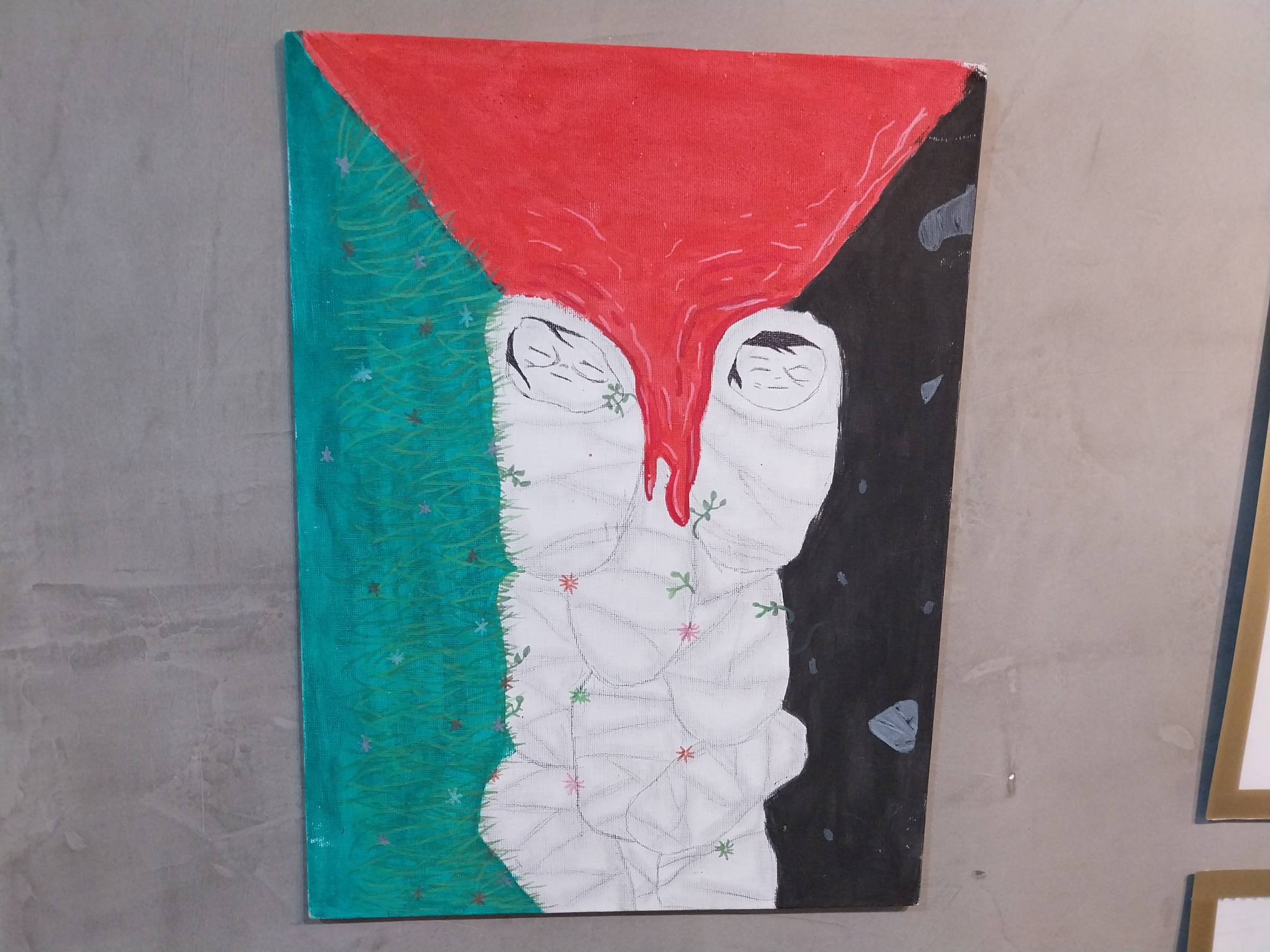
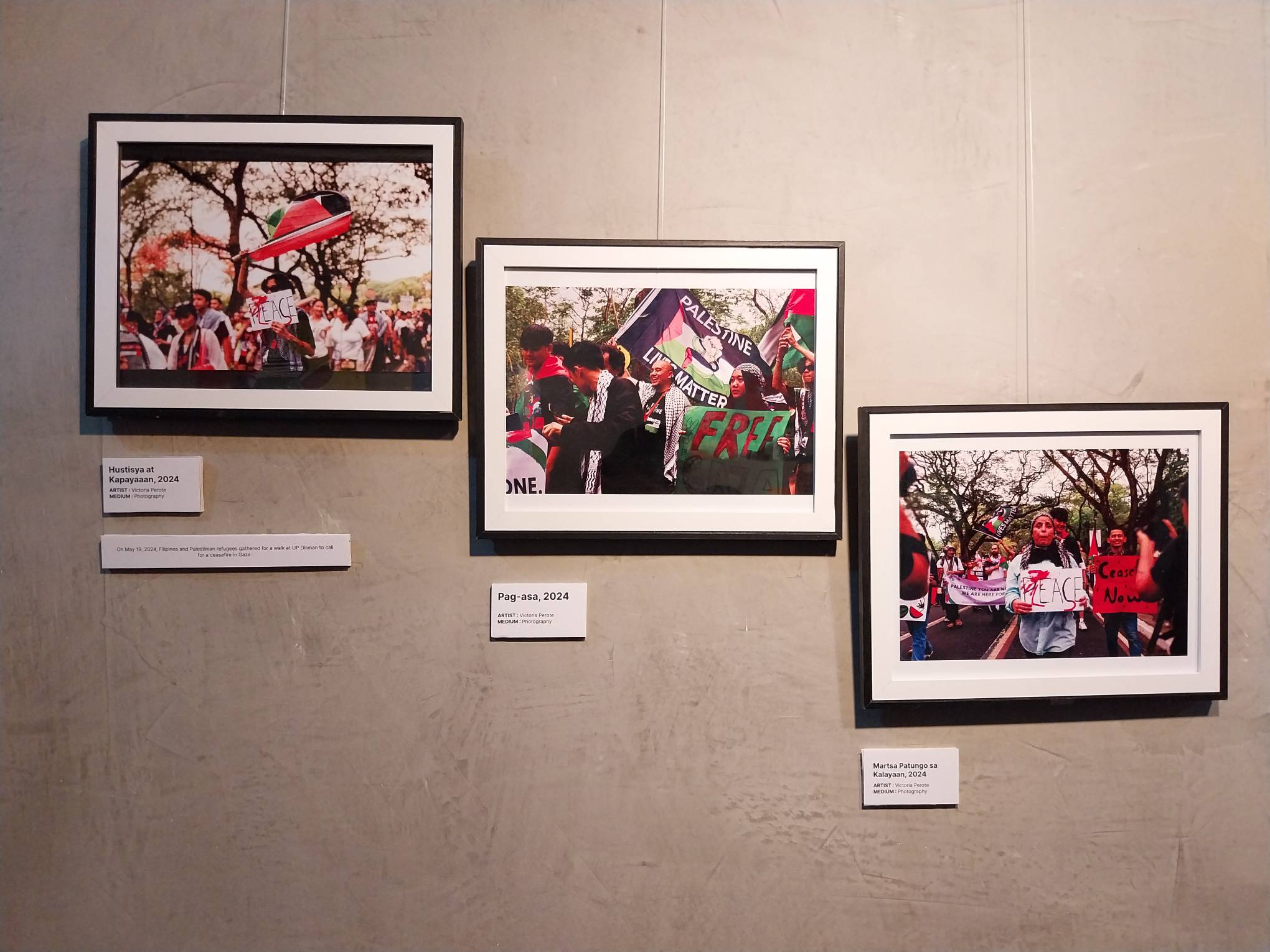
Multiple artists participated in the group exhibit, including Tanya Villanueva, Louvia Ramos, Resty Flores, Victoria Perote, and Malayo Pa ang Umaga. The works ranged from acrylic paintings and photographs, to mixed media works like bracelets and wood structures.
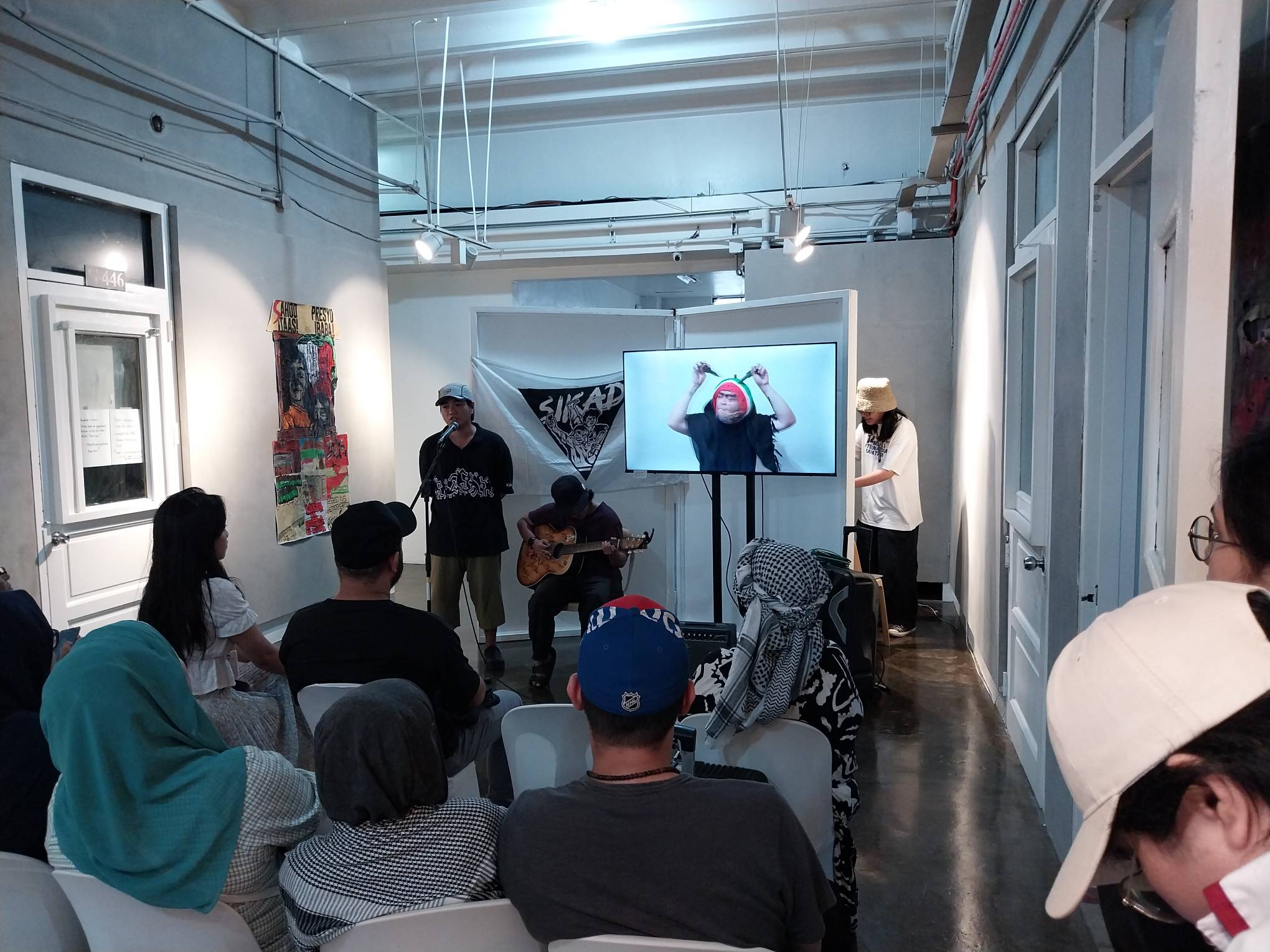
During the opening reception on September 13, SIKAD invited different speakers and musicians to discuss the issues related to the Israeli-Palestinian war. This included Amira Lidasan from the Moro-Christian Peoples Alliance (MCPA), and musicians like Tambisan and Zero Eviction. The short films Bahay Barikada and Remnants of a Conversation were also shown.
Re-engaging The Narrative
Ilog Hanggang Laot, which translates the slogan “From the River to the Sea” in Filipino, showcases art that criticizes the international community’s response to the relentless bombing and killings in Gaza. These works emphasize a normalization in Western governments and the press to ignore Palestinian civilian casualties by labeling them as “terrorists.”
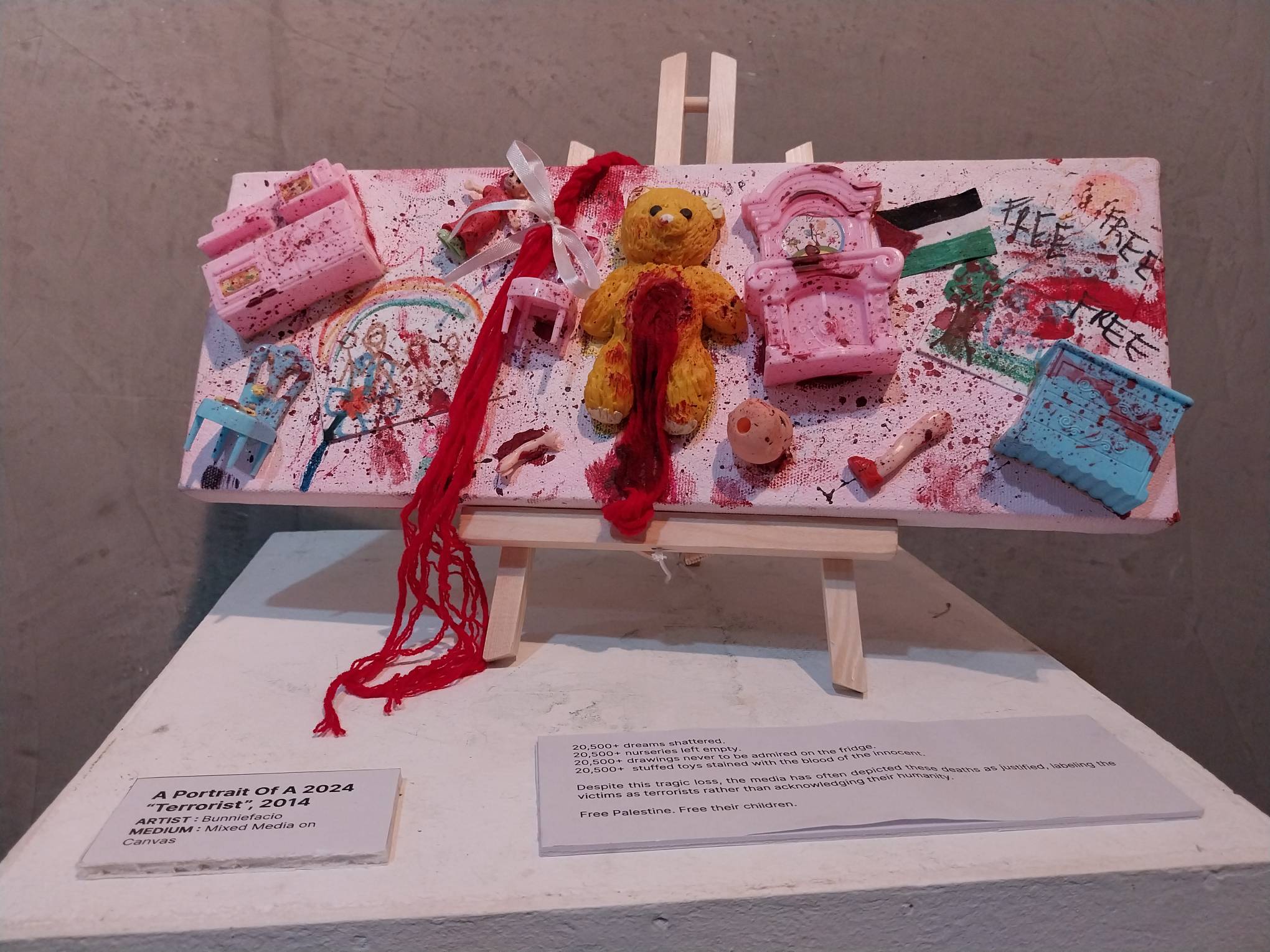
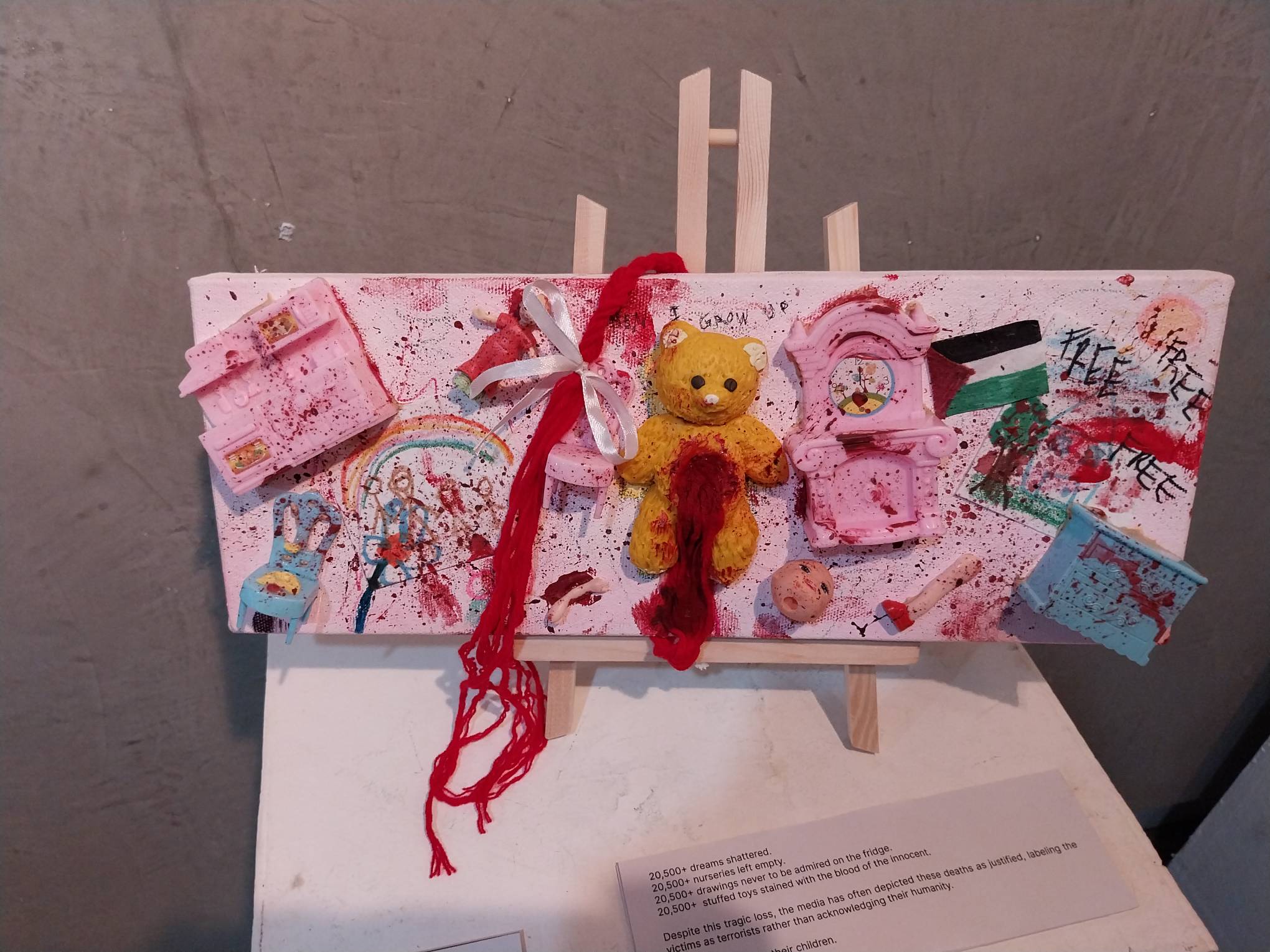
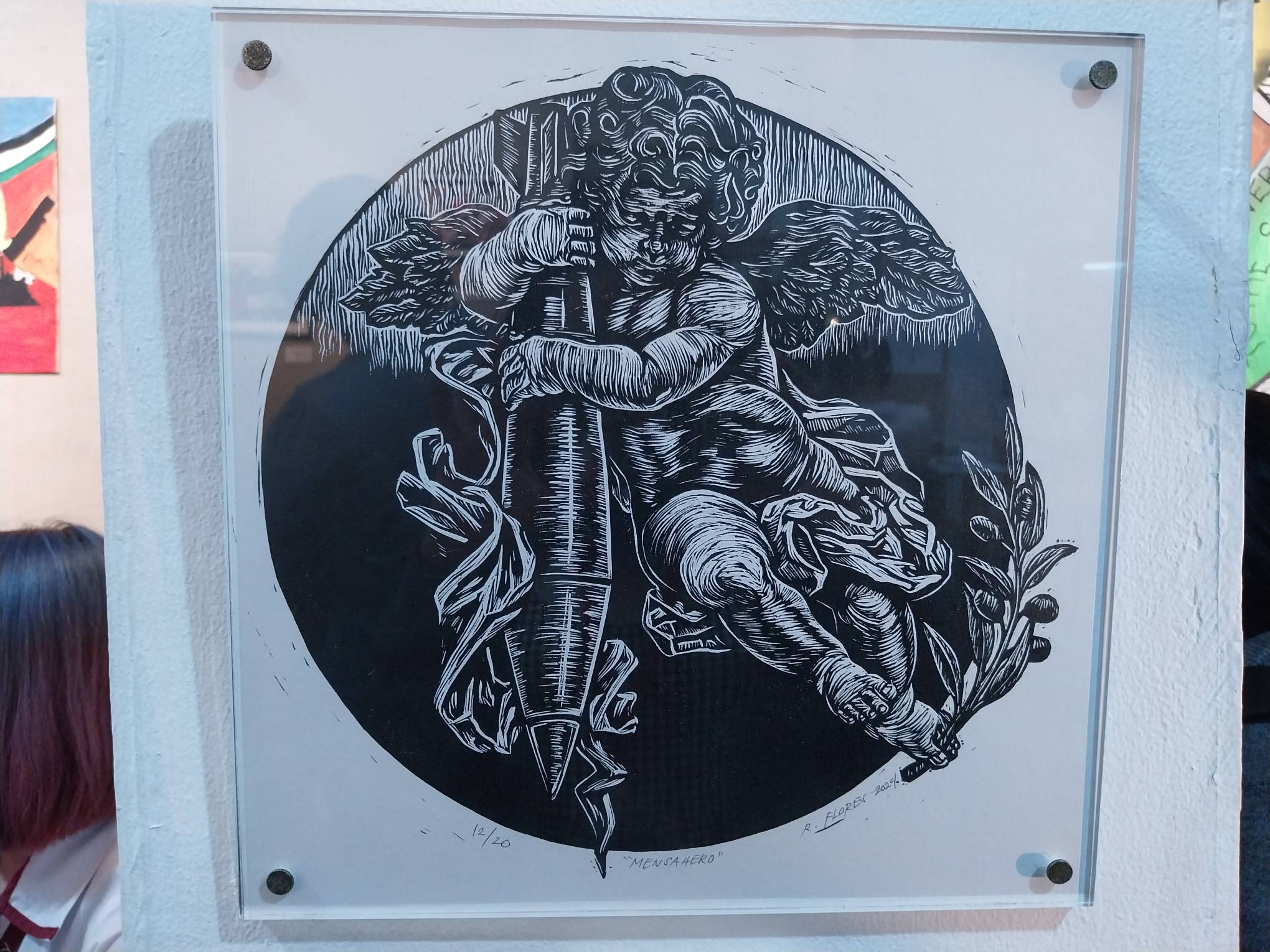
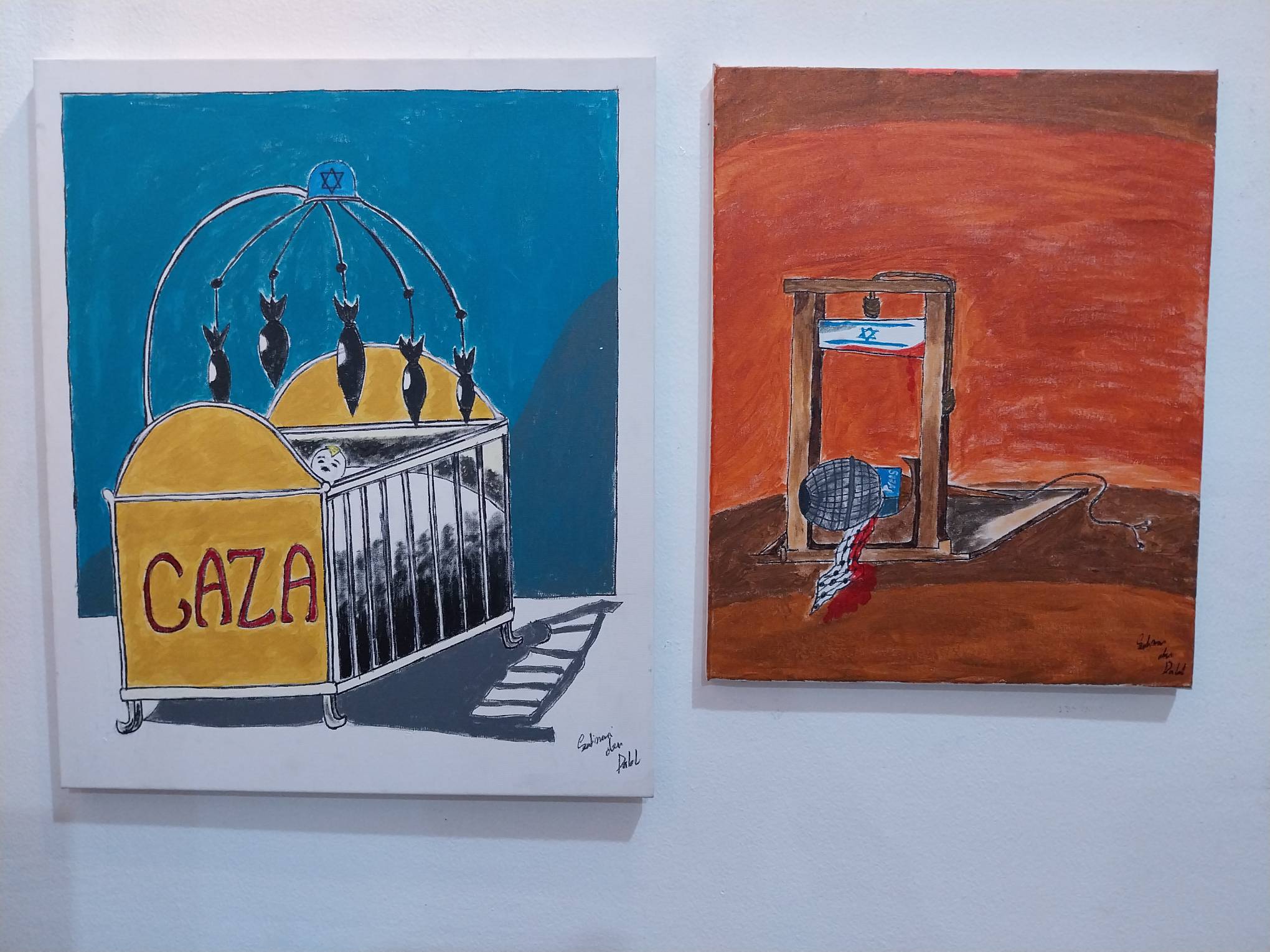
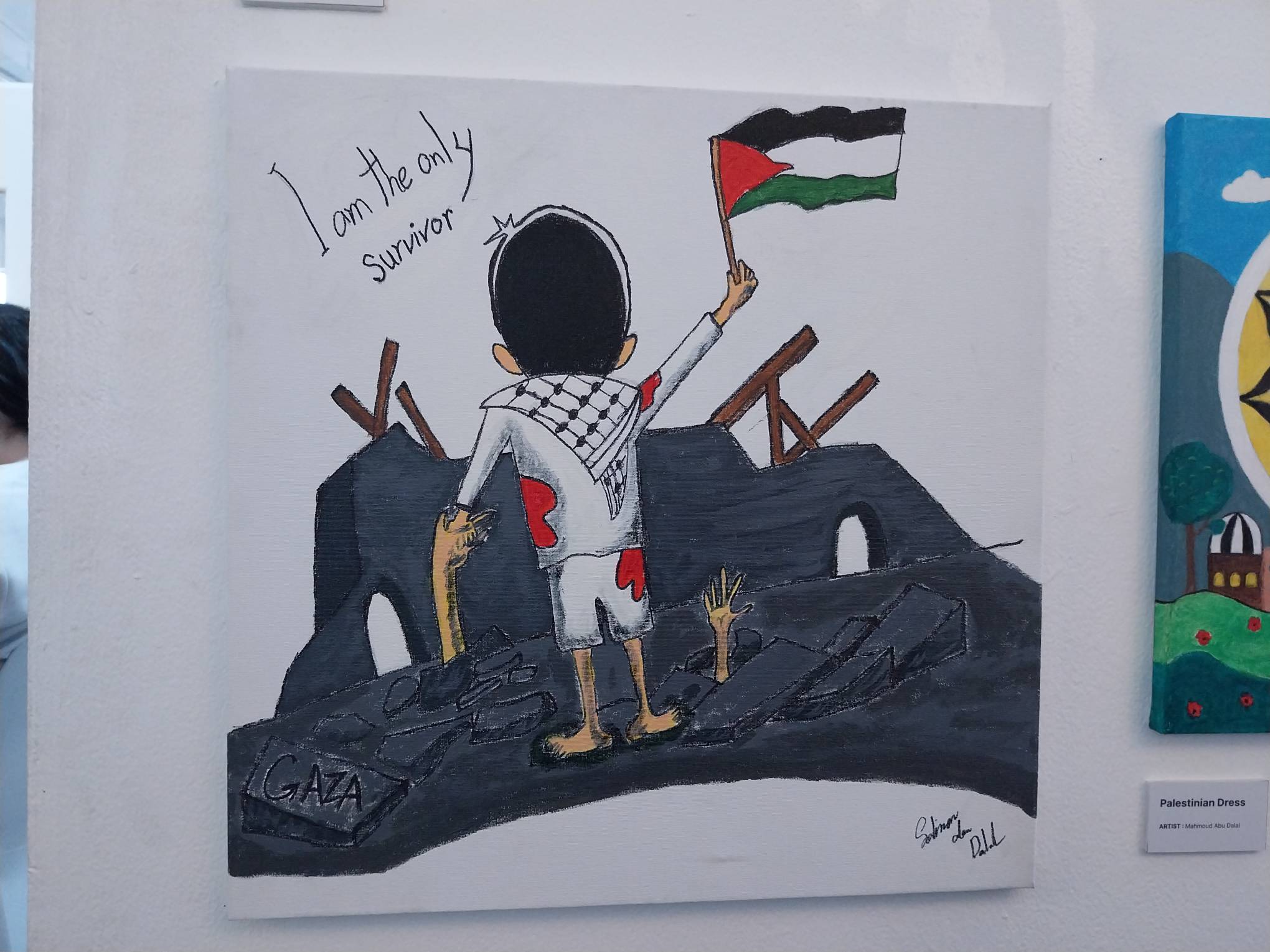
Bunniefacio’s “A Portrait of a 2024 ‘Terrorist’” uses the typical toys that children play with, and adds splashes of red paint and strings to indicate the rising death toll of children in Gaza. Brian Barrios and Mahmoud Abu Dalal similarly emphasize the same point in their works. Resty Flores’ “Mensahero” recontextualizes the Christian imagery of a cherub by giving it a bomb to drop on the people below.
These works affirm that the attacks of Hamas against Israel cannot “justify the deliberate killing, injuring and kidnapping of civilians.” That really, no terrorist attack or group justifies the marginalization and genocide of an entire subset of civilians.
Palestinian Refugees in the Country
Amira Lidasan, who spoke during the opening reception, called out the Philippine government for its support of Israel’s war in Gaza, as well as the lack of support for the Palestinians, specifically Filipino-Palestinian refugees in the country.
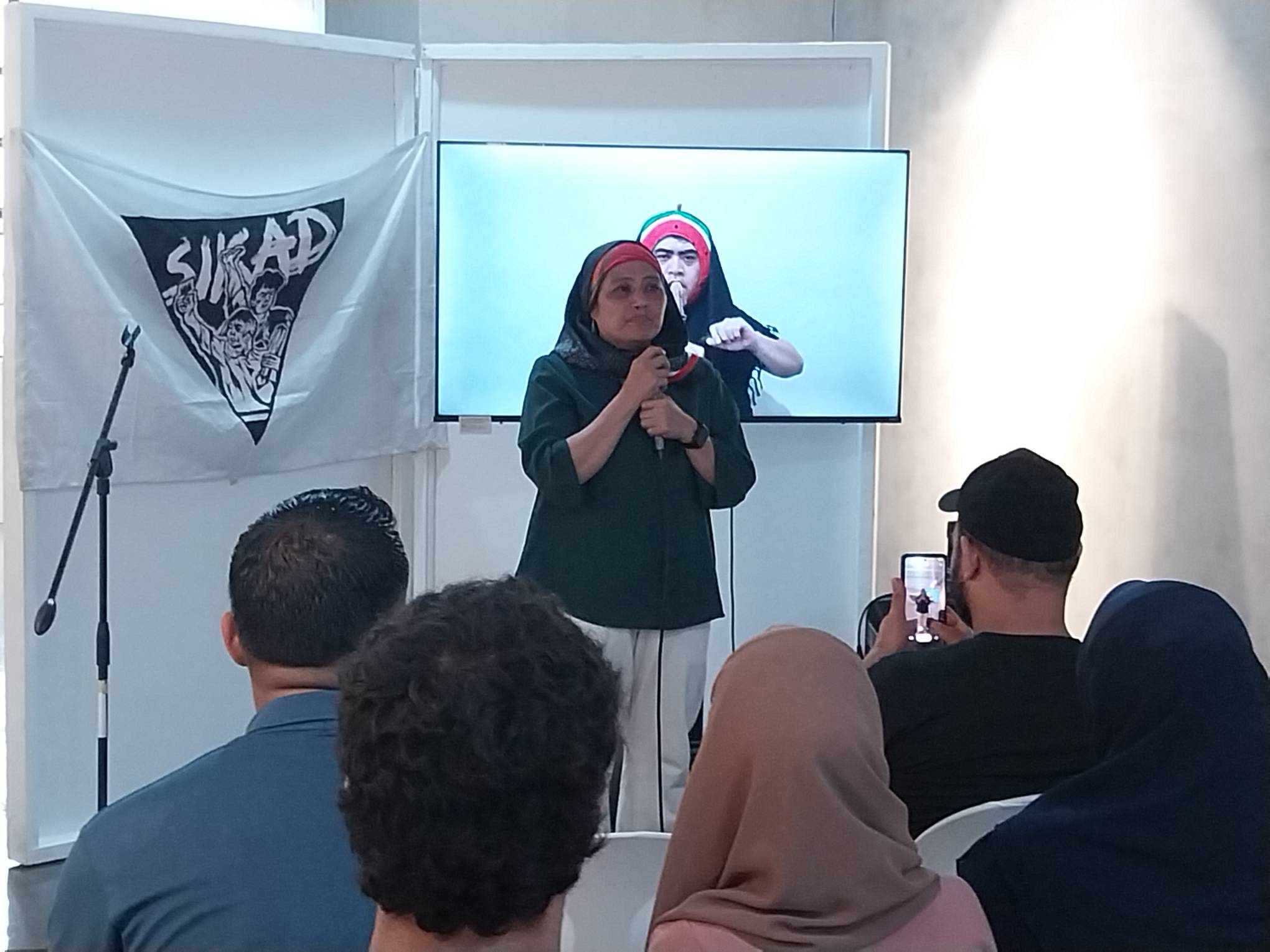
The small community of refugees fled to the Philippines after the start of the current conflict. Also known as Little Gaza, the community received little help from the government. They are currently struggling to raise funds to keep their home in Quezon City despite their various efforts, including an initiative that sells home-cooked Palestinian food.
Recontextualizing Media’s Portrayal of Palestinians
While Ilog Hanggang Laot condemned the media portrayal of Palestinians as terrorists, it also provided a protesting counter to the mainstream Western narratives shown today. “Intifada” by SAMAEL and the works of Julius Bagoyo shown in the exhibit recontextualize the portrayal of freedom fighters away from the “terrorist” label of the West.
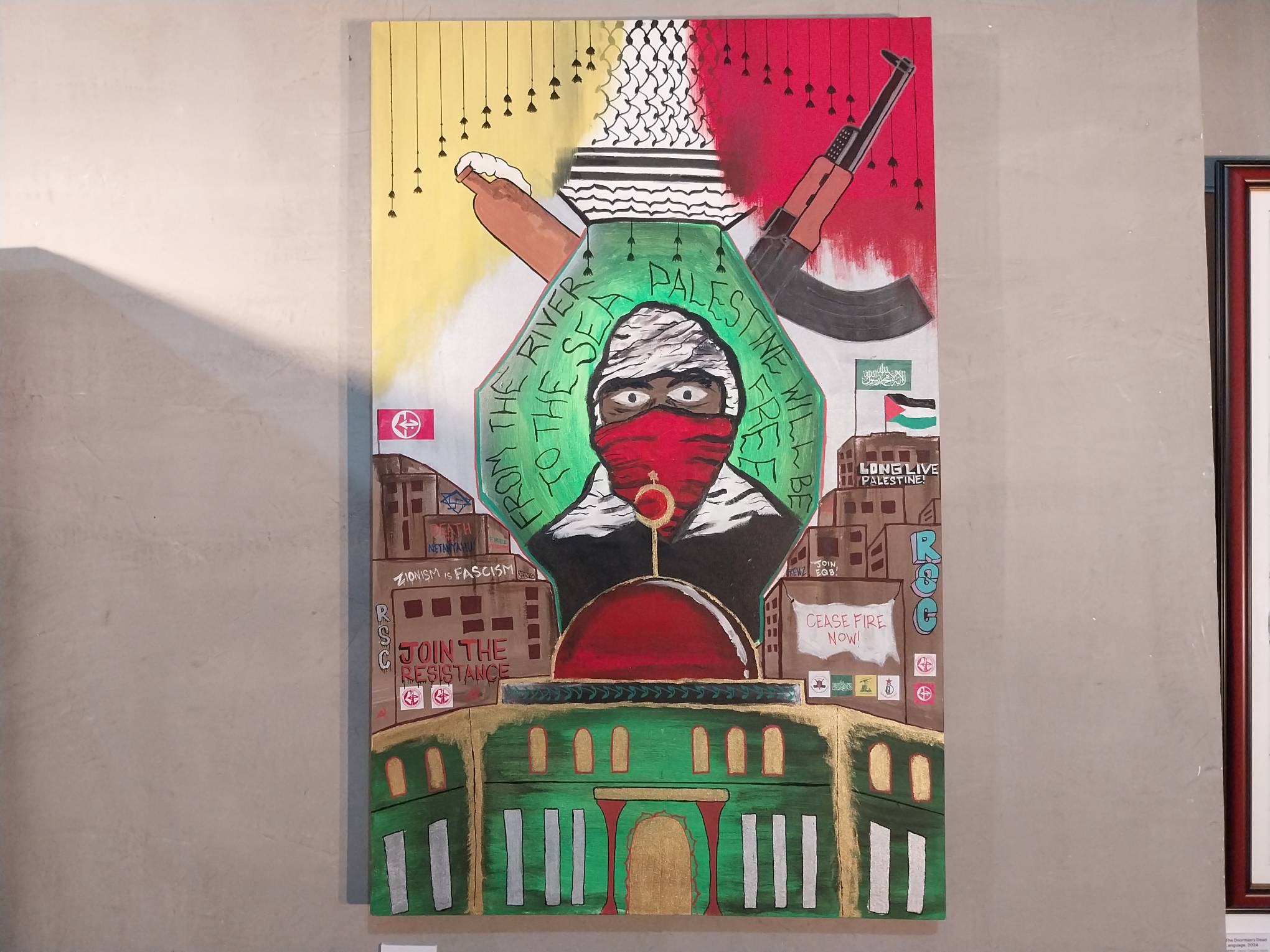
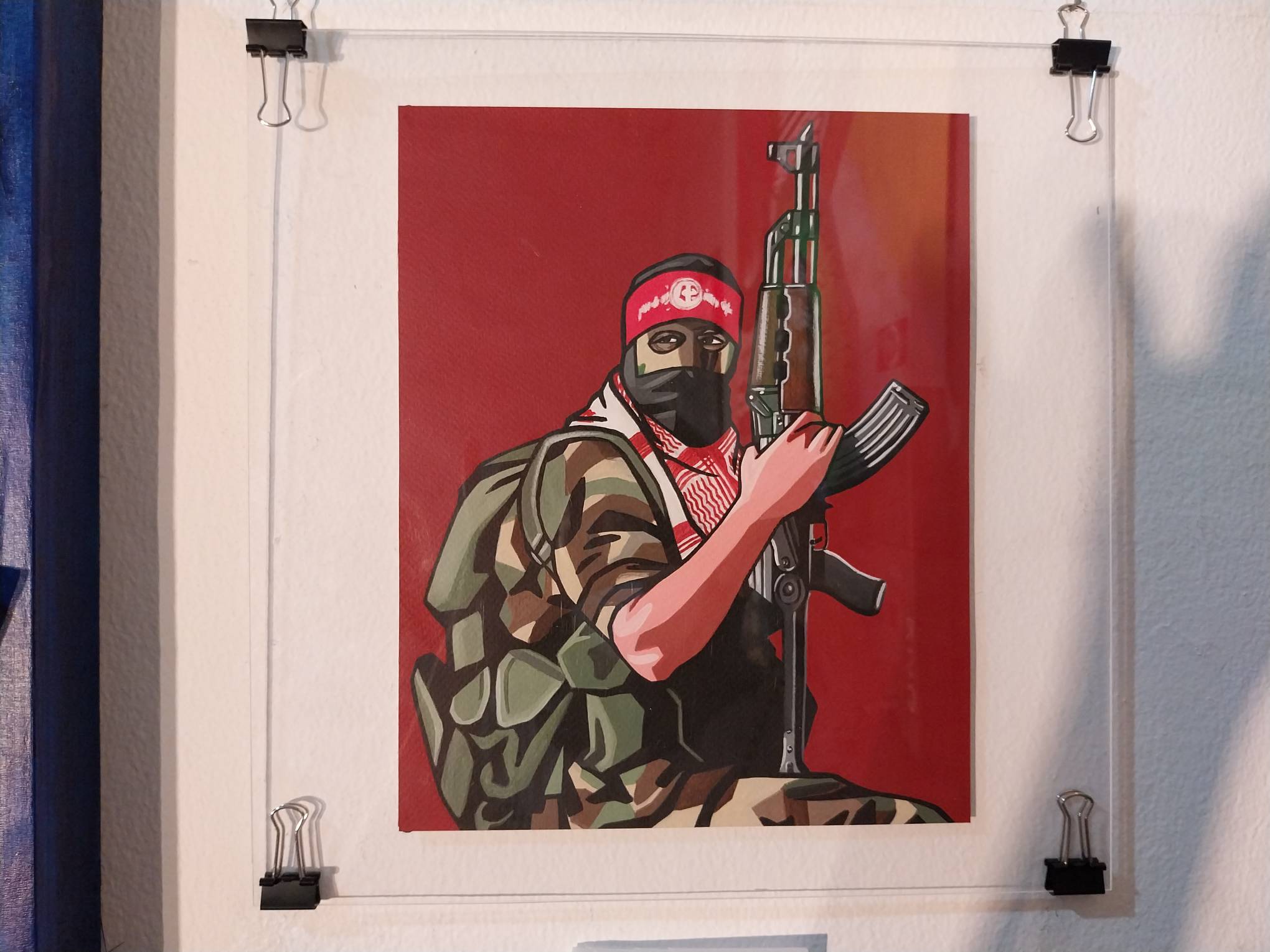
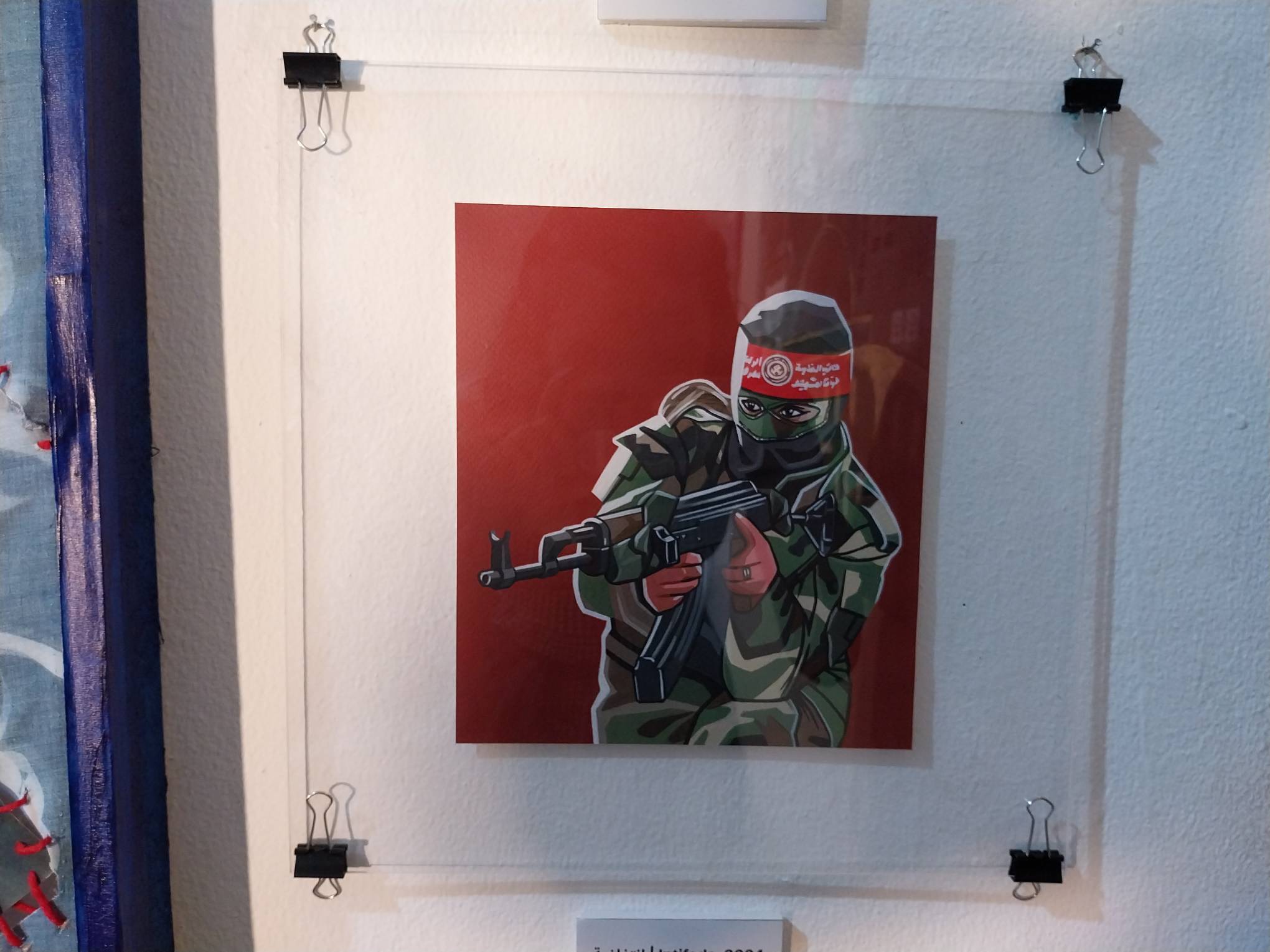
It reminds viewers that terror groups like Hamas did not spring out of the ground out of evil. Instead, they came about due to decades of radicalization that came from oppression and deliberate marginalization from powerful governments.
One remembers that attempts to broker a two-state solution to the Israel-Palestine problem, like the Oslo Accords, resulted in the assassination of its leaders. If the government refuses to recognize the plight of its people through peaceful means, then what else is there left to do in the search for freedom and recognition?
Connecting the Palestinian Plight to the Filipino Muslim Community
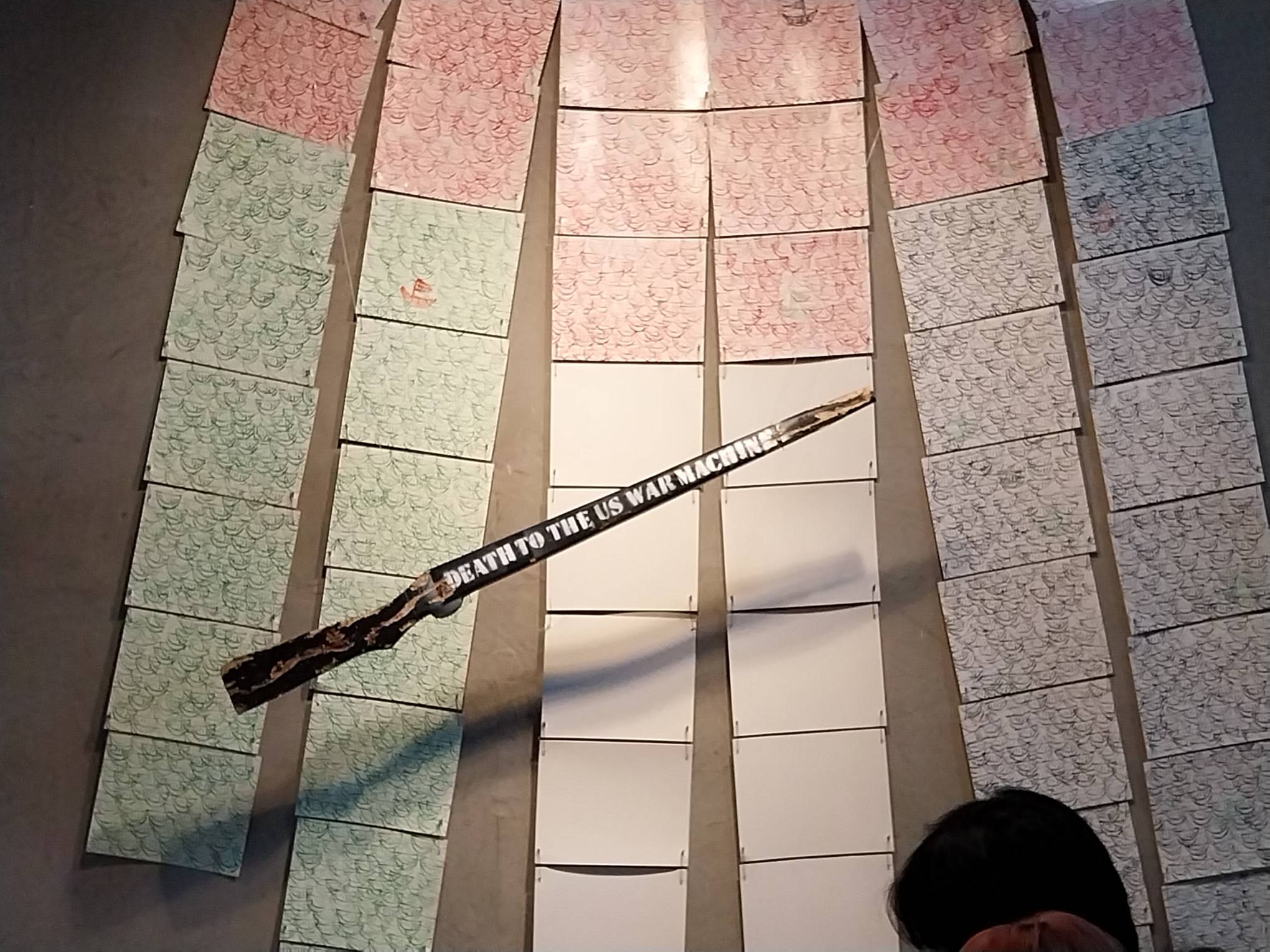
Lidasan linked the Israeli War on Gaza explicitly to the War on Terror the United States initiated after 9/11. She calls it a “legitimization” of war, baking in the imagery of Muslims as terrorists in our daily language. She also links the killings in Gaza to our own government’s penchant for extrajudicial killings, as the “tools of war” are now used against ordinary people.
The speech, and the exhibit as a whole, links the marginalization of Palestinians in and outside of their country to our own local causes and problems. Through that, it exemplifies the necessity of a united front to create a sustained effort that helps the Moro and Palestinian communities—both the refugees in this country, and the ones still experiencing the war.
Imploring for Peace in the Face of War
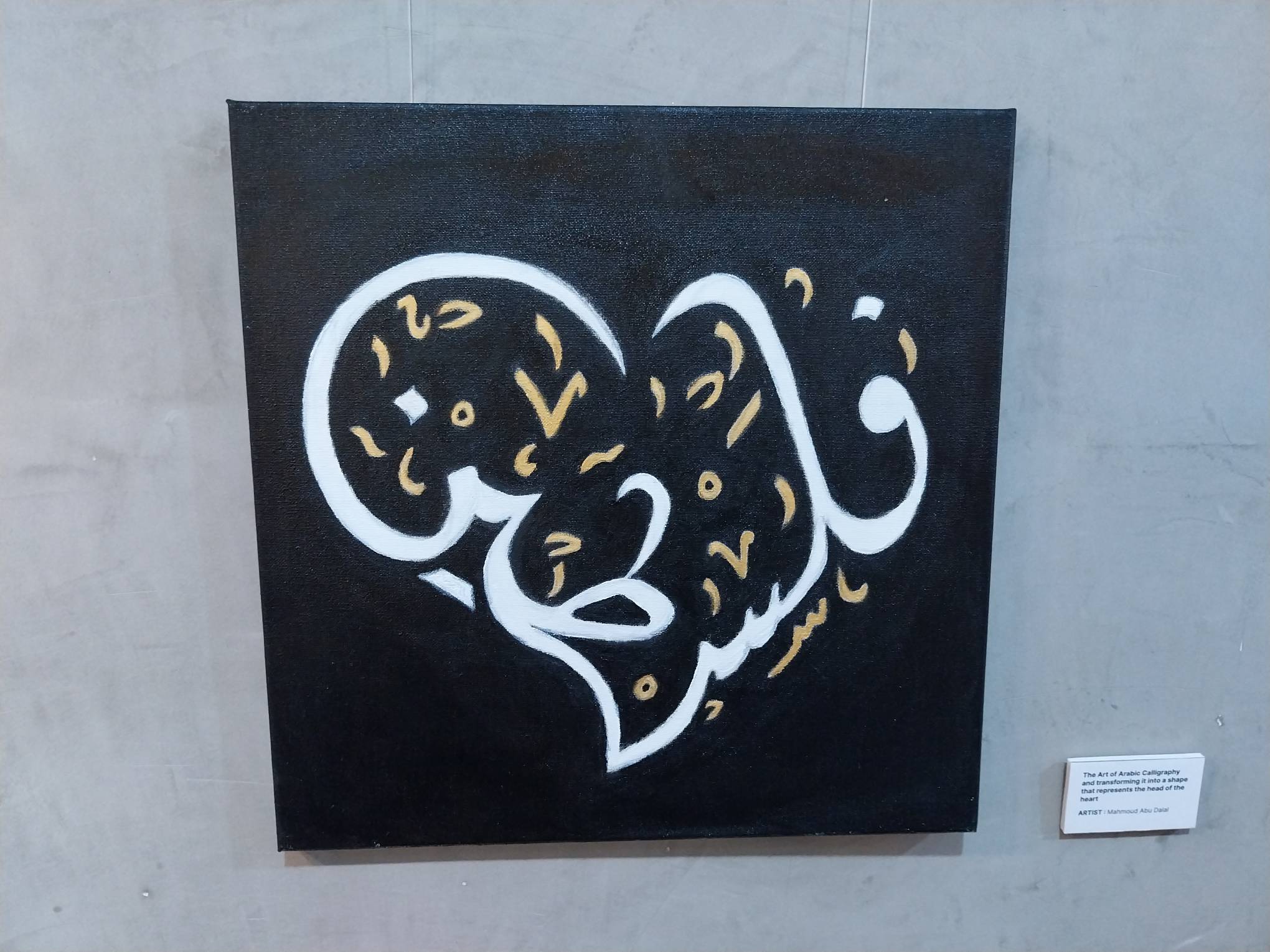
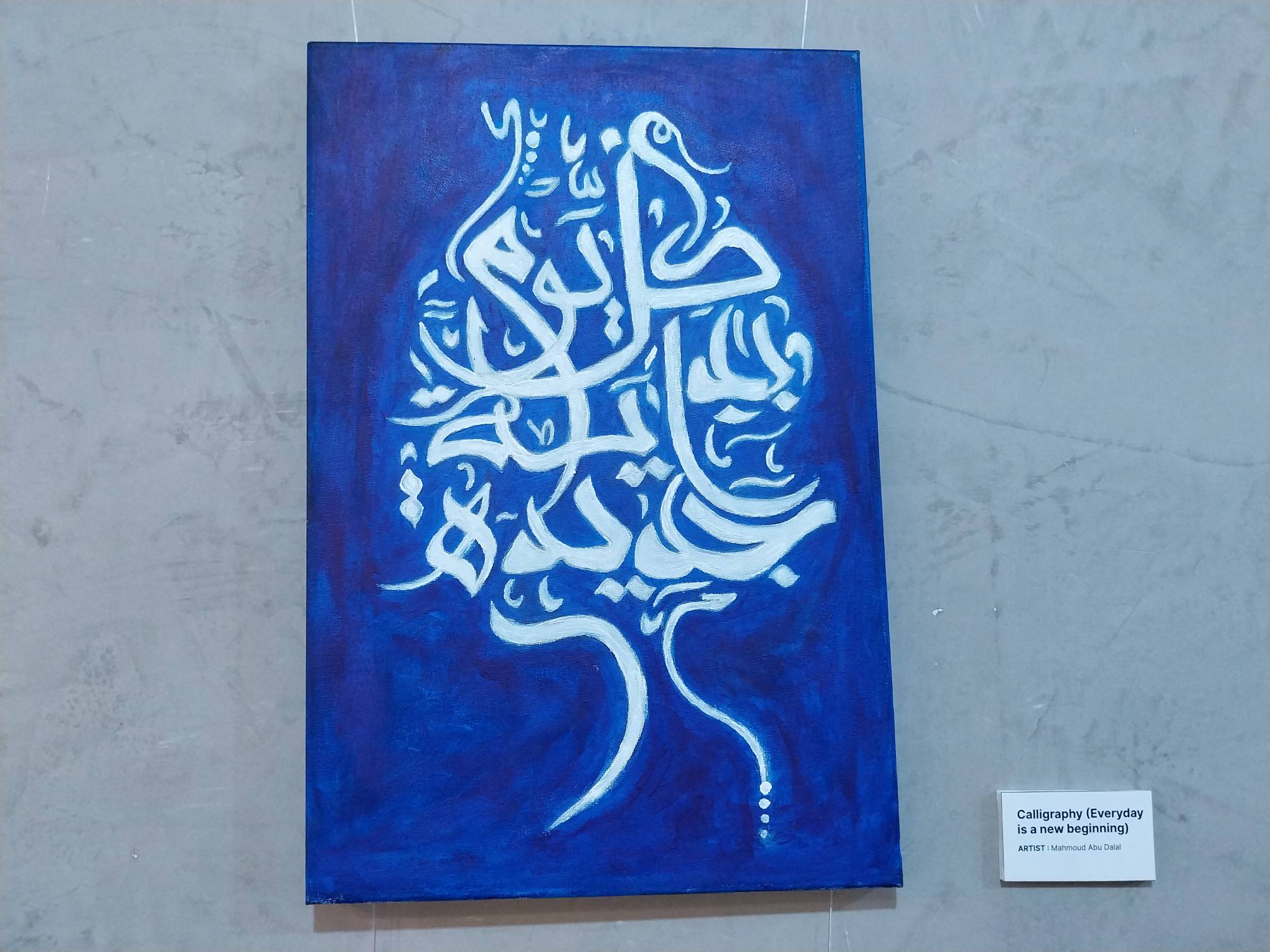
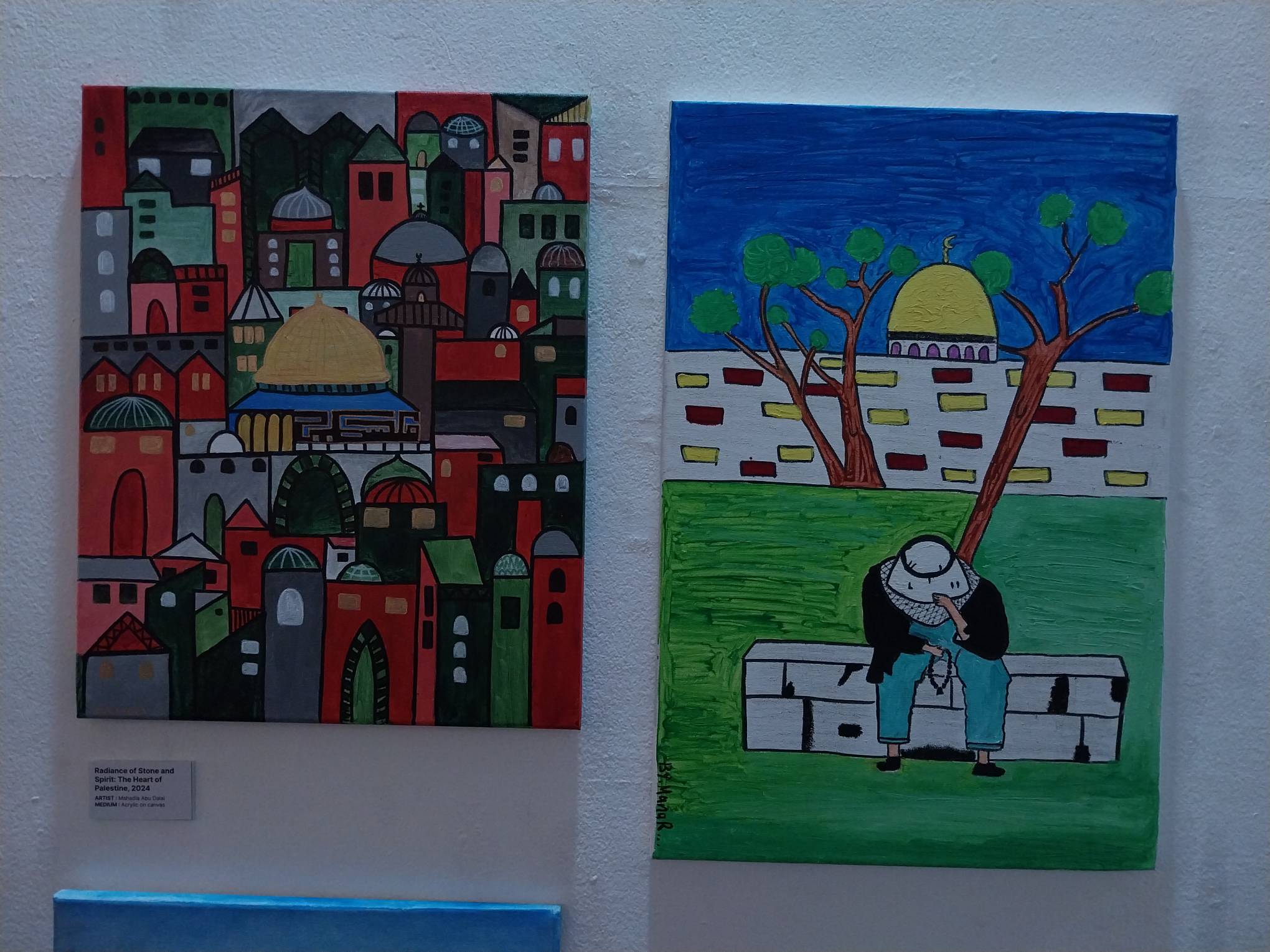
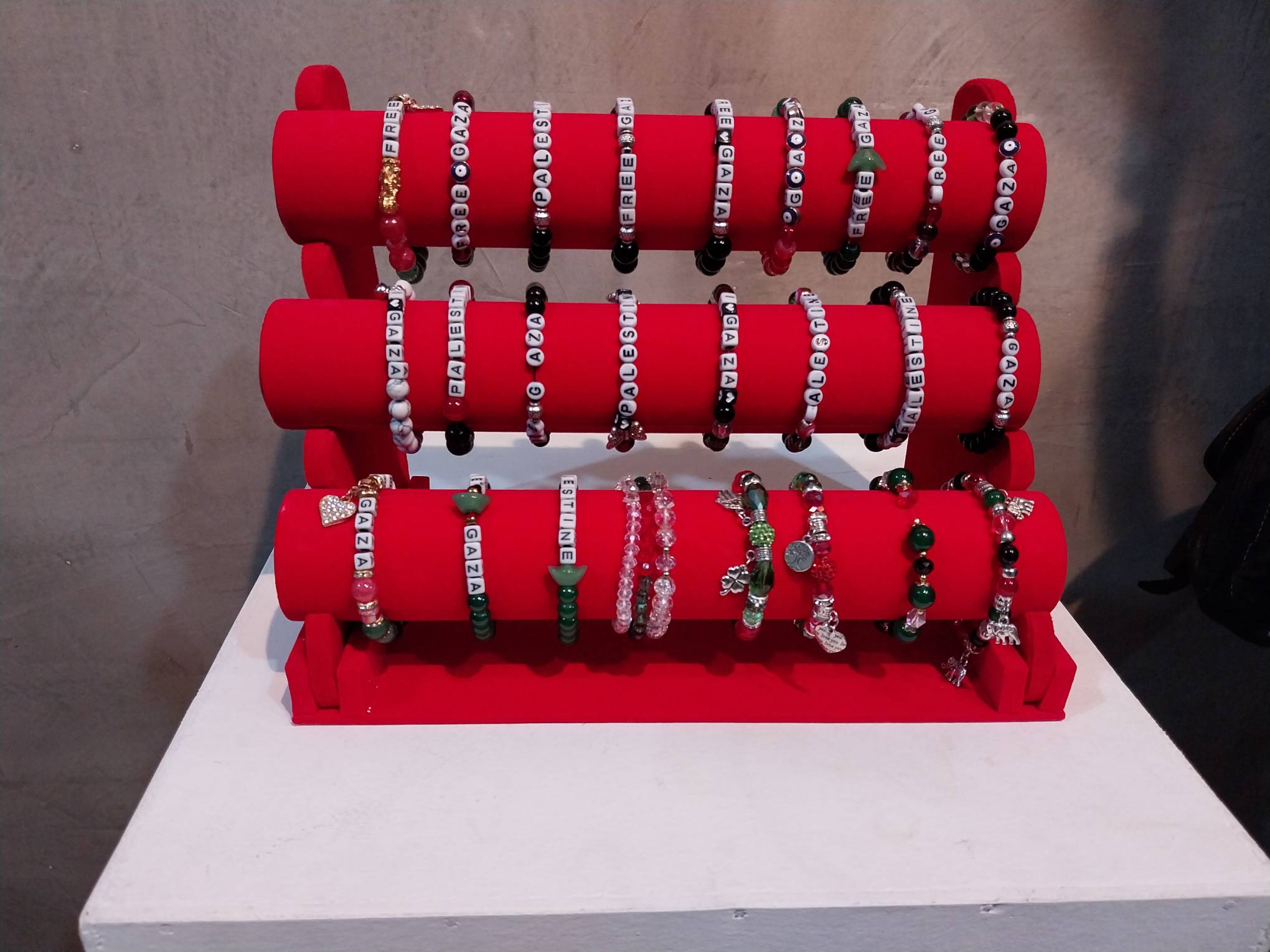
The works featured in Ilog Hanggang Laot do not all focus on the destruction experienced by Palestinians in the war. Abu Dalal’s calligraphy work and their “Radiance of Stone and Spirit” showcase a vision of a Palestine at peace. Friendship bracelets were also displayed to show love for Gaza and Palestine.
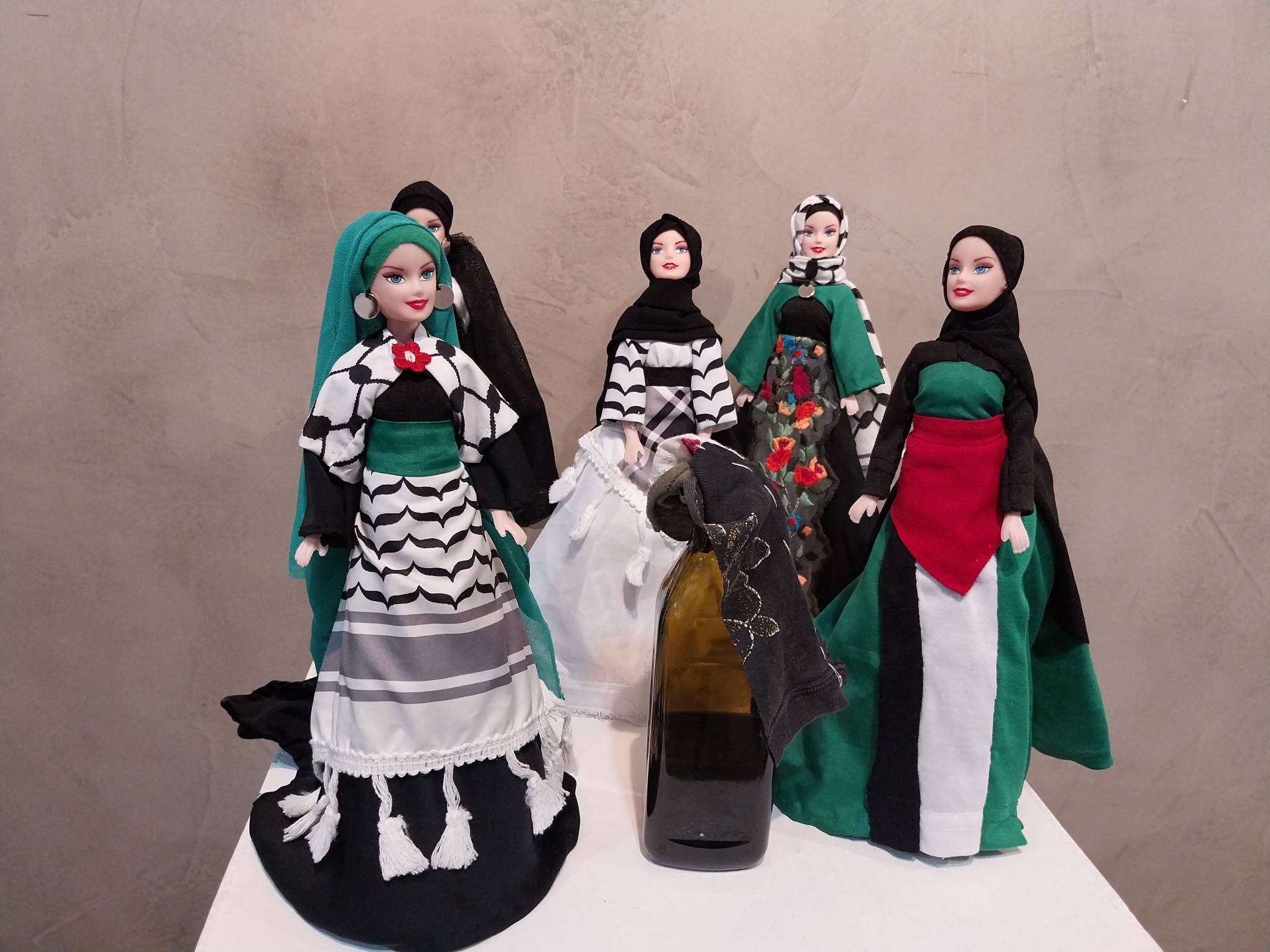
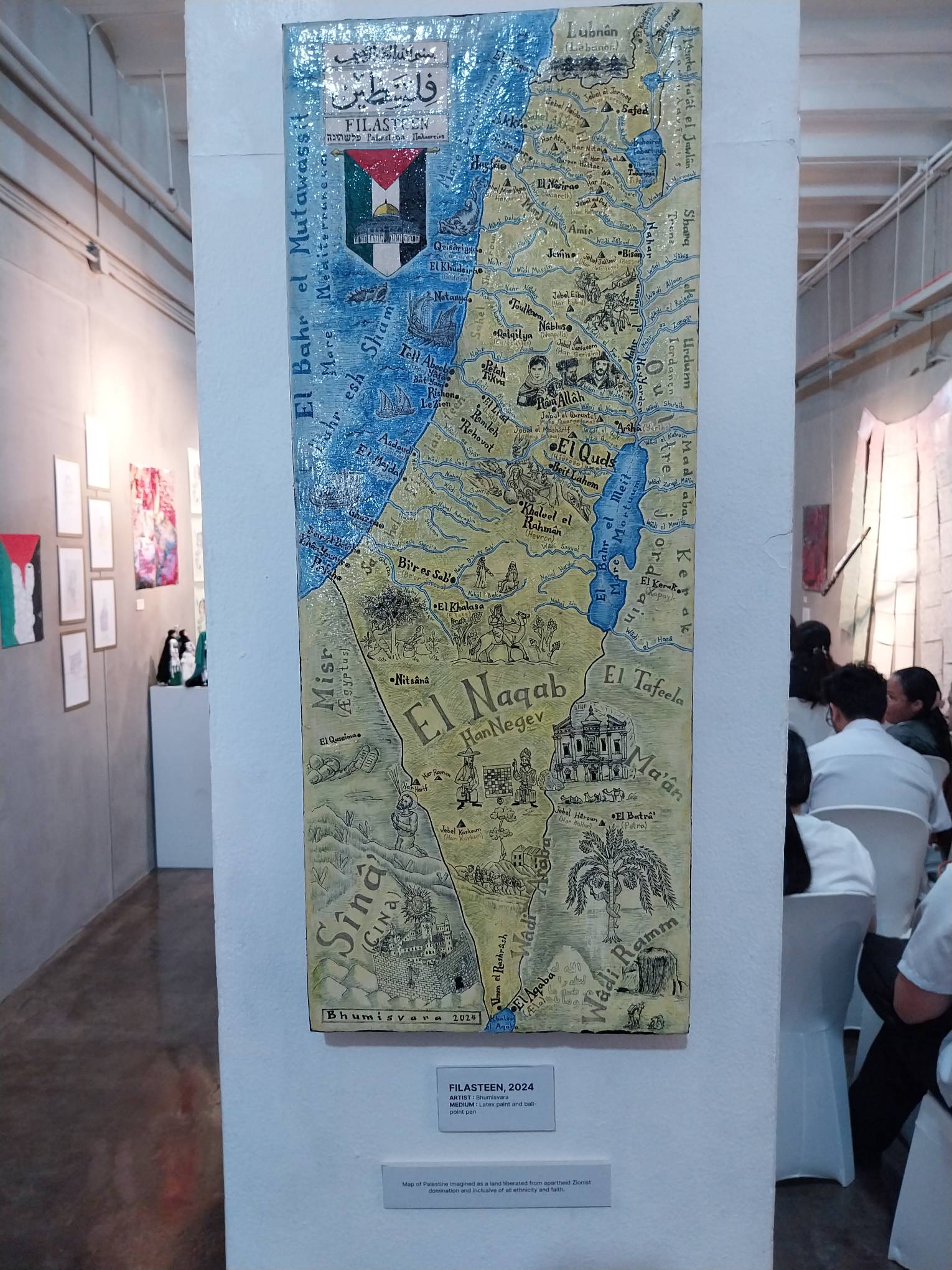
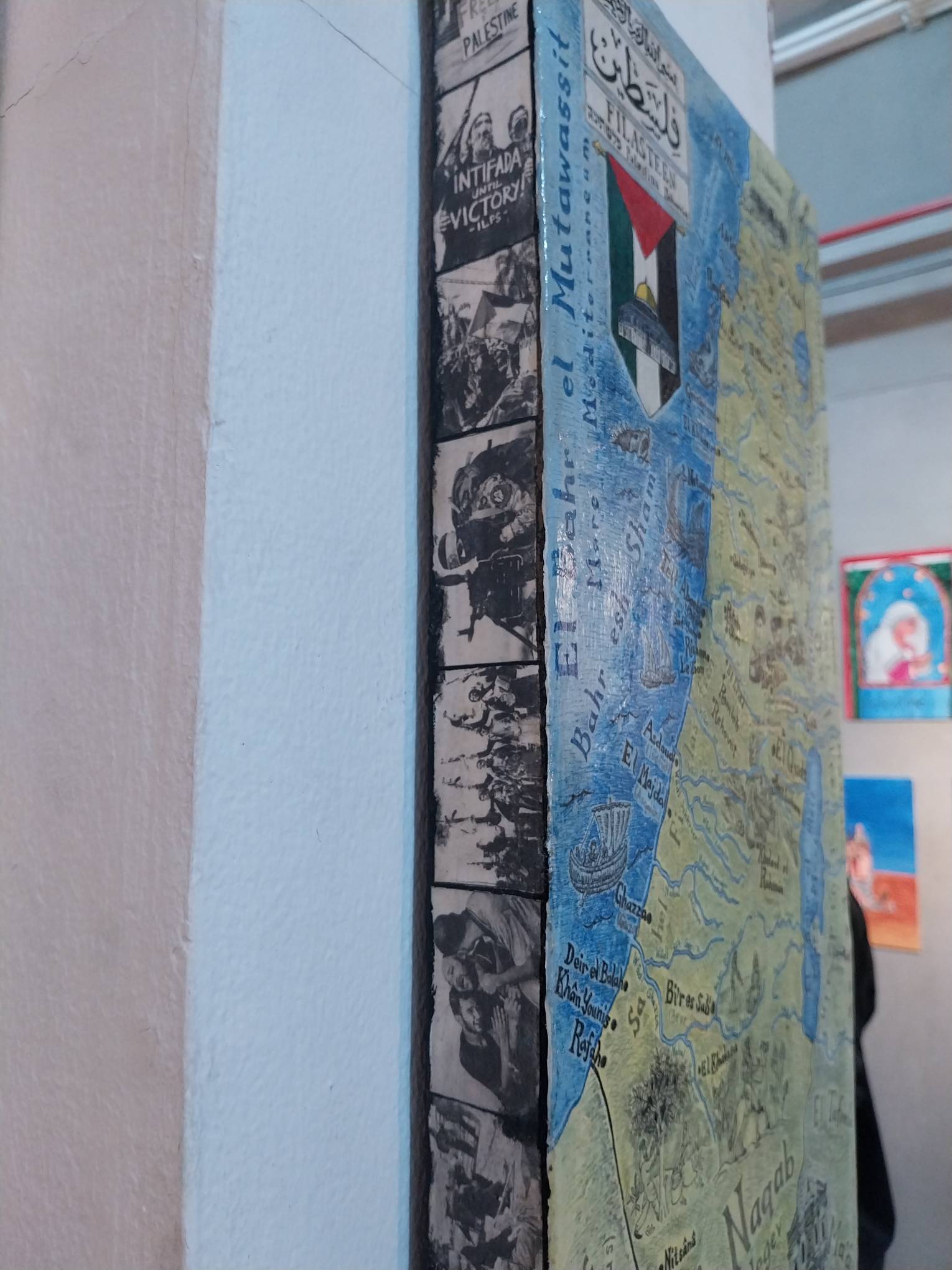
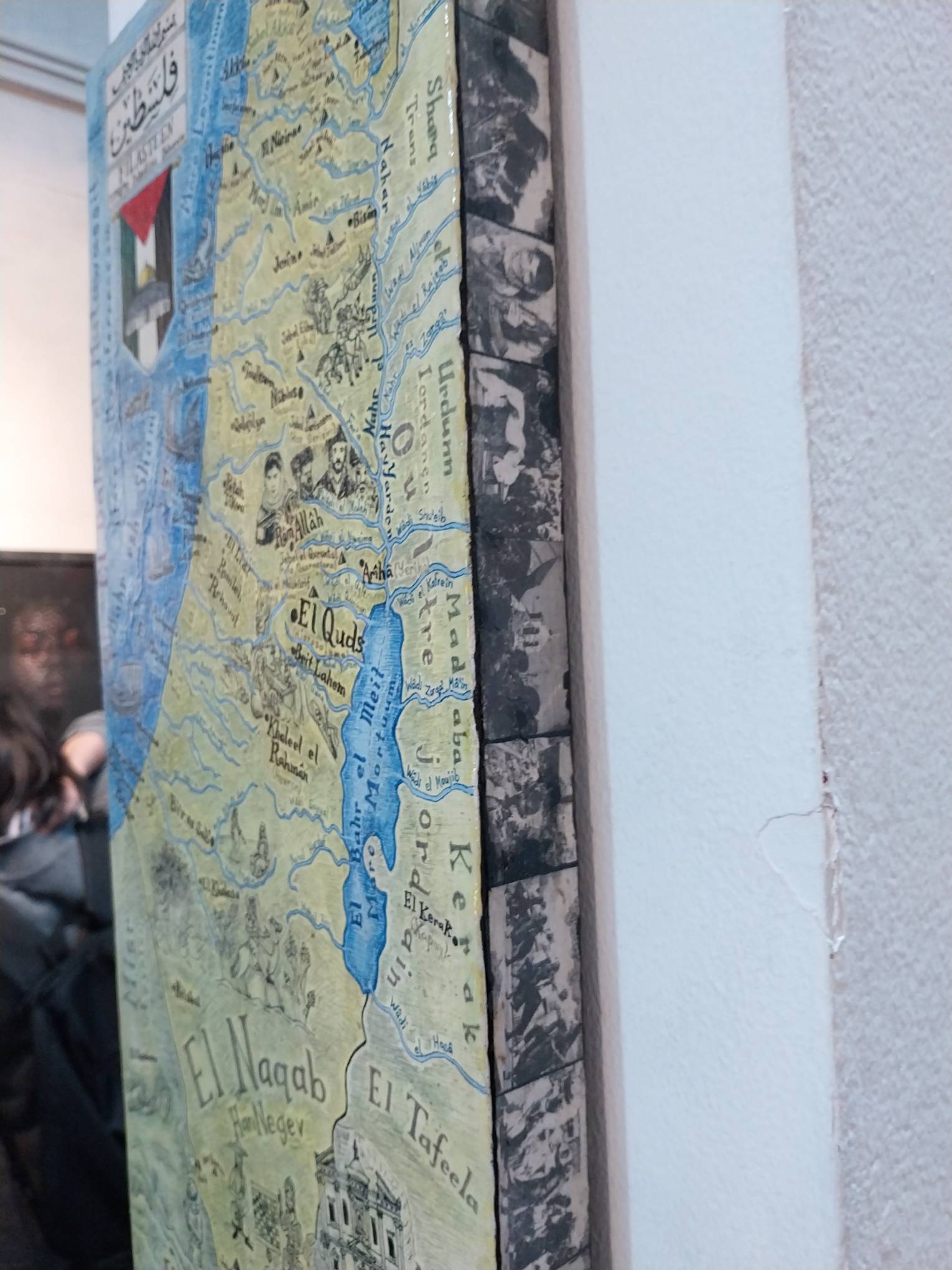
Bhumisvara’s “Filasteen” also envisions a map of Palestine before the creation of the state of Israel in 1948. The map is described as “a land liberated from apartheid Zionist domination and inclusive of all ethnicity and faith.”
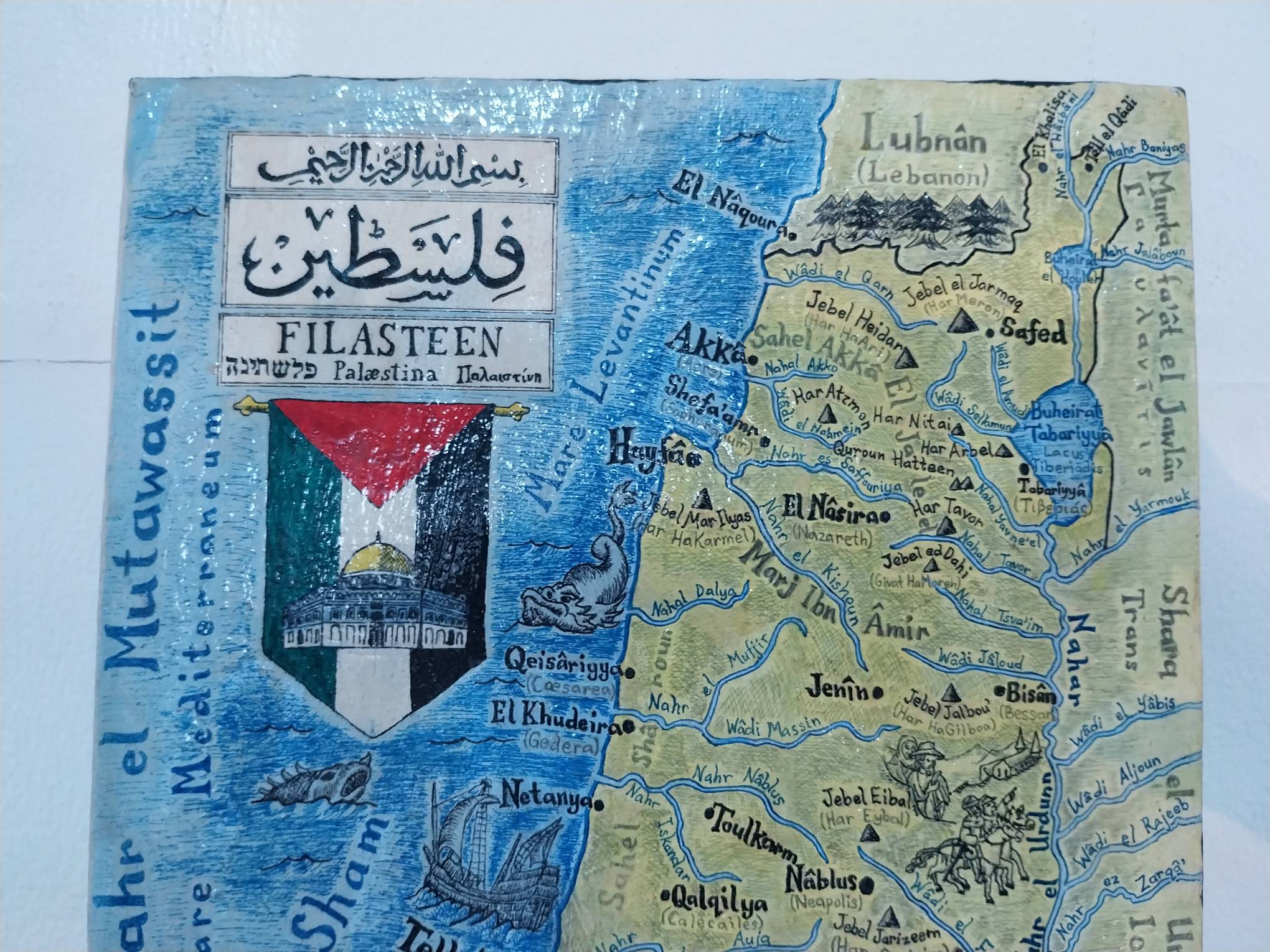
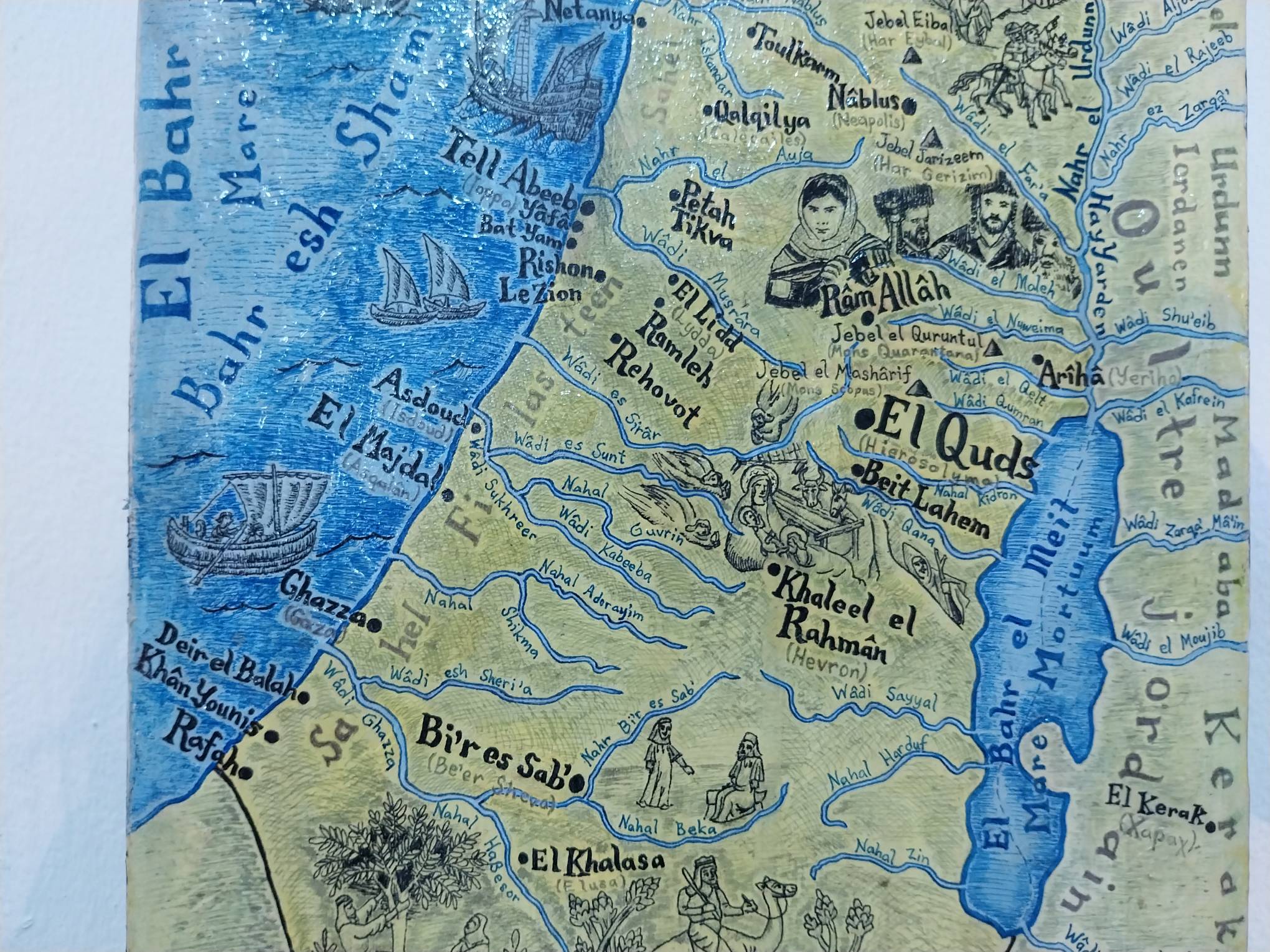
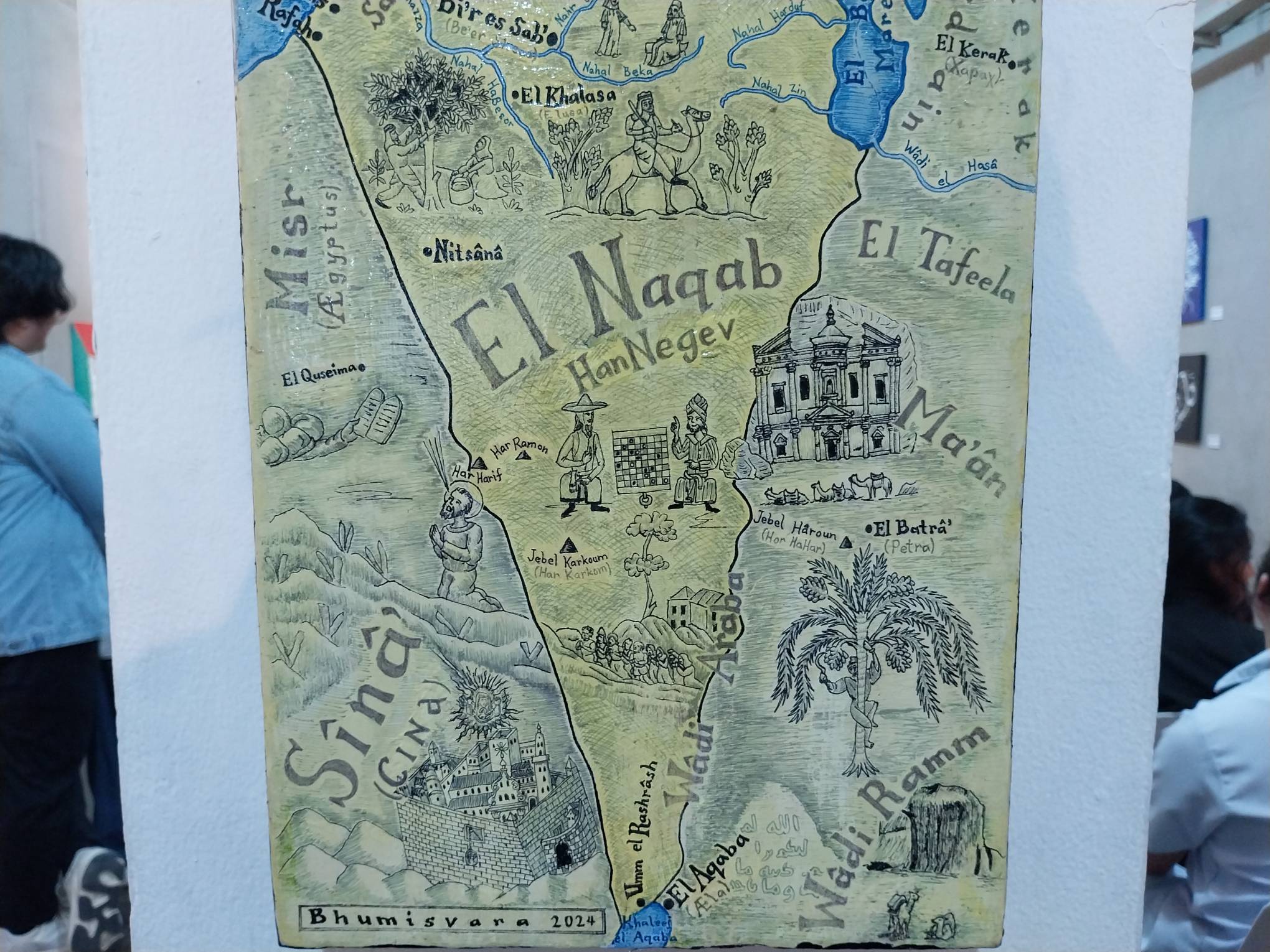
As a whole, however, Ilog Hanggang Laot minces no words or images in the Israeli oppression against Palestine. The exhibit comes to us angry but clear-eyed in the knowledge that something needs to be done against this destruction. It finds its strength in its righteousness, in the knowledge that one must come together to preserve our own humanity.
Related reading: Pro-Palestinian Students and Faculty Arrested for Protests


Large-format porcelain is no longer limited to conventional floor and wall applications. Advances in scale, finish, and fabrication have expanded its role across architectureArchitectureThe art and science of designing and constructing buildings, structures, and spaces that are functional, safe, and aesthetically pleasing. It encompasses the planning, design, materials, and techniques used to createGo to Architecture […]
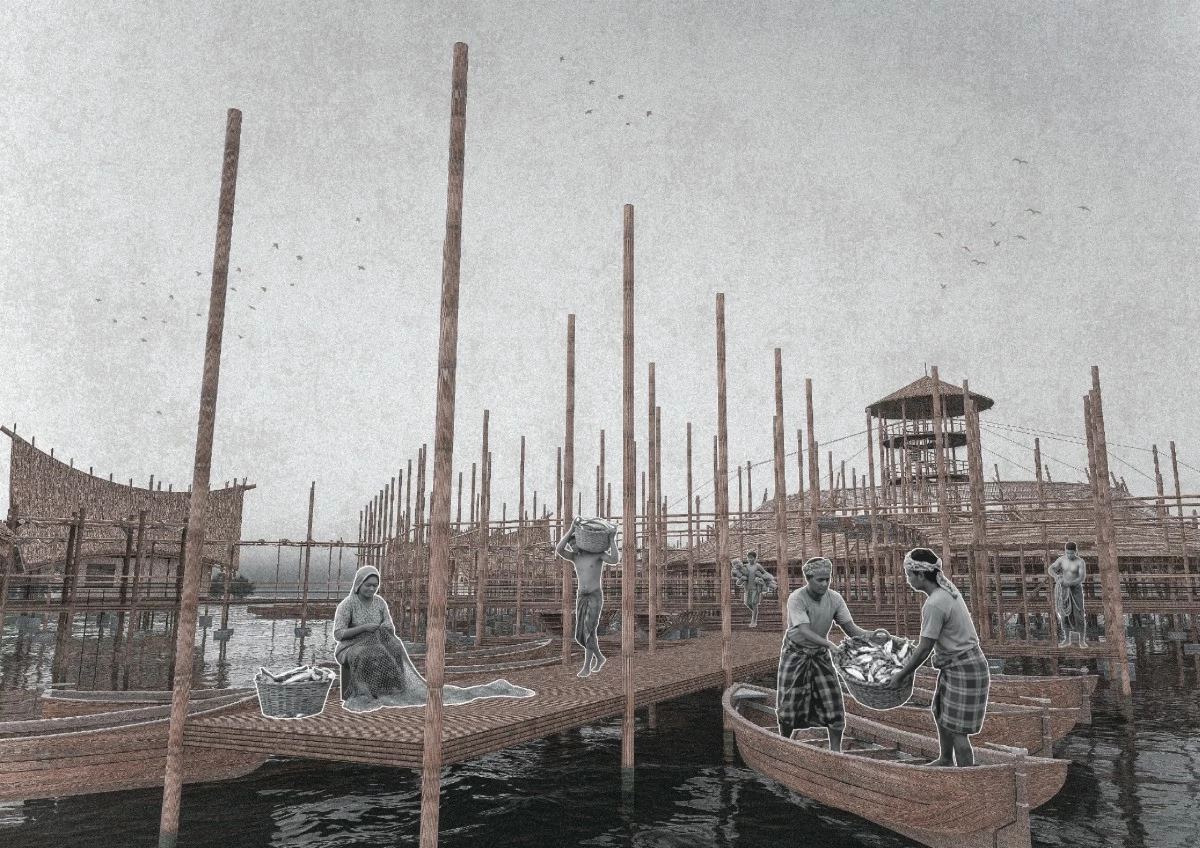
Mindanaoan architectureArchitectureThe art and science of designing and constructing buildings, structures, and spaces that are functional, safe, and aesthetically pleasing. It encompasses the planning, design, materials, and techniques used to createGo to Architecture Glossary student Ejhay L. Durias of the University of Mindanao made history after becoming the first Filipino to receive the AYDA International […]
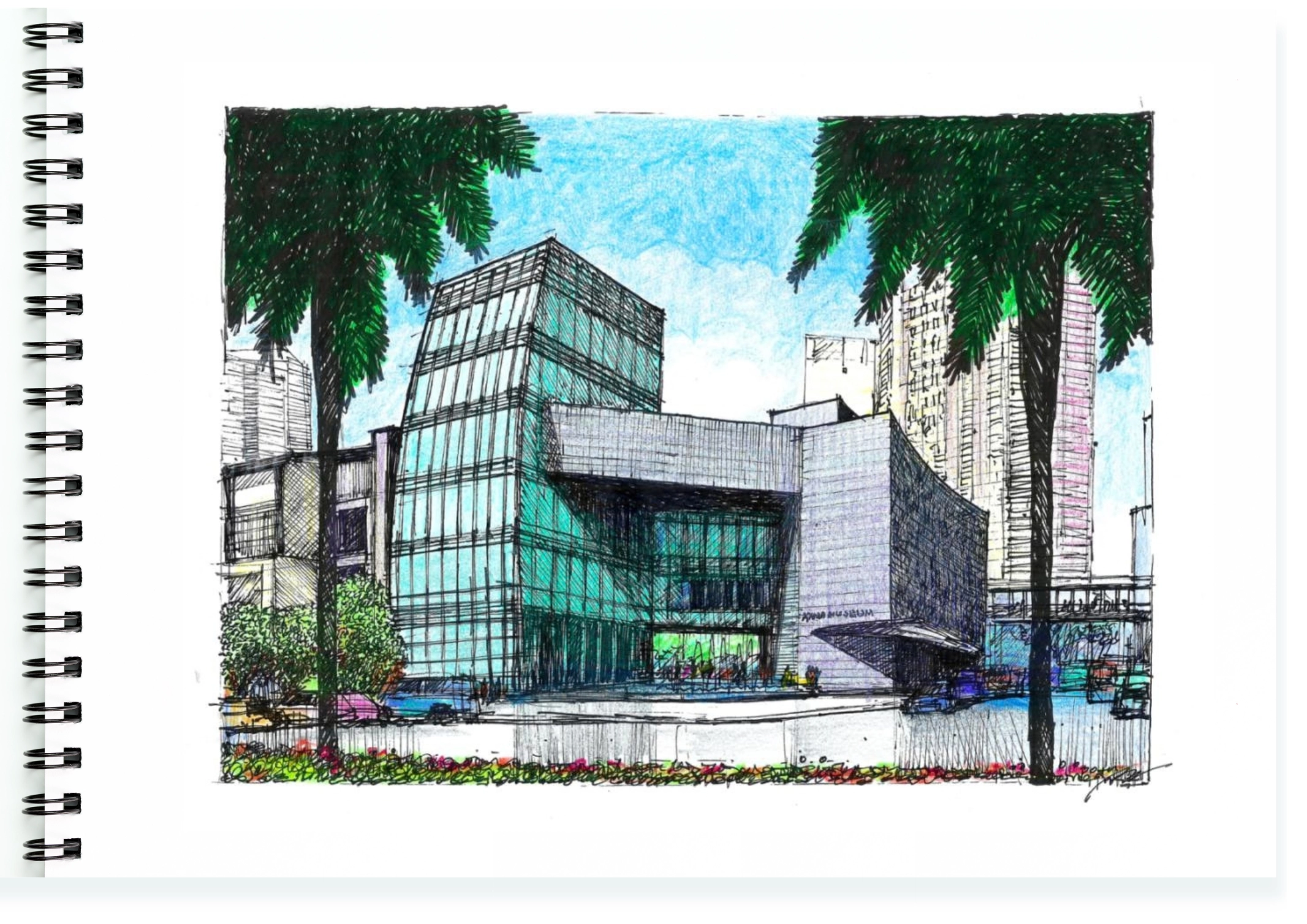
From Brutalism to Contemporary Modernism The Ayala Museum designed by the firm of Leandro V. Locsin Partners (LVLP) sits at the corner of Makati Avenue and Dela Rosa Street in Legaspi Village, Makati. This is actually the second museum of the same name in the area. The original, which was designed by National artist for […]
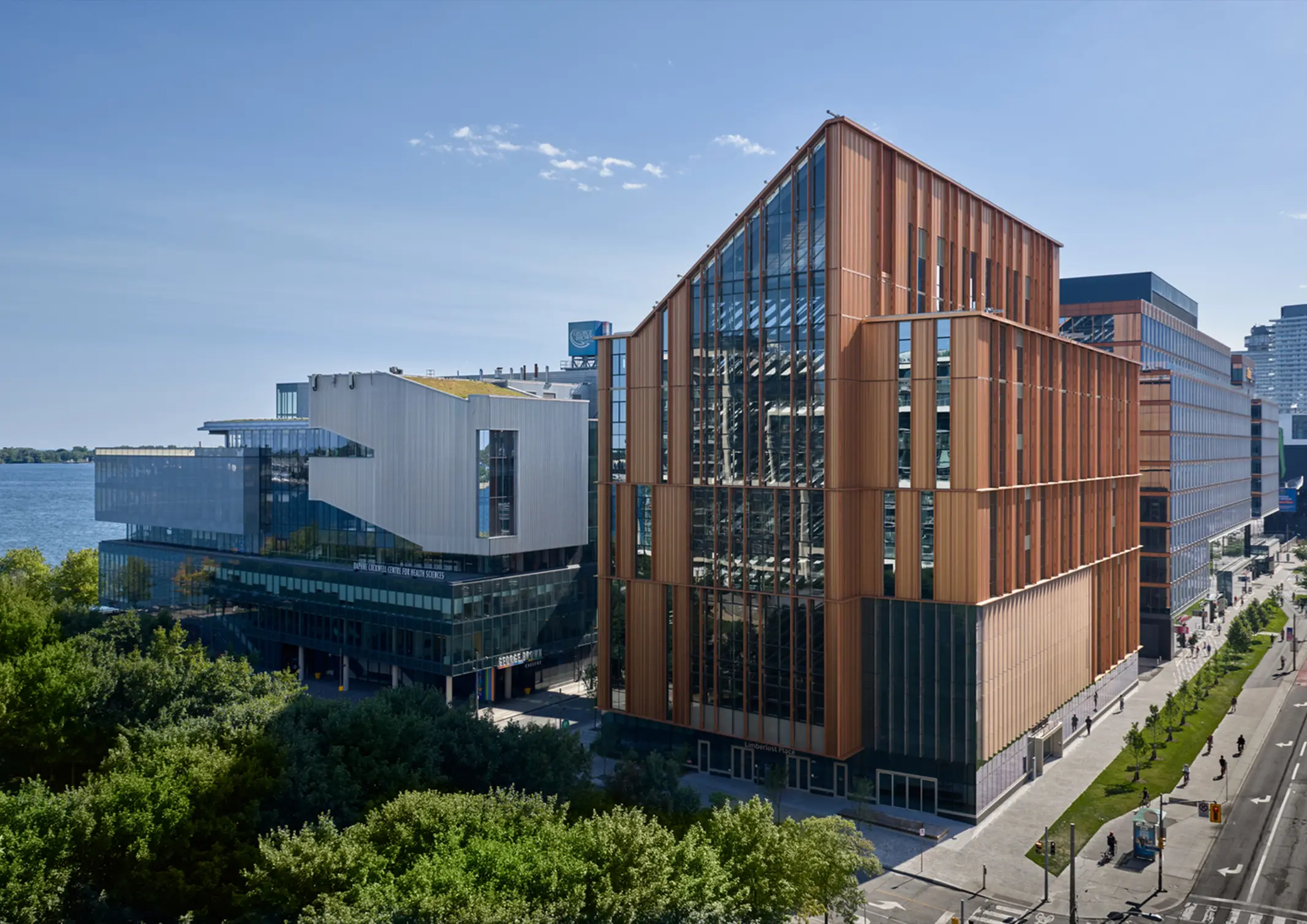
The projects recognized by Architizer’s 14th Annual A+Awards span architectureArchitectureThe art and science of designing and constructing buildings, structures, and spaces that are functional, safe, and aesthetically pleasing. It encompasses the planning, design, materials, and techniques used to createGo to Architecture Glossary, interiors, landscape, urban design, and sustainability. Organized by Architizer, one of the world’s […]
Read the issues.

Collect the volumes.

Recommended Video
Tap to Unmute
Unmute
0:00
0:00