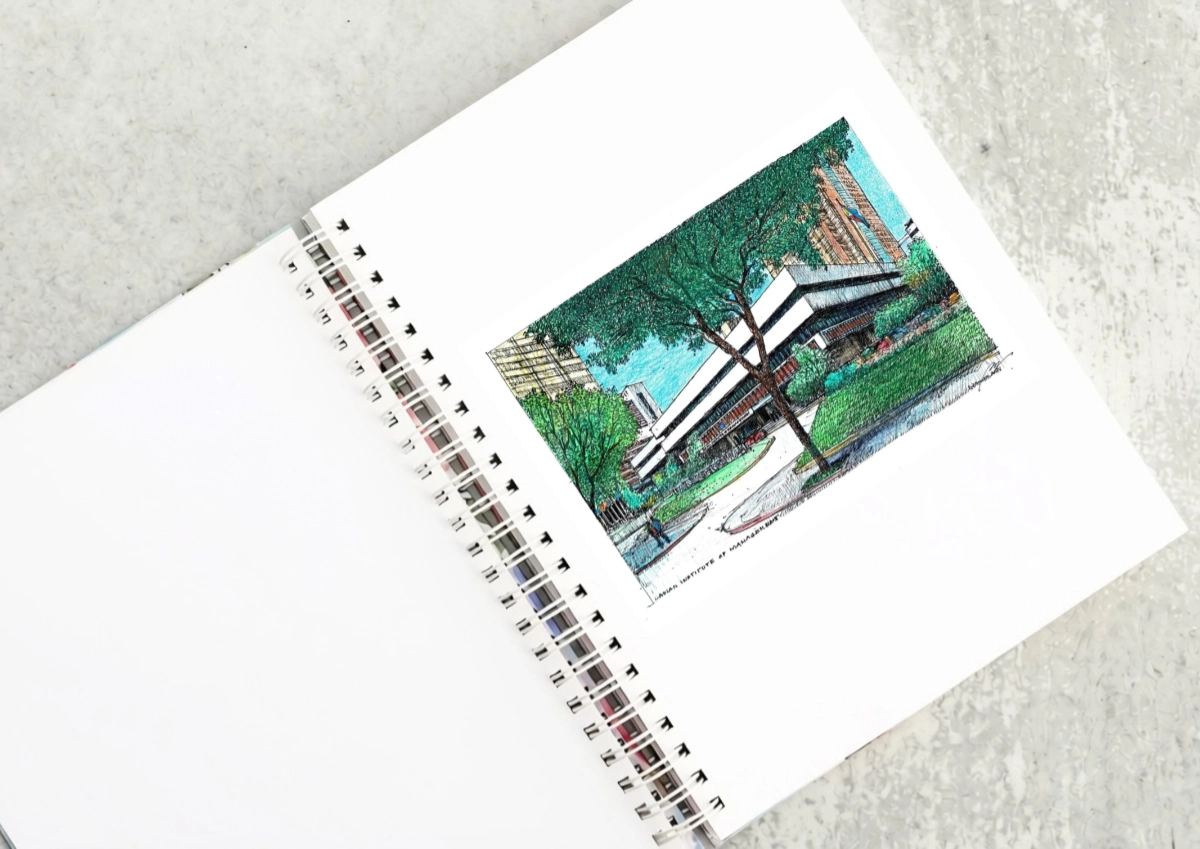
A Filipino Interpretation of Modernist Architecture Unlike the rest of Makati today, the northern end of Paseo de Roxas in Makati is anchored by a low complex rather than a tall skyscraper. This is the elegant Asian Institute of Management, designed by architect Gabriel Formoso and completed in 1971. In my opinion, the building is […]
MM Yu Ponders on Image Interpretation with ‘either/or’



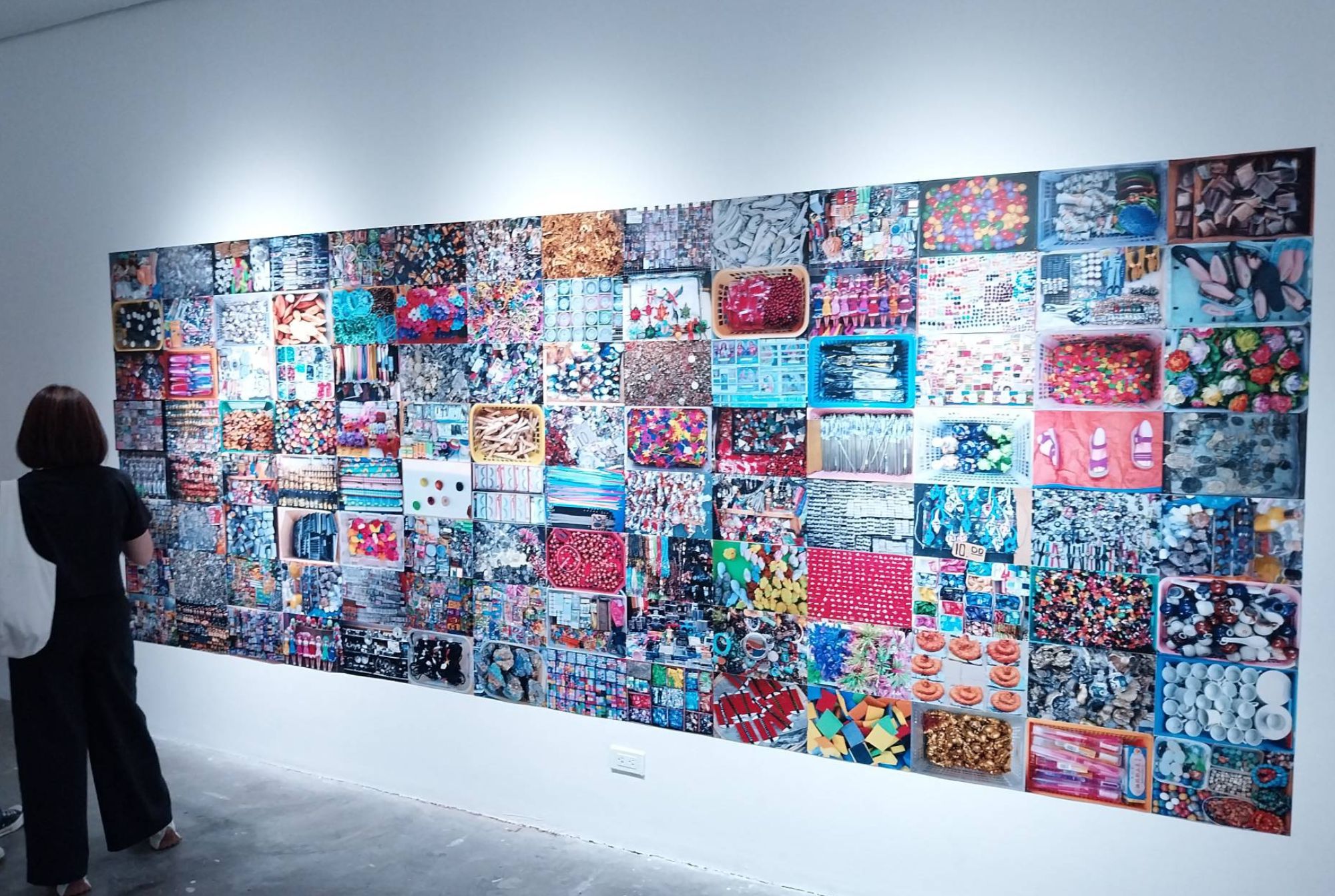
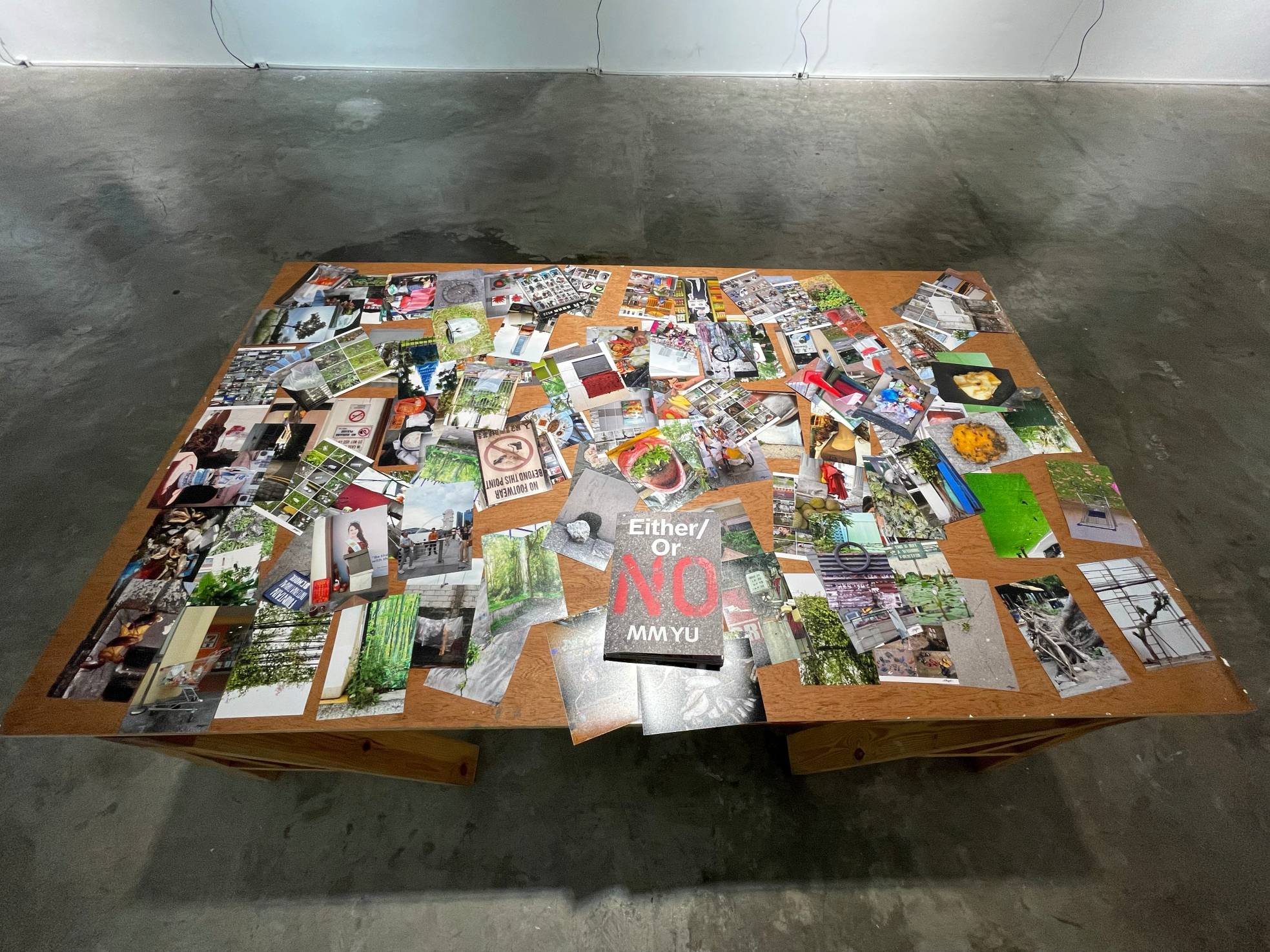
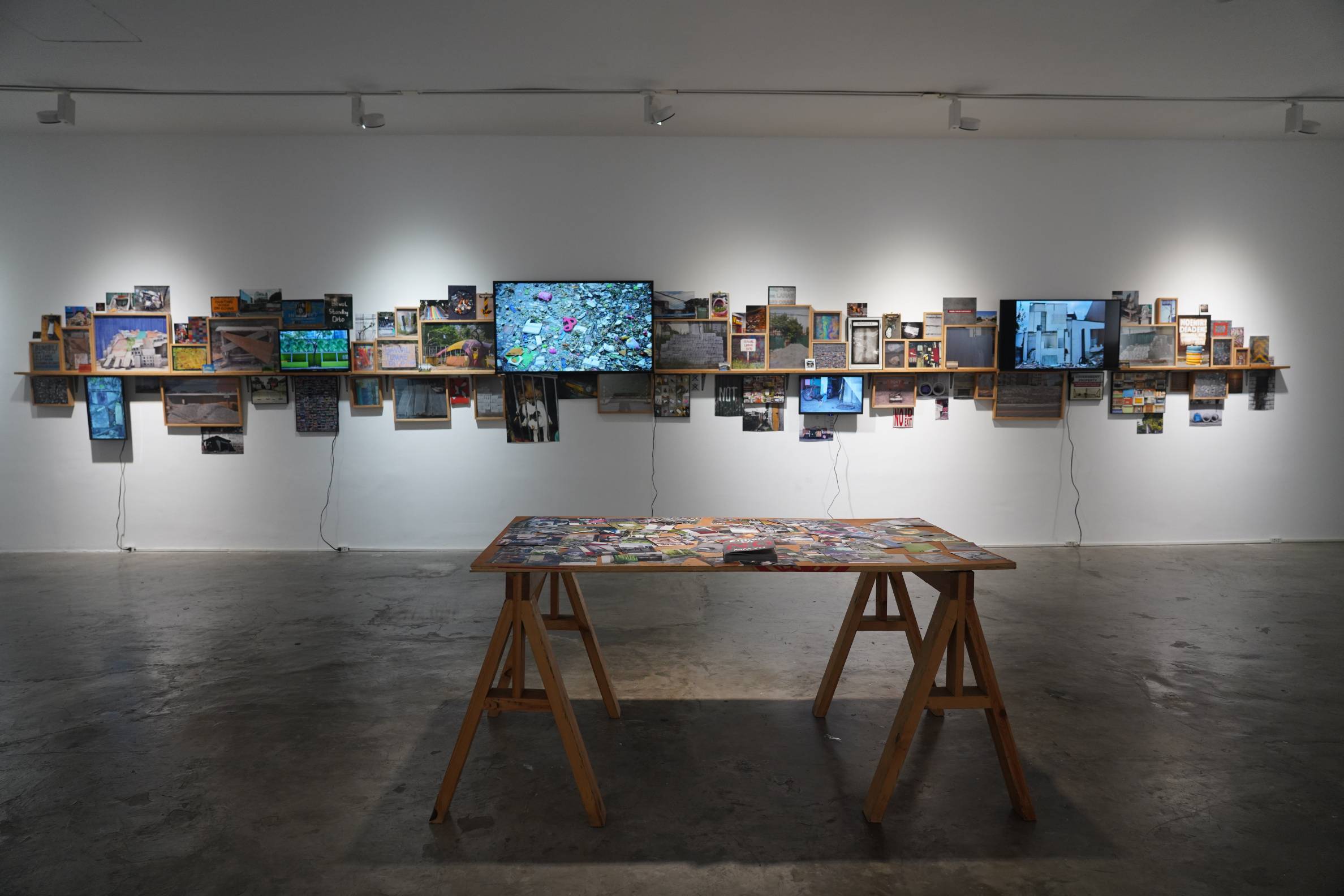
MO_Space in Bonifacio High Street debuted a new exhibit that acts as a statement of purpose for artist and photographer MM Yu. The exhibit, either/or, features different photographs captured over the years, tied together in a complex exploration of how images can manipulate the way we see the world. Deck Photography Art Centre previously published a book of MM Yu’s works with the same title on October last year.
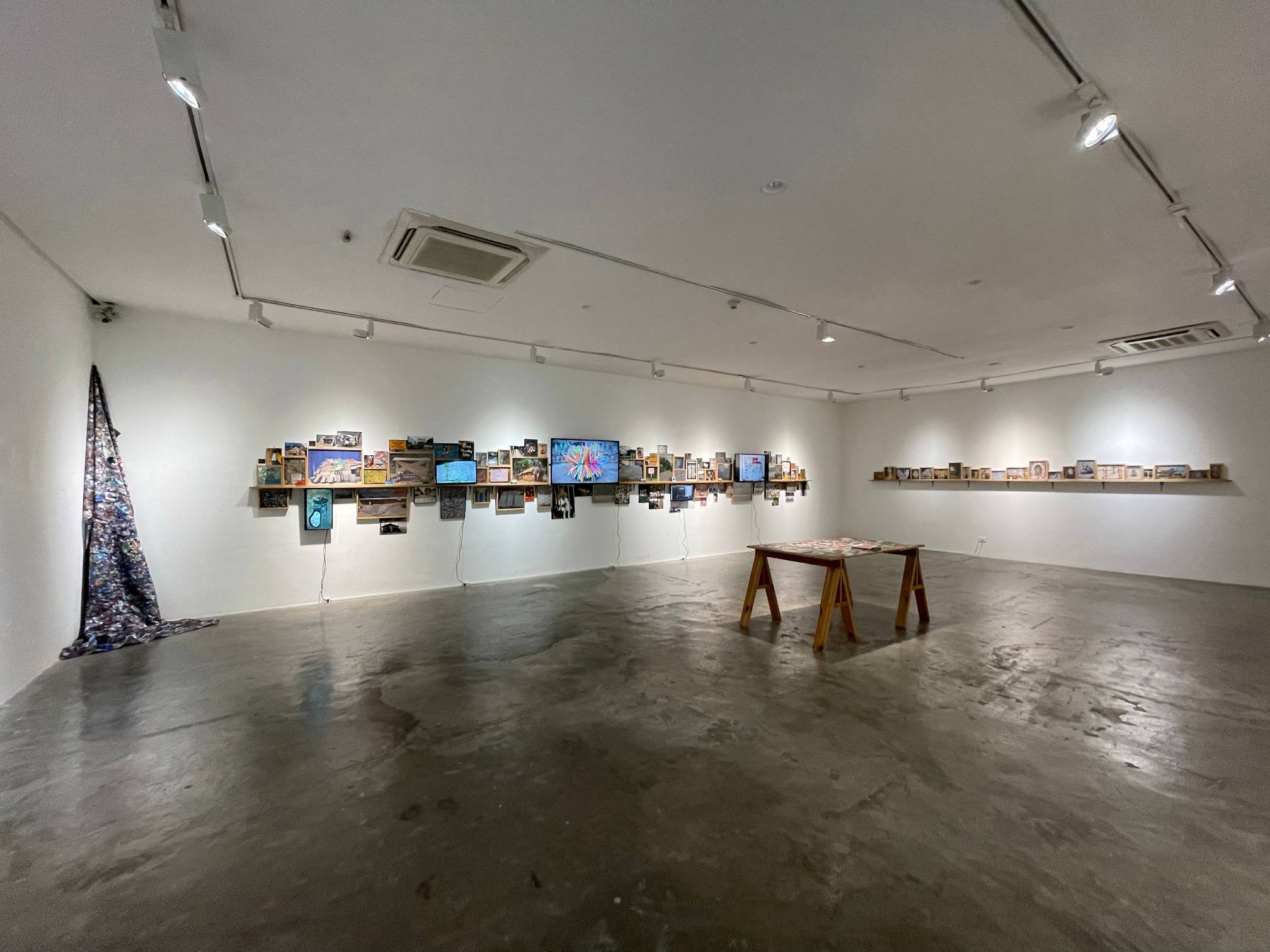
With either/or, artist and photographer MM Yu participates in the process of destroying and reconstructing meaning from the images we capture, creating an interesting portrait of a fractured society. It’s an image that reflects the stubbornness that exists in every Filipino, crafting our own meaning of freedom in a world that offers none.
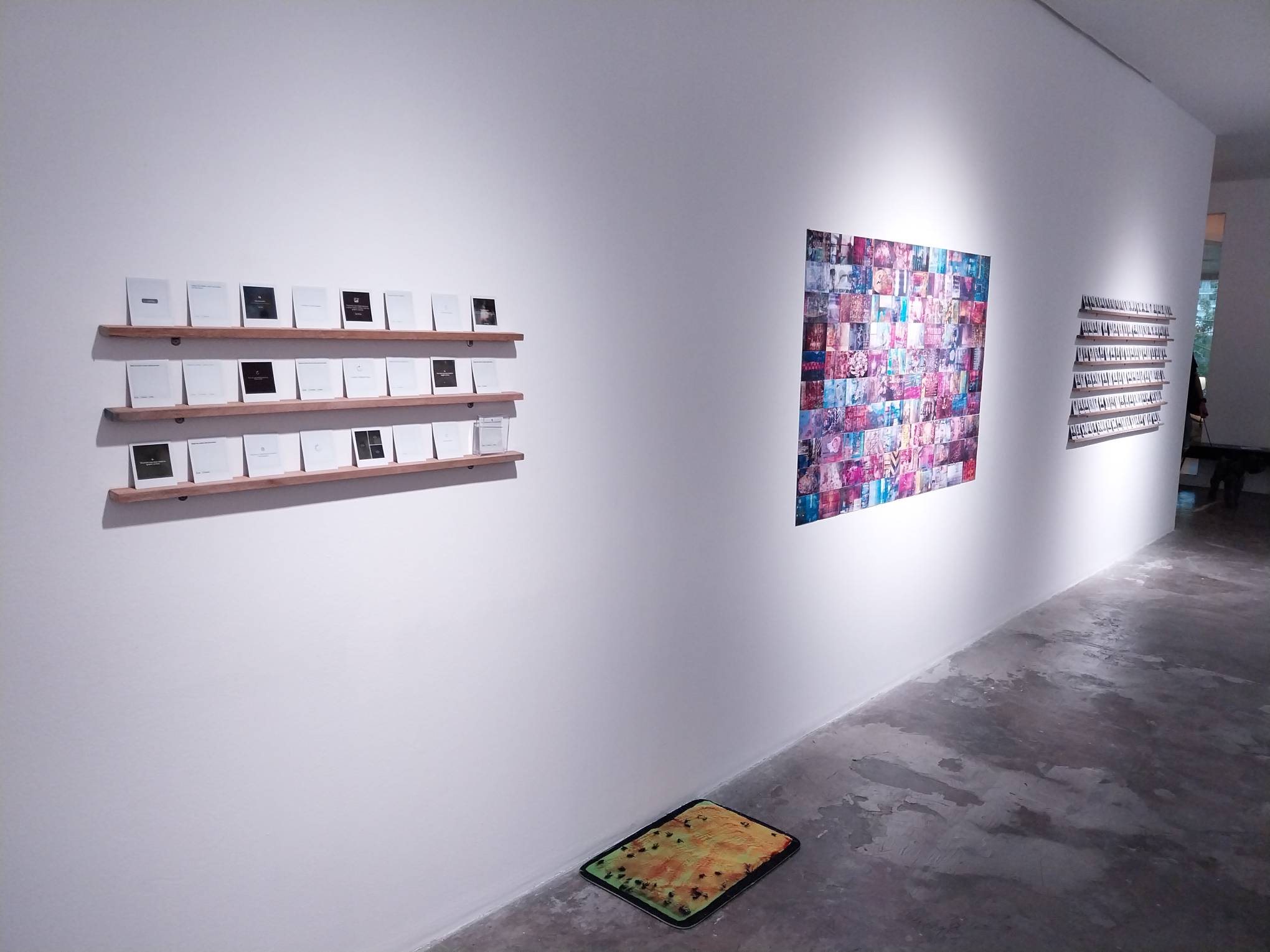
“The moment of recollecting as a more deliberate act of re-contextualizing and remembering one’s thoughts or logs of images, becomes an essential agenda against the pileup and accumulation of personal archives,” the exhibit write-up said.
What We See and What We Don’t
For either/or, MM Yu draws our eyes to the normal parts of our society that get ignored. Its most interesting aspect is its stark representation of a specific portion of the Philippine city landscape. From street signs to graffiti’d messages, some of the photographs force us to focus on how much our society ignores its own rules if it doesn’t match the vibes we desire.
“More often [than not], these are just futile attempts for the public [establishments] to implement restrictions and hopefully implement order,” MM Yu said. “[It results] in odd scenarios where these signages can be seen but are still frustratingly just ignored.”
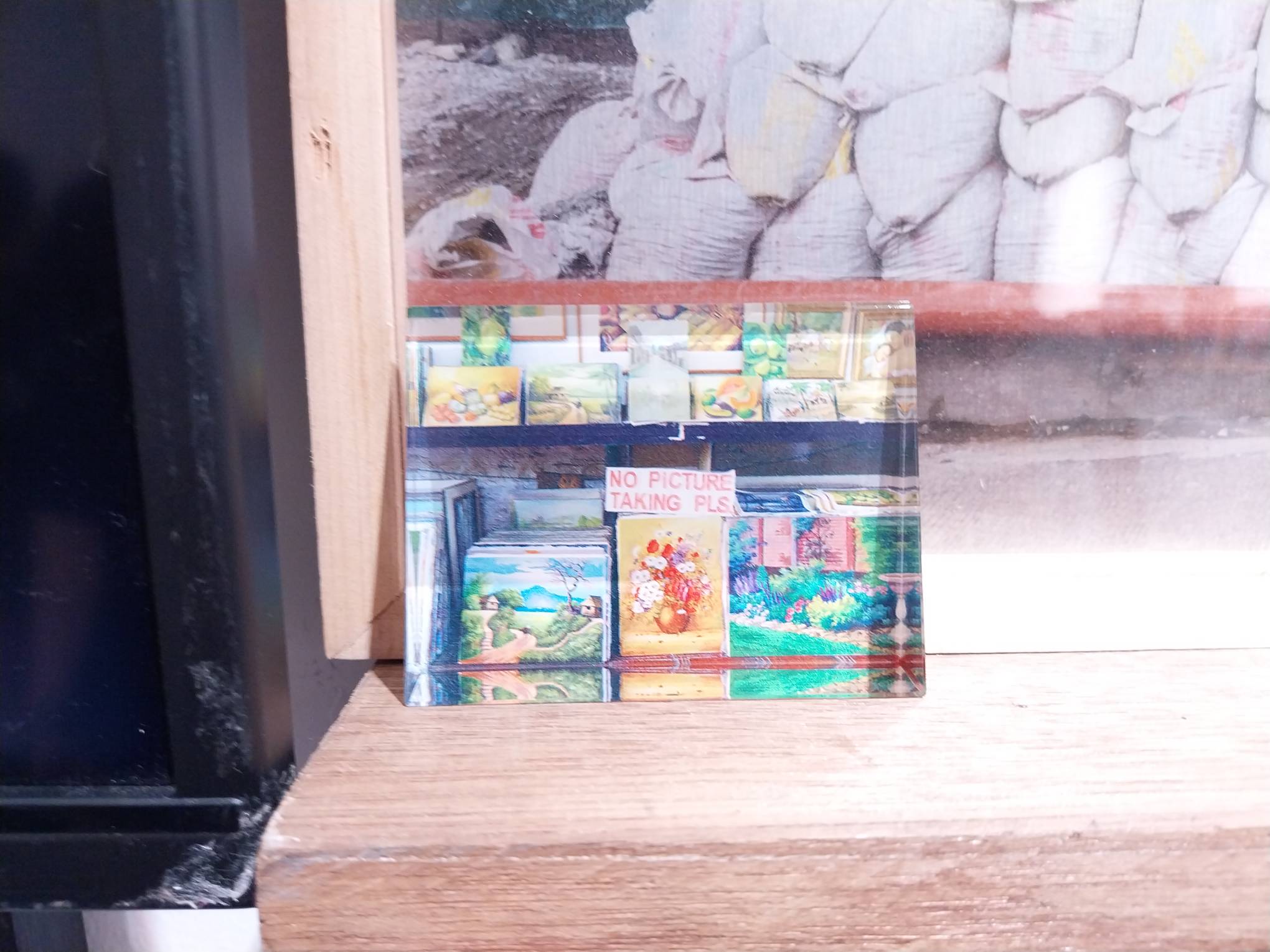
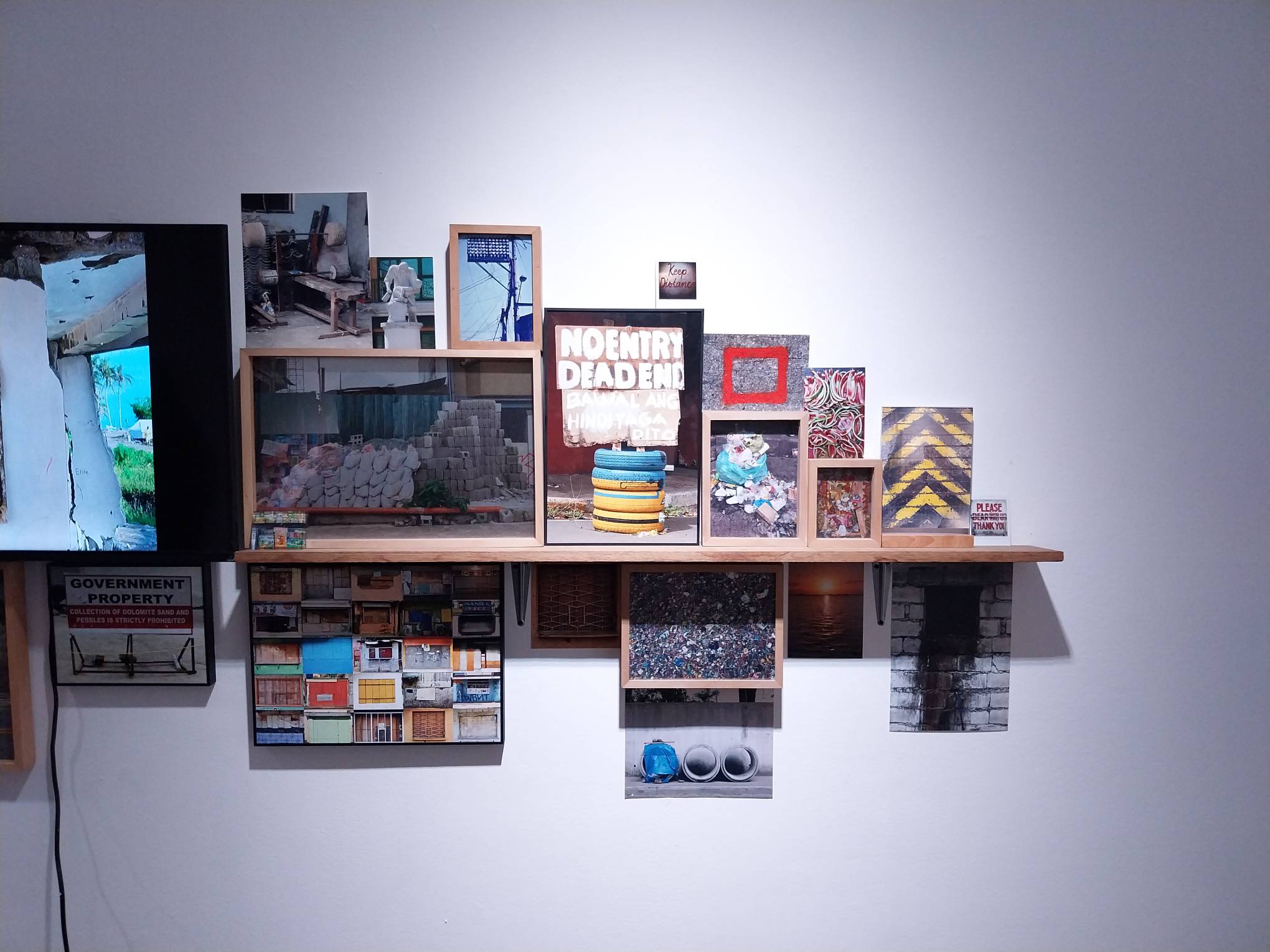
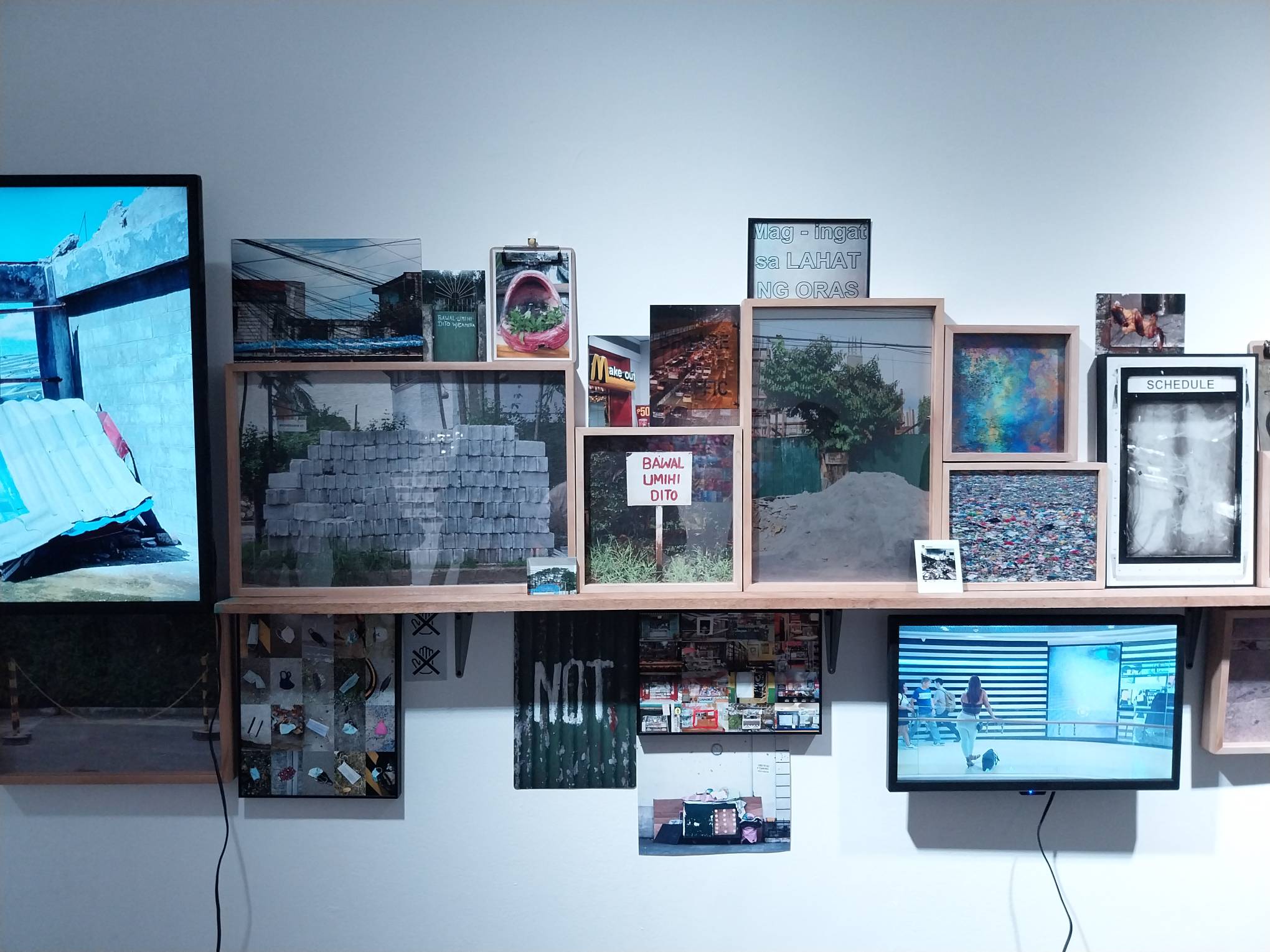
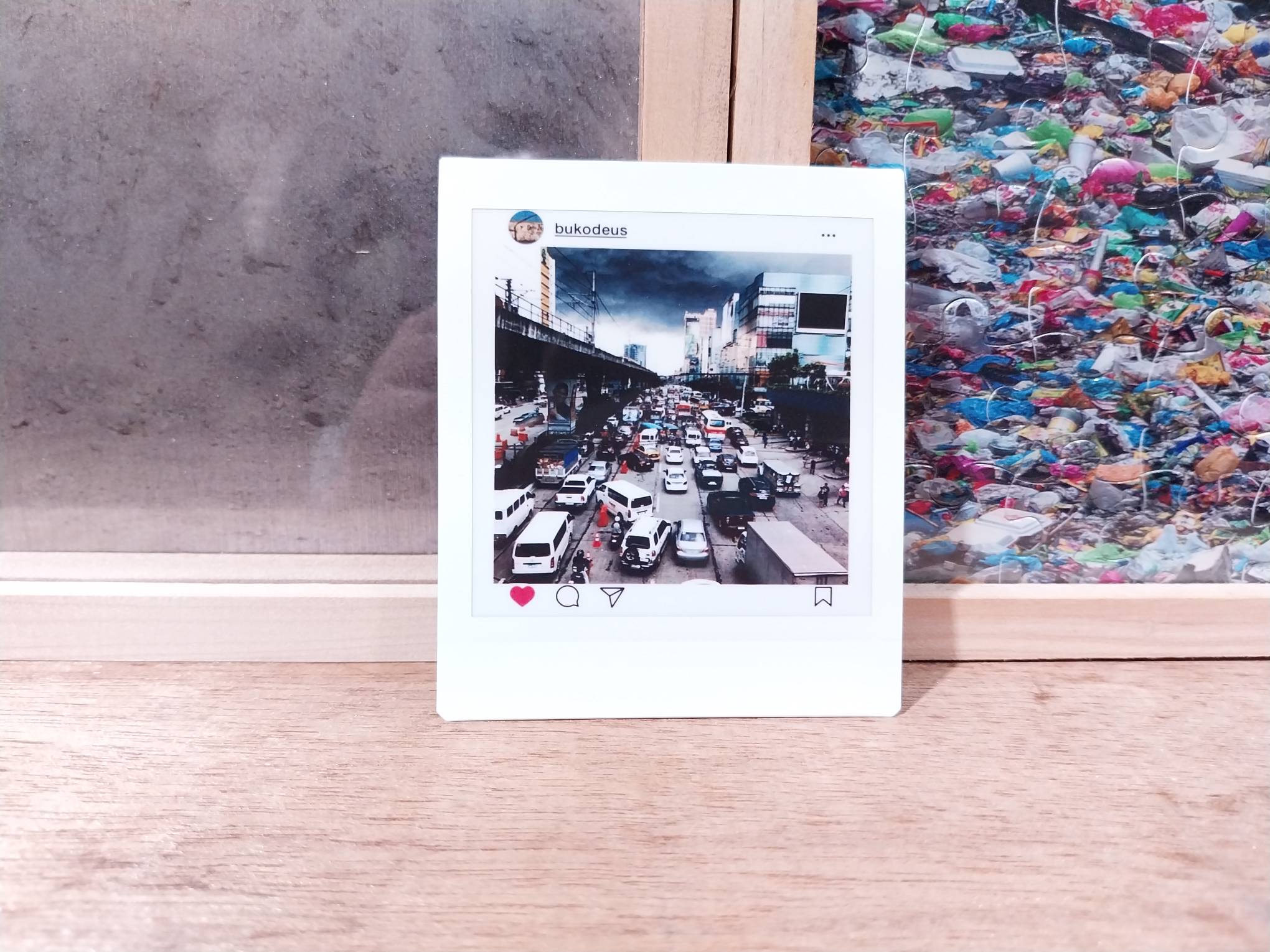
Multiple photographs, for example, show signs of “no pictures allowed.” One of them even capturing a vendor frowning at the camera. Some of the pictures have more official-looking signs, while others showcase multiple variations of “bawal umihi dito,” the kind of warning frequently disobeyed by Filipinos in general.
But altogether, it paints a picture of the kind of populace downset on making their own beaten paths instead of following someone else’s.
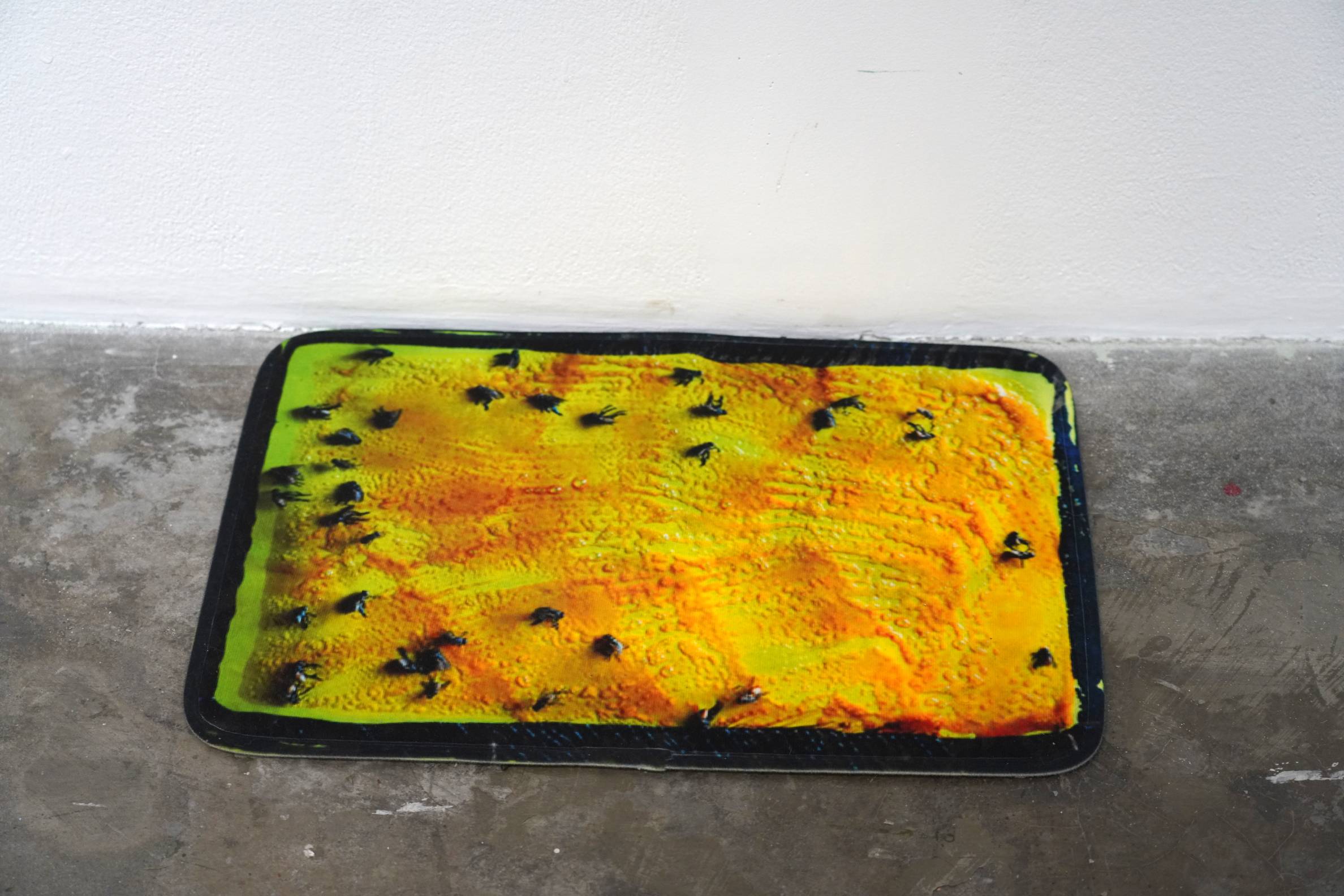
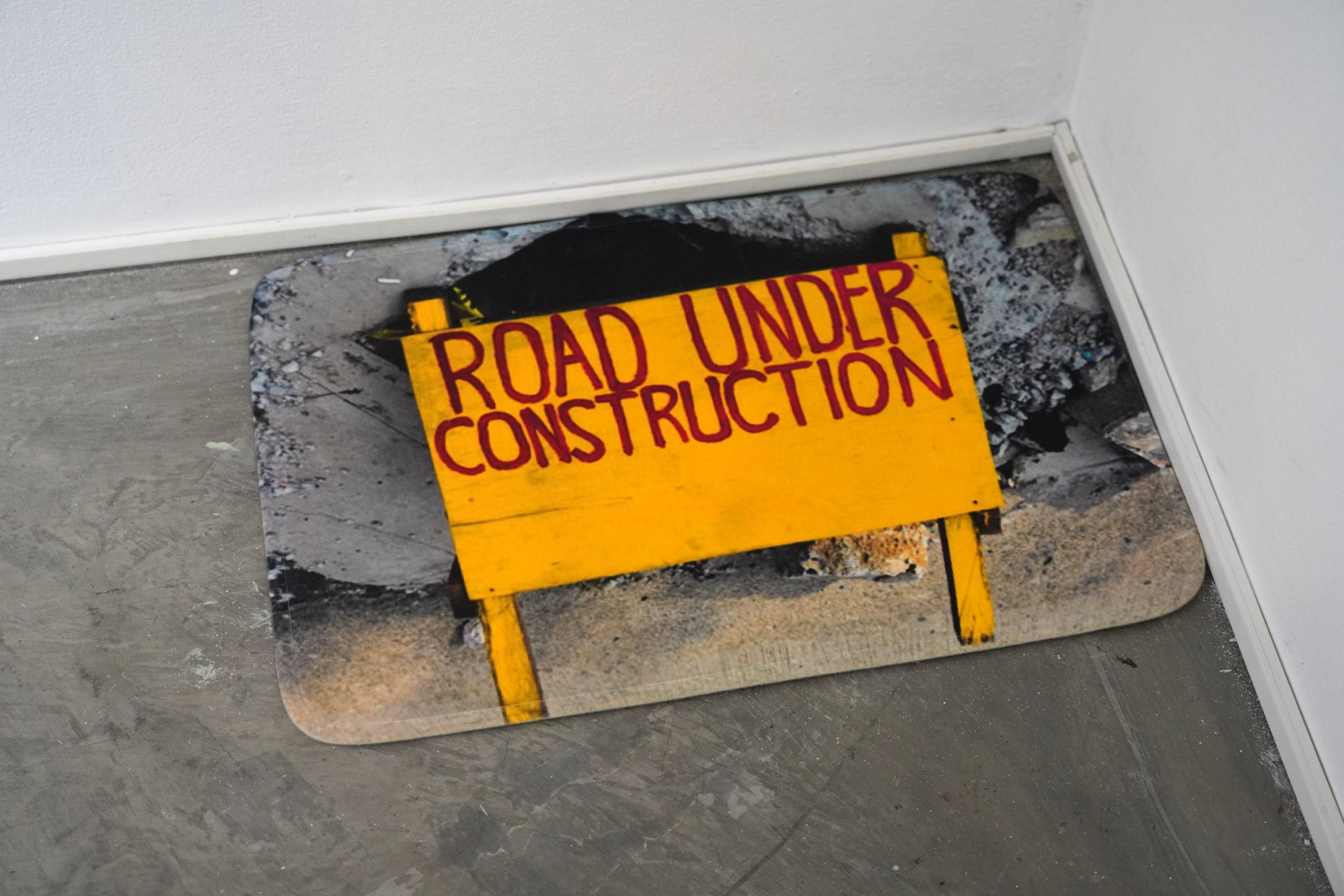
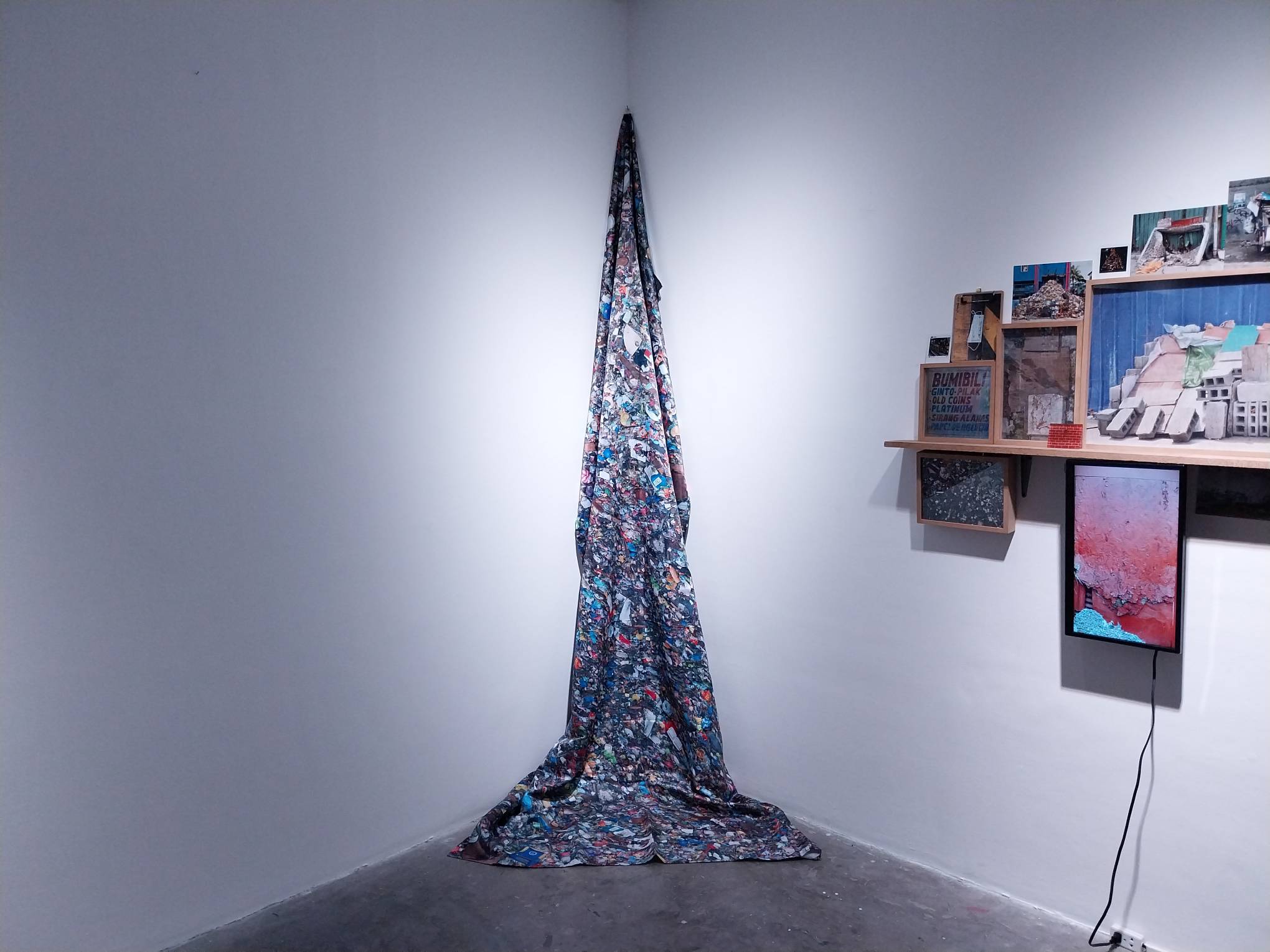
The presentation of the exhibit also includes more eye-popping elements: an image of a flytrap laid or a “road under construction” sign laid down on the floor. The artwork titled “a few of my favorite things” uses a photograph of a landfill printed on a large piece of cloth. They clipped the cloth from the ceiling, creating the illusion of cascading garbage.
Reinterpreting Images as Memories
Another intriguing aspect of either/or is MM Yu’s artful reassembly of these images, offering an artistic reinterpretation of her past works. For “memoirs,” she reused a film roll full of pictures from 2001 to superimpose present images over them. To her it represents the “merging and fusing [of] the past and the present again.”
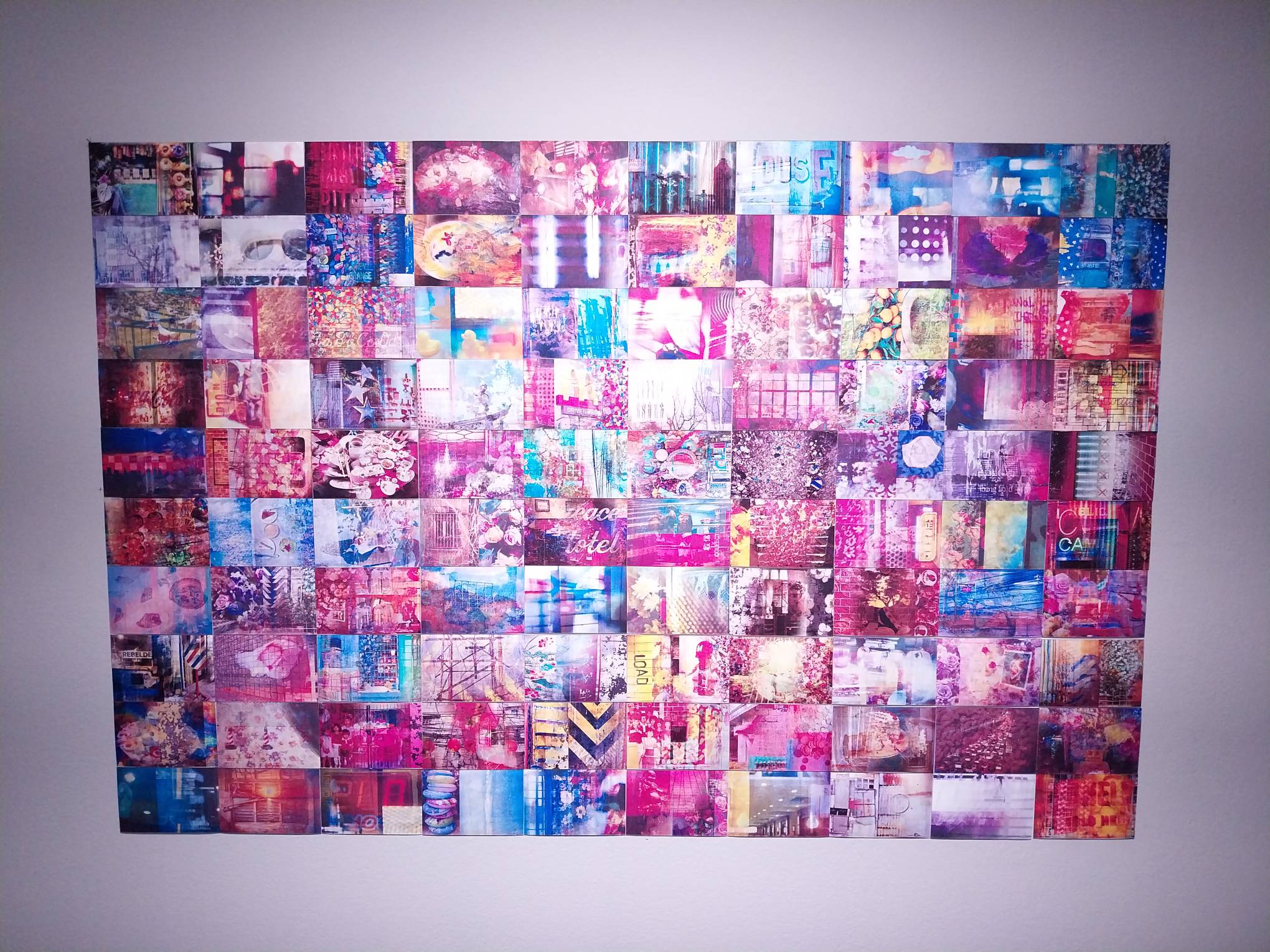
“I would take pictures from old places [and] objects that represent a past memory,” she said. “And [I’d] rewind the film and re-use it again and take photographs of my then present time. In this process, images are superimposed one over another, creating compositions but also partially erasing images by chance that are sometimes hard to decipher.
“Like memories, some are remembered clearly and some fade, leaving remnants.”
“Re-collected,” meanwhile, finds provocation in normality. There, MM Yu assembles multiple rows of Instax photographs of different art collectors, as a way of subverting the act of collection. Now, Yu said, these collectors are now re-collected by her.
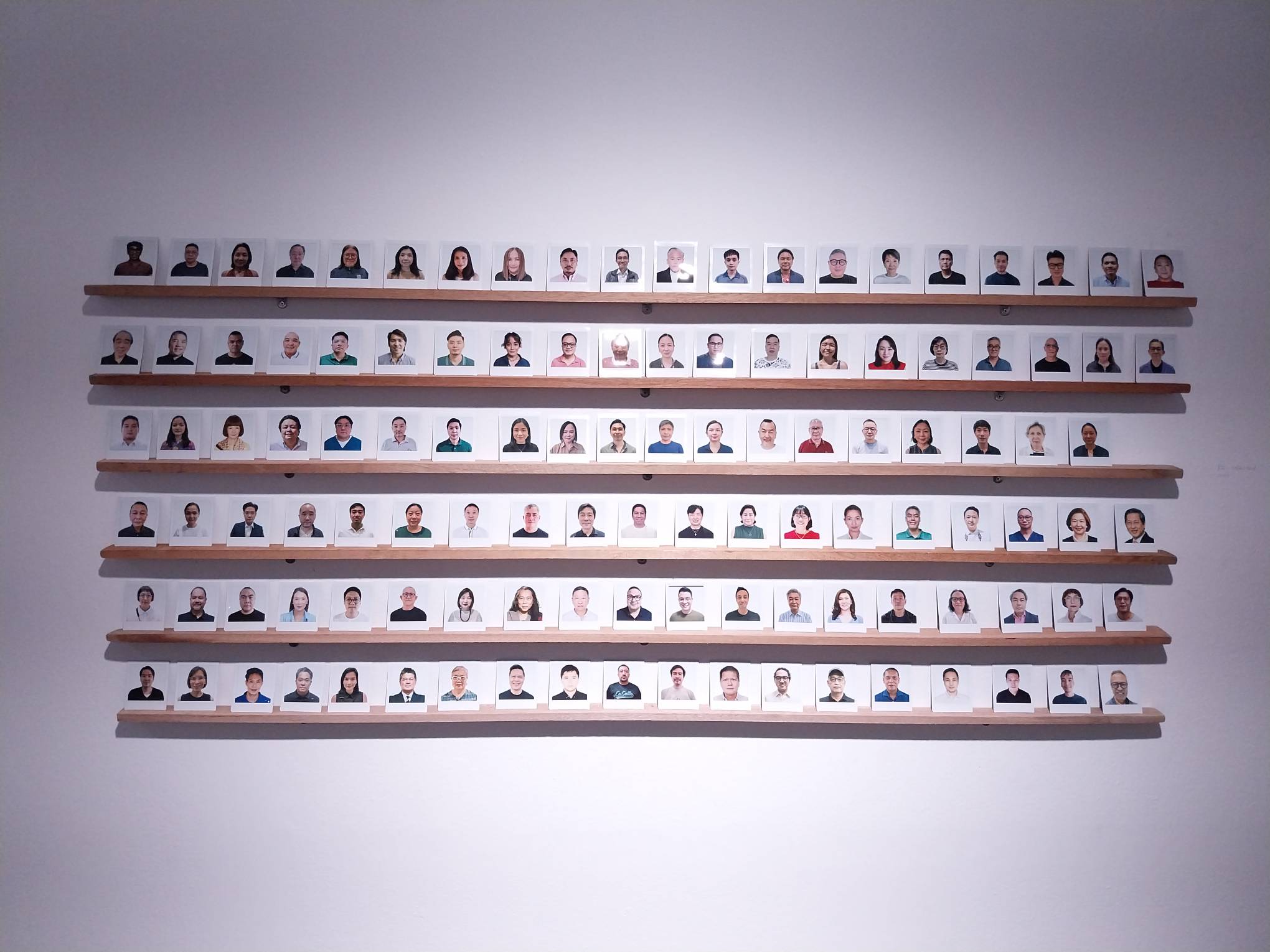
“With the title of the show, I thought of the reverse and the portrait of collectors becomes collected,” she said. “These are not specifically my patrons or collectors, but these are people who are known to be collectors, [who are known to have] a collection.”
Yu said that she plans to add to that specific work over time, thus the choice of Instax as the medium. This includes taking pictures of the people who go to her exhibit and add them to the pile.
Reframing How We See Things
Another Instax-driven work is “images may contain:,” which was previously exhibited at Faculty Projects last year. The works showcase the metatext or error messages of missing images across time.
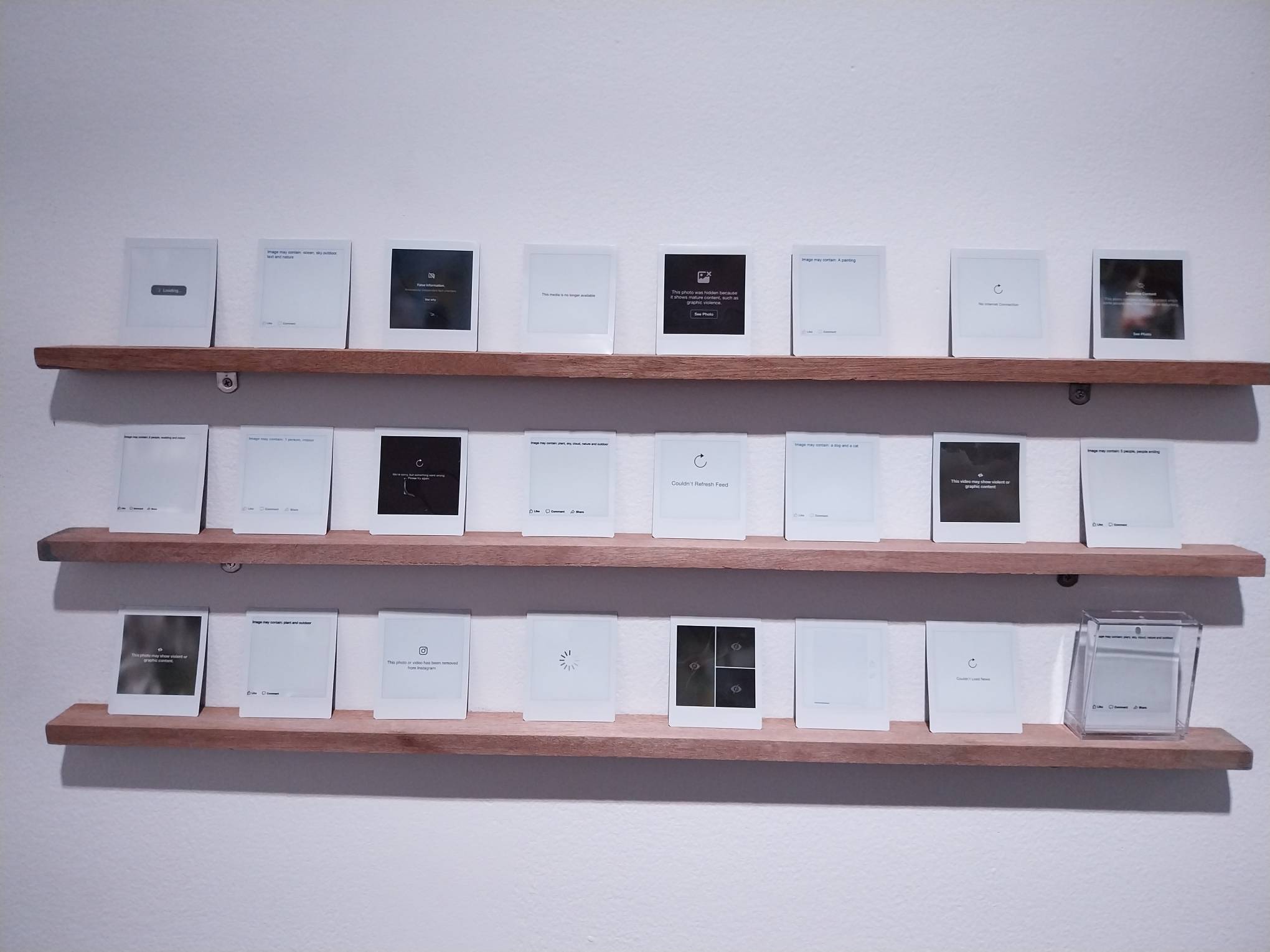
Talking about the work, she said, “These appeared in replacement of the images and it made me just imagine what I cannot see. For other screenshots like ‘This photo may show violent or graphic content,’ it was not really removed entirely but it just gave me a choice or delayed the image that I could see. It is to have an image that is not there and I can imagine what is not seen.”
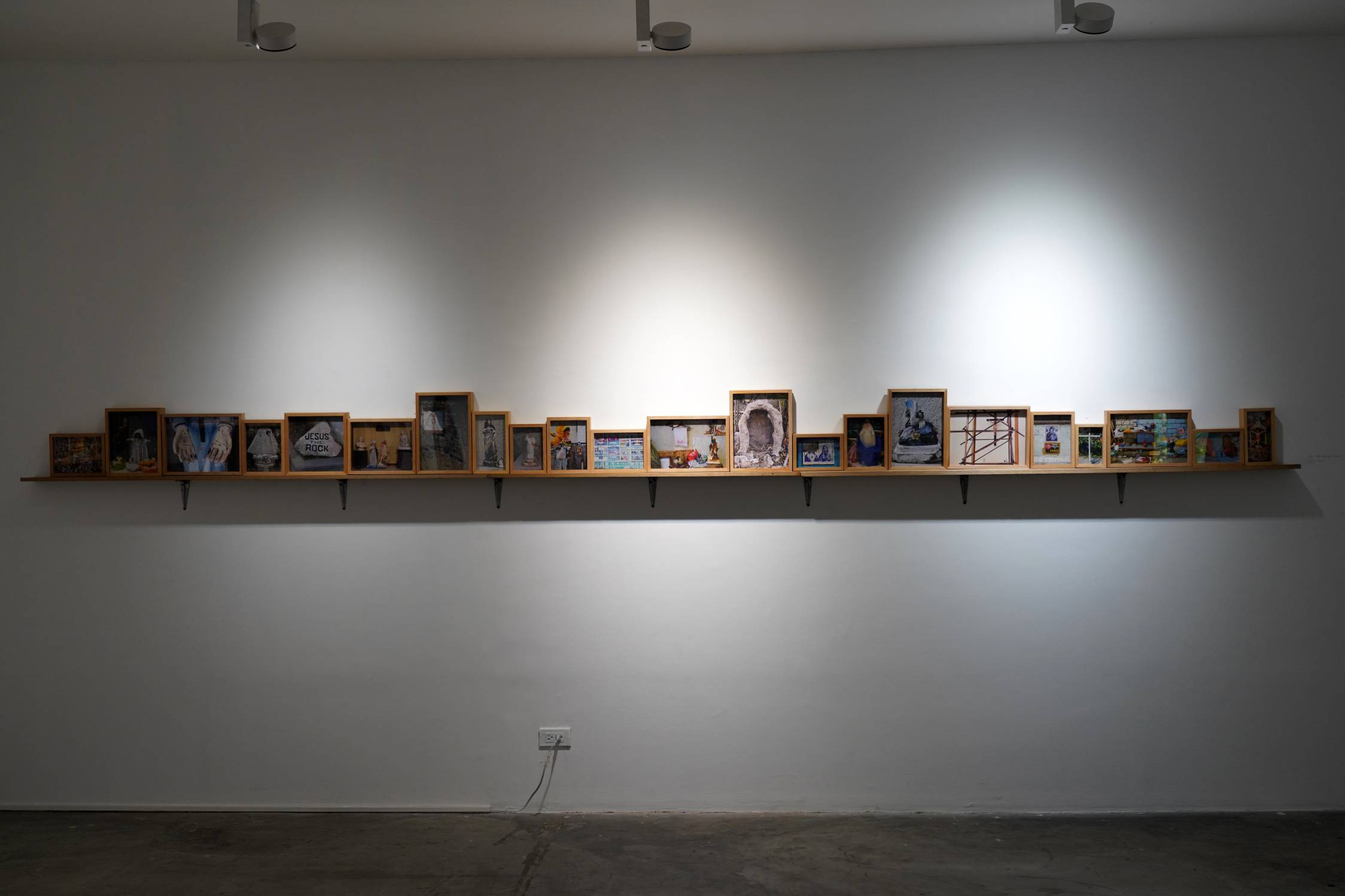
either/or plays with the idea of images, and how presentation is just as important as the content itself. Whatever can be seen in these images, MM Yu provides an avenue to discuss how we construct meaning with the portraits we see.
either/or will be open at MO_Space until February 8.
Updated to correct information about the exhibit.
Related reading: This New Pardo de León Exhibit Shows Humorous, Emotional Spectacles
Frequently Asked Questions
The exhibit explores the complex relationship between image interpretation and the manipulation of meaning within contemporary society. By showcasing photographs captured over many years, Yu investigates how we prescribe significance to visuals and how these images can be reconstructed to reflect the fractures and stubbornness of the Philippine landscape.
Yu highlights the contradictions of the Philippine urban landscape by focusing on ignored street signs and warnings like “no pictures allowed” or “bawal umihi dito.” These photographs illustrate a populace that frequently disregards official rules to create its own paths, effectively crafting a unique portrait of local defiance and the pursuit of individual freedom.
In the “memoirs” series, Yu superimposes present-day images onto a film roll from 2001 to represent the merging of past and present. This experimental process creates layered compositions where some details are clear while others fade, mimicking the way human memories are selectively retained or lost over time through accidental erasure.
“Re-collected” features rows of Instax photographs of known art collectors, effectively turning those who usually possess art into the subjects of the art themselves. By using Instax film, Yu intends to keep the project evolving, adding portraits of exhibit visitors to the collection to further blur the lines between the observer and the observed.
This work showcases the metatext and error messages that appear when digital images fail to load or are flagged for graphic content. By displaying these “missing” images, Yu encourages the audience to imagine what they cannot see, highlighting how technology and censorship can delay or reshape our visual perception and the meanings we derive from it.
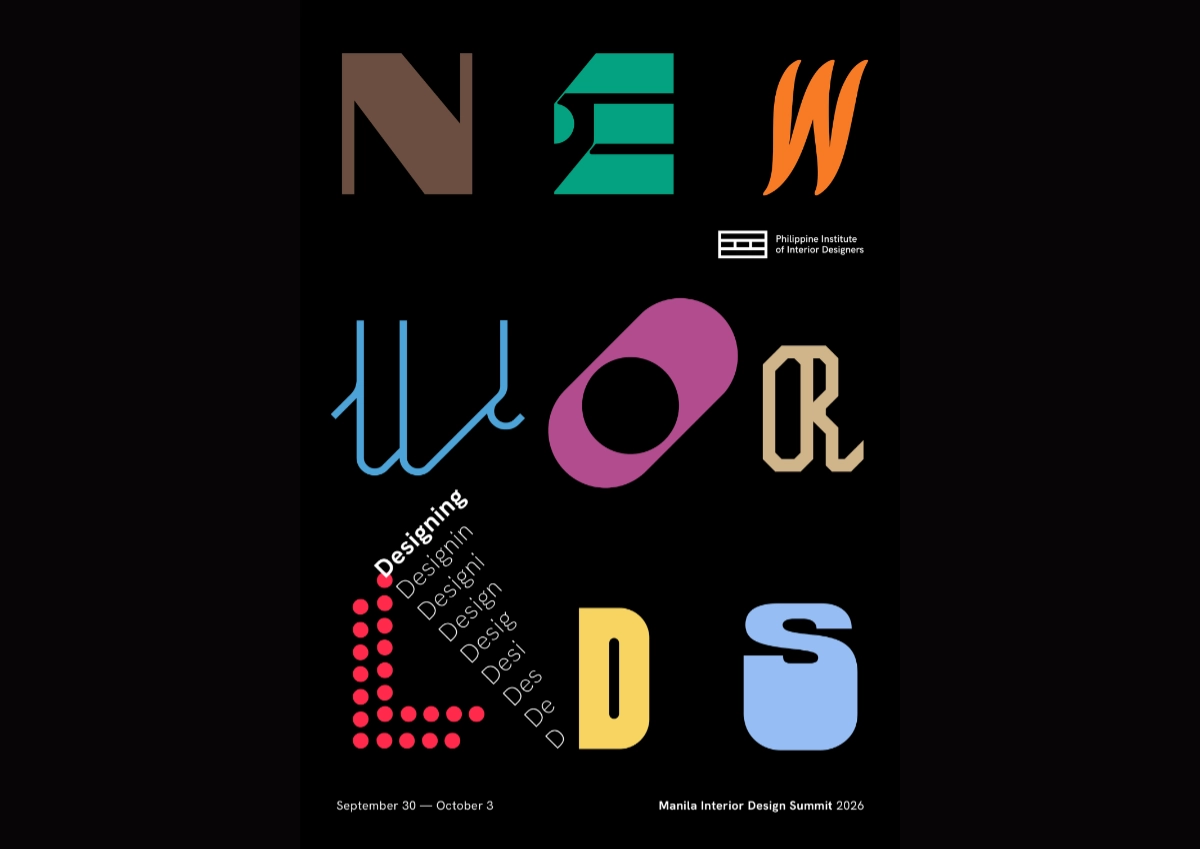
“Thailand has claimed urban creativity and livability. Singapore has institutional design leadership. Indonesia is emerging as a design hub. Vietnam is moving into design innovation. And the Philippines? Its position is not weak. It is simply unclaimed.” For IDr. Cecil Ravelas, National President of the Philippine Institute of Interior Designers (PIID), the challenge is not […]
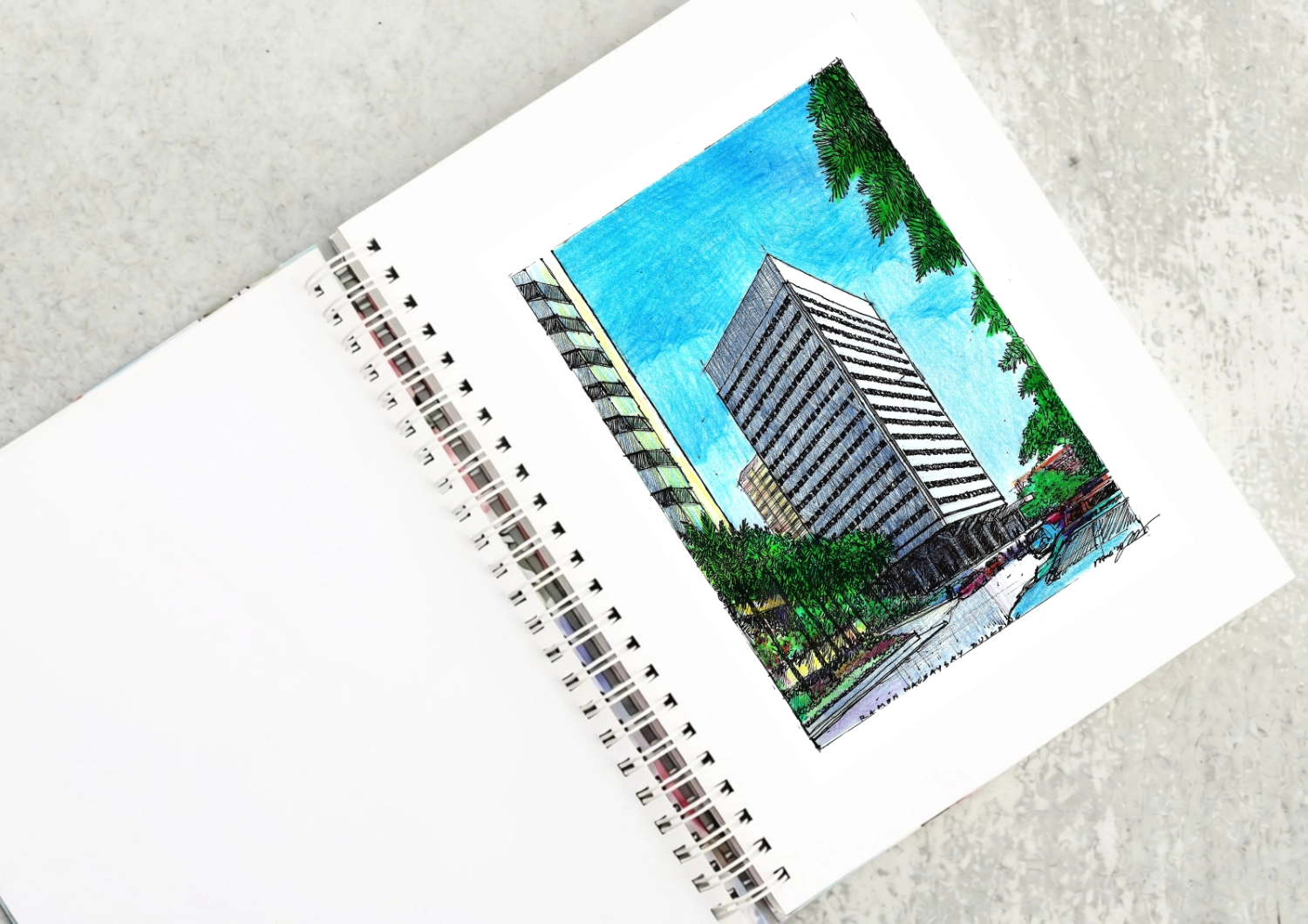
The Ramon Magsaysay Center as a Modernist Landmark Driving down Roxas boulevard from Rizal Park, what will catch your eye is the most elegant modernist structure in the country, the Ramon Magsaysay Center. Most established Filipino architects put it in their top ten lists of favorite buildings. It was designed by Alfredo J. Luz, who […]

Rinna Soriano’s favorite part of her work is sanding. At her workbench, she stays focused, following the grain, adjusting to changes in its direction. Narra, she has learned, can have interlocking grain. A piece of mango once proved particularly difficult until a worker explained that she had reached the point where a branch once grew […]
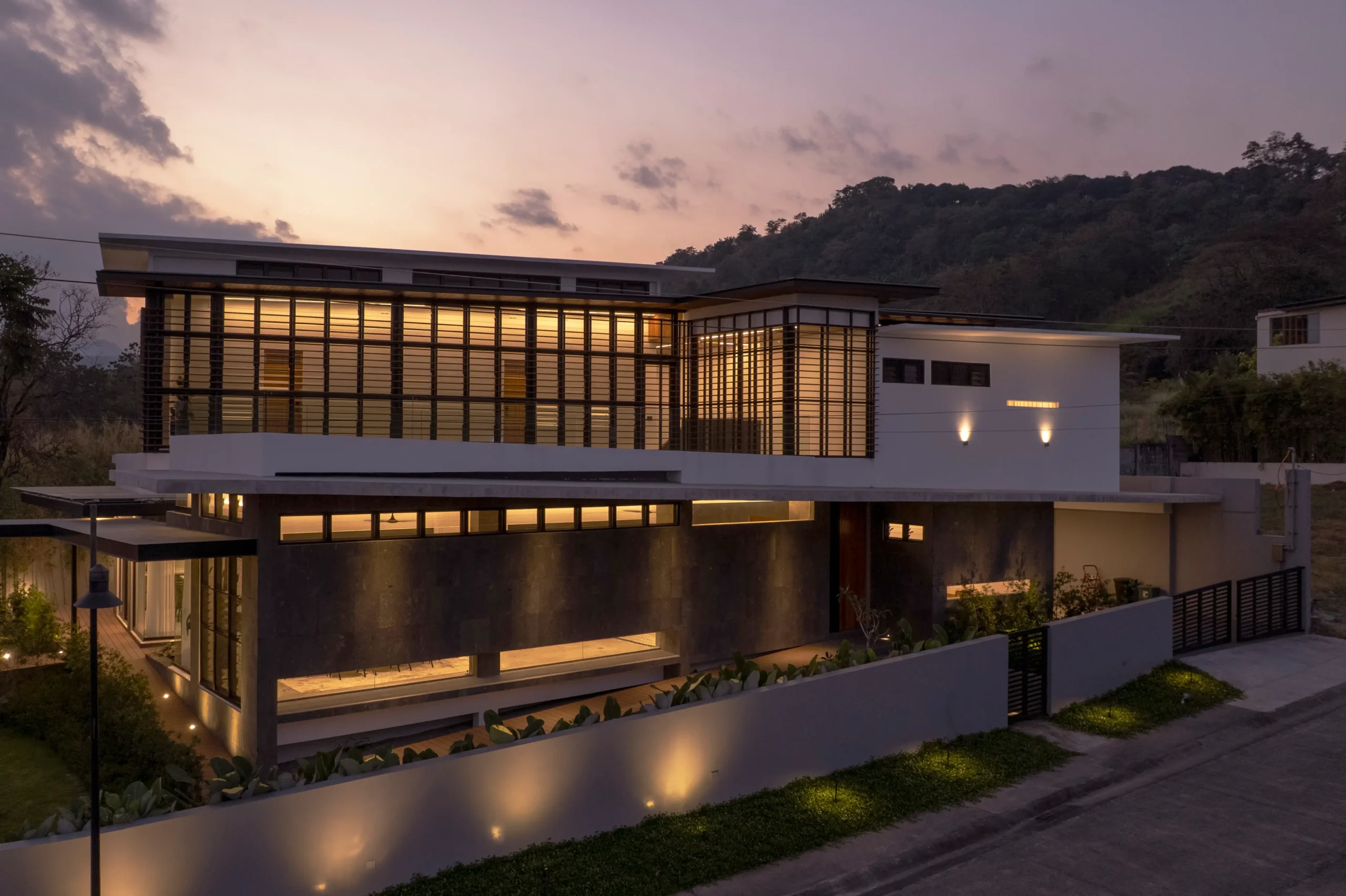
Filipino architectureArchitectureThe art and science of designing and constructing buildings, structures, and spaces that are functional, safe, and aesthetically pleasing. It encompasses the planning, design, materials, and techniques used to createGo to Architecture Glossary has long been associated with indigenous materials and vernacular design strategies, from bamboo and timber construction to jalousie windows, generous spaces, […]
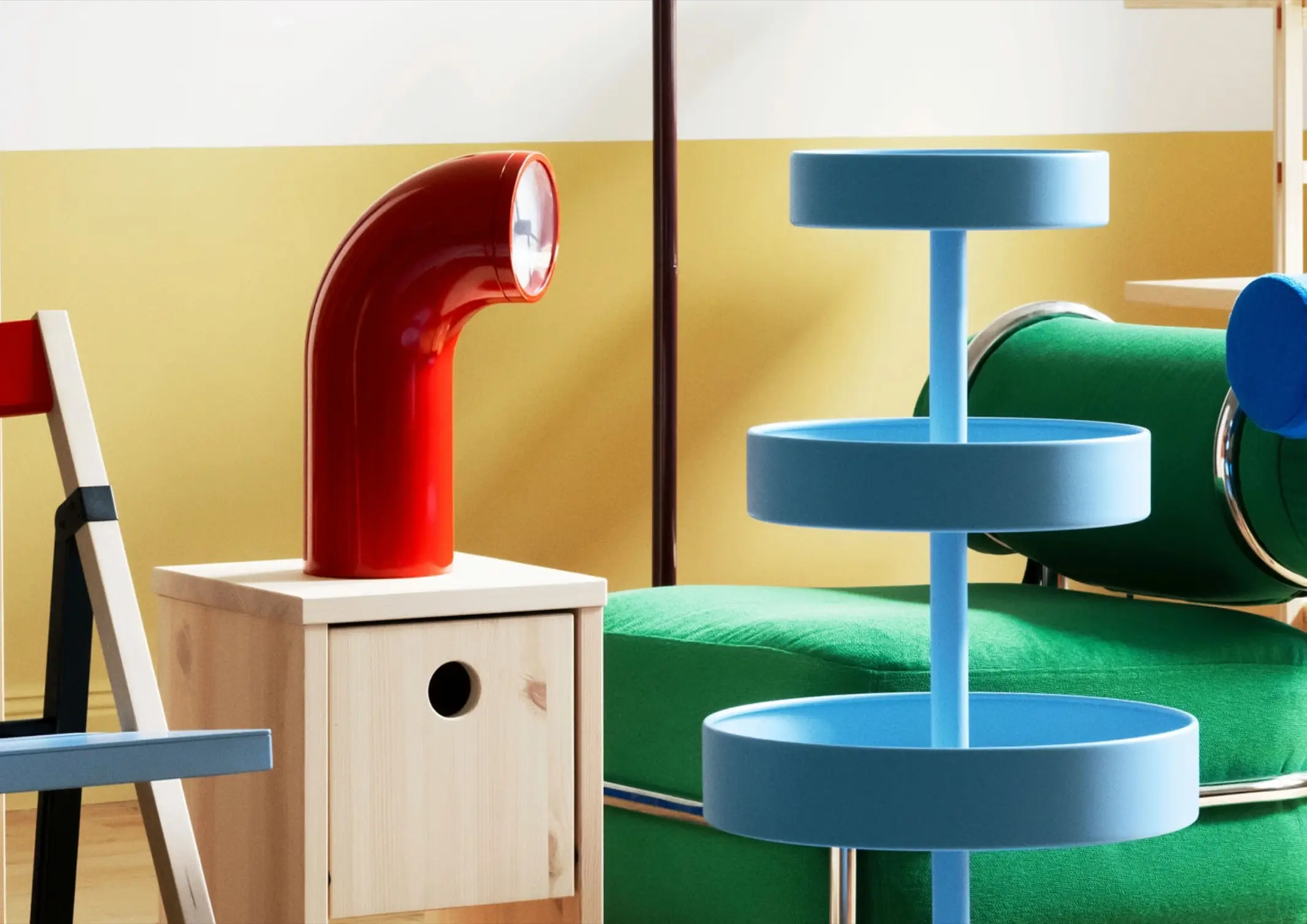
A chair does not always prescribe how to sit in it. A lamp can be more than a source of light. A clock can be more than a way to tell the time.These small departures from convention are at the center of IKEA PS 2026. The latest iteration of IKEA’s experimental PS series comprises more […]
Read the issues.

Collect the volumes.

Recommended Video
Tap to Unmute
Unmute
0:00
0:00