Bigkis is the act of binding. In Tagalog, the word can refer to something used to bind or encircle, as well as a bundle formed by tying several separate elements together. Figuratively, it can also mean a bond, union, or unity. The meanings move from the physical act of joining things together to the connection […]
Exploring the Linear House at Battaramulla



Palinda Kannangara Architects ingeniously designs this modern tropical abode. The client initially only had a relatively small budget and lot size to work with. Despite these limitations, the Linear House demonstrates how a thoughtful approach to architectureArchitectureThe art and science of designing and constructing buildings, structures, and spaces that are functional, safe, and aesthetically pleasing. It encompasses the planning, design, materials, and techniques used to createGo to Architecture Glossary can yield a distinguishable home amongst the urban fabric of Battaramulla, Sri Lanka.
Greenery and Vernacularity in the City
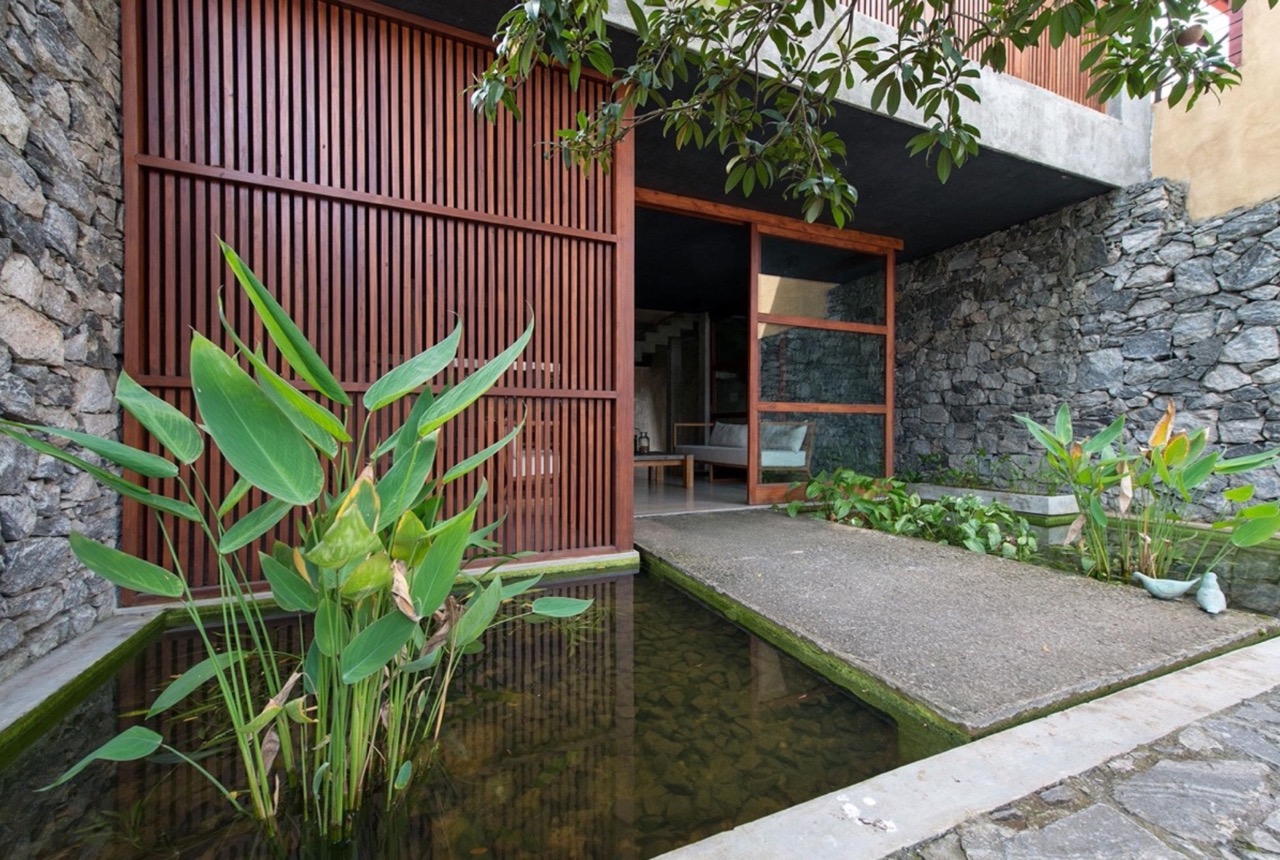
The Linear House embraces nature as its design retains the lot’s existing trees and vegetation. It responds to its urban location through a strong framing of visual experience, as large stone walls surround the perimeter. The surrounding lily ponds choreograph an entry experience like no other as a central walkway floats above. Crushed gravel and rubble stone paving merges hardscape and softscape while enabling stormwater percolation.
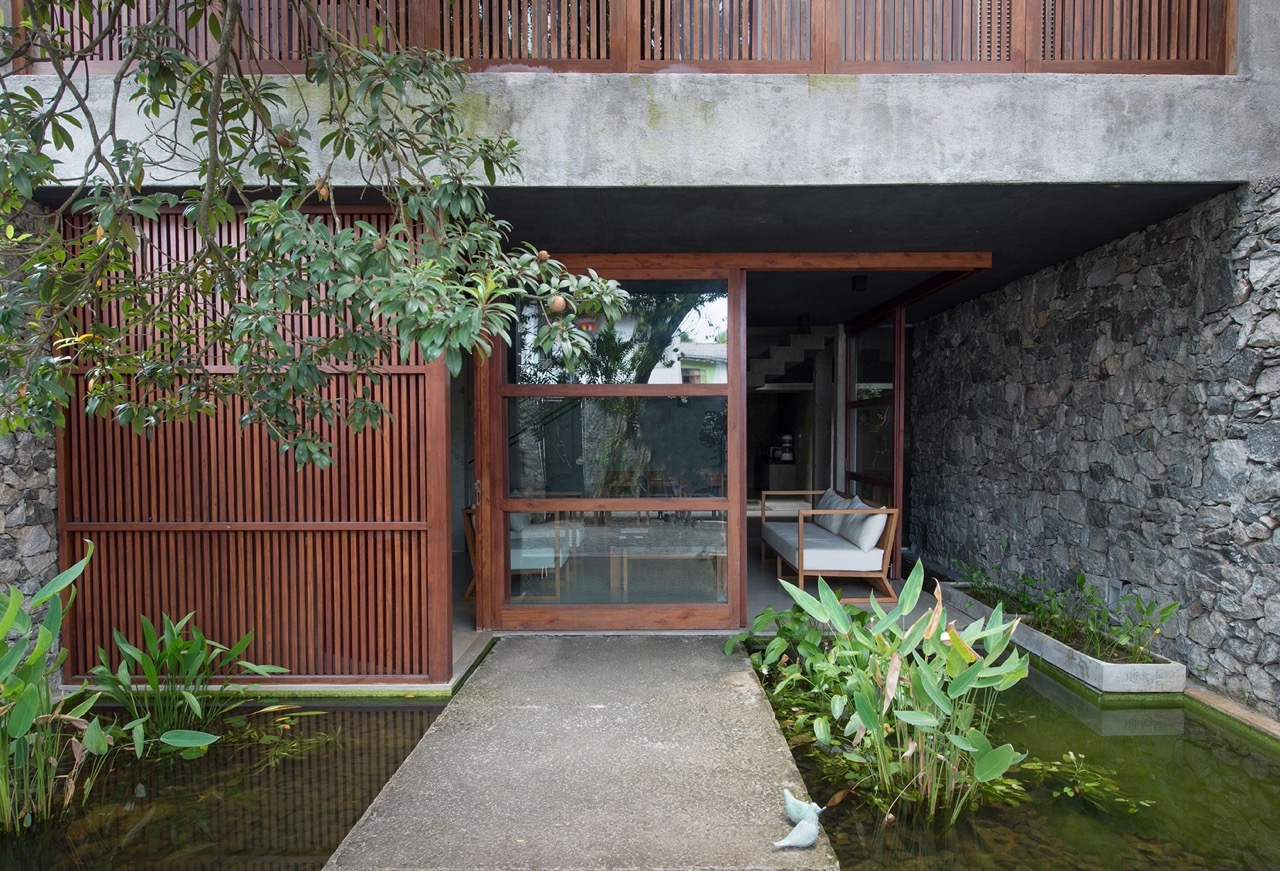
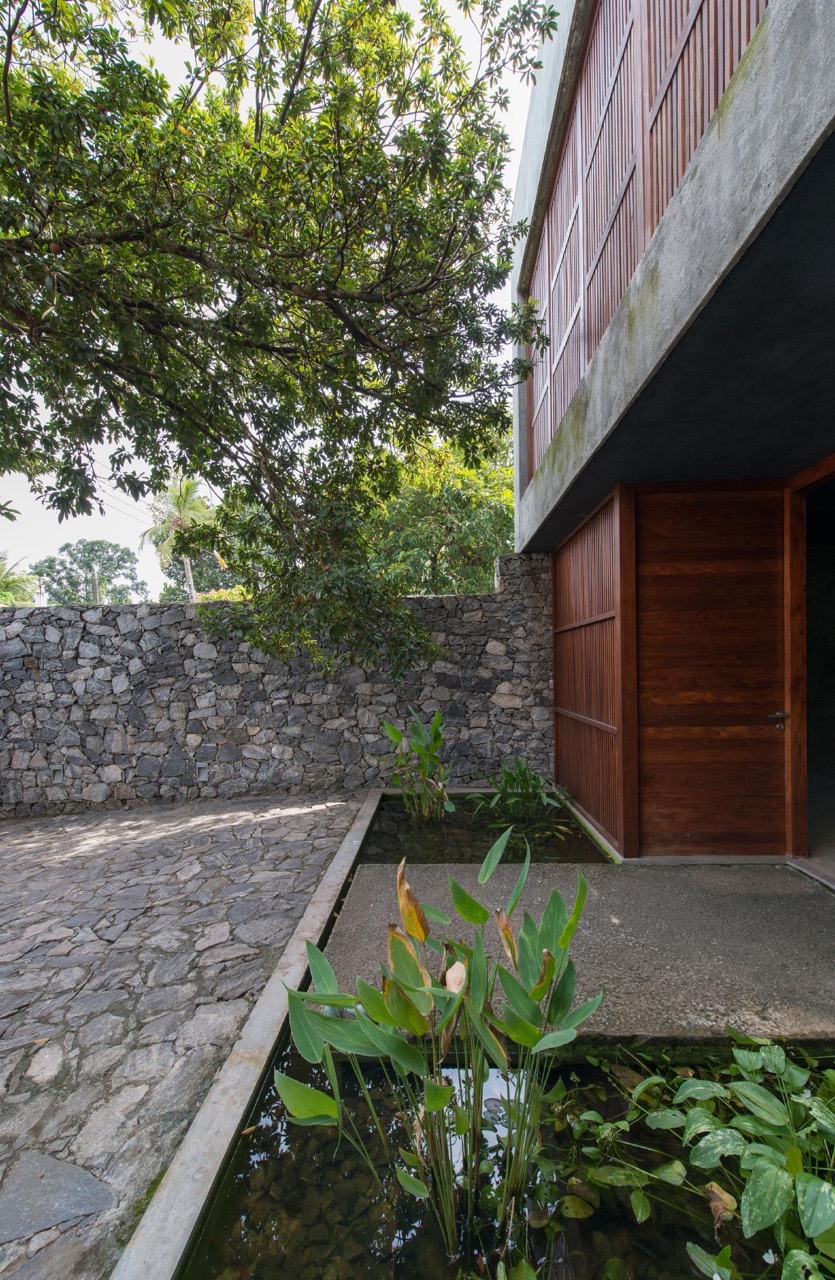
The home’s styling mainly subscribes to modernist design principles while also paying respect to Sri Lanka’s architectural heritage. It reinterprets traditional spaces, such as courtyards, verandahs, and timer screens in a modern context. Doing so creates a familiar feel to its residents that makes the structure compatible with other local motifs.
Its flat roof and clean lines express a contemporary aesthetic. An extensive use of natural materials like timber and stone grounds the design. Its porous facade features wide sliding glass doors, lattice screens, and open stairwells. A roof garden provides thermal buffering from the sun and also features rain harvesting features.
A Zen-like Ambience
The Linear House’s interior spaces make the most out of the compact footprint. Its spatial configuration is arranged in a fluid manner, with sparse use of partitions between different areas. The ground floor features the shared spaces that open up to the interior courtyard, featuring a central array of sapodilla trees. A floating staircase hangs in between them that truly retains an unobstructed view across this level.
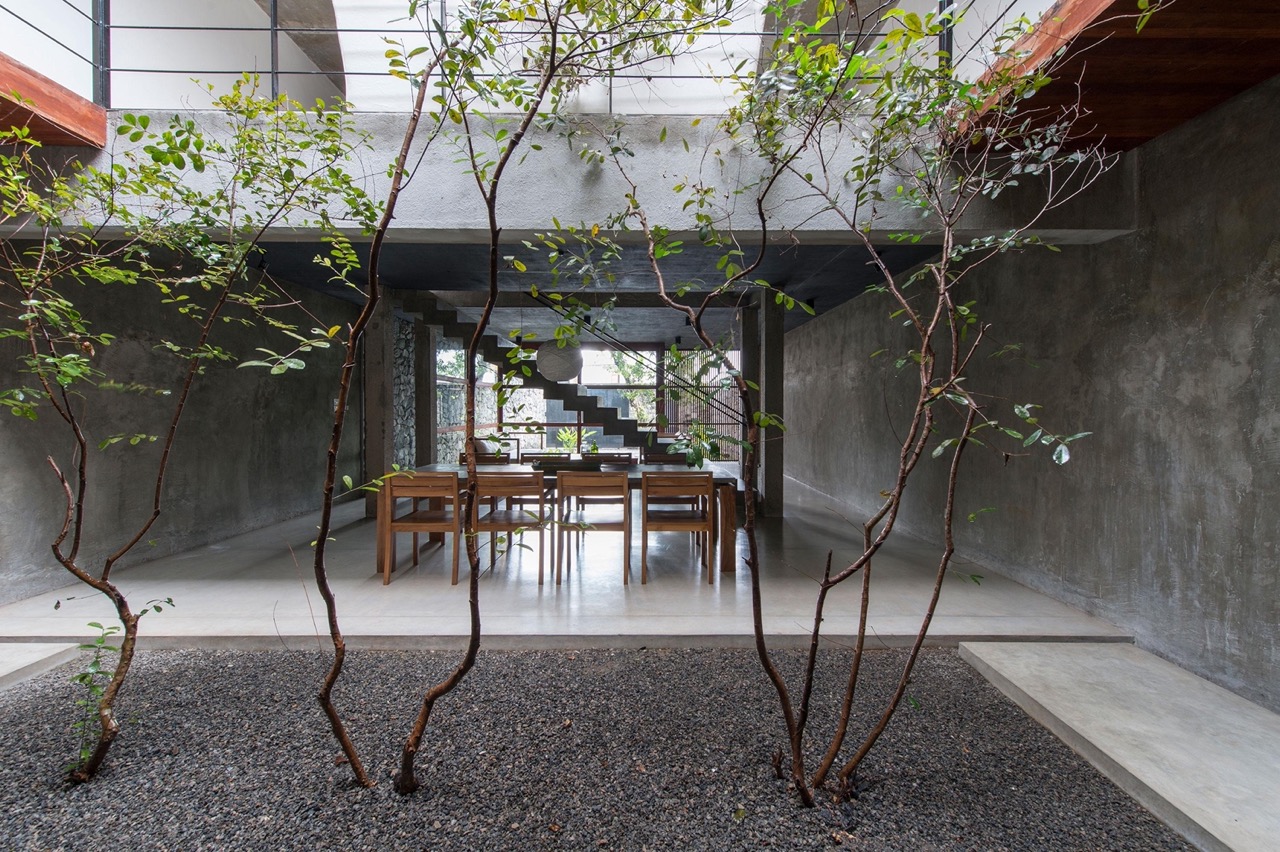
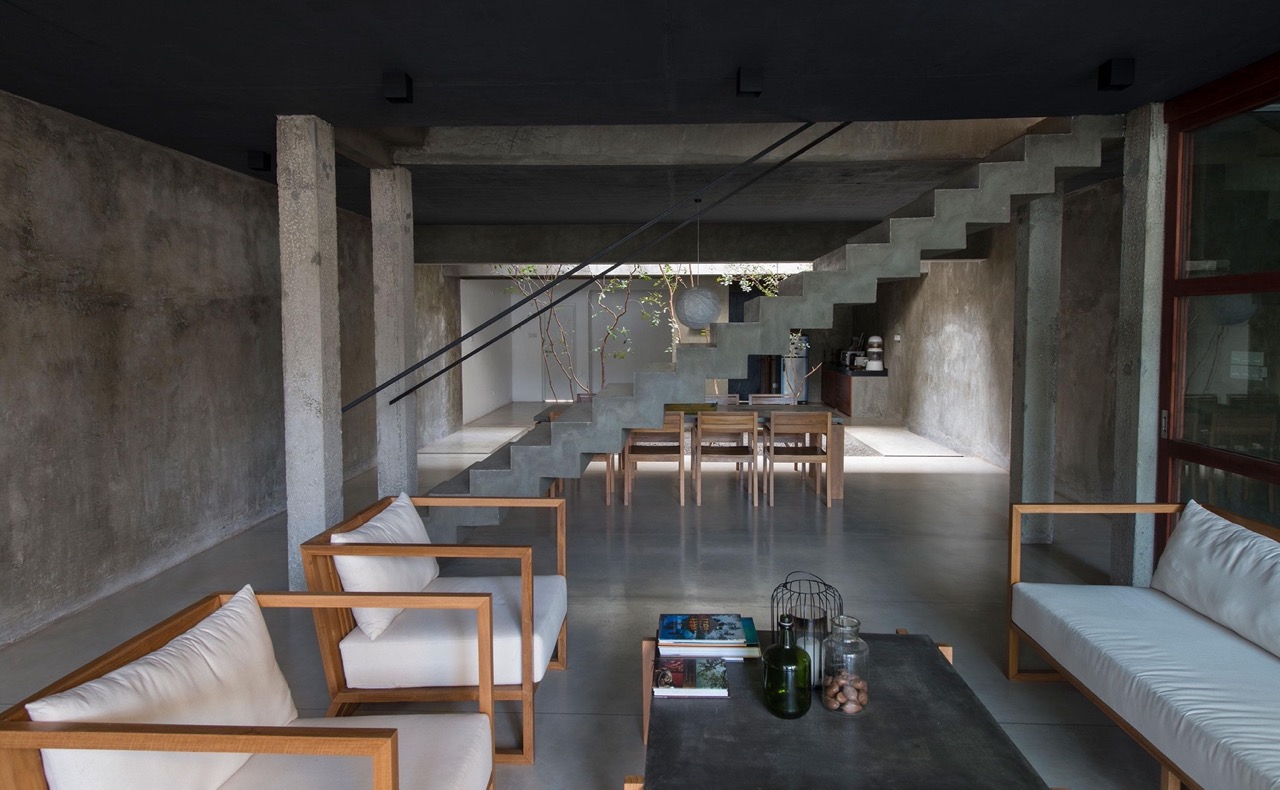
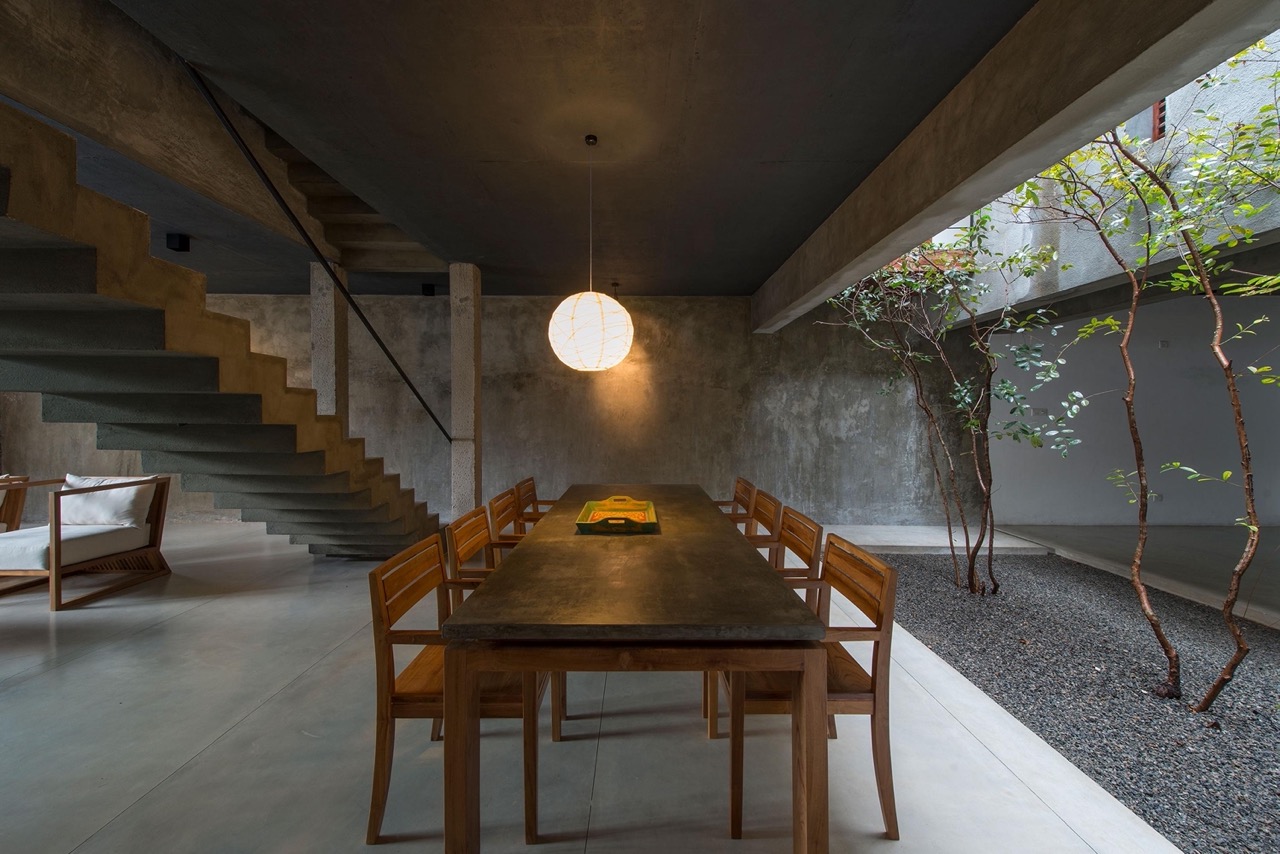
On the second floor, timber bridges wrap around the courtyard and the skylight above. It carefully frames the interior views that enhances the biophilic effect while also making way for a more spacious feel. In more intimate areas, bedrooms feature plastered white walls that brightly contrast the common areas.
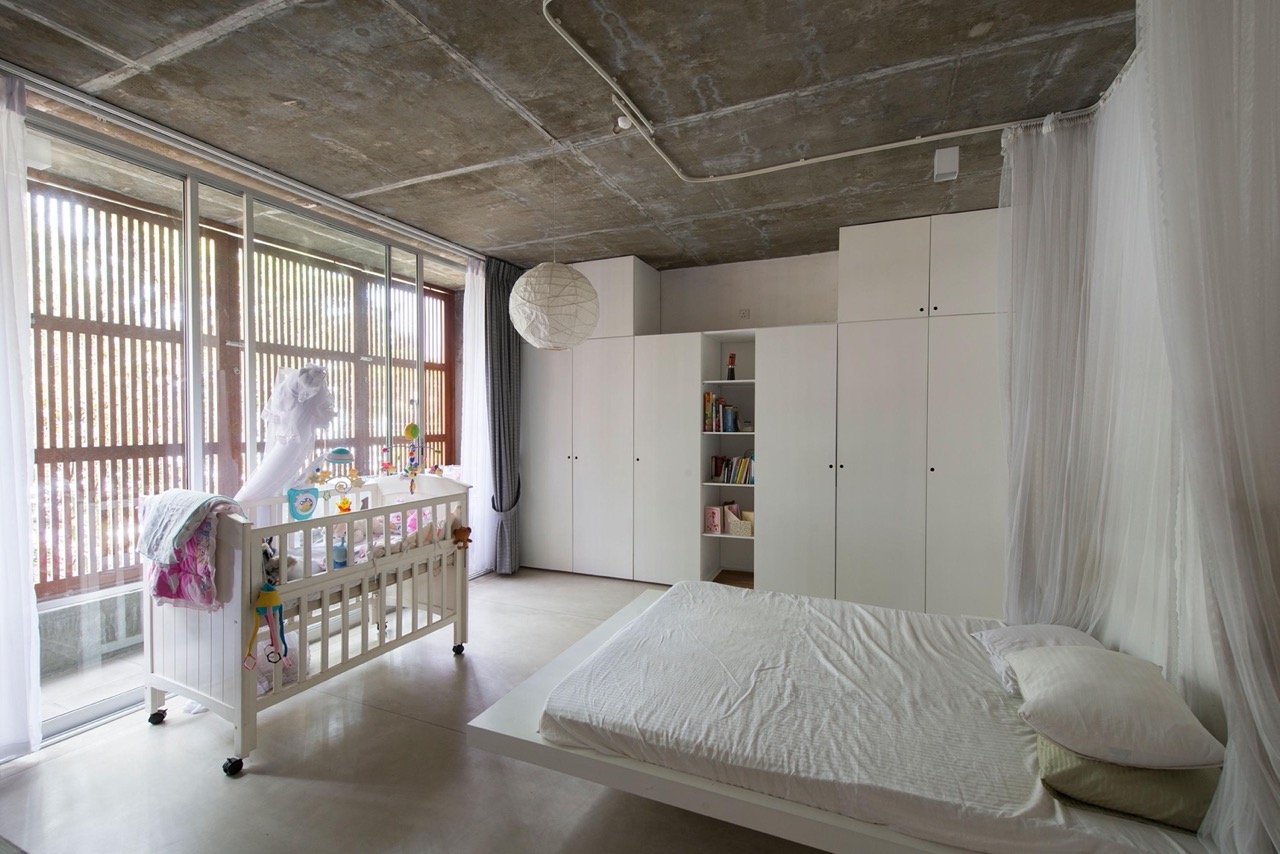
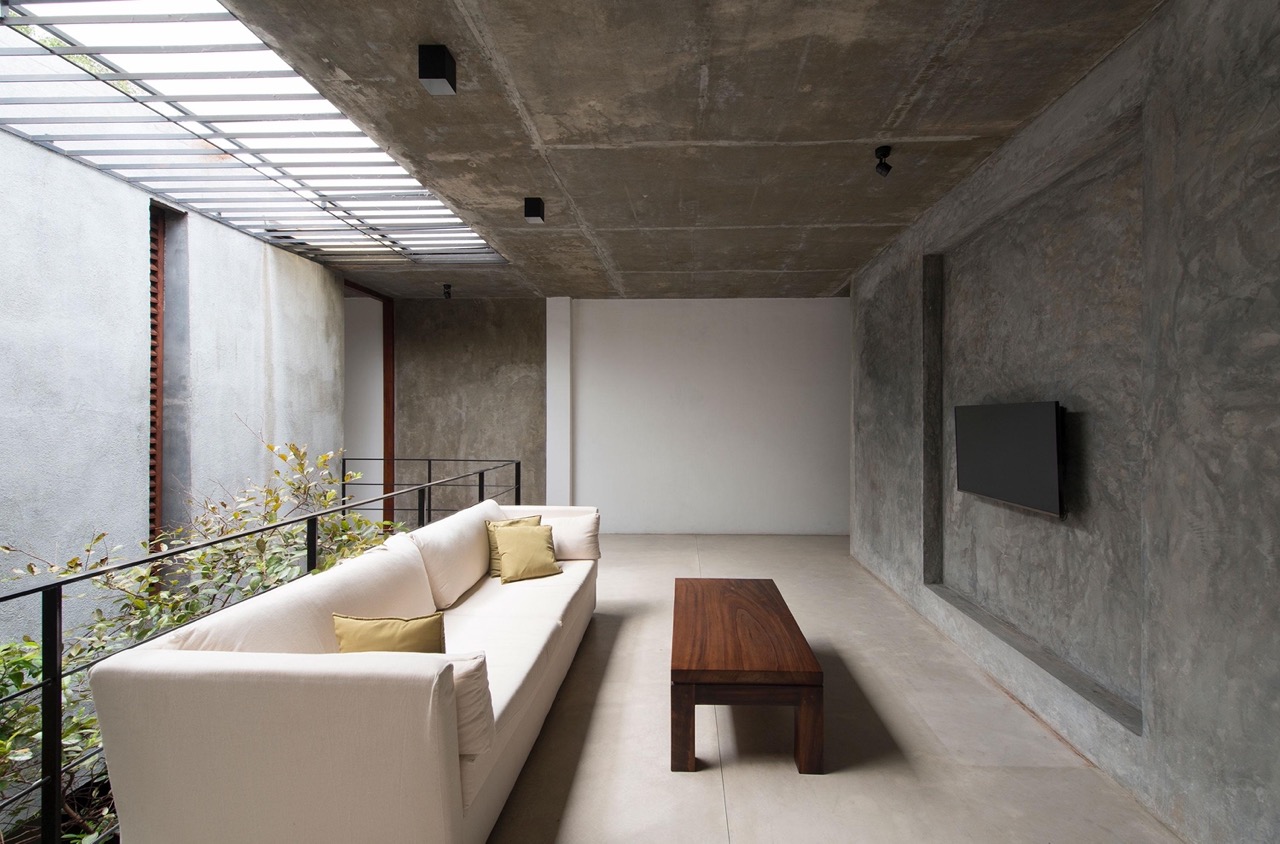
Polished concrete serves as the main material used to form the interior finishes. Its minimal and simplistic effect achieves a zen-like atmosphere. The use of timber, stone, and brick builds upon this as they are left in their natural state. Local artisans crafted the custom-designed timber screens and built-in furniture.
Beauty from Limitations
Sustainability sits at the heart of the Linear House’s design. A combination of passive design strategies and dedication to greenery forms a compelling means of supporting a pleasant microclimate. Materials and stormwater are recycled, further shrinking down both costs and carbon footprint.
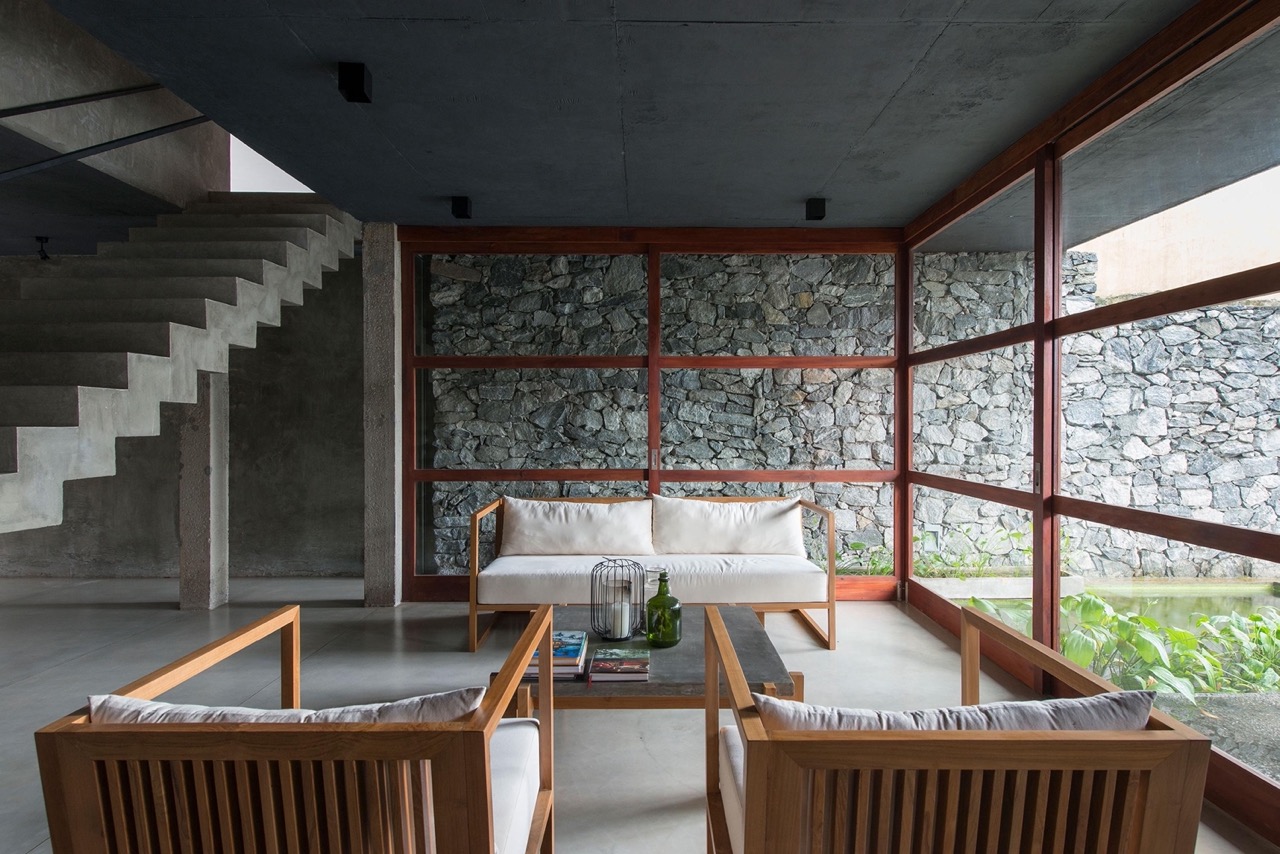
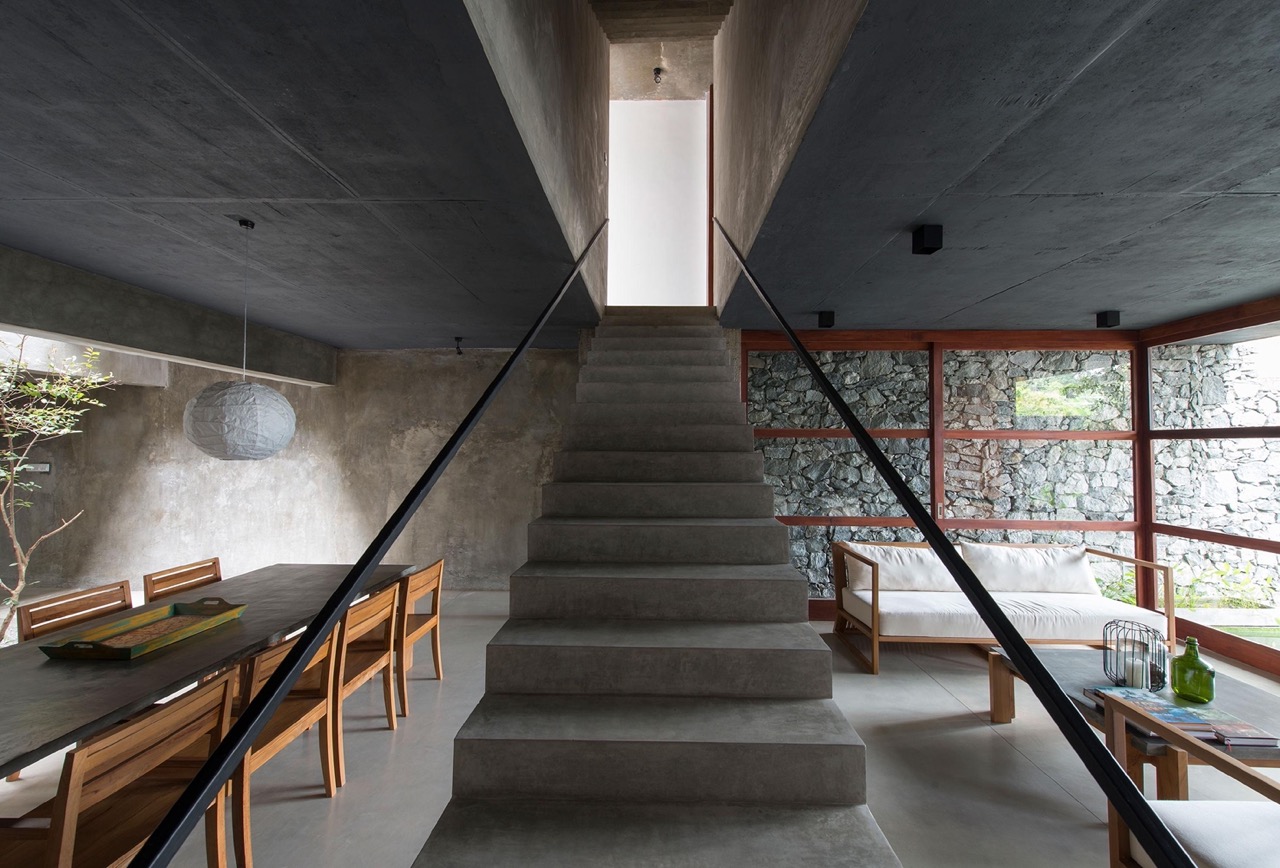
The Linear House demonstrates how urban design can give space for green elements to flourish. Its modest budget inspires an ingenious crafting of spaces using accessible materials and recycled resources. Alongside its homage to vernacular influences, its a structure that embodies the possibilities of tropical modernism infused with sustainability.
Read more: Harding Boutique Hotel is Sri Lanka’s Tropical Modernist Haven
Photo credit: Sebastian Posingis
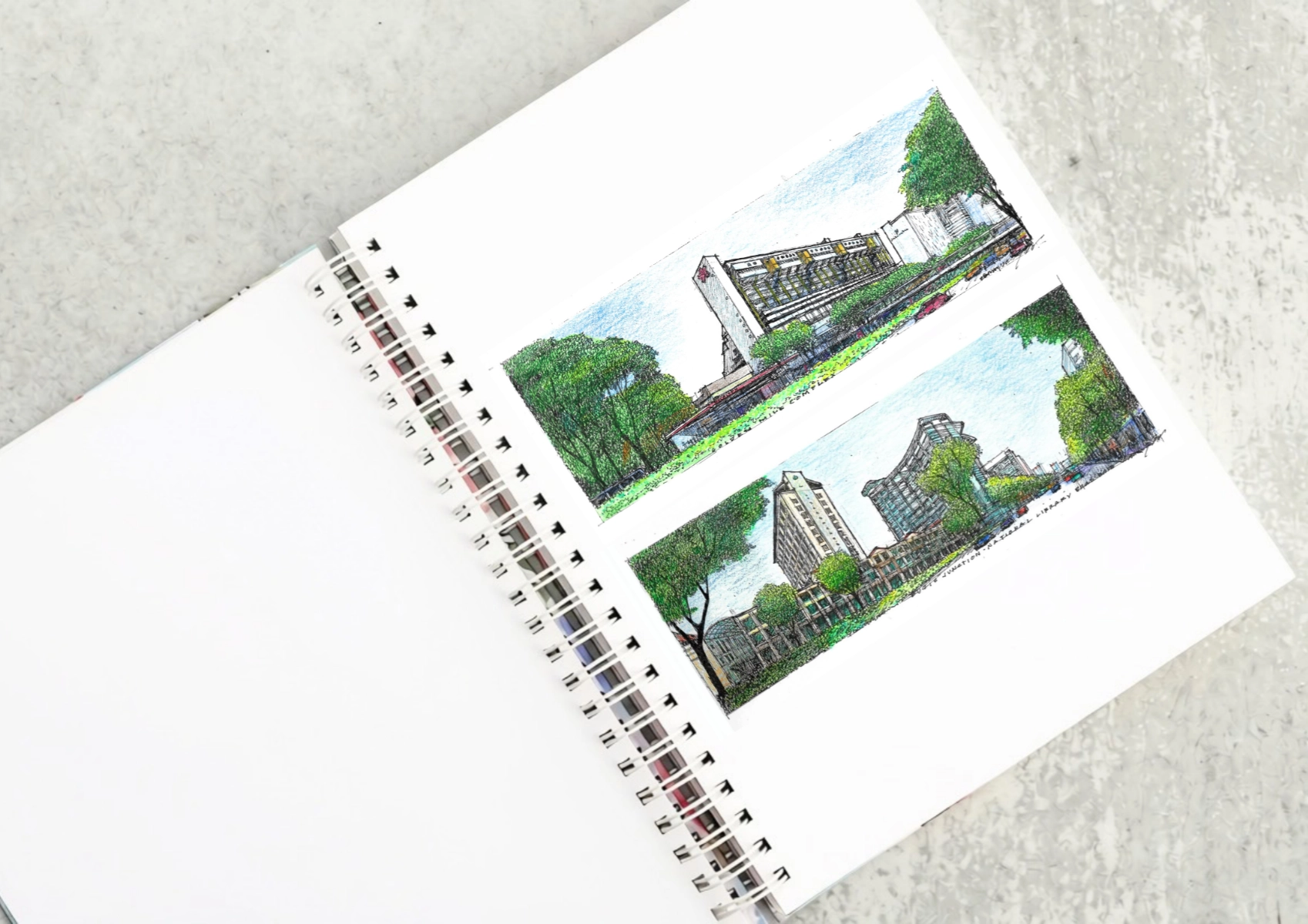
Two sketches of Singapore connect BluPrint Editor in Chief Paulo G. Alcazaren’s personal and professional history with Shared Ground: ArchitectureArchitectureThe art and science of designing and constructing buildings, structures, and spaces that are functional, safe, and aesthetically pleasing. It encompasses the planning, design, materials, and techniques used to createGo to Architecture Glossary of Care, Culture, […]
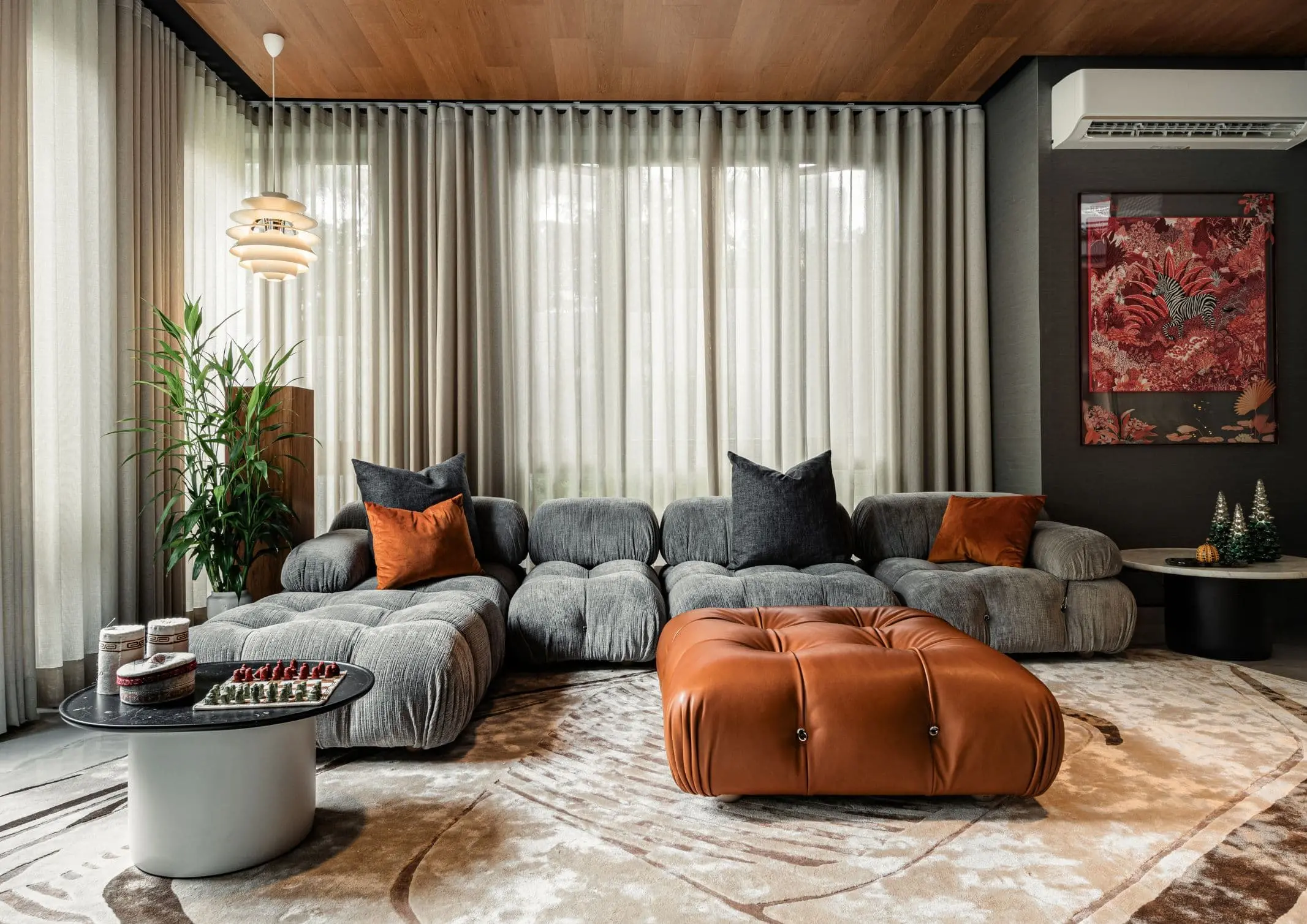
Some have become household names – Coleman, Oster, and KitchenAid – products that have found their way into Filipino kitchens, homes and family routines. In home furnishings, brands such as B&B Italia, Ethan Allen, Sub-Zero, Miele, SieMatic, Louis Poulsen, Hunter Douglas, Tempur, and Technogym, have helped shape the way Filipinos live. From everyday essentials to […]

In a way, designers are the modern-day soothsayers and prophets. They design for the future, predicting how a room, a house, a building or a whole city will be used by people. They foresee how users will interact with a space, conjure exact shades of colors to elicit specific behavior and arrange furniture to build […]
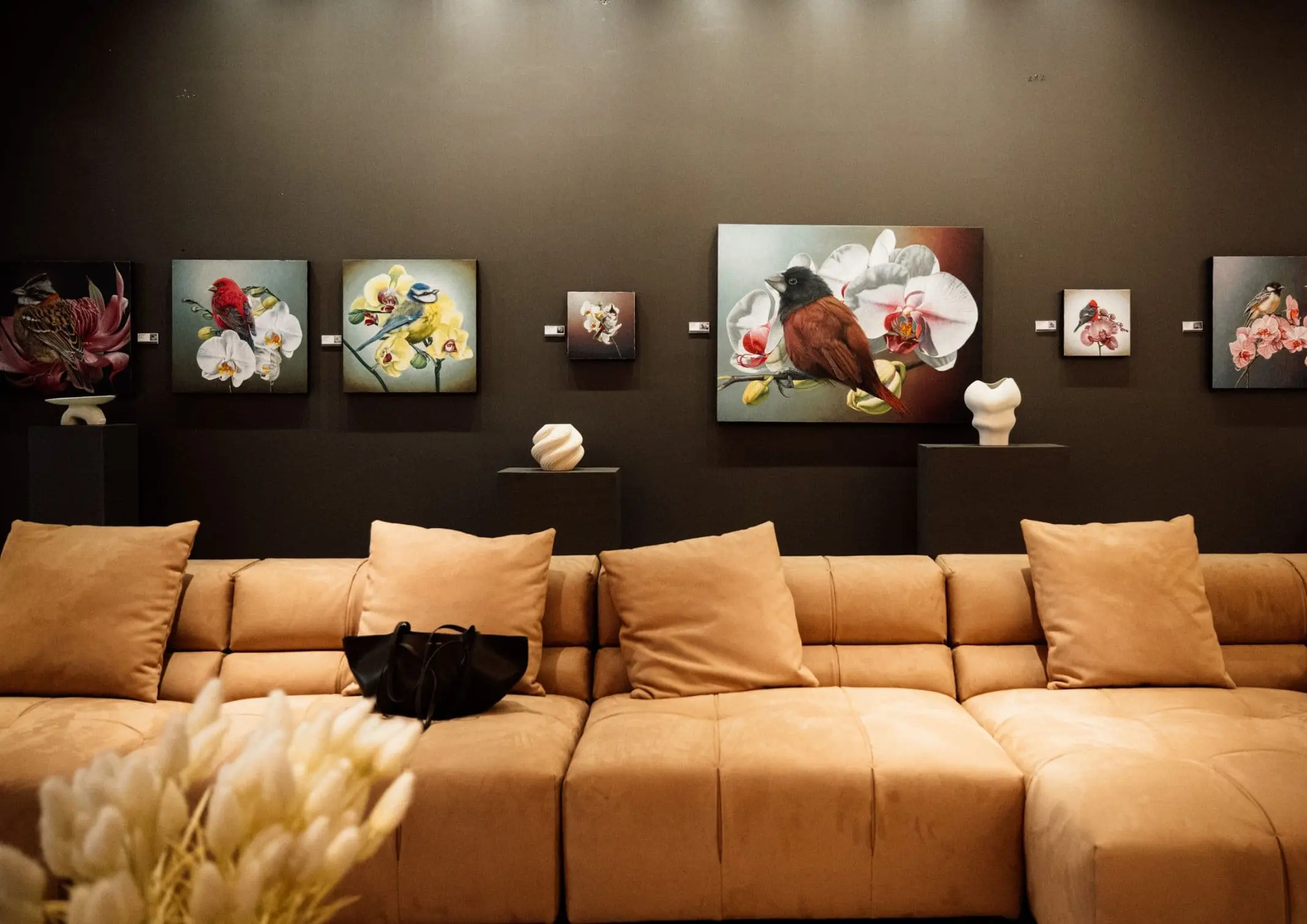
Art and furniture are often selected separately, yet their relationship can shape how a room looks and feels. The collaboration between Hooga and Galerie Joaquin explores how these elements can work together, bringing contemporary artworks into furnished residential settings at Hooga’s showroom in Uptown Mall, Bonifacio Global City. For Hooga, which curates furniture, lighting, and […]
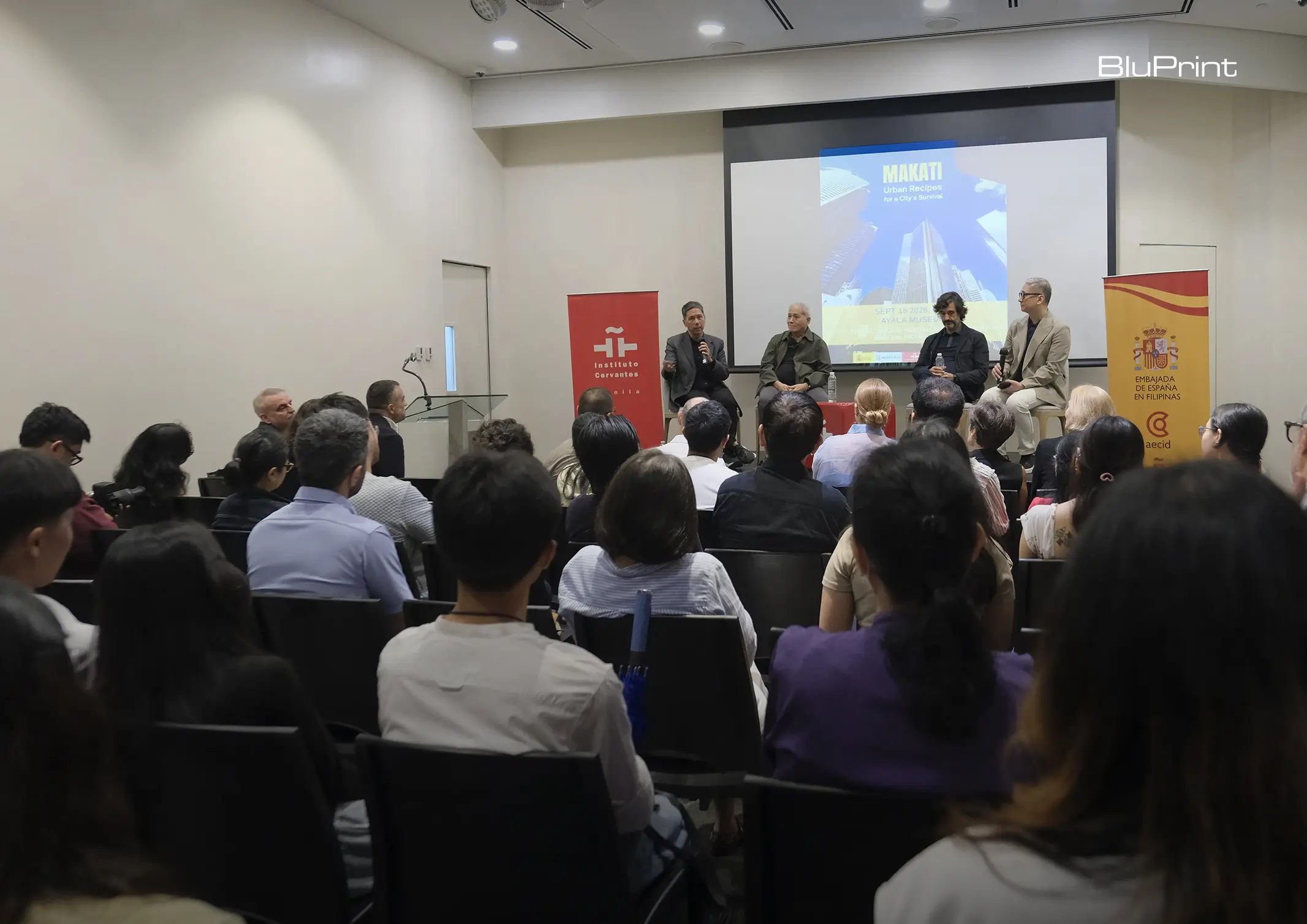
How can better-planned cities create the conditions for more creative, livable, and resilient urban environments? “Makati Urban Recipes for a City’s Survival,” a colloquium held at the Ayala Museum on September 15, brought together architects and practitioners from the fields of urbanism and the creative economy to discuss how design, planning, and collaboration can address […]
Read the issues.

Collect the volumes.

Recommended Video
Tap to Unmute
Unmute
0:00
0:00