Bigkis is the act of binding. In Tagalog, the word can refer to something used to bind or encircle, as well as a bundle formed by tying several separate elements together. Figuratively, it can also mean a bond, union, or unity. The meanings move from the physical act of joining things together to the connection […]

Beyond the Surface: Three Ways Porcelain Can Define Space



Large-format porcelain is no longer limited to conventional floor and wall applications. Advances in scale, finish, and fabrication have expanded its role across architectureArchitectureThe art and science of designing and constructing buildings, structures, and spaces that are functional, safe, and aesthetically pleasing. It encompasses the planning, design, materials, and techniques used to createGo to Architecture Glossary and interiors, allowing designers to approach it as a versatile material rather than simply a surface finish.
Energieker’s Taj Mahal, Luminescence, and Eclipse collections demonstrate this broader potential, each offering a distinct approach to how porcelain can be integrated into the design of a space.
Taj Mahal Amber extends beyond walls and floors to furniture surfaces, carrying its warm beige marble character across different applications within the interior.
TAJ MAHAL × ARCHITECTURE: Material Continuity Without Monotony
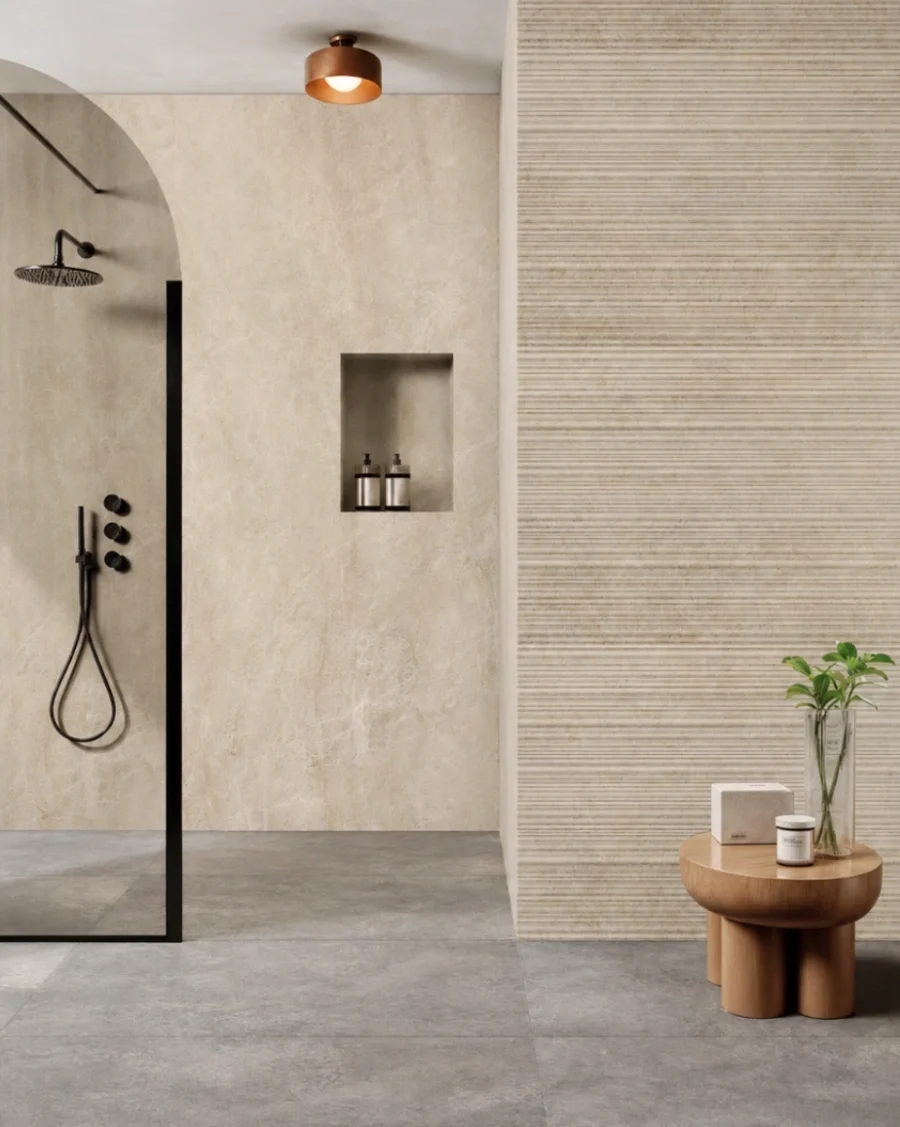
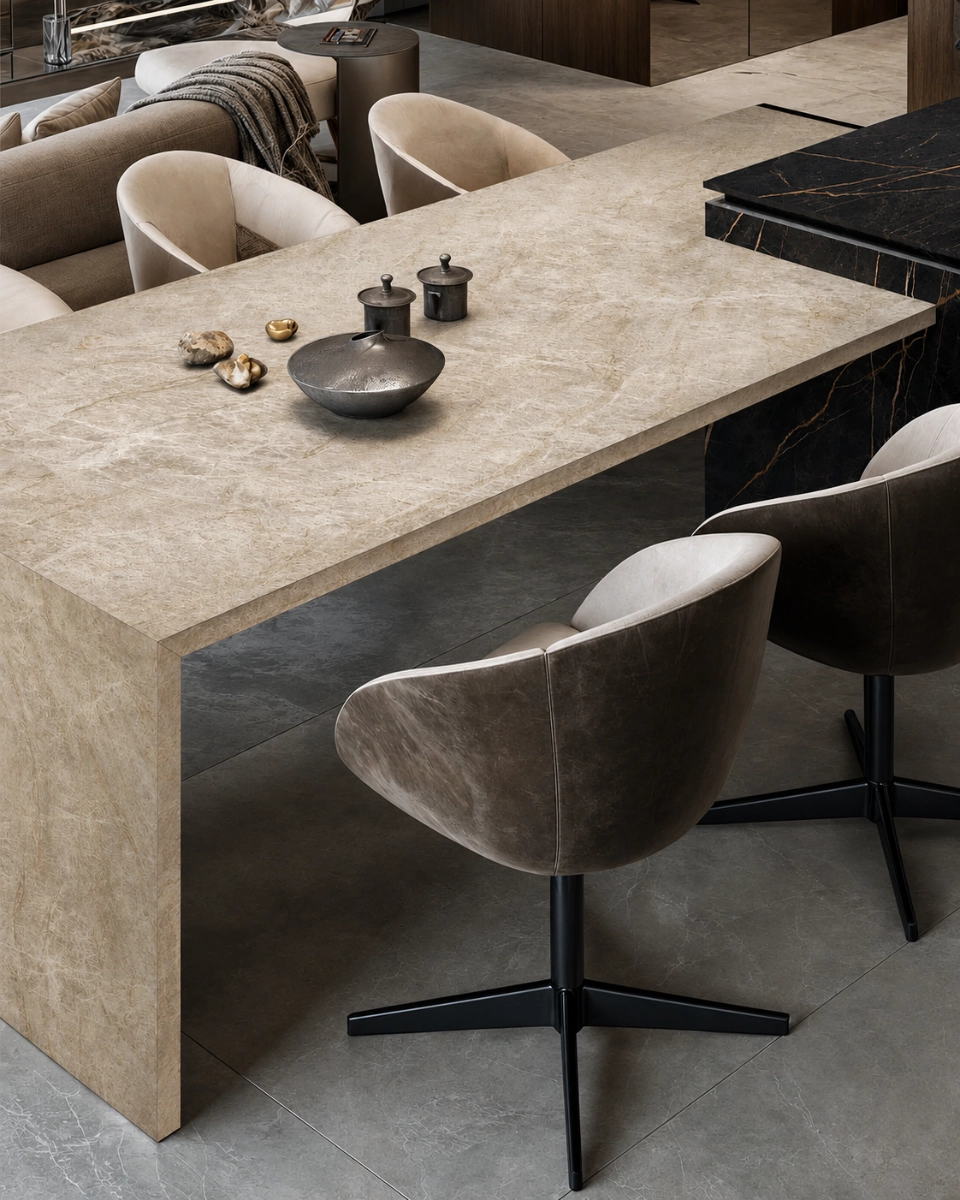
Energieker’s Taj Mahal collection builds on the warmth and natural character of beige marble. Available in 60 cm x 120 cm tiles in the shade Amber, its softly layered appearance provides a neutral foundation that can move through a project without overwhelming the architectureArchitectureThe art and science of designing and constructing buildings, structures, and spaces that are functional, safe, and aesthetically pleasing. It encompasses the planning, design, materials, and techniques used to createGo to Architecture Glossary. Rather than relying on strong color changes to distinguish one space from another, architects can use variations in format, finish, application, and surrounding materials to create contrast within a coherent palette.
Large 60 cm x 120 cm tiles can establish expansive wall planes with fewer visible joints, creating a greater sense of continuity and allowing the marble-like pattern to read at an architectural scale. Coordinated floor formats extend the material language across horizontal surfaces, while mosaics and smaller formats can respond to areas that require a different scale or level of detail.
This versatility becomes particularly useful in spaces that depend on material restraint. Warm beige surfaces can create a quieter backdrop for wood, metal, darker stone, furniture, art, and natural light, while variations within the collection can introduce depth without disrupting the overall composition. The result is not uniformity, but a layered environment built from related tones and textures.
For architects, the opportunity lies in using restraint as a design tool. Taj Mahal demonstrates how a refined material palette can create continuity without monotony, allowing subtle changes in scale, texture, and application to give each space its own character while remaining part of a coherent whole.
Related Reading: The Evolution of Lladró: A Heritage of Innovation and Craftsmanship
LUMINESCENCE × INTERIOR DESIGN: Using Porcelain to Shape Light and Atmosphere
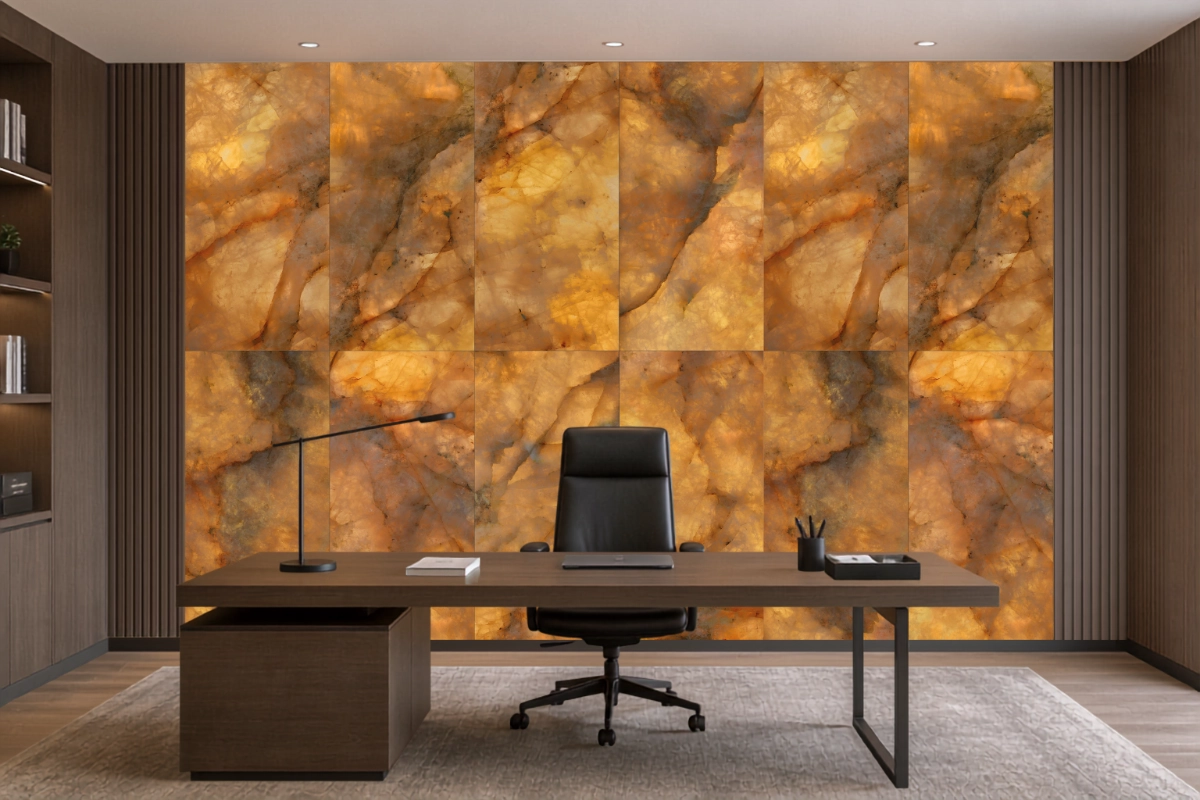
Energieker’s Luminescence draws from the crystalline character of onyx, with amber and honey tones moving through smoky passages, mineral veining, and areas of apparent depth. Its V3 rating indicates noticeable variation in graphic and tone, making each slab part of a larger visual composition rather than a uniformly repeated pattern.
Its High Gloss LCP finish further heightens the surface through reflection and its interaction with light. What surrounds Luminescence therefore matters just as much as the material itself. Quieter finishes, controlled lighting, and restrained furnishings can provide contrast without competing with a surface that already carries considerable visual information.
Scale gives interior designers a way to control that expression. At a larger scale, the graphic has room to unfold, allowing the surface to take on a stronger role within the interior.
While the 60 cm x 120 cm format is readily available, 120 cm x 120 cm and 120 cm x 280 cm formats can be specified by indent order.
For interior designers, Luminescence turns material selection into an act of composition. Its richness is already inherent in the surface; the design lies in deciding how much to reveal, where to place it, and how the rest of the interior allows it to register.
Related Reading: Jingdezhen Imperial Kiln Museum Gives Brick Vault a New Meaning
ECLIPSE × INTERIOR ARCHITECTURE: From Surface to Spatial Element
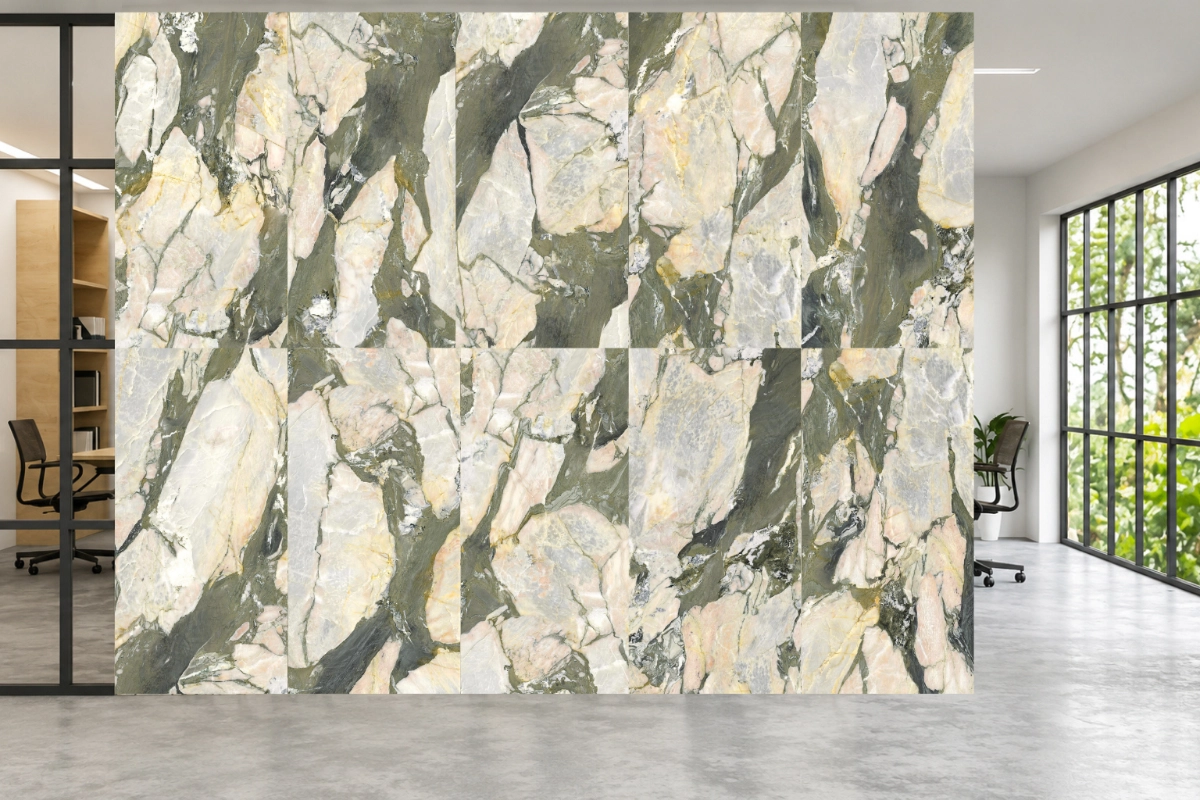
Its expressive marble character combines cream, blush, grey-green, charcoal, and warm mineral veining, creating pronounced variation across the surface. The large slab format opens up possibilities beyond conventional walls and floors to three-dimensional applications. The 120 cm x 280 cm format on furniture, where the material wraps horizontal and vertical planes to give a functional object the presence of an architectural volume. The same approach can be considered for reception desks, counters, built-in features, vanity structures, and other elements that help organize an interior, subject to the appropriate substrate, fabrication, and installation system.
Working across several planes also changes how the material is composed. Eclipse carries a V3 rating, with noticeable variation in color and graphic from slab to slab. When used on a volume rather than a single flat surface, the placement of veins, tonal shifts, edges, and junctions becomes part of the detailing. Careful slab selection and layout can determine how the graphic turns a corner or continues across adjoining faces, allowing fabrication to become part of the design.
For interior architects, Eclipse expands the role of porcelain from the surfaces that enclose a space to the elements that give it form. Used with an understanding of scale, fabrication, and material variation, a slab can become part of the architecture of the interior rather than simply its final layer.
Across Taj Mahal, Luminescence, and Eclipse, this expanded material vocabulary reflects Energieker’s broader approach to porcelain: combining advanced production with the design sensibility and material expertise associated with authentic Italian craftsmanship. The result is a premium material offering in which quality is not only seen on the surface, but understood through the possibilities it gives designers to create with it.
To experience Energieker first hand, visit Wilcon Depot stores nationwide.
Related Reading: 5 Home Goods Brands that will Bring out the Decorator in You
About Wilcon Depot
Wilcon Depot is the Philippines’ leading home improvement and finishing construction supplies retailer, offering an extensive selection of local and international brands across tiles, sanitaryware, furniture, appliances, lighting, and building materials. Through its nationwide network of stores, Wilcon serves homeowners, architects, interior designers, contractors, and developers with products that combine quality, design, and innovation for residential and commercial projects.
Frequently Asked Questions
Large-format porcelain is used for walls, floors, countertops, furniture surfaces, and other architectural applications where continuity, durability, and reduced grout lines are desired.
A consistent porcelain palette allows designers to connect walls, floors, and functional elements while introducing contrast through changes in texture, finish, scale, and surrounding materials rather than color alone.
Luminescence combines a crystalline onyx-inspired graphic with a High Gloss LCP finish, creating the illusion of a softly backlit surface through the way it captures and reflects light.
Yes. Large-format porcelain slabs can be specified for dining tables, reception desks, counters, vanity structures, and other built-in features when paired with the appropriate fabrication and installation system.
Taj Mahal is best suited for restrained, continuous architectural palettes; Luminescence is suited for luminous feature surfaces and atmospheric interiors; and Eclipse is best suited for monolithic furniture, counters, and interior architectural elements.
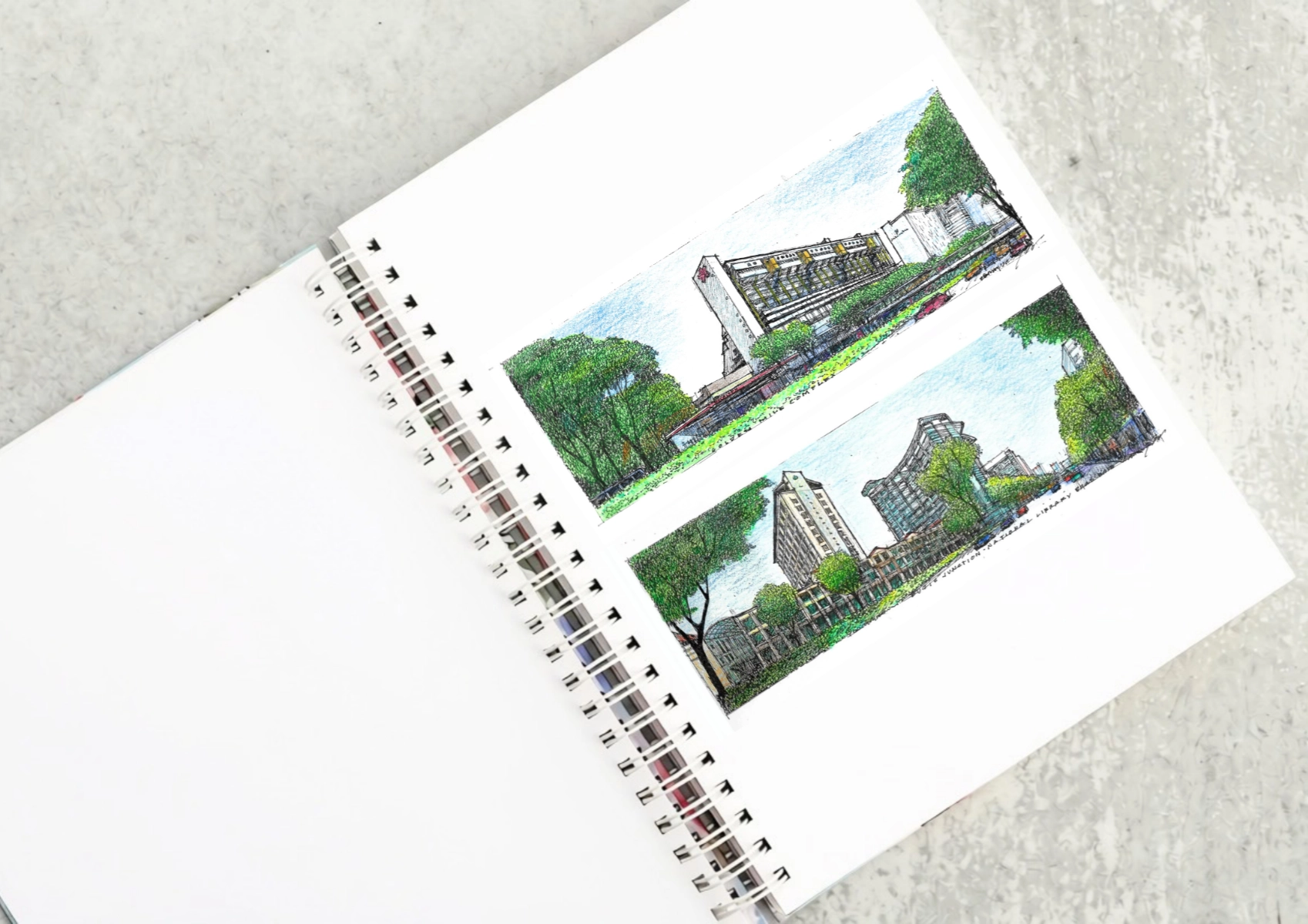
Two sketches of Singapore connect BluPrint Editor in Chief Paulo G. Alcazaren’s personal and professional history with Shared Ground: ArchitectureArchitectureThe art and science of designing and constructing buildings, structures, and spaces that are functional, safe, and aesthetically pleasing. It encompasses the planning, design, materials, and techniques used to createGo to Architecture Glossary of Care, Culture, […]
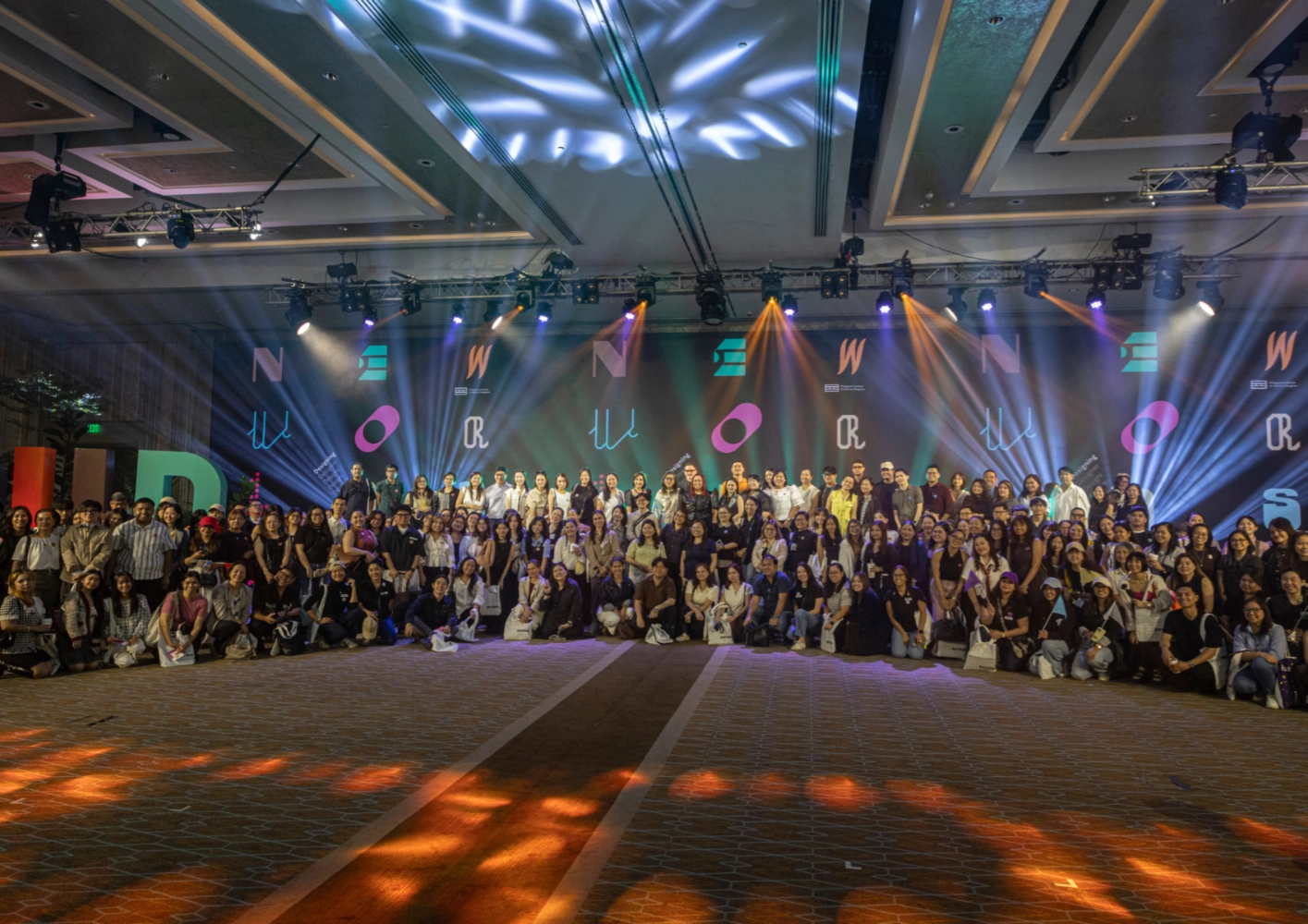
In a way, designers are the modern-day soothsayers and prophets. They design for the future, predicting how a room, a house, a building or a whole city will be used by people. They foresee how users will interact with a space, conjure exact shades of colors to elicit specific behavior and arrange furniture to build […]
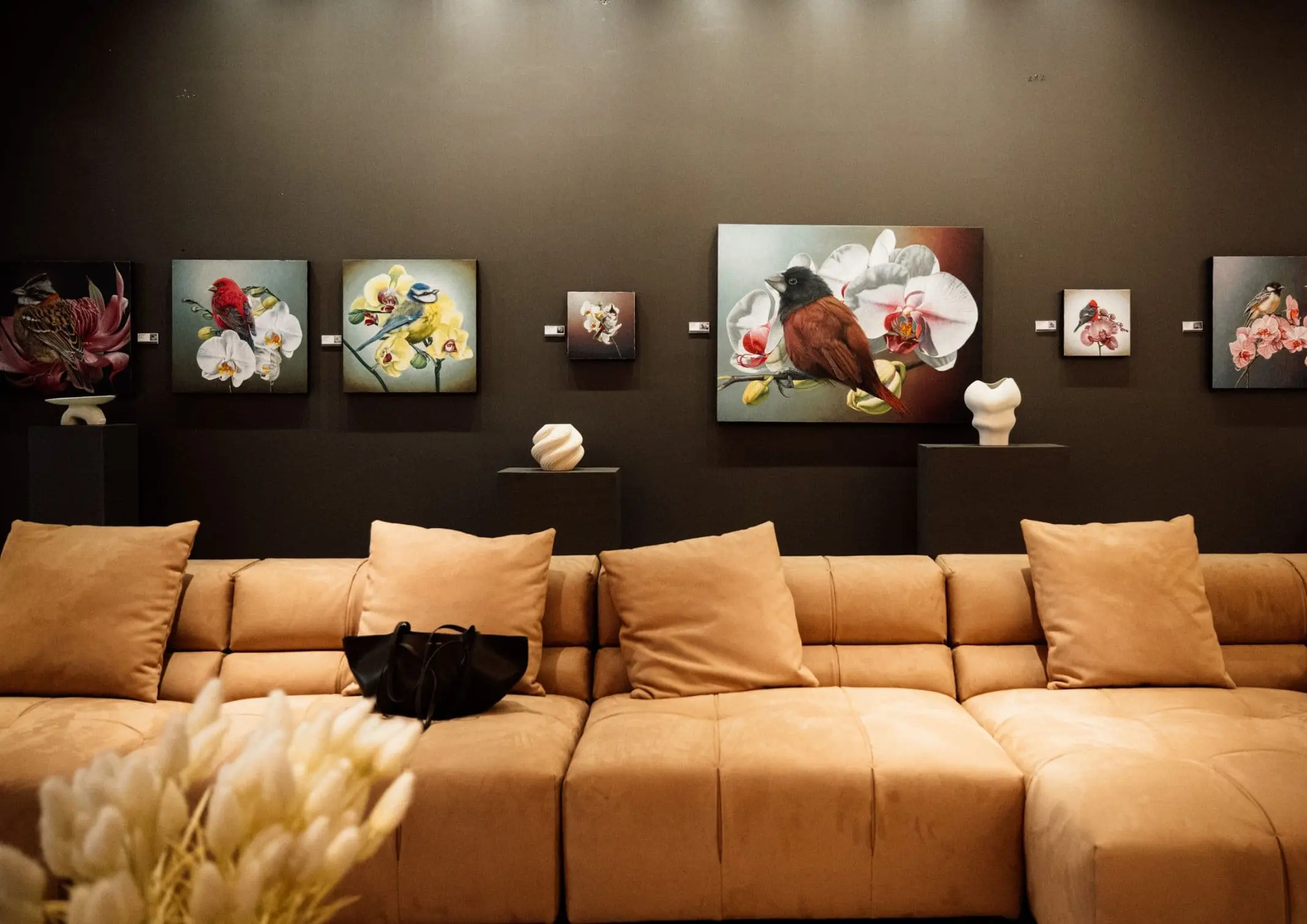
Art and furniture are often selected separately, yet their relationship can shape how a room looks and feels. The collaboration between Hooga and Galerie Joaquin explores how these elements can work together, bringing contemporary artworks into furnished residential settings at Hooga’s showroom in Uptown Mall, Bonifacio Global City. For Hooga, which curates furniture, lighting, and […]
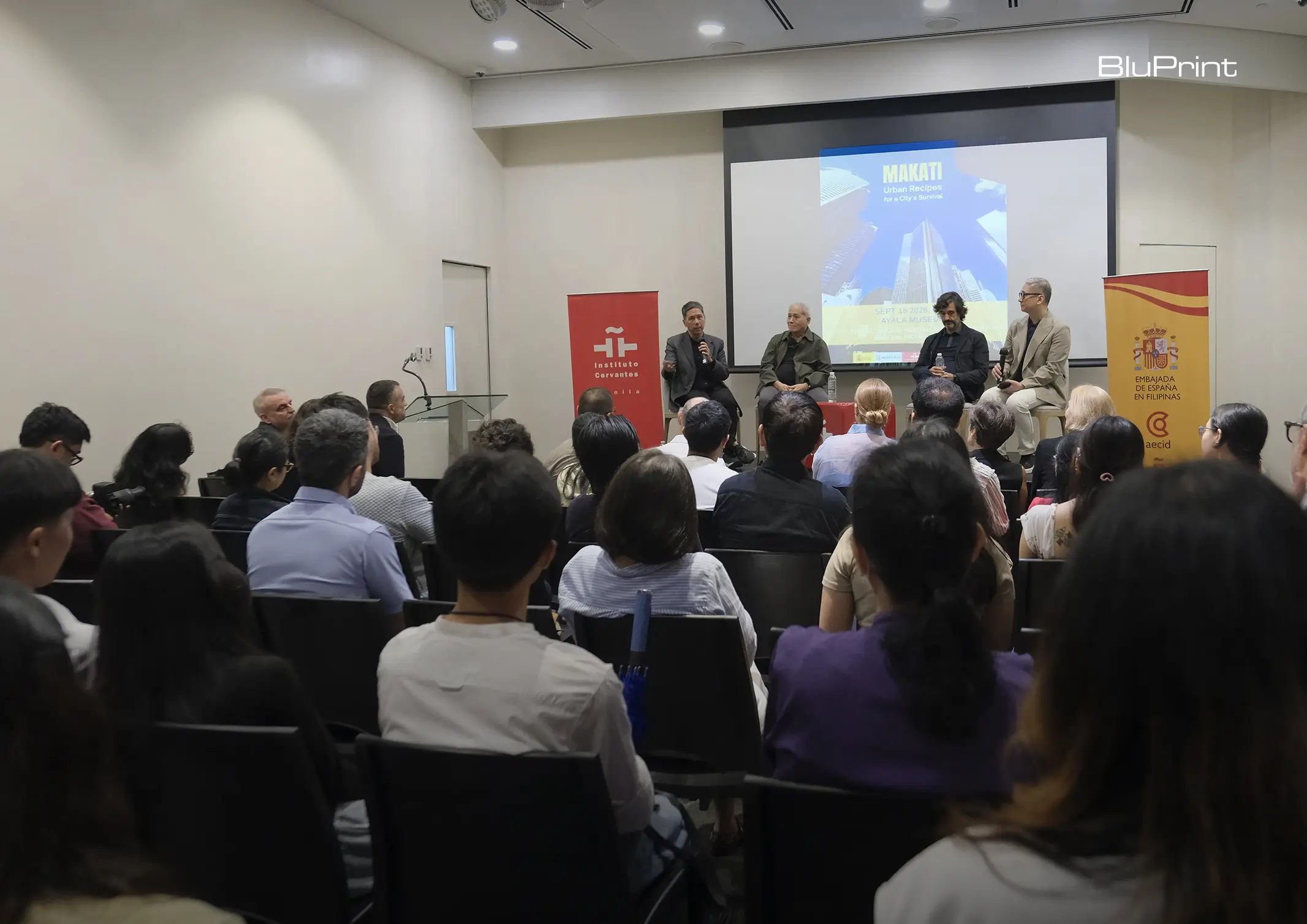
How can better-planned cities create the conditions for more creative, livable, and resilient urban environments? “Makati Urban Recipes for a City’s Survival,” a colloquium held at the Ayala Museum on September 15, brought together architects and practitioners from the fields of urbanism and the creative economy to discuss how design, planning, and collaboration can address […]
Read the issues.

Collect the volumes.

Recommended Video
Tap to Unmute
Unmute
0:00
0:00