The seventh edition of the Anthology ASEAN ArchitectureArchitectureThe art and science of designing and constructing buildings, structures, and spaces that are functional, safe, and aesthetically pleasing. It encompasses the planning, design, materials, and techniques used to createGo to Architecture Glossary Festival brought together over 4,000 delegates from across the Philippines and Southeast Asia for three […]
Louis Vuitton Savoir Faire Merges History and Modernity



Louis Vuitton Savoir Faire, designed by Kezia Karin Studio in Indonesia, is an exhibition that highlights the brand’s timelessness. There’s a diversity of imagery here, using visual cues to craft a storyline of how modern luxury goods came to be, and the journey it took to get here.
When people talk about luxury fashion, they tend to focus on expense, wealth, and status. But Kezia Karin devises the space to focus on the craftsmanship, quality, and how the Louis Vuitton brand sustained itself for over a century to remain relevant within our time.
In a way, it turns fashion into a storytelling tool, producing a uniquely-artistic exhibition that implicitly showcases the future of the brand—and the industry as a whole.
“[This is] an exhibition space where we transform the abstraction of time into a tangible and perceptible experience, all while maintaining its fundamental role as a showcase for high-end fashion brands,” the designer said. “The interplay between narratives and visitors takes center stage, seamlessly weaving stories into the very fabric of user interaction.”
A Tribute to the Past
Different portions of the Louis Vuitton Savoir Faire exhibition pay tribute to the past of the brand. For example, one of the displays shown is the Capucines. This portion references the first Louis Vuitton store on the Rue Neuve-des-Capucines in Paris in 1854.
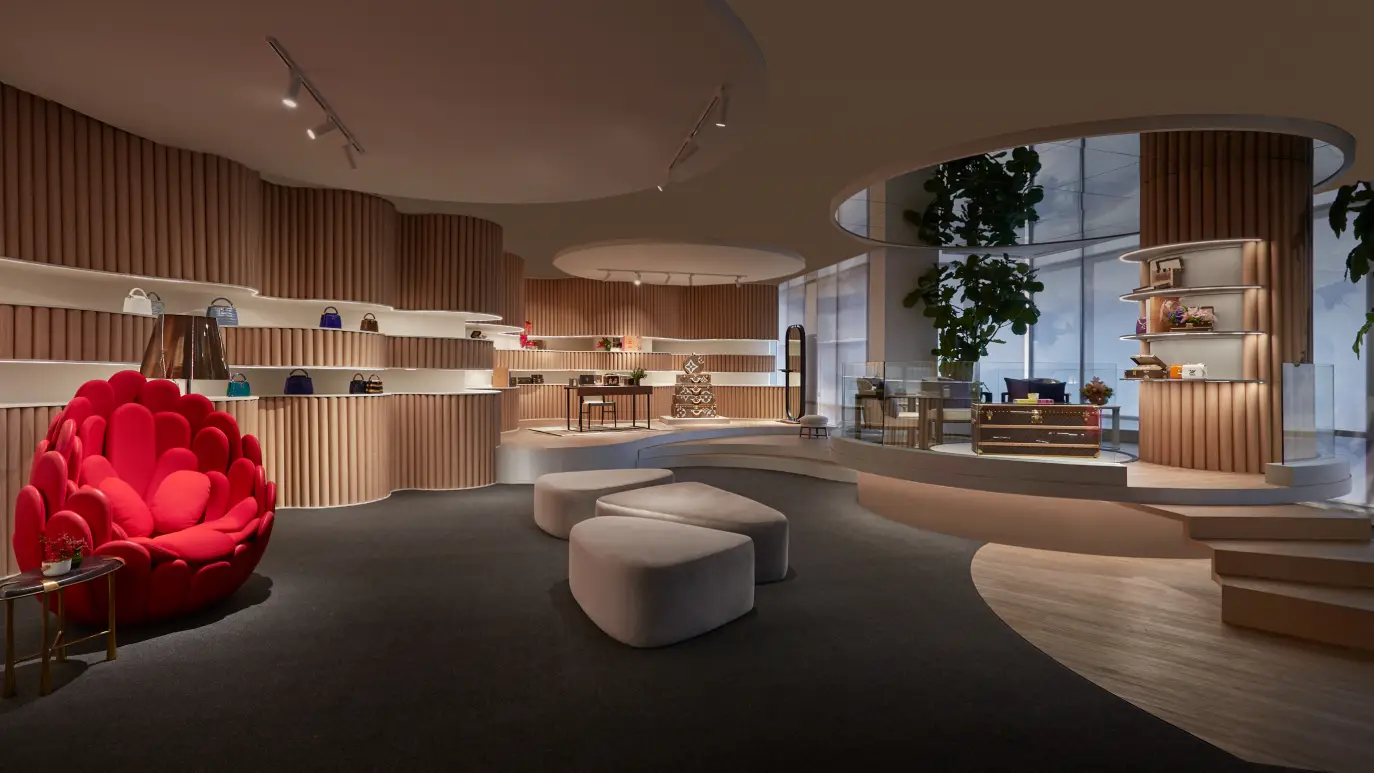
It contains different displays of Louis Vuitton bags and luggages, shown in soft lighting with a warm, brown and grey color scheme across the room. Karin also uses this color scheme to reference Indonesia as well, providing a link between the luxury brand and the exhibit’s homebase.
“The journey always starts from home,” they posit. “Thus, we brought in the culture for the spatial design, coming up with the idea of the traditional iconic terrace rice field in Bali, wrapped around by the bamboo trees.”
Some of the design choices lean towards the more abstract and artistic. The landing area is lit with bright, galactic lights that contrast with the pitch blackness of the room to evoke a sense of cosmic singularity as related to the brand. Unique wooden structures stand at the center of the room, lit in pastel to recall planetary bodies at the center.
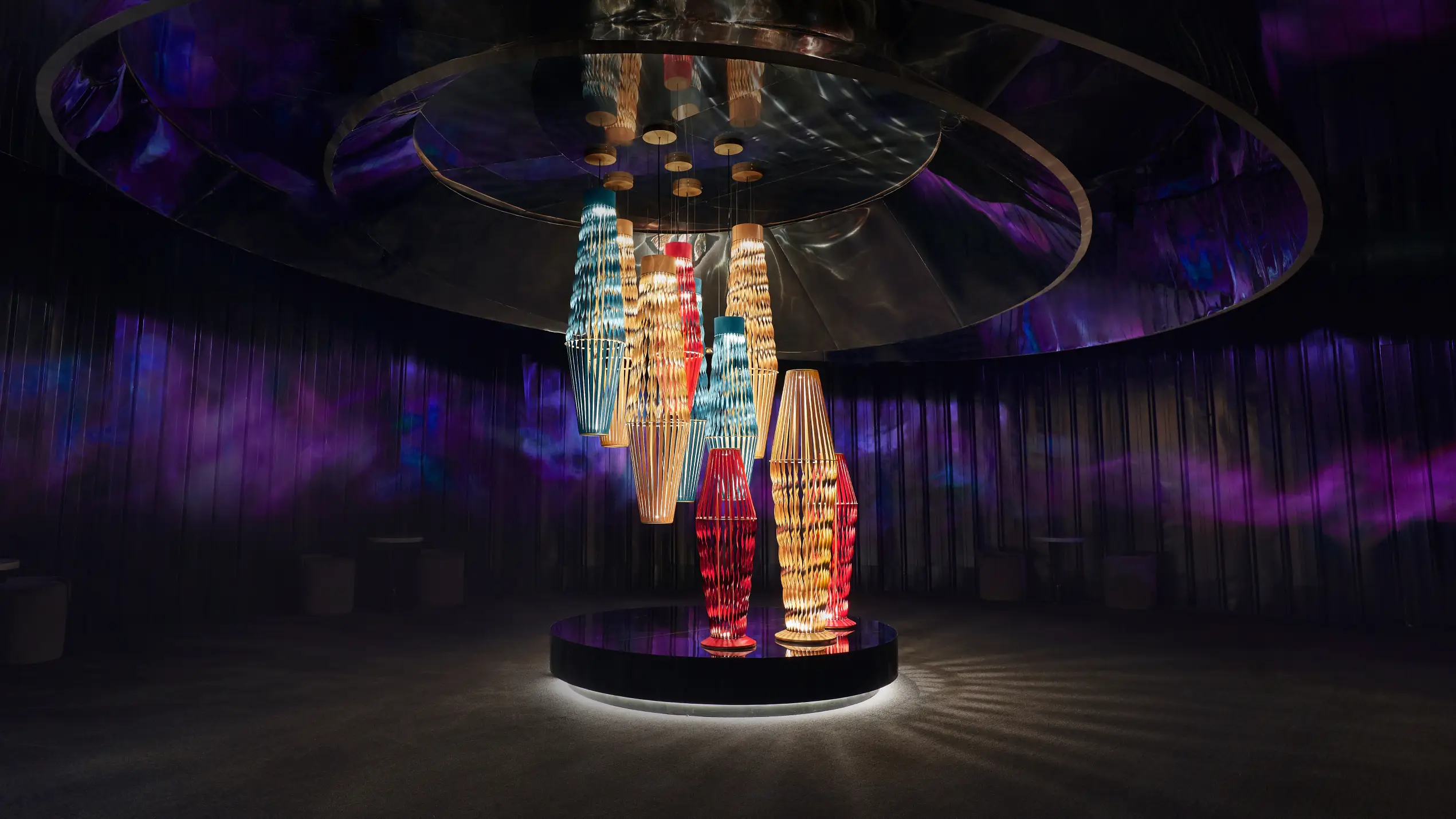
“In the embrace of time, lives unfold to diverse rhythms: some dance in the tender grasp of love, others linger amidst wintry sorrows,” the project write-up said. “Time races beside purpose yet weaves weariness into cautious hearts. Before ages emerged, a singular ardor brimmed, birthing the universe’s essence.”
Careful Curation of the Present
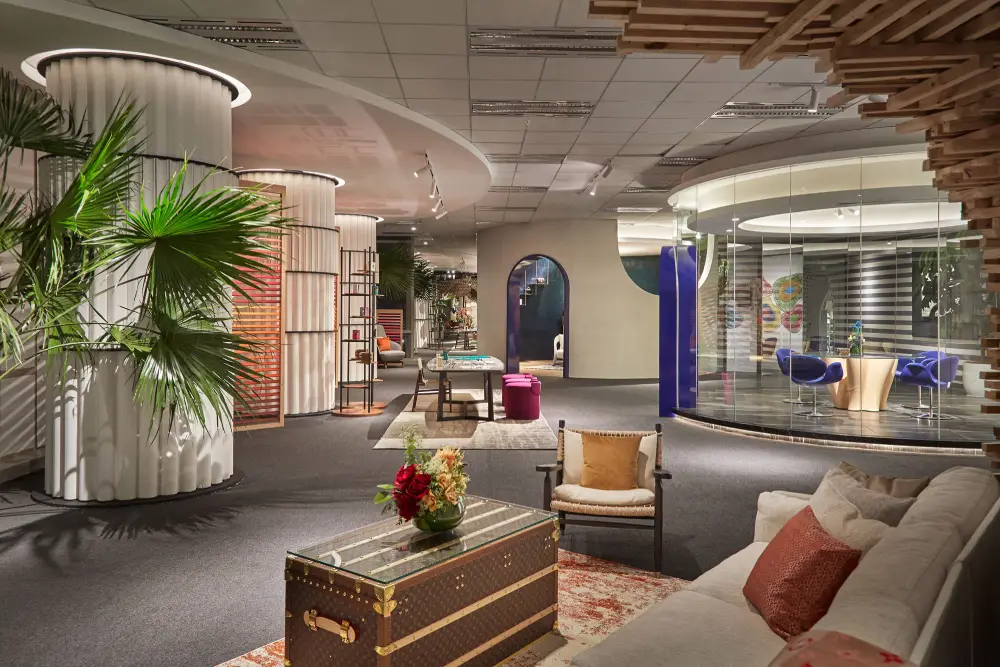
The modern parts of Louis Vuitton Savoir Faire showcase the ways different contemporary styles coexist. The “Modern-Day Living” section leans towards colorful hues, a tasteful austentatious-ness that provides the comfort and style of a modern day walk-in closet or dressing room.
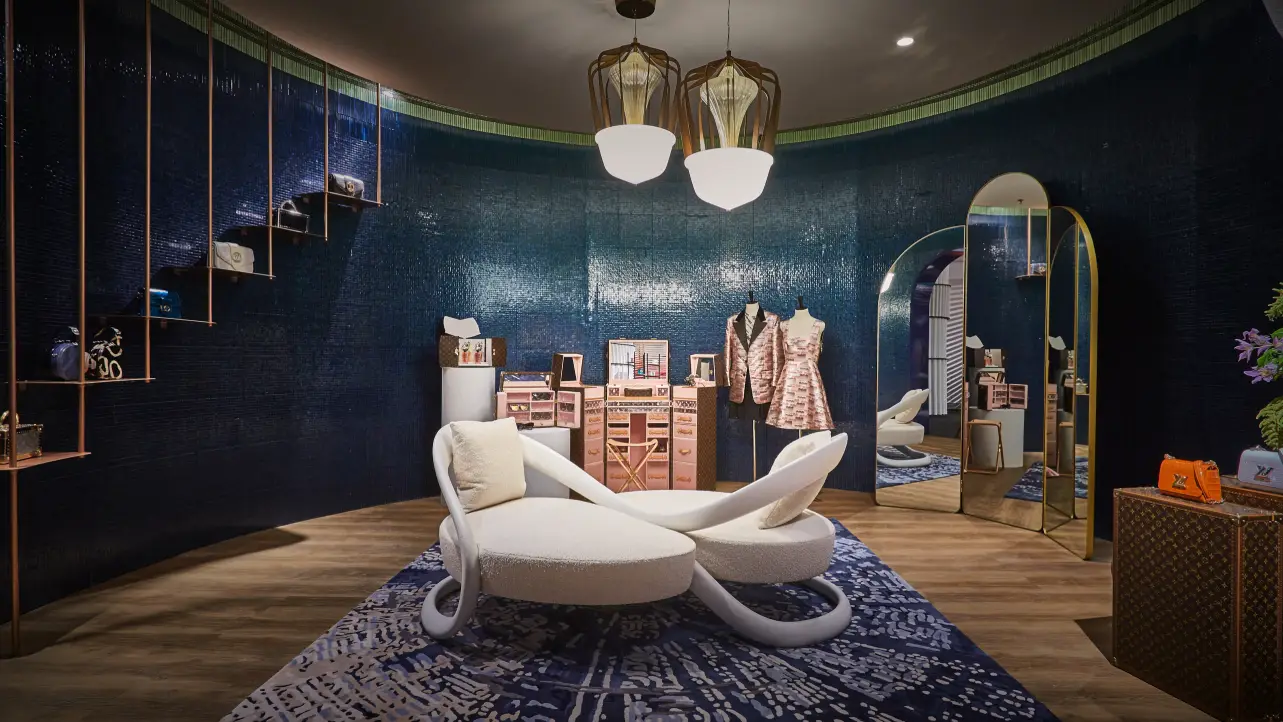
Others integrate nature-centric architectural ideas to provide a platform for more environmentally-conscious fashion choices across the board. Some of the designs recall explorer-chic ideals that make use of the brand’s fancier luggage choices.
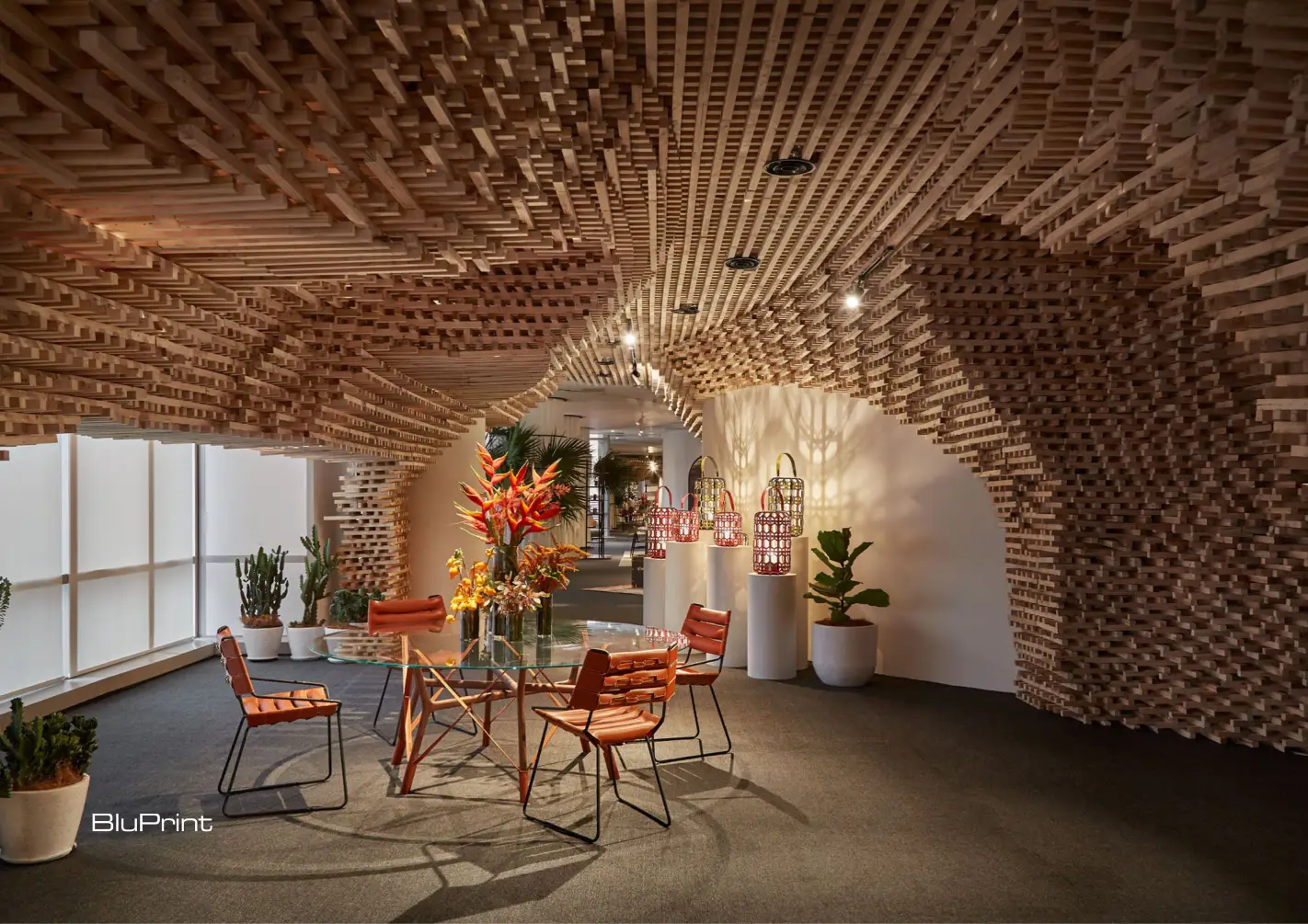
One room utilizes 50,000 wooden frames to conjure a large, fantastical wall-and-ceiling display, perfect for promoting Louis Vuitton’s Object Nomades Collection. Another uses circular designs to show a sleek and artistic livable space for opulent leisure.
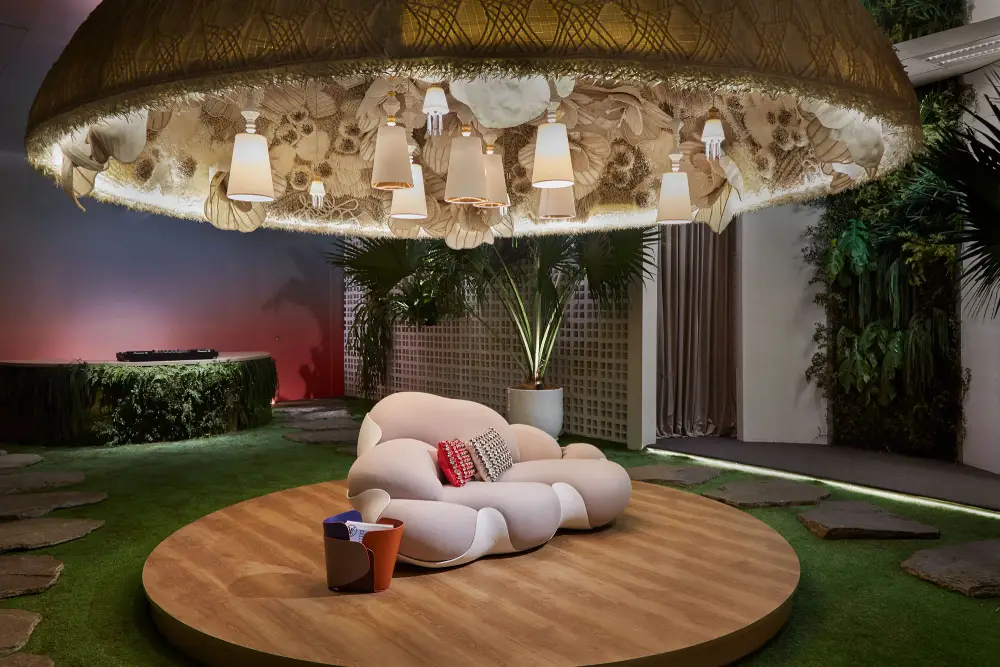
“Patterns and textures intertwine, weaving tales upon the canvas of space,” the designer shares. “A symphony of light cascades, completing the room with its radiant embrace, an accent of illumination that orchestrates a spectacle. An aura of dandy sophistication takes root—a playful waltz with echoes of youthful days, spun into the modern tapestry of a gentleman’s sanctuary. Above, the vaulted ceiling itself becomes art, an intricate testament to the elegance of form.”
Illuminating Narratives
In the end, Kezia Karin designed the Louis Vuitton Savoir Faire to elicit a variety of strong reactions from visitors. There’s a sense of history behind the prestigious brand, a grand purpose that goes beyond craftsmanship, and an eye for artistry that shows why it endures even more than a century later.
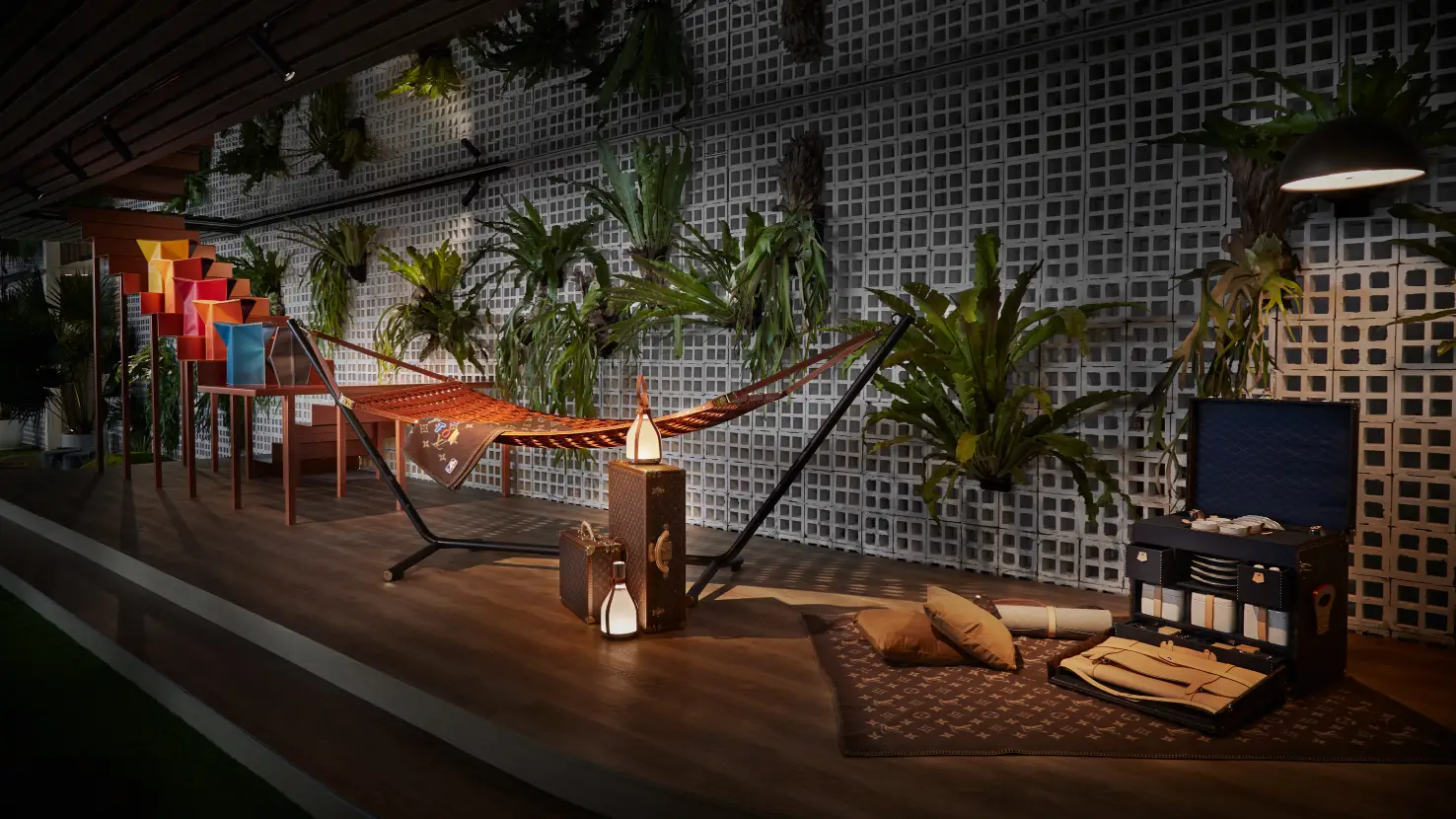
However Louis Vuitton may move forward as a luxury brand in the future, this exhibit portrays its vitality now, reliant not on trends and what’s popular but on a durable and sustainable vision that looks towards what lasts.
“In this kaleidoscopic refuge, joy dances with abandon, and euphoria reigns—a space where the extraordinary manifests in every shade of truth, a euphoric embrace of the inconceivable. The journey in time ended in a very surreal and whimsical area,” the project write-up said.
Photos provided by the architectural firm.
Related reading: Lamina Lifestyle Fair Opens with Collaborative Art Couture Show
Frequently Asked Questions
While luxury fashion is often associated primarily with wealth and status, the Indonesia-based designer Kezia Karin devised the exhibition space to shift that focus toward craftsmanship, quality, and heritage. By transforming the abstraction of time into a tangible experience, the studio turns fashion into a storytelling tool that explains how the brand has remained relevant for over a century. The design emphasizes the interplay between narratives and visitors, making the journey of modern luxury goods perceptible through artistic spatial choices.
The exhibition features a dedicated section for the Capucines, referencing the brand’s very first store opened in Paris in 1854. This area utilizes a warm brown and gray color scheme that simultaneously serves as a bridge to the exhibit’s host country, Indonesia. Specifically, the spatial design draws inspiration from the iconic traditional terrace rice fields of Bali and is framed by bamboo tree elements, reinforcing the designer’s philosophy that every significant brand journey starts from a sense of “home.”
The landing area is designed to evoke a sense of “cosmic singularity,” representing the birth of the brand’s essence. It features a stark contrast between pitch-black surroundings and bright, galactic lighting to create a celestial atmosphere. At the center of the room, unique wooden structures lit in pastel colors are positioned to recall planetary bodies, suggesting that the brand’s creative drive is a foundational force similar to the emergence of the universe itself.
The “Modern-Day Living” portion of the exhibition leans into tasteful ostentation through the use of vibrant, colorful hues meant to evoke the comfort and style of a high-end dressing room or walk-in closet. Other modern displays integrate nature-centric architectural ideas and “explorer-chic” aesthetics to showcase the brand’s diverse luggage and lifestyle collections. One particularly striking room uses 50,000 wooden frames to create a fantastical wall-and-ceiling installation specifically for the Objects Nomades Collection, blending sophisticated form with playful, youthful energy.
Ultimately, the exhibition is designed to elicit strong emotional reactions and portray Louis Vuitton as a vital, enduring brand whose success is built on a sustainable vision rather than fleeting trends. The journey through the space concludes in a surreal and whimsical area where joy and euphoria take center stage. By weaving history and modernity together, Kezia Karin Studio illustrates that the brand’s vitality is rooted in an eye for artistry and a durable purpose that allows it to flourish in the present while honoring its prestigious past.
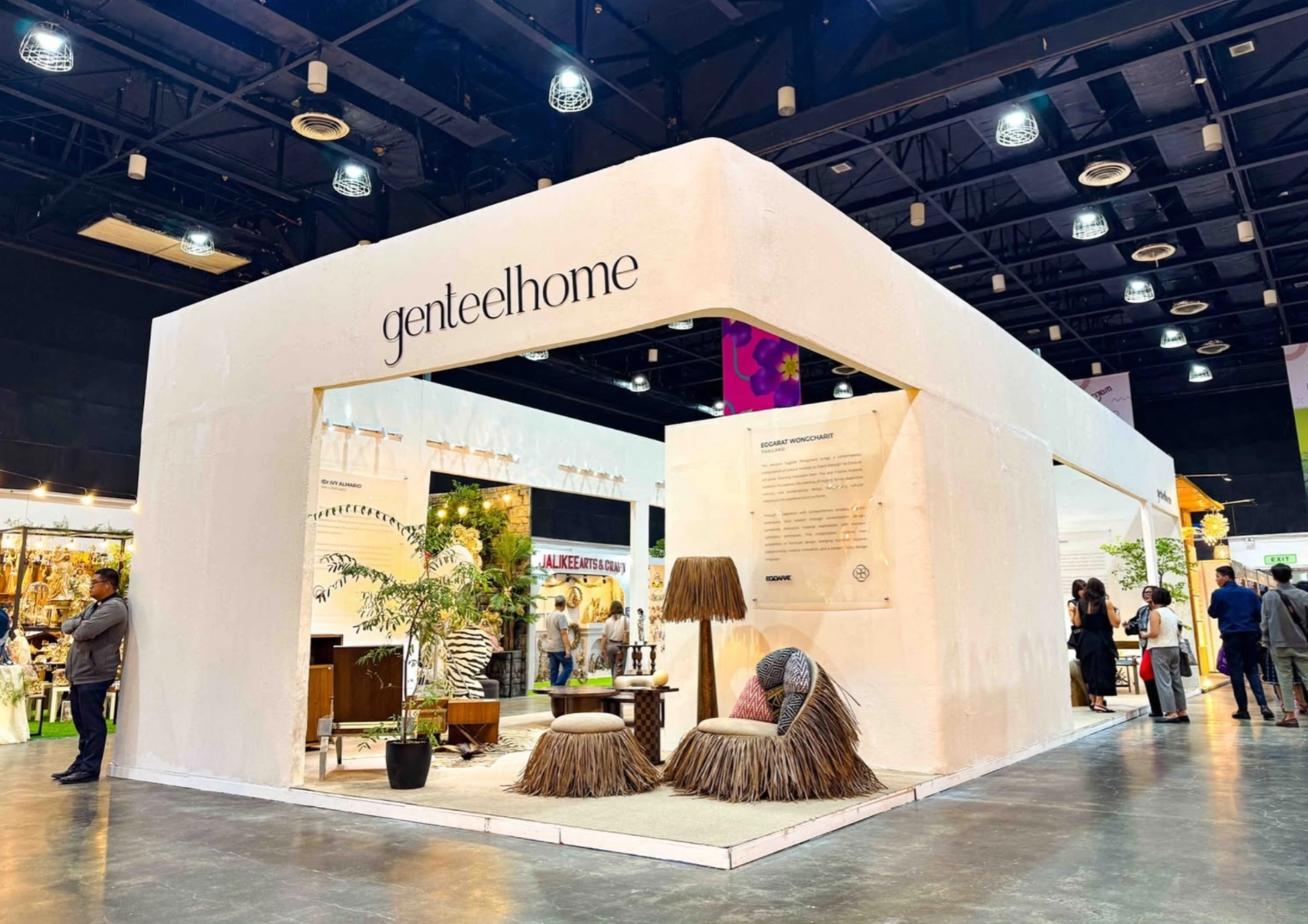
Bigkis is the act of binding. In Tagalog, the word can refer to something used to bind or encircle, as well as a bundle formed by tying several separate elements together. Figuratively, it can also mean a bond, union, or unity. The meanings move from the physical act of joining things together to the connection […]
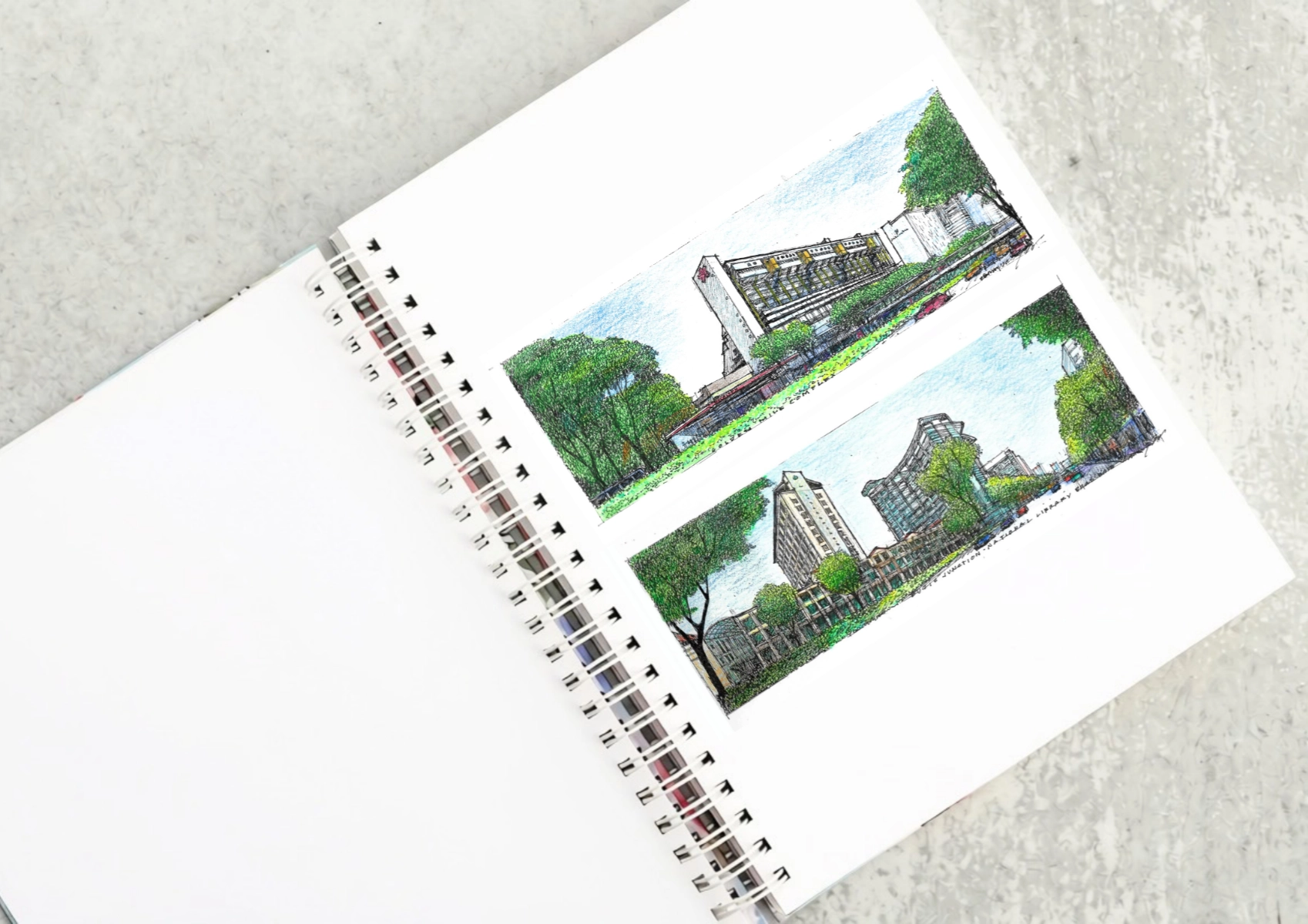
Two sketches of Singapore connect BluPrint Editor in Chief Paulo G. Alcazaren’s personal and professional history with Shared Ground: ArchitectureArchitectureThe art and science of designing and constructing buildings, structures, and spaces that are functional, safe, and aesthetically pleasing. It encompasses the planning, design, materials, and techniques used to createGo to Architecture Glossary of Care, Culture, […]
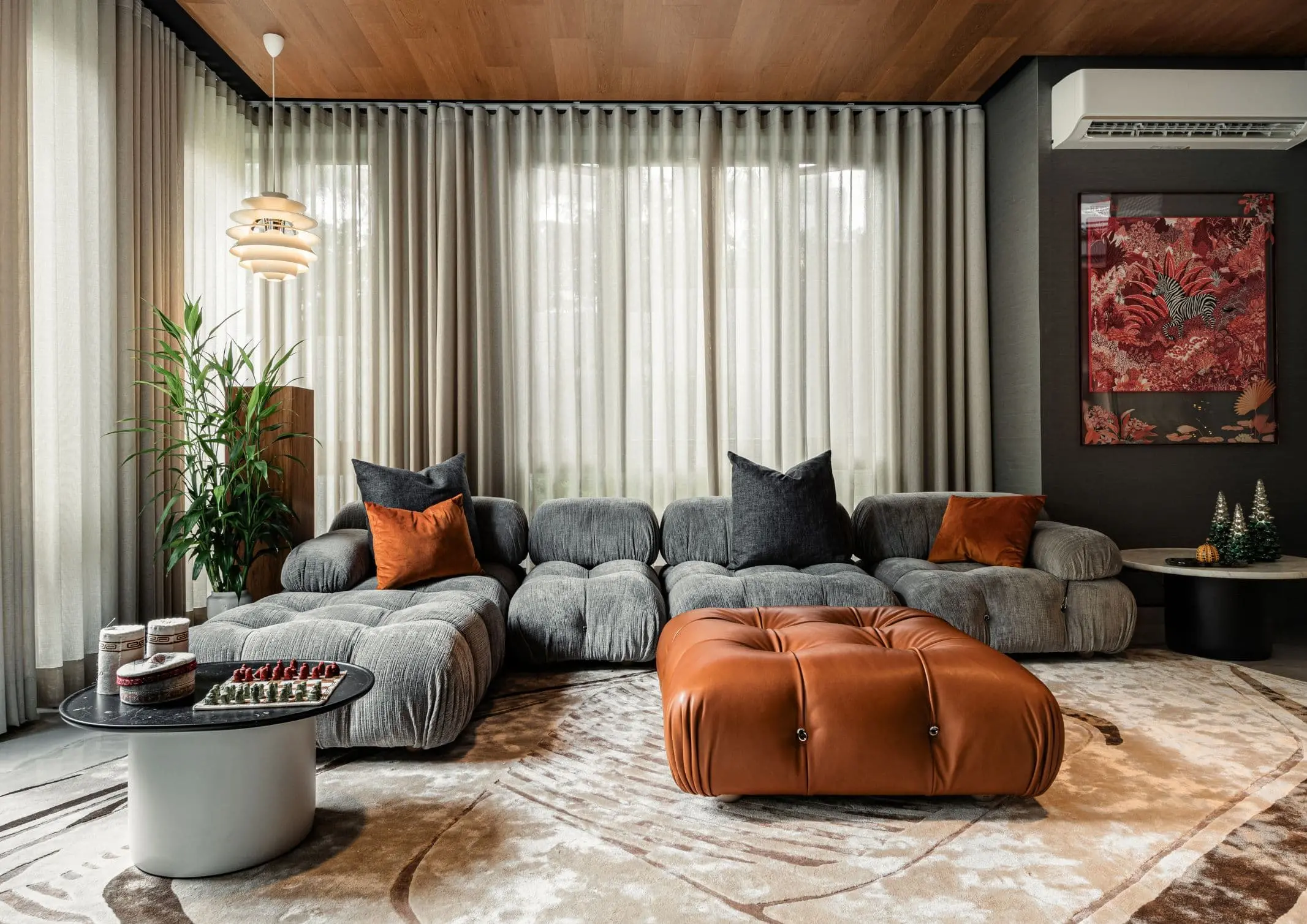
Some have become household names – Coleman, Oster, and KitchenAid – products that have found their way into Filipino kitchens, homes and family routines. In home furnishings, brands such as B&B Italia, Ethan Allen, Sub-Zero, Miele, SieMatic, Louis Poulsen, Hunter Douglas, Tempur, and Technogym, have helped shape the way Filipinos live. From everyday essentials to […]
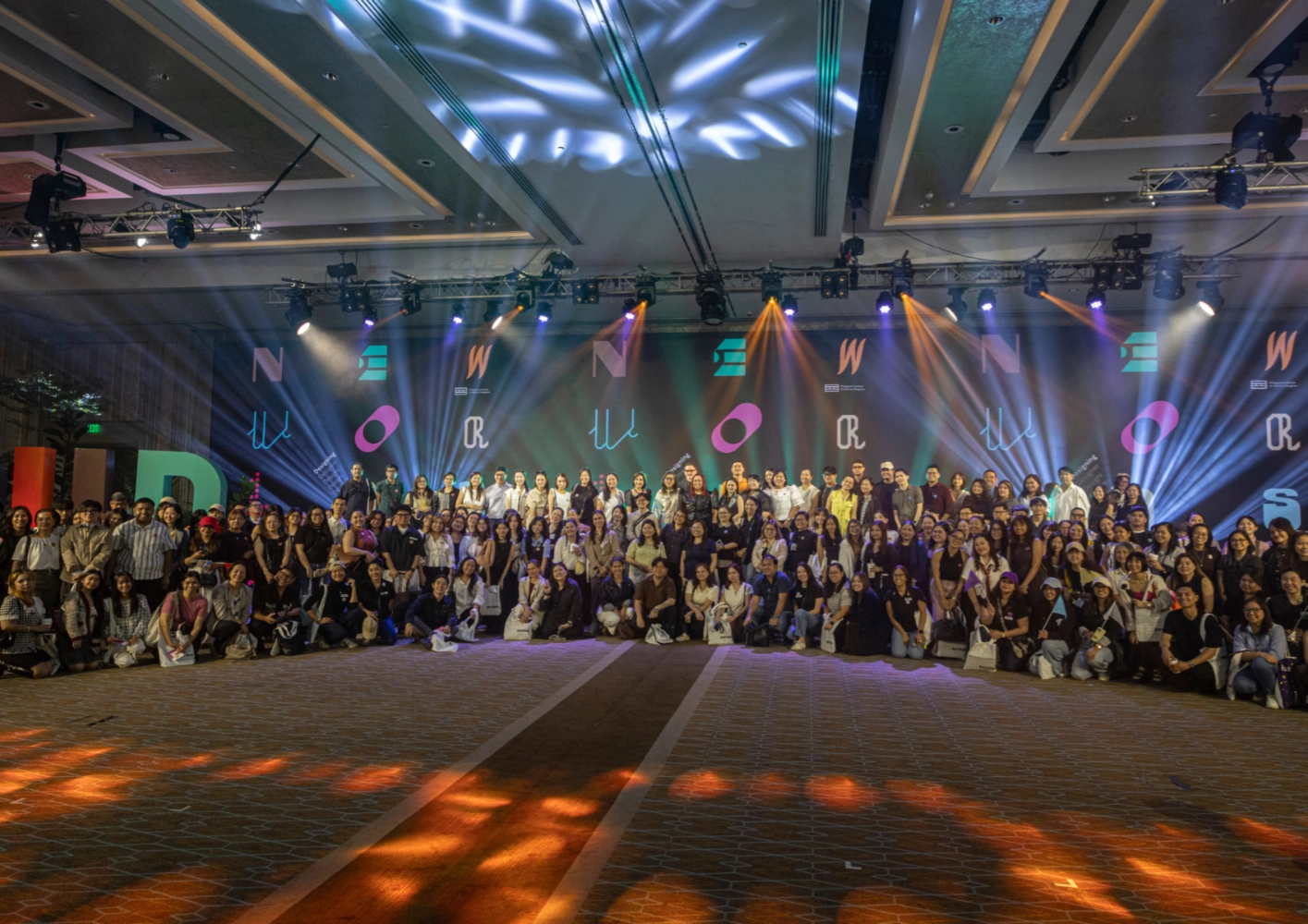
In a way, designers are the modern-day soothsayers and prophets. They design for the future, predicting how a room, a house, a building or a whole city will be used by people. They foresee how users will interact with a space, conjure exact shades of colors to elicit specific behavior and arrange furniture to build […]
Art and furniture are often selected separately, yet their relationship can shape how a room looks and feels. The collaboration between Hooga and Galerie Joaquin explores how these elements can work together, bringing contemporary artworks into furnished residential settings at Hooga’s showroom in Uptown Mall, Bonifacio Global City. For Hooga, which curates furniture, lighting, and […]
Read the issues.

Collect the volumes.

Recommended Video
Tap to Unmute
Unmute
0:00
0:00