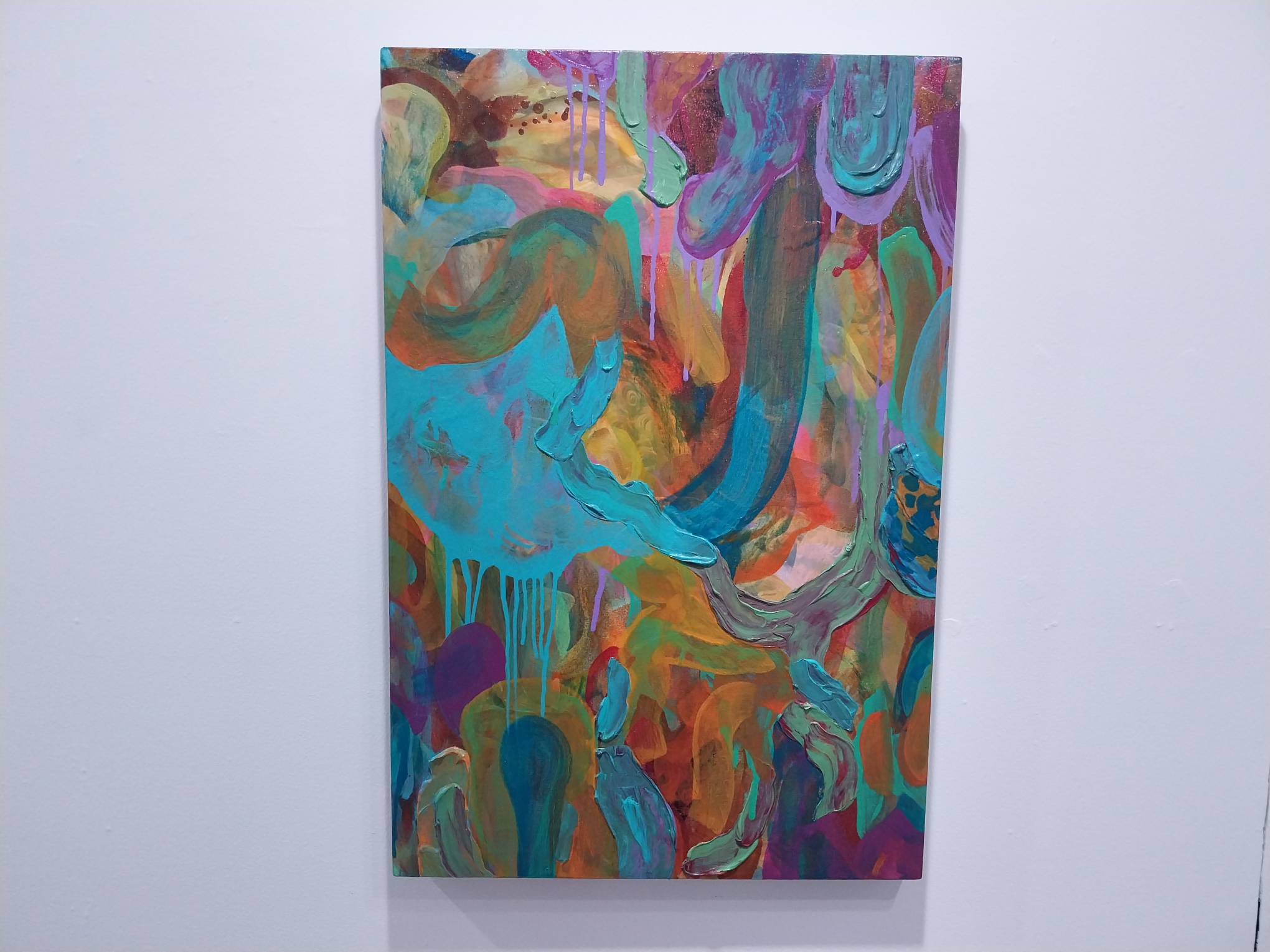
Artist Patrick de Veyra has always been obsessed with the idea of images and appropriation. As recently as last year, he curatedtwo exhibits for Faculty Projects which tackle the idea of how we deal and define the images we use today. Storm in a Teacup, his most recent exhibition at West Gallery, circles around the same ideas of image appropriation.
“Part of my exploration is to break down the printed image and use it as visual stimuli for a work that tackles gestural abstraction and appropriation,” he said. “There is a relationship between the painted and the printed; it almost is like a commentary on technology and humanity.”
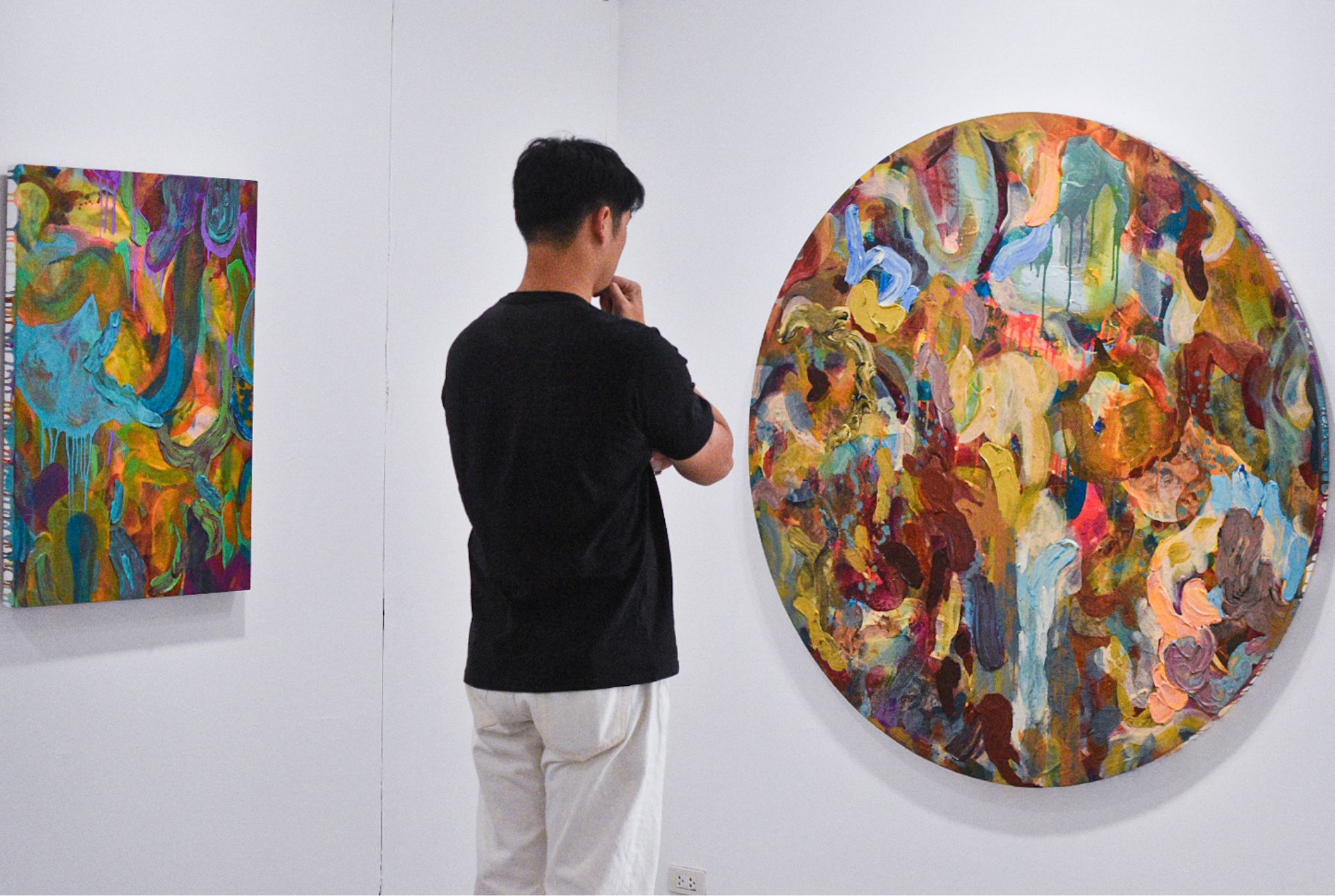
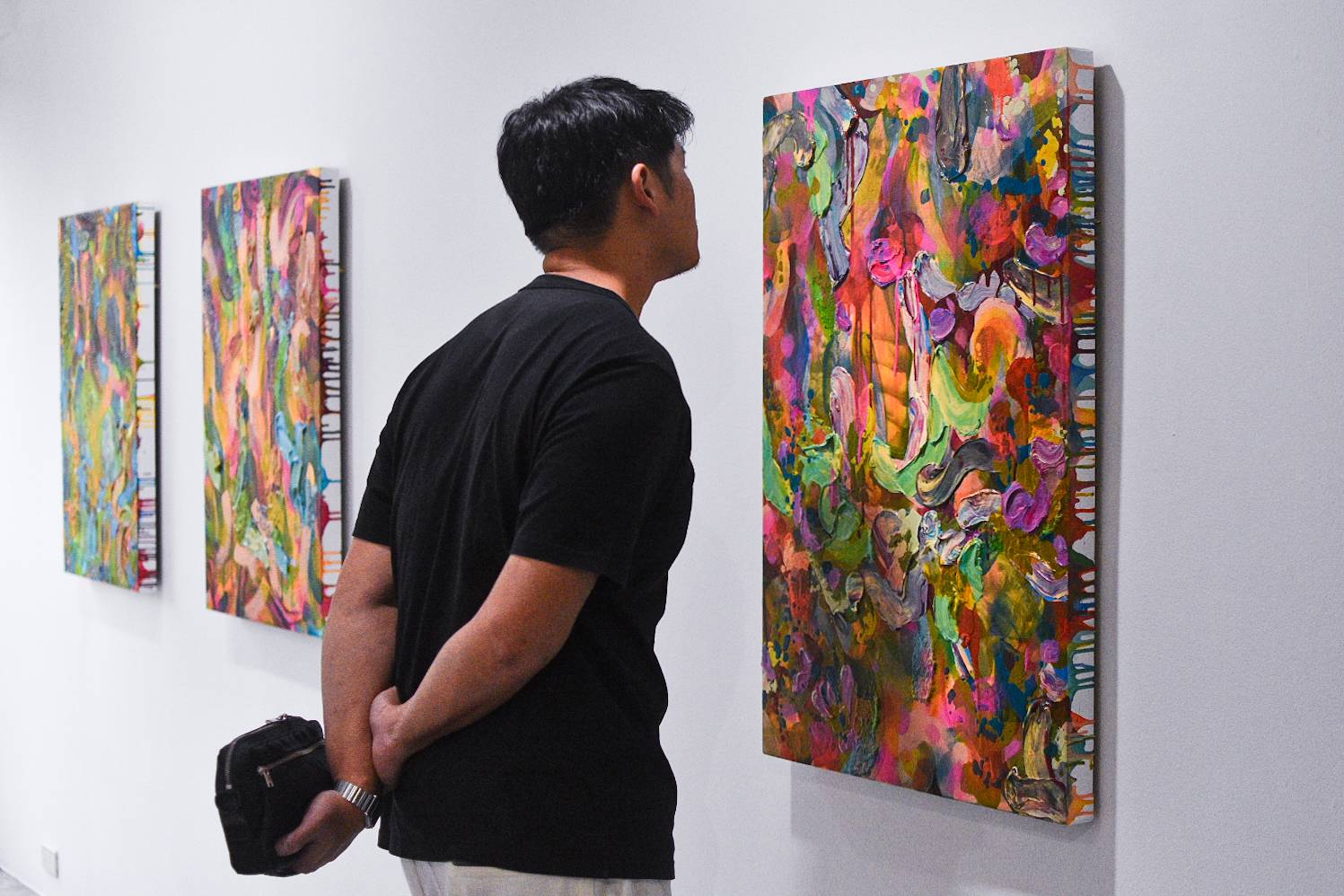
An art enthusiast analyzing a painting by Patrick de Veyra for “Storm in a Teacup.”
But there are headier ideas here, and Storm in a Teacup showcases Patrick de Veyra at his most conceptual. He creates new meaning through his methodology, utilizing touchpoints of abstract art to obscure the essence of an artwork and really ask what purpose is in the images we see every day.
Advertisement
Seeing Images in a New Light
For Storm in a Teacup, Patrick de Veyra utilizes images from open-access databases of museums around the world, and then layers them on top of each other.
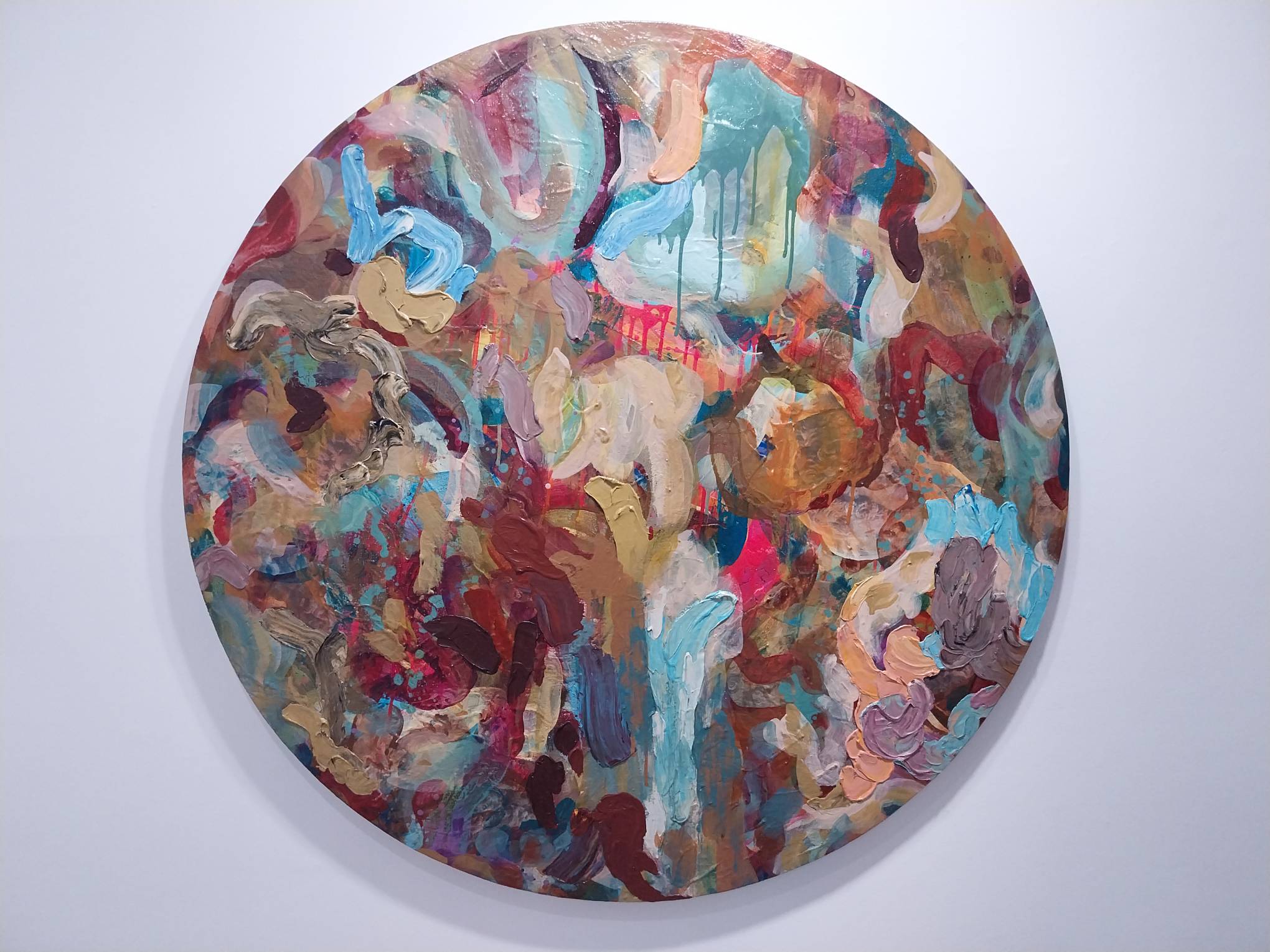
A circular painting in “Storm in a Teacup” by Patrick de Veyra. Photo by Elle Yap.
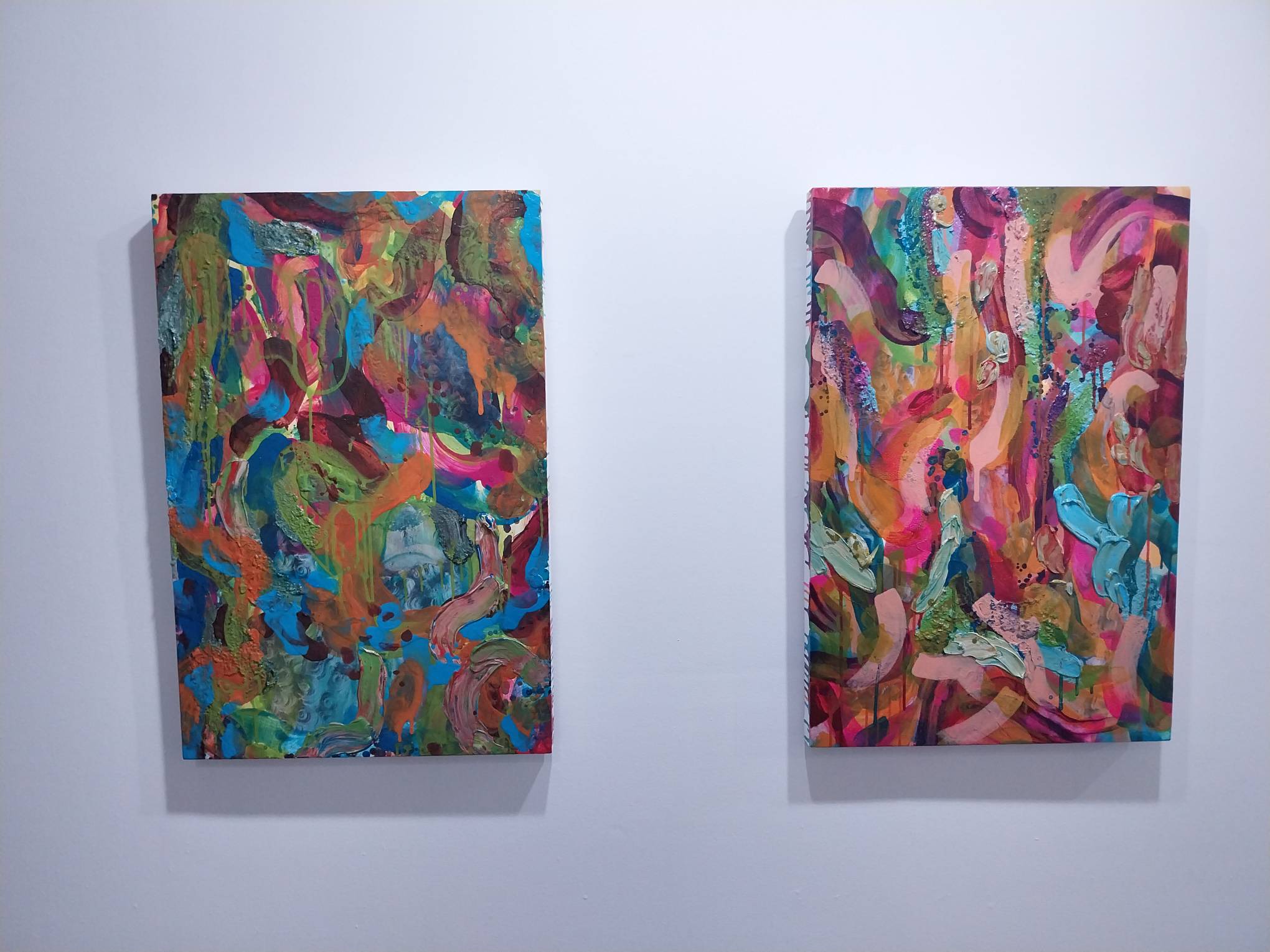
One of the paintings in “Storm in a Teacup” by Patrick de Veyra. Photo by Elle Yap.
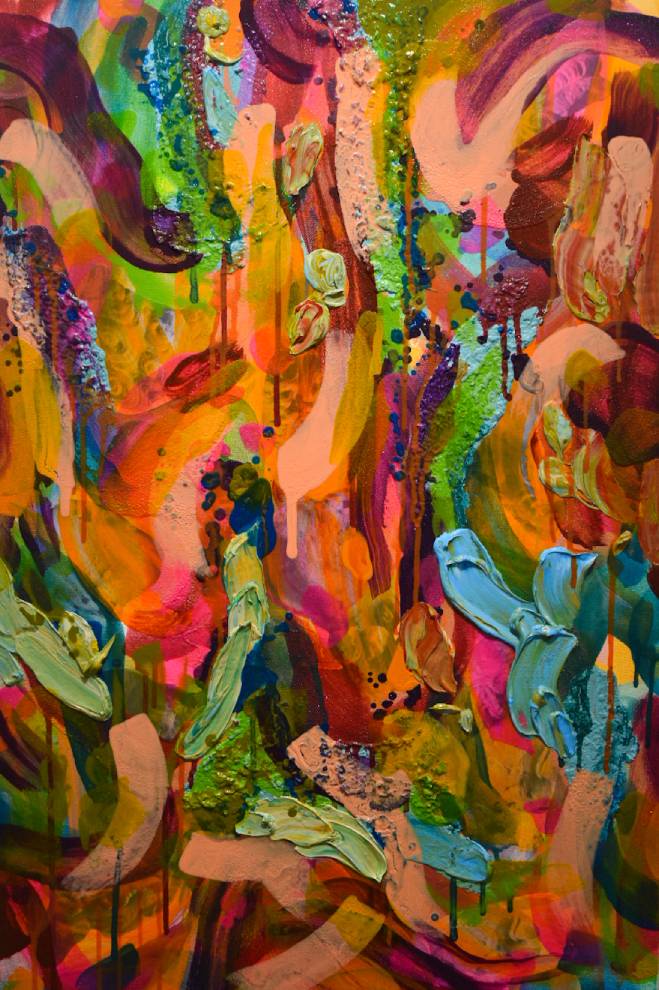
One of the paintings in “Storm in a Teacup” by Patrick de Veyra. Photo by Elle Yap.
It’s not just one layer of images and another layer of paint. In some, he uses a specific type of paper as a way of imprinting the image onto the paint itself, before adding more layers on top of it.
“Actually, the works here, they do not exist on a singular plane,” he said. “They are not transferred on a singular plane. If you look closer, there are some images transferred onto the canvas, which is the base of the work. But a lot of the images are also transferred onto the actual paint. So when the paint cured, I transferred on top of it.”
Advertisement
Distortion of Images
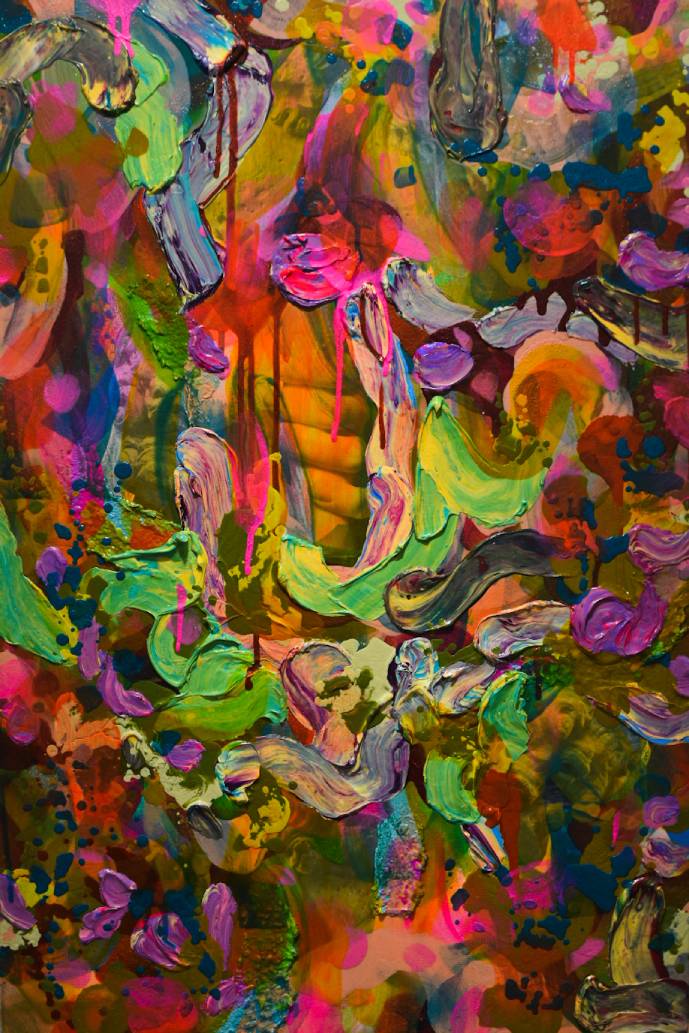
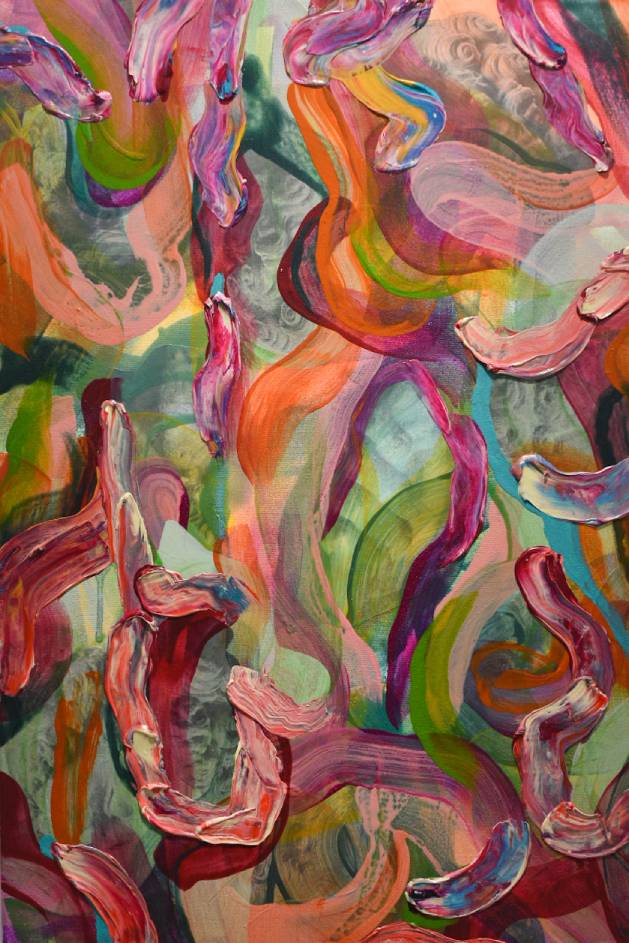
These paintings end up distorting, in a way, whatever images are printed on top of it. The brushstrokes come in short bursts, trying to wiggle on top of the image and each other. At times, the colors drip downward, coating over other layers of paint and images in the process.
“I didn’t want to just have one layer of appropriated images, because I want to keep on reacting,” de Veyra explained. “Being able to keep on reacting to the process; visual stimuli. Because if I have one layer of printed imagery, then the only way I could react to it is through paint.”
Some of the details in a painting by Patrick de Veyra.
Close-up to one of the paintings for “Storm in a Teacup.”
Close-up to one of the paintings for “Storm in a Teacup.”
An intentionality exists with the abstraction, in the way that the images are obscured by the paint. It mimics the hyperactive visual environments of today, with all its distracting variability, so that even the images meant to be appreciated become nothing more but detritus in an overbursting visual world.
Advertisement
“I want to be able to react also with the appropriated images,” he added. “That’s why the appropriated images are also situated in areas: on top of the paint, [and] the surface itself. And then, I would overlay paint again, so they become suspended in layers of gestural abstraction.”
Commenting on Mass Perception and Production
For additional context, Patrick de Veyra shared that growing up, his family home had a printing press. His family did mass production printing like offset lithography for corporations. This became de Veyra’s first exposure to art and it influenced his perspective of the practice.
From there, he ruminated on the idea of “visual tolerance,” or how images tend to lose their power and meaning the more times we see them; they become part of the background of the world instead.
Advertisement
“This [exhibit] is my way to comment on visual tolerance,” he said. “Because when you have a printed image, a mass-produced image, that is basically the epitome of visual tolerance. You see it again and again to the point that you don’t see it anymore; you lose the grasp of the details of the image. It becomes like a peripheral image.
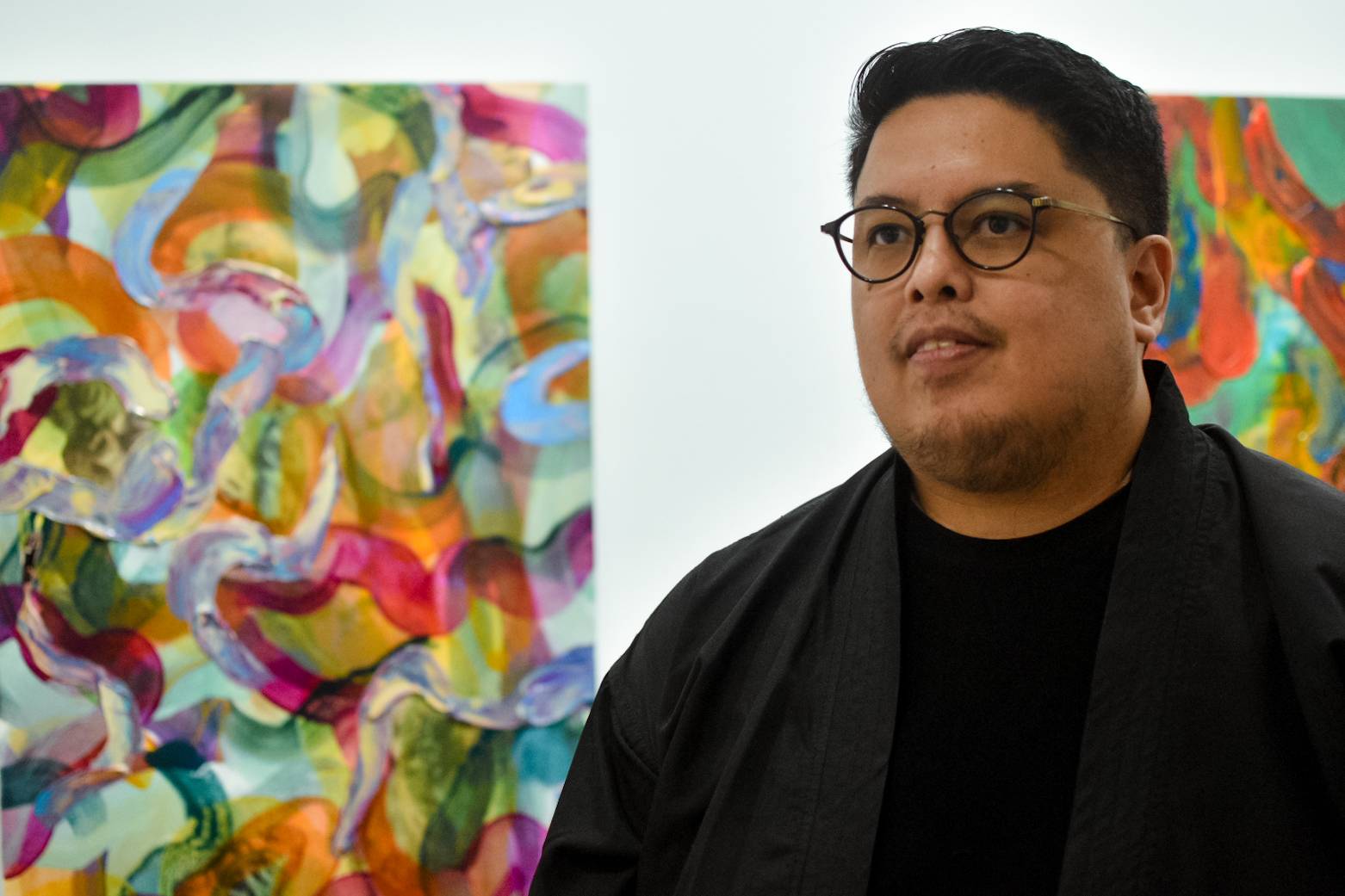
Portrait of Patrick de Veyra by Luis Antonio Santos.
“So, this is my way of lifting it from that space, and bringing them into a more immediate space, which is the immediacy of painting. [Those ideas are] a key component of a gestural work, a gestural abstraction painting, but with key components that are appropriated [instead].”
Storm in a Teacup is showing at West Gallery until March 29.
Photos provided by the artist unless otherwise stated.
Contemporary design refers to the constantly evolving design trends of today. With the power to design our built environments, architects have been experimenting with various architectural approaches. Whether that is through unconventional forms or the integration of smart technologies, BluPrint lists down Filipino architects who are defining contemporary architecture. Deo Alam Architect Deo Alrashid Alam […]
In the Philippines, adaptive reuse gained traction during the 1970s with the rise of conservation and environmental preservation movements. It offered an architectural solution that reuses existing spaces to fit modern needs. Across the country, several projects demonstrate how this approach is being applied—transforming heritage structures into active spaces for culture, hospitality, and community life. […]
From residential spaces to civic structures, lighting dictates the mood of a space. It controls the visual dynamics of an interior, serving as a guiding tool that highlights key design elements, including materials and textures. Related Reading: Lampscaping: How to Light up Your Home like a Pro Regulating the Mood: Natural and Artificial Light in […]
More and more Filipinos are flocking to condominium communities. Often tucked within busy city centers, condo living acts as a small respite from urban chaos. Faced with the challenge of transforming a cramped condominium into a warm living space, BluPrint lists condo interior design ideas that can maximize each square foot of small spaces. Purposeful […]
Modern bathrooms are no longer purely functional spaces. Increasingly, they are being designed as environments that support cleanliness, ease, and quiet restoration within the home. As daily life becomes more demanding and health awareness continues to rise, homeowners are beginning to expect more from the spaces where daily rituals begin and end. For architects and […]
From the moment a diner steps through the door, each detail shapes how a meal is experienced. Restaurant design has evolved, with architects and culinary professionals collaborating to create built spaces that are as intentional as the menu itself. The spatial atmosphere acts as an additional ingredient that can define the culinary experience. Taupe and […]