Bigkis is the act of binding. In Tagalog, the word can refer to something used to bind or encircle, as well as a bundle formed by tying several separate elements together. Figuratively, it can also mean a bond, union, or unity. The meanings move from the physical act of joining things together to the connection […]
‘Storm in a Teacup’ Explores Abstraction in Printed Images



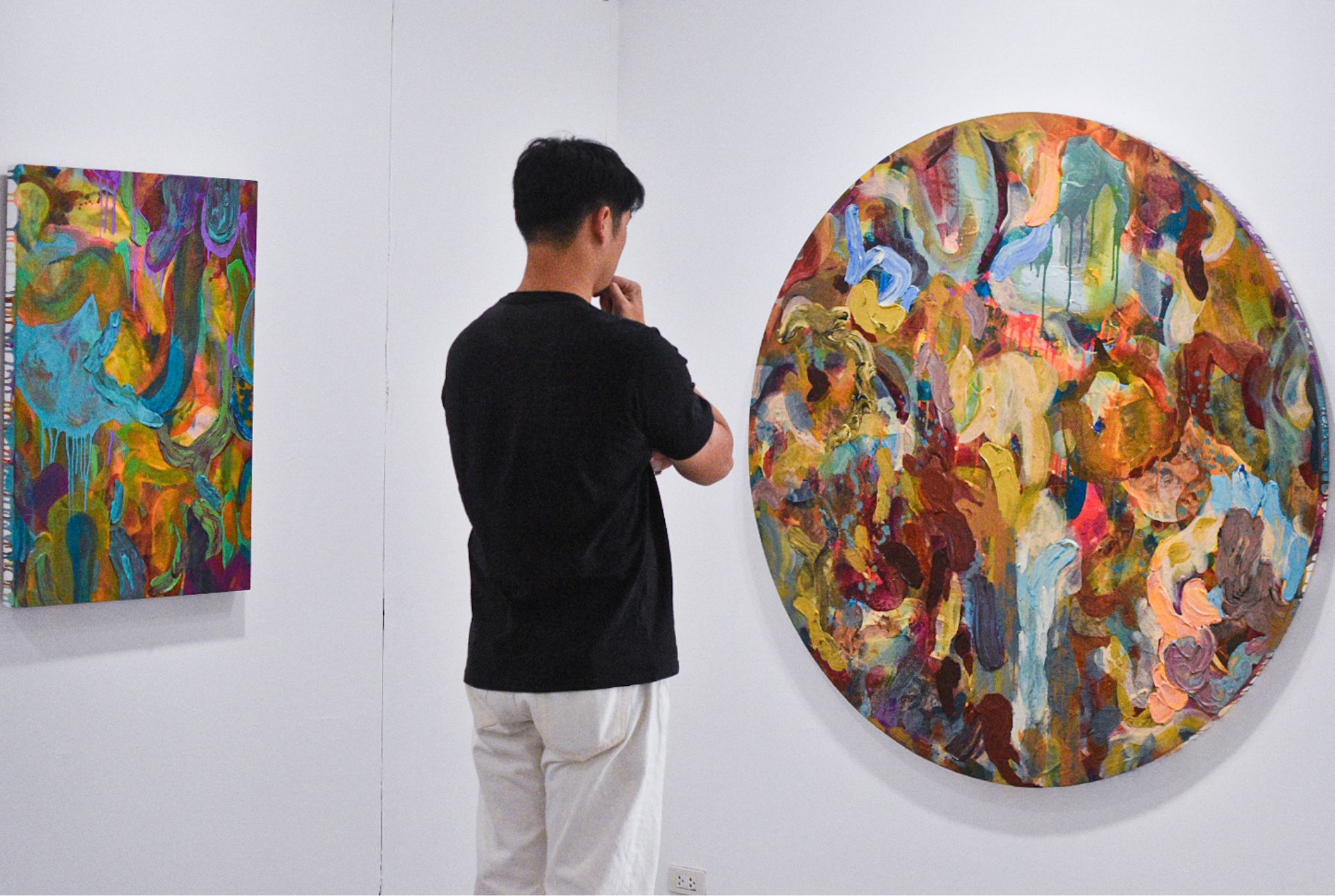
Artist Patrick de Veyra has always been obsessed with the idea of images and appropriation. As recently as last year, he curated two exhibits for Faculty Projects which tackle the idea of how we deal and define the images we use today. Storm in a Teacup, his most recent exhibition at West Gallery, circles around the same ideas of image appropriation.
“Part of my exploration is to break down the printed image and use it as visual stimuli for a work that tackles gestural abstraction and appropriation,” he said. “There is a relationship between the painted and the printed; it almost is like a commentary on technology and humanity.”
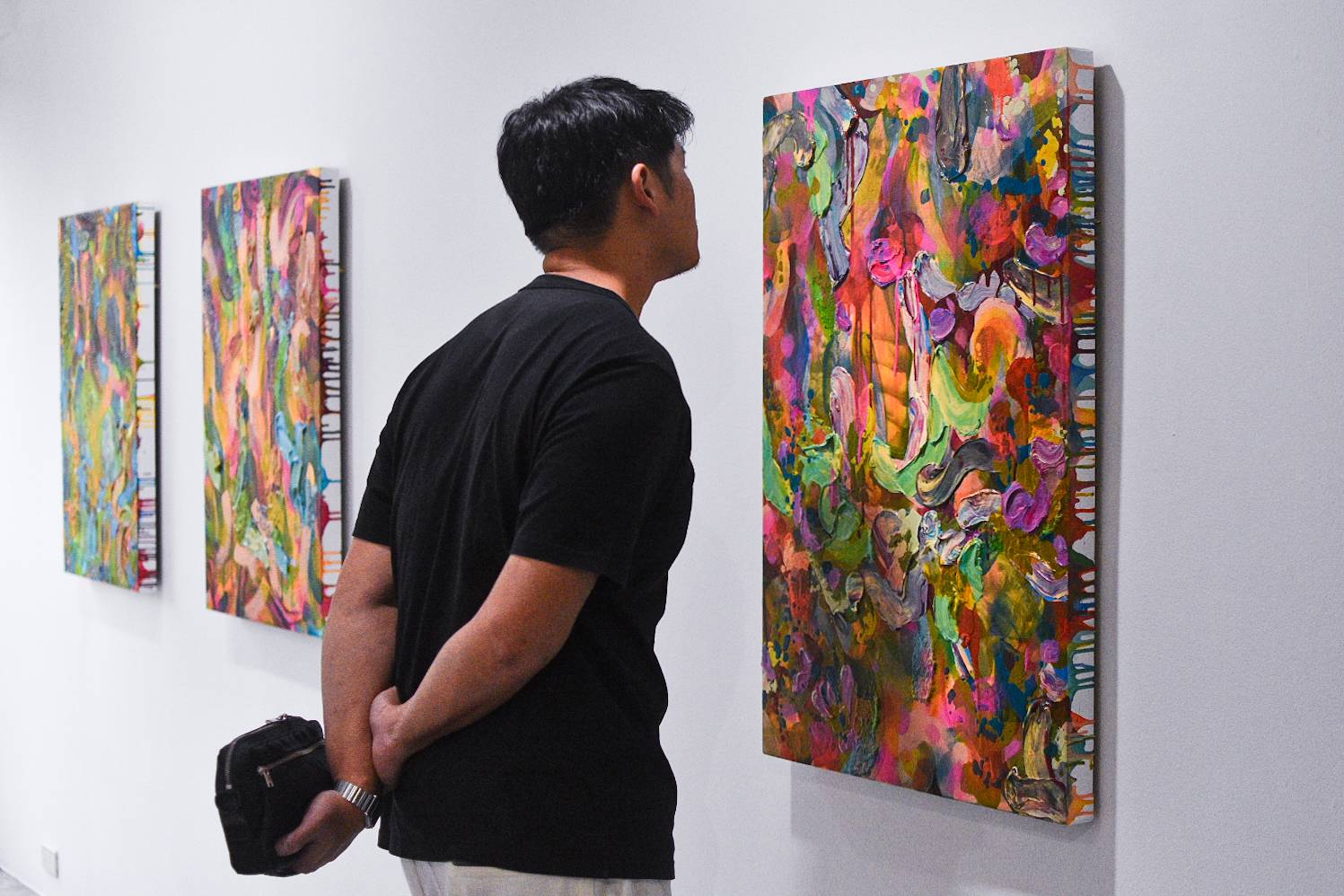
But there are headier ideas here, and Storm in a Teacup showcases Patrick de Veyra at his most conceptual. He creates new meaning through his methodology, utilizing touchpoints of abstract art to obscure the essence of an artwork and really ask what purpose is in the images we see every day.
Seeing Images in a New Light
For Storm in a Teacup, Patrick de Veyra utilizes images from open-access databases of museums around the world, and then layers them on top of each other.
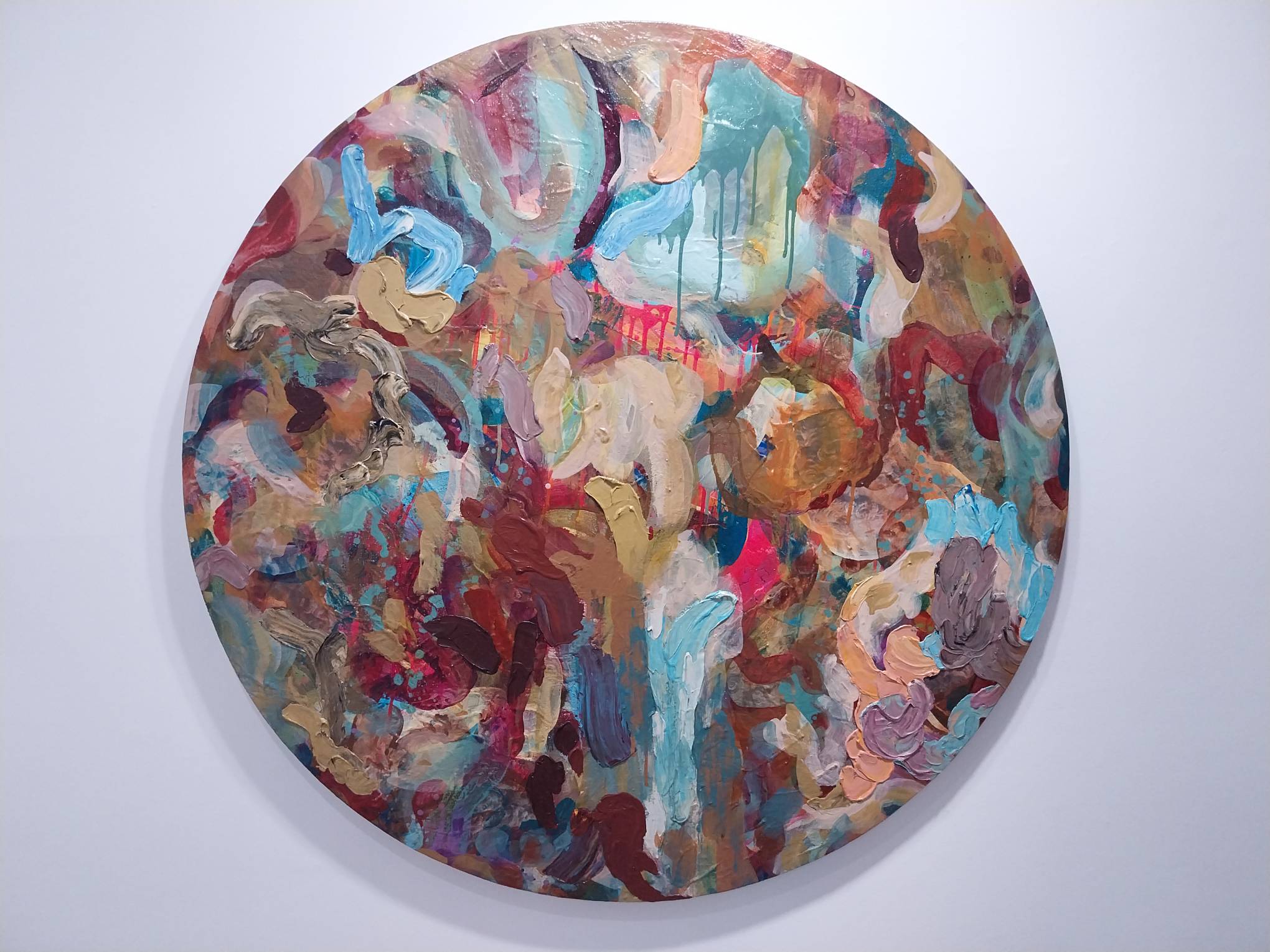
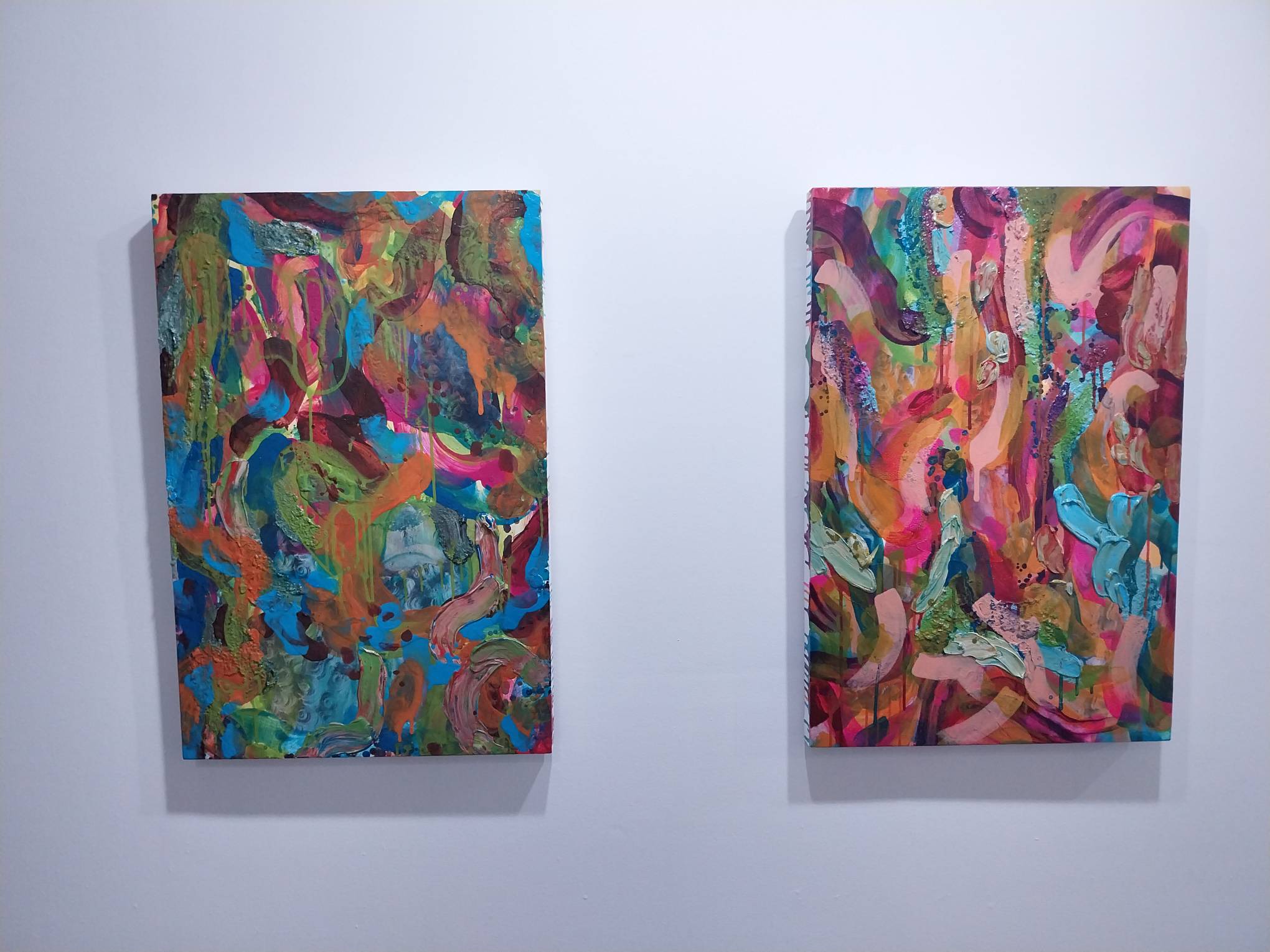
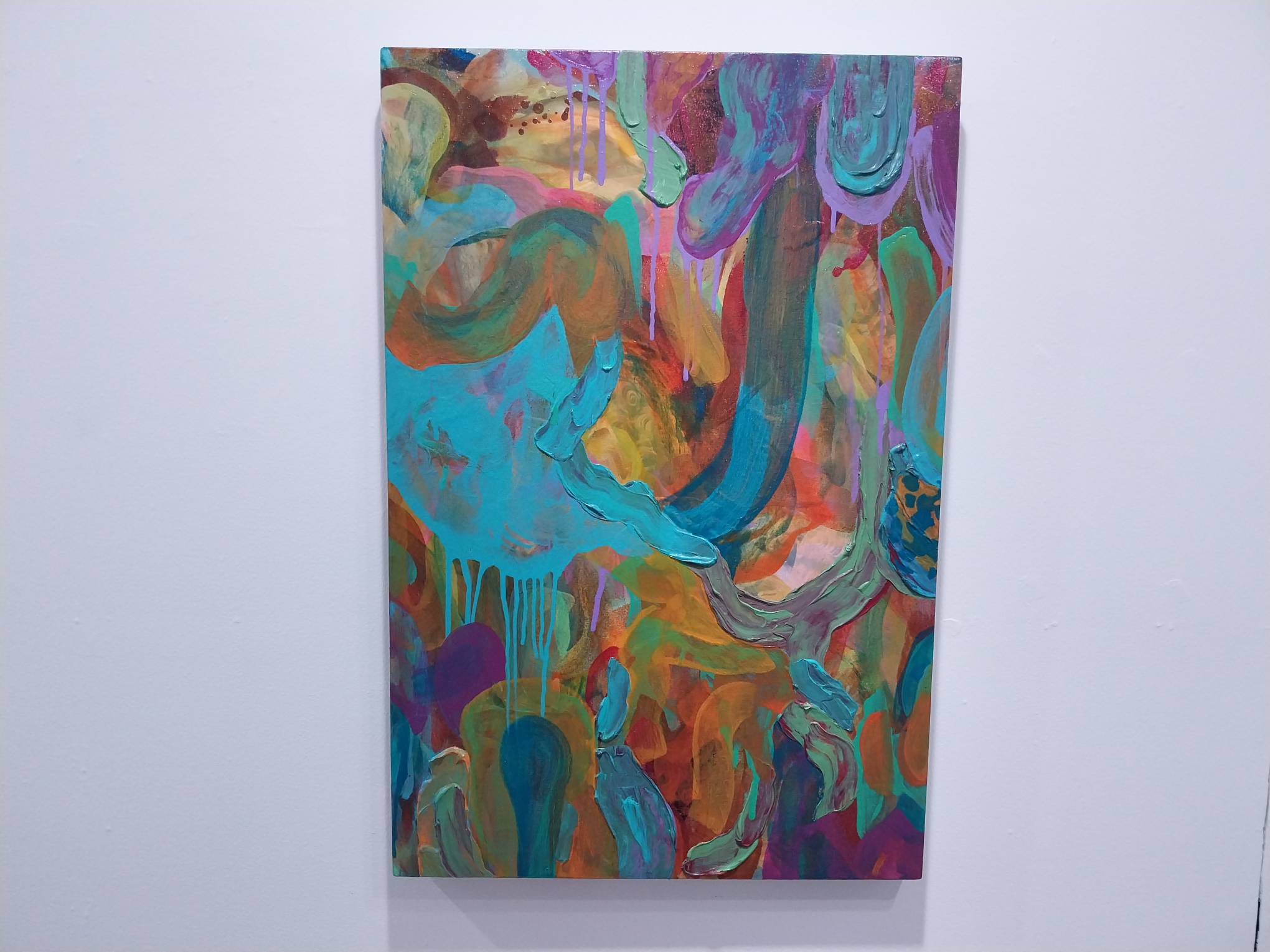
It’s not just one layer of images and another layer of paint. In some, he uses a specific type of paper as a way of imprinting the image onto the paint itself, before adding more layers on top of it.
“Actually, the works here, they do not exist on a singular plane,” he said. “They are not transferred on a singular plane. If you look closer, there are some images transferred onto the canvas, which is the base of the work. But a lot of the images are also transferred onto the actual paint. So when the paint cured, I transferred on top of it.”
Distortion of Images
These paintings end up distorting, in a way, whatever images are printed on top of it. The brushstrokes come in short bursts, trying to wiggle on top of the image and each other. At times, the colors drip downward, coating over other layers of paint and images in the process.
“I didn’t want to just have one layer of appropriated images, because I want to keep on reacting,” de Veyra explained. “Being able to keep on reacting to the process; visual stimuli. Because if I have one layer of printed imagery, then the only way I could react to it is through paint.”
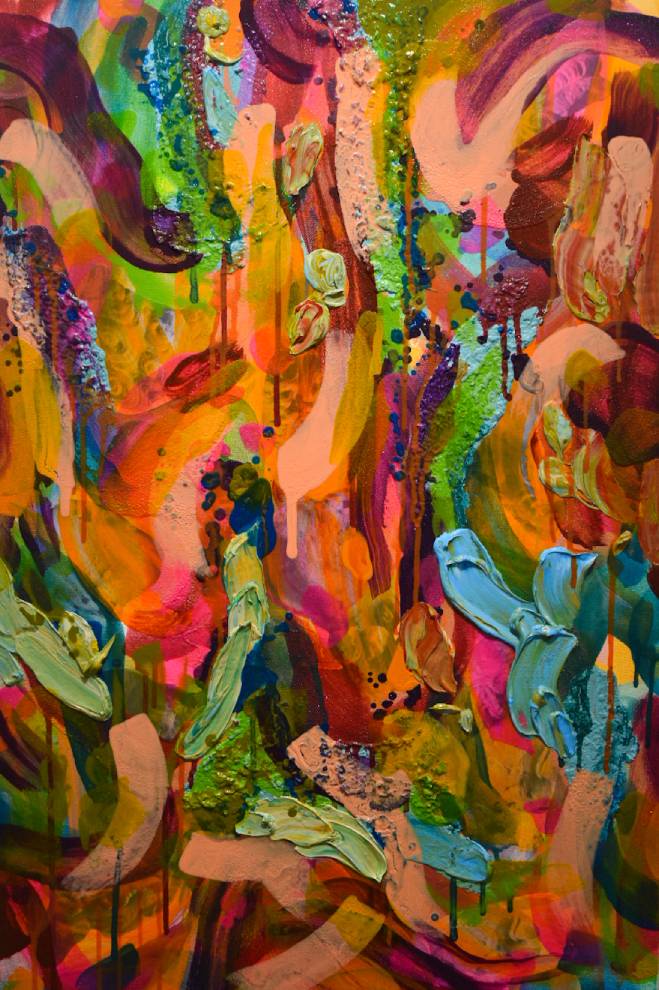
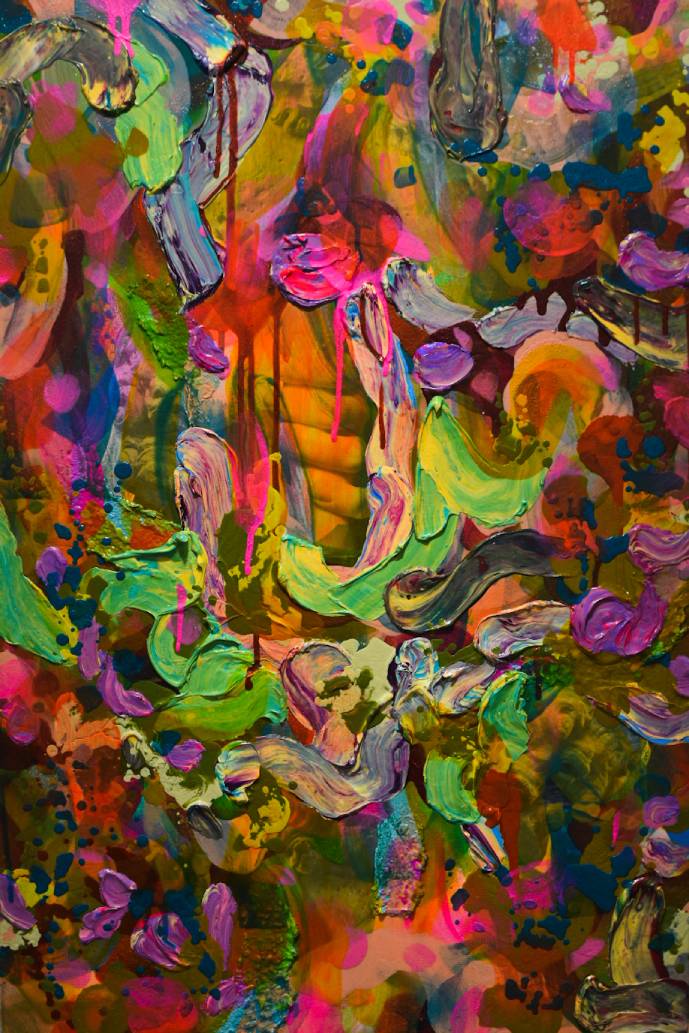
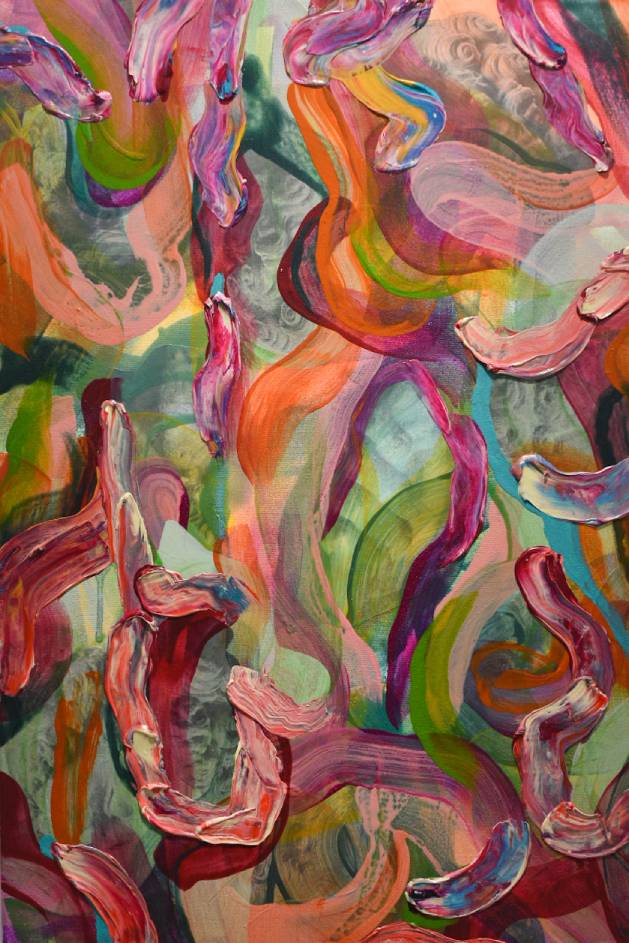
An intentionality exists with the abstraction, in the way that the images are obscured by the paint. It mimics the hyperactive visual environments of today, with all its distracting variability, so that even the images meant to be appreciated become nothing more but detritus in an overbursting visual world.
“I want to be able to react also with the appropriated images,” he added. “That’s why the appropriated images are also situated in areas: on top of the paint, [and] the surface itself. And then, I would overlay paint again, so they become suspended in layers of gestural abstraction.”
Commenting on Mass Perception and Production
For additional context, Patrick de Veyra shared that growing up, his family home had a printing press. His family did mass production printing like offset lithography for corporations. This became de Veyra’s first exposure to art and it influenced his perspective of the practice.
From there, he ruminated on the idea of “visual tolerance,” or how images tend to lose their power and meaning the more times we see them; they become part of the background of the world instead.
“This [exhibit] is my way to comment on visual tolerance,” he said. “Because when you have a printed image, a mass-produced image, that is basically the epitome of visual tolerance. You see it again and again to the point that you don’t see it anymore; you lose the grasp of the details of the image. It becomes like a peripheral image.
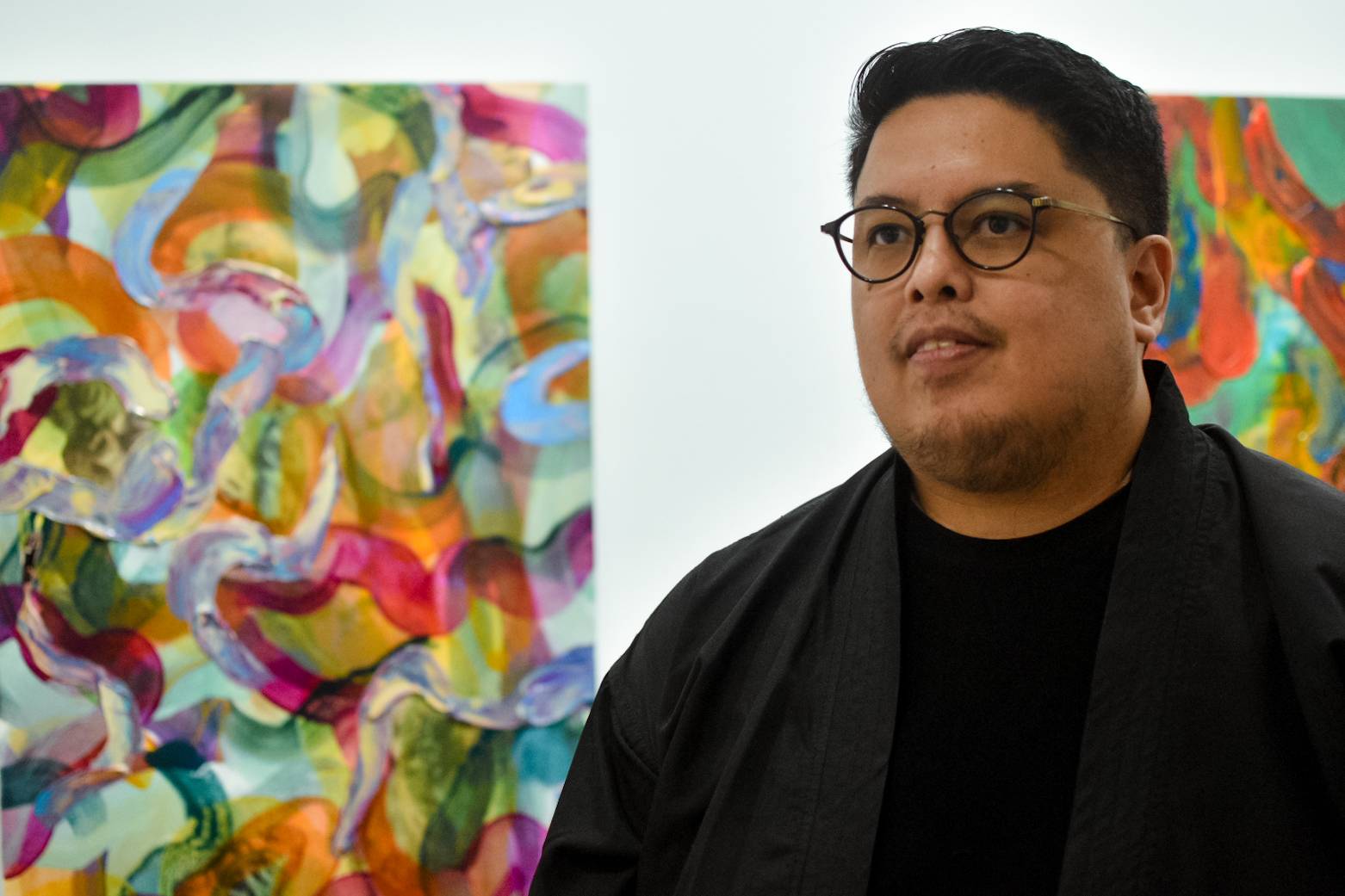
“So, this is my way of lifting it from that space, and bringing them into a more immediate space, which is the immediacy of painting. [Those ideas are] a key component of a gestural work, a gestural abstraction painting, but with key components that are appropriated [instead].”
Storm in a Teacup is showing at West Gallery until March 29.
Photos provided by the artist unless otherwise stated.
Related reading: Finding Order Within Chaos: Patrick de Veyra’s Fifth Solo Show
Frequently Asked Questions
The exhibition explores the complex relationship between technology and humanity by breaking down mass-produced printed images through gestural abstraction. Artist Patrick de Veyra utilizes appropriation to question the purpose of the digital and physical images we consume daily, layering museum database imagery with physical paint. This methodology creates a headier, conceptual dialogue that elevates printmaking into a space of immediate, fine art painting.
Patrick de Veyra sources his visual stimuli from open-access museum databases, layering these appropriated images onto both the canvas base and the curing paint. By imprinting imagery directly into the layers of the work rather than on a singular plane, he creates a multi-dimensional surface where paint and print interact. This process allows the artist to react continuously to the visual stimuli, suspending the appropriated details within thick layers of gestural brushstrokes.
Visual tolerance refers to the phenomenon where mass-produced images lose their power and detail because they are seen so frequently that they become part of the background. De Veyra uses his family’s background in commercial printing to comment on how images become peripheral detritus in a hyperactive visual world. By distorting these images through abstraction, he pulls them from the space of mass production and reintroduces them into the immediate, focused space of high art.
The paintings feature short, wiggling brushstrokes and downward-dripping colors that intentionally obscure and distort the printed images underneath. De Veyra layers the images at different stages of the paint’s curing process to ensure they do not exist on a single plane, creating a sense of suspended animation. This tactile distortion mimics today’s distracting visual environments, forcing the viewer to work harder to grasp the details hidden within the layers of abstraction.
Growing up with a family-owned printing press specializing in offset lithography for corporations gave Patrick de Veyra a unique perspective on mass production. This early exposure to the “epitome of visual tolerance” led him to ruminate on how repetition strips an image of its meaning. His current work serves as a bridge between that commercial past and his artistic present, using the immediacy of painting to reclaim the significance of the printed form.
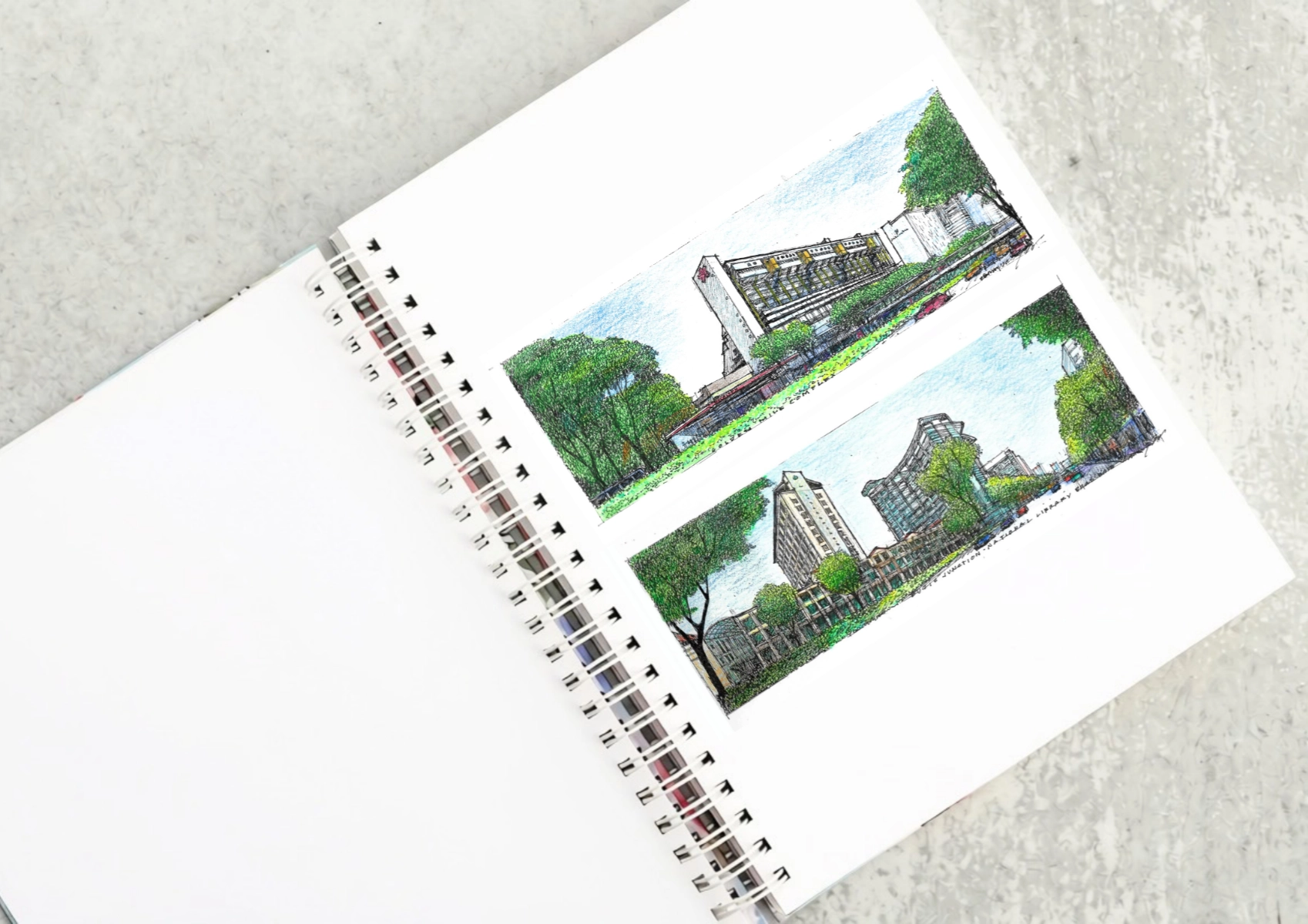
Two sketches of Singapore connect BluPrint Editor in Chief Paulo G. Alcazaren’s personal and professional history with Shared Ground: ArchitectureArchitectureThe art and science of designing and constructing buildings, structures, and spaces that are functional, safe, and aesthetically pleasing. It encompasses the planning, design, materials, and techniques used to createGo to Architecture Glossary of Care, Culture, […]
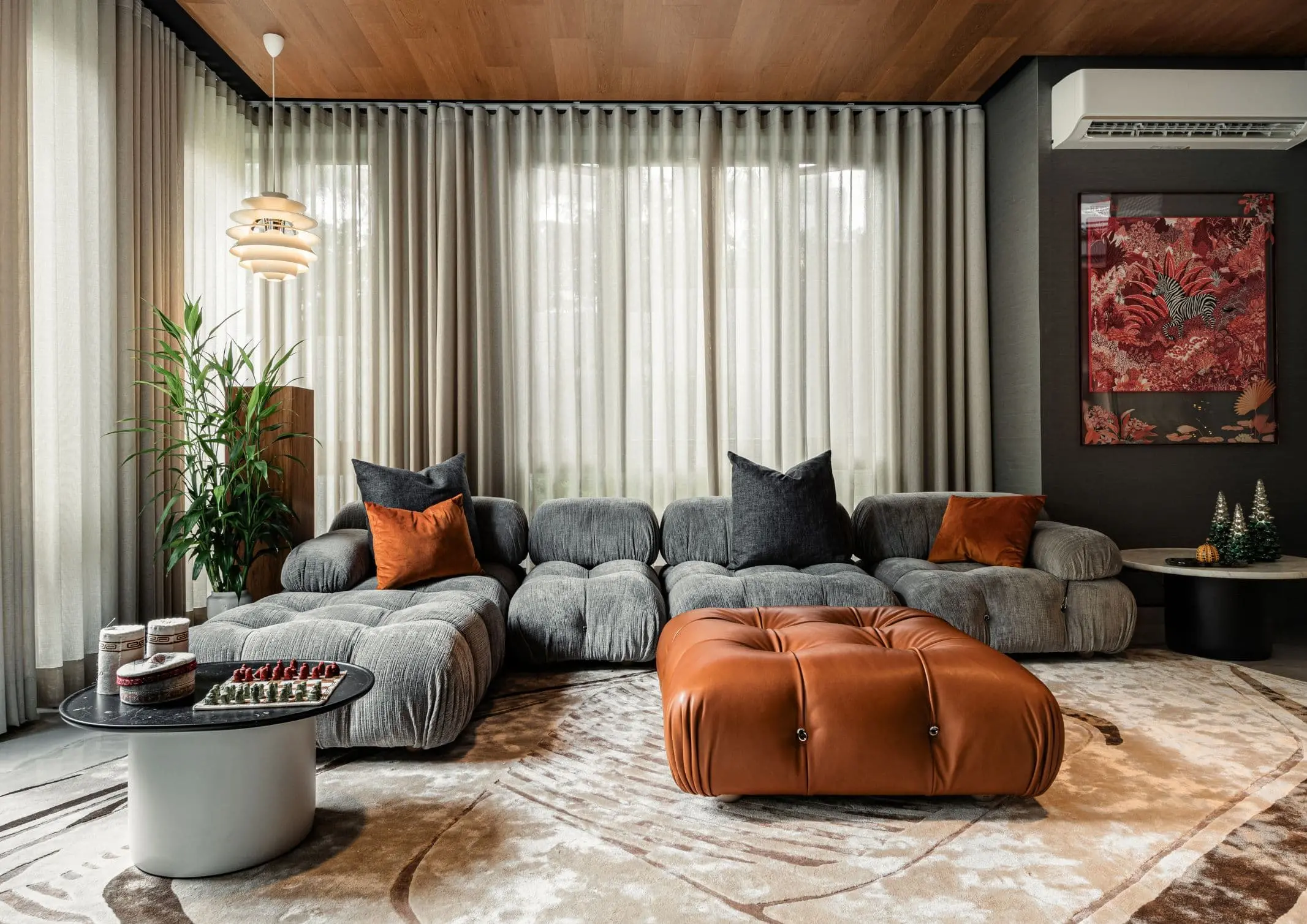
Some have become household names – Coleman, Oster, and KitchenAid – products that have found their way into Filipino kitchens, homes and family routines. In home furnishings, brands such as B&B Italia, Ethan Allen, Sub-Zero, Miele, SieMatic, Louis Poulsen, Hunter Douglas, Tempur, and Technogym, have helped shape the way Filipinos live. From everyday essentials to […]
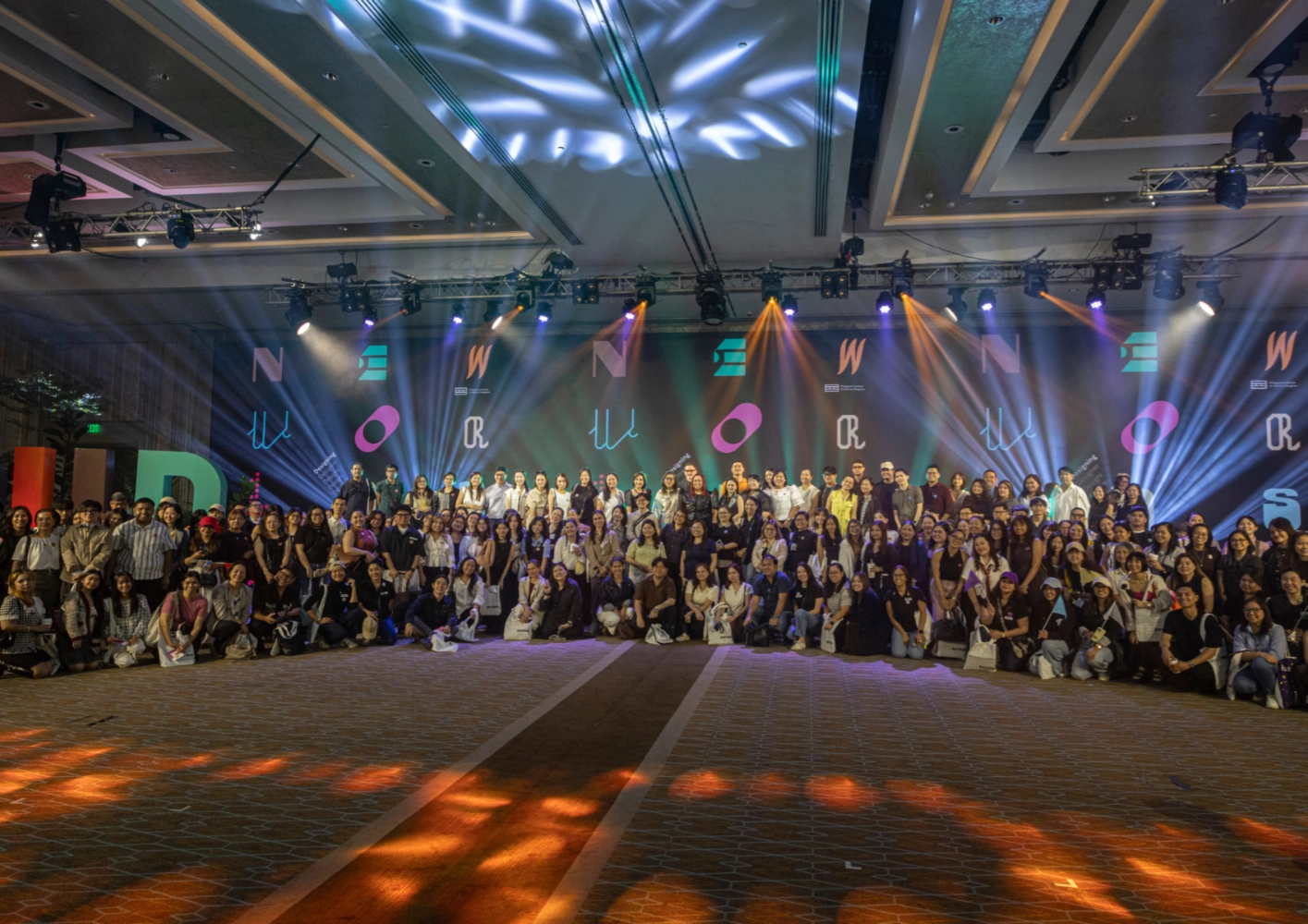
In a way, designers are the modern-day soothsayers and prophets. They design for the future, predicting how a room, a house, a building or a whole city will be used by people. They foresee how users will interact with a space, conjure exact shades of colors to elicit specific behavior and arrange furniture to build […]
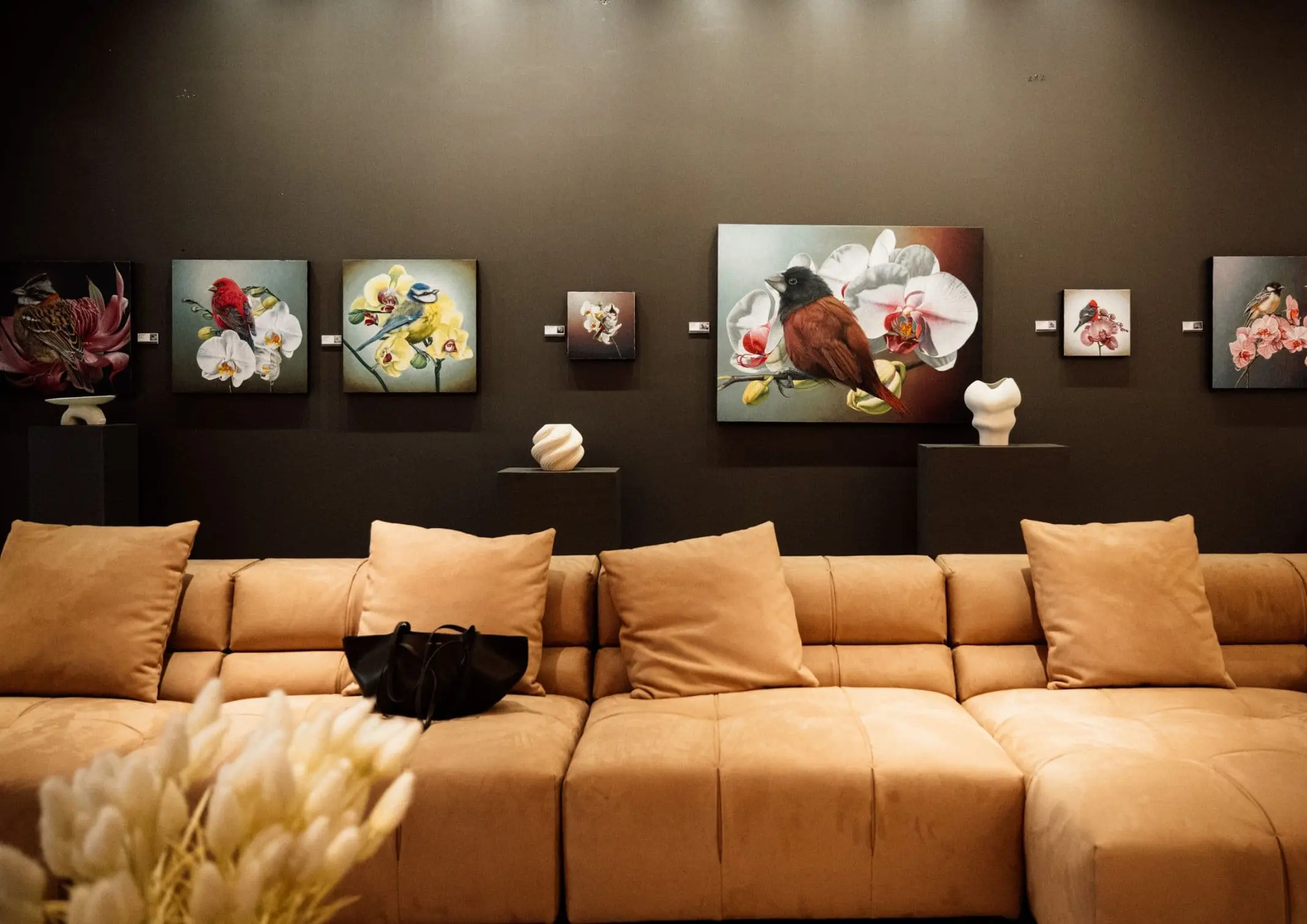
Art and furniture are often selected separately, yet their relationship can shape how a room looks and feels. The collaboration between Hooga and Galerie Joaquin explores how these elements can work together, bringing contemporary artworks into furnished residential settings at Hooga’s showroom in Uptown Mall, Bonifacio Global City. For Hooga, which curates furniture, lighting, and […]
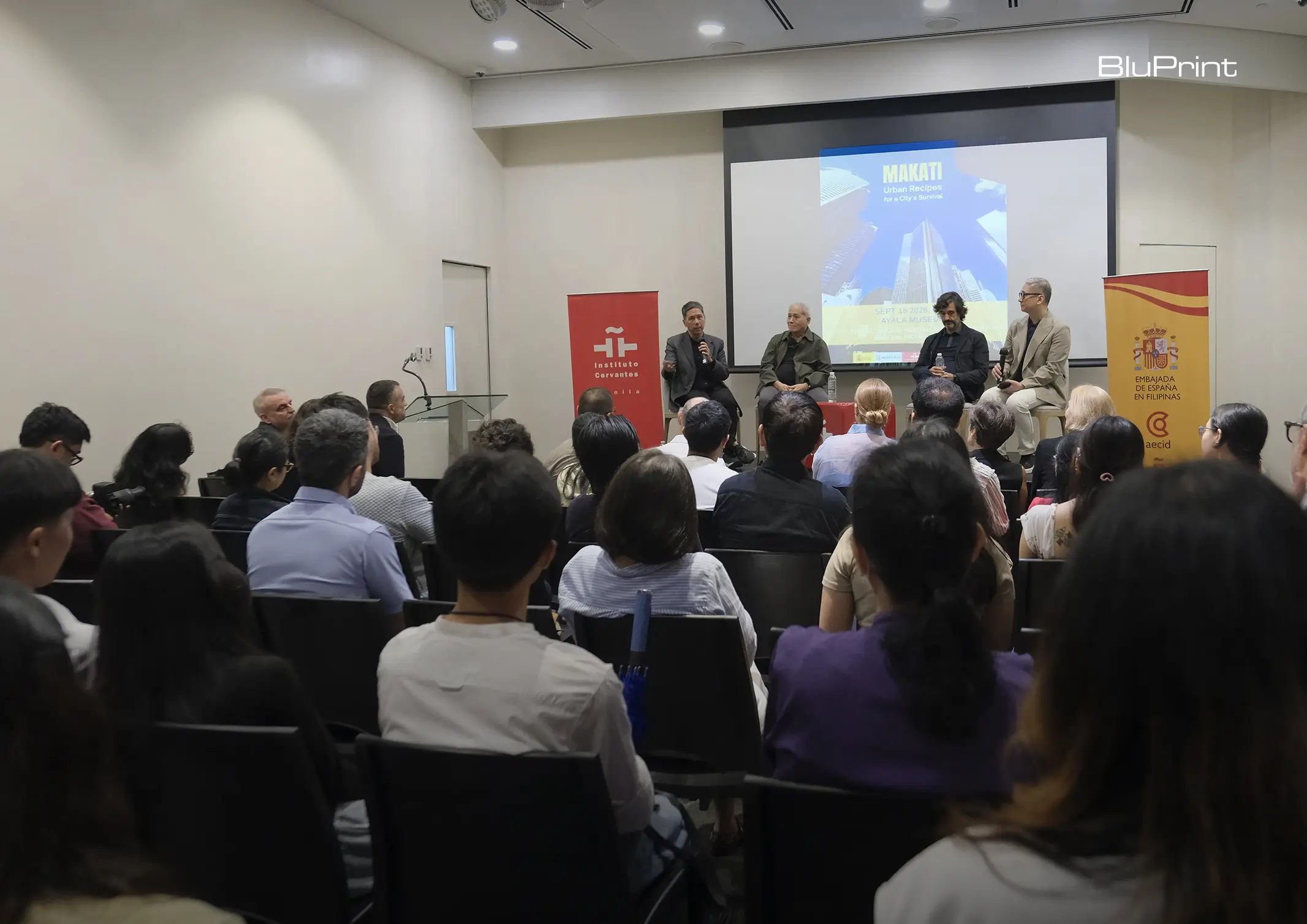
How can better-planned cities create the conditions for more creative, livable, and resilient urban environments? “Makati Urban Recipes for a City’s Survival,” a colloquium held at the Ayala Museum on September 15, brought together architects and practitioners from the fields of urbanism and the creative economy to discuss how design, planning, and collaboration can address […]
Read the issues.

Collect the volumes.

Recommended Video
Tap to Unmute
Unmute
0:00
0:00