In a way, designers are the modern-day soothsayers and prophets. They design for the future, predicting how a room, a house, a building or a whole city will be used by people. They foresee how users will interact with a space, conjure exact shades of colors to elicit specific behavior and arrange furniture to build […]
Elvin Vitor on Winning the Leonardo da Vinci International Prize for His Unique Work



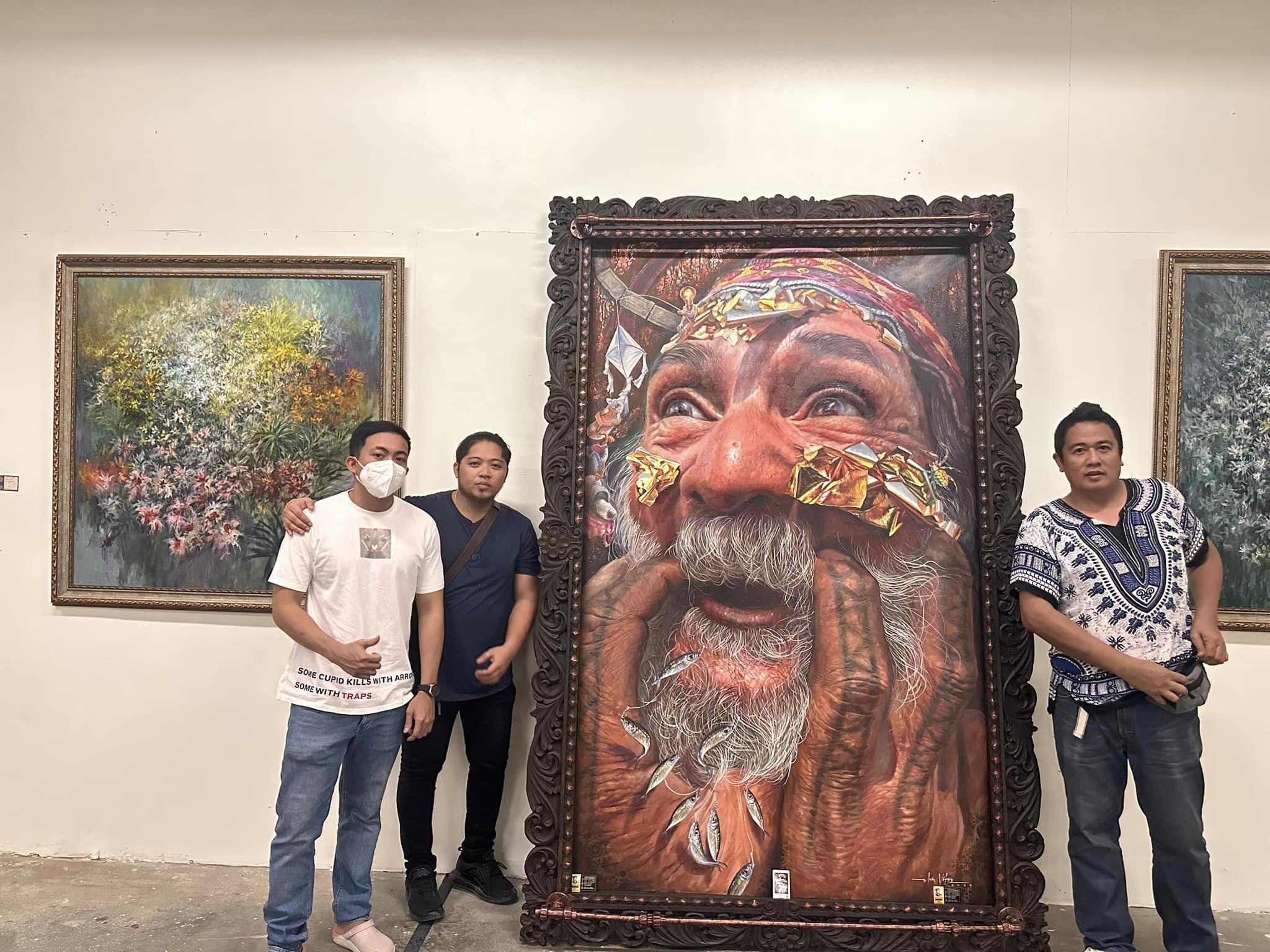
Boholano artist Elvin Vitor made waves recently after receiving the prestigious Leonardo da Vinci International Prize Award this year. This is an annual international prize named after Leonardo da Vinci, to award outstanding achievement by young people involved in the study of the sciences, technology, literature and the arts. The jury chose after he submitted his recent painting Kulbahinam Nga Laraw for consideration.
Vitor is set to be awarded on April 14 at Milan’s National Museum of Science and Technology-Leonardo da Vinci, where he will also exhibit his piece. BluPrint spoke to him about his inspirations and struggles, his history as an artist, the symbolism of his painting, and what the future holds for him.
Creating Art Even Through Adversity
Vitor is a Boholano by birth and heritage. Born in Sierra Bullones, he’s currently based in Baclayon, Bohol. It’s a point that he’s really proud of, and one of his artistic goals is to be able to spread Boholano culture to the world.
“Yun talaga ang ina-aim ko, na sana yung Boholano art scene is medyo mabigyan importansya sa international. I believe na Bohol have a rich culture po na pwede nating ma-introduce at ma-promote sa ibang bansa,” he said.
[That’s really my aim, that the Boholano art scene is given importance internationally.]
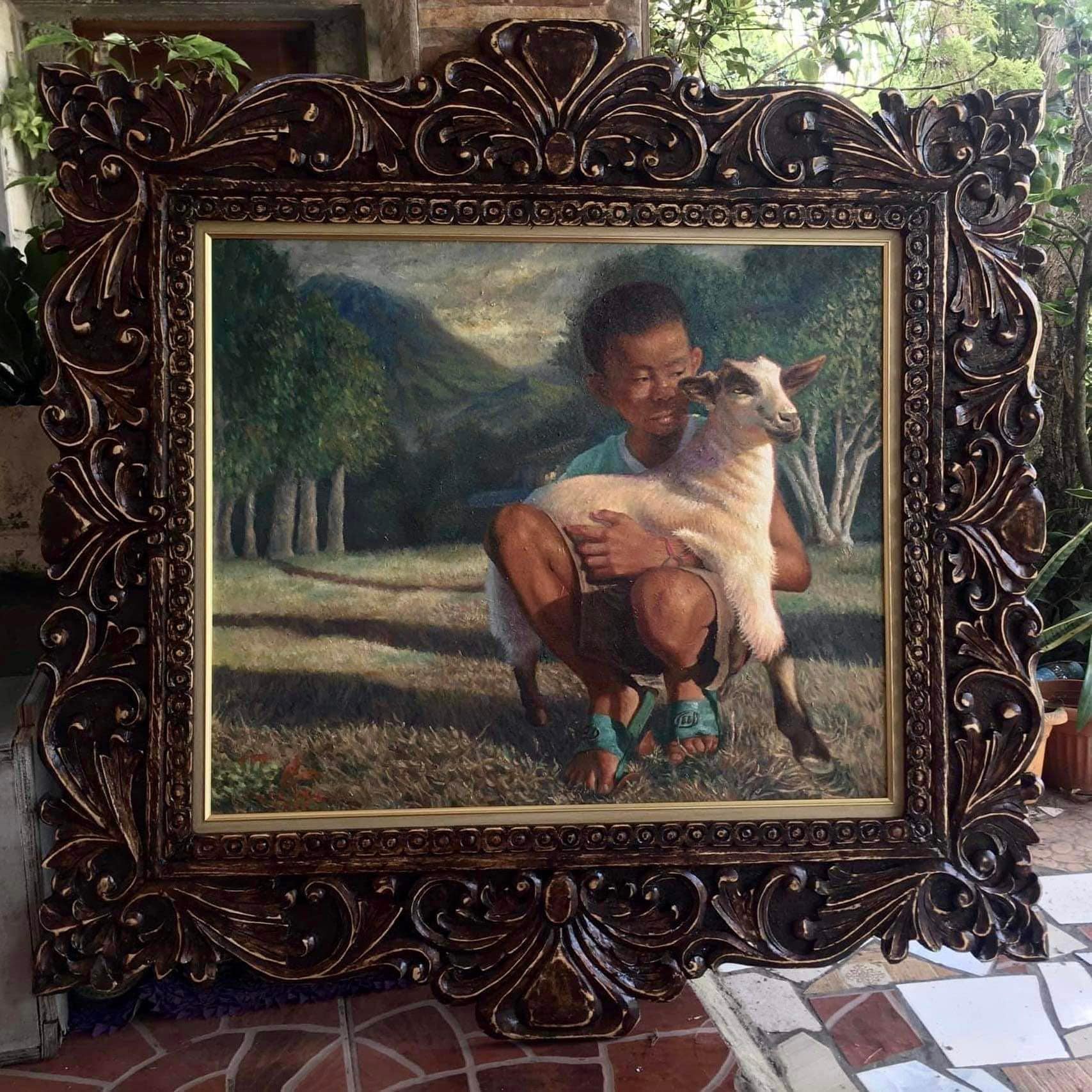
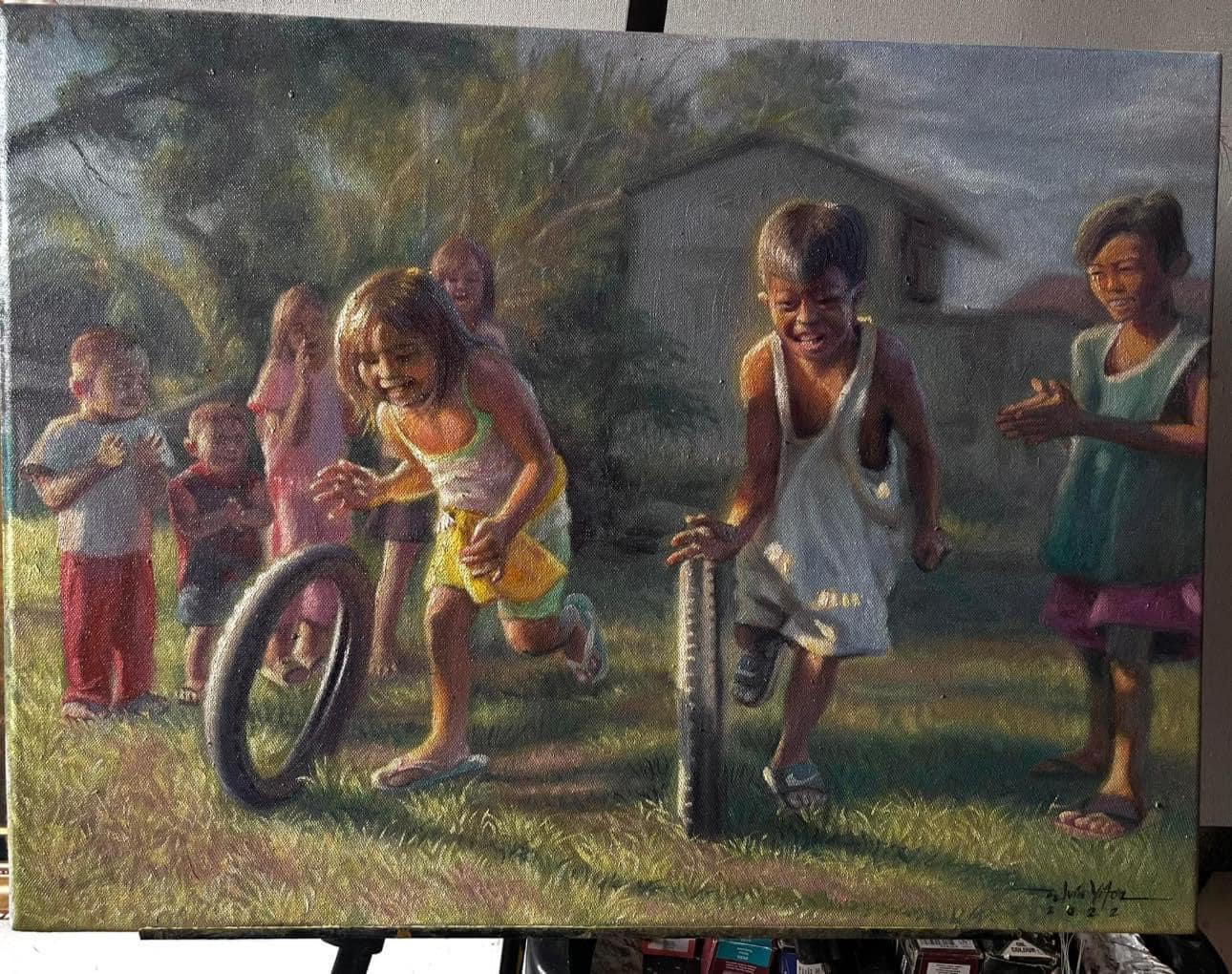
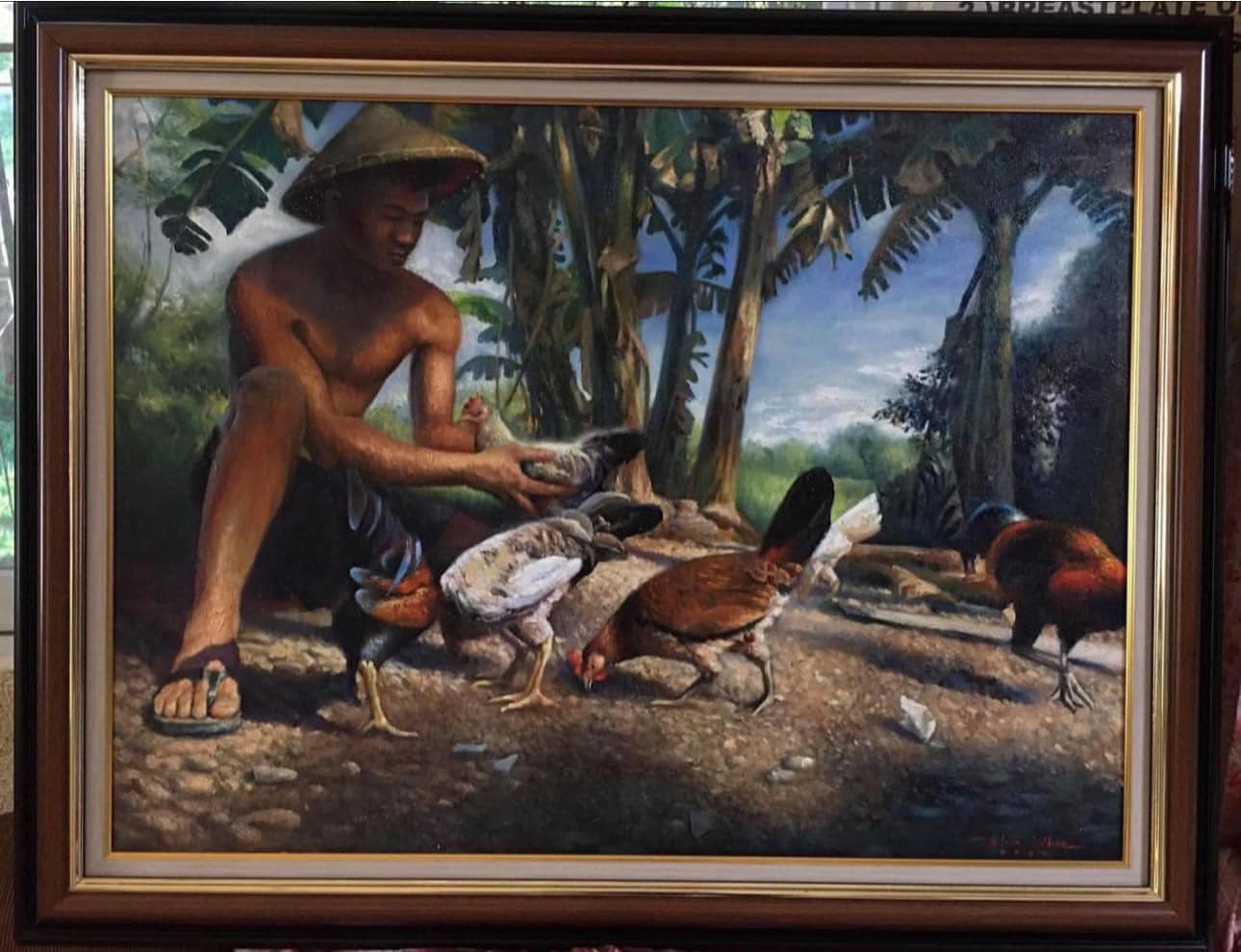
He started out as a graphic designer and a lay-out artist before pursuing his dream to become a full-time artist. But one of the things that provoked this pursuit was the degradation of his eyesight from computer use.
“During my computer years and designing years, medyo ano yung mata ko—I felt the grade of my eyes [increase]. Kaya I decided to stop because I have a high level of myopia, so I cannot see clearly, I have blurred vision—it’s like I’m legally blind.”
Growing Into the Art Scene
His artistic journey benefited from various forms of mentorship. Fellow artists provided him with opportunities to showcase his work in their exhibitions, while international art shows and exposure to global clients further enriched his artistic development. He started selling his paintings around 2012 as a way of raising funds to get better art supplies for his work.
“Kasi we have limited art supplies here in Bohol. Di katulad ng sa Manila, they are privileged to buy any art materials that they can get. Dito sa Bohol, talagang you really need to reinvest, mag-ipon to buy quality paints from Manila.”
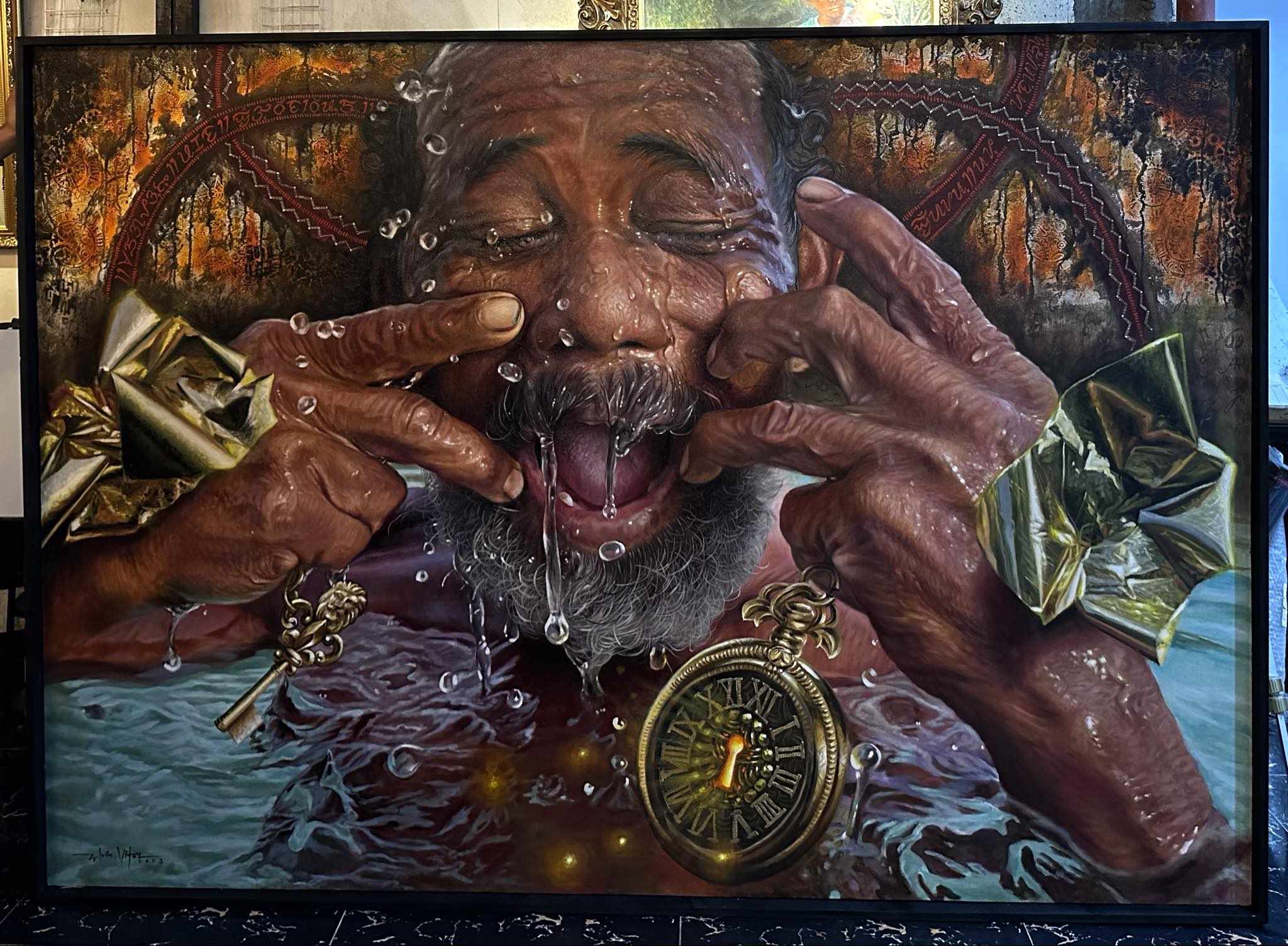
Boholano culture inspires his work as evidenced by his usage of Eskayan and Badlit scripts. He believes that his portrayal of local culture, especially on the international stage, will give future generations a better appreciation of their own heritage.
“Why not be, as a Boholano, value our own identity, our culture, and then express it into a painting, di ba?”
Kulbahinam Nga Laraw
Kulbahinam Nga Laraw is a hyperrealist portrait of fellow Boholano artist Pedro Angco. Vitor said he chose Angco for the painting because of his beautiful physical features, and how his name represented Vitor’s belief in art.
“I [chose] Pedro as my model because Pedro is also a symbolic name. Pedro symbolizes rock or stone. If you choose stone, if you choose the rock, then if you have the right foundation, you put your foundation in the rock or in the stone, then hindi ka magigiba,” he said.
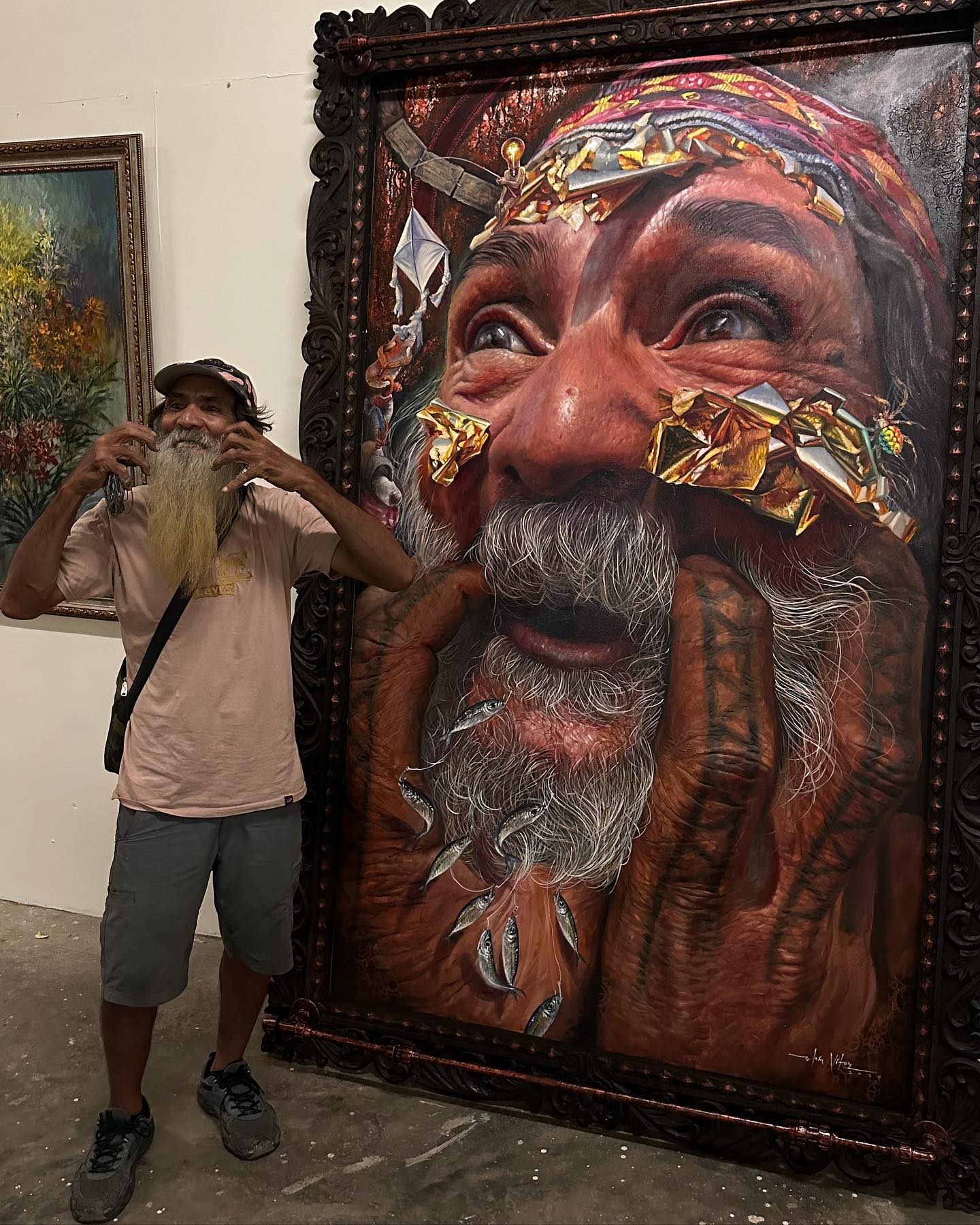
Vitor created the painting as a way of motivating himself to produce greater works in the future. “Kulbahinam” as a word combines “kulba,” meaning tense, and “hinam,” meaning excited. It projects his feelings about pursuing his goal of creating better art.
“I [made] it as a title for this year because I wanted—my anticipation is I wanted to create more big paintings. That’s why I am really tense and then I am really kinakabahan, and then I am really excited for my goal this year.”
Symbolisms and Meaning
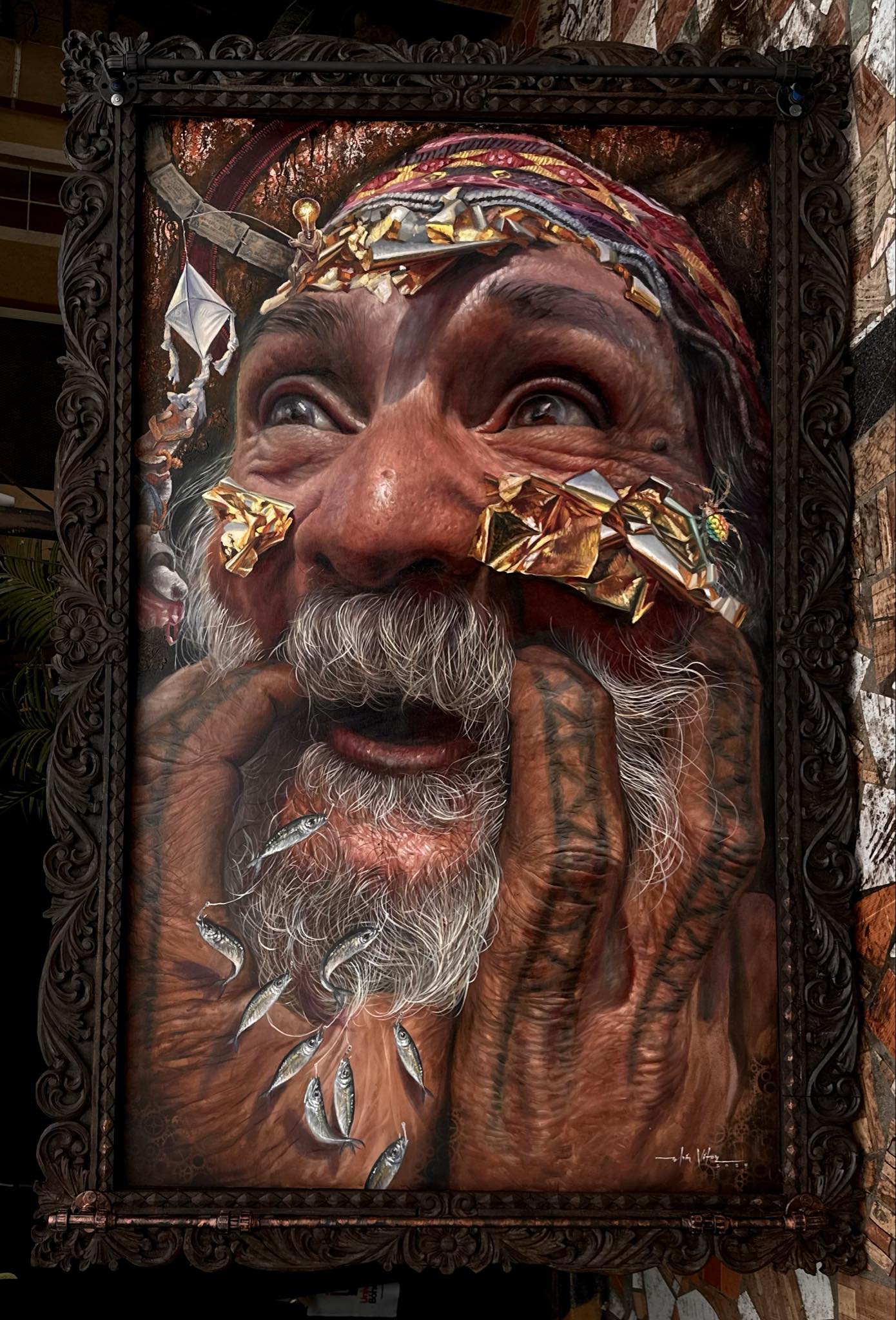
The painting uses local symbolism drawn upon Pedro Angco’s portrait, including fish, kites, and slippers. The kite represents the simplicity of his work, while the slippers represent the hard effort that goes behind it.
His most interesting use of symbolism is the fish, because he uses a specific local breed, the tamarong, to portray the capturing of peace of mind.
He wants this painting to specifically encourage artists to stay focused on their goal to create masterpieces.
“Kulbahinam Nga Laraw, it really expresses the life of an artist that if you wanted to produce the best artwork that you can, then go [about it]with your best potential,” he said. “So, if you wanted to create the best version of you or you wanted to produce the best potential of you, you must stay focused and then just keep yourself with your artwork.”
An International Market for Filipino Art
The acclaim from his art has given him the opportunity for a solo exhibition in Milan, with plans to donate 50% of his sales to help the blind and deaf community.
As for his own future plans, he is likely to stay in Bohol and continue honing his art there. He’s had offers from galleries in Makati to show his works. However, he said that he works too slowly for it to be showcased.
“Because yung process ko ng painting, three to five months, eh. Pag gallery, mas marami yung mapro-produce mo. Kaya nga yung painting ko, ano, yung mga collector[s] ko lang dito sa Bohol ang nakakabili,” he said.
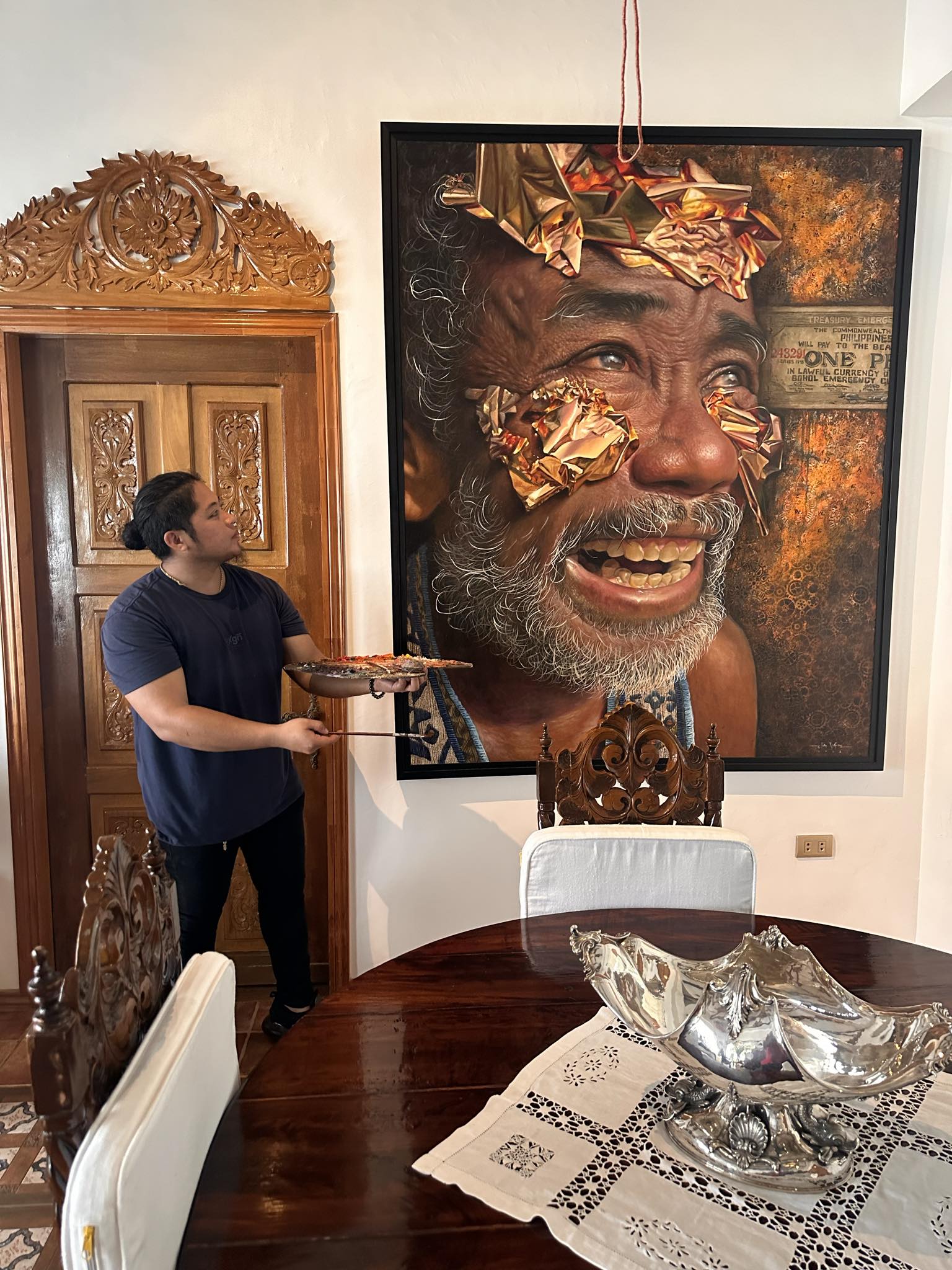
[Because my painting process takes three to five months. When you’re producing for a gallery, you need a lot of art. That’s why my paintings are only bought by collectors in Bohol.]
His biggest hope after receiving the prize is that it will give more opportunities for Filipino art to be shown abroad, and that his continued acclaim will give Boholano and Filipino culture a bigger spotlight worldwide.
“That is my noble cause po, to give value sa kulturang Boholano, kulturang Bisaya, at kulturang Pilipino through visual art.
Related reading: Sitio Ubos: What remains when heritage conservation fails
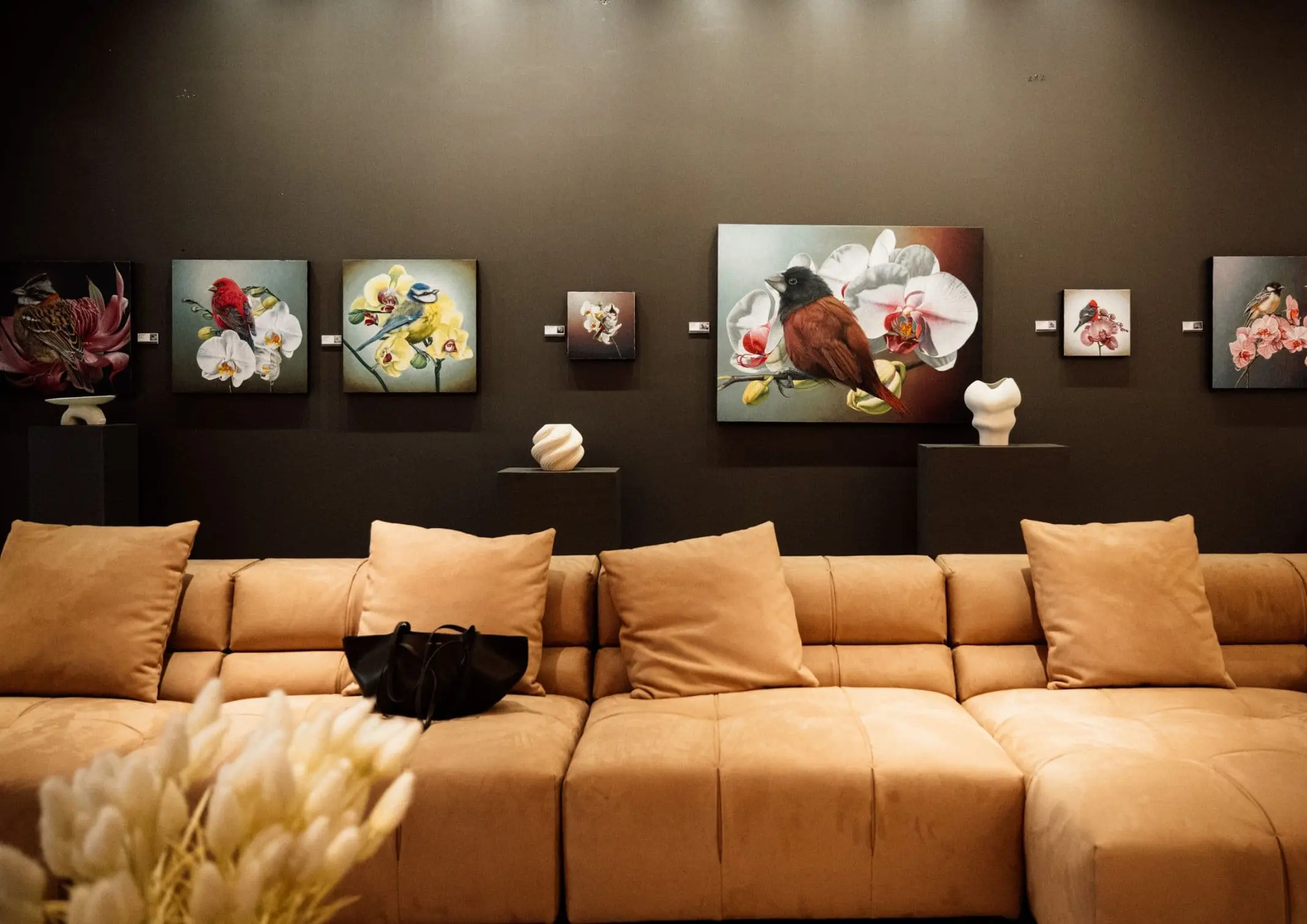
Art and furniture are often selected separately, yet their relationship can shape how a room looks and feels. The collaboration between Hooga and Galerie Joaquin explores how these elements can work together, bringing contemporary artworks into furnished residential settings at Hooga’s showroom in Uptown Mall, Bonifacio Global City. For Hooga, which curates furniture, lighting, and […]
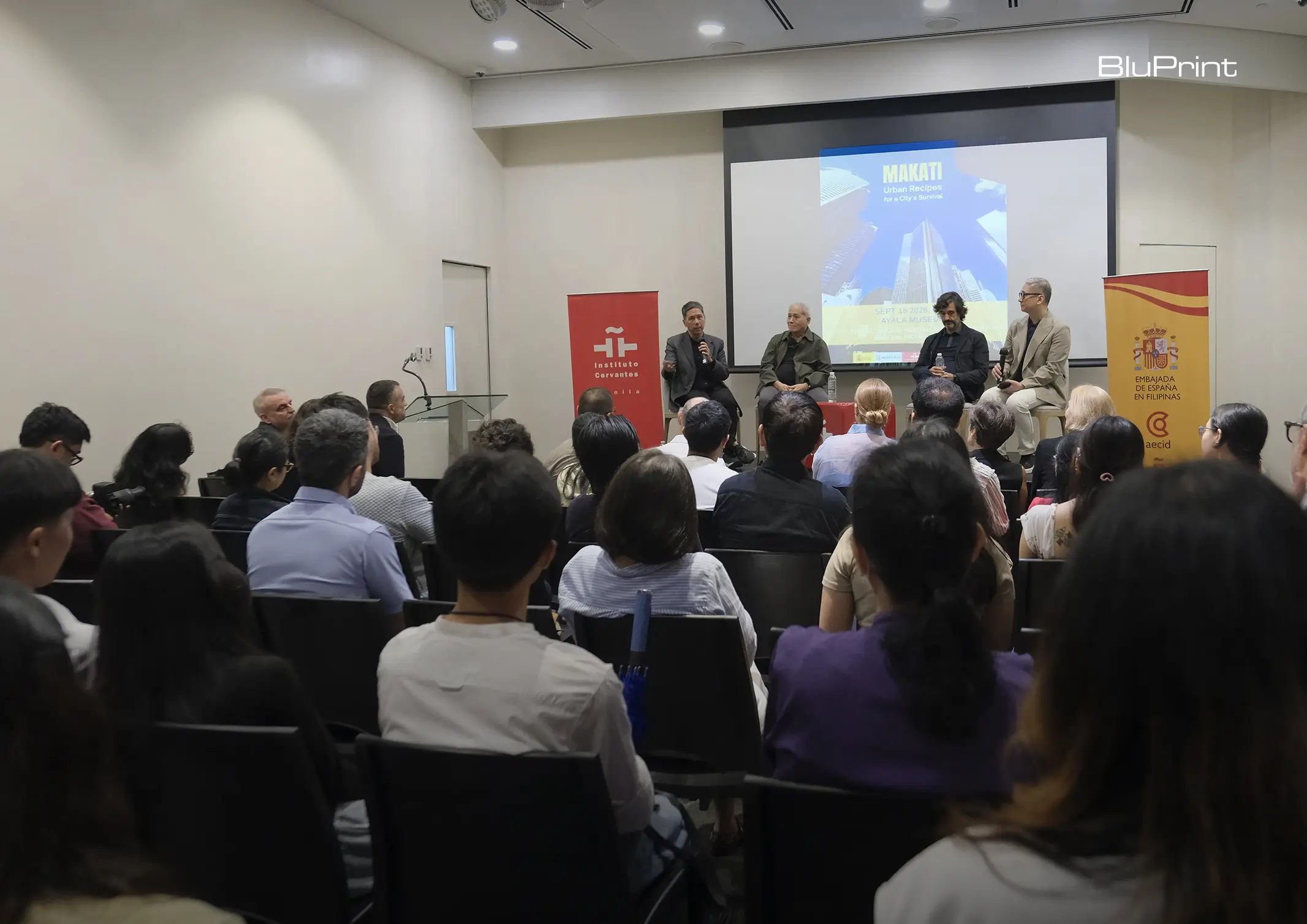
How can better-planned cities create the conditions for more creative, livable, and resilient urban environments? “Makati Urban Recipes for a City’s Survival,” a colloquium held at the Ayala Museum on September 15, brought together architects and practitioners from the fields of urbanism and the creative economy to discuss how design, planning, and collaboration can address […]
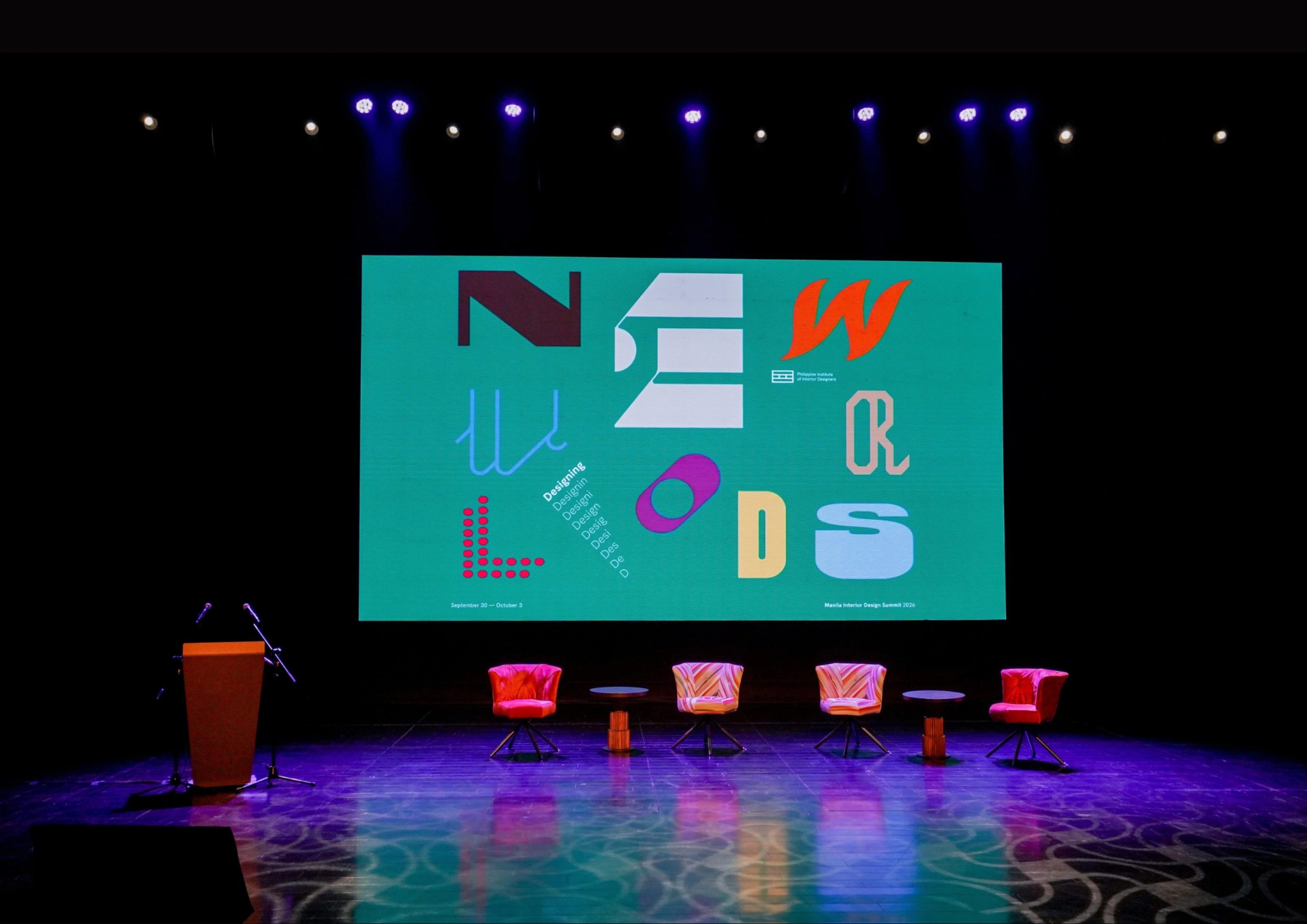
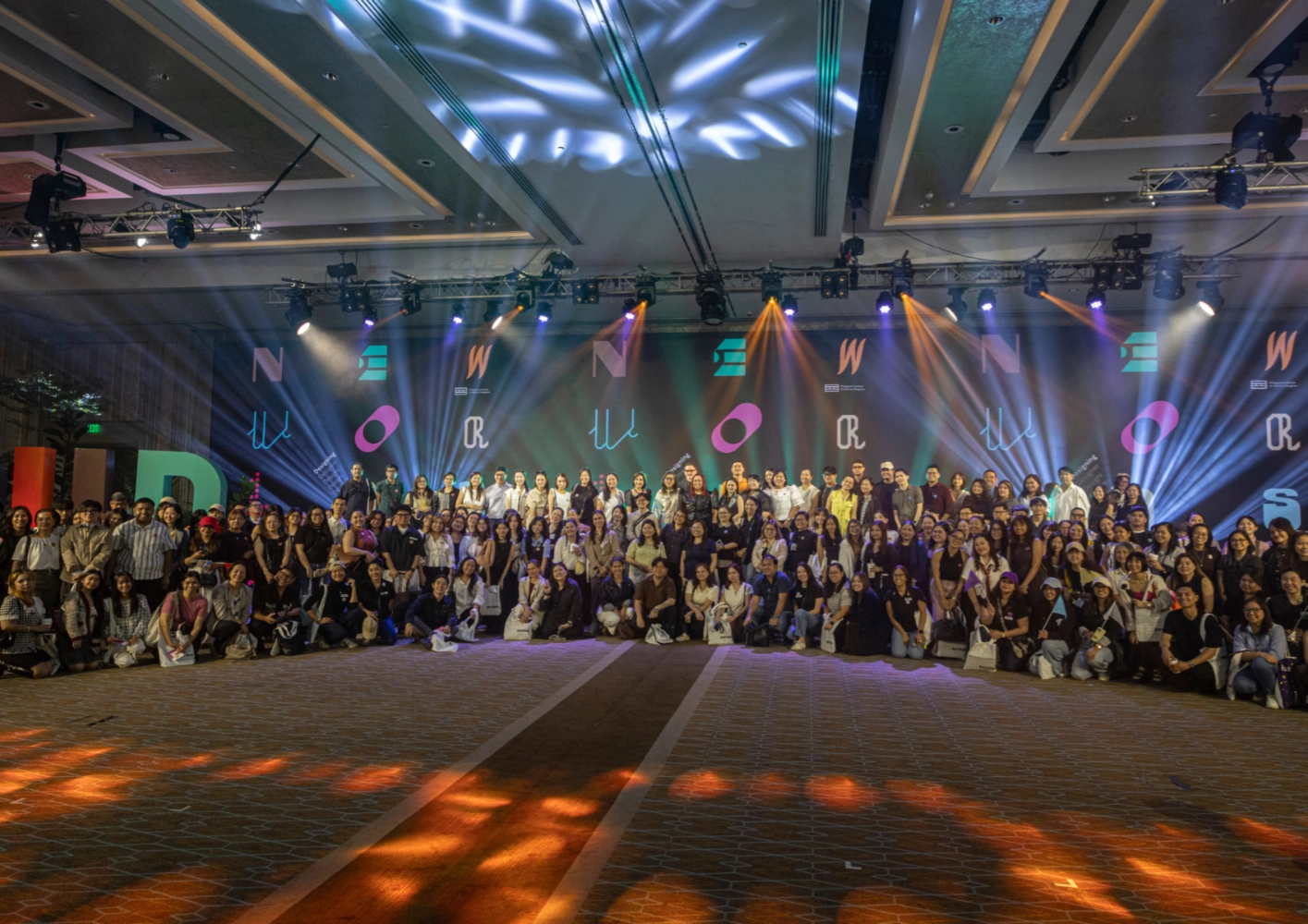
The fourth Manila Interior DesignInterior DesignThe discipline of planning and shaping interior spaces for function, comfort, safety, and beauty. It covers layout, lighting, materials, finishes, furniture, and color, and in the Philippines is a licensedGo to Interior Design Glossary Summit (MIDS) brought together more than 300 delegates for four days of conversations, exhibitions, and design […]
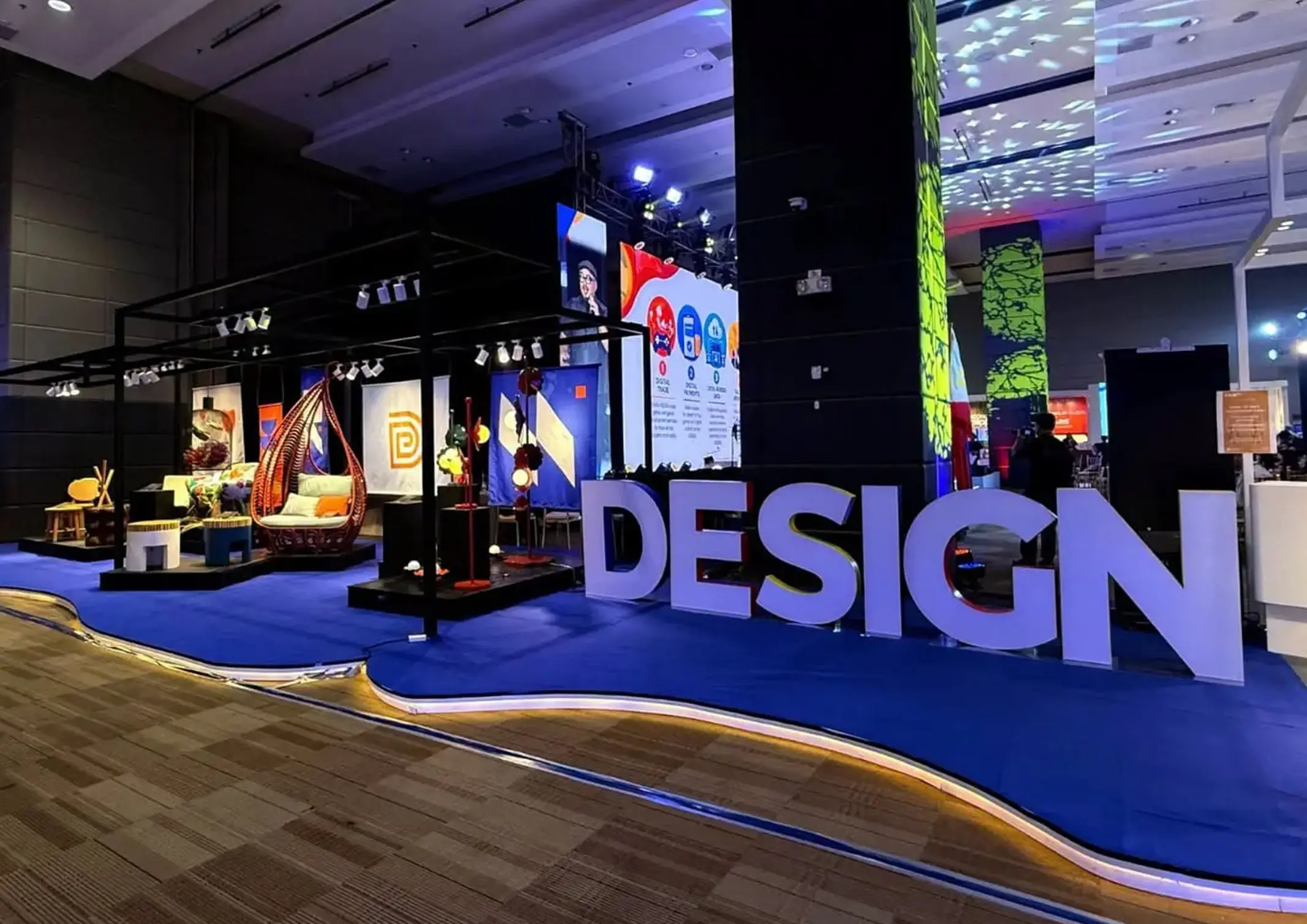
Held at the SMX Convention Center Aura in Taguig City, the first ASEAN Creative Industries Expo by Malikhaing Pinoy (ASEAN MPEx) features nine creative domains, including design, visual arts, digital interactive media, and performing arts. Organized by the Department of Trade and Industry (DTI), the event includes exhibitions, cultural performances, industry talks, and pitching sessions […]
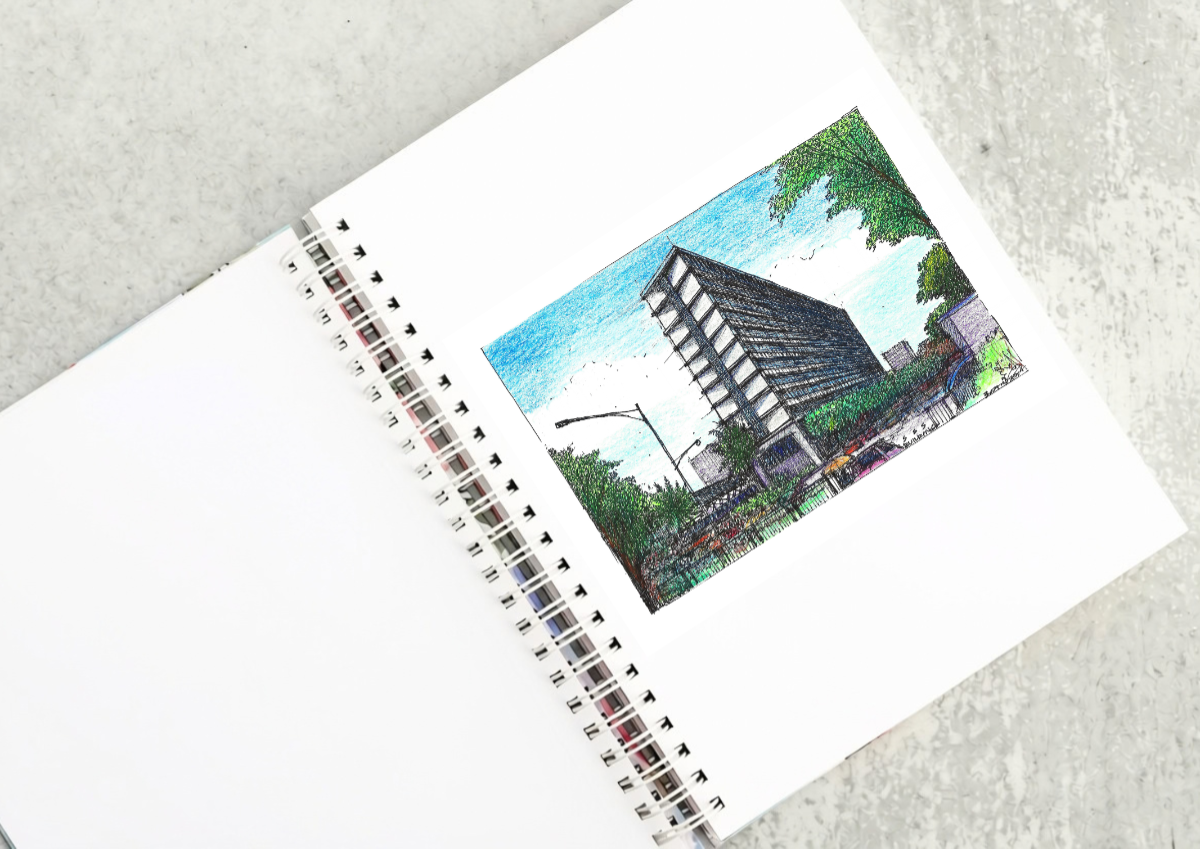
The SSS Building as an Expression of Civic Modernism My favorite modernist landmark in Quezon City is the SSS building on East Avenue. Designed by National Artist for ArchitectureArchitectureThe art and science of designing and constructing buildings, structures, and spaces that are functional, safe, and aesthetically pleasing. It encompasses the planning, design, materials, and techniques […]
Read the issues.

Collect the volumes.

Recommended Video
Tap to Unmute
Unmute
0:00
0:00