Bigkis is the act of binding. In Tagalog, the word can refer to something used to bind or encircle, as well as a bundle formed by tying several separate elements together. Figuratively, it can also mean a bond, union, or unity. The meanings move from the physical act of joining things together to the connection […]
‘SACRUS:MUNDUS’ Inspects the Calm and Chaos of Daily Rituals



SACRUS:MUNDUS adds a layer of abstraction to the practices we go through everyday. A collaborative group exhibit between Dan Raralio, Eric Zamuco, and Jet Pascua, it attempts to interpret a picture of everyday life through our chores and the little things we do each day.
“Rituals are the threads that connect the past, present, and future, creating a continuity that transcends time. They offer a sense of order in chaos, a connection to the divine, and a way to navigate the complexities of existence,” the exhibit write-up said.
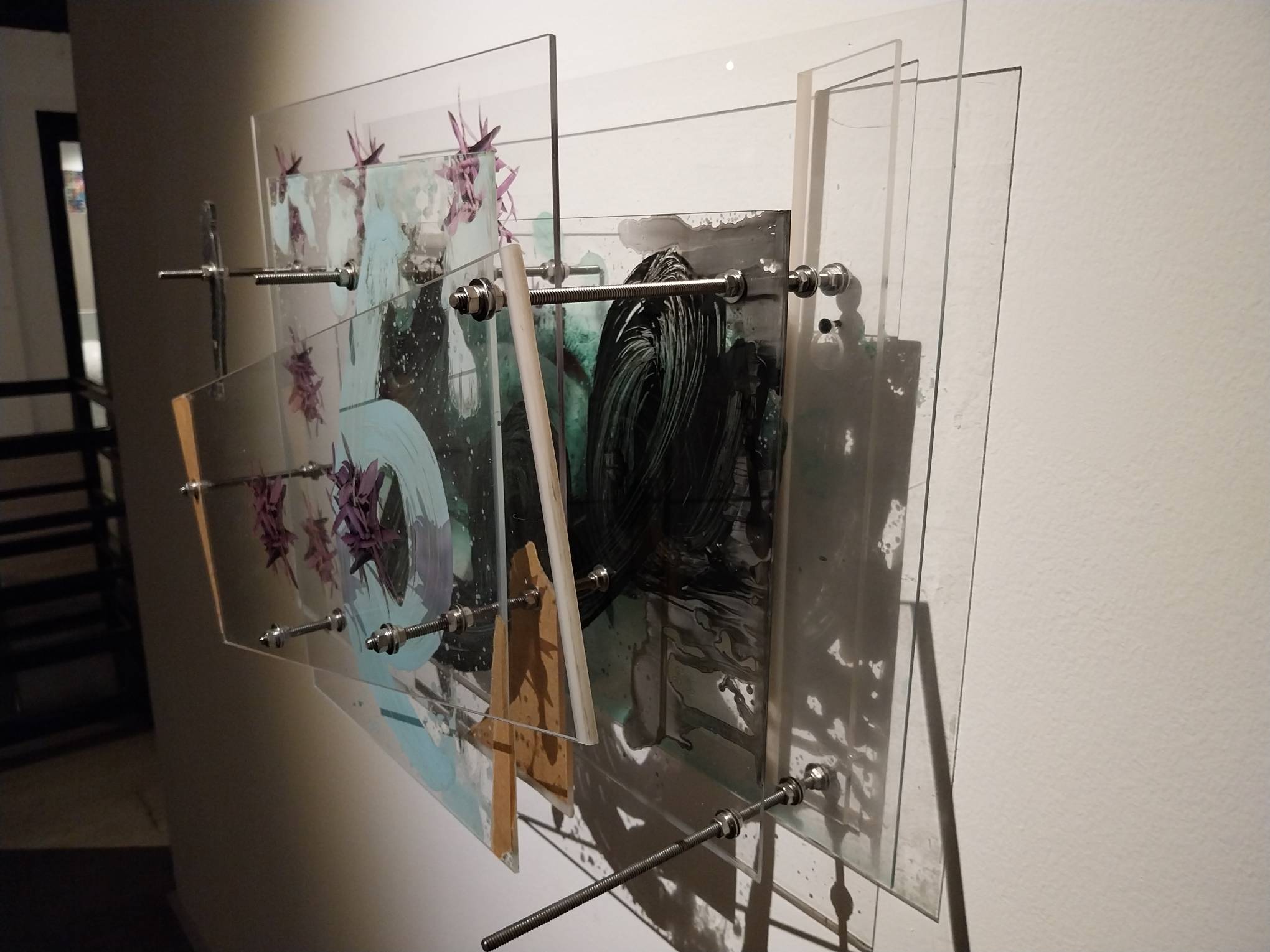
The three artists involved have, in some way or another, tackled questions of colonialism or post-colonial thoughts in their art. This strain of deconstruction of identity and history runs through this exhibit, where the artists’ creations find comfort in the mundane.
Towering Order in the Chaos
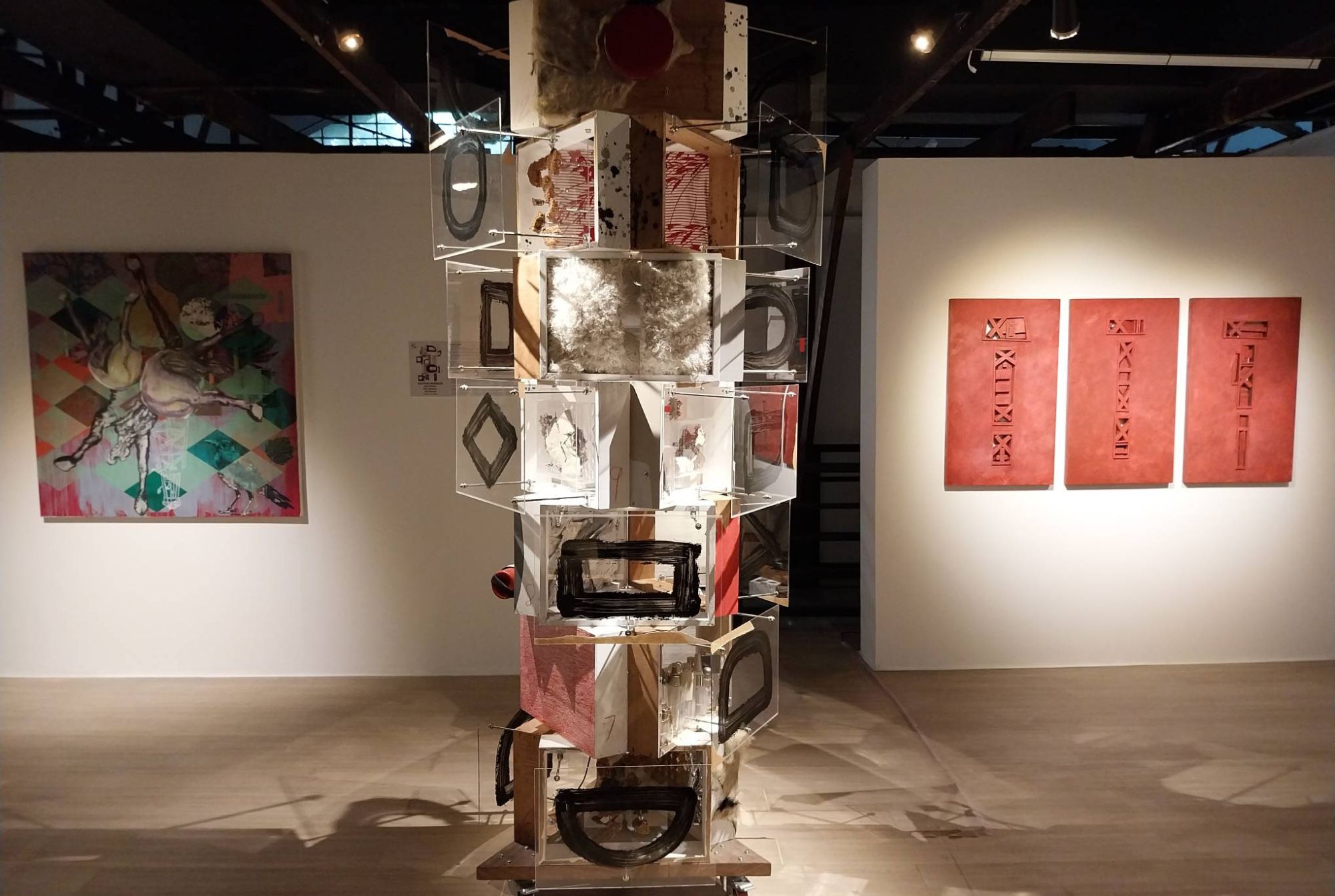
Eric Zamuco provides the most eye-popping work for SACRUS:MUNDUS. In the center of the exhibit stands “Lodi,” a mixed-media piece that appears to evoke the complexity of the household.
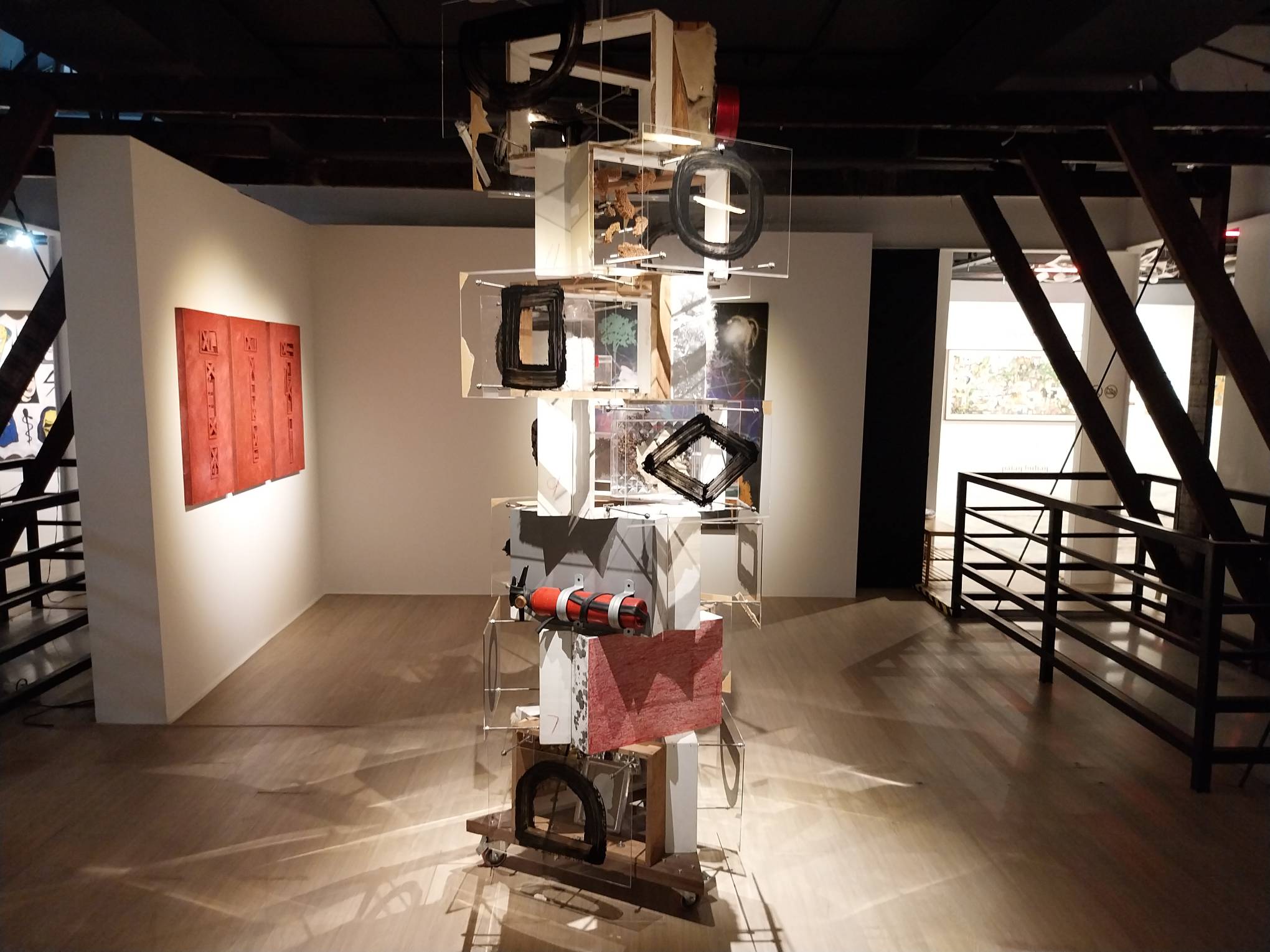
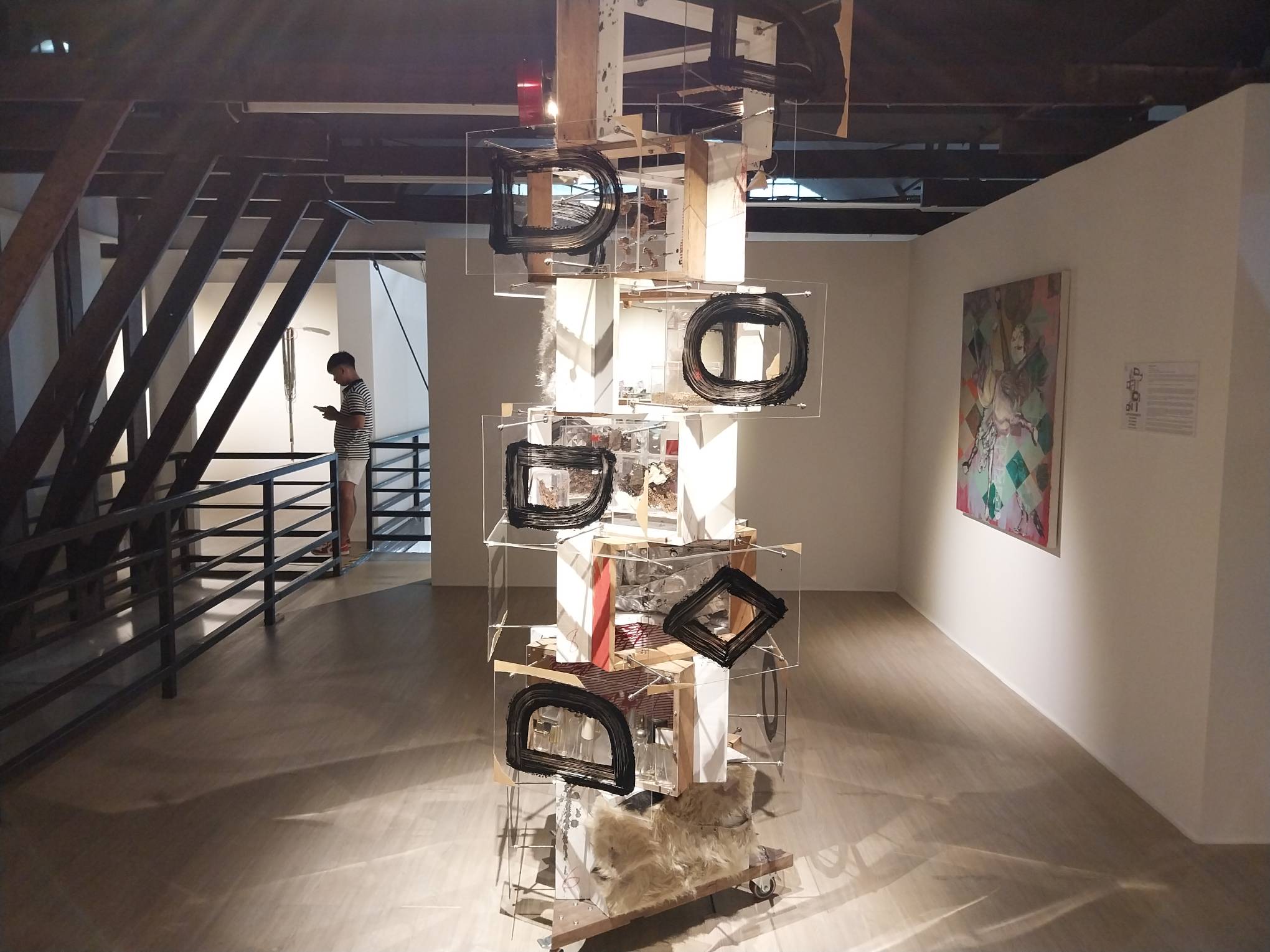
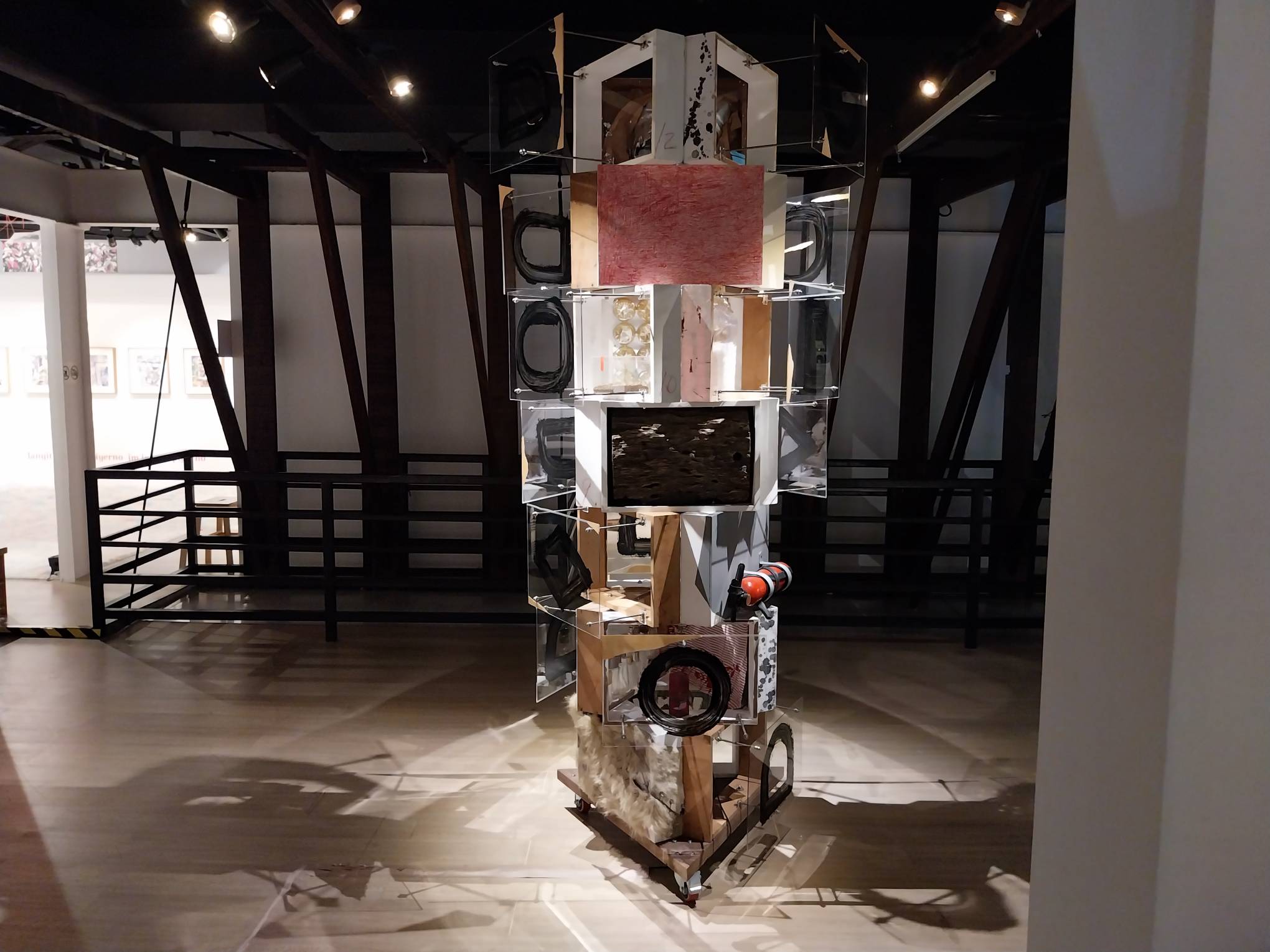
The work stacks up different boxes filled with random pieces that could be found in a household. One contains a portion of a log; another has a fire extinguisher strapped to it. Sponges, cotton, perfumes, pieces of cloth—all things we use in our lives but don’t often think about.
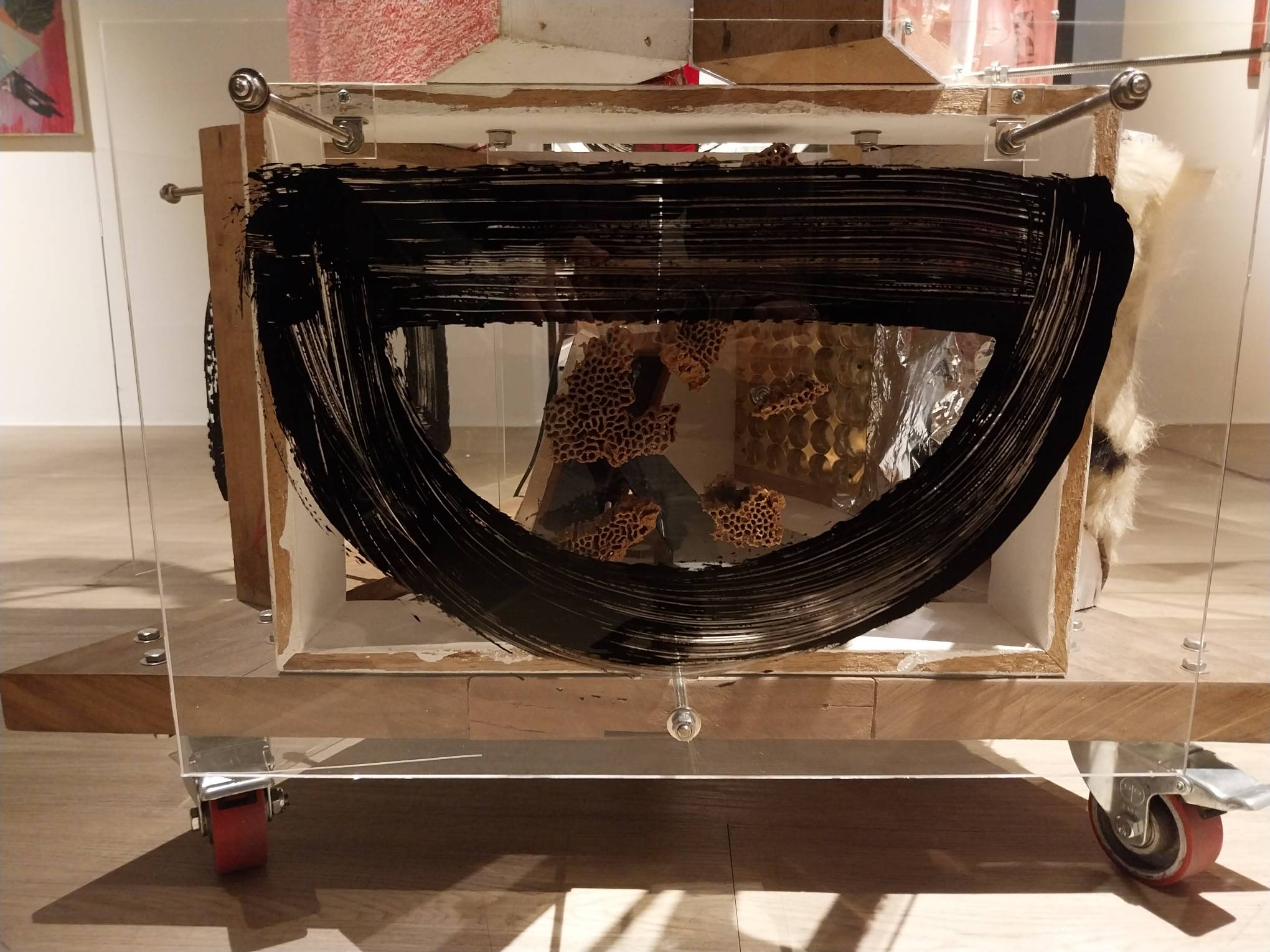
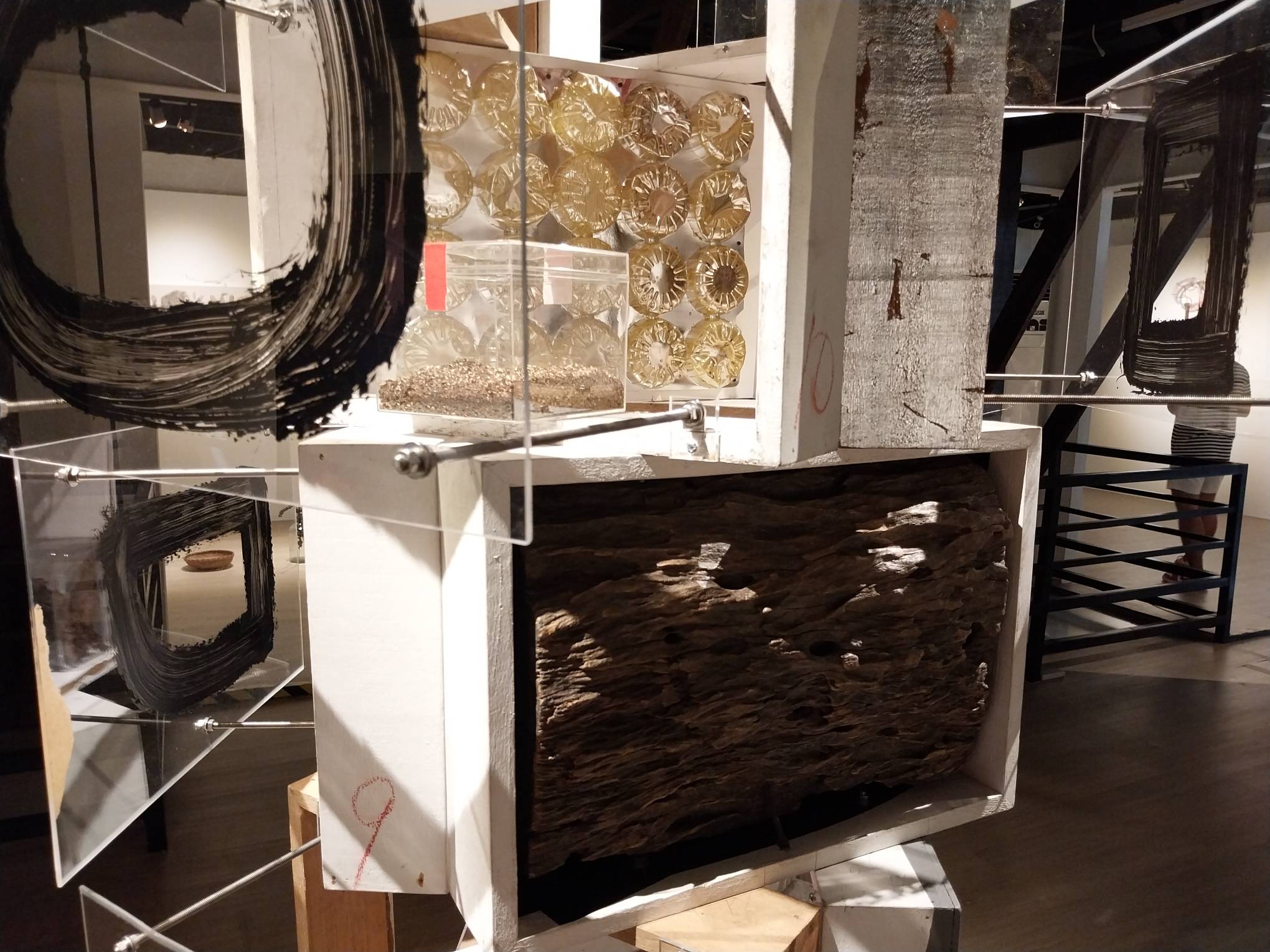
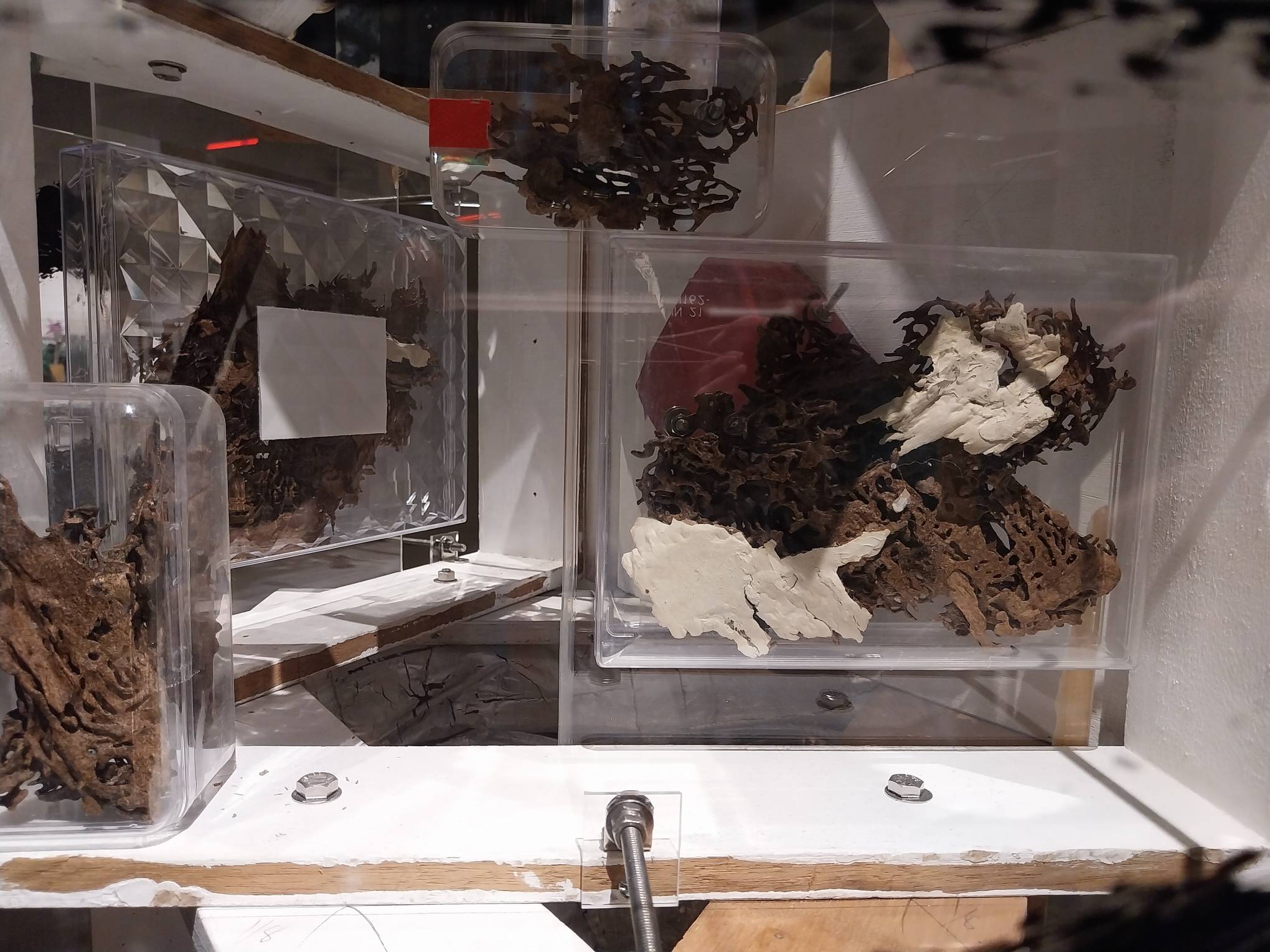
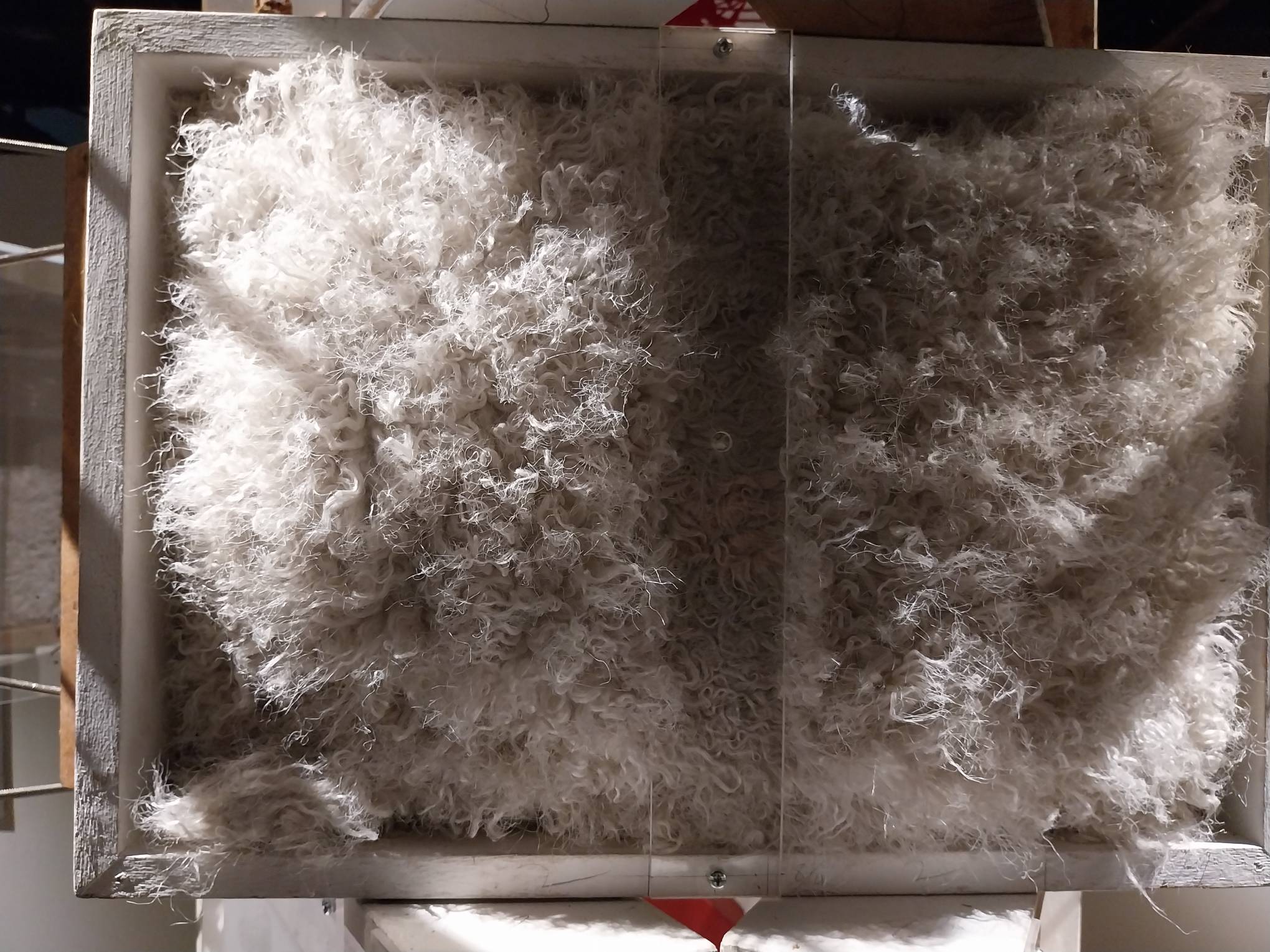
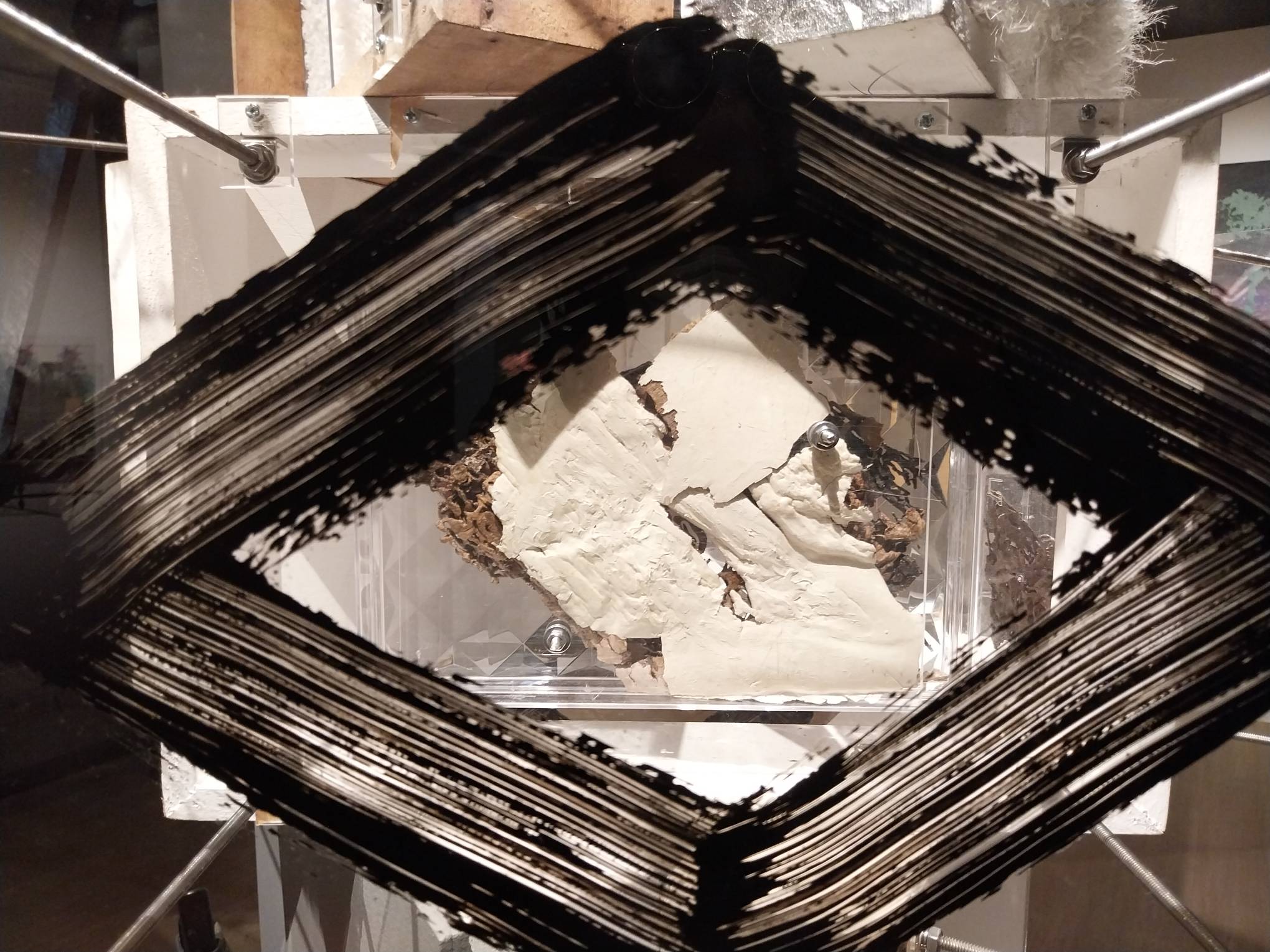
“Lodi” certainly stands as a great sensory piece. It plays ticking sounds, water splashes, general crinkling—sounds we experience every day but relegated to background noise for most of us. The glass fronts of the boxes are obscured by markings that hide the objects—an interesting choice that potentially carries a stronger meaning for its abstractness.
Zamuco and Jet Pascua find themselves molding an image of the household through the tools we use. Pascua’s two structures for the exhibit riff on myths and traditions: “Nike” appears to use daily objects like pipes and plastic tubes to create a mock Staff of Hermes. “Bia” feels more oblique as it creates a staff with a circular head from the same materials as “Nike.”
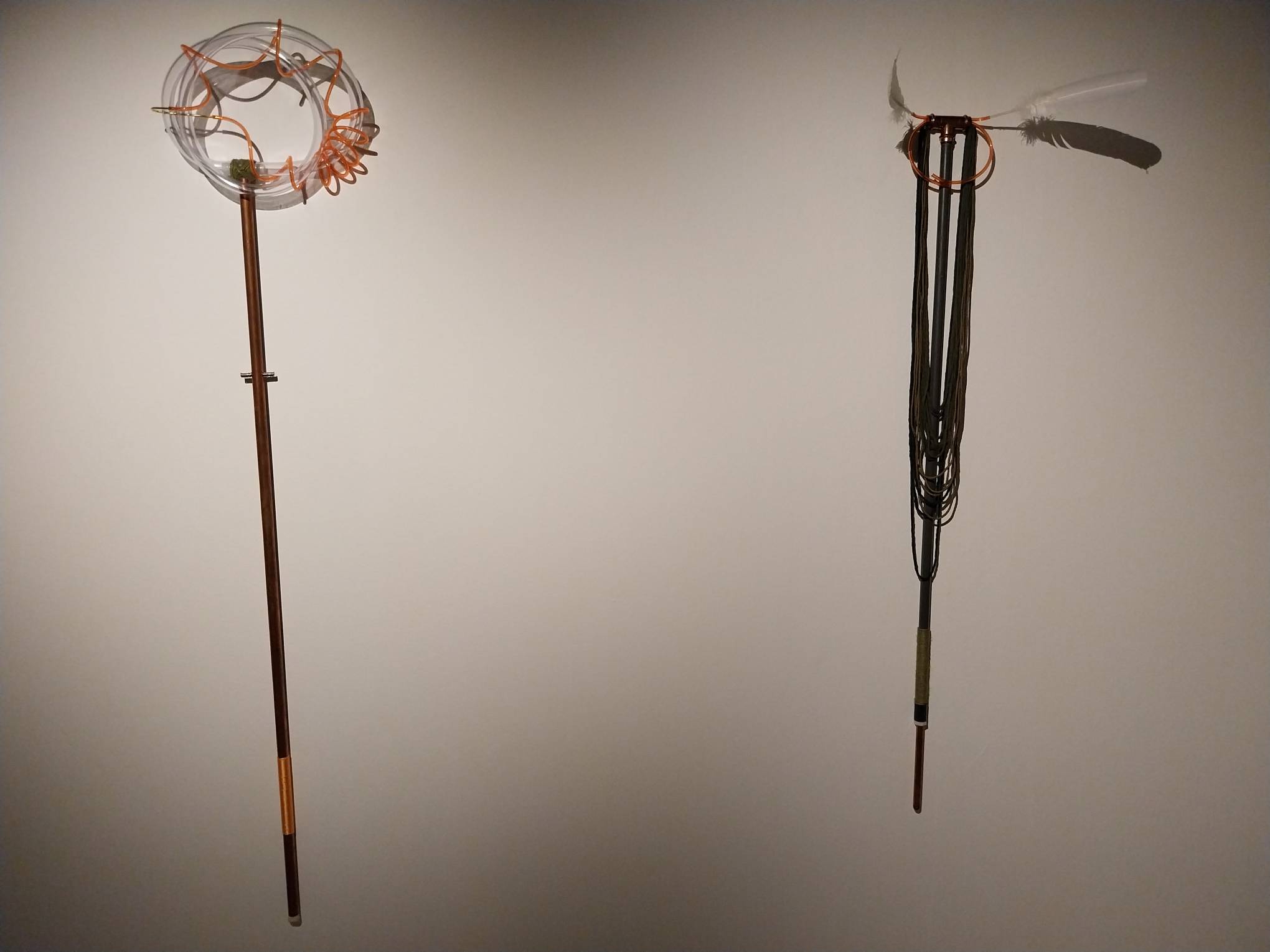
But it does seem, paired with this exhibit, that both Pascua and Zamuco’s sculptures hint towards rituals. Personally, their works appear to diverge to bring importance to the tools we use in our everyday lives rather than the actions themselves—they hold as much resonance as the final product itself.
Abstracting the Concrete Patterns of Life
Dan Raralio contributes three acrylics on wood for SACRUS:MUNDUS. “Edifice,” “Tower,” and “Pillar” show a general pattern of three rectangular shapes coming together to form a T-shape.
These works look carved into the red canvas; Raralio placed holes in different parts that allow its audience to see through to the gallery wall. The patterns inside the rectangles reminds one of temple windows which have been partially covered up.
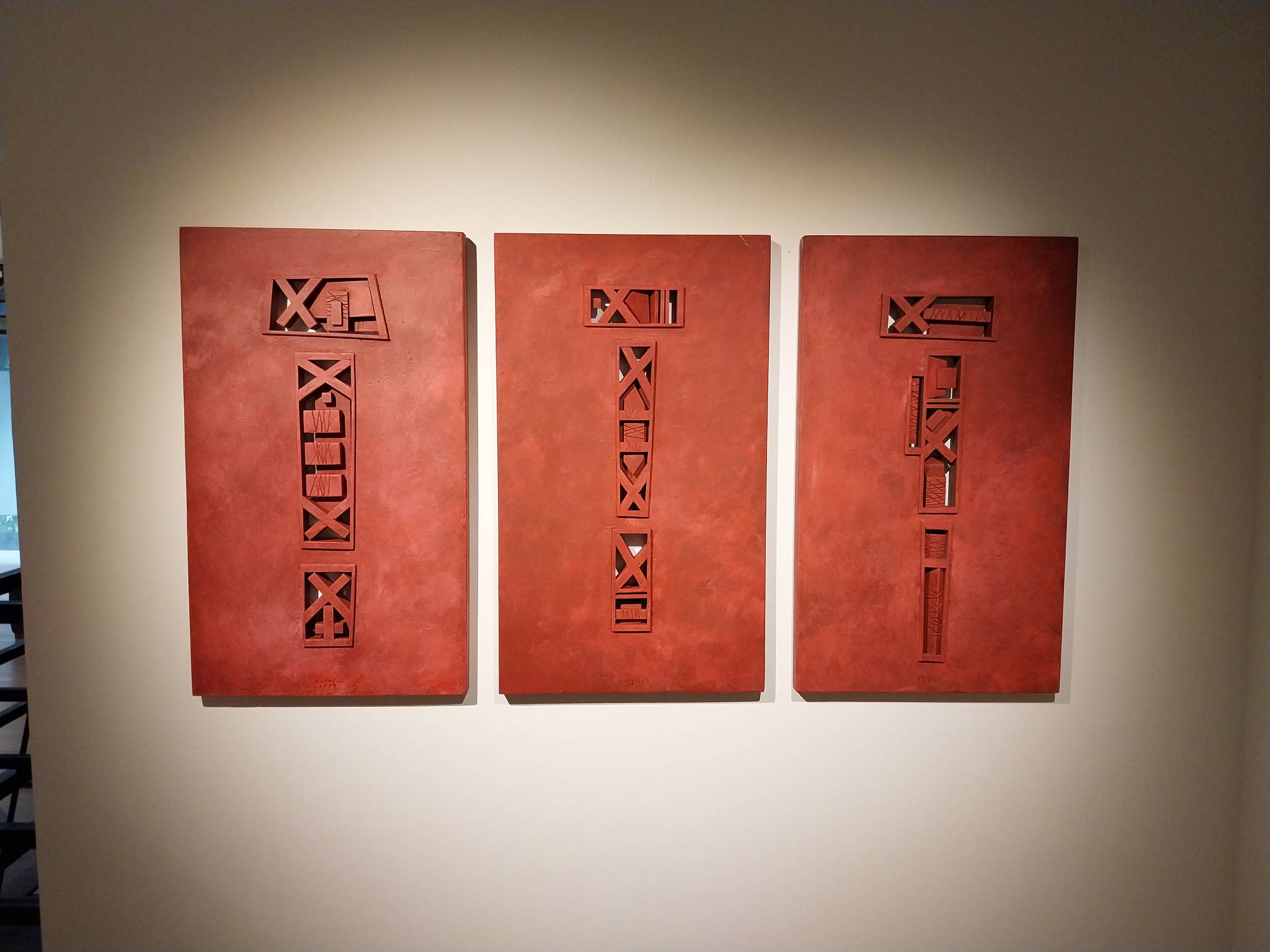
It’s unclear if Raralio was inspired by the general look of Asian temples for these pieces, even if he’s been noted to have some “orientalist” strain in his works. But the red he uses is a common color for some of the temples in Binondo that the author of this article visited growing up. More than that, it does feel oriental, evoking traditions even if not stated outright.
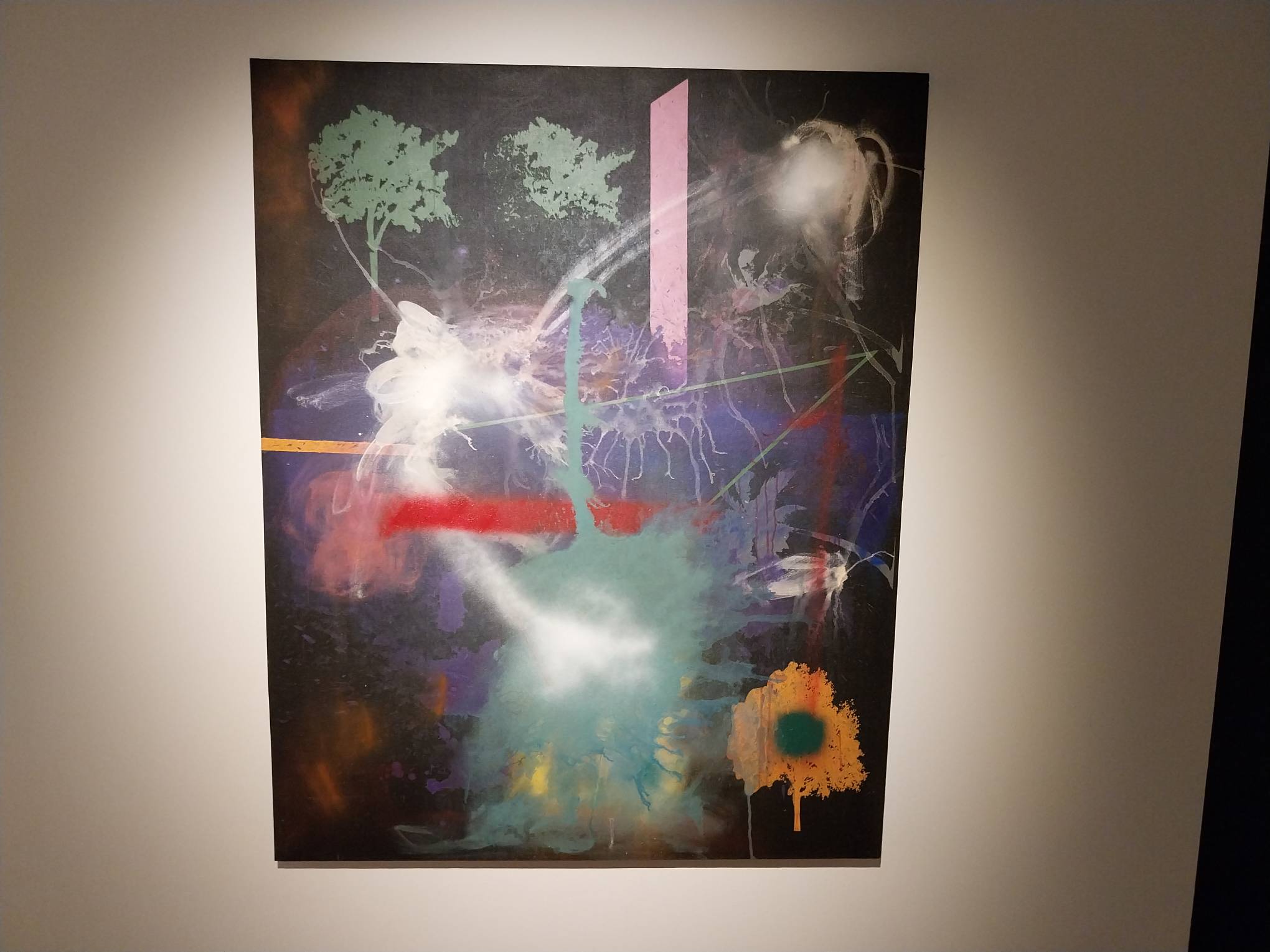
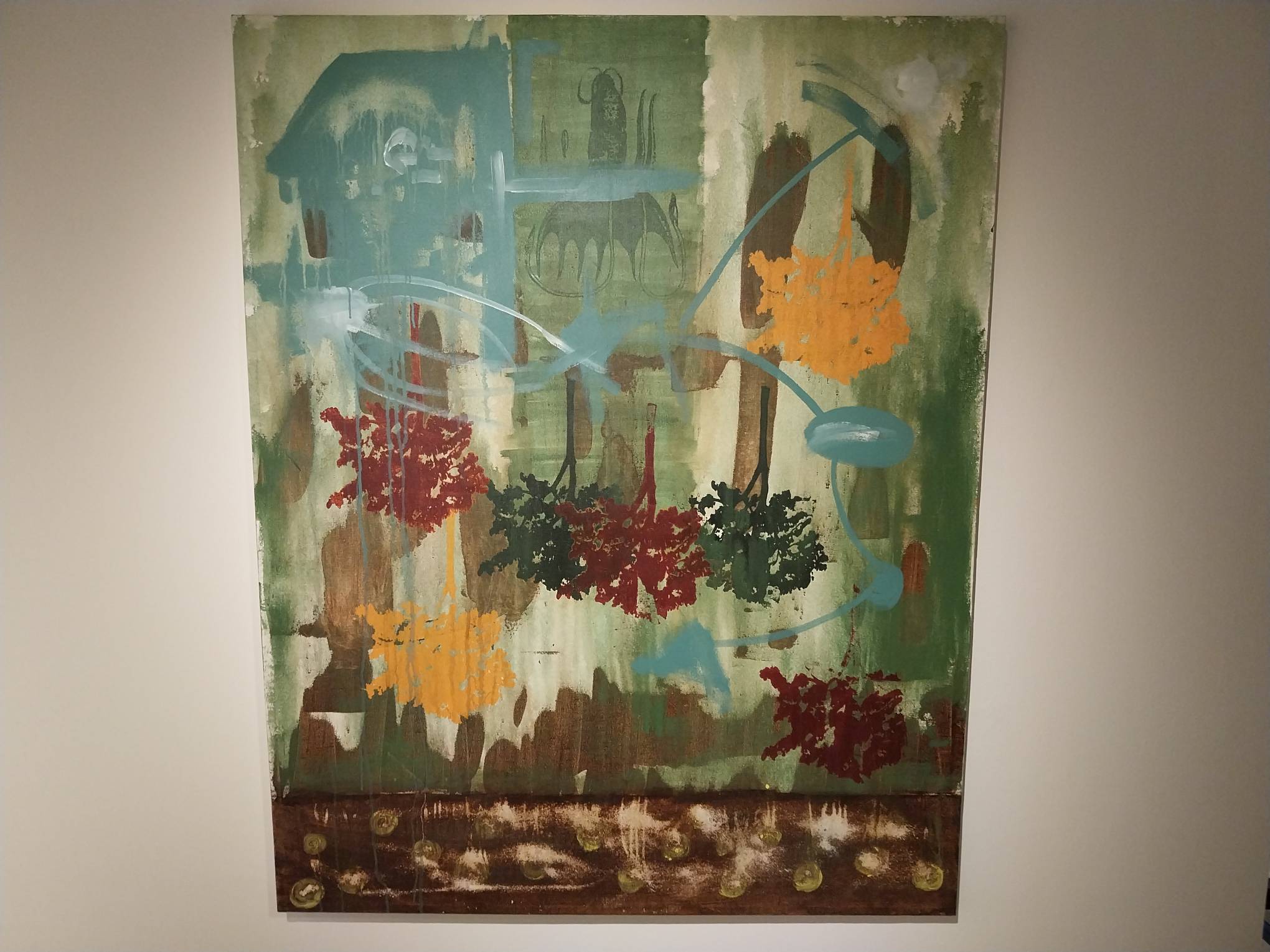
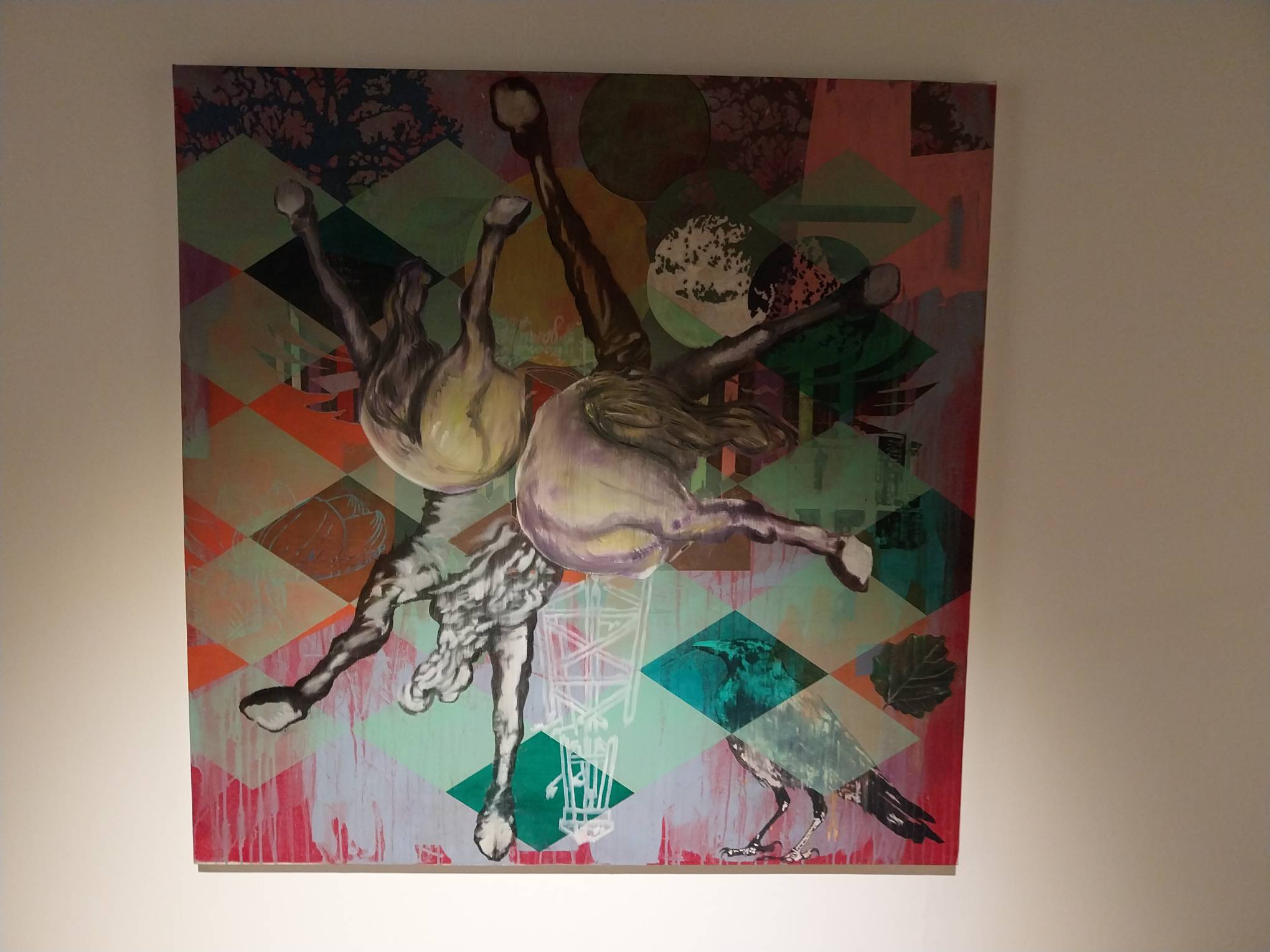
Jet Pascua also included three abstract paintings to the exhibit. Two of them, “Arles Burning” and “The Belgian Coast in February,” use trees to create a swampy, environmental look for the paintings. The third, “Harlequin,” gives us horses mid-stride in a chessboard-like background. It’s colored to harken back to playing cards.
SACRUS:MUNDUS and its artists repurpose tools, commonly-found objects and symbols to point towards the importance of rituals in our daily lives. Whether as serious as religious traditions or as simple as daily chores, it gives it a sense of importance to keeping us human. These tools, and the actions we associate with them, maintain us, and open us up to greater actions in the future.
The exhibit can be seen at Gravity Art Space until September 14.
Related reading: Elmer Borlongan’s ‘Morning Rituals’ is an Exercise and Negotiation
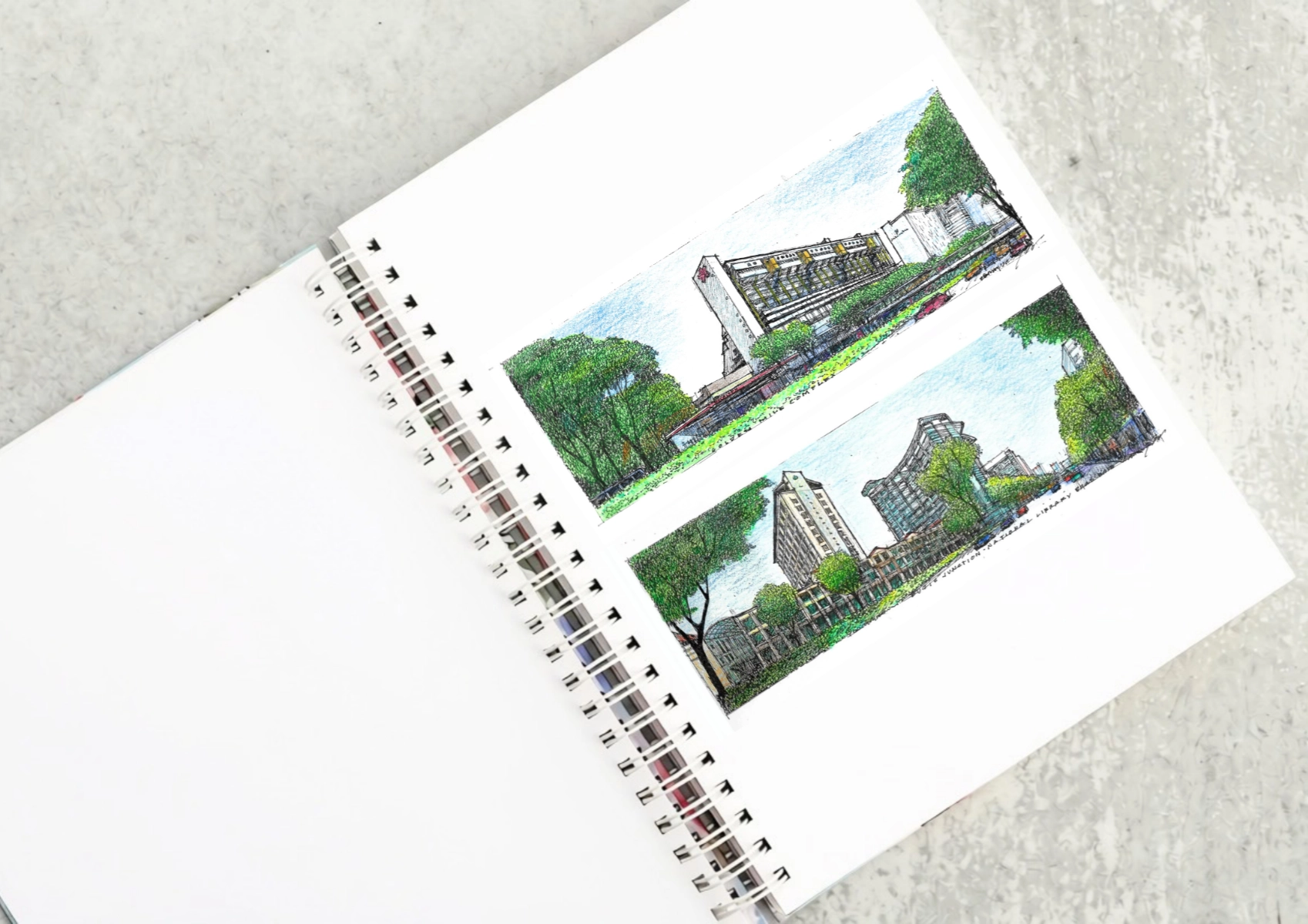
Two sketches of Singapore connect BluPrint Editor in Chief Paulo G. Alcazaren’s personal and professional history with Shared Ground: ArchitectureArchitectureThe art and science of designing and constructing buildings, structures, and spaces that are functional, safe, and aesthetically pleasing. It encompasses the planning, design, materials, and techniques used to createGo to Architecture Glossary of Care, Culture, […]
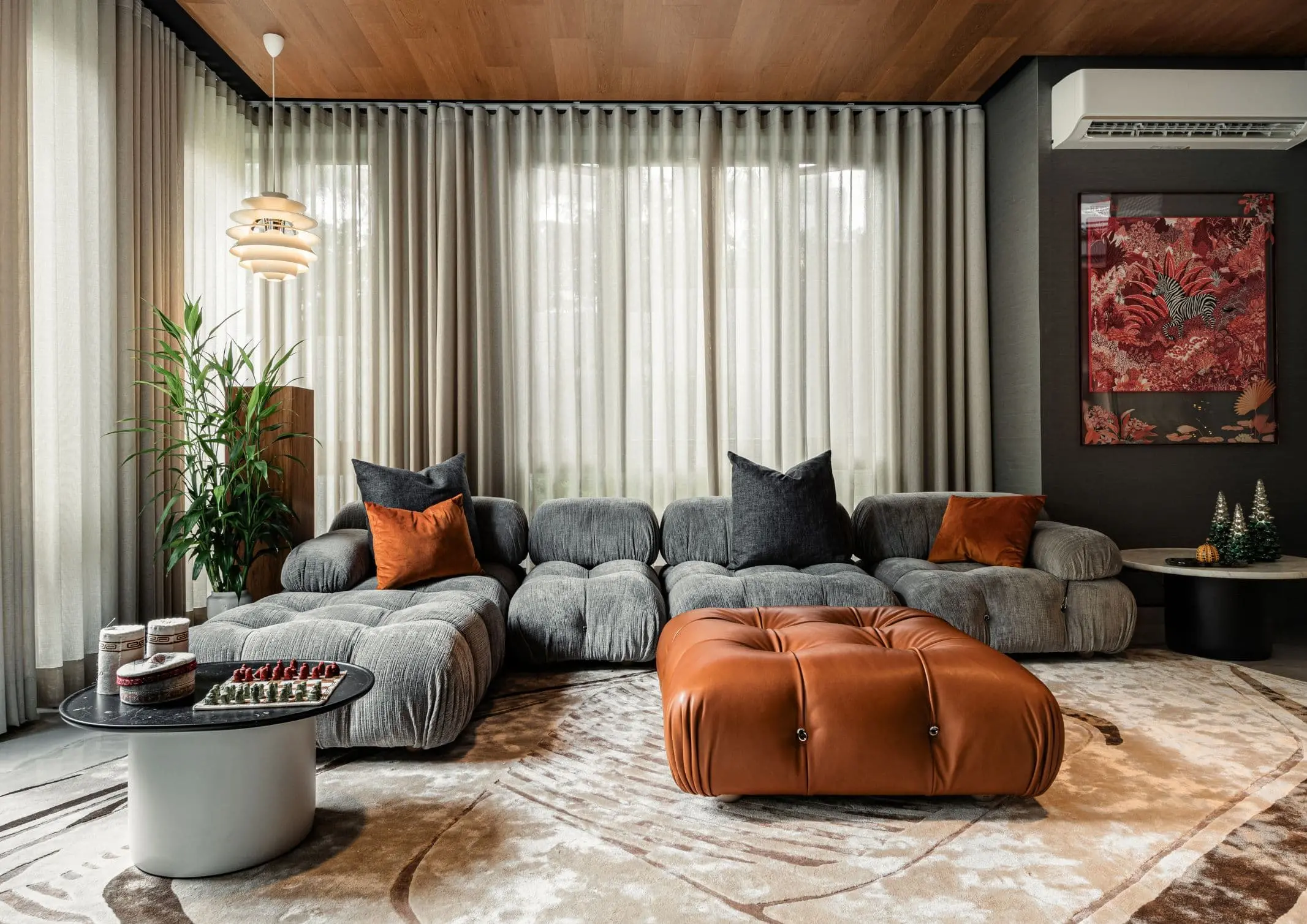
Some have become household names – Coleman, Oster, and KitchenAid – products that have found their way into Filipino kitchens, homes and family routines. In home furnishings, brands such as B&B Italia, Ethan Allen, Sub-Zero, Miele, SieMatic, Louis Poulsen, Hunter Douglas, Tempur, and Technogym, have helped shape the way Filipinos live. From everyday essentials to […]
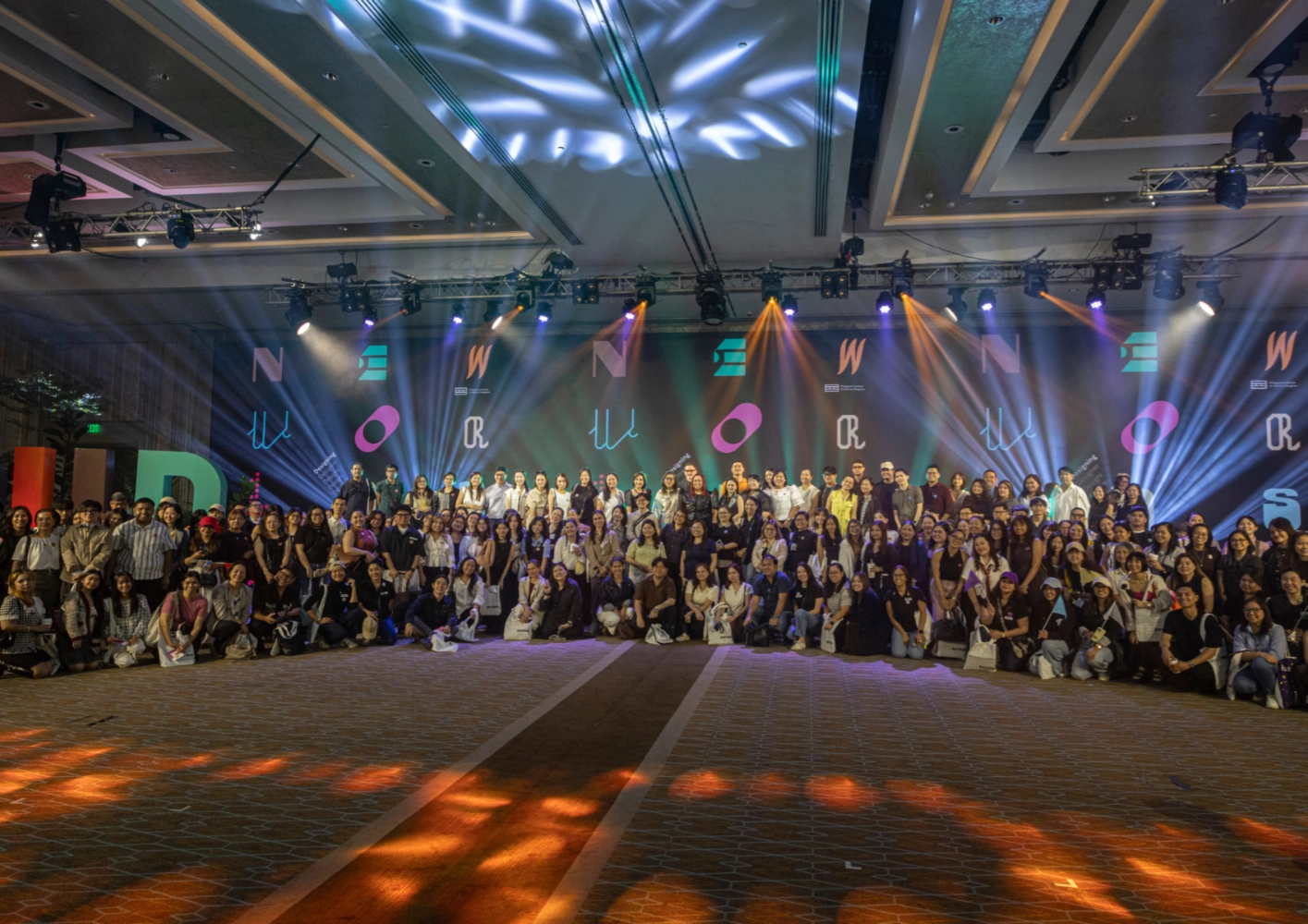
In a way, designers are the modern-day soothsayers and prophets. They design for the future, predicting how a room, a house, a building or a whole city will be used by people. They foresee how users will interact with a space, conjure exact shades of colors to elicit specific behavior and arrange furniture to build […]
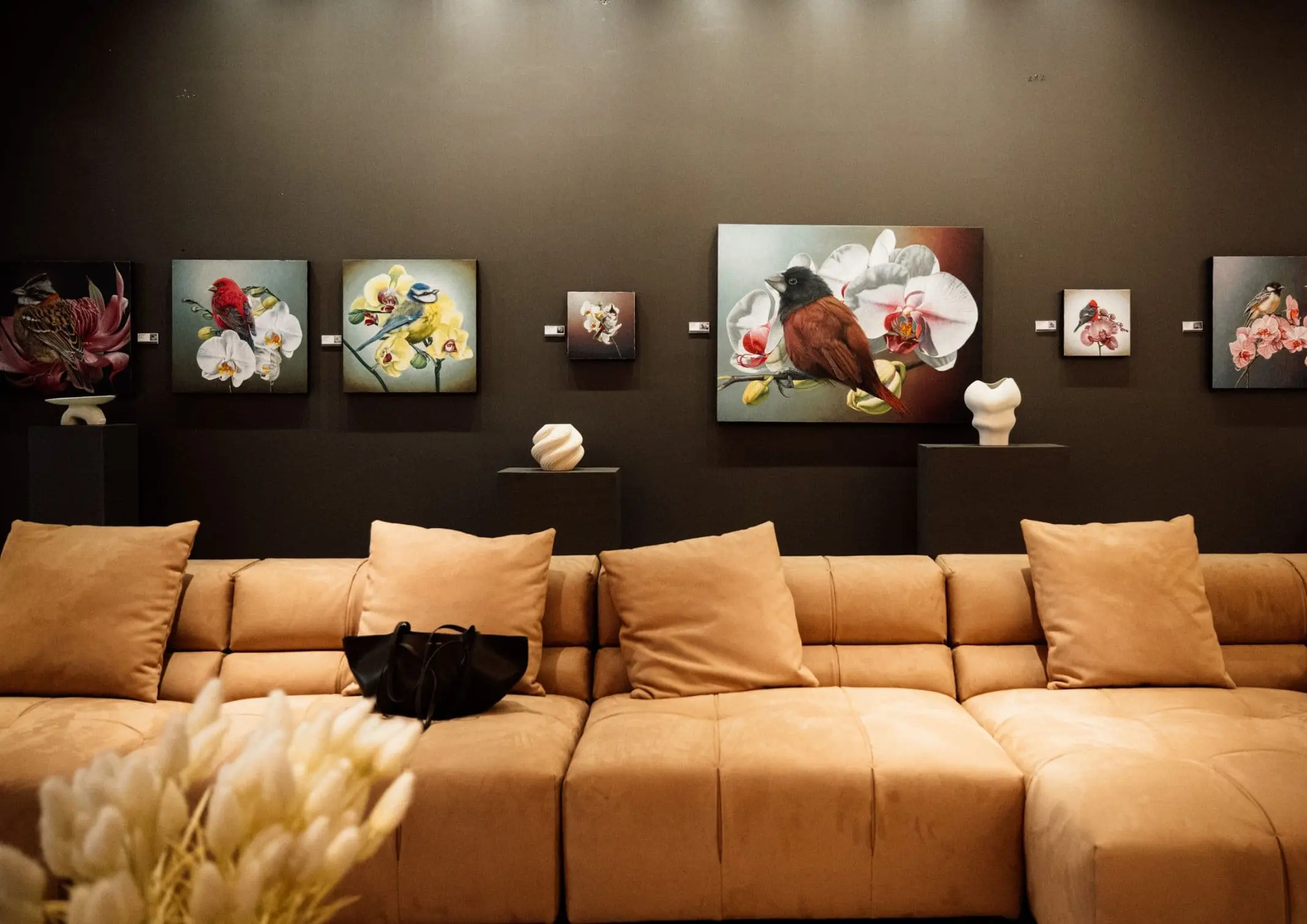
Art and furniture are often selected separately, yet their relationship can shape how a room looks and feels. The collaboration between Hooga and Galerie Joaquin explores how these elements can work together, bringing contemporary artworks into furnished residential settings at Hooga’s showroom in Uptown Mall, Bonifacio Global City. For Hooga, which curates furniture, lighting, and […]
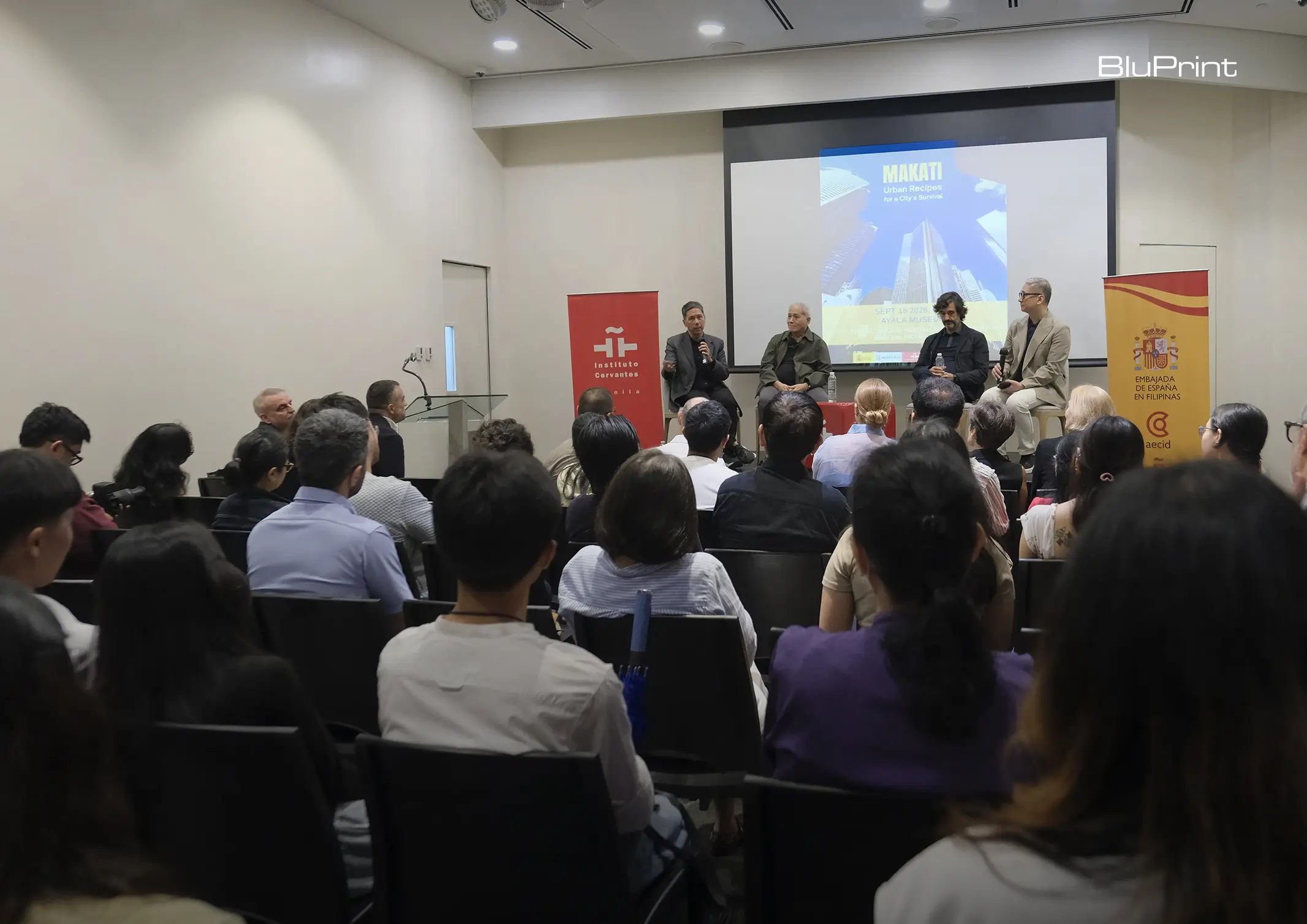
How can better-planned cities create the conditions for more creative, livable, and resilient urban environments? “Makati Urban Recipes for a City’s Survival,” a colloquium held at the Ayala Museum on September 15, brought together architects and practitioners from the fields of urbanism and the creative economy to discuss how design, planning, and collaboration can address […]
Read the issues.

Collect the volumes.

Recommended Video
Tap to Unmute
Unmute
0:00
0:00