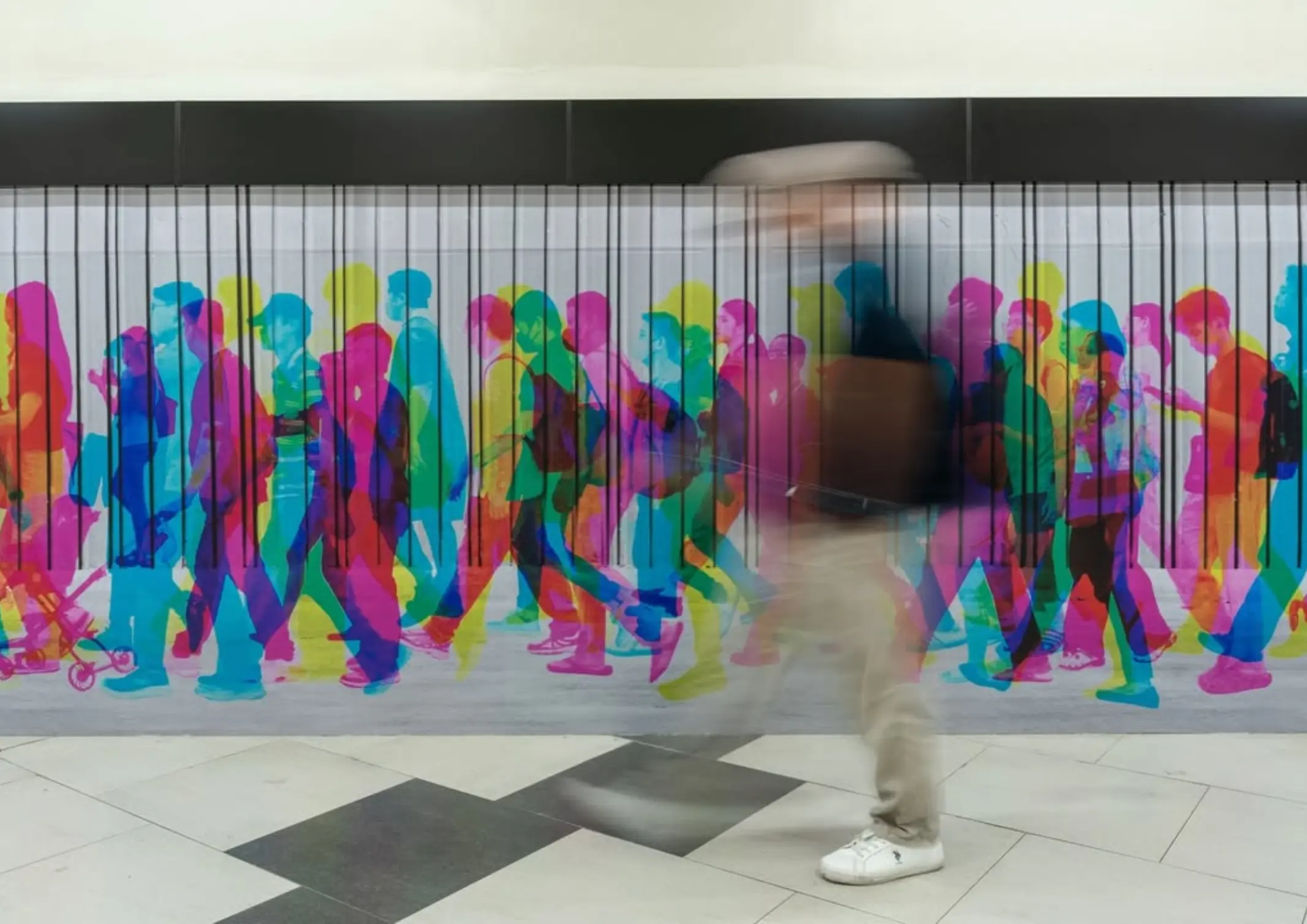
Public spaces in Metro Manila are often defined by movement rather than pause. People in transit hurry through; the underpass is a shortcut, not a place to stop. Underground, the installation by photography group FotomotoPH, reimagined the Paseo Underpass as a visual experience. FotomotoPH is a Philippine-based photography collective dedicated to promoting, exhibiting, and fostering […]
Trompe-l’œil Design: How to Create Illusionary Spaces with Realistic Art



Perspective is the bedrock of any artistic representation and understanding. For architecture and interior design, this communicates the purpose of every design choice to convey a certain experience for users. Trompe-l’œil, as the masterful manipulation of perspective, is a prime example of this principle in action. It’s an ancient technique that alters the space’s perceived dimensions through skillful painting of realistic two-dimensional designs on surfaces and objects. And with continuous design innovations, trompe-l’œil has evolved in different forms to further create highly illusionary, mind-boggling, and immersive spaces.
Trompe-l’œil From the Early People’s Perspective
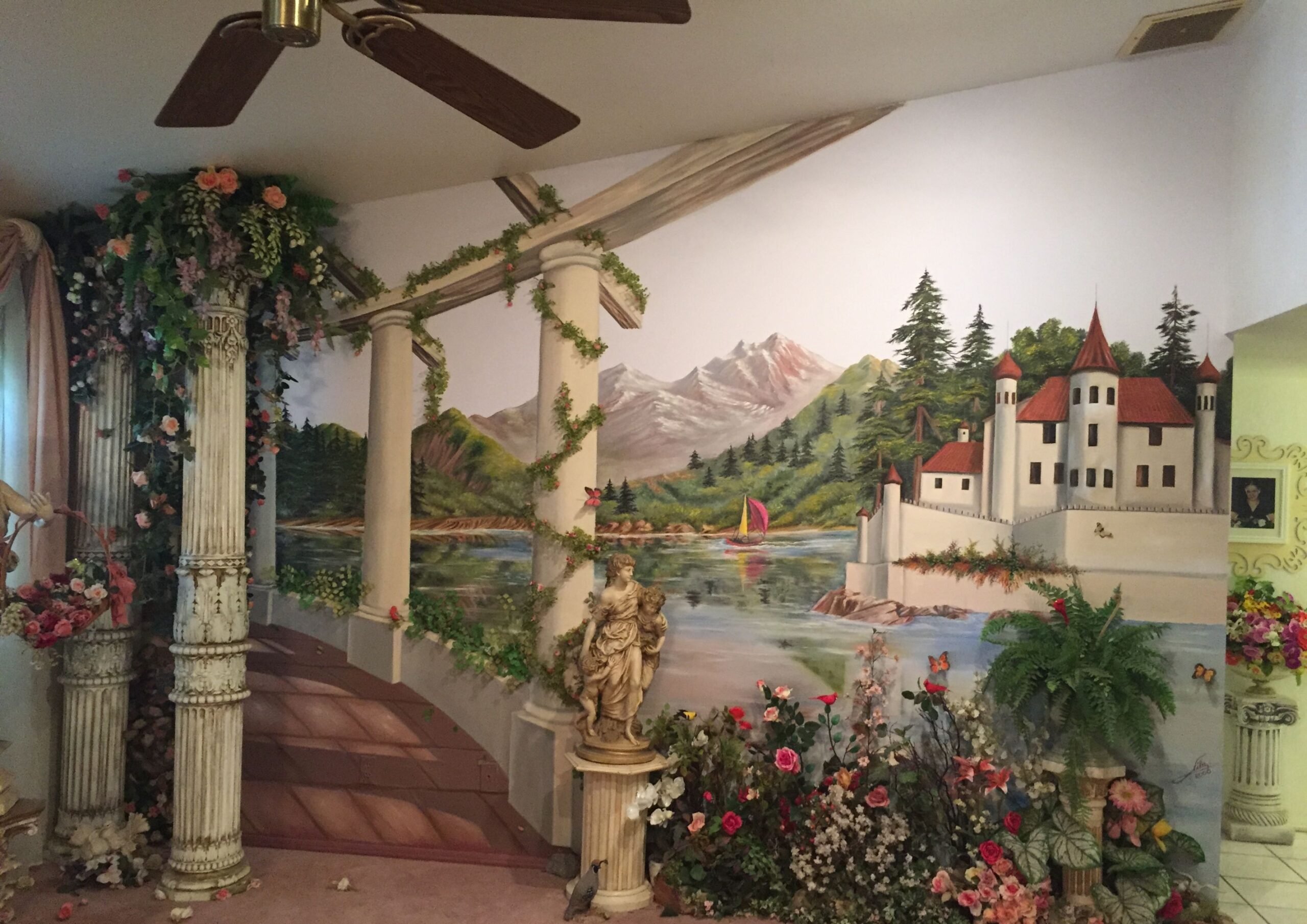
Coined by painter and draftsman Louis-Léopold Boilly, trompe-l’œil is a French term which directly translates to “deceives the eye.” Similar to forced perspective, this design makes nearly identical copies of people, things, details, and scenes to cleverly fool you into thinking they’re real.
By matching colors, shadows, shapes, and sizes with their real-world counterparts, the depicted image often gives a convincing three-dimensional effect. This helps establish a strong sense of immersion, blurring the lines between the art and reality.
Advertisement
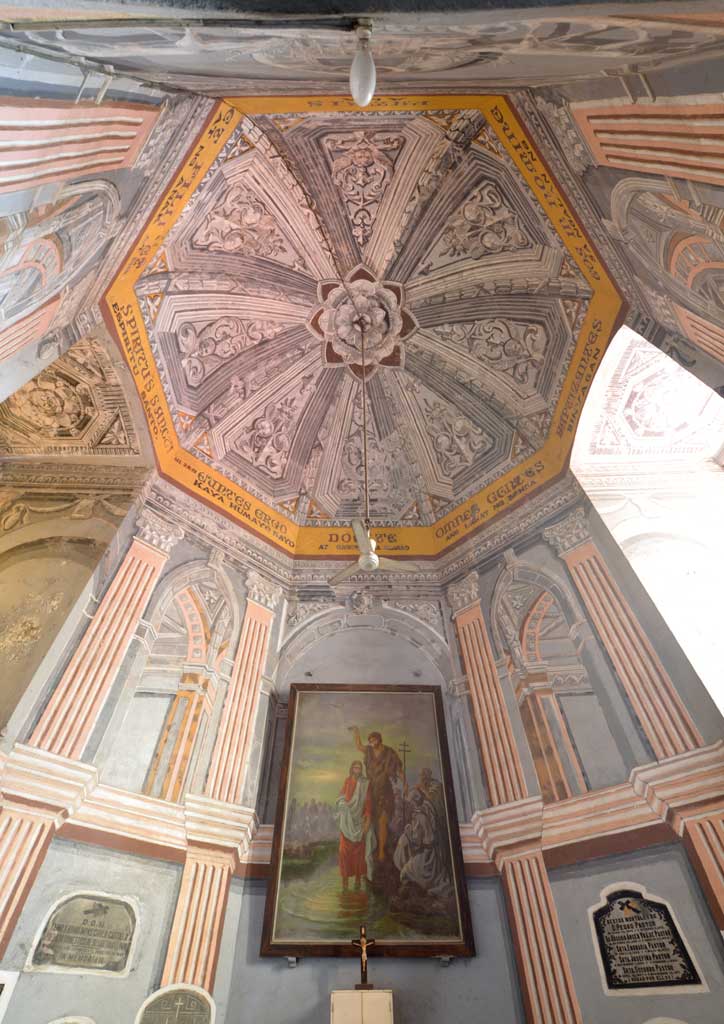
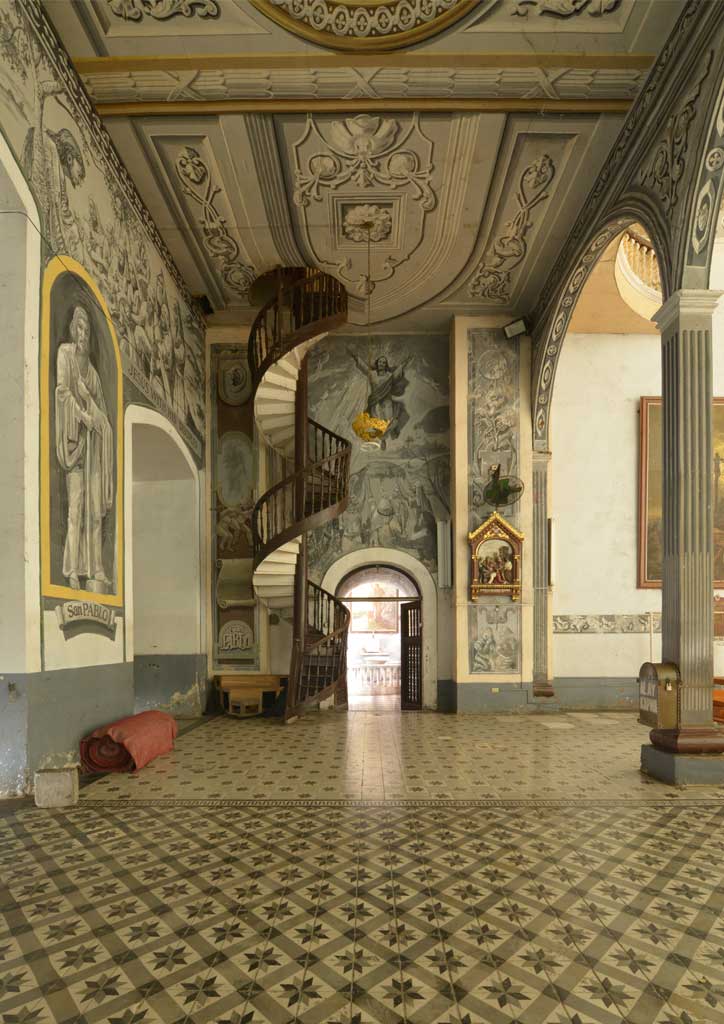
While it was only officially named in the 19th century, trompe-l’œil’s roots date back to the 5th century BC. Early Greek and Roman artists used to paint on wet lime plaster called “fresco” to create true-to-life canvases. One of the most famous works is Zeuxis’ grapes, which were painted so realistically that birds began pecking them. People continued practicing this artistic technique to fabricate false architectural elements like columns and corbels.
Trompe-l’œil then became more prominent in massive structures such as palaces and cathedrals during the Renaissance and Baroque periods. They’re usually evident on ceilings and walls, simulating niches or openings to create optical illusion of higher and wider interiors.
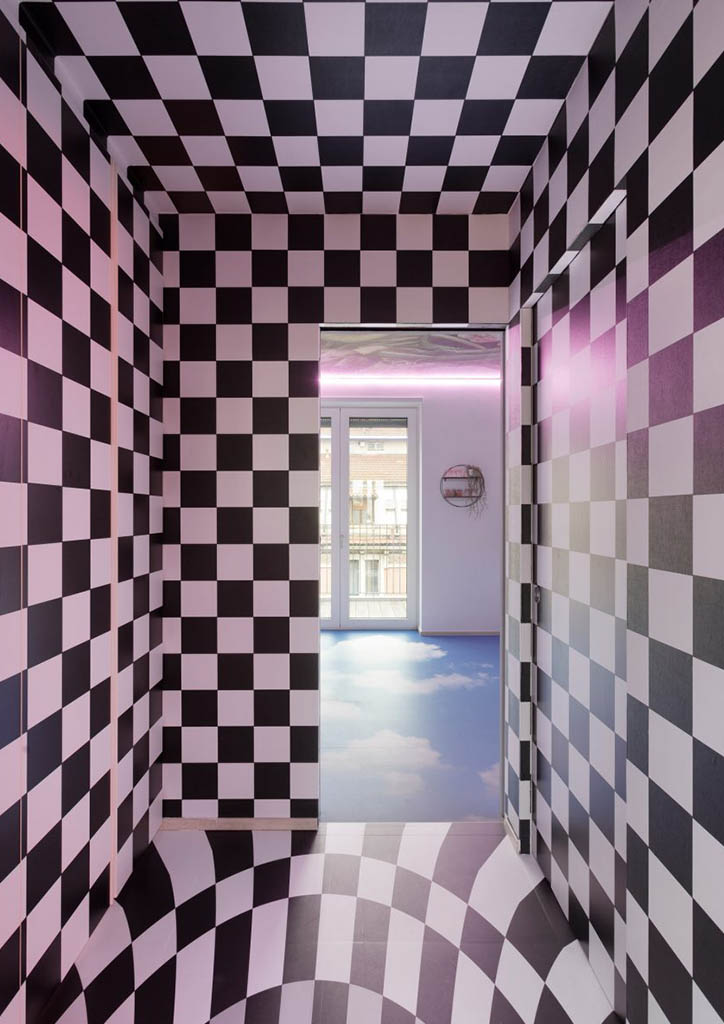
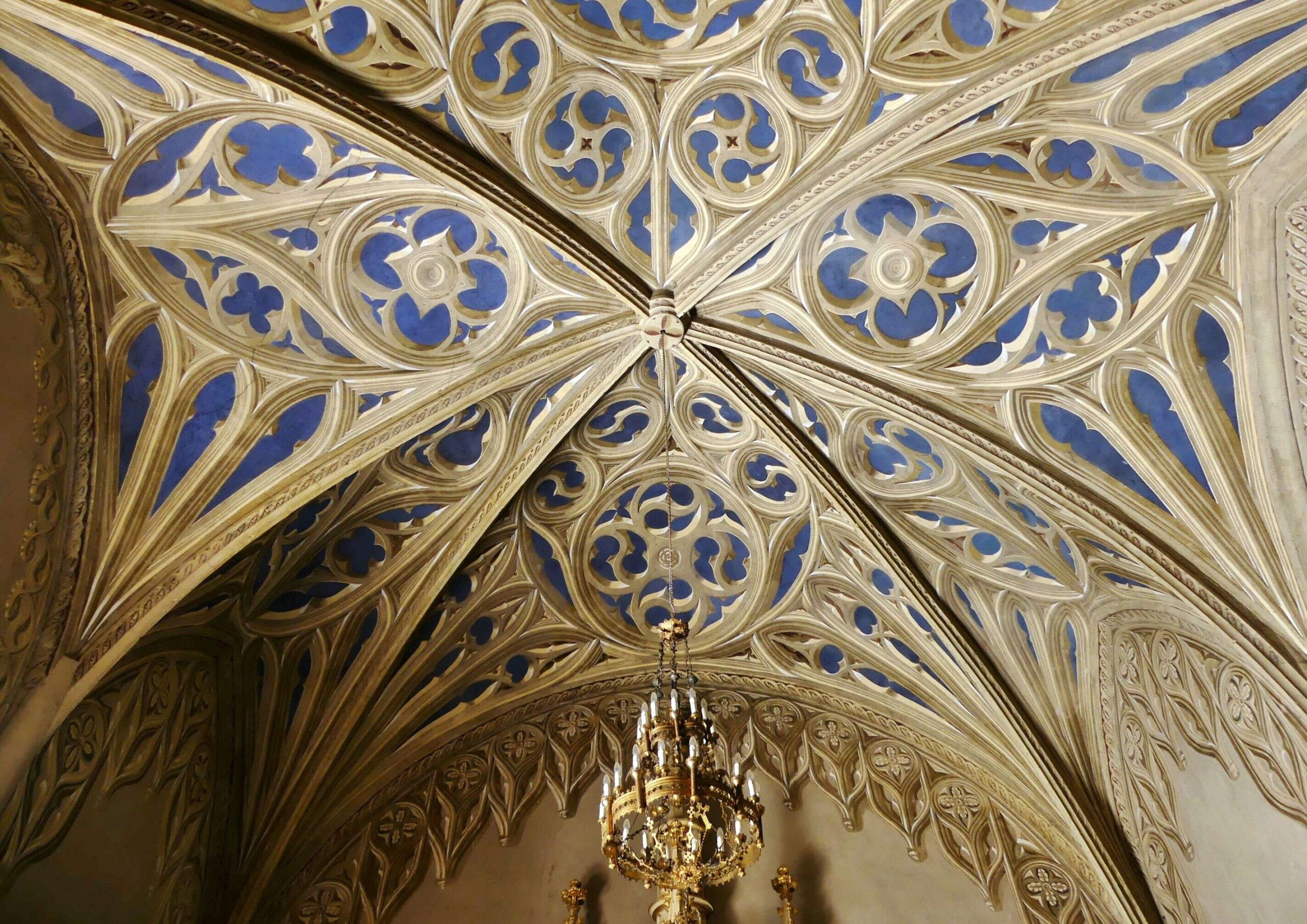
Although the fresco method was still popular, artists developed other ways to effectively blend colors like egg tempera and wax and oil-based formulas. Such innovations opened doors for more creative applications of trompe-l’œil in clothes, films, realism, street art, and homes.
Advertisement
Trompe-l’œil in Different Forms
While paint is historically its primary medium, you might think trompe-l’œil only applies to murals and standalone paintings. But design breakthroughs have made it possible to integrate this artistic technique into interior spaces using alternative materials.
Stencils. This less intimidating alternative can be a good option for those who aren’t confident with their painting skills. With precise cutout guides, you can easily create various trompe-l’œil effects by simply dabbing paint using a brush or sponge. To fully achieve a realistic look, consider working with multiple stencils to layer shadows, highlights, and different colors.
Wallpapers. If you want to skip the paint altogether, you can apply trompe-l’œil using wallpaper. Besides being a simple peel-and-stick, they also offer a vast selection of ready-made designs you can easily change to suit your evolving style. In addition, they’re more affordable in terms of material and labor compared to following the traditional way. More importantly, wallpapers typically require minimal upkeep, ensuring the illusion remains long-lasting and vibrant.
Advertisement
Furniture and Decor. Contrary to popular belief, modern variations of trompe-l’œil transcend mere two-dimensional paints and wallpapers. Even three-dimensional objects, like furniture and decor, can bring that same eye-deceiving effect into your home. Unlike flat designs, these alternatives offer tactile experiences to make the interior not only visually stimulating but also immersive. It’s one way to insert a touch of wonder that’ll leave guests questioning what’s real and what’s not. This optical illusion is typically due to the item’s unique (most of the time faux) structure, shape, color, and texture.
Modern Interpretations of Trompe-l’œil
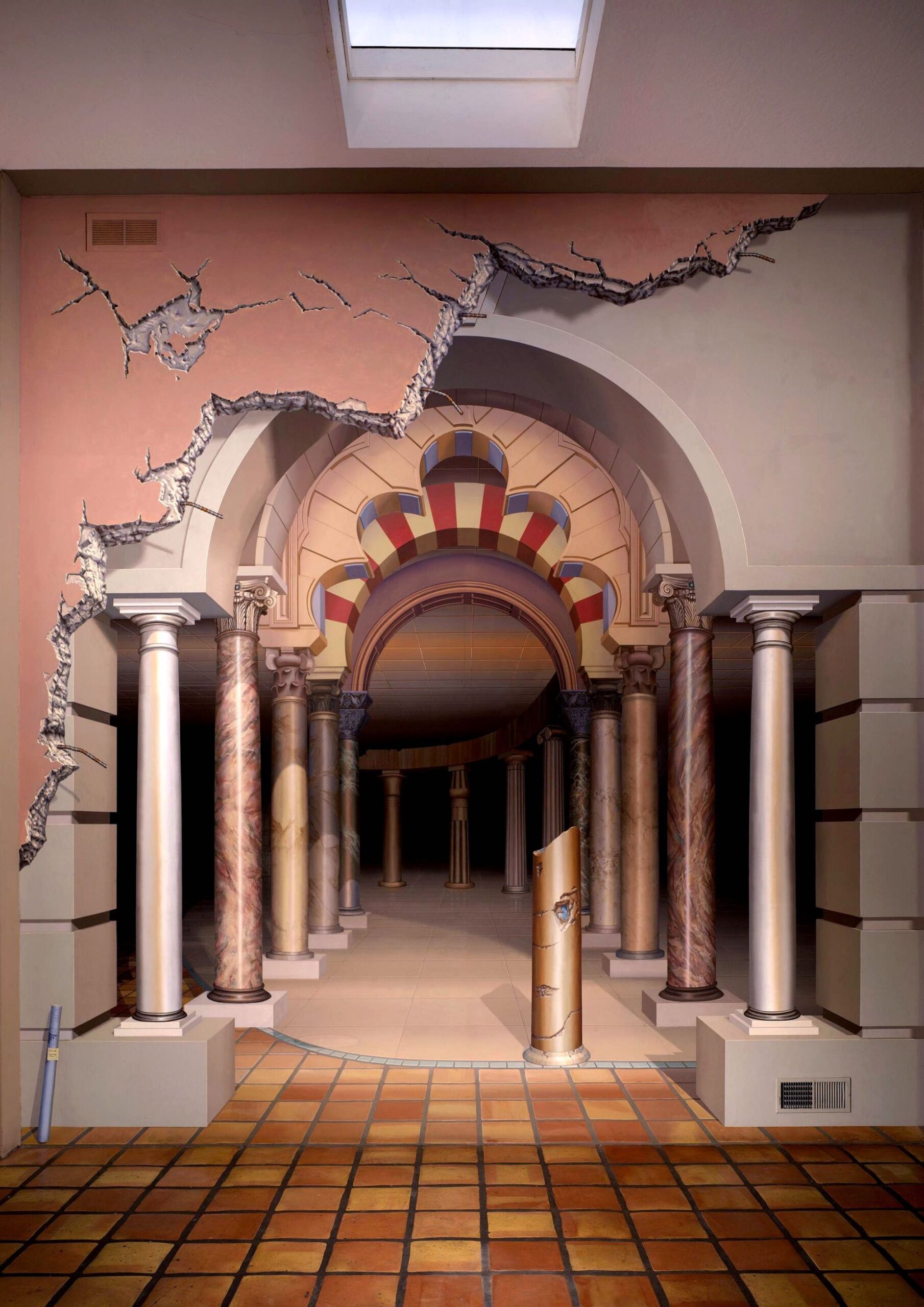
Unlike with the traditional version, modern trompe-l’œil doesn’t require hyperrealistic images to trick your eyes. At the very least, the main goal is to deceive. So, here’s a few examples of its eye-fooling contemporary interpretations.
Nuova Pompei Wallpaper
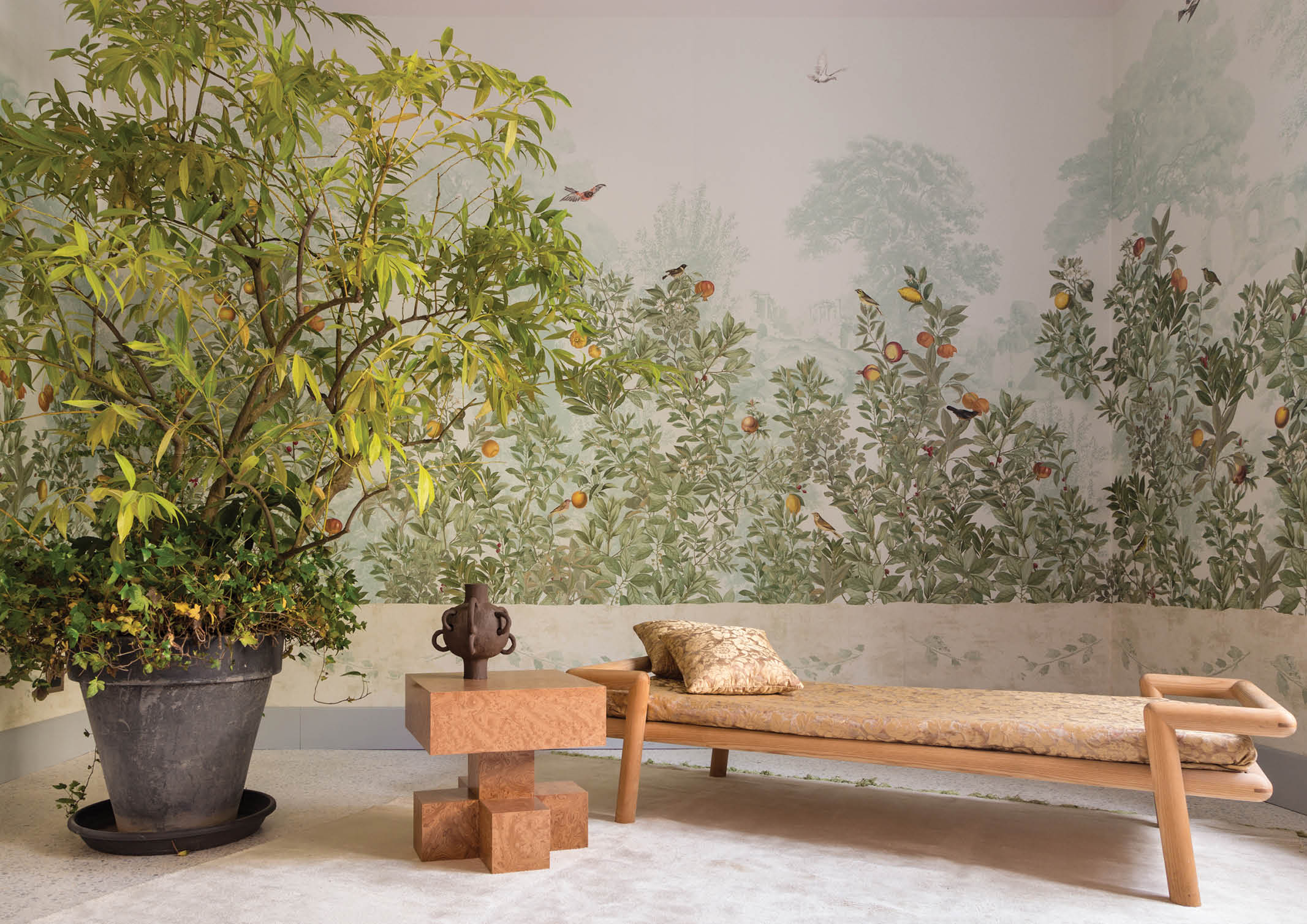
This is one of Misha Milano’s setups to present Vito Nesta’s Nuova Pompei wallpaper collection during the Milan Design Week 2023. In this example, you can see that the foliage in the background seamlessly blends with the real potted plant in the foreground. As the realistic texture of the leaves in the wallpaper overlaps with the branches of the real plant, it makes the two different elements look like a single unit.
Advertisement
Be Rug
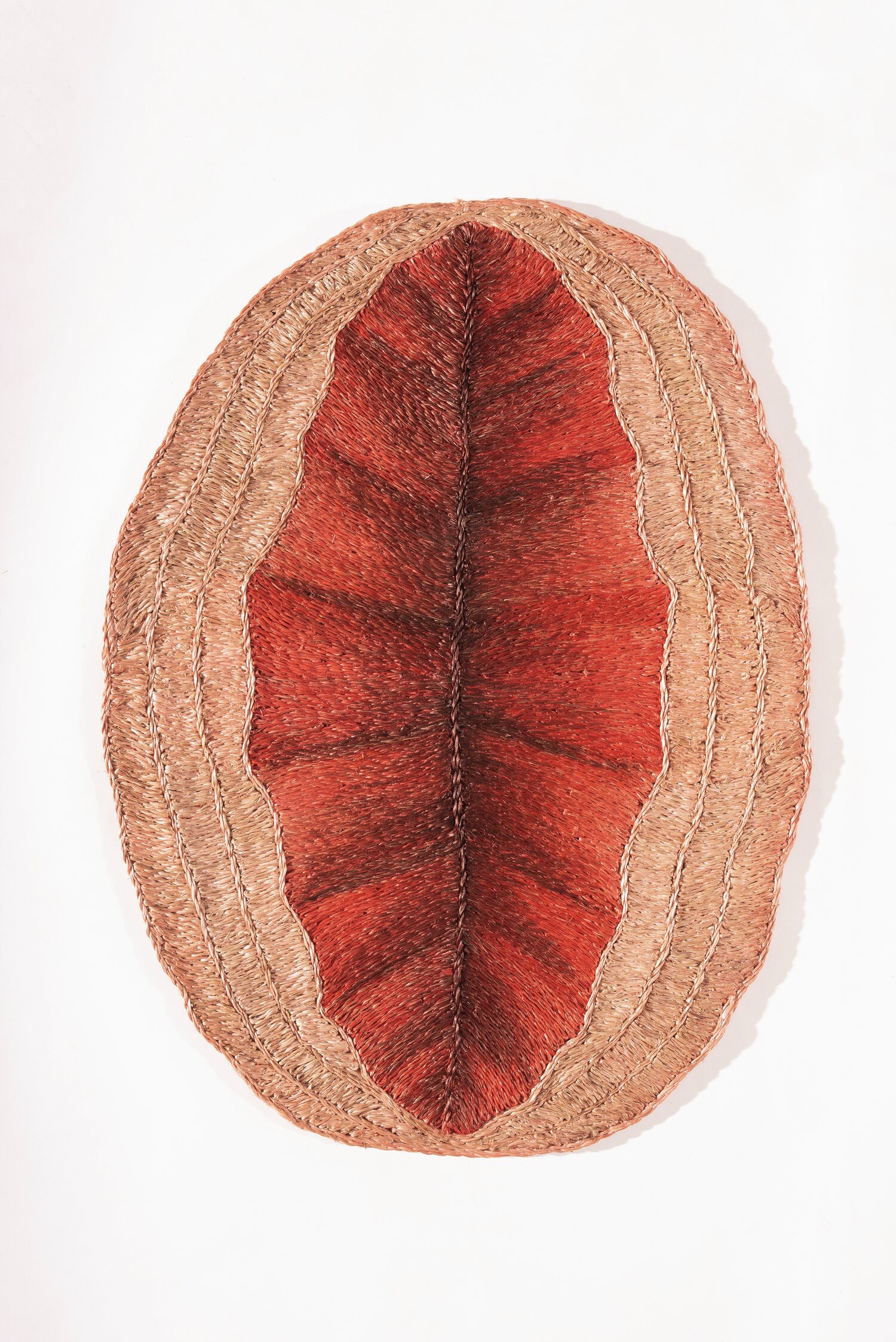
Rita Nazareno and Gabriel Lichauco are known for their innovative and playful product designs. At first glance, this might look like a bird’s-eye view of a 3D artwork, with a seemingly recessed opening. But it’s actually a flat woven rug named “Be Rug,” cleverly designed to create this optical illusion. Along with its round shape, the play of shadows and lines inside the opening largely contributes to establishing a 3D image from a 2D design.
Sage Sofa
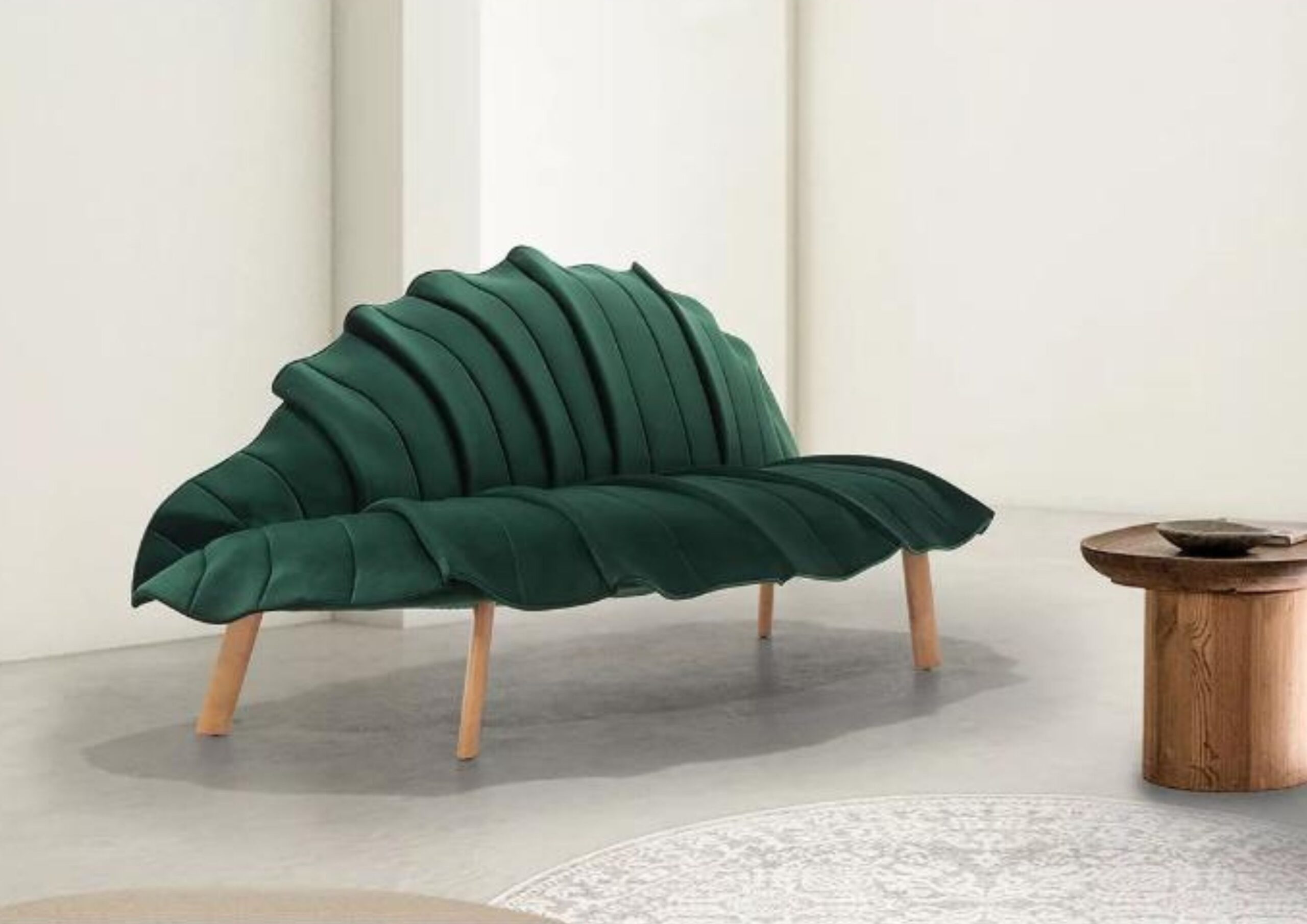
Another renowned artist for their whimsical designs is Kenneth Cobonpue. And this particular item might seem like a large decorative leaf from afar, but it’s a sofa on closer inspection. Referred to as the “Sage Sofa,” the careful folding of its velvet fabric and the shadow created by the mid rib section help trick your eyes to believe it’s a gigantic real-life piece of leaf.
FLOALT LED Light Panel
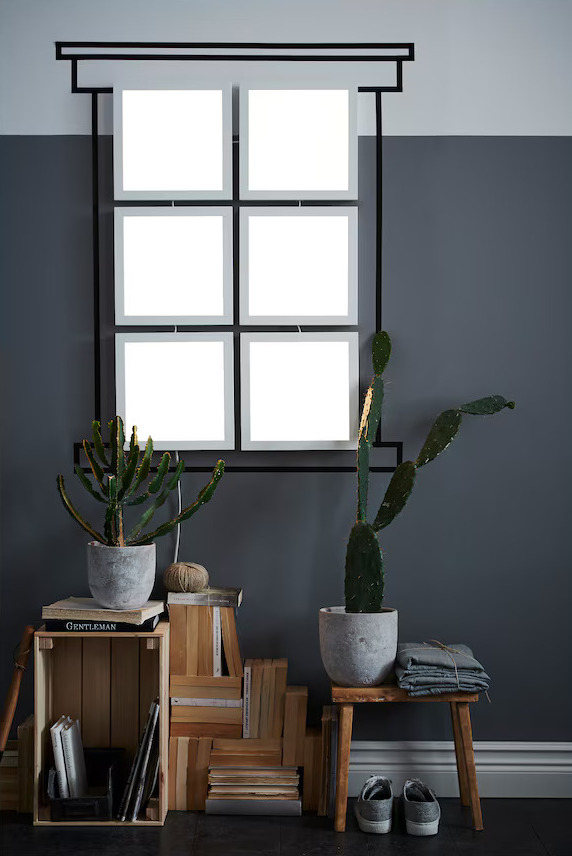
Lastly, would you believe that this is not a window but rather a collection of dimmable LED light panels? Square and rectangular options are available in different dimensions, and if you cleverly stack them together, they can form faux windows. This trompe-l’œil idea is particularly ideal for enclosed spaces that don’t receive enough natural light.
Trompe-l’œil may have been an ancient artistic technique reserved for grand spaces. But it’s now a timeless tool adding depth, dimension, and intrigue even in the most sterile contemporary interiors. It’s a tangible immersive experience, bringing not only new perspectives but a sense of unparalleled wonder to modern living spaces.
Read more: 4 Ways to Incorporate Natural Elements into Your Home
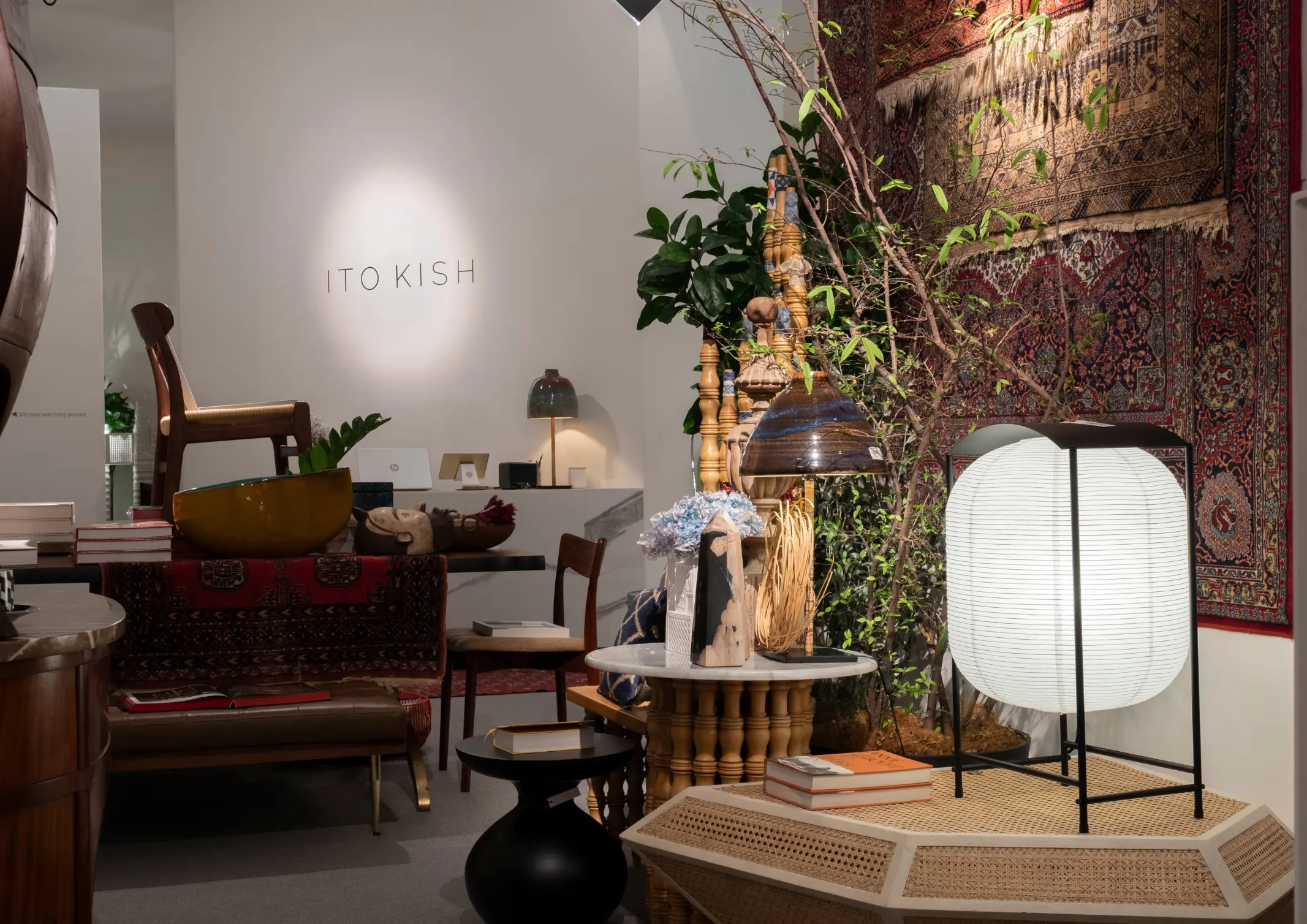
Born and raised in San Pablo City, Laguna, Ito Kish made a name for himself through residential and commercial design, as well as curatorial work. This new season, built on the idea of Filipino Culture Meets Global Curiosity, unfolds both as a composed showroom environment and a new collection shaped by stillness and balance. A […]
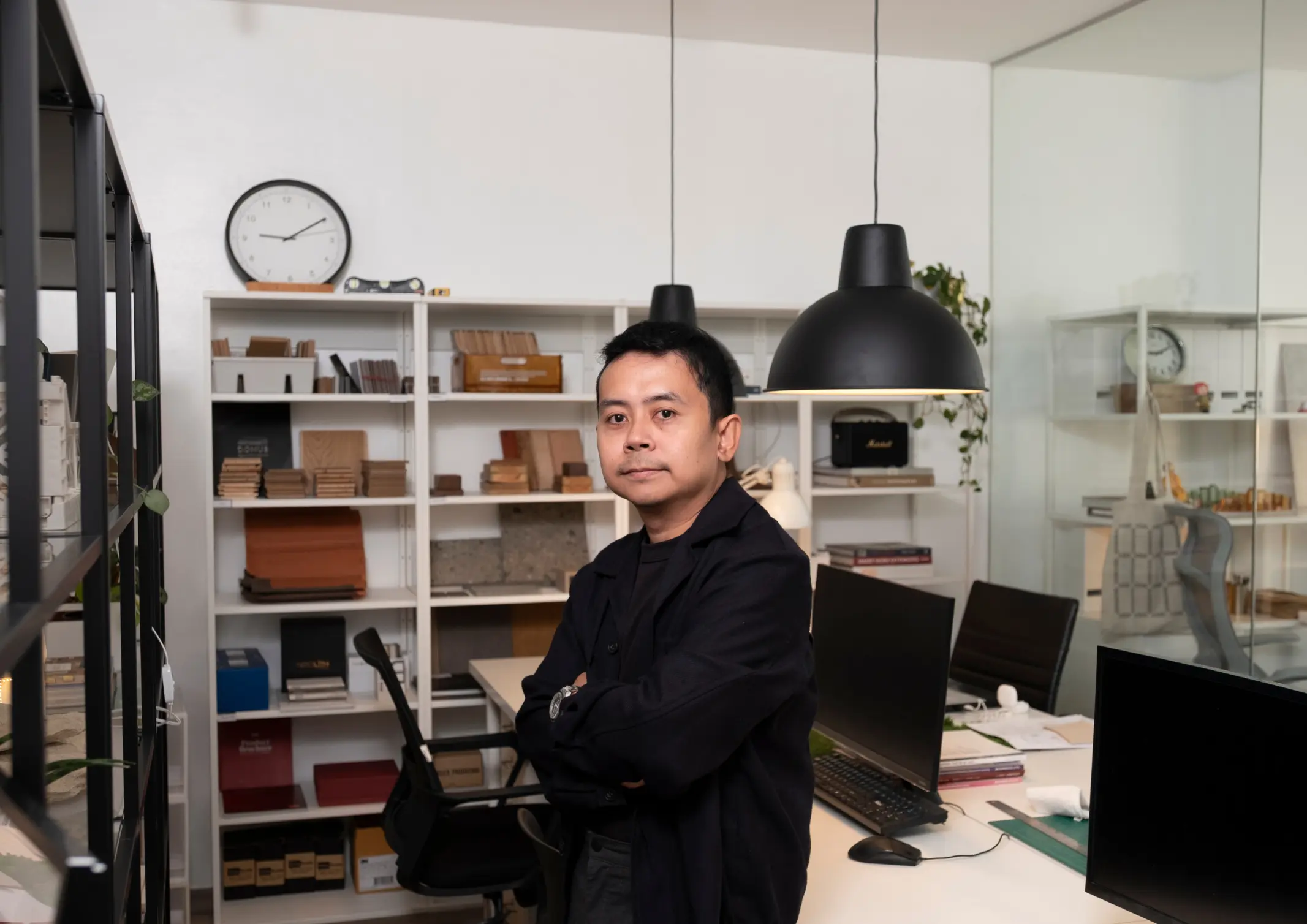
Breaking through in their respective careers is a daunting task for any young professional. For Architect Pierre Briones, architecture has always been an intentional pursuit. Having spent much of his childhood around construction sites, Briones’s environment shaped his interest in architecture, including his fascination with how structures and buildings are built. “Choosing architecture was never […]
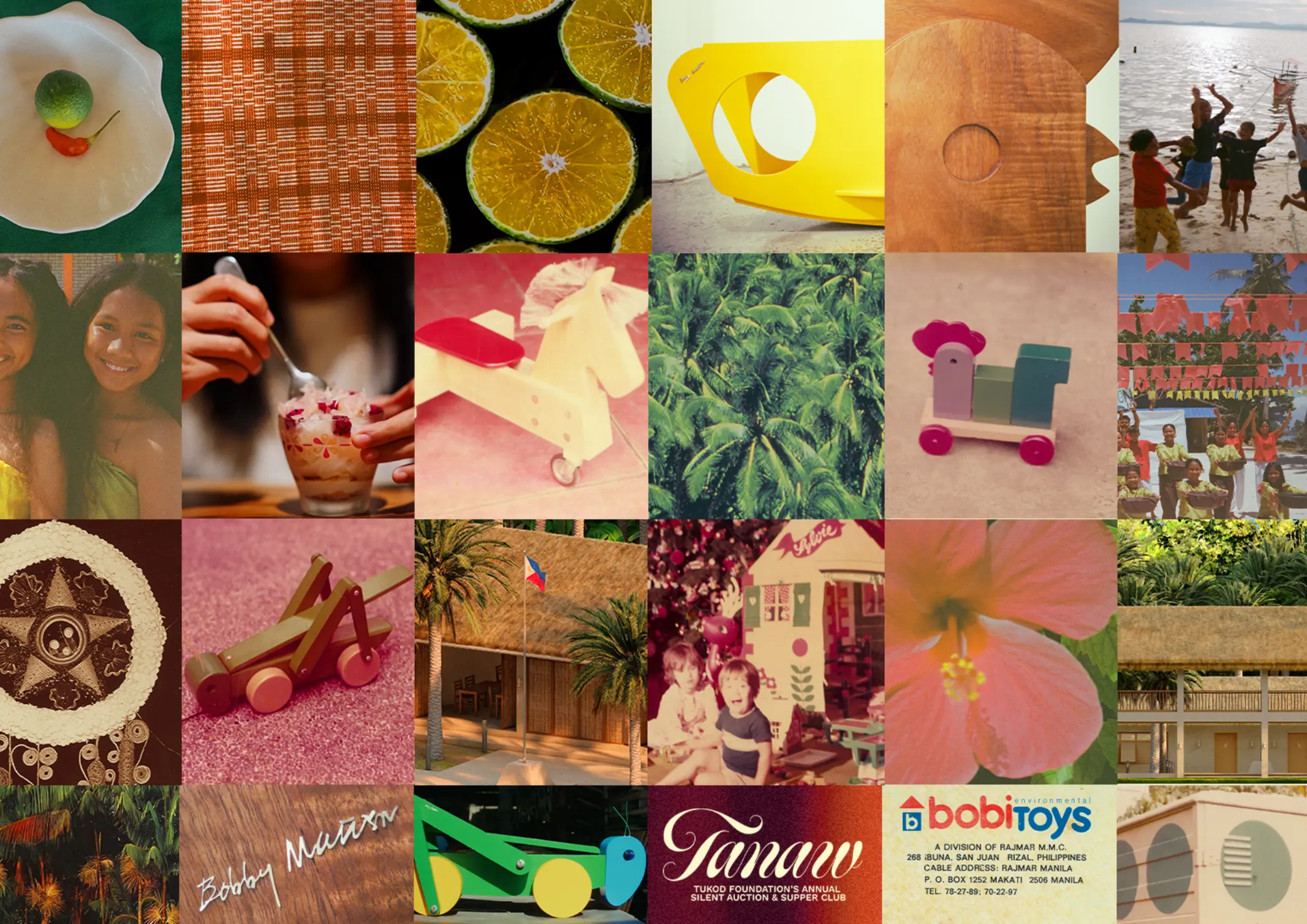
Not many people know this, but during the Martial Law era, National Artist for Architecture Bobby Mañosa was also a toy designer. He had an iconic line of toys, called “Bobi Toys,” that he sold in Makati during the 1970s and 1980s, which he discontinued as his own kids grew older. His toys have not […]
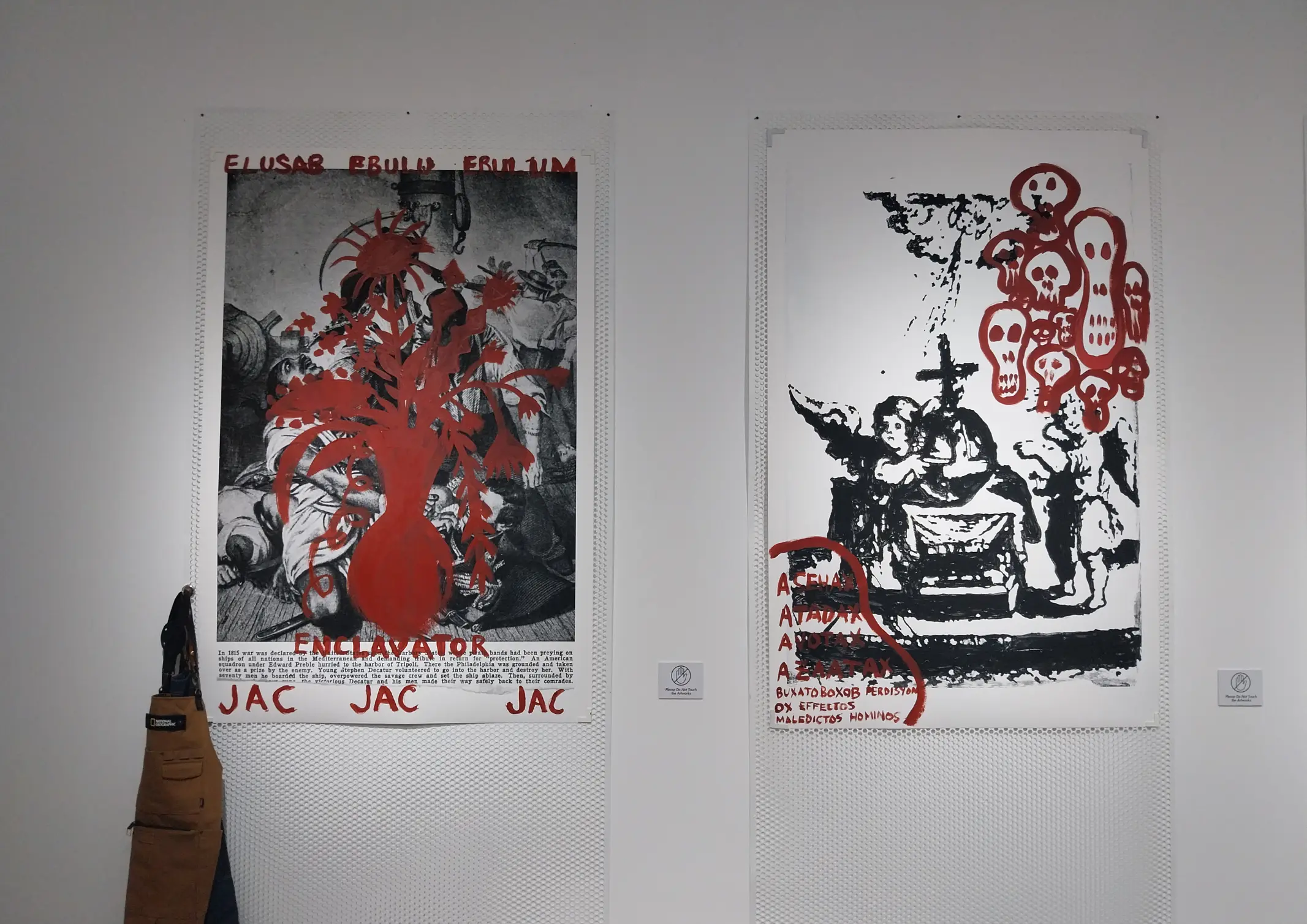
Cloud Grey Gallery put together two esteemed artists, Manuel Ocampo and Ronald Ventura, for Dialogo. As a gallery located at the Grand Hyatt Manila, Cloud Grey has a more forward-thinking approach to contemporary art movements at the time. “They’re provocations,” the gallery declared as they described their approach, “invitations to see the familiar transformed.” For […]
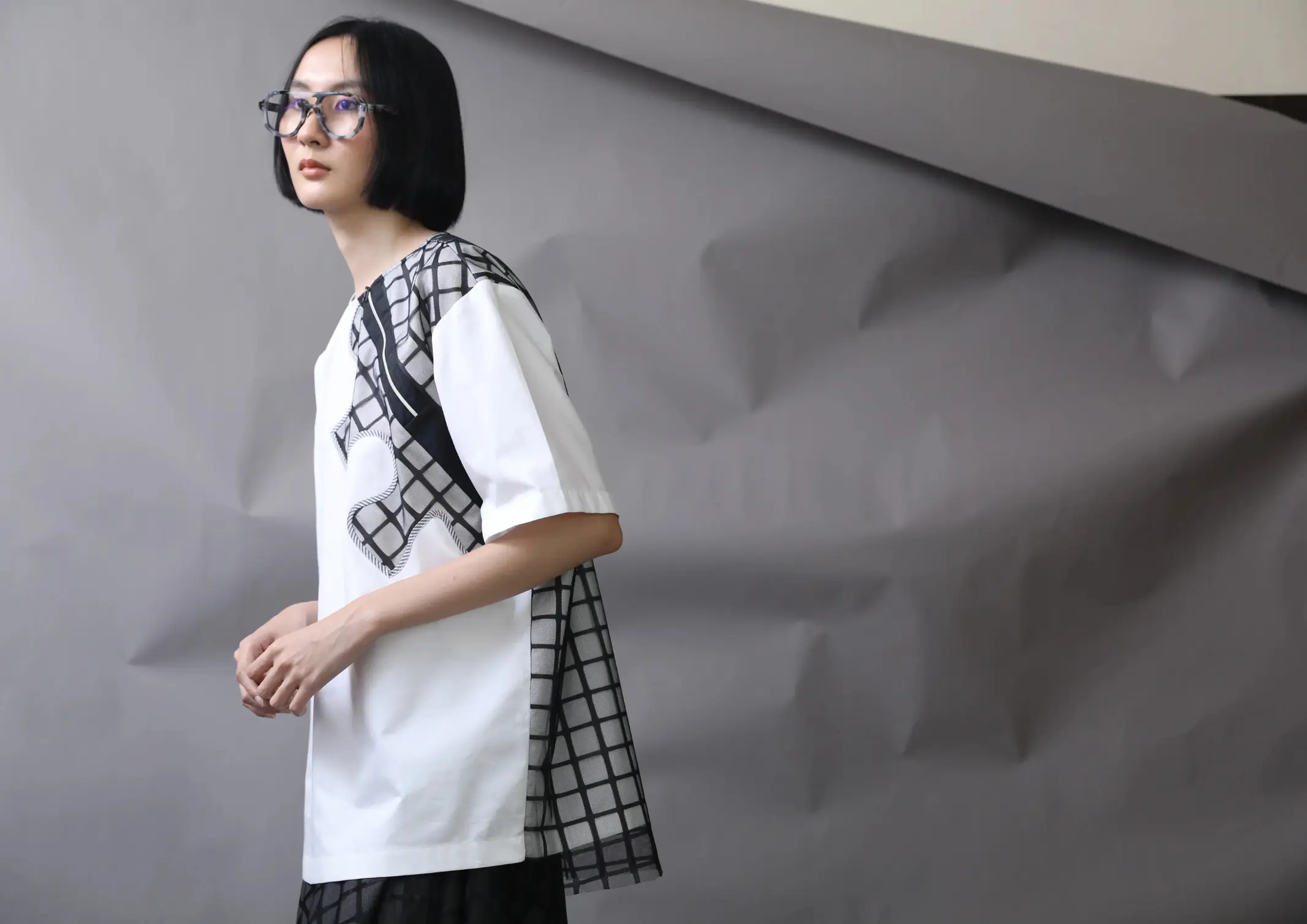
Ivarluski x Bitagcol, a pop-up store at Power Plant Mall, showcases the new collaborative fashion line from the two Filipino designers, as they seek to expand their design horizons and update their aesthetic hallmarks for the present day. The collaboration came about as the two designers, Ivarluski Aseron and Jo Ann Bitagcol, discussed their attraction […]
Download this month's BLUPRINT magazine digital copy from:



Subscribe via [email protected]